The United States Federal Government produces a broad array of topical medical-related publications that may appeal to the physicians — primary care, chiropractors, pediatricians, surgeons, elder care physicians, gynecologists, physical and occupational therapists. This blog showcases a few publications that may appeal to these medical-focused professionals serving patients of all ages that may have a variety of ailments.
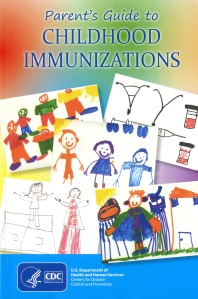
For pediatricians advising parents of children about vaccinations and immunizations, the Parent’s Guide to Childhood Immunizations (Packages of 10) is an economical way for doctors, especially pediatricians, and pediatric specialists to provide guidance in plain language to parents and caregivers of school-aged children.
(Photo compliments of safe surrender.org from Google Images download)
Pediatric Surgery and Medicine for Hostile Environments may provide a helpful reference in a trauma crisis impacting a child that may be suitable for emergency room doctors, staff, and critical pediatric surgeons s faced with handling gun shot or bomb explosive wounds in children.
Emergency Surgery, 4th US Revision covers trauma surgeries, including head, face, neck, and eye injuries, to difficulties with airway breathing, amputations, abdominal injuries, infections, gynecological injuries and emergency pediatric medical care that may be impacted by a war situation, terrorist attack aftermath, earthquake, or other accidental disaster. This title is available in print and eBook formats.
Primary care physicians, especially those that have senior citizens as patients, will want to make sure that they have these resources on hand: Pocket Guide to Staying Healthy at 50+ provides guidance on immunizations, living habits, and screening tests this age group should follow to stay healthy.
Long-Term Care Services in the United States 2013 Overview provides data on services including residents of nursing homes, residential communities, patients of home health care agencies, hospices, and participants in adult day care.
All physicians will want to have these resources available in their professional library:
Health Insurance Claims Forms (SMS-1500) -2 part snap-out package – this essential form is used to bill Medicare carriers and medical equipment durable regional carriers when a provider qualifies for a waiver from the Administrative Compliance Simplification Act (ACSA)and can also be used for billing some Medicaid State agencies.
Health Care Act (Public Laws 111-152 and 111-148) is the primary, full-text and authoritative source on the “ins and outs” of the Patient Protection and Affordable Care Act commonly referred to as “Obamacare” or “Obama Care.”
How can I get these publications?
Shop Online: You can purchase these publications from the U.S. Government Online Bookstore at http://bookstore.gpo.gov by clicking on the title links above in this blog post.
Order by Phone: Call our Customer Contact Center Monday through Friday, 8 am to 5:30 pm Eastern (except US Federal holidays). From US and Canada, call toll-free 1.866.512.1800. DC or International customers call +1.202.512.1800.
Shop our Retail Store: Buy a copy of any print editions from this collection at GPO’s retail bookstore at 710 North Capitol Street NW, Washington, DC 20401, open Monday–Friday, 9 a.m. to 4 p.m., except Federal holidays, Call (202) 512-0132 for information or to arrange in-store pick-up.
Visit a Federal Depository Library: Search for one of these publications in a nearby Federal depository library.
About the author: This week’s blog contributor is Maureen Whelan, Senior Marketing Team Leader for GPO’s Publication and Information Sales program office in Washington, DC. Maureen oversees print and digital content dissemination strategy and manages third party free and paid content distribution through platforms and vendors, such as Apple iBookstore, Barnes and Noble.com, Google Play eBookstore, Ebscohost databases, Overdrive, and more.
March is National Nutrition Month, a great time to focus on the importance of developing good eating habits. To coincide with this important event about maintaining a healthy diet, the Dietary Guidelines Advisory Committee has just released its 2015 scientific report. The report which includes recommendations that will eventually be incorporated into the Dietary Guidelines for Americans, 2015 provides new changes, in contrast to previous guidelines. For instance, until now, overconsumption of cholesterol was long considered to be bad for the American diet. However, according to the recommendations outlined in the new report, cholesterol is no longer “a nutrient of concern.” To read more about this and other eye opening revelations contained in the report, which is now available through the DietaryGuidelines.gov website, see information below.
From HHS Office of Disease Prevention and Health Promotion (ODPHP)
Get Involved: The “Scientific Report of the 2015 Dietary Guidelines Advisory Committee” (Advisory Report) is now open for public review and comment. An official announcement will also publish in the Federal Register. To read the Advisory Report and submit your comments, visit DietaryGuidelines.gov.
Advisory Report: An advisory committee of independent experts – the 2015 Dietary Guidelines Advisory Committee (or Committee) – has submitted its report to the Secretaries of the Department of Health and Human Services (HHS) and Agriculture (USDA). The “Scientific Report of the 2015 Dietary Guidelines Advisory Committee” describes findings from the Committee’s review of the scientific evidence on diet, nutrition, and health, and will help inform the next edition of the Dietary Guidelines.
Upcoming Public Meeting: HHS and USDA will host a public meeting at the National Institutes of Health in Bethesda, Maryland on Tuesday, March 24, 2015 to receive public oral comments on the “Scientific Report of the 2015 Dietary Guidelines Advisory Committee.” Meeting registration for in-person and webcast registration will open March 9, 2015 on www.DietaryGuidelines.gov.
Those interested in providing oral testimony will be able to specify their request upon registration. Capacity for oral testimony is limited to 70 individuals with 10 on stand-by. Testimony participants will be accepted on a first-come, first-served basis. The meeting facility provides ample space for in-person attendance and live webcast viewing will be available. Oral testimony can only be given in-person.
Next Steps: HHS and USDA will use the Advisory Report along with input from federal agencies and public comments to develop the next edition of the Dietary Guidelines for Americans. HHS and USDA will release the Dietary Guidelines for Americans, 2015 by end of the year.
Interested in more information on diet and nutrition? The U.S. Government Bookstore offers the following publications on diet, nutrition, and health.
Shop Online Anytime: You can buy the following publications (with FREE Standard Shipping worldwide) from the U.S. Government Online Bookstore website at http://bookstore.gpo.gov:
Order by Phone: You may also Order print editions by calling our Customer Contact Center Monday through Friday, 8 am to 5:30 pm Eastern (except US Federal holidays). From US and Canada, call toll-free 1.866.512.1800. DC or International customers call +1.202.512.1800.
Shop our Retail Store: Buy a copy of any print editions from this collection at GPO’s retail bookstore at 710 North Capitol Street NW, Washington, DC 20401, open Monday–Friday, 9 a.m. to 4 p.m., except Federal holidays, Call (202) 512-0132 for information or to arrange in-store pick-up.
About the author: Trudy Hawkins is Senior Marketing and Promotions Specialist in GPO’s Publication & Information Sales Division supporting the U.S. Government Online Bookstore (http://bookstore.gpo.gov).
The time when it was acceptable for cigarette smoke to fill offices, movie theaters, and airplanes is long forgotten and now used to set historical scenes like on the television series Mad Men. Smoking on the CBS Evening News like Walter Cronkite did is considered taboo today.
However the dangers of smoking and long term effects on health began to reach the public conscience during that 1960s timeframe. This year marks the 50th anniversary of the Surgeon General’s Report on Smoking and Health. Released in 1964 during a time when smoking was common place, the health community started recognizing trends in deaths caused by lung cancer and other diseases linked to tobacco use.
To coincide with the 50th anniversary of the report, the Department of Health and Human Services released The Health Consequences of Smoking: 50 Years of Progress and a companion summary booklet. The report is nearly 1,000 pages long, but the companion booklet at only 20 pages makes for an informative read. Designed with eye catching infographics, the booklet is a string of statistics and information on diseases related to smoking. There is a 50-year timeline across the bottom of the pages that shows the progress made on raising awareness on the harmful effects of smoking.
Some timeline highlights:
1964 – The Surgeon General’s Report on Smoking and Health is released and 42% of American adults smoke. 1966 – The United States is the first country to require warning labels on cigarettes. 1970 – Congress bans cigarette ads on TV and radio. 1975 – The Army and Navy stop providing cigarette rations to troops. 1986 – The Surgeon General releases a report dedicated the health effects of secondhand smoke. 1990 – Congress makes domestic airline flights smoke-free. 1994 – Tobacco company executives testify before Congress that they believe nicotine is not addictive. 2010 – Half of U.S. states and DC adopt smoke-free laws. 2014 – Fifty years after the release of the Smoking and Health Report, 18% of American adults smoke.
It is evident that life-saving progress has been made and various efforts to inform and educate the public on the harmful effects of smoking have worked. Nevertheless 500,000 people die each year from tobacco-related diseases so there is still work to be done.
HOW DO I OBTAIN THIS PUBLICATION?
Shop Online Anytime: You can buy this and other publications with FREE Standard Shipping worldwide from the U.S. Government Online Bookstore website at http://bookstore.gpo.gov/
Shop our Retail Store: Buy a copy of any print editions from this collection at GPO’s retail bookstore at 710 North Capitol Street NW, Washington, DC 20401, open Monday–Friday, 9 a.m. to 4 p.m., except Federal holidays, Call (202) 512-0132 for information or to arrange in-store pick-up.
Order by Phone: Call our Customer Contact Center Monday through Friday, 8 am to 5:30 pm Eastern (except US Federal holidays). From US and Canada, call toll-free 1.866.512.1800. DC or International customers call +1.202.512.1800.
Visit a Federal Depository Library: Search for these in a nearby Federal depository library.
About the Author: Our guest blogger is Emma Wojtowicz, Public Relations Specialist in GPO’s Office of Public Affairs.
July 30th marks the 49th anniversary of the establishment of the Social Security Act Amendments. In 1965, on this date, President Lyndon B. Johnson signed into law what is better known as the Medicare law. This established both Medicare, the health insurance program for Americans over 65, and Medicaid, the health insurance program for low income Americans. You can read this Public Law in the United States Statutes at Large on GPO’s Federal Digital System (FDsys).
President Lyndon Johnson signs the Medicare Bill. President Harry S. Truman is seated next to him. Others looking on include Lady Bird Johnson, Vice President Hubert Humphrey, and Bess Truman. July 30, 1965. Photo courtesy of Lyndon B. Johnson Presidential Library, U.S. National Archives
Former President Harry S. Truman participated in the signing ceremony with President Johnson at the Truman Presidential Library in Independence, Missouri. President Truman’s participation served to recognize his effort during his administration to establish a national health insurance program. President Truman and former first lady, Bess Truman, received Medicare registration cards numbers one and two.
This is the Medicare card believed to have been given to Harry Truman by President Lyndon on the occasion of the signing of the Social Security Amendments of 1965 in Independence, Missouri. Photo courtesy of Lyndon B. Johnson Presidential Library, U.S. National Archives
The 1950 Census showed that the aged population in the U.S. had grown from 3 million in 1900 to 12 million in 1950. The jump was even greater between 1950 and 1963, growing from 12 million to 17.5 million, a large number of whom had no health insurance. It’s no surprise that in the program’s first three years, nearly 20 million beneficiaries enrolled in Medicare.
Fast forward to today, and Medicare provides health insurance to about 50 million Americans. The Centers for Medicare and Medicaid Services (CMS), a division of the U.S. Department of Health and Human Services (HHS), administers the program.
Finding Medicare information and services has never been easier than with www.medicare.gov.
Using the site, users can access a wide array of services. Some examples include:
Signing up for Medicare;
Modifying Medicare plans;
Finding health and drug plans;
Learning about different levels of coverage and how to sign up for each, various costs, and supplements and other insurance;
Determining if specific tests or services are covered;
Filing a complaint, claim, or appeal;
Checking the status of any application, claim, or pending action;
Finding doctors, providers, hospitals, and suppliers;
Accessing forms, resources, and personal assistance;
Changing one’s address; and
Reporting lost or stolen Medicare cards.
In addition to that, the site offers access to podcasts, videos, and blogs that are not only interesting, but very informative. You can also connect with Medicare via Twitter and YouTube.
The U.S. Government Printing Office (GPO) also provides access to a wide variety of Medicare resources. The U.S. Government Bookstore sells the CMS-1500, the standard health insurance claim form developed by the National Uniform Claim Committee and used by all non-institutional medical providers or suppliers to bill Medicare carriers. It is also used to bill some Medicaid State Agencies.
GPO also provides access to an array of Medicare resources through its Catalog of U.S. Government Publications (CGP), including a collection of free eBooks. Through the CGP, users can access the descriptive catalog record for each publication, as well as a direct link to any publication that available online. Some of the free eBooks available on Medicare topics are:
Medicare & You 2014 is an official Government booklet that summarizes Medicare benefits, coverage decisions, right and protections, and provides answers to frequently asked questions. This eBook is available in Mobi, ePub, and PDF formats.
The CGP and FDsys provide access to a wide variety of other Government documents related to Medicare. Here is just a small sampling:
Protecting Access to Medicare Act 2014, Public Law 113-93: To amend the Social Security Act to extend Medicare payments to physicians and other provisions of the Medicare and Medicaid programs, and for other purposes.
You can also access countless Federal Government documents related to Medicare at Federal depository libraries nationwide. Find the Federal depository nearest you by visiting the Federal Depository Library Directory.
Happy Birthday, Medicare, and here’s to many more years of helping the American public!
How can I find these Medicare publications?
In addition to clicking on the links in the article above to find the publications, you may find these publications from the following:
And to find popular current Federal publications, you may:
Shop Online Anytime: You can buy eBooks as well as print publications (with FREE Standard Shipping worldwide) from the U.S. Government Online Bookstore website at http://bookstore.gpo.gov
Order by Phone: You may also Order print editions by calling GPO’s Customer Contact Center Monday through Friday, 8 am to 5:30 pm Eastern (except US Federal holidays). From US and Canada, call toll-free 1.866.512.1800. DC or International customers call +1.202.512.1800.
Shop our Retail Store:Buy a copy of any print editions at GPO’s retail bookstore at 710 North Capitol Street NW, Washington, DC 20401, open Monday–Friday, 9 a.m. to 4 p.m., except Federal holidays, Call (202) 512-0132 for information or to arrange in-store pick-up.
About the author: Our guest blogger is Kelly Seifert, Lead Planning Specialist for GPO’s Library Services & Content Management Division that supports the Federal Depository Library Program.
News concerning the debate over changes to the School Lunch Program has brought the topic of child nutrition and health to the forefront, in recent weeks. As government and school officials debate this important topic, Government Book Talk takes a look at the Food and Nutrition Information Center Resources CD-ROM currently available from the GPO Online Bookstore.
The Food and Nutrition Information Center Resources CD-ROM from the U.S. Department of Agriculture (USDA), Food and Nutrition Information Center (FNIC) contains a plethora of useful information related to various food and nutrition programs, such as the National School Lunch Program. It particularly offers guidance to help nutrition professionals and consumers locate information and materials on specific food and nutrition topics, such as Child Nutrition and Health, Food and Nutrition Education, School Food Service, and much more. Compiled by Nutrition Information Specialists, these Resource Lists provide resources in a variety of formats including articles, pamphlets, books, audio-visuals, and Web links.
This resource list excerpt from 2008 for educators provides resource information on cultural and ethnic food nutrition.
The vast information contained on this CD-ROM from the National Agriculture Library collection will prove to be a great resource for parents, educators, school food service professionals and child care providers. Child Nutrition Programs including before/after school and children’s summer municipal camp programs will also benefit from these resource lists for nutritional guidance and food planning for their summer and new school year child nutrition initiatives.
The FNIC website contains over 2500 links to current and reliable nutrition information.
About the FNIC
According to its website, the FNIC is a leader in food and human nutrition information. Located at the National Agricultural Library (NAL) of USDA, the FNIC provides credible, accurate, and practical resources for nutrition and health professionals, educators, government personnel and consumers. To learn more about the FNIC and its various resource lists topics visit the FNIC website.
In addition to the Food and Nutrition Information Center Resources CD-ROM, the USDA has published the following print publication focusing on nutrition and diet, which is also available from the U.S. Government Bookstore.
The Dietary Guidelines for Americans, 2010 offers advice regarding nutrition to promote health and to reduce risk for major chronic diseases through diet and physical activity. The publication is oriented toward policymakers, nutrition educators, nutritionists, and healthcare providers. It summarizes and synthesizes knowledge regarding individual nutrients and food components into recommendations for a pattern of eating that can be adopted by the public. Key Recommendations listed by chapter include: Balancing Calories to Manage Weight; Foods and Food Components to Reduce; Foods and Nutrients to Increase; Building Healthy Eating Patterns; and Helping Americans Make Healthy Choices. It also explains the new food plate which replaced the food pyramid.
How can I get these federal resources on Food and Nutrition Planning?
Shop Online Anytime: You can buy these and other publications (with FREE Standard Shipping worldwide) from the U.S. Government Online Bookstore website at http://bookstore.gpo.gov:
Shop our retail bookstore at 710 North Capitol Street NW, Washington, DC 20401, open Monday-Friday, 9am to 4pm, except Federal holidays, (202) 512-0132.
Order by Phone: Call our Customer Contact Center Monday through Friday, 8 am to 5:30 pm Eastern (except US Federal holidays). From US and Canada, call toll-free 1.866.512.1800. DC or International customers call +1.202.512.1800.
About the author: Trudy Hawkins is a writer and marketing specialist in GPO’s Publication & Information Sales Division supporting the U.S. Government Online Bookstore (http://bookstore.gpo.gov).
The week of April 26-May 3 is National Infant Immunization Week and it is also the 20th anniversary of this observance. Vaccinations are becoming a more controversial topic among parents, doctors and schools. The New England Journal of Medicine suggests that the recent anti-vaccination movement is leading to an outbreak of whooping cough and the measles in some states.
A couple looks at Infant Care pamphlet at GPO Bookstore: GPO Archives.
Before you could Google information on vaccinations and family healthcare topics and have every answer at your fingertips, government publications were the go-to source for consumer information. This former trend is evident in the fact that a pamphlet entitled Infant Care is still to this day considered GPO’s all-time best seller. Infant Care was first published in 1914 by the Children’s Bureau and provided mothers with information in a low-cost form on how to care for their babies. (Read more about the history of the Children’s Bureau in The Children’s Bureau Legacy: Ensuring the Right to Childhood (ePub eBook) available on the U.S. Government Bookstore.) Over the course of seven decades it remained a bestseller with multiple editions published and translations in eight languages as well as Braille.
100 years ago, this was the advice on vaccination of infants. Excerpt from 1914 Infant Care pamphlet.
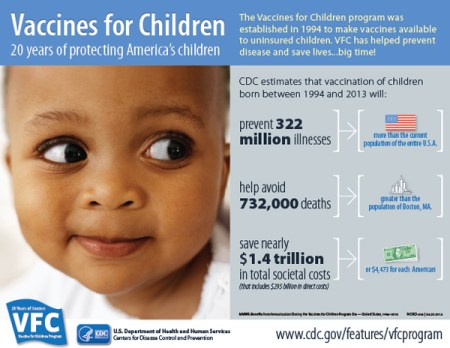
The original Infant Care pamphlets can be seen on this archive. However, Vaccines for Children (VCF), a federally funded program handled by the Centers for Disease Control and Prevention (CDC) provides no-cost vaccine services to help ensure that all children, from infancy to adolescent, have a better chance of getting their recommended vaccinations.
Like Infant Care, the government still has helpful publications to help parents and the public make health-related decisions. Parent’s Guide to Childhood Immunizations and Immunization Tool Kitare just two of the many government publications available on the immunization and vaccination topic.
Parent’s Guide to Childhood Immunizations is kind of like a “vaccinations for dummies.” It is a great resource that explains each disease, the vaccinations schedule, what to do before, during and after the immunization doctor visit, how vaccines work, other FAQs and additional print and electronic resources. The most helpful part of this booklet is the breakdown of each disease with information on what causes the disease, how it is spread, the signs and symptoms and complications. To brighten up what can be a scary subject, the booklet includes colorful child artwork.
Immunization Tool Kit focuses on adult, military and childhood immunizations. This resource is made up of laminated 4X6 color coded cards held together by a ring for fast flipping making it durable and likely intended for military or health care providers, people who need a quick reference on the job. The cards are organized by immunizations for adults and the military and children with detailed information about each vaccine including a dosage, indications or who should get the vaccine, contraindications or reasons why someone should not be vaccinated and special considerations. Some of the cards have amusing caricatures of what the diseases look like. For medical personnel, there is a section on the storage and handling instructions of each vaccine. While the amount of information may seem overwhelming, the toolkit will be able to answer all or any question about vaccines.
HOW DO I OBTAIN THESE PUBLICATIONS ON VACCINATION?
Shop Online Anytime: You can buy these publications (with FREE Standard Shipping worldwide) from the U.S. Government Online Bookstore website at http://bookstore.gpo.gov:
Order by Phone: You may also Order print editions by calling our Customer Contact Center Monday through Friday, 8 am to 5:30 pm Eastern (except US Federal holidays). From US and Canada, call toll-free 1.866.512.1800. DC or International customers call +1.202.512.1800.
Shop our Retail Store:Buy a copy of any print editions from this collection at GPO’s retail bookstore at 710 North Capitol Street NW, Washington, DC 20401, open Monday–Friday, 9 a.m. to 4 p.m., except Federal holidays, Call (202) 512-0132 for information or to arrange in-store pick-up.
About the author: Our guest blogger is Emma Wojtowicz, Public Relations Specialist in GPO’s Office of Public Affairs.
Additional content, images and editing provided by Trudy Hawkins, a writer and marketing specialist in GPO’s Publication & Information Sales Division supporting the U.S. Government Online Bookstore (http://bookstore.gpo.gov).
TV Week final episode cover depicting M*A*S*H television show cast. Did you know that the character of MASH 4077th’s head nurse “Hot Lips” Margaret Houlihan was inspired by two real-life Korean War Army MASH head nurses “Hotlips” Hammerly and Janie Hall?
The music starts. The lyrics to the haunting song “Suicide is Painless” play in your head. The sound and sight of helicopters enter and then you are looking down from the helicopters view on a village of tents and red crosses. The television series M*A*S*H, based on the 1970 movie that was set during the Korean War at the fictitious 4077th Mobile Army Surgical Hospital or M*A*S*H, established itself as one of the greatest shows in history. The show was on air from 1972-1983, and it still lives on today in syndication.
The series finale was broadcasted on February 28, 1983 to 105.9 million viewers, becoming the most watched television broadcast of all time. The record held for nearly three decades until the 2010 Superbowl surpassed M*A*S*H’s record with 106.5 million viewers. The show had the ability to make you cry from both a comedic and emotional standpoint striking a unique balance unlike many shows.
But sometimes real life can be as fascinating as fiction. Learn about the real-life exploits of a genuine Army MASH unit and of brave medical researchers fighting tropical diseases in southeast Asia with two recent Armed Forces medical history publications from the U.S. Army Medical Center and School’s Borden Institute.
Skilled and Resolute: A History of the 12th Evacuation Hospital and the 212th MASH, 1917-2006 follows the 90-year history of a medical unit, the 12th Evacuation Hospital and its successor the 212th Mobile Army Surgical Hospital, which served in military engagements from World War I to Operation Iraqi Freedom as well as many peacekeeping and humanitarian missions. The unit’s goal is to be trained, equipped, and deployable at a moment’s notice.
There are some gruesome pictures in the Vietnam War section, but overall the book is a fascinating read about how medical techniques evolved with warfare practices in makeshift hospitals close to front lines. In 2006, the unit transformed once again to the 212th Combat Support Hospital and was deployed to Afghanistan.
Lt. General George S. Patton visits the US Army 12th Evacuation Hospital (MASH) to award decorations to the wounded. Patton would later infamously get in trouble for slapping a soldier at another World War 2 hospital who was suffering from post-traumatic stress disorder (PTSD) or combat stress reaction (CSR), which was called shell shock starting in WW 1. (Photo courtesy U.S. Army Medical Department, Office of Medical History)
The photos in the book look like scenes out of the M*A*S*H television series; you can picture Radar turning is head to the side, pausing to listen and exclaiming “Choppers!” to be followed by the sound of helicopters.
Army helicopters were critical for evacuating the sick and wounded from the front to a MASH unit ambulance during the Korean War. (Image courtesy http://www.koreanwar60.com/army)
The Armed Forces Research Institute of Medical Sciences (AFRIMS), 1960-2010: a 50th Anniversary Photographic History is a lean coffee table book organized by decade. The black and white and color photographs tell the story of AFRIMS – a medical military partnership between the United Sates and Thailand that was founded in response to a cholera epidemic in Thailand in 1959. Within 10 years, a laboratory was built and AFRIMS established the reputation of being a major force in tropical medical research. In the 1970s, the lab played a crucial role in researching and developing treatment for tropical diseases inflicting the military serving in the Vietnam War.
Technology advancements in the 1980s were adapted by AFRIMS and helped with storing and organizing research. In the 1990s and the first decade of the new century, AFRIMS conducted trials impacting the research on vaccines for hepatitis A, malaria, and HIV. The photographs are very compelling and effectively share history while showing the way they conducted research and interacted with the Thai community.
AFRIMS Captain Michael “Mike” Benenson (future USAMC director) returns a child’s “wai” greeting while the study team prepares medications in the 1973 malaria drug prophylaxis study. (Book photograph courtesy of Dr. Michael Benenson)
HOW DO I GET A COPY OF THESE BOOKS?
Shop Online Anytime: You can buy these publications (with FREE Standard Shipping worldwide) from the U.S. Government Online Bookstore website at http://bookstore.gpo.gov:
Order by Phone: You may also Order print editions by calling our Customer Contact Center Monday through Friday, 8 am to 5:30 pm Eastern (except US Federal holidays). From US and Canada, call toll-free 1.866.512.1800. DC or International customers call +1.202.512.1800.
Shop our Retail Store:Buy a copy of any print editions from this collection at GPO’s retail bookstore at 710 North Capitol Street NW, Washington, DC 20401, open Monday–Friday, 9 a.m. to 4 p.m., except Federal holidays, Call (202) 512-0132 for information or to arrange in-store pick-up.
About the author: Our guest blogger is Emma Wojtowicz, Public Relations Specialist in GPO’s Office of Public Affairs.
Additional images and content provided by Government Book Talk Editor Michele Bartram is Promotions and Ecommerce Manager for GPO’s Publication and Information Sales Division in Washington, DC, and is responsible for online and offline marketing of the US Government Online Bookstore (http://bookstore.gpo.gov) and promoting Federal government content to the public.
Did you know that the U.S. Government offers more than 2,200 Federal assistance programs to the American public? It does, and these programs serve a variety of purposes and provide a range of benefits to state and local governments, non-profit organizations, institutions, and individuals.
The one characteristic shared by these Federal assistance programs is their goal of supporting the American public. The benefits available through these programs include, but are not limited to, financial assistance and the exchange of property or services.
With so many Federal assistance programs and services available, it can be understandably difficult to keep track of them all or know where to start when looking for assistance. That’s where the Catalog of Federal Domestic Assistance — known fondly as the CFDA– comes into play! The General Services Administration maintains a database of all of these programs and publishes a comprehensive guide to the programs annually.
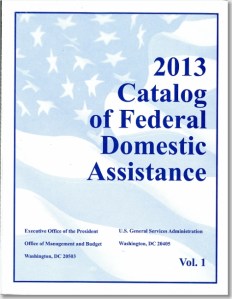
The 2013 Catalog of Federal Domestic Assistance assists users in identifying programs that meet their needs and obtaining general information about the program-such as how to apply for assistance, the approval process, related programs, and contact information.
What categories of U.S. Government Federal Assistance Programs are there and what information is provided on each?
Some types of Federal Assistance funding are issued via grants. To search for, apply to, and track all sorts of Federal Government grants, visit the Grants.gov website.
Each program is detailed in the CFDA, and potential users can review the details including each program’s Objectives, Types of Assistance, and the rules for applying for and using this program, including Uses and Use Restriction and Eligibility Requirements for both the grant applicant and beneficiary(ies).
Each entry also includes any Credentials/Documentation required and the Application and Award Process that must be followed to apply for , from Preapplication Coordination and Application Procedures to Award Procedure and Deadlines for submitting your application (if required).
Types of Federal assistance programs run the gamut from Formula or Project Grants to Cooperative Agreements; Direct Payments for either a specified or unrestricted use; Direct Loans or Guaranteed / Insured Loans; Insurance; Sale, exchange, or donation of Federal property or goods; Use of Federal property, facilities, or equipment; even Investigation of complaints and Advisory Services and Counseling; plus many more.
Sampling of some of the Federal Assistance Programs available
Image: Break-down of CFDA program distribution for the top five issuing agencies by dollars provided. Source: CFDA.gov Website
In order to demonstrate the broad scope of these Federal assistance programs a bit more, here’s a look at some of the more interesting programs offered by these top 5 agencies that provide the most program offerings:
U.S. Department of Health and Human Services (HHS)
Nutrition Services Incentive Program
Mental Health Research Grants
Grants to Increase Organ Donations
Poison Center Support and Enhancement Grant Program
U.S. Department of the Interior (DOI)
Earthquake Hazards Reduction Program
American Battlefield Protection Grants
Coastal Wetlands Planning, Protection and Restoration Act Grants
Cooperative Endangered Species Conservation Fund
U.S. Department of Agriculture (USDA)
Collaborative Forest Restoration Project
Farmers’ Market Promotion Program
Animal Health and Disease Research Grants
Emergency Community Water Assistance Grants
U.S. Department of Justice (DOJ)
Missing Children’s Assistance Grants
Community-Based Violence Prevention Program
Juvenile Mentoring Program
Economic High-Tech and Cyber Crime Prevention Grants
U.S. Department of Housing and Urban Development (HUD)
“The purpose of the Veterans Homelessness Prevention Demonstration Program (VHPD) is to explore ways for the Federal Government to offer early intervention homelessness prevention, primarily to veterans returning from wars in Iraq and Afghanistan. The authorizing statutory language for the VHPD acknowledges the increasing number of female veterans, veterans with families especially with a single head of household, as well as those from the National Guard and Reserve who are being discharged from the military and whose unique needs should be more closely examined.”
The VHPD grant money funding is to be…
“used for short-term housing assistance, including security deposits, up to 18 months of rent assistance, rental and/or utility arrearages, or related housing assistance. Grantees may also use funding for appropriate services for veterans and their families, including, but not limited to, child care, family services and case management.”
As you can see, Federal assistance programs exist to benefit the American public in many different arenas and through a variety of methods. Whether the goal is to reduce veterans’ homelessness, to mitigate the impact of earthquakes, or to provide mentorship for young people, the 2013 Catalog of Federal Domestic Assistance is the ultimate resource and all-in-one guide for learning about the programs that are available from the U.S. Government.
After all, the public needs to be aware of these programs in order to take advantage of what they have to offer!
How can I get these and other Federal Government publications on Federal Benefits?
In addition to clicking on the links in the article above to find the publications, you may find other benefits publications from the following:
Shop Online Anytime: You can buy eBooks as well as print publications– with FREE Standard Shipping worldwide– from GPO’s U.S. Government Online Bookstore website at http://bookstore.gpo.gov:
Visit a Federal Depository Library:Search for U.S. Government publications in a nearby Federal depository library.
Librarians: You can find the records for most Federal titles in the Catalog of U.S. Government Publications (CGP), or search for published U.S. Government eBooks in GPO’s Federal Depository Library Program’s special eBooks at GPO page.
Visit a Public Library: Ask your local public librarian about Federal books in their collection as well as Federal eBooks that may be available for library patrons to check out electronically.
About the Authors: Guest blogger Stephanie Jaeger is Sales & Marketing Coordinator for GPO’s Sales & Marketing Division that markets GPO’s publishing services to the Federal sector.
Government Book Talk Editor Michele Bartram is Promotions and Ecommerce Manager for GPO’s Publication and Information Sales Division in Washington, DC, and is responsible for online and offline marketing of the US Government Online Bookstore (http://bookstore.gpo.gov) and promoting Federal government content to the public.
Guest blogger and GPO Supervisory Librarian Valerie Furino writes about U.S. Government publications that can help you achieve your Olympic ambitions.
The 2014 Sochi Winter Olympics are wrapping up, and they have been entertaining and full of surprises. Many people watch the Olympics and dream of the magical moment of being awarded a medal (preferably gold). However, that dreamy medal was earned through years of training and preparation. If you want to give living the life of an Olympian a try, you’ll need to work hard. You need to eat like an athlete – you need to train like an athlete – and you’ll actually need to GET to the Olympics – grab that suitcase! Think you’ve got what it takes? Let’s find out.
Image: Tourists enjoying the Olympic Rings sign at the Headquarters for the U.S. Olympic Committee administration and the Olympic Training Center programs in Colorado Springs, Colorado.
Get into Competition Shape
First, let’s examine eating habits. This should be easy – athletes are known for devouring lots of calories. This handy chart illustrates typical calories burned, depending on a person’s weight – note that the Olympic sports ice hockey, ice skating, and skiing are all included. (If all the activities on this chart were Olympic sports, I’d be a gold medalist shoo-in for “Operate Snow Blower” after this winter!) However, you need to eat the right kind of calories. You’ll need fuel to power you through those salchows and Axel jumps. Nutrition.gov provides a great starting place on various nutrition topics, including meal planning, label reading, and dietary supplements.
OK, nutritional standards have been established. Now let’s move on to physical training. Depending on your sport preference, you’ll need to exercise specific muscles – for example, cross-country skiing requires a well-developed abdomen, arms, and lower back, while snowboarding needs a strong core and shoulders. Health.gov is a good place to start, as it provides general information on both nutrition and activity. It provides a helpful link to Let’s Move!, a well-known initiative supported by First Lady Michelle Obama that encourages physical activity. The President’s Council on Fitness, Sports, and Nutrition has a fantastic site loaded with activity and nutrition tips. If you’d like all your information in one publication, try the Physical Activity Guidelines for Americans; if you’re more a visual person, check out some videos . All these resources are useful tools to get you in shape – or at least keep you towing the line on your fitness New Year’s resolutions.
Image: First Lady Michelle Obama exercising with kids on the White House lawn for the Let’s Move! initiative. Source: White House
Getting to the Games
You’ve trained and you’ve been keeping excellent eating habits – you’re now ready to get to the games, whether as an athlete or a spectator! (Hey, it takes a lot of climbing to get to your seat in an Olympic stadium.) Besides the United States, the Olympics have been held in some beautiful and exotic places – London, Beijing, Athens, Vancouver, and Torino. If traveling out of your home country, be sure to check if any vaccinations are required. Also check for any travel alerts. Do you have a current passport? Need a visa to travel to the host country? These convenient U.S. State Department sites will guide you.
After taking care of logistics, spend some time reading up on the host nation. The World FactBook updated annually by the CIA (you can also buy the World Factbook print edition complete with wall maps) and the Library of Congress Country Studies series (many also available in print from our Foreign Country Studies collection) are two excellent resources to help guide you through your host country. And this handy worldwide wireless guide from the Federal Communications Commission will help you figure out how to use your phone while traveling abroad!
How can I get these publications?
Click on the Links: For the free resources, click on the links above in the blog post.
Shop Online Anytime: You can buy any of the eBooks or print publications mentioned above—with FREE Standard Shipping worldwide— from the U.S. Government Online Bookstore at http://bookstore.gpo.gov.
Shop our Citizenship & Travel Forms collection which includes the International Certificate of Vaccination (Yellow Card) forms.
Order by Phone: You may also order print editions mentioned in this blog post by calling our Customer Contact Center Monday through Friday, 8 am to 5:30 pm Eastern (except US Federal holidays). From US and Canada, call toll-free 1.866.512.1800. DC or International customers call +1.202.512.1800.
Shop our Retail Store:Buy a copy of any print editions mentioned in this blog post by visiting GPO’s retail bookstore at 710 North Capitol Street NW, Washington, DC 20401, open Monday–Friday, 9 a.m. to 4 p.m., except Federal holidays, Call (202) 512-0132 for information or to arrange in-store pick-up.
About the Author: Valerie Furino is a Supervisory Librarian for the Government Printing Office’s Library Services & Content Management (LSCM) Division.
Image below: Graph depicts how variations in the polar vortex affect weather in the mid-latitudes. Courtesy: National Science Foundation
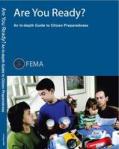
As the United States shivers under the Arctic Express, Polar Vortex, Polar Cyclone, Polar Low, Circumpolar Whirl or whatever name you call it (I just call it FREEZING!!!!) with snow, ice, and some of the most extreme cold conditions in decades, Americans will be happy to know that the Federal Emergency Management Agency (FEMA) has help available in the form of its extremely useful new disaster preparedness guide, Are You Ready?: An In-Depth Guide to Citizen Preparedness.
Intended as both a reference source as well as a step-by-step manual, this easy-to-follow guide has been designed to help Americans “learn how to protect themselves and their families against all types of hazards”.
According to the FEMA authors:
The focus of the content is on how to develop, practice, and maintain emergency plans that reflect what must be done before, during, and after a disaster to protect people and their property. Also included is information on how to assemble a disaster supplies kit that contains the food, water, and other supplies in sufficient quantity for individuals and their families to survive following a disaster in the event they must rely on their own resources.
The guide advises on planning before a disaster, responding during a disaster, and recovering after a disaster and is organized into the following sections: Why Prepare, Part 1 Basic Preparedness, Part 2 Natural Hazards, Part 3 Technological Hazards, Part 4 Terrorism, and Part 5 Recovering from Disaster.
Each chapter has specific tips on preparation, what to do during the particular disaster, instructions for what to do afterwards, and where to go for more information, including links for free publications.
Disasters and emergencies cover the gamut in three areas:
a) Natural Hazards, including: Floods, Tornadoes, Hurricanes, Thunderstorms and Lightning, Winter Storms and Extreme Cold, Extreme Heat, Earthquakes, Volcanoes, Landslides and Debris Flow (Mudslide), Tsunamis, Fires and Wildfires;
b) Technological Hazards, including: Hazardous Materials Incidents, Household Chemical Emergencies, and Nuclear Power Plants
c) Terrorism, including: General terrorist threats, Explosions, Biological Threats, Chemical Threats, Nuclear Blast, and Radiological Dispersion Device (RDD).
Are You Ready?… for Winter Storms and Extreme Cold
As I was concerned about the extreme cold, I turned to Part 2, Natural Hazards, Section 2.5 Winter Storms and Extreme Cold.
In the preparation part, I found useful terminology such as the difference between sleet and freezing rain, protective measures and supplies to gather, tips on how to winterize my car (e.g., have you cleaned your car battery terminals and used gasoline additives to keep water out of your fuel lines?) and how to dress for the winter weather (did you know mittens are warmer than gloves?).
During a winter storm, “Are you ready?” gives more advice, such as what to do if a blizzard traps you in the car and how to watch for signs of hypothermia.
[Signs of hypothermia]… include uncontrollable shivering, memory loss, disorientation, incoherence, slurred speech, drowsiness, and apparent exhaustion. If symptoms of hypothermia are detected, get the victim to a warm location, remove wet clothing, warm the center of the body first, and give warm, non-alcoholic beverages if the victim is conscious. Get medical help as soon as possible.
Other Useful Information in “Are You Ready?”
In addition to information on specific types of emergencies, the guide includes a number of other very useful resources.
Assembling a Disaster Supplies Kit: A whole chapter is devoted to assembling a good general disaster supplies kit for multiple locations: home, work and vehicle.
Practice Makes Perfect: Advice on how to practice and maintain your emergency plan is under Section 1.6.
General Evacuation Guidelines: Tells what to do to prepare your home if you have to evacuate, such as utility shut-off and safety, reviewing and securing of insurance and vital records, and so on.
Special Needs: Information on how to do disaster planning to accommodate someone with disabilities is included.
Pets: Caring for pets in emergencies is not forgotten, either.
FEMA Hazard Maps: It highlights how to get free hazard maps from FEMA in your area by accessing FEMA’s Hazard Mapping Portal.
Warning Systems and Signals: The guide explains different national alert systems such as the Emergency Alert System (EAS) and National Oceanic & Atmospheric Administration (NOAA) Weather Radio (NWR), as well as the Homeland Security Advisory System with its Threat Conditions thermometer.
Quizzes: The guide even includes some quizzes such as the Terrorism Knowledge Check on page 172 that asks such questions as:
What would you do, if you were at work and…
a. there was an explosion in the building?
b. you received a package in the mail that you considered suspicious?
c. you received a telephone call that was a bomb threat?
Mental Health Issues: Tips are included on how to recognize if children vs. adults may need crisis counseling or stress management assistance as well as how to ease disaster-related stress (such as attending memorial services). For children, guidelines are included by age range of common reactions to traumatic events, along with tips on how adults can reassure children after a disaster.
Family Forms: The guide is customizable to you and your family with forms to fill out for your own emergency plans. Included is a form for you to use to fill out information as you collect it from your local authorities on possible hazards and emergencies in your community, the Risk Level and how to reduce your risk, along with a “Community and Other Plans” form to use to record answers from your local officials about your community’s disaster and emergency plans. Also included is a form to draw and to record your family’s specific evacuation route and another to record your Family Communications Plan.
Checklists and Appendices: The guide also includes some handy appendices: Appendix A: Water Conservation Tips, Appendix B: Disaster Supplies Checklist, and the all-important Appendix C: Family Communications Plan.
Preparedness Websites: One is a list of Disaster Public Education Websites from both the Federal Government such as FEMA’s own Ready.gov site (www.ready.gov), as well as non-Governmental sites, like the Institute for Business and Home Safety, www.ibhs.org.
Disaster Recovery Assistance: Finally, advice and resources for getting disaster recovery assistance are covered in the Are You Ready? guide, too.
Whether you live near an active volcano; in Tornado Alley or a Hurricane Zone; in wildfire, mudslide or flood-prone areas; or just want to be prepared for any emergency—natural or man-made—this guide will help you save the day!
MULTIPLE COPIES: FEMA recommends having a completed guide for each location for your family members: home, work or school, and your vehicle(s). Fill out the customizable sections in each copy with your relevant family, workplace and community information.
Shop Online:You can buy this publication from the U.S. Government Online Bookstore at http://bookstore.gpo.gov by:
Order by Phone: Call our Customer Contact Center Monday through Friday, 8 am to 5:30 pm Eastern (except US Federal holidays). From US and Canada, call toll-free 1.866.512.1800. DC or International customers call +1.202.512.1800.
Shop our Retail Store:Buy a copy of any print editions from this collection at GPO’s retail bookstore at 710 North Capitol Street NW, Washington, DC 20401, open Monday–Friday, 9 a.m. to 4 p.m., except Federal holidays, Call (202) 512-0132 for information or to arrange in-store pick-up.
About the Author: Government Book Talk Editor Michele Bartram is Promotions Manager for GPO’s Publication and Information Sales Division in Washington, DC, and is responsible for online and offline marketing of the US Government Online Bookstore (http://bookstore.gpo.gov) and promoting Federal government content to the public.
Ahhh…. It’s that time of the year again: Awards season! From the Golden Globes to the Academy Awards, red carpets abound with interviews of movie stars and other celebrities boasting about their best work during the past year.
We at the US Government Bookstore want to make sure our star publications and Federal agency publishers get their moment in the limelight, too. So, we are pleased to announce the winning publications that you, our readers, chose through your purchases over the past year: The US Government Bookstore Best Sellers of 2013!
Here are some of the more notable books, eBooks, posters and more that were winners in your eyes over the past year:
Humanities is a bimonthly magazine published by the National Endowment for the Humanities (NEH) which covers NEH sponsored research in the humanities and NEH programs and projects, as well as information on recent and upcoming NEH grants.
I won’t be going out on a limb to say that our customers definitely wanted to hug trees this year, as books about Trees & Forests topped the lists. Why Would Anyone Cut a Tree Down? and The Little Acorn are extremely popular books for children explaining about the uses and life cycle of trees.
Specifically for maritime navigation, Navigation Rules, International-Inlandcontains the latest international regulations for preventing collisions at sea as well as the U.S. Inland Navigation Rules which have been in effect for all inland waters, including the Great Lakes.
The FAA Safety Briefing magazine provides updates on major Federal Aviation Administration rule changes and proposed changes, as well as refresher information on flight rules, maintenance air worthiness, avionics, accident analysis, and other aviation topics.
CITIZENSHIP AND CIVICS
Preparing to become a United States citizen and reaffirming knowledge of the American system of Government is extremely popular with our customers, and this year was no exception. Top civics and citizenship publications for 2013 included the Constitution of the United States and the Declaration of Independence (Pocket Edition) and materials for preparing for the U.S. Naturalization Test to become a United States citizen—
Civics and Citizenship Toolkit which contains all-in-one tools, including DVDs and an audio CD; study guides and planning resources; Civics flash cards and books.
Another patriotic publication that proved popular (Do you like the alliteration?:-) was Our Flag, which briefly describes the history of the American flag and sets forth the practices and observances appropriate to the display of Old Glory, was a top-seller.
The Congressional book, How Our Laws Are Made, provides citizens with a basic outline of the numerous steps of our Federal law-making process from the source of an idea for a legislative proposal through to its publication as a statute and becoming the “law of the land”.
HEALTH
Watching our weight and eating better were definitely on the minds of Americans this year as Diet & Nutrition books and posters were best sellers, including:
But also important were publications used to improve the quality of healthcare research and patient care and safety. These included the ORI: Introduction to the Responsible Conduct of Research(also available in Packages of 50) which provides guidelines for Public Health Service-funded researchers, as well as the TeamSTEPPS patient care and safety training materials for healthcare personnel, such as the TeamSTEPPS Instructor Guide (Binder Kit) and TeamSTEPPS Pocket Guide that should be handed out to all healthcare personnel who attend TeamSTEPPS training.
SECURITY AND EMERGENCY MANAGEMENT
Emergency management personnel and first responders responded strongly to the many great safety and emergency response publications on the U.S. Government Bookstore. These books and pocket guides topped their “must have” list in 2013:
the Defense Support of Civil Authorities (DSCA) Handbook. This last item is a two-in one resource that includes both the Tactical Commanders and Staff Toolkit plus the Liaison Officer Toolkit, and enables military tactical level Commanders and their Staffs to properly plan and execute assigned Defense Support of Civil Authorities (DSCA) missions for all hazard operations, excluding HAZMAT, CBRNE, or terrorist acts.
Specifically for dealing with Hazardous Materials (HAZMAT) and Chemical-Biological-Radiological-Nuclear-Explosive (CBRNE) incidents, clean-up and response were these best-selling guides:
Every year, the publications containing the President’s proposed Federal Budget for the upcoming fiscal year are on our best sellers list, and the Fiscal Year 2014 Budget publications followed this tradition. (Note: Stay tuned! The new Fiscal Year 2015 Budget publications will be coming out soon from the White House).
Order by Phone: Call our Customer Contact Center Monday through Friday, 8 am to 5:30 pm Eastern (except US Federal holidays). From US and Canada, call toll-free 1.866.512.1800. DC or International customers call +1.202.512.1800.
Shop our Retail Store:Buy a copy of any print editions from this collection at GPO’s retail bookstore at 710 North Capitol Street NW, Washington, DC 20401, open Monday–Friday, 9 a.m. to 4 p.m., except Federal holidays, Call (202) 512-0132 for information or to arrange in-store pick-up.
Visit a Federal Depository Library:Search for one of these publications in a nearby Federal depository library.
About the Author: Government Book Talk Editor Michele Bartram is also Promotions and Ecommerce Manager for GPO’s Publication and Information Sales Division in Washington, DC, and is responsible for online and offline marketing of the US Government Online Bookstore (http://bookstore.gpo.gov) and promoting Federal government content to the public. Assistance provided by Stephanie Jaeger, Sales & Marketing Coordinator for GPO’s Sales & Marketing Division that markets GPO’s publishing services to the Federal sector.
The end of the calendar year typically provokes many lists and reviews reflecting on the past. Here at the Government Printing Office’s Government Book Talk blog and the U.S. Government Bookstore is no exception. A few weeks ago, we were contacted by Mike Volpe at the Department of Labor (DOL) about an exciting and relevant initiative they are running in honor of the Labor Department’s Centennial in 2013 that looks back on the important work-related publications across the country.
According to Carl Fillichio, Senior Advisor for Public Affairs and Communications at the U.S. Department of Labor and chair of the Department’s Centennial, the Department of Labor is developing a list of Books that Shaped Work in America in partnership with the Center for the Book in the Library of Congress.
MICHELE BARTRAM, Government Book Talk Editor: Carl, I understand that a Library of Congress “Books that Shaped America” exhibition in 2012 was the inspiration for the Department of Labor project. What was the relationship between the two and how was the idea born for the DOL version?
Image: Carl Fillichio, Senior Advisor for Public Affairs and Communications at the U.S. Department of Labor, and chair of the Department’s Centennial.
CARL FILLICHIO: The Labor Department was not actually involved in the “Books that Shaped America” exhibition at the Library of Congress, other than being big fans of it! Rather, it served as the inspiration for this project. The number and wide diversity of books on that list that had work as a central theme really impressed upon us the role that published works have played in shaping American workers and workplaces. That’s how the idea for this project was born.
BARTRAM: What is the goal of this new DOL project? What do you want citizens to get out of it?
FILLICHIO: The goal is to engage and educate the American public about the Labor Department’s mission, resources and history in our centennial year in an unusual way: through a lens of literature. The project is a key part of our Centennial commemoration; the Department was established in 1913. So we thought this would be a “novel” [pun intended! ;-)] way to involve the citizens we serve in the marking of this milestone.
For each book included on the list (now and in the future), we note how its themes relate to our work. We hope citizens will learn more about what we do and consider the many ways our work has impacted Americans’ lives during our 100-year existence.
BARTRAM: What are the criteria for adding items to the list? Can they be eBooks as well as print? Do they need to be still in print?
FILLICHIO: Just like work, books have changed a lot in the last 100 years—not only in the themes they address, but also in how we access them! So, books do not need to be in print to be on the list. We started the list with 92 entries, all recommendations from various contributors with diverse perspectives on books and/or work (including almost all former living Labor Secretaries). We will now add to it based on public input.
To be added to the list, the book needs to have had an impact on America’s workers, workplace and workforce. That doesn’t necessarily mean it has to be about work per se, but rather have shaped how it is viewed or, in some cases, addressed through public policy.
Watch the video below for an introduction to the “Books that Shaped Work in America” project:
Click on video image above.
BARTRAM: What is the most surprising/ unusual addition to the list, in your opinion?
FILLICHIO: That’s a great question, Michele! As noted earlier, not all books on the list are overtly about work, and one great example is Little Women, which was recommended by a Labor Department intern, Amanda Kraft. While there are several books on the list that touch upon working women, that one—published in 1869—sticks out to me because it was so ahead of its time. It was about women and ambition—long before women were “allowed” or encouraged to be ambitious. It had and continues to have a big impact on working women.
BARTRAM: “Little Women” certainly influenced me. Do you have some other fun facts about the project you’d like to share?
FILLICHIO: Here are a few fascinating facts:
We started with 92 books based on recommendations from 25 contributors. These contributors run the gamut from the current and former Labor Secretaries to best-selling authors to small business owners.
The books range in publication date from 1758 (Poor Richard Improved, by Benjamin Franklin) to 2013 (My Beloved World, but Sonia Sotomayor).
One of the books recommended by the current Labor Secretary, Thomas E. Perez, is Busy, Busy Town—a classic children’s book that introduces very young readers to the purpose and value of work, to both oneself and others.
We have received nearly 500 recommendations for books to add to the list so far.
BARTRAM: How can our Government Book Talk readers get involved in the DOL project?
FILLICHIO: To get started with the list, we asked members of the DOL family, as well as many other esteemed individuals, for suggestions. That includes the public!
Your readers who have recommendations for memorable and important print or digital publications to add to the DOL list should click on our Suggest a book link on our special Books that Shaped Work in America website, http://www.dol.gov/100/books-shaped-work/. Publications can be either from the past or present and should have influenced or relate to jobs, employment, careers and other work-related topics.
If you want to add a book, you will only need to submit the publication’s Title, the Author, and a brief Description of why you think the book shaped work in America or influenced the work you do or have done.
BARTRAM: Anything to add in summary, Carl?
FILLICHIO: I think this quote from U.S. Secretary of Labor Thomas E. Perez says it best:
“The ‘Books that Shaped Work in America’ initiative explores the dignity of work and our progress in expanding America’s fundamental promise of opportunity for all through the lens of literature. Think of this effort as an online book club where people from all walks of life can share books that informed them about occupations and careers, molded their views about work and helped elevate the discourse about work, workers and workplaces. At the same time, the site provides a unique way for people to learn about the mission and resources of the U.S. Department of Labor.“
(Read the entire 11/20/2013 DOL Press Release here)
BARTRAM: Thank you so much for this information about this significant project.
We at GPO want to contribute to the list by recommending these important Federal Government publications we have produced for Federal agencies that we feel belong on the list as “Federal Books that Shaped Work in America”!
Federal Books to Identify Industry and Career Trends
Not surprising, many of the more important Federal books about work have come from the Department of Labor, from information about occupations and industries to advice to job seekers.
The DOL’s Employment and Training Administration has designed a set of self-directed career exploration/assessment tools to help workers consider and plan career options, preparation, and transitions more effectively. They also are designed for use by students who are exploring the school-to-work transition. These tools are based on the O*NET model built off the Labor Department’s O*NET database which contains information on hundreds of standardized and occupation-specific descriptors. The O*NET Content Model defines the key features of a particular occupation with its unique mix of required knowledge, skills, and abilities, activities and tasks, and describes the day-to-day aspects of the job and the qualifications and interests of the typical worker.
Career counselors and job seekers can use the O*NET tools to link to the more than 800 occupations described by the O*NET database, as well as to occupational information in CareerOneStop. This allows users to make a seamless transition from assessing their personal interests, work values, and abilities to matching their job skills with the requirements of different occupations in their local labor market. Find all the O*NET Career Assessment publications here on the U.S. Government Bookstore.
The Bureau of Labor Statistics publishes additional books about career and industry trends, including:
Occupational Outlook Handbook, 2010-11 in Paperback or eBookby the U.S. Department of Labor, Bureau of Labor Statistics (BLS). This has been the single most important go-to book for job seekers and career counselors at high school on up for generations, predicting where the growth industries would be and salaries. Unfortunately, this is the last year this publication was produced by the BLS.
Workforce 2000: Work and Workers for the 21st Century came out in 2000, predicting the trends for the first 15 years of the century. It’s interesting to look at it now and see how many of the predictions have come true as we enter the fourteenth year of the 21st century.
A Life Inspired: Tales of Peace Corps Service recounts the unique experience of being a Peace Corps Volunteer via autobiographical reminiscences by 28 former Peace Corps volunteers.
The Standard Occupational Classification Manual 2010 (Revised)by the Executive Office of the President, Office of Management and Budget (OMB) presents the standard occupational codes, structure, titles, definitions, and illustrative examples of job titles found in key occupations.
Unfortunately being discontinued next year as a formal publication is the Survey of Current Business subscription by the Commerce Department’s Economics and Statistics Administration Bureau of Economic Analysis. This key publication was critical to business planning as it provided national income and product statistics, including the U.S. Gross National Product, the GNP implicit price deflator and corporate profits and articles about trends in industry, the business situation, and outlook.
The existence of the Occupational Safety and Health Administration or OSHA within the Labor Department and the subsequent laws and regulations it oversees to improve workplace safety and worker health has drastically improved working conditions for generations of American workers. Over the years, OSHA has published a number of publications for both industry and workers. Today, it publishes All About OSHA (or Todo Sobre la OSHA (Spanish Language Version), a brochure explaining how OSHA operates, workplace and worker safety standards and enforcement, required employer recordkeeping, OSHA services and programs, and even whistleblower protections.
NIOSH, the National Institute for Occupational Safety and Health, offers the NIOSH Pocket Guide to Chemical Hazardsto help workers and employers detect and prevent chemical accidents.
A similar publication exists from the Department of the Interior’s Bureau of Reclamation. Reclamation Safety and Health Standardscontains safety and health standards for workers in water management facilities and hydroelectric power plants.
Veterans’ rights and benefits are outlined in the annual Federal Benefits for Veterans, Dependents & Survivors, offered in English or Spanish, that includes work-related issues such as vocational rehabilitation; workplace benefits; and education, transition and training.
Women in the workplace were addressed in these two key publications that are still available. The Joint Economic Committee of Congress published Invest in Women, Invest in America: A Comprehensive Review of Women in the U.S. Economy that provides a comprehensive review of the “essential contributions of women” to the U.S. economy. The Bureau of Labor Statistics published Women in the Labor Force: A Databook which presents historical and current labor force and earnings data for women compared to men from the Current Population Survey.
Readers, if you want to recommend other Federal publications, past or present, that you feel have influenced work in America, let us know by sending us a COMMENT at the end of this post!
How can I obtain these “Federal Books that Shaped Work in America”?
Shop Online:You can purchase these publications from the U.S. Government Online Bookstore at http://bookstore.gpo.gov by clicking on the individual links above in this blog post. You may also
Order by Phone: Call our Customer Contact Center Monday through Friday, 8 am to 5:30 pm Eastern (except US Federal holidays). From US and Canada, call toll-free 1.866.512.1800. DC or International customers call +1.202.512.1800.
Shop our Retail Store:Buy a copy of any print editions from this collection at GPO’s retail bookstore at 710 North Capitol Street NW, Washington, DC 20401, open Monday–Friday, 9 a.m. to 4 p.m., except Federal holidays, Call (202) 512-0132 for information or to arrange in-store pick-up.
Visit a Federal Depository Library:Search for one of these publications in a nearby Federal depository library.
About the Author: Government Book Talk Editor Michele Bartram is also Promotions and Ecommerce Manager for GPO’s Publication and Information Sales Division in Washington, DC, and is responsible for online and offline marketing of the US Government Online Bookstore (http://bookstore.gpo.gov) and promoting Federal government content to the public.
 The United States Federal Government produces a broad array of topical medical-related publications that may appeal to the physicians — primary care, chiropractors, pediatricians, surgeons, elder care physicians, gynecologists, physical and occupational therapists. This blog showcases a few publications that may appeal to these medical-focused professionals serving patients of all ages that may have a variety of ailments.
 The chiropractor or physical/occupational therapist may be interested in the Center for Disease Control’s report: Observation-Based Posture Assessment: Review of Current Practice and Recommendations for Improvement can be used to help practitioners assess postural stress of the trunk and upper limbs in a workplace environment.
 For pediatricians advising parents of children about vaccinations and immunizations, the Parent’s Guide to Childhood Immunizations (Packages of 10) is an economical way for doctors, especially pediatricians, and pediatric specialists to provide guidance in plain language to parents and caregivers of school-aged children.
 Pediatric Surgery and Medicine for Hostile Environments may provide a helpful reference in a trauma crisis impacting a child that may be suitable for emergency room doctors, staff, and critical pediatric surgeons s faced with handling gun shot or bomb explosive wounds in children.
 covers trauma surgeries, including head, face, neck, and eye injuries, to difficulties with airway breathing, amputations, abdominal injuries, infections, gynecological injuries and emergency pediatric medical care that may be impacted by a war situation, terrorist attack aftermath, earthquake, or other accidental disaster. This title is available in print and eBook formats.
 Primary care physicians, especially those that have senior citizens as patients, will want to make sure that they have these resources on hand: Pocket Guide to Staying Healthy at 50+ provides guidance on immunizations, living habits, and screening tests this age group should follow to stay healthy.
 provides data on services including residents of nursing homes, residential communities, patients of home health care agencies, hospices, and participants in adult day care.
 -2 part snap-out package – this essential form is used to bill Medicare carriers and medical equipment durable regional carriers when a provider qualifies for a waiver from the Administrative Compliance Simplification Act (ACSA)and can also be used for billing some Medicaid State agencies.
 is the primary, full-text and authoritative source on the “ins and outs” of the Patient Protection and Affordable Care Act commonly referred to as “Obamacare” or “Obama Care.”


 Posted by Trudy Hawkins














 Occupational Outlook Handbook, 2010-11 in Paperback
 Workforce 2000: Work and Workers for the 21st Century


 govbooktalk
 Trudy Hawkins
 Government Book Talk