Black History Month: The Underground Railroad

February 5, 2016

February is Black History Month. It calls upon all Americans to honor African-American expressions of sacrifice and heroism throughout history. The earliest endeavors in the national civil rights struggle have much to do with the outcry against human bondage.

Prior to the Civil War, organized abolitionists were aided by the loosely interconnected Underground Railroad. Neither underground nor railroad, the UGGR, as it was known to patrons, was a scattered, clandestine network of antislavery diehards and freed blacks. Secret routes and safe houses dotted the antebellum landscape spanning from Georgia to Canada. Between the peak years of 1830 and 1865, it helped as many as one hundred thousand fugitive slaves escape to freedom.

Harriet Tubman (Library of Congress)

Harriet Tubman (Library of Congress)

Harriet Tubman, a UGGR conductor, remarked upon on her eight years spent freeing slaves: “I can say what most conductors can’t say—I never run my train off the track and I never lost a passenger.” Tubman became a revered voice in the protest against the debasing injustices of slavery. In 2013, President Obama established the Harriet Tubman Underground Railroad National Monument. You can read the park pamphlet available through GPO’s Catalog of U.S. Government Publications.

Today, the Underground Railroad is an atypical national park. It wasn’t until the 1990s that it came under the jurisdiction the National Park Service (NPS). After conducting a study of UGGR operations and primary routes, NPS was entrusted with its preservation and interpretation. You can read the act establishing the National Underground Railroad Network to Freedom on GPO’s govinfo.gov.

024-005-01185-4In addition, the U.S. Government Bookstore makes available the following National Park Service publications:

Underground Railroad: Official Map and Guide

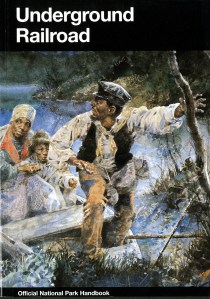
Underground Railroad: Official National Park Handbook

Discovering the Underground Railroad: Junior Ranger Activity Book

The Underground Railroad connected sympathizers with freedom seekers, freed with enslaved. The untold numbers of underground success stories sprouted above ground into a vast nexus of advocates and defenders. Unquestionably, the UGGR ride to freedom helped lay the tracks for the civil rights movement of the 20th century. During this Black History Month, may we admire that extraordinary effort to liberate a people and the larger African-American journey to freedom in all its forms.

HOW DO I OBTAIN THESE RESOURCES?

Click on the Links: For the free resources, click on the links above in the blog post.

Shop Online Anytime: You can buy eBooks or print publications —with FREE Standard Shipping worldwide— from the U.S. Government Online Bookstore at http://bookstore.gpo.gov.

 Shop our Retail Store: Buy a copy of any print editions from this collection at GPO’s retail bookstore at 710 North Capitol Street NW, Washington, DC 20401, open Monday–Friday, 9 a.m. to 4 p.m., except Federal holidays, Call (202) 512-0132 for information or to arrange in-store pick-up.

Order by Phone: Call our Customer Contact Center Monday through Friday, 8 am to 5:30 pm Eastern (except US Federal holidays). From US and Canada, call toll-free 1.866.512.1800. DC or International customers call +1.202.512.1800.

Visit a Federal depository library: Search for U.S. Government publications in a nearby Federal depository library. You can find the records for most titles in GPO’s Catalog of U.S. Government Publications.

About the author: Our guest blogger is Chelsea Milko, Public Relations Specialist in GPO’s Public Relations Office.


The Wright Stuff: Skies & World Transformed

December 16, 2015

They called Dayton, Ohio home and used the wind-shaped dunes of Kitty Hawk, North Carolina as a lift off point. Both places were testing grounds, temporary assignments. For it was the unopened blue that beckoned them skyward and homeward. On December 17th, 1903, the Wilbur and Orville Wright stuck their first—and the world’s first—successful flight in a heavier-than-air, mechanically controlled machine. Twelve seconds in the air turned into over 100 years of aviation progress.

024-005-01212-5Those sibling inventors behind the defining technology of the last century are the subject of a National Park Service handbook entitled “First Flight, The Wright Brothers and the Invention of the Airplane.” In his forward, astronaut and former U.S. Senator John Glenn defers to the duo as the “first astronauts. Their initial short flight opened our quest to reach beyond the world we know. They were the first test pilots.”

In ‘First Flight’, noted Wright biographer Tom D. Crouch recounts their bicycle shop beginnings, hometown life, and aeronautical experimentations. Full page maps and fold-outs tell of the history, visionaries, and mechanics of flight. Pull-out quotes decorate the margins, lending a first person feel to Wilbur & Orville’s story.

Eye witnesses thought the pair were foolhardy—a few spokes short of a wheel. Kitty Hawk resident Millie Daniels said, “A lot of folks thought the Wrights were a little touched, you know…they would  imitate the way birds flew…turn their arms like wings and run through the dunes while watching the gulls.” The birdie brothers weathered the pitch-and-roll of small gains and minor setbacks. In search of strong headwinds to propel their glider, they eventually moved their production from Ohio to the sand flats of the Outer Banks.

The iconic first flight of the Wright brothers in their 1903 Wright Flyer (Credit: NPS Wright Brothers National Memorial)

The iconic first flight of the Wright brothers in their 1903 Wright Flyer (Credit: NPS Wright Brothers National Memorial)

Pitched in tents battered by bitter nor’easters, the Wrights set out to beta test the product of their scientific inquiries. Several seasons of experiments led to design changes that led to repairs that led to reattempts. Finally, on a cold morning of perfect conditions, sustained human flight was achieved. On his first glide into the air, Orville remarked, “It was only a flight of twelve seconds, and it was uncertain, wavy, creeping sort of flight at best; but it was a real flight at last…”

A foolhardy flying machine became a phenomena of human achievement. The Wright Brothers made their home above the world and consequently changed the world.

How do I obtain First Flight?

Shop Online Anytime: You can buy eBooks or print publications —with FREE Standard Shipping worldwide— from the U.S. Government Online Bookstore at http://bookstore.gpo.gov.

Shop our Retail Store: Buy a copy of any print editions from this collection at GPO’s retail bookstore at 710 North Capitol Street NW, Washington, DC 20401, open Monday–Friday, 9 a.m. to 4 p.m., except Federal holidays, Call (202) 512-0132 for information or to arrange in-store pick-up.

Order by Phone: Call our Customer Contact Center Monday through Friday, 8 am to 5:30 pm Eastern (except US Federal holidays). From US and Canada, call toll-free 1.866.512.1800. DC or International customers call +1.202.512.1800.

Visit a Federal depository library: Search for U.S. Government publications in a nearby Federal depository library. You can find the records for most titles in GPO’s Catalog of U.S. Government Publications.

About the author: Our guest blogger is Chelsea Milko, Public Relations Specialist in GPO’s Public Relations Office.


Celebrate American Indian Heritage

November 20, 2014

In 1990, President George H. W. Bush proclaimed November as “National American Indian Heritage Month,” as requested in Public Law 101-343. Since then, proclamations and legislation have been passed to recognize the history and culture of Native American Indian and Alaskan Native tribes during the month of November. You can read many of the past proclamations and legislation on GPO’s Federal Digital System (FDsys).

For example:

There are many documents related to designation of November as a celebration of Native American heritage. In addition, many documents about the celebration are available in Federal depository libraries located nationwide or online through GPO’s Catalog of U.S. Government Publications.

History

The effort to recognize and celebrate American Indian Heritage at a national level began a century ago. Dr. Arthur Caswell Parker, director of the Rochester Museum in New York and founder of American Indian rights organizations, persuaded the Boy Scouts of America to commemorate a day for “First Americans” in 1912.

Image courtesy of nps.gov

Image courtesy of nps.gov

Several declarations by American Indian Groups have designated a day in May as well as September for commemorating Native Americans. Additional historical information is available on the U.S. Department of the Interior Indian Affairs Web Site. The site also provides a list of Congressional Resolutions and Presidential Proclamations. Many of those are available through FDsys, or in the collections at Federal depository libraries. The Library of Congress also has a Web site with information about Native American Heritage Month.

Federal Observance of an official day or week to celebrate Native culture began in 1976 with a Congressional Resolution authorizing President Ford to declare on October 8, “Native American Awareness Week.” Every year thereafter, a proclamation has been made to celebrate a day or month in honor of American Indians. According to a Library of Congress information page about the history, it began in 1986 with Public Law 99-471 and President Reagan’s Proclamation 5577 declaring November 23-30, 1986 as “American Indian Week.” In 1992, Public Law 102-188 declared the entire year of 1992 as “Year of the American Indian.”

President Obama made the 2014 proclamation on October 31. You can check the White House Web Site for other Presidential Proclamations. Historical proclamations are included in publications such as the Public Papers of the Presidents of the United States and the U.S. Statutes at Large. These can also be accessed in Federal depository libraries nationwide.

Native American Day – October

Many States in the U.S. also celebrate a Native American Day.

Recently the California State Legislature proclaimed the Fourth Friday in September as Native American Day. American Indian Day has been celebrated in Tennessee since 1994.

native american image 1

Image courtesy of nps.gov

In South Dakota, the second Monday in October is celebrated as Native American Day, rather than Columbus Day. Codified State Law 1-5-1.2 states that “Native Americans’ Day is dedicated to the remembrance of the great Native American leaders who contributed so much history” to the state of South Dakota.

Other annual events occur throughout the year, such as the annual Native American Heritage Days held in Grand Canyon National Park. The twenty-first annual event was held this year from August 7-8, 2014

Educational Resources

Whether celebrating a day, month or year, you can take any opportunity to learn more about the history and culture of the indigenous peoples of North America.

The National Library of Medicine recently created the exhibition Native Voices: Native People’s Concepts of Health & Illness. Visitors can see the exhibit in the rotunda gallery of the National Library of Medicine, or visit the traveling exhibition. The Exhibition opened in Honolulu Hawaii on July 18th, and is currently in Sulphur, Oklahoma until October 24, 2014. For those unable to visit in person, the Web site includes videos, timelines, and resources about the exhibition and content.

Image courtesy of The University of Iowa (Digital Library)

Image courtesy of The University of Iowa (Digital Library)

The National Archives contains a wealth of records relating to American Indians from about 1774 through the 1990s. Their Web site provides a helpful research guide for accessing these collections. The U.S. Department of Housing and Urban Development has created an informative guide on Native American Heritage through the Indian Housing’s Office of Native American Programs (ONAP). The U.S. Department of Defense also has a detailed Web guide created for the 2001 American Indian Heritage Month.

The Smithsonian National Museum of the American Indian is a valuable educational resource visitors to Washington, D.C. can explore. Those unable to visit in person can explore some of the collections online.

There are also several books and series published by Federal agencies and available from the Government Printing Office bookstore to learn more about Native cultures, history, and recent events:

  • Handbook for North American Indians series047-000-00415-2This series, produced by the Smithsonian Institution is an extensive reference set providing an encyclopedic summary of the prehistory, history, and cultures of the aboriginal peoples of North America.
  • The Eagle Book serieseagle book series imageThis is an award winning series developed through collaboration with the U.S. Department of Health and Human Services Center for Disease Control and Prevention Native Diabetes Wellness Program, the Indian Health Service Division of Diabetes Treatment and Prevention, and the Tribal Leaders Diabetes committee. What began as the book “Through the Eyes of the Eagle” is now a full series written for elementary and middle school children and includes a guide for educators and communities.
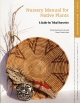
  • Nursery Manual for Native Plants: A Guide for Tribal Nurseriesnursery manual for native plantsAgricultural Handbook 730, produced by the Forest Service, is a coordinated effort with the Virtual Center for Reforestation, Nurseries, and Genetic Resources and representatives from tribes across the United States to create a manual with special attention to the uniqueness of Native American Cultures. There is also access to the full PDF online.
  • The Children’s Bureau Legacy: Ensuring the Right to ChildhoodThe Children's Bureau LegacyHistory of the bureau from 1912-2012 is detailed here, including information about Indian Boarding Schools and the Indian Adoption Program.
  • Iroquois Warriors in Iraq – This publication analyzes the role of the Iroquois’ Warriors of the UW Army Reserve’s 90th Division, which was deployed to Iraq in 2004.

HOW DO I OBTAIN THESE PUBLICATIONS?

In addition to clicking on the links in the article above to find the publications, you may find these publications from the following:

Shop Online Anytime: You can buy these and other print publications (with FREE Standard Shipping worldwide) from the U.S. Government Online Bookstore Web site at http://bookstore.gpo.gov:

Shop our Retail Store: Buy a copy of any print editions from this collection at GPO’s retail bookstore at 710 North Capitol Street NW, Washington, DC 20401, open Monday–Friday, 9 a.m. to 4 p.m., except Federal holidays, Call (202) 512-0132 for information or to arrange in-store pick-up.

Order by Phone: Call our Customer Contact Center Monday through Friday, 8 am to 5:30 pm Eastern (except US Federal holidays). From US and Canada, call toll-free 1.866.512.1800. DC or International customers call +1.202.512.1800.

Visit a Federal Depository Library: Search for these in a nearby Federal depository library.

About the author: Cathy Wagner is an Outreach Librarian with the Outreach & Support team in the Library Services & Content Management (LSCM) unit at the Government Printing Office.


National Public Lands Day: Orchards and Fruit Trees

September 23, 2014

The leaves on the trees are changing colors, pumpkins seem to be popping up everywhere, and it is getting darker earlier. Fall is in the air and coinciding with the beginning of fall is National Public Lands Day, a celebration that began in 1994 and takes place on the last Saturday of September where volunteers across the country work together to beautify public lands. Also coinciding with the season is the annual trip to the orchard to pick apples and drink cider. In the spirit of fall, apple picking, and National Public Lands Day, we are looking at two companion publications from the National Park Service about orchards and fruit trees.

024-005-01266-4Fruitful Legacy: A Historic Context of Orchards in the United States, with Technical Information for Registering Orchards in the National Register of Historical Places

This 2009 publication follows the history of fruit trees, their presence in national parks, and how to properly register the trees. The first half and more interesting half of the publication informs readers on how fruit trees came to the United States:

  • From 1600-1800, European settlers planted seeds in irregular patterns to grow fruit trees for the purpose of producing cider and animal feed, not to produce edible fruit.
  • During the 1800s, commercial orchards were established where trees were planted in a specific pattern with the purpose of eating raw fruit. This practice started on the east coast and migrated west along with the expansion of the country.
  • From the late-1880s to mid-1900s, the U.S. Department of Agriculture was established and a new generation of growers started using pesticides, mechanical irrigation systems, cold storage, and mechanized equipment.
  • From the mid-1900s to present, the practice transitioned from amateur, small-scale farm orchards to professional commercial orchards. It was determined that small, dwarf trees produced greater yield and were more profitable.

024-005-01304-1014Historic Orchard and Fruit Tree Stabilization Handbook

Published in 2012, this publication follows Fruitful Legacy and specifically focuses on preserving orchards and fruit trees in California. Orchards and fruit trees are growing across 15 percent of California State Parks. Established overtime by Native Americans, Spanish missionaries, and the settlers from the Gold Rush, orchards and fruit trees can live from 50-200 years depending on the type of tree. The publication goes in depth on how to grow, maintain, and protect orchards and fruit trees and is intended for professionals who work for the California State Park Systems. However, the information can be adapted by anyone who wants to know best practices for growing fruit trees whether it is an entire orchard or a single tree.

Embrace fall and celebrate National Public Lands Day with a trip to your local orchard!

HOW DO I OBTAIN THESE PUBLICATIONS?

About the Author: Our guest blogger is Emma Wojtowicz, Public Relations Specialist in GPO’s Office of Public Affairs.


A Star-Spangled Anniversary

September 12, 2014
Image: Celebrating the 200th Anniversary of our National Anthem http://www.starspangled200.com/

Image: Celebrating the 200th Anniversary of our National Anthem (http://www.starspangled200.com/)

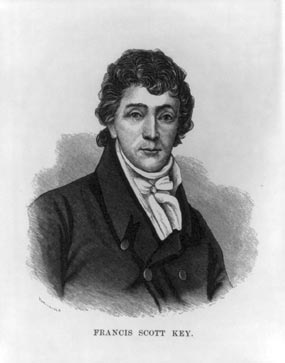
September 2014 marks the 200th anniversary of the United States National Anthem, “The Star-Spangled Banner.” In September 1814, after a 25-hour long battle with the British, U.S. soldiers at Baltimore’s Fort McHenry raised a 42-foot American flag in victory. A young Francis Scott Key, a Maryland-born attorney, was aboard a ship in Baltimore’s harbor to negotiate the release of an American prisoner and was so inspired by the patriotic sight that he wrote “The Star-Spangled Banner.”

Image source: nps.gov

Francis Scott Key (nps.gov)

If you’re lucky enough to be in Maryland during the month of September, the Star-Spangled Spectacular is a free festival that celebrates the 200th anniversary of our National Anthem. Tall ships, Navy ships, and the Blue Angels will come to Baltimore’s Inner Harbor. Landside festivals include living history demonstrations. Events crescendo on September 13, 2014 with two star-studded patriotic concerts and extraordinary fireworks display over Fort McHenry and the Baltimore harbor, which will broadcast live on PBS’ Great Performances. Learn more here.

You can check out the National Park Service’s Fort McHenry page for details about the park, its history, and the festivities.

The U.S. Government Printing Office offers publications and resources to help you learn more about this pivotal point in American history.

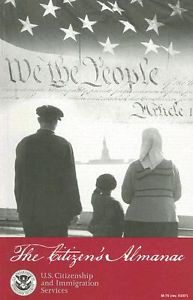
citizens almanacAvailable through the U.S. Government Bookstore, The Citizen’s Almanac: Fundamental Documents, Symbols, and Anthems of the United States, contains information on the history, people, and events of the United States. This resource is primarily targeted at immigrants hoping to become U.S. citizens. However, it can also serve as a patriotic resource for elementary school-age children through freshmen in high school. Teachers of social studies and civics programs may want to have a copy handy to use in classrooms. Some examples of things covered in the publication are: rights and responsibilities of citizens, the Star-Spangled Banner, the Pledge of Allegiance, the Gettysburg Address, the Constitution, landmark decisions of the Supreme Court, and much more. A related resource is the Civics and Citizenship Toolkit.

GPO’s Federal Digital System also has a variety of Government documents related to the Star-Spangled Banner:

Star Spangled Banner Flag on display at the Smithsonian's National Museum of History and Technology, around 1964

Star Spangled Banner Flag on display at the Smithsonian’s National Museum of History and Technology, around 1964

GPO’s Catalog of U.S. Government Publications provides access to a fascinating document from the Smithsonian, National Museum of American History: The Star-Spangled Banner: State-of-the-Flag Report, 2001. This document describes the history of THE flag that inspired our National Anthem, where it has traveled since 1814, the conservation project undertaken to preserve it for future generations, and more.

Also check out this information from the Smithsonian on the Star-Spangled Banner. You can also learn about the flag’s preservation project here. You can also learn more about Francis Scott-Key here.

You can also visit a Federal depository library near you to discover what other publications the Federal Government has to offer on this incredible moment in American history. Locations are nationwide. Find the Federal depository nearest you by visiting the Federal Depository Library Directory.

HOW DO I OBTAIN THESE PUBLICATIONS?

In addition to clicking on the links in the article above to find the publications, you may find these publications from the following:

Shop Online Anytime: You can buy these print publications (with FREE Standard Shipping worldwide) from the U.S. Government Online Bookstore website at http://bookstore.gpo.gov:

Order by Phone: You may also order print editions by calling GPO’s  Customer Contact Center Monday through Friday, 8 am to 5:30 pm Eastern (except US Federal holidays). From US and Canada, call toll-free 1.866.512.1800. DC or International customers call +1.202.512.1800.

Shop our Retail Store: Buy a copy of any print editions at GPO’s retail bookstore at 710 North Capitol Street NW, Washington, DC 20401, open Monday–Friday, 9 a.m. to 4 p.m., except Federal holidays, Call (202) 512-0132 for information or to arrange in-store pick-up.

About the author: Our guest blogger is Kelly Seifert, Lead Planning Specialist for GPO’s Library Services & Content Management Division that supports the Federal Depository Library Program.


50 Years of the Wilderness Act

September 3, 2014

keeping in wildFifty years ago on September 3, 1964, President Lyndon B. Johnson signed the Wilderness Act into law. This established the National Wilderness Preservation System (NWPS) and designated 9.1 million acres of wildlands for preservation. In the last 50 years, Congress has added an additional 100 million acres to the System.

Lyndon Johnson signing the Wilderness Act of 1964 (nps.gov)

Lyndon Johnson signing the Wilderness Act of 1964 (nps.gov)

The 757 wilderness areas within the NWPS are managed by all four Federal land managing agencies: the Bureau of Land Management, Fish and Wildlife Service, Forest Service, and National Park Service. To learn more about the Wilderness Act and the NWPS, visit the University of Montana’s wilderness.net.

The Wilderness Institute, sponsored by numerous Federal agencies, organizations, and individuals, has planned a wide array of events and projects to commemorate this historic legislation. Check it out here.

The U.S. Government Printing Office offers access to an extensive variety of publications and resources related to the Wilderness Act.

We’ll start with the U.S. Government Bookstore. Interesting publications can be found grouped by agency here:

001-001-00686-6Of particular interest to this topic is a publication from the U.S. Forest Service: Wildland Fire in Ecosystems: Fire and Nonnative Invasive Plants. This 16-chapter publication was designed to help increase understanding of plant invasions and fire. The nonnative invasive species that pose the greatest threat for fires are described in detail. Also detailed are the emerging fire-invasive issues in each bioregion through the United States. This publication is the perfect resource for fire management and ecosystem-based management planning.

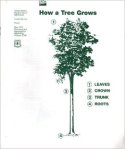
001-000-04738-8Another publication from the Forest Service, How a Tree Grows, describes the science of how leaves, roots, trunks, soil, and more work together to grow a tree.

024-001-03629-1Also an interesting publication related to this topic is Malheur’s Legacy: Celebrating a Century of Conservation, 1908-2008, Malheur National Wildlife Refuge, Southeast Oregon. This book tells the story of this Refuge’s first hundred years, as well as the story of the Native Americans who first inhabited the land, the early European settlers, how Theodore Roosevelt established it as a bird refuge, and the work of the Civilian Conservation Corps in the 1930s. This amazing wildlife refuge is home to 320 species of birds and 58 mammal species. You’ll also want to check out the National Wildlife Refuge System: A Visitor’s Guide. It contains a map showing national wildlife refuges that provide recreational and educational opportunities and provides tips for visiting national wildlife refuges. The publication also lists refuges in all 50 States, Puerto Rico and the Virgin Islands and describes the best wildlife viewing season and features of each refuge.024-010-00724-9

For access to more Wilderness Act resources, you can visit GPO’s Catalog of U.S. Government Publications (CGP).

Through the CGP, you can access the U.S. Forest Service’s report, Keeping it Wild: an Interagency Strategy to Monitor Trends in Wilderness Character across the National Wilderness Preservation System. The Interagency Wilderness Character Monitoring Team—representing the

Department of the Interior (DOI) Bureau of Land Management, DOI Fish and Wildlife Service, DOI National Park Service, DOI U.S. Geological Survey, and the U.S. Forest Service—offers in this document an interagency strategy to monitor trends in wilderness character across the National Wilderness Preservation System.

Also accessible through the CGP is The National Atlas of the United States of America. National Wilderness Preservation System, from the U.S. Geological Survey. This map of the National Wilderness Preservation System for the United States shows all designated Wilderness areas, and the color of each area depicts which of the Federal agencies administers the Wilderness. In addition to the map, insets on the front side show wilderness photos, a summary of the wilderness legacy, and quotes from citizens about what wilderness means to them. The back side of the map provides general information about the wilderness system in text, images, and sketches. In addition, a table lists acreage, year of establishment, and administrative information for each Wilderness.

GPO’s Federal Digital System (FDsys) also offers resources related to the Wilderness Act:

You can also visit a Federal depository library near you to discover what other publications the Federal Government has to offer on the Wilderness Act, the NWPS, wildlife, and much more. Locations are nationwide. Find the Federal depository nearest you by visiting the Federal Depository Library Directory.

Cheers to the great American treasure that is the National Wilderness Preservation System! Happy 50th, and here’s to many more.

HOW DO I OBTAIN THESE PUBLICATIONS?

In addition to clicking on the links in the article above to find the publications, you may find these publications from the following:

Shop Online Anytime: You can buy these print publications (with FREE Standard Shipping worldwide) from the U.S. Government Online Bookstore website at http://bookstore.gpo.gov:

Order by Phone: You may also order print editions by calling GPO’s  Customer Contact Center Monday through Friday, 8 am to 5:30 pm Eastern (except US Federal holidays). From US and Canada, call toll-free 1.866.512.1800. DC or International customers call +1.202.512.1800.

Shop our Retail Store: Buy a copy of any print editions at GPO’s retail bookstore at 710 North Capitol Street NW, Washington, DC 20401, open Monday–Friday, 9 a.m. to 4 p.m., except Federal holidays, Call (202) 512-0132 for information or to arrange in-store pick-up.

About the author: Our guest blogger is Kelly Seifert, Lead Planning Specialist for GPO’s Library Services & Content Management Division that supports the Federal Depository Library Program.


Civil War Defenses of Washington & the 150th anniversary of the Battle of Fort Stevens

July 10, 2014

Gettysburg, Manassas, and Antietam are famous Civil War battles remembered for President Lincoln’s address, the turning point of the war, and the bloodiest battle of the war. They are also battles that took place in states surrounding Washington, DC – within 100 miles of the nation’s capital. This week marks the 150th anniversary of the only and relatively unknown battle that took place in Washington, DC, the Battle of Fort Stevens.

024-005-01232-0[1]A Historic Resources Study: The Civil War Defenses of Washington by the Department of Interior’s National Park Service follows the history of efforts to defend Washington, DC from the city’s conception in the 1790s to the Civil War and the Battle of Fort Stevens. This publication is very descriptive painting a clear picture of what Washington, DC was like during the Civil War. The Union constructed a fortification system to protect Washington, DC that by the end of the war consisted of 68 enclosed forts and batteries, emplacements for 1,120 guns, and 20 miles of rifle-trenches. Because the city was the capital and the location of war departments and bureaus it had the largest collection of supplies, equipment, and materials. In the Foggy Bottom area where the Kennedy Center, George Washington University, and the Department of State currently sit, there was a depot of 30,000 horses and mules and the Washington Monument grounds housed an Army cattle-slaughtering yard.

Battle-of-Fort-Stevens[1]

Company F, 3d Regiment Massachusetts Heavy Artillery assembled at Fort Stevens. Photo by William Morris Smith, courtesy Library of Congress.

The Battle of Fort Stevens is the grand finale of the publication. After establishing the condition and role of the Washington, DC during the war, the book goes into step-by-step detail of the battle. Here is my perceived synopsis of the Battle of Fort Stevens: General Robert E. Lee of the Confederate army gave orders to Lieutenant General Jubal Early to threaten Washington, DC, which had remained largely untouched during the war. Early led his troops through Virginia and Maryland, taking part in different skirmishes along the way. On July 9 at the Battle of Monocacy near present-day Frederick, Maryland, Early defeated the Union army, thereby opening up the route to Washington, DC. The Battle of Monocacy temporarily stalled Early, giving General Ulysses Grant more time to send reinforcement troops to defend the capital – ultimately derailing Early’s efforts. The Battle of Fort Stevens started on July 11 and ended with Early withdrawing his troops by July 13. The Confederate troops moved towards the Capitol along Georgetown Pike and Rockville Pike culminating in the Battle of Fort Stevens, which took place with the Capitol dome in sight – six miles away – on what was mostly open farm area around present-day Georgia Avenue near Rock Creek Park. The reinforcements sent by Grant and reports suggesting more Union troops were coming caused Early to retreat and end his pursuit of the city.

battle-of-fort-stevens-925[1]

Battle of Fort Stevens Map courtesy Civil War Preservation Trust

GPO’s early history is intertwined with the Civil War. One of GPO’s most significant print jobs was the preliminary version of the Emancipation Proclamation produced in September 1862. Aside from production work done by the agency as part of the war effort, some GPO employees were part of the Interior Department Regiment organized to protect the city. With the threat of General Early closing in on Washington, employees were called on to defend the city but not needed when the reinforcement troops sent by General Grant arrived.

During the 150th anniversary of the Civil War, think beyond the famous battles of the war and remember the skirmishes and other important battles like the Battle of Fort Stevens that may be unknown but are just as important.

HOW DO I OBTAIN THIS PUBLICATION?

Shop Online Anytime: You can buy these and other publications (with FREE Standard Shipping worldwide) from the U.S. Government Online Bookstore website at http://bookstore.gpo.gov:

Shop our Retail Store: Buy a copy of any print editions from this collection at GPO’s retail bookstore at 710 North Capitol Street NW, Washington, DC 20401, open Monday–Friday, 9 a.m. to 4 p.m., except Federal holidays, Call (202) 512-0132 for information or to arrange in-store pick-up.

Order by Phone: Call our Customer Contact Center Monday through Friday, 8 am to 5:30 pm Eastern (except US Federal holidays). From US and Canada, call toll-free 1.866.512.1800. DC or International customers call +1.202.512.1800.

Visit a Federal Depository Library: Search for these in a nearby Federal depository library.

About the author: Our guest blogger is Emma Wojtowicz, Public Relations Specialist in GPO’s Office of Public Affairs.


Notable Government Documents 2013 – Winners

June 27, 2014

ALA Notable Government Documents 2013Each year, the American Library Association’s (ALA) GODORT Notable Documents Panel selects what it considers to be the most “Notable Government Documents” published during the previous year by Federal, state, and local governments and includes the list of winners in its prestigious Library Journal (LJ). Typically, many of the Federal publications it picks are available through the Government Printing Office’s U.S. Government Online Bookstore.

Library Journal LogoKnown as “the most trusted and respected publication for the library community,” LJ provides groundbreaking features and analytical news reports covering technology, management, policy and other professional concerns to public, academic and institutional libraries. Its hefty reviews sections evaluate 8000+ reviews annually of books, ebooks, audiobooks, videos/DVDs, databases, systems and websites.

According to LJ, “This year’s list of notable documents includes titles on cultural heritage, globalism, diversity and gender equality, lifelong learning, and the environment.” Here are Federal Government documents available through GPO that were selected as Most Notable for 2013.

The Iraq War 2003-2011The Iraq War 2003-2011 “Focusing entirely on the self-sacrifice of military personnel and not on the politics, this chronology tells its story primarily through color photographs and minimal text. Emphasizing the successes of the coalition forces, it centers on medal of honor winners, the wounded, and the dead.” – LJ

A Sense of Place Design Guidelines for Yosemite National ParkA Sense of Place: Design Guidelines for Yosemite National Park “Revised and expanded from the 2004 edition, this history of development in ¬Yosemite covers up to the present. With maps and historical images, the authors attempt to influence the design ethic of future park developers and establish guidelines so that successive plans are compatible with the rhythms and spirit of Yosemite’s landscape and scenery.” – LJ

You Cannot Surge TrustYou Cannot Surge Trust: Combined Naval Operations of the Royal Australian Navy, Canadian Navy, Royal Navy, and United States Navy, 1991-2003 “The premise of this investigation is that the U.S. military can no longer act alone as the world’s only superpower. Within the context of a general history of the role of naval power in defense policy development and using examples dating back to the Revolutionary War, Weir outlines the increasing dependence nations have on one another and argues that conflicts between partners caused by varying rules of engagement can be overcome.” – LJ

The Warren Commission ReportThe Warren Commission Report: The Official Report on the Assassination of President John F. Kennedy “Rereleased on the 50th anniversary of the Kennedy assassination, this is the online pdf version of the Warren Commission Report Summary, which condenses the contents of the 26 hearings and evidence volumes. Reproductions of forensic photos, police reports, physicians’ notes, coroners’ reports, and verbatim extracts of graphic witness testimony supplement the story of that tragic day in Dallas in 1963.” – LJ

Congratulations to the publishers of these deserving award winning publications!

How can you get these publications from this year’s Federal Notable Government Documents collection?

Shop Online Anytime: You can buy these and other publications (with FREE Standard Shipping worldwide) from the U.S. Government Online Bookstore website at http://bookstore.gpo.gov:

Shop our retail bookstore at 710 North Capitol Street NW, Washington, DC 20401, open Monday-Friday, 9am to 4pm, except Federal holidays, (202) 512-0132.

Order by Phone: Call our Customer Contact Center Monday through Friday, 8 am to 5:30 pm Eastern (except US Federal holidays). From US and Canada, call toll-free 1.866.512.1800. DC or International customers call +1.202.512.1800.

Visit a Federal Depository Library: Search for U.S. Government publications in a nearby Federal depository library. You can find the records for most titles in the Catalog of U.S. Government Publications or CGP.

About the author: Trudy Hawkins is a writer and marketing specialist in GPO’s Publication & Information Sales Division supporting the U.S. Government Online Bookstore (http://bookstore.gpo.gov).


Commemorate the Anniversary of Arlington National Cemetery through Government Documents

May 20, 2014

150th ANCThis year marks the 150th anniversary of the designation of Arlington National Cemetery. On May 13, 1864, the body of Private William Henry Christman of Pennsylvania was laid to rest on the grounds of Arlington House, the former home of Gen. Robert E. Lee until the Civil War. Private Christman was the first soldier laid to rest at Arlington National Cemetery, one month prior to its official establishment as a military cemetery. The first of many events to be held this summer commemorating this important anniversary, began on May 13, 2014 with the laying of a wreath at Private Christman’s grave. Special Guided Tours are also planned, through the months of May and June. The events conclude with a laying of a wreath at the Tomb of the Unknown Soldier on June 16th.

A wreath is placed at the grave of Army Private William Christman, the first person laid to rest at Arlington National Cemetery. Image source: www.dcmilitary.com

A wreath is placed at the grave of Army Private William Christman, the first person laid to rest at Arlington National Cemetery. Image source: http://www.dcmilitary.com

There are many Government documents available to learn more about the Civil War, Arlington House, and the designation and history of Arlington National Cemetery. For a brief history, check out the U.S. Department of Veterans Affairs publication, Arlington National Cemetery. You can also check out this fact sheet about the history and development of all VA National Cemeteries.

Arlington House and the development of Arlington National Cemetery

The National Park Service (NPS) has published several publications regarding the remarkable history of Arlington House, including the following publications, which are currently available from the U.S. Government Bookstore:

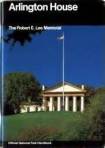
arlington houseArlington House: A Guide to Arlington House, The Robert E. Lee Memorial, Virginia. Although small in size like most NPS handbooks, this publication provides a wealth of information on the history of Arlington House. The publication opens with an introduction of General Lee and Arlington House. It also presents a brief historical account of the house and its occupants, the Custises and the Lees, as well as providing concise information on the house and its grounds.

cultural landscape reportThe National Park Service also published a Cultural Landscape Report about Arlington House in 2001. As stated in the report, “It’s hard to imagine today what the grounds of Arlington House originally looked like because of the graves of Arlington National Cemetery that surround the house. Arlington National Cemetery almost overwhelms Arlington House.” This Cultural Landscape Report and Site History about Arlington House, tells the story of the creation and use of Arlington House and its link to the formation and design of our national cemetery. It compiles in one place the site’s heritage, documents the changes over time, and establishes what is important to preserve. To learn more about Cultural Landscape Reports read A Guide to Cultural Landscape Reports: Contents, Process, and Techniques available from the GPO Bookstore. You can also read Custis-Lee Mansion: The Robert E. Lee Memorial online from the National Park Service, or check out a print copy at a local Federal depository library.custis-lee mansion

National Cemetery Burial Eligibility

Arlington National Cemetery holds about 27 funerals each week. There are several House Committee Reports regarding veterans’ eligibility for burial in Arlington. H.R. 3211 of the 105th Congress, as well as H.R. 3423 from the 107th Congress amended Title 38 of the U.S. Code to modify eligibility of burial in Arlington National Cemetery. You can access hearings, as well as the legislative history for H.R. 3423 and other bills online. You can also visit a Federal depository library for older reports concerning burials, such as a 1921 report before a subcommittee on the Expenses of burial in Arlington Cemetery of an unknown member of the Expeditionary Forces. You can also browse the volumes of “The war of the rebellion: a compilation of the official records of the Union and Confederate armies” for any records of the history of Arlington House and the appropriation of the land by the Federal government after the war. The volumes are available at many Federal depository libraries.

Arlington National Cemetery Memorials

There are many memorials at Arlington National Cemetery commemorating wars, notable military figures, presidents, and service men and women. If you visit a Federal depository library you could check out a copy of “In Remembrance of a Sailor: a shrine to America’s heroes”, a 1990 publication from the U.S. Navy Department. Information about other memorials in the cemetery can be found on the Arlington Cemetery website.

The Tomb of the Unknown Soldier

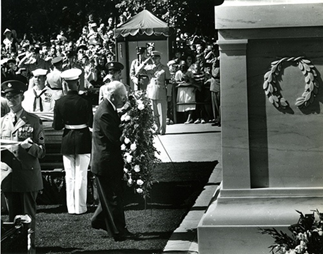
President Dwight D. Eisenhower places a wreath at the Tomb of the Unknown Soldier of World War I during interment ceremonies for the Unknown Servicemen of World War II and the Korean Conflict, at Arlington National Cemetery. Image source: Old Guard

President Dwight D. Eisenhower places a wreath at the Tomb of the Unknown Soldier of World War I during interment ceremonies for the Unknown Servicemen of World War II and the Korean Conflict, at Arlington National Cemetery. Image source: Old Guard

The Tomb of the Unknown Soldier was approved by Congress on March 4, 1921. Details of the act can be found in the Congressional Record from that period. You can visit a Federal depository library to access historic copies of the Congressional Record and view the enabling legislation for the Tomb of the Unknowns. The remains of soldiers from World War I, World War II, and the Korean War lay in state and are honored by The Old Guard. In 1984, the remains of an unknown Vietnam War soldier were interred in the Tomb of the Unknown. A document about this soldier, “The Unknown Serviceman of the Vietnam War Era” was created by the U.S. Army Center of Military History. You can read more about it at a Federal depository library, or online from the HathiTrust. Pictures of the Tomb of the Unknowns can be found on the Old Guard Pinterest Board.

If you’re not in the Washington, DC area to participate in any of the events mentioned in this blog, curl up with these documents and immerse yourself in the history and stories of the men and women who fought for our country and were laid to rest on the grounds of the National Cemetery.

How can I get these publications about the history of Arlington House and Arlington National Cemetery?

Shop Online Anytime: You can buy these and other publications (with FREE Standard Shipping worldwide) from the U.S. Government Online Bookstore website at http://bookstore.gpo.gov:

Order by Phone: You may also Order print editions by calling our Customer Contact Center Monday through Friday, 8 am to 5:30 pm Eastern (except US Federal holidays). From US and Canada, call toll-free 1.866.512.1800. DC or International customers call +1.202.512.1800.

Shop our Retail Store: Buy a copy of any print editions from this collection at GPO’s retail bookstore at 710 North Capitol Street NW, Washington, DC 20401, open Monday–Friday, 9 a.m. to 4 p.m., except Federal holidays, Call (202) 512-0132 for information or to arrange in-store pick-up.

Visit a Federal Depository Library: Search for U.S. Government publications in a nearby Federal depository library. You can find the records for most titles in the Catalog of U.S. Government Publications or CGP.

About the author: Cathy Wagner is an outreach librarian with the Education & Outreach team in the Library Services & Content Management (LSCM) division at the Government Printing Office.

Additional content, images and editing provided by Trudy Hawkins, a writer and marketing specialist in GPO’s Publication & Information Sales Division supporting the U.S. Government Online Bookstore (http://bookstore.gpo.gov).


Designing a Nation: Civic Art in the Nation’s Capital

April 17, 2014

The U.S. Capitol and National Mall are a beautiful representation of the dignity and public spirit of the United States of America. This area is steeped in history, and you can learn more about the past and continued efforts to design, build, and preserve the U.S. Capitol and National Mall through many government publications.

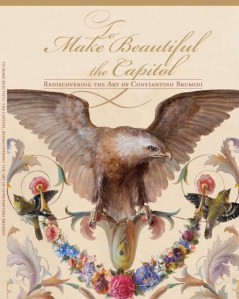
Brumidi-To-Make-Beautiful-the-CapitolWith its famous dome celebrating its 150th anniversary in December 2013, the United States Capitol is a treasure-trove of civic art. Just released, To Make Beautiful the Capitol: Rediscovering the Art of Constantino Brumidi gives a detailed history of renowned Italian-born artist Constantino Brumidi’s masterful work in “making beautiful” the walls and ceilings of the United States Capitol in a span of 25 years starting in 1854. Every page delights with gorgeous, full-color photographs and images of Brumidi’s art, from photographs of the frescoes and decoration, to sketches, paintings and images of the artist, particularly the Brumidi Corridors and his “monumental fresco” in the Capitol Rotunda, called The Apotheosis of Washington. Fascinating anecdotes are included throughout of the artist and the inspirations he received for various elements, his relationship with engineer Montgomery C. Meigs, and the conservation efforts to preserve his work accurately for posterity. Read more about this publication and others about art in the Capitol in our prior blog post, National Treasure: The art and architecture of the US Capitol.

The primary oversight board for projects in the National Mall area is the U.S. Commission of Fine Arts, which was established by an act of Congress on May 17, 1910 in Public Law 61-181. This commission was created as an independent review agency for the work of designing the national capitol and to guide the architectural development of Washington. The commission’s role was expanded with later passage of the Shipstead-Luce Act of 1930 (Public Law 71-231 and Public Law 76-248), and the Old Georgetown Act of 1950 (Public Law 81-808). The U.S. Commission of Fine Arts has a long history of guiding the development of the nation’s capital. Several resources are available in print and online to learn more about the commission’s history.

The National Park Service maintains a detailed guide linking to documents and reports that detail the area history. The Mall Cultural Landscape Inventory, part 2 contains several pages describing the history of the Senate Park Commission and its formation into the U.S. Commission of Fine Arts.

Designing-the-nations-capitalThe U.S. Commission of Fine Arts published a monograph in 2006; Designing the nation’s capital: the 1901 plan for Washington D.C. This 359 page monograph contains illustrations in color and black and white, as well as maps. The National Park Service provides full text access to this title online.

In addition to this title, several editions of this history of the U.S. Commission of Fine Arts from 1910 to date were published in 1964, 1977, 1981, 1985, 1991, and 1996.

Civic Art : a centennial history of the U.S. Commission of Fine ArtsThe most recent addition to the volumes available about the history of the commission is celebrates 100 years of the work of the commission. Civic Art : a centennial history of the U.S. Commission of Fine Arts is a beautiful, 626 page monograph with illustrations, maps and plans. It is a comprehensive history of the agency and includes original essays by prominent architects and landscape architects including Arleyn Levee, Carroll William Westfall, and Richard Guy Wilson.

A Botanic Garden for the Nation: The United States Botanic GardenAnother beautiful book that features some of the history of the national mall area is A Botanic Garden for the Nation: The United States Botanic Garden. You can read more about this publication in a previous post on Government Book Talk.

For more information about the U.S. Capital building, you can also check out the publications highlighted in the previous Government Book Talk post on the 150th anniversary of the completion of the Capital Dome.

America’s Castle: the evolution of the Smithsonian Building and its institution, 1840-1878To read more about the history of the Smithsonian, you could visit a depository library and check out the publication, America’s Castle: the evolution of the Smithsonian Building and its institution, 1840-1878.

If you are interested in the official records of the commission, you can locate them at the National Archives. The record collection includes administrative history, annual reports, and a selection of still photographs. The records are divided between College Park, MD and Washington DC. Many of the records pertaining to the building and continued development of the National Mall are available at the National Archives, such as the National Park Service Records for the National Capital Region, and the Records of the Office of Public Buildings and Public Parks of the National Capital.

How Can I get this book and other publications about history of the U.S. Commission of Fine Arts?

About the author: Our guest blogger is Cathy Wagner, a GPO Outreach Librarian for the U.S. Government Printing Office’s Library Services & Content Management (LSCM) Division. Additional content, images and editing provided by Trudy Hawkins, a writer and marketing specialist in GPO’s Publication & Information Sales Division supporting the U.S. Government Online Bookstore (http://bookstore.gpo.gov).


Spring forward into the garden

March 20, 2014
Baby chick hides among yellow daffodils

Image: Chick with daffodils (Source: Argonne National Laboratory, U.S. Department of Energy

Ah, spring: the season of rebirth, renewal, and growth. Breathe in the air full of the fresh blossoms of flowers, feel the first warm breezes, gaze at the profusion of color, and listen to the birds chirping and insects buzzing.

Most of the United States just went into daylight saving time on March 9 with instructions to “spring forward” with our clocks. On Thursday, March 20, 2014, we spring forward for real as it is the Spring or Vernal Equinox, fondly known as the official first day of spring. After a brutal winter and the first full month of spring and National Garden Month—April– just around the corner, many minds turn toward planting and gardening with their promise of getting back in touch with nature.

Play the Zone

Before you pull on the mud boots and pick up your gloves and tools, you’ll want to determine where you are in the USDA Plant Hardiness Zone Map for the United States. The climate where you garden affects the fruits and vegetables that you can grow successfully. Local nurseries and garden centers will typically stock plants that perform well in your climate, but it’s important to know your planting zone if you are ordering seeds, bulbs, or plants from non-local establishments.

USDA-Plant-Hardiness-Zones-Map across the U.S.

Image: USDA Plant Hardiness Zone Map (Source: USDA)

How does your garden grow?

If you pore over seed catalogs, browse gardening Web sites, stroll the store aisles of soil, pots, and plants, and read gardening books in the dark winter months, then you probably have the gardening bug. You can also learn to recognize the real insects that you have in your garden with The Bug Book: A Garden Field Guide from the EPA. Gardeners can toil away only to find that someone else is enticed by the new plants; that’s when some choose to control pests by using chemicals. Be extra safe and learn about the effects of pest control, especially if you have children. Greenscaping (see this EPA guide) is an alternative method of dealing with those tiny invaders in your garden.

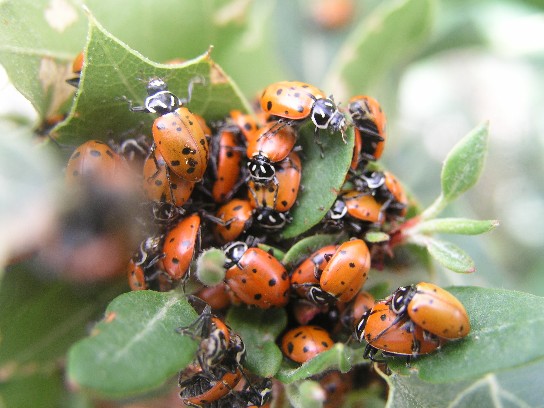
Lady bugs clustered on an oak branch

Image: Lady bugs gathering on an oak branch (Source: NPS)

Practice safe gardening

EPA's Mission: Sunwise Activity Book for sun safety ISBN  9780160917097In any outdoor activity, you want to be safe and healthy in the garden. While you are digging away and pulling weeds, you can get quite a sunburn or get dehydrated. The EPA’s Mission: Sunwise Activity Book helps educate kids on how to be safe in the sun and to use sunscreen. Check out these health and safety tips so that you can continue to enjoy the time spent outdoors.
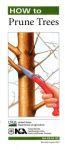
How to Prune Trees by the U.S. Forest Service ISBN: 9780160913761How-to-Recognize-Hazardous Defects-in-Trees ISBN: 9780160913778When it comes to tackling bigger projects, read up first to learn what to look for in your own backyard, starting with those stately trees. How to Prune Trees is a best-selling quick guide to smart practices on trimming branches for optimum tree health. How to Recognize Hazardous Defects in Trees is an overview of common issues with trees.

Removing a tree altogether is sometimes the only safe option; Why Would Anyone Cut a Tree Down? is a book for children that explains how taking away an unhealthy tree can benefit the overall environment of the garden.Why Would Anyone Cut a Tree Down? U.S. Forest Service ISBN: 9780160916267

As always, with any larger gardening issues, you’ll want to consult a professional arborist for concerns with your trees.

Mighty oaks from little acorns grow

Gardening is an ideal activity for children. Not only are they out in nature and physically active, but they also learn about where healthy food comes from while observing the weather, biology, zoology, and conservation. The First Lady of the United States, Michelle Obama, has been teaching the message of healthy living through nutritious, locally grown food in her White House Kitchen Garden. Plants grown right outside the White House in Washington, DC, end up on the dining table of the President’s family. Whether you are building a kitchen garden, a school garden, or a community garden, Let’s Move has more information for you, including a diagram of the White House Kitchen Garden if you want to recreate it in your own backyard.

The Little Acorn - USDA children's book ISBN: 9780160817014Schools are well aware of the educational benefits of gardening; it begins as early as pre-school. (Download the free “Grow It, Try It, Like It! Preschool Fun with Fruits and Vegetables” garden-themed nutrition education kit.) Teachers can find resources and lesson plans from the EPA to incorporate gardening into their school curriculum. And if April showers are in the forecast, little ones can still learn about nature by curling up with a delightful illustrated book about The Little Acorn, which tells of the cycle of growth and change in the garden that starts with just one seed.

Watch the video below as First Lady Michelle Obama and White House chef Sam Kass tell the story of the first garden on White House grounds since Eleanor Roosevelt’s Victory Garden during World War II.

First Lady and White House chef explain history of the first White House kitchen garden since WW2

Inside the White House: The Kitchen Garden” video of First Lady Michelle Obama and White House chef Sam Kass telling the story of the first garden on White House grounds since Eleanor Roosevelt’s Victory Garden during World War II. This new garden was planted in the Spring of 2009 with the help of local elementary school children and has yielded a constant supply fresh produce for the First Family and White House events. Published May 10, 2012. (Source: White House Let’s Move YouTube Channel)

You can find more White House garden videos and gardening ideas for kids on the Let’s Move Gardening Guide web page.

Look for inspiration in public spaces

A Botanic Garden for the Nation: The United States Botanic Garden (ePub eBook) ISBN: 9780160869129 for out-of-print ISBN: 9780160767722Some folks are lucky enough to own a big garden plot; others grow plants in containers on a balcony or place herb pots by a sunny window. No matter how you garden, you can always look for inspiration for your gardening pursuits. There are a number of places to visit in spring to see the variety of plants. It’s especially helpful to visit places where plants are labeled so that you know what to look for at a local nursery or plant sale.

Cymbidium ‘Hearts of Gold’ orchid in bloom at the U.S. Botanic Garden

Image: Cymbidium ‘Hearts of Gold’ orchid in bloom at the U.S. Botanic Garden

In the nation’s capital, Washington, DC you can go to the United States Botanic Garden and see what’s in bloom or learn how to attract butterflies to your garden.

You can also purchase A Botanic Garden for the Nation: the United States Botanic Garden (ePub eBook), a GPO Online Bookstore perennial favorite (pun intended).

Girl's face peeking out from pink azaleas at National Arboretum in Washington, DC

Peeking out from among the azaleas at the National Arboretum in Washington, DC.

While in the DC area, don’t miss the United States National Arboretum. You can see every single plant contained there, search for individual plants and see exactly where they are located on this interactive map.

Find out what’s in bloom during the month of your visit. (If visiting in April, don’t miss their world-famous display of azaleas / rhododendrons which bloom sometime in April. Check their Azalea page for current bloom conditions.)

The arboretum also has full color posters to help you identify crape myrtles, shrubs, and trees.

U.S. National Arboretum Crape Myrtles Guide

Image: Guide to Lagerstroemia, commonly known as crape myrtle or crepe myrtle, from the National Arboretum. (Source: U.S. National Arboretum)

Learn about gardening by joining others

Restorative Commons: Creating Health and Well-Being Through Urban Landscapes ISBN: 9780160864162You can learn so much about gardening by meeting other like-minded folks. If you don’t have your own garden, you might want to join a community garden or find a local gardening group or volunteer at a gardening club. Urban soils have their own unique characteristics and benefits; find out how to grow gardens in urban soil, then enjoy the benefits that come from gardening in urban landscapes in Restorative Commons: Creating Health and Well-Being Through Urban Landscapes, available from GPO’s U.S. Government Online Bookstore.

Urban gardeners at work planting new seedlings

Image: Urban gardeners at work planting new seedlings (Source: NIH)

It’s food for thought

Fruitful Legacy: A Historic Context of Orchards in the United States, with Technical Information for Registering Orchards in the National Register of Historic Places ISBN: 9780160821271The first presidents were known not only for their political endeavors, but also for their farms, gardens and orchards. If planted and maintained well, gardens and orchards can last for decades, even centuries.

Learn more about the legacy and preservation of historic orchards in the U.S. with these two publications available from GPO’s U.S. Government Online Bookstore:

Happy gardening!

Image: Uncle Sam promoting gardening during wartimeSource: National Archives

Image: World War II USDA poster promoting Victory gardens: “Uncle Sam says GARDEN to Cut Food Costs” (Source: National Archives)

How can I get these and other Federal Government publications on Gardening?

In addition to clicking on the links in the article above to find the publications, you may find gardening publications from the following:

About the author: Kristina Bobe is a Senior Planning and Development Specialist for the U.S. Government Printing Office’s Library Services & Content Management (LSCM) Division. Additional content, images and editing provided by Michele Bartram, Government Book Talk Editor and Promotions Manager for GPO’s Publication and Information Sales Division in Washington, DC.

The Emancipation Proclamation and its Role in GPO and African American History

February 5, 2014

February is National African American History Month, also known as Black History Month in the United States. One significant event in African American history happened 151 years ago.  On January 1, 1863, President Abraham Lincoln issued the Emancipation Proclamation, announcing “that all persons held as slaves” in rebellious areas “shall be then, thenceforward, and forever free.” While this Executive Order only freed slaves living in Confederate states during the Civil War, it nevertheless ultimately paved the way for the eventual abolition of slavery in America and became an important aspect of President Lincoln’s legacy.

lincoln-signs-emancipation-proclamation-on-New-Years-Day-jubilee-dayIn his proclamation of the 150th anniversary of the Emancipation Proclamation on January 1, 2013, President Barack Obama encouraged all Americans to acknowledge and celebrate the Emancipation Proclamation and “reaffirm the timeless principles it upheld.

Image: Illustration of President Abraham Lincoln signing the Emancipation Proclamation on January 1, 1863, in Washington. Source: AP 

As we honor African American heritage this month, I’m reminded of the Emancipation Proclamation and the “timeless principles” President Obama was speaking of.

A symbol of equality and justice

The significance of Abraham Lincoln’s signing of the Proclamation during the Civil War was two-fold for African Americans. As mentioned earlier, not only did it lay the foundation for the eventual freedom of all slaves, it also allowed black men to enlist in the Union Army and Navy. This strategic Presidential “war measure” provided African Americans the opportunity to join in the fight for their freedom, in effect enabling the liberated to become liberators. By the end of the war, almost 200,000 black soldiers and sailors had fought for the Union and freedom.

As history teaches, the Civil War was initially about preserving the Union; however, the Emancipation Proclamation also made it about freeing the slaves– “an act of justice” that would grant African Americans, and generations to come, equal citizenship in the U.S.

For this reason, the Emancipation Proclamation remains a widely recognized symbol of freedom in American History that will forever be revered in Black History.

Fancy-Emancipation-ProclamationImage: Engraving by W. Roberts with the text of the Emancipation Proclamation. Source: Library of Congress’s Prints and Photographs division under the digital ID pga.04067.

GPO’s role in the Emancipation Proclamation

But the Emancipation Proclamation also played a significant role in GPO’s own history. Did you know… the then newly established Government Printing Office printed the preliminary version of the Emancipation Proclamation for President Lincoln as one of its first major tasks? The original printer’s proof version was displayed for six months at GPO’s 150th History Anniversary exhibit that opened in June of 2011. I (along with many other GPO employees and visitors) was given an extraordinary opportunity to personally view the original historic document, which contained the printer’s actual proofing marks with requested changes!

STAFF PHOTOGRAPHERImage: Former Public Printer William Boarman views original GPO printer’s proof copy of the preliminary version of the Emancipation Proclamation with Washington DC Mayor Vincent Gray at the GPO history exhibit. In 1862, GPO printed the preliminary version of the Emancipation Proclamation in general orders format, issued as an Executive Order from President Lincoln in his role as Commander-in-Chief of the armed forces. GPO printed 15,000 copies for the War Department, which were distributed to military commanders and their troops and diplomats in foreign countries. The copy displayed at GPO contained proofing marks; those corrections were made in the final version of the Emancipation Proclamation in 1863. Source: GPO

The GPO history exhibit is currently open to the public with free admission, Monday through Friday from 8am to 4:30pm at GPO’s Washington, DC, headquarters at 732 North Capitol Street NW. Unfortunately, the landmark document, which was on loan for six months from the Library of Congress, is no longer available for viewing, but many more historic exhibits are on view for free.

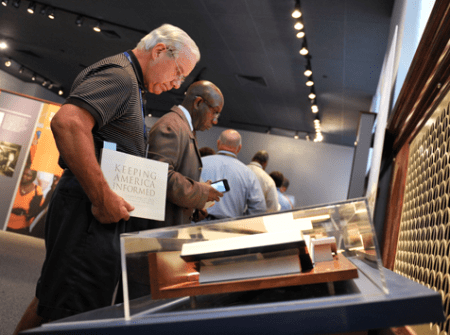
Visitor at GPO History Exhibit carrying Keeping America Informed: The United States Government Printing Office 150 Years of Service to the Nation ISBN: 9780160887048Image: Visitor who has just purchased the GPO history book “Keeping America Informed” views the GPO 150th Anniversary History Exhibit. Source: GPO

To learn more about GPO’s role in the printing of this historic document and other important Federal publications, read GPO’s 150th anniversary history book, Keeping America Informed: The United States Government Printing Office 150 Years of Service to the Nation.

However, you can view and/or read the entire Emancipation Proclamation online at the National Archives website or visit the National Archives in Washington, DC, to see the original signed document.

Teaching the Next Generation about the Emancipation Proclamation

To help parents and educators teach children about the importance of the Emancipation Proclamation and its role in Black History, the National Archives and Record Administration (NARA) published the 150th Anniversary of the Emancipation Proclamation: Commemorative Coloring Book: Forever Free.

National Archives 150th Anniversary of the Emancipation Proclamation: Commemorative Children's Book: Forever Free ISBN: 9780160916342Image:  Buy the family friendly 150th Anniversary of the Emancipation Proclamation: Commemorative Coloring Book: Forever Free.

This 150th anniversary commemorative publication about the Emancipation Proclamation is not a typical children’s coloring book. The wealth of information contained within this great little read makes it useful as a history book for the entire family, not just for kids. For example, I learned about the origins of “Watch Night”:

On December 31, 1862, many enslaved African Americans gathered in churches and prayed. Throughout the night, they waited for the moment when the Emancipation Proclamation would take effect. This special night became known as “Watch Night,” and continues to be celebrated today in many African American churches on New Year’s Eve.

The publication opens with a brief history about President Lincoln’s signing of the Emancipation Proclamation on January 1, 1863. It also provides portraits and short biographies describing historical events involving African Americans, such as Harriet Tubman, a former slave and Union spy who also helped recruit black troops, and Frederick Douglass, an abolitionist who helped Abraham Lincoln recruit black troops during the Civil War. It even includes a reference to this famous image:

reading-emancipation-proclamation-torchlightImage: By torchlight, a Union soldier reads the ‘Emancipation Proclamation’ to a room of slaves and their children, 1860s. The image was published as part of the ‘Life of Lincoln: Additional View’ series by the C.W. Briggs Company. Photo credit: George Eastman House/Getty Images

Other short biographies of important figures in black history covered in this book include Rosa Parks, Martin Luther King, and President Barack Obama.

National Park Service Discovering the Underground Railroad: Junior Ranger Activity Book ISBN: 9780160900181The National Park Service also has produced another children’s publication focusing on black history and mentioning the Emancipation Proclamation: Discovering the Underground Railroad: Junior Ranger Activity Book. Young children ranging from ages 5 to 10 and older are taught about the history of the Underground Railroad and the struggles African Americans endured in their quest for freedom. Activities include a wordsearch of terms related to the Civil War; a maze routing the journey to freedom; and a timeline highlighting significant events in Black History, such as the Emancipation Proclamation and much more. Upon completion of the activities, children are encouraged to send in their completed booklet for an official Jr. Ranger Badge. [Read about this and other Underground Railroad publications in our blog post: “The Underground Railroad Leaves its Tracks in History.]

How can you get these publications?

About the author: Guest blogger Trudy Hawkins is a writer and marketing specialist in GPO’s Publication & Information Sales Division supporting the U.S. Government Online Bookstore (http://bookstore.gpo.gov).

Images and additional content provided by Government Book Talk Editor Michele Bartram. Bartram is Promotions and Ecommerce Manager for GPO’s Publication and Information Sales Division in Washington, DC, and is responsible for online and offline marketing of the US Government Online Bookstore and promoting Federal government content to the public.