Relive the first year of the Obama Presidency

September 24, 2013

Portrait of the 44th President of the United States Barack Obama As we experience the first year of President Obama’s second term as the 44th President of the United States, take a look back on what was going on at this time during the first year of his first term as president with the Public Papers of the Presidents, Barack Obama 2009, Book 2. This volume covers the public messages and statements made by President Obama during the second half of his first year in office from July to December 2009.

Public Papers of the Presidents of the United States, Barack Obama, 2009, Book 2, July 1 to December 31, 2009.  ISBN: 9780160860867 and GPO Stock #069-000-00185-8Some highlights of those six months include the confirmation of Sonia Sotomayor as President Obama’s first nomination to the Supreme Court, the shaping of the health care law (Read our blog post: “Everything You Should Know About The Health Care Law“), and the continuing efforts to create jobs and rebuild the U.S. economy. The book also includes a section of official color photographs from events during the time period.

This book is part of the Public Papers of the Presidents series which consists of public writings, addresses and remarks made by the President and is the second volume of the Barack Obama Public Papers collection, which includes an eBook version of Book 1. (Read about the first volume in our blog post: “The First Collection of President Obama’s Public Papers.”)

As in other Public Papers volumes, the appendices provide listings of:

  • A digest of President Obama’s daily schedule and meetings, when announced, and other items of general interest issued by the White House Office of the Press Secretary;
  • President Obama’s nominations submitted to the Senate;
  • A checklist of materials released by the Office of the Press Secretary that are not printed full-text in the book; and
  • A table of Proclamations, Executive Orders, and other Presidential documents released by the Office of the Press Secretary and published in the Federal Register.

Public Papers of the Presidents series

The entire Public Papers of the Presidents series is published by the National Archives’ Office of the Federal Register (OFR) and includes two volumes per year, each volume covering a six-month period of the presidency, with the OFR checking remarks against a recording and signed documents against the original to ensure accuracy. The series started with President Hoover and continues to President Obama, with the exception of President Roosevelt who chose to have his papers published privately.

To learn more about the process of compiling the Public Papers of the Presidents, watch this video below on the production of President Obama’s first volume at the Government Printing Office (GPO):

Video Government Printing Office The Making-of-Barack-Obama-Public-Papers-of-the-President

Image: Excerpted from the video of the Making of the Public Papers of the President. Depicts President Obama in the Oval Office being presented with the first volume in his Public Papers printed by the Government Printing Office in April 2011. Pictured from left to right are: current Public Printer of the United States, Davita Vance-Cooks; previous Public Printer, William J. Boarman; President Barack Obama; Archivist of the United States, David S. Ferriero, and Director of the Federal Register, Ray Mosley.

The Public Papers of the Presidents series is also available on GPO’s Federal Digital System (FDsys). The public can digitally access the digitized volumes starting in 1991 with President George H. W. Bush through President Barack Obama, 2009 from this page on FDsys.

GPO also makes the Public Papers of the Presidents series available in print through the agency’s online bookstore with volumes back to Herbert Hoover. The public can browse through the various volumes from different presidents on the Public Papers of the Presidents collection page in the Presidential History collection under the US & Military History category.

How do I obtain a copy of the Public Papers of the Presidents, Barack Obama 2009, Book 2?

1) Buy a printed copy

  • Shop Online: You can purchase a printed copy of Public Papers of the Presidents, Barack Obama 2009, Book 2 or any of the previous volume(s) of the Obama presidency by shopping the Barack Obama Public Papers collection on the U.S. Government Online Bookstore.
  • Order by Phone: Call our Customer Contact Center Monday through Friday, 8 am to 5:30 pm Eastern (except US Federal holidays). From US and Canada, call toll-free 1.866.512.1800. DC or International customers call +1.202.512.1800.
  • Visit our Retail Store: Buy a printed copy at GPO’s retail bookstore at 710 North Capitol Street NW, Washington, DC 20401, open Monday–Friday, 9 a.m. to 4 p.m., except Federal holidays, Call (202) 512-0132 for information or to arrange in-store pick-up.
  • Find it in a Library:  GPO provides catalog records to Federal Depository libraries worldwide. Find this publication in a federal depository library.

2) View or download a PDF from GPO’s official Federal documents database, FDsys:

About the Author: Our guest blogger is Emma Wojtowicz, Public Relations Specialist in GPO’s Office of Public Affairs. Additional content provided by Government Book Talk Editor: Michele Bartram, Promotions & eCommerce Manager for GPO’s Publication and Information Sales Division.


Everything You Should Know About The Health Care Law

September 24, 2013

Inside-the-affordable-care-act or Obamacare. In one week at the beginning of fiscal year 2014 on October 1, 2013, and at the start of the calendar year on January 1, 2014, the provisions of the new health care law go into effect. Image courtesy: Charlotte Area News.

The health care law, known officially as the Affordable Care Act (ACA) or  more commonly as “Obamacare” has two parts: the Patient Protection and Affordable Care Act (PPACA) (Public Law 111–148), and the Health Care and Education Reconciliation Act (Public Law 111–152 which was enacted to amend the PPACA. It was passed by Congress and signed into law by President Barack Obama on March 30, 2010.

Since that time, in the span of 42 months, the health care law has been upheld by the Supreme Court and some early provisions have already been implemented. Upon conception of the law, 2014 was marked as the year the most significant provisions of the law would go into effect.

Find information about these marketplaces for Individuals and Families or Small Businesses on the U.S. Centers for Medicare & Medicaid Services Healthcare Marketplace website, https://www.healthcare.gov/.

Image: U.S. Centers for Medicare & Medicaid Services Healthcare Marketplace website, https://www.healthcare.gov/

A week from today on October 1, 2013, open enrollment for the health insurance marketplaces begins and remains open for six months closing on March 31, 2014. Find information about these marketplaces for Individuals and Families or Small Businesses on the U.S. Centers for Medicare & Medicaid Services Healthcare Marketplace website,  https://www.healthcare.gov/. There are links to healthcare marketplace information in other languages as well:

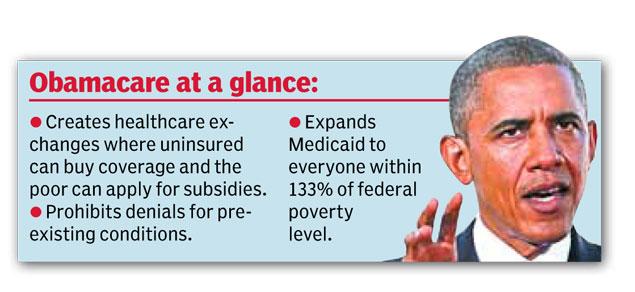
The high profile provisions that go into effect on January 1, 2014, include:

  • Coverage begins if you signed up through the health insurance marketplace
  • Protection for individuals with pre-existing conditions
  • Elimination of annual limits on insurance coverage
  • Tax credits to help pay for costs if you sign up with a health insurance marketplace
  • Expanded access to Medicaid, subject to the state you live in
  • Individual mandate if you choose not to buy health insurance

obamacare-at-a-glance-ny-daily-news

Image courtesy: New York Daily News.

This is a basic overview of the law. To fully understand the details requires further reading, and GPO is here to help. GPO makes the authentic, published version of the Patient Protection and Affordable Care Act and the Health Care and Education Reconciliation Act available to the public in print through the agency’s Online Bookstore and digitally through GPO’s Federal Digital System (FDsys). GPO also works with 1,200 libraries nationwide through the Federal Depository Library Program to have resources on the health care law available to public.

How do I obtain a copy of this Affordable Care Act (ACA)?

1) Buy a printed copy

  • Shop Online: You can purchase a printed copy of the Health Care Act containing the Patient Protection and Affordable Care Act and the Health Care and Education Reconciliation Act of 2010 from the U.S. Government Online Bookstore or by shopping our Public Health Policy & Healthcare Laws collection under our Health & Benefits category.
  • Order by Phone: Call our Customer Contact Center Monday through Friday, 8 am to 5:30 pm Eastern (except US Federal holidays). From US and Canada, call toll-free 1.866.512.1800. DC or International customers call +1.202.512.1800.
  • Visit our Retail Store: Buy a printed copy at GPO’s retail bookstore at 710 North Capitol Street NW, Washington, DC 20401, open Monday–Friday, 9 a.m. to 4 p.m., except Federal holidays, Call (202) 512-0132 for information or to arrange in-store pick-up.
  • Find it in a Library: Find this in a federal depository library.

2) View or download a PDF from GPO’s official Federal documents database, FDsys:

About the Author: Our guest blogger is Emma Wojtowicz, Public Relations Specialist in GPO’s Office of Public Affairs. Additional content provided by Government Book Talk Editor: Michele Bartram, Promotions & eCommerce Manager for GPO’s Publication and Information Sales Division.


Happy 66th -or 106th- Birthday, US Air Force

September 18, 2013

According to the Department of Defense’s website, the United States Air Force is 66 years ago today “that the National Security Act of 1947 turned what was then known as the Army Air Corps into the United States Department of the Air Force. A strategic, tactical and defensive force for the skies, the Air Force has become a vital role in our country’s military power.

USAF-Birthday-Video

Watch this US Air Force birthday video on YouTube.

However, if you add in the years since the Army Air Corps first flew in 1907, then the Air Force’s operations have really been going strong for 106 years today. It all depends on how you count it.

Therefore, it is fitting to look at the entirety of military aviation when looking at the US Air Force’s illustrious history.

A number of excellent publications have come out recently, both in print and eBooks, for the US Air Force, Army Air Corps and military aviation in general.

The ones we most recommend for understanding the evolution of today’s US Air Force include:

Overall History and Mission

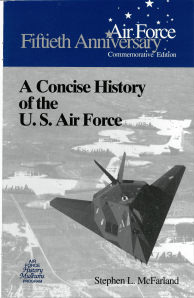
008-070-00727-4The best two books covering the overall history and mission of what is now the United States Air Force are A Concise History of the United States Air Force and its recently released EPUB eBook version, as well as the extremely thought-provoking Air Force Roles and Missions: A History (also recently released as an eBook) which traces the evolution of the Air Force’s role and missions as well as the conflicts with other branches of the military over these definitions.

Early Beginnings through World War 1

Are you more interested in the earliest days of aviation when the Army first bought one of the Wright Brothers’ planes and its “daring young men in those flying machines” began to determine how airpower could be used for military purposes? Then you should read Logbook of the Signal Corps No. 1: The United States Army’s First Airplane in paperback or as a new eBook, which recounts the experiences of Benjamin D. Foulois, the pioneering, self-taught pilot of “Signal Corps No. 1”, the very first airplane of the United States Army Signal Corps.

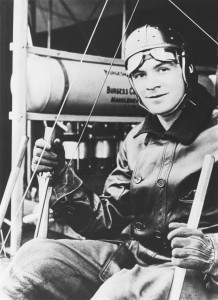
HAP: Henry H. Arnold, Military Aviator, Shown here as Army Flight Instructor in College Park, Maryland. ISBN: 0-16-049071-5And don’t miss HAP: Henry H. Arnold, Military Aviator (Paperback) or the new EPUB eBook edition which tells the story of beloved Henry “Hap” Arnold, one of the first Army flight instructors and daring pilot. (See his image to the right as an Army Flight Instructor. Image courtesy: College Park Aviation Museum.)

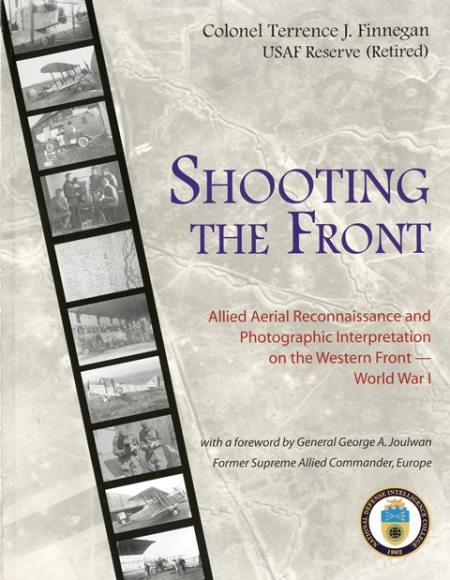
Another very popular publication tells the story of air espionage during World War 1: Shooting the Front: Allied Aerial Reconnaissance and Photographic Interpretation on the Western Front – World War I.

Shooting the Front: Allied Aerial Reconnaissance and Photographic Interpretation on the Western Front - World War I (Paperbound)

World War 2

World War II is when it is widely acknowledged that military aviation came into its own. Toward Independence: The Emergence of the United States Air Force, 1945-1947 tells of the rapid evolution in use of airpower in the period leading up to its formation as a separate entity.

Korean War

By the Korean War, the US Air Force had become its own branch of the United States Armed Forces. Several publications chronicle the involvement of the newly formed USAF during this conflict, including Within Limits: The United States Air Force and the Korean War, Coalition Air Warfare in the Korean War, 1950 1953, and Silver Wings, Golden Valor: The USAF Remembers Korea which includes reminiscences and perspectives of Korean War Air Force veterans and historians.

Vietnam War

War Too Long: The United States Air Force in Southeast Asia 1961-1975 ISBN: 9780160613692Over 50 years later, Americans are still wrestling with the lessons of Vietnam. So, too, is the Air Force in these excellent USAF publications War Too Long: The United States Air Force in Southeast Asia 1961-1975  and War in South Vietnam: The Years of the Offensive, 1965-1968, as well as this Army digital publication, Interservice Rivalry and Airpower in the Vietnam War (eBook).

Cold War and Space Race

When the Soviets launched Sputnik, the space race was subsequently kicked off with the United States. The Air Force role was critical during the Cold War and in both in helping start our space exploration and ongoing support through to today in support of NASA. Read Early Cold War Overflights, 1950-1956 to understand the beginning of the espionage flights, and pick up a copy of the United States Air Force in Space, 1945 to the Twenty-First Century which covers the Air Force’s involvement in space exploration.

Gulf War to the Present

None of us can forget the images of bombs dropping during the Gulf War, the tale of which is told in Decisive Force: Strategic Bombing in the Gulf War.

Turning Point 9.11: Air Force Reserve in the 21st Century, 2001-2011  ISBN: 9780160914485And anyone with family in or who themselves are in the National Guard or a military reservist knows how the Gulf Wars and Afghanistan have changed the role of these personnel from backup to active participants. One of the best books we’ve read on the subject is the excellent Turning Point 9.11: Air Force Reserve in the 21st Century, 2001-2011 which chronicles these stark changes in the Air Force Reserve since the terrorist attacks on 9.11.2001.

Air Force on TV and in the Movies

Fans of the movie “War Games” will know about NORAD. Learn the true story behind this important homeland airspace defense organization in Guarding What You Value Most: North American Aerospace Defense Command Celebrating 50 Years and a new EPUB eBook version. Includes the heart-warming story of NORAD’s Christmas Eve Santa Tracker. (Read about this in our blog post Tracking “Big Red”: NORAD’s Secret Santa Mission [UPDATED].)

Fans of the TV show “JAG” Will love to discover the real history of this Air Force department in First 50 Years: United States Air Force Judge Advocate General’s Department.

Humanitarian Operations

Wings of Hope: The United States Air Force and Humanitarian Airlift OperationsLike the other branches of the US military, the US Air Force plays an important role in humanitarian operations, both here at home and worldwide. This publication—Wings of Hope: The United States Air Force and Humanitarian Airlift Operations—tells the overall story of various airlift operations. While it sounds like the plot of a disaster movie, the Ash Warriors (paperback) and its EPUB eBook version recounts the true story of the “Ash Warriors,” those Air Force men and women who carried out their mission in the face of an incredible series of natural disasters, including volcanic eruption, flood, typhoons, and earthquakes, all of which plagued Clark Air Base in the Philippines and the surrounding areas during June and July 1991. And the horrendous Hurricane Katrina brought out the best in the Air Force’s Air Education and Training Command, whose role is described in Operation Dragon Comeback: Air Education and Training Command’s Response to Hurricane Katrina.

“Blue Sky” Future

So join us in wishing a very happy 66th (or 106th) birthday to our very own United States Air Force. May there be blue skies in its future!

How can I obtain these Air Force History publications?

  • Shop Online: You can purchase these publications from the U.S. Government Online Bookstore at http://bookstore.gpo.gov, by clicking on the links above in this blog post or shopping our United States Air Force (USAF) History collection under our US & Military History category.
  • Order by Phone: Call our Customer Contact Center Monday through Friday, 8 am to 5:30 pm Eastern (except US Federal holidays). From US and Canada, call toll-free 1.866.512.1800. DC or International customers call +1.202.512.1800.
  • Visit our Retail Store: Buy a copy of print editions from this collection at GPO’s retail bookstore at 710 North Capitol Street NW, Washington, DC 20401, open Monday–Friday, 9 a.m. to 4 p.m., except Federal holidays, Call (202) 512-0132 for information or to arrange in-store pick-up.
  • Find them in a Library: Find these publications in a federal depository library.

About the Author: Government Book Talk Editor Michele Bartram is Promotions Manager for GPO’s Publication and Information Sales Division in Washington, DC, and is responsible for online and offline marketing of the US Government Online Bookstore (http://bookstore.gpo.gov) and promoting Federal government content to the public.


The Constitution Annotated: The Pursuit of App-iness

September 17, 2013

follow-the-founding-fathers-david-bowman_computerIn preparing for this Constitution Day blog post, not only did I retake the civics quiz from last year’s Constitution Day post (see Quiz: Are you smarter than an 8th grade Civics student?), I also scrolled through my tablet last night, reading the Preamble to the Constitution and looking up related quotes. Then it occurred to me: if Founding Father George Washington had been alive today, would he have been a PC or an Apple guy? I’m betting our pragmatic First President would be a PC guy. I’m pretty sure innovator Thomas Jefferson would have been a stylish iPad man, and Benjamin Franklin, inventor of the bifocals, would probably be sporting Google Glasses now and tinkering with them.

Image: Founding Fathers Thomas Jefferson, Benjamin Franklin, George Washington. Original Illustration by David Bowman from his book “What Would the Founding Fathers Think?”

constitution-annotated-printWhat is clear is that our Founding Fathers were strategic thinkers who realized that a fully functioning republic needed a clear but flexible code of law that evolved with the Nation. Thus, they wrote the Constitution of the United States, which has stood the test of time with over two centuries of amendments and interpretations by all branches of the U.S. Federal Government.

CONAN for the Librarian (and Lawyers)

Since 1913, the Senate has directed that a publication be issued summarizing the current state of the Constitution to date, with all the amendments and the official interpretations, with the analysis today provided by the Library of Congress’ Congressional Research Service. This publication is called The Constitution of the United States of America, Analysis and Interpretation, popularly known as the Constitution Annotated or “CONAN” among the real insiders.

Constitution-of-the-US-Pocket-GuideIn addition, many Americans, including Members of Congress, buy a pocket print edition of the Constitution and Declaration of Independence to carry around with them at all times. (Click on image to the left.)

Constitution Goes Mobile and Online

This year marks the 100th anniversary of the Constitution Annotated publication, and to celebrate it and Constitution Day, the Government Printing Office (GPO) not only issued the Centennial Edition in print, but has also worked with the Senate Committee on Rules and Administration and the Library of Congress to develop and launch both a new mobile app as well as a web publication that make analysis and interpretation of constitutional case law by Library experts accessible for free to anyone with a computer or mobile device.

The new resources, which include analysis of Supreme Court cases through June 26, 2013, will be updated multiple times each year as new court decisions are issued.  Legal professionals, teachers, students and anyone researching the constitutional implications of a particular topic can easily locate constitutional amendments, federal and state laws that were held unconstitutional, and tables of recent cases with corresponding topics and constitutional implications.

The new app and improved web publication will make the nearly 3,000-page “Constitution Annotated” more accessible to more people and enable updates of new case analysis three or four times each year.

Public Printer Davita Vance-Cooks said,

“Through this collaborative project, the Library of Congress and GPO are providing the public with timely access to an enhanced, authenticated version of the “Constitution Annotated” through GPO’s Federal Digital System. This is another example of how GPO works with Congress, the Library and other agencies to meet the information needs of the American people in the digital age.”

Keeping our “Complex Machinery” in Working Order

On May 19, 1821, years after the Constitution was adopted, John Adams wrote in a letter to Thomas Jefferson that:

“A free government is a complicated piece of machinery, the nice and exact adjustment of whose springs, wheels, and weights, is not yet well comprehended by the artists of the age, and still less by the people.”

Even though our Founding Fathers could not have envisioned a digital future complete with the Internet and smartphones, the framework they put in place has been able to roll with the times. Americans know that our system is indeed a “complicated piece of machinery,” with our laws serving as the user manual, but tools like the Constitution Annotated– in print or now online or on your mobile device– now exist to help keep our machinery of democracy well oiled.

George-Washingtons-Annotated-Copy-of-a-Draft-of-the-U.S.-ConstitutionImage: Even George Washington annotated his copy of the Constitution! (seen left). Source: National Archives

How can I obtain The Constitution Annotated?

1) Buy the Print Edition of The Constitution of the United States of America, Analysis and Interpretation, Centennial Edition

2) Mobile app version of the Constitution Annotated

  • For Apple iOS Devices: Download the new Constitution Annotated app for iOS devices for free from Apple’s iTunes Store or via this direct link: http://beta.congress.gov/constitution-annotated/.
  • ·        For Android Devices: An Android version of this app is under development.

3) Constitution Annotated web publication on FDsys.gov

The Constitution Annotated web publication will be available on GPO’s Federal Digital System (FDsys) www.fdsys.gov as a digitally-signed, searchable PDF that includes a linked table of contents, a linked table of cases, a linked index and GPO’s Seal of Authenticity on every page.

The new Constitution Annotated and a suite of constitutional resources can be viewed at http://beta.congress.gov/constitution-annotated/. The page features links to the app stores, an interactive table listing recent cases of high interest, a bibliography of Constitution-related primary documents in American history and tips for searching the Constitution Annotated on GPO’s website at www.gpo.gov/constitutionannotated.

About the Author: Government Book Talk Editor Michele Bartram is Promotions Manager for GPO’s Publication and Information Sales Division in Washington, DC, and is responsible for online and offline marketing of the US Government Online Bookstore (http://bookstore.gpo.gov) and promoting Federal government content to the public.


September 11 Tales of Heroes and Tough Lessons

September 11, 2013

9-11 Decade of Remembrance Twin Towers and Pentagon Logo designed by David McKenzie at the Government Printing OfficeThere are certain moments and events that are etched in our national consciousness. Ask any American who was alive in the 60’s where he or she was when John F. Kennedy or Martin Luther King was assassinated and you will hear a stirring personal story. For our generation, it was September 11, 2001.

Image: September 11 Decade of Remembrance logo with World Trade Center Twin Towers surrounded by a figure representing the Pentagon. Created by David McKenzie with the Government Printing Office for the U.S. Government Bookstore.

I was right across from the Twin Towers twelve years ago today, getting ready to board a ferry for my daily commute from New Jersey across the Hudson River into Manhattan, when I saw the second plane hit the World Trade Center right across from me. So, too, I cried with a group of strangers as we stood on the ferry platform and watched in horror as the first tower fall, saw the dust cloud rise and felt the earth—and the world—tremble.

America and Americans have changed since that day… twelve years ago today. We have since heard stirring stories of heroes and sacrifice, and learned many grim lessons that are still affecting both policy and people today.

Many of these stories of heroism, missed opportunities, and resulting actions have been painstakingly and faithfully chronicled by a wide array of Federal agencies, ensuring the sacrifices and lessons are not forgotten.

Responding to the Tragedies

Both in New York and the Pentagon in Washington, DC, we saw how first responders and medical personnel rushed to save lives. These excellent publications tell the stories of the heroes from that day:

  • 008-000-01049-8Pentagon 9/11 (10th Anniversary Edition) (Paperback) includes a foreword by Secretary of Defense Leon Panetta and provides the most comprehensive account available of the 9/11 attack on the Pentagon and aftermath, including unprecedented details on the impact on the Pentagon building and personnel and the scope of the rescue, recovery, and care-giving effort.
  • 008-000-01048-0Attack on the Pentagon: The Medical Response to 9/11 not only tells the personal stories from medical personnel responding to the attack on the Pentagon, but also provides insight from MEDCOM officers detailed to New York to support National Guard troops guarding ground zero’s perimeter. It also includes the Army’s involvement in the recovery of deceased attack victims at the Pentagon and the work of the Armed Forces Institute of Pathology in identifying human remains at Dover Air Force Base. In addition, the roles of military and civilian hospital staffs and of military environmental health and mental health specialists in taking care of attack victims and their families are also examined.

Tough Lessons

The single must-read for every American about September 11 is the official version of The 9/11 Commission Report: Final Report of the National Commission on Terrorist Attacks Upon the United States. This publication lists the findings of the National 9/11 Commission, listing all the painful errors made leading up to the terrorist attacks and outlining specific recommendations for international, national, state and local changes in policy and procedures that the panel of experts felt needed to be implemented to ensure a similar attack never happened again. This seminal publication has served to inform all subsequent policies and legislation since 9/11. It is available in print or as an eBook.

911-commission-report

Image: Launch of the 9/11 Commission Report. Courtesy: CSMonitor.com

The Senate, Select Committee on Intelligence, and House, Permanent Select Committee on Intelligence examined the intelligence failures leading up to 9/11 and jointly published the results in United States Congressional Serial Set, Serial No. 14750: Joint Inquiry Into Intelligence Community Activity Before and After Terrorists Attacks of September 11, 2001 With Errata.

027-001-00097-1Additional insights into the causes of and responses to terrorism can be gleaned from Terrorism Research and Analysis Project (TRAP): A Collection of Research Ideas, Thoughts, and Perspectives, V. 1. This publication provides the findings from the post-9/11 FBI Terrorism Research and Analysis Project (TRAP) Symposium. TRAP is a leading research consortium made up of international/domestic academics and law enforcement officers, and is a working group sponsored by the FBI’s Behavioral Science Unit. In it, these counter-terrorism experts provide a better understanding of the causes of terrorist activity and possible government response tactics to mitigate terrorist actions.

064-000-00029-2As we watch the new World Trade Center going up in New York, we can be assured that builders are incorporating architectural and construction lessons learned from the World Trade Center Building Performance Study: Data Collection, Preliminary Observations, and Recommendations.

Policy and Legislative Response

United States Congressional Serial Set, Serial No. 14924, House Report No. 724, 9/11 Recommendations Implementation Act, Pts. 1-6 outlines the specific legislative changes enacted by Congress, providing both background and justifications for them along with attribution.

A print copy of the law itself can be purchased here: Implementing Recommendations of the 9/11 Commission Act of 2007, Public Law 110-53 along with the details of the various committee conferences contributing to it in Implementing Recommendations of the 9/11 Commission Act of 2007, Conference Report to Accompany H.R. 1, July 25, 2007.

Defending the Homeland since 9/11

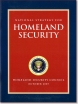
041-001-00657-5National Strategy for Homeland Security (October 2007) provides the common framework outlined by the George W. Bush Administration to guides, organize and unify the United States’ homeland security efforts.

008-000-01068-4A new publication from the Air Force Reserve called Turning Point 9.11: Air Force Reserve in the 21st Century, 2001-2011 tells the story of how the Air Force Reserve responded to 9/11 and have contributed to the security of the United States in a post-September 11 world.

050-012-00440-4In a similar vein, Rogue Wave: The U.S. Coast Guard on and After 9/11 chronicles the involvement of the U.S. Coast Guard on that fateful day and the evolving role in national and world security since.  Part of the Coast Guard 9/11 response is told in this touching video about the boatlift to evacuate people from lower Manhattan is told in a video narrated by Tom Hanks entitled: BOATLIFT, An Untold Tale of 9/11 Resilience.”

A touching video about the boatlift to evacuate people from lower Manhattan on 9/11 (September 11) is told in a video narrated by Tom Hanks entitled: BOATLIFT, An Untold Tale of 9/11 Resilience. Click on the image above or this link to view the “Boatlift” video.

The upcoming U.S. Army War College Guide to National Security Issues, Volume 2: National Security Policy and Strategy provides a summarized look at the national security curriculum now taught to our nation’s top military and civilian leaders by the U.S. Army War College. Revised with the lessons learned from the years since 9/11, this publication includes a chapter on ”Securing America From Attack: The Defense Department’s Evolving Role After 9/11.”

How can I obtain these Federal 9/11 publications?

  • Shop Online: Print Editions of these 9/11-related publications may be ordered from the U.S. Government Online Bookstore at http://bookstore.gpo.gov, by clicking on the links above in this blog post or shopping our Terrorism & 9/11 History collection under our US & Military History category.
  • Order by Phone: Call our Customer Contact Center Monday through Friday, 8 am to 5:30 pm Eastern (except US Federal holidays). From US and Canada, call toll-free 1.866.512.1800. DC or International customers call +1.202.512.1800.
  • Visit our Retail Store: Buy copies of these publications at GPO’s retail bookstore at 710 North Capitol Street NW, Washington, DC 20401, open Monday–Friday, 9 a.m. to 4 p.m., except Federal holidays, Call (202) 512-0132 for information or to arrange in-store pick-up.
  • Find them in a Library: Find these publications in a federal depository library.

About the Author: Government Book Talk Editor Michele Bartram is Promotions Manager for GPO’s Publication and Information Sales Division in Washington, DC, and is responsible for online and offline marketing of the US Government Online Bookstore (http://bookstore.gpo.gov) and promoting Federal government content to the public.


Congressional Pictorial Directory: A Great Memory Jogger

September 10, 2013

Do you ever have a problem putting a name to a face (or vice-versa)? The older I get, the more challenging the fast recall of names becomes.  For people who work on Capitol Hill, such as lobbyists and Congressional staffers, knowing who that person coming down the hall is can be pretty important.

2013 Congressional Pictorial Directory for the 113th Congress. Avasilable from http://bookstore.gpo.govA handy tool to help solve this conundrum is the Congressional Pictorial Directory. The directory provides a color photograph of each Member of the House of Representatives and the Senate and details each Member’s length of service, political party affiliation, and congressional district. The Pictorial Directory also contains pictures of the President, Vice President, and House and Senate officers and officials.  Senators and Representatives also are listed alphabetically, and are included in a separate listing of state delegations.

One of the nicer features of this publication is the size. It measures 4-1/2” by 6-1/4”, and can conveniently slip into a suit jacket pocket, purse or handbag. It is also available in both hardcover and paperback editions.

The U.S. Government Printing Office also makes the information from the Congressional Pictorial Directory– together with data from the Guide to the House and Senate Members– available as a free mobile site. This provides even more convenience by permitting the photo and other Member information to be accessed and displayed on a laptop, smartphone or other web-enabled mobile device.  The Mobile Member Guide mobile site for the 113th Congress provides the public with quick, easy access to information on Members of the 113th Congress. The app allows users to browse for Members of Congress by last name, state, chamber, or party. The public can take advantage of this free mobile Web site on major mobile device platforms.

How Do I Get a Copy of the Congressional Pictorial Directory or the Mobile Member Guide?

1) Buy Print Editions of the Congressional Pictorial Directory:

  • Shop Online: Print Editions of the Congressional Pictorial Directory may be ordered from the U.S. Government Online Bookstore under the Congressional Directories collection under Government Forms & Phone Directories.
  • Order by Phone: Call our Customer Contact Center Monday through Friday, 8 am to 5:30 pm Eastern (except US Federal holidays). From US and Canada, call toll-free 1.866.512.1800. Washington, DC area or International customers should call +1.202.512.1800.
  • Visit our Retail Store: Buy copies of the print edition at GPO’s retail bookstore at 710 North Capitol Street NW, Washington, DC 20401, open Monday–Friday, 9 a.m. to 4 p.m., except US Federal holidays, Call (202) 512-0132 for information or to arrange in-store pick-up.
  • Find it in a Library: Find this publication in a federal depository library.

2) Visit the FREE “Mobile Member Guide for the 113th Congress” mobile site from GPO: http://m.gpo.gov/memberguide/

  • This mobile site contains each Member’s picture, party affiliation, hometown, home state, and length of service. Users may use the app to search Members of Congress by name, state, chamber and party. (Read more…)
  • For more information on all GPO’s mobile apps and sites, visit http://www.gpo.gov/mobile/.

ABOUT THE AUTHOR: Guest Blogger Jeff Turner is Director of Sales and Marketing for GPO’s Publications and Information Sales Program.


Ponzimonium Revisited: An Interview from the Front Lines of the Battle against Investment Fraud

September 3, 2013

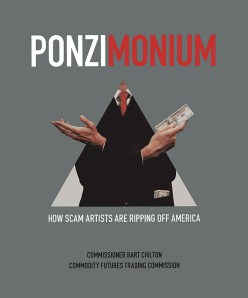
Ponzimonium: How Scam Artists Are Ripping Off America (FREE eBook from CFTC available at http://bookstore.gpo.gpo) With the recent publishing of the FREE EBOOK edition of the CFTC’s best-selling investment fraud paperback book Ponzimonium: How Scam Artists are Ripping Off America on the U.S. Government Bookstore website, Government Book Talk interviews the team behind Ponzimonium at the Commodity Futures Trading Commission (CFTC)– Commissioner Bart Chilton, Consumer Outreach Officer Michael Herndon, and Whistleblower Office (WBO) Director Christopher Ehrman– to talk about life after Ponzimonium was first published and the state of the CFTC’s battle against investment fraud.

Background: What is Ponzimonium about?

In November 2011, Government Book Talk reviewed the recently released book in Part I of this 2-part Ponzimonium blog series:

Ponzimonium: How Scam Artists are Ripping Off America introduces some of the lesser known, but equally despicable fraudsters that have been uncovered since 2008 by the CFTC and SEC (Securities and Exchange Commission).

The book lays out the fascinating and dramatic details behind the fraudulent schemes, their smooth-talking masterminds, and their many honest, hard-working victims, who often lose the money they’ve saved for their kids’ college funds, needed health care expenses, or their own retirement as a result of misplaced trust in these criminals.”

In addition to the engrossing stories of crime and consequences, Ponzimonium also includes some very useful features for consumers that make this a valuable resource for any investor to avoid getting scammed, including Red Flags of Fraud, Investor Checklist, Fraud Resources and a Glossary of Terms, among others.  To learn about how a Ponzi scheme works and more details of the book, read our Part I blog post.

Reaction to Ponzimonium

Government Book Talk: Commissioner Chilton, now that it’s been two years since Ponzimonium first came out, what has been the reaction to the publication?    

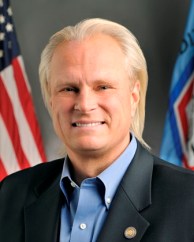
Commodity Futures Trading Commission (CFTC) Commissioner Bart ChiltonCommissioner Chilton: It’s been great! The media has helped to get the word out about how folks need to be cautious.  A lot of times, in conjunction with a speech, the organizers will provide copies to their participants.  I get all sorts of positive feedback from people and schools are using it as well.  But, most importantly, I receive letters and emails all the time from folks who, because of this book, avoided making a major misstep.  Some have questioned their investment choices and saved themselves and their families a lot of agony.

GOVBOOKTALK: What are you most proud of with Ponzimonium?

Chilton:  I’m most proud that we created something totally different for the Government with this book. Ponzimonium is about real life Ponzi scams that is told in an engaging way and it’s actually helping people avoid becoming a victim of a financial fraud.  It’s more than just another spiffy web site, or a brochure.  Those things are great and necessary too, but Ponzimonium is a value-added education tool which never existed before.  It’s a new and needed tool in our education and outreach arsenal.

GOVBOOKTALK: Any examples of how consumers or others are using Ponzimonium?

Chilton: In addition to consumers who have printed it off or purchased it in print  and now are downloading it for free as an eBook from the GPO bookstore, we have many professors who are using Ponzimonium as a supplemental teaching text.  The book has been used at Georgetown University, the University of Chicago, New York Law School, Rice University, Notre Dame, Northwestern, Washington University in St. Louis, the University of Delaware, Cornell and several other colleges and universities, not to mention many high schools. 

If you would like copies of Ponzimonium for educational purposes, please contact our outreach office at consumers@cftc.gov.

Also, we just started offering Ponzimonium to public libraries and have had an excellent response.  Some are even providing extra copies of it to patrons in addition to keeping one in their permanent collection.  Our Office of Consumer Outreach is continuing to explore ways to get the book and its message out to the public.

Current Status of Investment Fraud in the U.S.

GOVBOOKTALK: Michael, do you believe the amount of fraud is increasing and if so, why?

Michael Herndon, Consumer Outreach Officer, Commodity Futures Trading CommissionMichael Herndon, Consumer Outreach Officer for the CFTCFederal, state and local law enforcement officials have reported enormous increases in tips and criminal activity since the economy tanked in 2008, and are still witnessing historic levels of these scams today.  At any one time, enforcement staff at the U.S. Commodity Futures Trading Commission (CFTC) are investigating anywhere between 750 and 1,000 individuals and entities for various violations of the law. 

Increases in tips and fraud cases have also occurred at the U.S. Securities and Exchange Commission (SEC), at the Federal Bureau of Investigation (FBI), in the states, and in various localities around the world.

Advice to Consumers on Avoiding Investment Fraud

GovBookTalk: What are some common con artist tactics to watch out for?

Herndon, Consumer Outreach Officer for the CFTC: Con artists, especially in investment/trading frauds, use a lot of tactics that seem obvious after the fact, but work at getting someone to fall for their scam. They include:

* “Easy Money”—dangling the prospect of quick riches and enticing you with the high returns you want but can’t find elsewhere.

* “Credibility”—trying to build credibility by claiming to be with a reputable firm, have a special credential, or possess lots of experience.

* “Social Consensus”—leading you to believe that other savvy investors have already invested.

* “Tradeoff”—offering to do a small favor for you in return for a big favor, like take you to lunch and then ask you to invest with them.

* “Scarcity”—creating a false sense of urgency by claiming limited supply or time limit of the investment.

GovBookTalk: Any additional advice to consumers not included in the original book?

Herndon: Report fraud! We know that falling for a fraud is painful and can be financially devastating. Yet so many people don’t report fraud that’s happened to them for a variety of reasons including shame and a sense there’s no point in trying to get their money back. However, there are several financial benefits of reporting fraud including tax implications and possible restitution.

And I always like to remind people, for fraudsters, ripping people off is their job and sadly they are very good at it. There’s no shame in making a mistake to someone who is that good.

GovBookTalk: If a consumer suspects something “fishy” with a proposed investment, how does he check it out? What is the process s/he should follow? Whom should they contact?

Herndon: If a consumer suspects something fishy, there’s VERY good reason for that usually. You’d be surprised how many people think something is odd about a deal, yet go ahead with it. That gut feeling often proves to be correct. As for checking it out, there are a few simple things consumer should ALWAYS do, no matter the profession.

First, check with an independent government agency or authority about the person or business. If you ask someone, “Are you legitimate?” of course they will tell you yes, and that their registered as they need to be. However, with a few quick phone calls or internet searches you can find out for yourself.

For individuals under CFTC jurisdiction, consumers can find information on the National Futures Association’s Background Affiliation Status Information Center database (BASIC).

For other investments, you can research brokers, brokerage firms, investment advisers and firms with this free tool from the Financial Industry Regulatory Authority, FINRA’s BrokerCheck. Also, just a simple call to see if the person has a business license or even searching their name on an internet search engine can help.

 My advice is always consult THREE independent sources for background information before you invest, or conduct any financial transaction for that matter.

GovBookTalk: Thanks, Michael, this is great advice for our readers and their friends and families!

FINRA_broker_checkImage: FINRA’s website with link to Broker Check:
http://www.finra.org/Investors/ToolsCalculators/BrokerCheck/

How and Why to Blow the Whistle

GovBookTalk: Christopher, what about a whistleblower in a company that suspects something illicit is going on?  How should s/he report his/her suspicions and why?

Christopher Ehrman, Director, Whistleblower Office (WBO): The person is encouraged to report the information to the CFTC’s Whistleblower Office. The office was created to receive and process original information from individuals who voluntarily report potential violations of the Commodity Exchange Act.  The program provides monetary awards if the CFTC brings an action, based on that information, resulting in more than $1 million.

If the person chooses to report internally first, their information will be deemed to be submitted to us on the date they reported it internally if they also report it to us within 120 days of that date.  Under these circumstances, we will consider their place in line for determining whether the information is “original information” to be the date they reported it internally. Also, the fact that the whistleblower reported their information internally, and the extent to which they helped their company uncover a violation, will be considered as factors that may increase the size of any award that they are eligible to receive.

However, please note that a whistleblower is not required to report internally to be eligible for a whistleblower award, and they may submit their information directly to us at any time. 

For a more detailed overview of the CFTC Investment Fraud Whistleblower program and how to contact the office, please visit http://www.cftc.gov/ConsumerProtection/WhistleblowerProgram/index.htm.

Government Book Talk: Thank you, Christopher. Hopefully, those who have knowledge of a known or suspected fraud going on will get in touch with your office and prevent these despicable criminals from devastating more lives. Which brings me to my last question.

Michael, speaking of “these despicable criminals”, inquiring minds wish to know if there are any updates on the perpetrators listed in the original Ponzimonium book?

Michael Herndon: Yes, in the reprint of the book– due later this year– we are including updates to two of the cases, Chapters 3 and 10. Stay tuned…

GovBookTalk: We– and America– can’t wait! Thanks again to all of you at the Commodity Futures Trading Commission and for all you do to help honest investors.

How can you get a copy of Ponzimonium?

With this special offer, the GPO best-selling book on Ponzi schemes and other investment frauds and how to avoid them, Ponzimonium: How Scam Artists Are Ripping Off America, is now AVAILABLE FOR FREE as an eBook from the CFTC on the US Government Bookstore website.

Download the FREE Ponzimonium eBook in these formats:

About the Author: Government Book Talk Editor Michele Bartram is Promotions Manager for GPO’s Publication and Information Sales Division in Washington, DC, and is responsible for online and offline marketing of the US Government Online Bookstore (http://bookstore.gpo.gov) and promoting Federal government content to the public.


Code Talkers to Better Walkers: How American Indians Have Helped Fight Wars and Obesity

August 21, 2013

In honor of Navajo Code Talkers Day this past week on August 14, Government Book Talk explores some Federal publications that utilize American Indian traditions and culture to combat serious problems of the past and present.

Native Code Talkers in World War I

“Code talkers” became the term used to describe Native American soldiers from various Indian tribes who communicated on radios, telephones and telegraph during World Wars I and II. They spoke in their own languages and dialects, all of which were indecipherable by enemy forces. Because few non-Indians knew these difficult native languages, which in many cases had no written form, they provided ideal codes for relaying secret operational orders.

WWI-Choctaw-Code-Talkers-w-FlagImage: The Choctaw Code Talkers enlisted in the U.S. Army in World War I even though their lack of citizenship exempted them from the draft. (U.S. Army photo)

In France during World War I, the 142nd Infantry Regiment, 36th Division, had a company of Indians who spoke 26 languages and dialects. Two Indian officers were selected to supervise a communications system staffed by 18 Choctaw. The team transmitted messages relating to troop movements and their own tactical plans in their native tongue. They helped the American Expeditionary Force win several key battles in the Meuse-Argonne Campaign in France, the final big German push of the war.

Soldiers from other tribes, including the Cheyenne, Comanche, Cherokee, Osage and Yankton Sioux also were enlisted to communicate as code talkers. Previous to their arrival in France, the Germans had broken every American code used, resulting in the deaths of many Soldiers. However, the German Army— which captured about one out of four messengers—never broke the Indians’ “code.”

More Native Code Talkers are Used in World War II

After the United States entered World War II in December 1941, more Armed Forces used code talking units with each unit composed of members of a specific American Indian tribe.

Navajo Code Talkers

The United States Marines recruited several hundred Navajos for duty in the Pacific region. The Marines chose these Navajos for their ability to speak their native language, Diné bizaad (Navajo), for code talking.

Philip Johnston, a son of missionaries who had grown up on the Navajo reservation, originally recommended Navajo to the Marines as a language well suited for cryptology. In a memo to the Commandant of the Marine Corps in early 1942, Navajo was declared uniquely suited to succeed more than some other languages proposed for use. At that time, most Navajos were fluent in their native language. The Marines were lucky; in 1942 only an estimated 28 non-Navajo Americans could speak the extremely difficult Navajo language!

Hitler had heard of the possibility of using Native American languages for codes prior to the United States’ entry into the war, and had sent a number of German anthropologists to the United States prior to WWII to learn Native American languages. Navajo was reportedly the only language the German anthropologists had yet to learn. Navajo also benefited by being so unlike other Native American languages that there was no language similar to it. If you’re fluent in Spanish, you might be able to muddle along in Portuguese after some basic lessons. Navajo has no analog.

Navajo-Code-Talkers-in-JungleIn May 1942, the first Navajo recruits attended boot camp; they then moved to Camp Pendleton in Oceanside, California, to create the Navajo Code Talkers Dictionary. The Marines trained approximately 400 Navajos as code talkers. To relay the messages they were encoding, they had to learn to operate three types of radios. At that time the code talkers called themselves “radiomen”.

The developers of the Navajo code modeled the alphabet portion on the Joint Army/Navy Phonetic Alphabet. That alphabet uses words to represent letters, e.g., Fox for the letter F. In the Navajo code, Ne-Ahs-Jah is Navajo for Owl, which stood for the letter O. To spell the word Navy, the code talker might say, “Tsah (Needle, or N), Wol-La-Chee (Ant, or A), A-Keh-Di-Glini (Victor, or V), Tsah-As-Zih (Yucca, or Y)”.

The Navajo Marines also chose Navajo words to represent about 450 frequently used terms in the military. It was hard. According to code talker Wilfred Billey, “one of the most difficult parts of forming the Navajo code was using it to relay precise information, such as coordinates or troop movements because several words in the Navajo language have various meanings” (May 22, 2003, “Navajo Code Talker Continues Oral Tradition”, Marine Core Logistics Base Albany).

Some of the choices were very creative. Navajo is a classic language that didn’t originally include terms like “tank”, so the Navajo Marines dubbed it “Chay-Da-Gahi”, or tortoise. The Navajo Code Talkers Dictionary, published by the Navy years later after it was declassified, showed the versatility of the code’s creators. The code was so effective in World War 2, it was also used in the Korean War, being phased out before Vietnam.

In fact, at Iwo Jima, Major Howard Connor, 5th Marine Division signal officer, declared, ‘Were it not for the Navajos, the Marines would never have taken Iwo Jima’” (Navajo Code Talkers: WWII Fact Sheet). During that battle alone, the radiomen transmitted 800 messages without error.

Comanche, Sioux and Hopi Code Talkers for the Army

Although the Navajo tribe is the one most remembered for its contributions to the World War II communications code units, the US military also used Basque, Comanche, Sioux, Hopi and a number of other American Indian languages as code languages. Basque was rarely used because there were native Basque speakers in Europe which made the U.S. military wary of using it more widely.  However, because the various Army units of Code Talkers were so secret, their very existence was kept classified until the 1970s or later.

American-Indian-Code-Talkers-LanguagesImage: List of American Indian Code Talkers’ languages and the numbers of tribal members who served, if known. There were at least two Code Talkers from each tribe. Source: National Museum of the American Indian’s website.

Army-Signal-Corps_9780160453519The US Army’s Signal Corps is the military branch that develops, tests, provides, and manages communications and information systems support for the command and control of combined US Armed Forces, including code talkers. You can read the history of the Army Signal Corps in Getting the Message Through: A Branch History of the U.S. Army Signal Corps.

The US Army’s 4th Signal Company, also known as the Code Talkers, used seventeen Comanche Code Talkers. Like the Choctaws of World War I, and the Navajos in the Pacific Theater, the Comanche Code Talkers used their native language to prevent the enemies of the European Theater from intercepting messages of the allied troops during World War II. The unit was instrumental during the Normandy invasion.

Sioux code talkers, composed of Lakota, Dakota, and Nakota native soldiers or “L.D.N.’s”, spoke their native “dialects” (languages) which were understood by each native soldier in the unit. On December 19, 2000, Congressman John Thune said of the Sioux code talkers’ contribution:

“It is important for us to honor these veterans whose contributions have, until recently, been ignored. Often sent out on their own to provide communications with headquarters on enemy location and strength, they sometimes spent 24 hours in headphones without sleep or food. Many endured terrible conditions without protection from the enemy. Using three Sioux languages Lakota, Nakota and Dakota, the Sioux Code Talkers were able to communicate messages the enemy was unable to crack.”

The Hopi tribe also helped in the communications coding efforts. Eleven Hopi men developed a highly secret code language which they used to assist US Army intelligence in the Marshall Islands, New Caledonia and the Philippines during the Second World War. Again, because of the super top-secret nature of their work for Army Intelligence, the Hopi Code Talkers’ contribution was not officially recognized until April 26, 2012, on the inaugural Hopi Code Talkers Recognition Day.

Applying American Indian Traditions to the War against Obesity

The United States Government continues to utilize Native American language and traditions to solve important problems of the day. For example, with the public health issue of childhood obesity and diabetes rising to dangerous levels in the US, the Department of Health and Human Services Centers for Disease Control and Prevention (CDC) Native Diabetes Wellness Program (Wellness Program) and the Indian Health Service (IHS) Division of Diabetes Treatment and Prevention recently teamed up with the Tribal Leaders Diabetes Committee (TLDC) to produce the award-winning Eagle Book series.

The developers of this series realized that the old, traditional American Indian diet and activity levels were in line with today’s medical recommendations to eat less processed food and more fruits and vegetables as well as exercising more. Thus, they worked with Native groups to incorporate traditional American Indian story-telling techniques and themes to promote increased physical activity such as walking and playing as well as making healthier—and more natural—food choices to reduce obesity and prevent diabetes.

Coyote-and-the-Turtles'-Dream-9780160913174 Preventing childhood obesity and diabetesThe common Native American theme of the tortoise/ turtle used by the American Indian code talkers resurfaces in the newest book in the series, Coyote and the Turtle’s Dream.  In this middle school-age mystery/ adventure book, the wise elderly box turtle helps the mischievous Coyote and the Indian reservation town’s residents solve a mystery to foil the plans of a fossil poacher while teaching the underlying message about healthy eating and increased physical activity.

With the first four books aimed at elementary schoolers– Through the Eyes of the Eagle, Knees Lifted High, Plate Full of Color, and Tricky Treats and the next book for middle schoolers– Coyote and the Turtle’s Dream— the Eagle Book series has been snapped up by teachers, nutritionists, librarians, parents and children’s health providers all over the country as an effective tool to teach children about healthier eating habits and increasing activity while also instilling an appreciation for Native culture which extols respect for elders and living in harmony with nature.

You can read more about the Eagle Book series on our Government Book Talk blog post entitled: “Native Traditions Help Kids Unplug, Read and Be Healthy.”

How Can I Obtain These Publications?

EBOOKS:

PRINT EDITIONS:

About the author(s): Adapted by Government Book Talk Editor-in-Chief and GPO Promotions & Ecommerce Manager, Michele Bartram, from an original blog post by Jennifer K. Davis from GPO’s Library Services & Content Management Division that supports the Federal Depository Libraries Program (FDLP).


No-Vacation Nation? Take Time to Enjoy Our National Parks and Trails

August 13, 2013

Vacation-Time-Goes-Unused-in-USAmericans are generally extroverted, friendly, talkative—and apparently, workaholics. As the Europeans put it, Americans live to work, while they work to live.

Image source: From infographic on lack of vacation time in U.S. Produced by Column Five for Rasmussen College.

Studies by various travel companies and polling groups have shown that Americans are among the group of nationalities that take the least amount of vacation (others being the Japanese, Taiwanese, South Koreans, Singaporeans, and Mexicans). Part of the reason may be that the United States is the only developed nation in the world that does not guarantee any paid holidays for workers by law. The U.S. Bureau of Labor Statistics concluded in a recent report that only seventy-two percent of wage earners in the United States received both holidays and paid vacations voluntarily granted by their employers. The rest of the employed population does not get paid vacation.

It’s unfortunate that Americans regularly skip using all their allotted vacation days*. [*See also: Schwartz, Tony (February 10, 2013). “Relax! You’ll Be More ProductiveThe New York Times.] Surveys of people in the U.S. report that they do not feel their bosses support taking leave, and they fear that being away from work looks like they are not committed to their jobs. Understandably, workers are afraid to look less than absolutely dedicated in this job market. Looking at our lack of vacation days and our failure to take advantage of them, one could conclude that we are not a well-rested people.

????????????????????????????????

Image: December 2012 infographic on why Americans don’t take more vacation time. Created by: Ally Bank from various public sources.

However, health researchers, sleep researchers, and psychologists have found that there is a direct correlation between rest and good health, and rest and productivity. Taking your vacation is almost a tonic against occupational stress.

Stop and Smell the Roses at a National Park or Trail

National Park System Map and Guide  ISBN: 9780912627878 available from http://bookstore.gpo.govIf you do get a paid vacation and have been putting off your annual jaunt, it’s time to sit down and plan one before summer ends. Many Federal Government agencies offer great resources for planning your next vacation or recreational activity.

For example, three excellent publications from the National Park Service– National Trails System: Map and Guide, National Park System Map and Guide, and the National Park System (Wall Map Poster) — can aid you in planning your trip to America’s best vacation destinations, our national parks and trails!

While most Americans are familiar with our fabulous national parks, fewer are aware of our 45 year-old National Trails System which is…

National Trails System Map and Guide“…the network of scenic, historic, and recreation trails created by the National Trails System Act of 1968. These trails provide for outdoor recreation needs, promote the enjoyment, appreciation, and preservation of open-air, outdoor areas and historic resources, and encourage public access and citizen involvement.” (National Park Service)

With the help of these National Park Service maps, you can hike interesting trails and learn history while you are appreciating the outdoors and getting a workout. Or you can pick a national park you’ve never visited before, and experience something new to spur your creativity. If you enjoy visiting cities, pick a park not far outside of town so that you could get a taste of nature in addition to some cultural experiences.

For example, the Washington, DC, area where the Government Printing Office is headquartered is a prime tourist and staycation destination with its many national parks and historic sites. Our Washington DC Area Tourism & Recreation collection includes maps, history and guidebooks about the area, including the new 2013 Washington DC tourism map by the National Park Service that includes all the newest monuments and museums. and the wonderful Capital Engineers: The U.S. Army Corps of Engineers and the Development of Washington, D.C. 1790-2004, (reviewed earlier on Government Book Talk blog) that tells “The Untold Story Behind the Engineering of Washington DC” and its many famous landmarks.

Once you pick a park, search the Web site recreation.gov to find the activities available there. If you look at the National Park system map and find yourself spoiled for choice, you may be able to narrow down your options when you discover the types of activities available at the parks. And if you are interested in vacationing in a city or a resort, but want to hit a nearby recreation center, you can search for alternatives just by entering a city or zip code. For example, if you plan to visit Las Vegas, but you’d like some time to enjoy rock climbing, too, you might rent a car for the day and drive to Red Rock Canyon National Conservation Area, 12.57 miles from the city center. Most of the National Parks have guidebooks available to help you plan your trip: a number of them are available for sale from the U.S. Government Bookstore.

Of course, the money and time needed for a vacation are no joke. You may be one of the unlucky 28% that does not get a paid vacation. Or getting time off work may just be impossible. If any one of those factors applies to you, try a weekend getaway someplace nearby instead. The National Park Service has suggestions for quick breaks or “staycations” all the country. Once you’ve selected a site, you can fine-tune your plans with the information about reservations and camping available at recreation.gov.

Support for Your Pursuit of Happiness

As our nation has declared the pursuit of happiness a self-evident truth and an inalienable right, it seems we have a patriotic duty to pursue a holiday. The Federal government definitely supports your vacation. After all, each one of our modern presidents has set a prime example for the people by taking vacations to better handle the rigors of the job. As President Nixon put it: “Like other presidents, before and after me, I felt the need to get out of the White House and out of Washington in order to keep some sense of perception.”

Obamas-at-Grand-CanyonImage: U.S. President Barack Obama and family vacationing at the Grand Canyon National Park in August 2009. Source: White House. 

How can the public find these tourism and recreation maps and guidebooks?

How can Federal Depository librarians access these publications?

  • Find the records for these titles via the cataloging records in GPO’s Catalog of Government Publication or CGP.
  • Find them in a federal depository library.

About the author(s): Adapted from an original article on the FDLP Community Blog by Jennifer K. Davis from GPO’s Library Services & Content Management Division that supports the Federal Depository Libraries Program (FDLP). Editor and additional content by: Government Book Talk Editor-in-Chief and , GPO Promotions & Ecommerce Manager, Michele Bartram.


Influence without Boots on the Ground: Seaborne Crisis Response

August 7, 2013

TInfluence without Boots on the Ground: Seaborne Crisis Response, by Dr. Larissa Forster , ISBN: 9781935352037here is an ongoing debate about the civil war in Syria and the role the United States is playing, should play, will play or won’t play. One option is “boots on the ground” or the deployment of troops to the region, a physical presence. To examine another option, look to Influence without Boots on the Ground: Seaborne Crisis Response, a recent publication by the Naval War College in their Newport Papers series that explores the power and influence of the United States Navy. The Navy is unique in that it has the ability to operate on, above, and under the surface of the sea and has presence around the world since most countries are near the sea or within range.

Influence without Boots on the Ground explores the political use and impact of naval forces during foreign-policy crises that fall short of full-scale warfare.

The first chapter, entitled “Navies Are Able to Do Things That Armies Can’t”, explains the role of the Navy in the context of the U.S. military and how it differs from other branches. The author emphasizes that the Navy is unique in that its presence alone can comfort allies and pressure enemies.  The second chapter piggybacks on the first by examining the concept of naval diplomacy and the many theories that accompany the concept.

U.S. Navy sailors in joint exercise with Peruvian Navy. (By US Navy)The third chapter– “Uncharted Waters: Data on U.S. Naval Activity Short of War”— identifies different data models and ways of gathering information and crunching the numbers to determine the Navy’s influence in international crises, from disaster response to ethnic cleansing, anti-piracy, combating drug and human trafficking and more. The final two chapters bring together the ideas of the entire publication by using case studies to illustrate the theories and data presented in the previous chapters.

Image:  U.S. Navy sailors in joint exercise with Peruvian Navy. (Source: US Navy)

While Influence without Boots on the Ground is intended for a specific audience in the naval and military scholar community, the general public will find the first chapter the most readable section as it uses more common historical references to demonstrate the Navy’s influence.

The most important part of the publication is the case studies in the later chapters that look at the U.S. Navy’s involvement in conflicts in the Middle East, Africa and Latin America in the second half of the 20th century. The case studies simplify the complex theories and data by giving real life examples. While the specific name of ships and air craft carriers is over most people’s heads, naval enthusiasts will enjoy the detailed information and accounts of the conflicts used in the case studies.

Check out Influence without Boots on the Ground: Seaborne Crisis Response to brush up on your naval knowledge and make an informed opinion regarding current events. All in all, you may learn that the sea can be mightier than the sword.

HOW DO I OBTAIN “Influence without Boots on the Ground”?

About the Author: Our guest blogger is Emma Wojtowicz, Public Relations Specialist in GPO’s Office of Public Affairs. Government Book Talk Editor: Michele Bartram, Promotions & eCommerce Manager for GPO’s Publication and Information Sales Division.


NASA at 50… Plus 5

August 2, 2013

So many kids growing up in the United States dream of being astronauts, and flying through space. Many adult Americans can remember where they were when the Eagle landed, or when (sadly) the Space Shuttle Challenger exploded. You know you’re invested in American culture when you can successfully use the phrase, “Houston, we’ve had a problem” in a social conversation.

HoustonProblemImage: In NASA’s Mission Control in Houston, Texas, in April 1970, there definitely was a problem with the Apollo 13 mission. Here, the Gold Team, directed by Gerald Griffin (seated, back of head to camera), prepares to take over from Black Team (Glynn Lunney, seated, in profile) during a critical period of the Apollo 13 mission to save it– and all the astronauts on board– from disaster. Source: NASA. Read a first-hand account by Apollo 13 Commander, Jim Lovell, of all the “problems.”

The National Aeronautics and Space Administration (NASA) is the reason why we have these touchstones in American culture.

NASA at 50: Interviews With NASA's Senior Leadership ISBN: 9780160914478On July 29, NASA celebrated the 55th anniversary of its founding in 1958; the agency has been doing its job passionately for the last fifty-five years.

When NASA hit its fiftieth anniversary, NASA issued commemorative volumes in 2009. NASA at 50: Interviews With NASA’s Senior Leadership takes a look at the new direction senior management wants to guide the agency towards after its first successful half-century.

It really is interesting for readers to look back at NASA’s storied past on this memorable occasion. NASA added to this retrospective  with the companion volume, NASA’s First 50 Years: Historical Perspectives. However, space exploration fans will be eager to learn more about NASA’s future as well as its past, and that’s the purpose of this book.

NASA's First 50 Years: Historical Perspectives; NASA 50 Anniversary Proceedings ISBN: 9780160849657Since NASA’s fiftieth anniversary “found an agency in the midst of deep transition” as Steven Dick, NASA’s chief historian noted, the interviews in NASA at 50: Interviews With NASA’s Senior Leadership review the high points in that transition. Obviously, there’s solid coverage of the end of the Space Shuttle Program, but the text also covers senior management’s thoughts on their work with the new project called Constellation. Constellation includes multiple elements, such as the new launch vehicle Ares I, a human capsule named Orion, and the lunar lander Altair.

The two reporters from NASA’s Johnson Space Center, Rebecca Wright and Sandra Johnson, interviewed twenty-four members of senior NASA management to get their perspectives and subject matter expertise on the various program agendas planned for the coming years. The authors included questions directed to the general public more than you might suspect. For example, “Why would you encourage anyone to work for NASA?”, and “Do you find that aeronautics will continue to be a part of NASA in its future?” would appeal to anyone who is interested in working for NASA in years to come; the answers are given in plain, accessible language. Portraits of the interview subjects and an extensive index are included. Policy specialists, aerospace engineers, aerospace engineering and physics students and space exploration fans will all enjoy and take value from NASA at 50: Interviews With NASA’s Senior Leadership.

Coming Home: Reentry and Recovery From Space ISBN: 9780160910647Another book for aeronautics and space exploration fans to explore while celebrating NASA’s fifty-five years is Coming Home: Reentry and Recovery From SpaceIt’s mainly a historical perspective of the technical aspects of shuttlecraft re-entry and recovery after landing. Although the authors used really plan, direct language when writing, the concepts covered are fairly high-level aeronautics for non-professionals to understand. For example:

“Even the CEV, a program that returns to a capsule concept with a blunt-body ablative heat shield and parachutes (or perhaps a Rogallo wing) to return to Earth (or perhaps, the ocean), proved a challenge for engineers” (p. x).

It’s probable that this volume would mainly be of interest to aeronautics and electrical engineers and physicists, or students or policy analysts of those fields, whose area of interest is space exploration. Since the language is so simple, though, I could imagine an ambitious high-school student who is interested in space reading this too, although she or he might need to research some of the tougher concepts (e.g., ablative in any sense other than grammatical cases). Coming home with a safe reentry and recovery was certainly of interest to the Apollo 13 crew!

If you do choose to celebrate NASA’s fifty-fifth anniversary, maybe the best celebratory method (in addition to eating cake) is to read more about NASA. Find out their next steps, and cheer them on in their quest to further science by:

“Explor[ing] the earth, solar system and universe beyond; chart[ing] the best route of discovery; and reap[ing] the benefits of Earth and space exploration for society” (About NASA, Web site).

How can I find these NASA publications?

You can find all the books mentioned here at the GPO Online Bookstore. While you’re at it, you might want to pick up a set of five full-color NASA bookmarks: NASA Space Shuttle Bookmarks: Atlantis, Challenger, Columbia, Discovery, Endeavour to keep your place in these books. Just like party favors, right?

  • Order by Phone: Call our Customer Contact Center Monday through Friday, 8 am to 5:30 pm Eastern (except US Federal holidays). From US and Canada, call toll-free 1.866.512.1800. DC or International customers call +1.202.512.1800.
  • Visit our Retail Store: Buy them at GPO’s retail bookstore at 710 North Capitol Street NW, Washington, DC 20401, open Monday–Friday, 9 a.m. to 4 p.m., except Federal holidays, (202) 512-0132.
  • Find them in a Library: Search for them in a Library.

Federal Depository Librarians:

About the author(s): Our guest blogger is Jennifer K. Davis from GPO’s Library Services & Content Management Division that supports the Federal Depository Libraries Program (FDLP). Editor: Government Book Talk Editor-in-Chief and , GPO Promotions & Ecommerce Manager, Michele Bartram.


Parent Power: The Power to Make a Difference

July 25, 2013

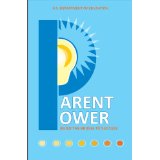
In honor of National Parents’ Day, celebrated the fourth Sunday of July, Government Book Talk reviews this exemplary parenting guide from the Department of Education, Parent Power: Build the Bridge to Success.

parentpower The opening of the Department of Education’s Parent Power: Build the Bridge to Success is a quote from President Obama made in July 2009:

“To parents, we can’t tell our kids to do well in school and then fail to support them when they get home. You can’t just contract out parenting. For our kids to excel, we have to accept our responsibility to help them learn.”

PoderdelosPadresThe book’s introduction sets the reader up to learn the most important tip given in Parent Power and its Spanish version, Poder De Los Padres Para Trazar el Camino Hacia el Exito, This tip is simple to state, but hard work to follow: be responsible. Your responsibility for your child’s education begins with modeling at home. If your kids see you reading, they will want to read. If you drag your kid to every Civil War battle site because you are a Civil War buff, your child may ace his or her American history exams. When you volunteer at your child’s school, your kids are going to see how important their education is to you.

Other tips covered in the book include: be committed, be positive, be patient, be attentive, be precise, be diligent, be results-oriented, be innovative. These tips are good calls to action for parents. Parents are already tired from their jobs, long commuting hours, keeping their living spaces clean and finding a way to feed the family. Just managing the basic tasks of daily survival can take up all their time. When your child throws a temper tantrum because you’ve sent her to her room to do her homework rather than watch her favorite TV show, it’s tough to practice that “be patient” tip. Good parenting demands more effort than managing basic survival.

Likewise, it takes a great deal of work to follow the other tips, such as remembering to be innovative and to provide positive feedback. It’s more constructive for parents to be precise when praising their children. Instead of telling your child she is smart for completing a drawing, you should tell the child how much you appreciate her making the effort to color the Canadian flag with the right colors in the right places. Parents will evaluate many of their children’s performances, and it will take quite a bit of creativity to say “good job!” in a different way every time. The last tip given in all bold case letters, BE THERE, is a restatement of the popular saying, the best present parents can give their kids is their presence.

The book does give specific suggestions, listed by school age group: birth through preschool, elementary, middle and high school.

Parent Power_Page12Image:Parent Power, Page 12, recommends activities for Pre-Schoolers and Kindergarteners.

The authors recommend a large number of parent-child and pro-school activities. Some examples are reading aloud to your child each day starting at birth, taking your child to the library, playing games with your child, contacting his or her teachers, visiting his or her school. Many parental advice volumes contain advice that may not be revolutionary, but may break parents out of a rut that they had not previously considered. There is also a list of electronic resources to help parents research further. Hints and tips are a parent’s best friend when guiding a child through the various developmental stages.

If you’re doing the fun but difficult work of raising a child, help yourself to Parent Power: Build the Bridge to Success and/or Poder de los Padres: Para Trazar el Camino Hacia el Éxito. Get the hints and tips you need to encourage you. Children do not simply inherit their characters from their parents like magic. Parents are the driving force in their children’s lives, both by example and character—and that’s the power of parents. 

How can I find parenting publications from the Federal Government?

Federal Depository Librarians: How can I access these publications?

About the author(s): Our guest blogger is Jennifer K. Davis from GPO’s Library Services & Content Management Division that supports the Federal Depository Libraries Program (FDLP). Editor: Government Book Talk Editor-in-Chief and , GPO Promotions & Ecommerce Manager, Michele Bartram.