Gift-Giving Traditions and 12 Books of Christmas

December 5, 2013

ORIGINS OF HOLIDAY GIFT-GIVING

For centuries, Europeans and North Americans have been giving gifts around Christmastime.

Sing-heigh-ho-ancient-British-yule-log on Christmas cardImage: Ancient Britons carrying a Yule log and holly branches. Source: From the bottom of the barrel blog.

The practice dates to the pagan and druid peoples of Rome, the British Isles and Scandinavian countries. The Romans gave gifts or money for gift-giving at Saturnalia, a winter festival that lasted seven days; according to some sources, the gift-giving occurred on the last day of Saturnalia (December 23). When the Romans conquered Britain, they incorporated pagan religious practices into their festivals, so that the locals felt more integrated into the Roman Empire. Pagans and Druids celebrated the winter solstice festival, Yule, and although by many accounts it was not the most important pagan festival, it was celebrated quite a bit. Any visitors to the Irish Neolithic pagan monument Brú na Bóinne** are left in no doubt of that. The pagans may have given gifts at the Yule celebration as well.

Christianity later took over much of Europe, and the Christians, like the Romans, learned that the best way to truly conquer was not to divide, but to incorporate. Gift-giving became a celebration of the birth of Jesus Christ, just as pagan Yule branches became “Christmas trees”. Although the pilgrims at Massachusetts formally outlawed public celebrations of Christmas for twenty-two years, the whole Christmas juggernaut eventually won out in the United States.

Giving gifts at Christmastime eventually became de rigueur, even for secular and non-Christian people. American Jews in the late nineteenth century started to promote Hanukkah—a minor Jewish festival—as a time for Jewish parents to give their own children gifts, so that American Jewish children wouldn’t feel left out when their peers got gifts. And although Kwanzaa isn’t supposed to include gifts, some parents give their children gifts on Kwanzaa days. It seems that few Americans, despite their religious convictions, can resist the ritual of end-of year gift-giving and the ties the practice strengthens among us.

12_books_of_christmas-bannerImage courtesy Scholastic.

So by now we’ve worn the stretchy pants for Thanksgiving, and powered through the mall on Black Friday. On Cyber Monday, as I write this, it’s time to get ready for some serious shopping: we’re in the middle of Hanukkah, and we’ve got a mere twenty-three days before Christmas and twenty-four days before Kwanzaa. You need to get some creative gifts, stat. For help with this goal, turn to GPO’S US Government Bookstore, especially the wallet-friendly Bargains Under $20 page—it’ll help you wipe out your stocking stuffer list in a red-hot minute. That said, here are 12 solid suggestions for your holiday gift-giving, no matter what holiday you’re celebrating at this time of year!

KIDS’ CORNER BOOKS

Fun-with-Fire-SafetyYou need to get something small to give your little ones as well as the big presents, and it encourages your kids to read more if you give books as gifts. Fire trucks nearly always captivate the pre-K set: show them a picture of a fire truck, complete with cute Dalmatian, and their attention is rapt. Marty and Jett’s Activity Book: Let’s Have Fun with Fire Safety (US $5.00 includes FREE shipping) activity book comes with cutouts for junior fire badges and finger puppets, coloring pages, a maze, and a fill-in-the-blanks puzzle. There’s a list of important things for kids to remember in a fire. Most schools now include this information in their curriculum, so the book is a good reinforcement of that learning—and it’s also a coloring book. This little volume’s a slam-dunk: educational and amusing, all in one cute package.

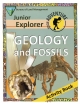
BLM-Junior-Explorer-Geology-and-FossilsDoes the child in your life love picking up interesting shells or rocks at the beach or park? Then he or she will love this Bureau of Land Management (BLM) Junior Explorer Geology and Fossils Activity Book (US $7.00 includes FREE shipping) that includes fun facts, a crossword puzzle, and activities about rocks and fossils for explorers ages 8 to 12, along with a Bureau of Land Management (BLM) Junior Explorer Certificate that proves the child is a true budding “rock star.”

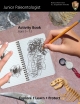
Junior-Palentologist-Activity-BookIs your child or grandchild a fan of Jurassic Park or Dinosaur Train? Then be sure to pick up the National Park Service’s Junior Paleontologist Activity Book, Ages 5-12, Explore, Learn, Protect Activity Book (US $6.00 includes FREE shipping) in which kids can learn about dinosaurs, explore some of the US national parks that offer you a look into this ancient past, and complete fun activities that will let them earn a junior paleontologist badge.

Deliciously-Healthy-Family-MealsFor busy parents who want to make healthy meal preparation a family affair, Keep the Beat™ Recipes: Deliciously Healthy Family Meals (ON SALE US $10.50 includes FREE shipping) is a delightful kid-friendly healthy cookbook developed by a single father and nutritionists that features delicious, heart-healthy, kid-friendly recipes and also provides tips for involving children in meal preparation. The appendix is loaded with information on meal planning, cooking, and nutrition for families and children to help combat obesity and diabetes.

NON-FICTION MULTIMEDIA AND PRINT BOOKS

Baptism-by-Fire-CIA-Korean-War-analysisWith an 85-year-old war Korean War veteran from America currently detained in North Korea while on a tourist trip, this new eBook from the CIA is very timely. Before North Korean forces invaded the South on 25 June 1950, the CIA had only a few officers in Korea, and none reported to the CIA’s analytic arm, the Office of Research and Estimates (ORE). With an accompanying DVD that contains over 1,300 recently declassified documents and more than 5,000 pages of material, this Baptism by Fire, CIA Analysis of the Korean War multimedia book-and-DVD set (US $18.00 includes FREE shipping) sums up the analysis by the then only 3-year old Central Intelligence Agency about the Korean Conflict and the generally low priority given the region by the Truman Administration’s State Department and the US Armed Forces.

YouTube-WarThe evolution of digital information and communication technologies have developed to such a point that terrorists can film, edit, and upload their own attacks to Twitter, Facebook, YouTube and other websites within minutes of staging them, whether the Western media are present or not. In this radically new information environment, the enemy no longer depends on traditional media. This is the “YouTube War.” The new book YouTube War: Fighting in a World of Cameras in Every Cell Phone and Photoshop on Every Computer (US $16.00 includes FREE shipping) lays out the nature of the new digital and online media environment in terms of its implications for a war against media-savvy insurgents, and then considers possible courses of action for the Army and the U.S. military.

Crossing-Cultures-with-the-Peace-CorpsCrossing Cultures with the Peace Corps: Peace Corps Letters from the Field (US $17.00 includes FREE shipping) is a great offering for a school or college student, a teacher, a newly or soon-to-retire person, or someone who likes reading about other cultures. Although the authors structured the book for use in schools, and includes lesson plans at the end of each letter, reading the letters is good entertainment for anyone. You can learn things about Togolese family life, Chinese average salaries, South African attitudes about AIDs, and the native tongue of Paraguay, Guaraní. Studying cultural attitudes of other societies always makes you appreciate your own society, and it may even make you want to learn more about others. This book will make you reflect on what you value, even while you walk away with some good talking points for your next party.

The-First-LadiesThe First Ladies (US $17.00 includes FREE shipping) is the perfect book for the history buff, art historian, costume designer or fashionista in your family. Each page features a biography of every first lady, and her official portrait in full color on the facing page. You can read the accomplishments and tribulations of each FLOTUS (First Lady of the United States) from Martha Washington through Laura Bush, watch the trends in ladies’ dress and portraiture change, and learn some interesting tidbits of American historical trivia. This book was my favorite Christmas gift when I was twelve, and the passage of time since then makes it nearly a classic today.

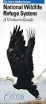
National-Wildlife-Refuge-System-Visitor-GuideNational Wildlife Refuge System: A Visitor’s Guide (US $5.00 includes FREE shipping) The U.S. Fish and Wildlife Service manages a “…diverse system of 500+ refuges encompassing almost 92 million acres of lands and waters spans the continent from Alaska’s Arctic tundra to the tropical forests in Florida; from the secluded atolls of Hawaii to the moose- trodden bogs of Maine.” Most of the book is composed of full-color maps. You can plan your next trip with the help of these maps, either for a weekend or a full two-week blowout in summer. This print edition is back-pocket friendly for a day out on the trail.

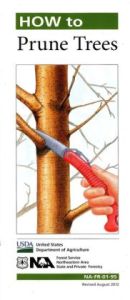
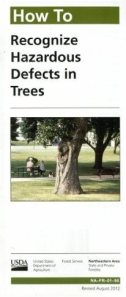
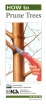
How-to-Prune-TreesHow to Prune Trees (ON SALE US $2.00 includes FREE shipping) is a great gift for any homeowner. While some may think pruning trees is quite simple, you actually have to know when to trim a tree, in what weather to trim it, and why you would trim a tree, etc. Pruning is a fairly complicated task; if you trim a tree incorrectly, you can kill it. It costs quite a bit to buy a new tree from a nursery, and a long time to grow a new one. Investing a mere $2 in this color-illustrated guide might save you or your gift’s recipient big bucks, and after a few reads, give the satisfaction of mastering a new art.

NON-FICTION EBOOKS

If eBooks are on your gift-giving list, try these new DRM-free downloadable offerings:

Exporters-Wit-and-Wisdom-of-Small-Business-OwnersExporters! The Wit and Wisdom of Small Business Owners Who Sell Globally (ePub eBook) (US $7.99) profiles 25 Americans who battled competitors, fear of the unknown, and personal adversity to build successful small export businesses in the global marketplace. Alternately humorous, amazing and inspirational, their stories also serve as valuable advice for readers wanting to follow their example and start exporting.

Childrens-Bureau-LegacyThe Children’s Bureau Legacy: Ensuring the Right to Childhood (ePub eBook) (US $9.99) shares the 100-year legacy of this landmark agency that established the first Federal Government programs, research and social reform initiatives aimed to improve the safety, permanency and well-being of children, youth and families.  It provides a fascinating exploration of the evolution of America and our treatment of children through each Presidential Administration as it covers often inspiring and sometimes heart-wrenching topics such as: ending child labor, the Orphan Trains and the controversial Indian Boarding Schools; adoption and foster care; infant and maternal mortality; Aid to Dependent Children; support of US military families and care of European World War II refugee children; early childhood education Head Start; child abuse and neglect; and much more.

AND OUR FREE E-GIFT TO YOU

Fifty years have not erased the controversy and angst of the fateful day of November 22, 1963, when President John F. Kennedy was assassinated by Lee Harvey Oswald in Dallas. (See our blog post Remembering Camelot: Best of the old and new official publications about John F. Kennedy.)

GPO-WARREN-COMMISSION-REPORT-on-the-Assassination-of-President-John-F-Kennedy-JFKTo commemorate this tragic event, the Government Printing Office (GPO) is offering a free digitized version of the full, original (and now long out-of-print) Official Report on the Assassination of President John F. Kennedy (PDF) (FREE DOWNLOAD) by The President’s Commission on the Assassination of President Kennedy, known as the Warren Commission. Sort through the evidence, interviews, and facts that were available to the Commission in the ten months following the assassination, and make your own conclusions about the crime and the report’s “single shooter” finding.

FREE SHIPPING ADDS TO THE JOY OF GIVING

When you’re looking for the perfect gift this holiday season, spend some time shopping through GPO’s U.S. Government Online Bookstore. And remember, worldwide standard SHIPPING IS FREE on the U.S. Government Bookstore website, so shop away!  After all, there’s enough there to stuff a sleigh (or a million dreidels ;-).

How can I obtain these 12 Bargain Books?

  • Shop Online: You can purchase these publications from the U.S. Government Online Bookstore at http://bookstore.gpo.gov by clicking on the links above in this blog post or clicking here to shop all our BARGAINS UNDER $20 publications.
  • Order by Phone: Call our Customer Contact Center Monday through Friday, 8 am to 5:30 pm Eastern (except US Federal holidays). From US and Canada, call toll-free 1.866.512.1800. DC or International customers call +1.202.512.1800.
  • Shop our Retail Store: Buy a copy of any print editions from this collection at GPO’s retail bookstore at 710 North Capitol Street NW, Washington, DC 20401, open Monday–Friday, 9 a.m. to 4 p.m., except Federal holidays, Call (202) 512-0132 for information or to arrange in-store pick-up.
  • Visit a Federal Depository Library: Search for one of these publications in a nearby Federal depository library.

** Brú na Bóinne is a carved stone underground chamber that lights up to show the carvings on the stone walls only on the winter solstice, December 21.

About the author(s): Adapted by Government Book Talk Editor-in-Chief and the US Government Printing Office (GPO) Promotions & Ecommerce Manager, Michele Bartram, from an original blog post by Jennifer K. Davis from GPO’s Library Services & Content Management Division that supports the Federal Depository Libraries Program (FDLP). Happy holidays from us both!


National Treasure: The art and architecture of the US Capitol

December 2, 2013

One hundred and fifty years ago today, on December 2, 1863, the United States Capitol Dome was completed, adding its own distinctive grandeur to the skyline of our Nation’s capital city.

Last month in November 2013, a two-year project began to restore the aging dome. Read all about it on the Architect of the Capitol’s website about the US Capitol Restoration Project at http://www.aoc.gov/dome.

While most of the focus on the Capitol these days pertains to politics, this anniversary is an appropriate time to reflect on the art and architecture of one of our National Treasures, the US Capitol, along with the artists, architects and engineers who helped make it a showplace worthy of a world class city. Following are a few of the more outstanding publications about the US Capitol art and architecture.

Glenn Brown’s History of the United States Capitol

Glenn-Brown-History-of-the-United-States-CapitolPrepared for the Bicentennial of the construction of the United States Capitol in 1994, Glenn Brown’s History of the United States Capitol is the definitive history of the construction of the Capitol, including the many trials and tribulations along the way, such as the burning of the Capitol by the British in August 1814 during the War of 1812.

Glenn-Brown_US-Capitol-after-British-burning-in-War-of-1812Image: US Capitol exterior after the fire from the British burning of Washington. From Glenn Brown’s History of the United States Capitol

Capital Engineers: The US Army Corps of Engineers and the Development of Washington DC, 1790-2004

In his introductory address kicking off the second inauguration of President Barack Obama and Vice President Joseph Biden on January 21, 2013, Senator Schumer (D-N.Y.) remarked on the completion of the Capitol Dome 150 years ago—just two years ahead of President Lincoln’s second inauguration on March 4, 1865:

When Abraham Lincoln took office [in 1861], two years earlier the dome above us was a half-built eyesore… Conventional wisdom was that it should be left unfinished until the war ended, given the travails and financial needs of the times. But to President Lincoln the half-finished dome symbolized the half divided nation. Lincoln said, ‘If people see the Capitol going on it is a sign we intend the union shall go on.’ And so, despite the conflict which engulfed the nation, and surrounded the city, the dome continued to rise.”

Capital Engineers: The US Army Corps of Engineers and the Development of Washington DC, 1790-2004 ISBN: 9780160795572The Army Corps of Engineers played a significant role in the design and construction of the Capitol Dome and the rest of Washington, DC. In the enjoyable and anecdote-filled book entitled Capital Engineers: The U.S. Army Corps of Engineers and the Development of Washington, D.C. 1790-2004, readers can discover the politics, passion, inspiration and innovation that went into crafting the landmark historic monuments, public buildings and infrastructure that makes up the Nation’s capital, including sketches and insider stories about the design and construction of the United States Capitol and Dome.

You can read the detailed review of this fun and fact-filled book under our earlier blog post, The Untold Story Behind the Engineering of Washington DC. Lincoln-First-Inauguration-at-US-CapitolImage: First Inauguration of Abraham Lincoln, March 4, 1861, beneath the unfinished Capitol dome. Source: Library of Congress

NEW! To Make Beautiful the Capitol: Rediscovering the Art of Constantino Brumidi

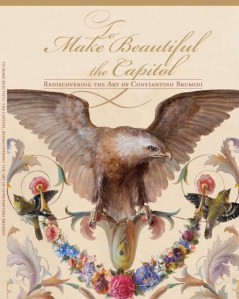
To Make Beautiful the Capitol: Rediscovering the Art of Constantino Brumidi, 2013 edition, ISBN: 9780160921001Once the Dome was completed, it was decided that it needed to be a showcase of the finest art. For those visitors lucky enough to come to Washington, DC, and take a tour of the Capitol, they marvel at the “monumental fresco” in the Capitol Rotunda, called The Apotheosis of Washington, that reminds one of the Sistine Chapel and the incredible frescoes along the walls and ceilings of the corridors and special rooms, such as the President’s Room.

In this stunning new publication, To Make Beautiful the Capitol: Rediscovering the Art of Constantino Brumidi, the United States Senate Office of the Curator provides an updated history of the work on the Capitol by Italian-born artist, Constantino Brumidi, who spent the last 25 years of his life making the Capitol into an awe-inspiring piece of art worthy of his own native land’s masterpieces with his frescoes and decoration of the walls and ceilings. Includes new discoveries about the artist, his inspirations and genius resulting from recent extensive restoration of his work to its original glory.

US Capitol The Brumidi Corridors, from To Make Beautiful the Capitol: Rediscovering the Art of Constantino Brumidi ISBN: 9780160921001 Image: The Brumidi Corridors, from To Make Beautiful the Capitol: Rediscovering the Art of Constantino Brumidi

United States Senate Catalogue of Fine Art

United States Senate Catalogue of Fine Art ISBN 9780160511721Visitors to the finished Capitol are often surprised by both its stunning architectural details and the impressive art complementing the interior spaces. Now, those works of art–ranging from portraits of prominent senators to depictions of significant events in U.S. history–are accessible to everyone through the publication of the United States Senate Catalogue of Fine Art. Prepared by the Office of Senate Curator, the catalogue represents the first comprehensive effort to illustrate and interpret this rich collection of 82 sculptures, 75 paintings, 2 enameled mosaics, and 1 stained glass window. Capitol_George-Washington-Memorial-WindowImage: Stained glass George Washington Memorial Window, by Maria Herndl in 1904, from United States Senate Catalogue of Fine Art

The 160 pieces in the catalogue represent the work of 111 artists, including such celebrated figures as Gilbert Stuart, Alexander Calder, Augustus Saint-Gaudens, Thomas Sully, and Daniel Chester French. Many of the works feature prominent senators, including portraits of Everett McKinley Dirksen, Mike Mansfield, and Robert A. Taft, and small bronze sculptures of Henry Clay and Daniel Webster.

A majority of the people depicted are immediately recognizable, such as George Washington, Thomas Jefferson, Theodore Roosevelt, and Benjamin Franklin, but there are also lesser-known figures include the Ojibwa Indian Chief Be Sheekee (Buffalo) who was in Washington to negotiate a peace treaty the year he died, and Senate employee Isaac Bassett, who came to the Senate in 1831 as one of the first pages and stayed until 1895, when he was an elderly doorkeeper. Capitol_Ojibwa-Indian-Chief-Be-SheekeeImage: Marble bust of Indian Chief Be sheekee, or Buffalo, by sculptor Francis Vincenti in 1856

Although portraits dominate the collection, the American landscape is represented by an oil painting of Niagara Falls in winter. Major events are also documented, such as the first reading of the Emancipation Proclamation by President Abraham Lincoln and the first manned moon landing. There are two special collections: a collection of vice presidential busts, and a series of paintings of major U.S. army posts completed by Seth Eastman.

Eastman Forts Print Set

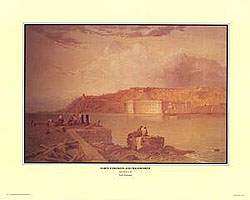
In 1870, the House Committee on Military Affairs commissioned artist Seth Eastman to paint 17 images of important U.S. Army forts in the United States after the Civil War. He completed the works between 1870 and 1875. For many years, the fort paintings hung in the rooms assigned to the House Military Affairs Committee, first in the Capitol and later in the Cannon House Office Building. During the late 1930s, they were returned to the Capitol for public display. Of the 17 paintings, 8 are located today in the Senate wing. Seth Eastman US Army Forts paintings Print Set

This Eastman Forts Print Set includes a booklet, “The Eastman Forts, A Guide to the Print Set,” and 10 color prints of Eastman paintings of the following ten forts: Fort Mackinac in Michigan; Mifflin in Pennsylvania; Trumbull in Connecticut; Tompkins and Wadsworth in New York; Scammel and Gorges in Maine; Delaware in Delaware; Snelling in Minnesota; Taylor in Florida; Defiance in New Mexico (now Arizona); and Fort Rice in North Dakota. Painting of Fort Trumbull, Connecticut, by Seth Eastman hanging in the US CapitolImage: A painting of Fort Trumbull, Connecticut, by Seth Eastman, commissioned by the U.S. Army in 1870, and hanging in the US Capitol. Part of the Eastman Forts Print Set.

United States Senate Catalogue of Graphic Art

US-Senate-Catalogue-of-Graphic-ArtSome of the art about the Capitol was not included in the building itself, but was produced outside of it by the press and media of the day. Prior to the advent of modern media with color photographs and live audio and video, Americans received their news and images from newspapers and illustrated news magazines, which included both hard news and softer features full of engravings, portraits, political cartoons, and illustrations.

The United States Senate Catalogue of Graphic Art reflects this coverage mix of both hard and soft news. The catalogue includes prints involving the Senate that depict important events of the day such as the debate over slavery, the impeachment trial of Andrew Johnson, and presidential inaugurations. But also featured are prints capturing the daily rhythms of the Senate such as the crowded Capitol corridors, Senate pages delivering documents, lobbyists pleading their case, meals in the Senate dining room, and idyllic scenes of the Capitol building and grounds.

Capitol-Interior-Rotunda-1853How can I obtain these publications about the US Capitol Art and Architecture?

  • Shop Online: You can purchase these publications from the U.S. Government Online Bookstore at http://bookstore.gpo.gov by clicking on the links above in this blog post or  clicking here to shop our US Capitol Art publications.
  • Order by Phone: Call our Customer Contact Center Monday through Friday, 8 am to 5:30 pm Eastern (except US Federal holidays). From US and Canada, call toll-free 1.866.512.1800. DC or International customers call +1.202.512.1800.
  • Shop our Retail Store: Buy a copy of any print editions from this collection at GPO’s retail bookstore at 710 North Capitol Street NW, Washington, DC 20401, open Monday–Friday, 9 a.m. to 4 p.m., except Federal holidays, Call (202) 512-0132 for information or to arrange in-store pick-up.
  • Visit a Federal Depository Library: Search for one of these publications in a nearby Federal depository library.

About the Author: Government Book Talk Editor Michele Bartram is Promotions Manager for GPO’s Publication and Information Sales Division in Washington, DC, and is responsible for online and offline marketing of the US Government Online Bookstore (http://bookstore.gpo.gov) and promoting Federal government content to the public.


Be a NOAA-it-all with these FREE NOAA resources about the weather and oceans

November 12, 2013

In the morning when I get on the elevator up to my office in GPO headquarters, when they aren’t talking about sports, everyone is chatting about the weather. My colleagues compare the day’s weather with previous years and talk about what’s coming in the days and seasons ahead. Since Washington, DC’s weather varies greatly throughout the year (even through the day!), people in this area are always taking the pulse of the outdoors and our world. In a similar vein, the Department of Commerce’s National Oceanic and Atmospheric Administration or NOAA, the U.S. Government’s oldest scientific agency, is taking the pulse of the Earth, for our benefit.

Graohic of NOAA services from Explore NOAA movie on Government Book Talk by GPOClick here to “Explore NOAA” in this movie about the Nation’s oldest scientific agency. 

You can be a NOAA-it-all with these FREE online resources

NOAA says that “Our reach goes from the surface of the sun to the depths of the ocean floor as we work to keep citizens informed of the changing environment around them.” As such, its mission is to understand and predict changes in climate, weather, oceans, and coasts, and to conserve and manage coastal and marine ecosystems and resources.

Once they’ve taken the Earth’s pulse, of course NOAA wants to share the output of their studies. The data the agency gathers when studying the Earth’s atmosphere and oceans is comprehensive, and it is a global leader in communicating how Earth’s atmosphere and water systems influence people’s lives and how they influence those systems. If you learn how to navigate the range of NOAA’s free online resources, including real-time and archived information, you will get the full benefit of this rich data.

NOAA educates and disseminates data from its many valuable services, including the National Marine Fisheries Service, the National Ocean Service, the National Weather Service and others. Their information comes packaged in videos, weather alerts, digital coastal charts, entire databases, atlases, podcasts, screensavers, sea sounds, field reports, tagging data, and an entire education Web site for teachers and kids. NOAA has resources for children that are as unique and valuable as their science.

Whether to Weather

For instance, NOAA’s Weather Systems and Patterns page has a multimedia, lessons and activities, real world data, background information and career profiles. A student who is interested in extreme weather can graph tornado air pressure in the lessons section, investigate the severe weather events page in the real world data, track a storm in the multimedia section, read the background on severe weather, and even flirt with future career possibilities in the career profile of the tornado chaser.

NOAA Watch out-- Storms Ahead! Owlie Skywarn's Weather Book available from http://bookstore.gpo.govIf the student wants to follow up with extra reading at home with advice for the whole family,  Watch out– Storms Ahead! Owlie Skywarn’s Weather Book can help round out the lesson. Total immersion in a topic is possible without ever leaving the site.

Free resources for teachers and students is a bonus that teachers, parents, caregivers and students should take full advantage of, and NOAA’s Education Resources page is a just one prime example what the agency’s got on offer for the American people.

Coastal Maps and Navigational Charts

Another instance of NOAA’s rich resources is its coastal maps. NOAA’s Office of Coast Survey recently announced that they were no longer issuing printed U.S. Coastal maps; instead, they now make high-resolution Raster Navigational Charts for public use. The Office of Coast Survey offers over high quality, 400 dpi full-color digital images of NOAA’s entire suite of paper charts, for download and printing. Sailors, commercial fisherman, and anyone else interested can view and print these charts as well as the free Air Almanac, Nautical Almanac and Navigational Charts available from http://bookstore.gpo.govdemo software to use them; this is data of high commercial value available completely for free for the American people as well.

Note that up-to-date, printed US Government astronomical, air and nautical navigational charts and almanacs are still available from the US Government Bookstore under Transportation & Navigation > Almanacs & Navigation Guides.

Webinar on NOAA’s Free Online Resources

Librarians and Teachers: Attending tomorrow’s joint NOAA-GPO webinar, “Discover Your World With NOAA: Learn How NOAA Monitors the Pulse of the Earth, and How to Access and Use NOAA’s Free Online Resources” is a great way you can learn to reap the benefit of NOAA’s rich data offerings. Registration for this free training webinar is available now. It will be offered Wednesday, November 13 at 2 p.m. Eastern Time;  GPO’s Library Services & Content Management Division (LSCM) will archive the session on the free GPO Webinar Archive for those who cannot attend. Hopefully you can make it to the live webinar or find some time to look at the archived webinar after it takes place.

NOAA’s Ark of Great Reads

IUnderstanding Marine Debris: Games & Activities for Kids of All Ages: Marine Debris 101 ISBN 9780160913624 available from bookstore.gpo.govn addition to attending the webinar, you can mine some of NOAA’s resources by reading some of these stellar NOAA publications:

Satellite-Images-to-Accpompany-the-Globe-Earth-System-Poster-Learning-NOAA-9780160864643

How can I obtain these NOAA publications?

1)    FOR THE PUBLIC

  • Shop Online: You can purchase these publications from the U.S. Government Online Bookstore at http://bookstore.gpo.gov by clicking on the links above in this blog post or clicking here to shop our entire NOAA collection.
  • Order by Phone: Call our Customer Contact Center Monday through Friday, 8 am to 5:30 pm Eastern (except US Federal holidays). From US and Canada, call toll-free 1.866.512.1800. DC or International customers call +1.202.512.1800.
  • Shop our Retail Store: Buy a copy of any print editions from this collection at GPO’s retail bookstore at 710 North Capitol Street NW, Washington, DC 20401, open Monday–Friday, 9 a.m. to 4 p.m., except Federal holidays, Call (202) 512-0132 for information or to arrange in-store pick-up.
  • Visit a Federal Depository Library: Search for one of these publications in a nearby Federal depository library.

2)    FOR LIBRARIANS

About the author(s): Adapted by Government Book Talk Editor-in-Chief and the US Government Printing Office (GPO) Promotions & Ecommerce Manager, Michele Bartram, from an original blog post by Jennifer K. Davis from GPO’s Library Services & Content Management Division that supports the Federal Depository Libraries Program (FDLP).


The Constitution Annotated: The Pursuit of App-iness

September 17, 2013

follow-the-founding-fathers-david-bowman_computerIn preparing for this Constitution Day blog post, not only did I retake the civics quiz from last year’s Constitution Day post (see Quiz: Are you smarter than an 8th grade Civics student?), I also scrolled through my tablet last night, reading the Preamble to the Constitution and looking up related quotes. Then it occurred to me: if Founding Father George Washington had been alive today, would he have been a PC or an Apple guy? I’m betting our pragmatic First President would be a PC guy. I’m pretty sure innovator Thomas Jefferson would have been a stylish iPad man, and Benjamin Franklin, inventor of the bifocals, would probably be sporting Google Glasses now and tinkering with them.

Image: Founding Fathers Thomas Jefferson, Benjamin Franklin, George Washington. Original Illustration by David Bowman from his book “What Would the Founding Fathers Think?”

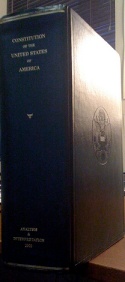
constitution-annotated-printWhat is clear is that our Founding Fathers were strategic thinkers who realized that a fully functioning republic needed a clear but flexible code of law that evolved with the Nation. Thus, they wrote the Constitution of the United States, which has stood the test of time with over two centuries of amendments and interpretations by all branches of the U.S. Federal Government.

CONAN for the Librarian (and Lawyers)

Since 1913, the Senate has directed that a publication be issued summarizing the current state of the Constitution to date, with all the amendments and the official interpretations, with the analysis today provided by the Library of Congress’ Congressional Research Service. This publication is called The Constitution of the United States of America, Analysis and Interpretation, popularly known as the Constitution Annotated or “CONAN” among the real insiders.

Constitution-of-the-US-Pocket-GuideIn addition, many Americans, including Members of Congress, buy a pocket print edition of the Constitution and Declaration of Independence to carry around with them at all times. (Click on image to the left.)

Constitution Goes Mobile and Online

This year marks the 100th anniversary of the Constitution Annotated publication, and to celebrate it and Constitution Day, the Government Printing Office (GPO) not only issued the Centennial Edition in print, but has also worked with the Senate Committee on Rules and Administration and the Library of Congress to develop and launch both a new mobile app as well as a web publication that make analysis and interpretation of constitutional case law by Library experts accessible for free to anyone with a computer or mobile device.

The new resources, which include analysis of Supreme Court cases through June 26, 2013, will be updated multiple times each year as new court decisions are issued.  Legal professionals, teachers, students and anyone researching the constitutional implications of a particular topic can easily locate constitutional amendments, federal and state laws that were held unconstitutional, and tables of recent cases with corresponding topics and constitutional implications.

The new app and improved web publication will make the nearly 3,000-page “Constitution Annotated” more accessible to more people and enable updates of new case analysis three or four times each year.

Public Printer Davita Vance-Cooks said,

“Through this collaborative project, the Library of Congress and GPO are providing the public with timely access to an enhanced, authenticated version of the “Constitution Annotated” through GPO’s Federal Digital System. This is another example of how GPO works with Congress, the Library and other agencies to meet the information needs of the American people in the digital age.”

Keeping our “Complex Machinery” in Working Order

On May 19, 1821, years after the Constitution was adopted, John Adams wrote in a letter to Thomas Jefferson that:

“A free government is a complicated piece of machinery, the nice and exact adjustment of whose springs, wheels, and weights, is not yet well comprehended by the artists of the age, and still less by the people.”

Even though our Founding Fathers could not have envisioned a digital future complete with the Internet and smartphones, the framework they put in place has been able to roll with the times. Americans know that our system is indeed a “complicated piece of machinery,” with our laws serving as the user manual, but tools like the Constitution Annotated– in print or now online or on your mobile device– now exist to help keep our machinery of democracy well oiled.

George-Washingtons-Annotated-Copy-of-a-Draft-of-the-U.S.-ConstitutionImage: Even George Washington annotated his copy of the Constitution! (seen left). Source: National Archives

How can I obtain The Constitution Annotated?

1) Buy the Print Edition of The Constitution of the United States of America, Analysis and Interpretation, Centennial Edition

2) Mobile app version of the Constitution Annotated

  • For Apple iOS Devices: Download the new Constitution Annotated app for iOS devices for free from Apple’s iTunes Store or via this direct link: http://beta.congress.gov/constitution-annotated/.
  • ·        For Android Devices: An Android version of this app is under development.

3) Constitution Annotated web publication on FDsys.gov

The Constitution Annotated web publication will be available on GPO’s Federal Digital System (FDsys) www.fdsys.gov as a digitally-signed, searchable PDF that includes a linked table of contents, a linked table of cases, a linked index and GPO’s Seal of Authenticity on every page.

The new Constitution Annotated and a suite of constitutional resources can be viewed at http://beta.congress.gov/constitution-annotated/. The page features links to the app stores, an interactive table listing recent cases of high interest, a bibliography of Constitution-related primary documents in American history and tips for searching the Constitution Annotated on GPO’s website at www.gpo.gov/constitutionannotated.

About the Author: Government Book Talk Editor Michele Bartram is Promotions Manager for GPO’s Publication and Information Sales Division in Washington, DC, and is responsible for online and offline marketing of the US Government Online Bookstore (http://bookstore.gpo.gov) and promoting Federal government content to the public.


Code Talkers to Better Walkers: How American Indians Have Helped Fight Wars and Obesity

August 21, 2013

In honor of Navajo Code Talkers Day this past week on August 14, Government Book Talk explores some Federal publications that utilize American Indian traditions and culture to combat serious problems of the past and present.

Native Code Talkers in World War I

“Code talkers” became the term used to describe Native American soldiers from various Indian tribes who communicated on radios, telephones and telegraph during World Wars I and II. They spoke in their own languages and dialects, all of which were indecipherable by enemy forces. Because few non-Indians knew these difficult native languages, which in many cases had no written form, they provided ideal codes for relaying secret operational orders.

WWI-Choctaw-Code-Talkers-w-FlagImage: The Choctaw Code Talkers enlisted in the U.S. Army in World War I even though their lack of citizenship exempted them from the draft. (U.S. Army photo)

In France during World War I, the 142nd Infantry Regiment, 36th Division, had a company of Indians who spoke 26 languages and dialects. Two Indian officers were selected to supervise a communications system staffed by 18 Choctaw. The team transmitted messages relating to troop movements and their own tactical plans in their native tongue. They helped the American Expeditionary Force win several key battles in the Meuse-Argonne Campaign in France, the final big German push of the war.

Soldiers from other tribes, including the Cheyenne, Comanche, Cherokee, Osage and Yankton Sioux also were enlisted to communicate as code talkers. Previous to their arrival in France, the Germans had broken every American code used, resulting in the deaths of many Soldiers. However, the German Army— which captured about one out of four messengers—never broke the Indians’ “code.”

More Native Code Talkers are Used in World War II

After the United States entered World War II in December 1941, more Armed Forces used code talking units with each unit composed of members of a specific American Indian tribe.

Navajo Code Talkers

The United States Marines recruited several hundred Navajos for duty in the Pacific region. The Marines chose these Navajos for their ability to speak their native language, Diné bizaad (Navajo), for code talking.

Philip Johnston, a son of missionaries who had grown up on the Navajo reservation, originally recommended Navajo to the Marines as a language well suited for cryptology. In a memo to the Commandant of the Marine Corps in early 1942, Navajo was declared uniquely suited to succeed more than some other languages proposed for use. At that time, most Navajos were fluent in their native language. The Marines were lucky; in 1942 only an estimated 28 non-Navajo Americans could speak the extremely difficult Navajo language!

Hitler had heard of the possibility of using Native American languages for codes prior to the United States’ entry into the war, and had sent a number of German anthropologists to the United States prior to WWII to learn Native American languages. Navajo was reportedly the only language the German anthropologists had yet to learn. Navajo also benefited by being so unlike other Native American languages that there was no language similar to it. If you’re fluent in Spanish, you might be able to muddle along in Portuguese after some basic lessons. Navajo has no analog.

Navajo-Code-Talkers-in-JungleIn May 1942, the first Navajo recruits attended boot camp; they then moved to Camp Pendleton in Oceanside, California, to create the Navajo Code Talkers Dictionary. The Marines trained approximately 400 Navajos as code talkers. To relay the messages they were encoding, they had to learn to operate three types of radios. At that time the code talkers called themselves “radiomen”.

The developers of the Navajo code modeled the alphabet portion on the Joint Army/Navy Phonetic Alphabet. That alphabet uses words to represent letters, e.g., Fox for the letter F. In the Navajo code, Ne-Ahs-Jah is Navajo for Owl, which stood for the letter O. To spell the word Navy, the code talker might say, “Tsah (Needle, or N), Wol-La-Chee (Ant, or A), A-Keh-Di-Glini (Victor, or V), Tsah-As-Zih (Yucca, or Y)”.

The Navajo Marines also chose Navajo words to represent about 450 frequently used terms in the military. It was hard. According to code talker Wilfred Billey, “one of the most difficult parts of forming the Navajo code was using it to relay precise information, such as coordinates or troop movements because several words in the Navajo language have various meanings” (May 22, 2003, “Navajo Code Talker Continues Oral Tradition”, Marine Core Logistics Base Albany).

Some of the choices were very creative. Navajo is a classic language that didn’t originally include terms like “tank”, so the Navajo Marines dubbed it “Chay-Da-Gahi”, or tortoise. The Navajo Code Talkers Dictionary, published by the Navy years later after it was declassified, showed the versatility of the code’s creators. The code was so effective in World War 2, it was also used in the Korean War, being phased out before Vietnam.

In fact, at Iwo Jima, Major Howard Connor, 5th Marine Division signal officer, declared, ‘Were it not for the Navajos, the Marines would never have taken Iwo Jima’” (Navajo Code Talkers: WWII Fact Sheet). During that battle alone, the radiomen transmitted 800 messages without error.

Comanche, Sioux and Hopi Code Talkers for the Army

Although the Navajo tribe is the one most remembered for its contributions to the World War II communications code units, the US military also used Basque, Comanche, Sioux, Hopi and a number of other American Indian languages as code languages. Basque was rarely used because there were native Basque speakers in Europe which made the U.S. military wary of using it more widely.  However, because the various Army units of Code Talkers were so secret, their very existence was kept classified until the 1970s or later.

American-Indian-Code-Talkers-LanguagesImage: List of American Indian Code Talkers’ languages and the numbers of tribal members who served, if known. There were at least two Code Talkers from each tribe. Source: National Museum of the American Indian’s website.

Army-Signal-Corps_9780160453519The US Army’s Signal Corps is the military branch that develops, tests, provides, and manages communications and information systems support for the command and control of combined US Armed Forces, including code talkers. You can read the history of the Army Signal Corps in Getting the Message Through: A Branch History of the U.S. Army Signal Corps.

The US Army’s 4th Signal Company, also known as the Code Talkers, used seventeen Comanche Code Talkers. Like the Choctaws of World War I, and the Navajos in the Pacific Theater, the Comanche Code Talkers used their native language to prevent the enemies of the European Theater from intercepting messages of the allied troops during World War II. The unit was instrumental during the Normandy invasion.

Sioux code talkers, composed of Lakota, Dakota, and Nakota native soldiers or “L.D.N.’s”, spoke their native “dialects” (languages) which were understood by each native soldier in the unit. On December 19, 2000, Congressman John Thune said of the Sioux code talkers’ contribution:

“It is important for us to honor these veterans whose contributions have, until recently, been ignored. Often sent out on their own to provide communications with headquarters on enemy location and strength, they sometimes spent 24 hours in headphones without sleep or food. Many endured terrible conditions without protection from the enemy. Using three Sioux languages Lakota, Nakota and Dakota, the Sioux Code Talkers were able to communicate messages the enemy was unable to crack.”

The Hopi tribe also helped in the communications coding efforts. Eleven Hopi men developed a highly secret code language which they used to assist US Army intelligence in the Marshall Islands, New Caledonia and the Philippines during the Second World War. Again, because of the super top-secret nature of their work for Army Intelligence, the Hopi Code Talkers’ contribution was not officially recognized until April 26, 2012, on the inaugural Hopi Code Talkers Recognition Day.

Applying American Indian Traditions to the War against Obesity

The United States Government continues to utilize Native American language and traditions to solve important problems of the day. For example, with the public health issue of childhood obesity and diabetes rising to dangerous levels in the US, the Department of Health and Human Services Centers for Disease Control and Prevention (CDC) Native Diabetes Wellness Program (Wellness Program) and the Indian Health Service (IHS) Division of Diabetes Treatment and Prevention recently teamed up with the Tribal Leaders Diabetes Committee (TLDC) to produce the award-winning Eagle Book series.

The developers of this series realized that the old, traditional American Indian diet and activity levels were in line with today’s medical recommendations to eat less processed food and more fruits and vegetables as well as exercising more. Thus, they worked with Native groups to incorporate traditional American Indian story-telling techniques and themes to promote increased physical activity such as walking and playing as well as making healthier—and more natural—food choices to reduce obesity and prevent diabetes.

Coyote-and-the-Turtles'-Dream-9780160913174 Preventing childhood obesity and diabetesThe common Native American theme of the tortoise/ turtle used by the American Indian code talkers resurfaces in the newest book in the series, Coyote and the Turtle’s Dream.  In this middle school-age mystery/ adventure book, the wise elderly box turtle helps the mischievous Coyote and the Indian reservation town’s residents solve a mystery to foil the plans of a fossil poacher while teaching the underlying message about healthy eating and increased physical activity.

With the first four books aimed at elementary schoolers– Through the Eyes of the Eagle, Knees Lifted High, Plate Full of Color, and Tricky Treats and the next book for middle schoolers– Coyote and the Turtle’s Dream— the Eagle Book series has been snapped up by teachers, nutritionists, librarians, parents and children’s health providers all over the country as an effective tool to teach children about healthier eating habits and increasing activity while also instilling an appreciation for Native culture which extols respect for elders and living in harmony with nature.

You can read more about the Eagle Book series on our Government Book Talk blog post entitled: “Native Traditions Help Kids Unplug, Read and Be Healthy.”

How Can I Obtain These Publications?

EBOOKS:

PRINT EDITIONS:

About the author(s): Adapted by Government Book Talk Editor-in-Chief and GPO Promotions & Ecommerce Manager, Michele Bartram, from an original blog post by Jennifer K. Davis from GPO’s Library Services & Content Management Division that supports the Federal Depository Libraries Program (FDLP).


No-Vacation Nation? Take Time to Enjoy Our National Parks and Trails

August 13, 2013

Vacation-Time-Goes-Unused-in-USAmericans are generally extroverted, friendly, talkative—and apparently, workaholics. As the Europeans put it, Americans live to work, while they work to live.

Image source: From infographic on lack of vacation time in U.S. Produced by Column Five for Rasmussen College.

Studies by various travel companies and polling groups have shown that Americans are among the group of nationalities that take the least amount of vacation (others being the Japanese, Taiwanese, South Koreans, Singaporeans, and Mexicans). Part of the reason may be that the United States is the only developed nation in the world that does not guarantee any paid holidays for workers by law. The U.S. Bureau of Labor Statistics concluded in a recent report that only seventy-two percent of wage earners in the United States received both holidays and paid vacations voluntarily granted by their employers. The rest of the employed population does not get paid vacation.

It’s unfortunate that Americans regularly skip using all their allotted vacation days*. [*See also: Schwartz, Tony (February 10, 2013). “Relax! You’ll Be More ProductiveThe New York Times.] Surveys of people in the U.S. report that they do not feel their bosses support taking leave, and they fear that being away from work looks like they are not committed to their jobs. Understandably, workers are afraid to look less than absolutely dedicated in this job market. Looking at our lack of vacation days and our failure to take advantage of them, one could conclude that we are not a well-rested people.

????????????????????????????????

Image: December 2012 infographic on why Americans don’t take more vacation time. Created by: Ally Bank from various public sources.

However, health researchers, sleep researchers, and psychologists have found that there is a direct correlation between rest and good health, and rest and productivity. Taking your vacation is almost a tonic against occupational stress.

Stop and Smell the Roses at a National Park or Trail

National Park System Map and Guide  ISBN: 9780912627878 available from http://bookstore.gpo.govIf you do get a paid vacation and have been putting off your annual jaunt, it’s time to sit down and plan one before summer ends. Many Federal Government agencies offer great resources for planning your next vacation or recreational activity.

For example, three excellent publications from the National Park Service– National Trails System: Map and Guide, National Park System Map and Guide, and the National Park System (Wall Map Poster) — can aid you in planning your trip to America’s best vacation destinations, our national parks and trails!

While most Americans are familiar with our fabulous national parks, fewer are aware of our 45 year-old National Trails System which is…

National Trails System Map and Guide“…the network of scenic, historic, and recreation trails created by the National Trails System Act of 1968. These trails provide for outdoor recreation needs, promote the enjoyment, appreciation, and preservation of open-air, outdoor areas and historic resources, and encourage public access and citizen involvement.” (National Park Service)

With the help of these National Park Service maps, you can hike interesting trails and learn history while you are appreciating the outdoors and getting a workout. Or you can pick a national park you’ve never visited before, and experience something new to spur your creativity. If you enjoy visiting cities, pick a park not far outside of town so that you could get a taste of nature in addition to some cultural experiences.

For example, the Washington, DC, area where the Government Printing Office is headquartered is a prime tourist and staycation destination with its many national parks and historic sites. Our Washington DC Area Tourism & Recreation collection includes maps, history and guidebooks about the area, including the new 2013 Washington DC tourism map by the National Park Service that includes all the newest monuments and museums. and the wonderful Capital Engineers: The U.S. Army Corps of Engineers and the Development of Washington, D.C. 1790-2004, (reviewed earlier on Government Book Talk blog) that tells “The Untold Story Behind the Engineering of Washington DC” and its many famous landmarks.

Once you pick a park, search the Web site recreation.gov to find the activities available there. If you look at the National Park system map and find yourself spoiled for choice, you may be able to narrow down your options when you discover the types of activities available at the parks. And if you are interested in vacationing in a city or a resort, but want to hit a nearby recreation center, you can search for alternatives just by entering a city or zip code. For example, if you plan to visit Las Vegas, but you’d like some time to enjoy rock climbing, too, you might rent a car for the day and drive to Red Rock Canyon National Conservation Area, 12.57 miles from the city center. Most of the National Parks have guidebooks available to help you plan your trip: a number of them are available for sale from the U.S. Government Bookstore.

Of course, the money and time needed for a vacation are no joke. You may be one of the unlucky 28% that does not get a paid vacation. Or getting time off work may just be impossible. If any one of those factors applies to you, try a weekend getaway someplace nearby instead. The National Park Service has suggestions for quick breaks or “staycations” all the country. Once you’ve selected a site, you can fine-tune your plans with the information about reservations and camping available at recreation.gov.

Support for Your Pursuit of Happiness

As our nation has declared the pursuit of happiness a self-evident truth and an inalienable right, it seems we have a patriotic duty to pursue a holiday. The Federal government definitely supports your vacation. After all, each one of our modern presidents has set a prime example for the people by taking vacations to better handle the rigors of the job. As President Nixon put it: “Like other presidents, before and after me, I felt the need to get out of the White House and out of Washington in order to keep some sense of perception.”

Obamas-at-Grand-CanyonImage: U.S. President Barack Obama and family vacationing at the Grand Canyon National Park in August 2009. Source: White House. 

How can the public find these tourism and recreation maps and guidebooks?

How can Federal Depository librarians access these publications?

  • Find the records for these titles via the cataloging records in GPO’s Catalog of Government Publication or CGP.
  • Find them in a federal depository library.

About the author(s): Adapted from an original article on the FDLP Community Blog by Jennifer K. Davis from GPO’s Library Services & Content Management Division that supports the Federal Depository Libraries Program (FDLP). Editor and additional content by: Government Book Talk Editor-in-Chief and , GPO Promotions & Ecommerce Manager, Michele Bartram.


You Scream, I Scream for National Ice Cream Month

July 15, 2013

fruit-sorbetIce cream, long beloved by Americans, has a long, even pre-colonial history in the Americas. Some of my Mexican friends have told me that the Aztec emperor Moctezuma (popularly referred to today as Montezuma) had servants climb the snow-capped volcanic mountains for snow to mix with fruit juices as a hot-weather treat.

Image: Could this have been how the Aztec emperor was served his favorite icy dessert made of and served in natural fruit? Source. Cool Stuff Sorbet.

The United States got in on the game early, too. In 1744 Barbara Janssen Bladen, daughter of Lord Baltimore and wife of Proprietary Colonial Governor of Maryland Sir Thomas Bladen, first served ice cream in the American colonies. Ice cream, at that time, was a fashion of the well-heeled.

Williamsburg-Ice-Cream-MakingClick image to watch this Colonial Williamsburg, Virginia, video of how ice cream was made during the colonial era.

The French connectionjeffersonicecream

The sweet treat did not become popular in this country until after the American Revolution, when the Americans had continued contact with the French.

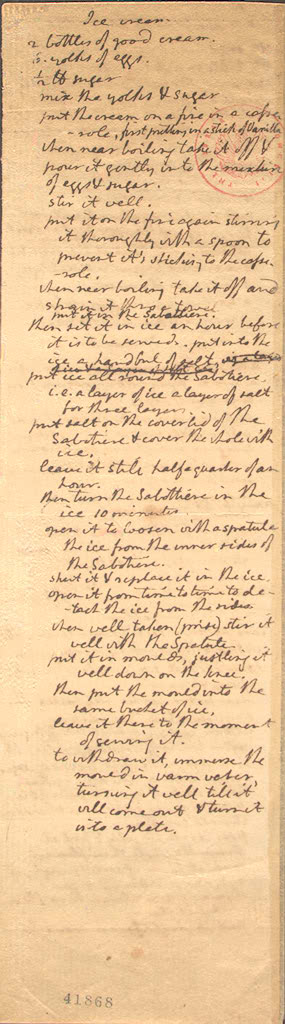
Thomas Jefferson learned how to make ice cream during his tenure in Paris as the United States’ Ambassador to France. He collected many recipes while in France, but ice cream was one of his favorites. In fact, the Library of Congress possesses a copy of a recipe for vanilla ice cream used by Thomas Jefferson written in Jefferson’s own hand.

Many visitors to Monticello, Jefferson’s home in Virginia, recorded enjoying ice cream during their meals there, probably fueling the dessert’s increasing national popularity.

Monticello-Garden-PartyImage: Monticello summer garden party where ice cream was sure to be served. Photo Credit: Jacob J. Gayer, National Geographic, December 1928

Ice cream gets added to the American “melting pot”

Americans’ fondness for ice cream has only increased over the years. Mary Todd Lincoln held berry parties which featured seasonal strawberries and ice cream served on the side.

An American named Abe Doumar is attributed by some as creating the first ice cream cone on July 23, 1904, at the World’s Fair at St. Louis, because the vendor ran out of ice cream dishes to use to serve it and resorted to rolled-up thin waffles. Having a cool container to keep our sweet treats in has certainly helped with our consumption of it.

Ice-cream-cones-Chicago-Worlds-fair

Image: Children and their mother enjoying the new sensation of ice cream cones at the 1904 St. Louis Exposition. Source: Aworldaffair blog.

According to the National Agriculture Statistics Service’s monthly publication Dairy Products, Americans consumed 163,544 pounds of ice cream (that’s hard and soft, full fat and low-fat combined) in May 2013.  It seems like we just can’t get enough of the sweet stuff.

I do declare…  It’s National Ice Cream Month

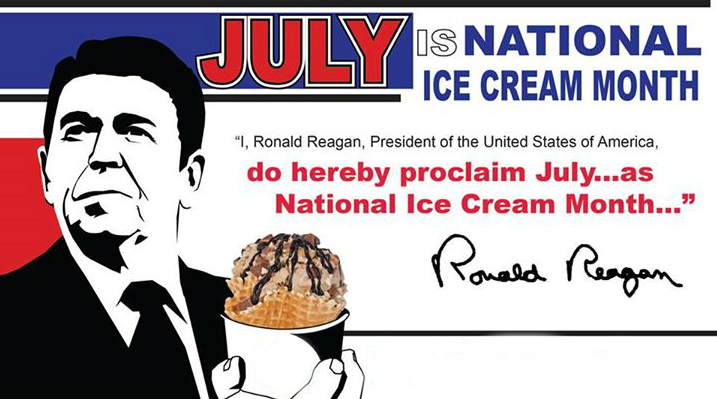
Ice cream is such a national institution that Congress passed a Joint Resolution favoring President Reagan’s declaration of July 15, 1984, as National Ice Cream Day and July as National Ice Cream Month. Presidential ice cream promotion continues to the present day.

Reagan-ice-cream-proclamation

Image: President Ronald Reagan conceived of National Ice Cream Month. Source: SubZero Ice Cream & Yogurt.

The Senate Inauguration Committee provided the recipe for the sour cream ice cream the White House chefs served at President Obama’s second inauguration. Whether it’s a result of the presidential lead, or simply ice cream’s yummy factor, hungry Americans and the dairy industry continue to celebrate every July as National Ice Cream Month.

Get the scoop and read all about ice cream

If you want to read more about American ice cream production, you can check out the aforementioned Dairy Products title, which reviews American dairy production, including all types of ice cream and frozen yogurt. Find the details of the American ice cream industry in 1997 Economic Census. Manufacturing. Industry series. Ice cream and frozen dessert manufacturing. To do some research about the history of ice cream in America, read some of the many excellent books and electronic resources recommended in this Library of Congress pathfinder.

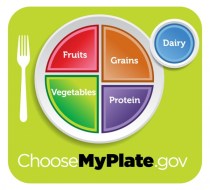
choosemyplateAfter all that consumption of ice cream related knowledge (and hopefully, some ice cream), you may find yourself worried about fitting into your trousers. Pick up a poster from the GPO Bookstore of What’s on Your Plate?: Choose My Plate  or Que Hay en Su Plato?: Mi Plato. They’ll inspire you to maintain your dietary goals of keeping healthy foods in balance with rich indulgences, such as ice cream.

quehayensuplatoI’m ready to get a copy of the poster for my office to keep my ice cream fixation in check. But first, if you’ll excuse me, it’s a hot summer day –I have an appointment with a double-scoop cone of Fear the Turtle.

How can I obtain these ice cream-related publications?

Federal Depository Librarians: You can find Dairy Products, Ice Cream and Frozen Dessert Manufacturing, and What’s On Your Plate? at your local Federal Depository library via the cataloging records in GPO’s Catalog of Government Publications, or buy them at the GPO Bookstore. You’re likely to find yourself hungry.

*Source: Davidson, Alan. The Oxford Companion to Food. Oxford, Oxford University Press, c1999.

About the author(s): Our guest blogger is Jennifer K. Davis from GPO’s Library Services & Content Management Division that supports the Federal Depository Libraries Program (FDLP). Additional content provided by Government Book Talk Editor-in-Chief and , GPO Promotions & Ecommerce Manager, Michele Bartram.


Top Health Issues for LGBT Populations

June 21, 2013

Attendee-DC-Capital-Pride-Festival-2013-in-Washington-DCLast Saturday night, I was riding the metro, and my train car was completely full of revelers from the Capital Pride Parade. Most of parade-goers had festooned themselves in rainbow-colored beads, crayon boxes and feathers. It’s hard to imagine such an out-there event happening when I was a kid. It’s equally hard to imagine the Federal government producing this document twenty years ago. But both the parade and the book are events worthy of some bead-slinging revels.

Image: Reveler at the 2013 Capital Pride Parade in Washington, DC. Credit: Flickr photo by dctim1, used under a Creative Commons license.

An LGBT Primer for Health Professionals

According to Top Health Issues for LGBT Populations Information & Resource Kit, depression and suicide related to coming out (or not coming out) is still grimly common among all LGBT groups. Thank goodness times have changed. In forty-four years, American society has moved from the June 28, 1969, police raids on the gay community at the Stonewall Inn in New York City and subsequent violent demonstrations to today, where the issuance of this video series and the publication of this book by the Federal Government can now be considered commonplace. Things could and should get better—reading the probable causes of those health risks proves that—but acceptance of LGBT persons has definitely increased over the last few decades in the United States.

tophealthissuesLGBTTop Health Issues for LGBT Populations makes health information related to lesbian, gay, bi-and transgender (LGBT) people free and publicly available. Covering the high-level bullet points of the issues is the main purpose of the volume, which provides a good resource to health professionals who need a beginner’s awareness. Although the intended audience for this volume is health professionals, the general public, health teachers, and health students will also benefit from reading this volume to achieve a beginner’s awareness. Since the book uses the vernacular rather than technical health terms, and the writers intended it for newcomers to the topic, it is easily accessible to anyone with an interest.

Understanding Gender Identity

It’s difficult to know where to begin such a primer; this volume opens with the issue of gender identity. It is critical for health professionals to have an understanding of the differences between the groups, which have some related concerns, but also separate ones. As the authors write, “It wasn’t until the 1950s that the concepts and theories about gender, gender roles, and gender identity were introduced and defined in the [psychological] literature.” But ultimately, the authors conclude that health professionals will provide the best care to patients when they work from the position that “gender is not exclusively determined by an assigned sex at birth, but determined by a person’s sense, belief, and ultimate expression of self.”

Glossary of LGBT Terms and Definitions

Following the definition of gender identity is a glossary of terms and definitions related to gender identity, gender expression, sexual identity and sexual expression. If you are unclear as to what MTF, two-spirit, queer, drag king and WSW means, you can find answers here. The section entitled “Gender vs. Sex: a Fundamental Shift from an Exclusive Binary Paradigm” sets the tone for the book, as the authors seek to explore the full rainbow of sexual and gender expression and identity as opposed to the less nuanced hues of the “binary paradigm”. The section titled “Gender Identity Disorder: a Medical Perspective” is now rendered obsolete due to the recent replacement of the more pejorative “Gender Identity Disorder” term with the phrase “gender dysphoria” that is commonly used by the healthcare community today. The authors of this book demonstrated that they were definitely ahead of their time while writing this since they had originally noted the difficulties with the use of the “Gender Identity Disorder” term.

Specific Health Concerns for Different LGBT Groups

The majority of the book is devoted to discussing the varying health issues of the different groups. All of the LGBT groups have some similar concerns: staying in the closet and coming out of the closet create high levels of distress. Sadly, a higher proportion of the LGBT population has experienced physical abuse, either from an intimate partner or a family member. In relation to specific groups, lesbians have a higher risk for breast cancer as compared to straight women due to lower birth incidence among lesbians. Lesbian women are less likely to see a doctor for routine screenings, putting them at higher risk for breast, cervical and other cancers. Bisexual women report more hazardous drinking than either straight or lesbian women. Gay men have an increased risk for testicular, prostate and colon cancers than straight men, and are more likely to have body image problems and use tobacco than straight men. Each section cites the list of risk factors and the probable causes, as well as a list of bibliographic and Web resources.

How Can I Obtain a Copy of this Publication?

Celebrate LGBT Pride month by checking out the Federal Government’s latest support publication for medical, mental health, and other professionals working with LGBT persons as well as LGBT individual, family and community members.

Buy a Print Copy:

  • Shop Online: You can purchase your own copy of Top Health Issues for LGBT Populations Information & Resource Kit through the GPO U.S. Government Online Bookstore.
  • Order by Phone: Call our Customer Contact Center Monday through Friday, 8 am to 5:30 pm Eastern (except US Federal holidays). From US and Canada, call toll-free 1.866.512.1800. DC or International customers call +1.202.512.1800.
  • Visit our Retail Store: Buy it at GPO’s retail bookstore at 710 North Capitol Street NW, Washington, DC 20401, open Monday–Friday, 9 a.m. to 4 p.m., except Federal holidays, (202) 512-0132.

Find it in a Library:

About the author(s): Our guest blogger is Jennifer K. Davis from GPO’s Library Services & Content Management Division that supports the Federal Depository Libraries Program (FDLP). (Article was adapted by Government Book Talk Editor, Michele Bartram, GPO Promotions & Ecommerce Manager, from an original  post on the FDLP Community site blog by Ms. Davis.)


Glad Dad: Best Books and Sites for Fathers

June 11, 2013

Fathers-day-in-multiple-languagesMany of our personal characteristics, such as where we are born, the color of our eyes, our native language—are due to luck. If we get good parents, this is due to luck, too. When we become parents ourselves, though, we need to rely on our own hard work. Being a parent is the happiest and hardest job I’ve ever had, and I know many people say the same. Any help you can get with that job, whether it is from your own parents, friends, your child’s teachers, parents of your child’s friends, is welcome. As the African proverb goes, it takes a village to raise a child.

Image: How do you say Father? Source: Craftionary

The Federal government wants to be part of that village, and provide parents with any assistance it can give. And with Father’s Day this Sunday, the Government Printing Office wants to highlight these terrific Federal publications and websites to help Dads be all they can be. Whether he’s called Papi, Papa, Pop, Baba, Daddy, Da, Abbu or just plain Dad, celebrate the fathers– and father figures– you know by sharing these resources with them.

National Responsible Fatherhood Clearinghouse

Fatherhood.gov Despicable Me National Responsible Fatherhood ClearinghouseThe Government supports fathers in many ways; one of them is through the National Responsible Fatherhood Clearinghouse at Fatherhood.gov. Dads can check out this site to find fatherhood programs and resources, connect with mentors, read the latest blog posting on DadTalk, and take the Fatherhood Pledge.

Eleven Federal partners are involved in the Responsible Fatherhood Working Group: the Departments of Agriculture, Commerce, Education, Health and Human Services, Housing and Urban Development, Justice, Labor, Veterans Affairs, the Corporation for National and Community Service, the U.S. Equal Employment Opportunity Commission, and the Office of National Drug Control Policy. The level of Federal investment shows how seriously the President and the Federal Government takes this initiative. Another way to reap the benefits of Federal support of fathers is to read Federal government publications prepared in support of responsible fatherhood.

Promoting Responsible Fatherhood

Hero poster for FatherhoodFirst.org Promoting Responsible Fatherhood: Every Father Taking Responsibility for His Child’s Intellectual, Emotional, and Financial Well-Being discusses the various programs and initiatives that President Obama has been promoting as part of his Fatherhood and Mentoring Initiative, including the Head Start-sponsored Fatherhood First program (see poster on the left).

President Obama believes in the importance of fatherhood, as he said in 2009:

“I came to understand the importance of fatherhood through its absence—both in my life and in the lives of others. I came to understand that the hole a man leaves when he abandons his responsibility to his children is one that no government can fill” (p. 2).

To keep that void from opening, the Federal Government has started the aforementioned initiative, and the president has asked for Federal budget support for the Child Support Enforcement Program and to sustain funding for the Healthy Marriage and Responsible Fatherhood grants.

President Obama playing with daughters and new dog BoThis book discusses these and similar Federal Government programs started and/or supported by the Obama Administration, and what the programs have done to help fathers and their families.

Image: President Obama playing with his daughters Sasha and Malia along with then-new (and rambunctious) dog, Bo, on the White House lawn. Source: The White House

This volume is mostly a high-level program summary of interest to policy wonks, public policy workers, social workers, local government officials and students of those disciplines. However, the general public can also glean information about what resources they can get from the Federal Government to assist their families.

At the document’s end, there’s a list of things fathers, individuals, NGOs and places of worship can do to support fatherhood in their own communities as well. The document’s authors try to show how the Federal government stretches out a hand, but it ends on a note of helping oneself, much like the next volume.

Download an electronic copy of Promoting Responsible Fatherhood: Every Father Taking Responsibility for His Child’s Intellectual, Emotional, and Financial Well-Being for FREE from GPO. 

Dad’s Play Book: Coaching Kids to Read

Dad’s Play Book: Coaching Kids to ReadDad’s Play Book: Coaching Kids to Read is geared to get dads to help their kids to read, using case studies and helpful tips. The writers use two of the most important behavior modification tools at their disposal: we all want to be like our peers (hence the case studies) and men love sports (hence the extended coaching metaphor). Twenty dads are profiled on how they are helping their kids learn to read, giving their names, photos, occupations and ages, so they’re more relatable to readers.

The middle pages cover five skills that children need to have mastered to be readers by third grade; everyone who has responsibility for a pre-K through 3rd grade child should be taking some time to study this cheat sheet. Each tip has a paragraph subtitled, How Can a Dad Help? that gives specific suggestions for a dad to improve reading—for example, with fluency. This title is short but sweet; there’s a lot more to know about helping a child learn to read, but this friendly, picture-filled piece is definitely worth the time it takes not only to read it, but to study it and employ in your life as well.

You can either


How can I find these publications: Promoting Responsible Fatherhood: Every Father Taking Responsibility for His Child’s Intellectual, Emotional, and Financial Well-Being and Dad’s Play Book: Coaching Kids to Read?

About the author(s): Our guest blogger is Jennifer K. Davis from GPO’s Library Services & Content Management Division that supports the Federal Depository Libraries Program (FDLP). (Article was adapted by Government Book Talk Editor, Michele Bartram, GPO Promotions & Ecommerce Manager, from an original  post on the FDLP Community site blog by Ms. Davis.)


Over 1 Billion Served: GPO’s Pueblo Distribution Center Hits Historic Milestone Today

May 7, 2013

GPO_Pueblo_1_Billion-Shipped1 Billion.  One thousand million. Any way you count it, that’s a bundle! And at the US Government Printing Office Document Distribution Center in Pueblo, Colorado, we have reached that magic number. As of today, our Pueblo facility has shipped over 1 billion consumer publications, making it a bundle of bundles sent out to the American people!

GPO’s Western Expansion

Growing up, I always heard or read public service announcements from the Federal Government offering helpful advice on everything from how mortgages work to getting vaccinations. Each time, the commercial or ad would end with the same tag line: “To order this helpful free publication, contact us in Pueblo, Colorado” and an address and phone number (and today, a website address) would be given with ordering information.  I thought it amazing that all this great consumer information was available from one Colorado town.

Although unbeknownst to me at the time, it turns out this famous Pueblo location is actually one of two distribution facilities operated by the Government Printing Office’s Agency Distribution Services that stores and ships out Government publications on behalf of our Federal agency clients to the public –the other being in Laurel, Maryland.

In an effort led by House Appropriations Committee member Congressman Frank Evans, the GPO distribution facility was proposed and then approved on October 8, 1970, by the Joint Committee on Printing and the 15th Public Printer of the United States, Adolphus Nichol (Nick) Spence. The Pueblo Public Documents Distribution Center (PuDDC) was dedicated on October 8, 1971, and opened on October 11, 1971, to provide support for the expanding dissemination needs of Federal agencies, from books to posters to other products.

GPO_Pueblo_Congressman-Frank-Evans-Distribution-CenterLast year, President Barack Obama signed an act of the 111th Congress to rename the center the “Congressman Frank Evans US Government Printing Office Pueblo Document Distribution Center” after the former Congressman who passed away in June of 2010. It was re-dedicated on October 11, 2011, for the fortieth anniversary of the Pueblo facility.

Image: Renaming ceremony of the GPO Pueblo facility on October 11, 2011.

Today, GPO’s Pueblo Document Distribution Center provides distribution services to 10 federal agencies and other entities including: The Federal Citizen Information Center (FCIC), the Federal Trade Commission (FTC), Health and Human Service (HHS – Women’s Health), Office of Disability Employment Policy (ODEP), Federal Drug Administration (FDA), Federal Depository Library Program (FDLP), Consumer Financial Protection Bureau (CFPB) and three programs within the Department of Homeland Security  that produce items such as Transportation Security Administration (TSA) posters, bookmarks and baggage inserts.

Ruehlen-at-Pueblo-PuDDCImage: Jimmy Ruehlen has worked for Pueblo’s Government Printing Office Distribution Center since it began operations 40 years ago. Photo credit: The Pueblo Chieftain / Mike Sweeney (Photographer)

The Pueblo Distribution Center has processed over 105 million customer orders from the day it opened its doors through the end of April 2013, and as of today, May 2, 2013, the Center has distributed over 1 billion publications on behalf of its various Federal clients.

GPO Gets a “CIC” out of Distributing Consumer Publications

The Pueblo facility really got a kick-start when it signed an inter-agency agreement with the General Services Administration (GSA) in January of 1973 to take over the warehousing and distribution of the millions of printed consumer publications being provided through GSA’s then-new Consumer Information Center (or CIC), which itself has provided service to the GSA’s Federal Citizen Information Center (or FCIC), the U.S. Postal Service and the Department of Education.

Consumer-Info-Catalog-Winter-Spring-2013_coverThe gem in the FCIC’s crown is the Consumer Information Catalog, printed by GPO, which lists the latest and most popular of the many thousands of consumer publications available by topic and is updated several times a year.

Most of the print publications–the majority printed by GPO– in the Consumer Information Catalog are FREE for U.S. delivery if ordered online; the rest require only a nominal fee. Plus, a number of the publications are offered for FREE in electronic format for immediate download on the Publications.USA.gov website.

Some of the many categories of helpful consumer pamphlets and publications include: Education; Employment; Family including Pets; Federal Programs and Benefits, Food; Health including Drugs and Exercise & Diet (even information on braces, tattoos, and tanning!); Housing including Financing and Home Maintenance; the ever-popular Money category including Fraud, Credit Cards, Living Trusts, and Retirement Planning; even Small Business and Travel, and more.

Consumer-Info-Catalog-Winter-Spring-2013_Page_11

Image: Page from the Consumer Information Catalog Winter/ Spring 2013 Edition.

How can I get a copy of the Consumer Information Catalog and order publications?

Find the latest Consumer Information Catalog in PDF format online, or you can also order FREE print copies to be mailed to you at the same Publications.USA.gov website.

Consumer-Action-Handbook-2013The most popular document distributed by Pueblo remains the annual Consumer Action Handbook, a free trouble-shooting guide to help Americans solve all sorts of consumer problems. I’ve ordered five to share with family and friends!

In addition to ordering from GSA’s Publications.USA.gov website, you can find a number of these consumer publications on GPO’s US Government Online Bookstore.

Below are some of the more popular publications in the Consumer Information Catalog that are also available on GPO’s online bookstore:

You can also browse our Consumer, Home & Family category on our online bookstore.

With so many useful consumer publications available from the Federal Government, I’m sure it won’t be long until we distribute another billion items to help American consumers!

About the Author:

Government Book Talk Editor Michele Bartram is Promotions Manager for GPO’s Publication and Information Sales Division in Washington, DC, and is responsible for online and offline marketing of the US Government Online Bookstore (http://bookstore.gpo.gov) and promoting Federal government content to the public.


Dr. Seuss’ The Lorax Inspires Kids to Hug a Tree

April 23, 2013

Two publications show us the way… to care for trees this Arbor Day!

Lorax-Forest-Service-LaunchWith Earth Day yesterday and Arbor Day this Friday, April 26, and all week as National Parks Week, this is the perfect time to do something to help a tree grow or plant something new to celebrate the miracle of spring. If there are little ones in your life—children, grandchildren, nieces, nephews or friends of kids that you love—it’s a good time to teach them to love trees, plants, and flowers, too.

Image: The head of the Forest Service with the Lorax for the launch of the U.S. Forest Service’s Discover the Forest program which aims to inspire tweens (aged 8-12) and their parents to re-connect with nature, experiencing it first-hand. The campaign brings to life the joy and excitement kids have when they discover the wonders of nature, helping create interest in their environment and a lifelong relationship with it. Photo credit: U.S. Forest Service

The best way to get kids to appreciate nature, according to Dr. Seuss’ The Lorax Curriculum Guide, is to take them outdoors—and “according to the Institute for Social Research at the University of Michigan, children in the U.S. spend 50% less time outdoors than they did 20 years ago.” To counter the initial cries of “I want TV”, however, it helps to give kids directed activities when they go outside.

The U.S. Forest Service and the Ad Council have developed a partnership with Project Learning Tree and Universal Pictures to create an educational curriculum plan based on “The Lorax” film and story. The curriculum supports the Forest Service’s “Discover the Forest” campaign (See image caption above).

Lorax-Classroom-Guide_Plant-a-Tree

Image: “Plant a Tree” page 21 from the Lorax Classroom Guide.

Teachers can download for FREE the complete classroom guide of Dr. Seuss’ The Lorax Curriculum Guide as a PDF, or can download the individual activities to use in class (as long as it is for educational, and not commercial, purposes). There’s an interactive map of places you can go in the United States that have campgrounds, national forests, state campgrounds, etc. There’s a page of games and activities such as how to use a compass, take a virtual hike, create a leaf rubbing or become a Jr. Forest Ranger on the Web site.

The printed teacher’s guide has tests, bibliographies for the students, labs (plant a tree with the Lorax), and student pages for various grade levels (I saw K-4 and 6-8). Families are encouraged to use these activities, too.


Why would Anyone Cut a Tree Down? continues the ecological and conservation-minded discussion you might want to pursue with your kids or students this week.

However, this volume approaches conservation from a silvicultural perspective, rather than the Lorax’ perspective of promoting a child’s approach of nature generally. The age range for the publication is 8 and up, and the material might be a bit young for older middle school children—so its material is more directed to a specific age range. The Forest Service published this document also, and the authors are a writer/ editor / educator with the Forest Service and an illustrator with previous experience illustrating tree guides.

The book shows children the life cycle of trees, the need to remove sick trees, the uses for wood from cut trees, and types of trees that are dangerous, all so beautifully illustrated by Juliette Watts that they make the lessons come alive.

Purchase a copy from the GPO U.S. Government Online Bookstore, and flop under a tree canopy to read the story and appreciate all the gifts that nature has to give us.

As Dr. Seuss wrote, “Now that you’re here, the word of the Lorax seems perfectly clear. UNLESS someone like you cares a whole awful lot, nothing is going to get better. It’s not.”  It’s up to us (and the Forest Service and its partners) to encourage children to care a whole awful lot about our trees and forests. Using these publications is good a way to make that happen!


How can I find these publications?

1) Dr. Seuss’ The Lorax Curriculum Guide

  • You can find it via our PURL (Permanent URL)
  • Locate it through GPO’s Catalog of Government Publications CGP catalog record. GPO has cataloged both the print and the electronic versions to make things “a whole awful lot better” for the Federal Depository libraries that got it in the April 2013 record load.
  • Find it in a federal depository library near you.

2) Why would Anyone Cut a Tree Down?

  • Purchase it on GPO’s U.S. Government Online Bookstore.
  • Buy it at GPO’s Main (retail) Bookstore at 710 North Capitol Street NW, Washington, DC 20401, open Monday-Friday, 8:30am to 4pm Eastern Time, except Federal holidays. Call (202) 512-0132 for information.
  • Find it in a Federal Depository library.

About the Author(s):

Adapted by Government Book Talk Editor and U.S. Government Online Bookstore Manager Michele Bartram from a post written for the FDLP Community Blog by guest blogger Jennifer Davis from GPO’s Library Services & Content Management Division that supports the Federal Depository Libraries Program (FDLP).


Making Tax Time Less Taxing: Reproducible Tax Forms

April 11, 2013

Guest blogger Jennifer K. Davis from GPO’s Library Services & Content Management Division that supports the Federal Depository Libraries Program (FDLP) writes about reproducible tax forms from the Internal Revenue Service. (Originally posted in the FDLP Community site on April 9, 2013.)

It's Tax Time April 15 Federal IRS Tax Return Forms If you haven’t filed your tax return already, you’ve still got a little time left until April 15, the tax deadline day. Hopefully, you’ve got your tax forms from the Internal Revenue Service already.

One lucky thing about filing taxes in the U.S.? If you haven’t got those IRS tax forms, you can get copies of the forms almost anywhere. One sure bet is to drop in to your local Federal depository library for the reproducible copies. Most of them get the reproducible forms packet, which includes nearly all the basics. You can find the forms online, too, but if you don’t have a printer at home, the library’s your best bet.

People are usually checking out their library to do research, but shouldn’t miss out on the other resources that the libraries make available. Reproducible tax forms are one of the more obvious bonuses. Whether you need something really basic like a form 1040 to file your taxes, or an EIC (Earned Income Credit) to claim your qualifying child(ren), or a new W-4 to complete for work, your library’s got it.

Even if you’re searching for something less commonly used like a Schedule R (Credit for the Elderly or the Disabled), or a Form 8880 (Credit for Qualified Retirement Savings Contributions), you’ll find it all in the packet of reproducible tax forms. When you use a Federal Depository Library, you get to experience the benefits of your Federal taxes at work before you’ve even paid them.

648-004-00027-3[Note from Michele Bartram:] GPO also offers larger packages of pre-printed IRS tax forms for the convenience of tax preparation professionals on our Online Bookstore.  We also have DVDs and CD-ROMs of Federal tax forms. All purchasable tax publications as well as Federal audits and other accounting publications can be found on our U.S. Government Bookstore website under the Taxes, Audits & Accounting category found under our Business & Finance publications section.

For the annual tax forms, we have a special Tax Forms by Year category where you can find the IRS Tax Forms 2012 that includes the 2012 Tax Year IRS Tax Products DVD.

How can I access these individual Reproducible Tax Forms?

How can I purchase pre-printed tax forms and a tax publications DVD?