Hurricane Katrina, 10 Years Later

August 26, 2015

Image compliments of noaa.gov click to enlarge.

August 29th will mark the tenth (10th) anniversary of Hurricane Katrina. It was one of the deadliest and the costliest natural disasters in U.S. history.

As you may recall, this hurricane touched down in Mobile, Alabama, and significantly damaged and left people stranded in New Orleans, Louisiana, and Biloxi, Mississippi during President George W. Bush administration’s second term as President of the United States of America.

A few key primary source references based on Hurricane Katrina that should be included in your historical U.S. Government publications, or weather-resources library include the following:

Public Papers of the Presidents of the United States, George W. Bush, 2005, Bk. 2, July-December by National Archives and Records Administration

This primary source reference work chronicles George W. Bush’s second term presidency from July through December 2005. This volume includes the President’s remarks on Hurricane Katrina on Sunday, August 28, 2005, plus additional remarks on September 1, 2, 5-8,12, and an Address to the Nation on Hurricane Katrina Recovery from New Orleans, LA on September 15, 2005, a Memorandum on the National Flood Insurance Program on October 12, and more.

040-000-00775-0Federal Response to Hurricane Katrina: Lessons Learned, February 2006 by the President of the United States and the Assistant to the President for the Department of Homeland Security and Counterterrorism

Hurricane Katrina’s historic 115-130mph winds coupled with a powerful storm surge that created a 27 foot long stretch of the Northern Gulf Coast that impacted nearly 93,000 square miles that was not isolated to one state or city. The book is a Lessons Learned view of what can be implemented to prevent natural disasters, such as Hurricane Katrina from happening in the future. The report’s focus is centered on disaster preparedness and emergency management responses. It contains an analytical, narrative chronology that provides a detailed account of Hurricane Katrina from the point of the storm’s development in the days “Pre-Landfall,” and the next chronicles both the “Week of Crisis” from August 29 through September 5, and concludes with the transition from response to recovery. This volume concludes with the most important chapter: “Transforming National Preparedness.”

052-071-01438-1A Failure of Initiative: Final Report of the Select Bipartisan Committee To Investigate the Preparation for and Response to Hurricane Katrina, February 15, 2006 by the U.S. House of Representatives, Select Bipartisan Committee to Investigate the Preparation for and Response to Hurricane Katrina

This report is a summary of the Committee’s work to investigate the preparation for leading up to the Hurricane Katrina storm and the two weeks following the storm. It does not cover the extensive rebuilding of the impacted areas after the storm made its landfall to the cities and states that were in its’ path.

Call Sign Dust Off: A History of U.S. Army Aeromedical Evacuation From Conception to Hurricane Katrina by the Department of the Army, Office of the Surgeon General, Borden Institute008-000-01040-4

This book, published in year 2011, covers the conceptualization of the initial attempts to use aircraft for evacuation, reviews its development and maturity through those conflicts, and focuses on the history of MEDEVAC post–Vietnam to the transformation of the MEDEVAC units from medical to aviation command in 2003 and the response to Hurricane Katrina in 2005. Much has been written about U.S. Army aeromedical evacuation—or MEDEVAC—and most works have focused on the war in Korea or Vietnam. This book focuses on the unique use of helicopters to accomplish this mission. Part I looks at the heritage of MEDEVAC from its beginnings in World War II through the bitter battles in Korea, the interwar years, and the long struggle in Vietnam. Part II covers the 1980s, a time of domestic duties and contingency operations. Part III reviews the turbulent 1990s with the end of the cold war, a hot war in the Persian Gulf, dramatic military force reductions, and a call to duty in the Balkans. Part IV stretches into the millennium, covering the events of 9/11, further conflict in Afghanistan and Iraq—the Aviation Transformation Initiative that moved MEDEVAC from medical to aviation control—and the national response to Hurricane Katrina. In general, after Part I, a thematic approach is used, and the chapters are organized with interweaving sections covering doctrine (service and joint), organization, and operations.

008-070-00804-1Operation Dragon Comeback: Air Education and Training Command’s Response to Hurricane Katrina by the U.S. Air Force, Air Training and Education Office of History and Research

This volume is the Air Education and Training Command’s (AETC) response to Hurricane Katrina as a pivotal event in the organization’s history. It showcases the men and women that rushed to the aid of their wingmen at the Kesslar Air Force base in Biloxi, Mississippi, and provided support for humanitarian efforts to the communities and the country in time of need. In addition to the coverage of Hurricane Katrina’s approach and landfall, this resource also attempts to cover the few months of recovery efforts that took place at Kesslar Air Force base during the aftermath of Hurricane Katrina.

Air National Guard at 60: A History (eBook) by Air National Guard999-000-44446-1

Within this commemorative 60 year anniversary of the National Guard, you will also find many accounts of the emergency response relief efforts during the historic Hurricane Katrina to include saving people stranded by the flood waters, supplying medicine food and clean water staples and more.

064-000-00058-6Are You Ready?: An In-Depth Guide to Citizen Preparedness by U.S. Department of Homeland Security, Federal Emergency Management Agency

Guide for citizens on how to protect themselves and their families against all types of natural and man-made disasters and hazards from tornadoes to terrorism, floods to fires, extreme cold to extreme heat. The “Are You Ready? An In-Depth Guide to Citizen Preparedness” from FEMA can be used as a reference source or as a step-by-step manual. The focus of the content is on how to develop, practice, and maintain emergency plans that reflect what must be done before, during, and after a disaster to protect people and their property.

How do I obtain these resources?

Shop Online Anytime: You can buy eBooks or print publications —with FREE Standard Shipping worldwide— from the U.S. Government Online Bookstore at http://bookstore.gpo.gov.

Shop our Retail Store: Buy a copy of any print editions from this collection at GPO’s retail bookstore at 710 North Capitol Street NW, Washington, DC 20401, open Monday–Friday, 9 a.m. to 4 p.m., except Federal holidays, Call (202) 512-0132 for information or to arrange in-store pick-up.

Order by Phone: Call our Customer Contact Center Monday through Friday, 8 am to 5:30 pm Eastern (except US Federal holidays). From US and Canada, call toll-free 1.866.512.1800. DC or International customers call +1.202.512.1800.

Visit a Federal depository library: Search for U.S. Government publications in a nearby Federal depository library. You can find the records for most titles in GPO’s Catalog of U.S. Government Publications.

About the author: This week’s blog contributor is Maureen Whelan, Senior Marketing Team Leader for GPO’s Publication and Information Sales program office in Washington, DC. Maureen oversees print and digital content dissemination strategy and manages third party free and paid content distribution through platforms and vendors, such as Apple iBookstore, Barnes and Noble.com, Google Play eBookstore, Ebscohost databases, Overdrive, and more.


2015 Counterterrorism Calendar Now Available

January 14, 2015

The National Counterterrorism Center (NCTC) has released its annual Counterterrorism Calendar for 2015. This year’s calendar features a few updates, such as the inclusion of ISIS leader Abu Bakr al-Baghdadi and two women.

2015 Counterterrorism CalendarThe goal behind the Counterterrorism Calendar is to educate and inform both professionals– first responders, military, intelligence, law enforcement and other counterterrorism personnel– as well as civilians about the threats of international terrorism and how to prevent, respond or mitigate these threats against the United States both at home and abroad.

Under the Office of the Director of National Intelligence, the National Counterterrorism Center or NCTC serves as the primary organization in the U.S. government for integrating and analyzing all intelligence possessed or acquired by the U.S. government about international terrorism, including data from U.S. Federal agencies like the CIA, NSA, Defense Intelligence Agency, and the FBI as well as other domestic and international sources.

First published in a spiral-bound daily planner format in 2003, just two years after the World Trade Center attacks, the Counterterrorism or CT Calendar from the NCTC is published annually. According to the NCTC, their 2015 Counterterrorism Calendar:

…provides information on known terrorist groups, individual terrorists, and technical information on topics such as biological and chemical threats. This edition, like others since the Calendar was first published in daily planner format in 2003, contains many features across the full range of issues pertaining to international terrorism: terrorist groups, wanted terrorists, and technical pages on various threat-related topics.

Features of the Calendar

In addition to serving as a desk calendar / event planner, the 160-page 2015 Counterterrorism Calendar also serves as a tutorial on international terrorism and a gallery of “most wanted” terrorists.

The right-hand page of the planner has the event planner dates along with key historical events of significance to terrorists that might be used to plan future terrorist activities. For example, on January 8, 1998, terrorist Ramzi Ahmed Yousef was sentenced to life plus 240 years for his role in the 1993 World Trade Center bombings.

On the left-hand pages are photos, maps and/or data on terrorists and terrorist organizations around the world, from Africa and the Middle East to Europe and the Americas.

“Terrorism tutorial” information ranges from cultural—details about the Islamic Calendar; the spelling of Arabic names and terms; lists of Foreign Terrorist Organizations (FTOs), and logos used— to technical –  information about Chemical-Biological-Radiological-Nuclear-Explosive (CBRNE) weapons commonly used by terrorists, from suicide bombs to sarin gas, and how to detect and mitigate them.  For example, who among us would recognize the terrorist threat from these innocent-looking beans?

Castor-beans-used-to-make-ricin

Image: Photo of castor beans from which the deadly toxin ricin is extracted. Ricin is poisonous if inhaled, injected, or ingested. Source: NCTC 2015 Counterterrorism Calendar

“Wanted” Terrorists

Providing the real drama of the calendar are the full-page “Wanted” poster-style pages of an individual terrorist, complete with photo (if available), aliases, his terrorist activities, the reward offered, and how to report information about him.

One of the largest rewards, $25 Million, is offered for information leading to the capture of Ayman al-Zawahiri, also known as “The Teacher” or “The Doctor” who is a physician and the founder of the Egyptian Islamic Jihad. According to the CT Calendar:

“This organization opposes the secular Egyptian Government and seeks its overthrow through violent means. Al-Zawahiri is believed to have served as an advisor and doctor to Usama Bin Ladin. He has been indicted for his alleged role in the August 7, 1998, bombings of the US embassies in Dar es Salaam, Tanzania, and Nairobi, Kenya. The embassy bombings killed 224 civilians and wounded over 5,000 others.”

Image: Extract from the “wanted” page of Ayman al-Zawahiri, Al-Qaida leader and founder of Egyptian Islamic Jihad. Source: NCTC 2015 Counterterrorism Calendar

Image: Extract from the “wanted” page of Ayman al-Zawahiri, Al-Qaida leader and founder of Egyptian Islamic Jihad. Source: NCTC 2015 Counterterrorism Calendar

Civilian Involvement

Finally, the NCTC carries on the civilian involvement tradition by including instructions for citizens of the U.S. and other countries on how they can help fight terrorism. Pages on “Indicators of False Travel Documents” and how U.S. residents can report suspicions are provided. Additionally, the  Rewards for Justice (RFJ) Program is described in detail, wherein the U.S. Secretary of State may offer rewards for information that prevents or favorably resolves acts of international terrorism against US persons or property worldwide.

On the last page is a Bomb Threat Call Procedures form with valuable details of questions to ask and information to note about the caller, such as his or her voice (accent, age, tone, language) and background sounds. Did you note if the caller was clearing his throat or had an accent? Were there sounds of machinery in the background? What kind? Any and all details could help law enforcement.

Image: Table from the Bomb Threat Call Procedures form. Source: Page 160 of the 2014 Counterterrorism Calendar.

Image: Table from the Bomb Threat Call Procedures form. Source: Page 160 of the 2015 Counterterrorism Calendar.

Forewarned is Forearmed

Like the tradition of the best Government civilian campaigns since the founding of the Nation, the National Counterterrorism Center’s annual Counterterrorism Calendar is simultaneously meant to alert and inform us, making both civilians and professionals alike aware of the very real dangers around us and educating us on what—and whom—to look for.

How can I get a copy of the National Counterterrorism Center’s 2015 Counterterrorism Calendar?

  • Shop Online: You can purchase this calendar from the U.S. Government Online Bookstore at http://bookstore.gpo.gov by:
  • Order by Phone: Call our Customer Contact Center Monday through Friday, 8 am to 5:30 pm Eastern (except US Federal holidays). From US and Canada, call toll-free 1.866.512.1800. DC or International customers call +1.202.512.1800.
  • Shop our Retail Store: Buy a copy of any print editions from this collection at GPO’s retail bookstore at 710 North Capitol Street NW, Washington, DC 20401, open Monday–Friday, 9 a.m. to 4 p.m., except Federal holidays, Call (202) 512-0132 for information or to arrange in-store pick-up.
  • Visit a Federal Depository Library: Search for it in a nearby Federal depository library.

About the Author: Adapted by Trudy Hawkins, Senior Marketing and Promotions Specialist in GPO’s Publication & Information Sales Division in Washington, DC, from an original post by Michele Bartram, former Government Book Talk Editor in support of the U.S. Government Online Bookstore (http://bookstore.gpo.gov).


How to “SPOT” Trucks Carrying Hazardous Materials on Highways during Road Trips?

October 1, 2014
trucks

(Image compliments of dreamstime royalty free photos)

I travel to NJ by car frequently for long weekends. This past summer, I took a long road trip from Northern Virginia to New England.   This large span of highway took me close to ten hours in my personal vehicle without traffic delays or any traffic-related accidents.

On these trips I often encounter the now familiar visions of red brake/tail lights in front of me, and hear the screeching of brakes coming from somewhere around me and hope/pray that the other vehicle is not near me. Sometimes these massive slow-downs are a result of a car fire, a traffic accident with multiple vehicles, or bumper-to-bumper traffic due to people viewing a recent incident on the other side of the highway.

While I am sitting at a stand-still, I often wonder how the policeman that arrives while I am sitting in traffic know whom to call to clean the roadway to make it safe for others?   When we are allowed to move forward and get closer to the incident, we have all seen them – those responders, that are in their “special” suits and masks called in to deal with cleaning up this roadway mess, an image that may look similar to this one:

(Image compliments of US Department of Transportation, Federal Highway Administration website)

(Image compliments of US Department of Transportation, Federal Highway Administration website)

They often arrive after the incident has taken place. Aside from their sense of smell, how do they know what type of hazardous material is on the roadway? Are all chemical spills treated the same way?

According to the Department of Transportation (US DOT), Federal Highway Administration’s publication targeted at First Responders titled “Traffic Incident Management in Hazardous Materials: Spills in Incident Clearance”. The Federal Highway Administration’s mission is to “Keep America Moving”.

Traffic Incident Management (TIM) and spill management are two of the tools in the “resource toolbox” that focus on reducing congestion.

050-000-00596-8[1]The purpose of this document is to report practices regarding the clean-up of incidental spills and to explain the use of the United States Department of Transportation’s (U.S. DOT) Emergency Response Guidebook (ERG). This document also describes techniques and strategies that can be used to handle hazardous material spills at traffic incidents.

Volume of Hazardous Material Shipments

(Image compliments of dreamstime-copyright-free images)

(Image compliments of dreamstime-copyright-free images)

Current research indicates that hazardous materials traffic in the U.S. now exceeds 800,000 shipments per day.   When you think about how many trucks you see while driving on the highways and airplanes flying overhead daily, that is an abundance of hazardous materials being transported!

The largest tank volume is the saddle tank (normally 70 gallons) on a semi-truck. Depending on the number of tanks on the truck, the maximum capacity for fuel for a commercial vehicle can be as much as 350 to 420 gallons!

Types of Hazardous Materials

(Image compliments of U.S. Department of Transportation website)

(Image compliments of U.S. Department of Transportation website)

Under the DOT’s Hazardous Materials Regulations notations included in this guide, (HMR; 49 CFR Parts 171-180) hazardous materials are categorized by analysis and experience into hazard classes and packing groups. Each shipper is required to classify a material according to these hazard classes and packing groups and communicate the material’s hazards. The shipper repetitively communicates the hazard through the use of package labels, shipping papers, and placards on transport vehicles.

The DOT has broad jurisdiction to regulate hazardous materials that are in transport, including the discretion to decide which materials shall be classified as “hazardous.” These materials are placed in one of nine (9) hazard classes based on their chemical and physical properties. Therefore, it’s important for response personnel to understand the hazard classes, their divisions, and reclassified materials so they can assess the situation and respond, accordingly.

Here is an image of a sampling of the types of placards that you may be able to recognize on trucks traveling the US highways with you:

(Images compliments of Wikipedia)

(Images compliments of Wikipedia)

You can find this Transportation Incident050-001-00345-7[2] Management in Hazardous Materials Spills in Incident Clearance print book available at the US Government Printing Office Overstock Sale here.

While supplies last, you can check out all the titles in our 50% Off Overstock collection here.

GPOVERSTOCK-SALE-BannerOur Overstock Sale includes an assortment of print and eBook titles discounted by 50% from the list price ranging in topical categories from military history …. to transportation …. to health resources ….. to childcare …… check out this clearance sale today!

HOW DO I OBTAIN THESE PUBLICATIONS?

About the Author – This week’s blog contributor is Maureen Whelan, Senior Marketing Team Leader for GPO’s Publication & Information Sales division  in Washington, DC.  Maureen oversees print and digital content dissemination strategy and manages third party free and paid content distribution vendors such as Apple iBookstoreGoogle Play eBookstoreEBSCOhostOverdrive, and more.


Remembering 9/11: Tales of Heroes and Tough Lessons

September 11, 2014

9-11 Decade of Remembrance Twin Towers and Pentagon Logo designed by David McKenzie at the Government Printing OfficeIn remembrance of the terrorist attacks of September 11, 2001, Government Book Talk revisits blogger Michele Bartram’s post from September 11, 2013.

There are certain moments and events that are etched in our national consciousness. Ask any American who was alive in the 60’s where he or she was when John F. Kennedy or Martin Luther King was assassinated and you will hear a stirring personal story. For our generation, it was September 11, 2001.

Image: September 11 Decade of Remembrance logo with World Trade Center Twin Towers surrounded by a figure representing the Pentagon. Created by David McKenzie with the Government Printing Office for the U.S. Government Bookstore.

I was right across from the Twin Towers twelve years ago today, getting ready to board a ferry for my daily commute from New Jersey across the Hudson River into Manhattan, when I saw the second plane hit the World Trade Center right across from me. So, too, I cried with a group of strangers as we stood on the ferry platform and watched in horror as the first tower fall, saw the dust cloud rise and felt the earth—and the world—tremble.

America and Americans have changed since that day… twelve years ago today. We have since heard stirring stories of heroes and sacrifice, and learned many grim lessons that are still affecting both policy and people today.

Many of these stories of heroism, missed opportunities, and resulting actions have been painstakingly and faithfully chronicled by a wide array of Federal agencies, ensuring the sacrifices and lessons are not forgotten.

Responding to the Tragedies

Both in New York and the Pentagon in Washington, DC, we saw how first responders and medical personnel rushed to save lives. These excellent publications tell the stories of the heroes from that day:

  • 008-000-01049-8Pentagon 9/11 (10th Anniversary Edition) (Paperback) includes a foreword by Secretary of Defense Leon Panetta and provides the most comprehensive account available of the 9/11 attack on the Pentagon and aftermath, including unprecedented details on the impact on the Pentagon building and personnel and the scope of the rescue, recovery, and care-giving effort.
  • 008-000-01048-0Attack on the Pentagon: The Medical Response to 9/11 not only tells the personal stories from medical personnel responding to the attack on the Pentagon, but also provides insight from MEDCOM officers detailed to New York to support National Guard troops guarding ground zero’s perimeter. It also includes the Army’s involvement in the recovery of deceased attack victims at the Pentagon and the work of the Armed Forces Institute of Pathology in identifying human remains at Dover Air Force Base. In addition, the roles of military and civilian hospital staffs and of military environmental health and mental health specialists in taking care of attack victims and their families are also examined.

Tough Lessons

The single must-read for every American about September 11 is the official version of The 9/11 Commission Report: Final Report of the National Commission on Terrorist Attacks Upon the United States. This publication lists the findings of the National 9/11 Commission, listing all the painful errors made leading up to the terrorist attacks and outlining specific recommendations for international, national, state and local changes in policy and procedures that the panel of experts felt needed to be implemented to ensure a similar attack never happened again. This seminal publication has served to inform all subsequent policies and legislation since 9/11. It is available in print or as an eBook.

911-commission-report

Image: Launch of the 9/11 Commission Report. Courtesy: CSMonitor.com

The Senate, Select Committee on Intelligence, and House, Permanent Select Committee on Intelligence examined the intelligence failures leading up to 9/11 and jointly published the results in United States Congressional Serial Set, Serial No. 14750: Joint Inquiry Into Intelligence Community Activity Before and After Terrorists Attacks of September 11, 2001 With Errata.

027-001-00097-1Additional insights into the causes of and responses to terrorism can be gleaned from Terrorism Research and Analysis Project (TRAP): A Collection of Research Ideas, Thoughts, and Perspectives, V. 1. This publication provides the findings from the post-9/11 FBI Terrorism Research and Analysis Project (TRAP) Symposium. TRAP is a leading research consortium made up of international/domestic academics and law enforcement officers, and is a working group sponsored by the FBI’s Behavioral Science Unit. In it, these counter-terrorism experts provide a better understanding of the causes of terrorist activity and possible government response tactics to mitigate terrorist actions.

064-000-00029-2As we watch the new World Trade Center going up in New York, we can be assured that builders are incorporating architectural and construction lessons learned from the World Trade Center Building Performance Study: Data Collection, Preliminary Observations, and Recommendations.

Policy and Legislative Response

United States Congressional Serial Set, Serial No. 14924, House Report No. 724, 9/11 Recommendations Implementation Act, Pts. 1-6 outlines the specific legislative changes enacted by Congress, providing both background and justifications for them along with attribution.

A print copy of the law itself can be purchased here: Implementing Recommendations of the 9/11 Commission Act of 2007, Public Law 110-53 along with the details of the various committee conferences contributing to it in Implementing Recommendations of the 9/11 Commission Act of 2007, Conference Report to Accompany H.R. 1, July 25, 2007.

Defending the Homeland since 9/11

041-001-00657-5National Strategy for Homeland Security (October 2007) provides the common framework outlined by the George W. Bush Administration to guides, organize and unify the United States’ homeland security efforts.

008-000-01068-4A new publication from the Air Force Reserve called Turning Point 9.11: Air Force Reserve in the 21st Century, 2001-2011 tells the story of how the Air Force Reserve responded to 9/11 and have contributed to the security of the United States in a post-September 11 world.

050-012-00440-4In a similar vein, Rogue Wave: The U.S. Coast Guard on and After 9/11 chronicles the involvement of the U.S. Coast Guard on that fateful day and the evolving role in national and world security since.  Part of the Coast Guard 9/11 response is told in this touching video about the boatlift to evacuate people from lower Manhattan is told in a video narrated by Tom Hanks entitled: BOATLIFT, An Untold Tale of 9/11 Resilience.”

A touching video about the boatlift to evacuate people from lower Manhattan on 9/11 (September 11) is told in a video narrated by Tom Hanks entitled: BOATLIFT, An Untold Tale of 9/11 Resilience. Click on the image above or this link to view the “Boatlift” video.

The upcoming U.S. Army War College Guide to National Security Issues, Volume 2: National Security Policy and Strategy provides a summarized look at the national security curriculum now taught to our nation’s top military and civilian leaders by the U.S. Army War College. Revised with the lessons learned from the years since 9/11, this publication includes a chapter on ”Securing America From Attack: The Defense Department’s Evolving Role After 9/11.”

How can I obtain these Federal 9/11 publications?

  • Shop Online: Print Editions of these 9/11-related publications may be ordered from the U.S. Government Online Bookstore at http://bookstore.gpo.gov, by clicking on the links above in this blog post or shopping our Terrorism & 9/11 History collection under our US & Military History category.
  • Order by Phone: Call our Customer Contact Center Monday through Friday, 8 am to 5:30 pm Eastern (except US Federal holidays). From US and Canada, call toll-free 1.866.512.1800. DC or International customers call +1.202.512.1800.
  • Visit our Retail Store: Buy copies of these publications at GPO’s retail bookstore at 710 North Capitol Street NW, Washington, DC 20401, open Monday–Friday, 9 a.m. to 4 p.m., except Federal holidays, Call (202) 512-0132 for information or to arrange in-store pick-up.
  • Find them in a Library: Find these publications in a federal depository library.

About the author: Adapted by Trudy Hawkins, Writer and Marketing Specialist in GPO’s Publication & Information Sales Division in Washington, DC, from an original post by Michele Bartram, former Government Book Talk Editor in support of the U.S. Government Online Bookstore (http://bookstore.gpo.gov).


Celebrating National Safety Month: Resources and Publications

June 19, 2014

2014SafetyMonth-FeatureJune is National Safety Month. The National Safety Council (NSC) sponsors this month-long event for calling attention to key safety issues, showcasing safety resources, and raising awareness for the prevention of safety concerns and hazards.

The NSC provides access to a variety of educational National Safety Month materials, available on their Web site for free to NSC members. If your organization isn’t already a member, you can join right from their site. They also provide access to many free materials for the general public. Anyone can sign up to receive the free materials via email.

The National Safety Month Web page also provides access to a free Home Safety Checklist to help you identify common risk areas within your home.

You can also follow the NSC’s safety chat on Twitter at #NSM14.

The U.S. Government Printing Office’s U.S. Government Bookstore offers an entire collection of publications devoted to safety issues: the Emergency Management and First Responders collection. Many of the publications in this collection have been highlighted in previous Government Book Talk posts, like this one from January 2014 that focused on preparing for extreme cold and other natural and man-made disasters and showcased the publication, “Are You Ready? An In-Depth Guide to Citizen Preparedness.” Also highlighted in the post are some books for kids on safety preparedness: “Ready…Set…Prepare! A Disaster Preparedness Activity Book for Ages 4-7,” “Ready…Set…Prepare! A Disaster Preparedness Activity Book for Ages 8-11,” and “Watch Out – Storms Ahead! Owlie Skywarn’s Weather Book.” The Federal Emergency Management Agency also has tons of resources on their site to help the public prepare for disasters of all kinds.

In addition, Federal depository libraries nationwide provide the public with free access to Federal Government publications on a wide variety of topics, including safety and emergency management and prevention. Locate a library in your area!

017-033-00508-7One publication in this collection is particularly interesting, especially in light of the frequent and tragic mine accidents we hear about on the news. “When Do You Take Refuge? Decisionmaking During Mine Emergency Escape – Instructor’s Guide and Lesson Plans” is an interesting booklet created by the National Institute for Occupational Safety and Health of the Centers for Disease Control and Prevention, Department of Health and Human Services. The training program was designed to help trainees practice correct decisionmaking skills during an underground mine emergency. It actually consists of three parts: a computer-based training that includes scenario simulation (included as a CD-ROM), the instructor’s guide and lesson plans, and an evaluation (both included in the booklet).

The material was designed for underground coal miners, but it is fascinating for anyone who wants a glimpse into this hazardous occupation. The lesson plan portion of the training is filled with real-life examples of emergency scenarios and “summary teaching points” to highlight the lessons. This interesting look into the life of a coal miner brings to light the need for strict safety measures in any occupation. National Safety Month reminds us that safety should be everyone’s priority, both at home and on the job.

How can I get this publication?

Shop Online Anytime: You can buy this and other publications mentioned in this blog (with FREE Standard Shipping worldwide) from the U.S. Government Online Bookstore website at http://bookstore.gpo.gov:

Shop our retail bookstore at 710 North Capitol Street NW, Washington, DC 20401, open Monday-Friday, 9am to 4pm, except Federal holidays, (202) 512-0132.

Order by Phone: Call our Customer Contact Center Monday through Friday, 8 am to 5:30 pm Eastern (except US Federal holidays). From US and Canada, call toll-free 1.866.512.1800. DC or International customers call +1.202.512.1800.

Visit a Federal Depository Library: Search for U.S. Government publications in a nearby Federal depository library. You can find the records for most titles in the Catalog of U.S. Government Publications or CGP.

About the author: Our guest blogger is Kelly Seifert, Lead Planning Specialist for GPO’s Library Services & Content Management Division that supports the Federal Depository Library Program.


Keeping Our Skies Safe, Part 1 of 2: Aviation safety planning and response

April 23, 2014

If you’re like me, hearing the speculation about the disappearance of Malaysia Flight 370 has created a number of questions in your mind about air safety in America and why the United States is taking an active role in this mystery.

malaysia-370In this two-part blog post “Keeping Our Skies Safe”, we review the many processes and policies in place to regulate United States airspace and to protect air travelers, flight personnel and all sorts of aircraft flying U.S. skies. In “Keeping Our Skies Safe, Part 1 of 2: Aviation safety planning & response,” we will cover the many aviation safety publications produced by the United States Federal Government, future plans to keep ahead of evolving flight safety issues, and U.S. emergency response.

“Keeping Our Skies Safe, Part 2 of 2: Aviation safety rules and regulations” will cover the many laws and regulations the United States has put in place to enforce these aviation best practices on everything from gliders and balloons to commercial jet airplanes.

Part 1 of 2: Aviation Safety Planning & Response

International and national aviation safety practices and adherence to them is one of the first places investigators look when reviewing an accident or disappearance of a plane such as is presumed to have happened with Flight 370. In the United States, the Federal Aviation Administration or FAA within the Department of Transportation is the Federal agency charged with the “continuing mission… to provide the safest, most efficient aerospace system in the world.” The FAA produces a number of vital publications for the entire aviation industry with guidelines, research, analysis and best practices.

SAFETY BRIEFINGS

faa-safety-briefingThe FAA Safety Briefing magazine provides updates on major US Federal Aviation Administration rule changes and proposed changes, as well as refresher information on flight rules, maintenance airworthiness, avionics, accident analysis, and other topics. A must-have for pilots, air traffic controllers, airplane maintenance personnel and anyone involved in ensuring flying safely.

(6 issues per year. Subscription price covers issues for 1 year)

FAA Safety Briefing magazine is available on a subscription basis from the US Government Bookstore and can be found here to order print copies: http://bookstore.gpo.gov/products/sku/750-002-00000-5?ctid=1736

FAA Safety Briefings individual issues can be found online here at US Federal Aviation Administration: http://www.faa.gov/

The Future of U.S. Air Travel?

What is the Federal Aviation Administration planning in order to deliver a better travel experience in the future with fewer delays and enhanced safety? How is the U.S. Federal Aviation Administration incorporating the passengers’ point of view when thinking about the future plans for the aviation experience? The answers are delivered in the Next Generation (aka “NextGen”) Plan for the FAA.

faa-next-genThe 2013 edition of the NextGen Plan serves as a roadmap of the Federal Aviation Administration’s (FAA’s) ongoing transition to NextGen and provides an overview of the benefits aircraft operators and passengers are receiving from recent NextGen improvements. NextGen is the shift to smarter, satellite-based and digital technologies and new procedures to make air travel more convenient, predictable and environmentally friendly.

Highlights of the Plan include the latest on metroplex initiatives, Performance Based Navigation growth, Automatic Dependent Surveillance-Broadcast deployments, surface collaboration and plans for future benefits. The plan devotes an entire chapter to general aviation and recognizes the growing role of this important stakeholder. The outreach document provides FAA stakeholders — including the aviation community, Congress, government oversight entities and the general public — with the latest progress in the transformation of the National Airspace System.

NextGen offers a better travel experience, with fewer delays, more predictable trips and enhanced safety.People who live near airports may experience less aircraft noise and fewer emissions. NextGen will increase the predictability and reliability of airport operations, enhancing the role of airports as economic engines for the communities they serve. NextGen is vital to preserving aviation’s significant contributions to our national economy.

You can download the FREE ePub NextGen Implementation Plan available here: http://bookstore.gpo.gov/products/sku/050-300-00005-6  or from the FAA agency website.

The U.S. Navy’s Role in Aviation Safety

us-navy-logo(Google Images –Photo image compliments of en.wikipedia.org)

The US Navy is very involved with the mysterious disappearance of Malaysia Flight 370. What do our Navy personnel responsible for protecting American by use of the oceans know about recovery of “black boxes”?

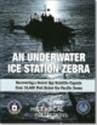
An Underwater Ice Station Zebra: Recovering a KH-9 Hexagon Capsule From 16,400 Feet Below the Pacific Ocean: Selected Declassified CIA DocumentsOne reason why the US Navy may be involved with the tracking of the submersion of the Malaysia Flight 370” black box” may be attributed to their significant expertise in this area. In fact, the US Navy has been involved in deep sea recovery for decades. As you read the story of An Underwater Ice Station Zebra: Recovering a KH-9 Hexagon Capsule From 16,400 Feet Below the Pacific Ocean: Selected Declassified CIA Documents, you will learn that the U.S. Navy ‘s advanced method at deep submersible recovery began in 1972 with the Trieste II (DSV-1). Publicly called a “data package,” the object was actually part of a U.S. spy satellite, codenamed HEXAGON. Before today’s digital technology, photo reconnaissance satellites used film, which returned to Earth in capsules ejected from the satellite. The capsules, called “buckets,” reentered Earth’s atmosphere and deployed a parachute to slow their descent.

During the first HEXAGON mission in 1971, the parachute broke off causing the bucket to crash into the ocean. This release includes photos of the capsule on the ocean floor, pictures of the Trieste II (DSV-1), and an article recounting the deepest undersea salvage then attempted.

If you would like to read about the US Navy’s fascinating recovery of the HEXAGON, you can purchase this title at the US Government Bookstore at this link: http://bookstore.gpo.gov/products/sku/041-015-00294-5

U.S. Emergency Response

When disaster strikes including transportation accidents, the US Federal Government often provides expertise to emergency responders. The U.S. has expanded its emergency response knowledge base and capacity since the World Trade Center and Pentagon attacks on 9/11 and now has many bestselling titles available relating to Disaster / Emergency Response.

Emergency Response Guidebook 2012 available at http://bookstore.gpo.govThe official Emergency Response Guidebook (ERG) is a guide for use by transporters, firefighters, police, and other emergency services personnel who may be the first to arrive at the scene of a transportation incident involving a hazardous material, such as an oil or chemical spill. It is used by first responders in:

(1) quickly identifying the specific or generic classification of the material(s) involved in the incident, and

(2) protecting themselves and the general public during this initial response phase of the incident.

The ERG is updated every three to four years to accommodate new products and technology.

This title is available for purchase at the US Government Bookstore at this link: http://bookstore.gpo.gov/products/sku/050-000-00596-8

U.S. Coast Guard Incident Management Handbook assists Coast Guard personnel in response to oil spills, search and rescue operations and other emergency situations on the water.

us-coast-guard-incident-handbookThe Coast Guard Incident Management Handbook (IMH) is designed to assist Coast Guard personnel in the use of the National Incident Management System (NIMS) Incident Command System (ICS) during multi-contingency response operations and planned events. The Incident Management Handbook is an easy reference job aid for responders. Also useful for other waterway rescue and police operations.Read the table of contents and purchase this title at this link on the US Government Bookstore: http://bookstore.gpo.gov/products/sku/050-012-00465-0

This title is also available in a Spanish-language version,Manual Para el Manejo de Incidentes / Servicios de Guardacostas and can be purchased here: http://bookstore.gpo.gov/products/sku/050-012-00473-1

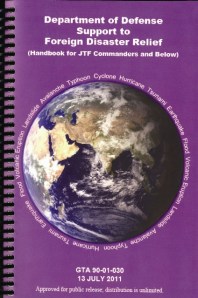
Department of Defense Support to Foreign Disaster Relief Handbook And finally, Department of Defense Support to Foreign Disaster Relief (Handbook for JTF Commanders and Below) is a manual for personnel involved in a foreign disaster relief mission, including a search for a missing airplane.

A classified version exists only for certain military personnel, but the U.S. Department of Defense (DoD) also released this unclassified version that can be used not only by members of the military, but also by anyone involved in U.S. foreign disaster response JTF (Joint Task Force) operations, including U.S. Government agencies, international organizations, Intergovernmental Organizations (IGO) and Non-Governmental Organizations (NGO).

This handbook covers the: legal authority and principles; operational context and planning factors; both supporting groups and supported foreign disaster relief organizations; and DOD guidelines for interaction with the U.S. Department of State and US Agency for International Development (US-AID) and NGOs and International Organizations such as the United Nations and International Red Cross and Red Crescent.

Read more about this information-packed handbook in our previous blog post: The U.S. military storms to the rescue in foreign disaster relief.”

How Can I get these aviation safety publications ?

  • Shop Online Anytime: You can buy these eBooks and print publications (with FREE Standard Shipping worldwide) from the U.S. Government Online Bookstore website at http://bookstore.gpo.gov:
  • Order by Phone: You may also order print editions by calling our Customer Contact Center Monday through Friday, 8 am to 5:30 pm Eastern (except US Federal holidays). From US and Canada, call toll-free 1.866.512.1800. DC or International customers call +1.202.512.1800.
  • Shop our Retail Store: Buy a copy of any print editions from this collection at GPO’s retail bookstore at 710 North Capitol Street NW, Washington, DC 20401, open Monday–Friday, 9 a.m. to 4 p.m., except Federal holidays, Call (202) 512-0132 for information or to arrange in-store pick-up.
  • Visit a Federal Depository Library: Search for U.S. Government publications in a nearby Federal depository library. You can find the records for most titles in the Catalog of U.S. Government Publications or CGP.

About the Author – This week’s blog contributor is Maureen Whelan, Senior Marketing Team Leader for GPO’s Publication & Information Sales division program office in Washington, DC.  Maureen oversees print and digital content dissemination strategy and manages third party free and paid content distribution platforms and vendors such as Apple iBookstore, Google Play eBookstore, EBSCOhost, Overdrive, and more. Additionally, Maureen’s commercial publishing industry experience with publishing requirements, copyrights, product formats and content metadata and search optimization have helped Federal agencies publications be more discoverable through these consumer channels. A few examples of commercially popular Federal print books that were successfully migrated to digital include The Healthy Woman and The Basic Guide to Exporting.


The Real stories of MASH and disease-fighting Armed Forces medical scientists

April 9, 2014
TV Week final episode cover depicting M*A*S*H television show cast

TV Week final episode cover depicting M*A*S*H television show cast. Did you know that the character of MASH 4077th’s head nurse “Hot Lips” Margaret Houlihan was inspired by two real-life Korean War Army MASH head nurses “Hotlips” Hammerly and Janie Hall?

The music starts. The lyrics to the haunting song “Suicide is Painless” play in your head. The sound and sight of helicopters enter and then you are looking down from the helicopters view on a village of tents and red crosses. The television series M*A*S*H, based on the 1970 movie that was set during the Korean War at the fictitious 4077th Mobile Army Surgical Hospital or M*A*S*H, established itself as one of the greatest shows in history. The show was on air from 1972-1983, and it still lives on today in syndication.

The series finale was broadcasted on February 28, 1983 to 105.9 million viewers, becoming the most watched television broadcast of all time. The record held for nearly three decades until the 2010 Superbowl surpassed M*A*S*H’s record with 106.5 million viewers. The show had the ability to make you cry from both a comedic and emotional standpoint striking a unique balance unlike many shows.

But sometimes real life can be as fascinating as fiction. Learn about the real-life exploits of a genuine Army MASH unit and of brave medical researchers fighting tropical diseases in southeast Asia with two recent Armed Forces medical history publications from the U.S. Army Medical Center and School’s Borden Institute.

Skilled and Resolute: A History of the 12th Evacuation Hospital and the 212th MASH, 1917-2006 ISBN: 9780160922534Skilled and Resolute: A History of the 12th Evacuation Hospital and the 212th MASH, 1917-2006 follows the 90-year history of a medical unit, the 12th Evacuation Hospital and its successor the 212th Mobile Army Surgical Hospital, which served in military engagements from World War I to Operation Iraqi Freedom as well as many peacekeeping and humanitarian missions. The unit’s goal is to be trained, equipped, and deployable at a moment’s notice.

There are some gruesome pictures in the Vietnam War section, but overall the book is a fascinating read about how medical techniques evolved with warfare practices in makeshift hospitals close to front lines. In 2006, the unit transformed once again to the 212th Combat Support Hospital and was deployed to Afghanistan.

Lt. General George S. Patton visits the US Army 12th Evacuation Hospital (MASH) to award decorations to the World War 2 wounded. (Photo courtesy U.S. Army Medical Department, Office of Medical History)

Lt. General George S. Patton visits the US Army 12th Evacuation Hospital (MASH) to award decorations to the wounded. Patton would later infamously get in trouble for slapping a soldier at another World War 2 hospital who was suffering from post-traumatic stress disorder (PTSD) or combat stress reaction (CSR), which was called shell shock starting in WW 1.  (Photo courtesy U.S. Army Medical Department, Office of Medical History)

The photos in the book look like scenes out of the M*A*S*H television series; you can picture Radar turning is head to the side, pausing to listen and exclaiming “Choppers!” to be followed by the sound of helicopters.

Getting the sick and wounded from the front to a MASH unit during the Korean War. (Image courtesy http://www.koreanwar60.com/army)

Army helicopters were critical for evacuating the sick and wounded from the front to a MASH unit ambulance during the Korean War. (Image courtesy http://www.koreanwar60.com/army)

The Armed Forces Research Institute of Medical Sciences (AFRIMS), 1960-2010: a 50th Anniversary Photographic History ISBN: 9780160918315The Armed Forces Research Institute of Medical Sciences (AFRIMS), 1960-2010: a 50th Anniversary Photographic History is a lean coffee table book organized by decade. The black and white and color photographs tell the story of AFRIMS – a medical military partnership between the United Sates and Thailand that was founded in response to a cholera epidemic in Thailand in 1959. Within 10 years, a laboratory was built and AFRIMS established the reputation of being a major force in tropical medical research. In the 1970s, the lab played a crucial role in researching and developing treatment for tropical diseases inflicting the military serving in the Vietnam War.

Technology advancements in the 1980s were adapted by AFRIMS and helped with storing and organizing research. In the 1990s and the first decade of the new century, AFRIMS conducted trials impacting the research on vaccines for hepatitis A, malaria, and HIV. The photographs are very compelling and effectively share history while showing the way they conducted research and interacted with the Thai community.

AFRIMS Captain Michael "Mike" Benenson (future USAMC director)  returns a “wai” while the study team prepares medications in the 1973 malaria drug prophylaxis study. (Photograph courtesy of Dr. Michael Benenson)

AFRIMS Captain Michael “Mike” Benenson (future USAMC director) returns a child’s “wai” greeting while the study team prepares medications in the 1973 malaria drug prophylaxis study. (Book photograph courtesy of Dr. Michael Benenson)

HOW DO I GET A COPY OF THESE BOOKS?

About the author: Our guest blogger is Emma Wojtowicz, Public Relations Specialist in GPO’s Office of Public Affairs. 

Additional images and content provided by Government Book Talk Editor Michele Bartram is Promotions and Ecommerce Manager for GPO’s Publication and Information Sales Division in Washington, DC, and is responsible for online and offline marketing of the US Government Online Bookstore (http://bookstore.gpo.gov) and promoting Federal government content to the public.


Stop Me If You’ve Heard This One… a Top Ten List of Funny Federal Titles

April 1, 2014

A few weeks ago, Jennifer Davis’ supervisor delivered a challenge to her via email: write a story about humorous government document titles for April Fool’s Day. (Read various stories about the origins of April Fool’s Day here, here and here.) April Fool’s humor has had a long history with American Government, dating back to Founding Father Benjamin Franklin (read caption below).

Benjamin Franklin wearing an ostentatious fake moustache for April Fool's Day

According to news humor site “Weekly World News”, the American founding father of April Fool’s Day was Benjamin Franklin. Since Franklin, April 1st has been synonymous in America for a day of practical jokes and general mischief. Tales of his exploits were published in the Philadelphia Gazette on the 1st of April every year. For example, says the site, he was known to give entire public speeches on April 1 wearing an ostentatious fake moustache. 😉 Can you believe it? (Image courtesy of Weekly World News.)- M. Bartram

Says Jennifer: “I love reading government documents for their data and their fascinating stories, but I usually wouldn’t consider them to be laugh-out-loud funny. Or as a colleague said, “They’re not Abbott and Costello funny”. But everyone’s got to laugh some time, right? And when I searched GPO’s Catalog of U.S. Government Publications (CGP), and picked my colleagues’ brains, I found that Uncle Sam sometimes gets his chuckles, too. I found more titles than these ten—but I want to save some for another occasion. There have been a few other lists of humorous government documents, not all of them Federal titles, circulating around the Internet, and so I’ve tried to keep this list as unique as possible.”

(If you like the topic of this column, you should visit the Washington State University’s exhibit, The Lighter Side of…. The Government Printing Office, which runs through June 28, 2014.)

[Michele Bartram Editor’s Note: Over the years, Government Book Talk has also highlighted some funny Federal publication titles within previous blog posts including: Society through a Comic Lens, The Nuttall Tick CatalogueDr. Seuss, U.S. Army, Sprocket Man!War Games, and Ponzimonium. You’ll chuckle over the odd, quirky, ironic or inadvertently funny titles of the books mentioned!]

All of these titles in this blog post have records in GPO’s Catalog of U.S. Government Publications, and you might be able to find a copy in your local Federal depository library, or find one at your regional library. Click here for a list of Federal Depository Libraries (the Federal Depository Library Directory or FDLD). Since many of these Government documents —books, posters, pamphlets and PDFs— are older than five years, you might have to search a bit to find a copy. When available, we have provided links for the electronic version of these titles.

Below is the list of Top 10 funniest titles that Jennifer provided, along with additional details about each.

TOP 10 FUNNIEST TITLES

Gobbledygook_has-gotta-go_green-cover1) Gobbledygook has Gotta Go. This Bureau of Land Management title about the problems with Government writing is a classic, and a precursor to the “Plain Language” initiative today to simplify the wording in communications. It has been cited in several collected lists of funny titles, and it’s the only time I cheated and included it in my list anyway.  Gobbledygook is just such a great word to say, and the alliteration makes the title even funnier. You can read a scanned copy of this book here.

2) Preparedness 101: Zombie Pandemic. All of our GPO office mates agree: this comic has got to be the most fun Federal government document to date.  The CDC was smart and exploited the current interest in zombies, and made an emergency preparedness checklist into a comic on preparing for the “zombie pandemic”. In this comic, the scientists of the CDC are the superheroes, isolating the virus “Z5N1” and developing a vaccine in record time, while the locals develop a checklist of emergency supplies so they can stay inside their home. Just the title alone is enough to make you smile—and it gets its point across. You can read the entire publication online here.

cdc-preparedness-101-zombie-pandemic

3) This is a Dumb Bunny. I love the idea of the Federal government calling someone a “dumb bunny”. Even if the document it is quite literally the image of a rabbit, which spoils some of the fun, I am still tickled by the idea of a snarky Uncle Sam. The poster’s actually about smoking cessation.

"This is a dumb bunny!" anti-smoking 1970s poster from the U.S. Department of Health, Education and Welfare

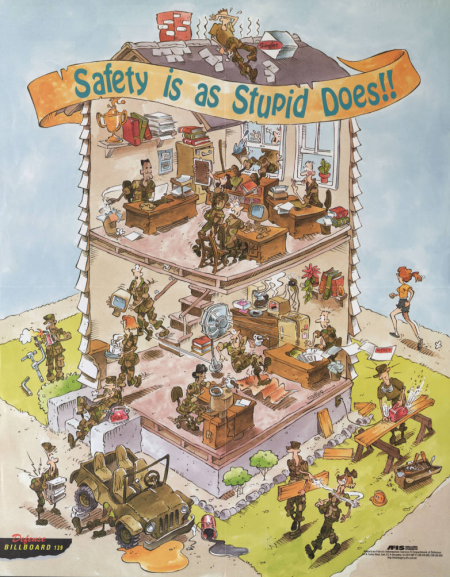
4) Safety is as Stupid Does!!  I know what the goal was with this title. The poster (seen on the University of Iowa Digital Library) makes it clear to the intended audience of military personnel that not thinking hurts safety on the job. However, I think the title missed the mark. It’s funny in its own right.

Safety-is-as-stupid-does_DOD-poster

5) Do Mandrakes Really Scream?  A colleague of mine is a huge Harry Potter fan. She said cataloging this title was the pinnacle of her career. It’s the online exhibition catalog of an National Library of Medicine (NLM) History of Medicine exhibit relating NLM’s historical holdings and the magic and medicine of Harry Potter.

If you read the Harry Potter series, you’ll know what the title is referring to. If you haven’t read the series, check out this free exhibit first; you might find yourself diving into the book series afterwards.

National Library of Medicine NLM "Do Mandrakes Really Scream? Magic and Medicine in Harry Potter" website

6) USDA Saves French Donkey.  The title of this mid-1980s US Department of Agriculture publication just speaks for itself.

[Editor’s note: Probably the publication refers to this 1985 story reported in the Los Angeles Times about a rare 7-month-old curly haired French Poitou donkey named Sonette at the San Diego Zoo: Rare Donkey Passes Test, Can Stay Here”]

French Poitou donkey has dreadlocks that need a haircut

The rare French Baudet du Poitou donkey breed is born with curly hair that naturally grows into long dreadlocks as an adult. This one hasn’t had a haircut in 17 years! (Source: The Telegraph – UK)

7) Self-Motion Perception and Motion Sickness: Final Report for the Project  NASA’s report on a motion sickness project makes me want to just… stop… moving! Read about it on NASA’s website.

NASA-astronauts-with-motion-sicknessAbove: NASA astronauts in zero gravity try to fend off the effects of motion sickness.  To learn more about motion sickness, watch this 3-minute TED Talk animated video about “The Mystery of Motion Sickness.”

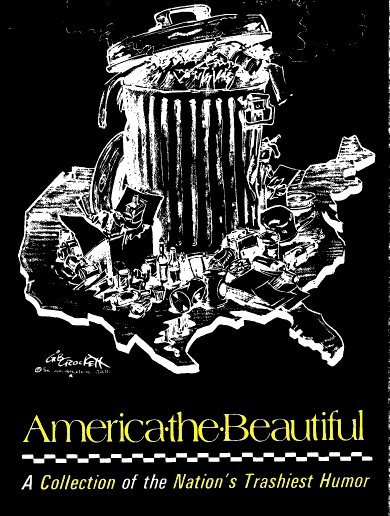
America the Beautiful: A Collection of the Nation's Trashiest Humor with comic strips about solid waste or trash8) America the Beautiful: Collection of the Nation’s Trashiest Humor. Not only is the title funny, but the book’s content promises humor as well. This is publication number 2048 of The U.S. Department of Health, Education, and Welfare, originally published in 1970. The book consists of thirty comics, from the funny pages like B.C., and some from the editorial pages of publications from the New Yorker to the Cleveland Plain Dealer, all focusing on the problem of waste disposal. You can read the publication in its entirety online at the EPA’s website.

9) French Meadows: Hell Hole Recreation Areas. Although the area is really quite lovely, there’s a problem with image marketing in this U.S. Forest Service tourism brochure.

French-Meadows-Hell-Hole-Reservoir

Poster for The Vampire Bat movie starring Fay Wray10) Controlling Vampire Bats.  This serious US Agency for International Development publication about controlling the spread of rabies through these creatures nevertheless evokes shades of Tippi Hedren… Don’t you get a mental picture of people running down the street away from the bats, waving their arms over their heads and screaming, à la The Birds? Or Fay Wray being controlled by an evil vampire in bat form in the movie “The Vampire Bat” (movie poster image at the right)? Maybe I’ve read too many zombie comics.

How can I find these funny-titled Federal publications?

In addition to clicking on the links in the article above to find the publications, you may find these publications from the following:

  • Visit a Federal Depository Library: Search for U.S. Government publications in a nearby Federal depository library.
  • Visit a Public Library: Ask your local public librarian about Federal Government books available to check out as well as Federal eBooks that may be available for library patrons to digitally download through the library’s Overdrive subscription.

And to find popular current Federal publications, you may:

  • Shop Online Anytime: You can buy eBooks as well as print publications (with FREE Standard Shipping worldwide) from the U.S. Government Online Bookstore website at http://bookstore.gpo.gov
  • Order by Phone: You may also Order print editions by calling GPO’s  Customer Contact Center Monday through Friday, 8 am to 5:30 pm Eastern (except US Federal holidays). From US and Canada, call toll-free 1.866.512.1800. DC or International customers call +1.202.512.1800.
  • Shop our Retail Store: Buy a copy of any print editions at GPO’s retail bookstore at 710 North Capitol Street NW, Washington, DC 20401, open Monday–Friday, 9 a.m. to 4 p.m., except Federal holidays, Call (202) 512-0132 for information or to arrange in-store pick-up.

About the author: Adapted and expanded by Michele Bartram, Government Book Talk Editor and Promotions Manager for GPO’s Publication and Information Sales Division in Washington, DC, from an original post by Jennifer K. Davis, formerly from GPO’s Library Services & Content Management Division that supports the Federal Depository Libraries Program (FDLP).

Have a fun and funny April Fool’s Day!


“Are you Ready?” for Extreme Cold and Other Natural and Man-made Disasters

January 23, 2014

Image below: Graph depicts how variations in the polar vortex affect weather in the mid-latitudes. Courtesy: National Science Foundation

Polar-vortex-fall-to-winter-chartAs the United States shivers under the Arctic Express, Polar Vortex, Polar Cyclone, Polar Low, Circumpolar Whirl or whatever name you call it (I just call it FREEZING!!!!) with snow, ice, and some of the most extreme cold conditions in decades, Americans will be happy to know that the Federal Emergency Management Agency (FEMA) has help available in the form of its extremely useful new disaster preparedness guide, Are You Ready?: An In-Depth Guide to Citizen Preparedness.

FEMA Are You Ready?: An In-Depth Guide to Citizen Preparedness ISBN: 9780160920745Intended as both a reference source as well as a step-by-step manual, this easy-to-follow guide has been designed to help Americans “learn how to protect themselves and their families against all types of hazards”.

According to the FEMA authors:

The focus of the content is on how to develop, practice, and maintain emergency plans that reflect what must be done before, during, and after a disaster to protect people and their property. Also included is information on how to assemble a disaster supplies kit that contains the food, water, and other supplies in sufficient quantity for individuals and their families to survive following a disaster in the event they must rely on their own resources.

The guide advises on planning before a disaster, responding during a disaster, and recovering after a disaster and is organized into the following sections: Why Prepare, Part 1 Basic Preparedness, Part 2 Natural Hazards, Part 3 Technological Hazards, Part 4 Terrorism, and Part 5 Recovering from Disaster.

Each chapter has specific tips on preparation, what to do during the particular disaster, instructions for what to do afterwards, and where to go for more information, including links for free publications.

Disasters and emergencies cover the gamut in three areas:

a)      Natural Hazards, including: Floods, Tornadoes, Hurricanes, Thunderstorms and Lightning, Winter Storms and Extreme Cold,  Extreme Heat, Earthquakes, Volcanoes, Landslides and Debris Flow (Mudslide), Tsunamis, Fires and Wildfires;

b)      Technological Hazards, including:  Hazardous Materials Incidents, Household Chemical Emergencies, and Nuclear Power Plants

c)      Terrorism, including: General terrorist threats, Explosions, Biological Threats, Chemical Threats, Nuclear Blast, and Radiological Dispersion Device (RDD).

Are You Ready?… for Winter Storms and Extreme Cold

FEMA-Are-You-Ready_page-80-Winter-Storms-and-Extreme-ColdAs I was concerned about the extreme cold, I turned to Part 2, Natural Hazards, Section 2.5 Winter Storms and Extreme Cold.

In the preparation part, I found useful terminology such as the difference between sleet and freezing rain, protective measures and supplies to gather, tips on how to winterize my car (e.g., have you cleaned your car battery terminals and used gasoline additives to keep water out of your fuel lines?) and how to dress for the winter weather (did you know mittens are warmer than gloves?).

FEMA-Are-You-Ready_page-83-Winter-Dress-for-ColdDuring a winter storm, “Are you ready?” gives more advice, such as what to do if a blizzard traps you in the car and how to watch for signs of hypothermia.

[Signs of hypothermia]… include uncontrollable shivering, memory loss, disorientation, incoherence, slurred speech, drowsiness, and apparent exhaustion. If symptoms of hypothermia are detected, get the victim to a warm location, remove wet clothing, warm the center of the body first, and give warm, non-alcoholic beverages if the victim is conscious. Get medical help as soon as possible.

Other Useful Information in “Are You Ready?”

In addition to information on specific types of emergencies, the guide includes a number of other very useful resources.

Assembling a Disaster Supplies Kit:  A whole chapter is devoted to assembling a good general disaster supplies kit for multiple locations: home, work and vehicle.

Practice Makes Perfect: Advice on how to practice and maintain your emergency plan is under Section 1.6.

General Evacuation Guidelines:  Tells what to do to prepare your home if you have to evacuate, such as utility shut-off and safety, reviewing and securing of insurance and vital records, and so on.

Special Needs: Information on how to do disaster planning to accommodate someone with disabilities is included.

Pets: Caring for pets in emergencies is not forgotten, either.

FEMA Hazard Maps: It highlights how to get free hazard maps from FEMA in your area by accessing FEMA’s Hazard Mapping Portal.

Homeland-Security-Threat-Assessments-Color-MatrixWarning Systems and Signals: The guide explains different national alert systems such as the Emergency Alert System (EAS) and National Oceanic & Atmospheric Administration (NOAA) Weather Radio (NWR), as well as the Homeland Security Advisory System with its Threat Conditions thermometer.

Quizzes: The guide even includes some quizzes such as the Terrorism Knowledge Check on page 172 that asks such questions as:

What would you do, if you were at work and…

a. there was an explosion in the building?

b. you received a package in the mail that you considered suspicious?

c. you received a telephone call that was a bomb threat?

Mental Health Issues: Tips are included on how to recognize if children vs. adults may need crisis counseling or stress management assistance as well as how to ease disaster-related stress (such as attending memorial services). For children, guidelines are included by age range of common reactions to traumatic events, along with tips on how adults can reassure children after a disaster.

For additional information about Federal mental and medical emergency resources, read our previous blog post: “Help is Just a Call, Click or Page Away: Federal Disaster Helplines & Emergency Medical Resources.”

Family Forms: The guide is customizable to you and your family with forms to fill out for your own emergency plans. Included is a form for you to use to fill out information as you collect it from your local authorities on possible hazards and emergencies in your community, the Risk Level and how to reduce your risk, along with a “Community and Other Plans” form to use to record answers from your local officials about your community’s disaster and emergency plans.  Also included is a form to draw and to record your family’s specific evacuation route and another to record your Family Communications Plan.

Checklists and Appendices: The guide also includes some handy appendices: Appendix A: Water Conservation Tips, Appendix B: Disaster Supplies Checklist, and the all-important Appendix C: Family Communications Plan.

Preparedness Websites: One is a list of Disaster Public Education Websites from both the Federal Government such as FEMA’s own Ready.gov site (www.ready.gov), as well as non-Governmental sites, like the Institute for Business and Home Safety, www.ibhs.org.

Disaster Recovery Assistance: Finally, advice and resources for getting disaster recovery assistance are covered in the Are You Ready? guide, too.

FEMA Are You Ready?: An In-Depth Guide to Citizen Preparedness ISBN: 9780160920745How can I get a copy ofAre You Ready?: An In-Depth Guide to Citizen Preparedness”?

Whether you live near an active volcano; in Tornado Alley or a Hurricane Zone; in wildfire, mudslide or flood-prone areas; or just want to be prepared for any emergency—natural or man-made—this guide will help you save the day!

  • MULTIPLE COPIES: FEMA recommends having a completed guide for each location for your family members: home, work or school, and your vehicle(s). Fill out the customizable sections in each copy with your relevant family, workplace and community information.
  • Shop Online: You can buy this publication from the U.S. Government Online Bookstore at http://bookstore.gpo.gov by:
  • Order by Phone: Call our Customer Contact Center Monday through Friday, 8 am to 5:30 pm Eastern (except US Federal holidays). From US and Canada, call toll-free 1.866.512.1800. DC or International customers call +1.202.512.1800.
  • Shop our Retail Store: Buy a copy of any print editions from this collection at GPO’s retail bookstore at 710 North Capitol Street NW, Washington, DC 20401, open Monday–Friday, 9 a.m. to 4 p.m., except Federal holidays, Call (202) 512-0132 for information or to arrange in-store pick-up.
  • Digital: Find a PDF version on the FEMA site.
  • Visit a Federal Depository Library: Search for it in a nearby Federal depository library.

About the Author: Government Book Talk Editor Michele Bartram is Promotions Manager for GPO’s Publication and Information Sales Division in Washington, DC, and is responsible for online and offline marketing of the US Government Online Bookstore (http://bookstore.gpo.gov) and promoting Federal government content to the public.


Federal Favorites: Our Best Selling Books of 2013

January 16, 2014

Ahhh…. It’s that time of the year again: Awards season! From the Golden Globes to the Academy Awards, red carpets abound with interviews of movie stars and other celebrities boasting about their best work during the past year.

We at the US Government Bookstore want to make sure our star publications and Federal agency publishers get their moment in the limelight, too. So, we are pleased to announce the winning publications that you, our readers, chose through your purchases over the past year: The US Government Bookstore Best Sellers of 2013!

Top-Government Books and Best-Sellers-of-2013 from the GPO US Government Online BookstoreHere are some of the more notable books, eBooks, posters and more that were winners in your eyes over the past year:

ART & TRAVEL

National Park System (Wall Map Poster)Americans love our national parks, so it’s no surprise the National Park System Wall Map Poster was a big hit.

Humanities-Magazine-2014-01Humanities is a bimonthly magazine published by the National Endowment for the Humanities (NEH) which covers NEH sponsored research in the humanities and NEH programs and projects, as well as information on recent and upcoming NEH grants.

HISTORY

With the 150th anniversary and reenactment of the Battle of Gettysburg last summer, The Gettysburg Campaign, June-July 1863 was a smash success (Read our post “Gettysburg, America’s Bloodiest Battle” for more information).

Perennial favorite Underground Railroad: Official Map and Guide (Read our post “The Underground Railroad Leaves its Tracks in History”) was joined by two publications commemorating 50th anniversaries:

Book Cover Image for Statistical Abstract of the United States 2012 (Paperback)Finally, the Statistical Abstract of the United States, the last official edition published in 2012 by the U.S. Census Bureau, contains a standardized summary of all official key statistics on the social, political, and economic organization of the United States (Read our post: “Statistical Abstract and Print Mashups in a Digital Age”).

TREES & FORESTS

Book Cover Image for The Little AcornI won’t be going out on a limb to say that our customers definitely wanted to hug trees this year, as books about Trees & Forests topped the lists. Why Would Anyone Cut a Tree Down? and The Little Acorn are extremely popular books for children explaining about the uses and life cycle of trees.

Image for Timber Management Field BookHow to Prune Trees and How To Recognize Hazardous Defects in Trees for amateur and professional gardeners, landscapers and foresters alike, and the Timber Management Field Book serves as the most popular reference handbook for forestry professionals.

(Read our posts “Oh, say, can you tree? American Christmas tree traditions,” “Pruning Trees” and “Dr. Seuss’ The Lorax Inspires Kids to Hug a Tree” for more information on these titles.)

BUSINESS AND LAW

A Basic Guide to Exporting for Small & Medium-Sized Businesses (10th Revised)International business entrepreneurs and would-be exporters have made A Basic Guide to Exporting: The Official Government Resource for Small and Medium-Sized Businesses a best-seller every year (Read our posts: “Exporting Made Simple and “Government eBooks Made Easy– and Sometimes Free” for more information).

Copyright Law of the United States in U.S. Code as of 12/2011Protecting intellectual property and privacy were extremely hot topics in 2013, making the Copyright Law of the United States and Related Laws and the Overview of the Privacy Act of 1974, 2012 Edition (extremely popular last year (Read our post: “The Privacy Act: What the Government Can Collect and Disclose about Youfor more information).

TRANSPORTATION AND NAVIGATION

TAstronomical Almanac for the Year 2014 and Its Companion the Astronomical Almanahe latest versions of the annual best-selling Astronomical Almanac for the Year 2014 (Combined Print plus Online Edition) and The Nautical Almanac for the Year 2014 are critical tools to aid commercial and private navigation by both air or water (Read our post: “Navigating by the Moon, Planets, and Starsfor more information).

Specifically for maritime navigation, Navigation Rules, International-Inland contains the latest international regulations for preventing Book Cover Image for FAA Safety Briefingcollisions at sea as well as the U.S. Inland Navigation Rules which have been in effect for all inland waters, including the Great Lakes.

The FAA Safety Briefing magazine provides updates on major Federal Aviation Administration rule changes and proposed changes, as well as refresher information on flight rules, maintenance air worthiness, avionics, accident analysis, and other aviation topics.

CITIZENSHIP AND CIVICS

Preparing to become a United States citizen and reaffirming knowledge of the American system of Government is extremely popular with our customers, and this year was no exception. Top civics and citizenship publications for 2013 included the Constitution of the United States and the Declaration of Independence (Pocket Edition) and materials for preparing for the U.S. Naturalization Test to become a United States citizen—

(Read our posts: “Quiz and History for Bill of Rights Day December 15”, “Quiz: Are you smarter than an 8th grade Civics student?”, and “Notable Documents 2009: Civics Flash Cardsfor more information on these products.)

Another patriotic publication that proved popular (Do you like the alliteration?:-) was Our Flag, which briefly describes the history of the American flag and sets forth the practices and observances appropriate to the display of Old Glory, was a top-seller.Book Cover Image for How Our Laws Are Made

The Congressional book, How Our Laws Are Made, provides citizens with a basic outline of the numerous steps of our Federal law-making process from the source of an idea for a legislative proposal through to its publication as a statute and becoming the “law of the land”.

HEALTH

Watching our weight and eating better were definitely on the minds of Americans this year as Diet & Nutrition books and posters were best sellers, including:

Book Cover Image for Special Operations Forces Medical HandbookHealthcare professionals turned often to the U.S. Government Bookstore for Physician References & Medical Handbooks, Medical & Health Research, and Military & Emergency Medicine publications in 2013. Top on the list were copies of the new Healthcare Law, as well as the Special Operations Forces Medical Handbook.

But also important were publications used to improve the quality of healthcare research and patient care and safety. These included the ORI: Introduction to the Responsible Conduct of Research  (also available in Packages of 50) which provides guidelines for Public Health Service-funded researchers, as well as the TeamSTEPPS patient care and safety training materials for healthcare personnel, such as the TeamSTEPPS Instructor Guide (Binder Kit) and TeamSTEPPS Pocket Guide that should be handed out to all healthcare personnel who attend TeamSTEPPS training.

SECURITY AND EMERGENCY MANAGEMENT

Emergency management personnel and first responders responded strongly to the many great safety and emergency response publications on the U.S. Government Bookstore.  These books and pocket guides topped their “must have” list in 2013:

Specifically for dealing with Hazardous Materials (HAZMAT) and Chemical-Biological-Radiological-Nuclear-Explosive (CBRNE) incidents, clean-up and response were these best-selling guides:

The importance of radio communications was underscored by the popularity of the United States Frequency Allocations: The Radio Spectrum Chart (Poster) of all assigned frequencies and the National Interoperability Field Operations Guide which contains radio guidelines for establishing or repairing emergency communications in a disaster area.

GOVERNMENT

Every year, the publications containing the President’s proposed Federal Budget for the upcoming fiscal year are on our best sellers list, and the Fiscal Year 2014 Budget publications followed this tradition. (Note: Stay tuned! The new Fiscal Year 2015 Budget publications will be coming out soon from the White House).

United States Government Manual 2013 lists all federal agenciesThe U.S. Government Manual, the ultimate handbook of all Federal agencies, was a hit as it is every year. Now you can get the new edition: United States Government Manual 2013 (Read about it on our Blog post:  “Understand How the U.S. Government is Organized”).

Other “Best of the Best” Government titles include:

How can I get these “Best-selling Books of 2013”?

  • Shop Online: You can purchase these publications from the U.S. Government Online Bookstore at http://bookstore.gpo.gov by clicking on the individual links above in this blog post. You may also click here to shop our entire “Best Sellers of 2013” collection.
  • Order by Phone: Call our Customer Contact Center Monday through Friday, 8 am to 5:30 pm Eastern (except US Federal holidays). From US and Canada, call toll-free 1.866.512.1800. DC or International customers call +1.202.512.1800.
  • Shop our Retail Store: Buy a copy of any print editions from this collection at GPO’s retail bookstore at 710 North Capitol Street NW, Washington, DC 20401, open Monday–Friday, 9 a.m. to 4 p.m., except Federal holidays, Call (202) 512-0132 for information or to arrange in-store pick-up.
  • Visit a Federal Depository Library: Search for one of these publications in a nearby Federal depository library.

About the Author: Government Book Talk Editor Michele Bartram is also Promotions and Ecommerce Manager for GPO’s Publication and Information Sales Division in Washington, DC, and is responsible for online and offline marketing of the US Government Online Bookstore (http://bookstore.gpo.gov) and promoting Federal government content to the public. Assistance provided by Stephanie Jaeger, Sales & Marketing Coordinator for GPO’s Sales & Marketing Division that markets GPO’s publishing services to the Federal sector.


Take Notice: The 2014 Counterterrorism Calendar

January 9, 2014

2014-NCTC-Counterterrorism-Calendar-spiral-boundIf you didn’t catch the Washington Post “In the Loop” article by Al Kamen this week entitled “Counter terror calendar 2014 is out!,” you’ll be pleased to know that yes, the 2014 edition of the National Counterterrorism Center’s annual Counterterrorism Desk Calendar is now available for ordering on the U.S. Government Bookstore.

Image: Cover of the 164-page 2014 Counterterrorism Calendar from the National Counterterrorism Center depicts the 2013 bombings at the Boston Marathon. Photo Credit: David L. Ryan / Boston Globe.

The goal behind the Counterterrorism Calendar is to educate and inform both professionals– first responders, military, intelligence, law enforcement and other counterterrorism personnel– as well as civilians about the threats of international terrorism and how to prevent, respond or mitigate these threats against the United States both at home and abroad.

History of U.S. Government Inviting Citizen Involvement in Domestic Security

Since its founding, America has had a history of inviting its citizens to participate in its own defense. Even with the danger of British sympathizers turning them in, brave revolutionaries posted recruiting posters on behalf of the Continental Congress such as the one below that invited Americans to “Take Notice” and help General Washington and the Continental Army defend against “the hostile designs of foreign enemies.”

revolutionary-war-take-notice-recruiting-posterImage: This Revolutionary War recruiting poster urged brave and able-bodied young men to “take notice” and join forces with General Washington and the Continental Army in the fight against “foreign enemies,” in this case, the British. Photo Credit: Bettmann/CORBIS

In World War 2, the Federal Government issued numerous similar domestic campaigns reminding citizens that it was their civic duty to “defend America” and inviting citizens to help support the war industry and to be vigilant against spies, saboteurs and other actions by the enemy both at home and abroad.

Defend-American-Freedom It's Everybody's-Job- World War II 2 propaganda poster for civilian workersImage: U.S. Government World War II propaganda poster urging civilians to participate in the war effort. Source: University of North Texas Digital Library

Today, the war is a War on Terror, and the U.S. Government still needs involvement and vigilance of its citizens and allies, whether in the United States or abroad, to identify and protect against terrorists.

The 2014 Counterterrorism Calendar

Under the Office of the Director of National Intelligence, the National Counterterrorism Center or NCTC serves as the primary organization in the U.S. government for integrating and analyzing all intelligence possessed or acquired by the U.S. government about international terrorism, including data from U.S. Federal agencies like the CIA, NSA, Defense Intelligence Agency, and the FBI as well as other domestic and international sources.

First published in a spiral-bound daily planner format in 2003, just two years after the World Trade Center attacks, the Counterterrorism or CT Calendar from the NCTC is published annually. According to the NCTC, their 2014 Counterterrorism Calendar:

…provides information on known terrorist groups, individual terrorists, and technical information on topics such as biological and chemical threats.This edition, like others since the Calendar was first published in daily planner format in 2003, contains many features across the full range of issues pertaining to international terrorism: terrorist groups, wanted terrorists, and technical pages on various threat-related topics.

Features of the Calendar

In addition to serving as a desk calendar / event planner, the 164-page 2014 Counterterrorism Calendar also serves as a tutorial on international terrorism and a gallery of “most wanted” terrorists.

The right-hand page of the planner has the event planner dates along with key historical events of significance to terrorists that might be used to plan future terrorist activities. For example, on January 8, 1998, terrorist Ramzi Ahmed Yousef was sentenced to life plus 240 years for his role in the 1993 World Trade Center bombings.

On the left-hand pages are photos, maps and/or data on terrorists and terrorist organizations around the world, from Africa and the Middle East to Europe and the Americas.

Map-Somalia-based-al-Shabaab-terror-attacksImage: Map denoting locations of major terrorist incidents likely committed by the Harakat Shabaab al-Mujahidin—commonly known as al-Shabaab, a “clan-based insurgent and terrorist group” operating in and around Somalia. Source: NCTC 2014 Counterterrorism Calendar

“Terrorism tutorial” information ranges from cultural—details about the Islamic Calendar; the spelling of Arabic names and terms; lists of Foreign Terrorist Organizations (FTOs), and logos used— to technical –  information about Chemical-Biological-Radiological-Nuclear-Explosive (CBRNE) weapons commonly used by terrorists, from suicide bombs to sarin gas, and how to detect and mitigate them.  For example, who among us would recognize the terrorist threat from these innocent-looking beans?

Castor-beans-used-to-make-ricinImage: Photo of castor beans from which the deadly toxin ricin is extracted. Ricin is poisonous if inhaled, injected, or ingested. Source: NCTC 2014 Counterterrorism Calendar

“Wanted” Terrorists

Providing the real drama of the calendar are the full-page “Wanted” poster-style pages of an individual terrorist, complete with photo (if available), aliases, his terrorist activities, the reward offered, and how to report information about him.

One of the largest rewards, $25 Million, is offered for information leading to the capture of Ayman al-Zawahiri, also known as “The Teacher” or “The Doctor” who is a physician and the founder of the Egyptian Islamic Jihad. According to the CT Calendar:

“This organization opposes the secular Egyptian Government and seeks its overthrow through violent means. Al-Zawahiri is believed to have served as an advisor and doctor to Usama Bin Ladin. He has been indicted for his alleged role in the August 7, 1998, bombings of the US embassies in Dar es Salaam, Tanzania, and Nairobi, Kenya. The embassy bombings killed 224 civilians and wounded over 5,000 others.”

Wanted-page-of-terrorist-Ayman-al-Zawahiri-of-Egyptian-Islamic-JihadImage: Extract from the “wanted” page of Ayman al-Zawahiri, Al-Qaida leader and founder of Egyptian Islamic Jihad. Source: NCTC 2014 Counterterrorism Calendar

Civilian Involvement

Finally, the NCTC carries on the civilian involvement tradition by including instructions for citizens of the U.S. and other countries on how they can help fight terrorism. Pages on” Indicators of False Travel Documents”, “Radicalization”, and how U.S. residents can report suspicions are provided. Additionally, the  Rewards for Justice (RFJ) Program is described in detail, wherein the U.S. Secretary of State may offer rewards for information that prevents or favorably resolves acts of international terrorism against US persons or property worldwide.

On the last page is a Bomb Threat Call Procedures form with valuable details of questions to ask and information to note about the caller, such as his or her voice (accent, age, tone, language) and background sounds. Did you note if the caller was clearing his throat or had an accent? Were there sounds of machinery in the background? What kind? Any and all details could help law enforcement.

Aspects-to-note-about-Bomb-Threat-CallerImage: Table from the Bomb Threat Call Procedures form. Source: Page 160 of the 2014 Counterterrorism Calendar.

Forewarned is Forearmed

Like the tradition of the best Government civilian campaigns since the founding of the Nation, the National Counterterrorism Center’s annual Counterterrorism Calendar is simultaneously meant to alert and inform us, making both civilians and professionals alike aware of the very real dangers around us and educating us on what—and whom—to look for. With the cover photo depicting the 2013 bombings at the Boston Marathon– where ordinary citizens were instrumental in identifying and locating the terrorists responsible– the importance of having an informed and involved citizenry has never been clearer.

How can I get a copy of the National Counterterrorism Center’s 2014 Counterterrorism Calendar?

About the Author: Government Book Talk Editor Michele Bartram is Promotions Manager for GPO’s Publication and Information Sales Division in Washington, DC, and is responsible for online and offline marketing of the US Government Online Bookstore (http://bookstore.gpo.gov) and promoting Federal government content to the public.


Oh, say, can you tree? American Christmas tree traditions

December 17, 2013

Victorian German style Christmas Xmas tree1899To anyone who enjoys Christmas trees, we say “Wie treu sind deine Blätter!” This means “how faithful are your branches”, a line from “O Tannenbaum,” the German Christmas carol. “O Tannenbaum” (Oh Christmas Tree)* was originally a folk song from Germany that’s been translated to English and sung here in the United States for years. In fact, Nat King Cole sang a classic version in German if you’re ever interested in hearing the original version. A bit of trivia: *The tune for “O Tannenbaum” is also used for the state song of Maryland—if you’re from there, or went to university there, you might have heard the state song if you haven’t heard the holiday version! Just like they got us hooked on the song about evergreens, Germany was instrumental in getting us hooked on the decorated Christmas tree tradition as well.

German immigrants really started the modern craze for Christmas trees that came to the United States in the early 1800s. Queen Victoria, who helped set fashions for the Western world in the mid to late 1800s, helped the trend along with her family Christmas tree (which she may have learned about from her German husband, Albert). (Image above depicts a Victorian era Christmas celebration.)

The evergreen tree is likely a Yule custom carried over and remade from Celtic and/or Scandinavian pagans. Regardless of the origins of the custom of bringing an evergreen into your dwelling place during the year’s darkest days, this much is for sure: having a Christmas tree is now a tried and true American holiday tradition.

Since Christmas trees have become more secular and are so popular, the Christmas tree industry is a huge business in the United States. In 2007, Americans spent over $460 million on cut trees. The Federal government wants to support this industry, and people’s holiday happiness.

TREE AND FIRE SAFETY

To help people keep their holidays safe, the Federal government publishes a number of Christmas tree fire safety publications, such as the U.S. Fire Safety Administration’s (USFA) Christmas/Christmas Tree Fires and December and Holiday Fires.

FEMA-USFA-holiday-fire-safety-infographicImage: US Fire Safety Administration’s Winter Holiday Fire Safety infographic.

According to the USFA, fire deaths increase by 50% between December 24 and 26, and injuries during that period increase by 61%.  As the USFA pointed out, “In residential structure fires where the ignition point is a Christmas tree or other holiday decoration, the fire is typically more severe in every measurable way (p.2)”. For tips on avoiding Christmas tree fires, and to view a video on proper Christmas tree safety, take a look at USFA’s Holiday & Christmas Tree Fire Safety Outreach Materials. You’ll be able to increase your awareness and look out for your family’s welfare while continuing to enjoy your household decorations.

CUTTING YOUR OWN TREE FROM A NATIONAL FOREST

If you and/or your family enjoy going out to pick a tree and cut it, you might be able to pick one up from a national forest. For example, the Federal government has harvested all of the Capitol Christmas trees from national forests. In fact, the 2009 tree was a blue spruce that came from the Apache-Sitgreaves National Forest.

Certain forests have designated areas where it is possible to cut Christmas trees, once you have paid for your cutting permit. Contact your local national forest for its policies; you’re especially likely to find Christmas tree cutting areas in the West. Some national forests post their Christmas tree maps online. You can download Kenai National Wildlife Refuge, Soldotna, Alaska: Christmas Tree Cutting Areas and Maps of 2013 Cutting Areas in the Apache and Sitgreaves National Forests. You’ll be pulling your tree from a prestigious tree-growing area, if you do decide to get a permit from a national forest.

The trees are for personal use only, and Forest Service allows only one tree per household. Permits for the trees are quite cheap, compared to what I paid at my local Washington, DC, area hardware store. You do have to factor into the cost a bit more money for the gas it takes to haul a tree out of the forest and get it home. However, some experiences, such as holiday traditions spent together with family and friends, are priceless.

PLANTING AND CARING FOR YOUR LIVE TREE

Why-would-anyone-cut-a-tree-down? by US Forest Service ISBN: 9780160916267Some families buy live Christmas trees then plant them when the holidays are over, while others use a cut tree for the holidays then plant a new tree in the spring as a symbol of renewal.

To explain to children the need for cutting trees as well as the value of this renewable resource, the Forest Service has published the best-selling publication “Why Would Anyone Cut a Tree Down?” It is full of explanations of need to remove trees for fire management and helping prevent overcrowding, and gives instructions on how to plant a tree as well.

How-to-Prune-Trees How-to-Recognize-Defects-in-TreesTo care for your live tree once it’s planted, be sure to check out How to Prune Trees to keep your tree looking and growing its best.

And the useful How To Recognize Hazardous Defects in Trees will help you identify problems in a tree that could be detrimental to its health.

FAMOUS WASHINGTON, DC AREA CHRISTMAS TREES

Here in the Nation’s capital, there are a number of famous Christmas trees.

National Christmas Tree and the Pathway of Peace

Since 1923, the United States has held a tradition of having a National Christmas Tree lighting in Washington, DC, starting with President Coolidge lighting the “First National Christmas Tree.” Starting in 1954, a “Pathway of Peace,” 56 smaller, decorated trees representing all 50 states, five territories, and the District of Columbia were planted surrounding the National Christmas Tree. They stay decorated through New Year’s Day.

2012-National-Tree_Pathway-of-PeaceImage: 2012 National Christmas Tree and Pathway of Peace on Ellipse behind the White House. Credit: National Park Service

Today, the annual lighting ceremony on the Ellipse—the grassy area south of the White House— is usually televised with tickets given by lottery in advance, with celebrities and the President and First Family doing the honors of lighting the National Christmas Tree and kicking off the season.

The Capitol Christmas Tree

The annual Capitol Christmas Tree lighting held on the West Lawn of the U.S. Capitol has been an American tradition since 1964 and is a great holiday event that you don’t want to miss. However, the official practice of lighting the “Capitol Christmas Tree” did not start until 1968 according to the Architect of the Capitol.

2013-Capitol-Xmas-TreeImage: 2013 Capitol Christmas Tree. Image source: Architect of the Capitol.

The Capitol Christmas Tree should not to be confused with the National Christmas Tree, which is planted near the White House and lighted every year by the President and First Lady. The Speaker of the House officially lights the Capitol Christmas Tree.

“Yule” Scream for the Norwegian Embassy Tree

A lesser known but charming Capital City tradition comes from Norway. Since 1996, the Royal Norwegian Embassy in Washington, D.C. has given a Christmas tree to the American people as a symbol of friendship between the United States and Norway. The lighted tree is usually decorated with both U.S. and Norwegian flags, and can be found in DC’s Union Station train station. As explained by the Norwegian ambassador in the annual lighting ceremony attended by high-level U.S. military  and Government officials as guests, the gift of the Norway-US friendship tree also express Norway’s gratitude for the assistance received from the United States during and after World War II.

Tusen-takk-Amerika or Thank you, America banner from the Norwegian Embassy's 2013 Friendship Christmas Tree at Union Station in Washington, DC. Photo copyright: Michele BartramImage: Norwegian Embassy’s “Thank you, America” (Tusen Takk, Amerika!) banner at base of the Norwegian-US Friendship Xmas tree at Washington, DC’s Union Station in 2013. Image credit: Michele Bartram

From a distance, all you see are the 20,000 lights and the American and Norwegian flags cascading up the 32-foot tree. Upon closer inspection, this year’s visitors found 700 little reflective screaming faces on ornaments Norwegian-Embassy-Tree-Edvard-Munch-Scream-ornament-2013 from the Norwegian Embassy's 2013 Friendship Christmas Tree at Union Station in Washington, DC. Photo copyright: Michele Bartramdepicting Norwegian artist Edward Munch’s infamous “Scream” painting—placed on the tree by the humorous Norwegians in honor of 2013’s 150th anniversary of Munch’s birth.

In a way, [the “Scream”] symbolizes all the angst in preparing for an excellent Christmas,” said Norwegian Ambassador Kare Aas to the Washington Post with tongue planted firmly in cheek.

Image: Edvard Munch “Scream” 2013 ornament and flag of Norway on the Norwegian Embassy Friendship Christmas Tree. Image credit: Michele Bartram

Just taking a drive around the National Mall on a December night, seeing the National Christmas Tree and the Pathway of Peace, the national menorah, the Capitol Christmas Tree, and the Norway-US Friendship Tree can put you in more of a holiday mood.

GIFTS FOR UNDER YOUR TREE

Incidentally, if you’re still looking for holiday gifts to go under your tree, GPO’s U.S. Government Bookstore has loads of gift suggestions on their Gift Guides & Calendars page. Or give an eBook for a great last-minute gift to anyone around the world.

Hanukkah is past this year and there are only a few days left before Christmas day, but then again, there are always gift opportunities on Hogmanay, New Year’s Day, and Three King’s Day (Los Reyes Magos)/ Epiphany, too!

HOW CAN YOU GET THE PUBLICATIONS LISTED HERE?

And remember, worldwide standard SHIPPING IS FREE on the U.S. Government Bookstore website, so shop away!

  • Shop Online: Download the free publications listed by clicking on the links in the article above.
    You can purchase the print and ebook publications mentioned from the U.S. Government Online Bookstore at http://bookstore.gpo.gov by clicking on the individual links above in this blog post or the links below:

  • Order by Phone: Call our Customer Contact Center Monday through Friday, 8 am to 5:30 pm Eastern (except US Federal holidays). From US and Canada, call toll-free 1.866.512.1800. DC or International customers call +1.202.512.1800.
  • Shop our Retail Store: Buy a copy of any print editions from this collection at GPO’s retail bookstore at 710 North Capitol Street NW, Washington, DC 20401, open Monday–Friday, 9 a.m. to 4 p.m., except Federal holidays, Call (202) 512-0132 for information or to arrange in-store pick-up.
  • Visit a Federal Depository Library: Search for one of these publications in a nearby Federal depository library.

About the author(s): Adapted and expanded by Government Book Talk Editor-in-Chief and the US Government Printing Office (GPO) Promotions & Ecommerce Manager, Michele Bartram, from an original blog post by Jennifer K. Davis from GPO’s Library Services & Content Management Division that supports the Federal Depository Libraries Program (FDLP). Happy holidays from us both!