Think you know pink? Increase your awareness of breast cancer

October 22, 2013

October-Breast-Cancer-Awareness-MonthOctober, the annual observance of National Breast Cancer Awareness Month, is a time for reflection on the pervasiveness of the disease.

In the general US population, one in eight women will have breast cancer at some point in their lives and it is the most common cancer in American women.

1-in-8-get-Breast-Cancer

But breast cancer is not only confined to women. In 2009, 211,731 women and 2,001 men in the United States were diagnosed with breast cancer and 40,676 women and 400 men died from it.

Even if you believe in and support the cause, you can still be unaware how widespread breast cancer is, and what you can do– beyond wearing pink– to inform yourself and others to reduce your risks and those of your loved ones.

Breast-Cancer-Knowing-Is-Not-Enough

Federal Government Breast Cancer Research and Awareness

The Federal government is doing a great deal to increase public awareness and disease eradication: everything from lighting the façade of the White House with pink floodlights during the month’s observance to spending $602.7 million on research at the National Cancer Institute in 2012 and funding a number of stellar breast cancer publications from the Department of Health & Human Services for both consumers and health care professionals. Learning more can help you do your part to be more aware and give yourself and your family and friends a better chance at being healthy.

white-house-breast-cancer-monthImage above: The North Portico exterior of the White House is illuminated pink, Oct. 3, 2011, in honor of Breast Cancer Awareness Month. Source: Official White House Photo by Lawrence Jackson

Breast Cancer Risk Factors

The Healthy Woman: A Complete Guide for All Ages (ePub eBook)Many circumstances affect one’s chances for getting breast cancer. Some factors can be controlled; others cannot. In The Healthy Woman: A Complete Guide for All Ages (ePub eBook), we learn that the controllable risk factors include environment (exposure to second-hand smoke, chemicals, radon, etc.) and personal history (diet, UV exposure, use of alcohol, tobacco, drugs or some medications such as hormones, etc.), while family history (genetics) and the age at which a woman enters menopause are factors beyond a woman’s control.

Effects of Ethnic and Cultural Differences

Breast Cancer: Black Women Have Higher Death Rates From Breast Cancer Than Other Women  from Vital Signs 2011Statistical evidence shows that not all women, especially women of color, do enough, or can get enough care, to protect themselves from breast cancer. Reading Breast Cancer: Black Women Have Higher Death Rates From Breast Cancer Than Other Women can make a reader upset and more determined to do his or her best to prevent breast cancer. Breast cancer is the most common cause of death from cancer among Hispanic women, and the second most common cause of death from cancer among women from all other races.

According to this recent statistical report, black women are 40% more likely to die from breast cancer than white women, compared to women of other races/  ethnicities. New changes enacted since the report was issued late last year, such as implementation of open season starting under the Affordable Care Act (ACA) [Learn more about the ACA in our Government Book Talk post “Everything You Should Know About The Health Care Law], may improve the statistic, since the ACA will provide 30 million previously uninsured Americans with health care if they go get it. These changes might reduce the risk to women’s death rates from breast cancer in the future as health care becomes more available to all.

Preventing Breast Cancer

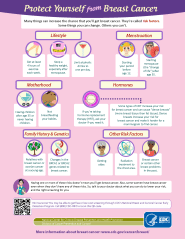
breast_cancer_infographicFor a woman to give herself the best possible chance of avoiding breast cancer, self-care is critical. According to the CDC’s infographic Protect Yourself from Breast Cancer, women can take steps to help reduce their risk for breast cancer by remembering to:

  • get at least four hours of exercise per week,
  • keep a healthy weight,
  • limit alcoholic drinks to one per day,
  • breastfeed their infants,
  • bear their children before age 35,
  • get regular mammograms,
  • perform monthly self-exams,
  • and/or make careful decisions about taking hormone replacement therapy (HRT).

In addition to having access to health care, women can improve their chances of avoiding and/or surviving breast cancer by improving their self-care, as mentioned. For more tips on getting this care, and getting the insurance and treatment to help with the care, women and their families can consult a wide variety of Federal government publications, including

Breast Cancer Screening Options

 The Guide to Clinical Preventive Services 2012: Recommendations of the U.S. Prev The Guide to Clinical Preventive Services 2012: Recommendations of the U.S. Preventive Services Task ForceThe Guide to Clinical Preventive Services 2012 provides the latest recommendations for who should get a mammogram based on various risk factors including ethnic background and family history of breast cancer, when and how to do it and at what age. It also goes into the pros and cons of various alternative forms of breast cancer screening from the most reliable film mammography to digital mammography, MRIs, Clinical breast examination and breast self-examination.

Understanding Breast Changes: a Health Guide for WomenUnderstanding Breast Changes covers a discussion of the normal breast changes over the course of a woman’s lifetime, how to get a mammogram and understand the results, how to get the support you need, a glossary and a list of resources for more research. The Healthy Woman offers more general information on getting the right kind of health care for women. The writers recognize symptoms relating to particular diseases impacting a woman’s health, and they discuss various available treatment options for those diseases.

Breast Cancer Treatment Options

Surgery Choices for Women with DCIS or Breast CancerWhen women do find that they need treatment, particularly surgery, for breast cancer or ductal carcinoma in situ (DCIS), they need to know as much about their proposed procedure as possible. An informed patient can much better participate in her own recovery, and give needed information to her surgeon, as well as provide herself with the knowledge of what is normal and what symptoms require follow-up. Surgery Choices for Women with DCIS or Breast Cancer covers those topics, and is a good starting point for a woman facing surgery for either of those conditions, when she is also consulting her care provider, surgeon, friends and family.

These highlights from these informative books may have made you realize that it’s time for you to improve your own self-care, or urge the women in your life to improve theirs. If that is so, then the best place to start is with the some public health research. You can find out more by reading the publications listed below.

FOR THE PUBLIC:

How can I obtain these breast cancer publications?

1)    The Healthy Woman: a Complete Guide for All Ages [eBook] and The Guide to Clinical Preventive Services 2012: Recommendations of the U.S. Preventive Services Task Force

  • Shop Online: You can purchase these two publications from the U.S. Government Online Bookstore at http://bookstore.gpo.gov by clicking on the links above in this blog post or shopping our collection under our Cancer category.
  • Order by Phone: Call our Customer Contact Center Monday through Friday, 8 am to 5:30 pm Eastern (except US Federal holidays). From US and Canada, call toll-free 1.866.512.1800. DC or International customers call +1.202.512.1800.
  • Visit our Retail Store: Buy a copy of any print editions from this collection at GPO’s retail bookstore at 710 North Capitol Street NW, Washington, DC 20401, open Monday–Friday, 9 a.m. to 4 p.m., except Federal holidays, Call (202) 512-0132 for information or to arrange in-store pick-up.

2)     Protect Yourself from Breast Cancer [infographic], Breast Cancer: Black Women Have Higher Death Rates From Breast Cancer Than Other Women, Understanding Breast Changes: a Health Guide for Women, and Surgery Choices for Women with DCIS or Breast Cancer.

FOR LIBRARIANS: There are records available for the electronic versions of all these works in the Catalog of Government Publications, and you can buy your own copy of  The Healthy Woman: a Complete Guide for All Ages [eBook and The Guide to Clinical Preventive Services 2012: Recommendations of the U.S. Preventive Services Task Force in the GPO Online Bookstore.

About the author(s): Adapted by Government Book Talk Editor-in-Chief and GPO Promotions & Ecommerce Manager, Michele Bartram, from an original blog post by Jennifer K. Davis from GPO’s Library Services & Content Management Division that supports the Federal Depository Libraries Program (FDLP).


Why Americans Should Care about Long-Term Care

September 27, 2013

Commission on Long-Term Care Final Report from September 2013 available from GPO.govThe Commission on Long-Term Care has formally released its Final Report to Congress in which it endorsed a package of 28 recommendations “for addressing our nation’s challenges with delivering and financing long-term care services and supports (LTSS).” Today it is also available from GPO.

Why Long Term Care is an Issue

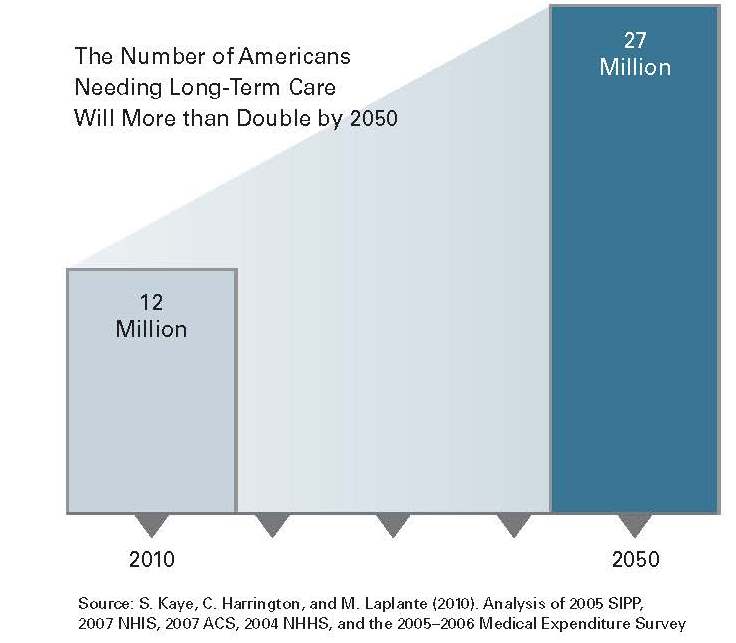
With U.S. Baby Boomers entering retirement age, every day more than 10,000 Americans reach the age of 65. In five years, over 50% of the U.S. population will be over the age of 50. As Americans live longer, more of us will need long-term care either with at-home services or nursing homes or other extended care facilities. The estimate is that over 12 million Americans need LTSS today, and 27 million will need long-term care by 2050 (see image from the Report below).

Americans-Needing-Long-Term-Care-by-2050Almost half (49%) of today’s 65 year-olds will require some kind of LTSS within 5 years, according to the report (See image below).

How-Soon-65-year-olds-will-need-Long-Term-Care from Commission on Long-term Care Final Report 2013

Finding and paying for quality long-term care is a growing challenge for most Americans, as the Commission’s report clearly demonstrates, particularly for frail older adults or people with disabilities and middle class families who do not qualify today for Government assistance like Medicaid. Likewise it is a concern for local, state and Federal lawmakers, since the report says that many people lack the necessary savings to pay for the high cost of this care along with regular health care costs, and that Medicare and Medicaid alone cannot cover the growing needs. (See our blog post Everything You Should Know About The Health Care Law for information about the new Affordable Care Act.)

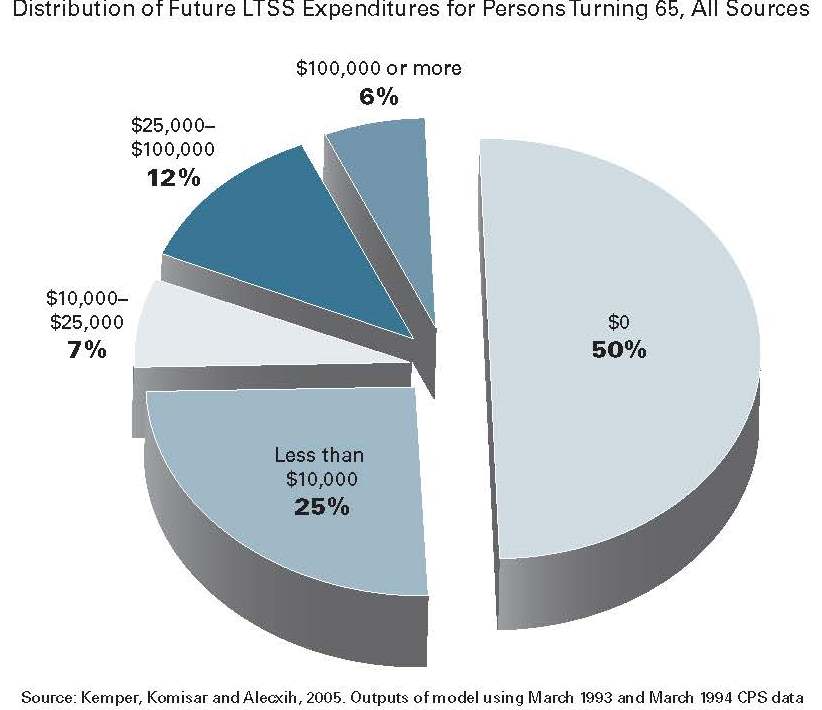
How expensive is long-term care today? The latest report from Genworth Financial estimates that middle class families would have to pay on average $18 per hour for homemaker services, $19 an hour for home healthcare aides, $3,405 a month for assisted living facilities, and around $230 a day for a room in a private nursing home. The Commission’s report calculates that 25% of today’s 65 year-olds can expect to pay from $10,000 to over $100,000 or more on long-term care services in the future! (See image below).

How-Much-65-year-olds-will-pay-for-Long-Term-Care from Commission on Long-Term Care Final Report September 2013What is the Commission on Long-Term Care?

The Commission on Long-Term Care was established under Section 643 of the American Taxpayer Relief Act of 2012 (P.L. 112-240), signed into law January 2, 2013, to be comprised of fifteen commissioners. Three members each were appointed by the President of the United States, the majority leader of the Senate, the minority leader of the Senate, the Speaker of the House of Representatives, and the minority leader of the House of Representatives.

The statute directs the Commission to:

“…develop a plan for the establishment, implementation, and financing of a comprehensive, coordinated, and high-quality system that ensures the availability of long-term services and supports for individuals in need of such services and supports, including elderly individuals, individuals with substantial cognitive or functional limitations, other individuals who require assistance to perform activities of daily living, and individuals desiring to plan for future long-term care needs.”

The statute further directed the Commission within 6 months of the appointment of Commissioners (by September 12, 2013) to:

“…vote on a comprehensive and detailed report based on the long-term care plan… [described above]… that contains any recommendations or proposals for legislative or administrative action as the Commission deems appropriate, including proposed legislative language to carry out the recommendations or proposals.”

What’s in the Report?

In the opening letter of the report addressed to the President and Congressional leaders, the Commissioners broadly explain the Report’s contents:

“Working on a bipartisan basis, the Commission adopted 28 specific public policy recommendations in service delivery, workforce, and financing that set a strong path forward for transforming systems of care to best meet people’s needs while appreciating today’s fiscal realities.”

Among the 28 measures in the report, the recommendations included:

  • Expanding use of insurance policies that combine life insurance and annuities with long-term care insurance.
  • Using a Partnership for Long-Term Care in which arrangements are made between state and private insurers to enable long-term care insurance policyholders to retain assets equal to the amount of benefits paid under their policy and still qualify for Medicaid.
  • Increasing education efforts to enhance public knowledge about long-term care options, especially given “the limitations of Medicare and Medicaid in funding [long-term care services]”
  • Recognizing caregivers as members of “care teams,” including information about caregivers in patient records, assessing caregivers’ need for support, and making services like respite care more widely available.

With five dissenting members, the Commission explains that it included “two approaches” in its Final Report about how to finance a long-term care system (LTSS) in the United States. To find out more, you should read this timely and important report.

How can you obtain a copy of this Long-Term Care report?

1) Buy a printed copy

  • Shop our Online Bookstore website: You may purchase a copy of this report online 24/7 on the U.S. Government Bookstore site.
  • Visit our Retail Store: Printed copies of this report may also be purchased from GPO’s retail bookstore at 710 North Capitol Street NW, Washington, DC 20401. Call (202) 512-0132 for information or to arrange in-store pick-up. Hours are Monday through Friday, 9 a.m. to 4 p.m., except Federal holidays.

2) View or download a PDF from GPO’s official Federal documents database, FDsys:

Download the Commission on Long-Term Care, Report to the Congress [PDF 1798 KB]

About the Author: Michele Bartram is Promotions & eCommerce Manager for GPO’s Publication and Information Sales Division and Government Book Talk Editor.


Everything You Should Know About The Health Care Law

September 24, 2013

Inside-the-affordable-care-act or Obamacare. In one week at the beginning of fiscal year 2014 on October 1, 2013, and at the start of the calendar year on January 1, 2014, the provisions of the new health care law go into effect. Image courtesy: Charlotte Area News.

The health care law, known officially as the Affordable Care Act (ACA) or  more commonly as “Obamacare” has two parts: the Patient Protection and Affordable Care Act (PPACA) (Public Law 111–148), and the Health Care and Education Reconciliation Act (Public Law 111–152 which was enacted to amend the PPACA. It was passed by Congress and signed into law by President Barack Obama on March 30, 2010.

Since that time, in the span of 42 months, the health care law has been upheld by the Supreme Court and some early provisions have already been implemented. Upon conception of the law, 2014 was marked as the year the most significant provisions of the law would go into effect.

Find information about these marketplaces for Individuals and Families or Small Businesses on the U.S. Centers for Medicare & Medicaid Services Healthcare Marketplace website, https://www.healthcare.gov/.

Image: U.S. Centers for Medicare & Medicaid Services Healthcare Marketplace website, https://www.healthcare.gov/

A week from today on October 1, 2013, open enrollment for the health insurance marketplaces begins and remains open for six months closing on March 31, 2014. Find information about these marketplaces for Individuals and Families or Small Businesses on the U.S. Centers for Medicare & Medicaid Services Healthcare Marketplace website,  https://www.healthcare.gov/. There are links to healthcare marketplace information in other languages as well:

The high profile provisions that go into effect on January 1, 2014, include:

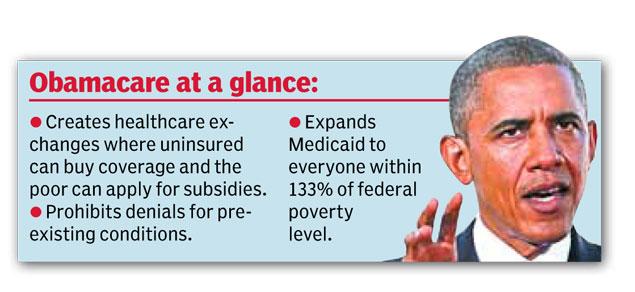
  • Coverage begins if you signed up through the health insurance marketplace
  • Protection for individuals with pre-existing conditions
  • Elimination of annual limits on insurance coverage
  • Tax credits to help pay for costs if you sign up with a health insurance marketplace
  • Expanded access to Medicaid, subject to the state you live in
  • Individual mandate if you choose not to buy health insurance

obamacare-at-a-glance-ny-daily-news

Image courtesy: New York Daily News.

This is a basic overview of the law. To fully understand the details requires further reading, and GPO is here to help. GPO makes the authentic, published version of the Patient Protection and Affordable Care Act and the Health Care and Education Reconciliation Act available to the public in print through the agency’s Online Bookstore and digitally through GPO’s Federal Digital System (FDsys). GPO also works with 1,200 libraries nationwide through the Federal Depository Library Program to have resources on the health care law available to public.

How do I obtain a copy of this Affordable Care Act (ACA)?

1) Buy a printed copy

  • Shop Online: You can purchase a printed copy of the Health Care Act containing the Patient Protection and Affordable Care Act and the Health Care and Education Reconciliation Act of 2010 from the U.S. Government Online Bookstore or by shopping our Public Health Policy & Healthcare Laws collection under our Health & Benefits category.
  • Order by Phone: Call our Customer Contact Center Monday through Friday, 8 am to 5:30 pm Eastern (except US Federal holidays). From US and Canada, call toll-free 1.866.512.1800. DC or International customers call +1.202.512.1800.
  • Visit our Retail Store: Buy a printed copy at GPO’s retail bookstore at 710 North Capitol Street NW, Washington, DC 20401, open Monday–Friday, 9 a.m. to 4 p.m., except Federal holidays, Call (202) 512-0132 for information or to arrange in-store pick-up.
  • Find it in a Library: Find this in a federal depository library.

2) View or download a PDF from GPO’s official Federal documents database, FDsys:

About the Author: Our guest blogger is Emma Wojtowicz, Public Relations Specialist in GPO’s Office of Public Affairs. Additional content provided by Government Book Talk Editor: Michele Bartram, Promotions & eCommerce Manager for GPO’s Publication and Information Sales Division.


September 11 Tales of Heroes and Tough Lessons

September 11, 2013

9-11 Decade of Remembrance Twin Towers and Pentagon Logo designed by David McKenzie at the Government Printing OfficeThere are certain moments and events that are etched in our national consciousness. Ask any American who was alive in the 60’s where he or she was when John F. Kennedy or Martin Luther King was assassinated and you will hear a stirring personal story. For our generation, it was September 11, 2001.

Image: September 11 Decade of Remembrance logo with World Trade Center Twin Towers surrounded by a figure representing the Pentagon. Created by David McKenzie with the Government Printing Office for the U.S. Government Bookstore.

I was right across from the Twin Towers twelve years ago today, getting ready to board a ferry for my daily commute from New Jersey across the Hudson River into Manhattan, when I saw the second plane hit the World Trade Center right across from me. So, too, I cried with a group of strangers as we stood on the ferry platform and watched in horror as the first tower fall, saw the dust cloud rise and felt the earth—and the world—tremble.

America and Americans have changed since that day… twelve years ago today. We have since heard stirring stories of heroes and sacrifice, and learned many grim lessons that are still affecting both policy and people today.

Many of these stories of heroism, missed opportunities, and resulting actions have been painstakingly and faithfully chronicled by a wide array of Federal agencies, ensuring the sacrifices and lessons are not forgotten.

Responding to the Tragedies

Both in New York and the Pentagon in Washington, DC, we saw how first responders and medical personnel rushed to save lives. These excellent publications tell the stories of the heroes from that day:

  • 008-000-01049-8Pentagon 9/11 (10th Anniversary Edition) (Paperback) includes a foreword by Secretary of Defense Leon Panetta and provides the most comprehensive account available of the 9/11 attack on the Pentagon and aftermath, including unprecedented details on the impact on the Pentagon building and personnel and the scope of the rescue, recovery, and care-giving effort.
  • 008-000-01048-0Attack on the Pentagon: The Medical Response to 9/11 not only tells the personal stories from medical personnel responding to the attack on the Pentagon, but also provides insight from MEDCOM officers detailed to New York to support National Guard troops guarding ground zero’s perimeter. It also includes the Army’s involvement in the recovery of deceased attack victims at the Pentagon and the work of the Armed Forces Institute of Pathology in identifying human remains at Dover Air Force Base. In addition, the roles of military and civilian hospital staffs and of military environmental health and mental health specialists in taking care of attack victims and their families are also examined.

Tough Lessons

The single must-read for every American about September 11 is the official version of The 9/11 Commission Report: Final Report of the National Commission on Terrorist Attacks Upon the United States. This publication lists the findings of the National 9/11 Commission, listing all the painful errors made leading up to the terrorist attacks and outlining specific recommendations for international, national, state and local changes in policy and procedures that the panel of experts felt needed to be implemented to ensure a similar attack never happened again. This seminal publication has served to inform all subsequent policies and legislation since 9/11. It is available in print or as an eBook.

911-commission-report

Image: Launch of the 9/11 Commission Report. Courtesy: CSMonitor.com

The Senate, Select Committee on Intelligence, and House, Permanent Select Committee on Intelligence examined the intelligence failures leading up to 9/11 and jointly published the results in United States Congressional Serial Set, Serial No. 14750: Joint Inquiry Into Intelligence Community Activity Before and After Terrorists Attacks of September 11, 2001 With Errata.

027-001-00097-1Additional insights into the causes of and responses to terrorism can be gleaned from Terrorism Research and Analysis Project (TRAP): A Collection of Research Ideas, Thoughts, and Perspectives, V. 1. This publication provides the findings from the post-9/11 FBI Terrorism Research and Analysis Project (TRAP) Symposium. TRAP is a leading research consortium made up of international/domestic academics and law enforcement officers, and is a working group sponsored by the FBI’s Behavioral Science Unit. In it, these counter-terrorism experts provide a better understanding of the causes of terrorist activity and possible government response tactics to mitigate terrorist actions.

064-000-00029-2As we watch the new World Trade Center going up in New York, we can be assured that builders are incorporating architectural and construction lessons learned from the World Trade Center Building Performance Study: Data Collection, Preliminary Observations, and Recommendations.

Policy and Legislative Response

United States Congressional Serial Set, Serial No. 14924, House Report No. 724, 9/11 Recommendations Implementation Act, Pts. 1-6 outlines the specific legislative changes enacted by Congress, providing both background and justifications for them along with attribution.

A print copy of the law itself can be purchased here: Implementing Recommendations of the 9/11 Commission Act of 2007, Public Law 110-53 along with the details of the various committee conferences contributing to it in Implementing Recommendations of the 9/11 Commission Act of 2007, Conference Report to Accompany H.R. 1, July 25, 2007.

Defending the Homeland since 9/11

041-001-00657-5National Strategy for Homeland Security (October 2007) provides the common framework outlined by the George W. Bush Administration to guides, organize and unify the United States’ homeland security efforts.

008-000-01068-4A new publication from the Air Force Reserve called Turning Point 9.11: Air Force Reserve in the 21st Century, 2001-2011 tells the story of how the Air Force Reserve responded to 9/11 and have contributed to the security of the United States in a post-September 11 world.

050-012-00440-4In a similar vein, Rogue Wave: The U.S. Coast Guard on and After 9/11 chronicles the involvement of the U.S. Coast Guard on that fateful day and the evolving role in national and world security since.  Part of the Coast Guard 9/11 response is told in this touching video about the boatlift to evacuate people from lower Manhattan is told in a video narrated by Tom Hanks entitled: BOATLIFT, An Untold Tale of 9/11 Resilience.”

A touching video about the boatlift to evacuate people from lower Manhattan on 9/11 (September 11) is told in a video narrated by Tom Hanks entitled: BOATLIFT, An Untold Tale of 9/11 Resilience. Click on the image above or this link to view the “Boatlift” video.

The upcoming U.S. Army War College Guide to National Security Issues, Volume 2: National Security Policy and Strategy provides a summarized look at the national security curriculum now taught to our nation’s top military and civilian leaders by the U.S. Army War College. Revised with the lessons learned from the years since 9/11, this publication includes a chapter on ”Securing America From Attack: The Defense Department’s Evolving Role After 9/11.”

How can I obtain these Federal 9/11 publications?

  • Shop Online: Print Editions of these 9/11-related publications may be ordered from the U.S. Government Online Bookstore at http://bookstore.gpo.gov, by clicking on the links above in this blog post or shopping our Terrorism & 9/11 History collection under our US & Military History category.
  • Order by Phone: Call our Customer Contact Center Monday through Friday, 8 am to 5:30 pm Eastern (except US Federal holidays). From US and Canada, call toll-free 1.866.512.1800. DC or International customers call +1.202.512.1800.
  • Visit our Retail Store: Buy copies of these publications at GPO’s retail bookstore at 710 North Capitol Street NW, Washington, DC 20401, open Monday–Friday, 9 a.m. to 4 p.m., except Federal holidays, Call (202) 512-0132 for information or to arrange in-store pick-up.
  • Find them in a Library: Find these publications in a federal depository library.

About the Author: Government Book Talk Editor Michele Bartram is Promotions Manager for GPO’s Publication and Information Sales Division in Washington, DC, and is responsible for online and offline marketing of the US Government Online Bookstore (http://bookstore.gpo.gov) and promoting Federal government content to the public.


Ponzimonium Revisited: An Interview from the Front Lines of the Battle against Investment Fraud

September 3, 2013

Ponzimonium: How Scam Artists Are Ripping Off America (FREE eBook from CFTC available at http://bookstore.gpo.gpo) With the recent publishing of the FREE EBOOK edition of the CFTC’s best-selling investment fraud paperback book Ponzimonium: How Scam Artists are Ripping Off America on the U.S. Government Bookstore website, Government Book Talk interviews the team behind Ponzimonium at the Commodity Futures Trading Commission (CFTC)– Commissioner Bart Chilton, Consumer Outreach Officer Michael Herndon, and Whistleblower Office (WBO) Director Christopher Ehrman– to talk about life after Ponzimonium was first published and the state of the CFTC’s battle against investment fraud.

Background: What is Ponzimonium about?

In November 2011, Government Book Talk reviewed the recently released book in Part I of this 2-part Ponzimonium blog series:

Ponzimonium: How Scam Artists are Ripping Off America introduces some of the lesser known, but equally despicable fraudsters that have been uncovered since 2008 by the CFTC and SEC (Securities and Exchange Commission).

The book lays out the fascinating and dramatic details behind the fraudulent schemes, their smooth-talking masterminds, and their many honest, hard-working victims, who often lose the money they’ve saved for their kids’ college funds, needed health care expenses, or their own retirement as a result of misplaced trust in these criminals.”

In addition to the engrossing stories of crime and consequences, Ponzimonium also includes some very useful features for consumers that make this a valuable resource for any investor to avoid getting scammed, including Red Flags of Fraud, Investor Checklist, Fraud Resources and a Glossary of Terms, among others.  To learn about how a Ponzi scheme works and more details of the book, read our Part I blog post.

Reaction to Ponzimonium

Government Book Talk: Commissioner Chilton, now that it’s been two years since Ponzimonium first came out, what has been the reaction to the publication?    

Commodity Futures Trading Commission (CFTC) Commissioner Bart ChiltonCommissioner Chilton: It’s been great! The media has helped to get the word out about how folks need to be cautious.  A lot of times, in conjunction with a speech, the organizers will provide copies to their participants.  I get all sorts of positive feedback from people and schools are using it as well.  But, most importantly, I receive letters and emails all the time from folks who, because of this book, avoided making a major misstep.  Some have questioned their investment choices and saved themselves and their families a lot of agony.

GOVBOOKTALK: What are you most proud of with Ponzimonium?

Chilton:  I’m most proud that we created something totally different for the Government with this book. Ponzimonium is about real life Ponzi scams that is told in an engaging way and it’s actually helping people avoid becoming a victim of a financial fraud.  It’s more than just another spiffy web site, or a brochure.  Those things are great and necessary too, but Ponzimonium is a value-added education tool which never existed before.  It’s a new and needed tool in our education and outreach arsenal.

GOVBOOKTALK: Any examples of how consumers or others are using Ponzimonium?

Chilton: In addition to consumers who have printed it off or purchased it in print  and now are downloading it for free as an eBook from the GPO bookstore, we have many professors who are using Ponzimonium as a supplemental teaching text.  The book has been used at Georgetown University, the University of Chicago, New York Law School, Rice University, Notre Dame, Northwestern, Washington University in St. Louis, the University of Delaware, Cornell and several other colleges and universities, not to mention many high schools. 

If you would like copies of Ponzimonium for educational purposes, please contact our outreach office at consumers@cftc.gov.

Also, we just started offering Ponzimonium to public libraries and have had an excellent response.  Some are even providing extra copies of it to patrons in addition to keeping one in their permanent collection.  Our Office of Consumer Outreach is continuing to explore ways to get the book and its message out to the public.

Current Status of Investment Fraud in the U.S.

GOVBOOKTALK: Michael, do you believe the amount of fraud is increasing and if so, why?

Michael Herndon, Consumer Outreach Officer, Commodity Futures Trading CommissionMichael Herndon, Consumer Outreach Officer for the CFTCFederal, state and local law enforcement officials have reported enormous increases in tips and criminal activity since the economy tanked in 2008, and are still witnessing historic levels of these scams today.  At any one time, enforcement staff at the U.S. Commodity Futures Trading Commission (CFTC) are investigating anywhere between 750 and 1,000 individuals and entities for various violations of the law. 

Increases in tips and fraud cases have also occurred at the U.S. Securities and Exchange Commission (SEC), at the Federal Bureau of Investigation (FBI), in the states, and in various localities around the world.

Advice to Consumers on Avoiding Investment Fraud

GovBookTalk: What are some common con artist tactics to watch out for?

Herndon, Consumer Outreach Officer for the CFTC: Con artists, especially in investment/trading frauds, use a lot of tactics that seem obvious after the fact, but work at getting someone to fall for their scam. They include:

* “Easy Money”—dangling the prospect of quick riches and enticing you with the high returns you want but can’t find elsewhere.

* “Credibility”—trying to build credibility by claiming to be with a reputable firm, have a special credential, or possess lots of experience.

* “Social Consensus”—leading you to believe that other savvy investors have already invested.

* “Tradeoff”—offering to do a small favor for you in return for a big favor, like take you to lunch and then ask you to invest with them.

* “Scarcity”—creating a false sense of urgency by claiming limited supply or time limit of the investment.

GovBookTalk: Any additional advice to consumers not included in the original book?

Herndon: Report fraud! We know that falling for a fraud is painful and can be financially devastating. Yet so many people don’t report fraud that’s happened to them for a variety of reasons including shame and a sense there’s no point in trying to get their money back. However, there are several financial benefits of reporting fraud including tax implications and possible restitution.

And I always like to remind people, for fraudsters, ripping people off is their job and sadly they are very good at it. There’s no shame in making a mistake to someone who is that good.

GovBookTalk: If a consumer suspects something “fishy” with a proposed investment, how does he check it out? What is the process s/he should follow? Whom should they contact?

Herndon: If a consumer suspects something fishy, there’s VERY good reason for that usually. You’d be surprised how many people think something is odd about a deal, yet go ahead with it. That gut feeling often proves to be correct. As for checking it out, there are a few simple things consumer should ALWAYS do, no matter the profession.

First, check with an independent government agency or authority about the person or business. If you ask someone, “Are you legitimate?” of course they will tell you yes, and that their registered as they need to be. However, with a few quick phone calls or internet searches you can find out for yourself.

For individuals under CFTC jurisdiction, consumers can find information on the National Futures Association’s Background Affiliation Status Information Center database (BASIC).

For other investments, you can research brokers, brokerage firms, investment advisers and firms with this free tool from the Financial Industry Regulatory Authority, FINRA’s BrokerCheck. Also, just a simple call to see if the person has a business license or even searching their name on an internet search engine can help.

 My advice is always consult THREE independent sources for background information before you invest, or conduct any financial transaction for that matter.

GovBookTalk: Thanks, Michael, this is great advice for our readers and their friends and families!

FINRA_broker_checkImage: FINRA’s website with link to Broker Check:
http://www.finra.org/Investors/ToolsCalculators/BrokerCheck/

How and Why to Blow the Whistle

GovBookTalk: Christopher, what about a whistleblower in a company that suspects something illicit is going on?  How should s/he report his/her suspicions and why?

Christopher Ehrman, Director, Whistleblower Office (WBO): The person is encouraged to report the information to the CFTC’s Whistleblower Office. The office was created to receive and process original information from individuals who voluntarily report potential violations of the Commodity Exchange Act.  The program provides monetary awards if the CFTC brings an action, based on that information, resulting in more than $1 million.

If the person chooses to report internally first, their information will be deemed to be submitted to us on the date they reported it internally if they also report it to us within 120 days of that date.  Under these circumstances, we will consider their place in line for determining whether the information is “original information” to be the date they reported it internally. Also, the fact that the whistleblower reported their information internally, and the extent to which they helped their company uncover a violation, will be considered as factors that may increase the size of any award that they are eligible to receive.

However, please note that a whistleblower is not required to report internally to be eligible for a whistleblower award, and they may submit their information directly to us at any time. 

For a more detailed overview of the CFTC Investment Fraud Whistleblower program and how to contact the office, please visit http://www.cftc.gov/ConsumerProtection/WhistleblowerProgram/index.htm.

Government Book Talk: Thank you, Christopher. Hopefully, those who have knowledge of a known or suspected fraud going on will get in touch with your office and prevent these despicable criminals from devastating more lives. Which brings me to my last question.

Michael, speaking of “these despicable criminals”, inquiring minds wish to know if there are any updates on the perpetrators listed in the original Ponzimonium book?

Michael Herndon: Yes, in the reprint of the book– due later this year– we are including updates to two of the cases, Chapters 3 and 10. Stay tuned…

GovBookTalk: We– and America– can’t wait! Thanks again to all of you at the Commodity Futures Trading Commission and for all you do to help honest investors.

How can you get a copy of Ponzimonium?

With this special offer, the GPO best-selling book on Ponzi schemes and other investment frauds and how to avoid them, Ponzimonium: How Scam Artists Are Ripping Off America, is now AVAILABLE FOR FREE as an eBook from the CFTC on the US Government Bookstore website.

Download the FREE Ponzimonium eBook in these formats:

About the Author: Government Book Talk Editor Michele Bartram is Promotions Manager for GPO’s Publication and Information Sales Division in Washington, DC, and is responsible for online and offline marketing of the US Government Online Bookstore (http://bookstore.gpo.gov) and promoting Federal government content to the public.


Code Talkers to Better Walkers: How American Indians Have Helped Fight Wars and Obesity

August 21, 2013

In honor of Navajo Code Talkers Day this past week on August 14, Government Book Talk explores some Federal publications that utilize American Indian traditions and culture to combat serious problems of the past and present.

Native Code Talkers in World War I

“Code talkers” became the term used to describe Native American soldiers from various Indian tribes who communicated on radios, telephones and telegraph during World Wars I and II. They spoke in their own languages and dialects, all of which were indecipherable by enemy forces. Because few non-Indians knew these difficult native languages, which in many cases had no written form, they provided ideal codes for relaying secret operational orders.

WWI-Choctaw-Code-Talkers-w-FlagImage: The Choctaw Code Talkers enlisted in the U.S. Army in World War I even though their lack of citizenship exempted them from the draft. (U.S. Army photo)

In France during World War I, the 142nd Infantry Regiment, 36th Division, had a company of Indians who spoke 26 languages and dialects. Two Indian officers were selected to supervise a communications system staffed by 18 Choctaw. The team transmitted messages relating to troop movements and their own tactical plans in their native tongue. They helped the American Expeditionary Force win several key battles in the Meuse-Argonne Campaign in France, the final big German push of the war.

Soldiers from other tribes, including the Cheyenne, Comanche, Cherokee, Osage and Yankton Sioux also were enlisted to communicate as code talkers. Previous to their arrival in France, the Germans had broken every American code used, resulting in the deaths of many Soldiers. However, the German Army— which captured about one out of four messengers—never broke the Indians’ “code.”

More Native Code Talkers are Used in World War II

After the United States entered World War II in December 1941, more Armed Forces used code talking units with each unit composed of members of a specific American Indian tribe.

Navajo Code Talkers

The United States Marines recruited several hundred Navajos for duty in the Pacific region. The Marines chose these Navajos for their ability to speak their native language, Diné bizaad (Navajo), for code talking.

Philip Johnston, a son of missionaries who had grown up on the Navajo reservation, originally recommended Navajo to the Marines as a language well suited for cryptology. In a memo to the Commandant of the Marine Corps in early 1942, Navajo was declared uniquely suited to succeed more than some other languages proposed for use. At that time, most Navajos were fluent in their native language. The Marines were lucky; in 1942 only an estimated 28 non-Navajo Americans could speak the extremely difficult Navajo language!

Hitler had heard of the possibility of using Native American languages for codes prior to the United States’ entry into the war, and had sent a number of German anthropologists to the United States prior to WWII to learn Native American languages. Navajo was reportedly the only language the German anthropologists had yet to learn. Navajo also benefited by being so unlike other Native American languages that there was no language similar to it. If you’re fluent in Spanish, you might be able to muddle along in Portuguese after some basic lessons. Navajo has no analog.

Navajo-Code-Talkers-in-JungleIn May 1942, the first Navajo recruits attended boot camp; they then moved to Camp Pendleton in Oceanside, California, to create the Navajo Code Talkers Dictionary. The Marines trained approximately 400 Navajos as code talkers. To relay the messages they were encoding, they had to learn to operate three types of radios. At that time the code talkers called themselves “radiomen”.

The developers of the Navajo code modeled the alphabet portion on the Joint Army/Navy Phonetic Alphabet. That alphabet uses words to represent letters, e.g., Fox for the letter F. In the Navajo code, Ne-Ahs-Jah is Navajo for Owl, which stood for the letter O. To spell the word Navy, the code talker might say, “Tsah (Needle, or N), Wol-La-Chee (Ant, or A), A-Keh-Di-Glini (Victor, or V), Tsah-As-Zih (Yucca, or Y)”.

The Navajo Marines also chose Navajo words to represent about 450 frequently used terms in the military. It was hard. According to code talker Wilfred Billey, “one of the most difficult parts of forming the Navajo code was using it to relay precise information, such as coordinates or troop movements because several words in the Navajo language have various meanings” (May 22, 2003, “Navajo Code Talker Continues Oral Tradition”, Marine Core Logistics Base Albany).

Some of the choices were very creative. Navajo is a classic language that didn’t originally include terms like “tank”, so the Navajo Marines dubbed it “Chay-Da-Gahi”, or tortoise. The Navajo Code Talkers Dictionary, published by the Navy years later after it was declassified, showed the versatility of the code’s creators. The code was so effective in World War 2, it was also used in the Korean War, being phased out before Vietnam.

In fact, at Iwo Jima, Major Howard Connor, 5th Marine Division signal officer, declared, ‘Were it not for the Navajos, the Marines would never have taken Iwo Jima’” (Navajo Code Talkers: WWII Fact Sheet). During that battle alone, the radiomen transmitted 800 messages without error.

Comanche, Sioux and Hopi Code Talkers for the Army

Although the Navajo tribe is the one most remembered for its contributions to the World War II communications code units, the US military also used Basque, Comanche, Sioux, Hopi and a number of other American Indian languages as code languages. Basque was rarely used because there were native Basque speakers in Europe which made the U.S. military wary of using it more widely.  However, because the various Army units of Code Talkers were so secret, their very existence was kept classified until the 1970s or later.

American-Indian-Code-Talkers-LanguagesImage: List of American Indian Code Talkers’ languages and the numbers of tribal members who served, if known. There were at least two Code Talkers from each tribe. Source: National Museum of the American Indian’s website.

Army-Signal-Corps_9780160453519The US Army’s Signal Corps is the military branch that develops, tests, provides, and manages communications and information systems support for the command and control of combined US Armed Forces, including code talkers. You can read the history of the Army Signal Corps in Getting the Message Through: A Branch History of the U.S. Army Signal Corps.

The US Army’s 4th Signal Company, also known as the Code Talkers, used seventeen Comanche Code Talkers. Like the Choctaws of World War I, and the Navajos in the Pacific Theater, the Comanche Code Talkers used their native language to prevent the enemies of the European Theater from intercepting messages of the allied troops during World War II. The unit was instrumental during the Normandy invasion.

Sioux code talkers, composed of Lakota, Dakota, and Nakota native soldiers or “L.D.N.’s”, spoke their native “dialects” (languages) which were understood by each native soldier in the unit. On December 19, 2000, Congressman John Thune said of the Sioux code talkers’ contribution:

“It is important for us to honor these veterans whose contributions have, until recently, been ignored. Often sent out on their own to provide communications with headquarters on enemy location and strength, they sometimes spent 24 hours in headphones without sleep or food. Many endured terrible conditions without protection from the enemy. Using three Sioux languages Lakota, Nakota and Dakota, the Sioux Code Talkers were able to communicate messages the enemy was unable to crack.”

The Hopi tribe also helped in the communications coding efforts. Eleven Hopi men developed a highly secret code language which they used to assist US Army intelligence in the Marshall Islands, New Caledonia and the Philippines during the Second World War. Again, because of the super top-secret nature of their work for Army Intelligence, the Hopi Code Talkers’ contribution was not officially recognized until April 26, 2012, on the inaugural Hopi Code Talkers Recognition Day.

Applying American Indian Traditions to the War against Obesity

The United States Government continues to utilize Native American language and traditions to solve important problems of the day. For example, with the public health issue of childhood obesity and diabetes rising to dangerous levels in the US, the Department of Health and Human Services Centers for Disease Control and Prevention (CDC) Native Diabetes Wellness Program (Wellness Program) and the Indian Health Service (IHS) Division of Diabetes Treatment and Prevention recently teamed up with the Tribal Leaders Diabetes Committee (TLDC) to produce the award-winning Eagle Book series.

The developers of this series realized that the old, traditional American Indian diet and activity levels were in line with today’s medical recommendations to eat less processed food and more fruits and vegetables as well as exercising more. Thus, they worked with Native groups to incorporate traditional American Indian story-telling techniques and themes to promote increased physical activity such as walking and playing as well as making healthier—and more natural—food choices to reduce obesity and prevent diabetes.

Coyote-and-the-Turtles'-Dream-9780160913174 Preventing childhood obesity and diabetesThe common Native American theme of the tortoise/ turtle used by the American Indian code talkers resurfaces in the newest book in the series, Coyote and the Turtle’s Dream.  In this middle school-age mystery/ adventure book, the wise elderly box turtle helps the mischievous Coyote and the Indian reservation town’s residents solve a mystery to foil the plans of a fossil poacher while teaching the underlying message about healthy eating and increased physical activity.

With the first four books aimed at elementary schoolers– Through the Eyes of the Eagle, Knees Lifted High, Plate Full of Color, and Tricky Treats and the next book for middle schoolers– Coyote and the Turtle’s Dream— the Eagle Book series has been snapped up by teachers, nutritionists, librarians, parents and children’s health providers all over the country as an effective tool to teach children about healthier eating habits and increasing activity while also instilling an appreciation for Native culture which extols respect for elders and living in harmony with nature.

You can read more about the Eagle Book series on our Government Book Talk blog post entitled: “Native Traditions Help Kids Unplug, Read and Be Healthy.”

How Can I Obtain These Publications?

EBOOKS:

PRINT EDITIONS:

About the author(s): Adapted by Government Book Talk Editor-in-Chief and GPO Promotions & Ecommerce Manager, Michele Bartram, from an original blog post by Jennifer K. Davis from GPO’s Library Services & Content Management Division that supports the Federal Depository Libraries Program (FDLP).


No-Vacation Nation? Take Time to Enjoy Our National Parks and Trails

August 13, 2013

Vacation-Time-Goes-Unused-in-USAmericans are generally extroverted, friendly, talkative—and apparently, workaholics. As the Europeans put it, Americans live to work, while they work to live.

Image source: From infographic on lack of vacation time in U.S. Produced by Column Five for Rasmussen College.

Studies by various travel companies and polling groups have shown that Americans are among the group of nationalities that take the least amount of vacation (others being the Japanese, Taiwanese, South Koreans, Singaporeans, and Mexicans). Part of the reason may be that the United States is the only developed nation in the world that does not guarantee any paid holidays for workers by law. The U.S. Bureau of Labor Statistics concluded in a recent report that only seventy-two percent of wage earners in the United States received both holidays and paid vacations voluntarily granted by their employers. The rest of the employed population does not get paid vacation.

It’s unfortunate that Americans regularly skip using all their allotted vacation days*. [*See also: Schwartz, Tony (February 10, 2013). “Relax! You’ll Be More ProductiveThe New York Times.] Surveys of people in the U.S. report that they do not feel their bosses support taking leave, and they fear that being away from work looks like they are not committed to their jobs. Understandably, workers are afraid to look less than absolutely dedicated in this job market. Looking at our lack of vacation days and our failure to take advantage of them, one could conclude that we are not a well-rested people.

????????????????????????????????

Image: December 2012 infographic on why Americans don’t take more vacation time. Created by: Ally Bank from various public sources.

However, health researchers, sleep researchers, and psychologists have found that there is a direct correlation between rest and good health, and rest and productivity. Taking your vacation is almost a tonic against occupational stress.

Stop and Smell the Roses at a National Park or Trail

National Park System Map and Guide  ISBN: 9780912627878 available from http://bookstore.gpo.govIf you do get a paid vacation and have been putting off your annual jaunt, it’s time to sit down and plan one before summer ends. Many Federal Government agencies offer great resources for planning your next vacation or recreational activity.

For example, three excellent publications from the National Park Service– National Trails System: Map and Guide, National Park System Map and Guide, and the National Park System (Wall Map Poster) — can aid you in planning your trip to America’s best vacation destinations, our national parks and trails!

While most Americans are familiar with our fabulous national parks, fewer are aware of our 45 year-old National Trails System which is…

National Trails System Map and Guide“…the network of scenic, historic, and recreation trails created by the National Trails System Act of 1968. These trails provide for outdoor recreation needs, promote the enjoyment, appreciation, and preservation of open-air, outdoor areas and historic resources, and encourage public access and citizen involvement.” (National Park Service)

With the help of these National Park Service maps, you can hike interesting trails and learn history while you are appreciating the outdoors and getting a workout. Or you can pick a national park you’ve never visited before, and experience something new to spur your creativity. If you enjoy visiting cities, pick a park not far outside of town so that you could get a taste of nature in addition to some cultural experiences.

For example, the Washington, DC, area where the Government Printing Office is headquartered is a prime tourist and staycation destination with its many national parks and historic sites. Our Washington DC Area Tourism & Recreation collection includes maps, history and guidebooks about the area, including the new 2013 Washington DC tourism map by the National Park Service that includes all the newest monuments and museums. and the wonderful Capital Engineers: The U.S. Army Corps of Engineers and the Development of Washington, D.C. 1790-2004, (reviewed earlier on Government Book Talk blog) that tells “The Untold Story Behind the Engineering of Washington DC” and its many famous landmarks.

Once you pick a park, search the Web site recreation.gov to find the activities available there. If you look at the National Park system map and find yourself spoiled for choice, you may be able to narrow down your options when you discover the types of activities available at the parks. And if you are interested in vacationing in a city or a resort, but want to hit a nearby recreation center, you can search for alternatives just by entering a city or zip code. For example, if you plan to visit Las Vegas, but you’d like some time to enjoy rock climbing, too, you might rent a car for the day and drive to Red Rock Canyon National Conservation Area, 12.57 miles from the city center. Most of the National Parks have guidebooks available to help you plan your trip: a number of them are available for sale from the U.S. Government Bookstore.

Of course, the money and time needed for a vacation are no joke. You may be one of the unlucky 28% that does not get a paid vacation. Or getting time off work may just be impossible. If any one of those factors applies to you, try a weekend getaway someplace nearby instead. The National Park Service has suggestions for quick breaks or “staycations” all the country. Once you’ve selected a site, you can fine-tune your plans with the information about reservations and camping available at recreation.gov.

Support for Your Pursuit of Happiness

As our nation has declared the pursuit of happiness a self-evident truth and an inalienable right, it seems we have a patriotic duty to pursue a holiday. The Federal government definitely supports your vacation. After all, each one of our modern presidents has set a prime example for the people by taking vacations to better handle the rigors of the job. As President Nixon put it: “Like other presidents, before and after me, I felt the need to get out of the White House and out of Washington in order to keep some sense of perception.”

Obamas-at-Grand-CanyonImage: U.S. President Barack Obama and family vacationing at the Grand Canyon National Park in August 2009. Source: White House. 

How can the public find these tourism and recreation maps and guidebooks?

How can Federal Depository librarians access these publications?

  • Find the records for these titles via the cataloging records in GPO’s Catalog of Government Publication or CGP.
  • Find them in a federal depository library.

About the author(s): Adapted from an original article on the FDLP Community Blog by Jennifer K. Davis from GPO’s Library Services & Content Management Division that supports the Federal Depository Libraries Program (FDLP). Editor and additional content by: Government Book Talk Editor-in-Chief and , GPO Promotions & Ecommerce Manager, Michele Bartram.


Parent Power: The Power to Make a Difference

July 25, 2013

In honor of National Parents’ Day, celebrated the fourth Sunday of July, Government Book Talk reviews this exemplary parenting guide from the Department of Education, Parent Power: Build the Bridge to Success.

parentpower The opening of the Department of Education’s Parent Power: Build the Bridge to Success is a quote from President Obama made in July 2009:

“To parents, we can’t tell our kids to do well in school and then fail to support them when they get home. You can’t just contract out parenting. For our kids to excel, we have to accept our responsibility to help them learn.”

PoderdelosPadresThe book’s introduction sets the reader up to learn the most important tip given in Parent Power and its Spanish version, Poder De Los Padres Para Trazar el Camino Hacia el Exito, This tip is simple to state, but hard work to follow: be responsible. Your responsibility for your child’s education begins with modeling at home. If your kids see you reading, they will want to read. If you drag your kid to every Civil War battle site because you are a Civil War buff, your child may ace his or her American history exams. When you volunteer at your child’s school, your kids are going to see how important their education is to you.

Other tips covered in the book include: be committed, be positive, be patient, be attentive, be precise, be diligent, be results-oriented, be innovative. These tips are good calls to action for parents. Parents are already tired from their jobs, long commuting hours, keeping their living spaces clean and finding a way to feed the family. Just managing the basic tasks of daily survival can take up all their time. When your child throws a temper tantrum because you’ve sent her to her room to do her homework rather than watch her favorite TV show, it’s tough to practice that “be patient” tip. Good parenting demands more effort than managing basic survival.

Likewise, it takes a great deal of work to follow the other tips, such as remembering to be innovative and to provide positive feedback. It’s more constructive for parents to be precise when praising their children. Instead of telling your child she is smart for completing a drawing, you should tell the child how much you appreciate her making the effort to color the Canadian flag with the right colors in the right places. Parents will evaluate many of their children’s performances, and it will take quite a bit of creativity to say “good job!” in a different way every time. The last tip given in all bold case letters, BE THERE, is a restatement of the popular saying, the best present parents can give their kids is their presence.

The book does give specific suggestions, listed by school age group: birth through preschool, elementary, middle and high school.

Parent Power_Page12Image:Parent Power, Page 12, recommends activities for Pre-Schoolers and Kindergarteners.

The authors recommend a large number of parent-child and pro-school activities. Some examples are reading aloud to your child each day starting at birth, taking your child to the library, playing games with your child, contacting his or her teachers, visiting his or her school. Many parental advice volumes contain advice that may not be revolutionary, but may break parents out of a rut that they had not previously considered. There is also a list of electronic resources to help parents research further. Hints and tips are a parent’s best friend when guiding a child through the various developmental stages.

If you’re doing the fun but difficult work of raising a child, help yourself to Parent Power: Build the Bridge to Success and/or Poder de los Padres: Para Trazar el Camino Hacia el Éxito. Get the hints and tips you need to encourage you. Children do not simply inherit their characters from their parents like magic. Parents are the driving force in their children’s lives, both by example and character—and that’s the power of parents. 

How can I find parenting publications from the Federal Government?

Federal Depository Librarians: How can I access these publications?

About the author(s): Our guest blogger is Jennifer K. Davis from GPO’s Library Services & Content Management Division that supports the Federal Depository Libraries Program (FDLP). Editor: Government Book Talk Editor-in-Chief and , GPO Promotions & Ecommerce Manager, Michele Bartram.


You Scream, I Scream for National Ice Cream Month

July 15, 2013

fruit-sorbetIce cream, long beloved by Americans, has a long, even pre-colonial history in the Americas. Some of my Mexican friends have told me that the Aztec emperor Moctezuma (popularly referred to today as Montezuma) had servants climb the snow-capped volcanic mountains for snow to mix with fruit juices as a hot-weather treat.

Image: Could this have been how the Aztec emperor was served his favorite icy dessert made of and served in natural fruit? Source. Cool Stuff Sorbet.

The United States got in on the game early, too. In 1744 Barbara Janssen Bladen, daughter of Lord Baltimore and wife of Proprietary Colonial Governor of Maryland Sir Thomas Bladen, first served ice cream in the American colonies. Ice cream, at that time, was a fashion of the well-heeled.

Williamsburg-Ice-Cream-MakingClick image to watch this Colonial Williamsburg, Virginia, video of how ice cream was made during the colonial era.

The French connectionjeffersonicecream

The sweet treat did not become popular in this country until after the American Revolution, when the Americans had continued contact with the French.

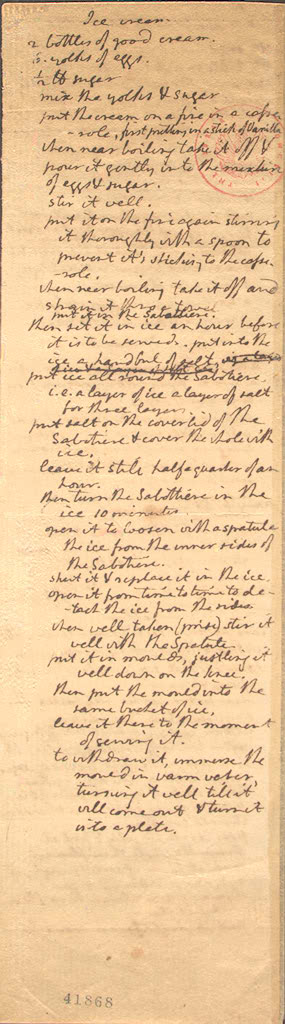
Thomas Jefferson learned how to make ice cream during his tenure in Paris as the United States’ Ambassador to France. He collected many recipes while in France, but ice cream was one of his favorites. In fact, the Library of Congress possesses a copy of a recipe for vanilla ice cream used by Thomas Jefferson written in Jefferson’s own hand.

Many visitors to Monticello, Jefferson’s home in Virginia, recorded enjoying ice cream during their meals there, probably fueling the dessert’s increasing national popularity.

Monticello-Garden-PartyImage: Monticello summer garden party where ice cream was sure to be served. Photo Credit: Jacob J. Gayer, National Geographic, December 1928

Ice cream gets added to the American “melting pot”

Americans’ fondness for ice cream has only increased over the years. Mary Todd Lincoln held berry parties which featured seasonal strawberries and ice cream served on the side.

An American named Abe Doumar is attributed by some as creating the first ice cream cone on July 23, 1904, at the World’s Fair at St. Louis, because the vendor ran out of ice cream dishes to use to serve it and resorted to rolled-up thin waffles. Having a cool container to keep our sweet treats in has certainly helped with our consumption of it.

Ice-cream-cones-Chicago-Worlds-fair

Image: Children and their mother enjoying the new sensation of ice cream cones at the 1904 St. Louis Exposition. Source: Aworldaffair blog.

According to the National Agriculture Statistics Service’s monthly publication Dairy Products, Americans consumed 163,544 pounds of ice cream (that’s hard and soft, full fat and low-fat combined) in May 2013.  It seems like we just can’t get enough of the sweet stuff.

I do declare…  It’s National Ice Cream Month

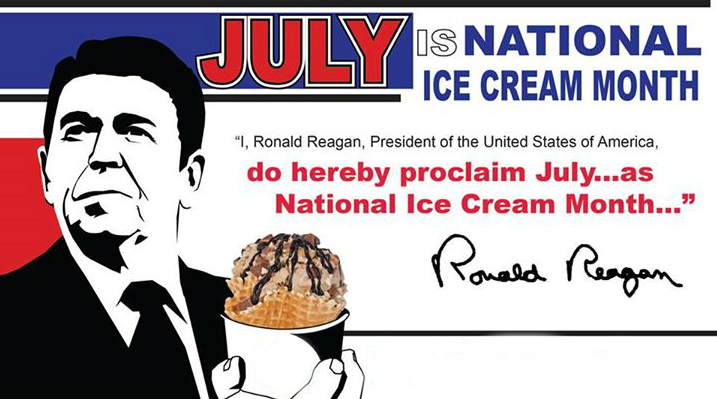
Ice cream is such a national institution that Congress passed a Joint Resolution favoring President Reagan’s declaration of July 15, 1984, as National Ice Cream Day and July as National Ice Cream Month. Presidential ice cream promotion continues to the present day.

Reagan-ice-cream-proclamation

Image: President Ronald Reagan conceived of National Ice Cream Month. Source: SubZero Ice Cream & Yogurt.

The Senate Inauguration Committee provided the recipe for the sour cream ice cream the White House chefs served at President Obama’s second inauguration. Whether it’s a result of the presidential lead, or simply ice cream’s yummy factor, hungry Americans and the dairy industry continue to celebrate every July as National Ice Cream Month.

Get the scoop and read all about ice cream

If you want to read more about American ice cream production, you can check out the aforementioned Dairy Products title, which reviews American dairy production, including all types of ice cream and frozen yogurt. Find the details of the American ice cream industry in 1997 Economic Census. Manufacturing. Industry series. Ice cream and frozen dessert manufacturing. To do some research about the history of ice cream in America, read some of the many excellent books and electronic resources recommended in this Library of Congress pathfinder.

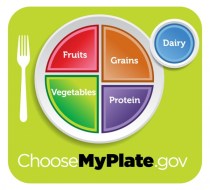
choosemyplateAfter all that consumption of ice cream related knowledge (and hopefully, some ice cream), you may find yourself worried about fitting into your trousers. Pick up a poster from the GPO Bookstore of What’s on Your Plate?: Choose My Plate  or Que Hay en Su Plato?: Mi Plato. They’ll inspire you to maintain your dietary goals of keeping healthy foods in balance with rich indulgences, such as ice cream.
quehayensuplatoI’m ready to get a copy of the poster for my office to keep my ice cream fixation in check. But first, if you’ll excuse me, it’s a hot summer day –I have an appointment with a double-scoop cone of Fear the Turtle.

How can I obtain these ice cream-related publications?

Federal Depository Librarians: You can find Dairy Products, Ice Cream and Frozen Dessert Manufacturing, and What’s On Your Plate? at your local Federal Depository library via the cataloging records in GPO’s Catalog of Government Publications, or buy them at the GPO Bookstore. You’re likely to find yourself hungry.

*Source: Davidson, Alan. The Oxford Companion to Food. Oxford, Oxford University Press, c1999.

About the author(s): Our guest blogger is Jennifer K. Davis from GPO’s Library Services & Content Management Division that supports the Federal Depository Libraries Program (FDLP). Additional content provided by Government Book Talk Editor-in-Chief and , GPO Promotions & Ecommerce Manager, Michele Bartram.


Radio 101: Operating Two-Way Radios Every Day and in Emergencies

July 10, 2013

When-all-else-fails-amateur-radioTwo-way radio communication may seem like a thing of the past with smart phones and the availability of more advanced technology. However, with the recent frequency of natural disasters, storms, and other emergency situations, more attention is being paid to radios as a reliable form of communication and a possible back-up communication option, including amateur radio operators.

Image courtesy: Decatur County Amateur Radio Club

For example, the Times of India reports that the recent monsoon flooding disaster in the northern India state of Uttarakhand in July 2013 has prompted officials in other flood-prone regions to establish Amateur Radio facilities to provide emergency communication.

What are two-way radios and how do they work?

Two-way-radioImage: Amateur radio equipment. Image courtesy of the American Radio Relay League.

According to Wikipedia,

A two-way radio is a radio that can both transmit and receive (a transceiver), unlike a broadcast receiver which only receives content. A two-way radio (transceiver) allows the operator to have a conversation with other similar radios operating on the same radio frequency (channel).

Two-way radios are available in mobile, stationary base and hand-held portable configurations. Hand-held radios are often called walkie-talkies or handie-talkies.

Radio 101

9780160910012A recent training publication produced by the Department of Health and Human Services, Centers for Disease Control and Prevention and the National Institute for Occupational Safety and Health called Radio 101: Operating Two-Way Radios Every Day and in Emergencies provides training materials on how to operate two-way radios. Included are an instructor’s guide, a DVD with a power point presentation and a student handbook. These training materials practice what they preach, in that they are brief, straightforward and concise– just as two-way radio conversations need to be.

While many of the scenarios used throughout the training materials apply to miners and situations where miners would need to use two-way radios, the information is generic enough that it is applicable to any emergency.

Two-way Tips

The information provided in the training materials seems like common sense, but there are a few important tips to consider when using two-way radio communication in an emergency situation:

  • Less is more. Be brief and efficient; know what you are going to say before using the radio so you do not tie up the channel while you are thinking of what to say.
  • Don’t mind your manners.  It is not necessary to be polite, saying “please” and “thank you.”
  • Repetition rocks. Repeat back information you receive to confirm that you heard the correct information.
  • No privacy policy. Be aware that conversations are not private on these open channels and may be heard by others picking up your frequency. However, this downside is a big plus in emergency broadcasts and SOS situations where the operator wants as many people possible to be listening in to be able to pick up and relay his message.

License to Help

To operate an amateur two-way radio in the United States requires taking a test and obtaining a license from the FCC (Federal Communications Commission). The American Radio Relay League (ARRL) is the national association for amateur radio (also called ham radio with operators being called “hams”) in the US and “provides hams and non-hams the resources to learn, get licensed, and help others on the air.

Amateur-Radio-Emergency-ServiceAlready have your amateur radio license and want to help your community? Check out the ARRL’s Public Service page for training, resources, manuals and more. The Amateur Radio Emergency Service (ARES) consists of licensed amateurs who have voluntarily registered their qualifications and equipment for communications duty in the public service when disaster strikes.

Recently, the American Radio Relay League hosted their national Field Day where amateur radio clubs across the country gathered locally to test their radio equipment and practice communication strategies in the event of an emergency. Learn more about Field Day.

Rules of the Radio

Together with the Radio 101 training guide, two-way radio operators who want to learn the “rules of the radio” often buy the latest United States Frequency Allocations: The Radio Spectrum Chart (shown below). This poster shows through color codes the parts of the radio spectrum that are allocated to each type of radio service, including amateur (ham) radio, commercial radio and television broadcasting, radio navigation, mobile, satellite, and others.

9780160908958Finally, the definitive sources of radio regulations, frequencies and procedures can be found in the Manual of Regulations and Procedures for Federal Radio Frequency Management and the Code of Federal Regulations Title 47 (FCC Rules and Regulations).

It is important to be prepared in any situation and not rely on only one form of communication. Thus, it is comforting to know that amateur radio operators are working on behalf of their communities to help during emergency situations.

HOW DO I OBTAIN these radio-related publications?

About the Authors: Our guest blogger is Emma Wojtowicz, Public Relations Specialist in GPO’s Office of Public Affairs. Additional content was provided by Government Book Talk Editor Michele Bartram, Promotions & eCommerce Manager for GPO’s Publication and Information Sales Division.


Top Health Issues for LGBT Populations

June 21, 2013

Attendee-DC-Capital-Pride-Festival-2013-in-Washington-DCLast Saturday night, I was riding the metro, and my train car was completely full of revelers from the Capital Pride Parade. Most of parade-goers had festooned themselves in rainbow-colored beads, crayon boxes and feathers. It’s hard to imagine such an out-there event happening when I was a kid. It’s equally hard to imagine the Federal government producing this document twenty years ago. But both the parade and the book are events worthy of some bead-slinging revels.

Image: Reveler at the 2013 Capital Pride Parade in Washington, DC. Credit: Flickr photo by dctim1, used under a Creative Commons license.

An LGBT Primer for Health Professionals

According to Top Health Issues for LGBT Populations Information & Resource Kit, depression and suicide related to coming out (or not coming out) is still grimly common among all LGBT groups. Thank goodness times have changed. In forty-four years, American society has moved from the June 28, 1969, police raids on the gay community at the Stonewall Inn in New York City and subsequent violent demonstrations to today, where the issuance of this video series and the publication of this book by the Federal Government can now be considered commonplace. Things could and should get better—reading the probable causes of those health risks proves that—but acceptance of LGBT persons has definitely increased over the last few decades in the United States.

tophealthissuesLGBTTop Health Issues for LGBT Populations makes health information related to lesbian, gay, bi-and transgender (LGBT) people free and publicly available. Covering the high-level bullet points of the issues is the main purpose of the volume, which provides a good resource to health professionals who need a beginner’s awareness. Although the intended audience for this volume is health professionals, the general public, health teachers, and health students will also benefit from reading this volume to achieve a beginner’s awareness. Since the book uses the vernacular rather than technical health terms, and the writers intended it for newcomers to the topic, it is easily accessible to anyone with an interest.

Understanding Gender Identity

It’s difficult to know where to begin such a primer; this volume opens with the issue of gender identity. It is critical for health professionals to have an understanding of the differences between the groups, which have some related concerns, but also separate ones. As the authors write, “It wasn’t until the 1950s that the concepts and theories about gender, gender roles, and gender identity were introduced and defined in the [psychological] literature.” But ultimately, the authors conclude that health professionals will provide the best care to patients when they work from the position that “gender is not exclusively determined by an assigned sex at birth, but determined by a person’s sense, belief, and ultimate expression of self.”

Glossary of LGBT Terms and Definitions

Following the definition of gender identity is a glossary of terms and definitions related to gender identity, gender expression, sexual identity and sexual expression. If you are unclear as to what MTF, two-spirit, queer, drag king and WSW means, you can find answers here. The section entitled “Gender vs. Sex: a Fundamental Shift from an Exclusive Binary Paradigm” sets the tone for the book, as the authors seek to explore the full rainbow of sexual and gender expression and identity as opposed to the less nuanced hues of the “binary paradigm”. The section titled “Gender Identity Disorder: a Medical Perspective” is now rendered obsolete due to the recent replacement of the more pejorative “Gender Identity Disorder” term with the phrase “gender dysphoria” that is commonly used by the healthcare community today. The authors of this book demonstrated that they were definitely ahead of their time while writing this since they had originally noted the difficulties with the use of the “Gender Identity Disorder” term.

Specific Health Concerns for Different LGBT Groups

The majority of the book is devoted to discussing the varying health issues of the different groups. All of the LGBT groups have some similar concerns: staying in the closet and coming out of the closet create high levels of distress. Sadly, a higher proportion of the LGBT population has experienced physical abuse, either from an intimate partner or a family member. In relation to specific groups, lesbians have a higher risk for breast cancer as compared to straight women due to lower birth incidence among lesbians. Lesbian women are less likely to see a doctor for routine screenings, putting them at higher risk for breast, cervical and other cancers. Bisexual women report more hazardous drinking than either straight or lesbian women. Gay men have an increased risk for testicular, prostate and colon cancers than straight men, and are more likely to have body image problems and use tobacco than straight men. Each section cites the list of risk factors and the probable causes, as well as a list of bibliographic and Web resources.

How Can I Obtain a Copy of this Publication?

Celebrate LGBT Pride month by checking out the Federal Government’s latest support publication for medical, mental health, and other professionals working with LGBT persons as well as LGBT individual, family and community members.

Buy a Print Copy:

  • Shop Online: You can purchase your own copy of Top Health Issues for LGBT Populations Information & Resource Kit through the GPO U.S. Government Online Bookstore.
  • Order by Phone: Call our Customer Contact Center Monday through Friday, 8 am to 5:30 pm Eastern (except US Federal holidays). From US and Canada, call toll-free 1.866.512.1800. DC or International customers call +1.202.512.1800.
  • Visit our Retail Store: Buy it at GPO’s retail bookstore at 710 North Capitol Street NW, Washington, DC 20401, open Monday–Friday, 9 a.m. to 4 p.m., except Federal holidays, (202) 512-0132.
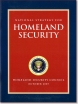
Find it in a Library:

About the author(s): Our guest blogger is Jennifer K. Davis from GPO’s Library Services & Content Management Division that supports the Federal Depository Libraries Program (FDLP). (Article was adapted by Government Book Talk Editor, Michele Bartram, GPO Promotions & Ecommerce Manager, from an original  post on the FDLP Community site blog by Ms. Davis.)


Glad Dad: Best Books and Sites for Fathers

June 11, 2013

Fathers-day-in-multiple-languagesMany of our personal characteristics, such as where we are born, the color of our eyes, our native language—are due to luck. If we get good parents, this is due to luck, too. When we become parents ourselves, though, we need to rely on our own hard work. Being a parent is the happiest and hardest job I’ve ever had, and I know many people say the same. Any help you can get with that job, whether it is from your own parents, friends, your child’s teachers, parents of your child’s friends, is welcome. As the African proverb goes, it takes a village to raise a child.

Image: How do you say Father? Source: Craftionary

The Federal government wants to be part of that village, and provide parents with any assistance it can give. And with Father’s Day this Sunday, the Government Printing Office wants to highlight these terrific Federal publications and websites to help Dads be all they can be. Whether he’s called Papi, Papa, Pop, Baba, Daddy, Da, Abbu or just plain Dad, celebrate the fathers– and father figures– you know by sharing these resources with them.

National Responsible Fatherhood Clearinghouse

Fatherhood.gov Despicable Me National Responsible Fatherhood ClearinghouseThe Government supports fathers in many ways; one of them is through the National Responsible Fatherhood Clearinghouse at Fatherhood.gov. Dads can check out this site to find fatherhood programs and resources, connect with mentors, read the latest blog posting on DadTalk, and take the Fatherhood Pledge.

Eleven Federal partners are involved in the Responsible Fatherhood Working Group: the Departments of Agriculture, Commerce, Education, Health and Human Services, Housing and Urban Development, Justice, Labor, Veterans Affairs, the Corporation for National and Community Service, the U.S. Equal Employment Opportunity Commission, and the Office of National Drug Control Policy. The level of Federal investment shows how seriously the President and the Federal Government takes this initiative. Another way to reap the benefits of Federal support of fathers is to read Federal government publications prepared in support of responsible fatherhood.

Promoting Responsible Fatherhood

Hero poster for FatherhoodFirst.org Promoting Responsible Fatherhood: Every Father Taking Responsibility for His Child’s Intellectual, Emotional, and Financial Well-Being discusses the various programs and initiatives that President Obama has been promoting as part of his Fatherhood and Mentoring Initiative, including the Head Start-sponsored Fatherhood First program (see poster on the left).

President Obama believes in the importance of fatherhood, as he said in 2009:

“I came to understand the importance of fatherhood through its absence—both in my life and in the lives of others. I came to understand that the hole a man leaves when he abandons his responsibility to his children is one that no government can fill” (p. 2).

To keep that void from opening, the Federal Government has started the aforementioned initiative, and the president has asked for Federal budget support for the Child Support Enforcement Program and to sustain funding for the Healthy Marriage and Responsible Fatherhood grants.

President Obama playing with daughters and new dog BoThis book discusses these and similar Federal Government programs started and/or supported by the Obama Administration, and what the programs have done to help fathers and their families.

Image: President Obama playing with his daughters Sasha and Malia along with then-new (and rambunctious) dog, Bo, on the White House lawn. Source: The White House

This volume is mostly a high-level program summary of interest to policy wonks, public policy workers, social workers, local government officials and students of those disciplines. However, the general public can also glean information about what resources they can get from the Federal Government to assist their families.

At the document’s end, there’s a list of things fathers, individuals, NGOs and places of worship can do to support fatherhood in their own communities as well. The document’s authors try to show how the Federal government stretches out a hand, but it ends on a note of helping oneself, much like the next volume.

Download an electronic copy of Promoting Responsible Fatherhood: Every Father Taking Responsibility for His Child’s Intellectual, Emotional, and Financial Well-Being for FREE from GPO. 

Dad’s Play Book: Coaching Kids to Read

Dad’s Play Book: Coaching Kids to ReadDad’s Play Book: Coaching Kids to Read is geared to get dads to help their kids to read, using case studies and helpful tips. The writers use two of the most important behavior modification tools at their disposal: we all want to be like our peers (hence the case studies) and men love sports (hence the extended coaching metaphor). Twenty dads are profiled on how they are helping their kids learn to read, giving their names, photos, occupations and ages, so they’re more relatable to readers.
The middle pages cover five skills that children need to have mastered to be readers by third grade; everyone who has responsibility for a pre-K through 3rd grade child should be taking some time to study this cheat sheet. Each tip has a paragraph subtitled, How Can a Dad Help? that gives specific suggestions for a dad to improve reading—for example, with fluency. This title is short but sweet; there’s a lot more to know about helping a child learn to read, but this friendly, picture-filled piece is definitely worth the time it takes not only to read it, but to study it and employ in your life as well.

You can either


How can I find these publications: Promoting Responsible Fatherhood: Every Father Taking Responsibility for His Child’s Intellectual, Emotional, and Financial Well-Being and Dad’s Play Book: Coaching Kids to Read?

About the author(s): Our guest blogger is Jennifer K. Davis from GPO’s Library Services & Content Management Division that supports the Federal Depository Libraries Program (FDLP). (Article was adapted by Government Book Talk Editor, Michele Bartram, GPO Promotions & Ecommerce Manager, from an original  post on the FDLP Community site blog by Ms. Davis.)