 As COVID-19 restrictions have drastically relaxed since being officially declared a global pandemic three years ago, more and more Americans may decide to travel abroad.
However, if you plan to travel overseas, besides receiving the COVID-19 vaccine, your destination could require traditional immunization before your arrival. You’ll need to obtain and fill out the International Certificate of Vaccination from the Center for Disease Control (CDC) and the World Health Organization (WHO).
The International Certificate of Vaccination or Prophylaxis, also known as the “Yellow Card,” is designed to support infectious disease control world-wide. And with global travel expanding as some nations have eased restrictions, the health and safety of Americans is now important than ever.
Prior to booking your trip, you must visit a healthcare provider and receive required vaccinations that will vary depending on your destination. The attending doctor must list vaccinations given on the form per the instructions, then sign and date in order for the Certificate of Vaccination to be valid. Every traveler must keep the “Yellow Card” on their person while traveling as it serves as a medical passport and proof of vaccination.
Medical providers, state health agencies, travel agents, as well as churches and community services, may want to obtain these handy and universally accepted immunization forms that are needed to go outside the country.
The GPO Online Bookstore – Easy Access to Federal Publications
HOW DO I OBTAIN THIS RESOURCE?
Sign up to receive promotional bulletin emails from the US Government Online Bookstore.
Shop Online Anytime: You can buy a vast majority of eBooks or print publications —with FREE Standard Shipping worldwide— from the U.S. Government Online Bookstore at https://bookstore.gpo.gov.
- Click here to purchase International Certificate of Vaccination or Prophylaxis as Approved by the World Health Organization
- Click here to browse our Immunization & Vaccination collection
Order by Phone or Email: Call our Customer Contact Center Monday through Friday, 8 am to 4:30 pm Eastern (except US Federal holidays). From US and Canada, call toll-free 1.866.512.1800. DC or International customers call +1.202.512.1800. Email orders to ContactCenter@gpo.gov
Visit a Federal depository library: Search for U.S. Government publications in a nearby Federal depository library. You can find the records for most titles in GPO’s Catalog of U.S. Government Publications.
Find more than a million official Federal Government publications from all three branches at www.govinfo.gov.
About the author: Blogger contributor Ed Kessler is a Promotions Specialist in GPO’s Publication and Information Sales program office.
Images and additional content provided by Government Book Talk Editor Trudy Hawkins. Trudy is the Senior Marketing & Promotions Specialist in GPO’s Publication & Information Sales Office supporting the U.S. Government Online Bookstore (https://bookstore.gpo.gov).


 Posted by Trudy Hawkins





 The COVID–19 public health crisis has had a major impact on the lives of all Americans. We are certainly living in ways we could have never before imagined. Social distancing and isolation from loved ones and friends brings on an increased awareness of anxiety and depression often associated with traumatic events.
 The theme for National Library Week 2020, “Find your place at the library” was chosen before most libraries temporarily closed their physical locations because of the COVID–19 global pandemic. The good news is that libraries remain open for business online, providing the virtual services and digital content their communities need more than ever. And though you might not be there physically for National Library Week, which will take place April 19–25, you can still find your place at the library!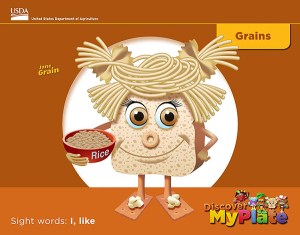

 March is National Nutrition Month. This year’s theme is “Eat Right – Bite by Bite.”


 govbooktalk
 Trudy Hawkins
 Government Book Talk