Fighting Enemies or Disease, Asian Americans Offer a Rich Heritage

May 1, 2013

As Asian-Pacific American Heritage Month kicks off, and the anniversary of WWII’s VE (Victory in Europe) Day approaches (May 8), it’s a good time to talk about a major contribution of Asian and Pacific-Islander Americans.

Japanese Americans’ Battle of Wits with the Japanese in WW II

Nisei-Linguists-CMH_70-99-1The book Nisei Linguists: Japanese Americans in the Military Intelligence Service During WWII published by the Army’s Center of Military History is an excellent starting point to examine that history. When the United States entered WWII in 1941, the War Department knew that their intelligence efforts would not be successful without understanding of Japanese language and culture. However, few Americans other than the 300,000 or so Japanese Americans living mainly on the West Coast and Hawaii had such knowledge.

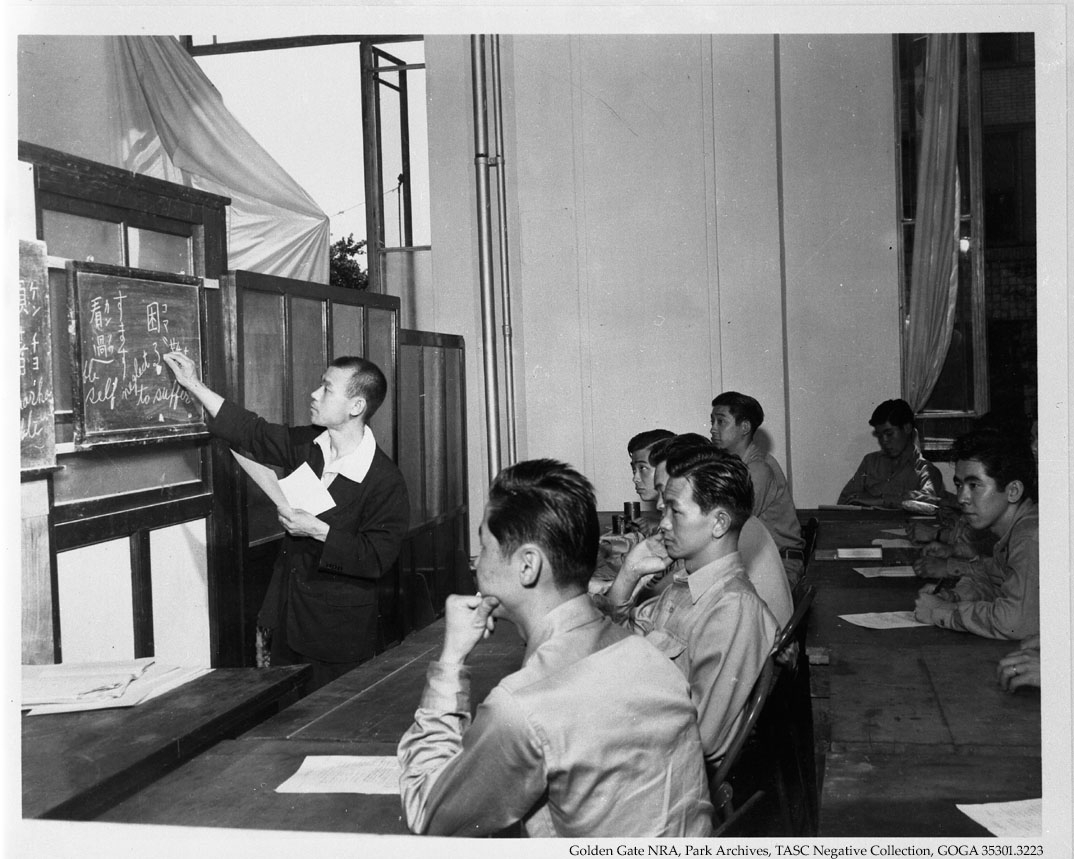
The War Department tapped the talents and skills of the second generation (Nisei) Japanese Americans. The Western Defense Command chose sixty Nisei soldiers for Japanese language training at the Fourth Army Intelligence School at the Presidio in San Francisco. The school moved to the Midwest after Pearl Harbor, first locating it in Camp Savage and later in Fort Snelling. The program, renamed the Military Intelligence Service Language School, ran until 1946. Nearly six thousand military linguists graduated from the school to enter the Military Intelligence Service (MIS).
MISCrissyField

Image: Nisei linguists undergoing training at MIS Crissy Field.

In addition to telling the story of the program and school, the book also describes how the Nisei served with every major unit and headquarters in the Pacific theater. It is testimony to the Nisei’s loyalty and smarts that it took the War Department only two years to get the Nisei military intelligence program up and running. The Nisei braved considerable prejudice to work for U.S. military intelligence, and there is no doubt their participation in American intelligence efforts made the war end earlier.

No one told the story of these linguists for years after WWII, and it was not until the 1980s and 1990s that people began to talk about their experiences with the program. Finally in 1994, Senator Daniel K. Akaka and some other Congressional members asked the Secretary of the Army to publish an official history of the Nisei linguists. This book is the result of that request.

Learn more about the Nisei language intelligence program by picking up a copy of this fascinating volume at the GPO Online Bookstore in Paperback edition or as an eBook.

Asian Americans Battle Disease Today
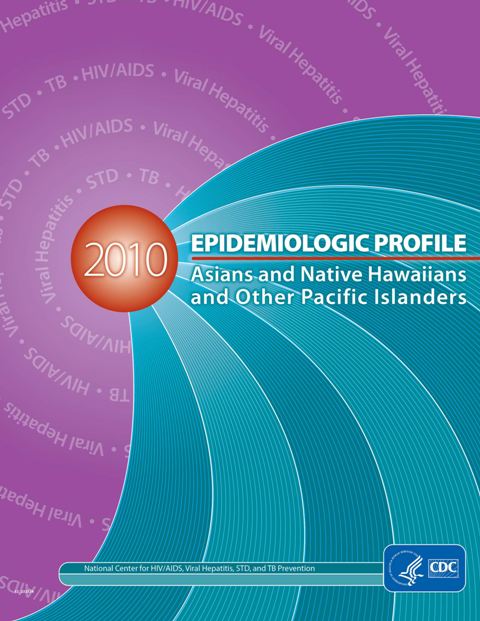
Epidemiologic-Profile-2010-Asians_coverHaving turned our thoughts to how Asian-Americans contributed to the care of our nation, it’s also a good time to think about how we care for the Asian-American and Pacific-Islander American portion of the United States population. The Center for Disease Control and Prevention (CDC) has just published Epidemiologic Profile 2010: Asians and Native Hawaiians and Other Pacific Islanders.

According to the CDC, “This Epidemiologic Profile is the first compilation of infectious disease-specific data in a single report that focuses on two racial groups in the United States: the Asian population and the Native Hawaiian and Other Pacific Islander population.” The volume includes a chapter in which the Census Bureau contributes to the description of the Asian and Native Hawaiian and Other Pacific Islander populations who reside in the United States.

The report tracks the involvement of Asians, Native Hawaiians and other Pacific Islanders in cases of endemic disease. Asians, Native Hawaiians and other Pacific Islanders make up a disproportionately large number of cases in some diseases (tuberculosis and hepatitis B), and in others, a smaller percentage of cases than their representation in the U.S. population (STDs and HIV). The report examines specific disease statistics, the challenges of public health education, treatment and disease risk factor mitigation for these populations.

Any public health official, student, social worker, or government employee who works with these populations would definitely want to read this book.

GPO has cataloged a record for the FREE electronic version that Federal depository libraries got in the April 2013 record load.

How can I access the records to both these publications?

How can I purchase Nisei Linguists: Japanese Americans in the Military Intelligence Service During WWII?

Our guest blogger is Jennifer K. Davis from GPO’s Library Services & Content Management Division that supports the Federal Depository Libraries Program (FDLP). (Article is adapted from an original  post in the FDLP Community site.)


Dr. Seuss’ The Lorax Inspires Kids to Hug a Tree

April 23, 2013

Two publications show us the way… to care for trees this Arbor Day!

Lorax-Forest-Service-LaunchWith Earth Day yesterday and Arbor Day this Friday, April 26, and all week as National Parks Week, this is the perfect time to do something to help a tree grow or plant something new to celebrate the miracle of spring. If there are little ones in your life—children, grandchildren, nieces, nephews or friends of kids that you love—it’s a good time to teach them to love trees, plants, and flowers, too.

Image: The head of the Forest Service with the Lorax for the launch of the U.S. Forest Service’s Discover the Forest program which aims to inspire tweens (aged 8-12) and their parents to re-connect with nature, experiencing it first-hand. The campaign brings to life the joy and excitement kids have when they discover the wonders of nature, helping create interest in their environment and a lifelong relationship with it. Photo credit: U.S. Forest Service

The best way to get kids to appreciate nature, according to Dr. Seuss’ The Lorax Curriculum Guide, is to take them outdoors—and “according to the Institute for Social Research at the University of Michigan, children in the U.S. spend 50% less time outdoors than they did 20 years ago.” To counter the initial cries of “I want TV”, however, it helps to give kids directed activities when they go outside.

The U.S. Forest Service and the Ad Council have developed a partnership with Project Learning Tree and Universal Pictures to create an educational curriculum plan based on “The Lorax” film and story. The curriculum supports the Forest Service’s “Discover the Forest” campaign (See image caption above).

Lorax-Classroom-Guide_Plant-a-Tree

Image: “Plant a Tree” page 21 from the Lorax Classroom Guide.

Teachers can download for FREE the complete classroom guide of Dr. Seuss’ The Lorax Curriculum Guide as a PDF, or can download the individual activities to use in class (as long as it is for educational, and not commercial, purposes). There’s an interactive map of places you can go in the United States that have campgrounds, national forests, state campgrounds, etc. There’s a page of games and activities such as how to use a compass, take a virtual hike, create a leaf rubbing or become a Jr. Forest Ranger on the Web site.

The printed teacher’s guide has tests, bibliographies for the students, labs (plant a tree with the Lorax), and student pages for various grade levels (I saw K-4 and 6-8). Families are encouraged to use these activities, too.


Why would Anyone Cut a Tree Down? continues the ecological and conservation-minded discussion you might want to pursue with your kids or students this week.

However, this volume approaches conservation from a silvicultural perspective, rather than the Lorax’ perspective of promoting a child’s approach of nature generally. The age range for the publication is 8 and up, and the material might be a bit young for older middle school children—so its material is more directed to a specific age range. The Forest Service published this document also, and the authors are a writer/ editor / educator with the Forest Service and an illustrator with previous experience illustrating tree guides.

The book shows children the life cycle of trees, the need to remove sick trees, the uses for wood from cut trees, and types of trees that are dangerous, all so beautifully illustrated by Juliette Watts that they make the lessons come alive.

Purchase a copy from the GPO U.S. Government Online Bookstore, and flop under a tree canopy to read the story and appreciate all the gifts that nature has to give us.

As Dr. Seuss wrote, “Now that you’re here, the word of the Lorax seems perfectly clear. UNLESS someone like you cares a whole awful lot, nothing is going to get better. It’s not.”  It’s up to us (and the Forest Service and its partners) to encourage children to care a whole awful lot about our trees and forests. Using these publications is good a way to make that happen!


How can I find these publications?

1) Dr. Seuss’ The Lorax Curriculum Guide

  • You can find it via our PURL (Permanent URL)
  • Locate it through GPO’s Catalog of Government Publications CGP catalog record. GPO has cataloged both the print and the electronic versions to make things “a whole awful lot better” for the Federal Depository libraries that got it in the April 2013 record load.
  • Find it in a federal depository library near you.

2) Why would Anyone Cut a Tree Down?

  • Purchase it on GPO’s U.S. Government Online Bookstore.
  • Buy it at GPO’s Main (retail) Bookstore at 710 North Capitol Street NW, Washington, DC 20401, open Monday-Friday, 8:30am to 4pm Eastern Time, except Federal holidays. Call (202) 512-0132 for information.
  • Find it in a Federal Depository library.

About the Author(s):

Adapted by Government Book Talk Editor and U.S. Government Online Bookstore Manager Michele Bartram from a post written for the FDLP Community Blog by guest blogger Jennifer Davis from GPO’s Library Services & Content Management Division that supports the Federal Depository Libraries Program (FDLP).


Immigration Issues and the Land of Opportunity 2.0

April 22, 2013

Americans are proud of their country being known as “the land of opportunity” and a wonderful place to live. Thus it is not surprising that so many want to move to the United States, making immigration a topic of extreme interest to citizens, lawmakers and immigrants alike.

United States map with faces of immigrants - the Land of Opportunity?

Image: U.S. map made up of immigrant faces. Image credit: Imerito blog

The introduction of a major border security and immigration reform bill in the Senate last week brings the topic to the forefront… and left many scrambling to research the issues affecting the “Land of Opportunity 2.0” in the twenty-first century.

The Government Printing Office has assembled a collection of both print and digital publications that run the gamut from proposed and existing border protection legislation to immigration reports and statistics, civics and English education for immigrants, and more to help all better comprehend the complex issues of immigration.

Here are a few notable publications from our U.S. Government Online Bookstore Immigration Collection:
  •  The Border Security, Economic Opportunity, and Immigration Modernization Act of 2013 (Print)

2013 Border Security and immigration reform bill Gang of Eight SenatorsImage: “Gang of Eight” U.S. Senators who worked on the immigration reform bill of 2013. Image Credit:  NPR blog.

The “Gang of Eight” senators who worked on this bipartisan bill includes four Democrats and four Republicans: Senators Chuck Schumer (D-N.Y.), Dick Durbin (D-Ill.), Bob Menendez (D-N.J.), Michael Bennet (D-Colo.), John McCain (R-Ariz.), Lindsey Graham (R-S.C.), Marco Rubio (R-Fla.) and Jeff Flake (R-Ariz.).

Immigration-Reform-Act-2013The goal of this bill is “to provide for comprehensive immigration reform and for other purposes” including bolstering border security, overhauling the legal immigration system, legalizing many of America’s 11 million undocumented immigrants and put them on a path to citizenship, and increasing enforcement and penalties against employers who hire unauthorized workers.

> Click here for information on how to order a printed copy of this bill

  • Yearbook of Immigration Statistics (Paperback)

2011-Yearbook-of-Immigration-StatisticsThe Yearbook of Immigration Statistics, 2011 is a compendium of tables that provides data on foreign nationals who, during a fiscal year, were granted lawful permanent residence (i.e., admitted as immigrants or became legal permanent residents), were admitted into the United States on a temporary basis (e.g., tourists, students, or workers), applied for asylum or refugee status, or were naturalized. The Yearbook also presents data on immigration enforcement actions, including alien apprehensions, removals, and returns.

> Click here for information on how to order this publication 

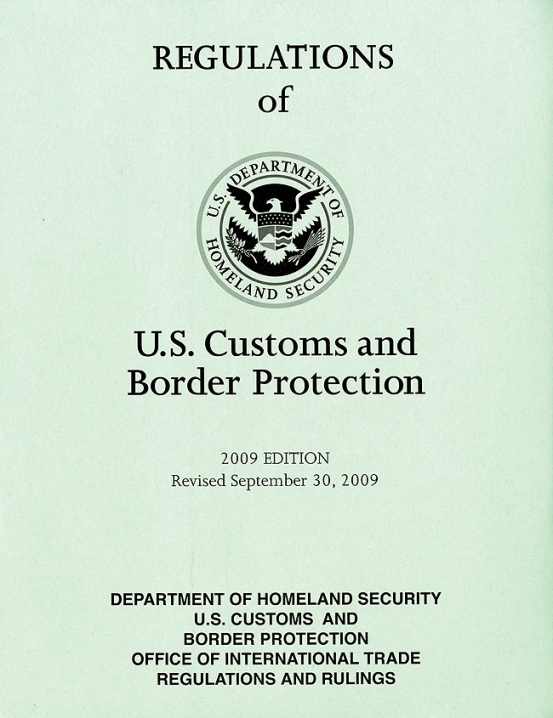
  • Customs and Border Protection Regulations of the United States (Print Subscription)

Customs-and-Border-Protection-Regulations-USPublished by the Department of Homeland Security’s Bureau of Customs and Border Protection (CBP), Office of International Trade Regulation and Rulings, the Customs and Border Protection Regulations of the United States, 2011 is a print subscription which contains regulations made and published for the purpose of carrying out customs and border protection laws administered by the Bureau of Customs and Border Protection. Former title: Regulations of United States Customs and Border Protection.

> Click here for information on how to order this print subscription

  • Expanding ESL, Civics, and Citizenship Education in Your Community: A Start-Up Guide (Paperback or ePub eBook)

Expanding-ESL-Civics-EducationFor groups and individuals whose goal it is to prepare the immigrant to assimilate into the Nation and to learn our language, this publication– both in print and ePub eBook format — from the Office of U.S. Citizenship and Immigration Services is very useful. It outlines a start-up process of gathering relevant information and resources to develop and sustain community ESL (English as a Second Language), civics, and citizenship education program, recruit and train volunteers, and recruit students. It also includes basic recommendations and sample forms and materials.

> Click here for information on how to order this print publication

> Click here for information on how to order this eBook

For more information on all the immigration publications from the Federal Government,

About the author:

Government Book Talk Editor Michele Bartram is Promotions Manager for GPO’s Publication and Information Sales Division in Washington, DC, and is responsible for online and offline marketing of the US Government Online Bookstore (http://bookstore.gpo.gov) and promoting Federal government content to the public.


Help is Just a Call, Click or Page Away: Federal Disaster Helplines & Emergency Medical Resources

April 19, 2013

Sadly, most adults in this country can remember some disaster or tragedy that’s happened to them or one of their loved ones in recent history. Most people in my office have their own exit strategy story from 9/11.  We all remember how we tried to cope, and we feel deep sympathy for fellow citizens in similar situations.

After the horrific events at the Boston Marathon and the Texas fertilizer factory explosion this past week, many Americans are again in the unfortunate position of needing assistance in the face of life-changing events. Your Federal government is here to help both the injured citizens and the local medical personnel who rush to their aid, both during and after the disaster occurs.Complementary Federal and local disaster response

Image credit: Vanderbilt University Medical Center Department of Emergency Preparedness  

I. Federal Disaster Resources for Civilians

The Disaster Distress Helpline (DDH) is, in the words of their own staff,

“…the first 24/7, year-round national crisis hotline exclusively dedicated to providing free, immediate and confidential crisis counseling and support to people in distress related to any natural or man-made disaster, such as the explosions in Boston. We offer this counseling 24/7/365 through phone (1-800-985-5990) and through SMS/text messaging (text ‘TalkWithUs’ to 66746) – and DDH is for those affected, family member and loved ones, as well as for responders.”

SAMHSA-Disaster-Distress-Helpline

Operated by the Department of Health and Human Services’ Substance Abuse and Mental Health Services Administration (SAMHSA), the Disaster Distress Helpline’s Web page www.disasterdistress.samhsa.gov also has a section devoted to incidents of mass violence.

If you are suffering from trauma related to the Boston Marathon attack, or similar events, reach out to the Disaster Distress Helpline. Get help, get some shelter. You’re going to wake up tomorrow, and the day after that. Make your day bearable; as Malcolm X said, “The future belongs to those who prepare for it today.”

Additional Federal disaster and emergency resources for civilians include:

GPO is helping in its own way; you can find the catalog record about the Disaster Distress Hotline in GPO’s Catalog of Government Publications or your local federal depository library.

II. Federal Disaster Resources for First Responders and Civilian Medical Personnel

With the tragic terrorist bombings in Boston,  fertilizer factory explosion in Texas, mass shootings in Sandy Hook, and other recent disasters, medical personnel, civilian first responders and mental health personnel have had to learn to deal with injuries both physical and mental that are usually only experienced on the battlefield.

With the experience gained in treating the wounded and traumatized in wars in Iraq and Afghanistan and mass violence and disasters in the US, the Departments of Defense, Health and Human Services, Homeland Security, Justice, and Transportation–

including FEMA, US Fire Administration, Pipeline and Hazardous Materials Safety Administration, Substance Abuse and Mental Health Services Administration, Center for Mental Health Services, US Special Operations Command, and particularly the Army’s Office of the Surgeon General, Walter Reed Army Medical Center, USAMRIID- US Army Medical Research Institute for Infectious Diseases, U.S. Army Medical Department Center and School, and the Borden Institute

— have produced a number of outstanding resources and publications which are of extreme value to emergency medical personnel, including EMTs and surgeons, mental health counselors, fire and rescue personnel, and first responders of all kinds.

[UPDATE 4/30/2013] One great resource for first responders is the Public Health Emergency website maintained by the US Department of Health and Human Services. This is meant to be a one-stop resource for all of the federal medical resources and information for emergency response. The military version, the Department of Defense Force Health Protection and Readiness National Disaster Medical System (NDMS) Page, is here.

[UPDATE 4/26/2013] One of the best resources we have seen was provided by one of our readers, a Regional Emergency Coordinator with the Department of Health and Human Services. It is a one-stop site for all emergency medical resources called the WMD, Emergency Management, and Medical Web Sites List. The author says it is updated every six months to keep it accurate, and it “is intended to provide an extremely “comprehensive list of internet sites of use for emergency planning and in particular Weapons of Mass Destruction (WMD) and medical emergency planning.

boston-marathon-emergency-medical-responseImage: First responders at the Boston Marathon bombings, including fire and rescue and emergency medical personnel. Image credit: EMSWorld

All of these Federal publications below can help civilian emergency response and medical personnel quickly learn from these Federal and military experts on how to respond to disasters and how to treat gunshot and blast wounds (such as from bombs and IEDs), amputations, and other combat-style injuries both in the field as well as the rehabilitation and psychological factors afterwards, including post-traumatic stress.

Some of the more pertinent disaster response and treatment publications that can be found on the U.S. Government Bookstore include:

About the Authors

Part I: Excerpted from a post on the FDLP Community Blog on April 18, 2013, by guest blogger Jennifer Davis from GPO’s Library Services & Content Management Division that supports the Federal Depository Libraries Program (FDLP) who wrote about the Disaster Distress Helpline.

Part II: Government Book Talk Editor Michele Bartram writes about the disaster and emergency response publications that can help civilian personnel respond to disasters with combat-style injuries. Ms. Bartram is Promotions Manager for GPO’s Publication and Information Sales Division in Washington, DC, and is responsible for online and offline marketing of the US Government Online Bookstore (http://bookstore.gpo.gov) and promoting Federal government content to the public.


Making Tax Time Less Taxing: Reproducible Tax Forms

April 11, 2013

Guest blogger Jennifer K. Davis from GPO’s Library Services & Content Management Division that supports the Federal Depository Libraries Program (FDLP) writes about reproducible tax forms from the Internal Revenue Service. (Originally posted in the FDLP Community site on April 9, 2013.)

It's Tax Time April 15 Federal IRS Tax Return Forms If you haven’t filed your tax return already, you’ve still got a little time left until April 15, the tax deadline day. Hopefully, you’ve got your tax forms from the Internal Revenue Service already.

One lucky thing about filing taxes in the U.S.? If you haven’t got those IRS tax forms, you can get copies of the forms almost anywhere. One sure bet is to drop in to your local Federal depository library for the reproducible copies. Most of them get the reproducible forms packet, which includes nearly all the basics. You can find the forms online, too, but if you don’t have a printer at home, the library’s your best bet.

People are usually checking out their library to do research, but shouldn’t miss out on the other resources that the libraries make available. Reproducible tax forms are one of the more obvious bonuses. Whether you need something really basic like a form 1040 to file your taxes, or an EIC (Earned Income Credit) to claim your qualifying child(ren), or a new W-4 to complete for work, your library’s got it.

Even if you’re searching for something less commonly used like a Schedule R (Credit for the Elderly or the Disabled), or a Form 8880 (Credit for Qualified Retirement Savings Contributions), you’ll find it all in the packet of reproducible tax forms. When you use a Federal Depository Library, you get to experience the benefits of your Federal taxes at work before you’ve even paid them.

648-004-00027-3[Note from Michele Bartram:] GPO also offers larger packages of pre-printed IRS tax forms for the convenience of tax preparation professionals on our Online Bookstore.  We also have DVDs and CD-ROMs of Federal tax forms. All purchasable tax publications as well as Federal audits and other accounting publications can be found on our U.S. Government Bookstore website under the Taxes, Audits & Accounting category found under our Business & Finance publications section.

For the annual tax forms, we have a special Tax Forms by Year category where you can find the IRS Tax Forms 2012 that includes the 2012 Tax Year IRS Tax Products DVD.

How can I access these individual Reproducible Tax Forms?

How can I purchase pre-printed tax forms and a tax publications DVD?


From Prairies to Peaks with Rockies and Roosevelts

April 3, 2013

Guest blogger GPO Public Relations Specialist Emma Wojtowicz reviews this new publication by the U.S. Forest Service that explores the history of the Forest Service’s Rocky Mountain region, including the involvement of two Roosevelts.

From-Prairies-to-Peaks-US-Forest-ServiceThose traveling west-bound for spring break and summer vacation should check out From Prairies to Peaks: A History of the Rocky Mountain Region of the U.S. Forest Service, 1905-2012. This publication focuses on the Rocky Mountain region, which encompasses Colorado, Kansas, Nebraska, South Dakota and Wyoming and is home to 17 national forests and seven national grasslands.  In From Prairies to Peaks, author Anthony Godfrey takes readers on a tour of the Rocky Mountains to learn about the topography, climate and wildlife as well as the history stretching from when Native Americans originally inhabited the region to the preservation efforts made in recent decades by the Forest Service.

Readers must be true aficionados of the West and Rocky Mountains to digest this nearly 400-page publication. The history is very detailed, but very fascinating.  During the development of the West in the 19th century, it was believed that the United States had an abundance of forest resources, and millions of acres of trees were cleared as a result.

After the Civil War, the threat of a timber famine alerted the government to the problem and brought greater attention to forest management. Passed under President Theodore Roosevelt, the Federal Forest Transfer Act of 1905 moved control of the 63 million acres of national forest reserves from the Department of the Interior to the Department of Agriculture’s Bureau of Forestry, which was renamed the Forest Service.

President-Theodore-Roosevelt-1908-Cartoon-as-Practical-Forester

Image: 1908 editorial cartoon of President Theodore Roosevelt as “A Practical Forester.”  Source: St. Paul Minnesota “Pioneer Press”.

One of the most interesting time periods for the region was the 1920s-1930s. Upkeep and development of the Rocky Mountain region created many jobs for men through New Deal programs during the Great Depression.  In national forests, workers were assigned to tree planting and thinning, insect and rodent control, road building and improvement, telephone line construction, and lookout tower and house construction to increase communication for fire control and timber conservation.

Then during the Dust Bowl, the region played an important role in President Franklin Roosevelt’s Great Plains Shelterbelt Project from 1934-1942, which involved planting a shelterbelt or windbreak of drought-resistant trees and shrubs and from Canada to northern Texas to protect against the winds and prevent erosion.

10-row-shelterbelt-cross-sectionImage: Cross-section of a shelterbelt of various sized evergreens, large and small deciduous trees, and shrubs using the Forest Service-recommended standard of 10 rows that serve as a windbreak and wildlife shelter. Image source: MyFarmlife.com.

The Forest Service assigned the Rocky Mountain region with supervising the planting of more than 217 million trees and shrubs on the windward side of more than 30,000 individual farms. This is just a snapshot of the in-depth history chronicled in this publication.

Planting-first-shelterbelt-tree-OKFrom Prairies to Peaks provides a historical account of one of the lesser known regions in the United States. The West conjures images of cowboys, mountains, hikers and skiers, but there is more to the Rocky Mountain region.

This publication is a great resource for those interested in learning more about the West and the Forest Service. And for those already familiar with the Rocky Mountains region, this book will help you brush up on your history.

Image: Planting the first tree in the Nation’s first shelterbelt on the H.E. Curtis farm near Mangum in Greer county, Oklahoma, on March 18, 1935. Image source: Oklahoma Farm Report.

HOW DO I OBTAIN THIS  PUBLICATION: From Prairies to Peaks: A History of the Rocky Mountain Region of the U.S. Forest Service, 1905-2012?

  • Buy it online 24/7 at GPO’s Online Bookstore.
  • Buy it at GPO’s retail bookstore at 710 North Capitol Street NW, Washington, DC 20401, open Monday-Friday, 9am to 4pm, except Federal holidays, (202) 512-0132.
  • Find it in a library.

History Was Made at the Women’s Rights National Historical Park

March 26, 2013

Guest blogger Jennifer K. Davis from GPO’s Library Services & Content Management Division that supports the Federal Depository Libraries Program (FDLP) writes about the Women’s Rights National Historical Park brochure in honor of National Women’s History Month. (Originally posted in the FDLP Community site on March 25, 2013.)

March is National Women’s History Month, and I am writing this posting on International Women’s Day. If I had the twelve hours–round trip– to hit the road, I’d head for the Women’s Rights National Historical Park in Seneca Falls, New York, and celebrate how far we have come as a nation.

Susan B. Anthony and Elizabeth Cady Stanton

It would definitely be a work-related trip. The U.S. Government Printing Office (GPO) printed Elizabeth Cady Stanton’s most famous– and in her estimation, her best– speech in 1915. She delivered her address, Solitude of Self, before the Committee on the Judiciary on January 18, 1892. She argued why the law needs to treat women as equal citizens under the law and she argued for women to get the vote via a law that would eventually became the Nineteenth Amendment to the Constitution.

Image: Susan B. Anthony (left) and Elizabeth Cady Stanton (right). Source: The Susan B. Anthony Center for Women’s Leadership.

Sadly, it took forty-two years after Stanton and fellow suffragist Susan B. Anthony first drafted the 19th amendment in 1872 and long after their deaths for the amendment to finally be ratified and made law in 1920. Since Stanton’s house is part of the park, it’s here that you can discover a very human portion of United States history and feel a renewed sense of the privilege that all United States citizens have to vote.

Not only can you learn about Stanton at the park, you can also get a wider view of the earliest stages of the women’s rights movement in the United States. Four historical properties and a visitor’s center make up the park. You can visit the Wesleyan Chapel in Seneca Falls where the leaders of the women’s rights movement held the First Women’s Rights Convention in August 1848. Stanton’s home is open from spring through fall. You can tour the house she referred to as “the Center of the Rebellion” where she raised her large family while networking with other women on women’s rights reforms.

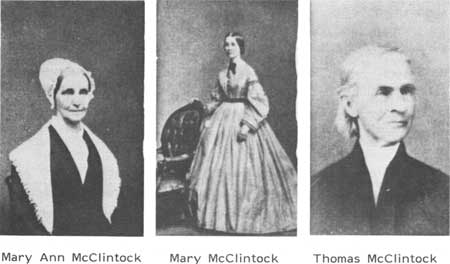
Another one of the four park properties, the M’Clintock House in nearby Waterloo, was the home of Mary Ann and Thomas M’Clintock.

MClintocksMrs. M’Clintock held the planning session for the First Women’s Rights Convention and drafted the Declaration of Sentiments at their home as well. (As an added bonus, the M’Clintocks were Quakers and their house was a stop on the Underground Railroad–so you can find out more about Quakers and belatedly celebrate African-American History Month while there.)

While in Waterloo, you can walk by the Hunt House, where Jane and Richard Hunt hosted Lucretia Mott and held an assembly for her where the attendees announced the plan for the First Women’s Right’s Convention. Although you can’t tour the Hunt House now as it is too fragile, the National Park Service (NPS) is making plans to restore it in the future. Visiting these locations brings home the exciting sense of purpose and activity of the American women’s rights movement of the late 1800s.

Information about all of these sites, as well as slideshows of the historical houses, the text of Stanton’s address, historical factoids, and photos of the major architects of the women’s rights movement and their supporters, are available at the Women’s Rights National Historical Park brochure online. Even if, like me, you can’t get to upstate New York to see these sites in person, you can (almost) feel like you’ve been there once you’ve given the park Web site a thorough visit.

It’s worth the time it takes to make the trip, whether actual or virtual. It’s amazing to see how far we’ve come as a nation in the advancement of personal rights, and how much all of society (men and women) have done to push our mothers, sisters, aunts and daughters forward. Having that perspective is one of the many advantages of learning about the park.

Continue your self-education by reading the park brochure at your local Federal depository library. You can find it either via the title’s PURL (Permanent URL) or through the Catalog of Government Publications (CGP) record that GPO cataloged for the Federal depository libraries in the March 2013 record load.

How can I access this publication, the Women’s Rights National Historical Park web brochure?

[Note from M. Bartram:] You can also purchase print publications and eBooks from GPO’s U.S. Government Online Bookstore related to the topics discussed in this article:


March Madness: New GPO Bookstore Website and Historic Anniversaries

March 22, 2013

March is traditionally a month of change and national excitement in the United States. Together with the change of seasons and college basketball frenzy, some important national milestones were reached this month that we should acknowledge, from new achievements to key anniversaries.

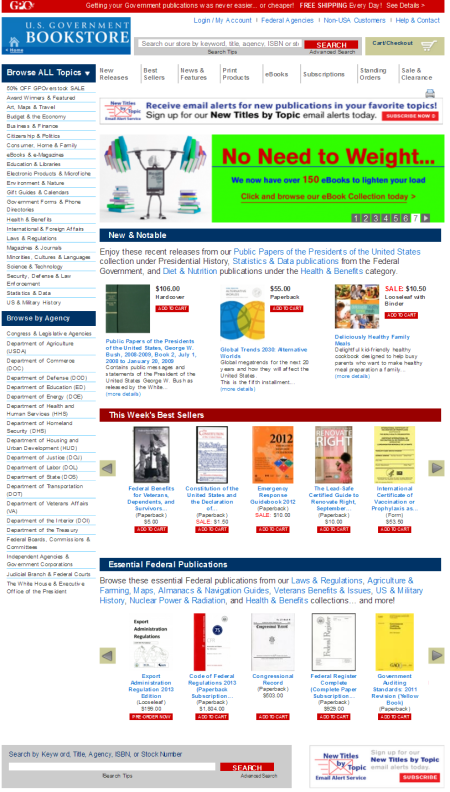
New U.S. Government Bookstore Website

First, last week we launched our upgraded U.S. Government Bookstore ecommerce site, http://bookstore.gpo.gov/.  Our ecommerce website has gone through several iterations since its first version in 1999, each time adding functionality to keep up with the changing needs.  Today, GPO has over 4,000 Federal print publications and more than 150 eBooks available through our online bookstore.

New-US-Government-Online-Bookstore-website

Our new website includes the following user-friendly features:

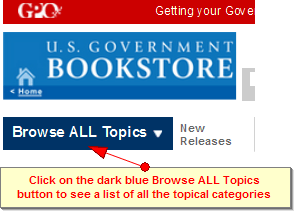
Browse-ALL-Topics-on-GPO-BookstoreClick on the dark blue Browse All Topics button on the site to see and browse by a list of all the topical categories.

These last two features—eBooks and new Categories—are particularly important in light of three other important milestones this month.

National Women’s History Month

March is National Women’s History Month in the United States, and we have a new main “Browse by Topic” category, Minorities, Cultures & Languages, where you can find books for and about African Americans, American Indians, Asian Americans & Pacific Islanders, Cultural Awareness, Disabled, Hispanics, LGBT, Minority Issues, Non-English Government Publications, Seniors & Elderly and Women, including dozens of books and eBooks about Women’s History.

Womens_History_Books_Slide

Harriet Tubman Centennial

One of the famous American heroines in the Women’s History collection is Harriet Tubman, who died 100 years ago this month making it her Centennial. Tubman escaped from slavery and returned to lead dozens of others to freedom in the mid-1800s. In addition to being the most well-known of Underground Railroad “conductors,” she was also a nurse, spy, suffragist, and more.

With all these roles, it is appropriate that we have created so many new “Browse by Topic” categories. One is Slavery & Underground Railroad (under US & Military History), where great books featuring Harriet Tubman and the Underground Railroad can be found.  Other new topics include Nursing under Health & Benefits and Intelligence & Espionage under Security, Defense & Law Enforcement.

Additional publications about National Parks can be found under the main category of Art, Maps & Travel, along with Posters & Prints and Maps, Almanacs & Navigation Guides.

BROWSE BY AGENCY: You can also find National Park Service (NPS) publications under Department of the Interior (DOI) in the Browse by Agency categories on the menu at the lower left side of the site, where publications are categorized by the Federal agency that published them. For example, our own Government Printing Office (GPO) publications are under Congress & Legislative Agencies.

Iraq War 10th Anniversary

Finally, this week is the tenth anniversary of the start of the Iraq War, which began on March 19, 2003, as Operation Iraqi Liberation, later renamed Operation Iraqi Freedom.

Iraq-War-10th-Anniversary_Books_Slide

President Obama, in an address about the Iraq war 10th anniversary this week said:

“As we mark the 10th anniversary of the beginning of the Iraq war, Michelle and I join our fellow Americans in paying tribute to all who served and sacrificed in one of our nation’s longest wars. We salute the courage and resolve of more than 1.5 million service members and civilians who during multiple tours wrote one of the most extraordinary chapters in military service. We honor the memory of the nearly 4,500 Americans who made the ultimate sacrifice to give the Iraqi people an opportunity to forge their own future after many years of hardship.”

Since the beginning of the war, the Defense Department has published dozens of excellent publications about the war, the strategies, Saddam Hussein, Iraq, reconstruction and the achievements and sacrifices made by our Armed Forces. You can find these publications featured under Iraq & Persian Gulf Wars which can be found under US & Military History > Battles & Wars categories.

It’s a Launch, Not a Landing

So, our new site marks the completion of over a year of hard work by our team here at the Government Printing Office, all aimed to make sure “we the people” can discover more about our Nation through excellent publications by our Federal Government. But there’s a good reason we call it a website launch and not a landing. This is only the beginning, with more great content and features to come! Enjoy!

So, please visit GPO’s new online bookstore website at http://bookstore.gpo.gov/ and tell us what you think!

About the Author:  Michele Bartram is Promotions Manager for GPO’s Publication and Information Sales Division in Washington, DC, and is responsible for online and offline marketing of the US Government Online Bookstore (http://bookstore.gpo.gov) and promoting Federal government content to the public. She was also in charge of the online bookstore relaunch!


Native Traditions Help Kids Unplug, Read and Be Healthy

March 1, 2013

Kids Take NEA Reader's Oath on National Read Across America DayToday, March 1, 2013, is the National Education Association’s Read Across America Day which kicks off Read Across America Week where people are encouraged to read to children and children are encouraged to read for themselves. And tomorrow is the birthday of Dr Seuss, who is known for writing children’s books. Coincidentally, from sunset tonight March 1 to sunset March 2 has also been declared National Day of Unplugging, when we are urged to unplug ourselves from all our gadgets and technology such as smartphones, laptops, and MP3 players.

Image: School children take NEA’s Read Across America Reader’s Oath. Source: NEA

Thus, it’s a perfect time to read to and with your kids. Reading events, both public and private, are being held nationwide, from schools and public libraries to houses of worship and homes as adults and children unplug and read.

The U.S. Department of Health and Human Services Centers for Disease Control and Prevention (CDC) Native Diabetes Wellness Program (Wellness Program), in collaboration with the Indian Health Service (IHS) Division of Diabetes Treatment and Prevention and the Tribal Leaders Diabetes Committee (TLDC), created the perfect series of children’s books to help encourage kids to read and live a healthy lifestyle.

CDC-Eagle-Book-Series for child diabetes prevention nutrition and physical fitnessCalled the Eagle Book Series. all of the stories reflect long-held traditional values of American Indian / Alaska Native people – respect, gratitude, and generosity – while teaching the universal wisdom of healthy eating and physical activity. Throughout the series, a young Native boy and his friends learn about healthy habits from Mr. Eagle, Miss Rabbit, and Coyote.

Vividly brought to life by the colorful illustrations of talented American Indian artists Patrick Rolo (Bad River Band of Ojibwe, Wisconsin) and Lisa A. Fifield (Black Bear Clan of the Oneida Tribe of Wisconsin), these charming and educational stories by Georgia Perez have become the award-winning Eagle Book series:

  1. Through the Eyes of the Eagle,
  2. Knees Lifted High,
  3. Plate Full of Color, and
  4. Tricky Treats.

Measuring 16 X 19 inches, these books are sized perfectly for reading to a group of first through third grade children at school, daycare, in a library, or at home.

Thru-Eyes-of-the-EagleThrough the Eyes of the Eagle

“Through the Eyes of the Eagle” is the first book in the Eagle Book Series and introduces the character of Mr. Eagle. Mr. Eagle befriends Rain That Dances, the primary child character in the book, to educate him about diabetes and how the lifestyles and health of the people have changed. Mr. Eagle has come to remind the children of the healthy ways of their ancestors so that they can be strong and healthy again.

Knees-Lifted-HighKnees Lifted High

“Knees Lifted High,” the second book in the Eagle Book Series, continues the story with Mr. Eagle and Rain That Dances, and introduces a new character, Thunder Cloud, Rain That Dances’ best friend. Mr. Eagle shares the knowledge that lack of movement (inadequate physical activity) contributes to development of type 2 diabetes. He encourages the boys to find ways of being active just as their ancestors were. He elicits ideas from the boys on ways to get their bodies up and moving

Plate-Full-of-colorPlate Full of Color

“Plate Full of Color,” the third book in the Eagle Book Series, introduces Miss Rabbit and the boys’ friend, Little Hummingbird. Miss Rabbit s a helper. She wants to teach the young children about ways they can prevent diabetes and help adults learn about preventing and controlling the disease. Rain That Dances, Thunder Cloud and Little Hummingbird listen to Miss Rabbit explain how Mother Earth provides wonderfully healthy things to eat.

Tricky-TreatsTricky Treats

“Tricky Treats,” the fourth book in the Eagle Book Series, continues the theme of healthy food by encouraging children to choose nutritional value in foods and beverages. This story introduces the character of Coyote who initially challenges the healthy messages offered by Mr. Eagle.

Tricksters, such as the coyote, are traditional characters in American Indian stories and literature who cannot be trusted because of their jokes and tricks. The trickster often comes around in the end as in this story. In the book, Mr. Eagle encourages the children to choose healthy snacks and not be tricked into using foods and beverages that are not healthy for them. Healthy foods are identified as “everyday foods,” while less optimal choices are described as “sometimes foods.” Mr. Eagle teaches the children about food safety and the importance of not taking things that belong to someone else.

NEA has a Read Across America Reader’s Oath by Debra Angstead, Missouri-NEA, a Read Across America song and this wonderful Dr. Seuss-inspired Read Across America poem that says it better than we can:

You’re never too old, too wacky, too wild,
To pick up a book and read with a child.
You’re never too busy, too cool, or too hot,
To pick up a book and share what you’ve got.

In schools and communities,
Let’s gather around,
Let’s pick up a book,
Let’s pass it around.

There are kids all around you,
Kids who will need
Someone to hug,
Someone to read.

Come join us March 1st
Your own special way
And make this America’s
Read to Kids Day.

How can I buy the Eagle Book Series?

About the Author:  Michele Bartram is Promotions Manager for GPO’s Publication and Information Sales Division in Washington, DC, and is responsible for online and offline marketing of the US Government Online Bookstore (http://bookstore.gpo.gov) and promoting Federal government content to the public.


BP in Hot Water over Deepwater

February 25, 2013

As the BP Oil Spill civil trial begins this week, the Federal Government will attempt to prove whether British Petroleum (BP) and/or any of its contractors such as Transocean (RIG), the owner and operator of the Deepwater Horizon oil rig, and Halliburton (HAL), which was responsible for pouring the cement plugs in the well, were “grossly negligent” and thus financially liable in causing the deadly BP Deepwater Horizon offshore oil rig explosion on April 10, 2010, and the blowout of the Macondo well.

BP-Deep-Water-Explosion-April-20-2010

Image: Explosion of the BP Deepwater Horizon rig at the Macondo prospect well. Photo credit: Associated Press.

The initial explosion killed 11 oil rig workers and triggered a subsequent oil spill which dumped millions of barrels of crude oil into the Gulf of Mexico, with the full extent of the long-term ecological and economic damage to the Gulf states and aquatic and wildlife still unknown.  With tar balls linked to the BP oil spill still washing ashore from Louisiana and Alabama to as far away as Australia, if BP is found “grossly negligent” instead of “simply negligent,” it will be on the hook for $17.6 billion in additional clean-up costs on top of the $4.5 billion fine for the criminal case settled in November 2012.

The National Commission on the BP Deep Water Horizon Oil Spill and Offshore Drilling produced two landmark and controversial reports about the oil spill causes and consequences that are critical in understanding the Government’s case against BP:

1)      Macondo: The Gulf Oil Disaster. Chief Counsel’s Report 2011, and

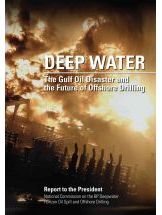
2)      Deep Water: The Gulf Oil Disaster and the Future of Offshore Drilling, Report to the President, January 2011.

THE MISSION

Established by Executive Order 13543 on May 21, 2010 by President Barack Obama, the mission of the National Commission on the BP Deep Water Horizon Oil Spill and Offshore Drilling Commission was to examine the relevant facts and circumstances concerning the root causes of the Deepwater Horizon explosion and develop options to guard against, and mitigate the impact of, any oil spills associated with offshore drilling in the future.

BP-Deep-Water-CommissionIn addition, they were to recommend any needed improvements to Federal laws, regulations, and industry practices concerning the oil and gas industry.

Image: Commissioners of the National Commission on the BP Deep Water Horizon Oil Spill and Offshore Drilling. Image credit: C-SPAN

Key areas of inquiry for the Commission included:

  • The Macondo Well Explosion and Drilling Safety
  • The Role of Offshore Oil Drilling in Domestic Energy Policy
  • Regulatory Oversight of Offshore Drilling
  • Oil Spill Response
  • Spill Impacts and Assessment
  • Restoration Approaches and Options

THE INVESTIGATION

Macondo-Oil-Spill-Report-9780160879630The first order of business for the Commission was to carry out the directive in the Executive Order to “examine the relevant facts and circumstances concerning the root causes of the Deepwater Horizon oil disaster.” They instructed the Commission‘s Chief Counsel Fred Bartlit and his investigative team to provide “the most comprehensive, coherent, and detailed account of the events leading up to the blowout and explosion” of Macondo, the name of BP’s offshore prospect in the Gulf of Mexico in the sector called the Mississippi Canyon Block 252, or MC252 where BP was drilling at the time of the accident.

The result was this report, Macondo: The Gulf Oil Disaster. Chief Counsel’s Report 2011, which provides additional details and documentation supporting the findings in the Commission’s final report.

The respected Library Journal, in selecting the Macondo report as one of its “Notable Government Documents” for 2011, said:

“The National Commission on the BP Deepwater Horizon Oil Spill was created by President Obama and charged with investigating the root causes of the largest accidental marine oil spill in the history of the petroleum industry. The committee concluded that the cause of the blowout was not mechanical. Instead, a number of poor management decisions, combined with an inadequate regulatory structure and an indifferent regulatory agency, overwhelmed the safeguards designed to prevent such disasters. Plenty of illustrations and photographs offer a glimpse into the technology of offshore oil rigs.” – LJ

For trial watchers, this publication is a must-read as much of the initial documentary evidence is included.

THE FINDINGS AND RECOMMENDATIONS

Deep-Water-Report-9780160873713The second and final report is the best-selling Deep Water: The Gulf Oil Disaster and the Future of Offshore Drilling, Report to the President, January 2011. It not only offers the full account of what happened in the Gulf of Mexico on April 20, 2010 and why, but also offers recommendations on proposed actions, changes in company behavior, reform of government oversight, and investments in research and technology that will be required to avert future disasters.

In Part I: The Path to Tragedy, “Chapters 1 through 3 describe the events of April 20th on the Deepwater Horizon, and, more important, the events leading up to it in the preceding decades—especially how the dramatic expansion of deepwater drilling in the Gulf was not met by regulatory oversight capable of ensuring the safety of those drilling operations.

In Part II: Explosion and Aftermath:  The Causes and Consequences of the Disaster, Chapters 4 through 7 lay out the results of the Commission’s investigation in detail, highlighting the crucial policy-related issues: the specific engineering and operating choices made in drilling the Macondo well, the attempts to contain and respond to the oil spill, and the impacts of the spill on the region’s natural resources, economy, and people—in the context of the progressive degradation of the Mississippi Delta environment.

BP-deepwater-2-yr-impact

Image: Chart illustrating some of the ongoing effects of the BP Macondo well oil spill two years after the Deepwater Horizon explosion. Infographic credit: ColorLines.com

In the final section, Part III: Lessons Learned: Industry, Government, Energy Policy, Chapters 8 through 10 present the Commission’s recommendations for reforms in business practices, regulatory oversight, and broader policy concerns.

Throughout the book, the Commission makes the case that outlines a number of primary conclusions, including these unsettling findings:

  • The explosive loss of the Macondo well could have been prevented.
  • The immediate causes of the Macondo well blowout can be traced to a series of identifiable mistakes made by BP, Halliburton, and Transocean that reveal such systematic failures in risk management that they place in doubt the safety culture of the entire industry.
  • Deepwater energy exploration and production, particularly at the frontiers of experience, involve risks for which neither industry nor government has been adequately prepared…
  • To assure human safety and environmental protection, regulatory oversight of leasing, energy exploration, and production require reforms even beyond those significant reforms already initiated…to ensure [the regulators’] political autonomy, technical expertise, and their full consideration of environmental protection concerns.
  • Because regulatory oversight alone will not be sufficient to ensure adequate safety, the oil and gas industry will need to take its own, unilateral steps to dramatically increase safety…
  • The technology, laws and regulations, and practices for containing, responding to, and cleaning up spills lag behind the real risks associated with deepwater drilling…
  • Scientific understanding of environmental conditions in sensitive environments in deep Gulf waters, along the region’s coastal habitats, and in areas proposed for more drilling, such as the Arctic, is inadequate. The same is true of the human and natural impacts of oil spills.

Delivered to the President on January 2011, the final report starts with a poignant dedication “to the 11 men who lost their lives on the Deepwater Horizon rig on April 20, 2010 and to their families, in hope that this report will help minimize the chance of another such disaster ever happening again.”

Will it help prevent another such disaster? Read these publications and decide for yourself.


How can I buy these BP oil spill publications?

  • Buy them at GPO’s retail bookstore at 710 North Capitol Street NW, Washington, DC 20401, open Monday–Friday, 9 a.m. to 4 p.m., except Federal holidays, (202) 512-0132.
  • Find them in a federal depository library.

About the Author:  Michele Bartram is Promotions Manager for GPO’s Publication and Information Sales Division in Washington, DC, and is responsible for online and offline marketing of the US Government Online Bookstore (http://bookstore.gpo.gov) and promoting Federal government content to the public.


Occupational Outlook Publications Help You Choose the Best Career

February 14, 2013

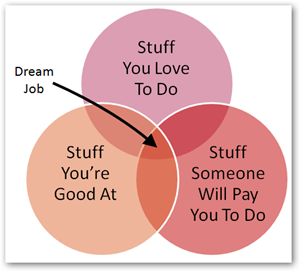
Dream job is where you do what you love and are good at and get paid for itHolding a job vs. having a career. Making a living vs. following your vocation. In today’s tough economic climate, many unemployed or underemployed would be happy with any job, and don’t dare aspire to a dream job. But what if you could have it all: a job that you love to do, you’re good at doing it, and is in demand so you will actually get paid to do it?

Image: Dream Job = sweet spot between passions, skills, and market demand. Image credit: TheUndercoverRecruiter.com

In President Obama’s State of the Union Address this week on Tuesday, February 12, 2013, one of the themes was the need for education and job training (and re-training) to help get Americans into the workforce or transition into more stable industries. But half the battle is knowing which profession matches your passions and talents, what skills and education you need to carry out that job, and what the current and future prospects are for that particular field so you have a better chance at keeping that job in the future.

Fortunately, the U.S. Department of Labor’s Bureau of Labor Statistics (known as BLS) has two complementary publications to help you choose the right career path.

Occupational Outlook Handbook U.S. Bureau of Labor StatisticsThe Occupational Outlook Handbook is the Federal Government’s premier source of career guidance featuring hundreds of occupations—both blue-collar and white-collar— from carpenters, firefighters and sports referees to teachers, medical professions, personal financial advisers, and even multimedia designers and scientists.  Revised every 2 years, the latest version contains employment projections for the 2010-20 decade.

Do you “dig” bones and ancient cultures? Read up on archeologist careers and learn their most recent media pay, entry-level education requirements or equivalent work experience, the number of jobs in this field today and the job outlook for this field over the next decade.

Currently, the top two fastest growing occupations are personal care aides and home health aides, to serve the aging baby boomers. The HGTV home renovation effect seems to have been a boon for tile/marble setters and stone and brick masons, and our nation’s kitty and puppy love for pets has made veterinary techs in high demand. The highest paying of the top 20 fastest growing occupations are physical therapists at $76,310 median annual pay and biomedical engineers at $81,540.

Occupational-Outlook-Handbook-20-Fastest-Growing-Occupations-2010

CLICK ON IMAGE TO SEE FULL SIZE

Image: Fastest growing occupations: 20 occupations with the highest percent change of employment between 2010-20. Source: U.S. Department of Labor Bureau of Labor Statistics (BLS).

Occupational-Outlook-QuarterlyFor those who want more regular updates with more in-depth articles, the Bureau of Labor Statistics (BLS) also offers its attractive magazine, the Occupational Outlook Quarterly, or the “OOQ” for those in the know. Suitable for job-seekers, students, teachers, parents, job and guidance counselors, this color magazine format features personal stories and detailed articles describing insiders’ views of what different jobs are like.

In the Winter 2012-13 edition of the OOQ, the feature article explained what certificates and certificate programs are, the differences between certificates and licenses or degree programs, and how certification might offer a quick way to enter a career. Another described the “hot” field of geothermal energy (pun intended) and the various careers to take advantage of this growing industry. Other articles provide tips for online resources for comparing colleges and available scholarships, life in the real estate or personal fitness professions by successful people in these occupations, and which types of careers tend to offer the best benefits and job perks.

OOQ-Winter-2012–13-Best-Job-Perks

CLICK ON IMAGE TO VIEW FULL SIZE

OOQ-Winter-2012-13_Professional-Santa-ClausHave a hankering to turn your “ho-ho-ho” into more than a hobby? The OOQ even included a fun article entitled “You’re a what? Santa Claus!” describing the jolly job of Phil Wenz who became a professional full-time Santa Claus and Santa historian at a Christmas theme park in Illinois.

Image: Full-time Santa and Santa lecturer and historian, Phil Wenz. Source: U.S. Department of Labor Bureau of Labor Statistics (BLS)

How can I buy these Occupational Outlook publications?

About the Author:  Michele Bartram is Promotions Manager for GPO’s Publication and Information Sales Division in Washington, DC, and is responsible for online and offline marketing of the US Government Online Bookstore (http://bookstore.gpo.gov) and promoting Federal government content to the public.


Economic Security: Neglected Dimension of National Security?

January 31, 2013

Guest blogger GPO Public Relations Specialist Emma Wojtowicz reviews this new publication asking whether our economic security is a neglected dimension of U.S. national security policy, a timely topic considering the recent national economic recession and yesterday’s news of the GDP drop.

The public generally agrees that the United States’ economic security is a vital component to the country’s overall national security. This is especially true in light of yesterday’s announcement that the U.S. gross domestic product (GDP)—the  measure of all goods and services produced by the economy—shrank an unexpected 0.1% annual rate in the fourth quarter of 2012, the first quarterly contraction since the second quarter of 2009 during the recession.

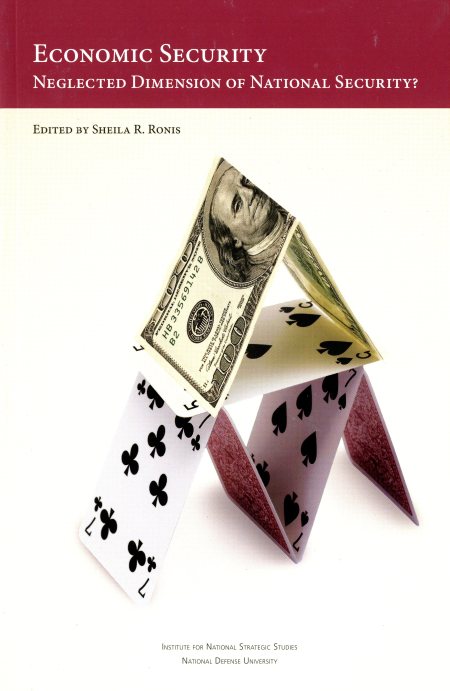
But what exactly does economic security mean in this context? This topic is explored in Economic Security: Neglected Dimension of National Security?, a publication by the Institute for National Strategic Studies of the National Defense University.

Economic Security: Neglected Dimension of National Security? ISBN 9780160898082The book’s editor, Sheila R. Ronis, argues that the economy has often been ignored and misunderstood in relation to national security and that economic strength is the foundation of national security. To make this argument, papers from a conference in 2010 that had the same title as the book comprise the publication and focus on the different factors that contribute to economic security.

Foundation: The first chapter explains how the economy works and provides the reader with a foundation for understanding economic components like budgets, debt, deficits, lenders, interest rates, GDP and so on. This is the best chapter of the book because it gives the reader perspective when considering the country’s economic security.

History:  Taking up 50 pages of this 110 page publication, the second chapter focuses on how the U.S. emerged after World War II as an economic and military superpower and how the boom in industrialization and commerce in the previous decades lead to America’s position after World War II. This approach to understanding the United States’ current economy is fascinating but the use of minute historical details to make the point is perhaps too in-depth for the casual reader, but will be of great interest to scholars, specialists and journalists.

Energy: The third and fourth chapters tackle the topic of energy security and how that relates to the country’s economic and national security. If you are not an energy aficionado, then the content may be over your head, but there are some fundamental facts that anyone can absorb. The U.S. spends $500 billion annually on energy and is the world’s largest energy consumer second to China. The United States’ energy consumption grows every year along with its energy imports.  These chapters strategize how to reform energy policy, thus strengthening the country’s economic and national security.

 Energy Security intersection of National Security, Economic Security and Environmental Security

Image: Energy security is a common topic in relation to economic and national security. Another professor, Massoud Amin at the University of Minnesota, describes energy security as the overlap between economic security, national security, and environmental security.  Source:  DialogueEarth.org

Education: Chapter five explores education in the U.S. and the skill set needed for the workforce of today and the future.  Science and technology are necessary skills for the country’s current workforce in order for the U.S. to play a role in the global economy. Those skills are also important for engaging the next generation of students who were born into an already technologically advanced society, well-versed in using computers, the Internet and mobile devices. This chapter takes a comprehensive approach to the topic of education and the long-term effect it will have on the country’s economic security.

Innovation: The author of the sixth and final chapter takes on the subject of innovation and its contribution to United States’ economic prosperity more so than its economic security. Building upon the previous chapter of education, innovation is the next step to strengthening the economy by creating jobs through new industries and products. The best take-away from this chapter is that while innovation is important and vital to the economy, it alone cannot ensure economic security.

President Obama’s Strategy for American Innovation Image: This image represents the President’s “Strategy for American Innovation” which, according to the White House, “seeks to harness the ingenuity of the American people to ensure economic growth that is rapid, broad-based, and sustained. This economic growth will bring greater income, higher quality jobs, and improved quality of life to all Americans.” Source: White House.

Economic Security: Neglected Dimension of National Security? does a good job of breaking down the issue of economic security making the reader more thoughtful and aware of this important, relevant topic.

HOW DO I OBTAIN THIS BOOK: “Economic Security: Neglected Dimension of National Security?

  • Buy it online 24/7 at GPO’s Online Bookstore.
  • Buy it at GPO’s retail bookstore at 710 North Capitol Street NW, Washington, DC 20401, open Monday-Friday, 9am to 4pm, except Federal holidays, (202) 512-0132.

  • Find it in a library.

Related Publications: