Relive the first year of the Obama Presidency

September 24, 2013

Portrait of the 44th President of the United States Barack Obama As we experience the first year of President Obama’s second term as the 44th President of the United States, take a look back on what was going on at this time during the first year of his first term as president with the Public Papers of the Presidents, Barack Obama 2009, Book 2. This volume covers the public messages and statements made by President Obama during the second half of his first year in office from July to December 2009.

Public Papers of the Presidents of the United States, Barack Obama, 2009, Book 2, July 1 to December 31, 2009.  ISBN: 9780160860867 and GPO Stock #069-000-00185-8Some highlights of those six months include the confirmation of Sonia Sotomayor as President Obama’s first nomination to the Supreme Court, the shaping of the health care law (Read our blog post: “Everything You Should Know About The Health Care Law“), and the continuing efforts to create jobs and rebuild the U.S. economy. The book also includes a section of official color photographs from events during the time period.

This book is part of the Public Papers of the Presidents series which consists of public writings, addresses and remarks made by the President and is the second volume of the Barack Obama Public Papers collection, which includes an eBook version of Book 1. (Read about the first volume in our blog post: “The First Collection of President Obama’s Public Papers.”)

As in other Public Papers volumes, the appendices provide listings of:

  • A digest of President Obama’s daily schedule and meetings, when announced, and other items of general interest issued by the White House Office of the Press Secretary;
  • President Obama’s nominations submitted to the Senate;
  • A checklist of materials released by the Office of the Press Secretary that are not printed full-text in the book; and
  • A table of Proclamations, Executive Orders, and other Presidential documents released by the Office of the Press Secretary and published in the Federal Register.

Public Papers of the Presidents series

The entire Public Papers of the Presidents series is published by the National Archives’ Office of the Federal Register (OFR) and includes two volumes per year, each volume covering a six-month period of the presidency, with the OFR checking remarks against a recording and signed documents against the original to ensure accuracy. The series started with President Hoover and continues to President Obama, with the exception of President Roosevelt who chose to have his papers published privately.

To learn more about the process of compiling the Public Papers of the Presidents, watch this video below on the production of President Obama’s first volume at the Government Printing Office (GPO):

Video Government Printing Office The Making-of-Barack-Obama-Public-Papers-of-the-President

Image: Excerpted from the video of the Making of the Public Papers of the President. Depicts President Obama in the Oval Office being presented with the first volume in his Public Papers printed by the Government Printing Office in April 2011. Pictured from left to right are: current Public Printer of the United States, Davita Vance-Cooks; previous Public Printer, William J. Boarman; President Barack Obama; Archivist of the United States, David S. Ferriero, and Director of the Federal Register, Ray Mosley.

The Public Papers of the Presidents series is also available on GPO’s Federal Digital System (FDsys). The public can digitally access the digitized volumes starting in 1991 with President George H. W. Bush through President Barack Obama, 2009 from this page on FDsys.

GPO also makes the Public Papers of the Presidents series available in print through the agency’s online bookstore with volumes back to Herbert Hoover. The public can browse through the various volumes from different presidents on the Public Papers of the Presidents collection page in the Presidential History collection under the US & Military History category.

How do I obtain a copy of the Public Papers of the Presidents, Barack Obama 2009, Book 2?

1) Buy a printed copy

  • Shop Online: You can purchase a printed copy of Public Papers of the Presidents, Barack Obama 2009, Book 2 or any of the previous volume(s) of the Obama presidency by shopping the Barack Obama Public Papers collection on the U.S. Government Online Bookstore.
  • Order by Phone: Call our Customer Contact Center Monday through Friday, 8 am to 5:30 pm Eastern (except US Federal holidays). From US and Canada, call toll-free 1.866.512.1800. DC or International customers call +1.202.512.1800.
  • Visit our Retail Store: Buy a printed copy at GPO’s retail bookstore at 710 North Capitol Street NW, Washington, DC 20401, open Monday–Friday, 9 a.m. to 4 p.m., except Federal holidays, Call (202) 512-0132 for information or to arrange in-store pick-up.
  • Find it in a Library:  GPO provides catalog records to Federal Depository libraries worldwide. Find this publication in a federal depository library.

2) View or download a PDF from GPO’s official Federal documents database, FDsys:

About the Author: Our guest blogger is Emma Wojtowicz, Public Relations Specialist in GPO’s Office of Public Affairs. Additional content provided by Government Book Talk Editor: Michele Bartram, Promotions & eCommerce Manager for GPO’s Publication and Information Sales Division.


No-Vacation Nation? Take Time to Enjoy Our National Parks and Trails

August 13, 2013

Vacation-Time-Goes-Unused-in-USAmericans are generally extroverted, friendly, talkative—and apparently, workaholics. As the Europeans put it, Americans live to work, while they work to live.

Image source: From infographic on lack of vacation time in U.S. Produced by Column Five for Rasmussen College.

Studies by various travel companies and polling groups have shown that Americans are among the group of nationalities that take the least amount of vacation (others being the Japanese, Taiwanese, South Koreans, Singaporeans, and Mexicans). Part of the reason may be that the United States is the only developed nation in the world that does not guarantee any paid holidays for workers by law. The U.S. Bureau of Labor Statistics concluded in a recent report that only seventy-two percent of wage earners in the United States received both holidays and paid vacations voluntarily granted by their employers. The rest of the employed population does not get paid vacation.

It’s unfortunate that Americans regularly skip using all their allotted vacation days*. [*See also: Schwartz, Tony (February 10, 2013). “Relax! You’ll Be More ProductiveThe New York Times.] Surveys of people in the U.S. report that they do not feel their bosses support taking leave, and they fear that being away from work looks like they are not committed to their jobs. Understandably, workers are afraid to look less than absolutely dedicated in this job market. Looking at our lack of vacation days and our failure to take advantage of them, one could conclude that we are not a well-rested people.

????????????????????????????????

Image: December 2012 infographic on why Americans don’t take more vacation time. Created by: Ally Bank from various public sources.

However, health researchers, sleep researchers, and psychologists have found that there is a direct correlation between rest and good health, and rest and productivity. Taking your vacation is almost a tonic against occupational stress.

Stop and Smell the Roses at a National Park or Trail

National Park System Map and Guide  ISBN: 9780912627878 available from http://bookstore.gpo.govIf you do get a paid vacation and have been putting off your annual jaunt, it’s time to sit down and plan one before summer ends. Many Federal Government agencies offer great resources for planning your next vacation or recreational activity.

For example, three excellent publications from the National Park Service– National Trails System: Map and Guide, National Park System Map and Guide, and the National Park System (Wall Map Poster) — can aid you in planning your trip to America’s best vacation destinations, our national parks and trails!

While most Americans are familiar with our fabulous national parks, fewer are aware of our 45 year-old National Trails System which is…

National Trails System Map and Guide“…the network of scenic, historic, and recreation trails created by the National Trails System Act of 1968. These trails provide for outdoor recreation needs, promote the enjoyment, appreciation, and preservation of open-air, outdoor areas and historic resources, and encourage public access and citizen involvement.” (National Park Service)

With the help of these National Park Service maps, you can hike interesting trails and learn history while you are appreciating the outdoors and getting a workout. Or you can pick a national park you’ve never visited before, and experience something new to spur your creativity. If you enjoy visiting cities, pick a park not far outside of town so that you could get a taste of nature in addition to some cultural experiences.

For example, the Washington, DC, area where the Government Printing Office is headquartered is a prime tourist and staycation destination with its many national parks and historic sites. Our Washington DC Area Tourism & Recreation collection includes maps, history and guidebooks about the area, including the new 2013 Washington DC tourism map by the National Park Service that includes all the newest monuments and museums. and the wonderful Capital Engineers: The U.S. Army Corps of Engineers and the Development of Washington, D.C. 1790-2004, (reviewed earlier on Government Book Talk blog) that tells “The Untold Story Behind the Engineering of Washington DC” and its many famous landmarks.

Once you pick a park, search the Web site recreation.gov to find the activities available there. If you look at the National Park system map and find yourself spoiled for choice, you may be able to narrow down your options when you discover the types of activities available at the parks. And if you are interested in vacationing in a city or a resort, but want to hit a nearby recreation center, you can search for alternatives just by entering a city or zip code. For example, if you plan to visit Las Vegas, but you’d like some time to enjoy rock climbing, too, you might rent a car for the day and drive to Red Rock Canyon National Conservation Area, 12.57 miles from the city center. Most of the National Parks have guidebooks available to help you plan your trip: a number of them are available for sale from the U.S. Government Bookstore.

Of course, the money and time needed for a vacation are no joke. You may be one of the unlucky 28% that does not get a paid vacation. Or getting time off work may just be impossible. If any one of those factors applies to you, try a weekend getaway someplace nearby instead. The National Park Service has suggestions for quick breaks or “staycations” all the country. Once you’ve selected a site, you can fine-tune your plans with the information about reservations and camping available at recreation.gov.

Support for Your Pursuit of Happiness

As our nation has declared the pursuit of happiness a self-evident truth and an inalienable right, it seems we have a patriotic duty to pursue a holiday. The Federal government definitely supports your vacation. After all, each one of our modern presidents has set a prime example for the people by taking vacations to better handle the rigors of the job. As President Nixon put it: “Like other presidents, before and after me, I felt the need to get out of the White House and out of Washington in order to keep some sense of perception.”

Obamas-at-Grand-CanyonImage: U.S. President Barack Obama and family vacationing at the Grand Canyon National Park in August 2009. Source: White House. 

How can the public find these tourism and recreation maps and guidebooks?

How can Federal Depository librarians access these publications?

  • Find the records for these titles via the cataloging records in GPO’s Catalog of Government Publication or CGP.
  • Find them in a federal depository library.

About the author(s): Adapted from an original article on the FDLP Community Blog by Jennifer K. Davis from GPO’s Library Services & Content Management Division that supports the Federal Depository Libraries Program (FDLP). Editor and additional content by: Government Book Talk Editor-in-Chief and , GPO Promotions & Ecommerce Manager, Michele Bartram.


Gettysburg, America’s Bloodiest Battle

July 2, 2013

Maybe you’ve been to the Gettysburg National Military Park in Gettysburg, Pennsylvania, to tour the battlefield and visitor’s center. Maybe you’ve even gone to one of the annual battle anniversaries, where men and women with Civil War-era clothes and weaponry reenact the battle details with great verve. Lasting three days in 1863, from July 1-3, Gettysburg was the bloodiest battle ever fought on American soil, with up to 10,000 Union and Confederate troops dead and another 30,000 wounded. But surprisingly, this tremendous battle was a purely unplanned accident that grew out of a desperate need for soldiers’ shoes!

Gettysburg-Reenactment

Image: Battle of Gettysburg Reenactors at “the Wall”. Image source: Breitbart.com

Visiting the Gettysburg National Military Park

Having witnessed the activities of scores of reenactors who visited the park during the years I lived near the town, I know that people invest themselves very deeply in the Civil War in general, and in the Gettysburg battle in particular. You don’t have to be an extreme fan to appreciate the silence of the rolling battlefield landscape. Imagining the July heat, the stench of sweat, horse, wool clothing and blood, the cries of pain and death, is easy to do when you’re standing there on that “consecrated ground” as Lincoln said in his famous Gettysburg Address after the battle.

Park officials and enthusiasts always commemorate the battle days in Gettysburg, as is happening this week, and it’s a great event for those who can attend in person. When you want to actually (or mentally) place yourself in specific skirmishes in the battle on specific points on the field, you will need a guide. You can hire a guide to ride with your group and interpret the tour for you. That kind of activity is excellent, but is pricey and requires advance planning.

But if you haven’t visited the battlefield, this sesquicentennial anniversary year is a good time to make a virtual trip, if not a real one. (There are over 12,000 reenactors, with 300 foreign reenactors from 16 different countries, and tens of thousands of visitors anticipated for this year’s 150th anniversary reenactment!)

Starting with these guide and history books below is a great beginning to what could be a life-long interest.

The Best of Guides

To fully understand the Gettysburg Campaign and its significance as the pivotal point in the American Civil War, you need to learn from experts. Fortunately, GPO has publications from the two best sources: the US Army Center of Military History and the National Park Service.

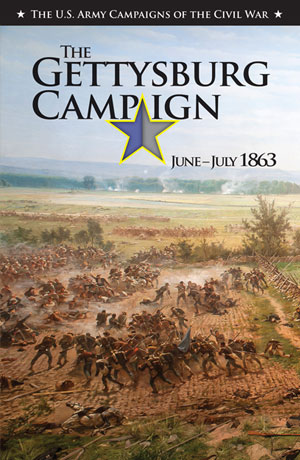
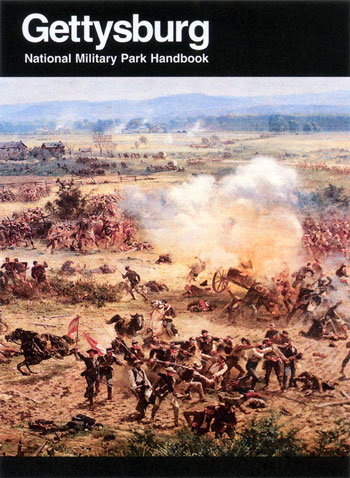
The Gettysburg Campaign: June–July 1863 and Gettysburg National Military Park Handbook

   Gettysburg-Campaign-from-GPOThird in “The U.S. Army Campaigns of the Civil War” series  of campaign brochures from the U.S. Army Center of Military History that commemorate our national sacrifices during the American Civil War, The Gettysburg Campaign: June–July 1863 describes the turning point in the “Battle Between the States.” Authors Carol Reardon and Tom Vossler examine the military operations and strategies along with the somewhat accidental circumstances that culminated in the pivotal and devastating three-day Battle of Gettysburg. With many maps and illustrations, this helps provide some back story and military strategy, as it goes into the various skirmishes leading up to the battle starting back in June and up to the battle itself.

As General Robert E. Lee of the Confederate Army said,

“It had not been intended to fight a general battle at such a distance from our base, unless attacked by the enemy, but finding ourselves unexpectedly confronted by the Federal Army, it became a matter of difficulty to withdraw through the mountains with our large trains. . . . A battle thus became in a measure unavoidable (Campaign, p. 31).”

Gettysburg-National-Park-Handbook

The National Park Service’s publication, Gettysburg National Military Park Handbook, delves into the history of the battleground itself, that “consecrated ground” and provides a detailed guide of all the amenities of the park along with the on-field maneuvers and results, as well as insight into the personalities and anecdotes that such an epic event always generates. It also covers post-battle events, such as the establishment of a cemetery at Gettysburg and the genesis of Abraham Lincoln’s Gettysburg Address, as well as reproductions of 12 battle paintings by F. D. Briscoe. It’s like having a National Park ranger pointing out key aspects and giving you insights about this important national landmark.

Hooker out, Black Hats in

Through both of these excellent publications, you can come to know a bit about the personnel of the Gettysburg Campaign, such as the story of the last-minute, last-ditch replacement of General Hooker as Commander of the Federal Army of the Potomac by General George G. Meade. Commander of the U.S. Army General Halleck replaced Hooker at his own demand, and Hooker left his command in a great hurry. Meade arrived at Gettysburg knowing little of the status of his troops and even less about Lee’s troops. You can also read all the details of General Daniel Sickles’ unauthorized movements from Cemetery Hill.

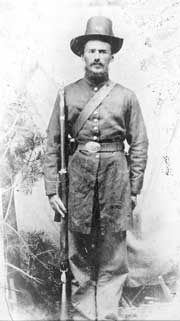
Michigan-soldier-iron-brigade-Civil-WarDon’t forget to study the awe-inspiring story of the Iron Brigade, also known as the Black Hat Brigade. Some Confederates called them “them Black Hat Fellers” because of the black Hardee hats they wore that were different from the standard-issue Union blue kepi hats. Made up of the 2nd, 6th, and 7th Wisconsin Volunteer Infantry Regiments, the 19th Indiana, and the 24th Michigan, the Iron Brigade was famous for its fierceness on the field. The Iron Brigade made a tremendous impact during the Gettysburg Campaign, and they suffered dire casualties as a result. Their bravery in fighting on Herbst’s Woodlot and against the 26th North Carolina had a strong effect on the outcome of the Gettysburg Campaign.

Image: Gochy Charles. Company F, 24th Michigan (Iron Brigade). Image Source: WaterfordHistory.org

How can I obtain these Gettysburg publications?

The more you read about these and other stories of the battle, the more easily you can get drawn in to the story of all the human bravery, pathos and drama that was part of the Gettysburg Campaign and the American Civil War. Immerse yourself in the history of The Gettysburg Campaign: June–July 1863 and familiarize yourself with the park through the Gettysburg National Military Park Handbook. You’re likely to be endlessly fascinated.

Federal Depository Librarians: You can find the records for these titles in the CGP.

About the author(s): Our co-bloggers include: guest blogger Jennifer K. Davis from GPO’s Library Services & Content Management Division that supports the Federal Depository Libraries Program (FDLP) and Government Book Talk Editor, Michele Bartram, GPO Promotions & Ecommerce Manager.


All the President’s Men and Women: Sourcebook of the US Executive Agencies

May 24, 2013

The size of the federal government is a consistently politicized topic. Whether you think it is too big or too small or just right, you can learn more and develop an opinion with help from a first-of-its-kind publication by the Administrative Conference of the United States.

Sourcebook-US-Executive-Agencies-2012This first edition of the Sourcebook of the United States Executive Agencies was published in December 2012 to break down information and numbers by what they refer to as the “executive establishment,” which is the executive branch and all the other Federal agencies, offices, bureaus, and boards that serve the President that do not fall neatly under any of the three branches of the Federal government.

From Three to Many

The executive establishment traces its roots to 1789 when the first Congress created three executive departments: Treasury, War and State. For 60 years, these three departments carried out the nation’s essential functions and responsibilities regardless of whether they fit under the departments. Then in 1849, Congress created the Department of the Interior and after that the rest of the executive departments that we know today were established, reorganized and shuffled together over time. The Department of Homeland Security is the most recently established agency that was created in 2002 combining together 22 federal agencies from various departments.

Burgeoning Bureaucracy

Regarding the number of federal government employees, the most dramatic increase happened under FDR’s administration. During the New Deal era from 1933 to 1944, federal employment expanded from 600 thousand workers to 3.3 million workers.  In 2012, the executive establishment was made up of 2.85 million civilian employees compared to the legislative branch with 31 thousand civilian employees, the judicial branch with 32 thousand civilian employees and the military with 1.4 million service members.

These numbers do not include the number of contract employees and local and state employees whose salaries are paid for with federal funding.

The Role of the Political Appointee

The publication also explains the types of political appointees and their role in the executive establishment.  The top leadership positions in the executive establishment’s departments and agencies are political appointments that must be nominated by the President and confirmed by the Senate. In 2012, there were 1,130 positions in the executive establishment requiring Senate confirmation.

Another type of political appointee is the Senior Executive Service (SES), which is a corps made up of about 7,000 senior managers across the executive establishment. The Office of Personnel and Management determines the number of positions in each agency that will be filled by members of the SES. Then there are also Schedule C positions who serve at the pleasure of the head of the department of agency. Both SES and Schplum-book-2012edule C appointees do not require Senate confirmation.

For more information about political appointees, check out the Plum Book, to which this book is an important companion publication. Read about the Plum Book in our blog post, “A Plum Book of Political Positions”.

Conclusion

Thanks to the information and statistics provided in Sourcebook of the United States Executive Agencies, readers can develop an informed opinion about the size and organization of the government.

HOW DO I OBTAIN THE “Sourcebook of the United States Executive Agencies”?

About the Author: Our Guest blogger is Emma Wojtowicz, Public Relations Specialist in GPO’s Office of Public Affairs.


¡Celebre! We have Spanish-language books for National Latino Books Month

May 10, 2013

We celebrated a holiday this week that has become an increasingly important celebration in the United States in recent years. It’s El Día de la Batalla de Puebla, or Cinco de Mayo (the fifth of May) to commemorate the Mexican victory over the French in the Battle of Puebla on May 5, 1862 when Zaragoza and the Mexican Army beat Maximilian’s French soldiers back to retreat. Not a Mexican national holiday, it is not widely celebrated in Mexico; in fact, it is a government holiday only in the states of Puebla and Veracruz.

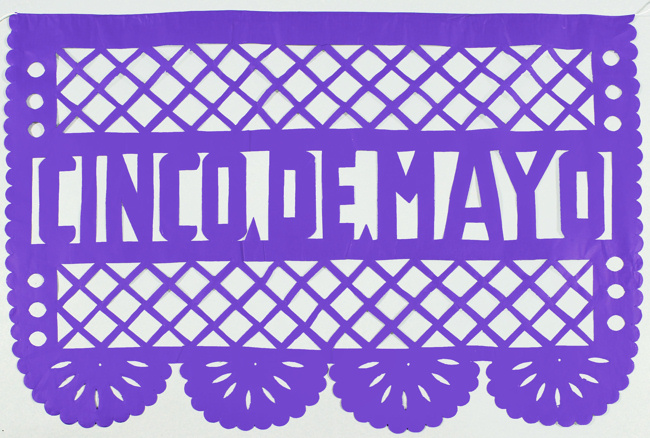
Cinco-de-mayo-Papel-PicadoSince the 1860s, Mexican American communities in the United States have been celebrating Cinco de Mayo.  In recent years, the holiday has become a great day to celebrate our rich Mexican heritage in this country. Today, Cinco de Mayo has become a BIG holiday. Huge. !Una fiesta grande! It’s a great reason to hang papel picado, play conjunto norteño and eat Mexican-style food, and practice speaking Spanish.

Image: Papel picado is a tradition from the Mexican state of Puebla to make hanging decorations with intricate designs cut out of colorful tissue paper. It is now used all over Mexico and in Mexican American celebrations of all kind. Image Credit: Amols.com

In fact, on June 7, 2005, Congress asked the President to issue a proclamation “…recognizing that struggle and calling upon the people of the United States to observe Cinco de Mayo with appropriate ceremonies and activities.” At the same time, May is also National Latino Books Month, celebrating books by and for Latinos.

Spanish Language books for National Latino Books Month at the GPO US Government BookstoreSo to commemorate this fun holiday and the great contributions of Latino and particularly Mexican culture, GPO would like to highlight a few of the many great Spanish language publications from the Federal Government.

Free Electronic Spanish Language Publications

GPO distributes a large number of publications and cataloging records to Federal Depository libraries– there were 288 Spanish language titles sent to libraries in 2012. A number of the items cataloged in Spanish in the April 2013 record load were related to public health– if you need documents on the flu shot, or cancer facts for people over age 50, forgetfulness or getting a good night’s sleep, the Federal Depository library’s got them. If you are interested in more technical documents, such as Malformaciones arteriovenosas y otras lesiones vasculares del sistema nervioso central — your Federal Depository library’s got those, too. Maybe you’re studying information about relations between the United States and Mexico; you’ll find source material such as Boundary Waters Minutes of the International Boundary and Water Commission, and the Environmental Cooperation: Border Area signed by the United States and Mexico in September and November 2012.

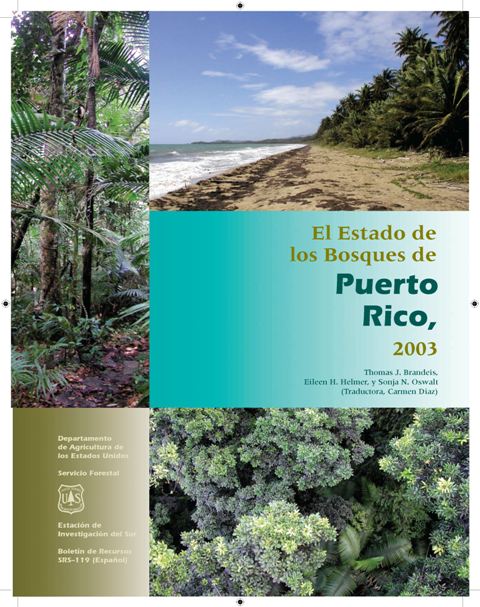
El Estado de los Bosques en Puerto Rico - The State of the Forests in Puero RicoA really beautiful book for you to seek out is El Estado de los bosques de Puerto Rico, 2003. The cover art and the photos are wonderfully colored and detailed– look at the picture of the coqui on the page in between the cover and title pages. Another helpful detail is the appendix at the end of the book that provides the species name, the name in English and the communal name in Puerto Rico. The Forest Service wrote this document for researchers, but it’s quite possible for grade school students or laypeople to read parts of this volume and glean useful information about Puerto Rico’s forests and natural resources.

Download the electronic version of this publication at one of your local Federal Depository libraries.

Print Editions of Spanish Language Publications at the US Government Bookstore

At the GPO U.S. Government Online Bookstore, you can find a number of Spanish language publications that will help individuals and families with parenting advice, citizenship tests, and learning more about Latinos in Congress and the Federal Government.

Libro Poder de los Padres - Parent Power book by the Department of EducationPoder de los padres para trazar el camino hacia el éxito is the Spanish-language version of the best-selling Department of Education book, Parent Power: Build the Bridge to Success, which advises parents on helping their children succeed at all stages of their high school careers, from pre-school through high school. The book contains a number of tips for parents to use, and give specific examples of how to put the tips into practice, for example: “Be positive. Praise goes a long way with children, especially those who struggle in school. Provide positive feedback.”

There are also checklists of developmental goals for the various age groups, for example: Middle school– “Is there a transition program for students leaving elementary school and entering middle or junior high school?” Tips and checklists like these can keep parents on target with a child’s developmental stages. Even if the parent is familiar with all of these talking points, it helps to have them clearly laid out for reference.

Another helpful Spanish language resource available from the GPO Bookstore is the Tarjetas de educación cívica para el examen de naturalización. As any cramming student (or former cramming student) knows, handheld flashcards are a key tool in memorizing information for a test, with a question on one side and the answer on the reverse. Previously only available in English, this new Spanish version of the perennial best-selling Civics Flash Cards for the Naturalization Test is highly useful not only for legal U.S. residents studying for their citizenship exam, but also for teachers and parents who teach standard civics lessons.

Tarjetas de Educacion Civica para ele Examen de Naturalizacion USASince the people who write the flash cards also set the test questions, the questions and answers are accurate (barring the warning about current appointments of specific officials). Instead of researching the answer to “¿Cuáles son dispuestos a nivel de gabinete?”, get the flash cards and be sure of the correct answer (hint: you’d be right if you said Secretario de Estado and Secretario del Tesoro, although there’s more than two right answers). If you teach citizenship or civics classes, or if you are studying for the test yourself or helping a friend or family member to study for the test, you are going to want to buy a copy of these cards. For a quick test of your knowledge of civics topics, take our Quiz: Are you smarter than an 8th grade Civics student?

All of this varied and valuable information, and more, is available en español at the GPO U.S. Government Bookstore and Federal Depository libraries nationwide.

How can I obtain a copy of these Spanish-language publications?

About the author: Our guest blogger is Jennifer K. Davis from GPO’s Library Services & Content Management Division that supports the Federal Depository Libraries Program (FDLP). (Article is adapted from an original  post in the FDLP Community site blog by Government Book Talk Editor, Michele Bartram, GPO Promotions & Ecommerce Manager.)


Over 1 Billion Served: GPO’s Pueblo Distribution Center Hits Historic Milestone Today

May 7, 2013

GPO_Pueblo_1_Billion-Shipped1 Billion.  One thousand million. Any way you count it, that’s a bundle! And at the US Government Printing Office Document Distribution Center in Pueblo, Colorado, we have reached that magic number. As of today, our Pueblo facility has shipped over 1 billion consumer publications, making it a bundle of bundles sent out to the American people!

GPO’s Western Expansion

Growing up, I always heard or read public service announcements from the Federal Government offering helpful advice on everything from how mortgages work to getting vaccinations. Each time, the commercial or ad would end with the same tag line: “To order this helpful free publication, contact us in Pueblo, Colorado” and an address and phone number (and today, a website address) would be given with ordering information.  I thought it amazing that all this great consumer information was available from one Colorado town.

Although unbeknownst to me at the time, it turns out this famous Pueblo location is actually one of two distribution facilities operated by the Government Printing Office’s Agency Distribution Services that stores and ships out Government publications on behalf of our Federal agency clients to the public –the other being in Laurel, Maryland.

In an effort led by House Appropriations Committee member Congressman Frank Evans, the GPO distribution facility was proposed and then approved on October 8, 1970, by the Joint Committee on Printing and the 15th Public Printer of the United States, Adolphus Nichol (Nick) Spence. The Pueblo Public Documents Distribution Center (PuDDC) was dedicated on October 8, 1971, and opened on October 11, 1971, to provide support for the expanding dissemination needs of Federal agencies, from books to posters to other products.

GPO_Pueblo_Congressman-Frank-Evans-Distribution-CenterLast year, President Barack Obama signed an act of the 111th Congress to rename the center the “Congressman Frank Evans US Government Printing Office Pueblo Document Distribution Center” after the former Congressman who passed away in June of 2010. It was re-dedicated on October 11, 2011, for the fortieth anniversary of the Pueblo facility.

Image: Renaming ceremony of the GPO Pueblo facility on October 11, 2011.

Today, GPO’s Pueblo Document Distribution Center provides distribution services to 10 federal agencies and other entities including: The Federal Citizen Information Center (FCIC), the Federal Trade Commission (FTC), Health and Human Service (HHS – Women’s Health), Office of Disability Employment Policy (ODEP), Federal Drug Administration (FDA), Federal Depository Library Program (FDLP), Consumer Financial Protection Bureau (CFPB) and three programs within the Department of Homeland Security  that produce items such as Transportation Security Administration (TSA) posters, bookmarks and baggage inserts.

Ruehlen-at-Pueblo-PuDDCImage: Jimmy Ruehlen has worked for Pueblo’s Government Printing Office Distribution Center since it began operations 40 years ago. Photo credit: The Pueblo Chieftain / Mike Sweeney (Photographer)

The Pueblo Distribution Center has processed over 105 million customer orders from the day it opened its doors through the end of April 2013, and as of today, May 2, 2013, the Center has distributed over 1 billion publications on behalf of its various Federal clients.

GPO Gets a “CIC” out of Distributing Consumer Publications

The Pueblo facility really got a kick-start when it signed an inter-agency agreement with the General Services Administration (GSA) in January of 1973 to take over the warehousing and distribution of the millions of printed consumer publications being provided through GSA’s then-new Consumer Information Center (or CIC), which itself has provided service to the GSA’s Federal Citizen Information Center (or FCIC), the U.S. Postal Service and the Department of Education.

Consumer-Info-Catalog-Winter-Spring-2013_coverThe gem in the FCIC’s crown is the Consumer Information Catalog, printed by GPO, which lists the latest and most popular of the many thousands of consumer publications available by topic and is updated several times a year.

Most of the print publications–the majority printed by GPO– in the Consumer Information Catalog are FREE for U.S. delivery if ordered online; the rest require only a nominal fee. Plus, a number of the publications are offered for FREE in electronic format for immediate download on the Publications.USA.gov website.

Some of the many categories of helpful consumer pamphlets and publications include: Education; Employment; Family including Pets; Federal Programs and Benefits, Food; Health including Drugs and Exercise & Diet (even information on braces, tattoos, and tanning!); Housing including Financing and Home Maintenance; the ever-popular Money category including Fraud, Credit Cards, Living Trusts, and Retirement Planning; even Small Business and Travel, and more.

Consumer-Info-Catalog-Winter-Spring-2013_Page_11

Image: Page from the Consumer Information Catalog Winter/ Spring 2013 Edition.

How can I get a copy of the Consumer Information Catalog and order publications?

Find the latest Consumer Information Catalog in PDF format online, or you can also order FREE print copies to be mailed to you at the same Publications.USA.gov website.

Consumer-Action-Handbook-2013The most popular document distributed by Pueblo remains the annual Consumer Action Handbook, a free trouble-shooting guide to help Americans solve all sorts of consumer problems. I’ve ordered five to share with family and friends!

In addition to ordering from GSA’s Publications.USA.gov website, you can find a number of these consumer publications on GPO’s US Government Online Bookstore.

Below are some of the more popular publications in the Consumer Information Catalog that are also available on GPO’s online bookstore:

You can also browse our Consumer, Home & Family category on our online bookstore.

With so many useful consumer publications available from the Federal Government, I’m sure it won’t be long until we distribute another billion items to help American consumers!

About the Author:

Government Book Talk Editor Michele Bartram is Promotions Manager for GPO’s Publication and Information Sales Division in Washington, DC, and is responsible for online and offline marketing of the US Government Online Bookstore (http://bookstore.gpo.gov) and promoting Federal government content to the public.

First Blood: Year One of the War Between the States

November 22, 2012

On another Thanksgiving Day 150 years ago, America was embroiled in a bitter Civil War. A year later, expressing gratitude for the key Union Army victory at Gettysburg, President Abraham Lincoln would proclaim that the nation will celebrate an official annual Thanksgiving holiday on the fourth Thursday of November. But in 1862, 25 states and three territories were already celebrating the Thanksgiving holiday.

Thus it is fitting that we have this wonderful guest post about the newest book from the Army’s Center of Military History series about the U.S. Army Campaigns of the Civil War. Those who had survived these clashes had much to give thanks for that Thanksgiving Day- as do we all, particularly members of our military and diplomatic services and their families who have served in harm’s way. Enjoy the post and Happy Thanksgiving to you and yours,  Michele Bartram


Guest blogger Sonya Kunkle was a writer and editor for more than 15 years before she joined GPO’s Proof & Copy Markup section. Here she reviews a U.S. Government Bookstore booklet on a topic that caught her interest fairly recently—the American Civil War.

As a child growing up in the Washington, DC, suburbs, I once walked through the grassy fields of Antietam Battlefield (near Sharpsburg, MD) oblivious to the historical struggle waged under my feet. American history wasn’t my favorite subject in school, but as an adult my interest in the Civil War was sparked when I read “The Killer Angels,” a novel by Michael Shaara. “The Killer Angels,” a work of historical fiction, details the Battle of Gettysburg.

This is a good time to be a Civil War history enthusiast, with 2012 being part of the sesquicentennial (150-year anniversary) of America’s bloodiest war. To mark the occasion, the U.S. Government Bookstore has for sale a 64-page booklet, The Civil War Begins: Opening Clashes, 1861 published by the U.S. Army’s Center for Military History.

Image: (Cover of the booklet,. Detail from Capture of Ricketts’ Battery by Sidney E. King, courtesy of William V. Fleitz, Manassas Battlefield Park.

 In this booklet you can read about the reasons for going to war and why key players made many of the decisions they did during the first year of the conflict. The author, Dr. Jennifer M. Murray, also provides a lot of information in text and graphics on the troop movements of both the Federals and the Confederates during each of the key battles of 1861.

Strategic Setting

In his inaugural address, on March 4, President Lincoln declared that he didn’t intend to abolish slavery in states where it existed. Stating that he would not initiate a war, Lincoln informed Southerners, “In your hands … is the momentous issue of civil war …You can have no conflict, without being yourselves the aggressors.

If you look at the numbers, perhaps the Confederates were doomed from the start. The 1860 Census shows that the Union could call on 4 million military-age white males to build their army, whereas the Confederacy could assemble 1 million at most.

The Union also had 10 times the industrial capacity, not to mention better transportation capabilities. In spite of these disadvantages, the South started the Civil War with its first big move—firing on Federal Fort Sumter in South Carolina.

Operations—Fort Sumter

Charleston, South Carolina, was well fortified with Fort Sumter and other defenses. Sumter was built to guard against an enemy fleet, and the walls facing the city were much weaker than those facing the water, leaving the fort vulnerable to attack on land.

On April 11, the Southern Brigadier General Pierre G. T. Beauregard demanded that the Union forces evacuate Fort Sumter. The North’s ranking officer at Sumter, Major Robert Anderson, declined.

At 3 a.m. (or 0300; the author uses military time) on April 12, the Confederates notified Major Anderson that General Beauregard and company would open fire on Fort Sumter in one hour. Twenty minutes after the deadline, a single shell from nearby Fort Johnson, which the North had abandoned, exploded over Sumter. War had begun.

Into Virginia—Bull Run

Image: First Battle of Bull Run. 1889 chromolithograph by Kurz & Allison. Source: Library of Congress. CLICK TO ENLARGE.

In May the Confederates moved their capital from Montgomery, Alabama, to Richmond, Virginia. Richmond became a strategic target for the North, both for its industrial capability and its political importance. The two capitals, separated by only 100 miles, now figured prominently in both sides’ strategies.

The Civil War Begins: Opening Clashes, 1861 explains why the Union was determined to control Manassas Junction and why in May 10,600 Confederates defended the northern entrance to the Shenandoah Valley.

The author notes an interesting moment caused by the differing (and lack of) uniforms:

Viewing the Virginians, who were wearing civilian clothes, the Federal troops were unsure of their allegiance. To complicate matters further … Federal units were not uniformly dressed in blue; soldiers in the 11th New York, for instance, were dressed in colorful Zouave uniforms, which were also worn by some Confederate units. The Virginians clarified the matter by opening a deadly volley on the New Yorkers.”

Image: Brandy Station, VA, Band of the 114th Pennsylvania Infantry (Zouaves). Source: Library of Congress, Prints & Photographs Division, LC-B8171-7611 DLC. CLICK TO ENLARGE.

The Confederates won the fight, protecting their capital. The first battle of the Civil War resulted in the death of nearly 5,000 men.

The Fight for Missouri

While emotions roiled to the east, the majority of delegates attending a special Missouri secession convention voted to remain in the Union. This decision ran counter to Governor Claiborne F. Jackson’s personal preferences, and he mustered forces in favor of the Confederates.

This part of The Civil War Begins: Opening Clashes, 1861 provides details about how the Civil War reached into Missouri, with one of the key players being Union Brigadier General Nathaniel Lyon.

While directing his men on the front line, Lyon got hit in the calf by a bullet, so he left the field for medical treatment. When Lyon got back on the field, a bullet grazed his head.

Determined to continue the fight, and apparently not taking the hint, Lyon returned to the field. Moments later, a bullet hit him in the chest. He was the first Union general officer to die in the Civil War.

From Belmont to Port Royal

In The Civil War Begins: Opening Clashes, 1861 you can read about the Union Navy’s entry into the Civil War.

It’s an interesting read, with a little information about Southern pirates (pirates!) lurking inside the Outer Banks of North Carolina, pouncing on merchant vessels before Union warships could react. To thwart these outlaws, the Federal Navy designated the Outer Banks as its first target. Union forces prepared for the war’s first joint Army-Navy operation.

You learn something about the battle for Fort Hatteras and the naval tactic (and the Confederates’ faulty ammunition) that helped the Union win the day.

The North’s capture of Fort Hatteras and nearby Fort Clark improved the Union’s outlook soon after their defeat at Bull Run. Offering a “Congratulatory Order,” one Federal officer commented, “This gallant affair will not fail to stimulate the regulars and volunteers to greater exertions to prepare themselves for future and greater achievements.

The Union’s euphoria didn’t last long.

The Civil War Begins: Opening Clashes, 1861 describes what happened between the North and South about 35 miles north of Washington at Ball’s Bluff. Perhaps the statistics are most noteworthy—there were an evenly matched number of men fighting on both sides, but the outcome was lopsided in terms of soldiers wounded and captured. The battle’s uneven results favored the South.

This section also addresses the Union’s win at Port Royal, South Carolina. Here you also can read about what Brigadier General (and future U.S. President) Ulysses S. Grant did in the area of Belmont, MO, that earned him President Lincoln’s favor.

The chronological coverage of the war ends with Union Major General George B. McClellan’s training the Army of the Potomac outside of Manassas. McClellan said he believed that he controlled the “destinies of this great country.”  There was no further action along the Potomac as the curtain closed on 1861.

Analysis

Dr. Murray offers incisive analysis at the end of The Civil War Begins: Opening Clashes, 1861. She describes the early missteps of the secessionists, as well as what the South got right. She also notes the Union army’s mixed results.

Dr. Murray concludes, “As Federal forces grew more experienced and competent, they would gain key victories in 1862 that helped to shape the outcome of the Civil War.”

The last page of the booklet provides a short list of texts for further reading about the first year of the war.

Conclusion

The Civil War Begins: Opening Clashes, 1861 helps me to appreciate the history in my own backyard. Although I find all of the information about the armies’ positions and movements a bit overwhelming, the booklet tempts me to take the 70-mile trip from Baltimore, where I live now, to explore the fields of Bull Run at Manassas. Taking the booklet with me, I’ll have a better understanding of the history I’m walking through.

HOW DO I OBTAIN The Civil War Begins: Opening Clashes, 1861?

  • Buy it online 24/7 at GPO’s Online Bookstore.
  • Buy it at GPO’s retail bookstore at 710 North Capitol Street NW, Washington, DC 20401, open Monday–Friday, 9 a.m. to 4 p.m., except Federal holidays, (202) 512-0132.
  • Find it in a federal depository library.

Other Federal Titles about the Civil War

You may also be interested in these titles about the Civil War available from the U.S. Government Bookstore:


Hawks vs. Doves: The Joint Chiefs and the Cuban Missile Crisis

October 18, 2012

50 years ago this week, the world stood on the brink of nuclear war as the Cuban Missile Crisis unfolded. The United States finally decided to first blockade rather than immediately attack Cuba to prevent the Soviet Union from finishing installation of missiles that could reach the continental United States. This article introduces the little-known story of the battles between the “hawks” and the “doves” in the Kennedy Administration as related in a new publication, The Joint Chiefs of Staff and National Policy, Vol. 8, 1961-1964.

When President John F. Kennedy finally announced the naval blockade of Cuba and the reasons for it on national television, Americans huddled together, practiced nuclear drills, and prayed for some peaceful solution to prevent all-out nuclear war. Only decades later did the full story of brinkmanship, bravado and brilliance come out about what really happened behind the scenes during those two weeks.

Image Credit: The Arizona State Library, Archives and Public Records

A little known side of the story comes from the top military commanders who were serving the Kennedy administration during the crisis, found in the surprisingly fascinating book titled The Joint Chiefs of Staff and National Policy, Vol. 8, 1961-1964, from the Office of Joint History of the Joint Chiefs of Staff.

The Joint Chiefs of Staff during the Kennedy Administration

This accounting of the Joint Chiefs of Staff during this tumultuous period in the history of American foreign affairs goes beyond the normal third party historian’s post mortem, since the author was actually able to meet with several members of the joint chiefs in the 1970’s to add more of their personal insights, including Admiral Arleigh Burke, Admiral George Anderson, General Lyman Lemnitzer, Chairman during 1960-1962, and the Chairman who succeeded him, General Maxwell D. Taylor.

Image: President John F. Kennedy meets with the Joint Chiefs of Staff. Photograph includes: (L-R) United States Marine Corps General David Shoup; United States Army General Earle Wheeler; United States Air Force General Curtis LeMay, President Kennedy; Chairman of the Joint Chiefs of Staff General Maxwell Taylor; United States Navy Admiral George Anderson. West Wing Lawn.  White House. Washington, D.C. Credit: Robert Knudsen. White House Photographs. John F. Kennedy Presidential Library and Museum, Boston

What results is an interesting amalgam of history and a peek into the tensions between military joint chiefs and the civilians to whom they reported. Describing the relationship of the Kennedy administration and the military establishment, author Walter S. Poole says: “During 1961-1962, relations between the JCS and their civilian superiors were often awkward and even confrontational” particularly between Secretary of Defense Robert S. McNamara and Lemnitzer.

The old-school Joint Chiefs were concerned about the new approach to foreign policy being espoused by the Kennedy administration, and tensions grew. According to the author:

“What most concerned the JCS was an apparent erosion of US credibility that emboldened communist leaders to pursue more adventurous policies. President John F. Kennedy and Secretary of Defense Robert S. McNamara pursued what they conceived as more flexible approaches to strategy and crisis management.”

Quick Background on the Cuban Missile Crisis

In 1962, the Soviet Union was losing the arms race with the United States. In late April 1962, Soviet Premier Nikita Khrushchev conceived the idea of placing intermediate-range missiles in Cuba to double the Soviet strategic arsenal and provide a real deterrent to a potential U.S. attack against the Soviet Union from the Jupiter missiles the U.S. had just placed in Turkey.  Ever since the failed Bay of Pigs invasion the previous year, Fidel Castro felt a second attack by the U.S. on Cuba was inevitable, so he agreed to host the missiles as protection.

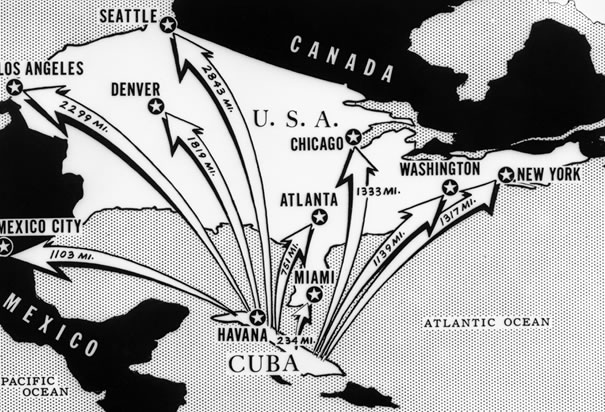
Image: Initial U.S. intelligence estimates of possible U.S. targets within range of the nuclear-capable Soviet SS-4 medium-range ballisticmissiles (MRBMs) and SS-5 intermediate-range ballistic missiles (IRBMs) found by the U-2 spy plane surveillance photographs if they were launched from Cuba.  Credit: Bettmann/CORBIS

On October 15, 1962, the National Photographic Intelligence Center confirmed that secret reconnaissance photographs from an American U-2 spy plane flight the day before were finally able to definitively prove the suspicion that Soviet medium-range and intermediate-range ballistic missiles capable of hitting Atlanta, the Midwest, Washington, DC, and even Los Angeles and Seattle were indeed in place and in the process of being installed and ready in Cuba within days. In response, President Kennedy and Secretary McNamara assembled the Executive Committee of the National Security Council call “ExComm” as a task force that, together with the Joint Chiefs of Staff and experts from the State Department and other intelligence agencies, would debate the United States’ options to deter the Soviets from nuclear escalation.

To Blockade, Strike or Invade?

Earlier in September 1962, after cloud-obscured U-2 photos had hinted at Soviet build-up in Cuba, the Joint Strategic Survey Council had submitted a recommendation for blockading rather than invading Cuba, on grounds that a blockade would be less dramatic, require smaller resources, cause fewer casualties, and be more plausibly related to upholding the Monroe Doctrine. In his 1823 annual message to Congress, President James Monroe had established this doctrine followed by the U.S. ever since that warned European countries not to interfere in the Western Hemisphere, stating “that the American continents… are henceforth not to be considered as subjects for future colonization by any European powers.

However, as the crisis unfolded, the primary debate among the military commanders of the Joint Chiefs was over whether to carry out an all-inclusive attack against Soviet and Cuban forces on the island or a surgical strike confined to just attacking the missiles themselves, the nuclear storage sites, and Soviet MiG planes.

Both President Kennedy and McNamara thought that an all-inclusive attack would inevitably lead to invasion of Cuba, and then possible counter-attacks elsewhere by the Soviets or escalation to all-out war.

But General Taylor reported that the Joint Chiefs and the combatant commanders felt “so strongly about the dangers inherent in [only] the limited strike that they would prefer taking no military action. They feel it’s opening up the United States to attacks which they can’t prevent, if we don’t take advantage of surprise.” Taylor added that his personal inclination was “all against invasion, but nonetheless trying to eliminate as effectively as possible every weapon [present in Cuba] that can strike the United States”.

According to the reports by the author, the Joint Chiefs were opposed to only attacking the medium-range ballistic missiles themselves, saying it would incur “an unacceptable risk” and that not attacking the enemy’s planes would expose the continental United States and Puerto Rico to air attack and could cause unnecessary casualties among the garrison at Guantanamo and the forces assembling for invasion.  Instead, the JCS initially recommended “also hitting tactical missiles, aircraft, ships, tanks, and other appropriate targets, as well as imposing a ‘complete’ blockade.


Image: A meeting of the Executive Committee of the National Security Council in the Cabinet Room during the Cuban Missile Crisis, October 29, 1962, 10:10-10:58am. Clockwise from left: Attorney General Robert F. Kennedy (standing); Assistant Sec. Defense Paul Nitze; Dep. USIA Dir. Donald Wilson; Special Counsel Theodore Sorensen; Exec. Sec. NSC Bromley Smith; Special Assistant McGeorge Bundy; Sec. Treasury Douglas Dillon; Vice President Lyndon B. Johnson; Ambassador  Llewellyn Thompson; William C. Foster; CIA Dir. John McCone (hidden); Under Secretary of State George Ball (hidden); President John F. Kennedy; Sec. State Dean Rusk; Sec. Defense Robert McNamara; Dep. Sec. Defense Roswell Gilpatric; Chairman JCS Gen. Maxwell Taylor. Credit: Photo by Cecil Stoughton, JFK Library ST-A26-18-62

The Blues vs. the Reds

Even more fascinating was the story of the war gaming techniques used. To quickly develop two alternative scenarios for the President to consider, the ExComm task force split into two groups that constantly exchanged position papers and critiqued each other’s work. The “Blues,” who were to prepare the scenario for a surprise air strike, included General Maxwell Taylor, Robert Kennedy, Treasury Secretary Douglas Dillon, Director McCone, Dean Acheson, and McGeorge Bundy. The “Reds,” drafting the blockade option, included Chief of U.S. Naval Operations Adm. George Anderson, Marine Corps Commandant David Shoup, Secretary Rusk, Deputy Secretary Gilpatric, and Theodore Sorensen.

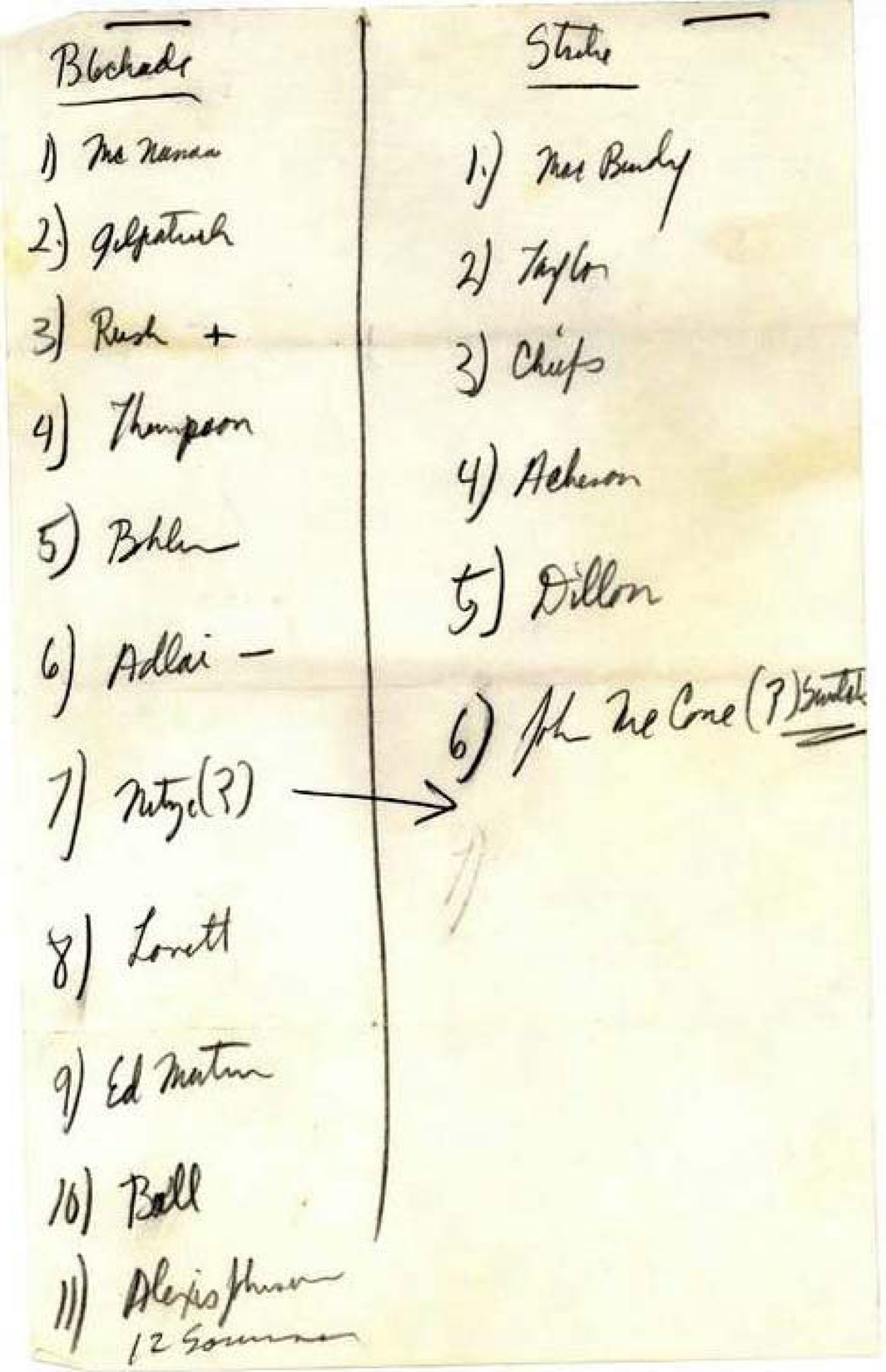
Image: On October 11 last week, certain documents from Attorney General Robert F. Kennedy’s personal papers about the Cuban Missile Crisis were declassified. In it was the above personal list of who RFK thought among the ExComm were the “Hawks” who favored an air strike (shown in the right column labeled “Strike”) vs. the “Doves” who favored a blockade of Cuba (in the left column). Note that the “Chiefs” meaning the Joint Chiefs of Staff along with General Taylor are shown on the “Hawks” Strike side of his list on the right.  Source: The National Security Archive

In less than two days, two complete scenarios were prepared and presented to President Kennedy on October 20, with competing input coming from the Pentagon and the State Department.

From this insider accounting of events, we learn that the Chairman thought that the probable sequence of events to be green-lighted would be: a political approach; a warning; air attack on the missile sites; blockade; and, if necessary, invasion, with the earliest air strike date set for October 21 (optimally the 23rd), and an invasion to begin on October 28.

However, to find out exactly what happened and how the drama played out behind the scenes, pick up a copy of this fascinating book.

HOW DO I OBTAIN The Joint Chiefs of Staff and National Policy, Vol. 8, 1961-1964”?

  • Buy it online 24/7 at GPO’s US Government Online Bookstore.
  • Buy it at GPO’s retail bookstore at 710 North Capitol Street NW, Washington, DC 20401, open Monday-Friday, 9am to 4pm, except Federal holidays, (202) 512-0132.

Find this and other Government publications about Cuba in our Cuba collection.

About the Author:  Michele Bartram is Promotions Manager for GPO’s Publication and Information Sales Division and is responsible for online and offline marketing of the US Government Online Bookstore (http://bookstore.gpo.gov) and promoting Federal government content to the public.


Reagan, Intelligence and the End of the Cold War

July 9, 2012

Guest blogger, GPO Public Relations Specialist Emma Wojtowicz, reviews a publication with an inside look at intelligence and the end of the Cold War:

In this election year, President Ronald Reagan has been  mentioned by Democrats and Republicans alike regarding his stance on tax policy. However, another association is the Cold War and President Reagan’s famous declaration about the Berlin Wall, “Mr. Gorbachev, tear down this wall!

Ronald Reagan, Intelligence and the End of the Cold War is a multimedia book and DVD recently published in November 2011 by the Ronald Reagan Presidential Library and the Historical Collections at the Central Intelligence Agency. It shares declassified documents from latter years of the Cold War with a focus on relations between General Secretary of the Soviet Union Mikhail Gorbachev and the Reagan administration.

Declassified documents are the primary focus of the book, but there is also an introduction and brief overview on intelligence, including President Reagan’s experience with the intelligence community prior to his presidency and his approach to intelligence as president; the role the intelligence community played in monitoring and anticipating the collapse of the Soviet Union; and expectations the public should have of the intelligence community.

Ronald Reagan, Intelligence and the End of the Cold War poses the question, “Should the U.S. intelligence community have done a better job foreseeing the collapse of the Soviet Union?” It does not answer the question for you, rather puts the subject of intelligence in context and provides declassified documents so readers can decide for themselves.

The book itself only contains a handful of declassified documents, but it comes with a DVD where readers have access to more than 200 declassified documents as well as photos from President Reagan’s administration, videos of press conferences and summits between the U.S. and Soviet Union, and an interactive timeline of the Cold War during the Reagan administration. The content of the book is also available on the DVD.

Image: Ronald Reagan Cold War timeline. Source: Ronald Reagan, Intelligence and the End of the Cold War (CLICK TO ENLARGE)

Highlights of the collection include video briefings for the Reagan Administration produced by the CIA’s Directorate of Intelligence on such topics as the Soviet space program, the Andropov succession, the Chernobyl disaster, and the Soviet media portrait of America. These briefings represent the first time the Agency used videos on a regular basis to deliver intelligence to policymakers. The entire collection marks the first substantial release of such historical material.

The amount of available declassified documents is a bit overwhelming. The content falls across a wide range of topics with a substantial focus on nuclear weapons and disarmament, but what is more interesting are the analyses of the Soviet Union’s politics and leaders, economy, society,  labor force, relationship with satellite countries, energy policy, and foreign policy.

One example is a memo on civil unrest in the Soviet Union that analyzes the number of instances of strikes, demonstrations, and riots, where they occurred, and the cause – each individual instance is thoroughly recorded. Another is on the volatile leadership situation in the USSR.

Image: Declassified CIA memorandum on the volatile leadership situation in the USSR; September 27, 1988. Source:  Ronald Reagan, Intelligence and the End of the Cold War

A particularly popular topic among the documents is Mikhail Gorbachev, both the man and the leader. Many documents focus on Gorbachev’s personality, goals and strategy of implanting his goals, the way he is perceived by citizens and other communist leaders, and his impact on the Soviet Union. It is clear from the documents that Gorbachev was viewed by the Reagan administration as a capable leader, who understood the problems the Soviet Union was facing, and had the potential to turn the Soviet Union around.

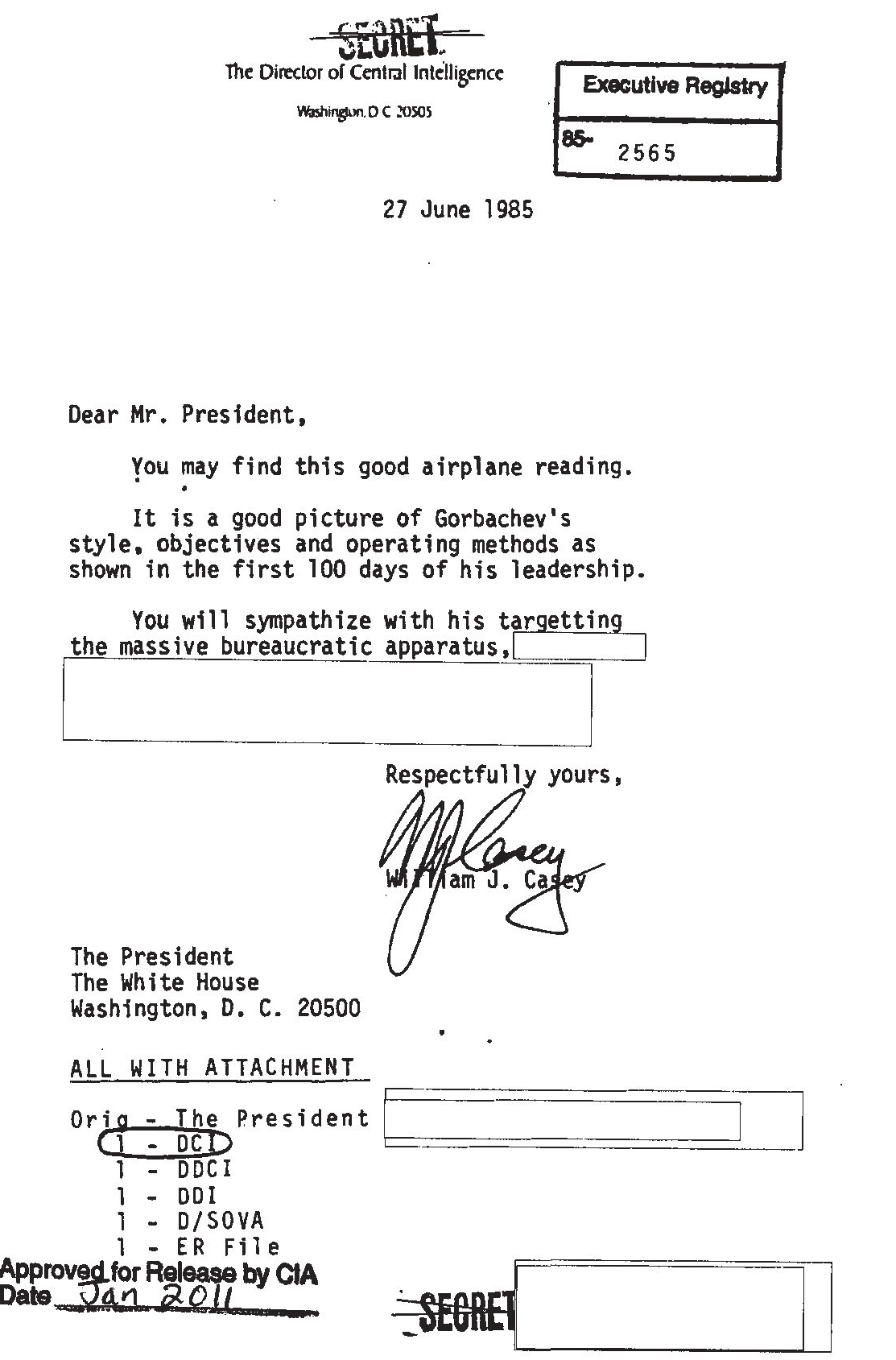
Image: Cover letter to President Ronald Reagan by William Casey of the recently declassified CIA assessment of Mikhail Gorbachev after this first 100 days in office. Source: Ronald Reagan, Intelligence and the End of the Cold War

An insightful comment is made in the introduction, “Deep down, officials seem to want intelligence to make decisions for them, when, in reality, it rarely can.

This sentiment is reflected in the declassified documents– they provide a wealth of information that is deeply analytical, but they do not spell out the best plans or policies for dealing with the Soviet Union or determine when it will cease to exist.

HOW DO I OBTAIN THIS “Ronald Reagan, Intelligence and the End of the Cold War”?

  • Buy it online 24/7 at GPO’s Online Bookstore.
  • Buy it at GPO’s retail bookstore at 710 North Capitol Street NW, Washington, DC 20401, open Monday-Friday, 9am to 4pm, except Federal holidays, (202) 512-0132.
  • Find it in a library.

The End of Don’t Ask, Don’t Tell

June 25, 2012

On September 20, 2011, the 18-year old United States military official “Don’t Ask, Don’t Tell” (DADT) policy came to an end.

Six months later, a new book by J. Ford Huffman and Tammy S. Schultz was published by the Marine Corps University Press entitled, The End of Don’t Ask Don’t Tell: The Impact in Studies and Personal Essays by Service Members and Veterans.

This is a collection of four scholarly studies and 25 essays about the impact of living under this policy from a diverse group of gay and straight, current and former military members from the Army, Navy, Air Force and Marine Corps.

Since June is Lesbian, Gay, Bisexual and Transgendered (LGBT) Pride Month, we thought it appropriate to review this book available through GPO and give some background on the policy that led to it.

Rise of Don’t Ask, Don’t Tell

In the early 1990’s in the United States, a push for more rights for non-heterosexuals in both civilian and military life was rising.  Eventually, on June 2, 2000, President Bill Clinton declared June 2000 the first official “Gay & Lesbian Pride Month” in the United States. (This was later renamed by President Barack Obama in 2009 who declared June as Lesbian, Gay, Bisexual and Transgendered Pride Month which it is called today).

However, lawmakers and the military establishment in 1993 were not ready to allow openly gay, lesbian or bisexual individuals to serve in the U.S. Armed Forces.

As a compromise, United States federal law Pub.L. 103-160 (10 U.S.C. § 654 called the “Don’t Ask, Don’t Tell” Policy, nicknamed DADT, was passed and went into effect on December 21, 1993. It “prohibited military personnel from discriminating against or harassing closeted homosexual or bisexual service members or applicants, while barring openly gay, lesbian, or bisexual persons from military service” (Wikipedia).

Image: Web banner from the U.S. Army’s DADT website

Not Asking vs. Not Telling

The “Don’t Ask” part of the DADT policy specified that superiors should not initiate questioning or investigation of a military service member’s sexual orientation without first having witnessed disallowed behaviors or received credible evidence. Because of the number of unauthorized investigations and harassment of suspected servicemen and women, the policy was expanded to “don’t ask, don’t tell, don’t pursue, don’t harass.”

Under the “Don’t Tell” aspect of the policy, the military service members themselves were prohibited from disclosing their sexual orientation or homosexual relationships while actively serving in the United States Armed Forces.

Anyone who did disclose or were discovered to be homosexual could be separated (discharged) from the military, resulting in some 14,346 members of the military being discharged because of their sexual orientation under 18 years of the DADT policy.

Changing Times, Changing Military Needs Led to DADT’s Repeal

After nearly two decades under DADT and the increasing need to recruit and retain the best able service members to help fight wars on multiple fronts, many American military and political leaders felt it was time to repeal “Don’t Ask, Don’t Tell.” The Pentagon performed a detailed analysis of possible issues and recommendations for implementation in the November 30, 2010 Support Plan for Implementation: Report of the Comprehensive Review of the Issues Associated with a Repeal of “Don’t Ask, Don’t Tell”.

Image: Pentagon’s November 2010 implementation plan and report on the issues associated with DADT repeal. Source: Gawker.com

Bipartisan support in Congress led them to pass the “Don’t Ask, Don’t Tell Repeal Act of 2010.” The caveat was that the policy would remain in place until the President, the Secretary of Defense, and the Chairman of the Joint Chiefs of Staff of the military all certified that the repeal of DADT would not harm military readiness, followed by a 60-day waiting period. The required certification was sent to Congress on July 22, 2011, which set the end of DADT for September 20, 2011.

In a statement accompanying the certification, President Obama said:

Today’s report confirms that a strong majority of our military men and women and their families—more than two-thirds—are prepared to serve alongside Americans who are openly gay and lesbian. This report also confirms that, by every measure, from unit cohesion to recruitment and retention to family readiness, we can transition to a new policy in a responsible manner that ensures our military strength and national security.

Thus, on September 20, 2011, “Don’t Ask, Don’t Tell” was repealed. Said Sen. Susan Collins of Maine, a Republican credited with pulling together bipartisan support for the repeal: “Today, for the first time in our history, we will welcome the service of any qualified individual who’s willing to put on the uniform of our country,” (Source: CNN).

Image: President Obama signs the “Don’t Ask, Don’t Tell Repeal Act of 2010.” Source: AP

Covered in the Book

The first part of The End of Don’t Ask Don’t Tell book contains academic reports and research that “shed light on the way forward for the services and policy makers.” This includes a report by Dr. Nora Bensahel who conducted extensive research with RAND Corporation on experiences of the other 26 countries who allow homosexuals to openly serve in their militaries. Other reports by military officers include one discussing the importance of considering service members’ “family readiness,” as well as the prevailing views and culture in the military in 2010 toward “Don’t Ask, Don’t Tell.”

The second part of the book includes personal essays from both gay and straight members of the military who served under DADT, emphasizing their personal experience of living under this policy. In them, the authors either provided details or “assurances that they were willing to testify under oath regarding their experiences.” As described by editors Schultz and Huffman in their introduction: “These personal essays peel back the curtain of the shame, uncertainty, homophobia, anger, fear, and other emotions of living under DADT. These are the views, recollections and words of the authors alone.

In one essay, a former female Marine described herself as: “I was a woman. I was black. I was gay. ‘Don’t ask, don’t tell.’ I was invisible.”  She concludes her essay with hope that her story helps others:

 “Change and transition can be difficult, and there will be casualties along the way. If sharing my story helps someone in the military whether they are gay or straight, it will have been worth it. If it helps the leadership make different decisions that include and help everyone with the transition of the repeal of DADT, it will have been worth it.

An Air Force officer who was discharged after his superior searched his personal emails and discovered he was gay was gratified that so many members of his old unit said they’d be honored to serve with him again. He sums up his essay with:

Soon I hope to resume my career as an officer and leader in the Air Force without the mandatory silence of DADT and the constant fear that I will be fired… Now [after the repeal of DADT] our military can judge its men and women on their merit and not their sexual orientation.

Image: A sign at Naval Air Station Whidbey Island in Washington State. Source: Oregon Public Broadcasting

The Best Story Ends with a Non-Event

The most common argument by critics against DADT’s repeal was that changing the policy in the middle of multiple wars would be a distraction and could cost lives. This was the original opinion of Marine Commandant General James E. Amos who lobbied against allowing gays to serve openly when the repeal was first passed in 2010, even though the Pentagon’s own 2010 research had shown already that 70% of Service members said they would be able to “work together to get the job done” with a gay service member in their immediate units.

Today, Amos, as are other military leaders, are pleased with the progress of the Armed Forces’ implementation of the repeal, with mandatory training sessions for all levels of the military haven taken place. DADT support groups say they have received no reports of harassment, discrimination or negative experiences connected with the DADT repeal from gay and lesbian active military.

In fact, an April 2012 article in the Marine Corps Times seems to show just how smoothly the transition has gone, as demonstrated by this anecdote involving Amos and his wife, Bonnie, at the Marine Corps Birthday Ball in November 2011. During the Ball, a female Marine introduced her lesbian partner to Amos’ wife, General Amos explained: “Bonnie just looked at them and said, ‘Happy birthday ball. This is great. Nice to meet you…’ That is happening throughout the Marine Corps.

Image: General Amos & Bonnie Amos. Source: Black Tie International Magazine.

Retired Marine Col. Brendan Kearney predicted a smooth transition in one of the book’s essays: “I believe the demise of DADT will quickly become a non-event, and the services as a whole will get on with the business at hand: Defeating the enemies of our country.”

Co-editor Tammy Schultz believes The End of Don’t Ask Don’t Tell book outlines a “relatively smooth compliance with the new law” according to a Huffington Post article. She concludes: “That is not to say that challenges don’t remain ahead, and our book details some of those. But the U.S. military can more than handle it.

So in the case of the end of the Don’t Ask, Don’t Tell policy, the best story ending seems to be that it is a non-event.

UPDATE 2012/06/27: On June 26, 2012, the Defense Department hosted its first ever Lesbian, Gay, Bisexual & Transgender Pride Month event since the repeal of “Don’t Ask Don’t Tell” at the Pentagon. Click here to watch the program on C-SPAN.

HOW DO I OBTAIN The End of Don’t Ask Don’t Tell: The Impact in Studies and Personal Essays by Service Members and Veterans?

  • Buy it online 24/7 at GPO’s Online Bookstore.
  • Buy it at GPO’s retail bookstore at 710 North Capitol Street NW, Washington, DC 20401, open Monday-Friday, 9am to 4pm, except Federal holidays, (202) 512-0132.
  • Find it in a library.

About the Author:  Michele Bartram is Promotions Manager for GPO’s Publication and Information Sales Division and is responsible for online and offline marketing of the US Government Online Bookstore (http://bookstore.gpo.gov) and promoting Federal government content to the public.

Losing our Shared National Experience?

October 31, 2011

Our blog post last week talked about GPO’s 150-year history of keeping America informed. But what does this mean in today’s media-saturated world?

Has the proliferation of media eroded our shared national experience?

[Figure 1. U.S. History Collage. Image courtesy of Mrs. Rice’s American History II class, Lexington High School, Lexington, Ohio.

Two weeks ago in a social media seminar for Federal Government, David Kirkpatrick (technology writer for the Daily Beast and Fortune magazine and author of a new insider book on Facebook) gave some startling statistics: 50% of Facebook’s 800 million users worldwide visit Facebook daily and up to 500 million have accessed Facebook on a single day, with the average Facebook user having over 130 “friends.”

But even more surprising, he said that 50% of Americans today now get their news and analysis about important events— sometimes edited or changed as it is passed along— from friends and family, often via social networks, text or email rather than from traditional media sources.

Prior to the 21st century, when Americans had only a few national media choices and limited local media, we would all receive the same original message at the same time, thus creating a shared American experience.

Today, in the U.S. alone Americans can choose to receive information from any of an estimated 1,476 daily newspapers; 1,500 television stations; 10,322 radio stations; 71 million cable television subscribers with hundreds of TV channels each; and more than 12 billion web pages and social media.

Kirkpatrick and others say the combination of the “Facebook effect”, media proliferation, and message selectivity have contributed to the erosion of our common, shared national experience.

GPO’s role in preserving our common American experience

As we mentioned in our blog last week, GPO’s mission for over 150 years has been “Keeping America Informed” about the three branches of the Federal Government.  This mission drives us to ensure the original information produced by Federal Agencies on behalf of the American people can be found by all Americans now and in the future.

What’s involved in capturing and disseminating our common Governmental information? It starts with gathering the content from Federal Agencies and publishing it in a professional format, whether print or digital. It then continues with authenticating the information to ensure Americans are getting the “genuine” unaltered information; creating permanent records with our catalog teams for our own FDSys digital database and Catalog of Government Publications; distributing these records to libraries in our Federal Depository Library Program and to worldwide library databases like WorldCat; and sending physical copies and/or ebooks to libraries, bookstores and book etailers.

View this video for an inside look at how GPO assembles and prints the Congressional Record—the official record of the proceedings, debates, and activities of Congress.

To keep America informed digitally, we allow users to subscribe to email newsletters by topic and are also now on social media, including Facebook, Twitter, YouTube, Foursquare and Yelp.

GPO Publications about shared American experiences

Here are some of my favorite Federal publications GPO has published that document significant shared American experiences over the past century. Do you remember when and how you learned of these events?

What are some of the significant national experiences that you will never forget and how did you learn about them and share them with others?

We would love to hear from you!


About the Author:  Michele Bartram is Promotions Manager for GPO’s Publication and Information Sales Division and is responsible for marketing the US Government Online Bookstore (Bookstore.gpo.gov) and promoting Federal government content to the public.


This Day in History: Lincoln visits the GPO

October 24, 2011

Guest blogger Emma Wojtowicz talks about an important day in GPO history.

On October 24, 1863 – 148 years ago today – President Abraham Lincoln visited the Government Printing Office, the only sitting president to visit the agency. To celebrate the anniversary of his visit, Government Book Talk is taking another look at GPO’s own publication, Keeping America Informed: The U.S. Government Printing Office, 150 Years of Service to our Nation (the book was previously featured on this blog on June 15).

GPO opened for business on the same day that Abraham Lincoln was inaugurated as President of the United States – March 4, 1861. The following year in September 1862, GPO printed the preliminary version of the Emancipation Proclamation issued by Lincoln as a general order. Then in 1863, Lincoln visited GPO by invitation from Public Printer John Defrees.

President Abraham Lincoln reads a draft of the Emancipation Proclamation to his Cabinet

Figure 1. First reading of the draft of the Emancipation Proclamation by Abraham Lincoln to his Cabinet on July 22, 1862.

[Painted by F.B. Carpenter ; engraved by A.H. Ritchie. Image courtesy of: The Library of Congress]

These unknown facts about Lincoln are part of GPO’s history and foundation. For 150 years, GPO has worked quietly and diligently behind-the-scenes for Congress, the White House, Federal agencies, and the public. Keeping America Informed tells the story of the United States from the different and unknown perspective of GPO employees and their consistent contribution to the workings of the Government. The book is full of “did you know?” facts and tidbits of information, often accompanied by an illustration or picture. For example, did you know that GPO has produced the United States passport since the 1920s?

Well, even if you did, you can learn a brief history of the passport – an idea originally conceptualized and produced by Benjamin Franklin, which identified the bearer as a trusted individual who was able to enter the U.S. The State Department took over control of the passport in 1856 and the single engraved page was produced by the Bureau of Engraving and Printing. When in the 1920s the League of Nations created an international standard for a booklet-style passport, the State Department sought GPO’s services to print it, and has remained a loyal customer ever since.

Earliest booklet-style US passports printed by the Government Printing Office (GPO)

Figure 2. First generation of booklet-style US passports. Printed by GPO. Source: “Keeping America Informed”

These types of facts and added background are what make Keeping America Informed a worthwhile read. Similar information can be found on the United Nations Charter, the Warren Commission, President George H. W. Bush’s 1991 inauguration, and the list goes on. In between, you can see historical photographs from GPO’s vast collection.

The book was written, edited, designed, and printed by GPO employees, which is entirely fitting because the message of the book is centered on GPO employees and how they have played a major role in the history of the United States. Abraham Lincoln visited GPO when the agency was still in its infancy, yet working around the clock in support of the war effort.

As the book details, GPO is a much different place today than when Lincoln visited; however, the mission of GPO remains the same. Keeping America Informed: The U.S. Government Printing Office, 150 Years of Service to our Nation is available through GPO’s online bookstore, retail bookstore, on our FDSys federal document database or in a library.

You can see the original printer’s proof of the Emancipation Proclamation in person at GPO’s 150th anniversary history exhibit now through December 2011!

To view an original copy of the preliminary version of the Emancipation Proclamation that was issued by President Lincoln and printed by GPO, visit our 150th anniversary history exhibit located at 732 North Capitol Street NW in Washington, DC. The Emancipation Proclamation is on loan from the Library of Congress only through December…

Click here to watch a video of our 150th anniversary exhibit on GPO’s YouTube channel.

The GPO 150th anniversary exhibit is open 8 a.m. to 4 p.m. Monday through Friday, except on Federal holidays.

Read more about Abraham Lincoln and his rise to the Presidency in the National Park Service’s recent work commemorating the 150th anniversary of Lincoln’s inauguration: Abraham Lincoln’s Journey to Greatness.