Remembering Camelot: Best of the old and new official publications about John F. Kennedy

November 19, 2013

For the World War II generation, it was December 7, 1941 that was a “date which will live in infamy.” For today’s Americans it is September 11, 2001. For my parents’ generation, November 22, 1963, is the infamous day that everyone remembers where they were when they heard the news that President Kennedy had been shot. The assassination of President John F. Kennedy is one of the most historic—and horrific— days of the 20th century, and its impact is still being felt today.  It’s hard to believe it has been 50 years this week since the tragic events unfolded in Dallas, Texas.

In commemoration of this important milestone in our Nation’s history, the U.S. Government Printing Office has assembled a number of Official Federal publications that help us reflect on the huge legacy left by “JFK” in his short but impactful 1,000 days in office.

JFK as a Senator and Presidential Candidate

When John F. Kennedy was running for President, he was a United States Senator from Massachusetts.  These publications give insight to the man during this period of transition from active Senator to President-elect.
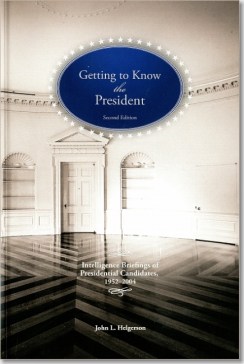
Getting To Know the President: Intelligence Briefings of Presidential Candidates, 1952-2004, including John F Kennedy, Ronald Reagan, Bill Clinton. ISBN 9781929667192Senate, 1789-1989, Volume 3: Classic Speeches, 1830-1993 contains the text of some of the most famous speeches by United States Senators, including a young Senator John F. Kennedy.

Getting To Know the President: Intelligence Briefings of Presidential Candidates, 1952-2004 (Paperback) and the Audiobook-MP3 edition are new publications that tell the story of how the CIA and the US Intelligence Community begin to brief Presidential candidates and Presidents-elect, including JFK and Lyndon Johnson, on vital intelligence issues even before they take office.

JFK’s Army for World Peace

?????????Image: Candidate Senator John F. Kennedy at the University of Michigan-Ann Arbor. Source: JFK Library

Two weeks after an improvised presidential campaign speech in October 1960 to a crowd of 10,000 cheering students at the University of Michigan in Ann Arbor where he asked “How many of you are willing to work in the Foreign Service and spend your lives traveling around the world?” Senator Kennedy proposed “a peace corps of talented men and women” who would dedicate themselves to the progress and peace of developing countries.  Encouraged by more than 25,000 letters responding to his call, newly elected President Kennedy took immediate action to make the campaign promise a reality and established the Peace Corps on March 1, 1961, with his brother-in-law, R. Sargent Shriver, as its leader.

A Life Inspired: Tales of Peace Corps ServiceThe lasting legacy of the Peace Corps’ and its ongoing inspiration to America’s younger generations is clearly shown in these two books. A Life Inspired: Tales of Peace Corps Service (Paperback) (it also available as an eBook) is a collection of autobiographical reminiscences by 28 former Peace Corps volunteers, while Crossing Cultures With the Peace Corps: Peace Corps Letters From the Field is a collection of actual letters from Peace Corps volunteers serving in various nations.

JFK’s Foreign Policy: Cold War Warrior

President Kennedy was confronted with some dramatic foreign policy issues from his first days in office, not least of which was how to avoid nuclear war with the Soviet Union over their missiles in Cuba.

History of the Office of the Secretary of Defense: The McNamara Ascendancy, 1961-1965 (eBook) John F. Kennedy isbn 999-000-55551-6History of the Office of the Secretary of Defense: The McNamara Ascendancy, 1961-1965 (eBook) tells the story of Kennedy’s Secretary of Defense, Robert McNamara, including his relationship with Presidents Kennedy and Johnson, the transformation of the Department of Defense as a part of Kennedy’s New Frontier, and the Pentagon’s handling of the Cuban Missile Crisis, Bay of Pigs episode, and the onset of the Vietnam War.

More than a mere historical text, The Joint Chiefs of Staff and National Policy, Vol. 8, 1961-1964 provides a fascinating inside look at the Joint Chiefs’ participation and their point-of-view in dealing with the following foreign crises from the U.S.S.R. arms race, Berlin Wall construction, Cuba, to Laos, expansion of NATO, support for Israel, and more – while working with new thinking in the Kennedy and Johnson presidential administrations.

Part of the Department of State’s famous Foreign Relations of the United States (FRUS) Series, Foreign Relations of the United States, 1961-1963, V. 5, Soviet Union presents a full accounting of the overall nature and structure of United States-Soviet relations that made up the Kennedy Administration’s Cold War diplomacy. It also refers to some of the intelligence and analysis of the initial build-up of Soviet missiles in Cuba that ultimately led to the Cuban Missile Crisis, as well as the complete official record of President Kennedy’s meetings with Soviet Chairman Premier Nikita Khrushchev at the Vienna Summit Conference, June 3-4, 1961.

Penetrating the Iron Curtain: Resolving the Missile Gap With Technology (Book and DVD)  ISBN: 9780160920547For more in-depth information about the Cuban Missile crisis and Cold War Kennedy style, read the new Penetrating the Iron Curtain: Resolving the Missile Gap With Technology (Book and DVD)  from the CIA which contains analysis and hundreds of recently declassified intelligence documents about the Soviet missile build-up and perceived US missile gap.

CIA Analysis of the Warsaw Pact Forces: The Importance of Clandestine Reporting (Book and DVD)  ISBN: 9780160920509Also interesting is the recently released CIA Analysis of the Warsaw Pact Forces: The Importance of Clandestine Reporting (Book and DVD) which studies the reaction by the Soviets to the West’s formation of NATO including West Germany by establishing a military bloc of Communist nations with the Warsaw Treaty of May 1955. This study continues CIA’s efforts to provide a detailed record of the intelligence derived from clandestine human and technical sources from that period.

A City Torn Apart: Building of the Berlin Wall (Book and DVD) ISBN: 9780160920455Many around the world have heard the famous quote from the Kennedy anti-Communist speech at the Berlin Wall on June 26, 1963, in which he says: “Today, in the world of freedom, the proudest boast is ‘Ich bin ein Berliner.’” The Berlin Wall became a symbol of Cold War hostilities between the US and the Soviets.  A City Torn Apart: Building of the Berlin Wall (Book and DVD) is a new multimedia book with DVD that covers the period of 1945 to the end of 1961, during the Kennedy administration with a vast collection of recently declassified CIA documents, videos, and photographs that show Berlin’s journey from a battered post war region occupied by the Allies to a city literally divided – with its western half becoming an island of freedom surrounded by a sea of Communist repression.

How JFK inspired America to “Send a Man on the Moon”

In response to both real and perceived Soviet threats, President Kennedy gave his “Urgent National Needs” speech to Congress on May 25, 1961, where he stated that “I believe that this nation should commit itself to achieving the goal, before this [1960s] decade is out, of landing a man on the Moon and returning him safely to the Earth.”  This statement turned to real policy and eventually manned missions to the moon. JFK’s lasting legacy to the U.S. space program is incalculable.

Exploring the Unknown: Selected Documents in the History of Exploring the Unknown: Selected Documents in the History of the United States Civil Space Program: V. VII: Human Spaceflight: Projects Mercury, Gemini, and Apollo NASA History Series ISBN 780160813818the U.S. Civil Space Program: V. I: Organizing for Exploration  is part of the NASA historical collection and provides a selection of expert essays and key official documents about the organizational development of NASA and the U.S. civil space program, including Senator then President Kennedy’s memos and inspirational speeches and Vice President Johnson’s early involvement that intensified after becoming President.

Exploring the Unknown: Selected Documents in the History of the United States Civil Space Program: V. VII: Human Spaceflight: Projects Mercury, Gemini, and Apollo  expands Kennedy’s vision of manned spaceflight into reality with Projects Mercury, Gemini and Apollo, providing essays and the key documents that outlined manned space program budgets, proposals, and even the selection of lunar landing spots and choices of symbolic items to bring to the moon.

NASA's First 50 Years: Historical Perspectives; NASA 50 Anniversary Proceedings ISBN: 9780160849657In this thoughtful retrospective, NASA’s First 50 Years: Historical Perspectives; NASA 50 Anniversary Proceedings, a wide array of scholars turn a critical eye toward the achievements of NASA’s first 50 years, probing an institution widely seen as the premier agency for exploration in the world, carrying on a long tradition of exploration by the United States and the human species in general.

Civil Rights and the Brothers Kennedy

After the Supreme Court ruled unanimously in Brown v. Board of Education in 1954 that racial segregation in public schools was unconstitutional, desegregation was a slow process in many Southern school districts and universities.

John F. Kennedy Presidential Library's account of James Meredith, the African-American student whose attempt to register at the University of Mississippi in 1962 led to a showdown between state and federal authorities and the storming of the campus by a segregationist mob. JFK Library "Ole Miss" micrositeImage: The John F. Kennedy Presidential Library’s account of James Meredith, the African-American student whose attempt to register at the University of Mississippi in 1962 led to a showdown between state and federal authorities and the storming of the campus by a segregationist mob. Source: JFK Library “Ole Miss” microsite

By President Kennedy’s election, civil rights activists were pushing for more equality, resulting in violent attacks and confrontations by staunch segregationists that required Federal involvement such as Federal marshals being called in by JFK’s brother and Attorney General Robert Kennedy to protect Alabama freedom riders, as well as forced integration at “Ole Miss” University of Mississippi.

Role of Federal Military Forces in Domestic Disorders, 1945-1992 ISBN: 0-16-072361-2 and 0-16-072364-7The book Role of Federal Military Forces in Domestic Disorders, 1945-1992 (Paperback) and (Hardcover) chronicles the U.S. Army’s response to major social events in contemporary American society, particularly the civil rights movement, including the integration showdown at the University of Mississippi in 1962 and other racial disturbances of the 1960s, all the way to the 1992 race riot in Los Angeles.

The End of Camelot

The practice of referring to the Kennedy Administration as Camelot came from a post-assassination interview for Life magazine with First Lady Jacqueline (Jackie) Kennedy, who referred to the years of Kennedy’s presidency before his assassination as an “American Camelot.”  She said that President Kennedy was fond of the music to the popular 1960-63 smash Broadway musical, Camelot, the lyrics of which were penned by Kennedy’s Harvard classmate, Alan Jay Lerner.  The First Lady mentioned that the President and she often listened to a recording of the hit title song before going to sleep, with JFK  particularly enjoying the phrase: “Don’t ever let it be forgot, that once there was a spot, for one brief shining moment that was known as Camelot.” Once the article was released, other journalists picked up on Mrs. Kennedy’s reference, and the world has used it ever since.

First Ladies by the White House Historical Association ISBN 9780912308838Jackie Kennedy’s historic role as First Lady is outlined in the beautifully done First Ladies of the United States of America book by the White House Historical Association which profiles the many courageous First Ladies, from Martha Washington to Jacqueline Kennedy, up to Hillary Rodham Clinton and Laura Bush.

The end of Camelot came with President Kennedy’s assassination by Lee Harvey Oswald. Afterwards, President Lyndon Johnson created a commission, chaired by Chief Justice Earl Warren to investigate the events that led to the assassination and any possible conspiracies.

The U.S. Government Printing Office (GPO) produced, in what was perhaps its single most important publication of the 1960s, the official results of this investigation in the Report of the President’s Commission on the Assassination of President Kennedy.  It became known unofficially as the Warren Commission Report or the Warren Report, named for Supreme Court Chief Justice Earl Warren who chaired the commission.

C732-1-WH64Image: Chief Justice Earl Warren presenting the Final Report of The President’s Commission on the Assassination of President Kennedy– printed by the U.S. Government Printing Office. September 24, 1964. Source: White House

Before it was released to the public on September 27, 1964, special security measures were set up at GPO to prevent any unauthorized disclosure of the manuscript.  A half century later, GPO is releasing a FREE digital version of the full, 900-page original Warren Commission Report from GPO’s FDsys (Federal Digital System) database.

Today it is still fascinating to re-live the events surrounding the events in Dallas in 1963 from eye witnesses.  In addition to witness testimony, the Report contains numerous photos, maps, diagrams, and illustrations.

The post-President Kennedy assassination audio tape recordings of conversations between various individuals in Washington, DC, and Air Force One pilots and officials on board during the flight from Dallas to Andrews Air Force Base are also available on FDsys.

johnjr-salutes-dad-jfkImage: John F. Kennedy, Jr. salutes his father’s coffin at President Kennedy’s funeral, with his widow First Lady Jacqueline (Jackie) Kennedy, daughter Caroline, and brothers Edward (Ted) Kennedy and Robert (Bobby) Kennedy.

These Official publications are part of the legacy of President John F. Kennedy and help us remember his 1,000 days of an American Camelot.

HOW DO I OBTAIN THESE JFK PUBLICATIONS?

You can find these official John F. Kennedy publications by clicking on the links above or through any of these methods:

  • Shop Online Anytime: Buy them online 24/7 at GPO’s Online Bookstore under the 35- John F. Kennedy collection (found under the US & Military History category Presidential History section).
  • Order by Phone: Call our Customer Contact Center Monday through Friday, 8 am to 5:30 pm Eastern (except US Federal holidays). From US and Canada, call toll-free 1.866.512.1800. DC or International customers call +1.202.512.1800.
  • Visit our Retail Store: Buy a copy of any print editions from this collection at GPO’s retail bookstore at 710 North Capitol Street NW, Washington, DC 20401, open Monday–Friday, 9 a.m. to 4 p.m., except Federal holidays, Call (202) 512-0132 for information or to arrange in-store pick-up.
  • Go to a Library: GPO provides copies of these publications to Federal Depository libraries worldwide. Find them in a library near you.

About the Author: Government Book Talk Editor Michele Bartram is Promotions Manager for GPO’s Publication and Information Sales Division in Washington, DC, and is responsible for online and offline marketing of the US Government Online Bookstore (http://bookstore.gpo.gov) and promoting Federal government content to the public.


Why Americans Should Care about Long-Term Care

September 27, 2013

Commission on Long-Term Care Final Report from September 2013 available from GPO.govThe Commission on Long-Term Care has formally released its Final Report to Congress in which it endorsed a package of 28 recommendations “for addressing our nation’s challenges with delivering and financing long-term care services and supports (LTSS).” Today it is also available from GPO.

Why Long Term Care is an Issue

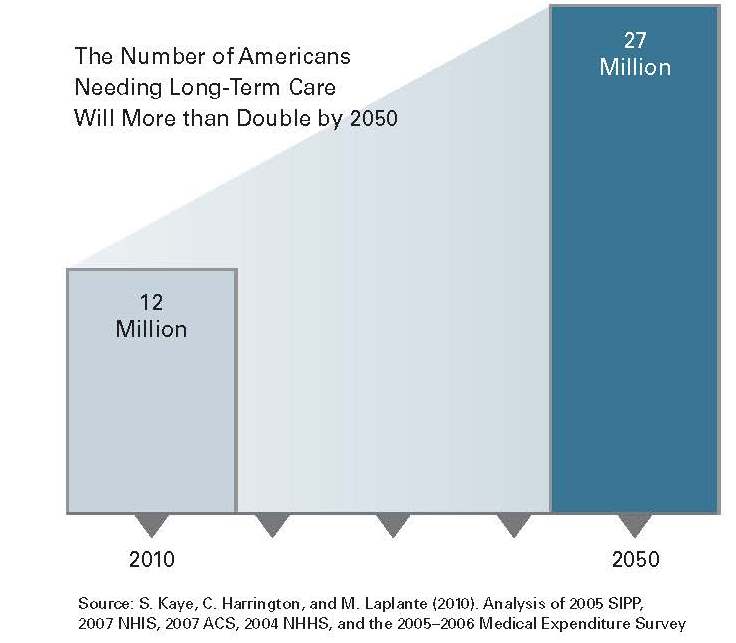
With U.S. Baby Boomers entering retirement age, every day more than 10,000 Americans reach the age of 65. In five years, over 50% of the U.S. population will be over the age of 50. As Americans live longer, more of us will need long-term care either with at-home services or nursing homes or other extended care facilities. The estimate is that over 12 million Americans need LTSS today, and 27 million will need long-term care by 2050 (see image from the Report below).

Americans-Needing-Long-Term-Care-by-2050Almost half (49%) of today’s 65 year-olds will require some kind of LTSS within 5 years, according to the report (See image below).

How-Soon-65-year-olds-will-need-Long-Term-Care from Commission on Long-term Care Final Report 2013

Finding and paying for quality long-term care is a growing challenge for most Americans, as the Commission’s report clearly demonstrates, particularly for frail older adults or people with disabilities and middle class families who do not qualify today for Government assistance like Medicaid. Likewise it is a concern for local, state and Federal lawmakers, since the report says that many people lack the necessary savings to pay for the high cost of this care along with regular health care costs, and that Medicare and Medicaid alone cannot cover the growing needs. (See our blog post Everything You Should Know About The Health Care Law for information about the new Affordable Care Act.)

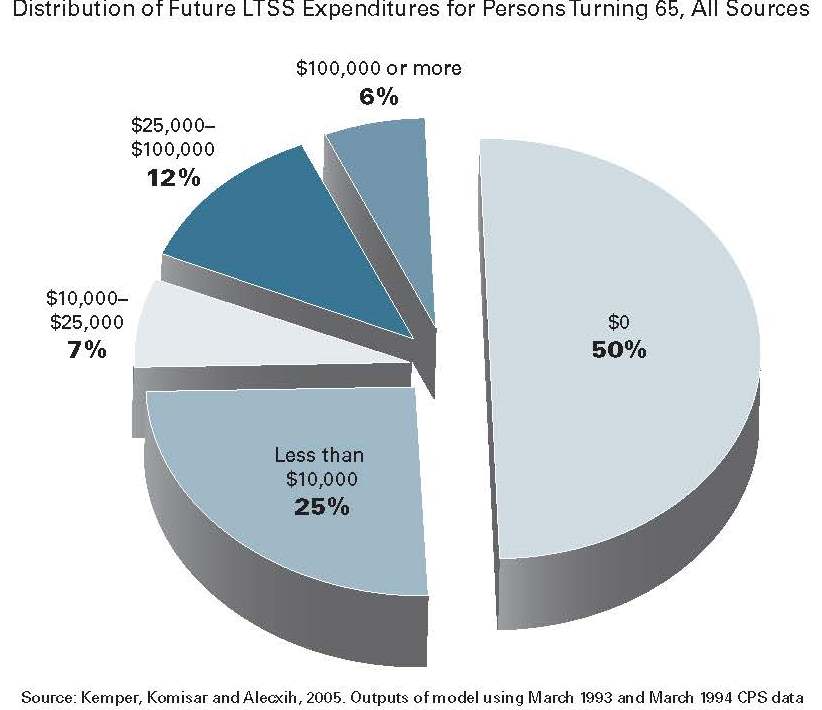
How expensive is long-term care today? The latest report from Genworth Financial estimates that middle class families would have to pay on average $18 per hour for homemaker services, $19 an hour for home healthcare aides, $3,405 a month for assisted living facilities, and around $230 a day for a room in a private nursing home. The Commission’s report calculates that 25% of today’s 65 year-olds can expect to pay from $10,000 to over $100,000 or more on long-term care services in the future! (See image below).

How-Much-65-year-olds-will-pay-for-Long-Term-Care from Commission on Long-Term Care Final Report September 2013What is the Commission on Long-Term Care?

The Commission on Long-Term Care was established under Section 643 of the American Taxpayer Relief Act of 2012 (P.L. 112-240), signed into law January 2, 2013, to be comprised of fifteen commissioners. Three members each were appointed by the President of the United States, the majority leader of the Senate, the minority leader of the Senate, the Speaker of the House of Representatives, and the minority leader of the House of Representatives.

The statute directs the Commission to:

“…develop a plan for the establishment, implementation, and financing of a comprehensive, coordinated, and high-quality system that ensures the availability of long-term services and supports for individuals in need of such services and supports, including elderly individuals, individuals with substantial cognitive or functional limitations, other individuals who require assistance to perform activities of daily living, and individuals desiring to plan for future long-term care needs.”

The statute further directed the Commission within 6 months of the appointment of Commissioners (by September 12, 2013) to:

“…vote on a comprehensive and detailed report based on the long-term care plan… [described above]… that contains any recommendations or proposals for legislative or administrative action as the Commission deems appropriate, including proposed legislative language to carry out the recommendations or proposals.”

What’s in the Report?

In the opening letter of the report addressed to the President and Congressional leaders, the Commissioners broadly explain the Report’s contents:

“Working on a bipartisan basis, the Commission adopted 28 specific public policy recommendations in service delivery, workforce, and financing that set a strong path forward for transforming systems of care to best meet people’s needs while appreciating today’s fiscal realities.”

Among the 28 measures in the report, the recommendations included:

  • Expanding use of insurance policies that combine life insurance and annuities with long-term care insurance.
  • Using a Partnership for Long-Term Care in which arrangements are made between state and private insurers to enable long-term care insurance policyholders to retain assets equal to the amount of benefits paid under their policy and still qualify for Medicaid.
  • Increasing education efforts to enhance public knowledge about long-term care options, especially given “the limitations of Medicare and Medicaid in funding [long-term care services]”
  • Recognizing caregivers as members of “care teams,” including information about caregivers in patient records, assessing caregivers’ need for support, and making services like respite care more widely available.

With five dissenting members, the Commission explains that it included “two approaches” in its Final Report about how to finance a long-term care system (LTSS) in the United States. To find out more, you should read this timely and important report.

How can you obtain a copy of this Long-Term Care report?

1) Buy a printed copy

  • Shop our Online Bookstore website: You may purchase a copy of this report online 24/7 on the U.S. Government Bookstore site.
  • Visit our Retail Store: Printed copies of this report may also be purchased from GPO’s retail bookstore at 710 North Capitol Street NW, Washington, DC 20401. Call (202) 512-0132 for information or to arrange in-store pick-up. Hours are Monday through Friday, 9 a.m. to 4 p.m., except Federal holidays.

2) View or download a PDF from GPO’s official Federal documents database, FDsys:

Download the Commission on Long-Term Care, Report to the Congress [PDF 1798 KB]

About the Author: Michele Bartram is Promotions & eCommerce Manager for GPO’s Publication and Information Sales Division and Government Book Talk Editor.


Relive the first year of the Obama Presidency

September 24, 2013

Portrait of the 44th President of the United States Barack Obama As we experience the first year of President Obama’s second term as the 44th President of the United States, take a look back on what was going on at this time during the first year of his first term as president with the Public Papers of the Presidents, Barack Obama 2009, Book 2. This volume covers the public messages and statements made by President Obama during the second half of his first year in office from July to December 2009.

Public Papers of the Presidents of the United States, Barack Obama, 2009, Book 2, July 1 to December 31, 2009.  ISBN: 9780160860867 and GPO Stock #069-000-00185-8Some highlights of those six months include the confirmation of Sonia Sotomayor as President Obama’s first nomination to the Supreme Court, the shaping of the health care law (Read our blog post: “Everything You Should Know About The Health Care Law“), and the continuing efforts to create jobs and rebuild the U.S. economy. The book also includes a section of official color photographs from events during the time period.

This book is part of the Public Papers of the Presidents series which consists of public writings, addresses and remarks made by the President and is the second volume of the Barack Obama Public Papers collection, which includes an eBook version of Book 1. (Read about the first volume in our blog post: “The First Collection of President Obama’s Public Papers.”)

As in other Public Papers volumes, the appendices provide listings of:

  • A digest of President Obama’s daily schedule and meetings, when announced, and other items of general interest issued by the White House Office of the Press Secretary;
  • President Obama’s nominations submitted to the Senate;
  • A checklist of materials released by the Office of the Press Secretary that are not printed full-text in the book; and
  • A table of Proclamations, Executive Orders, and other Presidential documents released by the Office of the Press Secretary and published in the Federal Register.

Public Papers of the Presidents series

The entire Public Papers of the Presidents series is published by the National Archives’ Office of the Federal Register (OFR) and includes two volumes per year, each volume covering a six-month period of the presidency, with the OFR checking remarks against a recording and signed documents against the original to ensure accuracy. The series started with President Hoover and continues to President Obama, with the exception of President Roosevelt who chose to have his papers published privately.

To learn more about the process of compiling the Public Papers of the Presidents, watch this video below on the production of President Obama’s first volume at the Government Printing Office (GPO):

Video Government Printing Office The Making-of-Barack-Obama-Public-Papers-of-the-President

Image: Excerpted from the video of the Making of the Public Papers of the President. Depicts President Obama in the Oval Office being presented with the first volume in his Public Papers printed by the Government Printing Office in April 2011. Pictured from left to right are: current Public Printer of the United States, Davita Vance-Cooks; previous Public Printer, William J. Boarman; President Barack Obama; Archivist of the United States, David S. Ferriero, and Director of the Federal Register, Ray Mosley.

The Public Papers of the Presidents series is also available on GPO’s Federal Digital System (FDsys). The public can digitally access the digitized volumes starting in 1991 with President George H. W. Bush through President Barack Obama, 2009 from this page on FDsys.

GPO also makes the Public Papers of the Presidents series available in print through the agency’s online bookstore with volumes back to Herbert Hoover. The public can browse through the various volumes from different presidents on the Public Papers of the Presidents collection page in the Presidential History collection under the US & Military History category.

How do I obtain a copy of the Public Papers of the Presidents, Barack Obama 2009, Book 2?

1) Buy a printed copy

  • Shop Online: You can purchase a printed copy of Public Papers of the Presidents, Barack Obama 2009, Book 2 or any of the previous volume(s) of the Obama presidency by shopping the Barack Obama Public Papers collection on the U.S. Government Online Bookstore.
  • Order by Phone: Call our Customer Contact Center Monday through Friday, 8 am to 5:30 pm Eastern (except US Federal holidays). From US and Canada, call toll-free 1.866.512.1800. DC or International customers call +1.202.512.1800.
  • Visit our Retail Store: Buy a printed copy at GPO’s retail bookstore at 710 North Capitol Street NW, Washington, DC 20401, open Monday–Friday, 9 a.m. to 4 p.m., except Federal holidays, Call (202) 512-0132 for information or to arrange in-store pick-up.
  • Find it in a Library:  GPO provides catalog records to Federal Depository libraries worldwide. Find this publication in a federal depository library.

2) View or download a PDF from GPO’s official Federal documents database, FDsys:

About the Author: Our guest blogger is Emma Wojtowicz, Public Relations Specialist in GPO’s Office of Public Affairs. Additional content provided by Government Book Talk Editor: Michele Bartram, Promotions & eCommerce Manager for GPO’s Publication and Information Sales Division.


The Constitution Annotated: The Pursuit of App-iness

September 17, 2013

follow-the-founding-fathers-david-bowman_computerIn preparing for this Constitution Day blog post, not only did I retake the civics quiz from last year’s Constitution Day post (see Quiz: Are you smarter than an 8th grade Civics student?), I also scrolled through my tablet last night, reading the Preamble to the Constitution and looking up related quotes. Then it occurred to me: if Founding Father George Washington had been alive today, would he have been a PC or an Apple guy? I’m betting our pragmatic First President would be a PC guy. I’m pretty sure innovator Thomas Jefferson would have been a stylish iPad man, and Benjamin Franklin, inventor of the bifocals, would probably be sporting Google Glasses now and tinkering with them.

Image: Founding Fathers Thomas Jefferson, Benjamin Franklin, George Washington. Original Illustration by David Bowman from his book “What Would the Founding Fathers Think?”

constitution-annotated-printWhat is clear is that our Founding Fathers were strategic thinkers who realized that a fully functioning republic needed a clear but flexible code of law that evolved with the Nation. Thus, they wrote the Constitution of the United States, which has stood the test of time with over two centuries of amendments and interpretations by all branches of the U.S. Federal Government.

CONAN for the Librarian (and Lawyers)

Since 1913, the Senate has directed that a publication be issued summarizing the current state of the Constitution to date, with all the amendments and the official interpretations, with the analysis today provided by the Library of Congress’ Congressional Research Service. This publication is called The Constitution of the United States of America, Analysis and Interpretation, popularly known as the Constitution Annotated or “CONAN” among the real insiders.

Constitution-of-the-US-Pocket-GuideIn addition, many Americans, including Members of Congress, buy a pocket print edition of the Constitution and Declaration of Independence to carry around with them at all times. (Click on image to the left.)

Constitution Goes Mobile and Online

This year marks the 100th anniversary of the Constitution Annotated publication, and to celebrate it and Constitution Day, the Government Printing Office (GPO) not only issued the Centennial Edition in print, but has also worked with the Senate Committee on Rules and Administration and the Library of Congress to develop and launch both a new mobile app as well as a web publication that make analysis and interpretation of constitutional case law by Library experts accessible for free to anyone with a computer or mobile device.

The new resources, which include analysis of Supreme Court cases through June 26, 2013, will be updated multiple times each year as new court decisions are issued.  Legal professionals, teachers, students and anyone researching the constitutional implications of a particular topic can easily locate constitutional amendments, federal and state laws that were held unconstitutional, and tables of recent cases with corresponding topics and constitutional implications.

The new app and improved web publication will make the nearly 3,000-page “Constitution Annotated” more accessible to more people and enable updates of new case analysis three or four times each year.

Public Printer Davita Vance-Cooks said,

“Through this collaborative project, the Library of Congress and GPO are providing the public with timely access to an enhanced, authenticated version of the “Constitution Annotated” through GPO’s Federal Digital System. This is another example of how GPO works with Congress, the Library and other agencies to meet the information needs of the American people in the digital age.”

Keeping our “Complex Machinery” in Working Order

On May 19, 1821, years after the Constitution was adopted, John Adams wrote in a letter to Thomas Jefferson that:

“A free government is a complicated piece of machinery, the nice and exact adjustment of whose springs, wheels, and weights, is not yet well comprehended by the artists of the age, and still less by the people.”

Even though our Founding Fathers could not have envisioned a digital future complete with the Internet and smartphones, the framework they put in place has been able to roll with the times. Americans know that our system is indeed a “complicated piece of machinery,” with our laws serving as the user manual, but tools like the Constitution Annotated– in print or now online or on your mobile device– now exist to help keep our machinery of democracy well oiled.

George-Washingtons-Annotated-Copy-of-a-Draft-of-the-U.S.-ConstitutionImage: Even George Washington annotated his copy of the Constitution! (seen left). Source: National Archives

How can I obtain The Constitution Annotated?

1) Buy the Print Edition of The Constitution of the United States of America, Analysis and Interpretation, Centennial Edition

2) Mobile app version of the Constitution Annotated

  • For Apple iOS Devices: Download the new Constitution Annotated app for iOS devices for free from Apple’s iTunes Store or via this direct link: http://beta.congress.gov/constitution-annotated/.
  • ·        For Android Devices: An Android version of this app is under development.

3) Constitution Annotated web publication on FDsys.gov

The Constitution Annotated web publication will be available on GPO’s Federal Digital System (FDsys) www.fdsys.gov as a digitally-signed, searchable PDF that includes a linked table of contents, a linked table of cases, a linked index and GPO’s Seal of Authenticity on every page.

The new Constitution Annotated and a suite of constitutional resources can be viewed at http://beta.congress.gov/constitution-annotated/. The page features links to the app stores, an interactive table listing recent cases of high interest, a bibliography of Constitution-related primary documents in American history and tips for searching the Constitution Annotated on GPO’s website at www.gpo.gov/constitutionannotated.

About the Author: Government Book Talk Editor Michele Bartram is Promotions Manager for GPO’s Publication and Information Sales Division in Washington, DC, and is responsible for online and offline marketing of the US Government Online Bookstore (http://bookstore.gpo.gov) and promoting Federal government content to the public.


September 11 Tales of Heroes and Tough Lessons

September 11, 2013

9-11 Decade of Remembrance Twin Towers and Pentagon Logo designed by David McKenzie at the Government Printing OfficeThere are certain moments and events that are etched in our national consciousness. Ask any American who was alive in the 60’s where he or she was when John F. Kennedy or Martin Luther King was assassinated and you will hear a stirring personal story. For our generation, it was September 11, 2001.

Image: September 11 Decade of Remembrance logo with World Trade Center Twin Towers surrounded by a figure representing the Pentagon. Created by David McKenzie with the Government Printing Office for the U.S. Government Bookstore.

I was right across from the Twin Towers twelve years ago today, getting ready to board a ferry for my daily commute from New Jersey across the Hudson River into Manhattan, when I saw the second plane hit the World Trade Center right across from me. So, too, I cried with a group of strangers as we stood on the ferry platform and watched in horror as the first tower fall, saw the dust cloud rise and felt the earth—and the world—tremble.

America and Americans have changed since that day… twelve years ago today. We have since heard stirring stories of heroes and sacrifice, and learned many grim lessons that are still affecting both policy and people today.

Many of these stories of heroism, missed opportunities, and resulting actions have been painstakingly and faithfully chronicled by a wide array of Federal agencies, ensuring the sacrifices and lessons are not forgotten.

Responding to the Tragedies

Both in New York and the Pentagon in Washington, DC, we saw how first responders and medical personnel rushed to save lives. These excellent publications tell the stories of the heroes from that day:

  • 008-000-01049-8Pentagon 9/11 (10th Anniversary Edition) (Paperback) includes a foreword by Secretary of Defense Leon Panetta and provides the most comprehensive account available of the 9/11 attack on the Pentagon and aftermath, including unprecedented details on the impact on the Pentagon building and personnel and the scope of the rescue, recovery, and care-giving effort.
  • 008-000-01048-0Attack on the Pentagon: The Medical Response to 9/11 not only tells the personal stories from medical personnel responding to the attack on the Pentagon, but also provides insight from MEDCOM officers detailed to New York to support National Guard troops guarding ground zero’s perimeter. It also includes the Army’s involvement in the recovery of deceased attack victims at the Pentagon and the work of the Armed Forces Institute of Pathology in identifying human remains at Dover Air Force Base. In addition, the roles of military and civilian hospital staffs and of military environmental health and mental health specialists in taking care of attack victims and their families are also examined.

Tough Lessons

The single must-read for every American about September 11 is the official version of The 9/11 Commission Report: Final Report of the National Commission on Terrorist Attacks Upon the United States. This publication lists the findings of the National 9/11 Commission, listing all the painful errors made leading up to the terrorist attacks and outlining specific recommendations for international, national, state and local changes in policy and procedures that the panel of experts felt needed to be implemented to ensure a similar attack never happened again. This seminal publication has served to inform all subsequent policies and legislation since 9/11. It is available in print or as an eBook.

911-commission-report

Image: Launch of the 9/11 Commission Report. Courtesy: CSMonitor.com

The Senate, Select Committee on Intelligence, and House, Permanent Select Committee on Intelligence examined the intelligence failures leading up to 9/11 and jointly published the results in United States Congressional Serial Set, Serial No. 14750: Joint Inquiry Into Intelligence Community Activity Before and After Terrorists Attacks of September 11, 2001 With Errata.

027-001-00097-1Additional insights into the causes of and responses to terrorism can be gleaned from Terrorism Research and Analysis Project (TRAP): A Collection of Research Ideas, Thoughts, and Perspectives, V. 1. This publication provides the findings from the post-9/11 FBI Terrorism Research and Analysis Project (TRAP) Symposium. TRAP is a leading research consortium made up of international/domestic academics and law enforcement officers, and is a working group sponsored by the FBI’s Behavioral Science Unit. In it, these counter-terrorism experts provide a better understanding of the causes of terrorist activity and possible government response tactics to mitigate terrorist actions.

064-000-00029-2As we watch the new World Trade Center going up in New York, we can be assured that builders are incorporating architectural and construction lessons learned from the World Trade Center Building Performance Study: Data Collection, Preliminary Observations, and Recommendations.

Policy and Legislative Response

United States Congressional Serial Set, Serial No. 14924, House Report No. 724, 9/11 Recommendations Implementation Act, Pts. 1-6 outlines the specific legislative changes enacted by Congress, providing both background and justifications for them along with attribution.

A print copy of the law itself can be purchased here: Implementing Recommendations of the 9/11 Commission Act of 2007, Public Law 110-53 along with the details of the various committee conferences contributing to it in Implementing Recommendations of the 9/11 Commission Act of 2007, Conference Report to Accompany H.R. 1, July 25, 2007.

Defending the Homeland since 9/11

041-001-00657-5National Strategy for Homeland Security (October 2007) provides the common framework outlined by the George W. Bush Administration to guides, organize and unify the United States’ homeland security efforts.

008-000-01068-4A new publication from the Air Force Reserve called Turning Point 9.11: Air Force Reserve in the 21st Century, 2001-2011 tells the story of how the Air Force Reserve responded to 9/11 and have contributed to the security of the United States in a post-September 11 world.

050-012-00440-4In a similar vein, Rogue Wave: The U.S. Coast Guard on and After 9/11 chronicles the involvement of the U.S. Coast Guard on that fateful day and the evolving role in national and world security since.  Part of the Coast Guard 9/11 response is told in this touching video about the boatlift to evacuate people from lower Manhattan is told in a video narrated by Tom Hanks entitled: BOATLIFT, An Untold Tale of 9/11 Resilience.”

A touching video about the boatlift to evacuate people from lower Manhattan on 9/11 (September 11) is told in a video narrated by Tom Hanks entitled: BOATLIFT, An Untold Tale of 9/11 Resilience. Click on the image above or this link to view the “Boatlift” video.

The upcoming U.S. Army War College Guide to National Security Issues, Volume 2: National Security Policy and Strategy provides a summarized look at the national security curriculum now taught to our nation’s top military and civilian leaders by the U.S. Army War College. Revised with the lessons learned from the years since 9/11, this publication includes a chapter on ”Securing America From Attack: The Defense Department’s Evolving Role After 9/11.”

How can I obtain these Federal 9/11 publications?

  • Shop Online: Print Editions of these 9/11-related publications may be ordered from the U.S. Government Online Bookstore at http://bookstore.gpo.gov, by clicking on the links above in this blog post or shopping our Terrorism & 9/11 History collection under our US & Military History category.
  • Order by Phone: Call our Customer Contact Center Monday through Friday, 8 am to 5:30 pm Eastern (except US Federal holidays). From US and Canada, call toll-free 1.866.512.1800. DC or International customers call +1.202.512.1800.
  • Visit our Retail Store: Buy copies of these publications at GPO’s retail bookstore at 710 North Capitol Street NW, Washington, DC 20401, open Monday–Friday, 9 a.m. to 4 p.m., except Federal holidays, Call (202) 512-0132 for information or to arrange in-store pick-up.
  • Find them in a Library: Find these publications in a federal depository library.

About the Author: Government Book Talk Editor Michele Bartram is Promotions Manager for GPO’s Publication and Information Sales Division in Washington, DC, and is responsible for online and offline marketing of the US Government Online Bookstore (http://bookstore.gpo.gov) and promoting Federal government content to the public.


The Privacy Act: What the Government Can Collect and Disclose about You

June 28, 2013

Privacy is the watchword in the news these days. With the revelations in recent weeks about far-reaching domestic surveillance programs by the National Security Agency (NSA) and other Federal agencies that were expanded under the Patriot Act, Americans are scrambling to determine what privacy rights they have to information collected by the Federal Government.

Overview-of-the-Privacy-Act-of-1974-2012-Edition-9780160914461Thus, the timing is ideal to review a biennial publication, Overview of the Privacy Act of 1974 (2012 Edition), available in print from the U.S. Government Online Bookstore.

The Overview of the Privacy Act of 1974 provides a valuable function to consumers, the media, Government and members of the legal profession by not only providing the current text of the Privacy Act and all its subsequent amendments, but also by consolidating the current regulations and updates, interpreting the Act’s provisions and giving detailed legal analysis of the latest court decisions that have decided challenges to how the Privacy Act has been enacted by various White House Administrations and Federal Agencies since the Act was passed.

What is covered by the Privacy Act?

The Privacy Act of 1974 established a “Code of Fair Information Practice that governs the collection, maintenance, use, and dissemination of personally identifiable information about individuals that is maintained in systems of records by federal agencies.”

The Privacy Act protects certain federal government records pertaining to individuals. In particular, the Act covers “systems of records” that an agency maintains and retrieves by an individual’s name or other personal identifier, such as your social security number.  (For clarification, a “system of records” refers to a group of records or a file under the control of a particular Federal agency from which information is retrieved by the name of the individual or by some identifier assigned to the individual.)

With the advent of wide-spread use of computers and databases by the Federal Government, the Privacy Act was amended through the Computer Matching and Privacy Protection Act of 1988, which added certain protections for the subjects of Privacy Act records whose records are used in automated matching programs, such as the establishment of Data Integrity Boards at each agency.

Privacy Act Requirements

But what rights do individuals have under the Privacy Act? According to the Overview of the Privacy Act of 1974 (2012 Edition), it gives individuals the right to review records about themselves, to find out if these records have been disclosed, and to request corrections or amendments of these records, unless the records are legally exempt.

From reading the publication, it seems the Act also requires that a Federal Government agency must:

  • give the public notice of their systems of records by publishing them in the Federal Register (also available as a subscription from GPO);
  • follow strict record-keeping requirements;
  • request the written consent of the subject individual for disclosure of their personal information– “unless the disclosure is pursuant to one of twelve statutory exceptions;” and
  • provide individuals with a means  by which they can access and amend (review and correct) records stored about them.

Your-Right-to-Federal-Records-2011-coverYour Right to Federal Records

For information about your rights to “discover, access and amend” Government records about you and frequently asked questions and answers about the Privacy Act and the Freedom of Information Act (FOIA), you might want to check out the free publication, “Your Right to Federal Records available from the GSA’s Federal Citizen Information Center (FCIC).

You may also be interested in learning more about the Freedom of Information Act by reading the Guide to the Freedom of Information Act, also published by the Justice Department and available in print from GPO.

Scope Issues

The Privacy Act does NOT apply to data collected about persons outside the United States, nor does it protect the privacy of your records that are maintained by the private sector, such as your credit report, bank account and medical records or even local or state government records like your driver’s license. Since many Americans today assumed that the battle to keep this non-Federal data private was already lost, it was comforting to discover that there is still a measure of privacy in data kept about you by the Federal Government.

And finally, while The Privacy Act does apply to the records of every “individual,” it nevertheless only applies to records held by an “agency.” Thus, any records ”held by courts, executive components, or non-agency government entities are not subject to the provisions in the Privacy Act and there is no right to these records.”  The Overview covers many questions about scope.

Exemptions and Exceptions

The most fascinating part of reading the publication to me– and timely considering the current news cycle– was to learn that there are situations where the Government is not legally required to follow the Privacy Act . According to the Overview, there are currently Twelve Exceptions to the “No Disclosure Without Consent” Rule of the Act and Ten Exemptions to the Privacy Act altogether where Federal agencies are not required to disclose records. 

Two of the ten exemptions outlined by the Overview are the “General Exemptions,” which apply to records about individuals maintained by

1)      the Central Intelligence Agency (CIA) and

2)      law enforcement agencies— or a component thereof— that primarily perform criminal law enforcement duties, “including police efforts to prevent, control, or reduce crime or to apprehend criminals.”

New proposed exemptions are offered all the time by subsequent Congresses and Administrations, such as the George W. Bush Administration’s agreement signed with the European Union in 2007 to share an airline’s Passenger Name Record as well as the utilize the Automated Targeting System.

Protecting-your-privacy

The questions about what constitute personally identifying data; what legal exemptions and exceptions apply; and how the Privacy Act has been interpreted over time by Federal Agencies, the Office of Management and Budget (OMB) and the Federal courts make up a good part of the Overview.

With post-9/11 security concerns driving Agencies’ desire for more information coupled with rapidly evolving technologies that enable greater collection and analysis of data, the publishers of the Overview of the Privacy Act of 1974 will certainly be kept very busy in upcoming years reporting on and analyzing new privacy regulations and court decisions that will follow.

How Can I Obtain These Privacy Publications?

Anyone concerned with the laws governing what the Federal Government is collecting and disclosing about individuals in the United States—and how much individuals can learn about it—should read this important publication.

  • Overview of the Privacy Act of 1974 (2012 Edition) in Print
    • Shop Online: Buy a print edition on the GPO U.S. Government Online Bookstore NOW ON SALE!!
    • Order by Phone: Call our Customer Contact Center Monday through Friday, 8 am to 5:30 pm Eastern (except US Federal holidays). From US and Canada, call toll-free 1.866.512.1800. DC or International customers call +1.202.512.1800.
    • Visit our Retail Store: Buy it at GPO’s retail bookstore at 710 North Capitol Street NW, Washington, DC 20401, open Monday–Friday, 9 a.m. to 4 p.m., except Federal holidays, (202) 512-0132.
    • Find it in a Library: Search for it in a Federal Depository Library.

About the Author: Government Book Talk Editor Michele Bartram is Promotions Manager for GPO’s Publication and Information Sales Division in Washington, DC, and is responsible for online and offline marketing of the US Government Online Bookstore (http://bookstore.gpo.gov) and promoting Federal government content to the public.


Glad Dad: Best Books and Sites for Fathers

June 11, 2013

Fathers-day-in-multiple-languagesMany of our personal characteristics, such as where we are born, the color of our eyes, our native language—are due to luck. If we get good parents, this is due to luck, too. When we become parents ourselves, though, we need to rely on our own hard work. Being a parent is the happiest and hardest job I’ve ever had, and I know many people say the same. Any help you can get with that job, whether it is from your own parents, friends, your child’s teachers, parents of your child’s friends, is welcome. As the African proverb goes, it takes a village to raise a child.

Image: How do you say Father? Source: Craftionary

The Federal government wants to be part of that village, and provide parents with any assistance it can give. And with Father’s Day this Sunday, the Government Printing Office wants to highlight these terrific Federal publications and websites to help Dads be all they can be. Whether he’s called Papi, Papa, Pop, Baba, Daddy, Da, Abbu or just plain Dad, celebrate the fathers– and father figures– you know by sharing these resources with them.

National Responsible Fatherhood Clearinghouse

Fatherhood.gov Despicable Me National Responsible Fatherhood ClearinghouseThe Government supports fathers in many ways; one of them is through the National Responsible Fatherhood Clearinghouse at Fatherhood.gov. Dads can check out this site to find fatherhood programs and resources, connect with mentors, read the latest blog posting on DadTalk, and take the Fatherhood Pledge.

Eleven Federal partners are involved in the Responsible Fatherhood Working Group: the Departments of Agriculture, Commerce, Education, Health and Human Services, Housing and Urban Development, Justice, Labor, Veterans Affairs, the Corporation for National and Community Service, the U.S. Equal Employment Opportunity Commission, and the Office of National Drug Control Policy. The level of Federal investment shows how seriously the President and the Federal Government takes this initiative. Another way to reap the benefits of Federal support of fathers is to read Federal government publications prepared in support of responsible fatherhood.

Promoting Responsible Fatherhood

Hero poster for FatherhoodFirst.org Promoting Responsible Fatherhood: Every Father Taking Responsibility for His Child’s Intellectual, Emotional, and Financial Well-Being discusses the various programs and initiatives that President Obama has been promoting as part of his Fatherhood and Mentoring Initiative, including the Head Start-sponsored Fatherhood First program (see poster on the left).

President Obama believes in the importance of fatherhood, as he said in 2009:

“I came to understand the importance of fatherhood through its absence—both in my life and in the lives of others. I came to understand that the hole a man leaves when he abandons his responsibility to his children is one that no government can fill” (p. 2).

To keep that void from opening, the Federal Government has started the aforementioned initiative, and the president has asked for Federal budget support for the Child Support Enforcement Program and to sustain funding for the Healthy Marriage and Responsible Fatherhood grants.

President Obama playing with daughters and new dog BoThis book discusses these and similar Federal Government programs started and/or supported by the Obama Administration, and what the programs have done to help fathers and their families.

Image: President Obama playing with his daughters Sasha and Malia along with then-new (and rambunctious) dog, Bo, on the White House lawn. Source: The White House

This volume is mostly a high-level program summary of interest to policy wonks, public policy workers, social workers, local government officials and students of those disciplines. However, the general public can also glean information about what resources they can get from the Federal Government to assist their families.

At the document’s end, there’s a list of things fathers, individuals, NGOs and places of worship can do to support fatherhood in their own communities as well. The document’s authors try to show how the Federal government stretches out a hand, but it ends on a note of helping oneself, much like the next volume.

Download an electronic copy of Promoting Responsible Fatherhood: Every Father Taking Responsibility for His Child’s Intellectual, Emotional, and Financial Well-Being for FREE from GPO. 

Dad’s Play Book: Coaching Kids to Read

Dad’s Play Book: Coaching Kids to ReadDad’s Play Book: Coaching Kids to Read is geared to get dads to help their kids to read, using case studies and helpful tips. The writers use two of the most important behavior modification tools at their disposal: we all want to be like our peers (hence the case studies) and men love sports (hence the extended coaching metaphor). Twenty dads are profiled on how they are helping their kids learn to read, giving their names, photos, occupations and ages, so they’re more relatable to readers.

The middle pages cover five skills that children need to have mastered to be readers by third grade; everyone who has responsibility for a pre-K through 3rd grade child should be taking some time to study this cheat sheet. Each tip has a paragraph subtitled, How Can a Dad Help? that gives specific suggestions for a dad to improve reading—for example, with fluency. This title is short but sweet; there’s a lot more to know about helping a child learn to read, but this friendly, picture-filled piece is definitely worth the time it takes not only to read it, but to study it and employ in your life as well.

You can either


How can I find these publications: Promoting Responsible Fatherhood: Every Father Taking Responsibility for His Child’s Intellectual, Emotional, and Financial Well-Being and Dad’s Play Book: Coaching Kids to Read?

About the author(s): Our guest blogger is Jennifer K. Davis from GPO’s Library Services & Content Management Division that supports the Federal Depository Libraries Program (FDLP). (Article was adapted by Government Book Talk Editor, Michele Bartram, GPO Promotions & Ecommerce Manager, from an original  post on the FDLP Community site blog by Ms. Davis.)


All the President’s Men and Women: Sourcebook of the US Executive Agencies

May 24, 2013

The size of the federal government is a consistently politicized topic. Whether you think it is too big or too small or just right, you can learn more and develop an opinion with help from a first-of-its-kind publication by the Administrative Conference of the United States.

Sourcebook-US-Executive-Agencies-2012This first edition of the Sourcebook of the United States Executive Agencies was published in December 2012 to break down information and numbers by what they refer to as the “executive establishment,” which is the executive branch and all the other Federal agencies, offices, bureaus, and boards that serve the President that do not fall neatly under any of the three branches of the Federal government.

From Three to Many

The executive establishment traces its roots to 1789 when the first Congress created three executive departments: Treasury, War and State. For 60 years, these three departments carried out the nation’s essential functions and responsibilities regardless of whether they fit under the departments. Then in 1849, Congress created the Department of the Interior and after that the rest of the executive departments that we know today were established, reorganized and shuffled together over time. The Department of Homeland Security is the most recently established agency that was created in 2002 combining together 22 federal agencies from various departments.

Burgeoning Bureaucracy

Regarding the number of federal government employees, the most dramatic increase happened under FDR’s administration. During the New Deal era from 1933 to 1944, federal employment expanded from 600 thousand workers to 3.3 million workers.  In 2012, the executive establishment was made up of 2.85 million civilian employees compared to the legislative branch with 31 thousand civilian employees, the judicial branch with 32 thousand civilian employees and the military with 1.4 million service members.

These numbers do not include the number of contract employees and local and state employees whose salaries are paid for with federal funding.

The Role of the Political Appointee

The publication also explains the types of political appointees and their role in the executive establishment.  The top leadership positions in the executive establishment’s departments and agencies are political appointments that must be nominated by the President and confirmed by the Senate. In 2012, there were 1,130 positions in the executive establishment requiring Senate confirmation.

Another type of political appointee is the Senior Executive Service (SES), which is a corps made up of about 7,000 senior managers across the executive establishment. The Office of Personnel and Management determines the number of positions in each agency that will be filled by members of the SES. Then there are also Schedule C positions who serve at the pleasure of the head of the department of agency. Both SES and Schplum-book-2012edule C appointees do not require Senate confirmation.

For more information about political appointees, check out the Plum Book, to which this book is an important companion publication. Read about the Plum Book in our blog post, “A Plum Book of Political Positions”.

Conclusion

Thanks to the information and statistics provided in Sourcebook of the United States Executive Agencies, readers can develop an informed opinion about the size and organization of the government.

HOW DO I OBTAIN THE “Sourcebook of the United States Executive Agencies”?

About the Author: Our Guest blogger is Emma Wojtowicz, Public Relations Specialist in GPO’s Office of Public Affairs.