“Santa, We Got Your Six!” NORAD’s Santa Tracker Goes High-Tech

December 23, 2013

Tracking Santa call sign Big-Red-One on NORAD Santa Tracker RadarThis article is Part 2 of a two-part series on NORAD’s Santa Tracker by Government Book Talk and explores the fascinating technology NORAD uses today to keep the Abominable Snowman, the mean Mr. Grinch, and Jack Frost from spoiling Santa’s big flight on Christmas Eve.

“Click here to read the popular Part 1 article, “Tracking “Big Red One”: NORAD’s Secret Santa Mission” which tells the history of how a fortunate advertising mistake in 1955 and a colonel’s heartwarming response to kids led to NORAD tracking Santa Claus.

In the North American Aerospace Defense Command (NORAD)’s 58-year history of tracking Santa Claus (Santa’s call sign for NORAD is “Big Red One”), it has continued to innovate and expand its Santa-support mission with the addition of new technology. 2013 is no exception.

Background of NORAD’s Santa Tracker

In Part 1 of our @NORADSanta Tracker series, we learned that NORAD’s mission of defending North America was expanded to include tracking Santa Claus’ flight on Christmas Eve back in 1955.

Guarding What You Value Most: North American Aerospace Defense Command Celebrating 50 Years (available in Hardcover Print or as an eBook) is the terrific publication documenting NORAD’s illustrious 50+ years of  history and provides easy-to-follow timelines of key NORAD events along with copious color photographs, maps and snippets of history of this important organization.

The publication also proudly covers the history of its favorite mission— Santa tracking— stating:

“Today, using the same technology used to perform their day-to-day mission— satellites, high-powered radars and jet fighters— NORAD tracks Santa Claus as he makes his Yuletide journey around the world.”

To learn what NORAD & NORTHCOM (USNORTHERN Command) do when they aren’t tracking Santa, you can also visit their Facebook page.

NORAD’s Santa Tracking Innovations

NORAD has been as busy as Santa’s workshop in 2013, updating their systems to provide the ultimate Santa tracking capability. In a November 27 press release, NORAD is ready to track Santa’s flight, NORAD cites some of these innovations:

From intelligence to weather, satellites to ships, missiles to manned aircraft, NORAD has a wide variety of technology and processes that are deployed to protect North America and support special missions like helping “Big Red One.”

Santa Drops in for a Sneak Peek

Santa dropped into the NORAD Command Center in September 2013 to get a sneak peek at some of the innovations. Said Santa during his visit:

NORAD Tracks Santa defines my sleigh as a versatile, all-weather, multi-purpose, vertical short-take-off and landing vehicle capable of traveling vast distances without refueling. My reindeer and I call it the world’s most magical gift transporter. Ho ho ho!”

Santa-on-NORAD-cargo-planeImage: Santa Claus drops in for a sneak peek of the Santa Tracker preparations on Thursday, Sept. 26, 2013, at the NORAD and USNORTHCOM headquarters at Peterson Air Force, Colo. Photo Credit: Michael Kucharek

Santa Tracker Test Flight Reveals NORAD Technology

On November 15, 2013, NORAD held a test flight incorporating all the technological know-how and innovations. During the test flight, NORAD personnel from the United States and Canada ran through checks of the technology, systems, processes and intelligence in place that are normally used to defend against threats but during Christmas are used to help Santa Claus complete his mission.

A video of this test flight that includes an overview of this impressive technology can be viewed for the first time in a NORAD Tracks Santa Command Center video of the Santa 2013 Test Flight.

NORAD-Command-Center-Test-Flight-VideoClick here to view the NORAD Command Center video of the Santa 2013 Test Flight on YouTube.

The NORAD team takes their Santa Mission seriously. 😉

In the comms [communications] check during the Santa test flight, we learn that the “Intel” [Intelligence] team verified that Jack Frost and Abominable Snowman would not interrupt Santa’s important journey on Christmas Eve. The Cyber team ensured that the “anti-Grinch viral” was in place to ensure the nasty green guy doesn’t steal Christmas this year via cyber-attack. And other NORAD personnel confirmed their assessment of the “load-bearing capacity for all rooftops that Santa will be landing on.

One of the more interesting tidbits is learning of the upgrades made to ground-based radar systems that can now detect heat signatures from smaller objects in the air, “like the heat generated from Rudolph the Reindeer’s red nose.

Fighter Jet Controversy?

Strangely, the use of a fighter jet escort for Santa has generated some controversy this year, even though this is part of the NORAD Santa Tracker tradition that has been in place for years.

NORAD tells kids of the fighter jets:

“Did you know Santa flies faster than starlight? He flies even faster than our fighter jets and slows down for our jets to come up beside him. They tip their wings to say hello, he always waves back and then is off again in the twinkle of an eye!”

However, with some new concerns on the part of a children’s advocacy group which said that the animated video on the NORAD Tracks Santa website “injects militarism into Christmas by showing fighter jets escorting Santa’s sleigh,” NORAD issued this statement on December 3, 2013:

Hi Folks,
We know there have been some questions about our #NORAD fighter jets escorting #Santa this year; this isn’t new. Every year we use our military satellites, radars, fighter jets and Santa Cams to track #Santa during his Yuletide journey. These are the same assets we use to provide homeland defense for North America every day of the year. We talk about this every year.

Each year, we look for ways to update the #NORAD Tracks #Santa program to keep it fresh and interesting. We have always showcased our military assets for tracking Santa on our sites. In fact, each year, the Canadian #NORAD Region (CANR), announces the names of the escort fighter pilots responsible for accompanying #Santa across Canadian skies.

We know for many families that #NORAD Tracks #Santa has become part of your Holiday Traditions. We know that is a huge honor and responsibility. We are proud to track #Santa each year!

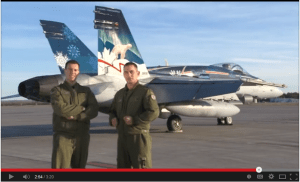
NORAD-Santa-Tracker-Canadian-fighter-jet-pilots-2012You can see the two Canadian NORAD fighter jet pilots who were designated to escort Santa through North American airspace in 2012 (see minute 2:27 on the Headquarters NORAD Holiday Message 2012.)

Said the Canadian fighter jet escort pilots to Santa Claus:“We’re going to be your escort for this fantastic voyage… We’ve got your six.”

(Note: The Urban Dictionary defines this oft-used military phrase as follows:

“I got your six” basically means “I’ve got your back” or “I have you covered.” Comes from the old pilot system in which directions correspond to hours on the clock, where 12 o’clock is forward and 6 o’clock is behind. Thus anyone behind you is “at your six.”)

Santa Tracker Technology for Citizens on the Ground

Private citizens around the world can get into the Santa Tracker action as well. These new consumer-oriented innovations from NORAD and its over 55 private partners help you become part of the worldwide Santa Claus mission:

  • New Website: The newly redesigned NORAD Tracks Santa website, www.noradsanta.org, went live on Sunday, December 1, 2013, featuring a holiday countdown, daily games and activities, videos, music and more.  Beyond a new look, features such as a 3D globe and new interactive games take advantage of today’s modern web.  The site is available in eight languages: English, French, Spanish, German, Italian, Japanese, Portuguese, and Chinese.
  • BING Maps and Cesium 3-D: Starting at 12:01 a.m. Mountain Standard Time on Dec. 24, website visitors can watch Santa make preparations for his flight through the Bing maps and Cesium technology to show a 2D or realistic 3D, interactive, real-time view of Santa’s journey.
  • Phone or Email: Then, at 4 a.m. MST (6 a.m. EST), trackers worldwide can speak with a live phone operator to ask about Santa’s whereabouts by dialing the toll-free number 1-877-Hi-NORAD (1-877-446-6723) or by sending an email to noradtrackssanta@outlook.com.
  • OnStar: Americans and Canadians on the road won’t have to follow the North Star to see where Santa and his reindeer are on Christmas Eve.  Subscribers to the automobile emergency support service OnStar can press the OnStar button in their vehicles to find Santa’s location any time on Dec. 24. See how OnStar is helping NORAD track Santa on this video.
  • Santa Cams: NORAD’s newest “Santa Cams” will stream videos on the website as Santa makes his way over various locations in North America and all around the world.
  • Santa Tracker goes Mobile: Get the #NoradSanta apps from Windows, Android, iPhone & tablet by clicking here! Count down to Santa’s journey and more!

This video gives a history of how the Santa Tracker started in 1955 and some of the user technology.

Santa-Inspecting-Santa Cams at NORAD-Santa Tracker headquartersImage: Santa reviews the images from the new Santa Cams at NORAD headquarters. Source: NORAD.

Play Reindeer Games instead of War Games

NORAD Santa Tracker has a number of games and interactive features to help citizens become involved in the Santa tracking mission and enjoy the holiday season:

Santa-Village-Games-on-NORAD-Santa-Tracker-websiteClick to visit Santa’s Village on NORAD Santa Tracker and hear music and play games.


How can I get a copy of Guarding What You Value Most: North American Aerospace Defense Command Celebrating 50 Years, the wonderful hardcover book or eBook of 50 years of NORAD history chock full of color photos and anecdotes, including the Santa Tracker story?

About the Author: Government Book Talk Editor Michele Bartram is Promotions Manager for GPO’s Publication and Information Sales Division in Washington, DC, and is responsible for online and offline marketing of the US Government Online Bookstore (http://bookstore.gpo.gov) and promoting Federal government content to the public.  She has been a faithful NORAD Tracks Santa fan for years!


Remembering Camelot: Best of the old and new official publications about John F. Kennedy

November 19, 2013

For the World War II generation, it was December 7, 1941 that was a “date which will live in infamy.” For today’s Americans it is September 11, 2001. For my parents’ generation, November 22, 1963, is the infamous day that everyone remembers where they were when they heard the news that President Kennedy had been shot. The assassination of President John F. Kennedy is one of the most historic—and horrific— days of the 20th century, and its impact is still being felt today.  It’s hard to believe it has been 50 years this week since the tragic events unfolded in Dallas, Texas.

In commemoration of this important milestone in our Nation’s history, the U.S. Government Printing Office has assembled a number of Official Federal publications that help us reflect on the huge legacy left by “JFK” in his short but impactful 1,000 days in office.

JFK as a Senator and Presidential Candidate

When John F. Kennedy was running for President, he was a United States Senator from Massachusetts.  These publications give insight to the man during this period of transition from active Senator to President-elect.
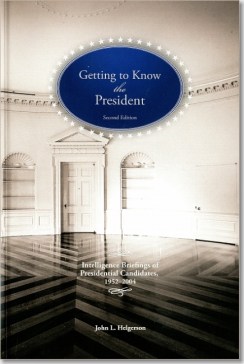
Getting To Know the President: Intelligence Briefings of Presidential Candidates, 1952-2004, including John F Kennedy, Ronald Reagan, Bill Clinton. ISBN 9781929667192Senate, 1789-1989, Volume 3: Classic Speeches, 1830-1993 contains the text of some of the most famous speeches by United States Senators, including a young Senator John F. Kennedy.

Getting To Know the President: Intelligence Briefings of Presidential Candidates, 1952-2004 (Paperback) and the Audiobook-MP3 edition are new publications that tell the story of how the CIA and the US Intelligence Community begin to brief Presidential candidates and Presidents-elect, including JFK and Lyndon Johnson, on vital intelligence issues even before they take office.

JFK’s Army for World Peace

?????????Image: Candidate Senator John F. Kennedy at the University of Michigan-Ann Arbor. Source: JFK Library

Two weeks after an improvised presidential campaign speech in October 1960 to a crowd of 10,000 cheering students at the University of Michigan in Ann Arbor where he asked “How many of you are willing to work in the Foreign Service and spend your lives traveling around the world?” Senator Kennedy proposed “a peace corps of talented men and women” who would dedicate themselves to the progress and peace of developing countries.  Encouraged by more than 25,000 letters responding to his call, newly elected President Kennedy took immediate action to make the campaign promise a reality and established the Peace Corps on March 1, 1961, with his brother-in-law, R. Sargent Shriver, as its leader.

A Life Inspired: Tales of Peace Corps ServiceThe lasting legacy of the Peace Corps’ and its ongoing inspiration to America’s younger generations is clearly shown in these two books. A Life Inspired: Tales of Peace Corps Service (Paperback) (it also available as an eBook) is a collection of autobiographical reminiscences by 28 former Peace Corps volunteers, while Crossing Cultures With the Peace Corps: Peace Corps Letters From the Field is a collection of actual letters from Peace Corps volunteers serving in various nations.

JFK’s Foreign Policy: Cold War Warrior

President Kennedy was confronted with some dramatic foreign policy issues from his first days in office, not least of which was how to avoid nuclear war with the Soviet Union over their missiles in Cuba.

History of the Office of the Secretary of Defense: The McNamara Ascendancy, 1961-1965 (eBook) John F. Kennedy isbn 999-000-55551-6History of the Office of the Secretary of Defense: The McNamara Ascendancy, 1961-1965 (eBook) tells the story of Kennedy’s Secretary of Defense, Robert McNamara, including his relationship with Presidents Kennedy and Johnson, the transformation of the Department of Defense as a part of Kennedy’s New Frontier, and the Pentagon’s handling of the Cuban Missile Crisis, Bay of Pigs episode, and the onset of the Vietnam War.

More than a mere historical text, The Joint Chiefs of Staff and National Policy, Vol. 8, 1961-1964 provides a fascinating inside look at the Joint Chiefs’ participation and their point-of-view in dealing with the following foreign crises from the U.S.S.R. arms race, Berlin Wall construction, Cuba, to Laos, expansion of NATO, support for Israel, and more – while working with new thinking in the Kennedy and Johnson presidential administrations.

Part of the Department of State’s famous Foreign Relations of the United States (FRUS) Series, Foreign Relations of the United States, 1961-1963, V. 5, Soviet Union presents a full accounting of the overall nature and structure of United States-Soviet relations that made up the Kennedy Administration’s Cold War diplomacy. It also refers to some of the intelligence and analysis of the initial build-up of Soviet missiles in Cuba that ultimately led to the Cuban Missile Crisis, as well as the complete official record of President Kennedy’s meetings with Soviet Chairman Premier Nikita Khrushchev at the Vienna Summit Conference, June 3-4, 1961.

Penetrating the Iron Curtain: Resolving the Missile Gap With Technology (Book and DVD)  ISBN: 9780160920547For more in-depth information about the Cuban Missile crisis and Cold War Kennedy style, read the new Penetrating the Iron Curtain: Resolving the Missile Gap With Technology (Book and DVD)  from the CIA which contains analysis and hundreds of recently declassified intelligence documents about the Soviet missile build-up and perceived US missile gap.

CIA Analysis of the Warsaw Pact Forces: The Importance of Clandestine Reporting (Book and DVD)  ISBN: 9780160920509Also interesting is the recently released CIA Analysis of the Warsaw Pact Forces: The Importance of Clandestine Reporting (Book and DVD) which studies the reaction by the Soviets to the West’s formation of NATO including West Germany by establishing a military bloc of Communist nations with the Warsaw Treaty of May 1955. This study continues CIA’s efforts to provide a detailed record of the intelligence derived from clandestine human and technical sources from that period.

A City Torn Apart: Building of the Berlin Wall (Book and DVD) ISBN: 9780160920455Many around the world have heard the famous quote from the Kennedy anti-Communist speech at the Berlin Wall on June 26, 1963, in which he says: “Today, in the world of freedom, the proudest boast is ‘Ich bin ein Berliner.’” The Berlin Wall became a symbol of Cold War hostilities between the US and the Soviets.  A City Torn Apart: Building of the Berlin Wall (Book and DVD) is a new multimedia book with DVD that covers the period of 1945 to the end of 1961, during the Kennedy administration with a vast collection of recently declassified CIA documents, videos, and photographs that show Berlin’s journey from a battered post war region occupied by the Allies to a city literally divided – with its western half becoming an island of freedom surrounded by a sea of Communist repression.

How JFK inspired America to “Send a Man on the Moon”

In response to both real and perceived Soviet threats, President Kennedy gave his “Urgent National Needs” speech to Congress on May 25, 1961, where he stated that “I believe that this nation should commit itself to achieving the goal, before this [1960s] decade is out, of landing a man on the Moon and returning him safely to the Earth.”  This statement turned to real policy and eventually manned missions to the moon. JFK’s lasting legacy to the U.S. space program is incalculable.

Exploring the Unknown: Selected Documents in the History of Exploring the Unknown: Selected Documents in the History of the United States Civil Space Program: V. VII: Human Spaceflight: Projects Mercury, Gemini, and Apollo NASA History Series ISBN 780160813818the U.S. Civil Space Program: V. I: Organizing for Exploration  is part of the NASA historical collection and provides a selection of expert essays and key official documents about the organizational development of NASA and the U.S. civil space program, including Senator then President Kennedy’s memos and inspirational speeches and Vice President Johnson’s early involvement that intensified after becoming President.

Exploring the Unknown: Selected Documents in the History of the United States Civil Space Program: V. VII: Human Spaceflight: Projects Mercury, Gemini, and Apollo  expands Kennedy’s vision of manned spaceflight into reality with Projects Mercury, Gemini and Apollo, providing essays and the key documents that outlined manned space program budgets, proposals, and even the selection of lunar landing spots and choices of symbolic items to bring to the moon.

NASA's First 50 Years: Historical Perspectives; NASA 50 Anniversary Proceedings ISBN: 9780160849657In this thoughtful retrospective, NASA’s First 50 Years: Historical Perspectives; NASA 50 Anniversary Proceedings, a wide array of scholars turn a critical eye toward the achievements of NASA’s first 50 years, probing an institution widely seen as the premier agency for exploration in the world, carrying on a long tradition of exploration by the United States and the human species in general.

Civil Rights and the Brothers Kennedy

After the Supreme Court ruled unanimously in Brown v. Board of Education in 1954 that racial segregation in public schools was unconstitutional, desegregation was a slow process in many Southern school districts and universities.

John F. Kennedy Presidential Library's account of James Meredith, the African-American student whose attempt to register at the University of Mississippi in 1962 led to a showdown between state and federal authorities and the storming of the campus by a segregationist mob. JFK Library "Ole Miss" micrositeImage: The John F. Kennedy Presidential Library’s account of James Meredith, the African-American student whose attempt to register at the University of Mississippi in 1962 led to a showdown between state and federal authorities and the storming of the campus by a segregationist mob. Source: JFK Library “Ole Miss” microsite

By President Kennedy’s election, civil rights activists were pushing for more equality, resulting in violent attacks and confrontations by staunch segregationists that required Federal involvement such as Federal marshals being called in by JFK’s brother and Attorney General Robert Kennedy to protect Alabama freedom riders, as well as forced integration at “Ole Miss” University of Mississippi.

Role of Federal Military Forces in Domestic Disorders, 1945-1992 ISBN: 0-16-072361-2 and 0-16-072364-7The book Role of Federal Military Forces in Domestic Disorders, 1945-1992 (Paperback) and (Hardcover) chronicles the U.S. Army’s response to major social events in contemporary American society, particularly the civil rights movement, including the integration showdown at the University of Mississippi in 1962 and other racial disturbances of the 1960s, all the way to the 1992 race riot in Los Angeles.

The End of Camelot

The practice of referring to the Kennedy Administration as Camelot came from a post-assassination interview for Life magazine with First Lady Jacqueline (Jackie) Kennedy, who referred to the years of Kennedy’s presidency before his assassination as an “American Camelot.”  She said that President Kennedy was fond of the music to the popular 1960-63 smash Broadway musical, Camelot, the lyrics of which were penned by Kennedy’s Harvard classmate, Alan Jay Lerner.  The First Lady mentioned that the President and she often listened to a recording of the hit title song before going to sleep, with JFK  particularly enjoying the phrase: “Don’t ever let it be forgot, that once there was a spot, for one brief shining moment that was known as Camelot.” Once the article was released, other journalists picked up on Mrs. Kennedy’s reference, and the world has used it ever since.

First Ladies by the White House Historical Association ISBN 9780912308838Jackie Kennedy’s historic role as First Lady is outlined in the beautifully done First Ladies of the United States of America book by the White House Historical Association which profiles the many courageous First Ladies, from Martha Washington to Jacqueline Kennedy, up to Hillary Rodham Clinton and Laura Bush.

The end of Camelot came with President Kennedy’s assassination by Lee Harvey Oswald. Afterwards, President Lyndon Johnson created a commission, chaired by Chief Justice Earl Warren to investigate the events that led to the assassination and any possible conspiracies.

The U.S. Government Printing Office (GPO) produced, in what was perhaps its single most important publication of the 1960s, the official results of this investigation in the Report of the President’s Commission on the Assassination of President Kennedy.  It became known unofficially as the Warren Commission Report or the Warren Report, named for Supreme Court Chief Justice Earl Warren who chaired the commission.

C732-1-WH64Image: Chief Justice Earl Warren presenting the Final Report of The President’s Commission on the Assassination of President Kennedy– printed by the U.S. Government Printing Office. September 24, 1964. Source: White House

Before it was released to the public on September 27, 1964, special security measures were set up at GPO to prevent any unauthorized disclosure of the manuscript.  A half century later, GPO is releasing a FREE digital version of the full, 900-page original Warren Commission Report from GPO’s FDsys (Federal Digital System) database.

Today it is still fascinating to re-live the events surrounding the events in Dallas in 1963 from eye witnesses.  In addition to witness testimony, the Report contains numerous photos, maps, diagrams, and illustrations.

The post-President Kennedy assassination audio tape recordings of conversations between various individuals in Washington, DC, and Air Force One pilots and officials on board during the flight from Dallas to Andrews Air Force Base are also available on FDsys.

johnjr-salutes-dad-jfkImage: John F. Kennedy, Jr. salutes his father’s coffin at President Kennedy’s funeral, with his widow First Lady Jacqueline (Jackie) Kennedy, daughter Caroline, and brothers Edward (Ted) Kennedy and Robert (Bobby) Kennedy.

These Official publications are part of the legacy of President John F. Kennedy and help us remember his 1,000 days of an American Camelot.

HOW DO I OBTAIN THESE JFK PUBLICATIONS?

You can find these official John F. Kennedy publications by clicking on the links above or through any of these methods:

  • Shop Online Anytime: Buy them online 24/7 at GPO’s Online Bookstore under the 35- John F. Kennedy collection (found under the US & Military History category Presidential History section).
  • Order by Phone: Call our Customer Contact Center Monday through Friday, 8 am to 5:30 pm Eastern (except US Federal holidays). From US and Canada, call toll-free 1.866.512.1800. DC or International customers call +1.202.512.1800.
  • Visit our Retail Store: Buy a copy of any print editions from this collection at GPO’s retail bookstore at 710 North Capitol Street NW, Washington, DC 20401, open Monday–Friday, 9 a.m. to 4 p.m., except Federal holidays, Call (202) 512-0132 for information or to arrange in-store pick-up.
  • Go to a Library: GPO provides copies of these publications to Federal Depository libraries worldwide. Find them in a library near you.

About the Author: Government Book Talk Editor Michele Bartram is Promotions Manager for GPO’s Publication and Information Sales Division in Washington, DC, and is responsible for online and offline marketing of the US Government Online Bookstore (http://bookstore.gpo.gov) and promoting Federal government content to the public.

Arming the Fleet: The Compelling Story of a Secret Navy Base in the Desert

November 7, 2013

Arlington Cemetery Veterans day posterIn honor of Veterans’ Day, we bring you a compelling story of China Lake, which answers the intriguing question, why would the U.S. Navy build a secret weapons base in the middle of the Mojave Desert? (Answer: It was the least likely place the enemy would look for a naval base!)

Nothing is more enjoyable than reading a well-written history book that brings to light the contributions of a highly secretive organization. Add in dozens of previously unpublished photographs and fascinating anecdotes of American technological innovation and ingenuity, and you have a real winner! Such is the case with the new fact and photo-filled publication about the Naval Air Systems Command (NAVAIR) Naval Air Warfare Center Weapons Division or NAWCWD, entitled Arming the Fleet 1943-2011: Providing Our Warfighters the Decisive Advantage. The weapons systems developed by NAWCWD in China Lake have served generations of service members since World War II, and have undoubtedly saved many of our veterans’ lives

Government Book Talk invited Arming the Fleet author Wallace T. Martin, Deputy Director of the NAWCWD Business Development Office and expert in all things China Lake to give us the insider’s story about this book. Take it away, Wallace! Michele Bartram, Government Book Talk Editor-in-Chief

THE NAVAL BASE IN THE DESERT

Arming the Fleet: 1943-2011, Providing Our Warfighters the Decisive Advantage ISBN: 9780160917127 by Naval Air Warfare Center Weapons Division  NAWCWD Available from GPO Bookstore.Gpo.govArming the Fleet or “ATF” tells a compelling story of the secret city of China Lake, California, a secluded Navy base that is hidden in the middle of the vast Mojave Desert that has been quietly delivering “weapons that work” since 1943. The book also provides an inside look at Point Mugu, California, a DoD (Department of Defense ) premiere electronic warfare site and home of the world’s largest instrumented over-water range where most Navy targets are tested. Combined, these two internationally recognized historic sites comprise the Naval Air Warfare Center Weapons Division (NAWCWD), known also as “the WD” or “the Division”, an organization with a strong legacy in direct Warfighter support.

China Lake developed 75% of the air-launched weapons used during Vietnam and jointly developed 80% of those used during Iraqi Freedom— and the Center continues to arm the fleet into the future.

Jet with missiles from Page 25 of NAWCWD's Arming the Fleet: Providing Our Warfighters the Decisive Advantage 1943-2011 ISBN 9780160921612

WORLD FIRSTS

In the process of developing advanced weapons, the China Lake team has seen many of their technological inventions and innovations find application in the commercial world, helping to improve many fields including alternative energy, navigation, computing, medicine, automotive safety, communications, and industrial chemicals.

Along the way, the Division has been awarded over 1,600 patents, and the book documents 50+ world “firsts.” Below, are a few of these famous technological innovation firsts listed in the Arming the Fleet book:

  • First to patent new biofuel (renewable plant) technologies specifically designed to convert butanol into high-performance jet fuel
  • First subject search made by a digital computer – 43 years before “Google Search”
  • First to manage the Navy Navigation Satellite System “Transit” — Predecessor to today’s GPS
  • First body scanning technology – Predecessor to today’s MRI
  • First automatic air-bag sensors for automobiles
  • First stop-action video
  • First chemiluminescent “light sticks”
  • Non-nuclear components and testing for the first atomic bomb
  • First plastic bonded explosives
  • First air-to-air guided missile ever used in combat – Sidewinder
  • First successful anti-radiation missile –  Shrike, Predecessor to today’s HARM missile
  • First sea-based ballistic missile intercept
  • First U.S. aircraft rockets
  • First U.S. satellite launch – NOTSNIK
  • First lunar lander and Mars lander subsystems

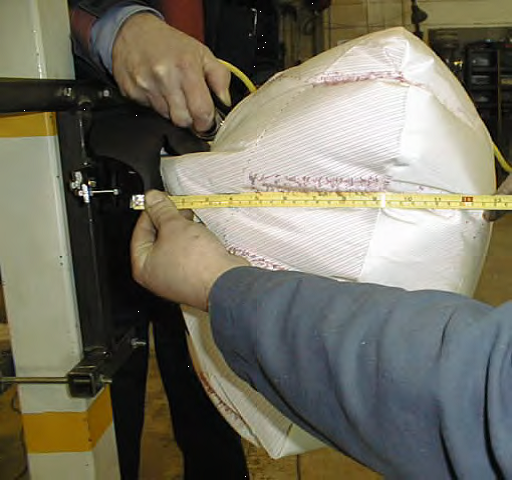
Warhead and automobile air bag sensor from NAWCWD's Arming the Fleet: Providing Our Warfighters the Decisive Advantage 1943-2011 ISBN 9780160921612Image: ARMING WARHEAD TO DEPLOYING AUTOMOBILE AIR BAGS? In 1994, the Navy needed a means to accurately measure the distance traveled by the missile after launch, a computation necessary for arming the warhead firing device at a safe distance from the launch aircraft. NAWCWD China Lake engineers developed an extremely robust and precise micro-machined miniature accelerometer that was incorporated into several warhead SADs. The innovation proved so valuable, this device was later transitioned into millions of automobile crash-sensor air-bag-initiation systems by major foreign and domestic automobile manufacturers. It is also used for hundreds of other consumer and industrial applications and is marketed internationally. Photo Source: NAWCWD

COMBAT SUPPORT AND WEAPONS DEVELOPMENT

Page 120 Testing and Evaluation from NAWCWD's Arming the Fleet: Providing Our Warfighters the Decisive Advantage 1943-2011 ISBN 9780160921612ATF describes the Weapon Division’s significant role and quick response achievements in every major U.S. crisis from WWII to Iraqi Freedom – from Iwo Jima and Midway to Fallujah and Baghdad. In addition, the book identifies WD’s influence on more than 25 major weapons systems and tells the story about how many of today’s major weapons “in the news” got their start including Trident, Tomahawk, HARM, Standard Missile, and Sidewinder. Remarkably, most of the major technologies ever developed are still in fleet use today in one version or another.

Page_100-Unmanned Systems UxS from NAWCWD's Arming the Fleet: Providing Our Warfighters the Decisive Advantage 1943-2011 ISBN 9780160921612The book further documents the Division as a world leader in guided missiles, advanced weapons and systems, and complex software integration on tactical aircraft, energetic materials and subsystems. In addition, the Division is conducting RDT&E (Research Development Test & Evaluation) on over 25 varied unmanned aerial systems (UAV) which is a top-four strategic thrust area.

UNIQUE RANGES AND ONE-OF-A-KIND FACILITIES

High-tech work is performed at very unique ranges and facilities. Many are one-of-a kind, including:

  • World’s largest x-ray and live-fire facilities for massive Trident size motors
  • World’s largest weapons survivability laboratory with three high velocity airflow systems (HIVAS)
  • World’s largest fuze simulation arena
  • Second largest and fastest supersonic sled track in the world
  • Second largest photovoltaic plant (solar energy) in the DoD
  • Premiere DoD indoor Radar Reflectivity Laboratory
    • Far-field measurement capability covering the widest frequency range of any test facility in the U.S.
    • One of only a few DoD test centers capable of bistatic radar cross section testing
    • One-of-a kind outdoor radar cross-section range
    • One of only two large plasma coating systems (HiTUS) in the U.S.
    • Only U.S. electronic warfare open-air range

China Lake Naval Weapons Test Ranges from NAWCWD's  Arming the Fleet: Providing Our Warfighters the Decisive Advantage 1943-2011 ISBN 9780160921612

Image:Land and Sea testing ranges for NAWCWD China Lake

Other facilities include robotic prototyping, aircraft mock-ups, and one unique geothermal plant that converts natural heat from the earth into electricity, significantly reducing the Center’s total energy costs.

The enormous test ranges at China Lake are larger than the state of Rhode Island and the Sea Range at Point Mugu is expandable to 220,000 square miles.

COST-EFFECTIVE DIRECT WARFIGHTER SUPPORT

Arming the Fleet showcases the accomplishments of a creative and technically ingenious workforce –delivering weapons that work for more than 70 years.

More importantly for this era of tight budgets, ATF also provides an insider’s view as to how your taxpayer dollars are wisely spent in defense of our country. For example, in the 2005 BRAC congressional hearings, programs and capabilities from numerous other bases were transitioned to China Lake due to its extensive expertise and infrastructure. And on June 14, during the 1995 BRAC hearings, Secretary of the Navy John Dalton stated, “China Lake and Point Mugu [rate] number 1 and 2 in military value among all Navy activities.

This expanded third edition of Arming the Fleet is a high-quality publication of 208 pages, with a whopping 216 photos/graphics and over 1,000 indexed items, covering the Division from its founding through 2011. Anyone wanting to learn more about major milestones in U.S. Naval weaponry and technology “then and now” will find this book of great interest – not just “history.”

The legacy continues…

— Wallace T. Martin, Deputy Director, NAWCWD Business Development Office

Back cover from NAWCWD's  Arming the Fleet: Providing Our Warfighters the Decisive Advantage 1943-2011 ISBN 9780160921612

How can you obtain Arming the Fleet: 1943-2011, Providing Our Warfighters the Decisive Advantage?

  • Shop Online: Buy it online, 24/7, 365 days a year on the U.S. Government Online Bookstore website.
  • Order by Phone: Call our GPO Customer Contact Center Monday through Friday, 8 am to 5:30 pm Eastern (except US Federal holidays). From US and Canada, call toll-free 1.866.512.1800. DC or International customers call +1.202.512.1800.
  • Visit our Retail Store: Buy it at GPO’s retail bookstore at 710 North Capitol Street NW, Washington, DC 20401, open Monday–Friday, 9 a.m. to 4 p.m., except Federal holidays, (202) 512-0132.
  • Find it in a Library: Search for it in a Library.

Wallace T. Martin, NAVAIR, author of NAWCWD's  Arming the Fleet: Providing Our Warfighters the Decisive Advantage 1943-2011 ISBN 9780160921612 About the Author and Guest Blogger:  Wallace T. Martin began initial research for Arming The Fleet in 2001, culminating in the first edition in 2004, followed by the second edition in 2008, and the third edition in 2011 – the only version distributed nationwide. The ongoing ATF product line includes the larger publication, a shorter Arming the Fleet Highlights, and a one-page NAWCWD Quick Facts. Since 2000, Martin serves as the Deputy Director, NAWCWD Business Development Office. In addition, since 2004, Martin has served as the lead WD technical writer and site coordinator for the 200-300 page annual Command History, as required by the Chief of Naval Operations. Martin has a passion for telling the WD story providing an insider’s view as to how taxpayers’ dollars are wisely spent in defense of our country. Martin has a B.S. degree in Business Administration – Management from California State University.  


Happy 66th -or 106th- Birthday, US Air Force

September 18, 2013

According to the Department of Defense’s website, the United States Air Force is 66 years ago today “that the National Security Act of 1947 turned what was then known as the Army Air Corps into the United States Department of the Air Force. A strategic, tactical and defensive force for the skies, the Air Force has become a vital role in our country’s military power.

USAF-Birthday-Video

Watch this US Air Force birthday video on YouTube.

However, if you add in the years since the Army Air Corps first flew in 1907, then the Air Force’s operations have really been going strong for 106 years today. It all depends on how you count it.

Therefore, it is fitting to look at the entirety of military aviation when looking at the US Air Force’s illustrious history.

A number of excellent publications have come out recently, both in print and eBooks, for the US Air Force, Army Air Corps and military aviation in general.

The ones we most recommend for understanding the evolution of today’s US Air Force include:

Overall History and Mission

008-070-00727-4The best two books covering the overall history and mission of what is now the United States Air Force are A Concise History of the United States Air Force and its recently released EPUB eBook version, as well as the extremely thought-provoking Air Force Roles and Missions: A History (also recently released as an eBook) which traces the evolution of the Air Force’s role and missions as well as the conflicts with other branches of the military over these definitions.

Early Beginnings through World War 1

Are you more interested in the earliest days of aviation when the Army first bought one of the Wright Brothers’ planes and its “daring young men in those flying machines” began to determine how airpower could be used for military purposes? Then you should read Logbook of the Signal Corps No. 1: The United States Army’s First Airplane in paperback or as a new eBook, which recounts the experiences of Benjamin D. Foulois, the pioneering, self-taught pilot of “Signal Corps No. 1”, the very first airplane of the United States Army Signal Corps.

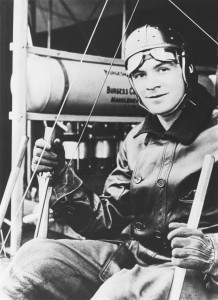
HAP: Henry H. Arnold, Military Aviator, Shown here as Army Flight Instructor in College Park, Maryland. ISBN: 0-16-049071-5And don’t miss HAP: Henry H. Arnold, Military Aviator (Paperback) or the new EPUB eBook edition which tells the story of beloved Henry “Hap” Arnold, one of the first Army flight instructors and daring pilot. (See his image to the right as an Army Flight Instructor. Image courtesy: College Park Aviation Museum.)

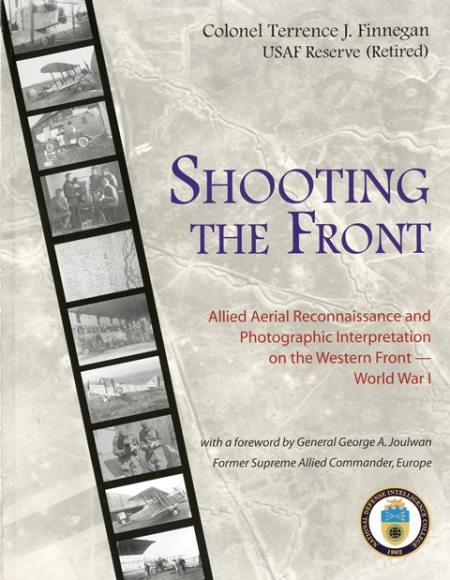
Another very popular publication tells the story of air espionage during World War 1: Shooting the Front: Allied Aerial Reconnaissance and Photographic Interpretation on the Western Front – World War I.

Shooting the Front: Allied Aerial Reconnaissance and Photographic Interpretation on the Western Front - World War I (Paperbound)

World War 2

World War II is when it is widely acknowledged that military aviation came into its own. Toward Independence: The Emergence of the United States Air Force, 1945-1947 tells of the rapid evolution in use of airpower in the period leading up to its formation as a separate entity.

Korean War

By the Korean War, the US Air Force had become its own branch of the United States Armed Forces. Several publications chronicle the involvement of the newly formed USAF during this conflict, including Within Limits: The United States Air Force and the Korean War, Coalition Air Warfare in the Korean War, 1950 1953, and Silver Wings, Golden Valor: The USAF Remembers Korea which includes reminiscences and perspectives of Korean War Air Force veterans and historians.

Vietnam War

War Too Long: The United States Air Force in Southeast Asia 1961-1975 ISBN: 9780160613692Over 50 years later, Americans are still wrestling with the lessons of Vietnam. So, too, is the Air Force in these excellent USAF publications War Too Long: The United States Air Force in Southeast Asia 1961-1975  and War in South Vietnam: The Years of the Offensive, 1965-1968, as well as this Army digital publication, Interservice Rivalry and Airpower in the Vietnam War (eBook).

Cold War and Space Race

When the Soviets launched Sputnik, the space race was subsequently kicked off with the United States. The Air Force role was critical during the Cold War and in both in helping start our space exploration and ongoing support through to today in support of NASA. Read Early Cold War Overflights, 1950-1956 to understand the beginning of the espionage flights, and pick up a copy of the United States Air Force in Space, 1945 to the Twenty-First Century which covers the Air Force’s involvement in space exploration.

Gulf War to the Present

None of us can forget the images of bombs dropping during the Gulf War, the tale of which is told in Decisive Force: Strategic Bombing in the Gulf War.

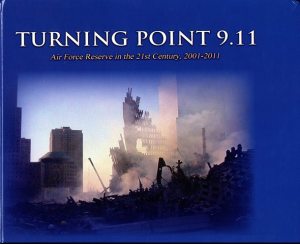
Turning Point 9.11: Air Force Reserve in the 21st Century, 2001-2011  ISBN: 9780160914485And anyone with family in or who themselves are in the National Guard or a military reservist knows how the Gulf Wars and Afghanistan have changed the role of these personnel from backup to active participants. One of the best books we’ve read on the subject is the excellent Turning Point 9.11: Air Force Reserve in the 21st Century, 2001-2011 which chronicles these stark changes in the Air Force Reserve since the terrorist attacks on 9.11.2001.

Air Force on TV and in the Movies

Fans of the movie “War Games” will know about NORAD. Learn the true story behind this important homeland airspace defense organization in Guarding What You Value Most: North American Aerospace Defense Command Celebrating 50 Years and a new EPUB eBook version. Includes the heart-warming story of NORAD’s Christmas Eve Santa Tracker. (Read about this in our blog post Tracking “Big Red”: NORAD’s Secret Santa Mission [UPDATED].)

Fans of the TV show “JAG” Will love to discover the real history of this Air Force department in First 50 Years: United States Air Force Judge Advocate General’s Department.

Humanitarian Operations

Wings of Hope: The United States Air Force and Humanitarian Airlift OperationsLike the other branches of the US military, the US Air Force plays an important role in humanitarian operations, both here at home and worldwide. This publication—Wings of Hope: The United States Air Force and Humanitarian Airlift Operations—tells the overall story of various airlift operations. While it sounds like the plot of a disaster movie, the Ash Warriors (paperback) and its EPUB eBook version recounts the true story of the “Ash Warriors,” those Air Force men and women who carried out their mission in the face of an incredible series of natural disasters, including volcanic eruption, flood, typhoons, and earthquakes, all of which plagued Clark Air Base in the Philippines and the surrounding areas during June and July 1991. And the horrendous Hurricane Katrina brought out the best in the Air Force’s Air Education and Training Command, whose role is described in Operation Dragon Comeback: Air Education and Training Command’s Response to Hurricane Katrina.

“Blue Sky” Future

So join us in wishing a very happy 66th (or 106th) birthday to our very own United States Air Force. May there be blue skies in its future!

How can I obtain these Air Force History publications?

  • Shop Online: You can purchase these publications from the U.S. Government Online Bookstore at http://bookstore.gpo.gov, by clicking on the links above in this blog post or shopping our United States Air Force (USAF) History collection under our US & Military History category.
  • Order by Phone: Call our Customer Contact Center Monday through Friday, 8 am to 5:30 pm Eastern (except US Federal holidays). From US and Canada, call toll-free 1.866.512.1800. DC or International customers call +1.202.512.1800.
  • Visit our Retail Store: Buy a copy of print editions from this collection at GPO’s retail bookstore at 710 North Capitol Street NW, Washington, DC 20401, open Monday–Friday, 9 a.m. to 4 p.m., except Federal holidays, Call (202) 512-0132 for information or to arrange in-store pick-up.
  • Find them in a Library: Find these publications in a federal depository library.

About the Author: Government Book Talk Editor Michele Bartram is Promotions Manager for GPO’s Publication and Information Sales Division in Washington, DC, and is responsible for online and offline marketing of the US Government Online Bookstore (http://bookstore.gpo.gov) and promoting Federal government content to the public.


September 11 Tales of Heroes and Tough Lessons

September 11, 2013

9-11 Decade of Remembrance Twin Towers and Pentagon Logo designed by David McKenzie at the Government Printing OfficeThere are certain moments and events that are etched in our national consciousness. Ask any American who was alive in the 60’s where he or she was when John F. Kennedy or Martin Luther King was assassinated and you will hear a stirring personal story. For our generation, it was September 11, 2001.

Image: September 11 Decade of Remembrance logo with World Trade Center Twin Towers surrounded by a figure representing the Pentagon. Created by David McKenzie with the Government Printing Office for the U.S. Government Bookstore.

I was right across from the Twin Towers twelve years ago today, getting ready to board a ferry for my daily commute from New Jersey across the Hudson River into Manhattan, when I saw the second plane hit the World Trade Center right across from me. So, too, I cried with a group of strangers as we stood on the ferry platform and watched in horror as the first tower fall, saw the dust cloud rise and felt the earth—and the world—tremble.

America and Americans have changed since that day… twelve years ago today. We have since heard stirring stories of heroes and sacrifice, and learned many grim lessons that are still affecting both policy and people today.

Many of these stories of heroism, missed opportunities, and resulting actions have been painstakingly and faithfully chronicled by a wide array of Federal agencies, ensuring the sacrifices and lessons are not forgotten.

Responding to the Tragedies

Both in New York and the Pentagon in Washington, DC, we saw how first responders and medical personnel rushed to save lives. These excellent publications tell the stories of the heroes from that day:

  • 008-000-01049-8Pentagon 9/11 (10th Anniversary Edition) (Paperback) includes a foreword by Secretary of Defense Leon Panetta and provides the most comprehensive account available of the 9/11 attack on the Pentagon and aftermath, including unprecedented details on the impact on the Pentagon building and personnel and the scope of the rescue, recovery, and care-giving effort.
  • 008-000-01048-0Attack on the Pentagon: The Medical Response to 9/11 not only tells the personal stories from medical personnel responding to the attack on the Pentagon, but also provides insight from MEDCOM officers detailed to New York to support National Guard troops guarding ground zero’s perimeter. It also includes the Army’s involvement in the recovery of deceased attack victims at the Pentagon and the work of the Armed Forces Institute of Pathology in identifying human remains at Dover Air Force Base. In addition, the roles of military and civilian hospital staffs and of military environmental health and mental health specialists in taking care of attack victims and their families are also examined.

Tough Lessons

The single must-read for every American about September 11 is the official version of The 9/11 Commission Report: Final Report of the National Commission on Terrorist Attacks Upon the United States. This publication lists the findings of the National 9/11 Commission, listing all the painful errors made leading up to the terrorist attacks and outlining specific recommendations for international, national, state and local changes in policy and procedures that the panel of experts felt needed to be implemented to ensure a similar attack never happened again. This seminal publication has served to inform all subsequent policies and legislation since 9/11. It is available in print or as an eBook.

911-commission-report

Image: Launch of the 9/11 Commission Report. Courtesy: CSMonitor.com

The Senate, Select Committee on Intelligence, and House, Permanent Select Committee on Intelligence examined the intelligence failures leading up to 9/11 and jointly published the results in United States Congressional Serial Set, Serial No. 14750: Joint Inquiry Into Intelligence Community Activity Before and After Terrorists Attacks of September 11, 2001 With Errata.

027-001-00097-1Additional insights into the causes of and responses to terrorism can be gleaned from Terrorism Research and Analysis Project (TRAP): A Collection of Research Ideas, Thoughts, and Perspectives, V. 1. This publication provides the findings from the post-9/11 FBI Terrorism Research and Analysis Project (TRAP) Symposium. TRAP is a leading research consortium made up of international/domestic academics and law enforcement officers, and is a working group sponsored by the FBI’s Behavioral Science Unit. In it, these counter-terrorism experts provide a better understanding of the causes of terrorist activity and possible government response tactics to mitigate terrorist actions.

064-000-00029-2As we watch the new World Trade Center going up in New York, we can be assured that builders are incorporating architectural and construction lessons learned from the World Trade Center Building Performance Study: Data Collection, Preliminary Observations, and Recommendations.

Policy and Legislative Response

United States Congressional Serial Set, Serial No. 14924, House Report No. 724, 9/11 Recommendations Implementation Act, Pts. 1-6 outlines the specific legislative changes enacted by Congress, providing both background and justifications for them along with attribution.

A print copy of the law itself can be purchased here: Implementing Recommendations of the 9/11 Commission Act of 2007, Public Law 110-53 along with the details of the various committee conferences contributing to it in Implementing Recommendations of the 9/11 Commission Act of 2007, Conference Report to Accompany H.R. 1, July 25, 2007.

Defending the Homeland since 9/11

041-001-00657-5National Strategy for Homeland Security (October 2007) provides the common framework outlined by the George W. Bush Administration to guides, organize and unify the United States’ homeland security efforts.

008-000-01068-4A new publication from the Air Force Reserve called Turning Point 9.11: Air Force Reserve in the 21st Century, 2001-2011 tells the story of how the Air Force Reserve responded to 9/11 and have contributed to the security of the United States in a post-September 11 world.

050-012-00440-4In a similar vein, Rogue Wave: The U.S. Coast Guard on and After 9/11 chronicles the involvement of the U.S. Coast Guard on that fateful day and the evolving role in national and world security since.  Part of the Coast Guard 9/11 response is told in this touching video about the boatlift to evacuate people from lower Manhattan is told in a video narrated by Tom Hanks entitled: BOATLIFT, An Untold Tale of 9/11 Resilience.”

A touching video about the boatlift to evacuate people from lower Manhattan on 9/11 (September 11) is told in a video narrated by Tom Hanks entitled: BOATLIFT, An Untold Tale of 9/11 Resilience. Click on the image above or this link to view the “Boatlift” video.

The upcoming U.S. Army War College Guide to National Security Issues, Volume 2: National Security Policy and Strategy provides a summarized look at the national security curriculum now taught to our nation’s top military and civilian leaders by the U.S. Army War College. Revised with the lessons learned from the years since 9/11, this publication includes a chapter on ”Securing America From Attack: The Defense Department’s Evolving Role After 9/11.”

How can I obtain these Federal 9/11 publications?

  • Shop Online: Print Editions of these 9/11-related publications may be ordered from the U.S. Government Online Bookstore at http://bookstore.gpo.gov, by clicking on the links above in this blog post or shopping our Terrorism & 9/11 History collection under our US & Military History category.
  • Order by Phone: Call our Customer Contact Center Monday through Friday, 8 am to 5:30 pm Eastern (except US Federal holidays). From US and Canada, call toll-free 1.866.512.1800. DC or International customers call +1.202.512.1800.
  • Visit our Retail Store: Buy copies of these publications at GPO’s retail bookstore at 710 North Capitol Street NW, Washington, DC 20401, open Monday–Friday, 9 a.m. to 4 p.m., except Federal holidays, Call (202) 512-0132 for information or to arrange in-store pick-up.
  • Find them in a Library: Find these publications in a federal depository library.

About the Author: Government Book Talk Editor Michele Bartram is Promotions Manager for GPO’s Publication and Information Sales Division in Washington, DC, and is responsible for online and offline marketing of the US Government Online Bookstore (http://bookstore.gpo.gov) and promoting Federal government content to the public.


Code Talkers to Better Walkers: How American Indians Have Helped Fight Wars and Obesity

August 21, 2013

In honor of Navajo Code Talkers Day this past week on August 14, Government Book Talk explores some Federal publications that utilize American Indian traditions and culture to combat serious problems of the past and present.

Native Code Talkers in World War I

“Code talkers” became the term used to describe Native American soldiers from various Indian tribes who communicated on radios, telephones and telegraph during World Wars I and II. They spoke in their own languages and dialects, all of which were indecipherable by enemy forces. Because few non-Indians knew these difficult native languages, which in many cases had no written form, they provided ideal codes for relaying secret operational orders.

WWI-Choctaw-Code-Talkers-w-FlagImage: The Choctaw Code Talkers enlisted in the U.S. Army in World War I even though their lack of citizenship exempted them from the draft. (U.S. Army photo)

In France during World War I, the 142nd Infantry Regiment, 36th Division, had a company of Indians who spoke 26 languages and dialects. Two Indian officers were selected to supervise a communications system staffed by 18 Choctaw. The team transmitted messages relating to troop movements and their own tactical plans in their native tongue. They helped the American Expeditionary Force win several key battles in the Meuse-Argonne Campaign in France, the final big German push of the war.

Soldiers from other tribes, including the Cheyenne, Comanche, Cherokee, Osage and Yankton Sioux also were enlisted to communicate as code talkers. Previous to their arrival in France, the Germans had broken every American code used, resulting in the deaths of many Soldiers. However, the German Army— which captured about one out of four messengers—never broke the Indians’ “code.”

More Native Code Talkers are Used in World War II

After the United States entered World War II in December 1941, more Armed Forces used code talking units with each unit composed of members of a specific American Indian tribe.

Navajo Code Talkers

The United States Marines recruited several hundred Navajos for duty in the Pacific region. The Marines chose these Navajos for their ability to speak their native language, Diné bizaad (Navajo), for code talking.

Philip Johnston, a son of missionaries who had grown up on the Navajo reservation, originally recommended Navajo to the Marines as a language well suited for cryptology. In a memo to the Commandant of the Marine Corps in early 1942, Navajo was declared uniquely suited to succeed more than some other languages proposed for use. At that time, most Navajos were fluent in their native language. The Marines were lucky; in 1942 only an estimated 28 non-Navajo Americans could speak the extremely difficult Navajo language!

Hitler had heard of the possibility of using Native American languages for codes prior to the United States’ entry into the war, and had sent a number of German anthropologists to the United States prior to WWII to learn Native American languages. Navajo was reportedly the only language the German anthropologists had yet to learn. Navajo also benefited by being so unlike other Native American languages that there was no language similar to it. If you’re fluent in Spanish, you might be able to muddle along in Portuguese after some basic lessons. Navajo has no analog.

Navajo-Code-Talkers-in-JungleIn May 1942, the first Navajo recruits attended boot camp; they then moved to Camp Pendleton in Oceanside, California, to create the Navajo Code Talkers Dictionary. The Marines trained approximately 400 Navajos as code talkers. To relay the messages they were encoding, they had to learn to operate three types of radios. At that time the code talkers called themselves “radiomen”.

The developers of the Navajo code modeled the alphabet portion on the Joint Army/Navy Phonetic Alphabet. That alphabet uses words to represent letters, e.g., Fox for the letter F. In the Navajo code, Ne-Ahs-Jah is Navajo for Owl, which stood for the letter O. To spell the word Navy, the code talker might say, “Tsah (Needle, or N), Wol-La-Chee (Ant, or A), A-Keh-Di-Glini (Victor, or V), Tsah-As-Zih (Yucca, or Y)”.

The Navajo Marines also chose Navajo words to represent about 450 frequently used terms in the military. It was hard. According to code talker Wilfred Billey, “one of the most difficult parts of forming the Navajo code was using it to relay precise information, such as coordinates or troop movements because several words in the Navajo language have various meanings” (May 22, 2003, “Navajo Code Talker Continues Oral Tradition”, Marine Core Logistics Base Albany).

Some of the choices were very creative. Navajo is a classic language that didn’t originally include terms like “tank”, so the Navajo Marines dubbed it “Chay-Da-Gahi”, or tortoise. The Navajo Code Talkers Dictionary, published by the Navy years later after it was declassified, showed the versatility of the code’s creators. The code was so effective in World War 2, it was also used in the Korean War, being phased out before Vietnam.

In fact, at Iwo Jima, Major Howard Connor, 5th Marine Division signal officer, declared, ‘Were it not for the Navajos, the Marines would never have taken Iwo Jima’” (Navajo Code Talkers: WWII Fact Sheet). During that battle alone, the radiomen transmitted 800 messages without error.

Comanche, Sioux and Hopi Code Talkers for the Army

Although the Navajo tribe is the one most remembered for its contributions to the World War II communications code units, the US military also used Basque, Comanche, Sioux, Hopi and a number of other American Indian languages as code languages. Basque was rarely used because there were native Basque speakers in Europe which made the U.S. military wary of using it more widely.  However, because the various Army units of Code Talkers were so secret, their very existence was kept classified until the 1970s or later.

American-Indian-Code-Talkers-LanguagesImage: List of American Indian Code Talkers’ languages and the numbers of tribal members who served, if known. There were at least two Code Talkers from each tribe. Source: National Museum of the American Indian’s website.

Army-Signal-Corps_9780160453519The US Army’s Signal Corps is the military branch that develops, tests, provides, and manages communications and information systems support for the command and control of combined US Armed Forces, including code talkers. You can read the history of the Army Signal Corps in Getting the Message Through: A Branch History of the U.S. Army Signal Corps.

The US Army’s 4th Signal Company, also known as the Code Talkers, used seventeen Comanche Code Talkers. Like the Choctaws of World War I, and the Navajos in the Pacific Theater, the Comanche Code Talkers used their native language to prevent the enemies of the European Theater from intercepting messages of the allied troops during World War II. The unit was instrumental during the Normandy invasion.

Sioux code talkers, composed of Lakota, Dakota, and Nakota native soldiers or “L.D.N.’s”, spoke their native “dialects” (languages) which were understood by each native soldier in the unit. On December 19, 2000, Congressman John Thune said of the Sioux code talkers’ contribution:

“It is important for us to honor these veterans whose contributions have, until recently, been ignored. Often sent out on their own to provide communications with headquarters on enemy location and strength, they sometimes spent 24 hours in headphones without sleep or food. Many endured terrible conditions without protection from the enemy. Using three Sioux languages Lakota, Nakota and Dakota, the Sioux Code Talkers were able to communicate messages the enemy was unable to crack.”

The Hopi tribe also helped in the communications coding efforts. Eleven Hopi men developed a highly secret code language which they used to assist US Army intelligence in the Marshall Islands, New Caledonia and the Philippines during the Second World War. Again, because of the super top-secret nature of their work for Army Intelligence, the Hopi Code Talkers’ contribution was not officially recognized until April 26, 2012, on the inaugural Hopi Code Talkers Recognition Day.

Applying American Indian Traditions to the War against Obesity

The United States Government continues to utilize Native American language and traditions to solve important problems of the day. For example, with the public health issue of childhood obesity and diabetes rising to dangerous levels in the US, the Department of Health and Human Services Centers for Disease Control and Prevention (CDC) Native Diabetes Wellness Program (Wellness Program) and the Indian Health Service (IHS) Division of Diabetes Treatment and Prevention recently teamed up with the Tribal Leaders Diabetes Committee (TLDC) to produce the award-winning Eagle Book series.

The developers of this series realized that the old, traditional American Indian diet and activity levels were in line with today’s medical recommendations to eat less processed food and more fruits and vegetables as well as exercising more. Thus, they worked with Native groups to incorporate traditional American Indian story-telling techniques and themes to promote increased physical activity such as walking and playing as well as making healthier—and more natural—food choices to reduce obesity and prevent diabetes.

Coyote-and-the-Turtles'-Dream-9780160913174 Preventing childhood obesity and diabetesThe common Native American theme of the tortoise/ turtle used by the American Indian code talkers resurfaces in the newest book in the series, Coyote and the Turtle’s Dream.  In this middle school-age mystery/ adventure book, the wise elderly box turtle helps the mischievous Coyote and the Indian reservation town’s residents solve a mystery to foil the plans of a fossil poacher while teaching the underlying message about healthy eating and increased physical activity.

With the first four books aimed at elementary schoolers– Through the Eyes of the Eagle, Knees Lifted High, Plate Full of Color, and Tricky Treats and the next book for middle schoolers– Coyote and the Turtle’s Dream— the Eagle Book series has been snapped up by teachers, nutritionists, librarians, parents and children’s health providers all over the country as an effective tool to teach children about healthier eating habits and increasing activity while also instilling an appreciation for Native culture which extols respect for elders and living in harmony with nature.

You can read more about the Eagle Book series on our Government Book Talk blog post entitled: “Native Traditions Help Kids Unplug, Read and Be Healthy.”

How Can I Obtain These Publications?

EBOOKS:

PRINT EDITIONS:

About the author(s): Adapted by Government Book Talk Editor-in-Chief and GPO Promotions & Ecommerce Manager, Michele Bartram, from an original blog post by Jennifer K. Davis from GPO’s Library Services & Content Management Division that supports the Federal Depository Libraries Program (FDLP).


Influence without Boots on the Ground: Seaborne Crisis Response

August 7, 2013

TInfluence without Boots on the Ground: Seaborne Crisis Response, by Dr. Larissa Forster , ISBN: 9781935352037here is an ongoing debate about the civil war in Syria and the role the United States is playing, should play, will play or won’t play. One option is “boots on the ground” or the deployment of troops to the region, a physical presence. To examine another option, look to Influence without Boots on the Ground: Seaborne Crisis Response, a recent publication by the Naval War College in their Newport Papers series that explores the power and influence of the United States Navy. The Navy is unique in that it has the ability to operate on, above, and under the surface of the sea and has presence around the world since most countries are near the sea or within range.

Influence without Boots on the Ground explores the political use and impact of naval forces during foreign-policy crises that fall short of full-scale warfare.

The first chapter, entitled “Navies Are Able to Do Things That Armies Can’t”, explains the role of the Navy in the context of the U.S. military and how it differs from other branches. The author emphasizes that the Navy is unique in that its presence alone can comfort allies and pressure enemies.  The second chapter piggybacks on the first by examining the concept of naval diplomacy and the many theories that accompany the concept.

U.S. Navy sailors in joint exercise with Peruvian Navy. (By US Navy)The third chapter– “Uncharted Waters: Data on U.S. Naval Activity Short of War”— identifies different data models and ways of gathering information and crunching the numbers to determine the Navy’s influence in international crises, from disaster response to ethnic cleansing, anti-piracy, combating drug and human trafficking and more. The final two chapters bring together the ideas of the entire publication by using case studies to illustrate the theories and data presented in the previous chapters.

Image:  U.S. Navy sailors in joint exercise with Peruvian Navy. (Source: US Navy)

While Influence without Boots on the Ground is intended for a specific audience in the naval and military scholar community, the general public will find the first chapter the most readable section as it uses more common historical references to demonstrate the Navy’s influence.

The most important part of the publication is the case studies in the later chapters that look at the U.S. Navy’s involvement in conflicts in the Middle East, Africa and Latin America in the second half of the 20th century. The case studies simplify the complex theories and data by giving real life examples. While the specific name of ships and air craft carriers is over most people’s heads, naval enthusiasts will enjoy the detailed information and accounts of the conflicts used in the case studies.

Check out Influence without Boots on the Ground: Seaborne Crisis Response to brush up on your naval knowledge and make an informed opinion regarding current events. All in all, you may learn that the sea can be mightier than the sword.

HOW DO I OBTAIN “Influence without Boots on the Ground”?

About the Author: Our guest blogger is Emma Wojtowicz, Public Relations Specialist in GPO’s Office of Public Affairs. Government Book Talk Editor: Michele Bartram, Promotions & eCommerce Manager for GPO’s Publication and Information Sales Division.


Radio 101: Operating Two-Way Radios Every Day and in Emergencies

July 10, 2013

When-all-else-fails-amateur-radioTwo-way radio communication may seem like a thing of the past with smart phones and the availability of more advanced technology. However, with the recent frequency of natural disasters, storms, and other emergency situations, more attention is being paid to radios as a reliable form of communication and a possible back-up communication option, including amateur radio operators.

Image courtesy: Decatur County Amateur Radio Club

For example, the Times of India reports that the recent monsoon flooding disaster in the northern India state of Uttarakhand in July 2013 has prompted officials in other flood-prone regions to establish Amateur Radio facilities to provide emergency communication.

What are two-way radios and how do they work?

Two-way-radioImage: Amateur radio equipment. Image courtesy of the American Radio Relay League.

According to Wikipedia,

A two-way radio is a radio that can both transmit and receive (a transceiver), unlike a broadcast receiver which only receives content. A two-way radio (transceiver) allows the operator to have a conversation with other similar radios operating on the same radio frequency (channel).

Two-way radios are available in mobile, stationary base and hand-held portable configurations. Hand-held radios are often called walkie-talkies or handie-talkies.

Radio 101

9780160910012A recent training publication produced by the Department of Health and Human Services, Centers for Disease Control and Prevention and the National Institute for Occupational Safety and Health called Radio 101: Operating Two-Way Radios Every Day and in Emergencies provides training materials on how to operate two-way radios. Included are an instructor’s guide, a DVD with a power point presentation and a student handbook. These training materials practice what they preach, in that they are brief, straightforward and concise– just as two-way radio conversations need to be.

While many of the scenarios used throughout the training materials apply to miners and situations where miners would need to use two-way radios, the information is generic enough that it is applicable to any emergency.

Two-way Tips

The information provided in the training materials seems like common sense, but there are a few important tips to consider when using two-way radio communication in an emergency situation:

  • Less is more. Be brief and efficient; know what you are going to say before using the radio so you do not tie up the channel while you are thinking of what to say.
  • Don’t mind your manners.  It is not necessary to be polite, saying “please” and “thank you.”
  • Repetition rocks. Repeat back information you receive to confirm that you heard the correct information.
  • No privacy policy. Be aware that conversations are not private on these open channels and may be heard by others picking up your frequency. However, this downside is a big plus in emergency broadcasts and SOS situations where the operator wants as many people possible to be listening in to be able to pick up and relay his message.

License to Help

To operate an amateur two-way radio in the United States requires taking a test and obtaining a license from the FCC (Federal Communications Commission). The American Radio Relay League (ARRL) is the national association for amateur radio (also called ham radio with operators being called “hams”) in the US and “provides hams and non-hams the resources to learn, get licensed, and help others on the air.

Amateur-Radio-Emergency-ServiceAlready have your amateur radio license and want to help your community? Check out the ARRL’s Public Service page for training, resources, manuals and more. The Amateur Radio Emergency Service (ARES) consists of licensed amateurs who have voluntarily registered their qualifications and equipment for communications duty in the public service when disaster strikes.

Recently, the American Radio Relay League hosted their national Field Day where amateur radio clubs across the country gathered locally to test their radio equipment and practice communication strategies in the event of an emergency. Learn more about Field Day.

Rules of the Radio

Together with the Radio 101 training guide, two-way radio operators who want to learn the “rules of the radio” often buy the latest United States Frequency Allocations: The Radio Spectrum Chart (shown below). This poster shows through color codes the parts of the radio spectrum that are allocated to each type of radio service, including amateur (ham) radio, commercial radio and television broadcasting, radio navigation, mobile, satellite, and others.

9780160908958Finally, the definitive sources of radio regulations, frequencies and procedures can be found in the Manual of Regulations and Procedures for Federal Radio Frequency Management and the Code of Federal Regulations Title 47 (FCC Rules and Regulations).

It is important to be prepared in any situation and not rely on only one form of communication. Thus, it is comforting to know that amateur radio operators are working on behalf of their communities to help during emergency situations.

HOW DO I OBTAIN these radio-related publications?

About the Authors: Our guest blogger is Emma Wojtowicz, Public Relations Specialist in GPO’s Office of Public Affairs. Additional content was provided by Government Book Talk Editor Michele Bartram, Promotions & eCommerce Manager for GPO’s Publication and Information Sales Division.


Agency of the Month: US Army Center of Military History

May 14, 2013

CMH_AgencyoftheMonth_Slide

We are starting a new series to feature various Federal agencies of note as Agency of the Month. With it being National Military Appreciation Month in May, Armed Forces Day this Friday and Memorial Day coming up in under two weeks, it is appropriate that we highlight one of our most distinguished and prolific agency publishers: the United States Army Center of Military History.

The Center’s Mission

What is the CMH’s mission? The Center of Military History (or CMH to military history buffs and cognoscenti) reports to the Administrative Assistant to the Secretary of the Army and is the primary historical branch for the Army. According to its website on its Origins, the Center is responsible for the appropriate use of history throughout the United States Army which encompasses these tasks:

  • Recording the official history of the Army in both peace and war, including written and oral history;
  • Advising the Army Staff on historical matters;
  • Providing historical support to the Army Secretariat and Staff, contributing essential background information for decision making, staff actions, command information programs, and public statements by Army officials;
  • Expanding its role in the vital areas of military history education, including working with Army schools to ensure that the study of history is a significant part of the training of officers and noncommissioned officers;
  • Managing the Army’s museum system and historical artifacts (See photo below);
  • Introducing automated data-retrieval systems and maintaining an Army history archive and publications list;
  • Maintaining the organizational history of Army units, allowing the Center to provide units of the Regular Army, the Army National Guard, and the Army Reserve with certificates of their lineage and honors and other historical material concerning their organizations.

Westphal-views-CMH-Museum

Image: (Fort Belvoir, Virginia, May 30, 2012)–Under Secretary of the Army Dr. Joseph W. Westphal visited the U.S. Army Center of Military History’s Museum Support Center Facility to view the impressive collection of over 16,000 pieces of American history housed in the state-of-the-art facility. Image Source: United States Army

Today, the Center is made up of a team of distinguished military historians, translators, editors, archivists, and even cartographers to accurately record, analyze and publish the Army’s history in all its forms.  These dedicated professionals live by early 20th century philosopher George Santayana’s motto, who wrote that “Those who cannot remember the past are condemned to repeat it.”

Research Focus Areas

Under the direction of the Chief of Military History and his principal adviser, the Army’s Chief Historian, CMH’s staff is involved in dozens of major writing projects at any one time. Topics can range from those that involve new research such as traditional studies in operational and administrative history (from the present on back) or the examination of such areas as procurement, peacekeeping, and the global war on terror, to name a few.

The Center serves as a clearing-house for all oral history programs in the Army, as well as conducting and preserving its own oral history collections, including those from the Vietnam War, Desert Storm, and the many recent operations.  Its famous end-of-tour interviews of officials within the Army Secretariat and Staff are critical for providing a basis for its annual histories of the Department of the Army.

“Famous and Favorite” CMH Publications

With hundreds of top-quality publications available from the Center of Military History, and many of these award-winning books, it’s hard to choose just a few, so I’ll highlight some currently available titles that are not only my personal favorites, but that also just happen to be customer favorites and best-sellers as well.

Civil War Sesquicentennial Series

The Center traces its lineage back to those historians under the Secretary of War who compiled the Official Records of the Rebellion, a monumental history of the Civil War begun in 1874. Today with America honoring the 150th anniversary of the Civil War, the Center returns to those roots by producing a series of commemorative campaign brochures for the Civil War Sesquicentennial.

The Civil-War-Begins: Opening Clashes 1861 a Center of Military History publication 75-2The first title in this series, The Civil War Begins: Opening Clashes, 1861, is already out and describes those confusing and bloody early battles. (Read our earlier review of this title on this blog, entitled First Blood: Year One of the War Between the States.)

How to obtain The Civil War Begins: Opening Clashes, 1861?  Order it from the U.S. Government Bookstore website:

Additional brochures covering Chancellorsville, Vicksburg and Gettysburg are due out after Memorial Day.

Army History Bulletin

One of the Center’s most popular publications for the public and military alike is its best-selling quarterly journal entitled “ Army History: The Professional Bulletin of Army History.”

Army History: Professional Bulletin of U.S. Army History Spring-2013_AH87This full-color magazine has articles spanning the gamut of Army history topics by a myriad of knowledgeable authors. For example, the Spring 2013 issue features these guest articles:  “The Doughboys Make Good: American Victories at St. Mihiel and Blanc Mont Ridge“, by Mark E. Grotelueschen and “The Indomitable Dr. Augusta: The First Black Physician in the U.S. Army“, by Gerald S. Henig.

Regular columns in Army History include: News Notes, U.S. Army Artifact Spotlight, Book Reviews and Chief Historian’s Footnote.

How can I obtain the Army History: The Professional Bulletin of Army History?

World War II Collected Works

Perhaps my personal favorite is The U.S. Army and World War II: Collected Works (DVD). It is a comprehensive DVD compilation of PDFs of every book on World War II that the Center of Military History every published, which encompasses an astonishing 156 volumes!

The U.S. Army and World War II: Collected Works (DVD)For fans of World War 2 history, it doesn’t get any better—or more comprehensive—than this, as battles, tactics, and outcomes are sourced straight from those who were in the thick of things and analyzed by top historical experts.

How can I obtain “The U.S. Army and World War II: Collected Works (DVD)”?

Thus, as we honor our members of the Armed Forces this week and remember our lost servicemen and women on Memorial Day, we can be comforted by the fact that the dedicated team at the Center of Military History is there to ensure that their sacrifice, wisdom and experiences are not forgotten.

About the author: Government Book Talk Editor Michele Bartram is Promotions Manager for GPO’s Publication and Information Sales Division in Washington, DC, and is responsible for online and offline marketing of the US Government Online Bookstore (http://bookstore.gpo.gov) and promoting Federal government content to the public.


Fighting Enemies or Disease, Asian Americans Offer a Rich Heritage

May 1, 2013

As Asian-Pacific American Heritage Month kicks off, and the anniversary of WWII’s VE (Victory in Europe) Day approaches (May 8), it’s a good time to talk about a major contribution of Asian and Pacific-Islander Americans.

Japanese Americans’ Battle of Wits with the Japanese in WW II

Nisei-Linguists-CMH_70-99-1The book Nisei Linguists: Japanese Americans in the Military Intelligence Service During WWII published by the Army’s Center of Military History is an excellent starting point to examine that history. When the United States entered WWII in 1941, the War Department knew that their intelligence efforts would not be successful without understanding of Japanese language and culture. However, few Americans other than the 300,000 or so Japanese Americans living mainly on the West Coast and Hawaii had such knowledge.

The War Department tapped the talents and skills of the second generation (Nisei) Japanese Americans. The Western Defense Command chose sixty Nisei soldiers for Japanese language training at the Fourth Army Intelligence School at the Presidio in San Francisco. The school moved to the Midwest after Pearl Harbor, first locating it in Camp Savage and later in Fort Snelling. The program, renamed the Military Intelligence Service Language School, ran until 1946. Nearly six thousand military linguists graduated from the school to enter the Military Intelligence Service (MIS).

MISCrissyField

Image: Nisei linguists undergoing training at MIS Crissy Field.

In addition to telling the story of the program and school, the book also describes how the Nisei served with every major unit and headquarters in the Pacific theater. It is testimony to the Nisei’s loyalty and smarts that it took the War Department only two years to get the Nisei military intelligence program up and running. The Nisei braved considerable prejudice to work for U.S. military intelligence, and there is no doubt their participation in American intelligence efforts made the war end earlier.

No one told the story of these linguists for years after WWII, and it was not until the 1980s and 1990s that people began to talk about their experiences with the program. Finally in 1994, Senator Daniel K. Akaka and some other Congressional members asked the Secretary of the Army to publish an official history of the Nisei linguists. This book is the result of that request.

Learn more about the Nisei language intelligence program by picking up a copy of this fascinating volume at the GPO Online Bookstore in Paperback edition or as an eBook.

Asian Americans Battle Disease Today

Epidemiologic-Profile-2010-Asians_coverHaving turned our thoughts to how Asian-Americans contributed to the care of our nation, it’s also a good time to think about how we care for the Asian-American and Pacific-Islander American portion of the United States population. The Center for Disease Control and Prevention (CDC) has just published Epidemiologic Profile 2010: Asians and Native Hawaiians and Other Pacific Islanders.

According to the CDC, “This Epidemiologic Profile is the first compilation of infectious disease-specific data in a single report that focuses on two racial groups in the United States: the Asian population and the Native Hawaiian and Other Pacific Islander population.” The volume includes a chapter in which the Census Bureau contributes to the description of the Asian and Native Hawaiian and Other Pacific Islander populations who reside in the United States.

The report tracks the involvement of Asians, Native Hawaiians and other Pacific Islanders in cases of endemic disease. Asians, Native Hawaiians and other Pacific Islanders make up a disproportionately large number of cases in some diseases (tuberculosis and hepatitis B), and in others, a smaller percentage of cases than their representation in the U.S. population (STDs and HIV). The report examines specific disease statistics, the challenges of public health education, treatment and disease risk factor mitigation for these populations.

Any public health official, student, social worker, or government employee who works with these populations would definitely want to read this book.

GPO has cataloged a record for the FREE electronic version that Federal depository libraries got in the April 2013 record load.

How can I access the records to both these publications?

How can I purchase Nisei Linguists: Japanese Americans in the Military Intelligence Service During WWII?

Our guest blogger is Jennifer K. Davis from GPO’s Library Services & Content Management Division that supports the Federal Depository Libraries Program (FDLP). (Article is adapted from an original  post in the FDLP Community site.)


Help is Just a Call, Click or Page Away: Federal Disaster Helplines & Emergency Medical Resources

April 19, 2013

Sadly, most adults in this country can remember some disaster or tragedy that’s happened to them or one of their loved ones in recent history. Most people in my office have their own exit strategy story from 9/11.  We all remember how we tried to cope, and we feel deep sympathy for fellow citizens in similar situations.

After the horrific events at the Boston Marathon and the Texas fertilizer factory explosion this past week, many Americans are again in the unfortunate position of needing assistance in the face of life-changing events. Your Federal government is here to help both the injured citizens and the local medical personnel who rush to their aid, both during and after the disaster occurs.Complementary Federal and local disaster response

Image credit: Vanderbilt University Medical Center Department of Emergency Preparedness  

I. Federal Disaster Resources for Civilians

The Disaster Distress Helpline (DDH) is, in the words of their own staff,

“…the first 24/7, year-round national crisis hotline exclusively dedicated to providing free, immediate and confidential crisis counseling and support to people in distress related to any natural or man-made disaster, such as the explosions in Boston. We offer this counseling 24/7/365 through phone (1-800-985-5990) and through SMS/text messaging (text ‘TalkWithUs’ to 66746) – and DDH is for those affected, family member and loved ones, as well as for responders.”

SAMHSA-Disaster-Distress-Helpline

Operated by the Department of Health and Human Services’ Substance Abuse and Mental Health Services Administration (SAMHSA), the Disaster Distress Helpline’s Web page www.disasterdistress.samhsa.gov also has a section devoted to incidents of mass violence.

If you are suffering from trauma related to the Boston Marathon attack, or similar events, reach out to the Disaster Distress Helpline. Get help, get some shelter. You’re going to wake up tomorrow, and the day after that. Make your day bearable; as Malcolm X said, “The future belongs to those who prepare for it today.”

Additional Federal disaster and emergency resources for civilians include:

GPO is helping in its own way; you can find the catalog record about the Disaster Distress Hotline in GPO’s Catalog of Government Publications or your local federal depository library.

II. Federal Disaster Resources for First Responders and Civilian Medical Personnel

With the tragic terrorist bombings in Boston,  fertilizer factory explosion in Texas, mass shootings in Sandy Hook, and other recent disasters, medical personnel, civilian first responders and mental health personnel have had to learn to deal with injuries both physical and mental that are usually only experienced on the battlefield.

With the experience gained in treating the wounded and traumatized in wars in Iraq and Afghanistan and mass violence and disasters in the US, the Departments of Defense, Health and Human Services, Homeland Security, Justice, and Transportation–

including FEMA, US Fire Administration, Pipeline and Hazardous Materials Safety Administration, Substance Abuse and Mental Health Services Administration, Center for Mental Health Services, US Special Operations Command, and particularly the Army’s Office of the Surgeon General, Walter Reed Army Medical Center, USAMRIID- US Army Medical Research Institute for Infectious Diseases, U.S. Army Medical Department Center and School, and the Borden Institute

— have produced a number of outstanding resources and publications which are of extreme value to emergency medical personnel, including EMTs and surgeons, mental health counselors, fire and rescue personnel, and first responders of all kinds.

[UPDATE 4/30/2013] One great resource for first responders is the Public Health Emergency website maintained by the US Department of Health and Human Services. This is meant to be a one-stop resource for all of the federal medical resources and information for emergency response. The military version, the Department of Defense Force Health Protection and Readiness National Disaster Medical System (NDMS) Page, is here.

[UPDATE 4/26/2013] One of the best resources we have seen was provided by one of our readers, a Regional Emergency Coordinator with the Department of Health and Human Services. It is a one-stop site for all emergency medical resources called the WMD, Emergency Management, and Medical Web Sites List. The author says it is updated every six months to keep it accurate, and it “is intended to provide an extremely “comprehensive list of internet sites of use for emergency planning and in particular Weapons of Mass Destruction (WMD) and medical emergency planning.

boston-marathon-emergency-medical-responseImage: First responders at the Boston Marathon bombings, including fire and rescue and emergency medical personnel. Image credit: EMSWorld

All of these Federal publications below can help civilian emergency response and medical personnel quickly learn from these Federal and military experts on how to respond to disasters and how to treat gunshot and blast wounds (such as from bombs and IEDs), amputations, and other combat-style injuries both in the field as well as the rehabilitation and psychological factors afterwards, including post-traumatic stress.

Some of the more pertinent disaster response and treatment publications that can be found on the U.S. Government Bookstore include:

About the Authors

Part I: Excerpted from a post on the FDLP Community Blog on April 18, 2013, by guest blogger Jennifer Davis from GPO’s Library Services & Content Management Division that supports the Federal Depository Libraries Program (FDLP) who wrote about the Disaster Distress Helpline.

Part II: Government Book Talk Editor Michele Bartram writes about the disaster and emergency response publications that can help civilian personnel respond to disasters with combat-style injuries. Ms. Bartram is Promotions Manager for GPO’s Publication and Information Sales Division in Washington, DC, and is responsible for online and offline marketing of the US Government Online Bookstore (http://bookstore.gpo.gov) and promoting Federal government content to the public.


March Madness: New GPO Bookstore Website and Historic Anniversaries

March 22, 2013

March is traditionally a month of change and national excitement in the United States. Together with the change of seasons and college basketball frenzy, some important national milestones were reached this month that we should acknowledge, from new achievements to key anniversaries.

New U.S. Government Bookstore Website

First, last week we launched our upgraded U.S. Government Bookstore ecommerce site, http://bookstore.gpo.gov/.  Our ecommerce website has gone through several iterations since its first version in 1999, each time adding functionality to keep up with the changing needs.  Today, GPO has over 4,000 Federal print publications and more than 150 eBooks available through our online bookstore.

New-US-Government-Online-Bookstore-website

Our new website includes the following user-friendly features:

Browse-ALL-Topics-on-GPO-BookstoreClick on the dark blue Browse All Topics button on the site to see and browse by a list of all the topical categories.

These last two features—eBooks and new Categories—are particularly important in light of three other important milestones this month.

National Women’s History Month

March is National Women’s History Month in the United States, and we have a new main “Browse by Topic” category, Minorities, Cultures & Languages, where you can find books for and about African Americans, American Indians, Asian Americans & Pacific Islanders, Cultural Awareness, Disabled, Hispanics, LGBT, Minority Issues, Non-English Government Publications, Seniors & Elderly and Women, including dozens of books and eBooks about Women’s History.

Womens_History_Books_Slide

Harriet Tubman Centennial

One of the famous American heroines in the Women’s History collection is Harriet Tubman, who died 100 years ago this month making it her Centennial. Tubman escaped from slavery and returned to lead dozens of others to freedom in the mid-1800s. In addition to being the most well-known of Underground Railroad “conductors,” she was also a nurse, spy, suffragist, and more.

With all these roles, it is appropriate that we have created so many new “Browse by Topic” categories. One is Slavery & Underground Railroad (under US & Military History), where great books featuring Harriet Tubman and the Underground Railroad can be found.  Other new topics include Nursing under Health & Benefits and Intelligence & Espionage under Security, Defense & Law Enforcement.

Additional publications about National Parks can be found under the main category of Art, Maps & Travel, along with Posters & Prints and Maps, Almanacs & Navigation Guides.

BROWSE BY AGENCY: You can also find National Park Service (NPS) publications under Department of the Interior (DOI) in the Browse by Agency categories on the menu at the lower left side of the site, where publications are categorized by the Federal agency that published them. For example, our own Government Printing Office (GPO) publications are under Congress & Legislative Agencies.

Iraq War 10th Anniversary

Finally, this week is the tenth anniversary of the start of the Iraq War, which began on March 19, 2003, as Operation Iraqi Liberation, later renamed Operation Iraqi Freedom.

Iraq-War-10th-Anniversary_Books_Slide

President Obama, in an address about the Iraq war 10th anniversary this week said:

“As we mark the 10th anniversary of the beginning of the Iraq war, Michelle and I join our fellow Americans in paying tribute to all who served and sacrificed in one of our nation’s longest wars. We salute the courage and resolve of more than 1.5 million service members and civilians who during multiple tours wrote one of the most extraordinary chapters in military service. We honor the memory of the nearly 4,500 Americans who made the ultimate sacrifice to give the Iraqi people an opportunity to forge their own future after many years of hardship.”

Since the beginning of the war, the Defense Department has published dozens of excellent publications about the war, the strategies, Saddam Hussein, Iraq, reconstruction and the achievements and sacrifices made by our Armed Forces. You can find these publications featured under Iraq & Persian Gulf Wars which can be found under US & Military History > Battles & Wars categories.

It’s a Launch, Not a Landing

So, our new site marks the completion of over a year of hard work by our team here at the Government Printing Office, all aimed to make sure “we the people” can discover more about our Nation through excellent publications by our Federal Government. But there’s a good reason we call it a website launch and not a landing. This is only the beginning, with more great content and features to come! Enjoy!

So, please visit GPO’s new online bookstore website at http://bookstore.gpo.gov/ and tell us what you think!

About the Author:  Michele Bartram is Promotions Manager for GPO’s Publication and Information Sales Division in Washington, DC, and is responsible for online and offline marketing of the US Government Online Bookstore (http://bookstore.gpo.gov) and promoting Federal government content to the public. She was also in charge of the online bookstore relaunch!