Remembering Camelot: Best of the old and new official publications about John F. Kennedy

November 19, 2013

For the World War II generation, it was December 7, 1941 that was a “date which will live in infamy.” For today’s Americans it is September 11, 2001. For my parents’ generation, November 22, 1963, is the infamous day that everyone remembers where they were when they heard the news that President Kennedy had been shot. The assassination of President John F. Kennedy is one of the most historic—and horrific— days of the 20th century, and its impact is still being felt today.  It’s hard to believe it has been 50 years this week since the tragic events unfolded in Dallas, Texas.

In commemoration of this important milestone in our Nation’s history, the U.S. Government Printing Office has assembled a number of Official Federal publications that help us reflect on the huge legacy left by “JFK” in his short but impactful 1,000 days in office.

JFK as a Senator and Presidential Candidate

When John F. Kennedy was running for President, he was a United States Senator from Massachusetts.  These publications give insight to the man during this period of transition from active Senator to President-elect.
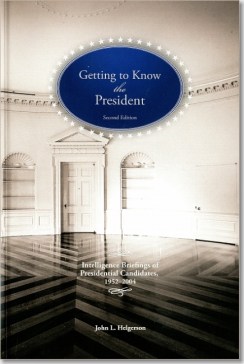
Getting To Know the President: Intelligence Briefings of Presidential Candidates, 1952-2004, including John F Kennedy, Ronald Reagan, Bill Clinton. ISBN 9781929667192Senate, 1789-1989, Volume 3: Classic Speeches, 1830-1993 contains the text of some of the most famous speeches by United States Senators, including a young Senator John F. Kennedy.

Getting To Know the President: Intelligence Briefings of Presidential Candidates, 1952-2004 (Paperback) and the Audiobook-MP3 edition are new publications that tell the story of how the CIA and the US Intelligence Community begin to brief Presidential candidates and Presidents-elect, including JFK and Lyndon Johnson, on vital intelligence issues even before they take office.

JFK’s Army for World Peace

?????????Image: Candidate Senator John F. Kennedy at the University of Michigan-Ann Arbor. Source: JFK Library

Two weeks after an improvised presidential campaign speech in October 1960 to a crowd of 10,000 cheering students at the University of Michigan in Ann Arbor where he asked “How many of you are willing to work in the Foreign Service and spend your lives traveling around the world?” Senator Kennedy proposed “a peace corps of talented men and women” who would dedicate themselves to the progress and peace of developing countries.  Encouraged by more than 25,000 letters responding to his call, newly elected President Kennedy took immediate action to make the campaign promise a reality and established the Peace Corps on March 1, 1961, with his brother-in-law, R. Sargent Shriver, as its leader.

A Life Inspired: Tales of Peace Corps ServiceThe lasting legacy of the Peace Corps’ and its ongoing inspiration to America’s younger generations is clearly shown in these two books. A Life Inspired: Tales of Peace Corps Service (Paperback) (it also available as an eBook) is a collection of autobiographical reminiscences by 28 former Peace Corps volunteers, while Crossing Cultures With the Peace Corps: Peace Corps Letters From the Field is a collection of actual letters from Peace Corps volunteers serving in various nations.

JFK’s Foreign Policy: Cold War Warrior

President Kennedy was confronted with some dramatic foreign policy issues from his first days in office, not least of which was how to avoid nuclear war with the Soviet Union over their missiles in Cuba.

History of the Office of the Secretary of Defense: The McNamara Ascendancy, 1961-1965 (eBook) John F. Kennedy isbn 999-000-55551-6History of the Office of the Secretary of Defense: The McNamara Ascendancy, 1961-1965 (eBook) tells the story of Kennedy’s Secretary of Defense, Robert McNamara, including his relationship with Presidents Kennedy and Johnson, the transformation of the Department of Defense as a part of Kennedy’s New Frontier, and the Pentagon’s handling of the Cuban Missile Crisis, Bay of Pigs episode, and the onset of the Vietnam War.

More than a mere historical text, The Joint Chiefs of Staff and National Policy, Vol. 8, 1961-1964 provides a fascinating inside look at the Joint Chiefs’ participation and their point-of-view in dealing with the following foreign crises from the U.S.S.R. arms race, Berlin Wall construction, Cuba, to Laos, expansion of NATO, support for Israel, and more – while working with new thinking in the Kennedy and Johnson presidential administrations.

Part of the Department of State’s famous Foreign Relations of the United States (FRUS) Series, Foreign Relations of the United States, 1961-1963, V. 5, Soviet Union presents a full accounting of the overall nature and structure of United States-Soviet relations that made up the Kennedy Administration’s Cold War diplomacy. It also refers to some of the intelligence and analysis of the initial build-up of Soviet missiles in Cuba that ultimately led to the Cuban Missile Crisis, as well as the complete official record of President Kennedy’s meetings with Soviet Chairman Premier Nikita Khrushchev at the Vienna Summit Conference, June 3-4, 1961.

Penetrating the Iron Curtain: Resolving the Missile Gap With Technology (Book and DVD)  ISBN: 9780160920547For more in-depth information about the Cuban Missile crisis and Cold War Kennedy style, read the new Penetrating the Iron Curtain: Resolving the Missile Gap With Technology (Book and DVD)  from the CIA which contains analysis and hundreds of recently declassified intelligence documents about the Soviet missile build-up and perceived US missile gap.

CIA Analysis of the Warsaw Pact Forces: The Importance of Clandestine Reporting (Book and DVD)  ISBN: 9780160920509Also interesting is the recently released CIA Analysis of the Warsaw Pact Forces: The Importance of Clandestine Reporting (Book and DVD) which studies the reaction by the Soviets to the West’s formation of NATO including West Germany by establishing a military bloc of Communist nations with the Warsaw Treaty of May 1955. This study continues CIA’s efforts to provide a detailed record of the intelligence derived from clandestine human and technical sources from that period.

A City Torn Apart: Building of the Berlin Wall (Book and DVD) ISBN: 9780160920455Many around the world have heard the famous quote from the Kennedy anti-Communist speech at the Berlin Wall on June 26, 1963, in which he says: “Today, in the world of freedom, the proudest boast is ‘Ich bin ein Berliner.’” The Berlin Wall became a symbol of Cold War hostilities between the US and the Soviets.  A City Torn Apart: Building of the Berlin Wall (Book and DVD) is a new multimedia book with DVD that covers the period of 1945 to the end of 1961, during the Kennedy administration with a vast collection of recently declassified CIA documents, videos, and photographs that show Berlin’s journey from a battered post war region occupied by the Allies to a city literally divided – with its western half becoming an island of freedom surrounded by a sea of Communist repression.

How JFK inspired America to “Send a Man on the Moon”

In response to both real and perceived Soviet threats, President Kennedy gave his “Urgent National Needs” speech to Congress on May 25, 1961, where he stated that “I believe that this nation should commit itself to achieving the goal, before this [1960s] decade is out, of landing a man on the Moon and returning him safely to the Earth.”  This statement turned to real policy and eventually manned missions to the moon. JFK’s lasting legacy to the U.S. space program is incalculable.

Exploring the Unknown: Selected Documents in the History of Exploring the Unknown: Selected Documents in the History of the United States Civil Space Program: V. VII: Human Spaceflight: Projects Mercury, Gemini, and Apollo NASA History Series ISBN 780160813818the U.S. Civil Space Program: V. I: Organizing for Exploration  is part of the NASA historical collection and provides a selection of expert essays and key official documents about the organizational development of NASA and the U.S. civil space program, including Senator then President Kennedy’s memos and inspirational speeches and Vice President Johnson’s early involvement that intensified after becoming President.

Exploring the Unknown: Selected Documents in the History of the United States Civil Space Program: V. VII: Human Spaceflight: Projects Mercury, Gemini, and Apollo  expands Kennedy’s vision of manned spaceflight into reality with Projects Mercury, Gemini and Apollo, providing essays and the key documents that outlined manned space program budgets, proposals, and even the selection of lunar landing spots and choices of symbolic items to bring to the moon.

NASA's First 50 Years: Historical Perspectives; NASA 50 Anniversary Proceedings ISBN: 9780160849657In this thoughtful retrospective, NASA’s First 50 Years: Historical Perspectives; NASA 50 Anniversary Proceedings, a wide array of scholars turn a critical eye toward the achievements of NASA’s first 50 years, probing an institution widely seen as the premier agency for exploration in the world, carrying on a long tradition of exploration by the United States and the human species in general.

Civil Rights and the Brothers Kennedy

After the Supreme Court ruled unanimously in Brown v. Board of Education in 1954 that racial segregation in public schools was unconstitutional, desegregation was a slow process in many Southern school districts and universities.

John F. Kennedy Presidential Library's account of James Meredith, the African-American student whose attempt to register at the University of Mississippi in 1962 led to a showdown between state and federal authorities and the storming of the campus by a segregationist mob. JFK Library "Ole Miss" micrositeImage: The John F. Kennedy Presidential Library’s account of James Meredith, the African-American student whose attempt to register at the University of Mississippi in 1962 led to a showdown between state and federal authorities and the storming of the campus by a segregationist mob. Source: JFK Library “Ole Miss” microsite

By President Kennedy’s election, civil rights activists were pushing for more equality, resulting in violent attacks and confrontations by staunch segregationists that required Federal involvement such as Federal marshals being called in by JFK’s brother and Attorney General Robert Kennedy to protect Alabama freedom riders, as well as forced integration at “Ole Miss” University of Mississippi.

Role of Federal Military Forces in Domestic Disorders, 1945-1992 ISBN: 0-16-072361-2 and 0-16-072364-7The book Role of Federal Military Forces in Domestic Disorders, 1945-1992 (Paperback) and (Hardcover) chronicles the U.S. Army’s response to major social events in contemporary American society, particularly the civil rights movement, including the integration showdown at the University of Mississippi in 1962 and other racial disturbances of the 1960s, all the way to the 1992 race riot in Los Angeles.

The End of Camelot

The practice of referring to the Kennedy Administration as Camelot came from a post-assassination interview for Life magazine with First Lady Jacqueline (Jackie) Kennedy, who referred to the years of Kennedy’s presidency before his assassination as an “American Camelot.”  She said that President Kennedy was fond of the music to the popular 1960-63 smash Broadway musical, Camelot, the lyrics of which were penned by Kennedy’s Harvard classmate, Alan Jay Lerner.  The First Lady mentioned that the President and she often listened to a recording of the hit title song before going to sleep, with JFK  particularly enjoying the phrase: “Don’t ever let it be forgot, that once there was a spot, for one brief shining moment that was known as Camelot.” Once the article was released, other journalists picked up on Mrs. Kennedy’s reference, and the world has used it ever since.

First Ladies by the White House Historical Association ISBN 9780912308838Jackie Kennedy’s historic role as First Lady is outlined in the beautifully done First Ladies of the United States of America book by the White House Historical Association which profiles the many courageous First Ladies, from Martha Washington to Jacqueline Kennedy, up to Hillary Rodham Clinton and Laura Bush.

The end of Camelot came with President Kennedy’s assassination by Lee Harvey Oswald. Afterwards, President Lyndon Johnson created a commission, chaired by Chief Justice Earl Warren to investigate the events that led to the assassination and any possible conspiracies.

The U.S. Government Printing Office (GPO) produced, in what was perhaps its single most important publication of the 1960s, the official results of this investigation in the Report of the President’s Commission on the Assassination of President Kennedy.  It became known unofficially as the Warren Commission Report or the Warren Report, named for Supreme Court Chief Justice Earl Warren who chaired the commission.

C732-1-WH64Image: Chief Justice Earl Warren presenting the Final Report of The President’s Commission on the Assassination of President Kennedy– printed by the U.S. Government Printing Office. September 24, 1964. Source: White House

Before it was released to the public on September 27, 1964, special security measures were set up at GPO to prevent any unauthorized disclosure of the manuscript.  A half century later, GPO is releasing a FREE digital version of the full, 900-page original Warren Commission Report from GPO’s FDsys (Federal Digital System) database.

Today it is still fascinating to re-live the events surrounding the events in Dallas in 1963 from eye witnesses.  In addition to witness testimony, the Report contains numerous photos, maps, diagrams, and illustrations.

The post-President Kennedy assassination audio tape recordings of conversations between various individuals in Washington, DC, and Air Force One pilots and officials on board during the flight from Dallas to Andrews Air Force Base are also available on FDsys.

johnjr-salutes-dad-jfkImage: John F. Kennedy, Jr. salutes his father’s coffin at President Kennedy’s funeral, with his widow First Lady Jacqueline (Jackie) Kennedy, daughter Caroline, and brothers Edward (Ted) Kennedy and Robert (Bobby) Kennedy.

These Official publications are part of the legacy of President John F. Kennedy and help us remember his 1,000 days of an American Camelot.

HOW DO I OBTAIN THESE JFK PUBLICATIONS?

You can find these official John F. Kennedy publications by clicking on the links above or through any of these methods:

  • Shop Online Anytime: Buy them online 24/7 at GPO’s Online Bookstore under the 35- John F. Kennedy collection (found under the US & Military History category Presidential History section).
  • Order by Phone: Call our Customer Contact Center Monday through Friday, 8 am to 5:30 pm Eastern (except US Federal holidays). From US and Canada, call toll-free 1.866.512.1800. DC or International customers call +1.202.512.1800.
  • Visit our Retail Store: Buy a copy of any print editions from this collection at GPO’s retail bookstore at 710 North Capitol Street NW, Washington, DC 20401, open Monday–Friday, 9 a.m. to 4 p.m., except Federal holidays, Call (202) 512-0132 for information or to arrange in-store pick-up.
  • Go to a Library: GPO provides copies of these publications to Federal Depository libraries worldwide. Find them in a library near you.

About the Author: Government Book Talk Editor Michele Bartram is Promotions Manager for GPO’s Publication and Information Sales Division in Washington, DC, and is responsible for online and offline marketing of the US Government Online Bookstore (http://bookstore.gpo.gov) and promoting Federal government content to the public.


Think you know pink? Increase your awareness of breast cancer

October 22, 2013

October-Breast-Cancer-Awareness-MonthOctober, the annual observance of National Breast Cancer Awareness Month, is a time for reflection on the pervasiveness of the disease.

In the general US population, one in eight women will have breast cancer at some point in their lives and it is the most common cancer in American women.

1-in-8-get-Breast-Cancer

But breast cancer is not only confined to women. In 2009, 211,731 women and 2,001 men in the United States were diagnosed with breast cancer and 40,676 women and 400 men died from it.

Even if you believe in and support the cause, you can still be unaware how widespread breast cancer is, and what you can do– beyond wearing pink– to inform yourself and others to reduce your risks and those of your loved ones.

Breast-Cancer-Knowing-Is-Not-Enough

Federal Government Breast Cancer Research and Awareness

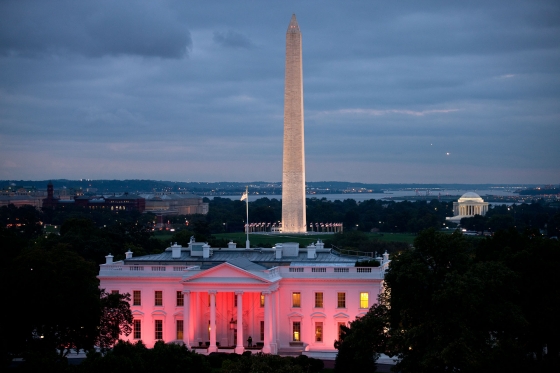
The Federal government is doing a great deal to increase public awareness and disease eradication: everything from lighting the façade of the White House with pink floodlights during the month’s observance to spending $602.7 million on research at the National Cancer Institute in 2012 and funding a number of stellar breast cancer publications from the Department of Health & Human Services for both consumers and health care professionals. Learning more can help you do your part to be more aware and give yourself and your family and friends a better chance at being healthy.

white-house-breast-cancer-monthImage above: The North Portico exterior of the White House is illuminated pink, Oct. 3, 2011, in honor of Breast Cancer Awareness Month. Source: Official White House Photo by Lawrence Jackson

Breast Cancer Risk Factors

The Healthy Woman: A Complete Guide for All Ages (ePub eBook)Many circumstances affect one’s chances for getting breast cancer. Some factors can be controlled; others cannot. In The Healthy Woman: A Complete Guide for All Ages (ePub eBook), we learn that the controllable risk factors include environment (exposure to second-hand smoke, chemicals, radon, etc.) and personal history (diet, UV exposure, use of alcohol, tobacco, drugs or some medications such as hormones, etc.), while family history (genetics) and the age at which a woman enters menopause are factors beyond a woman’s control.

Effects of Ethnic and Cultural Differences

Breast Cancer: Black Women Have Higher Death Rates From Breast Cancer Than Other Women  from Vital Signs 2011Statistical evidence shows that not all women, especially women of color, do enough, or can get enough care, to protect themselves from breast cancer. Reading Breast Cancer: Black Women Have Higher Death Rates From Breast Cancer Than Other Women can make a reader upset and more determined to do his or her best to prevent breast cancer. Breast cancer is the most common cause of death from cancer among Hispanic women, and the second most common cause of death from cancer among women from all other races.

According to this recent statistical report, black women are 40% more likely to die from breast cancer than white women, compared to women of other races/  ethnicities. New changes enacted since the report was issued late last year, such as implementation of open season starting under the Affordable Care Act (ACA) [Learn more about the ACA in our Government Book Talk post “Everything You Should Know About The Health Care Law], may improve the statistic, since the ACA will provide 30 million previously uninsured Americans with health care if they go get it. These changes might reduce the risk to women’s death rates from breast cancer in the future as health care becomes more available to all.

Preventing Breast Cancer

breast_cancer_infographicFor a woman to give herself the best possible chance of avoiding breast cancer, self-care is critical. According to the CDC’s infographic Protect Yourself from Breast Cancer, women can take steps to help reduce their risk for breast cancer by remembering to:

  • get at least four hours of exercise per week,
  • keep a healthy weight,
  • limit alcoholic drinks to one per day,
  • breastfeed their infants,
  • bear their children before age 35,
  • get regular mammograms,
  • perform monthly self-exams,
  • and/or make careful decisions about taking hormone replacement therapy (HRT).

In addition to having access to health care, women can improve their chances of avoiding and/or surviving breast cancer by improving their self-care, as mentioned. For more tips on getting this care, and getting the insurance and treatment to help with the care, women and their families can consult a wide variety of Federal government publications, including

Breast Cancer Screening Options

 The Guide to Clinical Preventive Services 2012: Recommendations of the U.S. Prev The Guide to Clinical Preventive Services 2012: Recommendations of the U.S. Preventive Services Task ForceThe Guide to Clinical Preventive Services 2012 provides the latest recommendations for who should get a mammogram based on various risk factors including ethnic background and family history of breast cancer, when and how to do it and at what age. It also goes into the pros and cons of various alternative forms of breast cancer screening from the most reliable film mammography to digital mammography, MRIs, Clinical breast examination and breast self-examination.

Understanding Breast Changes: a Health Guide for WomenUnderstanding Breast Changes covers a discussion of the normal breast changes over the course of a woman’s lifetime, how to get a mammogram and understand the results, how to get the support you need, a glossary and a list of resources for more research. The Healthy Woman offers more general information on getting the right kind of health care for women. The writers recognize symptoms relating to particular diseases impacting a woman’s health, and they discuss various available treatment options for those diseases.

Breast Cancer Treatment Options

Surgery Choices for Women with DCIS or Breast CancerWhen women do find that they need treatment, particularly surgery, for breast cancer or ductal carcinoma in situ (DCIS), they need to know as much about their proposed procedure as possible. An informed patient can much better participate in her own recovery, and give needed information to her surgeon, as well as provide herself with the knowledge of what is normal and what symptoms require follow-up. Surgery Choices for Women with DCIS or Breast Cancer covers those topics, and is a good starting point for a woman facing surgery for either of those conditions, when she is also consulting her care provider, surgeon, friends and family.

These highlights from these informative books may have made you realize that it’s time for you to improve your own self-care, or urge the women in your life to improve theirs. If that is so, then the best place to start is with the some public health research. You can find out more by reading the publications listed below.

FOR THE PUBLIC:

How can I obtain these breast cancer publications?

1)    The Healthy Woman: a Complete Guide for All Ages [eBook] and The Guide to Clinical Preventive Services 2012: Recommendations of the U.S. Preventive Services Task Force

  • Shop Online: You can purchase these two publications from the U.S. Government Online Bookstore at http://bookstore.gpo.gov by clicking on the links above in this blog post or shopping our collection under our Cancer category.
  • Order by Phone: Call our Customer Contact Center Monday through Friday, 8 am to 5:30 pm Eastern (except US Federal holidays). From US and Canada, call toll-free 1.866.512.1800. DC or International customers call +1.202.512.1800.
  • Visit our Retail Store: Buy a copy of any print editions from this collection at GPO’s retail bookstore at 710 North Capitol Street NW, Washington, DC 20401, open Monday–Friday, 9 a.m. to 4 p.m., except Federal holidays, Call (202) 512-0132 for information or to arrange in-store pick-up.

2)     Protect Yourself from Breast Cancer [infographic], Breast Cancer: Black Women Have Higher Death Rates From Breast Cancer Than Other Women, Understanding Breast Changes: a Health Guide for Women, and Surgery Choices for Women with DCIS or Breast Cancer.

FOR LIBRARIANS: There are records available for the electronic versions of all these works in the Catalog of Government Publications, and you can buy your own copy of  The Healthy Woman: a Complete Guide for All Ages [eBook and The Guide to Clinical Preventive Services 2012: Recommendations of the U.S. Preventive Services Task Force in the GPO Online Bookstore.

About the author(s): Adapted by Government Book Talk Editor-in-Chief and GPO Promotions & Ecommerce Manager, Michele Bartram, from an original blog post by Jennifer K. Davis from GPO’s Library Services & Content Management Division that supports the Federal Depository Libraries Program (FDLP).


Relive the first year of the Obama Presidency

September 24, 2013

Portrait of the 44th President of the United States Barack Obama As we experience the first year of President Obama’s second term as the 44th President of the United States, take a look back on what was going on at this time during the first year of his first term as president with the Public Papers of the Presidents, Barack Obama 2009, Book 2. This volume covers the public messages and statements made by President Obama during the second half of his first year in office from July to December 2009.

Public Papers of the Presidents of the United States, Barack Obama, 2009, Book 2, July 1 to December 31, 2009.  ISBN: 9780160860867 and GPO Stock #069-000-00185-8Some highlights of those six months include the confirmation of Sonia Sotomayor as President Obama’s first nomination to the Supreme Court, the shaping of the health care law (Read our blog post: “Everything You Should Know About The Health Care Law“), and the continuing efforts to create jobs and rebuild the U.S. economy. The book also includes a section of official color photographs from events during the time period.

This book is part of the Public Papers of the Presidents series which consists of public writings, addresses and remarks made by the President and is the second volume of the Barack Obama Public Papers collection, which includes an eBook version of Book 1. (Read about the first volume in our blog post: “The First Collection of President Obama’s Public Papers.”)

As in other Public Papers volumes, the appendices provide listings of:

  • A digest of President Obama’s daily schedule and meetings, when announced, and other items of general interest issued by the White House Office of the Press Secretary;
  • President Obama’s nominations submitted to the Senate;
  • A checklist of materials released by the Office of the Press Secretary that are not printed full-text in the book; and
  • A table of Proclamations, Executive Orders, and other Presidential documents released by the Office of the Press Secretary and published in the Federal Register.

Public Papers of the Presidents series

The entire Public Papers of the Presidents series is published by the National Archives’ Office of the Federal Register (OFR) and includes two volumes per year, each volume covering a six-month period of the presidency, with the OFR checking remarks against a recording and signed documents against the original to ensure accuracy. The series started with President Hoover and continues to President Obama, with the exception of President Roosevelt who chose to have his papers published privately.

To learn more about the process of compiling the Public Papers of the Presidents, watch this video below on the production of President Obama’s first volume at the Government Printing Office (GPO):

Video Government Printing Office The Making-of-Barack-Obama-Public-Papers-of-the-President

Image: Excerpted from the video of the Making of the Public Papers of the President. Depicts President Obama in the Oval Office being presented with the first volume in his Public Papers printed by the Government Printing Office in April 2011. Pictured from left to right are: current Public Printer of the United States, Davita Vance-Cooks; previous Public Printer, William J. Boarman; President Barack Obama; Archivist of the United States, David S. Ferriero, and Director of the Federal Register, Ray Mosley.

The Public Papers of the Presidents series is also available on GPO’s Federal Digital System (FDsys). The public can digitally access the digitized volumes starting in 1991 with President George H. W. Bush through President Barack Obama, 2009 from this page on FDsys.

GPO also makes the Public Papers of the Presidents series available in print through the agency’s online bookstore with volumes back to Herbert Hoover. The public can browse through the various volumes from different presidents on the Public Papers of the Presidents collection page in the Presidential History collection under the US & Military History category.

How do I obtain a copy of the Public Papers of the Presidents, Barack Obama 2009, Book 2?

1) Buy a printed copy

  • Shop Online: You can purchase a printed copy of Public Papers of the Presidents, Barack Obama 2009, Book 2 or any of the previous volume(s) of the Obama presidency by shopping the Barack Obama Public Papers collection on the U.S. Government Online Bookstore.
  • Order by Phone: Call our Customer Contact Center Monday through Friday, 8 am to 5:30 pm Eastern (except US Federal holidays). From US and Canada, call toll-free 1.866.512.1800. DC or International customers call +1.202.512.1800.
  • Visit our Retail Store: Buy a printed copy at GPO’s retail bookstore at 710 North Capitol Street NW, Washington, DC 20401, open Monday–Friday, 9 a.m. to 4 p.m., except Federal holidays, Call (202) 512-0132 for information or to arrange in-store pick-up.
  • Find it in a Library:  GPO provides catalog records to Federal Depository libraries worldwide. Find this publication in a federal depository library.

2) View or download a PDF from GPO’s official Federal documents database, FDsys:

About the Author: Our guest blogger is Emma Wojtowicz, Public Relations Specialist in GPO’s Office of Public Affairs. Additional content provided by Government Book Talk Editor: Michele Bartram, Promotions & eCommerce Manager for GPO’s Publication and Information Sales Division.


Glad Dad: Best Books and Sites for Fathers

June 11, 2013

Fathers-day-in-multiple-languagesMany of our personal characteristics, such as where we are born, the color of our eyes, our native language—are due to luck. If we get good parents, this is due to luck, too. When we become parents ourselves, though, we need to rely on our own hard work. Being a parent is the happiest and hardest job I’ve ever had, and I know many people say the same. Any help you can get with that job, whether it is from your own parents, friends, your child’s teachers, parents of your child’s friends, is welcome. As the African proverb goes, it takes a village to raise a child.

Image: How do you say Father? Source: Craftionary

The Federal government wants to be part of that village, and provide parents with any assistance it can give. And with Father’s Day this Sunday, the Government Printing Office wants to highlight these terrific Federal publications and websites to help Dads be all they can be. Whether he’s called Papi, Papa, Pop, Baba, Daddy, Da, Abbu or just plain Dad, celebrate the fathers– and father figures– you know by sharing these resources with them.

National Responsible Fatherhood Clearinghouse

Fatherhood.gov Despicable Me National Responsible Fatherhood ClearinghouseThe Government supports fathers in many ways; one of them is through the National Responsible Fatherhood Clearinghouse at Fatherhood.gov. Dads can check out this site to find fatherhood programs and resources, connect with mentors, read the latest blog posting on DadTalk, and take the Fatherhood Pledge.

Eleven Federal partners are involved in the Responsible Fatherhood Working Group: the Departments of Agriculture, Commerce, Education, Health and Human Services, Housing and Urban Development, Justice, Labor, Veterans Affairs, the Corporation for National and Community Service, the U.S. Equal Employment Opportunity Commission, and the Office of National Drug Control Policy. The level of Federal investment shows how seriously the President and the Federal Government takes this initiative. Another way to reap the benefits of Federal support of fathers is to read Federal government publications prepared in support of responsible fatherhood.

Promoting Responsible Fatherhood

Hero poster for FatherhoodFirst.org Promoting Responsible Fatherhood: Every Father Taking Responsibility for His Child’s Intellectual, Emotional, and Financial Well-Being discusses the various programs and initiatives that President Obama has been promoting as part of his Fatherhood and Mentoring Initiative, including the Head Start-sponsored Fatherhood First program (see poster on the left).

President Obama believes in the importance of fatherhood, as he said in 2009:

“I came to understand the importance of fatherhood through its absence—both in my life and in the lives of others. I came to understand that the hole a man leaves when he abandons his responsibility to his children is one that no government can fill” (p. 2).

To keep that void from opening, the Federal Government has started the aforementioned initiative, and the president has asked for Federal budget support for the Child Support Enforcement Program and to sustain funding for the Healthy Marriage and Responsible Fatherhood grants.

President Obama playing with daughters and new dog BoThis book discusses these and similar Federal Government programs started and/or supported by the Obama Administration, and what the programs have done to help fathers and their families.

Image: President Obama playing with his daughters Sasha and Malia along with then-new (and rambunctious) dog, Bo, on the White House lawn. Source: The White House

This volume is mostly a high-level program summary of interest to policy wonks, public policy workers, social workers, local government officials and students of those disciplines. However, the general public can also glean information about what resources they can get from the Federal Government to assist their families.

At the document’s end, there’s a list of things fathers, individuals, NGOs and places of worship can do to support fatherhood in their own communities as well. The document’s authors try to show how the Federal government stretches out a hand, but it ends on a note of helping oneself, much like the next volume.

Download an electronic copy of Promoting Responsible Fatherhood: Every Father Taking Responsibility for His Child’s Intellectual, Emotional, and Financial Well-Being for FREE from GPO. 

Dad’s Play Book: Coaching Kids to Read

Dad’s Play Book: Coaching Kids to ReadDad’s Play Book: Coaching Kids to Read is geared to get dads to help their kids to read, using case studies and helpful tips. The writers use two of the most important behavior modification tools at their disposal: we all want to be like our peers (hence the case studies) and men love sports (hence the extended coaching metaphor). Twenty dads are profiled on how they are helping their kids learn to read, giving their names, photos, occupations and ages, so they’re more relatable to readers.

The middle pages cover five skills that children need to have mastered to be readers by third grade; everyone who has responsibility for a pre-K through 3rd grade child should be taking some time to study this cheat sheet. Each tip has a paragraph subtitled, How Can a Dad Help? that gives specific suggestions for a dad to improve reading—for example, with fluency. This title is short but sweet; there’s a lot more to know about helping a child learn to read, but this friendly, picture-filled piece is definitely worth the time it takes not only to read it, but to study it and employ in your life as well.

You can either


How can I find these publications: Promoting Responsible Fatherhood: Every Father Taking Responsibility for His Child’s Intellectual, Emotional, and Financial Well-Being and Dad’s Play Book: Coaching Kids to Read?

About the author(s): Our guest blogger is Jennifer K. Davis from GPO’s Library Services & Content Management Division that supports the Federal Depository Libraries Program (FDLP). (Article was adapted by Government Book Talk Editor, Michele Bartram, GPO Promotions & Ecommerce Manager, from an original  post on the FDLP Community site blog by Ms. Davis.)


Over 1 Billion Served: GPO’s Pueblo Distribution Center Hits Historic Milestone Today

May 7, 2013

GPO_Pueblo_1_Billion-Shipped1 Billion.  One thousand million. Any way you count it, that’s a bundle! And at the US Government Printing Office Document Distribution Center in Pueblo, Colorado, we have reached that magic number. As of today, our Pueblo facility has shipped over 1 billion consumer publications, making it a bundle of bundles sent out to the American people!

GPO’s Western Expansion

Growing up, I always heard or read public service announcements from the Federal Government offering helpful advice on everything from how mortgages work to getting vaccinations. Each time, the commercial or ad would end with the same tag line: “To order this helpful free publication, contact us in Pueblo, Colorado” and an address and phone number (and today, a website address) would be given with ordering information.  I thought it amazing that all this great consumer information was available from one Colorado town.

Although unbeknownst to me at the time, it turns out this famous Pueblo location is actually one of two distribution facilities operated by the Government Printing Office’s Agency Distribution Services that stores and ships out Government publications on behalf of our Federal agency clients to the public –the other being in Laurel, Maryland.

In an effort led by House Appropriations Committee member Congressman Frank Evans, the GPO distribution facility was proposed and then approved on October 8, 1970, by the Joint Committee on Printing and the 15th Public Printer of the United States, Adolphus Nichol (Nick) Spence. The Pueblo Public Documents Distribution Center (PuDDC) was dedicated on October 8, 1971, and opened on October 11, 1971, to provide support for the expanding dissemination needs of Federal agencies, from books to posters to other products.

GPO_Pueblo_Congressman-Frank-Evans-Distribution-CenterLast year, President Barack Obama signed an act of the 111th Congress to rename the center the “Congressman Frank Evans US Government Printing Office Pueblo Document Distribution Center” after the former Congressman who passed away in June of 2010. It was re-dedicated on October 11, 2011, for the fortieth anniversary of the Pueblo facility.

Image: Renaming ceremony of the GPO Pueblo facility on October 11, 2011.

Today, GPO’s Pueblo Document Distribution Center provides distribution services to 10 federal agencies and other entities including: The Federal Citizen Information Center (FCIC), the Federal Trade Commission (FTC), Health and Human Service (HHS – Women’s Health), Office of Disability Employment Policy (ODEP), Federal Drug Administration (FDA), Federal Depository Library Program (FDLP), Consumer Financial Protection Bureau (CFPB) and three programs within the Department of Homeland Security  that produce items such as Transportation Security Administration (TSA) posters, bookmarks and baggage inserts.

Ruehlen-at-Pueblo-PuDDCImage: Jimmy Ruehlen has worked for Pueblo’s Government Printing Office Distribution Center since it began operations 40 years ago. Photo credit: The Pueblo Chieftain / Mike Sweeney (Photographer)

The Pueblo Distribution Center has processed over 105 million customer orders from the day it opened its doors through the end of April 2013, and as of today, May 2, 2013, the Center has distributed over 1 billion publications on behalf of its various Federal clients.

GPO Gets a “CIC” out of Distributing Consumer Publications

The Pueblo facility really got a kick-start when it signed an inter-agency agreement with the General Services Administration (GSA) in January of 1973 to take over the warehousing and distribution of the millions of printed consumer publications being provided through GSA’s then-new Consumer Information Center (or CIC), which itself has provided service to the GSA’s Federal Citizen Information Center (or FCIC), the U.S. Postal Service and the Department of Education.

Consumer-Info-Catalog-Winter-Spring-2013_coverThe gem in the FCIC’s crown is the Consumer Information Catalog, printed by GPO, which lists the latest and most popular of the many thousands of consumer publications available by topic and is updated several times a year.

Most of the print publications–the majority printed by GPO– in the Consumer Information Catalog are FREE for U.S. delivery if ordered online; the rest require only a nominal fee. Plus, a number of the publications are offered for FREE in electronic format for immediate download on the Publications.USA.gov website.

Some of the many categories of helpful consumer pamphlets and publications include: Education; Employment; Family including Pets; Federal Programs and Benefits, Food; Health including Drugs and Exercise & Diet (even information on braces, tattoos, and tanning!); Housing including Financing and Home Maintenance; the ever-popular Money category including Fraud, Credit Cards, Living Trusts, and Retirement Planning; even Small Business and Travel, and more.

Consumer-Info-Catalog-Winter-Spring-2013_Page_11

Image: Page from the Consumer Information Catalog Winter/ Spring 2013 Edition.

How can I get a copy of the Consumer Information Catalog and order publications?

Find the latest Consumer Information Catalog in PDF format online, or you can also order FREE print copies to be mailed to you at the same Publications.USA.gov website.

Consumer-Action-Handbook-2013The most popular document distributed by Pueblo remains the annual Consumer Action Handbook, a free trouble-shooting guide to help Americans solve all sorts of consumer problems. I’ve ordered five to share with family and friends!

In addition to ordering from GSA’s Publications.USA.gov website, you can find a number of these consumer publications on GPO’s US Government Online Bookstore.

Below are some of the more popular publications in the Consumer Information Catalog that are also available on GPO’s online bookstore:

You can also browse our Consumer, Home & Family category on our online bookstore.

With so many useful consumer publications available from the Federal Government, I’m sure it won’t be long until we distribute another billion items to help American consumers!

About the Author:

Government Book Talk Editor Michele Bartram is Promotions Manager for GPO’s Publication and Information Sales Division in Washington, DC, and is responsible for online and offline marketing of the US Government Online Bookstore (http://bookstore.gpo.gov) and promoting Federal government content to the public.


History Was Made at the Women’s Rights National Historical Park

March 26, 2013

Guest blogger Jennifer K. Davis from GPO’s Library Services & Content Management Division that supports the Federal Depository Libraries Program (FDLP) writes about the Women’s Rights National Historical Park brochure in honor of National Women’s History Month. (Originally posted in the FDLP Community site on March 25, 2013.)

March is National Women’s History Month, and I am writing this posting on International Women’s Day. If I had the twelve hours–round trip– to hit the road, I’d head for the Women’s Rights National Historical Park in Seneca Falls, New York, and celebrate how far we have come as a nation.

Susan B. Anthony and Elizabeth Cady Stanton

It would definitely be a work-related trip. The U.S. Government Printing Office (GPO) printed Elizabeth Cady Stanton’s most famous– and in her estimation, her best– speech in 1915. She delivered her address, Solitude of Self, before the Committee on the Judiciary on January 18, 1892. She argued why the law needs to treat women as equal citizens under the law and she argued for women to get the vote via a law that would eventually became the Nineteenth Amendment to the Constitution.

Image: Susan B. Anthony (left) and Elizabeth Cady Stanton (right). Source: The Susan B. Anthony Center for Women’s Leadership.

Sadly, it took forty-two years after Stanton and fellow suffragist Susan B. Anthony first drafted the 19th amendment in 1872 and long after their deaths for the amendment to finally be ratified and made law in 1920. Since Stanton’s house is part of the park, it’s here that you can discover a very human portion of United States history and feel a renewed sense of the privilege that all United States citizens have to vote.

Not only can you learn about Stanton at the park, you can also get a wider view of the earliest stages of the women’s rights movement in the United States. Four historical properties and a visitor’s center make up the park. You can visit the Wesleyan Chapel in Seneca Falls where the leaders of the women’s rights movement held the First Women’s Rights Convention in August 1848. Stanton’s home is open from spring through fall. You can tour the house she referred to as “the Center of the Rebellion” where she raised her large family while networking with other women on women’s rights reforms.

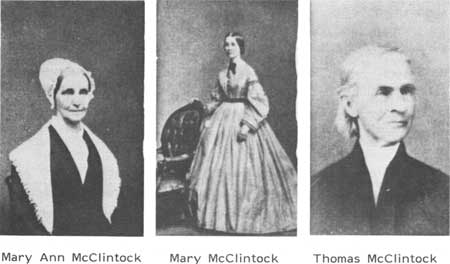
Another one of the four park properties, the M’Clintock House in nearby Waterloo, was the home of Mary Ann and Thomas M’Clintock.

MClintocksMrs. M’Clintock held the planning session for the First Women’s Rights Convention and drafted the Declaration of Sentiments at their home as well. (As an added bonus, the M’Clintocks were Quakers and their house was a stop on the Underground Railroad–so you can find out more about Quakers and belatedly celebrate African-American History Month while there.)

While in Waterloo, you can walk by the Hunt House, where Jane and Richard Hunt hosted Lucretia Mott and held an assembly for her where the attendees announced the plan for the First Women’s Right’s Convention. Although you can’t tour the Hunt House now as it is too fragile, the National Park Service (NPS) is making plans to restore it in the future. Visiting these locations brings home the exciting sense of purpose and activity of the American women’s rights movement of the late 1800s.

Information about all of these sites, as well as slideshows of the historical houses, the text of Stanton’s address, historical factoids, and photos of the major architects of the women’s rights movement and their supporters, are available at the Women’s Rights National Historical Park brochure online. Even if, like me, you can’t get to upstate New York to see these sites in person, you can (almost) feel like you’ve been there once you’ve given the park Web site a thorough visit.

It’s worth the time it takes to make the trip, whether actual or virtual. It’s amazing to see how far we’ve come as a nation in the advancement of personal rights, and how much all of society (men and women) have done to push our mothers, sisters, aunts and daughters forward. Having that perspective is one of the many advantages of learning about the park.

Continue your self-education by reading the park brochure at your local Federal depository library. You can find it either via the title’s PURL (Permanent URL) or through the Catalog of Government Publications (CGP) record that GPO cataloged for the Federal depository libraries in the March 2013 record load.

How can I access this publication, the Women’s Rights National Historical Park web brochure?

[Note from M. Bartram:] You can also purchase print publications and eBooks from GPO’s U.S. Government Online Bookstore related to the topics discussed in this article:


March Madness: New GPO Bookstore Website and Historic Anniversaries

March 22, 2013

March is traditionally a month of change and national excitement in the United States. Together with the change of seasons and college basketball frenzy, some important national milestones were reached this month that we should acknowledge, from new achievements to key anniversaries.

New U.S. Government Bookstore Website

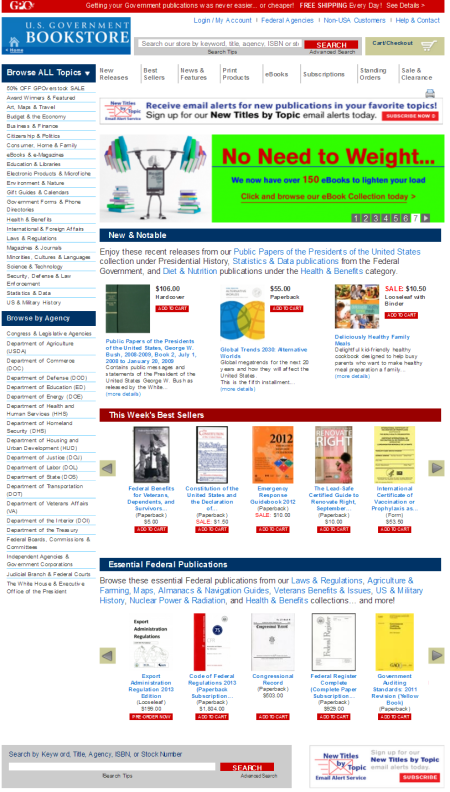
First, last week we launched our upgraded U.S. Government Bookstore ecommerce site, http://bookstore.gpo.gov/.  Our ecommerce website has gone through several iterations since its first version in 1999, each time adding functionality to keep up with the changing needs.  Today, GPO has over 4,000 Federal print publications and more than 150 eBooks available through our online bookstore.

New-US-Government-Online-Bookstore-website

Our new website includes the following user-friendly features:

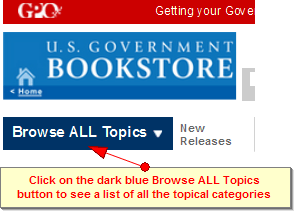
Browse-ALL-Topics-on-GPO-BookstoreClick on the dark blue Browse All Topics button on the site to see and browse by a list of all the topical categories.

These last two features—eBooks and new Categories—are particularly important in light of three other important milestones this month.

National Women’s History Month

March is National Women’s History Month in the United States, and we have a new main “Browse by Topic” category, Minorities, Cultures & Languages, where you can find books for and about African Americans, American Indians, Asian Americans & Pacific Islanders, Cultural Awareness, Disabled, Hispanics, LGBT, Minority Issues, Non-English Government Publications, Seniors & Elderly and Women, including dozens of books and eBooks about Women’s History.

Womens_History_Books_Slide

Harriet Tubman Centennial

One of the famous American heroines in the Women’s History collection is Harriet Tubman, who died 100 years ago this month making it her Centennial. Tubman escaped from slavery and returned to lead dozens of others to freedom in the mid-1800s. In addition to being the most well-known of Underground Railroad “conductors,” she was also a nurse, spy, suffragist, and more.

With all these roles, it is appropriate that we have created so many new “Browse by Topic” categories. One is Slavery & Underground Railroad (under US & Military History), where great books featuring Harriet Tubman and the Underground Railroad can be found.  Other new topics include Nursing under Health & Benefits and Intelligence & Espionage under Security, Defense & Law Enforcement.

Additional publications about National Parks can be found under the main category of Art, Maps & Travel, along with Posters & Prints and Maps, Almanacs & Navigation Guides.

BROWSE BY AGENCY: You can also find National Park Service (NPS) publications under Department of the Interior (DOI) in the Browse by Agency categories on the menu at the lower left side of the site, where publications are categorized by the Federal agency that published them. For example, our own Government Printing Office (GPO) publications are under Congress & Legislative Agencies.

Iraq War 10th Anniversary

Finally, this week is the tenth anniversary of the start of the Iraq War, which began on March 19, 2003, as Operation Iraqi Liberation, later renamed Operation Iraqi Freedom.

Iraq-War-10th-Anniversary_Books_Slide

President Obama, in an address about the Iraq war 10th anniversary this week said:

“As we mark the 10th anniversary of the beginning of the Iraq war, Michelle and I join our fellow Americans in paying tribute to all who served and sacrificed in one of our nation’s longest wars. We salute the courage and resolve of more than 1.5 million service members and civilians who during multiple tours wrote one of the most extraordinary chapters in military service. We honor the memory of the nearly 4,500 Americans who made the ultimate sacrifice to give the Iraqi people an opportunity to forge their own future after many years of hardship.”

Since the beginning of the war, the Defense Department has published dozens of excellent publications about the war, the strategies, Saddam Hussein, Iraq, reconstruction and the achievements and sacrifices made by our Armed Forces. You can find these publications featured under Iraq & Persian Gulf Wars which can be found under US & Military History > Battles & Wars categories.

It’s a Launch, Not a Landing

So, our new site marks the completion of over a year of hard work by our team here at the Government Printing Office, all aimed to make sure “we the people” can discover more about our Nation through excellent publications by our Federal Government. But there’s a good reason we call it a website launch and not a landing. This is only the beginning, with more great content and features to come! Enjoy!

So, please visit GPO’s new online bookstore website at http://bookstore.gpo.gov/ and tell us what you think!

About the Author:  Michele Bartram is Promotions Manager for GPO’s Publication and Information Sales Division in Washington, DC, and is responsible for online and offline marketing of the US Government Online Bookstore (http://bookstore.gpo.gov) and promoting Federal government content to the public. She was also in charge of the online bookstore relaunch!


Librarians Pick Notable Federal Books- 2012 Edition

July 3, 2012

It’s that exciting time of year again if you’re a publisher of Federal publications. It’s the equivalent of the Academy Awards, the Emmy Awards or the Grammy Awards… Well, maybe that’s pushing it, but when the American Library Association’s (ALA) Government Documents Round Table or GODORT convenes the Notable Documents Panel of its Publications Committee to choose the top government-produced publications of the previous year, we can’t help but get caught up in the excitement.

Each year, this ALA GODORT Notable Documents Panel selects what it considers to be the most “Notable Government Documents” published during the previous year by Federal, state, and local governments and includes the list of winners in its prestigious Library Journal (LJ).

According to its website, Library Journal is “the most trusted and respected publication for the library community. LJ provides groundbreaking features and analytical news reports covering technology, management, policy and other professional concerns to public, academic and institutional libraries. Its hefty reviews sections evaluate 8000+ reviews annually of books, ebooks, audiobooks, videos/DVDs, databases, systems and websites.

This year, as usual, many of the Federal publications the panel selected are available through the Government Printing Office’s Federal Depository Library Program (FDLP) libraries and GPO’s Sales Program.

Out of all of the Federal Government documents LJ looked at in the past year, here are some of those it found most notable:

  Keeping America Informed: The United States Government Printing Office 150 Years of Service to the Nation

Publisher: Government Printing Office (GPO)

GPO’s own role in producing excellent Government publications in its 150 years of history gained it a place on the GODORT list for the past year:“Liberally illustrated with historical photographs and facsimiles of famous government documents, this volume will appeal to a wider audience than depository librarians. Historians and history buffs who have an interest in government and how it interacts with both the private sector and public employee unions will find a compelling story that focuses on the federal government’s obligation to keep citizens informed about its activities.” – LJ

  Statistical Abstract of the United States 2012 (Hardcover)

Statistical Abstract of the United States 2012 (Paperback)

Publisher: Commerce Department, U.S. Census Bureau

The Statistical Abstract of the United States, published since 1878, is the standard summary of statistics on the social, political, and economic organization of the United States. It is designed to serve as a convenient volume for statistical reference and as a guide to other statistical publications and sources. The latter function is served by the introductory text to each section, the source note appearing below each table, and Appendix I, which comprises the Guide to Sources of Statistics, the Guide to State Statistical Abstracts, and the Guide to Foreign Statistical Abstracts.

The Library Journal adds an important update about this: “In addition to being the quintessential statistical resource of all time, Statistical Abstract is a Notable Document for 2011 simply because this edition will be the last produced by the Census Bureau and distributed through FDLP. Future editions will be published commercially, so librarians will still have options for maintaining the continuity of their print collections. A classic reference tool.” – LJ

  Macondo: The Gulf Oil Disaster. Chief Counsel’s Report 2011

Publisher: National Commission on the BP Deepwater Horizon Oil Spill and Offshore Drilling

“The National Commission on the BP Deepwater Horizon Oil Spill was created by President Obama and charged with investigating the root causes of the largest accidental marine oil spill in the history of the petroleum industry. The committee concluded that the cause of the blowout was not mechanical. Instead, a number of poor management decisions, combined with an inadequate regulatory structure and an indifferent regulatory agency, overwhelmed the safeguards designed to prevent such disasters. Plenty of illustrations and photographs offer a glimpse into the technology of offshore oil rigs.” – LJ

  Then Came the Fire: Personal Accounts From the Pentagon, 11 September 2001

Publisher: Defense Dept., Army, Center of Military History

“In 2011, there were many publications designed to commemorate the tenth anniversary of the attacks of September 11, 2001. In addition to the 59 people aboard the flight that struck the Pentagon, 125 people in the Pentagon were killed. The editors of this memorial volume have collected the stories of eyewitnesses, including the military and civilian personnel who escaped the burning building and first responders and reporters at the scene. It also includes hundreds of photographs.”- LJ

  Freedom by the Sword: The U.S. Colored Troops, 1862-1867

Publisher: Defense Dept., Army, Center of Military History“

In what may be the definitive operational history of black troops in action during the Civil War, [author] Dobak describes the differences in how freedmen and runaway slaves were recruited, how they lived, and how they were trained. Most important, it considers how gallantly these men performed in combat at a time when many of their own leaders questioned whether they would be willing to fight for their own freedom and for that of their families. Much of the documentation comes from the ‘War of the Rebellion’ series.” – LJ

  Legacy of Excellence: The Armed Forces Institute of Pathology 1862-2011 

Publisher: Defense Dept., Army, US Army Medical Department Center and Schoo1, Armed Forces Institute of Pathology, Public Affairs Office, Borden Institute

“In 1862, shortly after the Battle of Antietam, army surgeon general Brigadier Gen. William Hammond ordered the establishment of the Army Medical Museum. Surgeons working on Civil War battlefields were encouraged to preserve anatomical specimens, such as severed limbs and diseased organs, and send them to the museum for further research. From the start, the museum made its displays of specimens and instruments, as well as its medical library, available to the general public. Under the leadership of later curators, such as John Billings and Walter Reed, the museum evolved into the Armed Forces Institute of Pathology. Readers interested in the history of science, especially medical science or in the devastating effects of Civil War weaponry on the human body, will be fascinated by the hundreds of graphic photographs.” – LJ

And a hearty congratulations to all the winning Federal agency publishers for an excellent job!

How can you get these publications from this year’s Federal Notable Government Documents collection?

  • Buy any of these publications online 24/7 by shopping the Notable Government Documents 2012 collection at GPO’s Online Bookstore.
  • Buy them at GPO’s retail bookstore at 710 North Capitol Street NW, Washington, DC 20401, open Monday-Friday, 9am to 4pm, except Federal holidays, (202) 512-0132.
  • Find these publications in a library near you.

About the Author:  Michele Bartram is Promotions Manager for GPO’s Publication and Information Sales Division and is responsible for online and offline marketing of the US Government Online Bookstore (http://bookstore.gpo.gov) and promoting Federal government content to the public.