Government eBooks Made Easy– and Sometimes Free

December 19, 2013

Riding on Washington, DC’s Metrorail subway system these days, one sees more electronic devices in hand than print books (the same is true when I was in New York, Chicago, San Francisco and across the country). This reflects the revolution going on in the publishing industry nationwide with the astonishing growth of ebooks.

Reading-books-ebooks-ipad-on-subwayImage: Digital and print readers on the New York City subway. Courtesy: “corners311” on Reddit.

According to Publisher’s Weekly, Bowker Market Research found that for the first half of 2013, e-book sales in the United States accounted for 14% of consumer dollars spent and 30% of all the units sold of any format of books.

The Rumors of [Print’s] Death are Greatly Exaggerated

However, print is far from dead. In fact, hardcover book sales in the U.S. were up over 10% through the first eight months of 2013, according to the latest numbers from the Association of American Publishers. And many users still prefer print for reference and textbooks.

Battle-of-ebooks-vs-print-booksImage: Infographic of the benefits of both ebooks and print books. Courtesy: Coupon Audit and Self Publishing Review.

When media research firm Voxburner questioned sixteen to 24-year-olds about their preferences for physical products versus digital content, printed books jump out as the media most desired in material form, ahead of movies (48%), newspapers and magazines (47%), CDs (32%), and video games (31%).

The two big reasons for preferring print are value for money and an emotional connection to physical books. On questions of ebook pricing, 28% think that ebooks should be half their current price, while just 8% say that ebook pricing is right. The top-rated reasons for preferring physical to digital products were: “I like to hold the product” (51%), “I am not restricted to a particular device” (20%), and “I can easily share it” (10%).

U.S. Government Bookstore Makes eBooks Easy
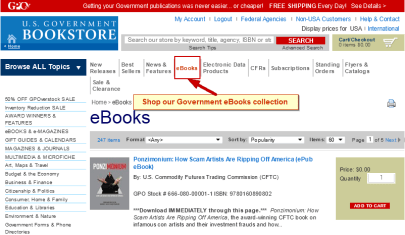
US-Government-bookstore-DRM-Free-eBooks at http://bookstore.gpo.gov/ebooksImage: U.S. Government Online Bookstore’s eBooks section.

Fortunately, the U.S. Federal Government addresses these issues with our new downloadable eBooks, as we launched our new eBooks section.

  • Not Restricted: All eBooks on the U.S. Government Bookstore website are non-proprietary. They are not restricted to a particular device or manufacturer, assuming the correct format is chosen. (See below for an explanation of ePub, Mobi, and PDF formats).
  • Easily shared: The eBooks on the U.S. Government Bookstore are DRM-free (Digital Rights Management) eBooks, meaning once you own a title, you can share it.
  • Economical Pricing:  Many eBooks on our website are free, and others are very reasonably priced, with the unlimited downloads and sharing.
  • Multiple Formats: For those who still “want to hold a product,” many of our titles are offered in print or eBook format, with users often buying both.
  • Third Party Channels: To expand the availability, GPO has set up partnerships to make these eBooks available on many of the top online retail and library channels such as BarnesandNoble.com,  Apple iBookstore, Google Play, Overdrive (for libraries).

To EPUB or MOBI, that is the question

Readers need to select the correct eBook format for their devices. PDFs work best on computers or if you want to print, since they are really like photocopies of a page. Text is not reflowable, meaning it is fixed on the page and does not automatically readjust if you want to change the font size or turn your device sideways.

For most users, EPUB format is the best, since it is the industry standard of most publishers and libraries. EPUB format eBooks can be used on most eReader devices like the Barnes & Noble Nook or Apple iPad, as well as on computers with free eReader software like Adobe Digital Editions.

If you want to read the eBook on an Amazon Kindle, you need to choose MOBI format eBooks.

On all of these eBooks on the U.S. Government Bookstore, you will need to side-load them onto your device, by downloading them and copying them to the particular device.

For more information about this, read our page on eBook Readers and Digital File Formats on the U.S. Government Online Bookstore website.

New and Newsworthy eBooks from the U.S. Government

Here are a few of the new and newsworthy DRM-free eBooks currently on the U.S. Government Bookstore to build your own online library of free and inexpensive ebooks:

FREE EBOOKS

Ponzimonium: How Scam Artists Are Ripping Off America (ePub eBook)Ponzimonium: How Scam Artists Are Ripping Off America (ePub eBook) Terrific book about Ponzi schemes and other investment fraud, the con artists who got caught, and how consumers can avoid these scams.
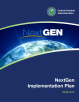
FAA_NextGen_Implementation_Plan_2013_ 9780160920714FAA NextGen Implementation Plan (ePub eBook) Provides a roadmap of the Federal Aviation Administration’s (FAA’s) transition to the next generation of smarter, satellite-based and digital technologies and new procedures to make air travel more convenient, predictable and environmentally friendly.

NEWSWORTHY EBOOKS

A Basic Guide to Exporting: The Official Government Resource for Small and MediuA Basic Guide to Exporting: The Official Government Resource for Small and Medium-Sized Businesses 10th Revised edition (ePub eBook)

For more than 70 years, A Basic Guide to Exporting has been the resource that businesses have turned to for answers to their questions
about how to establish and grow overseas markets for their products and services. Whether your firm is new to exporting or in need of a refresher on the latest ideas and techniques, this comprehensive guide, now
completely revised and updated, provides the nuts-and-bolts information you will need to meet the challenges of the world economy.

The U.S. is the world’s largest exporter of products and services, but a comparatively small percentage of businesses actually do it. The business owners that export find it lucrative, educational and endlessly fascinating as their work brings them into close contact with people and cultures worldwide. This book profiles 25 Americans who battled competitors, fear of the unknown, and personal adversity to build successful small businesses in the global marketplace.

The Children's Bureau Legacy: Ensuring the Right to Childhood (ePub eBook)The Children’s Bureau Legacy: Ensuring the Right to Childhood (ePub eBook) Comprehensive history of the Children’s Bureau from 1912-2012 in eBook format that shares the Bureau’s legacy of leadership and commitment to improving the safety, permanency and well-being of children, youth and families.

9/11 Commission Report (ePub eBook)9/11 Commission Report (ePub eBook) Contains the final report of the National Commission on Terrorist Attacks Upon the United States (also known as the 9-11 Commission), an independent, bipartisan commission created by congressional legislation and the signature of President George W. Bush in late 2002. This edition has been designated as the only official U.S. Government edition of the 9-11 Commission’s Final Report. It provides a full and complete account of the circumstances surrounding the September 11, 2001 terrorist attacks, including preparedness for and the immediate response to the attacks. It also includes recommendations designed to guard against future attacks.

Wings in Orbit is an authoritative documentation of the many accomplishments of the NASA Space Shuttle Program. Starting with a foreword written by astronauts John Young and Robert Crippen, this compelling book provides accurate, authentic and easily understood accounts from NASA’s best subject matter experts and external resources. The book captures the passion of those who devoted their energies to the Program’s success for more than three decades. It focuses on their science and engineering accomplishments, the rich history of the program and the shuttle as an icon in U.S. history.

How can I obtain these eBooks?

  • Shop Online: You can purchase these publications from the U.S. Government Online Bookstore at http://bookstore.gpo.gov by clicking on the links above in this blog post or  clicking here to shop our eBooks collection.
  • Order by Phone: Call our Customer Contact Center Monday through Friday, 8 am to 5:30 pm Eastern (except US Federal holidays). From US and Canada, call toll-free 1.866.512.1800. DC or International customers call +1.202.512.1800.
  • Shop our Retail Store: Buy a copy of any print editions from this collection at GPO’s retail bookstore at 710 North Capitol Street NW, Washington, DC 20401, open Monday–Friday, 9 a.m. to 4 p.m., except Federal holidays, Call (202) 512-0132 for information or to arrange in-store pick-up.
  • Visit a Federal Depository Library: Search for one of these publications in a nearby Federal depository library.

Federal Agencies: Interested in seeing your eBooks here?

If you are with a U.S. Federal Government agency and wish to see your print or digital publications made available on the U.S. Government Bookstore or need dissemination of your publications, contact us.

Click here to read about all Government Printing Office services for Federal agencies.

About the Authors: Government Book Talk Editor Michele Bartram is Promotions Manager for GPO’s Publication and Information Sales Division in Washington, DC, and is responsible for online and offline marketing of the US Government Online Bookstore (http://bookstore.gpo.gov) and promoting Federal government content to the publicStephanie Jaeger is Sales & Marketing Coordinator for GPO’s Sales & Marketing Division and is responsible for marketing GPO’s publishing services to the Federal sector.


Quiz and History for Bill of Rights Day December 15

December 13, 2013

Bill-of-Rights-Founding-Father-President-James-Madison-statue-AP-PhotoImage: James Madison statue in front of Bill of Rights. AP Photo.

We celebrate Bill of Rights Day on December 15 every year in the midst of the bustling holiday season. Although it’s not a Federal holiday, it’s definitely a day for American citizens to commemorate the freedoms we enjoy by law. And no, the right to shop—while popular in America— is not listed in the Bill of Rights!

History of the Bill of Rights

The Founding Fathers drafted the United States Constitution during the First Constitutional Convention, held from May through September 1787 in Philadelphia. The completed draft constitution, sent to the States for ratification in September 1787, did not include any mention of individual rights. The framers’ focus was largely on structuring a strong government, and getting that structure put into place. Without such a structure, the Founding Fathers feared the country’s collapse into chaos or new attacks from outsiders. They left the issue of individual rights without adding it to the Constitution during that meeting.

As a result of this omission, Edmund Randolph, George Mason, and Elbridge Gerry refused to sign the Constitution on principle. Maryland delegates Luther Martin and John Francis Mercer reportedly walked out of the Convention, at least in part because the draft did not include a Bill of Rights. In September, Randolph, Mason and Gerry joined in asking for a second constitutional convention to address the issue of personal rights. All three men advocated strongly for a bill of rights throughout most of the constitutional convention. The people ultimately adopted the Constitution, sans any bill of rights, on September 17, 1787. Eleven states ratified it and it went into effect in 1789.

Founding Father James Madison was a delegate from Virginia who had been a key actor and speaker at the First Constitutional Convention. He had held onto the idea of the individual freedoms as discussed at that Convention. Although Federalist Madison was originally a skeptic about needing a Bill of Rights, like Randolph, Mason and Gerry he came to believe that the inclusion of personal rights was imperative to be added to the United States Constitution.

quote-enlightened-statesmen-will-not-always-be-at-the-helm-President-James-MadisonImage courtesy IZQuotes.

In Madison’s view, the value of a listing of rights was:

  • in part educational for the populace under this new form of Government,
  • in part as a vehicle that might be used to rally people against a future oppressive Government when “less enlightened statesmen” may be in power,
  • and finally–in an argument borrowed from Thomas Jefferson–Madison argued that a declaration of rights would help install the judiciary as “guardians” of individual rights against the Legislative and Executive branches of the Federal Government.

Thus, while serving in the first U.S. House of Representatives, Madison framed and introduced the Bill of Rights as legislative articles to amend the Constitution on June 8, 1789.

He used as a model George Mason’s Virginia Declaration of Rights, written in May 1776, and also based his legislative articles in part on the English Bill of Rights (1689), the Magna Carta and other documents.

Painting-Adoption-of-VA-Declaration-of-RightsImage: This painting, The Adoption of the Virginia Declaration of Rights, depicting the adoption of the Virginia Declaration of Rights by the fifth Virginia Revolutionary Convention was made by Jack Clifton in 1974. It now hangs in the Virginia State Capitol. Courtesy: Virginia Memory online exhibit of the Library of Virginia.

What rights are in Bill of Rights?

Painting-of-James-Madison-reading-Bill-of-Rights-to-First-CongressMadison included in his articles a list of rights of the individual, such as free speech, freedom of religion, freedom of the press, free assembly, freedom from unreasonable search and seizure, and others, as well as some limits on government powers.

Image on the right: Madison reading his Bill of Rights to Congress. Courtesy: University of Missouri-Kansas City School of Law.

On August 21, 1789, the U.S. House of Representatives adopted Madison’s articles, proposed them in a joint resolution of Congress on September 25, 1789, and finally ratified them on December 15, 1791.

The Bill of Rights consists of the first ten amendments to the Constitution, and is a key “fundamental document” of the United States Federal government.

Cartoon of the Bill of Rights depicting the first 10 Amendments to the US Constitution. From a 1971 Teacher's Guide transparency for "Young Citizen"

Image: Bill of Rights depicted in cartoon format from 1971 Young Citizen teacher’s guide transparency. Courtesy: Syracuse University. CLICK IMAGE TO ENLARGE and for teacher printable version.

  • First Amendment:  Freedom of Religion, Speech, and Press, the Right to Assemble Peaceably and to Petition the Government “for a redress of grievances.
  • Second Amendment: Right to Keep and Bear Arms- “A well-regulated militia, being necessary to the security of a free state, the right of the people to keep and bear arms, shall not be infringed.
  • Third Amendment: Quartering of Troops- “No soldier shall, in time of peace be quartered in any house, without the consent of the owner, nor in time of war, but in a manner to be prescribed by law.
  • Fourth Amendment: Search and Seizure- “The right of the people to be secure in their persons, houses, papers, and effects, against unreasonable searches and seizures, shall not be violated, and no warrants shall issue, but upon probable cause, supported by oath or affirmation, and particularly describing the place to be searched, and the persons or things to be seized.
  • Fifth Amendment: Grand Jury, Double Jeopardy, Self-Incrimination, Due Process
  • Sixth Amendment: Criminal Prosecutions – Right to  a speedy public trial by an impartial jury, to confront witnesses and to counsel for defense.
  • Seventh Amendment: Common Law Suits –Right to a Trial by Jury
  • Eighth Amendment: No Excessive Bail or Fines or Cruel and Unusual Punishment- “Excessive bail shall not be required, nor excessive fines imposed, nor cruel and unusual punishments inflicted.”
  • Ninth Amendment: Non-Enumerated Rights or “Rule of Construction of the Constitution”-  “The enumeration in the Constitution, of certain rights, shall not be construed to deny or disparage others retained by the people.”
  • Tenth Amendment: States’ Rights- Rights not explicitly delegated to the Federal Government in the Constitution are reserved to the States or to the People.

Where can you learn more about the Bill of Rights?

US-Constitution-and-Declaration-of-Independence-Pocket-Guide_I9780160891847 Buy at the US Government Online Bookstore http://bookstore.gpo.gpvIf you want to learn more about the Bill of Rights, an excellent place to start would be reading the source document, the Constitution of the United States and the Declaration of Independence; the GPO U.S. Government Bookstore sells a handy Constitution of the United States and the Declaration of Independence Pocket Edition. The full text of the ten amendments of the Bill of Rights is there for you to read and study.

US Citizenship and Immigration Service Civics Flash Cards for the US Naturalization Test ISBN-9780160904608 Available from GPO's US Government Bookstore a http://bookstore.gpo.govImage courtesy Citizenship Guru.

Kids in school, or adults wanting to revisit the fundamentals they learned in civics classes, can learn a lot from the Civics Flash Cards for the U.S. Naturalization Test (English Version)—and obviously the target audience, U.S. residents who want to become American citizens, will benefit from studying these, too.

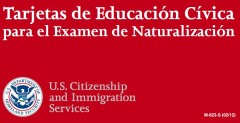
Spanish-Civics-Flash-Cards-for-US-naturalization-test Tarjetas de Educación Cívica ISBN 9780160902048 Available from the US Government Bookstore at http://bookstore.gpo.govIf you’re more comfortable reading en español, you can study using the same flash cards in Spanish: Tarjetas de Educación Cívica para el Exámen de Naturalización to cover the same material.

You can also listen to the same questions in English on the USCIS (US Citizenship and Immigration Services) website. (I didn’t see them offered in Spanish on their site, though.) If you’re cramming for the naturalization or a civics exam, listening to the questions is excellent reinforcement for your study plan.

Mini-Quiz from the Citizenship Test

Civics-Flash-Cards-Question-38If you’ve already read this post, or studied the Constitution, you will probably ace questions #1 and #2 of the United States naturalization test for citizenship:

  1. “What is the supreme law of the land?”
  2. “What does the Constitution do?”
  3. “What do we call the first ten amendments to the Constitution?” (Bonus points if you get the answer to this question #5 correct!)

(Answers: 1- The Constitution. 2- Sets up the government; Defines the government; Protects basic rights of Americans. 3- The Bill of Rights, of course! )

For even more challenging questions based on the U.S. Citizenship test, take our fun Quiz: Are you smarter than an 8th grade Civics student?

In-depth civics questions can be answered by the capsule summary answers to the questions in Learn About the United States: Quick Civics Lesson for the Naturalization Test 2013 (Book Plus CD). Students need to know the principles and background behind the answers, not just the answers themselves, obviously.

Question six asks, “What is ONE right or freedom from the First Amendment?” The text lists the possible answers, and then relates the reasons for the guarantee of those freedoms. The authors explain freedom of expression as follows:

“The First Amendment of the Bill of Rights protects a person’s right to freedom of expression. Freedom of expression allows open discussion and debate on public issues. Open discussion and debate are important to democracy.”

You’ll definitely have a thorough grounding in the basics of American Federal government by the time you’re done with the lesson.

The Right to Exercise… Your Rights, That Is

Exercise your right to open discussion by reading some of these documents, and talking to friends about them. If you are a school student, maybe you’ll have an opportunity to write about the Bill of Rights or the freedoms the Bill of Rights guarantee.

1963-2013-Civil-Rights-logoIn this year, the 150th anniversary of the Emancipation Proclamation and the 50th anniversary of three significant events from the Civil Rights movement— the March on Washington for Rights and Freedom, the murder of African-American civil rights activist Medgar Evers who was involved in efforts to overturn segregation at the University of Mississippi, and the 16th Street Baptist Church bombing in Birmingham, Alabama— it’s a good time to reflect on our civil rights and liberties, and how lucky we are to have them.

Image: Civil Rights Movement 50th Anniversary logo. Courtesy: City of Birmingham, Alabama

How can you obtain official publications that explain the Bill of Rights and other documents of American rights?

About the author(s): Adapted by Government Book Talk Editor-in-Chief and the US Government Printing Office (GPO) Promotions & Ecommerce Manager, Michele Bartram, from an original blog post by Jennifer K. Davis from GPO’s Library Services & Content Management Division that supports the Federal Depository Libraries Program (FDLP). Happy holidays from us both!


Gift-Giving Traditions and 12 Books of Christmas

December 5, 2013

ORIGINS OF HOLIDAY GIFT-GIVING

For centuries, Europeans and North Americans have been giving gifts around Christmastime.

Sing-heigh-ho-ancient-British-yule-log on Christmas cardImage: Ancient Britons carrying a Yule log and holly branches. Source: From the bottom of the barrel blog.

The practice dates to the pagan and druid peoples of Rome, the British Isles and Scandinavian countries. The Romans gave gifts or money for gift-giving at Saturnalia, a winter festival that lasted seven days; according to some sources, the gift-giving occurred on the last day of Saturnalia (December 23). When the Romans conquered Britain, they incorporated pagan religious practices into their festivals, so that the locals felt more integrated into the Roman Empire. Pagans and Druids celebrated the winter solstice festival, Yule, and although by many accounts it was not the most important pagan festival, it was celebrated quite a bit. Any visitors to the Irish Neolithic pagan monument Brú na Bóinne** are left in no doubt of that. The pagans may have given gifts at the Yule celebration as well.

Christianity later took over much of Europe, and the Christians, like the Romans, learned that the best way to truly conquer was not to divide, but to incorporate. Gift-giving became a celebration of the birth of Jesus Christ, just as pagan Yule branches became “Christmas trees”. Although the pilgrims at Massachusetts formally outlawed public celebrations of Christmas for twenty-two years, the whole Christmas juggernaut eventually won out in the United States.

Giving gifts at Christmastime eventually became de rigueur, even for secular and non-Christian people. American Jews in the late nineteenth century started to promote Hanukkah—a minor Jewish festival—as a time for Jewish parents to give their own children gifts, so that American Jewish children wouldn’t feel left out when their peers got gifts. And although Kwanzaa isn’t supposed to include gifts, some parents give their children gifts on Kwanzaa days. It seems that few Americans, despite their religious convictions, can resist the ritual of end-of year gift-giving and the ties the practice strengthens among us.

12_books_of_christmas-bannerImage courtesy Scholastic.

So by now we’ve worn the stretchy pants for Thanksgiving, and powered through the mall on Black Friday. On Cyber Monday, as I write this, it’s time to get ready for some serious shopping: we’re in the middle of Hanukkah, and we’ve got a mere twenty-three days before Christmas and twenty-four days before Kwanzaa. You need to get some creative gifts, stat. For help with this goal, turn to GPO’S US Government Bookstore, especially the wallet-friendly Bargains Under $20 page—it’ll help you wipe out your stocking stuffer list in a red-hot minute. That said, here are 12 solid suggestions for your holiday gift-giving, no matter what holiday you’re celebrating at this time of year!

KIDS’ CORNER BOOKS

Fun-with-Fire-SafetyYou need to get something small to give your little ones as well as the big presents, and it encourages your kids to read more if you give books as gifts. Fire trucks nearly always captivate the pre-K set: show them a picture of a fire truck, complete with cute Dalmatian, and their attention is rapt. Marty and Jett’s Activity Book: Let’s Have Fun with Fire Safety (US $5.00 includes FREE shipping) activity book comes with cutouts for junior fire badges and finger puppets, coloring pages, a maze, and a fill-in-the-blanks puzzle. There’s a list of important things for kids to remember in a fire. Most schools now include this information in their curriculum, so the book is a good reinforcement of that learning—and it’s also a coloring book. This little volume’s a slam-dunk: educational and amusing, all in one cute package.

BLM-Junior-Explorer-Geology-and-FossilsDoes the child in your life love picking up interesting shells or rocks at the beach or park? Then he or she will love this Bureau of Land Management (BLM) Junior Explorer Geology and Fossils Activity Book (US $7.00 includes FREE shipping) that includes fun facts, a crossword puzzle, and activities about rocks and fossils for explorers ages 8 to 12, along with a Bureau of Land Management (BLM) Junior Explorer Certificate that proves the child is a true budding “rock star.”

Junior-Palentologist-Activity-BookIs your child or grandchild a fan of Jurassic Park or Dinosaur Train? Then be sure to pick up the National Park Service’s Junior Paleontologist Activity Book, Ages 5-12, Explore, Learn, Protect Activity Book (US $6.00 includes FREE shipping) in which kids can learn about dinosaurs, explore some of the US national parks that offer you a look into this ancient past, and complete fun activities that will let them earn a junior paleontologist badge.

Deliciously-Healthy-Family-MealsFor busy parents who want to make healthy meal preparation a family affair, Keep the Beat™ Recipes: Deliciously Healthy Family Meals (ON SALE US $10.50 includes FREE shipping) is a delightful kid-friendly healthy cookbook developed by a single father and nutritionists that features delicious, heart-healthy, kid-friendly recipes and also provides tips for involving children in meal preparation. The appendix is loaded with information on meal planning, cooking, and nutrition for families and children to help combat obesity and diabetes.

NON-FICTION MULTIMEDIA AND PRINT BOOKS

Baptism-by-Fire-CIA-Korean-War-analysisWith an 85-year-old war Korean War veteran from America currently detained in North Korea while on a tourist trip, this new eBook from the CIA is very timely. Before North Korean forces invaded the South on 25 June 1950, the CIA had only a few officers in Korea, and none reported to the CIA’s analytic arm, the Office of Research and Estimates (ORE). With an accompanying DVD that contains over 1,300 recently declassified documents and more than 5,000 pages of material, this Baptism by Fire, CIA Analysis of the Korean War multimedia book-and-DVD set (US $18.00 includes FREE shipping) sums up the analysis by the then only 3-year old Central Intelligence Agency about the Korean Conflict and the generally low priority given the region by the Truman Administration’s State Department and the US Armed Forces.

YouTube-WarThe evolution of digital information and communication technologies have developed to such a point that terrorists can film, edit, and upload their own attacks to Twitter, Facebook, YouTube and other websites within minutes of staging them, whether the Western media are present or not. In this radically new information environment, the enemy no longer depends on traditional media. This is the “YouTube War.” The new book YouTube War: Fighting in a World of Cameras in Every Cell Phone and Photoshop on Every Computer (US $16.00 includes FREE shipping) lays out the nature of the new digital and online media environment in terms of its implications for a war against media-savvy insurgents, and then considers possible courses of action for the Army and the U.S. military.

Crossing-Cultures-with-the-Peace-CorpsCrossing Cultures with the Peace Corps: Peace Corps Letters from the Field (US $17.00 includes FREE shipping) is a great offering for a school or college student, a teacher, a newly or soon-to-retire person, or someone who likes reading about other cultures. Although the authors structured the book for use in schools, and includes lesson plans at the end of each letter, reading the letters is good entertainment for anyone. You can learn things about Togolese family life, Chinese average salaries, South African attitudes about AIDs, and the native tongue of Paraguay, Guaraní. Studying cultural attitudes of other societies always makes you appreciate your own society, and it may even make you want to learn more about others. This book will make you reflect on what you value, even while you walk away with some good talking points for your next party.

The-First-LadiesThe First Ladies (US $17.00 includes FREE shipping) is the perfect book for the history buff, art historian, costume designer or fashionista in your family. Each page features a biography of every first lady, and her official portrait in full color on the facing page. You can read the accomplishments and tribulations of each FLOTUS (First Lady of the United States) from Martha Washington through Laura Bush, watch the trends in ladies’ dress and portraiture change, and learn some interesting tidbits of American historical trivia. This book was my favorite Christmas gift when I was twelve, and the passage of time since then makes it nearly a classic today.

National-Wildlife-Refuge-System-Visitor-GuideNational Wildlife Refuge System: A Visitor’s Guide (US $5.00 includes FREE shipping) The U.S. Fish and Wildlife Service manages a “…diverse system of 500+ refuges encompassing almost 92 million acres of lands and waters spans the continent from Alaska’s Arctic tundra to the tropical forests in Florida; from the secluded atolls of Hawaii to the moose- trodden bogs of Maine.” Most of the book is composed of full-color maps. You can plan your next trip with the help of these maps, either for a weekend or a full two-week blowout in summer. This print edition is back-pocket friendly for a day out on the trail.

How-to-Prune-TreesHow to Prune Trees (ON SALE US $2.00 includes FREE shipping) is a great gift for any homeowner. While some may think pruning trees is quite simple, you actually have to know when to trim a tree, in what weather to trim it, and why you would trim a tree, etc. Pruning is a fairly complicated task; if you trim a tree incorrectly, you can kill it. It costs quite a bit to buy a new tree from a nursery, and a long time to grow a new one. Investing a mere $2 in this color-illustrated guide might save you or your gift’s recipient big bucks, and after a few reads, give the satisfaction of mastering a new art.

NON-FICTION EBOOKS

If eBooks are on your gift-giving list, try these new DRM-free downloadable offerings:

Exporters-Wit-and-Wisdom-of-Small-Business-OwnersExporters! The Wit and Wisdom of Small Business Owners Who Sell Globally (ePub eBook) (US $7.99) profiles 25 Americans who battled competitors, fear of the unknown, and personal adversity to build successful small export businesses in the global marketplace. Alternately humorous, amazing and inspirational, their stories also serve as valuable advice for readers wanting to follow their example and start exporting.

Childrens-Bureau-LegacyThe Children’s Bureau Legacy: Ensuring the Right to Childhood (ePub eBook) (US $9.99) shares the 100-year legacy of this landmark agency that established the first Federal Government programs, research and social reform initiatives aimed to improve the safety, permanency and well-being of children, youth and families.  It provides a fascinating exploration of the evolution of America and our treatment of children through each Presidential Administration as it covers often inspiring and sometimes heart-wrenching topics such as: ending child labor, the Orphan Trains and the controversial Indian Boarding Schools; adoption and foster care; infant and maternal mortality; Aid to Dependent Children; support of US military families and care of European World War II refugee children; early childhood education Head Start; child abuse and neglect; and much more.

AND OUR FREE E-GIFT TO YOU

Fifty years have not erased the controversy and angst of the fateful day of November 22, 1963, when President John F. Kennedy was assassinated by Lee Harvey Oswald in Dallas. (See our blog post Remembering Camelot: Best of the old and new official publications about John F. Kennedy.)

GPO-WARREN-COMMISSION-REPORT-on-the-Assassination-of-President-John-F-Kennedy-JFKTo commemorate this tragic event, the Government Printing Office (GPO) is offering a free digitized version of the full, original (and now long out-of-print) Official Report on the Assassination of President John F. Kennedy (PDF) (FREE DOWNLOAD) by The President’s Commission on the Assassination of President Kennedy, known as the Warren Commission. Sort through the evidence, interviews, and facts that were available to the Commission in the ten months following the assassination, and make your own conclusions about the crime and the report’s “single shooter” finding.

FREE SHIPPING ADDS TO THE JOY OF GIVING

When you’re looking for the perfect gift this holiday season, spend some time shopping through GPO’s U.S. Government Online Bookstore. And remember, worldwide standard SHIPPING IS FREE on the U.S. Government Bookstore website, so shop away!  After all, there’s enough there to stuff a sleigh (or a million dreidels ;-).

How can I obtain these 12 Bargain Books?

  • Shop Online: You can purchase these publications from the U.S. Government Online Bookstore at http://bookstore.gpo.gov by clicking on the links above in this blog post or clicking here to shop all our BARGAINS UNDER $20 publications.
  • Order by Phone: Call our Customer Contact Center Monday through Friday, 8 am to 5:30 pm Eastern (except US Federal holidays). From US and Canada, call toll-free 1.866.512.1800. DC or International customers call +1.202.512.1800.
  • Shop our Retail Store: Buy a copy of any print editions from this collection at GPO’s retail bookstore at 710 North Capitol Street NW, Washington, DC 20401, open Monday–Friday, 9 a.m. to 4 p.m., except Federal holidays, Call (202) 512-0132 for information or to arrange in-store pick-up.
  • Visit a Federal Depository Library: Search for one of these publications in a nearby Federal depository library.

** Brú na Bóinne is a carved stone underground chamber that lights up to show the carvings on the stone walls only on the winter solstice, December 21.

About the author(s): Adapted by Government Book Talk Editor-in-Chief and the US Government Printing Office (GPO) Promotions & Ecommerce Manager, Michele Bartram, from an original blog post by Jennifer K. Davis from GPO’s Library Services & Content Management Division that supports the Federal Depository Libraries Program (FDLP). Happy holidays from us both!


National Treasure: The art and architecture of the US Capitol

December 2, 2013

One hundred and fifty years ago today, on December 2, 1863, the United States Capitol Dome was completed, adding its own distinctive grandeur to the skyline of our Nation’s capital city.

Last month in November 2013, a two-year project began to restore the aging dome. Read all about it on the Architect of the Capitol’s website about the US Capitol Restoration Project at http://www.aoc.gov/dome.

While most of the focus on the Capitol these days pertains to politics, this anniversary is an appropriate time to reflect on the art and architecture of one of our National Treasures, the US Capitol, along with the artists, architects and engineers who helped make it a showplace worthy of a world class city. Following are a few of the more outstanding publications about the US Capitol art and architecture.

Glenn Brown’s History of the United States Capitol

Glenn-Brown-History-of-the-United-States-CapitolPrepared for the Bicentennial of the construction of the United States Capitol in 1994, Glenn Brown’s History of the United States Capitol is the definitive history of the construction of the Capitol, including the many trials and tribulations along the way, such as the burning of the Capitol by the British in August 1814 during the War of 1812.

Glenn-Brown_US-Capitol-after-British-burning-in-War-of-1812Image: US Capitol exterior after the fire from the British burning of Washington. From Glenn Brown’s History of the United States Capitol

Capital Engineers: The US Army Corps of Engineers and the Development of Washington DC, 1790-2004

In his introductory address kicking off the second inauguration of President Barack Obama and Vice President Joseph Biden on January 21, 2013, Senator Schumer (D-N.Y.) remarked on the completion of the Capitol Dome 150 years ago—just two years ahead of President Lincoln’s second inauguration on March 4, 1865:

When Abraham Lincoln took office [in 1861], two years earlier the dome above us was a half-built eyesore… Conventional wisdom was that it should be left unfinished until the war ended, given the travails and financial needs of the times. But to President Lincoln the half-finished dome symbolized the half divided nation. Lincoln said, ‘If people see the Capitol going on it is a sign we intend the union shall go on.’ And so, despite the conflict which engulfed the nation, and surrounded the city, the dome continued to rise.”

Capital Engineers: The US Army Corps of Engineers and the Development of Washington DC, 1790-2004 ISBN: 9780160795572The Army Corps of Engineers played a significant role in the design and construction of the Capitol Dome and the rest of Washington, DC. In the enjoyable and anecdote-filled book entitled Capital Engineers: The U.S. Army Corps of Engineers and the Development of Washington, D.C. 1790-2004, readers can discover the politics, passion, inspiration and innovation that went into crafting the landmark historic monuments, public buildings and infrastructure that makes up the Nation’s capital, including sketches and insider stories about the design and construction of the United States Capitol and Dome.

You can read the detailed review of this fun and fact-filled book under our earlier blog post, The Untold Story Behind the Engineering of Washington DC. Lincoln-First-Inauguration-at-US-CapitolImage: First Inauguration of Abraham Lincoln, March 4, 1861, beneath the unfinished Capitol dome. Source: Library of Congress

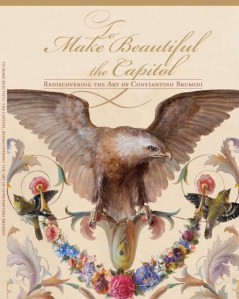
NEW! To Make Beautiful the Capitol: Rediscovering the Art of Constantino Brumidi

To Make Beautiful the Capitol: Rediscovering the Art of Constantino Brumidi, 2013 edition, ISBN: 9780160921001Once the Dome was completed, it was decided that it needed to be a showcase of the finest art. For those visitors lucky enough to come to Washington, DC, and take a tour of the Capitol, they marvel at the “monumental fresco” in the Capitol Rotunda, called The Apotheosis of Washington, that reminds one of the Sistine Chapel and the incredible frescoes along the walls and ceilings of the corridors and special rooms, such as the President’s Room.

In this stunning new publication, To Make Beautiful the Capitol: Rediscovering the Art of Constantino Brumidi, the United States Senate Office of the Curator provides an updated history of the work on the Capitol by Italian-born artist, Constantino Brumidi, who spent the last 25 years of his life making the Capitol into an awe-inspiring piece of art worthy of his own native land’s masterpieces with his frescoes and decoration of the walls and ceilings. Includes new discoveries about the artist, his inspirations and genius resulting from recent extensive restoration of his work to its original glory.

US Capitol The Brumidi Corridors, from To Make Beautiful the Capitol: Rediscovering the Art of Constantino Brumidi ISBN: 9780160921001 Image: The Brumidi Corridors, from To Make Beautiful the Capitol: Rediscovering the Art of Constantino Brumidi

United States Senate Catalogue of Fine Art

United States Senate Catalogue of Fine Art ISBN 9780160511721Visitors to the finished Capitol are often surprised by both its stunning architectural details and the impressive art complementing the interior spaces. Now, those works of art–ranging from portraits of prominent senators to depictions of significant events in U.S. history–are accessible to everyone through the publication of the United States Senate Catalogue of Fine Art. Prepared by the Office of Senate Curator, the catalogue represents the first comprehensive effort to illustrate and interpret this rich collection of 82 sculptures, 75 paintings, 2 enameled mosaics, and 1 stained glass window. Capitol_George-Washington-Memorial-WindowImage: Stained glass George Washington Memorial Window, by Maria Herndl in 1904, from United States Senate Catalogue of Fine Art

The 160 pieces in the catalogue represent the work of 111 artists, including such celebrated figures as Gilbert Stuart, Alexander Calder, Augustus Saint-Gaudens, Thomas Sully, and Daniel Chester French. Many of the works feature prominent senators, including portraits of Everett McKinley Dirksen, Mike Mansfield, and Robert A. Taft, and small bronze sculptures of Henry Clay and Daniel Webster.

A majority of the people depicted are immediately recognizable, such as George Washington, Thomas Jefferson, Theodore Roosevelt, and Benjamin Franklin, but there are also lesser-known figures include the Ojibwa Indian Chief Be Sheekee (Buffalo) who was in Washington to negotiate a peace treaty the year he died, and Senate employee Isaac Bassett, who came to the Senate in 1831 as one of the first pages and stayed until 1895, when he was an elderly doorkeeper. Capitol_Ojibwa-Indian-Chief-Be-SheekeeImage: Marble bust of Indian Chief Be sheekee, or Buffalo, by sculptor Francis Vincenti in 1856

Although portraits dominate the collection, the American landscape is represented by an oil painting of Niagara Falls in winter. Major events are also documented, such as the first reading of the Emancipation Proclamation by President Abraham Lincoln and the first manned moon landing. There are two special collections: a collection of vice presidential busts, and a series of paintings of major U.S. army posts completed by Seth Eastman.

Eastman Forts Print Set

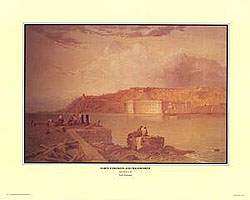
In 1870, the House Committee on Military Affairs commissioned artist Seth Eastman to paint 17 images of important U.S. Army forts in the United States after the Civil War. He completed the works between 1870 and 1875. For many years, the fort paintings hung in the rooms assigned to the House Military Affairs Committee, first in the Capitol and later in the Cannon House Office Building. During the late 1930s, they were returned to the Capitol for public display. Of the 17 paintings, 8 are located today in the Senate wing. Seth Eastman US Army Forts paintings Print Set

This Eastman Forts Print Set includes a booklet, “The Eastman Forts, A Guide to the Print Set,” and 10 color prints of Eastman paintings of the following ten forts: Fort Mackinac in Michigan; Mifflin in Pennsylvania; Trumbull in Connecticut; Tompkins and Wadsworth in New York; Scammel and Gorges in Maine; Delaware in Delaware; Snelling in Minnesota; Taylor in Florida; Defiance in New Mexico (now Arizona); and Fort Rice in North Dakota. Painting of Fort Trumbull, Connecticut, by Seth Eastman hanging in the US CapitolImage: A painting of Fort Trumbull, Connecticut, by Seth Eastman, commissioned by the U.S. Army in 1870, and hanging in the US Capitol. Part of the Eastman Forts Print Set.

United States Senate Catalogue of Graphic Art

US-Senate-Catalogue-of-Graphic-ArtSome of the art about the Capitol was not included in the building itself, but was produced outside of it by the press and media of the day. Prior to the advent of modern media with color photographs and live audio and video, Americans received their news and images from newspapers and illustrated news magazines, which included both hard news and softer features full of engravings, portraits, political cartoons, and illustrations.

The United States Senate Catalogue of Graphic Art reflects this coverage mix of both hard and soft news. The catalogue includes prints involving the Senate that depict important events of the day such as the debate over slavery, the impeachment trial of Andrew Johnson, and presidential inaugurations. But also featured are prints capturing the daily rhythms of the Senate such as the crowded Capitol corridors, Senate pages delivering documents, lobbyists pleading their case, meals in the Senate dining room, and idyllic scenes of the Capitol building and grounds.

Capitol-Interior-Rotunda-1853How can I obtain these publications about the US Capitol Art and Architecture?

  • Shop Online: You can purchase these publications from the U.S. Government Online Bookstore at http://bookstore.gpo.gov by clicking on the links above in this blog post or  clicking here to shop our US Capitol Art publications.
  • Order by Phone: Call our Customer Contact Center Monday through Friday, 8 am to 5:30 pm Eastern (except US Federal holidays). From US and Canada, call toll-free 1.866.512.1800. DC or International customers call +1.202.512.1800.
  • Shop our Retail Store: Buy a copy of any print editions from this collection at GPO’s retail bookstore at 710 North Capitol Street NW, Washington, DC 20401, open Monday–Friday, 9 a.m. to 4 p.m., except Federal holidays, Call (202) 512-0132 for information or to arrange in-store pick-up.
  • Visit a Federal Depository Library: Search for one of these publications in a nearby Federal depository library.

About the Author: Government Book Talk Editor Michele Bartram is Promotions Manager for GPO’s Publication and Information Sales Division in Washington, DC, and is responsible for online and offline marketing of the US Government Online Bookstore (http://bookstore.gpo.gov) and promoting Federal government content to the public.


Go Native and Get Healthy: Fight diabetes with a healthy Native American diet

November 21, 2013

It’s Native American Heritage Month! Let’s celebrate! Let’s have some pumpkin seeds and some corn silk tea!

American Indian girl with Navajo fry breadThis month is a month to honor Indian heritage, and many powwows* and festivals are being held to honor Indian culture, so you definitely want to do something festive. There are few Indian celebrations that do not include luscious frybread, with its accompaniment of Indian taco meat, honey or colored syrup. (Frybread or fry bread, a notable Native American food, is the official “state bread” of South Dakota!)

Image: Native American girl holding a plate of Navajo frybread. Photo credit: AP

The temptations of frybread aside, a better way to for you to celebrate would be with a healthy food, like an apple or a carrot stick. Maybe you’d even be interested in going hardcore by adopting a native foodways diet, like the foods eaten in the Decolonizing Diet Project.

Appropriately, November is also Diabetes Awareness Month, which ties in with Native American Heritage Month. The Centers for Disease Control and Prevention (CDC) has linked the two and created the Native Diabetes Wellness Program, since “American Indian and Alaska Native adults are twice as likely to have diagnosed type 2 diabetes than non-Hispanic whites” (Diabetes Among American Indians and Alaska Natives, CDC). It’s more important to stop this high incidence of type 2 diabetes and obesity among Native peoples, starting with the patients themselves—especially since 27.4% of Indians lack health care coverage, according to the 2012 American Community Survey from the Census Bureau. One way to do that is to encourage eating a healthy diet and getting regular exercise.

Living a Balanced Life With Diabetes: A Toolkit Addressing Psychosocial Issues for American Indian and Alaska Native Populations (Kit) ISBN: 9780160913662A number of Indian health professionals, writers and activists have written and promoted healthy habits for Indians. For adult American Indians and Alaska Natives, the Indian Health Service has developed the multimedia kit Living a Balanced Life With Diabetes: A Toolkit Addressing Psychosocial Issues for American Indian and Alaska Native Populations.

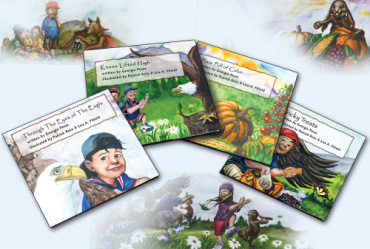
Of course, the earlier you start to create change within a population, the better chance you have of changing a trend in that society. Nambé Pueblo health education specialist Georgia Perez wrote the first four books of the “Eagle Books” series for children with this intention. The series includes the titles 1) Through the Eyes of the Eagle, 2) Knees Lifted High, 3) Plate Full of Color, 4) Tricky Treats. and 5) the middle school book, Coyote and the Turtle’s Dream.

CDC-Eagle-Book-Series for children using American Indian stories to teach healthy eating and preventing diabetesThe first four titles are folio-sized (large format) full-color picture books for story time reading, with a target audience of Indian children in second and third grade. Lisa A. Fifield, a member of the Oneida Tribe of Wisconsin (Black Bear Clan), and Patrick Rolo, a member of Bad River Band of Ojibwe, painted the lush watercolors that illustrate the first four books in the series. Perez and Lofton wrote the books from an Indian perspective with Indian characters, and Indians created the entire enterprise. With more than two million copies distributed to libraries, schools, Indian cultural centers, and more, according to the CDC, the program is a real success (The Story of Eagle Books, CDC).

All of the books are rooted in Indian cultural traditions, and advocate eating a healthy diet and exercising to avoid diabetes and maintain a healthy body. The CDC planned to continue the Eagle Books series with chapter books for middle school children, but unfortunately the agency was unable to continue the series after they published the first book, Coyote and the Turtle’s Dream, by Terry Lofton. The five volumes that CDC has published forward the message of harmony of the individual with nature, culture, and health. Ms. Perez makes particular points against type 2 diabetes.eagle-books-rain-that-dances-mr-eagle

The character of the Eagle talks with the Indian boy Thunder Cloud,

[Mr. Eagle] “Yesterday, I told Rain That Dances that many of your people are getting very sick from a disease called diabetes. Even some young people have diabetes now.”

[Thunder Cloud] “What is diabetes?”

[Mr. Eagle] “Diabetes is when your body does not use the food you eat the right way. So there is too much sugar, or glucose, in the blood. It can make people sick if it is not in balance. Just as your tummy is in balance when you eat the right amount of food — not too much, not too little, but just right — your body needs to have just the right balance of sugar in your blood. But someone who has diabetes can learn to take care of it and stay healthy. And you can do things to keep from getting this disease. One very good way is to do something every day to get your body moving” (Knees Lifted High, p. 2).

Balance is a key value among the cherished values of most Indian nations, and using this kind of language speaks to everyone, and most particularly to Indian children.

Although the author and illustrators dedicated the books to the idea of promoting Native American cultures and health, the messages provided in them can speak to any child. Eagle and Rabbit refer to “sometimes foods”, a phrase that will be familiar to any Cookie Monster fan that has been to Sesame Street. The art is so inviting that it will draw readers in to learn more and care about the characters, who are earnestly trying to improve their lives. You root for them to win. After reading these books, I was ready to trade in my frybread for a solid diet of cattail bread, wild rice salad and three sisters.

*For those unfamiliar with Indian culture, a powwow is a social gathering of Native Americans featuring dancing, drum music, singing, arts and crafts demonstrations and sales, and traditional tribal foods—and often, frybread and Indian tacos as well. Attendees include Indians and non-natives; the gatherings also provide an opportunity for elders to teach youth native tribal dances and other traditional practices.

How can I obtain these Native American and healthy eating publications?

1)    FOR THE PUBLIC

2)    FOR LIBRARIANS

Librarians can find the records for Tricky Treats, Knees Lifted High, Plate Full of Color, Through the Eyes of the Eagle and Coyote and the Turtle’s Dream in GPO’s Catalog of Government Publications or CGP.

About the author(s): Adapted from an original blog post by Jennifer K. Davis from GPO’s Library Services & Content Management Division that supports the Federal Depository Libraries Program (FDLP).


Remembering Camelot: Best of the old and new official publications about John F. Kennedy

November 19, 2013

For the World War II generation, it was December 7, 1941 that was a “date which will live in infamy.” For today’s Americans it is September 11, 2001. For my parents’ generation, November 22, 1963, is the infamous day that everyone remembers where they were when they heard the news that President Kennedy had been shot. The assassination of President John F. Kennedy is one of the most historic—and horrific— days of the 20th century, and its impact is still being felt today.  It’s hard to believe it has been 50 years this week since the tragic events unfolded in Dallas, Texas.

In commemoration of this important milestone in our Nation’s history, the U.S. Government Printing Office has assembled a number of Official Federal publications that help us reflect on the huge legacy left by “JFK” in his short but impactful 1,000 days in office.

JFK as a Senator and Presidential Candidate

When John F. Kennedy was running for President, he was a United States Senator from Massachusetts.  These publications give insight to the man during this period of transition from active Senator to President-elect.

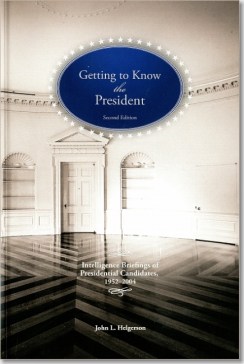
Getting To Know the President: Intelligence Briefings of Presidential Candidates, 1952-2004, including John F Kennedy, Ronald Reagan, Bill Clinton. ISBN 9781929667192Senate, 1789-1989, Volume 3: Classic Speeches, 1830-1993 contains the text of some of the most famous speeches by United States Senators, including a young Senator John F. Kennedy.

Getting To Know the President: Intelligence Briefings of Presidential Candidates, 1952-2004 (Paperback) and the Audiobook-MP3 edition are new publications that tell the story of how the CIA and the US Intelligence Community begin to brief Presidential candidates and Presidents-elect, including JFK and Lyndon Johnson, on vital intelligence issues even before they take office.

JFK’s Army for World Peace

?????????Image: Candidate Senator John F. Kennedy at the University of Michigan-Ann Arbor. Source: JFK Library

Two weeks after an improvised presidential campaign speech in October 1960 to a crowd of 10,000 cheering students at the University of Michigan in Ann Arbor where he asked “How many of you are willing to work in the Foreign Service and spend your lives traveling around the world?” Senator Kennedy proposed “a peace corps of talented men and women” who would dedicate themselves to the progress and peace of developing countries.  Encouraged by more than 25,000 letters responding to his call, newly elected President Kennedy took immediate action to make the campaign promise a reality and established the Peace Corps on March 1, 1961, with his brother-in-law, R. Sargent Shriver, as its leader.

A Life Inspired: Tales of Peace Corps ServiceThe lasting legacy of the Peace Corps’ and its ongoing inspiration to America’s younger generations is clearly shown in these two books. A Life Inspired: Tales of Peace Corps Service (Paperback) (it also available as an eBook) is a collection of autobiographical reminiscences by 28 former Peace Corps volunteers, while Crossing Cultures With the Peace Corps: Peace Corps Letters From the Field is a collection of actual letters from Peace Corps volunteers serving in various nations.

JFK’s Foreign Policy: Cold War Warrior

President Kennedy was confronted with some dramatic foreign policy issues from his first days in office, not least of which was how to avoid nuclear war with the Soviet Union over their missiles in Cuba.

History of the Office of the Secretary of Defense: The McNamara Ascendancy, 1961-1965 (eBook) John F. Kennedy isbn 999-000-55551-6History of the Office of the Secretary of Defense: The McNamara Ascendancy, 1961-1965 (eBook) tells the story of Kennedy’s Secretary of Defense, Robert McNamara, including his relationship with Presidents Kennedy and Johnson, the transformation of the Department of Defense as a part of Kennedy’s New Frontier, and the Pentagon’s handling of the Cuban Missile Crisis, Bay of Pigs episode, and the onset of the Vietnam War.

More than a mere historical text, The Joint Chiefs of Staff and National Policy, Vol. 8, 1961-1964 provides a fascinating inside look at the Joint Chiefs’ participation and their point-of-view in dealing with the following foreign crises from the U.S.S.R. arms race, Berlin Wall construction, Cuba, to Laos, expansion of NATO, support for Israel, and more – while working with new thinking in the Kennedy and Johnson presidential administrations.

Part of the Department of State’s famous Foreign Relations of the United States (FRUS) Series, Foreign Relations of the United States, 1961-1963, V. 5, Soviet Union presents a full accounting of the overall nature and structure of United States-Soviet relations that made up the Kennedy Administration’s Cold War diplomacy. It also refers to some of the intelligence and analysis of the initial build-up of Soviet missiles in Cuba that ultimately led to the Cuban Missile Crisis, as well as the complete official record of President Kennedy’s meetings with Soviet Chairman Premier Nikita Khrushchev at the Vienna Summit Conference, June 3-4, 1961.

Penetrating the Iron Curtain: Resolving the Missile Gap With Technology (Book and DVD)  ISBN: 9780160920547For more in-depth information about the Cuban Missile crisis and Cold War Kennedy style, read the new Penetrating the Iron Curtain: Resolving the Missile Gap With Technology (Book and DVD)  from the CIA which contains analysis and hundreds of recently declassified intelligence documents about the Soviet missile build-up and perceived US missile gap.

CIA Analysis of the Warsaw Pact Forces: The Importance of Clandestine Reporting (Book and DVD)  ISBN: 9780160920509Also interesting is the recently released CIA Analysis of the Warsaw Pact Forces: The Importance of Clandestine Reporting (Book and DVD) which studies the reaction by the Soviets to the West’s formation of NATO including West Germany by establishing a military bloc of Communist nations with the Warsaw Treaty of May 1955. This study continues CIA’s efforts to provide a detailed record of the intelligence derived from clandestine human and technical sources from that period.

A City Torn Apart: Building of the Berlin Wall (Book and DVD) ISBN: 9780160920455Many around the world have heard the famous quote from the Kennedy anti-Communist speech at the Berlin Wall on June 26, 1963, in which he says: “Today, in the world of freedom, the proudest boast is ‘Ich bin ein Berliner.’” The Berlin Wall became a symbol of Cold War hostilities between the US and the Soviets.  A City Torn Apart: Building of the Berlin Wall (Book and DVD) is a new multimedia book with DVD that covers the period of 1945 to the end of 1961, during the Kennedy administration with a vast collection of recently declassified CIA documents, videos, and photographs that show Berlin’s journey from a battered post war region occupied by the Allies to a city literally divided – with its western half becoming an island of freedom surrounded by a sea of Communist repression.

How JFK inspired America to “Send a Man on the Moon”

In response to both real and perceived Soviet threats, President Kennedy gave his “Urgent National Needs” speech to Congress on May 25, 1961, where he stated that “I believe that this nation should commit itself to achieving the goal, before this [1960s] decade is out, of landing a man on the Moon and returning him safely to the Earth.”  This statement turned to real policy and eventually manned missions to the moon. JFK’s lasting legacy to the U.S. space program is incalculable.

Exploring the Unknown: Selected Documents in the History of Exploring the Unknown: Selected Documents in the History of the United States Civil Space Program: V. VII: Human Spaceflight: Projects Mercury, Gemini, and Apollo NASA History Series ISBN 780160813818the U.S. Civil Space Program: V. I: Organizing for Exploration  is part of the NASA historical collection and provides a selection of expert essays and key official documents about the organizational development of NASA and the U.S. civil space program, including Senator then President Kennedy’s memos and inspirational speeches and Vice President Johnson’s early involvement that intensified after becoming President.

Exploring the Unknown: Selected Documents in the History of the United States Civil Space Program: V. VII: Human Spaceflight: Projects Mercury, Gemini, and Apollo  expands Kennedy’s vision of manned spaceflight into reality with Projects Mercury, Gemini and Apollo, providing essays and the key documents that outlined manned space program budgets, proposals, and even the selection of lunar landing spots and choices of symbolic items to bring to the moon.

NASA's First 50 Years: Historical Perspectives; NASA 50 Anniversary Proceedings ISBN: 9780160849657In this thoughtful retrospective, NASA’s First 50 Years: Historical Perspectives; NASA 50 Anniversary Proceedings, a wide array of scholars turn a critical eye toward the achievements of NASA’s first 50 years, probing an institution widely seen as the premier agency for exploration in the world, carrying on a long tradition of exploration by the United States and the human species in general.

Civil Rights and the Brothers Kennedy

After the Supreme Court ruled unanimously in Brown v. Board of Education in 1954 that racial segregation in public schools was unconstitutional, desegregation was a slow process in many Southern school districts and universities.

John F. Kennedy Presidential Library's account of James Meredith, the African-American student whose attempt to register at the University of Mississippi in 1962 led to a showdown between state and federal authorities and the storming of the campus by a segregationist mob. JFK Library "Ole Miss" micrositeImage: The John F. Kennedy Presidential Library’s account of James Meredith, the African-American student whose attempt to register at the University of Mississippi in 1962 led to a showdown between state and federal authorities and the storming of the campus by a segregationist mob. Source: JFK Library “Ole Miss” microsite

By President Kennedy’s election, civil rights activists were pushing for more equality, resulting in violent attacks and confrontations by staunch segregationists that required Federal involvement such as Federal marshals being called in by JFK’s brother and Attorney General Robert Kennedy to protect Alabama freedom riders, as well as forced integration at “Ole Miss” University of Mississippi.

Role of Federal Military Forces in Domestic Disorders, 1945-1992 ISBN: 0-16-072361-2 and 0-16-072364-7The book Role of Federal Military Forces in Domestic Disorders, 1945-1992 (Paperback) and (Hardcover) chronicles the U.S. Army’s response to major social events in contemporary American society, particularly the civil rights movement, including the integration showdown at the University of Mississippi in 1962 and other racial disturbances of the 1960s, all the way to the 1992 race riot in Los Angeles.

The End of Camelot

The practice of referring to the Kennedy Administration as Camelot came from a post-assassination interview for Life magazine with First Lady Jacqueline (Jackie) Kennedy, who referred to the years of Kennedy’s presidency before his assassination as an “American Camelot.”  She said that President Kennedy was fond of the music to the popular 1960-63 smash Broadway musical, Camelot, the lyrics of which were penned by Kennedy’s Harvard classmate, Alan Jay Lerner.  The First Lady mentioned that the President and she often listened to a recording of the hit title song before going to sleep, with JFK  particularly enjoying the phrase: “Don’t ever let it be forgot, that once there was a spot, for one brief shining moment that was known as Camelot.” Once the article was released, other journalists picked up on Mrs. Kennedy’s reference, and the world has used it ever since.

First Ladies by the White House Historical Association ISBN 9780912308838Jackie Kennedy’s historic role as First Lady is outlined in the beautifully done First Ladies of the United States of America book by the White House Historical Association which profiles the many courageous First Ladies, from Martha Washington to Jacqueline Kennedy, up to Hillary Rodham Clinton and Laura Bush.

The end of Camelot came with President Kennedy’s assassination by Lee Harvey Oswald. Afterwards, President Lyndon Johnson created a commission, chaired by Chief Justice Earl Warren to investigate the events that led to the assassination and any possible conspiracies.

The U.S. Government Printing Office (GPO) produced, in what was perhaps its single most important publication of the 1960s, the official results of this investigation in the Report of the President’s Commission on the Assassination of President Kennedy.  It became known unofficially as the Warren Commission Report or the Warren Report, named for Supreme Court Chief Justice Earl Warren who chaired the commission.

C732-1-WH64Image: Chief Justice Earl Warren presenting the Final Report of The President’s Commission on the Assassination of President Kennedy– printed by the U.S. Government Printing Office. September 24, 1964. Source: White House

Before it was released to the public on September 27, 1964, special security measures were set up at GPO to prevent any unauthorized disclosure of the manuscript.  A half century later, GPO is releasing a FREE digital version of the full, 900-page original Warren Commission Report from GPO’s FDsys (Federal Digital System) database.

Today it is still fascinating to re-live the events surrounding the events in Dallas in 1963 from eye witnesses.  In addition to witness testimony, the Report contains numerous photos, maps, diagrams, and illustrations.

The post-President Kennedy assassination audio tape recordings of conversations between various individuals in Washington, DC, and Air Force One pilots and officials on board during the flight from Dallas to Andrews Air Force Base are also available on FDsys.

johnjr-salutes-dad-jfkImage: John F. Kennedy, Jr. salutes his father’s coffin at President Kennedy’s funeral, with his widow First Lady Jacqueline (Jackie) Kennedy, daughter Caroline, and brothers Edward (Ted) Kennedy and Robert (Bobby) Kennedy.

These Official publications are part of the legacy of President John F. Kennedy and help us remember his 1,000 days of an American Camelot.

HOW DO I OBTAIN THESE JFK PUBLICATIONS?

You can find these official John F. Kennedy publications by clicking on the links above or through any of these methods:

  • Shop Online Anytime: Buy them online 24/7 at GPO’s Online Bookstore under the 35- John F. Kennedy collection (found under the US & Military History category Presidential History section).
  • Order by Phone: Call our Customer Contact Center Monday through Friday, 8 am to 5:30 pm Eastern (except US Federal holidays). From US and Canada, call toll-free 1.866.512.1800. DC or International customers call +1.202.512.1800.
  • Visit our Retail Store: Buy a copy of any print editions from this collection at GPO’s retail bookstore at 710 North Capitol Street NW, Washington, DC 20401, open Monday–Friday, 9 a.m. to 4 p.m., except Federal holidays, Call (202) 512-0132 for information or to arrange in-store pick-up.
  • Go to a Library: GPO provides copies of these publications to Federal Depository libraries worldwide. Find them in a library near you.

About the Author: Government Book Talk Editor Michele Bartram is Promotions Manager for GPO’s Publication and Information Sales Division in Washington, DC, and is responsible for online and offline marketing of the US Government Online Bookstore (http://bookstore.gpo.gov) and promoting Federal government content to the public.


Be a NOAA-it-all with these FREE NOAA resources about the weather and oceans

November 12, 2013

In the morning when I get on the elevator up to my office in GPO headquarters, when they aren’t talking about sports, everyone is chatting about the weather. My colleagues compare the day’s weather with previous years and talk about what’s coming in the days and seasons ahead. Since Washington, DC’s weather varies greatly throughout the year (even through the day!), people in this area are always taking the pulse of the outdoors and our world. In a similar vein, the Department of Commerce’s National Oceanic and Atmospheric Administration or NOAA, the U.S. Government’s oldest scientific agency, is taking the pulse of the Earth, for our benefit.

Graohic of NOAA services from Explore NOAA movie on Government Book Talk by GPOClick here to “Explore NOAA” in this movie about the Nation’s oldest scientific agency. 

You can be a NOAA-it-all with these FREE online resources

NOAA says that “Our reach goes from the surface of the sun to the depths of the ocean floor as we work to keep citizens informed of the changing environment around them.” As such, its mission is to understand and predict changes in climate, weather, oceans, and coasts, and to conserve and manage coastal and marine ecosystems and resources.

Once they’ve taken the Earth’s pulse, of course NOAA wants to share the output of their studies. The data the agency gathers when studying the Earth’s atmosphere and oceans is comprehensive, and it is a global leader in communicating how Earth’s atmosphere and water systems influence people’s lives and how they influence those systems. If you learn how to navigate the range of NOAA’s free online resources, including real-time and archived information, you will get the full benefit of this rich data.

NOAA educates and disseminates data from its many valuable services, including the National Marine Fisheries Service, the National Ocean Service, the National Weather Service and others. Their information comes packaged in videos, weather alerts, digital coastal charts, entire databases, atlases, podcasts, screensavers, sea sounds, field reports, tagging data, and an entire education Web site for teachers and kids. NOAA has resources for children that are as unique and valuable as their science.

Whether to Weather

For instance, NOAA’s Weather Systems and Patterns page has a multimedia, lessons and activities, real world data, background information and career profiles. A student who is interested in extreme weather can graph tornado air pressure in the lessons section, investigate the severe weather events page in the real world data, track a storm in the multimedia section, read the background on severe weather, and even flirt with future career possibilities in the career profile of the tornado chaser.

NOAA Watch out-- Storms Ahead! Owlie Skywarn's Weather Book available from http://bookstore.gpo.govIf the student wants to follow up with extra reading at home with advice for the whole family,  Watch out– Storms Ahead! Owlie Skywarn’s Weather Book can help round out the lesson. Total immersion in a topic is possible without ever leaving the site.

Free resources for teachers and students is a bonus that teachers, parents, caregivers and students should take full advantage of, and NOAA’s Education Resources page is a just one prime example what the agency’s got on offer for the American people.

Coastal Maps and Navigational Charts

Another instance of NOAA’s rich resources is its coastal maps. NOAA’s Office of Coast Survey recently announced that they were no longer issuing printed U.S. Coastal maps; instead, they now make high-resolution Raster Navigational Charts for public use. The Office of Coast Survey offers over high quality, 400 dpi full-color digital images of NOAA’s entire suite of paper charts, for download and printing. Sailors, commercial fisherman, and anyone else interested can view and print these charts as well as the free Air Almanac, Nautical Almanac and Navigational Charts available from http://bookstore.gpo.govdemo software to use them; this is data of high commercial value available completely for free for the American people as well.

Note that up-to-date, printed US Government astronomical, air and nautical navigational charts and almanacs are still available from the US Government Bookstore under Transportation & Navigation > Almanacs & Navigation Guides.

Webinar on NOAA’s Free Online Resources

Librarians and Teachers: Attending tomorrow’s joint NOAA-GPO webinar, “Discover Your World With NOAA: Learn How NOAA Monitors the Pulse of the Earth, and How to Access and Use NOAA’s Free Online Resources” is a great way you can learn to reap the benefit of NOAA’s rich data offerings. Registration for this free training webinar is available now. It will be offered Wednesday, November 13 at 2 p.m. Eastern Time;  GPO’s Library Services & Content Management Division (LSCM) will archive the session on the free GPO Webinar Archive for those who cannot attend. Hopefully you can make it to the live webinar or find some time to look at the archived webinar after it takes place.

NOAA’s Ark of Great Reads

IUnderstanding Marine Debris: Games & Activities for Kids of All Ages: Marine Debris 101 ISBN 9780160913624 available from bookstore.gpo.govn addition to attending the webinar, you can mine some of NOAA’s resources by reading some of these stellar NOAA publications:

Satellite-Images-to-Accpompany-the-Globe-Earth-System-Poster-Learning-NOAA-9780160864643

How can I obtain these NOAA publications?

1)    FOR THE PUBLIC

  • Shop Online: You can purchase these publications from the U.S. Government Online Bookstore at http://bookstore.gpo.gov by clicking on the links above in this blog post or clicking here to shop our entire NOAA collection.
  • Order by Phone: Call our Customer Contact Center Monday through Friday, 8 am to 5:30 pm Eastern (except US Federal holidays). From US and Canada, call toll-free 1.866.512.1800. DC or International customers call +1.202.512.1800.
  • Shop our Retail Store: Buy a copy of any print editions from this collection at GPO’s retail bookstore at 710 North Capitol Street NW, Washington, DC 20401, open Monday–Friday, 9 a.m. to 4 p.m., except Federal holidays, Call (202) 512-0132 for information or to arrange in-store pick-up.
  • Visit a Federal Depository Library: Search for one of these publications in a nearby Federal depository library.

2)    FOR LIBRARIANS

About the author(s): Adapted by Government Book Talk Editor-in-Chief and the US Government Printing Office (GPO) Promotions & Ecommerce Manager, Michele Bartram, from an original blog post by Jennifer K. Davis from GPO’s Library Services & Content Management Division that supports the Federal Depository Libraries Program (FDLP).


Happy 66th -or 106th- Birthday, US Air Force

September 18, 2013

According to the Department of Defense’s website, the United States Air Force is 66 years ago today “that the National Security Act of 1947 turned what was then known as the Army Air Corps into the United States Department of the Air Force. A strategic, tactical and defensive force for the skies, the Air Force has become a vital role in our country’s military power.

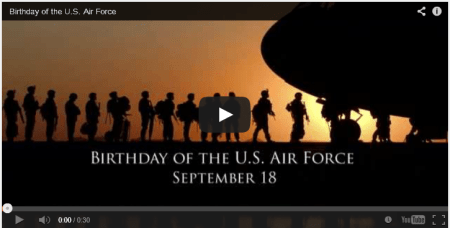
USAF-Birthday-Video

Watch this US Air Force birthday video on YouTube.

However, if you add in the years since the Army Air Corps first flew in 1907, then the Air Force’s operations have really been going strong for 106 years today. It all depends on how you count it.

Therefore, it is fitting to look at the entirety of military aviation when looking at the US Air Force’s illustrious history.

A number of excellent publications have come out recently, both in print and eBooks, for the US Air Force, Army Air Corps and military aviation in general.

The ones we most recommend for understanding the evolution of today’s US Air Force include:

Overall History and Mission

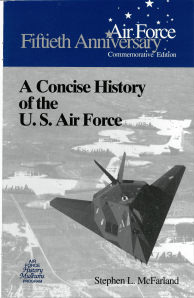
008-070-00727-4The best two books covering the overall history and mission of what is now the United States Air Force are A Concise History of the United States Air Force and its recently released EPUB eBook version, as well as the extremely thought-provoking Air Force Roles and Missions: A History (also recently released as an eBook) which traces the evolution of the Air Force’s role and missions as well as the conflicts with other branches of the military over these definitions.

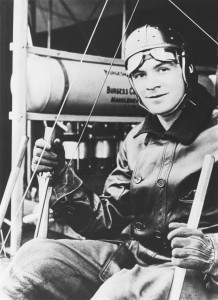
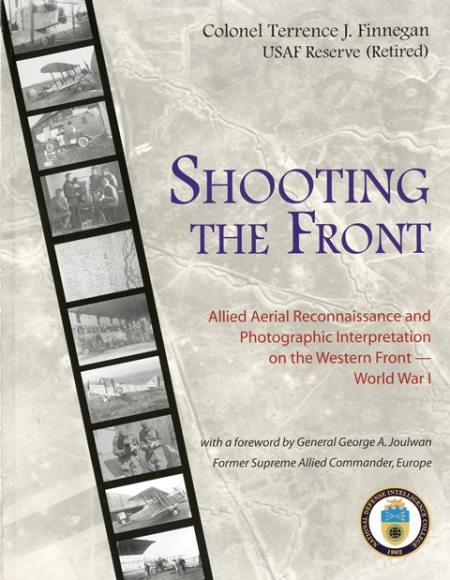
Early Beginnings through World War 1

Are you more interested in the earliest days of aviation when the Army first bought one of the Wright Brothers’ planes and its “daring young men in those flying machines” began to determine how airpower could be used for military purposes? Then you should read Logbook of the Signal Corps No. 1: The United States Army’s First Airplane in paperback or as a new eBook, which recounts the experiences of Benjamin D. Foulois, the pioneering, self-taught pilot of “Signal Corps No. 1”, the very first airplane of the United States Army Signal Corps.

HAP: Henry H. Arnold, Military Aviator, Shown here as Army Flight Instructor in College Park, Maryland. ISBN: 0-16-049071-5And don’t miss HAP: Henry H. Arnold, Military Aviator (Paperback) or the new EPUB eBook edition which tells the story of beloved Henry “Hap” Arnold, one of the first Army flight instructors and daring pilot. (See his image to the right as an Army Flight Instructor. Image courtesy: College Park Aviation Museum.)

Another very popular publication tells the story of air espionage during World War 1: Shooting the Front: Allied Aerial Reconnaissance and Photographic Interpretation on the Western Front – World War I.

Shooting the Front: Allied Aerial Reconnaissance and Photographic Interpretation on the Western Front - World War I (Paperbound)

World War 2

World War II is when it is widely acknowledged that military aviation came into its own. Toward Independence: The Emergence of the United States Air Force, 1945-1947 tells of the rapid evolution in use of airpower in the period leading up to its formation as a separate entity.

Korean War

By the Korean War, the US Air Force had become its own branch of the United States Armed Forces. Several publications chronicle the involvement of the newly formed USAF during this conflict, including Within Limits: The United States Air Force and the Korean War, Coalition Air Warfare in the Korean War, 1950 1953, and Silver Wings, Golden Valor: The USAF Remembers Korea which includes reminiscences and perspectives of Korean War Air Force veterans and historians.

Vietnam War

War Too Long: The United States Air Force in Southeast Asia 1961-1975 ISBN: 9780160613692Over 50 years later, Americans are still wrestling with the lessons of Vietnam. So, too, is the Air Force in these excellent USAF publications War Too Long: The United States Air Force in Southeast Asia 1961-1975  and War in South Vietnam: The Years of the Offensive, 1965-1968, as well as this Army digital publication, Interservice Rivalry and Airpower in the Vietnam War (eBook).

Cold War and Space Race

When the Soviets launched Sputnik, the space race was subsequently kicked off with the United States. The Air Force role was critical during the Cold War and in both in helping start our space exploration and ongoing support through to today in support of NASA. Read Early Cold War Overflights, 1950-1956 to understand the beginning of the espionage flights, and pick up a copy of the United States Air Force in Space, 1945 to the Twenty-First Century which covers the Air Force’s involvement in space exploration.

Gulf War to the Present

None of us can forget the images of bombs dropping during the Gulf War, the tale of which is told in Decisive Force: Strategic Bombing in the Gulf War.

Turning Point 9.11: Air Force Reserve in the 21st Century, 2001-2011  ISBN: 9780160914485And anyone with family in or who themselves are in the National Guard or a military reservist knows how the Gulf Wars and Afghanistan have changed the role of these personnel from backup to active participants. One of the best books we’ve read on the subject is the excellent Turning Point 9.11: Air Force Reserve in the 21st Century, 2001-2011 which chronicles these stark changes in the Air Force Reserve since the terrorist attacks on 9.11.2001.

Air Force on TV and in the Movies

Fans of the movie “War Games” will know about NORAD. Learn the true story behind this important homeland airspace defense organization in Guarding What You Value Most: North American Aerospace Defense Command Celebrating 50 Years and a new EPUB eBook version. Includes the heart-warming story of NORAD’s Christmas Eve Santa Tracker. (Read about this in our blog post Tracking “Big Red”: NORAD’s Secret Santa Mission [UPDATED].)

Fans of the TV show “JAG” Will love to discover the real history of this Air Force department in First 50 Years: United States Air Force Judge Advocate General’s Department.

Humanitarian Operations

Wings of Hope: The United States Air Force and Humanitarian Airlift OperationsLike the other branches of the US military, the US Air Force plays an important role in humanitarian operations, both here at home and worldwide. This publication—Wings of Hope: The United States Air Force and Humanitarian Airlift Operations—tells the overall story of various airlift operations. While it sounds like the plot of a disaster movie, the Ash Warriors (paperback) and its EPUB eBook version recounts the true story of the “Ash Warriors,” those Air Force men and women who carried out their mission in the face of an incredible series of natural disasters, including volcanic eruption, flood, typhoons, and earthquakes, all of which plagued Clark Air Base in the Philippines and the surrounding areas during June and July 1991. And the horrendous Hurricane Katrina brought out the best in the Air Force’s Air Education and Training Command, whose role is described in Operation Dragon Comeback: Air Education and Training Command’s Response to Hurricane Katrina.

“Blue Sky” Future

So join us in wishing a very happy 66th (or 106th) birthday to our very own United States Air Force. May there be blue skies in its future!

How can I obtain these Air Force History publications?

  • Shop Online: You can purchase these publications from the U.S. Government Online Bookstore at http://bookstore.gpo.gov, by clicking on the links above in this blog post or shopping our United States Air Force (USAF) History collection under our US & Military History category.
  • Order by Phone: Call our Customer Contact Center Monday through Friday, 8 am to 5:30 pm Eastern (except US Federal holidays). From US and Canada, call toll-free 1.866.512.1800. DC or International customers call +1.202.512.1800.
  • Visit our Retail Store: Buy a copy of print editions from this collection at GPO’s retail bookstore at 710 North Capitol Street NW, Washington, DC 20401, open Monday–Friday, 9 a.m. to 4 p.m., except Federal holidays, Call (202) 512-0132 for information or to arrange in-store pick-up.
  • Find them in a Library: Find these publications in a federal depository library.

About the Author: Government Book Talk Editor Michele Bartram is Promotions Manager for GPO’s Publication and Information Sales Division in Washington, DC, and is responsible for online and offline marketing of the US Government Online Bookstore (http://bookstore.gpo.gov) and promoting Federal government content to the public.


September 11 Tales of Heroes and Tough Lessons

September 11, 2013

9-11 Decade of Remembrance Twin Towers and Pentagon Logo designed by David McKenzie at the Government Printing OfficeThere are certain moments and events that are etched in our national consciousness. Ask any American who was alive in the 60’s where he or she was when John F. Kennedy or Martin Luther King was assassinated and you will hear a stirring personal story. For our generation, it was September 11, 2001.

Image: September 11 Decade of Remembrance logo with World Trade Center Twin Towers surrounded by a figure representing the Pentagon. Created by David McKenzie with the Government Printing Office for the U.S. Government Bookstore.

I was right across from the Twin Towers twelve years ago today, getting ready to board a ferry for my daily commute from New Jersey across the Hudson River into Manhattan, when I saw the second plane hit the World Trade Center right across from me. So, too, I cried with a group of strangers as we stood on the ferry platform and watched in horror as the first tower fall, saw the dust cloud rise and felt the earth—and the world—tremble.

America and Americans have changed since that day… twelve years ago today. We have since heard stirring stories of heroes and sacrifice, and learned many grim lessons that are still affecting both policy and people today.

Many of these stories of heroism, missed opportunities, and resulting actions have been painstakingly and faithfully chronicled by a wide array of Federal agencies, ensuring the sacrifices and lessons are not forgotten.

Responding to the Tragedies

Both in New York and the Pentagon in Washington, DC, we saw how first responders and medical personnel rushed to save lives. These excellent publications tell the stories of the heroes from that day:

  • 008-000-01049-8Pentagon 9/11 (10th Anniversary Edition) (Paperback) includes a foreword by Secretary of Defense Leon Panetta and provides the most comprehensive account available of the 9/11 attack on the Pentagon and aftermath, including unprecedented details on the impact on the Pentagon building and personnel and the scope of the rescue, recovery, and care-giving effort.
  • 008-000-01048-0Attack on the Pentagon: The Medical Response to 9/11 not only tells the personal stories from medical personnel responding to the attack on the Pentagon, but also provides insight from MEDCOM officers detailed to New York to support National Guard troops guarding ground zero’s perimeter. It also includes the Army’s involvement in the recovery of deceased attack victims at the Pentagon and the work of the Armed Forces Institute of Pathology in identifying human remains at Dover Air Force Base. In addition, the roles of military and civilian hospital staffs and of military environmental health and mental health specialists in taking care of attack victims and their families are also examined.

Tough Lessons

The single must-read for every American about September 11 is the official version of The 9/11 Commission Report: Final Report of the National Commission on Terrorist Attacks Upon the United States. This publication lists the findings of the National 9/11 Commission, listing all the painful errors made leading up to the terrorist attacks and outlining specific recommendations for international, national, state and local changes in policy and procedures that the panel of experts felt needed to be implemented to ensure a similar attack never happened again. This seminal publication has served to inform all subsequent policies and legislation since 9/11. It is available in print or as an eBook.

911-commission-report

Image: Launch of the 9/11 Commission Report. Courtesy: CSMonitor.com

The Senate, Select Committee on Intelligence, and House, Permanent Select Committee on Intelligence examined the intelligence failures leading up to 9/11 and jointly published the results in United States Congressional Serial Set, Serial No. 14750: Joint Inquiry Into Intelligence Community Activity Before and After Terrorists Attacks of September 11, 2001 With Errata.

027-001-00097-1Additional insights into the causes of and responses to terrorism can be gleaned from Terrorism Research and Analysis Project (TRAP): A Collection of Research Ideas, Thoughts, and Perspectives, V. 1. This publication provides the findings from the post-9/11 FBI Terrorism Research and Analysis Project (TRAP) Symposium. TRAP is a leading research consortium made up of international/domestic academics and law enforcement officers, and is a working group sponsored by the FBI’s Behavioral Science Unit. In it, these counter-terrorism experts provide a better understanding of the causes of terrorist activity and possible government response tactics to mitigate terrorist actions.

064-000-00029-2As we watch the new World Trade Center going up in New York, we can be assured that builders are incorporating architectural and construction lessons learned from the World Trade Center Building Performance Study: Data Collection, Preliminary Observations, and Recommendations.

Policy and Legislative Response

United States Congressional Serial Set, Serial No. 14924, House Report No. 724, 9/11 Recommendations Implementation Act, Pts. 1-6 outlines the specific legislative changes enacted by Congress, providing both background and justifications for them along with attribution.

A print copy of the law itself can be purchased here: Implementing Recommendations of the 9/11 Commission Act of 2007, Public Law 110-53 along with the details of the various committee conferences contributing to it in Implementing Recommendations of the 9/11 Commission Act of 2007, Conference Report to Accompany H.R. 1, July 25, 2007.

Defending the Homeland since 9/11

041-001-00657-5National Strategy for Homeland Security (October 2007) provides the common framework outlined by the George W. Bush Administration to guides, organize and unify the United States’ homeland security efforts.

008-000-01068-4A new publication from the Air Force Reserve called Turning Point 9.11: Air Force Reserve in the 21st Century, 2001-2011 tells the story of how the Air Force Reserve responded to 9/11 and have contributed to the security of the United States in a post-September 11 world.

050-012-00440-4In a similar vein, Rogue Wave: The U.S. Coast Guard on and After 9/11 chronicles the involvement of the U.S. Coast Guard on that fateful day and the evolving role in national and world security since.  Part of the Coast Guard 9/11 response is told in this touching video about the boatlift to evacuate people from lower Manhattan is told in a video narrated by Tom Hanks entitled: BOATLIFT, An Untold Tale of 9/11 Resilience.”

A touching video about the boatlift to evacuate people from lower Manhattan on 9/11 (September 11) is told in a video narrated by Tom Hanks entitled: BOATLIFT, An Untold Tale of 9/11 Resilience. Click on the image above or this link to view the “Boatlift” video.

The upcoming U.S. Army War College Guide to National Security Issues, Volume 2: National Security Policy and Strategy provides a summarized look at the national security curriculum now taught to our nation’s top military and civilian leaders by the U.S. Army War College. Revised with the lessons learned from the years since 9/11, this publication includes a chapter on ”Securing America From Attack: The Defense Department’s Evolving Role After 9/11.”

How can I obtain these Federal 9/11 publications?

  • Shop Online: Print Editions of these 9/11-related publications may be ordered from the U.S. Government Online Bookstore at http://bookstore.gpo.gov, by clicking on the links above in this blog post or shopping our Terrorism & 9/11 History collection under our US & Military History category.

  • Order by Phone: Call our Customer Contact Center Monday through Friday, 8 am to 5:30 pm Eastern (except US Federal holidays). From US and Canada, call toll-free 1.866.512.1800. DC or International customers call +1.202.512.1800.
  • Visit our Retail Store: Buy copies of these publications at GPO’s retail bookstore at 710 North Capitol Street NW, Washington, DC 20401, open Monday–Friday, 9 a.m. to 4 p.m., except Federal holidays, Call (202) 512-0132 for information or to arrange in-store pick-up.
  • Find them in a Library: Find these publications in a federal depository library.

About the Author: Government Book Talk Editor Michele Bartram is Promotions Manager for GPO’s Publication and Information Sales Division in Washington, DC, and is responsible for online and offline marketing of the US Government Online Bookstore (http://bookstore.gpo.gov) and promoting Federal government content to the public.


Code Talkers to Better Walkers: How American Indians Have Helped Fight Wars and Obesity

August 21, 2013

In honor of Navajo Code Talkers Day this past week on August 14, Government Book Talk explores some Federal publications that utilize American Indian traditions and culture to combat serious problems of the past and present.

Native Code Talkers in World War I

“Code talkers” became the term used to describe Native American soldiers from various Indian tribes who communicated on radios, telephones and telegraph during World Wars I and II. They spoke in their own languages and dialects, all of which were indecipherable by enemy forces. Because few non-Indians knew these difficult native languages, which in many cases had no written form, they provided ideal codes for relaying secret operational orders.

WWI-Choctaw-Code-Talkers-w-FlagImage: The Choctaw Code Talkers enlisted in the U.S. Army in World War I even though their lack of citizenship exempted them from the draft. (U.S. Army photo)

In France during World War I, the 142nd Infantry Regiment, 36th Division, had a company of Indians who spoke 26 languages and dialects. Two Indian officers were selected to supervise a communications system staffed by 18 Choctaw. The team transmitted messages relating to troop movements and their own tactical plans in their native tongue. They helped the American Expeditionary Force win several key battles in the Meuse-Argonne Campaign in France, the final big German push of the war.

Soldiers from other tribes, including the Cheyenne, Comanche, Cherokee, Osage and Yankton Sioux also were enlisted to communicate as code talkers. Previous to their arrival in France, the Germans had broken every American code used, resulting in the deaths of many Soldiers. However, the German Army— which captured about one out of four messengers—never broke the Indians’ “code.”

More Native Code Talkers are Used in World War II

After the United States entered World War II in December 1941, more Armed Forces used code talking units with each unit composed of members of a specific American Indian tribe.

Navajo Code Talkers

The United States Marines recruited several hundred Navajos for duty in the Pacific region. The Marines chose these Navajos for their ability to speak their native language, Diné bizaad (Navajo), for code talking.

Philip Johnston, a son of missionaries who had grown up on the Navajo reservation, originally recommended Navajo to the Marines as a language well suited for cryptology. In a memo to the Commandant of the Marine Corps in early 1942, Navajo was declared uniquely suited to succeed more than some other languages proposed for use. At that time, most Navajos were fluent in their native language. The Marines were lucky; in 1942 only an estimated 28 non-Navajo Americans could speak the extremely difficult Navajo language!

Hitler had heard of the possibility of using Native American languages for codes prior to the United States’ entry into the war, and had sent a number of German anthropologists to the United States prior to WWII to learn Native American languages. Navajo was reportedly the only language the German anthropologists had yet to learn. Navajo also benefited by being so unlike other Native American languages that there was no language similar to it. If you’re fluent in Spanish, you might be able to muddle along in Portuguese after some basic lessons. Navajo has no analog.

Navajo-Code-Talkers-in-JungleIn May 1942, the first Navajo recruits attended boot camp; they then moved to Camp Pendleton in Oceanside, California, to create the Navajo Code Talkers Dictionary. The Marines trained approximately 400 Navajos as code talkers. To relay the messages they were encoding, they had to learn to operate three types of radios. At that time the code talkers called themselves “radiomen”.

The developers of the Navajo code modeled the alphabet portion on the Joint Army/Navy Phonetic Alphabet. That alphabet uses words to represent letters, e.g., Fox for the letter F. In the Navajo code, Ne-Ahs-Jah is Navajo for Owl, which stood for the letter O. To spell the word Navy, the code talker might say, “Tsah (Needle, or N), Wol-La-Chee (Ant, or A), A-Keh-Di-Glini (Victor, or V), Tsah-As-Zih (Yucca, or Y)”.

The Navajo Marines also chose Navajo words to represent about 450 frequently used terms in the military. It was hard. According to code talker Wilfred Billey, “one of the most difficult parts of forming the Navajo code was using it to relay precise information, such as coordinates or troop movements because several words in the Navajo language have various meanings” (May 22, 2003, “Navajo Code Talker Continues Oral Tradition”, Marine Core Logistics Base Albany).

Some of the choices were very creative. Navajo is a classic language that didn’t originally include terms like “tank”, so the Navajo Marines dubbed it “Chay-Da-Gahi”, or tortoise. The Navajo Code Talkers Dictionary, published by the Navy years later after it was declassified, showed the versatility of the code’s creators. The code was so effective in World War 2, it was also used in the Korean War, being phased out before Vietnam.

In fact, at Iwo Jima, Major Howard Connor, 5th Marine Division signal officer, declared, ‘Were it not for the Navajos, the Marines would never have taken Iwo Jima’” (Navajo Code Talkers: WWII Fact Sheet). During that battle alone, the radiomen transmitted 800 messages without error.

Comanche, Sioux and Hopi Code Talkers for the Army

Although the Navajo tribe is the one most remembered for its contributions to the World War II communications code units, the US military also used Basque, Comanche, Sioux, Hopi and a number of other American Indian languages as code languages. Basque was rarely used because there were native Basque speakers in Europe which made the U.S. military wary of using it more widely.  However, because the various Army units of Code Talkers were so secret, their very existence was kept classified until the 1970s or later.

American-Indian-Code-Talkers-LanguagesImage: List of American Indian Code Talkers’ languages and the numbers of tribal members who served, if known. There were at least two Code Talkers from each tribe. Source: National Museum of the American Indian’s website.

Army-Signal-Corps_9780160453519The US Army’s Signal Corps is the military branch that develops, tests, provides, and manages communications and information systems support for the command and control of combined US Armed Forces, including code talkers. You can read the history of the Army Signal Corps in Getting the Message Through: A Branch History of the U.S. Army Signal Corps.

The US Army’s 4th Signal Company, also known as the Code Talkers, used seventeen Comanche Code Talkers. Like the Choctaws of World War I, and the Navajos in the Pacific Theater, the Comanche Code Talkers used their native language to prevent the enemies of the European Theater from intercepting messages of the allied troops during World War II. The unit was instrumental during the Normandy invasion.

Sioux code talkers, composed of Lakota, Dakota, and Nakota native soldiers or “L.D.N.’s”, spoke their native “dialects” (languages) which were understood by each native soldier in the unit. On December 19, 2000, Congressman John Thune said of the Sioux code talkers’ contribution:

“It is important for us to honor these veterans whose contributions have, until recently, been ignored. Often sent out on their own to provide communications with headquarters on enemy location and strength, they sometimes spent 24 hours in headphones without sleep or food. Many endured terrible conditions without protection from the enemy. Using three Sioux languages Lakota, Nakota and Dakota, the Sioux Code Talkers were able to communicate messages the enemy was unable to crack.”

The Hopi tribe also helped in the communications coding efforts. Eleven Hopi men developed a highly secret code language which they used to assist US Army intelligence in the Marshall Islands, New Caledonia and the Philippines during the Second World War. Again, because of the super top-secret nature of their work for Army Intelligence, the Hopi Code Talkers’ contribution was not officially recognized until April 26, 2012, on the inaugural Hopi Code Talkers Recognition Day.

Applying American Indian Traditions to the War against Obesity

The United States Government continues to utilize Native American language and traditions to solve important problems of the day. For example, with the public health issue of childhood obesity and diabetes rising to dangerous levels in the US, the Department of Health and Human Services Centers for Disease Control and Prevention (CDC) Native Diabetes Wellness Program (Wellness Program) and the Indian Health Service (IHS) Division of Diabetes Treatment and Prevention recently teamed up with the Tribal Leaders Diabetes Committee (TLDC) to produce the award-winning Eagle Book series.

The developers of this series realized that the old, traditional American Indian diet and activity levels were in line with today’s medical recommendations to eat less processed food and more fruits and vegetables as well as exercising more. Thus, they worked with Native groups to incorporate traditional American Indian story-telling techniques and themes to promote increased physical activity such as walking and playing as well as making healthier—and more natural—food choices to reduce obesity and prevent diabetes.

Coyote-and-the-Turtles'-Dream-9780160913174 Preventing childhood obesity and diabetesThe common Native American theme of the tortoise/ turtle used by the American Indian code talkers resurfaces in the newest book in the series, Coyote and the Turtle’s Dream.  In this middle school-age mystery/ adventure book, the wise elderly box turtle helps the mischievous Coyote and the Indian reservation town’s residents solve a mystery to foil the plans of a fossil poacher while teaching the underlying message about healthy eating and increased physical activity.

With the first four books aimed at elementary schoolers– Through the Eyes of the Eagle, Knees Lifted High, Plate Full of Color, and Tricky Treats and the next book for middle schoolers– Coyote and the Turtle’s Dream— the Eagle Book series has been snapped up by teachers, nutritionists, librarians, parents and children’s health providers all over the country as an effective tool to teach children about healthier eating habits and increasing activity while also instilling an appreciation for Native culture which extols respect for elders and living in harmony with nature.

You can read more about the Eagle Book series on our Government Book Talk blog post entitled: “Native Traditions Help Kids Unplug, Read and Be Healthy.”

How Can I Obtain These Publications?

EBOOKS:

PRINT EDITIONS:

About the author(s): Adapted by Government Book Talk Editor-in-Chief and GPO Promotions & Ecommerce Manager, Michele Bartram, from an original blog post by Jennifer K. Davis from GPO’s Library Services & Content Management Division that supports the Federal Depository Libraries Program (FDLP).


NASA at 50… Plus 5

August 2, 2013

So many kids growing up in the United States dream of being astronauts, and flying through space. Many adult Americans can remember where they were when the Eagle landed, or when (sadly) the Space Shuttle Challenger exploded. You know you’re invested in American culture when you can successfully use the phrase, “Houston, we’ve had a problem” in a social conversation.

HoustonProblemImage: In NASA’s Mission Control in Houston, Texas, in April 1970, there definitely was a problem with the Apollo 13 mission. Here, the Gold Team, directed by Gerald Griffin (seated, back of head to camera), prepares to take over from Black Team (Glynn Lunney, seated, in profile) during a critical period of the Apollo 13 mission to save it– and all the astronauts on board– from disaster. Source: NASA. Read a first-hand account by Apollo 13 Commander, Jim Lovell, of all the “problems.”

The National Aeronautics and Space Administration (NASA) is the reason why we have these touchstones in American culture.

NASA at 50: Interviews With NASA's Senior Leadership ISBN: 9780160914478On July 29, NASA celebrated the 55th anniversary of its founding in 1958; the agency has been doing its job passionately for the last fifty-five years.

When NASA hit its fiftieth anniversary, NASA issued commemorative volumes in 2009. NASA at 50: Interviews With NASA’s Senior Leadership takes a look at the new direction senior management wants to guide the agency towards after its first successful half-century.

It really is interesting for readers to look back at NASA’s storied past on this memorable occasion. NASA added to this retrospective  with the companion volume, NASA’s First 50 Years: Historical Perspectives. However, space exploration fans will be eager to learn more about NASA’s future as well as its past, and that’s the purpose of this book.

NASA's First 50 Years: Historical Perspectives; NASA 50 Anniversary Proceedings ISBN: 9780160849657Since NASA’s fiftieth anniversary “found an agency in the midst of deep transition” as Steven Dick, NASA’s chief historian noted, the interviews in NASA at 50: Interviews With NASA’s Senior Leadership review the high points in that transition. Obviously, there’s solid coverage of the end of the Space Shuttle Program, but the text also covers senior management’s thoughts on their work with the new project called Constellation. Constellation includes multiple elements, such as the new launch vehicle Ares I, a human capsule named Orion, and the lunar lander Altair.

The two reporters from NASA’s Johnson Space Center, Rebecca Wright and Sandra Johnson, interviewed twenty-four members of senior NASA management to get their perspectives and subject matter expertise on the various program agendas planned for the coming years. The authors included questions directed to the general public more than you might suspect. For example, “Why would you encourage anyone to work for NASA?”, and “Do you find that aeronautics will continue to be a part of NASA in its future?” would appeal to anyone who is interested in working for NASA in years to come; the answers are given in plain, accessible language. Portraits of the interview subjects and an extensive index are included. Policy specialists, aerospace engineers, aerospace engineering and physics students and space exploration fans will all enjoy and take value from NASA at 50: Interviews With NASA’s Senior Leadership.

Coming Home: Reentry and Recovery From Space ISBN: 9780160910647Another book for aeronautics and space exploration fans to explore while celebrating NASA’s fifty-five years is Coming Home: Reentry and Recovery From SpaceIt’s mainly a historical perspective of the technical aspects of shuttlecraft re-entry and recovery after landing. Although the authors used really plan, direct language when writing, the concepts covered are fairly high-level aeronautics for non-professionals to understand. For example:

“Even the CEV, a program that returns to a capsule concept with a blunt-body ablative heat shield and parachutes (or perhaps a Rogallo wing) to return to Earth (or perhaps, the ocean), proved a challenge for engineers” (p. x).

It’s probable that this volume would mainly be of interest to aeronautics and electrical engineers and physicists, or students or policy analysts of those fields, whose area of interest is space exploration. Since the language is so simple, though, I could imagine an ambitious high-school student who is interested in space reading this too, although she or he might need to research some of the tougher concepts (e.g., ablative in any sense other than grammatical cases). Coming home with a safe reentry and recovery was certainly of interest to the Apollo 13 crew!

If you do choose to celebrate NASA’s fifty-fifth anniversary, maybe the best celebratory method (in addition to eating cake) is to read more about NASA. Find out their next steps, and cheer them on in their quest to further science by:

“Explor[ing] the earth, solar system and universe beyond; chart[ing] the best route of discovery; and reap[ing] the benefits of Earth and space exploration for society” (About NASA, Web site).

How can I find these NASA publications?

You can find all the books mentioned here at the GPO Online Bookstore. While you’re at it, you might want to pick up a set of five full-color NASA bookmarks: NASA Space Shuttle Bookmarks: Atlantis, Challenger, Columbia, Discovery, Endeavour to keep your place in these books. Just like party favors, right?

  • Order by Phone: Call our Customer Contact Center Monday through Friday, 8 am to 5:30 pm Eastern (except US Federal holidays). From US and Canada, call toll-free 1.866.512.1800. DC or International customers call +1.202.512.1800.
  • Visit our Retail Store: Buy them at GPO’s retail bookstore at 710 North Capitol Street NW, Washington, DC 20401, open Monday–Friday, 9 a.m. to 4 p.m., except Federal holidays, (202) 512-0132.
  • Find them in a Library: Search for them in a Library.

Federal Depository Librarians:

About the author(s): Our guest blogger is Jennifer K. Davis from GPO’s Library Services & Content Management Division that supports the Federal Depository Libraries Program (FDLP). Editor: Government Book Talk Editor-in-Chief and , GPO Promotions & Ecommerce Manager, Michele Bartram.


Agency of the Month: US Army Center of Military History

May 14, 2013

CMH_AgencyoftheMonth_Slide

We are starting a new series to feature various Federal agencies of note as Agency of the Month. With it being National Military Appreciation Month in May, Armed Forces Day this Friday and Memorial Day coming up in under two weeks, it is appropriate that we highlight one of our most distinguished and prolific agency publishers: the United States Army Center of Military History.

The Center’s Mission

What is the CMH’s mission? The Center of Military History (or CMH to military history buffs and cognoscenti) reports to the Administrative Assistant to the Secretary of the Army and is the primary historical branch for the Army. According to its website on its Origins, the Center is responsible for the appropriate use of history throughout the United States Army which encompasses these tasks:

  • Recording the official history of the Army in both peace and war, including written and oral history;
  • Advising the Army Staff on historical matters;
  • Providing historical support to the Army Secretariat and Staff, contributing essential background information for decision making, staff actions, command information programs, and public statements by Army officials;
  • Expanding its role in the vital areas of military history education, including working with Army schools to ensure that the study of history is a significant part of the training of officers and noncommissioned officers;
  • Managing the Army’s museum system and historical artifacts (See photo below);
  • Introducing automated data-retrieval systems and maintaining an Army history archive and publications list;
  • Maintaining the organizational history of Army units, allowing the Center to provide units of the Regular Army, the Army National Guard, and the Army Reserve with certificates of their lineage and honors and other historical material concerning their organizations.

Westphal-views-CMH-Museum

Image: (Fort Belvoir, Virginia, May 30, 2012)–Under Secretary of the Army Dr. Joseph W. Westphal visited the U.S. Army Center of Military History’s Museum Support Center Facility to view the impressive collection of over 16,000 pieces of American history housed in the state-of-the-art facility. Image Source: United States Army

Today, the Center is made up of a team of distinguished military historians, translators, editors, archivists, and even cartographers to accurately record, analyze and publish the Army’s history in all its forms.  These dedicated professionals live by early 20th century philosopher George Santayana’s motto, who wrote that “Those who cannot remember the past are condemned to repeat it.”

Research Focus Areas

Under the direction of the Chief of Military History and his principal adviser, the Army’s Chief Historian, CMH’s staff is involved in dozens of major writing projects at any one time. Topics can range from those that involve new research such as traditional studies in operational and administrative history (from the present on back) or the examination of such areas as procurement, peacekeeping, and the global war on terror, to name a few.

The Center serves as a clearing-house for all oral history programs in the Army, as well as conducting and preserving its own oral history collections, including those from the Vietnam War, Desert Storm, and the many recent operations.  Its famous end-of-tour interviews of officials within the Army Secretariat and Staff are critical for providing a basis for its annual histories of the Department of the Army.

“Famous and Favorite” CMH Publications

With hundreds of top-quality publications available from the Center of Military History, and many of these award-winning books, it’s hard to choose just a few, so I’ll highlight some currently available titles that are not only my personal favorites, but that also just happen to be customer favorites and best-sellers as well.

Civil War Sesquicentennial Series

The Center traces its lineage back to those historians under the Secretary of War who compiled the Official Records of the Rebellion, a monumental history of the Civil War begun in 1874. Today with America honoring the 150th anniversary of the Civil War, the Center returns to those roots by producing a series of commemorative campaign brochures for the Civil War Sesquicentennial.

The Civil-War-Begins: Opening Clashes 1861 a Center of Military History publication 75-2The first title in this series, The Civil War Begins: Opening Clashes, 1861, is already out and describes those confusing and bloody early battles. (Read our earlier review of this title on this blog, entitled First Blood: Year One of the War Between the States.)

How to obtain The Civil War Begins: Opening Clashes, 1861?  Order it from the U.S. Government Bookstore website:

Additional brochures covering Chancellorsville, Vicksburg and Gettysburg are due out after Memorial Day.

Army History Bulletin

One of the Center’s most popular publications for the public and military alike is its best-selling quarterly journal entitled “ Army History: The Professional Bulletin of Army History.”

Army History: Professional Bulletin of U.S. Army History Spring-2013_AH87This full-color magazine has articles spanning the gamut of Army history topics by a myriad of knowledgeable authors. For example, the Spring 2013 issue features these guest articles:  “The Doughboys Make Good: American Victories at St. Mihiel and Blanc Mont Ridge“, by Mark E. Grotelueschen and “The Indomitable Dr. Augusta: The First Black Physician in the U.S. Army“, by Gerald S. Henig.

Regular columns in Army History include: News Notes, U.S. Army Artifact Spotlight, Book Reviews and Chief Historian’s Footnote.

How can I obtain the Army History: The Professional Bulletin of Army History?

World War II Collected Works

Perhaps my personal favorite is The U.S. Army and World War II: Collected Works (DVD). It is a comprehensive DVD compilation of PDFs of every book on World War II that the Center of Military History every published, which encompasses an astonishing 156 volumes!

The U.S. Army and World War II: Collected Works (DVD)For fans of World War 2 history, it doesn’t get any better—or more comprehensive—than this, as battles, tactics, and outcomes are sourced straight from those who were in the thick of things and analyzed by top historical experts.

How can I obtain “The U.S. Army and World War II: Collected Works (DVD)”?

Thus, as we honor our members of the Armed Forces this week and remember our lost servicemen and women on Memorial Day, we can be comforted by the fact that the dedicated team at the Center of Military History is there to ensure that their sacrifice, wisdom and experiences are not forgotten.

About the author: Government Book Talk Editor Michele Bartram is Promotions Manager for GPO’s Publication and Information Sales Division in Washington, DC, and is responsible for online and offline marketing of the US Government Online Bookstore (http://bookstore.gpo.gov) and promoting Federal government content to the public.