Remembering Camelot: Best of the old and new official publications about John F. Kennedy

November 19, 2013

For the World War II generation, it was December 7, 1941 that was a “date which will live in infamy.” For today’s Americans it is September 11, 2001. For my parents’ generation, November 22, 1963, is the infamous day that everyone remembers where they were when they heard the news that President Kennedy had been shot. The assassination of President John F. Kennedy is one of the most historic—and horrific— days of the 20th century, and its impact is still being felt today.  It’s hard to believe it has been 50 years this week since the tragic events unfolded in Dallas, Texas.

In commemoration of this important milestone in our Nation’s history, the U.S. Government Printing Office has assembled a number of Official Federal publications that help us reflect on the huge legacy left by “JFK” in his short but impactful 1,000 days in office.

JFK as a Senator and Presidential Candidate

When John F. Kennedy was running for President, he was a United States Senator from Massachusetts.  These publications give insight to the man during this period of transition from active Senator to President-elect.
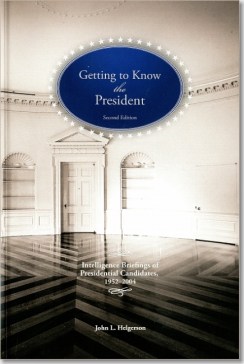
Getting To Know the President: Intelligence Briefings of Presidential Candidates, 1952-2004, including John F Kennedy, Ronald Reagan, Bill Clinton. ISBN 9781929667192Senate, 1789-1989, Volume 3: Classic Speeches, 1830-1993 contains the text of some of the most famous speeches by United States Senators, including a young Senator John F. Kennedy.

Getting To Know the President: Intelligence Briefings of Presidential Candidates, 1952-2004 (Paperback) and the Audiobook-MP3 edition are new publications that tell the story of how the CIA and the US Intelligence Community begin to brief Presidential candidates and Presidents-elect, including JFK and Lyndon Johnson, on vital intelligence issues even before they take office.

JFK’s Army for World Peace

?????????Image: Candidate Senator John F. Kennedy at the University of Michigan-Ann Arbor. Source: JFK Library

Two weeks after an improvised presidential campaign speech in October 1960 to a crowd of 10,000 cheering students at the University of Michigan in Ann Arbor where he asked “How many of you are willing to work in the Foreign Service and spend your lives traveling around the world?” Senator Kennedy proposed “a peace corps of talented men and women” who would dedicate themselves to the progress and peace of developing countries.  Encouraged by more than 25,000 letters responding to his call, newly elected President Kennedy took immediate action to make the campaign promise a reality and established the Peace Corps on March 1, 1961, with his brother-in-law, R. Sargent Shriver, as its leader.

A Life Inspired: Tales of Peace Corps ServiceThe lasting legacy of the Peace Corps’ and its ongoing inspiration to America’s younger generations is clearly shown in these two books. A Life Inspired: Tales of Peace Corps Service (Paperback) (it also available as an eBook) is a collection of autobiographical reminiscences by 28 former Peace Corps volunteers, while Crossing Cultures With the Peace Corps: Peace Corps Letters From the Field is a collection of actual letters from Peace Corps volunteers serving in various nations.

JFK’s Foreign Policy: Cold War Warrior

President Kennedy was confronted with some dramatic foreign policy issues from his first days in office, not least of which was how to avoid nuclear war with the Soviet Union over their missiles in Cuba.

History of the Office of the Secretary of Defense: The McNamara Ascendancy, 1961-1965 (eBook) John F. Kennedy isbn 999-000-55551-6History of the Office of the Secretary of Defense: The McNamara Ascendancy, 1961-1965 (eBook) tells the story of Kennedy’s Secretary of Defense, Robert McNamara, including his relationship with Presidents Kennedy and Johnson, the transformation of the Department of Defense as a part of Kennedy’s New Frontier, and the Pentagon’s handling of the Cuban Missile Crisis, Bay of Pigs episode, and the onset of the Vietnam War.

More than a mere historical text, The Joint Chiefs of Staff and National Policy, Vol. 8, 1961-1964 provides a fascinating inside look at the Joint Chiefs’ participation and their point-of-view in dealing with the following foreign crises from the U.S.S.R. arms race, Berlin Wall construction, Cuba, to Laos, expansion of NATO, support for Israel, and more – while working with new thinking in the Kennedy and Johnson presidential administrations.

Part of the Department of State’s famous Foreign Relations of the United States (FRUS) Series, Foreign Relations of the United States, 1961-1963, V. 5, Soviet Union presents a full accounting of the overall nature and structure of United States-Soviet relations that made up the Kennedy Administration’s Cold War diplomacy. It also refers to some of the intelligence and analysis of the initial build-up of Soviet missiles in Cuba that ultimately led to the Cuban Missile Crisis, as well as the complete official record of President Kennedy’s meetings with Soviet Chairman Premier Nikita Khrushchev at the Vienna Summit Conference, June 3-4, 1961.

Penetrating the Iron Curtain: Resolving the Missile Gap With Technology (Book and DVD)  ISBN: 9780160920547For more in-depth information about the Cuban Missile crisis and Cold War Kennedy style, read the new Penetrating the Iron Curtain: Resolving the Missile Gap With Technology (Book and DVD)  from the CIA which contains analysis and hundreds of recently declassified intelligence documents about the Soviet missile build-up and perceived US missile gap.

CIA Analysis of the Warsaw Pact Forces: The Importance of Clandestine Reporting (Book and DVD)  ISBN: 9780160920509Also interesting is the recently released CIA Analysis of the Warsaw Pact Forces: The Importance of Clandestine Reporting (Book and DVD) which studies the reaction by the Soviets to the West’s formation of NATO including West Germany by establishing a military bloc of Communist nations with the Warsaw Treaty of May 1955. This study continues CIA’s efforts to provide a detailed record of the intelligence derived from clandestine human and technical sources from that period.

A City Torn Apart: Building of the Berlin Wall (Book and DVD) ISBN: 9780160920455Many around the world have heard the famous quote from the Kennedy anti-Communist speech at the Berlin Wall on June 26, 1963, in which he says: “Today, in the world of freedom, the proudest boast is ‘Ich bin ein Berliner.’” The Berlin Wall became a symbol of Cold War hostilities between the US and the Soviets.  A City Torn Apart: Building of the Berlin Wall (Book and DVD) is a new multimedia book with DVD that covers the period of 1945 to the end of 1961, during the Kennedy administration with a vast collection of recently declassified CIA documents, videos, and photographs that show Berlin’s journey from a battered post war region occupied by the Allies to a city literally divided – with its western half becoming an island of freedom surrounded by a sea of Communist repression.

How JFK inspired America to “Send a Man on the Moon”

In response to both real and perceived Soviet threats, President Kennedy gave his “Urgent National Needs” speech to Congress on May 25, 1961, where he stated that “I believe that this nation should commit itself to achieving the goal, before this [1960s] decade is out, of landing a man on the Moon and returning him safely to the Earth.”  This statement turned to real policy and eventually manned missions to the moon. JFK’s lasting legacy to the U.S. space program is incalculable.

Exploring the Unknown: Selected Documents in the History of Exploring the Unknown: Selected Documents in the History of the United States Civil Space Program: V. VII: Human Spaceflight: Projects Mercury, Gemini, and Apollo NASA History Series ISBN 780160813818the U.S. Civil Space Program: V. I: Organizing for Exploration  is part of the NASA historical collection and provides a selection of expert essays and key official documents about the organizational development of NASA and the U.S. civil space program, including Senator then President Kennedy’s memos and inspirational speeches and Vice President Johnson’s early involvement that intensified after becoming President.

Exploring the Unknown: Selected Documents in the History of the United States Civil Space Program: V. VII: Human Spaceflight: Projects Mercury, Gemini, and Apollo  expands Kennedy’s vision of manned spaceflight into reality with Projects Mercury, Gemini and Apollo, providing essays and the key documents that outlined manned space program budgets, proposals, and even the selection of lunar landing spots and choices of symbolic items to bring to the moon.

NASA's First 50 Years: Historical Perspectives; NASA 50 Anniversary Proceedings ISBN: 9780160849657In this thoughtful retrospective, NASA’s First 50 Years: Historical Perspectives; NASA 50 Anniversary Proceedings, a wide array of scholars turn a critical eye toward the achievements of NASA’s first 50 years, probing an institution widely seen as the premier agency for exploration in the world, carrying on a long tradition of exploration by the United States and the human species in general.

Civil Rights and the Brothers Kennedy

After the Supreme Court ruled unanimously in Brown v. Board of Education in 1954 that racial segregation in public schools was unconstitutional, desegregation was a slow process in many Southern school districts and universities.

John F. Kennedy Presidential Library's account of James Meredith, the African-American student whose attempt to register at the University of Mississippi in 1962 led to a showdown between state and federal authorities and the storming of the campus by a segregationist mob. JFK Library "Ole Miss" micrositeImage: The John F. Kennedy Presidential Library’s account of James Meredith, the African-American student whose attempt to register at the University of Mississippi in 1962 led to a showdown between state and federal authorities and the storming of the campus by a segregationist mob. Source: JFK Library “Ole Miss” microsite

By President Kennedy’s election, civil rights activists were pushing for more equality, resulting in violent attacks and confrontations by staunch segregationists that required Federal involvement such as Federal marshals being called in by JFK’s brother and Attorney General Robert Kennedy to protect Alabama freedom riders, as well as forced integration at “Ole Miss” University of Mississippi.

Role of Federal Military Forces in Domestic Disorders, 1945-1992 ISBN: 0-16-072361-2 and 0-16-072364-7The book Role of Federal Military Forces in Domestic Disorders, 1945-1992 (Paperback) and (Hardcover) chronicles the U.S. Army’s response to major social events in contemporary American society, particularly the civil rights movement, including the integration showdown at the University of Mississippi in 1962 and other racial disturbances of the 1960s, all the way to the 1992 race riot in Los Angeles.

The End of Camelot

The practice of referring to the Kennedy Administration as Camelot came from a post-assassination interview for Life magazine with First Lady Jacqueline (Jackie) Kennedy, who referred to the years of Kennedy’s presidency before his assassination as an “American Camelot.”  She said that President Kennedy was fond of the music to the popular 1960-63 smash Broadway musical, Camelot, the lyrics of which were penned by Kennedy’s Harvard classmate, Alan Jay Lerner.  The First Lady mentioned that the President and she often listened to a recording of the hit title song before going to sleep, with JFK  particularly enjoying the phrase: “Don’t ever let it be forgot, that once there was a spot, for one brief shining moment that was known as Camelot.” Once the article was released, other journalists picked up on Mrs. Kennedy’s reference, and the world has used it ever since.

First Ladies by the White House Historical Association ISBN 9780912308838Jackie Kennedy’s historic role as First Lady is outlined in the beautifully done First Ladies of the United States of America book by the White House Historical Association which profiles the many courageous First Ladies, from Martha Washington to Jacqueline Kennedy, up to Hillary Rodham Clinton and Laura Bush.

The end of Camelot came with President Kennedy’s assassination by Lee Harvey Oswald. Afterwards, President Lyndon Johnson created a commission, chaired by Chief Justice Earl Warren to investigate the events that led to the assassination and any possible conspiracies.

The U.S. Government Printing Office (GPO) produced, in what was perhaps its single most important publication of the 1960s, the official results of this investigation in the Report of the President’s Commission on the Assassination of President Kennedy.  It became known unofficially as the Warren Commission Report or the Warren Report, named for Supreme Court Chief Justice Earl Warren who chaired the commission.

C732-1-WH64Image: Chief Justice Earl Warren presenting the Final Report of The President’s Commission on the Assassination of President Kennedy– printed by the U.S. Government Printing Office. September 24, 1964. Source: White House

Before it was released to the public on September 27, 1964, special security measures were set up at GPO to prevent any unauthorized disclosure of the manuscript.  A half century later, GPO is releasing a FREE digital version of the full, 900-page original Warren Commission Report from GPO’s FDsys (Federal Digital System) database.

Today it is still fascinating to re-live the events surrounding the events in Dallas in 1963 from eye witnesses.  In addition to witness testimony, the Report contains numerous photos, maps, diagrams, and illustrations.

The post-President Kennedy assassination audio tape recordings of conversations between various individuals in Washington, DC, and Air Force One pilots and officials on board during the flight from Dallas to Andrews Air Force Base are also available on FDsys.

johnjr-salutes-dad-jfkImage: John F. Kennedy, Jr. salutes his father’s coffin at President Kennedy’s funeral, with his widow First Lady Jacqueline (Jackie) Kennedy, daughter Caroline, and brothers Edward (Ted) Kennedy and Robert (Bobby) Kennedy.

These Official publications are part of the legacy of President John F. Kennedy and help us remember his 1,000 days of an American Camelot.

HOW DO I OBTAIN THESE JFK PUBLICATIONS?

You can find these official John F. Kennedy publications by clicking on the links above or through any of these methods:

  • Shop Online Anytime: Buy them online 24/7 at GPO’s Online Bookstore under the 35- John F. Kennedy collection (found under the US & Military History category Presidential History section).
  • Order by Phone: Call our Customer Contact Center Monday through Friday, 8 am to 5:30 pm Eastern (except US Federal holidays). From US and Canada, call toll-free 1.866.512.1800. DC or International customers call +1.202.512.1800.
  • Visit our Retail Store: Buy a copy of any print editions from this collection at GPO’s retail bookstore at 710 North Capitol Street NW, Washington, DC 20401, open Monday–Friday, 9 a.m. to 4 p.m., except Federal holidays, Call (202) 512-0132 for information or to arrange in-store pick-up.
  • Go to a Library: GPO provides copies of these publications to Federal Depository libraries worldwide. Find them in a library near you.

About the Author: Government Book Talk Editor Michele Bartram is Promotions Manager for GPO’s Publication and Information Sales Division in Washington, DC, and is responsible for online and offline marketing of the US Government Online Bookstore (http://bookstore.gpo.gov) and promoting Federal government content to the public.


Be a NOAA-it-all with these FREE NOAA resources about the weather and oceans

November 12, 2013

In the morning when I get on the elevator up to my office in GPO headquarters, when they aren’t talking about sports, everyone is chatting about the weather. My colleagues compare the day’s weather with previous years and talk about what’s coming in the days and seasons ahead. Since Washington, DC’s weather varies greatly throughout the year (even through the day!), people in this area are always taking the pulse of the outdoors and our world. In a similar vein, the Department of Commerce’s National Oceanic and Atmospheric Administration or NOAA, the U.S. Government’s oldest scientific agency, is taking the pulse of the Earth, for our benefit.

Graohic of NOAA services from Explore NOAA movie on Government Book Talk by GPOClick here to “Explore NOAA” in this movie about the Nation’s oldest scientific agency. 

You can be a NOAA-it-all with these FREE online resources

NOAA says that “Our reach goes from the surface of the sun to the depths of the ocean floor as we work to keep citizens informed of the changing environment around them.” As such, its mission is to understand and predict changes in climate, weather, oceans, and coasts, and to conserve and manage coastal and marine ecosystems and resources.

Once they’ve taken the Earth’s pulse, of course NOAA wants to share the output of their studies. The data the agency gathers when studying the Earth’s atmosphere and oceans is comprehensive, and it is a global leader in communicating how Earth’s atmosphere and water systems influence people’s lives and how they influence those systems. If you learn how to navigate the range of NOAA’s free online resources, including real-time and archived information, you will get the full benefit of this rich data.

NOAA educates and disseminates data from its many valuable services, including the National Marine Fisheries Service, the National Ocean Service, the National Weather Service and others. Their information comes packaged in videos, weather alerts, digital coastal charts, entire databases, atlases, podcasts, screensavers, sea sounds, field reports, tagging data, and an entire education Web site for teachers and kids. NOAA has resources for children that are as unique and valuable as their science.

Whether to Weather

For instance, NOAA’s Weather Systems and Patterns page has a multimedia, lessons and activities, real world data, background information and career profiles. A student who is interested in extreme weather can graph tornado air pressure in the lessons section, investigate the severe weather events page in the real world data, track a storm in the multimedia section, read the background on severe weather, and even flirt with future career possibilities in the career profile of the tornado chaser.

NOAA Watch out-- Storms Ahead! Owlie Skywarn's Weather Book available from http://bookstore.gpo.govIf the student wants to follow up with extra reading at home with advice for the whole family,  Watch out– Storms Ahead! Owlie Skywarn’s Weather Book can help round out the lesson. Total immersion in a topic is possible without ever leaving the site.

Free resources for teachers and students is a bonus that teachers, parents, caregivers and students should take full advantage of, and NOAA’s Education Resources page is a just one prime example what the agency’s got on offer for the American people.

Coastal Maps and Navigational Charts

Another instance of NOAA’s rich resources is its coastal maps. NOAA’s Office of Coast Survey recently announced that they were no longer issuing printed U.S. Coastal maps; instead, they now make high-resolution Raster Navigational Charts for public use. The Office of Coast Survey offers over high quality, 400 dpi full-color digital images of NOAA’s entire suite of paper charts, for download and printing. Sailors, commercial fisherman, and anyone else interested can view and print these charts as well as the free Air Almanac, Nautical Almanac and Navigational Charts available from http://bookstore.gpo.govdemo software to use them; this is data of high commercial value available completely for free for the American people as well.

Note that up-to-date, printed US Government astronomical, air and nautical navigational charts and almanacs are still available from the US Government Bookstore under Transportation & Navigation > Almanacs & Navigation Guides.

Webinar on NOAA’s Free Online Resources

Librarians and Teachers: Attending tomorrow’s joint NOAA-GPO webinar, “Discover Your World With NOAA: Learn How NOAA Monitors the Pulse of the Earth, and How to Access and Use NOAA’s Free Online Resources” is a great way you can learn to reap the benefit of NOAA’s rich data offerings. Registration for this free training webinar is available now. It will be offered Wednesday, November 13 at 2 p.m. Eastern Time;  GPO’s Library Services & Content Management Division (LSCM) will archive the session on the free GPO Webinar Archive for those who cannot attend. Hopefully you can make it to the live webinar or find some time to look at the archived webinar after it takes place.

NOAA’s Ark of Great Reads

IUnderstanding Marine Debris: Games & Activities for Kids of All Ages: Marine Debris 101 ISBN 9780160913624 available from bookstore.gpo.govn addition to attending the webinar, you can mine some of NOAA’s resources by reading some of these stellar NOAA publications:

Satellite-Images-to-Accpompany-the-Globe-Earth-System-Poster-Learning-NOAA-9780160864643

How can I obtain these NOAA publications?

1)    FOR THE PUBLIC

  • Shop Online: You can purchase these publications from the U.S. Government Online Bookstore at http://bookstore.gpo.gov by clicking on the links above in this blog post or clicking here to shop our entire NOAA collection.
  • Order by Phone: Call our Customer Contact Center Monday through Friday, 8 am to 5:30 pm Eastern (except US Federal holidays). From US and Canada, call toll-free 1.866.512.1800. DC or International customers call +1.202.512.1800.
  • Shop our Retail Store: Buy a copy of any print editions from this collection at GPO’s retail bookstore at 710 North Capitol Street NW, Washington, DC 20401, open Monday–Friday, 9 a.m. to 4 p.m., except Federal holidays, Call (202) 512-0132 for information or to arrange in-store pick-up.
  • Visit a Federal Depository Library: Search for one of these publications in a nearby Federal depository library.

2)    FOR LIBRARIANS

About the author(s): Adapted by Government Book Talk Editor-in-Chief and the US Government Printing Office (GPO) Promotions & Ecommerce Manager, Michele Bartram, from an original blog post by Jennifer K. Davis from GPO’s Library Services & Content Management Division that supports the Federal Depository Libraries Program (FDLP).


Arming the Fleet: The Compelling Story of a Secret Navy Base in the Desert

November 7, 2013

Arlington Cemetery Veterans day posterIn honor of Veterans’ Day, we bring you a compelling story of China Lake, which answers the intriguing question, why would the U.S. Navy build a secret weapons base in the middle of the Mojave Desert? (Answer: It was the least likely place the enemy would look for a naval base!)

Nothing is more enjoyable than reading a well-written history book that brings to light the contributions of a highly secretive organization. Add in dozens of previously unpublished photographs and fascinating anecdotes of American technological innovation and ingenuity, and you have a real winner! Such is the case with the new fact and photo-filled publication about the Naval Air Systems Command (NAVAIR) Naval Air Warfare Center Weapons Division or NAWCWD, entitled Arming the Fleet 1943-2011: Providing Our Warfighters the Decisive Advantage. The weapons systems developed by NAWCWD in China Lake have served generations of service members since World War II, and have undoubtedly saved many of our veterans’ lives

Government Book Talk invited Arming the Fleet author Wallace T. Martin, Deputy Director of the NAWCWD Business Development Office and expert in all things China Lake to give us the insider’s story about this book. Take it away, Wallace! Michele Bartram, Government Book Talk Editor-in-Chief

THE NAVAL BASE IN THE DESERT

Arming the Fleet: 1943-2011, Providing Our Warfighters the Decisive Advantage ISBN: 9780160917127 by Naval Air Warfare Center Weapons Division  NAWCWD Available from GPO Bookstore.Gpo.govArming the Fleet or “ATF” tells a compelling story of the secret city of China Lake, California, a secluded Navy base that is hidden in the middle of the vast Mojave Desert that has been quietly delivering “weapons that work” since 1943. The book also provides an inside look at Point Mugu, California, a DoD (Department of Defense ) premiere electronic warfare site and home of the world’s largest instrumented over-water range where most Navy targets are tested. Combined, these two internationally recognized historic sites comprise the Naval Air Warfare Center Weapons Division (NAWCWD), known also as “the WD” or “the Division”, an organization with a strong legacy in direct Warfighter support.

China Lake developed 75% of the air-launched weapons used during Vietnam and jointly developed 80% of those used during Iraqi Freedom— and the Center continues to arm the fleet into the future.

Jet with missiles from Page 25 of NAWCWD's Arming the Fleet: Providing Our Warfighters the Decisive Advantage 1943-2011 ISBN 9780160921612

WORLD FIRSTS

In the process of developing advanced weapons, the China Lake team has seen many of their technological inventions and innovations find application in the commercial world, helping to improve many fields including alternative energy, navigation, computing, medicine, automotive safety, communications, and industrial chemicals.

Along the way, the Division has been awarded over 1,600 patents, and the book documents 50+ world “firsts.” Below, are a few of these famous technological innovation firsts listed in the Arming the Fleet book:

  • First to patent new biofuel (renewable plant) technologies specifically designed to convert butanol into high-performance jet fuel
  • First subject search made by a digital computer – 43 years before “Google Search”
  • First to manage the Navy Navigation Satellite System “Transit” — Predecessor to today’s GPS
  • First body scanning technology – Predecessor to today’s MRI
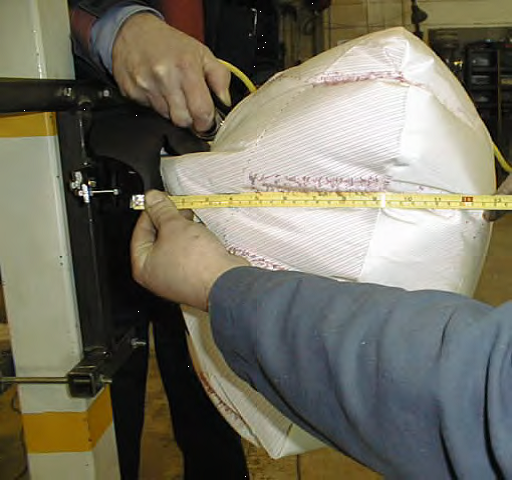
  • First automatic air-bag sensors for automobiles
  • First stop-action video
  • First chemiluminescent “light sticks”
  • Non-nuclear components and testing for the first atomic bomb
  • First plastic bonded explosives
  • First air-to-air guided missile ever used in combat – Sidewinder
  • First successful anti-radiation missile –  Shrike, Predecessor to today’s HARM missile
  • First sea-based ballistic missile intercept
  • First U.S. aircraft rockets
  • First U.S. satellite launch – NOTSNIK
  • First lunar lander and Mars lander subsystems

Warhead and automobile air bag sensor from NAWCWD's Arming the Fleet: Providing Our Warfighters the Decisive Advantage 1943-2011 ISBN 9780160921612Image: ARMING WARHEAD TO DEPLOYING AUTOMOBILE AIR BAGS? In 1994, the Navy needed a means to accurately measure the distance traveled by the missile after launch, a computation necessary for arming the warhead firing device at a safe distance from the launch aircraft. NAWCWD China Lake engineers developed an extremely robust and precise micro-machined miniature accelerometer that was incorporated into several warhead SADs. The innovation proved so valuable, this device was later transitioned into millions of automobile crash-sensor air-bag-initiation systems by major foreign and domestic automobile manufacturers. It is also used for hundreds of other consumer and industrial applications and is marketed internationally. Photo Source: NAWCWD

COMBAT SUPPORT AND WEAPONS DEVELOPMENT

Page 120 Testing and Evaluation from NAWCWD's Arming the Fleet: Providing Our Warfighters the Decisive Advantage 1943-2011 ISBN 9780160921612ATF describes the Weapon Division’s significant role and quick response achievements in every major U.S. crisis from WWII to Iraqi Freedom – from Iwo Jima and Midway to Fallujah and Baghdad. In addition, the book identifies WD’s influence on more than 25 major weapons systems and tells the story about how many of today’s major weapons “in the news” got their start including Trident, Tomahawk, HARM, Standard Missile, and Sidewinder. Remarkably, most of the major technologies ever developed are still in fleet use today in one version or another.

Page_100-Unmanned Systems UxS from NAWCWD's Arming the Fleet: Providing Our Warfighters the Decisive Advantage 1943-2011 ISBN 9780160921612The book further documents the Division as a world leader in guided missiles, advanced weapons and systems, and complex software integration on tactical aircraft, energetic materials and subsystems. In addition, the Division is conducting RDT&E (Research Development Test & Evaluation) on over 25 varied unmanned aerial systems (UAV) which is a top-four strategic thrust area.

UNIQUE RANGES AND ONE-OF-A-KIND FACILITIES

High-tech work is performed at very unique ranges and facilities. Many are one-of-a kind, including:

  • World’s largest x-ray and live-fire facilities for massive Trident size motors
  • World’s largest weapons survivability laboratory with three high velocity airflow systems (HIVAS)
  • World’s largest fuze simulation arena
  • Second largest and fastest supersonic sled track in the world
  • Second largest photovoltaic plant (solar energy) in the DoD
  • Premiere DoD indoor Radar Reflectivity Laboratory
    • Far-field measurement capability covering the widest frequency range of any test facility in the U.S.
    • One of only a few DoD test centers capable of bistatic radar cross section testing
    • One-of-a kind outdoor radar cross-section range
    • One of only two large plasma coating systems (HiTUS) in the U.S.
    • Only U.S. electronic warfare open-air range

China Lake Naval Weapons Test Ranges from NAWCWD's  Arming the Fleet: Providing Our Warfighters the Decisive Advantage 1943-2011 ISBN 9780160921612

Image:Land and Sea testing ranges for NAWCWD China Lake

Other facilities include robotic prototyping, aircraft mock-ups, and one unique geothermal plant that converts natural heat from the earth into electricity, significantly reducing the Center’s total energy costs.

The enormous test ranges at China Lake are larger than the state of Rhode Island and the Sea Range at Point Mugu is expandable to 220,000 square miles.

COST-EFFECTIVE DIRECT WARFIGHTER SUPPORT

Arming the Fleet showcases the accomplishments of a creative and technically ingenious workforce –delivering weapons that work for more than 70 years.

More importantly for this era of tight budgets, ATF also provides an insider’s view as to how your taxpayer dollars are wisely spent in defense of our country. For example, in the 2005 BRAC congressional hearings, programs and capabilities from numerous other bases were transitioned to China Lake due to its extensive expertise and infrastructure. And on June 14, during the 1995 BRAC hearings, Secretary of the Navy John Dalton stated, “China Lake and Point Mugu [rate] number 1 and 2 in military value among all Navy activities.

This expanded third edition of Arming the Fleet is a high-quality publication of 208 pages, with a whopping 216 photos/graphics and over 1,000 indexed items, covering the Division from its founding through 2011. Anyone wanting to learn more about major milestones in U.S. Naval weaponry and technology “then and now” will find this book of great interest – not just “history.”

The legacy continues…

— Wallace T. Martin, Deputy Director, NAWCWD Business Development Office

Back cover from NAWCWD's  Arming the Fleet: Providing Our Warfighters the Decisive Advantage 1943-2011 ISBN 9780160921612

How can you obtain Arming the Fleet: 1943-2011, Providing Our Warfighters the Decisive Advantage?

  • Shop Online: Buy it online, 24/7, 365 days a year on the U.S. Government Online Bookstore website.
  • Order by Phone: Call our GPO Customer Contact Center Monday through Friday, 8 am to 5:30 pm Eastern (except US Federal holidays). From US and Canada, call toll-free 1.866.512.1800. DC or International customers call +1.202.512.1800.
  • Visit our Retail Store: Buy it at GPO’s retail bookstore at 710 North Capitol Street NW, Washington, DC 20401, open Monday–Friday, 9 a.m. to 4 p.m., except Federal holidays, (202) 512-0132.
  • Find it in a Library: Search for it in a Library.

Wallace T. Martin, NAVAIR, author of NAWCWD's  Arming the Fleet: Providing Our Warfighters the Decisive Advantage 1943-2011 ISBN 9780160921612 About the Author and Guest Blogger:  Wallace T. Martin began initial research for Arming The Fleet in 2001, culminating in the first edition in 2004, followed by the second edition in 2008, and the third edition in 2011 – the only version distributed nationwide. The ongoing ATF product line includes the larger publication, a shorter Arming the Fleet Highlights, and a one-page NAWCWD Quick Facts. Since 2000, Martin serves as the Deputy Director, NAWCWD Business Development Office. In addition, since 2004, Martin has served as the lead WD technical writer and site coordinator for the 200-300 page annual Command History, as required by the Chief of Naval Operations. Martin has a passion for telling the WD story providing an insider’s view as to how taxpayers’ dollars are wisely spent in defense of our country. Martin has a B.S. degree in Business Administration – Management from California State University.  


Rebuilding after the floods: FEMA shares lessons learned after Sandy

October 28, 2013

This week marks the one-year anniversary of Superstorm or Hurricane Sandy. The destruction and devastation is still felt by many people on the East Coast as they rebuild and recover from this historic superstorm.

Damaged-homes-Superstorm-Sandy-GazetteImage: In this Oct. 31, 2012 file photo, a view from the air shows the destroyed homes left in the wake of Superstorm Sandy in Seaside Heights, N.J. New Jersey got the brunt of Sandy, which made landfall in the state and killed six people. Photo Credit: Mike Groll, Associated Press

Sandy is only one storm among many that have caused Americans agony in recent years. As recently as last month, catastrophic flooding damaged Colorado, and we never know what is coming in the future – when the next natural disaster will strike.

The Federal Emergency Management Agency (FEMA) is responsible for providing aid to those affected by natural disasters, which includes resources like fact sheets and publications for consumers and local and state governments  on how to prepare for and recover from devastating floods.

Road-damage-Colorado-floods-2013Image: A flood-wrecked road in Colorado, September 16, 2013. Photo credit:  KUSA.

Hazard Mitigation Field Book – Roadways

Hazard-Mitigation-Field-Book_Flooded-Roadways_9780160902031One of the biggest problems immediately after a disaster like Hurricane Sandy is the impact of flooding on the infrastructure, particularly roads, that prevent emergency responders and local officials from getting in to the flooded areas to assess the damage, or construction personnel from getting materials in to rebuild.

Hazard Mitigation Field Book: Roadways focuses on ways for municipalities to lessen the impact of flooding on roadways. This FEMA roadway damage field guide helps state and local governments rapidly assess various flood-caused roadway hazards and identify the best hazard mitigation (HM) solutions for the situation. It also includes case studies and general design guidance to help prevent damage to and around roadways through engineering and construction practices.

The information is very technical— focusing on the various problems that can result from flooded roadways and how to fix, prevent and reduce the impact of the problems. FEMA is encouraging governments to be proactive and repair substandard infrastructure rather than getting stuck in a disaster-rebuild-disaster cycle that is often costly and does not fix the problem. But while the intended audience for this publication is local and state governments, it contains useful information for any concerned citizen. Hazard Mitigation Field Book: Roadways is available both in Spiral-bound Print and as an ePub eBook.

Home Builder’s Guide to Coastal Construction

Home-builders-guide-coastal-construction_9780160914133Home Builder’s Guide to Coastal Construction is comprised of 37 fact sheets broken down by ten topics related to residential coastal construction. The fact sheets are designed with photographs, drawings, charts and diagrams presenting the information in a user-friendly way. FEMA shares best practices and the reasoning behind them in order to improve the performance of buildings subject to flood and wind forces in coastal environments. Many of the fact sheets also include a list of additional resources on the topic.

This guide is a great resource for those who already sustained damage and need advice on how to rebuild while also renovating and improving your existing coastal residence.

Building contractors, realtors and others in the construction industry who work with homes in hurricane or typhoon-prone areas should take special note as Home Builder’s Guide to Coastal Construction includes the newest building codes and recommendations for flood, storm and hurricane resistant construction learned from recent disasters.

[NOTE: For New Jersey residents, here is a Rebuilding After Sandy Fact Sheet about new state building requirements for coastal construction which refers to homes declared “substantially damaged buildings” (see below).]

Other Flood Publications

Answers-to-Questions-about-Substantially-Damaged-Buildings_064-000-00048-9A good companion book to the Home Builder’s Guide is the Answers to Questions About Substantially Damaged Buildings (Paperback) and eBook version which provides information on FEMA regulations and policy on substantial improvement as it applies to damaged structures.

Floods-The-Awesome-Power_9780160814181Floods: The Awesome Power is a consumer guide sold in a package of 25 from NOAA’s National Weather Service that explains flood-related hazards, and suggests life-saving actions you can take.

Prevention is Worth A Gallon of Cure

One year ago, Americans along the East Coast were evacuating and seeking shelter from Hurricane Sandy, and one month ago Coloradoans were under water. With each natural disaster there are lessons learned that can hopefully make a difference in preventing tragedy for when the next one strikes. Whether you live on the Atlantic, Pacific or Gulf Coast, or any flood-prone area, these valuable publications can help communities and homeowners rebuild and hopefully lessen the impact for when the damage is done.

HOW DO I OBTAIN THESE FLOOD-RELATED PUBLICATIONS?

You can find these Federal flood and flood control publications through any of these methods:

  • Order by Phone: Call our Customer Contact Center Monday through Friday, 8 am to 5:30 pm Eastern (except US Federal holidays). From US and Canada, call toll-free 1.866.512.1800. DC or International customers call +1.202.512.1800.
  • Visit our Retail Store: Buy a copy of any print editions from this collection at GPO’s retail bookstore at 710 North Capitol Street NW, Washington, DC 20401, open Monday–Friday, 9 a.m. to 4 p.m., except Federal holidays, Call (202) 512-0132 for information or to arrange in-store pick-up.
  • Go to a Library: GPO provides copies of these publications to Federal Depository libraries worldwide. Find them in a library near you.

About the Author: Our guest blogger is Emma Wojtowicz, Public Relations Specialist in GPO’s Office of Public Affairs. Additional content provided by Government Book Talk Editor: Michele Bartram, Promotions & eCommerce Manager for GPO’s Publication and Information Sales Division.


Think you know pink? Increase your awareness of breast cancer

October 22, 2013

October-Breast-Cancer-Awareness-MonthOctober, the annual observance of National Breast Cancer Awareness Month, is a time for reflection on the pervasiveness of the disease.

In the general US population, one in eight women will have breast cancer at some point in their lives and it is the most common cancer in American women.

1-in-8-get-Breast-Cancer

But breast cancer is not only confined to women. In 2009, 211,731 women and 2,001 men in the United States were diagnosed with breast cancer and 40,676 women and 400 men died from it.

Even if you believe in and support the cause, you can still be unaware how widespread breast cancer is, and what you can do– beyond wearing pink– to inform yourself and others to reduce your risks and those of your loved ones.

Breast-Cancer-Knowing-Is-Not-Enough

Federal Government Breast Cancer Research and Awareness

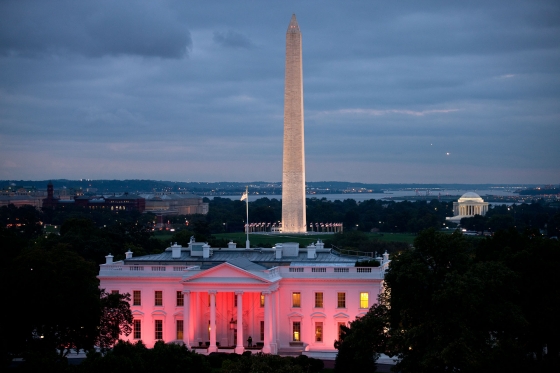
The Federal government is doing a great deal to increase public awareness and disease eradication: everything from lighting the façade of the White House with pink floodlights during the month’s observance to spending $602.7 million on research at the National Cancer Institute in 2012 and funding a number of stellar breast cancer publications from the Department of Health & Human Services for both consumers and health care professionals. Learning more can help you do your part to be more aware and give yourself and your family and friends a better chance at being healthy.

white-house-breast-cancer-monthImage above: The North Portico exterior of the White House is illuminated pink, Oct. 3, 2011, in honor of Breast Cancer Awareness Month. Source: Official White House Photo by Lawrence Jackson

Breast Cancer Risk Factors

The Healthy Woman: A Complete Guide for All Ages (ePub eBook)Many circumstances affect one’s chances for getting breast cancer. Some factors can be controlled; others cannot. In The Healthy Woman: A Complete Guide for All Ages (ePub eBook), we learn that the controllable risk factors include environment (exposure to second-hand smoke, chemicals, radon, etc.) and personal history (diet, UV exposure, use of alcohol, tobacco, drugs or some medications such as hormones, etc.), while family history (genetics) and the age at which a woman enters menopause are factors beyond a woman’s control.

Effects of Ethnic and Cultural Differences

Breast Cancer: Black Women Have Higher Death Rates From Breast Cancer Than Other Women  from Vital Signs 2011Statistical evidence shows that not all women, especially women of color, do enough, or can get enough care, to protect themselves from breast cancer. Reading Breast Cancer: Black Women Have Higher Death Rates From Breast Cancer Than Other Women can make a reader upset and more determined to do his or her best to prevent breast cancer. Breast cancer is the most common cause of death from cancer among Hispanic women, and the second most common cause of death from cancer among women from all other races.

According to this recent statistical report, black women are 40% more likely to die from breast cancer than white women, compared to women of other races/  ethnicities. New changes enacted since the report was issued late last year, such as implementation of open season starting under the Affordable Care Act (ACA) [Learn more about the ACA in our Government Book Talk post “Everything You Should Know About The Health Care Law], may improve the statistic, since the ACA will provide 30 million previously uninsured Americans with health care if they go get it. These changes might reduce the risk to women’s death rates from breast cancer in the future as health care becomes more available to all.

Preventing Breast Cancer

breast_cancer_infographicFor a woman to give herself the best possible chance of avoiding breast cancer, self-care is critical. According to the CDC’s infographic Protect Yourself from Breast Cancer, women can take steps to help reduce their risk for breast cancer by remembering to:

  • get at least four hours of exercise per week,
  • keep a healthy weight,
  • limit alcoholic drinks to one per day,
  • breastfeed their infants,
  • bear their children before age 35,
  • get regular mammograms,
  • perform monthly self-exams,
  • and/or make careful decisions about taking hormone replacement therapy (HRT).

In addition to having access to health care, women can improve their chances of avoiding and/or surviving breast cancer by improving their self-care, as mentioned. For more tips on getting this care, and getting the insurance and treatment to help with the care, women and their families can consult a wide variety of Federal government publications, including

Breast Cancer Screening Options

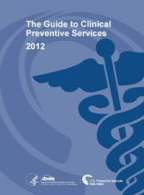
 The Guide to Clinical Preventive Services 2012: Recommendations of the U.S. Prev The Guide to Clinical Preventive Services 2012: Recommendations of the U.S. Preventive Services Task ForceThe Guide to Clinical Preventive Services 2012 provides the latest recommendations for who should get a mammogram based on various risk factors including ethnic background and family history of breast cancer, when and how to do it and at what age. It also goes into the pros and cons of various alternative forms of breast cancer screening from the most reliable film mammography to digital mammography, MRIs, Clinical breast examination and breast self-examination.

Understanding Breast Changes: a Health Guide for WomenUnderstanding Breast Changes covers a discussion of the normal breast changes over the course of a woman’s lifetime, how to get a mammogram and understand the results, how to get the support you need, a glossary and a list of resources for more research. The Healthy Woman offers more general information on getting the right kind of health care for women. The writers recognize symptoms relating to particular diseases impacting a woman’s health, and they discuss various available treatment options for those diseases.

Breast Cancer Treatment Options

Surgery Choices for Women with DCIS or Breast CancerWhen women do find that they need treatment, particularly surgery, for breast cancer or ductal carcinoma in situ (DCIS), they need to know as much about their proposed procedure as possible. An informed patient can much better participate in her own recovery, and give needed information to her surgeon, as well as provide herself with the knowledge of what is normal and what symptoms require follow-up. Surgery Choices for Women with DCIS or Breast Cancer covers those topics, and is a good starting point for a woman facing surgery for either of those conditions, when she is also consulting her care provider, surgeon, friends and family.

These highlights from these informative books may have made you realize that it’s time for you to improve your own self-care, or urge the women in your life to improve theirs. If that is so, then the best place to start is with the some public health research. You can find out more by reading the publications listed below.

FOR THE PUBLIC:

How can I obtain these breast cancer publications?

1)    The Healthy Woman: a Complete Guide for All Ages [eBook] and The Guide to Clinical Preventive Services 2012: Recommendations of the U.S. Preventive Services Task Force

  • Shop Online: You can purchase these two publications from the U.S. Government Online Bookstore at http://bookstore.gpo.gov by clicking on the links above in this blog post or shopping our collection under our Cancer category.
  • Order by Phone: Call our Customer Contact Center Monday through Friday, 8 am to 5:30 pm Eastern (except US Federal holidays). From US and Canada, call toll-free 1.866.512.1800. DC or International customers call +1.202.512.1800.
  • Visit our Retail Store: Buy a copy of any print editions from this collection at GPO’s retail bookstore at 710 North Capitol Street NW, Washington, DC 20401, open Monday–Friday, 9 a.m. to 4 p.m., except Federal holidays, Call (202) 512-0132 for information or to arrange in-store pick-up.

2)     Protect Yourself from Breast Cancer [infographic], Breast Cancer: Black Women Have Higher Death Rates From Breast Cancer Than Other Women, Understanding Breast Changes: a Health Guide for Women, and Surgery Choices for Women with DCIS or Breast Cancer.

FOR LIBRARIANS: There are records available for the electronic versions of all these works in the Catalog of Government Publications, and you can buy your own copy of  The Healthy Woman: a Complete Guide for All Ages [eBook and The Guide to Clinical Preventive Services 2012: Recommendations of the U.S. Preventive Services Task Force in the GPO Online Bookstore.

About the author(s): Adapted by Government Book Talk Editor-in-Chief and GPO Promotions & Ecommerce Manager, Michele Bartram, from an original blog post by Jennifer K. Davis from GPO’s Library Services & Content Management Division that supports the Federal Depository Libraries Program (FDLP).


Why Americans Should Care about Long-Term Care

September 27, 2013

Commission on Long-Term Care Final Report from September 2013 available from GPO.govThe Commission on Long-Term Care has formally released its Final Report to Congress in which it endorsed a package of 28 recommendations “for addressing our nation’s challenges with delivering and financing long-term care services and supports (LTSS).” Today it is also available from GPO.

Why Long Term Care is an Issue

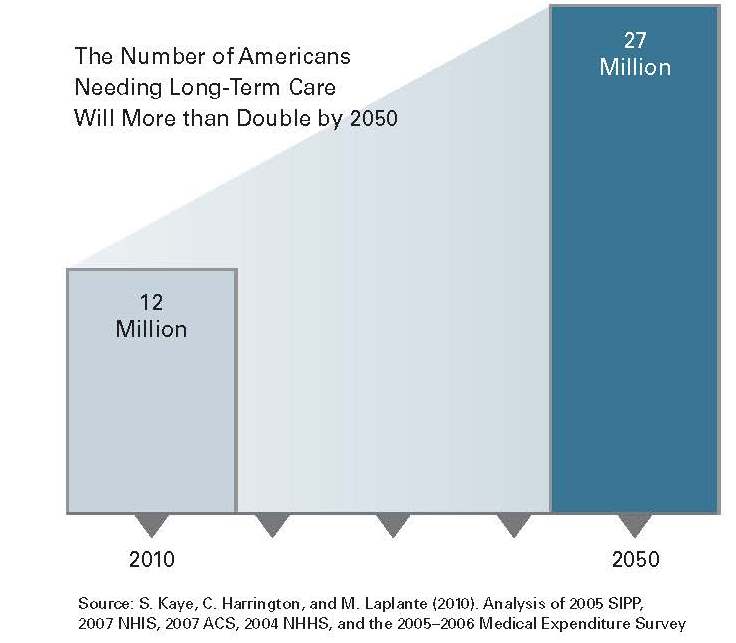
With U.S. Baby Boomers entering retirement age, every day more than 10,000 Americans reach the age of 65. In five years, over 50% of the U.S. population will be over the age of 50. As Americans live longer, more of us will need long-term care either with at-home services or nursing homes or other extended care facilities. The estimate is that over 12 million Americans need LTSS today, and 27 million will need long-term care by 2050 (see image from the Report below).

Americans-Needing-Long-Term-Care-by-2050Almost half (49%) of today’s 65 year-olds will require some kind of LTSS within 5 years, according to the report (See image below).

How-Soon-65-year-olds-will-need-Long-Term-Care from Commission on Long-term Care Final Report 2013

Finding and paying for quality long-term care is a growing challenge for most Americans, as the Commission’s report clearly demonstrates, particularly for frail older adults or people with disabilities and middle class families who do not qualify today for Government assistance like Medicaid. Likewise it is a concern for local, state and Federal lawmakers, since the report says that many people lack the necessary savings to pay for the high cost of this care along with regular health care costs, and that Medicare and Medicaid alone cannot cover the growing needs. (See our blog post Everything You Should Know About The Health Care Law for information about the new Affordable Care Act.)

How expensive is long-term care today? The latest report from Genworth Financial estimates that middle class families would have to pay on average $18 per hour for homemaker services, $19 an hour for home healthcare aides, $3,405 a month for assisted living facilities, and around $230 a day for a room in a private nursing home. The Commission’s report calculates that 25% of today’s 65 year-olds can expect to pay from $10,000 to over $100,000 or more on long-term care services in the future! (See image below).

How-Much-65-year-olds-will-pay-for-Long-Term-Care from Commission on Long-Term Care Final Report September 2013What is the Commission on Long-Term Care?

The Commission on Long-Term Care was established under Section 643 of the American Taxpayer Relief Act of 2012 (P.L. 112-240), signed into law January 2, 2013, to be comprised of fifteen commissioners. Three members each were appointed by the President of the United States, the majority leader of the Senate, the minority leader of the Senate, the Speaker of the House of Representatives, and the minority leader of the House of Representatives.

The statute directs the Commission to:

“…develop a plan for the establishment, implementation, and financing of a comprehensive, coordinated, and high-quality system that ensures the availability of long-term services and supports for individuals in need of such services and supports, including elderly individuals, individuals with substantial cognitive or functional limitations, other individuals who require assistance to perform activities of daily living, and individuals desiring to plan for future long-term care needs.”

The statute further directed the Commission within 6 months of the appointment of Commissioners (by September 12, 2013) to:

“…vote on a comprehensive and detailed report based on the long-term care plan… [described above]… that contains any recommendations or proposals for legislative or administrative action as the Commission deems appropriate, including proposed legislative language to carry out the recommendations or proposals.”

What’s in the Report?

In the opening letter of the report addressed to the President and Congressional leaders, the Commissioners broadly explain the Report’s contents:

“Working on a bipartisan basis, the Commission adopted 28 specific public policy recommendations in service delivery, workforce, and financing that set a strong path forward for transforming systems of care to best meet people’s needs while appreciating today’s fiscal realities.”

Among the 28 measures in the report, the recommendations included:

  • Expanding use of insurance policies that combine life insurance and annuities with long-term care insurance.
  • Using a Partnership for Long-Term Care in which arrangements are made between state and private insurers to enable long-term care insurance policyholders to retain assets equal to the amount of benefits paid under their policy and still qualify for Medicaid.
  • Increasing education efforts to enhance public knowledge about long-term care options, especially given “the limitations of Medicare and Medicaid in funding [long-term care services]”
  • Recognizing caregivers as members of “care teams,” including information about caregivers in patient records, assessing caregivers’ need for support, and making services like respite care more widely available.

With five dissenting members, the Commission explains that it included “two approaches” in its Final Report about how to finance a long-term care system (LTSS) in the United States. To find out more, you should read this timely and important report.

How can you obtain a copy of this Long-Term Care report?

1) Buy a printed copy

  • Shop our Online Bookstore website: You may purchase a copy of this report online 24/7 on the U.S. Government Bookstore site.
  • Visit our Retail Store: Printed copies of this report may also be purchased from GPO’s retail bookstore at 710 North Capitol Street NW, Washington, DC 20401. Call (202) 512-0132 for information or to arrange in-store pick-up. Hours are Monday through Friday, 9 a.m. to 4 p.m., except Federal holidays.

2) View or download a PDF from GPO’s official Federal documents database, FDsys:

Download the Commission on Long-Term Care, Report to the Congress [PDF 1798 KB]

About the Author: Michele Bartram is Promotions & eCommerce Manager for GPO’s Publication and Information Sales Division and Government Book Talk Editor.


Relive the first year of the Obama Presidency

September 24, 2013

Portrait of the 44th President of the United States Barack Obama As we experience the first year of President Obama’s second term as the 44th President of the United States, take a look back on what was going on at this time during the first year of his first term as president with the Public Papers of the Presidents, Barack Obama 2009, Book 2. This volume covers the public messages and statements made by President Obama during the second half of his first year in office from July to December 2009.

Public Papers of the Presidents of the United States, Barack Obama, 2009, Book 2, July 1 to December 31, 2009.  ISBN: 9780160860867 and GPO Stock #069-000-00185-8Some highlights of those six months include the confirmation of Sonia Sotomayor as President Obama’s first nomination to the Supreme Court, the shaping of the health care law (Read our blog post: “Everything You Should Know About The Health Care Law“), and the continuing efforts to create jobs and rebuild the U.S. economy. The book also includes a section of official color photographs from events during the time period.

This book is part of the Public Papers of the Presidents series which consists of public writings, addresses and remarks made by the President and is the second volume of the Barack Obama Public Papers collection, which includes an eBook version of Book 1. (Read about the first volume in our blog post: “The First Collection of President Obama’s Public Papers.”)

As in other Public Papers volumes, the appendices provide listings of:

  • A digest of President Obama’s daily schedule and meetings, when announced, and other items of general interest issued by the White House Office of the Press Secretary;
  • President Obama’s nominations submitted to the Senate;
  • A checklist of materials released by the Office of the Press Secretary that are not printed full-text in the book; and
  • A table of Proclamations, Executive Orders, and other Presidential documents released by the Office of the Press Secretary and published in the Federal Register.

Public Papers of the Presidents series

The entire Public Papers of the Presidents series is published by the National Archives’ Office of the Federal Register (OFR) and includes two volumes per year, each volume covering a six-month period of the presidency, with the OFR checking remarks against a recording and signed documents against the original to ensure accuracy. The series started with President Hoover and continues to President Obama, with the exception of President Roosevelt who chose to have his papers published privately.

To learn more about the process of compiling the Public Papers of the Presidents, watch this video below on the production of President Obama’s first volume at the Government Printing Office (GPO):

Video Government Printing Office The Making-of-Barack-Obama-Public-Papers-of-the-President

Image: Excerpted from the video of the Making of the Public Papers of the President. Depicts President Obama in the Oval Office being presented with the first volume in his Public Papers printed by the Government Printing Office in April 2011. Pictured from left to right are: current Public Printer of the United States, Davita Vance-Cooks; previous Public Printer, William J. Boarman; President Barack Obama; Archivist of the United States, David S. Ferriero, and Director of the Federal Register, Ray Mosley.

The Public Papers of the Presidents series is also available on GPO’s Federal Digital System (FDsys). The public can digitally access the digitized volumes starting in 1991 with President George H. W. Bush through President Barack Obama, 2009 from this page on FDsys.

GPO also makes the Public Papers of the Presidents series available in print through the agency’s online bookstore with volumes back to Herbert Hoover. The public can browse through the various volumes from different presidents on the Public Papers of the Presidents collection page in the Presidential History collection under the US & Military History category.

How do I obtain a copy of the Public Papers of the Presidents, Barack Obama 2009, Book 2?

1) Buy a printed copy

  • Shop Online: You can purchase a printed copy of Public Papers of the Presidents, Barack Obama 2009, Book 2 or any of the previous volume(s) of the Obama presidency by shopping the Barack Obama Public Papers collection on the U.S. Government Online Bookstore.
  • Order by Phone: Call our Customer Contact Center Monday through Friday, 8 am to 5:30 pm Eastern (except US Federal holidays). From US and Canada, call toll-free 1.866.512.1800. DC or International customers call +1.202.512.1800.
  • Visit our Retail Store: Buy a printed copy at GPO’s retail bookstore at 710 North Capitol Street NW, Washington, DC 20401, open Monday–Friday, 9 a.m. to 4 p.m., except Federal holidays, Call (202) 512-0132 for information or to arrange in-store pick-up.
  • Find it in a Library:  GPO provides catalog records to Federal Depository libraries worldwide. Find this publication in a federal depository library.

2) View or download a PDF from GPO’s official Federal documents database, FDsys:

About the Author: Our guest blogger is Emma Wojtowicz, Public Relations Specialist in GPO’s Office of Public Affairs. Additional content provided by Government Book Talk Editor: Michele Bartram, Promotions & eCommerce Manager for GPO’s Publication and Information Sales Division.


Everything You Should Know About The Health Care Law

September 24, 2013

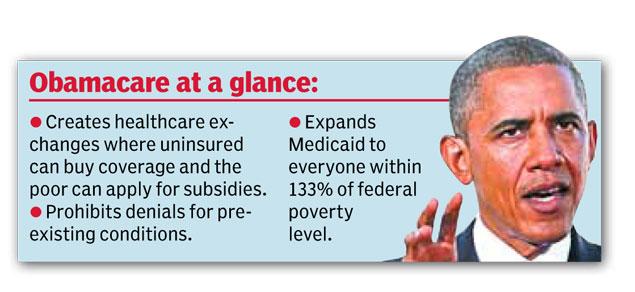
Inside-the-affordable-care-act or Obamacare. In one week at the beginning of fiscal year 2014 on October 1, 2013, and at the start of the calendar year on January 1, 2014, the provisions of the new health care law go into effect. Image courtesy: Charlotte Area News.

The health care law, known officially as the Affordable Care Act (ACA) or  more commonly as “Obamacare” has two parts: the Patient Protection and Affordable Care Act (PPACA) (Public Law 111–148), and the Health Care and Education Reconciliation Act (Public Law 111–152 which was enacted to amend the PPACA. It was passed by Congress and signed into law by President Barack Obama on March 30, 2010.

Since that time, in the span of 42 months, the health care law has been upheld by the Supreme Court and some early provisions have already been implemented. Upon conception of the law, 2014 was marked as the year the most significant provisions of the law would go into effect.

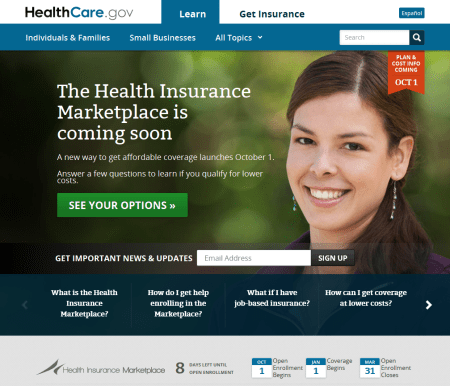
Find information about these marketplaces for Individuals and Families or Small Businesses on the U.S. Centers for Medicare & Medicaid Services Healthcare Marketplace website, https://www.healthcare.gov/.

Image: U.S. Centers for Medicare & Medicaid Services Healthcare Marketplace website, https://www.healthcare.gov/

A week from today on October 1, 2013, open enrollment for the health insurance marketplaces begins and remains open for six months closing on March 31, 2014. Find information about these marketplaces for Individuals and Families or Small Businesses on the U.S. Centers for Medicare & Medicaid Services Healthcare Marketplace website,  https://www.healthcare.gov/. There are links to healthcare marketplace information in other languages as well:

The high profile provisions that go into effect on January 1, 2014, include:

  • Coverage begins if you signed up through the health insurance marketplace
  • Protection for individuals with pre-existing conditions
  • Elimination of annual limits on insurance coverage
  • Tax credits to help pay for costs if you sign up with a health insurance marketplace
  • Expanded access to Medicaid, subject to the state you live in
  • Individual mandate if you choose not to buy health insurance

obamacare-at-a-glance-ny-daily-news

Image courtesy: New York Daily News.

This is a basic overview of the law. To fully understand the details requires further reading, and GPO is here to help. GPO makes the authentic, published version of the Patient Protection and Affordable Care Act and the Health Care and Education Reconciliation Act available to the public in print through the agency’s Online Bookstore and digitally through GPO’s Federal Digital System (FDsys). GPO also works with 1,200 libraries nationwide through the Federal Depository Library Program to have resources on the health care law available to public.

How do I obtain a copy of this Affordable Care Act (ACA)?

1) Buy a printed copy

  • Shop Online: You can purchase a printed copy of the Health Care Act containing the Patient Protection and Affordable Care Act and the Health Care and Education Reconciliation Act of 2010 from the U.S. Government Online Bookstore or by shopping our Public Health Policy & Healthcare Laws collection under our Health & Benefits category.
  • Order by Phone: Call our Customer Contact Center Monday through Friday, 8 am to 5:30 pm Eastern (except US Federal holidays). From US and Canada, call toll-free 1.866.512.1800. DC or International customers call +1.202.512.1800.
  • Visit our Retail Store: Buy a printed copy at GPO’s retail bookstore at 710 North Capitol Street NW, Washington, DC 20401, open Monday–Friday, 9 a.m. to 4 p.m., except Federal holidays, Call (202) 512-0132 for information or to arrange in-store pick-up.
  • Find it in a Library: Find this in a federal depository library.

2) View or download a PDF from GPO’s official Federal documents database, FDsys:

About the Author: Our guest blogger is Emma Wojtowicz, Public Relations Specialist in GPO’s Office of Public Affairs. Additional content provided by Government Book Talk Editor: Michele Bartram, Promotions & eCommerce Manager for GPO’s Publication and Information Sales Division.


Happy 66th -or 106th- Birthday, US Air Force

September 18, 2013

According to the Department of Defense’s website, the United States Air Force is 66 years ago today “that the National Security Act of 1947 turned what was then known as the Army Air Corps into the United States Department of the Air Force. A strategic, tactical and defensive force for the skies, the Air Force has become a vital role in our country’s military power.

USAF-Birthday-Video

Watch this US Air Force birthday video on YouTube.

However, if you add in the years since the Army Air Corps first flew in 1907, then the Air Force’s operations have really been going strong for 106 years today. It all depends on how you count it.

Therefore, it is fitting to look at the entirety of military aviation when looking at the US Air Force’s illustrious history.

A number of excellent publications have come out recently, both in print and eBooks, for the US Air Force, Army Air Corps and military aviation in general.

The ones we most recommend for understanding the evolution of today’s US Air Force include:

Overall History and Mission

008-070-00727-4The best two books covering the overall history and mission of what is now the United States Air Force are A Concise History of the United States Air Force and its recently released EPUB eBook version, as well as the extremely thought-provoking Air Force Roles and Missions: A History (also recently released as an eBook) which traces the evolution of the Air Force’s role and missions as well as the conflicts with other branches of the military over these definitions.

Early Beginnings through World War 1

Are you more interested in the earliest days of aviation when the Army first bought one of the Wright Brothers’ planes and its “daring young men in those flying machines” began to determine how airpower could be used for military purposes? Then you should read Logbook of the Signal Corps No. 1: The United States Army’s First Airplane in paperback or as a new eBook, which recounts the experiences of Benjamin D. Foulois, the pioneering, self-taught pilot of “Signal Corps No. 1”, the very first airplane of the United States Army Signal Corps.

HAP: Henry H. Arnold, Military Aviator, Shown here as Army Flight Instructor in College Park, Maryland. ISBN: 0-16-049071-5And don’t miss HAP: Henry H. Arnold, Military Aviator (Paperback) or the new EPUB eBook edition which tells the story of beloved Henry “Hap” Arnold, one of the first Army flight instructors and daring pilot. (See his image to the right as an Army Flight Instructor. Image courtesy: College Park Aviation Museum.)

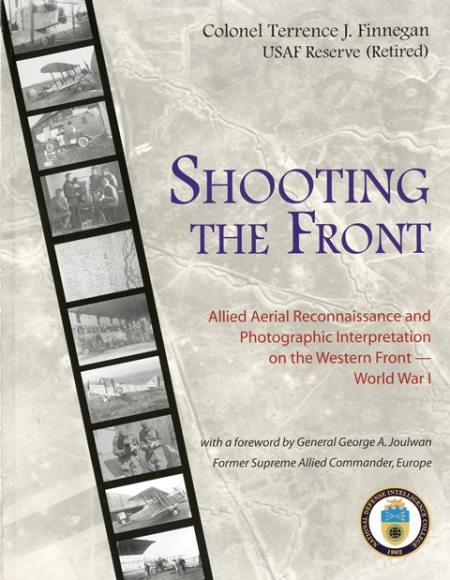
Another very popular publication tells the story of air espionage during World War 1: Shooting the Front: Allied Aerial Reconnaissance and Photographic Interpretation on the Western Front – World War I.

Shooting the Front: Allied Aerial Reconnaissance and Photographic Interpretation on the Western Front - World War I (Paperbound)

World War 2

World War II is when it is widely acknowledged that military aviation came into its own. Toward Independence: The Emergence of the United States Air Force, 1945-1947 tells of the rapid evolution in use of airpower in the period leading up to its formation as a separate entity.

Korean War

By the Korean War, the US Air Force had become its own branch of the United States Armed Forces. Several publications chronicle the involvement of the newly formed USAF during this conflict, including Within Limits: The United States Air Force and the Korean War, Coalition Air Warfare in the Korean War, 1950 1953, and Silver Wings, Golden Valor: The USAF Remembers Korea which includes reminiscences and perspectives of Korean War Air Force veterans and historians.

Vietnam War

War Too Long: The United States Air Force in Southeast Asia 1961-1975 ISBN: 9780160613692Over 50 years later, Americans are still wrestling with the lessons of Vietnam. So, too, is the Air Force in these excellent USAF publications War Too Long: The United States Air Force in Southeast Asia 1961-1975  and War in South Vietnam: The Years of the Offensive, 1965-1968, as well as this Army digital publication, Interservice Rivalry and Airpower in the Vietnam War (eBook).

Cold War and Space Race

When the Soviets launched Sputnik, the space race was subsequently kicked off with the United States. The Air Force role was critical during the Cold War and in both in helping start our space exploration and ongoing support through to today in support of NASA. Read Early Cold War Overflights, 1950-1956 to understand the beginning of the espionage flights, and pick up a copy of the United States Air Force in Space, 1945 to the Twenty-First Century which covers the Air Force’s involvement in space exploration.

Gulf War to the Present

None of us can forget the images of bombs dropping during the Gulf War, the tale of which is told in Decisive Force: Strategic Bombing in the Gulf War.

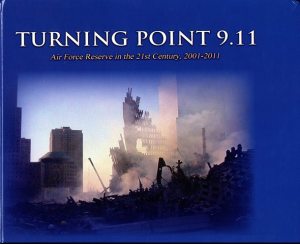
Turning Point 9.11: Air Force Reserve in the 21st Century, 2001-2011  ISBN: 9780160914485And anyone with family in or who themselves are in the National Guard or a military reservist knows how the Gulf Wars and Afghanistan have changed the role of these personnel from backup to active participants. One of the best books we’ve read on the subject is the excellent Turning Point 9.11: Air Force Reserve in the 21st Century, 2001-2011 which chronicles these stark changes in the Air Force Reserve since the terrorist attacks on 9.11.2001.

Air Force on TV and in the Movies

Fans of the movie “War Games” will know about NORAD. Learn the true story behind this important homeland airspace defense organization in Guarding What You Value Most: North American Aerospace Defense Command Celebrating 50 Years and a new EPUB eBook version. Includes the heart-warming story of NORAD’s Christmas Eve Santa Tracker. (Read about this in our blog post Tracking “Big Red”: NORAD’s Secret Santa Mission [UPDATED].)

Fans of the TV show “JAG” Will love to discover the real history of this Air Force department in First 50 Years: United States Air Force Judge Advocate General’s Department.

Humanitarian Operations

Wings of Hope: The United States Air Force and Humanitarian Airlift OperationsLike the other branches of the US military, the US Air Force plays an important role in humanitarian operations, both here at home and worldwide. This publication—Wings of Hope: The United States Air Force and Humanitarian Airlift Operations—tells the overall story of various airlift operations. While it sounds like the plot of a disaster movie, the Ash Warriors (paperback) and its EPUB eBook version recounts the true story of the “Ash Warriors,” those Air Force men and women who carried out their mission in the face of an incredible series of natural disasters, including volcanic eruption, flood, typhoons, and earthquakes, all of which plagued Clark Air Base in the Philippines and the surrounding areas during June and July 1991. And the horrendous Hurricane Katrina brought out the best in the Air Force’s Air Education and Training Command, whose role is described in Operation Dragon Comeback: Air Education and Training Command’s Response to Hurricane Katrina.

“Blue Sky” Future

So join us in wishing a very happy 66th (or 106th) birthday to our very own United States Air Force. May there be blue skies in its future!

How can I obtain these Air Force History publications?

  • Shop Online: You can purchase these publications from the U.S. Government Online Bookstore at http://bookstore.gpo.gov, by clicking on the links above in this blog post or shopping our United States Air Force (USAF) History collection under our US & Military History category.
  • Order by Phone: Call our Customer Contact Center Monday through Friday, 8 am to 5:30 pm Eastern (except US Federal holidays). From US and Canada, call toll-free 1.866.512.1800. DC or International customers call +1.202.512.1800.
  • Visit our Retail Store: Buy a copy of print editions from this collection at GPO’s retail bookstore at 710 North Capitol Street NW, Washington, DC 20401, open Monday–Friday, 9 a.m. to 4 p.m., except Federal holidays, Call (202) 512-0132 for information or to arrange in-store pick-up.
  • Find them in a Library: Find these publications in a federal depository library.

About the Author: Government Book Talk Editor Michele Bartram is Promotions Manager for GPO’s Publication and Information Sales Division in Washington, DC, and is responsible for online and offline marketing of the US Government Online Bookstore (http://bookstore.gpo.gov) and promoting Federal government content to the public.


The Constitution Annotated: The Pursuit of App-iness

September 17, 2013

follow-the-founding-fathers-david-bowman_computerIn preparing for this Constitution Day blog post, not only did I retake the civics quiz from last year’s Constitution Day post (see Quiz: Are you smarter than an 8th grade Civics student?), I also scrolled through my tablet last night, reading the Preamble to the Constitution and looking up related quotes. Then it occurred to me: if Founding Father George Washington had been alive today, would he have been a PC or an Apple guy? I’m betting our pragmatic First President would be a PC guy. I’m pretty sure innovator Thomas Jefferson would have been a stylish iPad man, and Benjamin Franklin, inventor of the bifocals, would probably be sporting Google Glasses now and tinkering with them.

Image: Founding Fathers Thomas Jefferson, Benjamin Franklin, George Washington. Original Illustration by David Bowman from his book “What Would the Founding Fathers Think?”

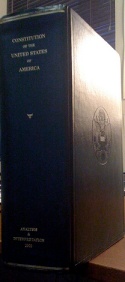
constitution-annotated-printWhat is clear is that our Founding Fathers were strategic thinkers who realized that a fully functioning republic needed a clear but flexible code of law that evolved with the Nation. Thus, they wrote the Constitution of the United States, which has stood the test of time with over two centuries of amendments and interpretations by all branches of the U.S. Federal Government.

CONAN for the Librarian (and Lawyers)

Since 1913, the Senate has directed that a publication be issued summarizing the current state of the Constitution to date, with all the amendments and the official interpretations, with the analysis today provided by the Library of Congress’ Congressional Research Service. This publication is called The Constitution of the United States of America, Analysis and Interpretation, popularly known as the Constitution Annotated or “CONAN” among the real insiders.

Constitution-of-the-US-Pocket-GuideIn addition, many Americans, including Members of Congress, buy a pocket print edition of the Constitution and Declaration of Independence to carry around with them at all times. (Click on image to the left.)

Constitution Goes Mobile and Online

This year marks the 100th anniversary of the Constitution Annotated publication, and to celebrate it and Constitution Day, the Government Printing Office (GPO) not only issued the Centennial Edition in print, but has also worked with the Senate Committee on Rules and Administration and the Library of Congress to develop and launch both a new mobile app as well as a web publication that make analysis and interpretation of constitutional case law by Library experts accessible for free to anyone with a computer or mobile device.

The new resources, which include analysis of Supreme Court cases through June 26, 2013, will be updated multiple times each year as new court decisions are issued.  Legal professionals, teachers, students and anyone researching the constitutional implications of a particular topic can easily locate constitutional amendments, federal and state laws that were held unconstitutional, and tables of recent cases with corresponding topics and constitutional implications.

The new app and improved web publication will make the nearly 3,000-page “Constitution Annotated” more accessible to more people and enable updates of new case analysis three or four times each year.

Public Printer Davita Vance-Cooks said,

“Through this collaborative project, the Library of Congress and GPO are providing the public with timely access to an enhanced, authenticated version of the “Constitution Annotated” through GPO’s Federal Digital System. This is another example of how GPO works with Congress, the Library and other agencies to meet the information needs of the American people in the digital age.”

Keeping our “Complex Machinery” in Working Order

On May 19, 1821, years after the Constitution was adopted, John Adams wrote in a letter to Thomas Jefferson that:

“A free government is a complicated piece of machinery, the nice and exact adjustment of whose springs, wheels, and weights, is not yet well comprehended by the artists of the age, and still less by the people.”

Even though our Founding Fathers could not have envisioned a digital future complete with the Internet and smartphones, the framework they put in place has been able to roll with the times. Americans know that our system is indeed a “complicated piece of machinery,” with our laws serving as the user manual, but tools like the Constitution Annotated– in print or now online or on your mobile device– now exist to help keep our machinery of democracy well oiled.

George-Washingtons-Annotated-Copy-of-a-Draft-of-the-U.S.-ConstitutionImage: Even George Washington annotated his copy of the Constitution! (seen left). Source: National Archives

How can I obtain The Constitution Annotated?

1) Buy the Print Edition of The Constitution of the United States of America, Analysis and Interpretation, Centennial Edition

2) Mobile app version of the Constitution Annotated

  • For Apple iOS Devices: Download the new Constitution Annotated app for iOS devices for free from Apple’s iTunes Store or via this direct link: http://beta.congress.gov/constitution-annotated/.
  • ·        For Android Devices: An Android version of this app is under development.

3) Constitution Annotated web publication on FDsys.gov

The Constitution Annotated web publication will be available on GPO’s Federal Digital System (FDsys) www.fdsys.gov as a digitally-signed, searchable PDF that includes a linked table of contents, a linked table of cases, a linked index and GPO’s Seal of Authenticity on every page.

The new Constitution Annotated and a suite of constitutional resources can be viewed at http://beta.congress.gov/constitution-annotated/. The page features links to the app stores, an interactive table listing recent cases of high interest, a bibliography of Constitution-related primary documents in American history and tips for searching the Constitution Annotated on GPO’s website at www.gpo.gov/constitutionannotated.

About the Author: Government Book Talk Editor Michele Bartram is Promotions Manager for GPO’s Publication and Information Sales Division in Washington, DC, and is responsible for online and offline marketing of the US Government Online Bookstore (http://bookstore.gpo.gov) and promoting Federal government content to the public.


September 11 Tales of Heroes and Tough Lessons

September 11, 2013

9-11 Decade of Remembrance Twin Towers and Pentagon Logo designed by David McKenzie at the Government Printing OfficeThere are certain moments and events that are etched in our national consciousness. Ask any American who was alive in the 60’s where he or she was when John F. Kennedy or Martin Luther King was assassinated and you will hear a stirring personal story. For our generation, it was September 11, 2001.

Image: September 11 Decade of Remembrance logo with World Trade Center Twin Towers surrounded by a figure representing the Pentagon. Created by David McKenzie with the Government Printing Office for the U.S. Government Bookstore.

I was right across from the Twin Towers twelve years ago today, getting ready to board a ferry for my daily commute from New Jersey across the Hudson River into Manhattan, when I saw the second plane hit the World Trade Center right across from me. So, too, I cried with a group of strangers as we stood on the ferry platform and watched in horror as the first tower fall, saw the dust cloud rise and felt the earth—and the world—tremble.

America and Americans have changed since that day… twelve years ago today. We have since heard stirring stories of heroes and sacrifice, and learned many grim lessons that are still affecting both policy and people today.

Many of these stories of heroism, missed opportunities, and resulting actions have been painstakingly and faithfully chronicled by a wide array of Federal agencies, ensuring the sacrifices and lessons are not forgotten.

Responding to the Tragedies

Both in New York and the Pentagon in Washington, DC, we saw how first responders and medical personnel rushed to save lives. These excellent publications tell the stories of the heroes from that day:

  • 008-000-01049-8Pentagon 9/11 (10th Anniversary Edition) (Paperback) includes a foreword by Secretary of Defense Leon Panetta and provides the most comprehensive account available of the 9/11 attack on the Pentagon and aftermath, including unprecedented details on the impact on the Pentagon building and personnel and the scope of the rescue, recovery, and care-giving effort.
  • 008-000-01048-0Attack on the Pentagon: The Medical Response to 9/11 not only tells the personal stories from medical personnel responding to the attack on the Pentagon, but also provides insight from MEDCOM officers detailed to New York to support National Guard troops guarding ground zero’s perimeter. It also includes the Army’s involvement in the recovery of deceased attack victims at the Pentagon and the work of the Armed Forces Institute of Pathology in identifying human remains at Dover Air Force Base. In addition, the roles of military and civilian hospital staffs and of military environmental health and mental health specialists in taking care of attack victims and their families are also examined.

Tough Lessons

The single must-read for every American about September 11 is the official version of The 9/11 Commission Report: Final Report of the National Commission on Terrorist Attacks Upon the United States. This publication lists the findings of the National 9/11 Commission, listing all the painful errors made leading up to the terrorist attacks and outlining specific recommendations for international, national, state and local changes in policy and procedures that the panel of experts felt needed to be implemented to ensure a similar attack never happened again. This seminal publication has served to inform all subsequent policies and legislation since 9/11. It is available in print or as an eBook.

911-commission-report

Image: Launch of the 9/11 Commission Report. Courtesy: CSMonitor.com

The Senate, Select Committee on Intelligence, and House, Permanent Select Committee on Intelligence examined the intelligence failures leading up to 9/11 and jointly published the results in United States Congressional Serial Set, Serial No. 14750: Joint Inquiry Into Intelligence Community Activity Before and After Terrorists Attacks of September 11, 2001 With Errata.

027-001-00097-1Additional insights into the causes of and responses to terrorism can be gleaned from Terrorism Research and Analysis Project (TRAP): A Collection of Research Ideas, Thoughts, and Perspectives, V. 1. This publication provides the findings from the post-9/11 FBI Terrorism Research and Analysis Project (TRAP) Symposium. TRAP is a leading research consortium made up of international/domestic academics and law enforcement officers, and is a working group sponsored by the FBI’s Behavioral Science Unit. In it, these counter-terrorism experts provide a better understanding of the causes of terrorist activity and possible government response tactics to mitigate terrorist actions.

064-000-00029-2As we watch the new World Trade Center going up in New York, we can be assured that builders are incorporating architectural and construction lessons learned from the World Trade Center Building Performance Study: Data Collection, Preliminary Observations, and Recommendations.

Policy and Legislative Response

United States Congressional Serial Set, Serial No. 14924, House Report No. 724, 9/11 Recommendations Implementation Act, Pts. 1-6 outlines the specific legislative changes enacted by Congress, providing both background and justifications for them along with attribution.

A print copy of the law itself can be purchased here: Implementing Recommendations of the 9/11 Commission Act of 2007, Public Law 110-53 along with the details of the various committee conferences contributing to it in Implementing Recommendations of the 9/11 Commission Act of 2007, Conference Report to Accompany H.R. 1, July 25, 2007.

Defending the Homeland since 9/11

041-001-00657-5National Strategy for Homeland Security (October 2007) provides the common framework outlined by the George W. Bush Administration to guides, organize and unify the United States’ homeland security efforts.

008-000-01068-4A new publication from the Air Force Reserve called Turning Point 9.11: Air Force Reserve in the 21st Century, 2001-2011 tells the story of how the Air Force Reserve responded to 9/11 and have contributed to the security of the United States in a post-September 11 world.

050-012-00440-4In a similar vein, Rogue Wave: The U.S. Coast Guard on and After 9/11 chronicles the involvement of the U.S. Coast Guard on that fateful day and the evolving role in national and world security since.  Part of the Coast Guard 9/11 response is told in this touching video about the boatlift to evacuate people from lower Manhattan is told in a video narrated by Tom Hanks entitled: BOATLIFT, An Untold Tale of 9/11 Resilience.”

A touching video about the boatlift to evacuate people from lower Manhattan on 9/11 (September 11) is told in a video narrated by Tom Hanks entitled: BOATLIFT, An Untold Tale of 9/11 Resilience. Click on the image above or this link to view the “Boatlift” video.

The upcoming U.S. Army War College Guide to National Security Issues, Volume 2: National Security Policy and Strategy provides a summarized look at the national security curriculum now taught to our nation’s top military and civilian leaders by the U.S. Army War College. Revised with the lessons learned from the years since 9/11, this publication includes a chapter on ”Securing America From Attack: The Defense Department’s Evolving Role After 9/11.”

How can I obtain these Federal 9/11 publications?

  • Shop Online: Print Editions of these 9/11-related publications may be ordered from the U.S. Government Online Bookstore at http://bookstore.gpo.gov, by clicking on the links above in this blog post or shopping our Terrorism & 9/11 History collection under our US & Military History category.
  • Order by Phone: Call our Customer Contact Center Monday through Friday, 8 am to 5:30 pm Eastern (except US Federal holidays). From US and Canada, call toll-free 1.866.512.1800. DC or International customers call +1.202.512.1800.
  • Visit our Retail Store: Buy copies of these publications at GPO’s retail bookstore at 710 North Capitol Street NW, Washington, DC 20401, open Monday–Friday, 9 a.m. to 4 p.m., except Federal holidays, Call (202) 512-0132 for information or to arrange in-store pick-up.
  • Find them in a Library: Find these publications in a federal depository library.

About the Author: Government Book Talk Editor Michele Bartram is Promotions Manager for GPO’s Publication and Information Sales Division in Washington, DC, and is responsible for online and offline marketing of the US Government Online Bookstore (http://bookstore.gpo.gov) and promoting Federal government content to the public.


Congressional Pictorial Directory: A Great Memory Jogger

September 10, 2013

Do you ever have a problem putting a name to a face (or vice-versa)? The older I get, the more challenging the fast recall of names becomes.  For people who work on Capitol Hill, such as lobbyists and Congressional staffers, knowing who that person coming down the hall is can be pretty important.

2013 Congressional Pictorial Directory for the 113th Congress. Avasilable from http://bookstore.gpo.govA handy tool to help solve this conundrum is the Congressional Pictorial Directory. The directory provides a color photograph of each Member of the House of Representatives and the Senate and details each Member’s length of service, political party affiliation, and congressional district. The Pictorial Directory also contains pictures of the President, Vice President, and House and Senate officers and officials.  Senators and Representatives also are listed alphabetically, and are included in a separate listing of state delegations.

One of the nicer features of this publication is the size. It measures 4-1/2” by 6-1/4”, and can conveniently slip into a suit jacket pocket, purse or handbag. It is also available in both hardcover and paperback editions.

The U.S. Government Printing Office also makes the information from the Congressional Pictorial Directory– together with data from the Guide to the House and Senate Members– available as a free mobile site. This provides even more convenience by permitting the photo and other Member information to be accessed and displayed on a laptop, smartphone or other web-enabled mobile device.  The Mobile Member Guide mobile site for the 113th Congress provides the public with quick, easy access to information on Members of the 113th Congress. The app allows users to browse for Members of Congress by last name, state, chamber, or party. The public can take advantage of this free mobile Web site on major mobile device platforms.

How Do I Get a Copy of the Congressional Pictorial Directory or the Mobile Member Guide?

1) Buy Print Editions of the Congressional Pictorial Directory:

  • Shop Online: Print Editions of the Congressional Pictorial Directory may be ordered from the U.S. Government Online Bookstore under the Congressional Directories collection under Government Forms & Phone Directories.
  • Order by Phone: Call our Customer Contact Center Monday through Friday, 8 am to 5:30 pm Eastern (except US Federal holidays). From US and Canada, call toll-free 1.866.512.1800. Washington, DC area or International customers should call +1.202.512.1800.
  • Visit our Retail Store: Buy copies of the print edition at GPO’s retail bookstore at 710 North Capitol Street NW, Washington, DC 20401, open Monday–Friday, 9 a.m. to 4 p.m., except US Federal holidays, Call (202) 512-0132 for information or to arrange in-store pick-up.
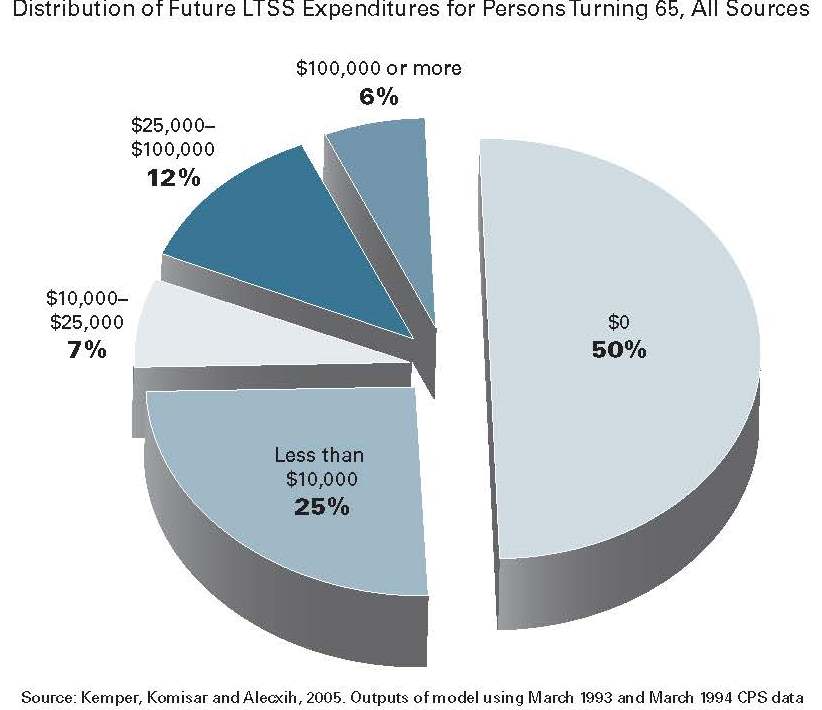
  • Find it in a Library: Find this publication in a federal depository library.

2) Visit the FREE “Mobile Member Guide for the 113th Congress” mobile site from GPO: http://m.gpo.gov/memberguide/

  • This mobile site contains each Member’s picture, party affiliation, hometown, home state, and length of service. Users may use the app to search Members of Congress by name, state, chamber and party. (Read more…)
  • For more information on all GPO’s mobile apps and sites, visit http://www.gpo.gov/mobile/.

ABOUT THE AUTHOR: Guest Blogger Jeff Turner is Director of Sales and Marketing for GPO’s Publications and Information Sales Program.