September 11 Tales of Heroes and Tough Lessons

September 11, 2013

9-11 Decade of Remembrance Twin Towers and Pentagon Logo designed by David McKenzie at the Government Printing OfficeThere are certain moments and events that are etched in our national consciousness. Ask any American who was alive in the 60’s where he or she was when John F. Kennedy or Martin Luther King was assassinated and you will hear a stirring personal story. For our generation, it was September 11, 2001.

Image: September 11 Decade of Remembrance logo with World Trade Center Twin Towers surrounded by a figure representing the Pentagon. Created by David McKenzie with the Government Printing Office for the U.S. Government Bookstore.

I was right across from the Twin Towers twelve years ago today, getting ready to board a ferry for my daily commute from New Jersey across the Hudson River into Manhattan, when I saw the second plane hit the World Trade Center right across from me. So, too, I cried with a group of strangers as we stood on the ferry platform and watched in horror as the first tower fall, saw the dust cloud rise and felt the earth—and the world—tremble.

America and Americans have changed since that day… twelve years ago today. We have since heard stirring stories of heroes and sacrifice, and learned many grim lessons that are still affecting both policy and people today.

Many of these stories of heroism, missed opportunities, and resulting actions have been painstakingly and faithfully chronicled by a wide array of Federal agencies, ensuring the sacrifices and lessons are not forgotten.

Responding to the Tragedies

Both in New York and the Pentagon in Washington, DC, we saw how first responders and medical personnel rushed to save lives. These excellent publications tell the stories of the heroes from that day:

  • 008-000-01049-8Pentagon 9/11 (10th Anniversary Edition) (Paperback) includes a foreword by Secretary of Defense Leon Panetta and provides the most comprehensive account available of the 9/11 attack on the Pentagon and aftermath, including unprecedented details on the impact on the Pentagon building and personnel and the scope of the rescue, recovery, and care-giving effort.
  • 008-000-01048-0Attack on the Pentagon: The Medical Response to 9/11 not only tells the personal stories from medical personnel responding to the attack on the Pentagon, but also provides insight from MEDCOM officers detailed to New York to support National Guard troops guarding ground zero’s perimeter. It also includes the Army’s involvement in the recovery of deceased attack victims at the Pentagon and the work of the Armed Forces Institute of Pathology in identifying human remains at Dover Air Force Base. In addition, the roles of military and civilian hospital staffs and of military environmental health and mental health specialists in taking care of attack victims and their families are also examined.

Tough Lessons

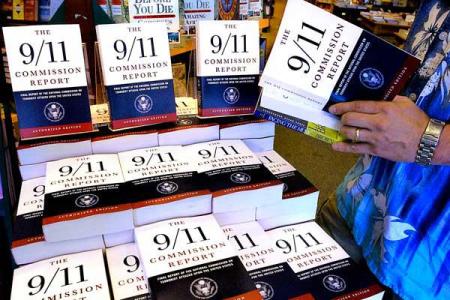
The single must-read for every American about September 11 is the official version of The 9/11 Commission Report: Final Report of the National Commission on Terrorist Attacks Upon the United States. This publication lists the findings of the National 9/11 Commission, listing all the painful errors made leading up to the terrorist attacks and outlining specific recommendations for international, national, state and local changes in policy and procedures that the panel of experts felt needed to be implemented to ensure a similar attack never happened again. This seminal publication has served to inform all subsequent policies and legislation since 9/11. It is available in print or as an eBook.
911-commission-report

Image: Launch of the 9/11 Commission Report. Courtesy: CSMonitor.com

The Senate, Select Committee on Intelligence, and House, Permanent Select Committee on Intelligence examined the intelligence failures leading up to 9/11 and jointly published the results in United States Congressional Serial Set, Serial No. 14750: Joint Inquiry Into Intelligence Community Activity Before and After Terrorists Attacks of September 11, 2001 With Errata.
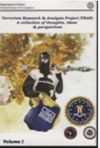
027-001-00097-1Additional insights into the causes of and responses to terrorism can be gleaned from Terrorism Research and Analysis Project (TRAP): A Collection of Research Ideas, Thoughts, and Perspectives, V. 1. This publication provides the findings from the post-9/11 FBI Terrorism Research and Analysis Project (TRAP) Symposium. TRAP is a leading research consortium made up of international/domestic academics and law enforcement officers, and is a working group sponsored by the FBI’s Behavioral Science Unit. In it, these counter-terrorism experts provide a better understanding of the causes of terrorist activity and possible government response tactics to mitigate terrorist actions.
064-000-00029-2As we watch the new World Trade Center going up in New York, we can be assured that builders are incorporating architectural and construction lessons learned from the World Trade Center Building Performance Study: Data Collection, Preliminary Observations, and Recommendations.

Policy and Legislative Response

United States Congressional Serial Set, Serial No. 14924, House Report No. 724, 9/11 Recommendations Implementation Act, Pts. 1-6 outlines the specific legislative changes enacted by Congress, providing both background and justifications for them along with attribution.

A print copy of the law itself can be purchased here: Implementing Recommendations of the 9/11 Commission Act of 2007, Public Law 110-53 along with the details of the various committee conferences contributing to it in Implementing Recommendations of the 9/11 Commission Act of 2007, Conference Report to Accompany H.R. 1, July 25, 2007.

Defending the Homeland since 9/11
041-001-00657-5National Strategy for Homeland Security (October 2007) provides the common framework outlined by the George W. Bush Administration to guides, organize and unify the United States’ homeland security efforts.

008-000-01068-4A new publication from the Air Force Reserve called Turning Point 9.11: Air Force Reserve in the 21st Century, 2001-2011 tells the story of how the Air Force Reserve responded to 9/11 and have contributed to the security of the United States in a post-September 11 world.

050-012-00440-4In a similar vein, Rogue Wave: The U.S. Coast Guard on and After 9/11 chronicles the involvement of the U.S. Coast Guard on that fateful day and the evolving role in national and world security since.  Part of the Coast Guard 9/11 response is told in this touching video about the boatlift to evacuate people from lower Manhattan is told in a video narrated by Tom Hanks entitled: BOATLIFT, An Untold Tale of 9/11 Resilience.”

A touching video about the boatlift to evacuate people from lower Manhattan on 9/11 (September 11) is told in a video narrated by Tom Hanks entitled: BOATLIFT, An Untold Tale of 9/11 Resilience. Click on the image above or this link to view the “Boatlift” video.

The upcoming U.S. Army War College Guide to National Security Issues, Volume 2: National Security Policy and Strategy provides a summarized look at the national security curriculum now taught to our nation’s top military and civilian leaders by the U.S. Army War College. Revised with the lessons learned from the years since 9/11, this publication includes a chapter on ”Securing America From Attack: The Defense Department’s Evolving Role After 9/11.”

How can I obtain these Federal 9/11 publications?

  • Shop Online: Print Editions of these 9/11-related publications may be ordered from the U.S. Government Online Bookstore at http://bookstore.gpo.gov, by clicking on the links above in this blog post or shopping our Terrorism & 9/11 History collection under our US & Military History category.
  • Order by Phone: Call our Customer Contact Center Monday through Friday, 8 am to 5:30 pm Eastern (except US Federal holidays). From US and Canada, call toll-free 1.866.512.1800. DC or International customers call +1.202.512.1800.
  • Visit our Retail Store: Buy copies of these publications at GPO’s retail bookstore at 710 North Capitol Street NW, Washington, DC 20401, open Monday–Friday, 9 a.m. to 4 p.m., except Federal holidays, Call (202) 512-0132 for information or to arrange in-store pick-up.
  • Find them in a Library: Find these publications in a federal depository library.

About the Author: Government Book Talk Editor Michele Bartram is Promotions Manager for GPO’s Publication and Information Sales Division in Washington, DC, and is responsible for online and offline marketing of the US Government Online Bookstore (http://bookstore.gpo.gov) and promoting Federal government content to the public.


Agency of the Month: US Army Center of Military History

May 14, 2013

CMH_AgencyoftheMonth_Slide

We are starting a new series to feature various Federal agencies of note as Agency of the Month. With it being National Military Appreciation Month in May, Armed Forces Day this Friday and Memorial Day coming up in under two weeks, it is appropriate that we highlight one of our most distinguished and prolific agency publishers: the United States Army Center of Military History.

The Center’s Mission

What is the CMH’s mission? The Center of Military History (or CMH to military history buffs and cognoscenti) reports to the Administrative Assistant to the Secretary of the Army and is the primary historical branch for the Army. According to its website on its Origins, the Center is responsible for the appropriate use of history throughout the United States Army which encompasses these tasks:

  • Recording the official history of the Army in both peace and war, including written and oral history;
  • Advising the Army Staff on historical matters;
  • Providing historical support to the Army Secretariat and Staff, contributing essential background information for decision making, staff actions, command information programs, and public statements by Army officials;
  • Expanding its role in the vital areas of military history education, including working with Army schools to ensure that the study of history is a significant part of the training of officers and noncommissioned officers;
  • Managing the Army’s museum system and historical artifacts (See photo below);
  • Introducing automated data-retrieval systems and maintaining an Army history archive and publications list;
  • Maintaining the organizational history of Army units, allowing the Center to provide units of the Regular Army, the Army National Guard, and the Army Reserve with certificates of their lineage and honors and other historical material concerning their organizations.

Westphal-views-CMH-Museum

Image: (Fort Belvoir, Virginia, May 30, 2012)–Under Secretary of the Army Dr. Joseph W. Westphal visited the U.S. Army Center of Military History’s Museum Support Center Facility to view the impressive collection of over 16,000 pieces of American history housed in the state-of-the-art facility. Image Source: United States Army

Today, the Center is made up of a team of distinguished military historians, translators, editors, archivists, and even cartographers to accurately record, analyze and publish the Army’s history in all its forms.  These dedicated professionals live by early 20th century philosopher George Santayana’s motto, who wrote that “Those who cannot remember the past are condemned to repeat it.”

Research Focus Areas

Under the direction of the Chief of Military History and his principal adviser, the Army’s Chief Historian, CMH’s staff is involved in dozens of major writing projects at any one time. Topics can range from those that involve new research such as traditional studies in operational and administrative history (from the present on back) or the examination of such areas as procurement, peacekeeping, and the global war on terror, to name a few.

The Center serves as a clearing-house for all oral history programs in the Army, as well as conducting and preserving its own oral history collections, including those from the Vietnam War, Desert Storm, and the many recent operations.  Its famous end-of-tour interviews of officials within the Army Secretariat and Staff are critical for providing a basis for its annual histories of the Department of the Army.

“Famous and Favorite” CMH Publications

With hundreds of top-quality publications available from the Center of Military History, and many of these award-winning books, it’s hard to choose just a few, so I’ll highlight some currently available titles that are not only my personal favorites, but that also just happen to be customer favorites and best-sellers as well.

Civil War Sesquicentennial Series

The Center traces its lineage back to those historians under the Secretary of War who compiled the Official Records of the Rebellion, a monumental history of the Civil War begun in 1874. Today with America honoring the 150th anniversary of the Civil War, the Center returns to those roots by producing a series of commemorative campaign brochures for the Civil War Sesquicentennial.

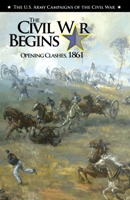
The Civil-War-Begins: Opening Clashes 1861 a Center of Military History publication 75-2The first title in this series, The Civil War Begins: Opening Clashes, 1861, is already out and describes those confusing and bloody early battles. (Read our earlier review of this title on this blog, entitled First Blood: Year One of the War Between the States.)

How to obtain The Civil War Begins: Opening Clashes, 1861?  Order it from the U.S. Government Bookstore website:

Additional brochures covering Chancellorsville, Vicksburg and Gettysburg are due out after Memorial Day.

Army History Bulletin

One of the Center’s most popular publications for the public and military alike is its best-selling quarterly journal entitled “ Army History: The Professional Bulletin of Army History.”

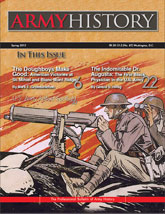
Army History: Professional Bulletin of U.S. Army History Spring-2013_AH87This full-color magazine has articles spanning the gamut of Army history topics by a myriad of knowledgeable authors. For example, the Spring 2013 issue features these guest articles:  “The Doughboys Make Good: American Victories at St. Mihiel and Blanc Mont Ridge“, by Mark E. Grotelueschen and “The Indomitable Dr. Augusta: The First Black Physician in the U.S. Army“, by Gerald S. Henig.

Regular columns in Army History include: News Notes, U.S. Army Artifact Spotlight, Book Reviews and Chief Historian’s Footnote.

How can I obtain the Army History: The Professional Bulletin of Army History?

World War II Collected Works

Perhaps my personal favorite is The U.S. Army and World War II: Collected Works (DVD). It is a comprehensive DVD compilation of PDFs of every book on World War II that the Center of Military History every published, which encompasses an astonishing 156 volumes!

The U.S. Army and World War II: Collected Works (DVD)For fans of World War 2 history, it doesn’t get any better—or more comprehensive—than this, as battles, tactics, and outcomes are sourced straight from those who were in the thick of things and analyzed by top historical experts.

How can I obtain “The U.S. Army and World War II: Collected Works (DVD)”?

Thus, as we honor our members of the Armed Forces this week and remember our lost servicemen and women on Memorial Day, we can be comforted by the fact that the dedicated team at the Center of Military History is there to ensure that their sacrifice, wisdom and experiences are not forgotten.

About the author: Government Book Talk Editor Michele Bartram is Promotions Manager for GPO’s Publication and Information Sales Division in Washington, DC, and is responsible for online and offline marketing of the US Government Online Bookstore (http://bookstore.gpo.gov) and promoting Federal government content to the public.


Fighting Enemies or Disease, Asian Americans Offer a Rich Heritage

May 1, 2013

As Asian-Pacific American Heritage Month kicks off, and the anniversary of WWII’s VE (Victory in Europe) Day approaches (May 8), it’s a good time to talk about a major contribution of Asian and Pacific-Islander Americans.

Japanese Americans’ Battle of Wits with the Japanese in WW II

Nisei-Linguists-CMH_70-99-1The book Nisei Linguists: Japanese Americans in the Military Intelligence Service During WWII published by the Army’s Center of Military History is an excellent starting point to examine that history. When the United States entered WWII in 1941, the War Department knew that their intelligence efforts would not be successful without understanding of Japanese language and culture. However, few Americans other than the 300,000 or so Japanese Americans living mainly on the West Coast and Hawaii had such knowledge.

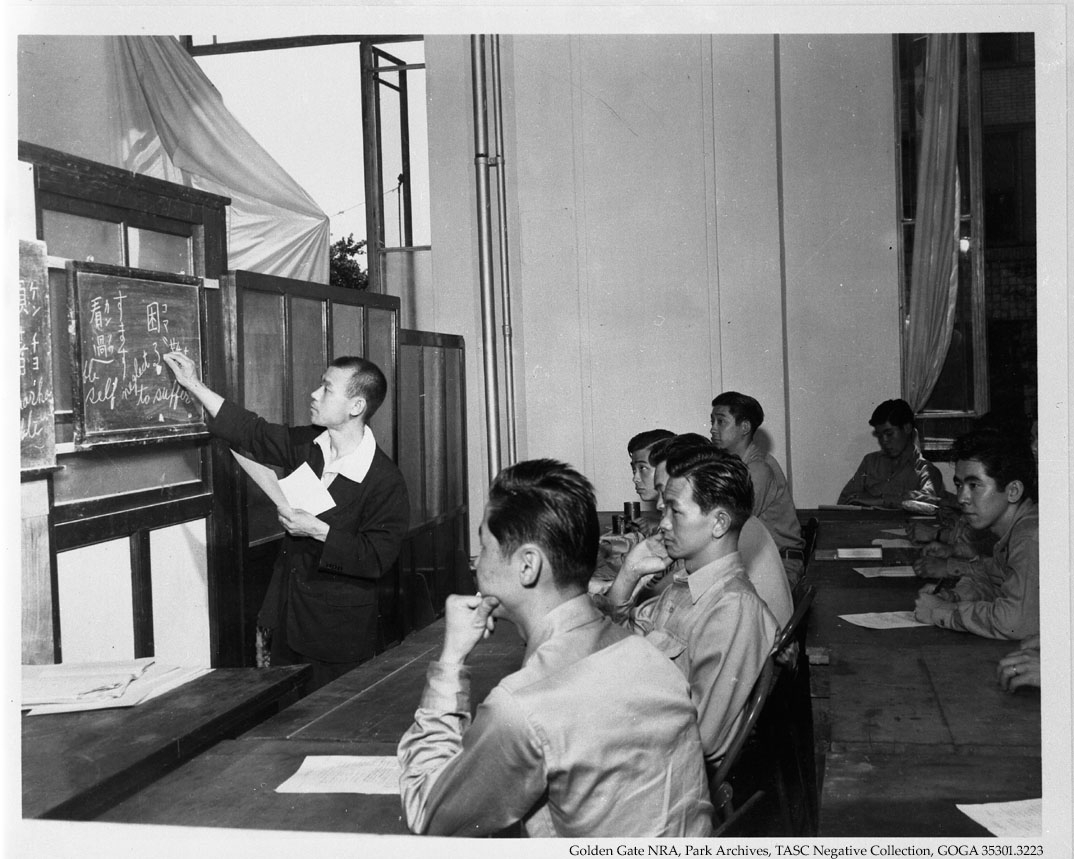
The War Department tapped the talents and skills of the second generation (Nisei) Japanese Americans. The Western Defense Command chose sixty Nisei soldiers for Japanese language training at the Fourth Army Intelligence School at the Presidio in San Francisco. The school moved to the Midwest after Pearl Harbor, first locating it in Camp Savage and later in Fort Snelling. The program, renamed the Military Intelligence Service Language School, ran until 1946. Nearly six thousand military linguists graduated from the school to enter the Military Intelligence Service (MIS).

MISCrissyField

Image: Nisei linguists undergoing training at MIS Crissy Field.

In addition to telling the story of the program and school, the book also describes how the Nisei served with every major unit and headquarters in the Pacific theater. It is testimony to the Nisei’s loyalty and smarts that it took the War Department only two years to get the Nisei military intelligence program up and running. The Nisei braved considerable prejudice to work for U.S. military intelligence, and there is no doubt their participation in American intelligence efforts made the war end earlier.

No one told the story of these linguists for years after WWII, and it was not until the 1980s and 1990s that people began to talk about their experiences with the program. Finally in 1994, Senator Daniel K. Akaka and some other Congressional members asked the Secretary of the Army to publish an official history of the Nisei linguists. This book is the result of that request.

Learn more about the Nisei language intelligence program by picking up a copy of this fascinating volume at the GPO Online Bookstore in Paperback edition or as an eBook.

Asian Americans Battle Disease Today

Epidemiologic-Profile-2010-Asians_coverHaving turned our thoughts to how Asian-Americans contributed to the care of our nation, it’s also a good time to think about how we care for the Asian-American and Pacific-Islander American portion of the United States population. The Center for Disease Control and Prevention (CDC) has just published Epidemiologic Profile 2010: Asians and Native Hawaiians and Other Pacific Islanders.

According to the CDC, “This Epidemiologic Profile is the first compilation of infectious disease-specific data in a single report that focuses on two racial groups in the United States: the Asian population and the Native Hawaiian and Other Pacific Islander population.” The volume includes a chapter in which the Census Bureau contributes to the description of the Asian and Native Hawaiian and Other Pacific Islander populations who reside in the United States.

The report tracks the involvement of Asians, Native Hawaiians and other Pacific Islanders in cases of endemic disease. Asians, Native Hawaiians and other Pacific Islanders make up a disproportionately large number of cases in some diseases (tuberculosis and hepatitis B), and in others, a smaller percentage of cases than their representation in the U.S. population (STDs and HIV). The report examines specific disease statistics, the challenges of public health education, treatment and disease risk factor mitigation for these populations.

Any public health official, student, social worker, or government employee who works with these populations would definitely want to read this book.

GPO has cataloged a record for the FREE electronic version that Federal depository libraries got in the April 2013 record load.

How can I access the records to both these publications?

How can I purchase Nisei Linguists: Japanese Americans in the Military Intelligence Service During WWII?

Our guest blogger is Jennifer K. Davis from GPO’s Library Services & Content Management Division that supports the Federal Depository Libraries Program (FDLP). (Article is adapted from an original  post in the FDLP Community site.)


March Madness: New GPO Bookstore Website and Historic Anniversaries

March 22, 2013

March is traditionally a month of change and national excitement in the United States. Together with the change of seasons and college basketball frenzy, some important national milestones were reached this month that we should acknowledge, from new achievements to key anniversaries.

New U.S. Government Bookstore Website

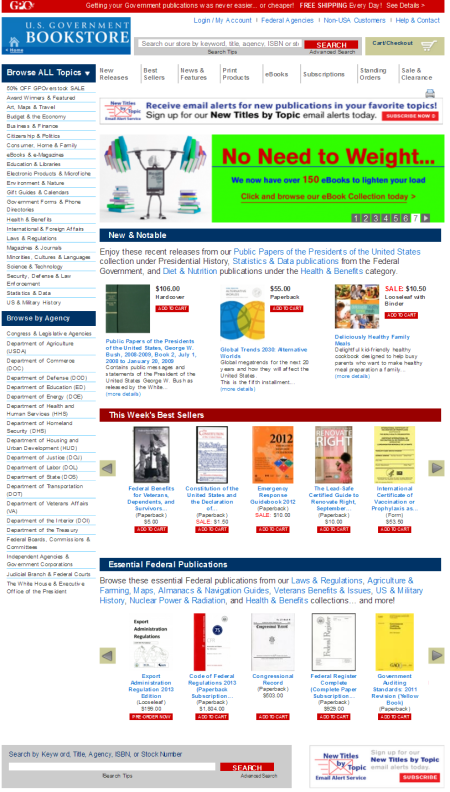
First, last week we launched our upgraded U.S. Government Bookstore ecommerce site, http://bookstore.gpo.gov/.  Our ecommerce website has gone through several iterations since its first version in 1999, each time adding functionality to keep up with the changing needs.  Today, GPO has over 4,000 Federal print publications and more than 150 eBooks available through our online bookstore.

New-US-Government-Online-Bookstore-website

Our new website includes the following user-friendly features:

Browse-ALL-Topics-on-GPO-BookstoreClick on the dark blue Browse All Topics button on the site to see and browse by a list of all the topical categories.

These last two features—eBooks and new Categories—are particularly important in light of three other important milestones this month.

National Women’s History Month

March is National Women’s History Month in the United States, and we have a new main “Browse by Topic” category, Minorities, Cultures & Languages, where you can find books for and about African Americans, American Indians, Asian Americans & Pacific Islanders, Cultural Awareness, Disabled, Hispanics, LGBT, Minority Issues, Non-English Government Publications, Seniors & Elderly and Women, including dozens of books and eBooks about Women’s History.

Womens_History_Books_Slide

Harriet Tubman Centennial

One of the famous American heroines in the Women’s History collection is Harriet Tubman, who died 100 years ago this month making it her Centennial. Tubman escaped from slavery and returned to lead dozens of others to freedom in the mid-1800s. In addition to being the most well-known of Underground Railroad “conductors,” she was also a nurse, spy, suffragist, and more.

With all these roles, it is appropriate that we have created so many new “Browse by Topic” categories. One is Slavery & Underground Railroad (under US & Military History), where great books featuring Harriet Tubman and the Underground Railroad can be found.  Other new topics include Nursing under Health & Benefits and Intelligence & Espionage under Security, Defense & Law Enforcement.

Additional publications about National Parks can be found under the main category of Art, Maps & Travel, along with Posters & Prints and Maps, Almanacs & Navigation Guides.

BROWSE BY AGENCY: You can also find National Park Service (NPS) publications under Department of the Interior (DOI) in the Browse by Agency categories on the menu at the lower left side of the site, where publications are categorized by the Federal agency that published them. For example, our own Government Printing Office (GPO) publications are under Congress & Legislative Agencies.

Iraq War 10th Anniversary

Finally, this week is the tenth anniversary of the start of the Iraq War, which began on March 19, 2003, as Operation Iraqi Liberation, later renamed Operation Iraqi Freedom.

Iraq-War-10th-Anniversary_Books_Slide

President Obama, in an address about the Iraq war 10th anniversary this week said:

“As we mark the 10th anniversary of the beginning of the Iraq war, Michelle and I join our fellow Americans in paying tribute to all who served and sacrificed in one of our nation’s longest wars. We salute the courage and resolve of more than 1.5 million service members and civilians who during multiple tours wrote one of the most extraordinary chapters in military service. We honor the memory of the nearly 4,500 Americans who made the ultimate sacrifice to give the Iraqi people an opportunity to forge their own future after many years of hardship.”

Since the beginning of the war, the Defense Department has published dozens of excellent publications about the war, the strategies, Saddam Hussein, Iraq, reconstruction and the achievements and sacrifices made by our Armed Forces. You can find these publications featured under Iraq & Persian Gulf Wars which can be found under US & Military History > Battles & Wars categories.

It’s a Launch, Not a Landing

So, our new site marks the completion of over a year of hard work by our team here at the Government Printing Office, all aimed to make sure “we the people” can discover more about our Nation through excellent publications by our Federal Government. But there’s a good reason we call it a website launch and not a landing. This is only the beginning, with more great content and features to come! Enjoy!

So, please visit GPO’s new online bookstore website at http://bookstore.gpo.gov/ and tell us what you think!

About the Author:  Michele Bartram is Promotions Manager for GPO’s Publication and Information Sales Division in Washington, DC, and is responsible for online and offline marketing of the US Government Online Bookstore (http://bookstore.gpo.gov) and promoting Federal government content to the public. She was also in charge of the online bookstore relaunch!

First Blood: Year One of the War Between the States

November 22, 2012

On another Thanksgiving Day 150 years ago, America was embroiled in a bitter Civil War. A year later, expressing gratitude for the key Union Army victory at Gettysburg, President Abraham Lincoln would proclaim that the nation will celebrate an official annual Thanksgiving holiday on the fourth Thursday of November. But in 1862, 25 states and three territories were already celebrating the Thanksgiving holiday.

Thus it is fitting that we have this wonderful guest post about the newest book from the Army’s Center of Military History series about the U.S. Army Campaigns of the Civil War. Those who had survived these clashes had much to give thanks for that Thanksgiving Day- as do we all, particularly members of our military and diplomatic services and their families who have served in harm’s way. Enjoy the post and Happy Thanksgiving to you and yours,  Michele Bartram


Guest blogger Sonya Kunkle was a writer and editor for more than 15 years before she joined GPO’s Proof & Copy Markup section. Here she reviews a U.S. Government Bookstore booklet on a topic that caught her interest fairly recently—the American Civil War.

As a child growing up in the Washington, DC, suburbs, I once walked through the grassy fields of Antietam Battlefield (near Sharpsburg, MD) oblivious to the historical struggle waged under my feet. American history wasn’t my favorite subject in school, but as an adult my interest in the Civil War was sparked when I read “The Killer Angels,” a novel by Michael Shaara. “The Killer Angels,” a work of historical fiction, details the Battle of Gettysburg.

This is a good time to be a Civil War history enthusiast, with 2012 being part of the sesquicentennial (150-year anniversary) of America’s bloodiest war. To mark the occasion, the U.S. Government Bookstore has for sale a 64-page booklet, The Civil War Begins: Opening Clashes, 1861 published by the U.S. Army’s Center for Military History.

Image: (Cover of the booklet,. Detail from Capture of Ricketts’ Battery by Sidney E. King, courtesy of William V. Fleitz, Manassas Battlefield Park.

 In this booklet you can read about the reasons for going to war and why key players made many of the decisions they did during the first year of the conflict. The author, Dr. Jennifer M. Murray, also provides a lot of information in text and graphics on the troop movements of both the Federals and the Confederates during each of the key battles of 1861.

Strategic Setting

In his inaugural address, on March 4, President Lincoln declared that he didn’t intend to abolish slavery in states where it existed. Stating that he would not initiate a war, Lincoln informed Southerners, “In your hands … is the momentous issue of civil war …You can have no conflict, without being yourselves the aggressors.

If you look at the numbers, perhaps the Confederates were doomed from the start. The 1860 Census shows that the Union could call on 4 million military-age white males to build their army, whereas the Confederacy could assemble 1 million at most.

The Union also had 10 times the industrial capacity, not to mention better transportation capabilities. In spite of these disadvantages, the South started the Civil War with its first big move—firing on Federal Fort Sumter in South Carolina.

Operations—Fort Sumter

Charleston, South Carolina, was well fortified with Fort Sumter and other defenses. Sumter was built to guard against an enemy fleet, and the walls facing the city were much weaker than those facing the water, leaving the fort vulnerable to attack on land.

On April 11, the Southern Brigadier General Pierre G. T. Beauregard demanded that the Union forces evacuate Fort Sumter. The North’s ranking officer at Sumter, Major Robert Anderson, declined.

At 3 a.m. (or 0300; the author uses military time) on April 12, the Confederates notified Major Anderson that General Beauregard and company would open fire on Fort Sumter in one hour. Twenty minutes after the deadline, a single shell from nearby Fort Johnson, which the North had abandoned, exploded over Sumter. War had begun.

Into Virginia—Bull Run

Image: First Battle of Bull Run. 1889 chromolithograph by Kurz & Allison. Source: Library of Congress. CLICK TO ENLARGE.

In May the Confederates moved their capital from Montgomery, Alabama, to Richmond, Virginia. Richmond became a strategic target for the North, both for its industrial capability and its political importance. The two capitals, separated by only 100 miles, now figured prominently in both sides’ strategies.

The Civil War Begins: Opening Clashes, 1861 explains why the Union was determined to control Manassas Junction and why in May 10,600 Confederates defended the northern entrance to the Shenandoah Valley.

The author notes an interesting moment caused by the differing (and lack of) uniforms:

Viewing the Virginians, who were wearing civilian clothes, the Federal troops were unsure of their allegiance. To complicate matters further … Federal units were not uniformly dressed in blue; soldiers in the 11th New York, for instance, were dressed in colorful Zouave uniforms, which were also worn by some Confederate units. The Virginians clarified the matter by opening a deadly volley on the New Yorkers.”

Image: Brandy Station, VA, Band of the 114th Pennsylvania Infantry (Zouaves). Source: Library of Congress, Prints & Photographs Division, LC-B8171-7611 DLC. CLICK TO ENLARGE.

The Confederates won the fight, protecting their capital. The first battle of the Civil War resulted in the death of nearly 5,000 men.

The Fight for Missouri

While emotions roiled to the east, the majority of delegates attending a special Missouri secession convention voted to remain in the Union. This decision ran counter to Governor Claiborne F. Jackson’s personal preferences, and he mustered forces in favor of the Confederates.

This part of The Civil War Begins: Opening Clashes, 1861 provides details about how the Civil War reached into Missouri, with one of the key players being Union Brigadier General Nathaniel Lyon.

While directing his men on the front line, Lyon got hit in the calf by a bullet, so he left the field for medical treatment. When Lyon got back on the field, a bullet grazed his head.

Determined to continue the fight, and apparently not taking the hint, Lyon returned to the field. Moments later, a bullet hit him in the chest. He was the first Union general officer to die in the Civil War.

From Belmont to Port Royal

In The Civil War Begins: Opening Clashes, 1861 you can read about the Union Navy’s entry into the Civil War.

It’s an interesting read, with a little information about Southern pirates (pirates!) lurking inside the Outer Banks of North Carolina, pouncing on merchant vessels before Union warships could react. To thwart these outlaws, the Federal Navy designated the Outer Banks as its first target. Union forces prepared for the war’s first joint Army-Navy operation.

You learn something about the battle for Fort Hatteras and the naval tactic (and the Confederates’ faulty ammunition) that helped the Union win the day.

The North’s capture of Fort Hatteras and nearby Fort Clark improved the Union’s outlook soon after their defeat at Bull Run. Offering a “Congratulatory Order,” one Federal officer commented, “This gallant affair will not fail to stimulate the regulars and volunteers to greater exertions to prepare themselves for future and greater achievements.

The Union’s euphoria didn’t last long.

The Civil War Begins: Opening Clashes, 1861 describes what happened between the North and South about 35 miles north of Washington at Ball’s Bluff. Perhaps the statistics are most noteworthy—there were an evenly matched number of men fighting on both sides, but the outcome was lopsided in terms of soldiers wounded and captured. The battle’s uneven results favored the South.

This section also addresses the Union’s win at Port Royal, South Carolina. Here you also can read about what Brigadier General (and future U.S. President) Ulysses S. Grant did in the area of Belmont, MO, that earned him President Lincoln’s favor.

The chronological coverage of the war ends with Union Major General George B. McClellan’s training the Army of the Potomac outside of Manassas. McClellan said he believed that he controlled the “destinies of this great country.”  There was no further action along the Potomac as the curtain closed on 1861.

Analysis

Dr. Murray offers incisive analysis at the end of The Civil War Begins: Opening Clashes, 1861. She describes the early missteps of the secessionists, as well as what the South got right. She also notes the Union army’s mixed results.

Dr. Murray concludes, “As Federal forces grew more experienced and competent, they would gain key victories in 1862 that helped to shape the outcome of the Civil War.”

The last page of the booklet provides a short list of texts for further reading about the first year of the war.

Conclusion

The Civil War Begins: Opening Clashes, 1861 helps me to appreciate the history in my own backyard. Although I find all of the information about the armies’ positions and movements a bit overwhelming, the booklet tempts me to take the 70-mile trip from Baltimore, where I live now, to explore the fields of Bull Run at Manassas. Taking the booklet with me, I’ll have a better understanding of the history I’m walking through.

HOW DO I OBTAIN The Civil War Begins: Opening Clashes, 1861?

  • Buy it online 24/7 at GPO’s Online Bookstore.
  • Buy it at GPO’s retail bookstore at 710 North Capitol Street NW, Washington, DC 20401, open Monday–Friday, 9 a.m. to 4 p.m., except Federal holidays, (202) 512-0132.
  • Find it in a federal depository library.

Other Federal Titles about the Civil War

You may also be interested in these titles about the Civil War available from the U.S. Government Bookstore:


Hawks vs. Doves: The Joint Chiefs and the Cuban Missile Crisis

October 18, 2012

50 years ago this week, the world stood on the brink of nuclear war as the Cuban Missile Crisis unfolded. The United States finally decided to first blockade rather than immediately attack Cuba to prevent the Soviet Union from finishing installation of missiles that could reach the continental United States. This article introduces the little-known story of the battles between the “hawks” and the “doves” in the Kennedy Administration as related in a new publication, The Joint Chiefs of Staff and National Policy, Vol. 8, 1961-1964.

When President John F. Kennedy finally announced the naval blockade of Cuba and the reasons for it on national television, Americans huddled together, practiced nuclear drills, and prayed for some peaceful solution to prevent all-out nuclear war. Only decades later did the full story of brinkmanship, bravado and brilliance come out about what really happened behind the scenes during those two weeks.

Image Credit: The Arizona State Library, Archives and Public Records

A little known side of the story comes from the top military commanders who were serving the Kennedy administration during the crisis, found in the surprisingly fascinating book titled The Joint Chiefs of Staff and National Policy, Vol. 8, 1961-1964, from the Office of Joint History of the Joint Chiefs of Staff.

The Joint Chiefs of Staff during the Kennedy Administration

This accounting of the Joint Chiefs of Staff during this tumultuous period in the history of American foreign affairs goes beyond the normal third party historian’s post mortem, since the author was actually able to meet with several members of the joint chiefs in the 1970’s to add more of their personal insights, including Admiral Arleigh Burke, Admiral George Anderson, General Lyman Lemnitzer, Chairman during 1960-1962, and the Chairman who succeeded him, General Maxwell D. Taylor.

Image: President John F. Kennedy meets with the Joint Chiefs of Staff. Photograph includes: (L-R) United States Marine Corps General David Shoup; United States Army General Earle Wheeler; United States Air Force General Curtis LeMay, President Kennedy; Chairman of the Joint Chiefs of Staff General Maxwell Taylor; United States Navy Admiral George Anderson. West Wing Lawn.  White House. Washington, D.C. Credit: Robert Knudsen. White House Photographs. John F. Kennedy Presidential Library and Museum, Boston

What results is an interesting amalgam of history and a peek into the tensions between military joint chiefs and the civilians to whom they reported. Describing the relationship of the Kennedy administration and the military establishment, author Walter S. Poole says: “During 1961-1962, relations between the JCS and their civilian superiors were often awkward and even confrontational” particularly between Secretary of Defense Robert S. McNamara and Lemnitzer.

The old-school Joint Chiefs were concerned about the new approach to foreign policy being espoused by the Kennedy administration, and tensions grew. According to the author:

“What most concerned the JCS was an apparent erosion of US credibility that emboldened communist leaders to pursue more adventurous policies. President John F. Kennedy and Secretary of Defense Robert S. McNamara pursued what they conceived as more flexible approaches to strategy and crisis management.”

Quick Background on the Cuban Missile Crisis

In 1962, the Soviet Union was losing the arms race with the United States. In late April 1962, Soviet Premier Nikita Khrushchev conceived the idea of placing intermediate-range missiles in Cuba to double the Soviet strategic arsenal and provide a real deterrent to a potential U.S. attack against the Soviet Union from the Jupiter missiles the U.S. had just placed in Turkey.  Ever since the failed Bay of Pigs invasion the previous year, Fidel Castro felt a second attack by the U.S. on Cuba was inevitable, so he agreed to host the missiles as protection.

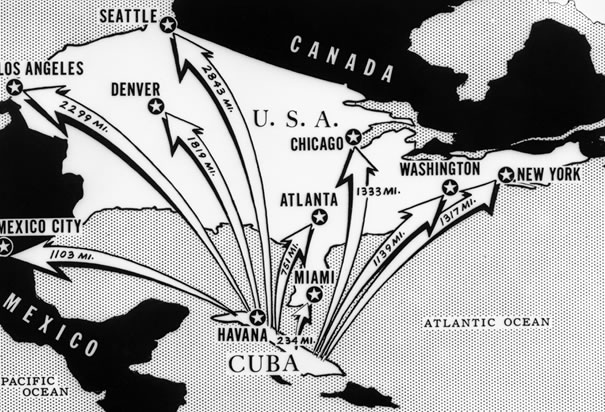
Image: Initial U.S. intelligence estimates of possible U.S. targets within range of the nuclear-capable Soviet SS-4 medium-range ballisticmissiles (MRBMs) and SS-5 intermediate-range ballistic missiles (IRBMs) found by the U-2 spy plane surveillance photographs if they were launched from Cuba.  Credit: Bettmann/CORBIS

On October 15, 1962, the National Photographic Intelligence Center confirmed that secret reconnaissance photographs from an American U-2 spy plane flight the day before were finally able to definitively prove the suspicion that Soviet medium-range and intermediate-range ballistic missiles capable of hitting Atlanta, the Midwest, Washington, DC, and even Los Angeles and Seattle were indeed in place and in the process of being installed and ready in Cuba within days. In response, President Kennedy and Secretary McNamara assembled the Executive Committee of the National Security Council call “ExComm” as a task force that, together with the Joint Chiefs of Staff and experts from the State Department and other intelligence agencies, would debate the United States’ options to deter the Soviets from nuclear escalation.

To Blockade, Strike or Invade?

Earlier in September 1962, after cloud-obscured U-2 photos had hinted at Soviet build-up in Cuba, the Joint Strategic Survey Council had submitted a recommendation for blockading rather than invading Cuba, on grounds that a blockade would be less dramatic, require smaller resources, cause fewer casualties, and be more plausibly related to upholding the Monroe Doctrine. In his 1823 annual message to Congress, President James Monroe had established this doctrine followed by the U.S. ever since that warned European countries not to interfere in the Western Hemisphere, stating “that the American continents… are henceforth not to be considered as subjects for future colonization by any European powers.

However, as the crisis unfolded, the primary debate among the military commanders of the Joint Chiefs was over whether to carry out an all-inclusive attack against Soviet and Cuban forces on the island or a surgical strike confined to just attacking the missiles themselves, the nuclear storage sites, and Soviet MiG planes.

Both President Kennedy and McNamara thought that an all-inclusive attack would inevitably lead to invasion of Cuba, and then possible counter-attacks elsewhere by the Soviets or escalation to all-out war.

But General Taylor reported that the Joint Chiefs and the combatant commanders felt “so strongly about the dangers inherent in [only] the limited strike that they would prefer taking no military action. They feel it’s opening up the United States to attacks which they can’t prevent, if we don’t take advantage of surprise.” Taylor added that his personal inclination was “all against invasion, but nonetheless trying to eliminate as effectively as possible every weapon [present in Cuba] that can strike the United States”.

According to the reports by the author, the Joint Chiefs were opposed to only attacking the medium-range ballistic missiles themselves, saying it would incur “an unacceptable risk” and that not attacking the enemy’s planes would expose the continental United States and Puerto Rico to air attack and could cause unnecessary casualties among the garrison at Guantanamo and the forces assembling for invasion.  Instead, the JCS initially recommended “also hitting tactical missiles, aircraft, ships, tanks, and other appropriate targets, as well as imposing a ‘complete’ blockade.


Image: A meeting of the Executive Committee of the National Security Council in the Cabinet Room during the Cuban Missile Crisis, October 29, 1962, 10:10-10:58am. Clockwise from left: Attorney General Robert F. Kennedy (standing); Assistant Sec. Defense Paul Nitze; Dep. USIA Dir. Donald Wilson; Special Counsel Theodore Sorensen; Exec. Sec. NSC Bromley Smith; Special Assistant McGeorge Bundy; Sec. Treasury Douglas Dillon; Vice President Lyndon B. Johnson; Ambassador  Llewellyn Thompson; William C. Foster; CIA Dir. John McCone (hidden); Under Secretary of State George Ball (hidden); President John F. Kennedy; Sec. State Dean Rusk; Sec. Defense Robert McNamara; Dep. Sec. Defense Roswell Gilpatric; Chairman JCS Gen. Maxwell Taylor. Credit: Photo by Cecil Stoughton, JFK Library ST-A26-18-62

The Blues vs. the Reds

Even more fascinating was the story of the war gaming techniques used. To quickly develop two alternative scenarios for the President to consider, the ExComm task force split into two groups that constantly exchanged position papers and critiqued each other’s work. The “Blues,” who were to prepare the scenario for a surprise air strike, included General Maxwell Taylor, Robert Kennedy, Treasury Secretary Douglas Dillon, Director McCone, Dean Acheson, and McGeorge Bundy. The “Reds,” drafting the blockade option, included Chief of U.S. Naval Operations Adm. George Anderson, Marine Corps Commandant David Shoup, Secretary Rusk, Deputy Secretary Gilpatric, and Theodore Sorensen.

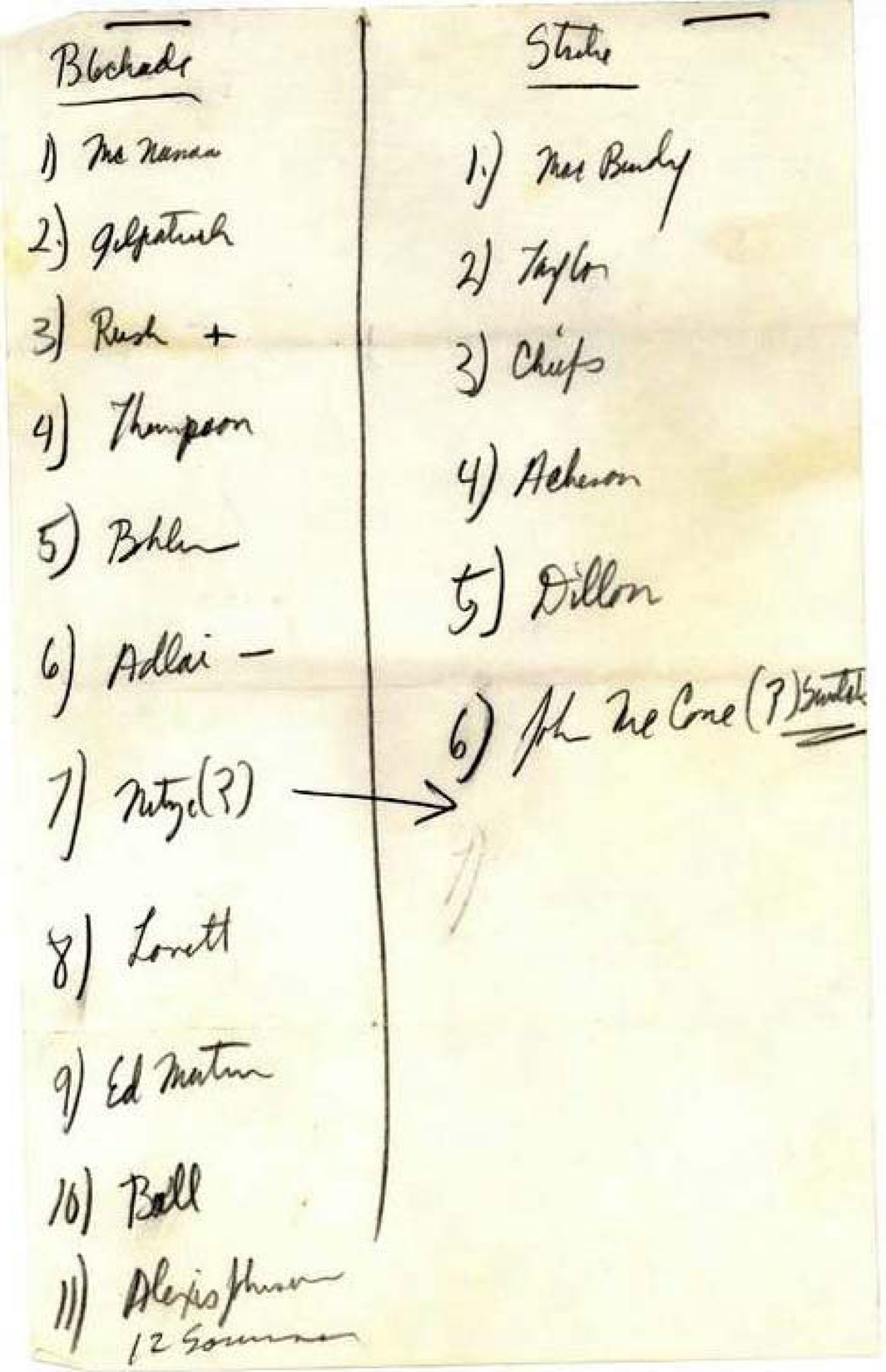
Image: On October 11 last week, certain documents from Attorney General Robert F. Kennedy’s personal papers about the Cuban Missile Crisis were declassified. In it was the above personal list of who RFK thought among the ExComm were the “Hawks” who favored an air strike (shown in the right column labeled “Strike”) vs. the “Doves” who favored a blockade of Cuba (in the left column). Note that the “Chiefs” meaning the Joint Chiefs of Staff along with General Taylor are shown on the “Hawks” Strike side of his list on the right.  Source: The National Security Archive

In less than two days, two complete scenarios were prepared and presented to President Kennedy on October 20, with competing input coming from the Pentagon and the State Department.

From this insider accounting of events, we learn that the Chairman thought that the probable sequence of events to be green-lighted would be: a political approach; a warning; air attack on the missile sites; blockade; and, if necessary, invasion, with the earliest air strike date set for October 21 (optimally the 23rd), and an invasion to begin on October 28.

However, to find out exactly what happened and how the drama played out behind the scenes, pick up a copy of this fascinating book.

HOW DO I OBTAIN The Joint Chiefs of Staff and National Policy, Vol. 8, 1961-1964”?

  • Buy it online 24/7 at GPO’s US Government Online Bookstore.
  • Buy it at GPO’s retail bookstore at 710 North Capitol Street NW, Washington, DC 20401, open Monday-Friday, 9am to 4pm, except Federal holidays, (202) 512-0132.

Find this and other Government publications about Cuba in our Cuba collection.

About the Author:  Michele Bartram is Promotions Manager for GPO’s Publication and Information Sales Division and is responsible for online and offline marketing of the US Government Online Bookstore (http://bookstore.gpo.gov) and promoting Federal government content to the public.


War, Will and Warlords: An Interview, Part II

July 23, 2012


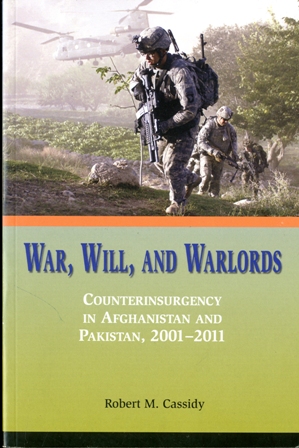
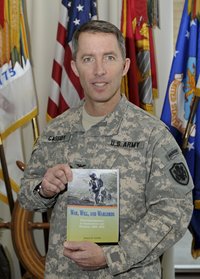
In this second part of a two-part interview by Government Book Talk blog editor Michele Bartram,  Col. Robert M. Cassidy, author of the new, critically acclaimed book, War, Will, and Warlords: Counterinsurgency in Afghanistan and Pakistan, 2001-2011, describes the lessons learned after ten years of war in Afghanistan. Click here to read Part I of the interview.

GovBookTalk: In Chapter 5 of War, Will, and Warlords, you refer to Pakistan’s prospects of doing what needs to be done as “hard, not hopeful, but not impossible.”  What role does Pakistan play today in 2012 in this counterinsurgency, and how do you rate these prospects today on the scale of hopeful vs. impossible?

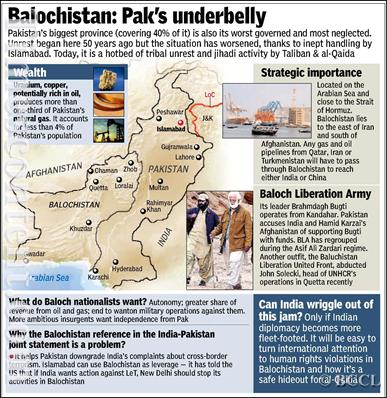
Cassidy: There is currently not much at all to be sanguine about in relation to Pakistan, as it has done the most odious things in terms of regenerating and sustaining the Afghan Taliban and other groups.  And, the Coalition and the international community have allowed Pakistan to get away with this—murders, literally.  Pakistan poses as a friend, but performs as a foe. The Afghan Taliban would have withered away over the last several years of the surge if Pakistan had stopped supporting the regeneration, resting, recruitment, and retraining of militants, improvised explosive device makers, technology, and components in its tribal sanctuaries and in Baluchistan.

Image: Balochistan’s strategic importance. Source: Intellibriefs

Pakistan has employed terrorism and unconventional warfare to ostensibly achieve strategic depth by supporting its proxies in Afghanistan for almost four decades.

However, the United States has not yet crafted a Pakistan strategy that employs its substantial leverage to modify Pakistan’s strategic calculus.  A genuine Pakistan strategy, coupled with unambiguous momentum and perseverance in Afghanistan, could compel Pakistan to alter its strategic rationale and reduce support to the Afghan Taliban and the Haqqani network. 

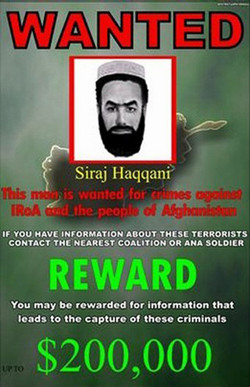
Image: [GovBookTalk] The Haqqani Network,an insurgent group allied with the Taliban and operating on both sides of the Afghanistan-Pakistan border, is one of the most dangerous groups fighting U.S.-led Coalition forces and the Afghan government. Originating in Afghanistan during the mid-1970s, it was nurtured by the U.S. Central Intelligence Agency (CIA) and Pakistan’s Inter-Services Intelligence (ISI) during the 1980s Soviet war in Afghanistan. Maulvi Jalaluddin Haqqani and his son Sirajuddin Haqqani lead the group. A reward of $200,000-USD was offered by Coalition forces for information leading to the arrest of Siraj Haqqani. Source: Wikipedia.

The United States needs a strategy for Pakistan, one which is logically and temporally linked and integrated with the imperatives in Afghanistan.  A viable strategy must first recognize that the U.S. does have considerable leverage over Pakistan.  America must demand discernible results for the steady diet of carrots it has been feeding Pakistan for the perfidious abetting of enemies who kill and maim the Afghan and Coalition civilians and military forces trying to stabilize the country in some lasting way.

GovBookTalk: After wars in Iraq and Afghanistan, what lessons has the US military learned about fighting a counterinsurgency campaign— in strategy, training, equipment, communications with locals, relations with coalition nations and neighboring regions?

Cassidy: Let me clarify at the outset that counterinsurgency is not a strategy in and of itself, but more of the art and method of an operational campaign to defeat or neutralize an insurgency.  The first and most paramount thing we should learn is not to unlearn or expunge what we know of previous counterinsurgencies’ best practices.  In 2001-2003 when we undertook those wars, there was very little thinking, knowledge, doctrine, or awareness of the requirements for prosecuting counterinsurgency to a successful conclusion.   The American military was compelled to adapt in the crucible of combat and it ultimately changed over time, and we now see the most seasoned counterinsurgent forces in our history.

Image: [GovBookTalk]: This is an actual PowerPoint slide shown by Gen. Stanley McChrystal, commander of U.S. and NATO forces in Afghanistan in the summer of 2009 to portray the complexity of U.S. strategy. Source: Charles V. Peña. Click on image above to enlarge.

Cassidy: Notwithstanding, it is negligence of criminal magnitude to prepare soldiers with the doctrine, the equipment, and the leadership savvy for countering insurgents only after the fighting has begun.  Also, in many ways and instances, it was the early methods of American military forces in Iraq and Afghanistan that helped catalyze support for the insurgencies by alienating large parts of those populations.  Here are some pithy things we should retain:

  • Knowledge empowers and the one who thinks, wins:  analyze and understand the environment.
  • Good counterinsurgency campaigns fully integrate both general purpose and special forces.
  • Start with simple and clear, not convoluted and cumbersome, command and control.
  • Match action and information to address grievances to win the war of ideas.
  • If the insurgency benefits from unimpeded sanctuary, ruthlessly shut this down.
  • Start with the end— what should the indigenous security capacity be when we leave?
  • Show moral rectitude:  kill precisely the insurgent leaders and protect most of the people.

GovBookTalk: If you had to do it all over again, would you change anything in this book?

Cassidy: Two things: one, I would have added a chapter that explained how we need to rethink and reframe our relationship with Pakistan after the bin Laden raid; and two, I would have made one more look to minimize any redundancy between the first chapter and the last chapter because the last chapter was something I developed apart from the main manuscript when I was last in Afghanistan during 2011.

GovBookTalk: Did you personally learn anything from writing this book and what was it?   

Cassidy: I deepened and broadened my knowledge about the enduring and deplorable perfidy of the Pakistani ISI in Afghanistan over almost four decades of war in the region.

Image: Pakistan spy chief (right), Lt. Gen. Shuja Pasha, is head of  the Pakistan Directorate for Inter-Services Intelligence or ISI, whose headquarters are shown to the left. Source: Jagran Post. [GovBookTalk] Note that the ISI continually denies links to the Taliban and terrorism, in spite of accusations by Coalition allies of ISI ties to the 7/7/2005 terrorist attacks in London, the attempted assassination of President Karzai, the bombing of the Indian embassy, supporting terrorist groups and other acts. Source: The Council on Foreign Relations 

GovBookTalk: Are there additional resources where readers can go for more information, assistance with this topic?

Cassidy: Some useful resources include the websites of the Afghan Analysts Network (AAN), the New America Foundation Counterterrorism Strategy Initiative Policy Paper series, the Congressional Research Service (CRS) [link to Stanford University’s archives of CRS reports], the Institute for the Study of War (ISW), The Council on Foreign Relations  and the U.S. Government 1230 and 1231 reports on the progress in Afghanistan.  Also, they could start with the bibliography of this book.

GovBookTalk: What are the next upcoming projects for you?  

I am drafting an outline for a new book with the draft title of, On Raw War:  The wages of the American way of strategy and war.  This will start with a theoretical chapter that distills the best thinkers on strategy and war and then it will proceed to explore American wars after Vietnam, from the Persian Gulf War up until Afghanistan to assess how practices compared to the theory.

GovBookTalk: Do you have anything specific that you want to say to your readers in parting, a memorable quote?

Cassidy: The Roger Ascham quote in Chapter 1:  “it is a costly wisdom that is bought by experience;” juxtaposed with the famous Bismarck quote that “fools say they learn from experience; I prefer to learn from the experience of others.”

GovBookTalk: Thank you for your insights, Col. Cassidy!
HOW CAN YOU OBTAIN a copy of War, Will, and Warlords: Counterinsurgency in Afghanistan and Pakistan, 2001-2011?

  • Buy it online 24/7 at GPO’s Online Bookstore.
  • Buy it at GPO’s retail bookstore at 710 North Capitol Street NW, Washington, DC 20401, open Monday-Friday, 9am to 4pm, except Federal holidays, (202) 512-0132.
  • Find it in a library.

To learn more about America’s involvement in Afghanistan, browse our new Afghanistan Collection of Federal publications.

About the author: Colonel Robert M. Cassidy, USA, is a military professor at the U.S. Naval War College, a senior fellow with the Center for Advanced Defense Studies, and a member of the RUSI Advisory Board. His experience and scholarship focus on strategy and irregular warfare. He has served on deployments to Iraq, Afghanistan, the Persian Gulf, Egypt, and Grenada. He most recently served as a special assistant to the senior operational commander in Afghanistan in 2011. Colonel Cassidy has published a number of articles and two previous books on stability operations and irregular war:  1) Peacekeeping in the Abyss: British and American Peacekeeping Doctrine and Practice after the Cold War and 2) Counterinsurgency and the Global War on Terror: Military Culture and Irregular War. He has a Ph.D. from the Fletcher School of Law and Diplomacy at Tufts University.


Librarians Pick Notable Federal Books- 2012 Edition

July 3, 2012

It’s that exciting time of year again if you’re a publisher of Federal publications. It’s the equivalent of the Academy Awards, the Emmy Awards or the Grammy Awards… Well, maybe that’s pushing it, but when the American Library Association’s (ALA) Government Documents Round Table or GODORT convenes the Notable Documents Panel of its Publications Committee to choose the top government-produced publications of the previous year, we can’t help but get caught up in the excitement.

Each year, this ALA GODORT Notable Documents Panel selects what it considers to be the most “Notable Government Documents” published during the previous year by Federal, state, and local governments and includes the list of winners in its prestigious Library Journal (LJ).

According to its website, Library Journal is “the most trusted and respected publication for the library community. LJ provides groundbreaking features and analytical news reports covering technology, management, policy and other professional concerns to public, academic and institutional libraries. Its hefty reviews sections evaluate 8000+ reviews annually of books, ebooks, audiobooks, videos/DVDs, databases, systems and websites.

This year, as usual, many of the Federal publications the panel selected are available through the Government Printing Office’s Federal Depository Library Program (FDLP) libraries and GPO’s Sales Program.

Out of all of the Federal Government documents LJ looked at in the past year, here are some of those it found most notable:

  Keeping America Informed: The United States Government Printing Office 150 Years of Service to the Nation

Publisher: Government Printing Office (GPO)

GPO’s own role in producing excellent Government publications in its 150 years of history gained it a place on the GODORT list for the past year:“Liberally illustrated with historical photographs and facsimiles of famous government documents, this volume will appeal to a wider audience than depository librarians. Historians and history buffs who have an interest in government and how it interacts with both the private sector and public employee unions will find a compelling story that focuses on the federal government’s obligation to keep citizens informed about its activities.” – LJ

  Statistical Abstract of the United States 2012 (Hardcover)

Statistical Abstract of the United States 2012 (Paperback)

Publisher: Commerce Department, U.S. Census Bureau

The Statistical Abstract of the United States, published since 1878, is the standard summary of statistics on the social, political, and economic organization of the United States. It is designed to serve as a convenient volume for statistical reference and as a guide to other statistical publications and sources. The latter function is served by the introductory text to each section, the source note appearing below each table, and Appendix I, which comprises the Guide to Sources of Statistics, the Guide to State Statistical Abstracts, and the Guide to Foreign Statistical Abstracts.

The Library Journal adds an important update about this: “In addition to being the quintessential statistical resource of all time, Statistical Abstract is a Notable Document for 2011 simply because this edition will be the last produced by the Census Bureau and distributed through FDLP. Future editions will be published commercially, so librarians will still have options for maintaining the continuity of their print collections. A classic reference tool.” – LJ

  Macondo: The Gulf Oil Disaster. Chief Counsel’s Report 2011

Publisher: National Commission on the BP Deepwater Horizon Oil Spill and Offshore Drilling

“The National Commission on the BP Deepwater Horizon Oil Spill was created by President Obama and charged with investigating the root causes of the largest accidental marine oil spill in the history of the petroleum industry. The committee concluded that the cause of the blowout was not mechanical. Instead, a number of poor management decisions, combined with an inadequate regulatory structure and an indifferent regulatory agency, overwhelmed the safeguards designed to prevent such disasters. Plenty of illustrations and photographs offer a glimpse into the technology of offshore oil rigs.” – LJ

  Then Came the Fire: Personal Accounts From the Pentagon, 11 September 2001

Publisher: Defense Dept., Army, Center of Military History

“In 2011, there were many publications designed to commemorate the tenth anniversary of the attacks of September 11, 2001. In addition to the 59 people aboard the flight that struck the Pentagon, 125 people in the Pentagon were killed. The editors of this memorial volume have collected the stories of eyewitnesses, including the military and civilian personnel who escaped the burning building and first responders and reporters at the scene. It also includes hundreds of photographs.”- LJ

  Freedom by the Sword: The U.S. Colored Troops, 1862-1867

Publisher: Defense Dept., Army, Center of Military History“

In what may be the definitive operational history of black troops in action during the Civil War, [author] Dobak describes the differences in how freedmen and runaway slaves were recruited, how they lived, and how they were trained. Most important, it considers how gallantly these men performed in combat at a time when many of their own leaders questioned whether they would be willing to fight for their own freedom and for that of their families. Much of the documentation comes from the ‘War of the Rebellion’ series.” – LJ

  Legacy of Excellence: The Armed Forces Institute of Pathology 1862-2011 

Publisher: Defense Dept., Army, US Army Medical Department Center and Schoo1, Armed Forces Institute of Pathology, Public Affairs Office, Borden Institute

“In 1862, shortly after the Battle of Antietam, army surgeon general Brigadier Gen. William Hammond ordered the establishment of the Army Medical Museum. Surgeons working on Civil War battlefields were encouraged to preserve anatomical specimens, such as severed limbs and diseased organs, and send them to the museum for further research. From the start, the museum made its displays of specimens and instruments, as well as its medical library, available to the general public. Under the leadership of later curators, such as John Billings and Walter Reed, the museum evolved into the Armed Forces Institute of Pathology. Readers interested in the history of science, especially medical science or in the devastating effects of Civil War weaponry on the human body, will be fascinated by the hundreds of graphic photographs.” – LJ

And a hearty congratulations to all the winning Federal agency publishers for an excellent job!

How can you get these publications from this year’s Federal Notable Government Documents collection?

  • Buy any of these publications online 24/7 by shopping the Notable Government Documents 2012 collection at GPO’s Online Bookstore.
  • Buy them at GPO’s retail bookstore at 710 North Capitol Street NW, Washington, DC 20401, open Monday-Friday, 9am to 4pm, except Federal holidays, (202) 512-0132.
  • Find these publications in a library near you.

About the Author:  Michele Bartram is Promotions Manager for GPO’s Publication and Information Sales Division and is responsible for online and offline marketing of the US Government Online Bookstore (http://bookstore.gpo.gov) and promoting Federal government content to the public.


Understanding America’s Longest War

May 25, 2012

Memorial Day in the United States is a time to remember those members of the military who have died in service to our country.  Originally known as Decoration Day, this federal holiday originated after the American Civil War to commemorate the fallen Union soldiers as widows would turn out to decorate the graves.

In fact, as I write this, all available members of the 3rd U.S. Infantry Regiment, also known as The Old Guard, are a just a mile away from GPO headquarters at Arlington National Cemetery, planting over 280,000 small U.S. flags—one at each grave marker— that will stay in place just for Memorial Day weekend, carrying on an annual “Flags In” tradition started in 1948.

Image: “Old Guard” soldier and son place flags in Arlington Cemetery during “Flags in”, Memorial Day 2008. Source: Arlington Cemetery FlickR

Remembering—and understanding—the war in Afghanistan

Many on this day take the time to reflect on the various military missions that resulted in the losses of brave service men and women, with our current war in Afghanistan offering the most recent opportunity for reflection.

A master at providing this analysis is Joseph J. Collins, author and professor at the National War College, who wrote the new book from the National Defense University called “Understanding War in Afghanistan” in order to provide military leaders, civil servants, diplomats, students and civilians the lessons in history of war and strife in that troubled nation.

Thoughtful questions, thought-provoking answers

Collins asks—and answers—a number of thought-provoking questions about the current war in Afghanistan:

  1. How did the United States and its allies get to where they are today?
  2. How can that coalition understand the many wars in Afghanistan over the past 33 years?
  3. How should it define its interests today?
  4. How can this coalition of nearly 50 nations help to bring this war to an end?

To answer these questions, Professor Collins provides both historical background and analysis to put it into context, finishing with a look towards possible next steps:

  • Chapter 1- Afghan history and culture:  Says Collins, “It is important to first examine the land, [the Afghan] people, and their culture.
  • Chapters 2 through 5- Prior wars: Next, Collins reviews the war-fraught Afghan history, the Soviet-Afghan War and the conflicts that followed it, including their Civil War, the rise of the Taliban, their role in 9/11, and the first war against the Taliban government.
  • Chapter 6- Insurgency: This chapter helps us “understand the basic theory and concepts that underpin Afghan counterinsurgency in the 21st century”.
  • Chapter 7 & 8- 2nd War against the Taliban, Rebuilding and the Surge: These chapters enable us to comprehend what happened during 2002-2010 as the coalition attempted to fight the Taliban while rebuilding this battle-weary land.
  • Chapter 9: – Assessment and Options:  Collins completes his book with a frank assessment of the “potential choices that national leaders face for the future” in Afghanistan.

Enduring lessons and legacy of Operation Enduring Freedom

Now in its twelfth year, the Afghanistan War is the longest war in U.S. history, surpassing even the Vietnam War.  Operation Enduring Freedom, with over 1,892 fallen servicemen and women just from the United States and over 1,000 casualties from other nations who form part of the coalition, is in the minds of many this Memorial Day.

Following the mantra of Spanish born American philosopher and writer George Santayana who wrote “Those who do not learn from history are doomed to repeat it,” Understanding War in Afghanistan helps provide us the basis to learn the lessons of history in this particular conflict in order to inform our future course.

Dan Caldwell, Distinguished Professor at Pepperdine University, agrees, saying of Professor Collins’ book:

“This is the required text for ‘Afghanistan 101’—a primer that skillfully explains the realities of a complicated country and America’s longest war. It is written in a clear, informative way that is accessible to citizens, students, and civilian and military personnel who want or need to learn more about one of the most important issues of our time.”

What better way to remember those who have fallen in Afghanistan than to learn about the cause for which they sacrificed all?

How Do I Obtain Understanding War in Afghanistan?

  • Buy it online 24/7 at GPO’s Online Bookstore.
  • Buy it at GPO’s retail bookstore at 710 North Capitol Street NW, Washington, DC 20401, open Monday-Friday, 9am to 4pm, except Federal holidays, (202) 512-0132.
  • Find it in a library.

About the Author:  Michele Bartram is Promotions Manager for GPO’s Publication and Information Sales Division and is responsible for online and offline marketing of the US Government Online Bookstore (Bookstore.gpo.gov) and promoting Federal government content to the public.


Vote for the top Government news story of 2011

December 26, 2011

2011 was a momentous year in Federal Government-related news and as such, it was a banner year for important Government publications, as demonstrated by our 2011 Year in Review collection available from the U.S. Government Printing Office (GPO).

But which Government news story was the most significant, in your opinion? Vote in our poll below, and then see the publications that follow that relate to these important stories:

Note 1:As of January 27, 2012, this poll is NOW CLOSED with the final results showing above, but feel free to click on the SHARE THIS link to pass on the results to others.
Note 2: This is a non-scientific user poll. Results are not statistically valid and cannot be assumed to reflect the views of the Government Printing Office customer as a group or the general population.

Following are the Federal Government publications that relate to each of these important 2011 stories:

2011 News Story   Related Federal Publication(s)
9/11 tenth anniversary   Ten years have passed since that tragic day, but the memories are still strong. 2011 saw some excellent publications about that day, including a 10th anniversary edition of Pentagon 9/11 and a reprinting of the 9/11 Commission Report, all of which you can find in our 9/11 Collection: A Decade of Remembrance.

Assassination of Osama bin Laden  FBI Terrorism Research and Analysis Project (TRAP) A Navy SEALS team located and killed Osama bin Laden this year, the mastermind behind the 9/11 attacks and many other Al Qaeda and insurgent terrorist attacks. This 2011 publication, Terrorism Research and Analysis Project (TRAP): A Collection of Research Ideas, Thoughts, and Perspectives, V. 1analyzes causes and possible responses to terrorism as presented at the FBI Terrorism Research and Analysis Project (TRAP) Symposium of international academics and law enforcement personnel.

Death of North Korea’s Kim Jong Il   The recent death of North Korea’s leader, Kim Jong Il, marks an uncertain time for the Korean Peninsula and the entire region. North Korea: A Country Studyreviews the history and the dominant social, political, economic, and military aspects of contemporary North Korea before this.

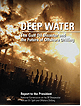
Deep Water BP Gulf oil disaster report  Deep Water: The Gulf Oil Disaster and the Future of Offshore Drilling, Report to the President, January 2011 In January of this year, the National Commission on the BP (British Petroleum) Deep Water Horizon Oil Spill and Offshore Drilling released its controversial Deep Water: The Gulf Oil Disaster and the Future of Offshore Drilling, Report to the President, January 2011. This best-selling publication offers the fullest account available of what happened in the Gulf of Mexico on April 20, 2010 and why, and proposes actions, changes in company behavior, reform of government oversight, and investments in research and technology that will be required to avert future disasters.

End of the war in Iraq  Battleground Iraq: Journal of a Company Commander There is an interesting White House timeline about the Iraq war at the end of which is a link to the Joining Forces initiative with which one can express one’s support for the troops. GPO’s bookstore has a number of books about Iraq, but two stand out as best-sellers. Battleground Iraq: Journal of a Company Commander gives a realistic account by Major Todd Brown of his experiences as a U.S. Army company commander in Iraq from April 2003 to March 2004. Hard Lessons: The Iraq Reconstruction Experienceexamines the Iraq reconstruction experience, and provides 13 take-away lessons for future contingency relief and reconstruction operations.

  • Buy them in our online bookstore:

a)      Battleground Iraq: Journal of a Company Commander

b)      Hard Lessons: The Iraq Reconstruction Experience

Japan earthquake and tsunami  Field Operations Guide for Foreign Disaster Assessment and Response Natural disasters were big in the news this year, and the Federal Government was involved in responding to them, from the National Guard in the U.S. to foreign response teams overseas. For example, in response to the tragic earthquake and resulting tsunami and nuclear reactor problems in Japan, the U.S. Agency for International Development (USAID), deployed a Disaster Assistance Response Team (DART) that included disaster response experts, urban search and rescue teams, and nuclear experts from the U.S. Department of Energy, Department of Health and Human Services, and the Nuclear Regulatory Commission. The Field Operations Guide for Disaster Assessment and Responseis used by USAID’s Office of U.S. Foreign Disaster Assistance (OFDA) for DART teams and other disaster assistance personnel when responding to foreign disasters like the Japan situation.

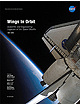
Last Space Shuttle flight  NASA and Space Shuttle publications including "Wings-in-Orbit" 2011 marked the end of NASA’s three-decade long space shuttle program when, on July 21, the final space shuttle mission ended with the shuttle Atlantis rolling to a stop at its home port, NASA’s Kennedy Space Center in Florida. NASA has published a number of terrific books about the program which you can find in our NASA and Space Shuttle Publications, along with a new set of beautiful color bookmarks, one for each shuttle and the best-selling Wings in Orbitbook.

U.S. economy and the Federal budget  Books about Government and Politics, including the Federal Budget and the Economy It seems every newscast this year has covered the US economy, Federal Government budgets and deficits and differing opinions about options to address them. You can find the President’s original budget submission published this year and subsequent analyses and responses to it in our collection of Books about the Government and Politics, including the Federal Budget and the Economy.

How can you find even more Federal Government publications? We have assembled many collections of Federal publications on our year-round Gift Guide and in our Special Collections page on GPO’s online bookstore.

About the Author: Michele Bartram is Promotions Manager for GPO’s Publication and Information Sales Division and is responsible for online and offline marketing of the US Government Online Bookstore (Bookstore.GPO.Gov) and promoting Federal government content to the public.