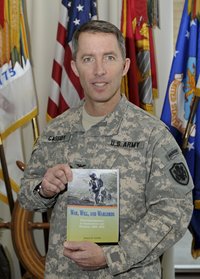
Happy 66th -or 106th- Birthday, US Air Force

September 18, 2013

According to the Department of Defense’s website, the United States Air Force is 66 years ago today “that the National Security Act of 1947 turned what was then known as the Army Air Corps into the United States Department of the Air Force. A strategic, tactical and defensive force for the skies, the Air Force has become a vital role in our country’s military power.

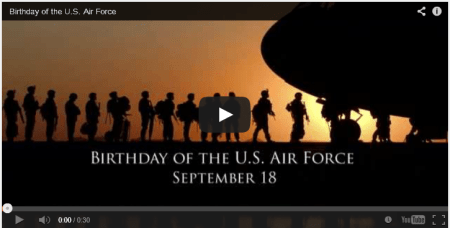
USAF-Birthday-Video

Watch this US Air Force birthday video on YouTube.

However, if you add in the years since the Army Air Corps first flew in 1907, then the Air Force’s operations have really been going strong for 106 years today. It all depends on how you count it.

Therefore, it is fitting to look at the entirety of military aviation when looking at the US Air Force’s illustrious history.

A number of excellent publications have come out recently, both in print and eBooks, for the US Air Force, Army Air Corps and military aviation in general.

The ones we most recommend for understanding the evolution of today’s US Air Force include:

Overall History and Mission
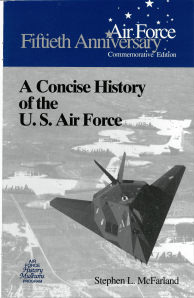
008-070-00727-4The best two books covering the overall history and mission of what is now the United States Air Force are A Concise History of the United States Air Force and its recently released EPUB eBook version, as well as the extremely thought-provoking Air Force Roles and Missions: A History (also recently released as an eBook) which traces the evolution of the Air Force’s role and missions as well as the conflicts with other branches of the military over these definitions.

Early Beginnings through World War 1

Are you more interested in the earliest days of aviation when the Army first bought one of the Wright Brothers’ planes and its “daring young men in those flying machines” began to determine how airpower could be used for military purposes? Then you should read Logbook of the Signal Corps No. 1: The United States Army’s First Airplane in paperback or as a new eBook, which recounts the experiences of Benjamin D. Foulois, the pioneering, self-taught pilot of “Signal Corps No. 1”, the very first airplane of the United States Army Signal Corps.
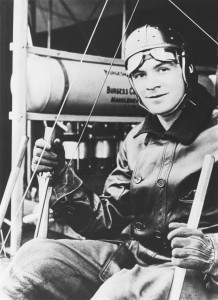
HAP: Henry H. Arnold, Military Aviator, Shown here as Army Flight Instructor in College Park, Maryland. ISBN: 0-16-049071-5And don’t miss HAP: Henry H. Arnold, Military Aviator (Paperback) or the new EPUB eBook edition which tells the story of beloved Henry “Hap” Arnold, one of the first Army flight instructors and daring pilot. (See his image to the right as an Army Flight Instructor. Image courtesy: College Park Aviation Museum.)

Another very popular publication tells the story of air espionage during World War 1: Shooting the Front: Allied Aerial Reconnaissance and Photographic Interpretation on the Western Front – World War I.
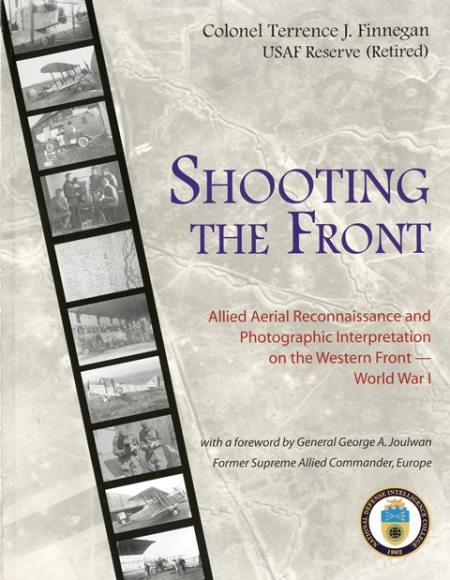
Shooting the Front: Allied Aerial Reconnaissance and Photographic Interpretation on the Western Front - World War I (Paperbound)

World War 2

World War II is when it is widely acknowledged that military aviation came into its own. Toward Independence: The Emergence of the United States Air Force, 1945-1947 tells of the rapid evolution in use of airpower in the period leading up to its formation as a separate entity.

Korean War

By the Korean War, the US Air Force had become its own branch of the United States Armed Forces. Several publications chronicle the involvement of the newly formed USAF during this conflict, including Within Limits: The United States Air Force and the Korean War, Coalition Air Warfare in the Korean War, 1950 1953, and Silver Wings, Golden Valor: The USAF Remembers Korea which includes reminiscences and perspectives of Korean War Air Force veterans and historians.

Vietnam War
War Too Long: The United States Air Force in Southeast Asia 1961-1975 ISBN: 9780160613692Over 50 years later, Americans are still wrestling with the lessons of Vietnam. So, too, is the Air Force in these excellent USAF publications War Too Long: The United States Air Force in Southeast Asia 1961-1975  and War in South Vietnam: The Years of the Offensive, 1965-1968, as well as this Army digital publication, Interservice Rivalry and Airpower in the Vietnam War (eBook).

Cold War and Space Race

When the Soviets launched Sputnik, the space race was subsequently kicked off with the United States. The Air Force role was critical during the Cold War and in both in helping start our space exploration and ongoing support through to today in support of NASA. Read Early Cold War Overflights, 1950-1956 to understand the beginning of the espionage flights, and pick up a copy of the United States Air Force in Space, 1945 to the Twenty-First Century which covers the Air Force’s involvement in space exploration.

Gulf War to the Present

None of us can forget the images of bombs dropping during the Gulf War, the tale of which is told in Decisive Force: Strategic Bombing in the Gulf War.
Turning Point 9.11: Air Force Reserve in the 21st Century, 2001-2011  ISBN: 9780160914485And anyone with family in or who themselves are in the National Guard or a military reservist knows how the Gulf Wars and Afghanistan have changed the role of these personnel from backup to active participants. One of the best books we’ve read on the subject is the excellent Turning Point 9.11: Air Force Reserve in the 21st Century, 2001-2011 which chronicles these stark changes in the Air Force Reserve since the terrorist attacks on 9.11.2001.

Air Force on TV and in the Movies

Fans of the movie “War Games” will know about NORAD. Learn the true story behind this important homeland airspace defense organization in Guarding What You Value Most: North American Aerospace Defense Command Celebrating 50 Years and a new EPUB eBook version. Includes the heart-warming story of NORAD’s Christmas Eve Santa Tracker. (Read about this in our blog post Tracking “Big Red”: NORAD’s Secret Santa Mission [UPDATED].)

Fans of the TV show “JAG” Will love to discover the real history of this Air Force department in First 50 Years: United States Air Force Judge Advocate General’s Department.

Humanitarian Operations
Wings of Hope: The United States Air Force and Humanitarian Airlift OperationsLike the other branches of the US military, the US Air Force plays an important role in humanitarian operations, both here at home and worldwide. This publication—Wings of Hope: The United States Air Force and Humanitarian Airlift Operations—tells the overall story of various airlift operations. While it sounds like the plot of a disaster movie, the Ash Warriors (paperback) and its EPUB eBook version recounts the true story of the “Ash Warriors,” those Air Force men and women who carried out their mission in the face of an incredible series of natural disasters, including volcanic eruption, flood, typhoons, and earthquakes, all of which plagued Clark Air Base in the Philippines and the surrounding areas during June and July 1991. And the horrendous Hurricane Katrina brought out the best in the Air Force’s Air Education and Training Command, whose role is described in Operation Dragon Comeback: Air Education and Training Command’s Response to Hurricane Katrina.

“Blue Sky” Future

So join us in wishing a very happy 66th (or 106th) birthday to our very own United States Air Force. May there be blue skies in its future!

How can I obtain these Air Force History publications?

  • Shop Online: You can purchase these publications from the U.S. Government Online Bookstore at http://bookstore.gpo.gov, by clicking on the links above in this blog post or shopping our United States Air Force (USAF) History collection under our US & Military History category.
  • Order by Phone: Call our Customer Contact Center Monday through Friday, 8 am to 5:30 pm Eastern (except US Federal holidays). From US and Canada, call toll-free 1.866.512.1800. DC or International customers call +1.202.512.1800.
  • Visit our Retail Store: Buy a copy of print editions from this collection at GPO’s retail bookstore at 710 North Capitol Street NW, Washington, DC 20401, open Monday–Friday, 9 a.m. to 4 p.m., except Federal holidays, Call (202) 512-0132 for information or to arrange in-store pick-up.
  • Find them in a Library: Find these publications in a federal depository library.

About the Author: Government Book Talk Editor Michele Bartram is Promotions Manager for GPO’s Publication and Information Sales Division in Washington, DC, and is responsible for online and offline marketing of the US Government Online Bookstore (http://bookstore.gpo.gov) and promoting Federal government content to the public.


September 11 Tales of Heroes and Tough Lessons

September 11, 2013

9-11 Decade of Remembrance Twin Towers and Pentagon Logo designed by David McKenzie at the Government Printing OfficeThere are certain moments and events that are etched in our national consciousness. Ask any American who was alive in the 60’s where he or she was when John F. Kennedy or Martin Luther King was assassinated and you will hear a stirring personal story. For our generation, it was September 11, 2001.

Image: September 11 Decade of Remembrance logo with World Trade Center Twin Towers surrounded by a figure representing the Pentagon. Created by David McKenzie with the Government Printing Office for the U.S. Government Bookstore.

I was right across from the Twin Towers twelve years ago today, getting ready to board a ferry for my daily commute from New Jersey across the Hudson River into Manhattan, when I saw the second plane hit the World Trade Center right across from me. So, too, I cried with a group of strangers as we stood on the ferry platform and watched in horror as the first tower fall, saw the dust cloud rise and felt the earth—and the world—tremble.

America and Americans have changed since that day… twelve years ago today. We have since heard stirring stories of heroes and sacrifice, and learned many grim lessons that are still affecting both policy and people today.

Many of these stories of heroism, missed opportunities, and resulting actions have been painstakingly and faithfully chronicled by a wide array of Federal agencies, ensuring the sacrifices and lessons are not forgotten.

Responding to the Tragedies

Both in New York and the Pentagon in Washington, DC, we saw how first responders and medical personnel rushed to save lives. These excellent publications tell the stories of the heroes from that day:

  • 008-000-01049-8Pentagon 9/11 (10th Anniversary Edition) (Paperback) includes a foreword by Secretary of Defense Leon Panetta and provides the most comprehensive account available of the 9/11 attack on the Pentagon and aftermath, including unprecedented details on the impact on the Pentagon building and personnel and the scope of the rescue, recovery, and care-giving effort.
  • 008-000-01048-0Attack on the Pentagon: The Medical Response to 9/11 not only tells the personal stories from medical personnel responding to the attack on the Pentagon, but also provides insight from MEDCOM officers detailed to New York to support National Guard troops guarding ground zero’s perimeter. It also includes the Army’s involvement in the recovery of deceased attack victims at the Pentagon and the work of the Armed Forces Institute of Pathology in identifying human remains at Dover Air Force Base. In addition, the roles of military and civilian hospital staffs and of military environmental health and mental health specialists in taking care of attack victims and their families are also examined.

Tough Lessons

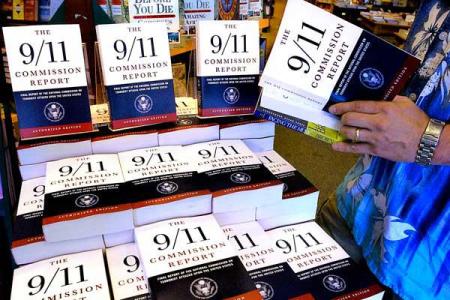
The single must-read for every American about September 11 is the official version of The 9/11 Commission Report: Final Report of the National Commission on Terrorist Attacks Upon the United States. This publication lists the findings of the National 9/11 Commission, listing all the painful errors made leading up to the terrorist attacks and outlining specific recommendations for international, national, state and local changes in policy and procedures that the panel of experts felt needed to be implemented to ensure a similar attack never happened again. This seminal publication has served to inform all subsequent policies and legislation since 9/11. It is available in print or as an eBook.

911-commission-report

Image: Launch of the 9/11 Commission Report. Courtesy: CSMonitor.com

The Senate, Select Committee on Intelligence, and House, Permanent Select Committee on Intelligence examined the intelligence failures leading up to 9/11 and jointly published the results in United States Congressional Serial Set, Serial No. 14750: Joint Inquiry Into Intelligence Community Activity Before and After Terrorists Attacks of September 11, 2001 With Errata.

027-001-00097-1Additional insights into the causes of and responses to terrorism can be gleaned from Terrorism Research and Analysis Project (TRAP): A Collection of Research Ideas, Thoughts, and Perspectives, V. 1. This publication provides the findings from the post-9/11 FBI Terrorism Research and Analysis Project (TRAP) Symposium. TRAP is a leading research consortium made up of international/domestic academics and law enforcement officers, and is a working group sponsored by the FBI’s Behavioral Science Unit. In it, these counter-terrorism experts provide a better understanding of the causes of terrorist activity and possible government response tactics to mitigate terrorist actions.

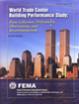
064-000-00029-2As we watch the new World Trade Center going up in New York, we can be assured that builders are incorporating architectural and construction lessons learned from the World Trade Center Building Performance Study: Data Collection, Preliminary Observations, and Recommendations.

Policy and Legislative Response

United States Congressional Serial Set, Serial No. 14924, House Report No. 724, 9/11 Recommendations Implementation Act, Pts. 1-6 outlines the specific legislative changes enacted by Congress, providing both background and justifications for them along with attribution.

A print copy of the law itself can be purchased here: Implementing Recommendations of the 9/11 Commission Act of 2007, Public Law 110-53 along with the details of the various committee conferences contributing to it in Implementing Recommendations of the 9/11 Commission Act of 2007, Conference Report to Accompany H.R. 1, July 25, 2007.

Defending the Homeland since 9/11

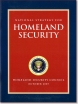
041-001-00657-5National Strategy for Homeland Security (October 2007) provides the common framework outlined by the George W. Bush Administration to guides, organize and unify the United States’ homeland security efforts.

008-000-01068-4A new publication from the Air Force Reserve called Turning Point 9.11: Air Force Reserve in the 21st Century, 2001-2011 tells the story of how the Air Force Reserve responded to 9/11 and have contributed to the security of the United States in a post-September 11 world.

050-012-00440-4In a similar vein, Rogue Wave: The U.S. Coast Guard on and After 9/11 chronicles the involvement of the U.S. Coast Guard on that fateful day and the evolving role in national and world security since.  Part of the Coast Guard 9/11 response is told in this touching video about the boatlift to evacuate people from lower Manhattan is told in a video narrated by Tom Hanks entitled: BOATLIFT, An Untold Tale of 9/11 Resilience.”

A touching video about the boatlift to evacuate people from lower Manhattan on 9/11 (September 11) is told in a video narrated by Tom Hanks entitled: BOATLIFT, An Untold Tale of 9/11 Resilience. Click on the image above or this link to view the “Boatlift” video.

The upcoming U.S. Army War College Guide to National Security Issues, Volume 2: National Security Policy and Strategy provides a summarized look at the national security curriculum now taught to our nation’s top military and civilian leaders by the U.S. Army War College. Revised with the lessons learned from the years since 9/11, this publication includes a chapter on ”Securing America From Attack: The Defense Department’s Evolving Role After 9/11.”

How can I obtain these Federal 9/11 publications?

  • Shop Online: Print Editions of these 9/11-related publications may be ordered from the U.S. Government Online Bookstore at http://bookstore.gpo.gov, by clicking on the links above in this blog post or shopping our Terrorism & 9/11 History collection under our US & Military History category.
  • Order by Phone: Call our Customer Contact Center Monday through Friday, 8 am to 5:30 pm Eastern (except US Federal holidays). From US and Canada, call toll-free 1.866.512.1800. DC or International customers call +1.202.512.1800.
  • Visit our Retail Store: Buy copies of these publications at GPO’s retail bookstore at 710 North Capitol Street NW, Washington, DC 20401, open Monday–Friday, 9 a.m. to 4 p.m., except Federal holidays, Call (202) 512-0132 for information or to arrange in-store pick-up.
  • Find them in a Library: Find these publications in a federal depository library.

About the Author: Government Book Talk Editor Michele Bartram is Promotions Manager for GPO’s Publication and Information Sales Division in Washington, DC, and is responsible for online and offline marketing of the US Government Online Bookstore (http://bookstore.gpo.gov) and promoting Federal government content to the public.


Code Talkers to Better Walkers: How American Indians Have Helped Fight Wars and Obesity

August 21, 2013

In honor of Navajo Code Talkers Day this past week on August 14, Government Book Talk explores some Federal publications that utilize American Indian traditions and culture to combat serious problems of the past and present.

Native Code Talkers in World War I

“Code talkers” became the term used to describe Native American soldiers from various Indian tribes who communicated on radios, telephones and telegraph during World Wars I and II. They spoke in their own languages and dialects, all of which were indecipherable by enemy forces. Because few non-Indians knew these difficult native languages, which in many cases had no written form, they provided ideal codes for relaying secret operational orders.

WWI-Choctaw-Code-Talkers-w-FlagImage: The Choctaw Code Talkers enlisted in the U.S. Army in World War I even though their lack of citizenship exempted them from the draft. (U.S. Army photo)

In France during World War I, the 142nd Infantry Regiment, 36th Division, had a company of Indians who spoke 26 languages and dialects. Two Indian officers were selected to supervise a communications system staffed by 18 Choctaw. The team transmitted messages relating to troop movements and their own tactical plans in their native tongue. They helped the American Expeditionary Force win several key battles in the Meuse-Argonne Campaign in France, the final big German push of the war.

Soldiers from other tribes, including the Cheyenne, Comanche, Cherokee, Osage and Yankton Sioux also were enlisted to communicate as code talkers. Previous to their arrival in France, the Germans had broken every American code used, resulting in the deaths of many Soldiers. However, the German Army— which captured about one out of four messengers—never broke the Indians’ “code.”

More Native Code Talkers are Used in World War II

After the United States entered World War II in December 1941, more Armed Forces used code talking units with each unit composed of members of a specific American Indian tribe.

Navajo Code Talkers

The United States Marines recruited several hundred Navajos for duty in the Pacific region. The Marines chose these Navajos for their ability to speak their native language, Diné bizaad (Navajo), for code talking.

Philip Johnston, a son of missionaries who had grown up on the Navajo reservation, originally recommended Navajo to the Marines as a language well suited for cryptology. In a memo to the Commandant of the Marine Corps in early 1942, Navajo was declared uniquely suited to succeed more than some other languages proposed for use. At that time, most Navajos were fluent in their native language. The Marines were lucky; in 1942 only an estimated 28 non-Navajo Americans could speak the extremely difficult Navajo language!

Hitler had heard of the possibility of using Native American languages for codes prior to the United States’ entry into the war, and had sent a number of German anthropologists to the United States prior to WWII to learn Native American languages. Navajo was reportedly the only language the German anthropologists had yet to learn. Navajo also benefited by being so unlike other Native American languages that there was no language similar to it. If you’re fluent in Spanish, you might be able to muddle along in Portuguese after some basic lessons. Navajo has no analog.

Navajo-Code-Talkers-in-JungleIn May 1942, the first Navajo recruits attended boot camp; they then moved to Camp Pendleton in Oceanside, California, to create the Navajo Code Talkers Dictionary. The Marines trained approximately 400 Navajos as code talkers. To relay the messages they were encoding, they had to learn to operate three types of radios. At that time the code talkers called themselves “radiomen”.

The developers of the Navajo code modeled the alphabet portion on the Joint Army/Navy Phonetic Alphabet. That alphabet uses words to represent letters, e.g., Fox for the letter F. In the Navajo code, Ne-Ahs-Jah is Navajo for Owl, which stood for the letter O. To spell the word Navy, the code talker might say, “Tsah (Needle, or N), Wol-La-Chee (Ant, or A), A-Keh-Di-Glini (Victor, or V), Tsah-As-Zih (Yucca, or Y)”.

The Navajo Marines also chose Navajo words to represent about 450 frequently used terms in the military. It was hard. According to code talker Wilfred Billey, “one of the most difficult parts of forming the Navajo code was using it to relay precise information, such as coordinates or troop movements because several words in the Navajo language have various meanings” (May 22, 2003, “Navajo Code Talker Continues Oral Tradition”, Marine Core Logistics Base Albany).

Some of the choices were very creative. Navajo is a classic language that didn’t originally include terms like “tank”, so the Navajo Marines dubbed it “Chay-Da-Gahi”, or tortoise. The Navajo Code Talkers Dictionary, published by the Navy years later after it was declassified, showed the versatility of the code’s creators. The code was so effective in World War 2, it was also used in the Korean War, being phased out before Vietnam.

In fact, at Iwo Jima, Major Howard Connor, 5th Marine Division signal officer, declared, ‘Were it not for the Navajos, the Marines would never have taken Iwo Jima’” (Navajo Code Talkers: WWII Fact Sheet). During that battle alone, the radiomen transmitted 800 messages without error.

Comanche, Sioux and Hopi Code Talkers for the Army

Although the Navajo tribe is the one most remembered for its contributions to the World War II communications code units, the US military also used Basque, Comanche, Sioux, Hopi and a number of other American Indian languages as code languages. Basque was rarely used because there were native Basque speakers in Europe which made the U.S. military wary of using it more widely.  However, because the various Army units of Code Talkers were so secret, their very existence was kept classified until the 1970s or later.

American-Indian-Code-Talkers-LanguagesImage: List of American Indian Code Talkers’ languages and the numbers of tribal members who served, if known. There were at least two Code Talkers from each tribe. Source: National Museum of the American Indian’s website.

Army-Signal-Corps_9780160453519The US Army’s Signal Corps is the military branch that develops, tests, provides, and manages communications and information systems support for the command and control of combined US Armed Forces, including code talkers. You can read the history of the Army Signal Corps in Getting the Message Through: A Branch History of the U.S. Army Signal Corps.

The US Army’s 4th Signal Company, also known as the Code Talkers, used seventeen Comanche Code Talkers. Like the Choctaws of World War I, and the Navajos in the Pacific Theater, the Comanche Code Talkers used their native language to prevent the enemies of the European Theater from intercepting messages of the allied troops during World War II. The unit was instrumental during the Normandy invasion.

Sioux code talkers, composed of Lakota, Dakota, and Nakota native soldiers or “L.D.N.’s”, spoke their native “dialects” (languages) which were understood by each native soldier in the unit. On December 19, 2000, Congressman John Thune said of the Sioux code talkers’ contribution:

“It is important for us to honor these veterans whose contributions have, until recently, been ignored. Often sent out on their own to provide communications with headquarters on enemy location and strength, they sometimes spent 24 hours in headphones without sleep or food. Many endured terrible conditions without protection from the enemy. Using three Sioux languages Lakota, Nakota and Dakota, the Sioux Code Talkers were able to communicate messages the enemy was unable to crack.”

The Hopi tribe also helped in the communications coding efforts. Eleven Hopi men developed a highly secret code language which they used to assist US Army intelligence in the Marshall Islands, New Caledonia and the Philippines during the Second World War. Again, because of the super top-secret nature of their work for Army Intelligence, the Hopi Code Talkers’ contribution was not officially recognized until April 26, 2012, on the inaugural Hopi Code Talkers Recognition Day.

Applying American Indian Traditions to the War against Obesity

The United States Government continues to utilize Native American language and traditions to solve important problems of the day. For example, with the public health issue of childhood obesity and diabetes rising to dangerous levels in the US, the Department of Health and Human Services Centers for Disease Control and Prevention (CDC) Native Diabetes Wellness Program (Wellness Program) and the Indian Health Service (IHS) Division of Diabetes Treatment and Prevention recently teamed up with the Tribal Leaders Diabetes Committee (TLDC) to produce the award-winning Eagle Book series.

The developers of this series realized that the old, traditional American Indian diet and activity levels were in line with today’s medical recommendations to eat less processed food and more fruits and vegetables as well as exercising more. Thus, they worked with Native groups to incorporate traditional American Indian story-telling techniques and themes to promote increased physical activity such as walking and playing as well as making healthier—and more natural—food choices to reduce obesity and prevent diabetes.

Coyote-and-the-Turtles'-Dream-9780160913174 Preventing childhood obesity and diabetesThe common Native American theme of the tortoise/ turtle used by the American Indian code talkers resurfaces in the newest book in the series, Coyote and the Turtle’s Dream.  In this middle school-age mystery/ adventure book, the wise elderly box turtle helps the mischievous Coyote and the Indian reservation town’s residents solve a mystery to foil the plans of a fossil poacher while teaching the underlying message about healthy eating and increased physical activity.

With the first four books aimed at elementary schoolers– Through the Eyes of the Eagle, Knees Lifted High, Plate Full of Color, and Tricky Treats and the next book for middle schoolers– Coyote and the Turtle’s Dream— the Eagle Book series has been snapped up by teachers, nutritionists, librarians, parents and children’s health providers all over the country as an effective tool to teach children about healthier eating habits and increasing activity while also instilling an appreciation for Native culture which extols respect for elders and living in harmony with nature.

You can read more about the Eagle Book series on our Government Book Talk blog post entitled: “Native Traditions Help Kids Unplug, Read and Be Healthy.”

How Can I Obtain These Publications?

EBOOKS:

PRINT EDITIONS:

About the author(s): Adapted by Government Book Talk Editor-in-Chief and GPO Promotions & Ecommerce Manager, Michele Bartram, from an original blog post by Jennifer K. Davis from GPO’s Library Services & Content Management Division that supports the Federal Depository Libraries Program (FDLP).


Influence without Boots on the Ground: Seaborne Crisis Response

August 7, 2013

TInfluence without Boots on the Ground: Seaborne Crisis Response, by Dr. Larissa Forster , ISBN: 9781935352037here is an ongoing debate about the civil war in Syria and the role the United States is playing, should play, will play or won’t play. One option is “boots on the ground” or the deployment of troops to the region, a physical presence. To examine another option, look to Influence without Boots on the Ground: Seaborne Crisis Response, a recent publication by the Naval War College in their Newport Papers series that explores the power and influence of the United States Navy. The Navy is unique in that it has the ability to operate on, above, and under the surface of the sea and has presence around the world since most countries are near the sea or within range.

Influence without Boots on the Ground explores the political use and impact of naval forces during foreign-policy crises that fall short of full-scale warfare.

The first chapter, entitled “Navies Are Able to Do Things That Armies Can’t”, explains the role of the Navy in the context of the U.S. military and how it differs from other branches. The author emphasizes that the Navy is unique in that its presence alone can comfort allies and pressure enemies.  The second chapter piggybacks on the first by examining the concept of naval diplomacy and the many theories that accompany the concept.

U.S. Navy sailors in joint exercise with Peruvian Navy. (By US Navy)The third chapter– “Uncharted Waters: Data on U.S. Naval Activity Short of War”— identifies different data models and ways of gathering information and crunching the numbers to determine the Navy’s influence in international crises, from disaster response to ethnic cleansing, anti-piracy, combating drug and human trafficking and more. The final two chapters bring together the ideas of the entire publication by using case studies to illustrate the theories and data presented in the previous chapters.

Image:  U.S. Navy sailors in joint exercise with Peruvian Navy. (Source: US Navy)

While Influence without Boots on the Ground is intended for a specific audience in the naval and military scholar community, the general public will find the first chapter the most readable section as it uses more common historical references to demonstrate the Navy’s influence.

The most important part of the publication is the case studies in the later chapters that look at the U.S. Navy’s involvement in conflicts in the Middle East, Africa and Latin America in the second half of the 20th century. The case studies simplify the complex theories and data by giving real life examples. While the specific name of ships and air craft carriers is over most people’s heads, naval enthusiasts will enjoy the detailed information and accounts of the conflicts used in the case studies.

Check out Influence without Boots on the Ground: Seaborne Crisis Response to brush up on your naval knowledge and make an informed opinion regarding current events. All in all, you may learn that the sea can be mightier than the sword.

HOW DO I OBTAIN “Influence without Boots on the Ground”?

About the Author: Our guest blogger is Emma Wojtowicz, Public Relations Specialist in GPO’s Office of Public Affairs. Government Book Talk Editor: Michele Bartram, Promotions & eCommerce Manager for GPO’s Publication and Information Sales Division.


Radio 101: Operating Two-Way Radios Every Day and in Emergencies

July 10, 2013

When-all-else-fails-amateur-radioTwo-way radio communication may seem like a thing of the past with smart phones and the availability of more advanced technology. However, with the recent frequency of natural disasters, storms, and other emergency situations, more attention is being paid to radios as a reliable form of communication and a possible back-up communication option, including amateur radio operators.

Image courtesy: Decatur County Amateur Radio Club

For example, the Times of India reports that the recent monsoon flooding disaster in the northern India state of Uttarakhand in July 2013 has prompted officials in other flood-prone regions to establish Amateur Radio facilities to provide emergency communication.

What are two-way radios and how do they work?

Two-way-radioImage: Amateur radio equipment. Image courtesy of the American Radio Relay League.

According to Wikipedia,

A two-way radio is a radio that can both transmit and receive (a transceiver), unlike a broadcast receiver which only receives content. A two-way radio (transceiver) allows the operator to have a conversation with other similar radios operating on the same radio frequency (channel).

Two-way radios are available in mobile, stationary base and hand-held portable configurations. Hand-held radios are often called walkie-talkies or handie-talkies.

Radio 101

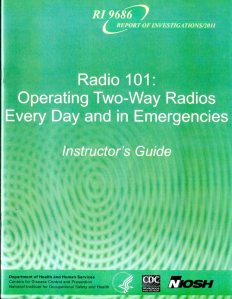
9780160910012A recent training publication produced by the Department of Health and Human Services, Centers for Disease Control and Prevention and the National Institute for Occupational Safety and Health called Radio 101: Operating Two-Way Radios Every Day and in Emergencies provides training materials on how to operate two-way radios. Included are an instructor’s guide, a DVD with a power point presentation and a student handbook. These training materials practice what they preach, in that they are brief, straightforward and concise– just as two-way radio conversations need to be.

While many of the scenarios used throughout the training materials apply to miners and situations where miners would need to use two-way radios, the information is generic enough that it is applicable to any emergency.

Two-way Tips

The information provided in the training materials seems like common sense, but there are a few important tips to consider when using two-way radio communication in an emergency situation:

  • Less is more. Be brief and efficient; know what you are going to say before using the radio so you do not tie up the channel while you are thinking of what to say.
  • Don’t mind your manners.  It is not necessary to be polite, saying “please” and “thank you.”
  • Repetition rocks. Repeat back information you receive to confirm that you heard the correct information.
  • No privacy policy. Be aware that conversations are not private on these open channels and may be heard by others picking up your frequency. However, this downside is a big plus in emergency broadcasts and SOS situations where the operator wants as many people possible to be listening in to be able to pick up and relay his message.

License to Help

To operate an amateur two-way radio in the United States requires taking a test and obtaining a license from the FCC (Federal Communications Commission). The American Radio Relay League (ARRL) is the national association for amateur radio (also called ham radio with operators being called “hams”) in the US and “provides hams and non-hams the resources to learn, get licensed, and help others on the air.

Amateur-Radio-Emergency-ServiceAlready have your amateur radio license and want to help your community? Check out the ARRL’s Public Service page for training, resources, manuals and more. The Amateur Radio Emergency Service (ARES) consists of licensed amateurs who have voluntarily registered their qualifications and equipment for communications duty in the public service when disaster strikes.

Recently, the American Radio Relay League hosted their national Field Day where amateur radio clubs across the country gathered locally to test their radio equipment and practice communication strategies in the event of an emergency. Learn more about Field Day.

Rules of the Radio

Together with the Radio 101 training guide, two-way radio operators who want to learn the “rules of the radio” often buy the latest United States Frequency Allocations: The Radio Spectrum Chart (shown below). This poster shows through color codes the parts of the radio spectrum that are allocated to each type of radio service, including amateur (ham) radio, commercial radio and television broadcasting, radio navigation, mobile, satellite, and others.

9780160908958Finally, the definitive sources of radio regulations, frequencies and procedures can be found in the Manual of Regulations and Procedures for Federal Radio Frequency Management and the Code of Federal Regulations Title 47 (FCC Rules and Regulations).

It is important to be prepared in any situation and not rely on only one form of communication. Thus, it is comforting to know that amateur radio operators are working on behalf of their communities to help during emergency situations.

HOW DO I OBTAIN these radio-related publications?

About the Authors: Our guest blogger is Emma Wojtowicz, Public Relations Specialist in GPO’s Office of Public Affairs. Additional content was provided by Government Book Talk Editor Michele Bartram, Promotions & eCommerce Manager for GPO’s Publication and Information Sales Division.


Agency of the Month: US Army Center of Military History

May 14, 2013

CMH_AgencyoftheMonth_Slide

We are starting a new series to feature various Federal agencies of note as Agency of the Month. With it being National Military Appreciation Month in May, Armed Forces Day this Friday and Memorial Day coming up in under two weeks, it is appropriate that we highlight one of our most distinguished and prolific agency publishers: the United States Army Center of Military History.

The Center’s Mission

What is the CMH’s mission? The Center of Military History (or CMH to military history buffs and cognoscenti) reports to the Administrative Assistant to the Secretary of the Army and is the primary historical branch for the Army. According to its website on its Origins, the Center is responsible for the appropriate use of history throughout the United States Army which encompasses these tasks:

  • Recording the official history of the Army in both peace and war, including written and oral history;
  • Advising the Army Staff on historical matters;
  • Providing historical support to the Army Secretariat and Staff, contributing essential background information for decision making, staff actions, command information programs, and public statements by Army officials;
  • Expanding its role in the vital areas of military history education, including working with Army schools to ensure that the study of history is a significant part of the training of officers and noncommissioned officers;
  • Managing the Army’s museum system and historical artifacts (See photo below);
  • Introducing automated data-retrieval systems and maintaining an Army history archive and publications list;
  • Maintaining the organizational history of Army units, allowing the Center to provide units of the Regular Army, the Army National Guard, and the Army Reserve with certificates of their lineage and honors and other historical material concerning their organizations.

Westphal-views-CMH-Museum

Image: (Fort Belvoir, Virginia, May 30, 2012)–Under Secretary of the Army Dr. Joseph W. Westphal visited the U.S. Army Center of Military History’s Museum Support Center Facility to view the impressive collection of over 16,000 pieces of American history housed in the state-of-the-art facility. Image Source: United States Army

Today, the Center is made up of a team of distinguished military historians, translators, editors, archivists, and even cartographers to accurately record, analyze and publish the Army’s history in all its forms.  These dedicated professionals live by early 20th century philosopher George Santayana’s motto, who wrote that “Those who cannot remember the past are condemned to repeat it.”

Research Focus Areas

Under the direction of the Chief of Military History and his principal adviser, the Army’s Chief Historian, CMH’s staff is involved in dozens of major writing projects at any one time. Topics can range from those that involve new research such as traditional studies in operational and administrative history (from the present on back) or the examination of such areas as procurement, peacekeeping, and the global war on terror, to name a few.

The Center serves as a clearing-house for all oral history programs in the Army, as well as conducting and preserving its own oral history collections, including those from the Vietnam War, Desert Storm, and the many recent operations.  Its famous end-of-tour interviews of officials within the Army Secretariat and Staff are critical for providing a basis for its annual histories of the Department of the Army.

“Famous and Favorite” CMH Publications

With hundreds of top-quality publications available from the Center of Military History, and many of these award-winning books, it’s hard to choose just a few, so I’ll highlight some currently available titles that are not only my personal favorites, but that also just happen to be customer favorites and best-sellers as well.

Civil War Sesquicentennial Series

The Center traces its lineage back to those historians under the Secretary of War who compiled the Official Records of the Rebellion, a monumental history of the Civil War begun in 1874. Today with America honoring the 150th anniversary of the Civil War, the Center returns to those roots by producing a series of commemorative campaign brochures for the Civil War Sesquicentennial.

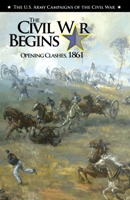
The Civil-War-Begins: Opening Clashes 1861 a Center of Military History publication 75-2The first title in this series, The Civil War Begins: Opening Clashes, 1861, is already out and describes those confusing and bloody early battles. (Read our earlier review of this title on this blog, entitled First Blood: Year One of the War Between the States.)

How to obtain The Civil War Begins: Opening Clashes, 1861?  Order it from the U.S. Government Bookstore website:

Additional brochures covering Chancellorsville, Vicksburg and Gettysburg are due out after Memorial Day.

Army History Bulletin

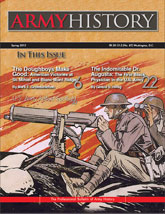
One of the Center’s most popular publications for the public and military alike is its best-selling quarterly journal entitled “ Army History: The Professional Bulletin of Army History.”

Army History: Professional Bulletin of U.S. Army History Spring-2013_AH87This full-color magazine has articles spanning the gamut of Army history topics by a myriad of knowledgeable authors. For example, the Spring 2013 issue features these guest articles:  “The Doughboys Make Good: American Victories at St. Mihiel and Blanc Mont Ridge“, by Mark E. Grotelueschen and “The Indomitable Dr. Augusta: The First Black Physician in the U.S. Army“, by Gerald S. Henig.

Regular columns in Army History include: News Notes, U.S. Army Artifact Spotlight, Book Reviews and Chief Historian’s Footnote.

How can I obtain the Army History: The Professional Bulletin of Army History?

World War II Collected Works

Perhaps my personal favorite is The U.S. Army and World War II: Collected Works (DVD). It is a comprehensive DVD compilation of PDFs of every book on World War II that the Center of Military History every published, which encompasses an astonishing 156 volumes!

The U.S. Army and World War II: Collected Works (DVD)For fans of World War 2 history, it doesn’t get any better—or more comprehensive—than this, as battles, tactics, and outcomes are sourced straight from those who were in the thick of things and analyzed by top historical experts.

How can I obtain “The U.S. Army and World War II: Collected Works (DVD)”?

Thus, as we honor our members of the Armed Forces this week and remember our lost servicemen and women on Memorial Day, we can be comforted by the fact that the dedicated team at the Center of Military History is there to ensure that their sacrifice, wisdom and experiences are not forgotten.

About the author: Government Book Talk Editor Michele Bartram is Promotions Manager for GPO’s Publication and Information Sales Division in Washington, DC, and is responsible for online and offline marketing of the US Government Online Bookstore (http://bookstore.gpo.gov) and promoting Federal government content to the public.


Fighting Enemies or Disease, Asian Americans Offer a Rich Heritage

May 1, 2013

As Asian-Pacific American Heritage Month kicks off, and the anniversary of WWII’s VE (Victory in Europe) Day approaches (May 8), it’s a good time to talk about a major contribution of Asian and Pacific-Islander Americans.

Japanese Americans’ Battle of Wits with the Japanese in WW II

Nisei-Linguists-CMH_70-99-1The book Nisei Linguists: Japanese Americans in the Military Intelligence Service During WWII published by the Army’s Center of Military History is an excellent starting point to examine that history. When the United States entered WWII in 1941, the War Department knew that their intelligence efforts would not be successful without understanding of Japanese language and culture. However, few Americans other than the 300,000 or so Japanese Americans living mainly on the West Coast and Hawaii had such knowledge.

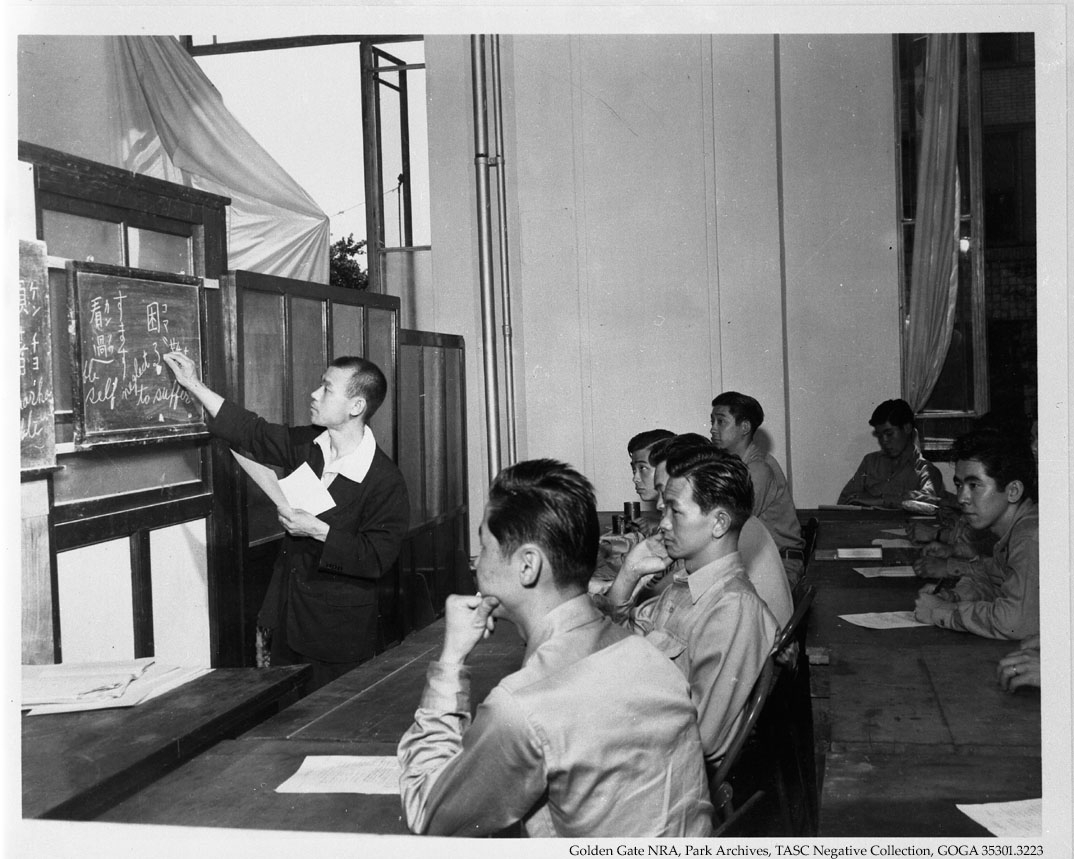
The War Department tapped the talents and skills of the second generation (Nisei) Japanese Americans. The Western Defense Command chose sixty Nisei soldiers for Japanese language training at the Fourth Army Intelligence School at the Presidio in San Francisco. The school moved to the Midwest after Pearl Harbor, first locating it in Camp Savage and later in Fort Snelling. The program, renamed the Military Intelligence Service Language School, ran until 1946. Nearly six thousand military linguists graduated from the school to enter the Military Intelligence Service (MIS).

MISCrissyField

Image: Nisei linguists undergoing training at MIS Crissy Field.

In addition to telling the story of the program and school, the book also describes how the Nisei served with every major unit and headquarters in the Pacific theater. It is testimony to the Nisei’s loyalty and smarts that it took the War Department only two years to get the Nisei military intelligence program up and running. The Nisei braved considerable prejudice to work for U.S. military intelligence, and there is no doubt their participation in American intelligence efforts made the war end earlier.

No one told the story of these linguists for years after WWII, and it was not until the 1980s and 1990s that people began to talk about their experiences with the program. Finally in 1994, Senator Daniel K. Akaka and some other Congressional members asked the Secretary of the Army to publish an official history of the Nisei linguists. This book is the result of that request.

Learn more about the Nisei language intelligence program by picking up a copy of this fascinating volume at the GPO Online Bookstore in Paperback edition or as an eBook.

Asian Americans Battle Disease Today

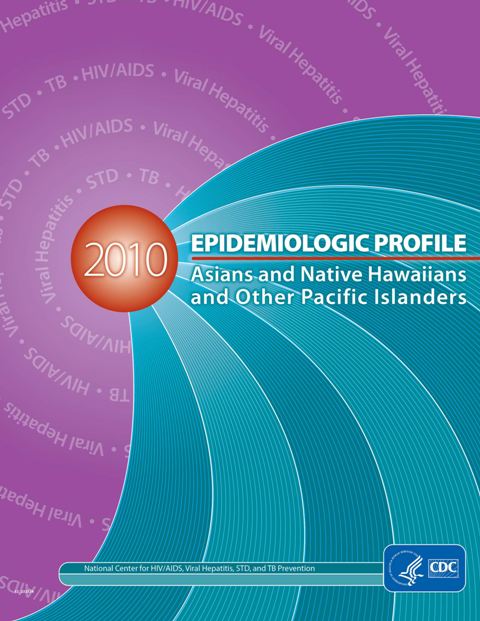
Epidemiologic-Profile-2010-Asians_coverHaving turned our thoughts to how Asian-Americans contributed to the care of our nation, it’s also a good time to think about how we care for the Asian-American and Pacific-Islander American portion of the United States population. The Center for Disease Control and Prevention (CDC) has just published Epidemiologic Profile 2010: Asians and Native Hawaiians and Other Pacific Islanders.

According to the CDC, “This Epidemiologic Profile is the first compilation of infectious disease-specific data in a single report that focuses on two racial groups in the United States: the Asian population and the Native Hawaiian and Other Pacific Islander population.” The volume includes a chapter in which the Census Bureau contributes to the description of the Asian and Native Hawaiian and Other Pacific Islander populations who reside in the United States.

The report tracks the involvement of Asians, Native Hawaiians and other Pacific Islanders in cases of endemic disease. Asians, Native Hawaiians and other Pacific Islanders make up a disproportionately large number of cases in some diseases (tuberculosis and hepatitis B), and in others, a smaller percentage of cases than their representation in the U.S. population (STDs and HIV). The report examines specific disease statistics, the challenges of public health education, treatment and disease risk factor mitigation for these populations.

Any public health official, student, social worker, or government employee who works with these populations would definitely want to read this book.

GPO has cataloged a record for the FREE electronic version that Federal depository libraries got in the April 2013 record load.

How can I access the records to both these publications?

How can I purchase Nisei Linguists: Japanese Americans in the Military Intelligence Service During WWII?

Our guest blogger is Jennifer K. Davis from GPO’s Library Services & Content Management Division that supports the Federal Depository Libraries Program (FDLP). (Article is adapted from an original  post in the FDLP Community site.)


Help is Just a Call, Click or Page Away: Federal Disaster Helplines & Emergency Medical Resources

April 19, 2013

Sadly, most adults in this country can remember some disaster or tragedy that’s happened to them or one of their loved ones in recent history. Most people in my office have their own exit strategy story from 9/11.  We all remember how we tried to cope, and we feel deep sympathy for fellow citizens in similar situations.

After the horrific events at the Boston Marathon and the Texas fertilizer factory explosion this past week, many Americans are again in the unfortunate position of needing assistance in the face of life-changing events. Your Federal government is here to help both the injured citizens and the local medical personnel who rush to their aid, both during and after the disaster occurs.Complementary Federal and local disaster response

Image credit: Vanderbilt University Medical Center Department of Emergency Preparedness  

I. Federal Disaster Resources for Civilians

The Disaster Distress Helpline (DDH) is, in the words of their own staff,

“…the first 24/7, year-round national crisis hotline exclusively dedicated to providing free, immediate and confidential crisis counseling and support to people in distress related to any natural or man-made disaster, such as the explosions in Boston. We offer this counseling 24/7/365 through phone (1-800-985-5990) and through SMS/text messaging (text ‘TalkWithUs’ to 66746) – and DDH is for those affected, family member and loved ones, as well as for responders.”

SAMHSA-Disaster-Distress-Helpline

Operated by the Department of Health and Human Services’ Substance Abuse and Mental Health Services Administration (SAMHSA), the Disaster Distress Helpline’s Web page www.disasterdistress.samhsa.gov also has a section devoted to incidents of mass violence.

If you are suffering from trauma related to the Boston Marathon attack, or similar events, reach out to the Disaster Distress Helpline. Get help, get some shelter. You’re going to wake up tomorrow, and the day after that. Make your day bearable; as Malcolm X said, “The future belongs to those who prepare for it today.”

Additional Federal disaster and emergency resources for civilians include:

GPO is helping in its own way; you can find the catalog record about the Disaster Distress Hotline in GPO’s Catalog of Government Publications or your local federal depository library.

II. Federal Disaster Resources for First Responders and Civilian Medical Personnel

With the tragic terrorist bombings in Boston,  fertilizer factory explosion in Texas, mass shootings in Sandy Hook, and other recent disasters, medical personnel, civilian first responders and mental health personnel have had to learn to deal with injuries both physical and mental that are usually only experienced on the battlefield.

With the experience gained in treating the wounded and traumatized in wars in Iraq and Afghanistan and mass violence and disasters in the US, the Departments of Defense, Health and Human Services, Homeland Security, Justice, and Transportation–

including FEMA, US Fire Administration, Pipeline and Hazardous Materials Safety Administration, Substance Abuse and Mental Health Services Administration, Center for Mental Health Services, US Special Operations Command, and particularly the Army’s Office of the Surgeon General, Walter Reed Army Medical Center, USAMRIID- US Army Medical Research Institute for Infectious Diseases, U.S. Army Medical Department Center and School, and the Borden Institute

— have produced a number of outstanding resources and publications which are of extreme value to emergency medical personnel, including EMTs and surgeons, mental health counselors, fire and rescue personnel, and first responders of all kinds.

[UPDATE 4/30/2013] One great resource for first responders is the Public Health Emergency website maintained by the US Department of Health and Human Services. This is meant to be a one-stop resource for all of the federal medical resources and information for emergency response. The military version, the Department of Defense Force Health Protection and Readiness National Disaster Medical System (NDMS) Page, is here.

[UPDATE 4/26/2013] One of the best resources we have seen was provided by one of our readers, a Regional Emergency Coordinator with the Department of Health and Human Services. It is a one-stop site for all emergency medical resources called the WMD, Emergency Management, and Medical Web Sites List. The author says it is updated every six months to keep it accurate, and it “is intended to provide an extremely “comprehensive list of internet sites of use for emergency planning and in particular Weapons of Mass Destruction (WMD) and medical emergency planning.

boston-marathon-emergency-medical-responseImage: First responders at the Boston Marathon bombings, including fire and rescue and emergency medical personnel. Image credit: EMSWorld

All of these Federal publications below can help civilian emergency response and medical personnel quickly learn from these Federal and military experts on how to respond to disasters and how to treat gunshot and blast wounds (such as from bombs and IEDs), amputations, and other combat-style injuries both in the field as well as the rehabilitation and psychological factors afterwards, including post-traumatic stress.

Some of the more pertinent disaster response and treatment publications that can be found on the U.S. Government Bookstore include:

About the Authors

Part I: Excerpted from a post on the FDLP Community Blog on April 18, 2013, by guest blogger Jennifer Davis from GPO’s Library Services & Content Management Division that supports the Federal Depository Libraries Program (FDLP) who wrote about the Disaster Distress Helpline.

Part II: Government Book Talk Editor Michele Bartram writes about the disaster and emergency response publications that can help civilian personnel respond to disasters with combat-style injuries. Ms. Bartram is Promotions Manager for GPO’s Publication and Information Sales Division in Washington, DC, and is responsible for online and offline marketing of the US Government Online Bookstore (http://bookstore.gpo.gov) and promoting Federal government content to the public.


March Madness: New GPO Bookstore Website and Historic Anniversaries

March 22, 2013

March is traditionally a month of change and national excitement in the United States. Together with the change of seasons and college basketball frenzy, some important national milestones were reached this month that we should acknowledge, from new achievements to key anniversaries.

New U.S. Government Bookstore Website

First, last week we launched our upgraded U.S. Government Bookstore ecommerce site, http://bookstore.gpo.gov/.  Our ecommerce website has gone through several iterations since its first version in 1999, each time adding functionality to keep up with the changing needs.  Today, GPO has over 4,000 Federal print publications and more than 150 eBooks available through our online bookstore.

New-US-Government-Online-Bookstore-website

Our new website includes the following user-friendly features:

Browse-ALL-Topics-on-GPO-BookstoreClick on the dark blue Browse All Topics button on the site to see and browse by a list of all the topical categories.

These last two features—eBooks and new Categories—are particularly important in light of three other important milestones this month.

National Women’s History Month

March is National Women’s History Month in the United States, and we have a new main “Browse by Topic” category, Minorities, Cultures & Languages, where you can find books for and about African Americans, American Indians, Asian Americans & Pacific Islanders, Cultural Awareness, Disabled, Hispanics, LGBT, Minority Issues, Non-English Government Publications, Seniors & Elderly and Women, including dozens of books and eBooks about Women’s History.

Womens_History_Books_Slide

Harriet Tubman Centennial

One of the famous American heroines in the Women’s History collection is Harriet Tubman, who died 100 years ago this month making it her Centennial. Tubman escaped from slavery and returned to lead dozens of others to freedom in the mid-1800s. In addition to being the most well-known of Underground Railroad “conductors,” she was also a nurse, spy, suffragist, and more.

With all these roles, it is appropriate that we have created so many new “Browse by Topic” categories. One is Slavery & Underground Railroad (under US & Military History), where great books featuring Harriet Tubman and the Underground Railroad can be found.  Other new topics include Nursing under Health & Benefits and Intelligence & Espionage under Security, Defense & Law Enforcement.

Additional publications about National Parks can be found under the main category of Art, Maps & Travel, along with Posters & Prints and Maps, Almanacs & Navigation Guides.

BROWSE BY AGENCY: You can also find National Park Service (NPS) publications under Department of the Interior (DOI) in the Browse by Agency categories on the menu at the lower left side of the site, where publications are categorized by the Federal agency that published them. For example, our own Government Printing Office (GPO) publications are under Congress & Legislative Agencies.

Iraq War 10th Anniversary

Finally, this week is the tenth anniversary of the start of the Iraq War, which began on March 19, 2003, as Operation Iraqi Liberation, later renamed Operation Iraqi Freedom.

Iraq-War-10th-Anniversary_Books_Slide

President Obama, in an address about the Iraq war 10th anniversary this week said:

“As we mark the 10th anniversary of the beginning of the Iraq war, Michelle and I join our fellow Americans in paying tribute to all who served and sacrificed in one of our nation’s longest wars. We salute the courage and resolve of more than 1.5 million service members and civilians who during multiple tours wrote one of the most extraordinary chapters in military service. We honor the memory of the nearly 4,500 Americans who made the ultimate sacrifice to give the Iraqi people an opportunity to forge their own future after many years of hardship.”

Since the beginning of the war, the Defense Department has published dozens of excellent publications about the war, the strategies, Saddam Hussein, Iraq, reconstruction and the achievements and sacrifices made by our Armed Forces. You can find these publications featured under Iraq & Persian Gulf Wars which can be found under US & Military History > Battles & Wars categories.

It’s a Launch, Not a Landing

So, our new site marks the completion of over a year of hard work by our team here at the Government Printing Office, all aimed to make sure “we the people” can discover more about our Nation through excellent publications by our Federal Government. But there’s a good reason we call it a website launch and not a landing. This is only the beginning, with more great content and features to come! Enjoy!

So, please visit GPO’s new online bookstore website at http://bookstore.gpo.gov/ and tell us what you think!

About the Author:  Michele Bartram is Promotions Manager for GPO’s Publication and Information Sales Division in Washington, DC, and is responsible for online and offline marketing of the US Government Online Bookstore (http://bookstore.gpo.gov) and promoting Federal government content to the public. She was also in charge of the online bookstore relaunch!


Hawks vs. Doves: The Joint Chiefs and the Cuban Missile Crisis

October 18, 2012

50 years ago this week, the world stood on the brink of nuclear war as the Cuban Missile Crisis unfolded. The United States finally decided to first blockade rather than immediately attack Cuba to prevent the Soviet Union from finishing installation of missiles that could reach the continental United States. This article introduces the little-known story of the battles between the “hawks” and the “doves” in the Kennedy Administration as related in a new publication, The Joint Chiefs of Staff and National Policy, Vol. 8, 1961-1964.

When President John F. Kennedy finally announced the naval blockade of Cuba and the reasons for it on national television, Americans huddled together, practiced nuclear drills, and prayed for some peaceful solution to prevent all-out nuclear war. Only decades later did the full story of brinkmanship, bravado and brilliance come out about what really happened behind the scenes during those two weeks.

Image Credit: The Arizona State Library, Archives and Public Records

A little known side of the story comes from the top military commanders who were serving the Kennedy administration during the crisis, found in the surprisingly fascinating book titled The Joint Chiefs of Staff and National Policy, Vol. 8, 1961-1964, from the Office of Joint History of the Joint Chiefs of Staff.

The Joint Chiefs of Staff during the Kennedy Administration

This accounting of the Joint Chiefs of Staff during this tumultuous period in the history of American foreign affairs goes beyond the normal third party historian’s post mortem, since the author was actually able to meet with several members of the joint chiefs in the 1970’s to add more of their personal insights, including Admiral Arleigh Burke, Admiral George Anderson, General Lyman Lemnitzer, Chairman during 1960-1962, and the Chairman who succeeded him, General Maxwell D. Taylor.

Image: President John F. Kennedy meets with the Joint Chiefs of Staff. Photograph includes: (L-R) United States Marine Corps General David Shoup; United States Army General Earle Wheeler; United States Air Force General Curtis LeMay, President Kennedy; Chairman of the Joint Chiefs of Staff General Maxwell Taylor; United States Navy Admiral George Anderson. West Wing Lawn.  White House. Washington, D.C. Credit: Robert Knudsen. White House Photographs. John F. Kennedy Presidential Library and Museum, Boston

What results is an interesting amalgam of history and a peek into the tensions between military joint chiefs and the civilians to whom they reported. Describing the relationship of the Kennedy administration and the military establishment, author Walter S. Poole says: “During 1961-1962, relations between the JCS and their civilian superiors were often awkward and even confrontational” particularly between Secretary of Defense Robert S. McNamara and Lemnitzer.

The old-school Joint Chiefs were concerned about the new approach to foreign policy being espoused by the Kennedy administration, and tensions grew. According to the author:

“What most concerned the JCS was an apparent erosion of US credibility that emboldened communist leaders to pursue more adventurous policies. President John F. Kennedy and Secretary of Defense Robert S. McNamara pursued what they conceived as more flexible approaches to strategy and crisis management.”

Quick Background on the Cuban Missile Crisis

In 1962, the Soviet Union was losing the arms race with the United States. In late April 1962, Soviet Premier Nikita Khrushchev conceived the idea of placing intermediate-range missiles in Cuba to double the Soviet strategic arsenal and provide a real deterrent to a potential U.S. attack against the Soviet Union from the Jupiter missiles the U.S. had just placed in Turkey.  Ever since the failed Bay of Pigs invasion the previous year, Fidel Castro felt a second attack by the U.S. on Cuba was inevitable, so he agreed to host the missiles as protection.

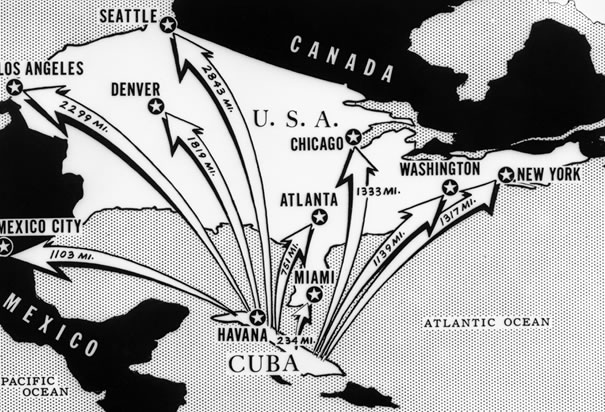
Image: Initial U.S. intelligence estimates of possible U.S. targets within range of the nuclear-capable Soviet SS-4 medium-range ballisticmissiles (MRBMs) and SS-5 intermediate-range ballistic missiles (IRBMs) found by the U-2 spy plane surveillance photographs if they were launched from Cuba.  Credit: Bettmann/CORBIS

On October 15, 1962, the National Photographic Intelligence Center confirmed that secret reconnaissance photographs from an American U-2 spy plane flight the day before were finally able to definitively prove the suspicion that Soviet medium-range and intermediate-range ballistic missiles capable of hitting Atlanta, the Midwest, Washington, DC, and even Los Angeles and Seattle were indeed in place and in the process of being installed and ready in Cuba within days. In response, President Kennedy and Secretary McNamara assembled the Executive Committee of the National Security Council call “ExComm” as a task force that, together with the Joint Chiefs of Staff and experts from the State Department and other intelligence agencies, would debate the United States’ options to deter the Soviets from nuclear escalation.

To Blockade, Strike or Invade?

Earlier in September 1962, after cloud-obscured U-2 photos had hinted at Soviet build-up in Cuba, the Joint Strategic Survey Council had submitted a recommendation for blockading rather than invading Cuba, on grounds that a blockade would be less dramatic, require smaller resources, cause fewer casualties, and be more plausibly related to upholding the Monroe Doctrine. In his 1823 annual message to Congress, President James Monroe had established this doctrine followed by the U.S. ever since that warned European countries not to interfere in the Western Hemisphere, stating “that the American continents… are henceforth not to be considered as subjects for future colonization by any European powers.

However, as the crisis unfolded, the primary debate among the military commanders of the Joint Chiefs was over whether to carry out an all-inclusive attack against Soviet and Cuban forces on the island or a surgical strike confined to just attacking the missiles themselves, the nuclear storage sites, and Soviet MiG planes.

Both President Kennedy and McNamara thought that an all-inclusive attack would inevitably lead to invasion of Cuba, and then possible counter-attacks elsewhere by the Soviets or escalation to all-out war.

But General Taylor reported that the Joint Chiefs and the combatant commanders felt “so strongly about the dangers inherent in [only] the limited strike that they would prefer taking no military action. They feel it’s opening up the United States to attacks which they can’t prevent, if we don’t take advantage of surprise.” Taylor added that his personal inclination was “all against invasion, but nonetheless trying to eliminate as effectively as possible every weapon [present in Cuba] that can strike the United States”.

According to the reports by the author, the Joint Chiefs were opposed to only attacking the medium-range ballistic missiles themselves, saying it would incur “an unacceptable risk” and that not attacking the enemy’s planes would expose the continental United States and Puerto Rico to air attack and could cause unnecessary casualties among the garrison at Guantanamo and the forces assembling for invasion.  Instead, the JCS initially recommended “also hitting tactical missiles, aircraft, ships, tanks, and other appropriate targets, as well as imposing a ‘complete’ blockade.


Image: A meeting of the Executive Committee of the National Security Council in the Cabinet Room during the Cuban Missile Crisis, October 29, 1962, 10:10-10:58am. Clockwise from left: Attorney General Robert F. Kennedy (standing); Assistant Sec. Defense Paul Nitze; Dep. USIA Dir. Donald Wilson; Special Counsel Theodore Sorensen; Exec. Sec. NSC Bromley Smith; Special Assistant McGeorge Bundy; Sec. Treasury Douglas Dillon; Vice President Lyndon B. Johnson; Ambassador  Llewellyn Thompson; William C. Foster; CIA Dir. John McCone (hidden); Under Secretary of State George Ball (hidden); President John F. Kennedy; Sec. State Dean Rusk; Sec. Defense Robert McNamara; Dep. Sec. Defense Roswell Gilpatric; Chairman JCS Gen. Maxwell Taylor. Credit: Photo by Cecil Stoughton, JFK Library ST-A26-18-62

The Blues vs. the Reds

Even more fascinating was the story of the war gaming techniques used. To quickly develop two alternative scenarios for the President to consider, the ExComm task force split into two groups that constantly exchanged position papers and critiqued each other’s work. The “Blues,” who were to prepare the scenario for a surprise air strike, included General Maxwell Taylor, Robert Kennedy, Treasury Secretary Douglas Dillon, Director McCone, Dean Acheson, and McGeorge Bundy. The “Reds,” drafting the blockade option, included Chief of U.S. Naval Operations Adm. George Anderson, Marine Corps Commandant David Shoup, Secretary Rusk, Deputy Secretary Gilpatric, and Theodore Sorensen.

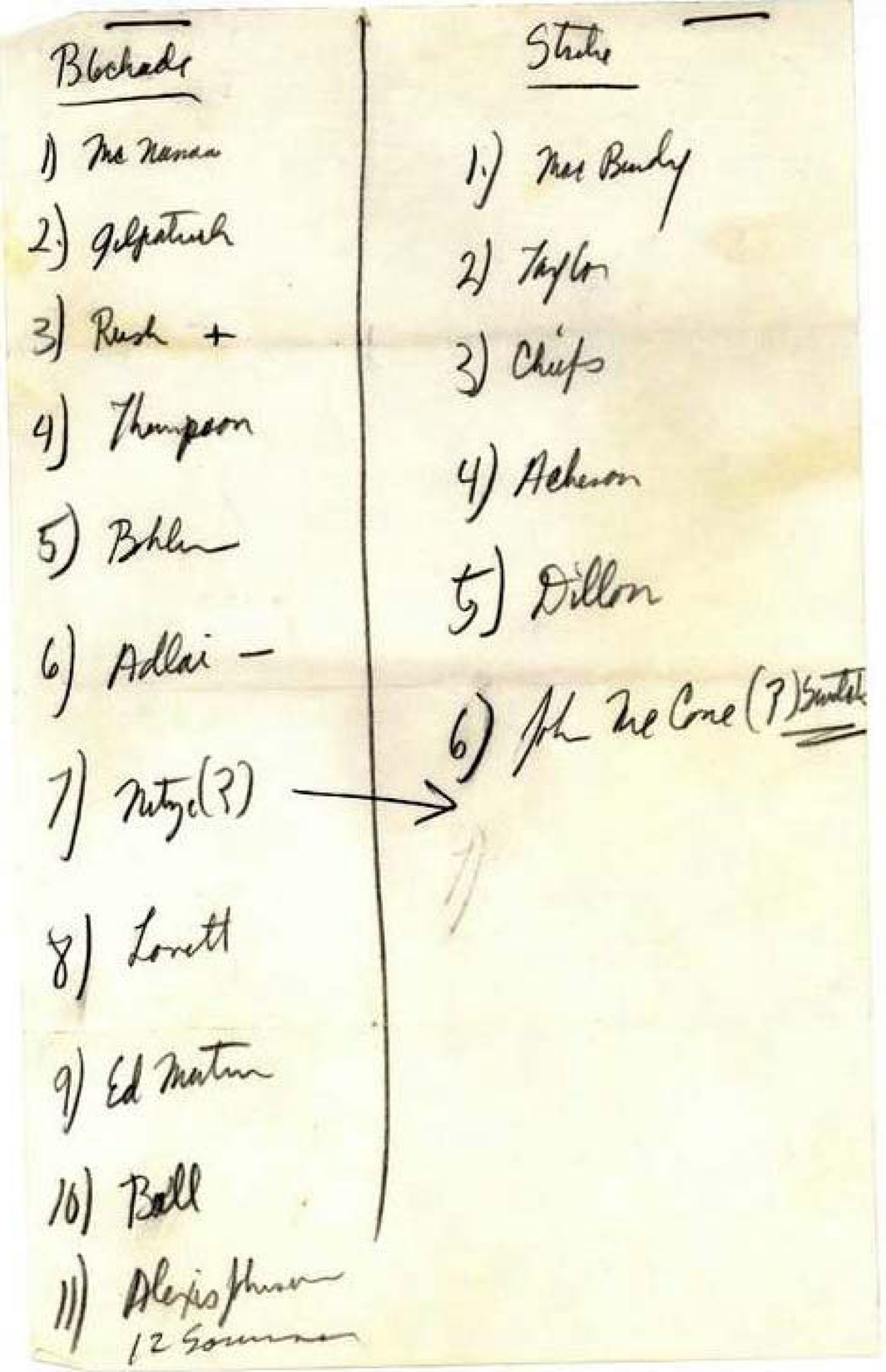
Image: On October 11 last week, certain documents from Attorney General Robert F. Kennedy’s personal papers about the Cuban Missile Crisis were declassified. In it was the above personal list of who RFK thought among the ExComm were the “Hawks” who favored an air strike (shown in the right column labeled “Strike”) vs. the “Doves” who favored a blockade of Cuba (in the left column). Note that the “Chiefs” meaning the Joint Chiefs of Staff along with General Taylor are shown on the “Hawks” Strike side of his list on the right.  Source: The National Security Archive

In less than two days, two complete scenarios were prepared and presented to President Kennedy on October 20, with competing input coming from the Pentagon and the State Department.

From this insider accounting of events, we learn that the Chairman thought that the probable sequence of events to be green-lighted would be: a political approach; a warning; air attack on the missile sites; blockade; and, if necessary, invasion, with the earliest air strike date set for October 21 (optimally the 23rd), and an invasion to begin on October 28.

However, to find out exactly what happened and how the drama played out behind the scenes, pick up a copy of this fascinating book.

HOW DO I OBTAIN The Joint Chiefs of Staff and National Policy, Vol. 8, 1961-1964”?

  • Buy it online 24/7 at GPO’s US Government Online Bookstore.
  • Buy it at GPO’s retail bookstore at 710 North Capitol Street NW, Washington, DC 20401, open Monday-Friday, 9am to 4pm, except Federal holidays, (202) 512-0132.

Find this and other Government publications about Cuba in our Cuba collection.

About the Author:  Michele Bartram is Promotions Manager for GPO’s Publication and Information Sales Division and is responsible for online and offline marketing of the US Government Online Bookstore (http://bookstore.gpo.gov) and promoting Federal government content to the public.


War, Will and Warlords: An Interview, Part II

July 23, 2012


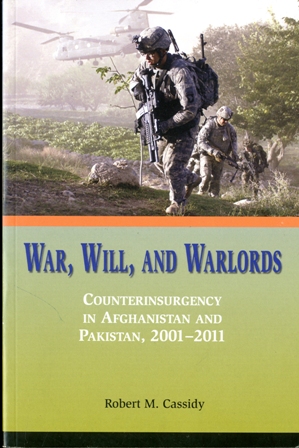
In this second part of a two-part interview by Government Book Talk blog editor Michele Bartram,  Col. Robert M. Cassidy, author of the new, critically acclaimed book, War, Will, and Warlords: Counterinsurgency in Afghanistan and Pakistan, 2001-2011, describes the lessons learned after ten years of war in Afghanistan. Click here to read Part I of the interview.

GovBookTalk: In Chapter 5 of War, Will, and Warlords, you refer to Pakistan’s prospects of doing what needs to be done as “hard, not hopeful, but not impossible.”  What role does Pakistan play today in 2012 in this counterinsurgency, and how do you rate these prospects today on the scale of hopeful vs. impossible?

Cassidy: There is currently not much at all to be sanguine about in relation to Pakistan, as it has done the most odious things in terms of regenerating and sustaining the Afghan Taliban and other groups.  And, the Coalition and the international community have allowed Pakistan to get away with this—murders, literally.  Pakistan poses as a friend, but performs as a foe. The Afghan Taliban would have withered away over the last several years of the surge if Pakistan had stopped supporting the regeneration, resting, recruitment, and retraining of militants, improvised explosive device makers, technology, and components in its tribal sanctuaries and in Baluchistan.

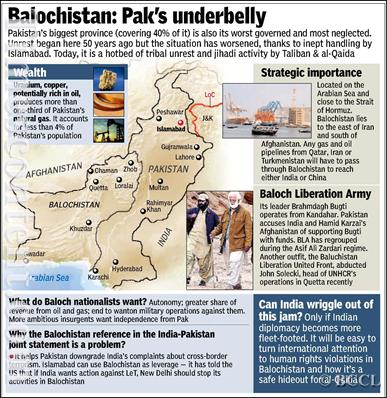
Image: Balochistan’s strategic importance. Source: Intellibriefs

Pakistan has employed terrorism and unconventional warfare to ostensibly achieve strategic depth by supporting its proxies in Afghanistan for almost four decades.

However, the United States has not yet crafted a Pakistan strategy that employs its substantial leverage to modify Pakistan’s strategic calculus.  A genuine Pakistan strategy, coupled with unambiguous momentum and perseverance in Afghanistan, could compel Pakistan to alter its strategic rationale and reduce support to the Afghan Taliban and the Haqqani network. 

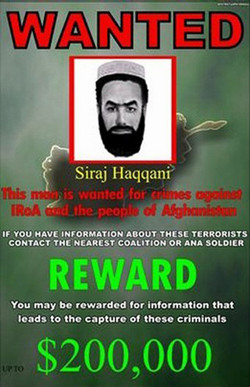
Image: [GovBookTalk] The Haqqani Network,an insurgent group allied with the Taliban and operating on both sides of the Afghanistan-Pakistan border, is one of the most dangerous groups fighting U.S.-led Coalition forces and the Afghan government. Originating in Afghanistan during the mid-1970s, it was nurtured by the U.S. Central Intelligence Agency (CIA) and Pakistan’s Inter-Services Intelligence (ISI) during the 1980s Soviet war in Afghanistan. Maulvi Jalaluddin Haqqani and his son Sirajuddin Haqqani lead the group. A reward of $200,000-USD was offered by Coalition forces for information leading to the arrest of Siraj Haqqani. Source: Wikipedia.

The United States needs a strategy for Pakistan, one which is logically and temporally linked and integrated with the imperatives in Afghanistan.  A viable strategy must first recognize that the U.S. does have considerable leverage over Pakistan.  America must demand discernible results for the steady diet of carrots it has been feeding Pakistan for the perfidious abetting of enemies who kill and maim the Afghan and Coalition civilians and military forces trying to stabilize the country in some lasting way.

GovBookTalk: After wars in Iraq and Afghanistan, what lessons has the US military learned about fighting a counterinsurgency campaign— in strategy, training, equipment, communications with locals, relations with coalition nations and neighboring regions?

Cassidy: Let me clarify at the outset that counterinsurgency is not a strategy in and of itself, but more of the art and method of an operational campaign to defeat or neutralize an insurgency.  The first and most paramount thing we should learn is not to unlearn or expunge what we know of previous counterinsurgencies’ best practices.  In 2001-2003 when we undertook those wars, there was very little thinking, knowledge, doctrine, or awareness of the requirements for prosecuting counterinsurgency to a successful conclusion.   The American military was compelled to adapt in the crucible of combat and it ultimately changed over time, and we now see the most seasoned counterinsurgent forces in our history.

Image: [GovBookTalk]: This is an actual PowerPoint slide shown by Gen. Stanley McChrystal, commander of U.S. and NATO forces in Afghanistan in the summer of 2009 to portray the complexity of U.S. strategy. Source: Charles V. Peña. Click on image above to enlarge.

Cassidy: Notwithstanding, it is negligence of criminal magnitude to prepare soldiers with the doctrine, the equipment, and the leadership savvy for countering insurgents only after the fighting has begun.  Also, in many ways and instances, it was the early methods of American military forces in Iraq and Afghanistan that helped catalyze support for the insurgencies by alienating large parts of those populations.  Here are some pithy things we should retain:

  • Knowledge empowers and the one who thinks, wins:  analyze and understand the environment.
  • Good counterinsurgency campaigns fully integrate both general purpose and special forces.
  • Start with simple and clear, not convoluted and cumbersome, command and control.
  • Match action and information to address grievances to win the war of ideas.
  • If the insurgency benefits from unimpeded sanctuary, ruthlessly shut this down.
  • Start with the end— what should the indigenous security capacity be when we leave?
  • Show moral rectitude:  kill precisely the insurgent leaders and protect most of the people.

GovBookTalk: If you had to do it all over again, would you change anything in this book?

Cassidy: Two things: one, I would have added a chapter that explained how we need to rethink and reframe our relationship with Pakistan after the bin Laden raid; and two, I would have made one more look to minimize any redundancy between the first chapter and the last chapter because the last chapter was something I developed apart from the main manuscript when I was last in Afghanistan during 2011.

GovBookTalk: Did you personally learn anything from writing this book and what was it?   

Cassidy: I deepened and broadened my knowledge about the enduring and deplorable perfidy of the Pakistani ISI in Afghanistan over almost four decades of war in the region.

Image: Pakistan spy chief (right), Lt. Gen. Shuja Pasha, is head of  the Pakistan Directorate for Inter-Services Intelligence or ISI, whose headquarters are shown to the left. Source: Jagran Post. [GovBookTalk] Note that the ISI continually denies links to the Taliban and terrorism, in spite of accusations by Coalition allies of ISI ties to the 7/7/2005 terrorist attacks in London, the attempted assassination of President Karzai, the bombing of the Indian embassy, supporting terrorist groups and other acts. Source: The Council on Foreign Relations 

GovBookTalk: Are there additional resources where readers can go for more information, assistance with this topic?

Cassidy: Some useful resources include the websites of the Afghan Analysts Network (AAN), the New America Foundation Counterterrorism Strategy Initiative Policy Paper series, the Congressional Research Service (CRS) [link to Stanford University’s archives of CRS reports], the Institute for the Study of War (ISW), The Council on Foreign Relations  and the U.S. Government 1230 and 1231 reports on the progress in Afghanistan.  Also, they could start with the bibliography of this book.

GovBookTalk: What are the next upcoming projects for you?  

I am drafting an outline for a new book with the draft title of, On Raw War:  The wages of the American way of strategy and war.  This will start with a theoretical chapter that distills the best thinkers on strategy and war and then it will proceed to explore American wars after Vietnam, from the Persian Gulf War up until Afghanistan to assess how practices compared to the theory.

GovBookTalk: Do you have anything specific that you want to say to your readers in parting, a memorable quote?

Cassidy: The Roger Ascham quote in Chapter 1:  “it is a costly wisdom that is bought by experience;” juxtaposed with the famous Bismarck quote that “fools say they learn from experience; I prefer to learn from the experience of others.”

GovBookTalk: Thank you for your insights, Col. Cassidy!
HOW CAN YOU OBTAIN a copy of War, Will, and Warlords: Counterinsurgency in Afghanistan and Pakistan, 2001-2011?

  • Buy it online 24/7 at GPO’s Online Bookstore.
  • Buy it at GPO’s retail bookstore at 710 North Capitol Street NW, Washington, DC 20401, open Monday-Friday, 9am to 4pm, except Federal holidays, (202) 512-0132.
  • Find it in a library.

To learn more about America’s involvement in Afghanistan, browse our new Afghanistan Collection of Federal publications.

About the author: Colonel Robert M. Cassidy, USA, is a military professor at the U.S. Naval War College, a senior fellow with the Center for Advanced Defense Studies, and a member of the RUSI Advisory Board. His experience and scholarship focus on strategy and irregular warfare. He has served on deployments to Iraq, Afghanistan, the Persian Gulf, Egypt, and Grenada. He most recently served as a special assistant to the senior operational commander in Afghanistan in 2011. Colonel Cassidy has published a number of articles and two previous books on stability operations and irregular war:  1) Peacekeeping in the Abyss: British and American Peacekeeping Doctrine and Practice after the Cold War and 2) Counterinsurgency and the Global War on Terror: Military Culture and Irregular War. He has a Ph.D. from the Fletcher School of Law and Diplomacy at Tufts University.


War, Will and Warlords: An Interview, Part I

July 17, 2012

Government Book Talk editor Michele Bartram writes a two-part interview with author Col. Robert Cassidy about his new, critically acclaimed book, War, Will, and Warlords: Counterinsurgency in Afghanistan and Pakistan, 2001-2011, which covers the causes and consequences of counterinsurgency in that troubled region and recommendations for future American approaches there and in similar operations. Part I goes into the cause of the war there and explanations of the key concepts. Click here to read Part II of the interview.


Since World War II, the character of the wars America has fought has changed radically. Traditional methods of warfare, technology, training and strategies designed to counter national armed forces, are not suited for today’s counterinsurgency operations often where civilians mingle freely with enemy combatants in complex urban terrain or remote encampments, and which can be carried out by local warlord-led troops, small guerrilla groups or even individual insurgents. First in Iraq and now honed by the war in Afghanistan, American military (operations), tactics and technology have required reengineering to adapt to this new reality of war.

Soldier-scholar Col. Robert Cassidy, Ph.D., is a military professor at the U.S. Naval War College and a senior fellow with the Center for Advanced Defense Studies who served on operations in Grenada, Egypt, the Persian Gulf, Iraq, and most recently as the special assistant to the commander of ISAF Joint Command in Afghanistan from June 2010 to June 2011.

As an expert in strategy and irregular warfare, Cassidy has authored the recently published War, Will, and Warlords: Counterinsurgency in Afghanistan and Pakistan, 2001-2011 which is featured this month in our U.S. Government Bookstore’s special War in Afghanistan collection.

Foreign Policy magazine lauds War, Will, and Warlords as a “must read for all scholars, policymakers, diplomats, and military practitioners seeking to understand the Afghanistan-Pakistan nexus” which provides invaluable analysis “concerning uneven U.S. involvement in the region, the contradictions of Pakistan, and the counterinsurgency (COIN) approaches implemented on both sides of the porous region” between Pakistan and Afghanistan.

Some refer to the War in Afghanistan as America’s longest war, but to Afghans, conflict has been going on there continuously for almost four decades. Today, July 17, 2012, actually marks the 39-year anniversary of when continual tumult and conflict began in Afghanistan. In July 1973 Afghanistan’s last King or Padishah, Mohammed Zahir Shah, was ousted in a coup d’état by his first cousin and former Prime Minister Mohammed Daoud Khan, who established a republican government. Years of conflict followed, including war with the Soviet Union, rise and fall of the Taliban, Al-Qaeda and today’s insurgency.

Image: (Left) Zahir Shah, King of Afghanistan, with his first cousin and Prime Minister Daoud Khan (right) who later deposed Zahir in 1973, beginning Afghanistan’s slide towards forty years of war. Source: CivFanatics Forum.

AN INTERVIEW WITH THE AUTHOR

In this two-part special feature, Government Book Talk was pleased to be able to interview Col. Cassidy about the book, his personal observations about the conflict and the countries, and his recommendations for the future.

Government Book Talk: What inspired you to write this book?  

Colonel Robert Cassidy: I had written a study about the Soviet War in Afghanistan at the French École de Guerre in 2000-2001 and I continued to study our war in Afghanistan after September 2001.   The proximate reason was that I was at the Naval War College in 2009-2010 between tours in Afghanistan and I thought it would be helpful to capture and compare what happened for the first eight years to those years after the surge.  Also, I knew that researching and writing this book would make me more knowledgeable and useful as an adviser in Afghanistan during my tour in 2010-2011.

GovBookTalk: I understand that this was not the original title for the book. How did you arrive at the final choice?

Cassidy: Two initial titles were vetoed. First, I suggested “Malice in Wonderstan,” and my editor then suggested “Ten Years Gone,” which I liked because of its triple reference to the Afghan War’s length, the Led Zeppelin classic song, and the subject of that song, an ancient Greek war.  In the end, I picked “War, Will and Warlords” because these three things are so salient in terms of Afghanistan and what we have done or not done there since we supported the anti-Soviet insurgency in the 1980s.

In the excerpted piece of the preface below, I explain the meaning behind the title because “War, will, and warlords…are central to any understanding of what has transpired in Pakistan and Afghanistan.”

WAR: First, the Afghan people have faced tumult, conflict, and war since July 1973… A corollary to this is the fact that the Pakistani state has helped foment insurgent proxy war and terrorism in Afghanistan since 1973. In fact, fomenting insurgencies in Afghanistan by proxy is in the metaphorical DNA of the Pakistani security apparatus.

WILL: Second, protracted irregular wars are a contest of will, as insurgents use the art of the ambush, armed propaganda in the form of spectacular violence, and cross-border sanctuaries to protract the war to erode the will of the counterinsurgents so they give up the fight. The insurgents can win if they can prolong the war while not exhausting their own will.

WARLORDS: Third, warlords, or feudal barons, run criminal patronage fiefs or insurgent-terrorist networks that operate across the borders and exist outside and inside the states as well as serve as state proxies in some cases. Patronage has long been a reality in South Asia. However, the growth and scope of warlord-led insurgent and criminal networks that began before the Soviet-Afghan War… have helped catalyze support for the insurgencies.

Image: Afghan warlords and power brokers. Source: WorldNews,

GovBookTalk: What is the overall message in the book that you want readers to grasp?  

Cassidy: To understand the catalysts for and the ineluctable links between security and insurgency in both Pakistan and Afghanistan; to know the grave consequences if we ultimately fail, and to fathom the odious role of Pakistan’s perfidy in its persistent support of terrorism and insurgency in Afghanistan.

GovBookTalk: You have been on multiple tours in Afghanistan. What surprised you most about either the people or the country itself? 

Cassidy: I would not use the word surprised, but what intrigued me and enthralled me were the country’s beautiful diversity and the Afghan people’s formidable resiliency.

GovBookTalk: What was the single most important “don’t miss” chapter and page in your book and why?

Cassidy: The most important chapter is Chapter 3 because it explains why and how the Taliban regenerated from sanctuary in Pakistan and what catalyzed the Pakistani Taliban’s insurgency within and against that state.

The most important single page is page 6 because it elucidates why and how the tribal areas in Pakistan along the Durand Line are the most dangerous places on earth in terms of the terrorist and militant machinations to support attacks on the U.S., other western states, and non-western states.

Image: [GovBookTalk] The Durand Line: Established in an 1893 treaty between Amir Abdul Rahman Khan of Afghanistan and Sir Mortimer Durand, the foreign secretary of the British Indian government, the Durand line set up the border between Afghanistan and then British India/now present-day Pakistan. Not recognized today by Afghanistan and a source of contention with Pakistan, this poorly marked buffer zone cuts through the Pashtun tribal areas, dividing ethnic Pashtuns (Afghans) on both sides of the border. It is considered to be one of the most dangerous places in the world. Source: IntelliBriefs and Wikipedia.

READ PART II: In PART II of this interview, Cassidy describes Pakistan’s role, hard lessons learned, useful resources and more…

HOW CAN YOU OBTAIN a copy of War, Will, and Warlords: Counterinsurgency in Afghanistan and Pakistan, 2001-2011?

  • Buy it online 24/7 at GPO’s Online Bookstore.
  • Buy it at GPO’s retail bookstore at 710 North Capitol Street NW, Washington, DC 20401, open Monday-Friday, 9am to 4pm, except Federal holidays, (202) 512-0132.
  • Find it in a library.

To learn more about America’s involvement in Afghanistan, browse our new Afghanistan Collection of Federal publications: