A Celebration of Moms

May 5, 2016

celebrationofmomsWhether it be a celebration of yourself as a mom, or your own mother or your sisters, friends as moms… these caring, multi-tasking individuals are blessed to be in our lives and deserve special extra pleasant treatments on their Mother’s Day holiday, May 8, 2016.

Mothers care for the young, the old, and the in-between…they guide us, they cook for us, they make sure that we have clothes on our backs and shelter. Some mothers may be away from home, while performing triple duty– to serve the security needs of the U.S.A. through their military or community policing careers; parenting roles/caring for their elderly parent(s); and even heading back to school to further their education.

In celebration of the roles of our Moms, here are some Federal Government resources to honor these special women in our lives as a way to show appreciation for their continuous caregiving of our family needs and to assist them in their regular activities.

Immunization Toolkit: Adult, Military and Childhood Immunizations 2014 –Now discounted and available at a special, lower price that can be found here.

ImmunizationToolkit_Page_001The information in this Immunization Tool Kit (ITK) is based on national guidelines, peer-reviewed published medical literature, and clinical guidelines.    It is a reference that should always be used with:

  • Manufacturers’ package inserts (approved by the Food and Drug Administration),
  • Centers for Disease Control and Prevention Vaccine Information Statements (VIS),
  • Proper screening for individual patient health risk factors and medical problems,
  • Healthcare providers’ orders, and
  • DoD directives (Note: Where DoD guidance varies from CDC/FDA guidance, DoD guidance takes precedence).

DMP Emergent Reader about a complete MyPlate mealShare the discovery and learning about eating healthy foods with your young children by downloading these free nutritional guides, complete with exciting interactive games and activities—Discover MyPlate Emergent Readers Series.  Titles included in this series from the United States Department of Agriculture, Food and Nutrition Service:  —Free interactive eBook downloads available from Apple iBookstore and US Government Online Bookstore –Use the ISBNs to search these platforms!

Discover MyPlate: A MyPlate Meal –ePub ISBN: 978016093136

Discover MyPlate: Dairy –ePub ISBN: 9780160931376

Discover MyPlate: Fruits –ePub ISBN: 9780160931383

Discover MyPlate: Grains –ePub ISBN: 9780160931390

Discover MyPlate: Protein –ePub ISBN: 9780160931406

Discover MyPlate: Vegetables –ePub ISBN: 978016093143

017-001-00572-0Deliciously Healthy Family Meals (Cookbook Print ISBN: 9780160912689) –recently discounted and available at a special lower price that can be found here.

Delightful kid-friendly healthy cookbook designed to help busy parents who want to make healthy meal preparation a family affair, Keep the Beat™ Recipes: Deliciously Healthy Family Meals features delicious, heart-healthy, kid-friendly recipes and also provides tips for involving children in meal preparation. The appendix is loaded with information on meal planning, cooking, and nutrition for families and children to help combat obesity and diabetes.

Another great healthy cookbook in the Keep the Beat ™ series, this cookbook showcases new dishes that were created especially for the National Heart, Lung, and Blood Institute (NHLBI) by a Culinary Institute of America-trained chef/ instructor and father of two. All the recipes were taste-tested with parents and school-aged children, and feature easy-to-follow instructions in numbered steps and detailed health information, such as calories, fat, cholesterol, total fiber, carbohydrates, vitamins and more.

9780160875892The Healthy Woman: A Complete Guide for All Ages (ePub ISBN: 9780160875892 )

Comprehensive health guide for women written in simple language and illustrated with many photographs, designed to appeal to a large audience of all cultural backgrounds, from teens to senior adults. This guidebook also contains full-color charts and diagrams to help readers understand their bodies and offers information not found in other women’s health resources, such as how to teach women to read a Prescription Drug Label, explore insurance options, and tips along with graphic representations for healthy eating and managing portion sizes, and more. Includes a glossary, extensive bibliography, additional resources, and a cross-referenced index

Apple iBookstore availability here: https://itunes.apple.com/us/book/healthy-woman-complete-guide/id594775035?ls=1&mt=11

Google Play availability here: https://play.google.com/store/search?q=9780160875892&c=books&hl=en

9780160930133Understanding Memory Loss

This easy-to-read booklet will help readers learn about the difference between mild forgetfulness and more serious memory problems such as Alzheimer’s disease and dementia; causes of memory problems and how they can be treated; and how to get help for serious memory loss. Includes vignettes, a resource list, and glossary.   Free eBook download!  —

ePub format eBook ISBN: 978016093013Available from: Apple iBookstore, Barnes and Noble Nook Bookstore, Google Play eBookstore, Overdrive, and US Government Online Bookstore

PDF format eBook ISBN: 9780160930140 – Available from the EBSCOhost database libraries, Academic Pub database, Rittenhouse R2 Digital Library, and US Government Online Bookstore

funding-your-education_Page_01Funding Your Education: Federal Guide to Student AidFree eBook download!

This guide provides a description of Federal Student Aid programs and the application process.  Readers will find information on federal student aid as a source for funding postsecondary education, and know where to go for more detailed information.

Funding Your Education: The Guide to Federal Student Aid speaks to high school students, college students, adults, and parents interested in finding out about financial aid from the federal government to help pay for education expenses at an eligible college, technical school, vocational school, or graduate school.

ePub format eBook ISBN: 9780160926235 –Available from Apple iBookstore, Google Play eBookstore, Barnes and Noble Nook Bookstore, Overdrive, and US Government Online Bookstore

MOBI format eBook ISBN: 9780160926242  –only available for Free download from US Government Online Bookstore

Shop Online Anytime: You can buy eBooks or print publications —with FREE Standard Shipping worldwide— from the U.S. Government Online Bookstore at http://bookstore.gpo.gov.

Shop our Retail Store: Buy a copy of any print editions from this collection at GPO’s retail bookstore at 710 North Capitol Street NW, Washington, DC 20401, open Monday–Friday, 9 a.m. to 4 p.m., except Federal holidays, Call (202) 512-0132 for information or to arrange in-store pick-up.

Order by Phone: Call our Customer Contact Center Monday through Friday, 8 am to 5:30 pm Eastern (except US Federal holidays). From US and Canada, call toll-free 1.866.512.1800. DC or International customers call +1.202.512.1800.

Visit a Federal depository library: Search for U.S. Government publications in a nearby Federal depository library. You can find the records for most titles in GPO’s Catalog of U.S. Government Publications.

About the authorThis week’s blog contributor is Maureen Whelan, Senior Marketing Team Leader for GPO’s Publication and Information Sales program office in Washington, DC. Maureen oversees print and digital content dissemination strategy and manages third party free and paid content distribution through platforms and vendors, such as Apple iBookstore, Barnes and Noble.com, Google Play eBookstore, Ebscohost databases, Overdrive, and more.


Family, Patriotism & Sacrifice

May 4, 2016

May is Asian-American and Pacific Islander Heritage Month and May 8th is the 71st anniversary of Victory in Europe Day (VE Day).  If there ever was a good opportunity to talk about a Japanese-American family’s experience during World War II, it would be right now, in this blog post. The American Battle Monuments Commission (ABMC) and author Matthew Elms retell the saga of three brothers who nobly fought alongside one another in World War II.

052-088-00001-1When the Akimotos Went to War: An Untold Story of Family, Patriotism and Sacrifice During World War II

Hardworking and California-bred, brothers Victor, Johnny, and Ted Akimoto grew up with the sparkle of the American dream in their eyes. Then the December 7, 1941 attack on Pearl Harbor happened. It got under their skin and into their heads. One by one, they joined the fight.

Victor, the eldest brother and first to enlist, reported to duty in frosty Fort Warren, Wyoming. He eschewed anti-Japanese hysteria and sent cheering letters to his devoted family. Despite stacked odds, Victor was eventually promoted to infantryman. Younger brothers Johnny and Ted soon joined him in the 100th Infantry Battalion, a mostly first generation Japanese-American, or Nisei, unit.

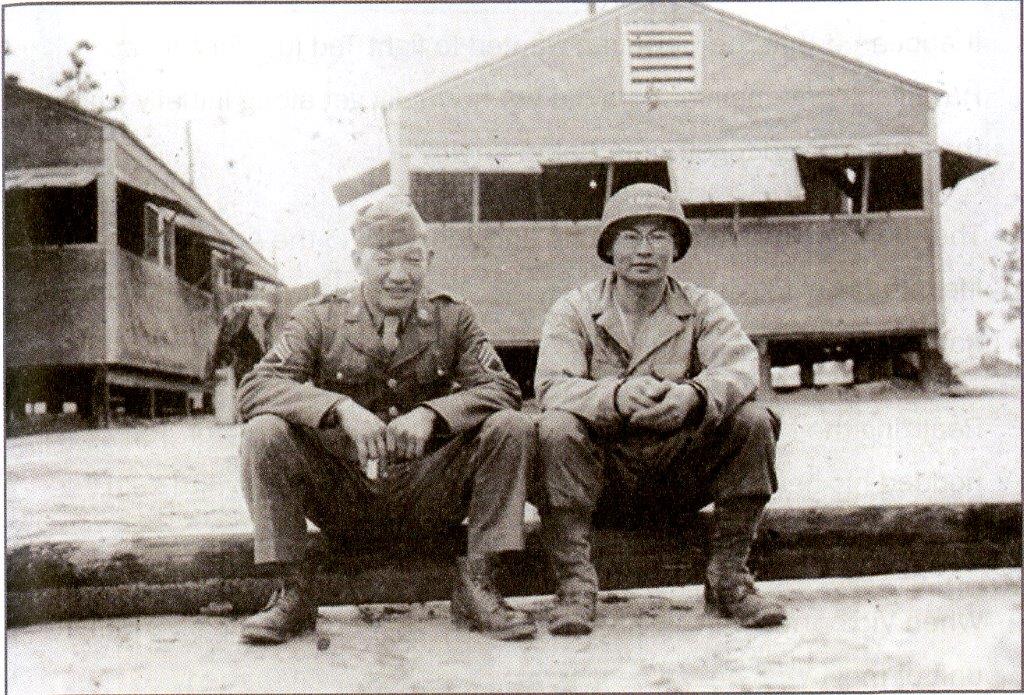
Victor (left) and Johnny Akimoto (right) at camp Shelby, 1943 (Akimoto Family Collection)

Victor (left) and Johnny Akimoto (right) at camp Shelby, 1943 (Akimoto Family Collection)

The Akimoto clan battled two enemies: the Axis Powers and racial tension. Suspicion of Japanese-Americans grew. When the government froze the family bank accounts, they lived off remittances from their soldier-sons. Then they were forcibly confined to internment camps around the country. The family was split up but not beaten. They remained resolute in the hope that if men like their Victor, Johnny, and Ted “could serve bravely in the armed forces, then perhaps America would finally move beyond seeing people of Asian descent as a different people, a different race, and just see them as patriotic Americans.”

Ted Akimoto, c. 1945 (Akimoto Family Collection)

Ted Akimoto, c. 1945 (Akimoto Family Collection)

On the fields of Europe and in military camps, three brothers gave themselves to “the greatest cause a man can give his life for,” as Victor wrote in a letter to his family. While their family sat in internment camps, the brothers ducked the whoosh of artillery. Pinned in by Germans on all sides, they steered their G.I. brethren to safety. In the face of crushing loss, as Ted wrote, “no matter what the cost, we have to make this world a better place.”

The Akimotos lived out the belief that there is no more important role than citizen, no more important act than service.

Shop Online Anytime: You can buy eBooks or print publications —with FREE Standard Shipping worldwide— from the U.S. Government Online Bookstore at http://bookstore.gpo.gov.

 Shop our Retail Store: Buy a copy of any print editions from this collection at GPO’s retail bookstore at 710 North Capitol Street NW, Washington, DC 20401, open Monday–Friday, 9 a.m. to 4 p.m., except Federal holidays, Call (202) 512-0132 for information or to arrange in-store pick-up.

Order by Phone: Call our Customer Contact Center Monday through Friday, 8 am to 5:30 pm Eastern (except US Federal holidays). From US and Canada, call toll-free 1.866.512.1800. DC or International customers call +1.202.512.1800.

Visit a Federal depository library: Search for U.S. Government publications in a nearby Federal depository library. You can find the records for most titles in GPO’s Catalog of U.S. Government Publications.

About the author: Our guest blogger is Chelsea Milko, Public Relations Specialist in GPO’s Public Relations Office.


A Population Health Report You Don’t Want to Ignore

April 29, 2016

The U.S. Government devotes billions of dollars to health care expenditures. It now spends more on health care than any other country in the world. Pretty much everyone can agree that pouring money into something is senseless without tackling the systemic problems that obstruct success. So, it’s time to turn heads to the subject of population health— the colossal canopy of environmental and social system health determinants. GPO makes available an Office of Behavioral and Social Sciences Research, National Institutes of Health publication that meets this topic head on.

population

Population Health: Behavioral and Social Science Insights (ePub)

This book takes a hard, systems-level look at the overall wellbeing of a population. Individual biology and specific diseases are still considered unignorably important areas of study. But that’s not the purpose of this book. The operating idea is this: if large population groups share common health risks, then population-based interventions have the potential to produce considerable impacts. The under-recognized casual relationships involving demographics and human behavior have a profound effect on life expectancy and health-related quality of life.

Population Health: Behavioral and Social Science Insights The text is sectioned into 23 chapters that zero in on demographic and social epidemiological perspectives, behavioral risk policies, biological factors, healthcare investment and economics, and emergent population health tools. Here are a few takeaways to get you thinking…

  • “Despite spending far more on health care than any other nation, the United States ranks near the bottom on key health indicators. This paradox has been attributed to underinvestment in addressing social and behavioral determinants of health.”
  • “The vast majority of deaths in the United States and worldwide are due to non-communicable diseases (NCD) like cancer, cardiovascular disease (CVD), diabetes, and respiratory disease. The key determinants of these mortality rates are behavioral and social risk factors that include smoking, use of drugs and alcohol, poor diet, and lack of physical activity.”
  • “Of the $2.9 trillion in annual health-related expenditures, about 97 percent is devoted to health care, while only 3 percent is devoted to factors outside of the health care system. In other words, 97 percent of the investment is chasing the potential for 10 percent of the benefit, while as little as 3 percent of the expenditure is devoted to factors that may explain 50 to 90 percent of the potential benefit.”

This report is a push for more interdisciplinary, structural approaches to public health practice. Hopefully, an understanding of population-level health delivery and outcomes will hasten multi-level solutions. Altogether, there is still so much to learn about the effects of various behavioral and social factors on the way health and health care is improved upon. It’s the kind of learning that can’t come fast enough. Because the return on investment will likely be extended life expectancy and improved quality of life for everyone.

HOW DO I OBTAIN THIS FREE EBOOK?

Shop Online Anytime: You can buy eBooks or print publications —with FREE Standard Shipping worldwide— from the U.S. Government Online Bookstore at http://bookstore.gpo.gov.

 Shop our Retail Store: Buy a copy of any print editions from this collection at GPO’s retail bookstore at 710 North Capitol Street NW, Washington, DC 20401, open Monday–Friday, 9 a.m. to 4 p.m., except Federal holidays, Call (202) 512-0132 for information or to arrange in-store pick-up.

Order by Phone: Call our Customer Contact Center Monday through Friday, 8 am to 5:30 pm Eastern (except US Federal holidays). From US and Canada, call toll-free 1.866.512.1800. DC or International customers call +1.202.512.1800.

Visit a Federal depository library: Search for U.S. Government publications in a nearby Federal depository library. You can find the records for most titles in GPO’s Catalog of U.S. Government Publications.

About the author: Our guest blogger is Chelsea Milko, Public Relations Specialist in GPO’s Public Relations Office.


Homeowners & Landowners: The U.S. Gov Has You Covered!

April 26, 2016

Homeowners and landowners! The U.S. Government has several useful publications to help you make knowledgeable decisions about your habitat. Reduce the hazards of lead-based paint. Stop up energy-wasting air leaks. Know what you need to know about interstate natural gas projects. Read on!

Protect Your Family from Lead in Your Home

055-000-00683-1Lead-based paint is hazardous. You probably know that. The older the building, the more likely the inside and outside surfaces contain the heavy metal (the chemical element, not the music). The Environmental Protection Agency (EPA), Consumer Product Safety Commission, and the Department of Housing and Urban Development pulled together this brochure to help you identify the many sources of lead and eliminate risks.

First step: “The only way to find out if paint, dust, or soil lead hazards exist is to test for them.” For homes and childcare facilities built before 1978, you have cause to act even quicker. In fact, Federal law requires disclosure of lead-based paint information to prospective buyers and renters of pre-1978 properties. Protect your family from damaging health effects—check your home for lead!

A Do-It-Yourself Guide to Sealing and Insulating with Energy Star

055-000-00684-9Does Aunt Mabel often feel a draft when she’s visiting your home? Better patch up those leaks! The EPA offers this handy guide to locate and seal leaks, specifically in the basement and attic where most problematic leaks are hidden. Pesky leaks love to seek cover behind insulation.

To get started, make a rough sketch of your home’s floor plan. Spatial reference points will help you locate common household air leaks in wiring holes, plumbing vents, furnace flues, etc. Then follow the booklet’s guidance for plugging holes and caulking gaps. Enhance the performance of your insulation, reduce your energy bills, and make your home more comfortable—this government resource will get you there.

An Interstate Natural Gas Facility on My Land? What Do I Need to Know?

061-000-00967-1_Page_01If these are questions that keep you up at night, then grab yourself a copy of this Federal Energy Regulatory Commission (FERC) booklet. FERC is responsible for approving private natural gas pipelines projects. The agency assembled this concise, illustrative pamphlet to let consumers know:

  • How the Commission’s evaluation process works;
  • Landowner rights;
  • Issues involving project location and pipeline construction
  • Environmental, safety, and storage issues.

Bonus: a two-page graphic of a pipeline installation sequence gives visual context to what it takes to move natural gas across state boundaries. It’s quite the process. And FERC is here to tell you all you need to know.

HOW DO I OBTAIN THESE PUBLICATIONS?

Shop Online Anytime: You can buy eBooks or print publications —with FREE Standard Shipping worldwide— from the U.S. Government Online Bookstore at http://bookstore.gpo.gov.

 Shop our Retail Store: Buy a copy of any print editions from this collection at GPO’s retail bookstore at 710 North Capitol Street NW, Washington, DC 20401, open Monday–Friday, 9 a.m. to 4 p.m., except Federal holidays, Call (202) 512-0132 for information or to arrange in-store pick-up.

Order by Phone: Call our Customer Contact Center Monday through Friday, 8 am to 5:30 pm Eastern (except US Federal holidays). From US and Canada, call toll-free 1.866.512.1800. DC or International customers call +1.202.512.1800.

Visit a Federal depository library: Search for U.S. Government publications in a nearby Federal depository library. You can find the records for most titles in GPO’s Catalog of U.S. Government Publications.

About the author: Our guest blogger is Chelsea Milko, Public Relations Specialist in GPO’s Public Relations Office.


Earth Day: Legislative Milestones & Beyond

April 21, 2016

In the 1960’s and 1970’s, a growing public awareness of the impact of human activity on the environment led to the enactment of key legislation protecting clean air, clean water, and endangered species, the establishment the U.S. Environmental Protection Agency, and the annual observance of Earth Day every April 22.  On Earth Day 2016, GPO makes available these original, authentic documents on govinfo.gov.

worldAside from ushering in legislative mechanisms to protect our environment, Earth Day helped raise public awareness of everyday greening. Green spaces benefit our environment and our psychological wellbeing. Naturally (pun intended), vegetation needs consistent, targeted care. Here are two U.S. Department of Agriculture (USDA) how-to guides for maintaining our planet’s valuable cache of green gold.

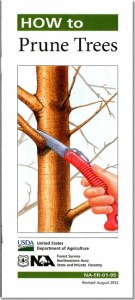
How to Prune Trees

When I think of pruning, I picture an English garden full of imaginative topiaries or a miniature bonsai masterpiece. But there are more than just aesthetic reasons for pruning—encouraging strong structure, wound closure, and space-conscience growth are all part of the snip and trim objective. “How to Prune Trees” explains the principles and approaches of keeping plants trees healthy and full of character.

001-000-04755-8This pamphlet tells you why, when, and how to use your hand pruners, lopping shears, and pole pruners. Don’t worry—there are helpful pictures, too. Although this publication is mostly a how-to resource, it does detail a few how-not-tos. The section on harmful pruning practices will make you wince with empathy. It’s a careful reminder that “just as proper pruning can enhance the form or character of plants, improper pruning can destroy it.” Finally, let this be your pruning mantra: “prune first for safety, next for health, and finally for aesthetics.”

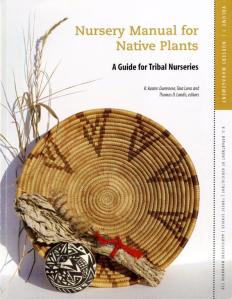
Nursery Manual for Native Plants

This USDA Forest Service handbook covers all aspects of native nursery planning, crop propagation, and long-term fertility. This book takes tribal nursery design and management seriously. And so should you. Before you invest in a nursery, consider this: “a nursery is a web of interrelated factors. Each aspect of the nursery affects every other aspect.” So meta!

001-000-04744-2The text introduces Native American tribespeople to the benefits and drawbacks of growing native plants. Subsequent chapters breakdown the concepts of pest control, plant nutrition, growing media, and seed handling. Photos and specific examples demonstrate simple but effective techniques. Tribal nursery management is hard work. It’s also rewarding and challenging and visionary and practical. Nurseries can bring a tribal community together. Because of this, nursery design is “personal…you are the person who can best understand the unique…environment around you.”

HOW DO I OBTAIN THESE RESOURCES?

Shop Online Anytime: You can buy eBooks or print publications —with FREE Standard Shipping worldwide— from the U.S. Government Online Bookstore at http://bookstore.gpo.gov.

 Shop our Retail Store: Buy a copy of any print editions from this collection at GPO’s retail bookstore at 710 North Capitol Street NW, Washington, DC 20401, open Monday–Friday, 9 a.m. to 4 p.m., except Federal holidays, Call (202) 512-0132 for information or to arrange in-store pick-up.

Order by Phone: Call our Customer Contact Center Monday through Friday, 8 am to 5:30 pm Eastern (except US Federal holidays). From US and Canada, call toll-free 1.866.512.1800. DC or International customers call +1.202.512.1800.

Visit a Federal depository library: Search for U.S. Government publications in a nearby Federal depository library. You can find the records for most titles in GPO’s Catalog of U.S. Government Publications.

About the author: Our guest blogger is Chelsea Milko, Public Relations Specialist in GPO’s Public Relations Office.


This National Park Week, Be a Junior Ranger!

April 14, 2016

April 16-24 is National Park week and 2016 is the National Park Service’s (NPS) centennial year. National parks symbolize America’s spirit of discovery. Although protected today, parks need stewardship for tomorrow. The NPS activity-based Junior Ranger program aims to turn young visitors into lifelong enthusiasts. GPO makes available several park-specific booklets to help 5- to 12-year-olds explore “America’s best idea.”

The White House Junior Ranger Activity Guide

Home. Workplace. Museum. And National Park! The White House, home to every president and first family since 1800, is the only building in the world that fits all those categories. Since 1933, The White House has operated under the National Park System. That piece of presidential acreage sees millions of visitors each year. Now there’s a new fact-filled White House guide that appeals to both kids and adults.

9780160929892This booklet drops some great presidential trivia. Abigail Adams used the East Room to hang laundry. Dolly Madison saved a famous painting of George Washington from the War of 1812 fire. Edith Wilson was the first to showcase custom patterned china. All White House occupants leave a visible impression but first ladies drive the story of expansion, design, and entertainment. Beyond aesthetics, the booklet points out that first ladies were “champions for change.” President Harry Truman understood this well. He often introduced First Lady Elizabeth Truman as “the Boss.”

The booklet includes several pages of post-tour activities, including a President’s Park walking map, first family puzzle, and the ABC’s of architecture. Tip for parents: kids can present their booklet to a White House Visitor Center to be sworn in as a badged and certified Junior Ranger!

Redwood National and State Parks Junior Ranger Activity Booklet

Redwood Trees looking up Source: www.nps.gov

Redwood Trees looking up: http://www.nps.gov

Redwoods are the tallest trees on Earth. Living fossil records. But decades of commercial logging nearly decimated old-growth redwood forests of the North Coast region. In this booklet, Ranger Jim points out that “about 95% of the original coast redwood forest was cut down.” Although that statistic is dismaying, take heart. NPS is the capable caretaker of those special giants.

024-005-01316-4The booklet has dozens of activities families can complete while exploring redwood areas. Play tide pool bingo, be a tree detective, and fish for the right color. Write your observations in the ranger beach report. Solve the octopus tree mystery. Keep track of badge points. The fun and fascination are as endless as the redwoods are tall.

Next time you visit a national park, take a fact-filled activity booklet along!

HOW DO I OBTAIN THESE NATIONAL PARK SERVICE PUBLICATIONS?

Shop Online Anytime: You can buy eBooks or print publications —with FREE Standard Shipping worldwide— from the U.S. Government Online Bookstore at http://bookstore.gpo.gov.

 Shop our Retail Store: Buy a copy of any print editions from this collection at GPO’s retail bookstore at 710 North Capitol Street NW, Washington, DC 20401, open Monday–Friday, 9 a.m. to 4 p.m., except Federal holidays, Call (202) 512-0132 for information or to arrange in-store pick-up.

Order by Phone: Call our Customer Contact Center Monday through Friday, 8 am to 5:30 pm Eastern (except US Federal holidays). From US and Canada, call toll-free 1.866.512.1800. DC or International customers call +1.202.512.1800.

Visit a Federal depository library: Search for U.S. Government publications in a nearby Federal depository library. You can find the records for most titles in GPO’s Catalog of U.S. Government Publications.

About the author: Our guest blogger is Chelsea Milko, Public Relations Specialist in GPO’s Public Relations Office.


Los Zetas: Mexico’s Most Feared Drug Cartel

April 11, 2016
Copyright free photo of El Chapo

Copyright free photo of El Chapo

El Chapo. A household name that sends a paralysis of fear through many who hear it. Joaquin “El Chapo” Guzman is the toppled drug kingpin who heads the Sinaloa Cartel in absentia. The notorious druglord’s capture, jailbreak, and recapture made headlines over the past year. Although the crime boss is behind bars, the dramatic and deadly exploits of Mexican drug cartels are far from over. Sinaloa’s archrival, Los Zetas, is a pillar of the narco-violence underworld. GPO makes available a U.S. Army War College, Strategic Studies Institution (SSI) publication on the evolution of the most vicious drug-trafficking organization in Mexico.

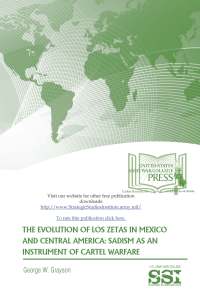
In “The Evolution of Los Zetas in Mexico and Central America: Sadism as an Instrument of Cartel Warfare,” SSI expert George G. Grayson charts Los Zetas ruthless rise to prominence. Once a counter-narcotics paramilitary outfit, core members deserted the Mexican Army in the late 1990s. They morphed into a new organization and soon built a savage reputation. Los Zetas “not only traffic in drugs, murder, kidnap, and raid PEMEX [Petróleos Mexicanos] but also involve themselves in extortion, human smuggling, torture, money laundering, prostitution, arson, prison breakouts, murder for hire, and other felonies.”

008-000-01085-4Zeta influence spans most of Central America. From its base in Nuevo Laredo, “the largest commercial portal joining Mexico to its northern neighbor,” the Zeta brand of cruelty is trending throughout Mexico and bleeding out elsewhere. Borderland bloodshed gives Los Zetas a launchpad for U.S. incursions. At this point, most criminal activity remains south of the border. Not a exactly a safe place to be an American. Grayson writes that narco-violence is tied to 684 U.S. citizen deaths in Mexico from 2002-2012—“40 percent of American violent deaths worldwide in this period.”

Other cartels are copycatting Zeta-style cutthroat tactics. Grayson calls it the “Zetanization” of Mexico’s explosive drug war. The use of retributive, gruesome practices—that include butcherings, beheadings, and stewing foes in boiling gasoline vats—advances the mafioso agenda and solidifies territorial claims. Los Zeta’s tight grip is secured with brutal leadership, publicity ploys, and fresh teenage recruits.

“The Evolution of Los Zetas” shows how the cartel has transformed itself from ragtag bandits into a cash-flush, heinous crime syndicate. The White House branded it “a unique and extraordinary threat to the stability of international economies and political systems.” Los Zetas is truly a menace. Drug enforcement agencies want to eliminate it. Adversarial cartels want to overtake it. Mexican citizens just want to stop being terrorized by it.

HOW DO I OBTAIN THIS PUBLICATION?

Shop Online Anytime: You can buy eBooks or print publications —with FREE Standard Shipping worldwide— from the U.S. Government Online Bookstore at http://bookstore.gpo.gov.

 Shop our Retail Store: Buy a copy of any print editions from this collection at GPO’s retail bookstore at 710 North Capitol Street NW, Washington, DC 20401, open Monday–Friday, 9 a.m. to 4 p.m., except Federal holidays, Call (202) 512-0132 for information or to arrange in-store pick-up.

Order by Phone: Call our Customer Contact Center Monday through Friday, 8 am to 5:30 pm Eastern (except US Federal holidays). From US and Canada, call toll-free 1.866.512.1800. DC or International customers call +1.202.512.1800.

Visit a Federal depository library: Search for U.S. Government publications in a nearby Federal depository library. You can find the records for most titles in GPO’s Catalog of U.S. Government Publications.

About the author: Our guest blogger is Chelsea Milko, Public Relations Specialist in GPO’s Public Relations Office.


A Strategy to Protect Our Children

April 7, 2016

“Every day, four to eight children in the United States die from abuse or neglect at the hands of their parents or caretakers. No one knows the exact number, and there has been little progress in preventing these tragic deaths. Most of the children who die are infants or toddlers.”

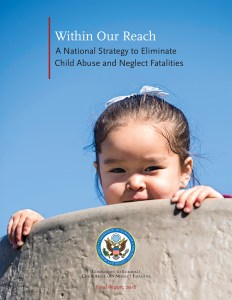
—from “Within Our Reach A National Strategy to Eliminate Child Abuse and Neglect Fatalities”

In 2013, Congress took notice of those concerning stats like ones above. It passed the Protect Our Kids Act and assembled the Commission to Eliminate Child Abuse and Neglect Fatalities (CECANF). Over a two-year period, a team of a dozen commissioners put their public and private sector expertise to task. Their nationwide review of practices and programs revealed that no state has a “sufficiently comprehensive plan to eliminate” child abuse and maltreatment fatalities. So, the commission used what it learned to judiciously recommend a foresighted national strategy.

In time for National Child Abuse Prevention Month this April, GPO makes available the commission’s final report in both digital and print formats.

In “Within Our Reach A National Strategy to Eliminate Child Abuse and Neglect Fatalities,” Chairman David Sanders writes, “If we as a nation do nothing different to prevent child abuse and neglect fatalities, somewhere between 1,500 and 3,000 U.S. children will die from maltreatment.” He calls for a proactive, not reactive, approach to eliminate child abuse and neglect fatalities. That’s exactly what this policy guidance document aims to do—fundamentally reform old practices and make prevention standard practice.

Several of the chapters dig into the complex conditions that make children vulnerable, especially in disproportionately affected minority communities. Until quality services are made equitably available, opportunities to decrease child fatalities will be missed. Another focus is the “disparity between federal legislation on child safety and the impact at the local level.” Proposed solutions include more multi-disciplinary, real-time data sharing and accountable leadership. Notably, the commission recommends the Children’s Bureau be elevated as a direct report to the Secretary of the Department of Health and Human Services (HHS).

9780160932243a

Image excerpt from CECANF Report.

The commission acknowledges that without a way forward, its final report is dead on arrival. So, it recommends that the U.S. government critically review child maltreatment deaths going back five years. The report concludes that “an immediate safety analysis of children who died in the past…will create a national learning community to better protect children and prevent fatalities” in the future.

The commission’s strategy lays out a lot of reasonable action steps. Grounded in practicable research, it’s an earnest effort to produce evidence-based results. Results “within our reach” that will manifestly save children’s lives.

HOW DO I OBTAIN THIS REPORT?

Shop Online Anytime: You can buy eBooks or print publications —with FREE Standard Shipping worldwide— from the U.S. Government Online Bookstore at http://bookstore.gpo.gov.

 Shop our Retail Store: Buy a copy of any print editions from this collection at GPO’s retail bookstore at 710 North Capitol Street NW, Washington, DC 20401, open Monday–Friday, 9 a.m. to 4 p.m., except Federal holidays, Call (202) 512-0132 for information or to arrange in-store pick-up.

Order by Phone: Call our Customer Contact Center Monday through Friday, 8 am to 5:30 pm Eastern (except US Federal holidays). From US and Canada, call toll-free 1.866.512.1800. DC or International customers call +1.202.512.1800.

Visit a Federal depository library: Search for U.S. Government publications in a nearby Federal depository library. You can find the records for most titles in GPO’s Catalog of U.S. Government Publications.

About the author: Our guest blogger is Chelsea Milko, Public Relations Specialist in GPO’s Public Relations Office.


How the Army Cares for Its Warriors

April 5, 2016

April 6 is the anniversary of the United States’ entry into World War I. It’s also Army Day, a time to appreciate our national defense and support military preparedness. Nothing bolsters those two things better than a healthy, ready soldier force. GPO makes available several resources for warrior rehabilitation and transition professionals.

9780160926761Mild Traumatic Brain Injury Rehabilitation Toolkit

In this U.S. Army Medical Department’s Borden Institute publication, rehabilitation professionals review the best research-driven treatment practices for concussions, or mild traumatic brain injuries (mTBI). Recent conflicts in Iraq and Afghanistan prompted the military’s rehabilitative community to advance care excellence for service members with mTBIs. Concussions are sustained on and off the battlefield, thus, post-concussive clinical guidance is ever more imperative. Although this work of clinicians and therapists is intended for clinicians and therapists, the research on balance, vision, post-traumatic headache, cognition, fitness and other functions is an education for non-medical types as well. This toolkit is evidence of “significant contributions to the recovery, rehabilitation, and reintegration of Service Members who are symptomatic after sustaining an mTBI.” It’s an “Army strong” addition to the medical body of knowledge.

9780160893667Warrior Transition Leader: Medical Rehabilitation Handbook

The U.S. Army has a comprehensive rehabilitation and reintegration system for what it terms Warriors in Transition (WTs). In the words of the Warrior Transition Command mission, Army healthcare professionals “establish conditions for healing and promote the timely return to the force or transition to civilian life.” This Army medicine handbook charts the modern soldier rehabilitation practices. Several chapters address the essential topics of military-related disability rights, self-medication and suicide risks, assistive technologies, and resilience development. Accounts from real soldiers show that  “wounded, injured, and ill” service member care is focused, collaborative, and innovative. Engagement of soldiers and family throughout transition and rehabilitation programs certifies this system’s world-class status.

008-000-01151-6A Shared Burden: The Military and Civilian Consequences of Army Pain Management Since 2001

According to author Craig Trebilcock, “the Army has an opioid drug problem.” It’s not a simply a matter of recreational misuse or delinquent soldiers. Prescription opioid pain medications do have a legitimate rehabilitative application. However, usage tracking is failing and knowledge gaps need patching up. This U.S. Army War College, Strategic Studies Institute paper gives Army leadership “a new way of thinking about…impact on combat readiness and civil-military relations.” A survey of senior officers reveals that greater opioid medication monitoring, training, and education is one strategy for consideration. Just as service doesn’t end when a solider becomes a veteran, medical monitoring and rehabilitation should accompany veterans for the long-term. To contravene the impact of opioid dependency on civilian society, military policy needs to proactively address this “shared burden.”

HOW DO I OBTAIN THESE RESOURCES?

Shop Online Anytime: You can buy eBooks or print publications —with FREE Standard Shipping worldwide— from the U.S. Government Online Bookstore at http://bookstore.gpo.gov.

 Shop our Retail Store: Buy a copy of any print editions from this collection at GPO’s retail bookstore at 710 North Capitol Street NW, Washington, DC 20401, open Monday–Friday, 9 a.m. to 4 p.m., except Federal holidays, Call (202) 512-0132 for information or to arrange in-store pick-up.

Order by Phone: Call our Customer Contact Center Monday through Friday, 8 am to 5:30 pm Eastern (except US Federal holidays). From US and Canada, call toll-free 1.866.512.1800. DC or International customers call +1.202.512.1800.

Visit a Federal depository library: Search for U.S. Government publications in a nearby Federal depository library. You can find the records for most titles in GPO’s Catalog of U.S. Government Publications.

About the author: Our guest blogger is Chelsea Milko, Public Relations Specialist in GPO’s Public Relations Office.


April is Financial Literacy Month

April 1, 2016

aprilFinancial Literacy Month is a month dedicated to improving one’s education of personal finances in America. As we commemorate this month, GPO would like to make you aware of some excellent resources related to the topic.

First, the Financial Literacy Month website offers tips and advice for financial wellness. They have a 30 step program and a pledge you can take to make a commitment to your own financial literacy and wellness.

The US Senate’s Committee on Finance provides information about legislation regarding different aspects of finance, such as Social Security Benefits, taxes, and coverage.

Visit the IRS to get tax information. They also offer many resources to obtain information and assistance.

GPO’s Catalog of Government Publications offers many resources for both personal and commercial finances. These are a few:

Similarly, govinfo also offers many resources regarding personal, commercial, and national finances. Here are a few:

The US Government Bookstore also offers a variety of resources regarding this subject. Here are a few:cfpb_your_home_loan_toolkit_small_final_single_crop2_Page_01

HOW DO I OBTAIN THESE RESOURCES?

There are several ways to obtain these resources.

You can click the links on any of the publications to either read it for free or purchase it. If you want to do your own research you can also click on the links for the CGP, govinfo, or the Bookstore and use the search bar.

Shop Online Anytime: You can buy eBooks or print publications —with FREE Standard Shipping worldwide— from the U.S. Government Online Bookstore at http://bookstore.gpo.gov.

 Shop our Retail Store: Buy a copy of any print editions from this collection at GPO’s retail bookstore at 710 North Capitol Street NW, Washington, DC 20401, open Monday–Friday, 9 a.m. to 4 p.m., except Federal holidays, Call (202) 512-0132 for information or to arrange in-store pick-up.

Order by Phone: Call our Customer Contact Center Monday through Friday, 8 am to 5:30 pm Eastern (except US Federal holidays). From US and Canada, call toll-free 1.866.512.1800. DC or International customers call +1.202.512.1800.

Visit a Federal depository library: Search for U.S. Government publications in a nearby Federal depository library. You can find the records for most titles in GPO’s Catalog of U.S. Government Publications.

About the Author: Teresa Mock is an intern with GPO’s Library and Content Management division.


Here’s Lookin’ at You, Hard Power

March 29, 2016

Since World War II, the worldwide presence of the United States has been reinforced by the allied military network it maintains. As a chain is only as strong as its weakest link, the same can be said of U.S. security partners. In “A Hard Look at Hard Power,” thirteen U.S. Army War College, Strategic Studies Institute (SSI) expert contributors address the question: “is that bargain unraveling?”

Source: archive.defense.gov

Source: archive.defense.gov

This essay collection examines the “economy of force” and “collective security” that key allies bring to the American geopolitical board game. Coalition members provide “hard power” capabilities and share the burden of reduced military spending. A multilateral cooperative of “like-minded liberal governments confers a degree of legitimacy on such operations that unilateral action is short of.” But as the essayists point out, this defense arrangement is enfeebled.

Much of the analysis points to shrinking defense forces and budgets in countries like Italy, Australia, Germany, and Great Britain. Country-specific chapters show public support for increased social spending. Maintaining modern military readiness just doesn’t receive the same backing. Much of Europe and elsewhere seems in a state of “strategic ambivalence.” Soft power is the force majeure. Hard power is softening.

a hard look at hard power_coverThe book details examples of other allies who are experiencing war power evolution and shifting power balances. Poland is boosting its regional defense capabilities. South Korea faces the advancing North Korean threat at its doorstep. Taiwan postures itself in the direction of China. Japan is undertaking ambitious military reforms for a greater strategic role. All the while, the NATO alliance force-structure is evolving.

Editor Gary J. Schmitt frames the challenge as “the absence of military capabilities or the strategy to deploy them effectively [that] can create regional dynamics that invite instability.” For the U.S. to understand allied military capability, there must be a frank discussion about what must be done to get the right resources on the table and the right forces at the table. Hard power shortcomings are everywhere. The U.S. multilateral defense network needs its friends now more than ever.

HOW DO I OBTAIN THIS PUBLICATION?

Shop Online Anytime: You can buy eBooks or print publications —with FREE Standard Shipping worldwide— from the U.S. Government Online Bookstore at http://bookstore.gpo.gov.

 Shop our Retail Store: Buy a copy of any print editions from this collection at GPO’s retail bookstore at 710 North Capitol Street NW, Washington, DC 20401, open Monday–Friday, 9 a.m. to 4 p.m., except Federal holidays, Call (202) 512-0132 for information or to arrange in-store pick-up.

Order by Phone: Call our Customer Contact Center Monday through Friday, 8 am to 5:30 pm Eastern (except US Federal holidays). From US and Canada, call toll-free 1.866.512.1800. DC or International customers call +1.202.512.1800.

Visit a Federal depository library: Search for U.S. Government publications in a nearby Federal depository library. You can find the records for most titles in GPO’s Catalog of U.S. Government Publications.

About the author: Our guest blogger is Chelsea Milko, Public Relations Specialist in GPO’s Public Relations Office.


What the Experts Say about Counterterrorism

March 28, 2016
CounterterrorismImage_jpg

Image Credit: U.S. Southern Command

No one needs reminding that the global security environment is volatile. Nihilistic groups mount an existential threat to U.S. interests around the world. Responding to unpredictability requires careful analysis and thoughtful strategy. GPO makes available two such policy-oriented reports from the U.S. Army War College, Strategic Studies Institute (SSI).

Iraq’s Shia Warlords and Their Militias: Political and Security Challenges and Options

008-000-01164-8The battleground in the fight against ISIS is like shifting sands. Shia militias and their commanding warlords are reordering the power balance. Embedded in Iraq’s security system and U.S. military operations, militia in campaigns against ISIS present a dimension of complexity for policy interests on all sides.

This SSI assessment posits that emergent Shia militias “have become for Washington at least co-belligerents in what one can justly term the ISIS War.” Emboldened during the political-military morass of the post-Saddam early 2000s, they hold close ideological ties to Iran and hostility toward U.S. personnel. At the same time they fill the Iraqi police force’s need for boots-on-the-ground, militias are increasingly legitimized in the Shia community. Meanwhile, confrontation with counterterrorism allies is a very real possibility.

Assessing Egyptian Public Support for Security Crackdowns in the Sinai

008-000-01155-9Terrorist groups have a foothold in Egypt’s strategically important Sinai Peninsula. Most citizens support the Egyptian government’s use of hard-hitting tactics to stomp out extremist groups. Expert assessment of Egyptian public opinion of the crackdown shows how the counterproductive desire for stability makes “more terrorist recruits out of disaffected Bedouin youth than would otherwise be the case.” There’s a very real worry that this “very complicated piece of territory” is exporting extremist brutality to the mainland.

This publication makes the case for the U.S. military to provide sensible, sophisticated counterterrorism training to Egyptian counterparts. Bilateral U.S.-Egyptian relations would be best served by policies that effectively rid the Sinai of radical Islamists while boosting human and infrastructure development.

In complement to the publications listed above, here are two broader examinations of radicalized armed groups and global security implications.

008-000-01066-8New Approaches to Nonstate Armed Actors

Leading experts discuss the international community’s struggle to “confront, counter, and engage” nonstate violent groups. In the intro to this joint Marine Corps University Press and the Middle East Institute publication, editor Kenneth H. Williams states “for as long as governments have existed, groups have been forming to oppose them.”

ARMEDGROUPSArmed Groups: Studies in National Security, Counterterrorism, and Counterinsurgency

A U.S. Naval War College edited collection of scholarship, opinion, and context related to the influence of assorted armed groups on national security. Editor Jeffrey H. Norwitz argues that “armed groups are merely one vestige of mankind’s struggles in an increasingly smaller world.”

HOW DO I OBTAIN THESE PUBLICATIONS?

Shop Online Anytime: You can buy eBooks or print publications —with FREE Standard Shipping worldwide— from the U.S. Government Online Bookstore at http://bookstore.gpo.gov.

 Shop our Retail Store: Buy a copy of any print editions from this collection at GPO’s retail bookstore at 710 North Capitol Street NW, Washington, DC 20401, open Monday–Friday, 9 a.m. to 4 p.m., except Federal holidays, Call (202) 512-0132 for information or to arrange in-store pick-up.

Order by Phone: Call our Customer Contact Center Monday through Friday, 8 am to 5:30 pm Eastern (except US Federal holidays). From US and Canada, call toll-free 1.866.512.1800. DC or International customers call +1.202.512.1800.

Visit a Federal depository library: Search for U.S. Government publications in a nearby Federal depository library. You can find the records for most titles in GPO’s Catalog of U.S. Government Publications.

About the author: Our guest blogger is Chelsea Milko, Public Relations Specialist in GPO’s Public Relations Office.