Don’t Give Fire a Place to Start

October 7, 2016

An unforgettable fire began in Chicago on October 8, 1871. Legend has it that Mrs. O’Leary’s cow kicked over a lamp which set a barn—and the entire city—ablaze. Tragically, the Great Chicago Fire burned for days, killing scores of people, decimating roughly 3.3 square miles, and leaving more than 100,000 Chicagoans homeless.

1871_great_chicago_fire_destroyed_buildingsThe Great Chicago Fire not only changed public thinking about fire safety, it inspired Fire Prevention Week—an annual commemoration of that devastating inferno. Going back over 90 years, Fire Prevention Week is the longest running public safety observance in America. This year it runs from October 9-15.

One theme for Fire Prevention Week has been “Don’t Give Fire a Place to Start.” That’s a message that Federal Emergency Management Agency’s (FEMA) U.S. Fire Administration wants every American, especially children, to take to heart. FEMA’s popular Sesame Street Fire Safety Program Family Guide is available through GPO.

Family coloring book. Fire literacy primer. A get-it-together-you-grown-ups safety guide. It’s all those things. FEMA and Sesame Street really deliver. Everybody do the Elmo happy dance!

064-000-00067-5However, this guide is not just about Elmo. A proper shout out goes to Cookie Monster, Grover, and Telly Monster. Together, the furry fire brigade educates with catchphrases like “hot, hot, stay away. hot, hot, not for play” and “get outside and stay outside!” The playbook covers how to avoid hot things that burn, make a home escape map, family practice time, and what to do if the smoke alarm sounds. There are kitchen safety tips for parents and caregivers, too.

Start a healthy discussion around a scary thing like a fire emergency. Demonstrate that preparation and prevention are skills that the entire family can work on together. Cultivate lifelong fire safety habits. As the guide says, “fire safety begins at home.’ Simple steps make a big difference in staying safe from fires.

Sometime after the Great Chicago Fire, it was discovered that a journalist fabricated the O’Leary cow rumor. The real cause of the fire has never been confirmed. But it did start a national conversation on the basic but essential elements of fire safety. As Fire Prevention Week reminds us, prevention is a big part. Fires are mostly preventable. It’s on everyone to take charge.

HOW DO I OBTAIN THIS PUBLICATION?

Shop Online Anytime: You can buy eBooks or print publications —with FREE Standard Shipping worldwide— from the U.S. Government Online Bookstore at http://bookstore.gpo.gov.

Shop our Retail Store: Buy a copy of any print editions from this collection at GPO’s retail bookstore at 710 North Capitol Street NW, Washington, DC 20401, open Monday–Friday, 9 a.m. to 4 p.m., except Federal holidays, Call (202) 512-0132 for information or to arrange in-store pick-up.

Order by Phone: Call our Customer Contact Center Monday through Friday, 8 am to 5:30 pm Eastern (except US Federal holidays). From US and Canada, call toll-free 1.866.512.1800. DC or International customers call +1.202.512.1800.

Visit a Federal depository library: Search for U.S. Government publications in a nearby Federal depository library. You can find the records for most titles in GPO’s Catalog of U.S. Government Publications.

About the author: Blogger contributor Chelsea Milko is a Public Relations Specialist in GPO’s Public Relations Office.


STIR UP YOUR 2016-17 SCHOOL YEAR CLASSROOM CURRICULUM

October 4, 2016

us_government_academic_publications_2016_page_01Order from the new academic catalog now at http://bookstore.gpo.gov.

One of the most interesting and thought provoking information and news resources is untapped or underutilized by the teaching community. It’s the 4,000 plus titles researched and presented by some of the most knowledgeable and insightful authors in America: professionals within the federal community.

Consider the extent of publications the government is engaged in: social and economic issues, global politics to climate change, national security and terrorism, infrastructure, transportation– so many opportunities for students seeking a better and clearer understanding of the world they’re about to enter.

The Government Publishing Office has placed online a great resource for college administrators and teachers to locate titles to enthuse and motivate students with insightful information about the many subjects touched by federal programs and legislation.

It’s the U.S. Government Academic Publications catalog, where a variety of titles are described along with the key information on how to obtain these publications; all delivered free.

Go online to http://bookstore.gpo.gov main page and look for the promotional banner containing a link to the catalog.

The US Government Online Bookstore has a myriad of new and interesting information to excite and engage your students with topics totally relevant today, especially during a presidential campaign year. And while there, browse by topic or agency. If you’ve never done so, you’ll be amazed at the insights to be gained from titles published by agencies such as the U.S. Army War College Strategic Studies Institute, the Department of Health and Human Services, and NASA, who discuss global issues that touch facets of American life that students too often are not aware of nor afforded access to. And that’s only a few examples. Now they’re all accessible.

Shop Online Anytime: You can buy eBooks or print publications —with FREE Standard Shipping worldwide— from the U.S. Government Online Bookstore at http://bookstore.gpo.gov.

Shop our Retail Store: Buy a copy of any print editions from this collection at GPO’s retail bookstore at 710 North Capitol Street NW, Washington, DC 20401, open Monday–Friday, 9 a.m. to 4 p.m., except Federal holidays, Call (202) 512-0132 for information or to arrange in-store pick-up.

Order by Phone: Call our Customer Contact Center Monday through Friday, 8 am to 5:30 pm Eastern (except US Federal holidays). From US and Canada, call toll-free 1.866.512.1800. DC or International customers call +1.202.512.1800.

Visit a Federal depository library: Search for U.S. Government publications in a nearby Federal depository library. You can find the records for most titles in GPO’s Catalog of U.S. Government Publications.

About the author: Blogger contributor Ed Kessler is a Promotions Specialist in GPO’s Publication and Information Sales program office.


On America’s Trails

September 30, 2016

stelprdbLet’s talk briefly about two American legends celebrated on screen and page. One stretches 2,160 miles from Mount Katahdin, Maine to Springer Mountain, Georgia. The second covers 2,665 miles from America’s southern and northernmost borders along the mountain ranges of Washington, Oregon, and California.

They’re the Appalachian and Pacific Crest Trails, respectively—the first scenic trails designated by the Federal government nearly a half-century ago. On October 2, 1968, President Lyndon B. Johnson signed the National Trails System Act into law. It established a network of scenic, historic, and recreation trails. You can read the original act on GPO’s govinfo.

Until 1968, the Federal government simply built and maintained trails on Federal lands. The National Trails System Act expanded that role by providing funding and support for interstate coordination and volunteer partnerships. Today, the National Trails System includes 20 national scenic and historic trails traversing nearly 40,000 miles.

In addition to making the National Trails System Act available on govinfo, GPO makes available these trail-related resources:

024-005-01277-0National Trails System: Map and Guide

This National Park Service full-color map depicts eight national scenic trails and nine national historic trails. The National Park Service, U.S. Forest Service, and Bureau of Land Management work in concert to keep trails well-marked and well-monitored. Check out the NPS website for the complete list of scenic and historic trails.

The Iditarod National Historic Trail (Poster)

024-011-00198-1_01On one side of this U.S. Forest Service poster is a timeline and map.  On the other side is a photo of a 1913 dog sled mail team. Together, they commemorate a historic 1,500 miles stretch of winter travel tracks connected to form America’s last gold rush trail.

Upon throwing his support behind a national system of trails, President Johnson said, “The forgotten outdoorsmen of today are those who like to walk, hike, ride horseback, or bicycle. For them we must have trails as well as highways…In the back country we need to copy the great Appalachian Trail in all parts of our country…”

HOW DO I OBTAIN THESE RESOURCES?

Shop Online Anytime: You can buy eBooks or print publications —with FREE Standard Shipping worldwide— from the U.S. Government Online Bookstore at http://bookstore.gpo.gov.

Shop our Retail Store: Buy a copy of any print editions from this collection at GPO’s retail bookstore at 710 North Capitol Street NW, Washington, DC 20401, open Monday–Friday, 9 a.m. to 4 p.m., except Federal holidays, Call (202) 512-0132 for information or to arrange in-store pick-up.

Order by Phone: Call our Customer Contact Center Monday through Friday, 8 am to 5:30 pm Eastern (except US Federal holidays). From US and Canada, call toll-free 1.866.512.1800. DC or International customers call +1.202.512.1800.

Visit a Federal depository library: Search for U.S. Government publications in a nearby Federal depository library. You can find the records for most titles in GPO’s Catalog of U.S. Government Publications.

About the author: Blogger contributor Chelsea Milko is a Public Relations Specialist in GPO’s Public Relations Office.


The Government Guide to a World of Exporting

September 28, 2016

If you’re a small or medium-sized business—start-up, mature, or somewhere in between—and you’re looking to expand your international market share and bottom line, there’s a U.S. Government guide that breaks down the basics of exporting.

a-basic-guide-to-exporting-11th-editionGPO makes available the latest edition of A Basic Guide to Exporting. It’s a work of the International Trade Administration’s (ITA) U.S. Commercial Service, a functionary of the U.S. Department of Commerce. This book has been around for 70 years, and it continues to give companies information they need to “gain the confidence to become an international sensation.”

U.S. companies are exporting more than ever before. According to the ITA, “in 2013, more than 300,000 small and medium-sized U.S. companies exported to at least one international market.” That has a lot to do with the fact that 96 percent of the world’s consumers exist outside of the U.S. Now is a great time for U.S. companies to go global.

This U.S. Commercial Service resource provides U.S. companies, especially first-time exporters, with in-depth advice and real-life success stories. It deals with complex issues head-on and “challenges…assumptions about engaging in the world of international business.” In addition to A Basic Guide to Exporting, the U.S. Commercial Service offers trade counseling, market intelligence, commercial diplomacy and help connecting with potential international partners—a sort of business matchmaking service.

dockIn A Basic Guide to Exporting, exporters can find strategic advice on how to:

  • Identify markets for products
  • Create an export plan
  • Finance your export transactions
  • Handle orders and shipments
  • Get free or low-cost government export counseling
  • Sell abroad through e-commerce
  • Finance export transactions
  • Prepare for legal issues

Yes, exporting abroad is tremendously more complicated than selling domestically. But thanks to official U.S. government resources and services, the process is easier than ever before. The world is truly open for U.S. business!

HOW DO I OBTAIN THIS PUBLICATION?

Shop Online Anytime: You can buy eBooks or print publications —with FREE Standard Shipping worldwide— from the U.S. Government Online Bookstore at http://bookstore.gpo.gov.

Shop our Retail Store: Buy a copy of any print editions from this collection at GPO’s retail bookstore at 710 North Capitol Street NW, Washington, DC 20401, open Monday–Friday, 9 a.m. to 4 p.m., except Federal holidays, Call (202) 512-0132 for information or to arrange in-store pick-up.

Order by Phone: Call our Customer Contact Center Monday through Friday, 8 am to 5:30 pm Eastern (except US Federal holidays). From US and Canada, call toll-free 1.866.512.1800. DC or International customers call +1.202.512.1800.

Visit a Federal depository library: Search for U.S. Government publications in a nearby Federal depository library. You can find the records for most titles in GPO’s Catalog of U.S. Government Publications.

About the author: Blogger contributor Chelsea Milko is a Public Relations Specialist in GPO’s Public Relations Office.


The Future of Energy

September 20, 2016

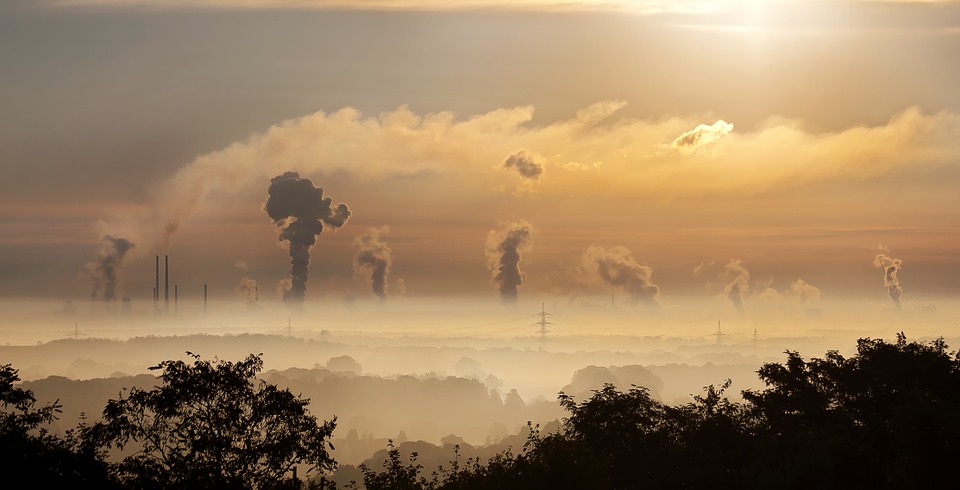
industry-611668_960_720There’s a great deal of interest in energy issues. Energy is in high demand across the globe. The task at hand is to predict just how the world’s total energy consumption will increase. One government report does that. GPO makes available the U.S. Department of Energy, Energy Information Agency (EIA)’s International Energy Outlook 2016. Not surprisingly, it shows rising levels of demand over the next three decades.

061-003-01167-5This report presents objective, sophisticated, and useful trend projections for world energy markets through 2040. IEO2016 focuses exclusively on marketed energy sources, divided according to Organization for Economic Cooperation and Development members (OECD) and nonmembers. Projections are “not statements of what will happen, but what might happen…dependent on the data, methodologies, model structures, and assumptions.”

By 2040, energy consumption will have increased by 1.4% per year; consumers are predicted to use roughly 815 quadrillion Btu. China and India will account for more than half of this usage. Renewable energy will be the fastest growing of all energy sources—wind and hydropower will each account for one-third of this increase. Despite the renewables uptick, fossil fuels will continue to be the prevailing energy provider, supplying 3/4 of the world’s energy needs.

Interesting to note is the growth in natural gas production from shale resources. Shale gas production amounted to more than half of U.S. natural gas production in 2015. By 2030, natural gas will surpass coal as the world’s second largest energy source. By 2040, natural gas, coal, and renewables will each generate close to 30% of all electricity.

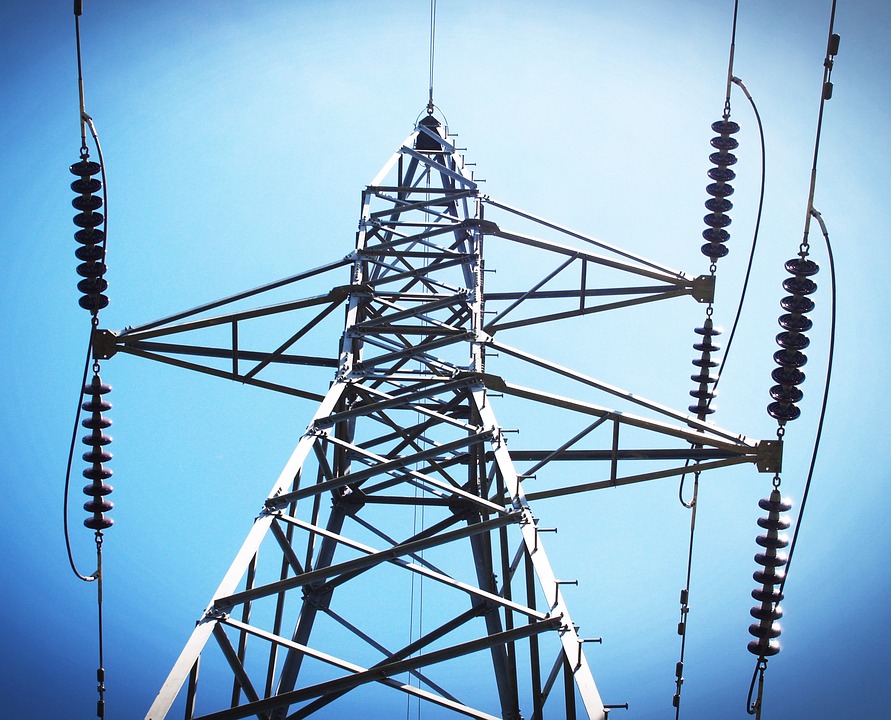
power-1549118_960_720EIA Administrator Adam Sieminski states that “with existing policies and regulations, worldwide energy-related CO2 emissions will…increase by 1/3 out to the year 2040.” And much of this will depend upon the uncertain factors of economic growth in developing countries, oil production, technology improvements, and nuclear energy generation.

IEO2016 provides an actionable glimpse into both the current status and the future of global energy production and consumption. Because what happens today will influence tomorrow.

HOW DO I OBTAIN THIS PUBLICATION?

Shop Online Anytime: You can buy eBooks or print publications —with FREE Standard Shipping worldwide— from the U.S. Government Online Bookstore at http://bookstore.gpo.gov.

Shop our Retail Store: Buy a copy of any print editions from this collection at GPO’s retail bookstore at 710 North Capitol Street NW, Washington, DC 20401, open Monday–Friday, 9 a.m. to 4 p.m., except Federal holidays, Call (202) 512-0132 for information or to arrange in-store pick-up.

Order by Phone: Call our Customer Contact Center Monday through Friday, 8 am to 5:30 pm Eastern (except US Federal holidays). From US and Canada, call toll-free 1.866.512.1800. DC or International customers call +1.202.512.1800.

Visit a Federal depository library: Search for U.S. Government publications in a nearby Federal depository library. You can find the records for most titles in GPO’s Catalog of U.S. Government Publications.

About the author: Blogger contributor Chelsea Milko is a Public Relations Specialist in GPO’s Public Relations Office.


A New Guide for the American Diet

September 15, 2016

001-000-04771-0Americans, your dietary guidepost for the next four years is here! The U.S. Department of Health and Human Services (HHS) and Department of Agriculture’s (USDA) Dietary Guidelines for Americans is now available through GPO. It’s designed to help folks “improve their overall eating patterns — the complete combination of foods and drinks in their diet.” Plainly put, it’s a plan for eating better.

In this latest edition of HHS and USDA’s twice-a-decade nutrition publication, you’ll see terms like “nutrient-dense” and “food pattern” over and over again. That isn’t just trendy jargon to impress policymakers and health professionals. The words have real meaning, and they represent a shift in thinking about the way Americans should eat.  That is, “people do not eat food groups and nutrients in isolation but rather in combination”—people eat food in patterns.

eat-carrot-peaDietary Guidelines doesn’t just prescribe what to eat, it reminds us why to eat. Science tells us that healthy eating patterns “can help prevent chronic diseases like obesity, heart disease and Type 2 diabetes.” Improved nutrition staves off disease. And when Americans make healthy choices in their daily lives, the long-term benefits support a healthier next generation.

001-000-04771-0_dietary-guidelines-for-americans-2015-2020-003

Click on image to enlarge.

And now, snack on a few science-based recommendations:

  • There’s more than one way to pattern and adapt your eating. Dietary Guidelines provides examples of healthy eating patterns,
  • Nutrient-dense foods are only nutrient dense if they’re made with little or no added solid fats, sugars, refined starches, and sodium. So, cut down on those things,
  • Find new ways to sneak more veggies into dishes you already prepare,
  • Women, limit yourself to one drink per day. Men, your limit is two,
  • Lifelong healthy eating begins with small changes.

If you want a handy takeaway message, it’s this: make small dietary shifts and follow a healthy, lifetime eating pattern that combines a variety of nutrient-dense foods. Or simpler yet, eat for the long run, eat to live.

Update: The 2015-2020 Dietary Guidelines for Americans, is now available in a variety of convenient digital formats compatible with mobile phones, tablets, and e-readers.

See all the available formats for the Dietary Guidelines.

HOW DO I OBTAIN THIS PUBLICATION?

Shop Online Anytime: You can buy eBooks or print publications —with FREE Standard Shipping worldwide— from the U.S. Government Online Bookstore at http://bookstore.gpo.gov.

 Shop our Retail Store: Buy a copy of any print editions from this collection at GPO’s retail bookstore at 710 North Capitol Street NW, Washington, DC 20401, open Monday–Friday, 9 a.m. to 4 p.m., except Federal holidays, Call (202) 512-0132 for information or to arrange in-store pick-up.

Order by Phone: Call our Customer Contact Center Monday through Friday, 8 am to 5:30 pm Eastern (except US Federal holidays). From US and Canada, call toll-free 1.866.512.1800. DC or International customers call +1.202.512.1800.

Visit a Federal depository library: Search for U.S. Government publications in a nearby Federal depository library. You can find the records for most titles in GPO’s Catalog of U.S. Government Publications.

About the author: Blogger contributor Chelsea Milko is a Public Relations Specialist in GPO’s Public Relations Office.


How Naval Intelligence Shaped the Vietnam War

September 12, 2016

During the Vietnam War, U.S. naval intelligence was a very complex affair. Layers of political organization, military strategy, offensive tactics, and logistical operations shaded the struggle to win in South Vietnam. Much of that portion of the Cold War era is now declassified, illuminating the contributions of the naval intelligence establishment.

008-046-00298-3GPO makes available “Knowing the Enemy: Naval Intelligence in Southeast Asia,” part of the U.S. Department of the Navy series of commemorative studies on the Vietnam War.

The U.S. Navy intelligence effort in Vietnam played out in several pivotal events. Intelligence-gathering squadrons informed operations during 1964’s Tonkin Gulf Crisis and 1968’s Tet Offensive. Naval commands closely traced Soviet and Chinese military aid to North Vietnam and surveilled the use of the vital Cambodian port of Sihanoukville. And analysts processed raw data that informed the Linebacker bombing campaigns and pressed North Korea to eventually negotiate terms to end the war.

A SEAL scans the surroundings during his unit's intelligence-gathering mission in a Mekong Delta village.

A SEAL scans the surroundings during his unit’s intelligence-gathering mission in a Mekong Delta village.

Officers and enlisted personnel gathered and analyzed credible intel on the movement of Communist combat units, the location of Viet Cong encampments, and the flow of weapons and ammunition along the Mekong Delta. The communications, electronic, human, and imagery intelligence they collected was “key to the operational and tactical success of naval forces in the Vietnam War.”

Members of the naval intelligence community that routinely “engaged in intelligence collection often did their dangerous but vital work in direct contact with the enemy.” For example, photo reconnaissance pilots flew fast and furiously into oncoming antiaircraft fire for the best pictures—“since anything worth photographing was likely well-defended.” Hardly desk drones, intelligence staffs “fought face-to-face with the enemy” and suffered causalities for it.

Photo intelligence 3rd Class Charles R. Pearson uses his stereoscopic equipment to analyze an aerial image of an enemy site in Vietnam.

Photo intelligence 3rd Class Charles R. Pearson uses his stereoscopic equipment to analyze an aerial image of an enemy site in Vietnam.

U.S. naval intelligence units furnished operational forces “with information that, for the most part, improved their battle performance…and prospects for survival in combat.” More than anything, the cadre of intelligence professionals helped the American military understand the enemy.

HOW DO I OBTAIN THIS PUBLICATION?

Shop Online Anytime: You can buy eBooks or print publications —with FREE Standard Shipping worldwide— from the U.S. Government Online Bookstore at http://bookstore.gpo.gov.

 Shop our Retail Store: Buy a copy of any print editions from this collection at GPO’s retail bookstore at 710 North Capitol Street NW, Washington, DC 20401, open Monday–Friday, 9 a.m. to 4 p.m., except Federal holidays, Call (202) 512-0132 for information or to arrange in-store pick-up.

Order by Phone: Call our Customer Contact Center Monday through Friday, 8 am to 5:30 pm Eastern (except US Federal holidays). From US and Canada, call toll-free 1.866.512.1800. DC or International customers call +1.202.512.1800.

Visit a Federal depository library: Search for U.S. Government publications in a nearby Federal depository library. You can find the records for most titles in GPO’s Catalog of U.S. Government Publications.

About the author: Blogger contributor Chelsea Milko is a Public Relations Specialist in GPO’s Public Relations Office.


NASA Publications Hotter Than the Sun

September 7, 2016

It seems like there’s no end to the number of articles and books written about and by NASA. But then again, there’s no end to the research and technology that NASA puts forth. Of course, it’s not nearly enough to fill the cosmos that the agency so intrepidly explores. Yet, as always, NASA’s pioneering science and technology research endeavors to take humanity to the next achievable frontier.

If you’re ready to sponge up more of NASA’s scientific discoveries, or you’re just interested in all things space-related, check out these publications available through GPO. Countdown to liftoff…3…2…1…

 NASA’s Journey to Mars: Pioneering Next Steps in Space Exploration

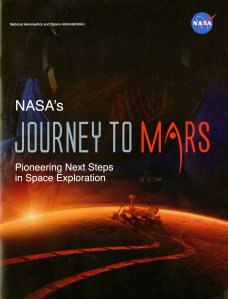
033-000-01376-1In this century, NASA may have the answer to the David Bowie song “Life on Mars?” The agency’s goal is to send humans to an asteroid by 2025 and then to Mars in the 2030s. This booklet serves as a mission framing document.

Four decades of robotic missions and spaceflight have developed and tested the technologies needed for exploration of deep space. Data gathered by surface scouts show that the Martian environment may be suitable—and sustainable—for a human presence. In response, NASA is leveraging core capabilities to “logically progress from current Earth Reliant operations…to Earth Independent pioneering.”

While much remains to be learned about extending human presence in space, “we are closer to sending humans to Mars than at any point in NASA’s history.” Just in case life is ever found on the Red Planet, or any planet for that matter, NASA has an Office of Planetary Protection. No kidding.

Spinoff, 2016

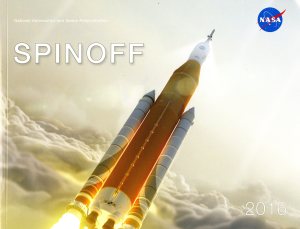
033-000-01375-2_spinoff-2016According to NASA’s 2016 budget, the Federal Government spends about 0.5% of its purse on the world’s biggest space agency. That means NASA receives $0.005 of every taxpayer dollar. It pours those cents into groundbreaking technologies, many of which have been successfully commercialized through the Technology Transfer Program.

Spinoff, 2016 profiles the novel inventions that have spun off into handy applications for transportation, health and medicine, information technology, and even consumer goods. Here are a few highlights:

  • An astronaut G-suit saves women from post-birth hemorrhaging.
  • A Mars methane detector can identify dangerous gas leaks.
  • A CO2 recovery system allows microbrewers to more efficiently carbonate beer.

As Administrator Charlie Bolden writes in his foreword to book, NASA’s work has resulted in “technology coming down to Earth…[these] spinoffs have made an impact on nearly every facet of American life.”

Reference Guide to the International Space Station

033-000-01373-6The International Space Station (ISS) is both the most complex scientific effort and the most expensive project ever undertaken. This reference guide details the unique research accommodations, support systems, and international partnerships that lend credibility to the ISS’ position as an extremely agile—and awe-inspiring—platform of discovery.

This orbiting laboratory of weightless, extreme conditions has a low-orbit path over 90 percent of the Earth’s population. Tricked-out features enable it to execute research that cannot be done anywhere else. Eighty-three countries that have been involved with its activities. And astronauts use it as a “proving ground” to solve difficult challenges associated with establishing viable human activity beyond Earth. The ISS is truly a symbol of the best of human knowledge and cooperation.

Fun fact: you can sign up to receive text messages from NASA whenever the International Space Station passes over your location!

HOW DO I OBTAIN THESE NASA PUBLICATIONS?

Shop Online Anytime: You can buy eBooks or print publications —with FREE Standard Shipping worldwide— from the U.S. Government Online Bookstore at http://bookstore.gpo.gov.

 Shop our Retail Store: Buy a copy of any print editions from this collection at GPO’s retail bookstore at 710 North Capitol Street NW, Washington, DC 20401, open Monday–Friday, 9 a.m. to 4 p.m., except Federal holidays, Call (202) 512-0132 for information or to arrange in-store pick-up.

Order by Phone: Call our Customer Contact Center Monday through Friday, 8 am to 5:30 pm Eastern (except US Federal holidays). From US and Canada, call toll-free 1.866.512.1800. DC or International customers call +1.202.512.1800.

Visit a Federal depository library: Search for U.S. Government publications in a nearby Federal depository library. You can find the records for most titles in GPO’s Catalog of U.S. Government Publications.

About the author: Blogger contributor Chelsea Milko is a Public Relations Specialist in GPO’s Public Relations Office.


Great Lessons in Small Packages—Tree Books for Kids

August 30, 2016

Great things do come in small packages! In the case of this blog post, the small packages are children’s books that bring to life the themes of growth and nature. GPO makes available two colorfully-illustrated, nature-based publications from the United States Department of Agriculture (USDA) that are ideal for parents and educators, too!

The Little Acorn

001-001-00687-4We usually think of acorns as the staple snack of squirrels. And that they are. In the case of this delightful storybook from the USDA Natural Resources Conservation Service, an acorn can also represent the magic of growing up.

The Little Acorn is written from the perspective of a foraging squirrel who buries an acorn near a stream. As it occasionally checks back on the oak nut, the squirrel bears witness to the tree’s growth amid seasonal and ecological changes. Spring rains, summer heat, and autumn winds condition the baby oak. Its thirsty roots stretch out and it learns that all living things need water to grow.

What starts as a tiny seed encased in a tough shell eventually transforms into a “big, beautiful oak tree…dropping little acorns of its own.”

Why Would Anyone Cut a Tree Down?

001-000-04759-1Sometimes it is necessary to cut trees. Trees have lifecycles—they sprout, mature, grow old, die—and their seeds can be planted to grow new trees. For a renewable resource like trees to healthily propagate, diseased or hazardous trees must be cut down and removed. What sounds like severe measures is actually a good thing for the environment.

This U.S. Forest Service publication teaches kids that “people need to cut some trees down, but that is not the end of the story.” It explores various uses for wood from cut trees—such as materials for construction, nutrients for fresh soil, and stumps for new shoots. The book also includes a note to adults about the basics of tree care.

Cutting down a tree is a form of caring for that tree. It makes room for more life in the exchange of another. Eighteenth century botanist Carl Linnaeus said it best when he wrote “if a tree dies, plant another in its place.”

HOW DO I OBTAIN THESE PUBLICATIONS?

Shop Online Anytime: You can buy eBooks or print publications —with FREE Standard Shipping worldwide— from the U.S. Government Online Bookstore at http://bookstore.gpo.gov.

 Shop our Retail Store: Buy a copy of any print editions from this collection at GPO’s retail bookstore at 710 North Capitol Street NW, Washington, DC 20401, open Monday–Friday, 9 a.m. to 4 p.m., except Federal holidays, Call (202) 512-0132 for information or to arrange in-store pick-up.

Order by Phone: Call our Customer Contact Center Monday through Friday, 8 am to 5:30 pm Eastern (except US Federal holidays). From US and Canada, call toll-free 1.866.512.1800. DC or International customers call +1.202.512.1800.

Visit a Federal depository library: Search for U.S. Government publications in a nearby Federal depository library. You can find the records for most titles in GPO’s Catalog of U.S. Government Publications.

About the author: Blogger contributor Chelsea Milko is a Public Relations Specialist in GPO’s Public Relations Office.


The ‘Indispensable’ CIA World Factbook

August 26, 2016

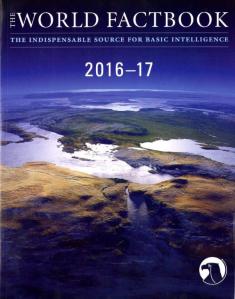
There are 267 world entities. Each one has a history, people, government, and economy. The Central Intelligence Agency (CIA) aims to summarize that information in just a few pages. The World Factbook, prepared by the CIA using information from a half-dozen cabinet-level agencies, profiles basic intelligence on all areas of the world. GPO makes available the latest edition of the U.S. government’s complete geographical handbook.

The World Factbook 2016-17

The World Factbook 2016-17 (002)This U.S. has been involved in basic intelligence gathering since the days of George Washington. As for the World Factbook, its beginnings predate the establishment of the CIA itself. During WWII, military decision-makers lacked detailed and coordinated information. So, they initiated a joint effort to collect and publish strategic intelligence. That information remained classified for nearly two decades.  According to the book’s own brief history, “the first classified Factbook was published in 1962, and the first unclassified version was published in June 1971.” Since 1975, GPO has made the almanac-style resource available to the public writ large.

The World Factbook is an encyclopedic listing of each country’s society, geography, energy, communications, transportation, military, and transnational issues. It includes full-color maps of the major world regions including physical geography, political capitals, and world oceans with major shipping lanes, ports and checkpoints.

Here are a few geography facts that just may help you win at trivia night:

The CIA World Factbook covers Afghanistan to Zimbabwe and every country in between.

The CIA World Factbook covers Afghanistan to Zimbabwe and every country in between.

  • Ethiopia is the most populous landlocked country in the world.
  • Reykjavik, Iceland is the northernmost national capital in the world.
  • Indonesia is the world’s largest country composed entirely of islands.
  • Uzbekistan, along with Liechtenstein, is one of only two “doubly landlocked” countries in the world i.e., a country that is surrounded by landlocked countries.
  • Tonga remains the only monarchy in the Pacific.
  • The temperature in Aruba is almost constantly 81 degrees Fahrenheit (27 degrees Celsius).

The Factbook’s current and actionable intelligence isn’t just for national-level policymakers. It’s a reference resource for everyone. The CIA World Factbook is “the indispensable source for basic intelligence,” the sort of world knowledge that can have a significant impact on people’s lives.

HOW DO I OBTAIN THE WORLD FACTBOOK 2016-17?

Shop Online Anytime: You can buy eBooks or print publications —with FREE Standard Shipping worldwide— from the U.S. Government Online Bookstore at http://bookstore.gpo.gov.

 Shop our Retail Store: Buy a copy of any print editions from this collection at GPO’s retail bookstore at 710 North Capitol Street NW, Washington, DC 20401, open Monday–Friday, 9 a.m. to 4 p.m., except Federal holidays, Call (202) 512-0132 for information or to arrange in-store pick-up.

Order by Phone: Call our Customer Contact Center Monday through Friday, 8 am to 5:30 pm Eastern (except US Federal holidays). From US and Canada, call toll-free 1.866.512.1800. DC or International customers call +1.202.512.1800.

Visit a Federal depository library: Search for U.S. Government publications in a nearby Federal depository library. You can find the records for most titles in GPO’s Catalog of U.S. Government Publications.

About the author: Blogger contributor Chelsea Milko is a Public Relations Specialist in GPO’s Public Relations Office.


Keeping America Informed – The U.S. Government Publishing Office – A Legacy of Service – 1861-2016

August 25, 2016

GPO_history_book_cover_4cThe new edition of the Government Publishing’s Office’s official history, Keeping America Informed, tells the story of GPO by casting a fresh, up-to-date light on the continual transformative history of the Federal Government’s publisher.

A rich pictorial record and well documented narrative of times gone by offers a compelling story about one of the Federal Government’s essential organizations.

Known as the Government Printing Office until 2014 and based in the heart of the Nation’s capital, GPO has carried out its constitutional informing function by producing a staggering number of official Government documents in printed – and, in more recent years, digital – formats for the use of Congress, Federal agencies and the courts, and the American people.

Over the past fifty years the dominant trend at GPO has been to incorporate and expand electronic information technologies to improve production efficiencies and make Government information more widely available than ever before.

Today, GPO has become a multi-faceted hub of digital publishing activity: smaller, leaner, and equipped with digital production capabilities functioning alongside still productive traditional printing equipment.

Keeping America Informed portrays a history of dedication by generations of men and women who made up its workforce. Not many Federal agencies can boast employees who make products every day for both official and public use as GPO can.

GPO’s story is of a Government agency working quietly in venerable, historic red brick buildings in the shadow of Union Station and the Capitol, through every historic event and period since the Civil War; thousands of dedicated men and women in highly skilled jobs; and a mission to assure that the work of the Government is broadly open to the widest possible audience.

It’s a story that is at the heart of how our Government works.

HOW DO I OBTAIN THIS PUBLICATION?

Shop Online Anytime: You can buy eBooks or print publications —with FREE Standard Shipping worldwide— from the U.S. Government Online Bookstore at http://bookstore.gpo.gov.

 Shop our Retail Store: Buy a copy of any print editions from this collection at GPO’s retail bookstore at 710 North Capitol Street NW, Washington, DC 20401, open Monday–Friday, 9 a.m. to 4 p.m., except Federal holidays, Call (202) 512-0132 for information or to arrange in-store pick-up.

Order by Phone: Call our Customer Contact Center Monday through Friday, 8 am to 5:30 pm Eastern (except US Federal holidays). From US and Canada, call toll-free 1.866.512.1800. DC or International customers call +1.202.512.1800.

Visit a Federal depository library: Search for U.S. Government publications in a nearby Federal depository library. You can find the records for most titles in GPO’s Catalog of U.S. Government Publications.

About the author: Blogger contributor Ed Kessler is a Promotions Specialist in GPO’s Publication and Information Sales program office.


Celebrating the National Park Service’s Centennial

August 24, 2016

grand-1434695_1280Since the creation of the National Park Service (NPS) on August 25, 1916, more than 275 million people visit the natural and cultural resources every year!

The seed for the national park idea was planted in 1864 with the passage of the Yosemite Grant. In 1872, President Ulysses S. Grant signed the bill creating Yellowstone National Park, the first national park in the history of the world. This trend continued with the signing of the Antiquities Act of 1906, by the great lover of nature, President Theodore Roosevelt, who sought to protect scientific items of cultural heritage. The Act further prohibited the removal of cultural items from Federal lands without a permit. At that time, permits were granted by the agency managing that particular monument, especially the Departments of the Interior and Agriculture. Hence, monuments were managed by various agencies.

In 1916, President Woodrow Wilson created the National Park Service, but it was President Franklin Delano Roosevelt, who in 1933 consolidated the stewardship of all national monuments and parks under the NPS. In 1935, through the Historic Sites Act, the US publically declared its goal to protect and preserve cultural heritage sites. Since then, Presidential administrations have classified more and more sites as cultural heritage. Thus far, we have close to 400 cultural heritage sites. The Obama administration alone is responsible for adding 18 of them.

9780160932090We invite you to browse the U.S. Government Bookstore’s National Parks collection. It includes everything from posters, maps, and park guides to coloring books for children. Of particular interest is the National Parks Index 2012 – 2016: 2016 National Park Service Centennial: Official Index of the National Park Service. This index is a complete administrative listing of the National Park System’s areas and related areas, including historical documentation to distinguish between the types of National Park Service sites. It has been revised to reflect congressional actions. The entries, grouped by state, include administrative addresses and phone numbers, dates of authorization and establishment, boundary change dates, acreages, website addresses, and brief statements explaining the areas’ national significance.

024-005-01271-1You can also experience a little of what the NPS has to offer in the Washington, D.C. area through the pamphlet, “National Park Service: Where History Happens,” on sale via the U.S. Government Bookstore. Learn more about the D.C. area’s most historic attractions: where Abraham Lincoln died or where Martin Luther King, Jr. made his famous “I Have a Dream…” speech. Visit Mount Vernon, the home of George Washington, seemingly completely frozen in time, as workers cultivate the farm using the same techniques and tools as in Washington’s  era.

America’s heritage includes monuments, parks, recreational sites, parkways, and many other things. Layer upon layer, time upon time, when we look at these structures we are not just looking at our past, we are learning from it so we can build a better tomorrow. History is always being made; the unheard of yesterday is being made possible today.

Below is a list of handpicked resources for those interested in learning more. Find these resources via govinfo, the Catalog of U.S. Government Publications, and the U.S. Government Online Bookstore.

govinfo – https://www.govinfo.gov/features/national-park-service-centennial

  1. History of H.R. 3556 – A bill to prepare the National Park Service for its Centennial in 2016 and for a second century of protecting our national parks’ natural, historic, and cultural resources for present and future generations, and for other purposes
  1. 160 Cong. Rec. H3254 – NATIONAL PARK SERVICE 100TH ANNIVERSARY COMMEMORATIVE COIN ACT
  1. REPT. 106-250 – ANTIQUITIES ACT OF 1906

Catalog of U.S. Government Publications – http://catalog.gpo.gov/

  1. National Park Service: Where History Happens
  1. National Registry of Natural Landmarks
  1. The Secretary of the Interior’s standards for the treatment of historic properties : with guidelines for preserving, rehabilitating, restoring & reconstructing historic buildings
  1. National historic landmarks listed by state or territory
  1. Presenting nature : the historic landscape design of the National Park Service, 1916 to 1942
  1. National Park Service administrative history : a guide

U.S. Government Online Bookstore – http://bookstore.gpo.gov

  1. National Park Service: Where History Happens
  1. Washington: The Nation’s Capital (2013 Map)
  1. Secretary of the Interior’s Standards for Rehabilitation and Illustrated Guidelines for Rehabilitating Historic Buildings (ePub eBook)
  1. National Trails System: Map and Guide, 2010 Edition
  1. National Park System (Wall Map Poster)
  1. Great American Landmarks Adventure
  1. The National Parks: Shaping the System
  1. Yellowstone: A Natural and Human History, Yellowstone National Park, Idaho, Montana, and Wyoming
  2. Underground Railroad: Official Map and Guide (Folder)

HOW DO I OBTAIN THESE RESOURCES?

You can click on the links above in the blog or through any of these methods:

 Shop Online Anytime: You can buy eBooks or print publications —with FREE Standard Shipping worldwide— from the U.S. Government Online Bookstore at http://bookstore.gpo.gov.

Shop our Retail Store: Buy a copy of any print editions from this collection at GPO’s retail bookstore at 710 North Capitol Street NW, Washington, DC 20401, open Monday–Friday, 9 a.m. to 4 p.m., except Federal holidays, Call (202) 512-0132 for information or to arrange in-store pick-up.

Order by Phone: Call our Customer Contact Center Monday through Friday, 8 am to 4:30 pm Eastern (except US Federal holidays). From US and Canada, call toll-free 1.866.512.1800. DC or International customers call +1.202.512.1800.

Visit a Federal depository library: Search for U.S. Government publications in a nearby Federal depository library. You can find the records for most titles in GPO’s Catalog of U.S. Government Publications.

About the author: Blogger contributor Mohammed Butt is a Technical Services Librarian in GPO’s Library Services & Content Management unit.