The Constitution Annotated: The Pursuit of App-iness

September 17, 2013

follow-the-founding-fathers-david-bowman_computerIn preparing for this Constitution Day blog post, not only did I retake the civics quiz from last year’s Constitution Day post (see Quiz: Are you smarter than an 8th grade Civics student?), I also scrolled through my tablet last night, reading the Preamble to the Constitution and looking up related quotes. Then it occurred to me: if Founding Father George Washington had been alive today, would he have been a PC or an Apple guy? I’m betting our pragmatic First President would be a PC guy. I’m pretty sure innovator Thomas Jefferson would have been a stylish iPad man, and Benjamin Franklin, inventor of the bifocals, would probably be sporting Google Glasses now and tinkering with them.

Image: Founding Fathers Thomas Jefferson, Benjamin Franklin, George Washington. Original Illustration by David Bowman from his book “What Would the Founding Fathers Think?”

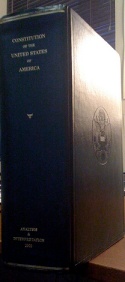
constitution-annotated-printWhat is clear is that our Founding Fathers were strategic thinkers who realized that a fully functioning republic needed a clear but flexible code of law that evolved with the Nation. Thus, they wrote the Constitution of the United States, which has stood the test of time with over two centuries of amendments and interpretations by all branches of the U.S. Federal Government.

CONAN for the Librarian (and Lawyers)

Since 1913, the Senate has directed that a publication be issued summarizing the current state of the Constitution to date, with all the amendments and the official interpretations, with the analysis today provided by the Library of Congress’ Congressional Research Service. This publication is called The Constitution of the United States of America, Analysis and Interpretation, popularly known as the Constitution Annotated or “CONAN” among the real insiders.

Constitution-of-the-US-Pocket-GuideIn addition, many Americans, including Members of Congress, buy a pocket print edition of the Constitution and Declaration of Independence to carry around with them at all times. (Click on image to the left.)

Constitution Goes Mobile and Online

This year marks the 100th anniversary of the Constitution Annotated publication, and to celebrate it and Constitution Day, the Government Printing Office (GPO) not only issued the Centennial Edition in print, but has also worked with the Senate Committee on Rules and Administration and the Library of Congress to develop and launch both a new mobile app as well as a web publication that make analysis and interpretation of constitutional case law by Library experts accessible for free to anyone with a computer or mobile device.

The new resources, which include analysis of Supreme Court cases through June 26, 2013, will be updated multiple times each year as new court decisions are issued.  Legal professionals, teachers, students and anyone researching the constitutional implications of a particular topic can easily locate constitutional amendments, federal and state laws that were held unconstitutional, and tables of recent cases with corresponding topics and constitutional implications.

The new app and improved web publication will make the nearly 3,000-page “Constitution Annotated” more accessible to more people and enable updates of new case analysis three or four times each year.

Public Printer Davita Vance-Cooks said,

“Through this collaborative project, the Library of Congress and GPO are providing the public with timely access to an enhanced, authenticated version of the “Constitution Annotated” through GPO’s Federal Digital System. This is another example of how GPO works with Congress, the Library and other agencies to meet the information needs of the American people in the digital age.”

Keeping our “Complex Machinery” in Working Order

On May 19, 1821, years after the Constitution was adopted, John Adams wrote in a letter to Thomas Jefferson that:

“A free government is a complicated piece of machinery, the nice and exact adjustment of whose springs, wheels, and weights, is not yet well comprehended by the artists of the age, and still less by the people.”

Even though our Founding Fathers could not have envisioned a digital future complete with the Internet and smartphones, the framework they put in place has been able to roll with the times. Americans know that our system is indeed a “complicated piece of machinery,” with our laws serving as the user manual, but tools like the Constitution Annotated– in print or now online or on your mobile device– now exist to help keep our machinery of democracy well oiled.

George-Washingtons-Annotated-Copy-of-a-Draft-of-the-U.S.-ConstitutionImage: Even George Washington annotated his copy of the Constitution! (seen left). Source: National Archives

How can I obtain The Constitution Annotated?

1) Buy the Print Edition of The Constitution of the United States of America, Analysis and Interpretation, Centennial Edition

2) Mobile app version of the Constitution Annotated

  • For Apple iOS Devices: Download the new Constitution Annotated app for iOS devices for free from Apple’s iTunes Store or via this direct link: http://beta.congress.gov/constitution-annotated/.
  • ·        For Android Devices: An Android version of this app is under development.

3) Constitution Annotated web publication on FDsys.gov

The Constitution Annotated web publication will be available on GPO’s Federal Digital System (FDsys) www.fdsys.gov as a digitally-signed, searchable PDF that includes a linked table of contents, a linked table of cases, a linked index and GPO’s Seal of Authenticity on every page.

The new Constitution Annotated and a suite of constitutional resources can be viewed at http://beta.congress.gov/constitution-annotated/. The page features links to the app stores, an interactive table listing recent cases of high interest, a bibliography of Constitution-related primary documents in American history and tips for searching the Constitution Annotated on GPO’s website at www.gpo.gov/constitutionannotated.

About the Author: Government Book Talk Editor Michele Bartram is Promotions Manager for GPO’s Publication and Information Sales Division in Washington, DC, and is responsible for online and offline marketing of the US Government Online Bookstore (http://bookstore.gpo.gov) and promoting Federal government content to the public.


Radio 101: Operating Two-Way Radios Every Day and in Emergencies

July 10, 2013

When-all-else-fails-amateur-radioTwo-way radio communication may seem like a thing of the past with smart phones and the availability of more advanced technology. However, with the recent frequency of natural disasters, storms, and other emergency situations, more attention is being paid to radios as a reliable form of communication and a possible back-up communication option, including amateur radio operators.

Image courtesy: Decatur County Amateur Radio Club

For example, the Times of India reports that the recent monsoon flooding disaster in the northern India state of Uttarakhand in July 2013 has prompted officials in other flood-prone regions to establish Amateur Radio facilities to provide emergency communication.

What are two-way radios and how do they work?

Two-way-radioImage: Amateur radio equipment. Image courtesy of the American Radio Relay League.

According to Wikipedia,

A two-way radio is a radio that can both transmit and receive (a transceiver), unlike a broadcast receiver which only receives content. A two-way radio (transceiver) allows the operator to have a conversation with other similar radios operating on the same radio frequency (channel).

Two-way radios are available in mobile, stationary base and hand-held portable configurations. Hand-held radios are often called walkie-talkies or handie-talkies.

Radio 101

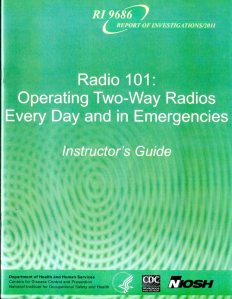
9780160910012A recent training publication produced by the Department of Health and Human Services, Centers for Disease Control and Prevention and the National Institute for Occupational Safety and Health called Radio 101: Operating Two-Way Radios Every Day and in Emergencies provides training materials on how to operate two-way radios. Included are an instructor’s guide, a DVD with a power point presentation and a student handbook. These training materials practice what they preach, in that they are brief, straightforward and concise– just as two-way radio conversations need to be.

While many of the scenarios used throughout the training materials apply to miners and situations where miners would need to use two-way radios, the information is generic enough that it is applicable to any emergency.

Two-way Tips

The information provided in the training materials seems like common sense, but there are a few important tips to consider when using two-way radio communication in an emergency situation:

  • Less is more. Be brief and efficient; know what you are going to say before using the radio so you do not tie up the channel while you are thinking of what to say.
  • Don’t mind your manners.  It is not necessary to be polite, saying “please” and “thank you.”
  • Repetition rocks. Repeat back information you receive to confirm that you heard the correct information.
  • No privacy policy. Be aware that conversations are not private on these open channels and may be heard by others picking up your frequency. However, this downside is a big plus in emergency broadcasts and SOS situations where the operator wants as many people possible to be listening in to be able to pick up and relay his message.

License to Help

To operate an amateur two-way radio in the United States requires taking a test and obtaining a license from the FCC (Federal Communications Commission). The American Radio Relay League (ARRL) is the national association for amateur radio (also called ham radio with operators being called “hams”) in the US and “provides hams and non-hams the resources to learn, get licensed, and help others on the air.

Amateur-Radio-Emergency-ServiceAlready have your amateur radio license and want to help your community? Check out the ARRL’s Public Service page for training, resources, manuals and more. The Amateur Radio Emergency Service (ARES) consists of licensed amateurs who have voluntarily registered their qualifications and equipment for communications duty in the public service when disaster strikes.

Recently, the American Radio Relay League hosted their national Field Day where amateur radio clubs across the country gathered locally to test their radio equipment and practice communication strategies in the event of an emergency. Learn more about Field Day.

Rules of the Radio

Together with the Radio 101 training guide, two-way radio operators who want to learn the “rules of the radio” often buy the latest United States Frequency Allocations: The Radio Spectrum Chart (shown below). This poster shows through color codes the parts of the radio spectrum that are allocated to each type of radio service, including amateur (ham) radio, commercial radio and television broadcasting, radio navigation, mobile, satellite, and others.

9780160908958Finally, the definitive sources of radio regulations, frequencies and procedures can be found in the Manual of Regulations and Procedures for Federal Radio Frequency Management and the Code of Federal Regulations Title 47 (FCC Rules and Regulations).

It is important to be prepared in any situation and not rely on only one form of communication. Thus, it is comforting to know that amateur radio operators are working on behalf of their communities to help during emergency situations.

HOW DO I OBTAIN these radio-related publications?

About the Authors: Our guest blogger is Emma Wojtowicz, Public Relations Specialist in GPO’s Office of Public Affairs. Additional content was provided by Government Book Talk Editor Michele Bartram, Promotions & eCommerce Manager for GPO’s Publication and Information Sales Division.


Fighting Enemies or Disease, Asian Americans Offer a Rich Heritage

May 1, 2013

As Asian-Pacific American Heritage Month kicks off, and the anniversary of WWII’s VE (Victory in Europe) Day approaches (May 8), it’s a good time to talk about a major contribution of Asian and Pacific-Islander Americans.

Japanese Americans’ Battle of Wits with the Japanese in WW II

Nisei-Linguists-CMH_70-99-1The book Nisei Linguists: Japanese Americans in the Military Intelligence Service During WWII published by the Army’s Center of Military History is an excellent starting point to examine that history. When the United States entered WWII in 1941, the War Department knew that their intelligence efforts would not be successful without understanding of Japanese language and culture. However, few Americans other than the 300,000 or so Japanese Americans living mainly on the West Coast and Hawaii had such knowledge.

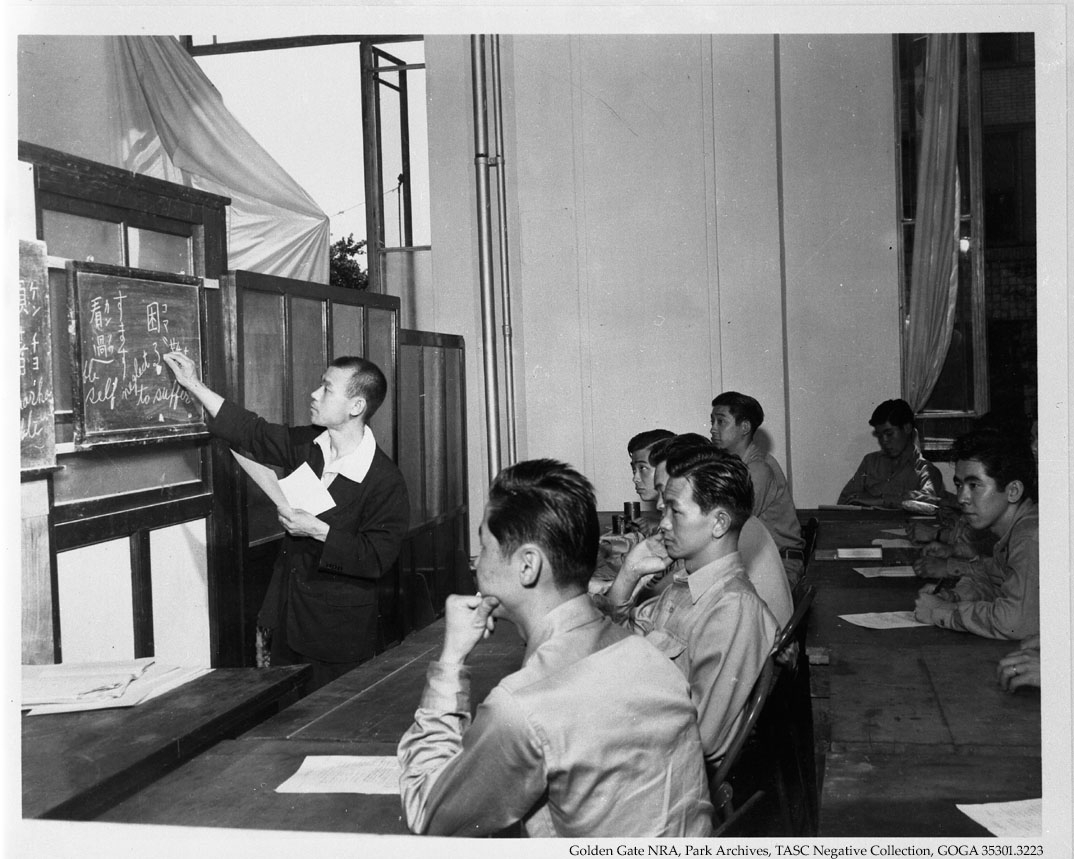
The War Department tapped the talents and skills of the second generation (Nisei) Japanese Americans. The Western Defense Command chose sixty Nisei soldiers for Japanese language training at the Fourth Army Intelligence School at the Presidio in San Francisco. The school moved to the Midwest after Pearl Harbor, first locating it in Camp Savage and later in Fort Snelling. The program, renamed the Military Intelligence Service Language School, ran until 1946. Nearly six thousand military linguists graduated from the school to enter the Military Intelligence Service (MIS).

MISCrissyField

Image: Nisei linguists undergoing training at MIS Crissy Field.

In addition to telling the story of the program and school, the book also describes how the Nisei served with every major unit and headquarters in the Pacific theater. It is testimony to the Nisei’s loyalty and smarts that it took the War Department only two years to get the Nisei military intelligence program up and running. The Nisei braved considerable prejudice to work for U.S. military intelligence, and there is no doubt their participation in American intelligence efforts made the war end earlier.

No one told the story of these linguists for years after WWII, and it was not until the 1980s and 1990s that people began to talk about their experiences with the program. Finally in 1994, Senator Daniel K. Akaka and some other Congressional members asked the Secretary of the Army to publish an official history of the Nisei linguists. This book is the result of that request.

Learn more about the Nisei language intelligence program by picking up a copy of this fascinating volume at the GPO Online Bookstore in Paperback edition or as an eBook.

Asian Americans Battle Disease Today

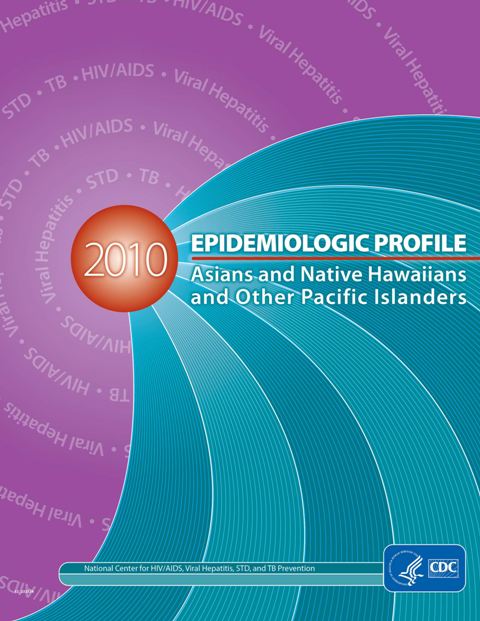
Epidemiologic-Profile-2010-Asians_coverHaving turned our thoughts to how Asian-Americans contributed to the care of our nation, it’s also a good time to think about how we care for the Asian-American and Pacific-Islander American portion of the United States population. The Center for Disease Control and Prevention (CDC) has just published Epidemiologic Profile 2010: Asians and Native Hawaiians and Other Pacific Islanders.

According to the CDC, “This Epidemiologic Profile is the first compilation of infectious disease-specific data in a single report that focuses on two racial groups in the United States: the Asian population and the Native Hawaiian and Other Pacific Islander population.” The volume includes a chapter in which the Census Bureau contributes to the description of the Asian and Native Hawaiian and Other Pacific Islander populations who reside in the United States.

The report tracks the involvement of Asians, Native Hawaiians and other Pacific Islanders in cases of endemic disease. Asians, Native Hawaiians and other Pacific Islanders make up a disproportionately large number of cases in some diseases (tuberculosis and hepatitis B), and in others, a smaller percentage of cases than their representation in the U.S. population (STDs and HIV). The report examines specific disease statistics, the challenges of public health education, treatment and disease risk factor mitigation for these populations.

Any public health official, student, social worker, or government employee who works with these populations would definitely want to read this book.

GPO has cataloged a record for the FREE electronic version that Federal depository libraries got in the April 2013 record load.

How can I access the records to both these publications?

How can I purchase Nisei Linguists: Japanese Americans in the Military Intelligence Service During WWII?

Our guest blogger is Jennifer K. Davis from GPO’s Library Services & Content Management Division that supports the Federal Depository Libraries Program (FDLP). (Article is adapted from an original  post in the FDLP Community site.)


Immigration Issues and the Land of Opportunity 2.0

April 22, 2013

Americans are proud of their country being known as “the land of opportunity” and a wonderful place to live. Thus it is not surprising that so many want to move to the United States, making immigration a topic of extreme interest to citizens, lawmakers and immigrants alike.

United States map with faces of immigrants - the Land of Opportunity?

Image: U.S. map made up of immigrant faces. Image credit: Imerito blog

The introduction of a major border security and immigration reform bill in the Senate last week brings the topic to the forefront… and left many scrambling to research the issues affecting the “Land of Opportunity 2.0” in the twenty-first century.

The Government Printing Office has assembled a collection of both print and digital publications that run the gamut from proposed and existing border protection legislation to immigration reports and statistics, civics and English education for immigrants, and more to help all better comprehend the complex issues of immigration.

Here are a few notable publications from our U.S. Government Online Bookstore Immigration Collection:

  •  The Border Security, Economic Opportunity, and Immigration Modernization Act of 2013 (Print)

2013 Border Security and immigration reform bill Gang of Eight SenatorsImage: “Gang of Eight” U.S. Senators who worked on the immigration reform bill of 2013. Image Credit:  NPR blog.

The “Gang of Eight” senators who worked on this bipartisan bill includes four Democrats and four Republicans: Senators Chuck Schumer (D-N.Y.), Dick Durbin (D-Ill.), Bob Menendez (D-N.J.), Michael Bennet (D-Colo.), John McCain (R-Ariz.), Lindsey Graham (R-S.C.), Marco Rubio (R-Fla.) and Jeff Flake (R-Ariz.).

Immigration-Reform-Act-2013The goal of this bill is “to provide for comprehensive immigration reform and for other purposes” including bolstering border security, overhauling the legal immigration system, legalizing many of America’s 11 million undocumented immigrants and put them on a path to citizenship, and increasing enforcement and penalties against employers who hire unauthorized workers.

> Click here for information on how to order a printed copy of this bill

  • Yearbook of Immigration Statistics (Paperback)

2011-Yearbook-of-Immigration-StatisticsThe Yearbook of Immigration Statistics, 2011 is a compendium of tables that provides data on foreign nationals who, during a fiscal year, were granted lawful permanent residence (i.e., admitted as immigrants or became legal permanent residents), were admitted into the United States on a temporary basis (e.g., tourists, students, or workers), applied for asylum or refugee status, or were naturalized. The Yearbook also presents data on immigration enforcement actions, including alien apprehensions, removals, and returns.

> Click here for information on how to order this publication 

  • Customs and Border Protection Regulations of the United States (Print Subscription)

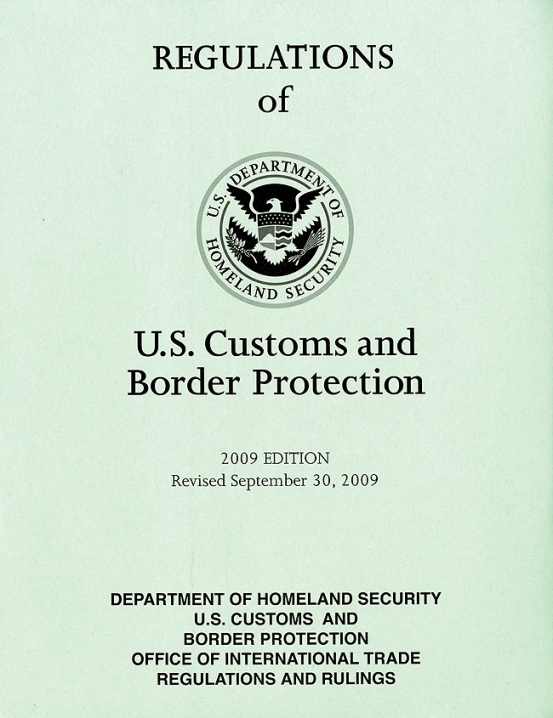
Customs-and-Border-Protection-Regulations-USPublished by the Department of Homeland Security’s Bureau of Customs and Border Protection (CBP), Office of International Trade Regulation and Rulings, the Customs and Border Protection Regulations of the United States, 2011 is a print subscription which contains regulations made and published for the purpose of carrying out customs and border protection laws administered by the Bureau of Customs and Border Protection. Former title: Regulations of United States Customs and Border Protection.

> Click here for information on how to order this print subscription

  • Expanding ESL, Civics, and Citizenship Education in Your Community: A Start-Up Guide (Paperback or ePub eBook)

Expanding-ESL-Civics-EducationFor groups and individuals whose goal it is to prepare the immigrant to assimilate into the Nation and to learn our language, this publication– both in print and ePub eBook format — from the Office of U.S. Citizenship and Immigration Services is very useful. It outlines a start-up process of gathering relevant information and resources to develop and sustain community ESL (English as a Second Language), civics, and citizenship education program, recruit and train volunteers, and recruit students. It also includes basic recommendations and sample forms and materials.

> Click here for information on how to order this print publication

> Click here for information on how to order this eBook

For more information on all the immigration publications from the Federal Government,

About the author:

Government Book Talk Editor Michele Bartram is Promotions Manager for GPO’s Publication and Information Sales Division in Washington, DC, and is responsible for online and offline marketing of the US Government Online Bookstore (http://bookstore.gpo.gov) and promoting Federal government content to the public.


March Madness: New GPO Bookstore Website and Historic Anniversaries

March 22, 2013

March is traditionally a month of change and national excitement in the United States. Together with the change of seasons and college basketball frenzy, some important national milestones were reached this month that we should acknowledge, from new achievements to key anniversaries.

New U.S. Government Bookstore Website

First, last week we launched our upgraded U.S. Government Bookstore ecommerce site, http://bookstore.gpo.gov/.  Our ecommerce website has gone through several iterations since its first version in 1999, each time adding functionality to keep up with the changing needs.  Today, GPO has over 4,000 Federal print publications and more than 150 eBooks available through our online bookstore.

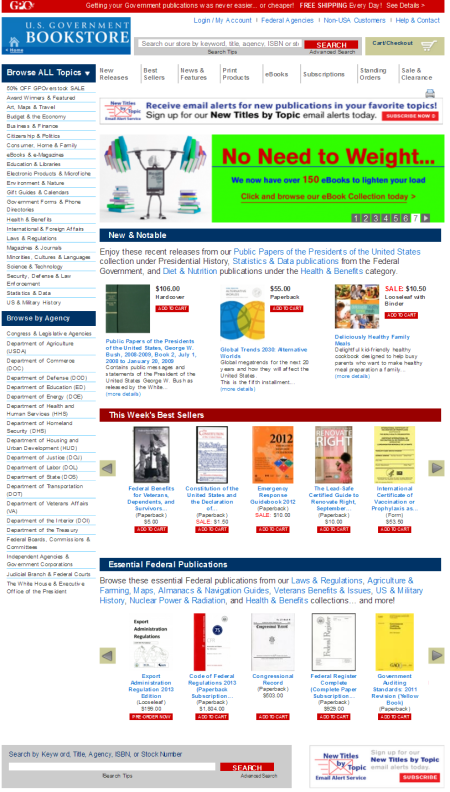
New-US-Government-Online-Bookstore-website

Our new website includes the following user-friendly features:

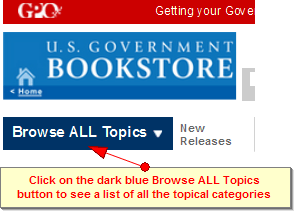
Browse-ALL-Topics-on-GPO-BookstoreClick on the dark blue Browse All Topics button on the site to see and browse by a list of all the topical categories.

These last two features—eBooks and new Categories—are particularly important in light of three other important milestones this month.

National Women’s History Month

March is National Women’s History Month in the United States, and we have a new main “Browse by Topic” category, Minorities, Cultures & Languages, where you can find books for and about African Americans, American Indians, Asian Americans & Pacific Islanders, Cultural Awareness, Disabled, Hispanics, LGBT, Minority Issues, Non-English Government Publications, Seniors & Elderly and Women, including dozens of books and eBooks about Women’s History.

Womens_History_Books_Slide

Harriet Tubman Centennial

One of the famous American heroines in the Women’s History collection is Harriet Tubman, who died 100 years ago this month making it her Centennial. Tubman escaped from slavery and returned to lead dozens of others to freedom in the mid-1800s. In addition to being the most well-known of Underground Railroad “conductors,” she was also a nurse, spy, suffragist, and more.

With all these roles, it is appropriate that we have created so many new “Browse by Topic” categories. One is Slavery & Underground Railroad (under US & Military History), where great books featuring Harriet Tubman and the Underground Railroad can be found.  Other new topics include Nursing under Health & Benefits and Intelligence & Espionage under Security, Defense & Law Enforcement.

Additional publications about National Parks can be found under the main category of Art, Maps & Travel, along with Posters & Prints and Maps, Almanacs & Navigation Guides.

BROWSE BY AGENCY: You can also find National Park Service (NPS) publications under Department of the Interior (DOI) in the Browse by Agency categories on the menu at the lower left side of the site, where publications are categorized by the Federal agency that published them. For example, our own Government Printing Office (GPO) publications are under Congress & Legislative Agencies.

Iraq War 10th Anniversary

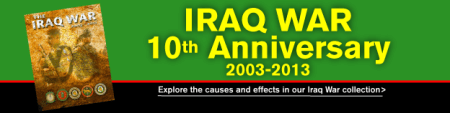
Finally, this week is the tenth anniversary of the start of the Iraq War, which began on March 19, 2003, as Operation Iraqi Liberation, later renamed Operation Iraqi Freedom.

Iraq-War-10th-Anniversary_Books_Slide

President Obama, in an address about the Iraq war 10th anniversary this week said:

“As we mark the 10th anniversary of the beginning of the Iraq war, Michelle and I join our fellow Americans in paying tribute to all who served and sacrificed in one of our nation’s longest wars. We salute the courage and resolve of more than 1.5 million service members and civilians who during multiple tours wrote one of the most extraordinary chapters in military service. We honor the memory of the nearly 4,500 Americans who made the ultimate sacrifice to give the Iraqi people an opportunity to forge their own future after many years of hardship.”

Since the beginning of the war, the Defense Department has published dozens of excellent publications about the war, the strategies, Saddam Hussein, Iraq, reconstruction and the achievements and sacrifices made by our Armed Forces. You can find these publications featured under Iraq & Persian Gulf Wars which can be found under US & Military History > Battles & Wars categories.

It’s a Launch, Not a Landing

So, our new site marks the completion of over a year of hard work by our team here at the Government Printing Office, all aimed to make sure “we the people” can discover more about our Nation through excellent publications by our Federal Government. But there’s a good reason we call it a website launch and not a landing. This is only the beginning, with more great content and features to come! Enjoy!

So, please visit GPO’s new online bookstore website at http://bookstore.gpo.gov/ and tell us what you think!

About the Author:  Michele Bartram is Promotions Manager for GPO’s Publication and Information Sales Division in Washington, DC, and is responsible for online and offline marketing of the US Government Online Bookstore (http://bookstore.gpo.gov) and promoting Federal government content to the public. She was also in charge of the online bookstore relaunch!


Quiz: Are you smarter than an 8th grade Civics student?

September 20, 2012

Flash cards. They may bring back memories of studying for a big exam like the SAT or GRE, or they may remind you of elementary school when they were used as a great way to learn your numbers and letters.

But did you know that the US Government Printing Office produces flash cards for the U.S. Citizenship and Immigration Services’ Office of Citizenship under the Department of Homeland Security?

This week marked an important milestone for all U.S. citizens as the 225th anniversary of the signing of the Constitution of the United States of America.

September 17 is now commemorated annually as Constitution & Citizenship Day, a time to reflect on the rights, honors and privileges of being a U.S. citizen, so I thought it was a perfect time to introduce our readers to the Civics Flash Cards.

The Civics Flash Cards are one of the most popular products sold in the US Government Bookstore as a tried and true way for immigrants and to learn about U.S. history and government while preparing for the United States naturalization test.  These easy-to-use flash cards (available in English and now also in Spanish) contain each of the 100 civics questions and answers contained on the United States naturalization test, and are updated when there is a change of leadership in the White House or Congress.

The Civics Flash Cards also feature interesting historical photos and relevant captions, thus providing additional civic learning opportunities, making them ideal not only for use as an instructional tool for U.S. citizenship preparation, but also in standard American social studies classes or home schooling. For example, one card contains a picture of Jeannette Rankin, the first woman to be elected to the U.S. House of Representatives, while another shows Hiram Revels of Mississippi, the first African American U.S. Senator, elected in 1870.

A description of the Spanish version of the Civics Flash Cards:

Recién actualizadas para 2012, las Tarjetas Flash de Educación Cívica en Español ayudarán a a los inmigrantes a aprender sobre la historia de los EE.UU. y del gobierno mientras se preparan para el exámen de naturalización. Estas tarjetas de memoria fáciciles de utilizar contienen cada una de las 100 preguntas y respuestas cívicas (sobre la historia y el gobierno) del exámen de naturalización estadounidense, y conllevan fotos históricas y leyendas pertinentes a que proporcionen el aprendizaje cívico adicional.

Failing grade in civics for American kids… and maybe their parents?

In 2010, The Department of Education administered the National Assessment of Educational Progress or NAEP test, known as the nation’s report card, to 27,000 4th-, 8th- and 12th-grade students throughout the United States.

The New York Times reported that the civics examination results were dismal, as “fewer than half of American eighth graders knew the purpose of the Bill of Rights… and only one in 10 demonstrated acceptable knowledge of the checks and balances among the legislative, executive and judicial branches.

Of the high school students who took the NAEP, 75% “were unable to demonstrate skills like identifying the effect of United States foreign policy on other nations or naming a power granted to Congress by the Constitution.”

Reading through the flash cards, it makes me wonder how many native U.S. citizens— parents and children— could correctly pass the test given to immigrants aspiring to become citizens?

See how you compare to these 8th and 12th graders on these questions constructed from information on the Civics Flash Cards

(Hint: I provide the correct answers at the end of this post 😉 since they are trickier than one would think!)


Another question


And finally, some geography:

HOW CAN YOU OBTAIN a copy of the Civics Flash Cards for the Naturalization Test, either the English Version or the Spanish Version?

You may also be interested in our other Constitution and Citizenship products, such as the pocket edition of the Constitution and Declaration of Independence. Click here to shop our entire Citizenship Collection.

Correct Answers to the Flash Card Poll Questions:

1)      Which of these does NOT represent one of the powers of the Federal Government under our Constitution? To provide protection & safety such as police and fire services is a function of state and local governments.

2)      Which of these are responsibilities that are only for United States Citizens?  Only citizens may vote in a Federal election, serve on a jury, or run for Federal office such as U.S. Senate or House of Representatives and for most state and local offices. Unfortunately, everyone has to pay Federal taxes, citizen or not!

3)      Which of these states does NOT border Canada? Of all of these, only Wisconsin does not share a border with Canada. All the international border states with our northern neighbor are (east to west): Maine, New Hampshire, Vermont, New York, Pennsylvania (border on Lake Erie), Ohio (also border on Lake Erie), Michigan, Minnesota, North Dakota, Montana, Idaho, Washington and Alaska.

About the Author:  Michele Bartram is Promotions Manager for GPO’s Publication and Information Sales Division and is responsible for online and offline marketing of the US Government Online Bookstore (http://bookstore.gpo.gov) and promoting Federal government content to the public.