The Privacy Act: What the Government Can Collect and Disclose about You

June 28, 2013

Privacy is the watchword in the news these days. With the revelations in recent weeks about far-reaching domestic surveillance programs by the National Security Agency (NSA) and other Federal agencies that were expanded under the Patriot Act, Americans are scrambling to determine what privacy rights they have to information collected by the Federal Government.

Overview-of-the-Privacy-Act-of-1974-2012-Edition-9780160914461Thus, the timing is ideal to review a biennial publication, Overview of the Privacy Act of 1974 (2012 Edition), available in print from the U.S. Government Online Bookstore.

The Overview of the Privacy Act of 1974 provides a valuable function to consumers, the media, Government and members of the legal profession by not only providing the current text of the Privacy Act and all its subsequent amendments, but also by consolidating the current regulations and updates, interpreting the Act’s provisions and giving detailed legal analysis of the latest court decisions that have decided challenges to how the Privacy Act has been enacted by various White House Administrations and Federal Agencies since the Act was passed.

What is covered by the Privacy Act?

The Privacy Act of 1974 established a “Code of Fair Information Practice that governs the collection, maintenance, use, and dissemination of personally identifiable information about individuals that is maintained in systems of records by federal agencies.”

The Privacy Act protects certain federal government records pertaining to individuals. In particular, the Act covers “systems of records” that an agency maintains and retrieves by an individual’s name or other personal identifier, such as your social security number.  (For clarification, a “system of records” refers to a group of records or a file under the control of a particular Federal agency from which information is retrieved by the name of the individual or by some identifier assigned to the individual.)

With the advent of wide-spread use of computers and databases by the Federal Government, the Privacy Act was amended through the Computer Matching and Privacy Protection Act of 1988, which added certain protections for the subjects of Privacy Act records whose records are used in automated matching programs, such as the establishment of Data Integrity Boards at each agency.

Privacy Act Requirements

But what rights do individuals have under the Privacy Act? According to the Overview of the Privacy Act of 1974 (2012 Edition), it gives individuals the right to review records about themselves, to find out if these records have been disclosed, and to request corrections or amendments of these records, unless the records are legally exempt.

From reading the publication, it seems the Act also requires that a Federal Government agency must:

  • give the public notice of their systems of records by publishing them in the Federal Register (also available as a subscription from GPO);
  • follow strict record-keeping requirements;
  • request the written consent of the subject individual for disclosure of their personal information– “unless the disclosure is pursuant to one of twelve statutory exceptions;” and
  • provide individuals with a means  by which they can access and amend (review and correct) records stored about them.

Your-Right-to-Federal-Records-2011-coverYour Right to Federal Records

For information about your rights to “discover, access and amend” Government records about you and frequently asked questions and answers about the Privacy Act and the Freedom of Information Act (FOIA), you might want to check out the free publication, “Your Right to Federal Records available from the GSA’s Federal Citizen Information Center (FCIC).

You may also be interested in learning more about the Freedom of Information Act by reading the Guide to the Freedom of Information Act, also published by the Justice Department and available in print from GPO.

Scope Issues

The Privacy Act does NOT apply to data collected about persons outside the United States, nor does it protect the privacy of your records that are maintained by the private sector, such as your credit report, bank account and medical records or even local or state government records like your driver’s license. Since many Americans today assumed that the battle to keep this non-Federal data private was already lost, it was comforting to discover that there is still a measure of privacy in data kept about you by the Federal Government.

And finally, while The Privacy Act does apply to the records of every “individual,” it nevertheless only applies to records held by an “agency.” Thus, any records ”held by courts, executive components, or non-agency government entities are not subject to the provisions in the Privacy Act and there is no right to these records.”  The Overview covers many questions about scope.

Exemptions and Exceptions

The most fascinating part of reading the publication to me– and timely considering the current news cycle– was to learn that there are situations where the Government is not legally required to follow the Privacy Act . According to the Overview, there are currently Twelve Exceptions to the “No Disclosure Without Consent” Rule of the Act and Ten Exemptions to the Privacy Act altogether where Federal agencies are not required to disclose records. 

Two of the ten exemptions outlined by the Overview are the “General Exemptions,” which apply to records about individuals maintained by

1)      the Central Intelligence Agency (CIA) and

2)      law enforcement agencies— or a component thereof— that primarily perform criminal law enforcement duties, “including police efforts to prevent, control, or reduce crime or to apprehend criminals.”

New proposed exemptions are offered all the time by subsequent Congresses and Administrations, such as the George W. Bush Administration’s agreement signed with the European Union in 2007 to share an airline’s Passenger Name Record as well as the utilize the Automated Targeting System.

Protecting-your-privacy

The questions about what constitute personally identifying data; what legal exemptions and exceptions apply; and how the Privacy Act has been interpreted over time by Federal Agencies, the Office of Management and Budget (OMB) and the Federal courts make up a good part of the Overview.

With post-9/11 security concerns driving Agencies’ desire for more information coupled with rapidly evolving technologies that enable greater collection and analysis of data, the publishers of the Overview of the Privacy Act of 1974 will certainly be kept very busy in upcoming years reporting on and analyzing new privacy regulations and court decisions that will follow.

How Can I Obtain These Privacy Publications?

Anyone concerned with the laws governing what the Federal Government is collecting and disclosing about individuals in the United States—and how much individuals can learn about it—should read this important publication.

  • Overview of the Privacy Act of 1974 (2012 Edition) in Print
    • Shop Online: Buy a print edition on the GPO U.S. Government Online Bookstore NOW ON SALE!!
    • Order by Phone: Call our Customer Contact Center Monday through Friday, 8 am to 5:30 pm Eastern (except US Federal holidays). From US and Canada, call toll-free 1.866.512.1800. DC or International customers call +1.202.512.1800.
    • Visit our Retail Store: Buy it at GPO’s retail bookstore at 710 North Capitol Street NW, Washington, DC 20401, open Monday–Friday, 9 a.m. to 4 p.m., except Federal holidays, (202) 512-0132.
    • Find it in a Library: Search for it in a Federal Depository Library.

About the Author: Government Book Talk Editor Michele Bartram is Promotions Manager for GPO’s Publication and Information Sales Division in Washington, DC, and is responsible for online and offline marketing of the US Government Online Bookstore (http://bookstore.gpo.gov) and promoting Federal government content to the public.


Fighting Enemies or Disease, Asian Americans Offer a Rich Heritage

May 1, 2013

As Asian-Pacific American Heritage Month kicks off, and the anniversary of WWII’s VE (Victory in Europe) Day approaches (May 8), it’s a good time to talk about a major contribution of Asian and Pacific-Islander Americans.

Japanese Americans’ Battle of Wits with the Japanese in WW II

Nisei-Linguists-CMH_70-99-1The book Nisei Linguists: Japanese Americans in the Military Intelligence Service During WWII published by the Army’s Center of Military History is an excellent starting point to examine that history. When the United States entered WWII in 1941, the War Department knew that their intelligence efforts would not be successful without understanding of Japanese language and culture. However, few Americans other than the 300,000 or so Japanese Americans living mainly on the West Coast and Hawaii had such knowledge.

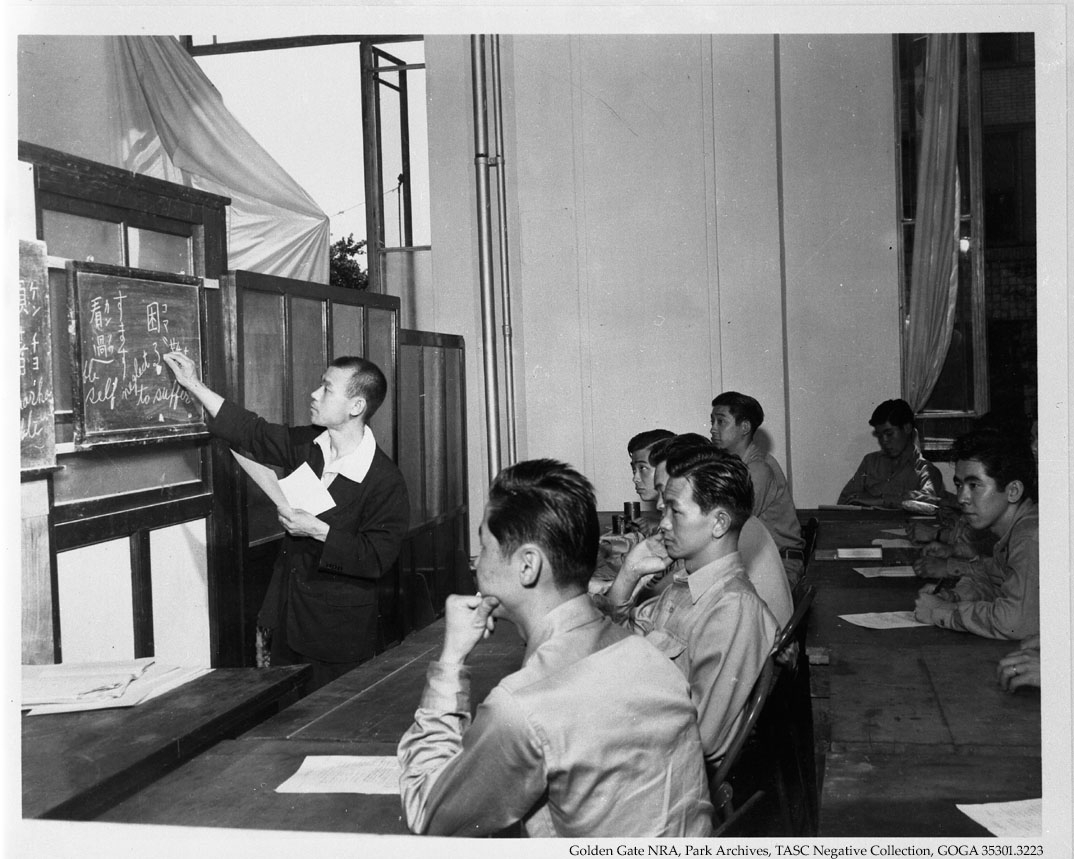
The War Department tapped the talents and skills of the second generation (Nisei) Japanese Americans. The Western Defense Command chose sixty Nisei soldiers for Japanese language training at the Fourth Army Intelligence School at the Presidio in San Francisco. The school moved to the Midwest after Pearl Harbor, first locating it in Camp Savage and later in Fort Snelling. The program, renamed the Military Intelligence Service Language School, ran until 1946. Nearly six thousand military linguists graduated from the school to enter the Military Intelligence Service (MIS).

MISCrissyField

Image: Nisei linguists undergoing training at MIS Crissy Field.

In addition to telling the story of the program and school, the book also describes how the Nisei served with every major unit and headquarters in the Pacific theater. It is testimony to the Nisei’s loyalty and smarts that it took the War Department only two years to get the Nisei military intelligence program up and running. The Nisei braved considerable prejudice to work for U.S. military intelligence, and there is no doubt their participation in American intelligence efforts made the war end earlier.

No one told the story of these linguists for years after WWII, and it was not until the 1980s and 1990s that people began to talk about their experiences with the program. Finally in 1994, Senator Daniel K. Akaka and some other Congressional members asked the Secretary of the Army to publish an official history of the Nisei linguists. This book is the result of that request.

Learn more about the Nisei language intelligence program by picking up a copy of this fascinating volume at the GPO Online Bookstore in Paperback edition or as an eBook.

Asian Americans Battle Disease Today

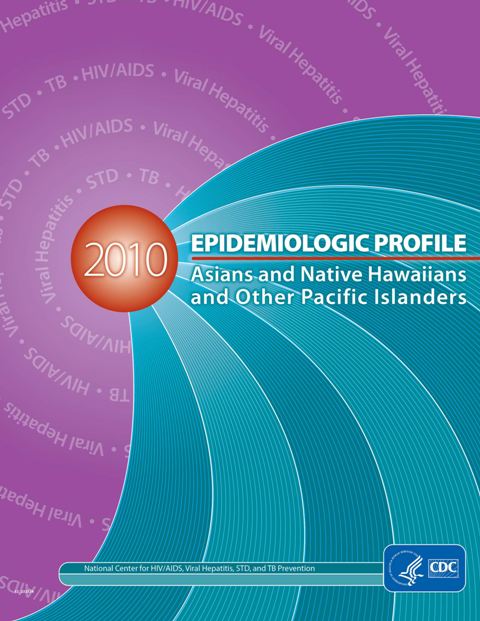
Epidemiologic-Profile-2010-Asians_coverHaving turned our thoughts to how Asian-Americans contributed to the care of our nation, it’s also a good time to think about how we care for the Asian-American and Pacific-Islander American portion of the United States population. The Center for Disease Control and Prevention (CDC) has just published Epidemiologic Profile 2010: Asians and Native Hawaiians and Other Pacific Islanders.

According to the CDC, “This Epidemiologic Profile is the first compilation of infectious disease-specific data in a single report that focuses on two racial groups in the United States: the Asian population and the Native Hawaiian and Other Pacific Islander population.” The volume includes a chapter in which the Census Bureau contributes to the description of the Asian and Native Hawaiian and Other Pacific Islander populations who reside in the United States.

The report tracks the involvement of Asians, Native Hawaiians and other Pacific Islanders in cases of endemic disease. Asians, Native Hawaiians and other Pacific Islanders make up a disproportionately large number of cases in some diseases (tuberculosis and hepatitis B), and in others, a smaller percentage of cases than their representation in the U.S. population (STDs and HIV). The report examines specific disease statistics, the challenges of public health education, treatment and disease risk factor mitigation for these populations.

Any public health official, student, social worker, or government employee who works with these populations would definitely want to read this book.

GPO has cataloged a record for the FREE electronic version that Federal depository libraries got in the April 2013 record load.

How can I access the records to both these publications?

How can I purchase Nisei Linguists: Japanese Americans in the Military Intelligence Service During WWII?

Our guest blogger is Jennifer K. Davis from GPO’s Library Services & Content Management Division that supports the Federal Depository Libraries Program (FDLP). (Article is adapted from an original  post in the FDLP Community site.)


Reagan, Intelligence and the End of the Cold War

July 9, 2012

Guest blogger, GPO Public Relations Specialist Emma Wojtowicz, reviews a publication with an inside look at intelligence and the end of the Cold War:

In this election year, President Ronald Reagan has been  mentioned by Democrats and Republicans alike regarding his stance on tax policy. However, another association is the Cold War and President Reagan’s famous declaration about the Berlin Wall, “Mr. Gorbachev, tear down this wall!

Ronald Reagan, Intelligence and the End of the Cold War is a multimedia book and DVD recently published in November 2011 by the Ronald Reagan Presidential Library and the Historical Collections at the Central Intelligence Agency. It shares declassified documents from latter years of the Cold War with a focus on relations between General Secretary of the Soviet Union Mikhail Gorbachev and the Reagan administration.

Declassified documents are the primary focus of the book, but there is also an introduction and brief overview on intelligence, including President Reagan’s experience with the intelligence community prior to his presidency and his approach to intelligence as president; the role the intelligence community played in monitoring and anticipating the collapse of the Soviet Union; and expectations the public should have of the intelligence community.

Ronald Reagan, Intelligence and the End of the Cold War poses the question, “Should the U.S. intelligence community have done a better job foreseeing the collapse of the Soviet Union?” It does not answer the question for you, rather puts the subject of intelligence in context and provides declassified documents so readers can decide for themselves.

The book itself only contains a handful of declassified documents, but it comes with a DVD where readers have access to more than 200 declassified documents as well as photos from President Reagan’s administration, videos of press conferences and summits between the U.S. and Soviet Union, and an interactive timeline of the Cold War during the Reagan administration. The content of the book is also available on the DVD.

Image: Ronald Reagan Cold War timeline. Source: Ronald Reagan, Intelligence and the End of the Cold War (CLICK TO ENLARGE)

Highlights of the collection include video briefings for the Reagan Administration produced by the CIA’s Directorate of Intelligence on such topics as the Soviet space program, the Andropov succession, the Chernobyl disaster, and the Soviet media portrait of America. These briefings represent the first time the Agency used videos on a regular basis to deliver intelligence to policymakers. The entire collection marks the first substantial release of such historical material.

The amount of available declassified documents is a bit overwhelming. The content falls across a wide range of topics with a substantial focus on nuclear weapons and disarmament, but what is more interesting are the analyses of the Soviet Union’s politics and leaders, economy, society,  labor force, relationship with satellite countries, energy policy, and foreign policy.

One example is a memo on civil unrest in the Soviet Union that analyzes the number of instances of strikes, demonstrations, and riots, where they occurred, and the cause – each individual instance is thoroughly recorded. Another is on the volatile leadership situation in the USSR.

Image: Declassified CIA memorandum on the volatile leadership situation in the USSR; September 27, 1988. Source:  Ronald Reagan, Intelligence and the End of the Cold War

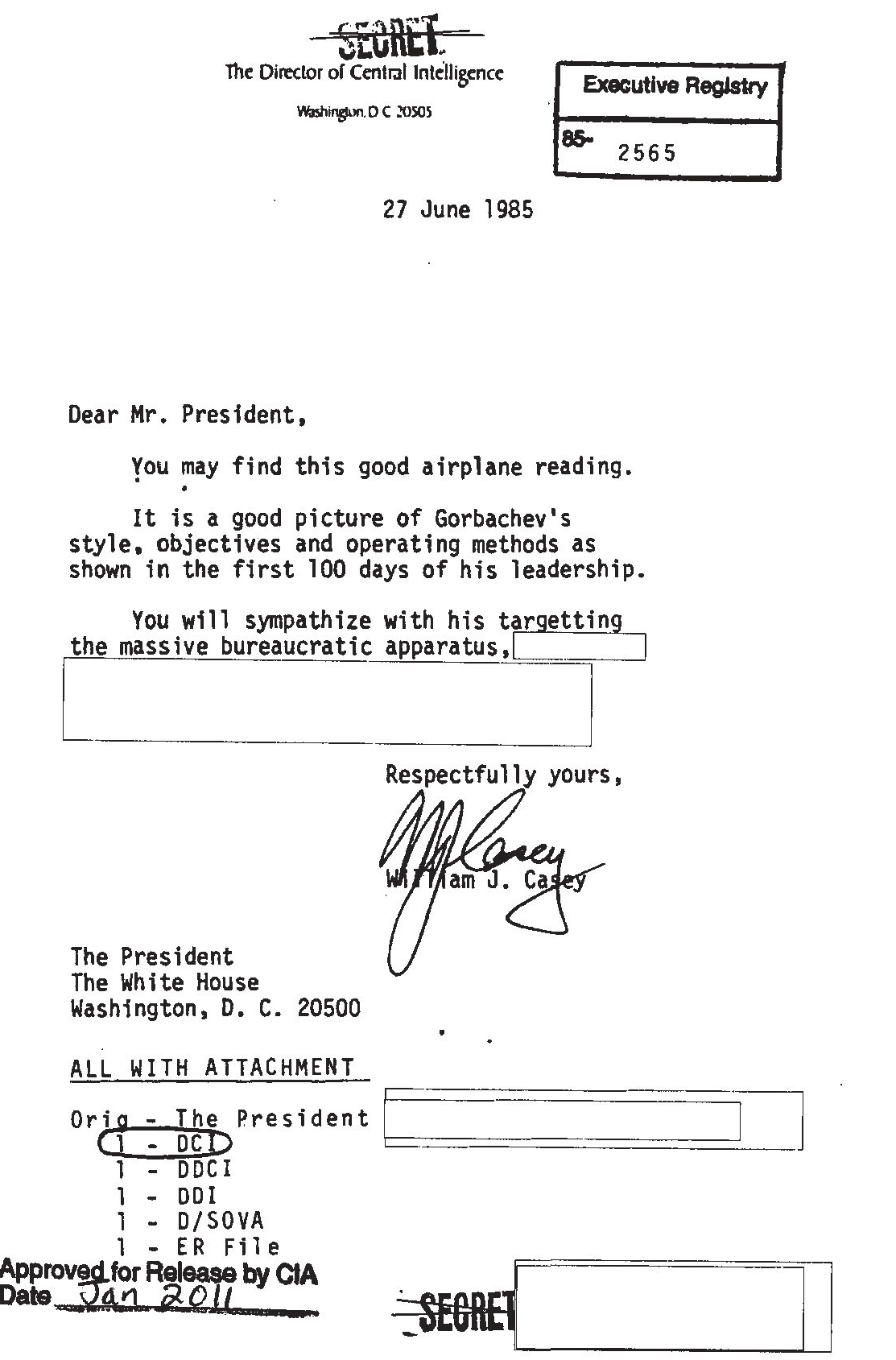
A particularly popular topic among the documents is Mikhail Gorbachev, both the man and the leader. Many documents focus on Gorbachev’s personality, goals and strategy of implanting his goals, the way he is perceived by citizens and other communist leaders, and his impact on the Soviet Union. It is clear from the documents that Gorbachev was viewed by the Reagan administration as a capable leader, who understood the problems the Soviet Union was facing, and had the potential to turn the Soviet Union around.

Image: Cover letter to President Ronald Reagan by William Casey of the recently declassified CIA assessment of Mikhail Gorbachev after this first 100 days in office. Source: Ronald Reagan, Intelligence and the End of the Cold War

An insightful comment is made in the introduction, “Deep down, officials seem to want intelligence to make decisions for them, when, in reality, it rarely can.

This sentiment is reflected in the declassified documents– they provide a wealth of information that is deeply analytical, but they do not spell out the best plans or policies for dealing with the Soviet Union or determine when it will cease to exist.

HOW DO I OBTAIN THIS “Ronald Reagan, Intelligence and the End of the Cold War”?

  • Buy it online 24/7 at GPO’s Online Bookstore.
  • Buy it at GPO’s retail bookstore at 710 North Capitol Street NW, Washington, DC 20401, open Monday-Friday, 9am to 4pm, except Federal holidays, (202) 512-0132.
  • Find it in a library.

CIA’s World Factbook: Global intelligence for every thinker, traveler, soldier, spy

January 27, 2012

A great publication not only provides timely and valuable information, but it also allows us a glimpse into the times and events that necessitated its production.

Such is the case with the CIA’s World Factbook—which marks its 50th anniversary in 2012 for the classified version and over 40 years for the public version described here— and shows us a glimpse into how Pearl Harbor and the Cold War changed the way America began to gather information about all corners of the globe.

The Factbook has its origins in the aftermath of the Japanese attack on Pearl Harbor, and the realization by Congress and the White House that lack of coordinated intelligence across all Governmental departments had left the United States woefully unprepared for the attack, and determined to correct this as a national security necessity and priority.  According to the CIA historians:

During World War II, intelligence consumers realized that the production of basic intelligence by different components of the US Government resulted in a great duplication of effort and conflicting information.

Detailed and coordinated information was needed not only on such major powers as Germany and Japan, but also on places of little previous interest. In the Pacific Theater, for example, the Navy and Marines had to launch amphibious operations against many islands about which information was unconfirmed or nonexistent.

Image above: During WWII, OSS intelligence reviewed existing maps with the military. Source: Top Secret Writers

JANIS Drops In

To correct this deficiency, in 1943, General George B. Strong (G-2), Admiral H. C. Train (Office of Naval Intelligence – known as ONI), and General William J. Donovan (Director of the Office of Strategic Services – known as OSS, the precursor of the CIA) oversaw the formation of a Joint Intelligence Study Publishing Board to assemble, edit, coordinate, and publish the Joint Army Navy Intelligence Studies (JANIS).

JANIS was the first cross-departmental basic intelligence program to fulfill the needs of the US Government for an authoritative and coordinated appraisal of strategic basic intelligence.

All groups involved in the war agreed that finished basic intelligence was required that covered territories around the world where the war was being fought. They needed detailed, up-to-date maps and geography; basic understanding of the cultural, economical, political and historical issues of the people and the region.

Compiling and publishing this information for the Allied intelligence needs, JANIS became an indispensable reference for war planning and execution.

The Cold War Gives Birth to the CIA… and the National Intelligence Survey

But the Cold War that immediately followed World War II showed that there was just as much need for continued intelligence gathering as ever. In the 1946 publication “The Future of American Secret Intelligence,” national security author George S. Petee wrote: “The conduct of peace involves all countries, all human activities – not just the enemy and his war production.”

In acknowledgement of this, the Congress established the Central Intelligence Agency in 1947 which immediately took over responsibility for JANIS. The next year, the National Security Council authorized the National Intelligence Survey program as a peacetime replacement for the wartime JANIS program. By 1955, the Hoover Commission evaluating the CIA advised Congress that: “The National Intelligence Survey [NIS] is an invaluable publication which provides the essential elements of basic intelligence on all areas of the world. There will always be a continuing requirement for keeping the Survey up-to-date.

The Sum of All Facts: The World Factbook

Subsequently, the World Factbook was created as an “annual summary and update to the encyclopedic NIS studies.

Originally published only as a classified publication starting a half century ago in August 1962 (just prior to the Cuban Missile Crisis of October 1962), the World Factbook was first published in its declassified version for public consumption in June 1971, 40 years ago.

Image: CIA map produced for President Kennedy’s team estimating the range of Soviet missiles being set up in Cuba during the Cuban Missile Crisis in October 1962. Source: Canadian History Portal

Today’s World Factbook is the declassified version of the finished basic intelligence compiled by the U.S. Central Intelligence Agency (CIA) and coordinated across all the U.S. intelligence community. It uses only recognized, authoritative sources, not only CIA-gathered intelligence, but also a wide variety of U.S. Government agencies from the National Security Agency, Department of Defense, Department of State, Department of Agriculture, Defense Intelligence Agency, and hundreds of other published sources around the world.

Printed Version Provides an Annual Snapshot

Once a year, the Government Printing Office takes a snapshot of this information from the CIA as of January 1 and produces a printed version of the World Factbook. It provides unparalleled and succinct information about hundreds of countries in a format that provides an easy-to-use comparison.The Factbook has been available from GPO since 1975.

The 2011 version just published provides a two- to three-page summary of the history, people, government, economy, geography, communications, transportation, military, and transnational issues for 267 world entities, including U.S.-recognized countries, dependencies, and other areas in the world.

Each country has its own basic map and shows its flag, but of particular interest are the maps of the major world regions, as well three pull-out maps included in the publication: Physical Map of the World, Political Map of the World, and Standard Time Zones of the World Map, all of which can be used as wall maps.

Who Can Benefit from the World Factbook?

A perennial best seller in the GPO bookstore, The World Factbook is used by not only US Government officials, but is a must-have reference for researchers, news organizations, businesses, geographers, international travelers, teachers, professors, librarians, and students.

In short, after 40 years, the World Factbook is still the best source of  up-to-date, summarized intelligence about the world for any “thinker, traveler, soldier, or spy” of any age!

Image: Pupils at Crosby’s Valewood Primary School near Liverpool, England, dress up as ‘Spies’ as part of a creative project. Photographer: Andrew Teebay. Source: Liverpool Echo

To gather your own up-to-date intelligence about the world we live in, you can obtain the World Factbook 2011 at one of these locations:

How can you get this publication?

  • Buy the current version of the World Factbook and selected previous editions online 24/7 at GPO’s Online Bookstore.
  • Buy it at GPO’s retail bookstore at 710 North Capitol Street NW, Washington, DC 20401, open Monday-Friday, 9am to 4pm, except Federal holidays, (202) 512-0132.
  • Find it in a library.

Some Interesting “DID YOU KNOW?” Facts related to the CIA’s World Factbook:

  • Question: What separates “intelligence” from “information”?
    • Answer: According to the CIA: The Intelligence Cycle is the process by which information is acquired, converted into intelligence, and made available to policymakers. Information is raw data from any source, data that may be fragmentary, contradictory, unreliable, ambiguous, deceptive, or wrong. Intelligence is information that has been collected, integrated, evaluated, analyzed, and interpreted. Finished intelligence is the final product of the Intelligence Cycle ready to be delivered to the policymaker.

The three types of finished intelligence are: basic, current, and estimative. Basic intelligence provides the fundamental and factual reference material on a country or issue.

  • Question: “Why is the British Labour Party misspelled?”
    • Answer: When American and British spellings of common English words differ, The World Factbook always uses the American spelling, even when these common words form part of a proper name in British English.
  • Question: “What is a ‘doubly landlocked’ country and which are the only two in the world?”
    • Answer: A doubly landlocked country is one that is separated from an ocean or an ocean-accessible sea by two intervening countries. Uzbekistan and Liechtenstein are the only countries that fit this definition.
  • Question: “Why does the Factbook use metric units, even though Americans still use traditional units of measure like feet, pounds, and Fahrenheit?”
    • Answer: US Federal agencies are required by the Metric Conversion Act of 1975 (Public Law 94-168) and by Executive Order 12770 of July 1991 to use the International System of Units, commonly referred to as the metric system or SI. In addition, the metric system is used by over 95 percent of the world’s population.
  • Question: “Why is the European Union listed at the end of the Factbook entries? It’s not a country!”
    • Answer:  The European Union (EU) is not a country, but it has taken on many nation-like attributes and these may be expanded in the future. A more complete explanation on the inclusion of the EU into the Factbook can be found in the Preliminary statement.

About the Author:  Michele Bartram is Promotions Manager for GPO’s Publication and Information Sales Division and is responsible for online and offline marketing of the US Government Online Bookstore (Bookstore.gpo.gov) and promoting Federal government content to the public. She’s a big fan of the National Spy Museum and of spy movies, which she is going to enjoy for her birthday tomorrow.


The Secret History of Invisible Ink, Part 1

May 12, 2011

When I was a kid, I could write in invisible ink – really! Take some lemon juice, apply to paper with a brush or stick, and then heat over the light bulb in one of our living room lamps. Voila! Brown lettering would appear on a blank white sheet of paper. A bit unsophisticated perhaps, but it worked. I didn’t really have any secrets to smuggle past the authorities – it was the mere fact of writing invisibly that made it so cool.

Now here I am, all of these years later, still fascinated. A recent news item from the Central Intelligence Agency caught my eye – “CIA Declassifies Oldest Documents in U.S. Government Collection.” The subject of these mysterious papers, which date back to 1917 and 1918: invisible inks! I had to check it out.

The CIA describes these timeworn items succinctly and well: “One document outlines the chemicals and techniques necessary for developing certain types of secret writing ink and a method for opening sealed letters without detection. Another memorandum dated June 14, 1918 – written in French – reveals the formula used for German secret ink.” My favorite is document number 6: Invisible Photography and Writing, Sympathetic Ink, Etc., a four-page pamphlet compiled by Theodore Kytka, identified as “Handwriting Expert, San Francisco, Cal.” and “printed by the San Francisco Division [of what, I wonder? It doesn’t say] for the information of Post Office Inspectors.”

According to the CIA, only recently have advances in technology made these various formulae obsolete, spy-wise. Among the secrets: “A German Formula. Take one ounce of alum and one ounce of white garlic juice. Write with a quill and on heating the paper the letters become very legible and cannot  be removed by salt water application.” Then there’s “Disappearing Ink. Take a weak solution of starch, tinged with a little tincture of iodine. The bluish writing will soon fade away.” Boy, is my mother lucky I didn’t latch onto this information – our kitchen would have been a disaster area!

Not only is this a really great story, it also ties into GPO’s 150th anniversary in a very interesting way. During World War II, our scientists helped to thwart the use of invisible inks, like those described above, by Axis prisoners of war. In my next post, I’ll tell that story. Stay tuned!


Browsing Through the World Factbook

December 14, 2010

The big, comprehensive, and recurring reference work is a classic Government publication type. One of my favorites of this kind is the CIA’s annual World Factbook. Since 1980, this massive volume has been a mainstay for anyone interested in the various countries of the world.

Although the Factbook has all kinds of information about a country’s geography, people, government, economy, population, communications, transportation, and military, plus both inset and foldout maps, the section that always draws my attention is “Transnational Issues.” If, as Thomas Carlyle said, “Happy the people whose annals are blank in history,” then happy is the nation whose World Factbook profile has nothing under that heading. The subheads include “Disputes – International,” “Refugees and internally displaced persons,” “Illicit drugs,” and “Trafficking in persons.” It’s amazing how few countries meet this definition of happiness. Of course, many underdeveloped or newly formed nations, like Chad and Moldova, suffer from these ills, but so do Denmark (disputes with Iceland and the UK over the Faeroe Islands continental shelf; Faeroese interest in full independence), New Zealand (territorial claim in Antarctica; amphetamine use), and Portugal (“Portugal does not recognize Spanish sovereignty over the territory of Olivenza based on a difference of interpretation of the 1815 Congress of Vienna and the 1820 treaty of Badajoz”; gateway for the international drug traffic).

Of course, a peaceful disagreement between Spain and Portugal is a long way from the simmering armed conflict between Eritrea and Ethiopia, but boundary disputes and international crime are, unhappily, common currency in the world – and what better place to find out about them, and a host of other developments, than the World Factbook? The CIA maintains the Factbook here, or you can get your own copy here.