Modernizing Learning

September 11, 2019

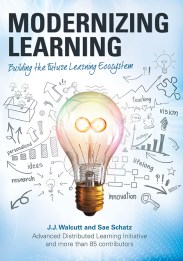
The Department of Defense’s Advanced Distribution Learning (ADL) Initiative recently released its latest eBook, Modernizing Learning.

Modernizing Learning, now available for FREE download in ePub format, emphasizes a “future learning ecosystem,” defined as a transformation from traditional learning practices to “curated lifelong learning tailored to individuals and delivered across diverse locations, media and period of time.” In other words, if you’re planning to upgrade your learning modules to the 21st century, Modernizing Learning provides a blueprint for connecting learning experiences across time and space for academia, K–12, and more.

This comprehensive resource explores data security, learner privacy, analytics and visualization as well as other technological capabilities related to social networking, data sharing, and data collection in a learning ecosystem. The book also covers instructional strategies for the future, competency-based learning, social learning and self-regulated learning.

With competing and constantly changing demands, limited resources and a need for integration across systems, learning professionals have recognized a need for a governance strategy for an ecosystem. This book discusses how to develop a governing structure for a learning ecosystem, how to conduct strategic planning, and what changes in culture are needed to modernize learning for the future.

Discover more free educational resources from the U.S. Government Bookstore here.

Also, check out our 50% off Education & Libraries collection.

The GPO Online Bookstore – Easy Access to Federal Publications

HOW DO I OBTAIN THIS RESOURCE?

Sign up to receive promotional bulletin emails from the US Government Online Bookstore.

Shop Online Anytime: You can buy a vast majority of eBooks or print publications —with FREE Standard Shipping worldwide— from the U.S. Government Online Bookstore at https://bookstore.gpo.gov.

Visit our Retail Store: To buy or order a copy of any print editions from this collection at GPO’s retail bookstore at 710 North Capitol Street NW, Washington, DC 20401, open Monday–Friday, 8 a.m. to 4 p.m., except Federal holidays, Call (202) 512-0132 for information or to arrange in-store pick-up(s).

Order by Phone or Email: Call our Custoer Contact Center Monday through Friday, 8 am to 4:30 pm Eastern (except US Federal holidays). From US and Canada, call toll-free 1.866.512.1800. DC or International customers call +1.202.512.1800.  Email orders to ContactCenter@gpo.gov

Find more than a million official Federal Government publications from all three branches at www.govinfo.gov.

About the author: Blogger contributor Trudy Hawkins is the the Sr. Marketing & Promotions Specialist in GPO’s Publication & Information Sales Division supporting the U.S. Government Online Bookstore.


GPO Summer Travel Series: Glacier National Park

September 5, 2019

Going-to-the-Sun Road, NPS.

Summer is coming to a close. But there’s still one spot left on our bucket list. It might be last, but with its majestic alpines, spiritual falls, and shaggy-coated mountain goats, it is certainly not least. Bring your bug spray and pack away your snacks in case we spot a bear. Our last stop in our 2019 summer travels, nicknamed “Crown of the Continent” for its royal grandeur, is in Montana’s Rocky Mountains. We’re heading to one of our most scenic parks yet – Glacier National Park!

Okay, Junior Rangers, open your Junior Park Ranger Glacier National Park booklet! Your first challenge is to help park visitors leave no trace at the park. Let’s keep the park in pristine condition for the animals who live here and the people who visit after us. It’s essential to be wise about wildlife. Glacier is bear country, with both black bears and grizzly bears. Flip through your booklet to learn about how to hike with bears nearby and what every one of us can do to help wild animals survive in their natural habitats!

To get into the park, we’ll take a drive down Going-to-the-Sun Road, one of the main attractions of Glacier National Park. With views of peaked mountains, purple wildflowers, lush valleys, and Aspen groves, you’ll want to get your camera out for this part! Notice how clear the water is? The lakes here keep their enviable blue-green color because of the cold temperature of the water. Since most of the lakes don’t get above 50 degrees Fahrenheit at the surface, very few plankton grow here.

Time for a history lesson! The Salish, Kootenai, and Blackfeet peoples have been in and around the area of Glacier National Park for thousands of years. Once the settlers arrived, places were often renamed for the newcomers. Open your booklet to guess the native names for these places. Can you figure out the names of the digestive system of the buffalo, the waterfall where warrior woman and others went for spiritual guidance, and the mountain you need to be extra respectful of when visiting? Next, complete the rhymes to learn about how people moved through the area at different times throughout history, starting with the first Americans who traveled through the mountains in tribal bands. Once Glacier National Park was established in 1910, The Great Northern Railway company began to build hotels, trails, and of course, the railroad. This railroad provided transportation for those who wanted to travel West.

In 1932, Waterton-Glacier became the very first International Peace Park in the world. The park, which merged Canada’s Waterton Lakes National Park and America’s Glacier National Park, symbolized the longstanding friendship between Canada and the United States. Now, write about what peace means to you. Stop and listen — the sounds of the water crashing on the rocks or the croaky calls of a Clark’s Nutcracker here at Glacier might help you describe your definition of peace!

Did you know scientists have been studying the glaciers in this park for more than 100 years? Since then, Glacier National Park has lost many of its glaciers, and many are shrinking. In your booklet, connect the dots to see what Shepard Glacier looked like 100 years ago and what it looks like now. Let’s go on a Geology Hunt in the park. At Lake McDonald, there are rocks of all colors of the rainbow! The Kootenai Indians called Lake McDonald “Dancing Place” because they believed it to be an excellent place to sway, spin, and twirl. What geological evidence can you find here? Look out for different colored pebbles, rocks in the streams, and the peaks on top of the mountains. These mountains, along with the U-shaped valleys, were shaped by the glaciers long ago.

Not quite at reading age yet? No problem! The GPO Bookstore has still got you covered with the Pre-Reader Activity Guide for Glacier National Park’s Youngest Junior Rangers. This booklet is full of fun activities for Glacier’s littlest explorers.

Thank you for experiencing the splendor that is Glacier National Park with us. We hope you learned a lot and that Glacier rejuvenated you for the school year ahead. Stay wild, travelers!

The GPO Online Bookstore – Easy Access to Federal Publications

HOW DO I OBTAIN THIS RESOURCE?

Sign up to receive promotional bulletin emails from the US Government Online Bookstore.

Shop Online Anytime: You can buy a vast majority of eBooks or print publications —with FREE Standard Shipping worldwide— from the U.S. Government Online Bookstore at https://bookstore.gpo.gov.

Visit our Retail Store: To buy or order a copy of any print editions from this collection at GPO’s retail bookstore at 710 North Capitol Street NW, Washington, DC 20401, open Monday–Friday, 8 a.m. to 4 p.m., except Federal holidays, Call (202) 512-0132 for information or to arrange in-store pick-up(s).

Order by Phone or Email: Call our Customer Contact Center Monday through Friday, 8 am to 4:30 pm Eastern (except US Federal holidays). From US and Canada, call toll-free 1.866.512.1800. DC or International customers call +1.202.512.1800.  Email orders to ContactCenter@gpo.gov

Visit a Federal depository library: Search for U.S. Government publications in a nearby Federal depository library. You can find the records for most titles in GPO’s Catalog of U.S. Government Publications.

Find more than a million official Federal Government publications from all three branches at www.govinfo.gov.

About the author: Blogger contributor Cat Goergen is the PR Specialist in GPO’s Public Relations office.


The Evolution of Forward Surgery in the U.S. Army

August 30, 2019

As its title suggests, The Evolution of Forward Surgery in the US Army: From the Revolutionary War to the Combat Operations of the 21st Century from the Borden Institute describes forward U.S. Army surgery from the Revolutionary War to the present.

From a historical perspective, this comprehensive book explains the advances in medicine and forward surgical care provided to wounded and ill soldiers on the frontline. The book opens with the role of military medicine and its impact on casualty care from the Revolutionary War to the War of 1812. In particular, it discusses the impact of disease during the Revolutionary War through the post-Civil War period.

Advancements in medicine continued to progress after the Civil War into World War I. By the time the U.S. Army entered into WWI, the Army Medical Department had evolved considerably. The book explains how new technologies in forward surgery impacted the “great war.” Advances in medications, lifesaving transfusions, and transportation vehicles such as motorized ambulances were introduced during this period.

Additionally, the research further describes Army forward surgery in WWII and its impact on an international level as well the wars that followed. It discusses the medical and surgical care of the various theater campaigns during WWII, particularly the China-Burma-India Theater of Operations, focusing on forward surgery. Forward surgery continued to evolve during the Korean and Vietnam Wars which introduced the need for Mobile Army Surgical Hospitals (MASH) and helicopter medical evacuations. These advancements provided immediate accessibility to administer surgical care to wounded soldiers near the front lines.

More recent wars showcase advances in radiography, blood collection, pain management, MEDEVAC units, anesthesia equipment, and improved operating room lighting for better surgical conditions and outcomes.

The text concludes with the designation of a formal forward surgical team and its challenges during the Global War on Terrorism as well as a final chapter discussion on homeland defense, contingency operations, and future directions.

Evolution of Forward Surgery in the US Army: From the Revolutionary War to the Combat Operations of the 21st Century is available in a variety of formats from various outlets. To learn more click here.

Find more resources published by the U.S. Army Borden Institute

The GPO Online Bookstore – Easy Access to Federal Publications

HOW DO I OBTAIN THIS RESOURCE?

Sign up to receive promotional bulletin emails from the US Government Online Bookstore.

Shop Online Anytime: You can buy a vast majority of eBooks or print publications —with FREE Standard Shipping worldwide— from the U.S. Government Online Bookstore at https://bookstore.gpo.gov.

Visit our Retail Store: To buy or order a copy of any print editions from this collection at GPO’s retail bookstore at 710 North Capitol Street NW, Washington, DC 20401, open Monday–Friday, 8 a.m. to 4 p.m., except Federal holidays, Call (202) 512-0132 for information or to arrange in-store pick-up(s).

Order by Phone or Email: Call our Customer Contact Center Monday through Friday, 8 am to 4:30 pm Eastern (except US Federal holidays). From US and Canada, call toll-free 1.866.512.1800. DC or International customers call +1.202.512.1800.  Email orders to ContactCenter@gpo.gov

Visit a Federal depository library: Search for U.S. Government publications in a nearby Federal depository library. You can find the records for most titles in GPO’s Catalog of U.S. Government Publications.

Find more than a million official Federal Government publications from all three branches at www.govinfo.gov.

About the author: Blogger contributor Trudy Hawkins is the the Sr. Marketing & Promotions Specialist in GPO’s Publication & Information Sales Division supporting the U.S. Government Online Bookstore.


GPO Summer Travel Series: Coronado National Memorial

August 26, 2019

Our upcoming destination is one that started as a quest for cities lined with goldsmith shops, grand homes, and doorways studded with emeralds and turquoise. And even though these places turned out to be real only in tall tales, today we will discover the rich history and culture that evolved due to the expedition to find them. Kids, grab your Coronado National Memorial Junior Ranger Guide from the GPO Bookstore. We’re off to Cochise County, Arizona to discover Coronado National Memorial!

In February of 1540, Francisco Vázquez de Coronado, who had served as a prominent member of the Mexico City council, left Compostela in Mexico. Along with him were 339 soldiers, a few Franciscan priests, and more than 1,100 Indian allies and slaves. Their mission? Discover the Cities of Cibola, which were believed to be bubbling over with gold, and claim them for Spain. Members of the expedition traveled along the San Pedro River, through deserts, and over mountains. With them, they brought more than 1,500 animals, such as horses, sheep, pigs, and cattle. They walked for two years, never to find the fabled cities. However, the arrival of Coronado and his armed expedition led to profound cultural change, which can still be observed today. Coronado, the soldiers, and the priests taught Spanish to the indigenous people of the region. Coronado’s expedition might not have led to the discovery of cities dripping in diamonds. But, it led to the later Spanish colonization of Southwest America, creating the Hispanic-American culture that lives on today.

First things first. Let’s explore the Memorial on a nature walk. Follow the path and count your steps to get a sense of just how far the expedition members walked when they made the two-year trek close to 4,000 miles. Keep an eye out for wildlife! Coronado National Memorial has 55 different kinds of mammals, including baby bats and black bears. As for plants, we might spot Yucca, Manzanita, Ocotillo, Agave, and more. Open your booklet to see what they look like and mark them as we go.

Coronado Cave, NPS.

Next, we’re climbing 500 feet uphill to Coronado Cave! Historians believe that the Coronado Expedition might have sent exploring parties into the Huachuca Mountains where there are caves. Junior Rangers, open your booklets. Be ready to identify and sketch stalactites (these hang from the ceiling), stalagmites (these rise from the cave floor), and columns (where stalactites and stalagmites meet together).

Everyone pack in the van. We’re driving to the trailhead of Montezuma Pass. In your booklet, add a checkmark next to animal tracks you see. We’re looking for the traces of Turkey Vultures, White-Tailed Deer, Spiny Lizards, Coatis, and even Mountain Lions!

Once we hit the visitor center, we’ll get the opportunity to touch and feel some clothing items similar to those worn by members of the Coronado Expedition. In your booklet, write down how things feel when you pick them up. Were they light or heavy? What would these items protect you from on an expedition? At the Touch Table in the visitor center, touch the skulls and tracks of animals that are common in Coronado National Memorial.

Now, it’s time to mail a postcard to someone back home. Open your booklet for one that’s already available and ready to send! Tell the recipient of the postcard what your favorite part of visiting the National Memorial was.

The final and perhaps most crucial activity in this booklet is to complete the National Park Service Arrowhead, which represents the values that are protected by the National Park Service. In it, draw pictures of things you saw at Coronado National Memorial that you think should be protected.

We hope you enjoyed everything at Coronado National Memorial and all the fun activities in the National Park Service booklet. Stay tuned for more Summer Travels, and search “summer travel” on this blog to visit several other amazing national parks.

The GPO Online Bookstore – Easy Access to Federal Publications

HOW DO I OBTAIN THIS RESOURCE?

Sign up to receive promotional bulletin emails from the US Government Online Bookstore.

Shop Online Anytime: You can buy a vast majority of eBooks or print publications —with FREE Standard Shipping worldwide— from the U.S. Government Online Bookstore at https://bookstore.gpo.gov.

Visit our Retail Store: To buy or order a copy of any print editions from this collection at GPO’s retail bookstore at 710 North Capitol Street NW, Washington, DC 20401, open Monday–Friday, 8 a.m. to 4 p.m., except Federal holidays, Call (202) 512-0132 for information or to arrange in-store pick-up(s).

Order by Phone or Email: Call our Customer Contact Center Monday through Friday, 8 am to 4:30 pm Eastern (except US Federal holidays). From US and Canada, call toll-free 1.866.512.1800. DC or International customers call +1.202.512.1800.  Email orders to ContactCenter@gpo.gov

Visit a Federal depository library: Search for U.S. Government publications in a nearby Federal depository library. You can find the records for most titles in GPO’s Catalog of U.S. Government Publications.

Find more than a million official Federal Government publications from all three branches at www.govinfo.gov.

About the author: Blogger contributor Cat Goergen is the PR Specialist in GPO’s Public Relations office.


The Latest Advancements in Emergency War Surgery

August 12, 2019

The U.S. Army’s Borden Institute continues on the cutting edge of medical advancements with its new Emergency War Surgery 5th edition publication now available for FREE download in PDF and other formats. This edition features the latest practices in combat casualty care, such as weapons effects and war wounds, damage control surgery, biological warfare agents, and mass casualty and triage from battlefield experiences in Afghanistan, Iraq and wherever America’s warriors are serving.

The publication is especially helpful to nonsurgical personnel, including emergency room physicians, medical researchers, and pre-med students to identify patients who need more advanced care. This latest edition also offers a chapter featuring Tactical Combat Casualty Care (TCCC) providing for the first time evidence-based, lifesaving methods at the point of injury. It also updates the Clinical Practice Guidelines, and adds new information about blood collection and transfusions.

This edition extends the scope and value of battlefield proven studies for applications that can serve global academic and healthcare professionals engaged in life-saving emergency practices and operations.

While the focus of the Borden Institute’s medical advancement studies are designed to serve America’s military medical needs, unquestionably the value of the Institute’s work goes beyond combat zones.

Emergency War Surgery 5th US Revision, in addition to saving U.S military lives, offers the medical knowledge to successfully address potential civilian medical crisis as well.

Find more resources published by the U.S. Army Borden Institute

The GPO Online Bookstore – Easy Access to Federal Publications

HOW DO I OBTAIN THIS RESOURCE?

Sign up to receive promotional bulletin emails from the US Government Online Bookstore.

Shop Online Anytime: You can buy a vast majority of eBooks or print publications —with FREE Standard Shipping worldwide— from the U.S. Government Online Bookstore at https://bookstore.gpo.gov.

Visit our Retail Store: To buy or order a copy of any print editions from this collection at GPO’s retail bookstore at 710 North Capitol Street NW, Washington, DC 20401, open Monday–Friday, 8 a.m. to 4 p.m., except Federal holidays, Call (202) 512-0132 for information or to arrange in-store pick-up(s).

Order by Phone or Email: Call our Customer Contact Center Monday through Friday, 8 am to 4:30 pm Eastern (except US Federal holidays). From US and Canada, call toll-free 1.866.512.1800. DC or International customers call +1.202.512.1800.  Email orders to ContactCenter@gpo.gov

Visit a Federal depository library: Search for U.S. Government publications in a nearby Federal depository library. You can find the records for most titles in GPO’s Catalog of U.S. Government Publications.

Find more than a million official Federal Government publications from all three branches at www.govinfo.gov.

About the author: Blogger contributor Trudy Hawkins is the the Sr. Marketing & Promotions Specialist in GPO’s Publication & Information Sales Division supporting the U.S. Government Online Bookstore.


GPO Summer Travel Series: Pecos National Historical Park

August 6, 2019

Mission Church and Convento

Thus far this summer we’ve experienced the aloha spirit of Hawaii, the falling waters of Yosemite, and even the golden badlands of Death Valley. You may be thinking there can’t possibly be any more to see. But our Nation is vast, with 58 national parks eagerly awaiting your adventure upon arrival. And our next park is full of rich culture and history. With a little imagination, you can still see this park’s original inhabitants weaving baskets from yucca plants and gathering around to tell the stories of their ancestors. Get ready to experience a big sky and open spaces at Pecos National Historical Park!

Before we head off for New Mexico, pick up the Pecos Junior Ranger Activity Book from the GPO Bookstore. This booklet lets kids explore the sites and history of Pecos National Historical Park, learn about the people, stories, and places of Pecos, and protect the park. They’ll start by interviewing a Park Ranger about their job. Before you know it, the kids in your crew will be living as the Pecos people once did – designing pottery, decoding messages in Morse Code, and creating a unique brand of cattle.

The booklet also serves as a guide for what to see and do at the park. The Ancestral Sites Trail will take us up through the Pecos Pueblo, which used to be a Native American community, and lead us to the Mission Church and Convento. Here, we will explore one of the reconstructed kivas, which were pit-houses used for religious ceremonies. You may notice that the structures are circular and have a hole in the middle. These holes represent the Pecos people’s connection to the underworld.

Using an ancient agricultural technique that originated in Mexico, the people of Pecos grew corn, beans, and squash and caught fish in the Pecos River. However, the Pecos people needed to trade with their neighboring tribes to prosper. In the booklet, readers will help the people from the Rio Grande Valley, and the Great Plains move their goods to the Pecos Pueblo to participate in the trade fair!

Did you know soldiers in the Civil War fought a Battle at Pecos? There’s still more to see! Next let’s hike the Battlefield Trail and explore the place where the Battle of Glorieta Pass, also known as the Gettysburg of the West, was fought. Though this pass is well-known for being a place of Civil War battle, humans have actually traveled on it for over 10,000 years!

Next, it’s off to Forked Lightning Ranch and Kozlowski’s Trading Post where travelers who made their way across the Santa Fe Trail stopped to purchase goods. Today the Trading Post is part of the Forked Lightning Ranch, the land along part of the Pecos River. According to the National Park Service, this land “has nourished and served the needs of the inhabitants and settlers of the region” for hundreds of years.

That’s all for Pecos. As always, thanks for coming along! We’re so glad we got to experience this park with you. What’s been your favorite park so far? Relive some of your old memories by searching “summer travel” on this blog. Rest up, and we will see you again soon for more travels!

The GPO Online Bookstore – Easy Access to Federal Publications

HOW DO I OBTAIN THIS RESOURCE?

Sign up to receive promotional bulletin emails from the US Government Online Bookstore.

Shop Online Anytime: You can buy a vast majority of eBooks or print publications —with FREE Standard Shipping worldwide— from the U.S. Government Online Bookstore at https://bookstore.gpo.gov.

Visit our Retail Store: To buy or order a copy of any print editions from this collection at GPO’s retail bookstore at 710 North Capitol Street NW, Washington, DC 20401, open Monday–Friday, 8 a.m. to 4 p.m., except Federal holidays, Call (202) 512-0132 for information or to arrange in-store pick-up(s).

Order by Phone or Email: Call our Customer Contact Center Monday through Friday, 8 am to 4:30 pm Eastern (except US Federal holidays). From US and Canada, call toll-free 1.866.512.1800. DC or International customers call +1.202.512.1800.  Email orders to ContactCenter@gpo.gov

Visit a Federal depository library: Search for U.S. Government publications in a nearby Federal depository library. You can find the records for most titles in GPO’s Catalog of U.S. Government Publications.

Find more than a million official Federal Government publications from all three branches at www.govinfo.gov.

About the author: Blogger contributor Cat Goergen is the PR Specialist in GPO’s Public Relations office.


NEW Implementation Science at a Glance eBook

August 2, 2019

What exactly is implementation science? According to the National Cancer Institute (NCI), Division of Cancer Control & Population Sciences, “implementation science is the study of methods to promote the adoption and integration of evidence-based practices, interventions, and policies into routine health care and public health settings to improve the impact on population health.”

Implementation Science at a Glance (ePub) offers a-practical guidance on the science for cancer control practitioners, policy makers, and cancer control and implementation researchers.

While many effective interventions can reduce cancer risk, incidence, and death, as well as enhance quality of life, they are of limited benefit if they cannot be delivered to those in need. Implementation science, as presented in the guide aims to improve public health by bridging the knowledge gap between research and practice to help communities in need.

The guide is organized into a four-stage framework: assess, prepare, implement, and evaluate. Each stage poses important questions for practical considerations. It also includes four case studies to illustrate how practitioners are successfully applying implementation science in their cancer control programs.

Through summaries of key theories, methods, and models, the guide shows how greater use of implementation science can support the effective adoption of evidence-based interventions in real-world settings.

Explore the many helpful health related FREE downloadable publications from the NCI here.

The GPO Online Bookstore – Easy Access to Federal Publications

HOW DO I OBTAIN THIS RESOURCE?

Sign up to receive promotional bulletin emails from the US Government Online Bookstore.

Shop Online Anytime: You can buy a vast majority of eBooks or print publications —with FREE Standard Shipping worldwide— from the U.S. Government Online Bookstore at https://bookstore.gpo.gov.

Visit our Retail Store: To buy or order a copy of any print editions from this collection at GPO’s retail bookstore at 710 North Capitol Street NW, Washington, DC 20401, open Monday–Friday, 8 a.m. to 4 p.m., except Federal holidays, Call (202) 512-0132 for information or to arrange in-store pick-up(s).

Order by Phone or Email: Call our Customer Contact Center Monday through Friday, 8 am to 4:30 pm Eastern (except US Federal holidays). From US and Canada, call toll-free 1.866.512.1800. DC or International customers call +1.202.512.1800.  Email orders to ContactCenter@gpo.gov

Visit a Federal depository library: Search for U.S. Government publications in a nearby Federal depository library. You can find the records for most titles in GPO’s Catalog of U.S. Government Publications.

Find more than a million official Federal Government publications from all three branches at www.govinfo.gov.

About the author: Blogger contributor Trudy Hawkins is the the Sr. Marketing & Promotions Specialist in GPO’s Publication & Information Sales Division supporting the U.S. Government Online Bookstore.


50 Years of history that never grows old

July 19, 2019

Who in America hasn’t heard those words ending man’s life’s limitation only to Earth – “The eagle has landed?” The words of Astronaut Neil Armstrong signaled the safe landing of the Apollo 11 lunar module on the moon. Fifty years and numerous moon landings later, the day of the moon landing is still worthy of national celebration. America can be proud of the bravery of men and women who’ve risked their lives to conquer space; for technological advances conceived and produced to support this human adventure like no other. A moment that captured the spirit of a nation neither bound by the limits of the unknown nor the uncertainty of reaching for the stars.

To take part in this national day of courage and achievement, now you can purchase one or more of the published portraits of the adventures and challenges met by one of America’s most valuable resources, the National Aeronautics and Space Administration (NASA); a name that may not capture the true essence of its magnificence, but a well-documented story of mankind at some of its most memorable moments.

The U.S. Government Bookstore offers the following NASA publications related to the remarkable history of the Apollo 11 mission.

Exploring the Unknown: Selected Documents in the History of the United States Civil Space Program: V. VII: Human Spaceflight: Projects Mercury, Gemini, and Apollo. This publication includes a selection of expert essays and official documents about the evolution of U.S. human spaceflight programs: Projects Mercury, Gemini, and Apollo. It emphasizes important documents relating to aerodynamics and man-in-space research as well as recommended activities the lunar vehicle should do and what symbolic items should be brought for the First Lunar Landing (such as the iconic American flag planted on the moon).

NASA’s First 50 Years: Historical Perspectives; NASA 50 Anniversary Proceedings. A wide array of scholars turn a critical eye toward NASA’s first 50 years, probing an institution widely seen as the premier agency for space exploration in the world. Fifty years after its founding, this NASA publication offers historical perspectives to help illuminate what came next.

View of an astronaut’s foot and footprint in the lunar soil. Image courtesy of NASA.

On July 29, 1958, President Dwight D. Eisenhower signed the NASA Act. Over the next 50 years, NASA achieved spectacular feats, from advancing the well-established field of aeronautics to pioneering new fields of Earth and space science and human spaceflight. In the midst of the geopolitical context of the Cold War, 12 Americans walked on the Moon, arriving in peace “for all mankind.” Humans saw their home planet from a new perspective, with unforgettable Apollo images of Earthrise and the “Blue Marble,” as well as the “pale blue dot” from the edge of the solar system. Since, spacecraft have studied Earth, probed the depths of the solar system and the universe beyond. In the 1980s, the evolution of aeronautics gave us the first winged human spacecraft, the Space Shuttle, and the International Space Station that stood as a symbol of human cooperation in space as well as a possible way station to the stars. Though important to note, given the Apollo fire and two Space Shuttle accidents, NASA has also seen the depths of tragedy.

When Biospheres Collide: A History of NASA’s Planetary Protection Programs. This book from the NASA History Series tackles the interesting duo of biological problems that should be familiar to anybody who has seen photos of Apollo astronauts quarantined after their return to Earth. Namely, how do we avoid contaminating celestial bodies with Earthly germs when we send spacecraft to study these bodies, and how do we avoid spreading foreign biological matter from space when our robotic and human spacefarers return to Earth? Biological matter from an external system could potentially cause an unchecked epidemic either on Earth or in space so strict precautions are necessary. Problems identified. Problems overcome.

Project Apollo: The Tough Decisions. This monograph presents the history of the manned space program from September 1, 1960 to January 5, 1968, the most critically important period during which NASA validated its ability to successfully venture beyond earth’s gravitational limits. Outlines detail the steps taken from the early Mercury days through the operation tests conducted with Gemini, to the qualification of Apollo. It describes the key technical, operational, and management milestones and how key issues in each phase of the space program were resolved. Anyone thinking about becoming a space adventurer? Read first-hand how NASA has made such ventures soon within our reach.

Many other space related adventures and fascinating articles about new products created by America’s space journey are available here.

The GPO Online Bookstore – Easy Access to Federal Publications

HOW DO I OBTAIN THESE RESOURCES?

Sign up to receive promotional bulletin emails from the US Government Online Bookstore.

Shop Online Anytime: You can buy a vast majority of eBooks or print publications —with FREE Standard Shipping worldwide— from the U.S. Government Online Bookstore at https://bookstore.gpo.gov.

Visit our Retail Store: To buy or order a copy of any print editions from this collection at GPO’s retail bookstore at 710 North Capitol Street NW, Washington, DC 20401, open Monday–Friday, 8 a.m. to 4 p.m., except Federal holidays, Call (202) 512-0132 for information or to arrange in-store pick-up(s).

Order by Phone or Email: Call our Custoer Contact Center Monday through Friday, 8 am to 4:30 pm Eastern (except US Federal holidays). From US and Canada, call toll-free 1.866.512.1800. DC or International customers call +1.202.512.1800.  Email orders to ContactCenter@gpo.gov

Find more than a million official Federal Government publications from all three branches at www.govinfo.gov.

About the author: Blogger contributor Ed Kessler is a Promotions Specialist in GPO’s Publication and Information Sales program office.


GPO Summer Travel Series: Bandelier National Monument

July 10, 2019

River-carved valley landscape, Bandelier National Monument. NPS.

Welcome back, summer travelers. If historic caves, petroglyphs, and ceremonial grounds inspire you, get excited. Thousands of years ago, in what is now modern-day New Mexico, Ancestral Pueblo people built homes carved from volcanic tuff. Today, the National Park Service protects the structures and cultural architecture at this next destination. So, what are you waiting for? Mentally prepare to climb lots of ladders, and let’s pay tribute to the place that preserves ancient Ancestral Pueblo dwellings—Bandelier National Monument!

With activities for kids from first grade to seventh grade, Bandelier National Monument Junior/Deputy Ranger Booklet is just what you need to make sure your trip to this National Monument is an educational adventure. First things, first! Together, let’s learn to respect and protect the park with a fill-in-the-blank challenge. Little Junior Rangers will be challenged to cross off things they see at the park – like cliff dwellings, the village, and ladders. To spot some of the ladders, we’ll head to the Alcove House. A series of four ladders and stone stairs make up the 140-foot climb to get to the house. Archeologists believe this house was once home to about 25 people. Another trail with ladders will lead to the Ancestral Pueblo village of Tsankawi. Here you’ll find distinct paths that the Ancestral Pueblo people themselves used – and experience the views of the mesa as they did thousands of years ago. Did you know human presence in the area goes back over 11,000 years?

Next, Junior Rangers will be challenged to interview a Ranger at the park. And once they climb the ladder into a Cavate Home, readers will be challenged to decide the best spot in the home to build a fire, store food, and sleep. Now, we’re going to take a stab at being an archeologist! Junior Rangers will look at structures, such as Big Kava and Tyuonyi ruins, from Ancestral Pueblo times, and think about what questions they would need to ask about each of the structures to determine their uses. Remember, the Ancestral Pueblo people lived here from about 1150 CE to 1550 CE, so they didn’t have the convenience of modern technology like we do today.

Another neat thing to check out at Bandelier? The Long House! These cliff dwellings were three to four stories tall. Here, you’ll see hundreds of petroglyphs, or carved drawings. Painted Cave, which can be accessed from the Bandelier Visitor Center or the Dome Trailhead, is a great place to observe even more of these illustrations.

In a valuable lesson about protecting species, the National Park Service booklet discusses animals that used to live amongst the Ancestral Pueblo people but can no longer be found in the park today. The booklet asks children which species they believe could be reintroduced to the park, as well as what they can do to help keep other species from disappearing from their original habitat.

We’re impressed with how much you were able to see at the park! Now that we have finished exploring for today, let’s head back to the visitor center and give the booklet to a Ranger to complete your challenge.

Awesome work. We hope you enjoyed getting a taste of life as an Ancestral Pueblo person as well as learning about the importance of protecting and respecting places we visit, especially ones with rich culture and relics that we want to keep safe. Summer is just getting started, and so are we. We can’t wait to take you to our next destination. Keep following along!

The GPO Online Bookstore – Easy Access to Federal Publications

HOW DO I OBTAIN THIS RESOURCE?

Sign up to receive promotional bulletin emails from the US Government Online Bookstore.

Shop Online Anytime: You can buy a vast majority of eBooks or print publications —with FREE Standard Shipping worldwide— from the U.S. Government Online Bookstore at https://bookstore.gpo.gov.

Visit our Retail Store: To buy or order a copy of any print editions from this collection at GPO’s retail bookstore at 710 North Capitol Street NW, Washington, DC 20401, open Monday–Friday, 8 a.m. to 4 p.m., except Federal holidays, Call (202) 512-0132 for information or to arrange in-store pick-up(s).

Order by Phone or Email: Call our Customer Contact Center Monday through Friday, 8 am to 4:30 pm Eastern (except US Federal holidays). From US and Canada, call toll-free 1.866.512.1800. DC or International customers call +1.202.512.1800.  Email orders to ContactCenter@gpo.gov

Visit a Federal depository library: Search for U.S. Government publications in a nearby Federal depository library. You can find the records for most titles in GPO’s Catalog of U.S. Government Publications.

Find more than a million official Federal Government publications from all three branches at www.govinfo.gov.

About the author: Blogger contributor Cat Goergen is the PR Specialist in GPO’s Public Relations office.


GPO Summer Travel Series: A Visit to Death Valley

July 5, 2019

Summer is heating up, and it’s about to get even hotter. Located near the border of California and Nevada in the Great Basin, this next stop in our summer travel series is the hottest place on Earth. On July 10, 1913, the temperature in this National Park was 134°F. Fill up your jugs of water, strap on your hiking boots, and pack your water misting fans. Summer travelers, we hope you’re ready for Death Valley National Park in Inyo County, California!

Death Valley National Park Visitor Guide from the National Park Service (NPS) offers up all the knowledge you need to know to plan a wickedly awesome adventure. Safety first! This guide provides essential information on Death Valley Invasive Burros. The invasive burros in the park today are the descendants of animals introduced into the environment by humans over the last 150 years. They can be mean and aggressive, especially when defending their young. Before our trip, it’s crucial that we all read this guide for what to do if we see an invasive burro. Another important aspect of our trip to read up on is safety and park rules. With these temperatures, it’s essential that you drink at least one gallon of water per day. If you start to feel dizzy, nauseous or have a headache, step away from the sun and drink plenty of water. You might even want to bring extra water and a towel to make a cold compress if necessary.

Did you know that GPS devices will steer you to take “shortcuts” over the desert and into canyons? When you’re out hiking Death Valley, don’t rely on technology to get you around! Remember, we will be in the middle of the desert, so assume cell service will be spotty. These are just a few safety tips. Check out the Visitor Guide for them all. Okay, now it’s on to the fun stuff! You might not have liked your early wake-up call, but there is a reason we got to the park so early. We’re going to Zabriskie Point, known for its golden badlands, to see the sunrise. Next, we’ll hit Badwater Basin, the lowest point in North America, and Artists Drive, which the guide describes as “a scenic loop drive through multi-hued hills.” If you’re feeling up for a long adventure, you might check out Ubehebe Crater. This breathtaking site was created hundreds of years ago after a volcanic explosion mixed with an underground spring to form a 600-foot crater.

So little time, so much to do! Read the do-not-miss list in the guide to get suggestions on other must-see spots at the park. The sun is finally going down, and we cannot wait to catch a view of the Death Valley night sky at The Harmony Borax Works, which has a mule cart, a neat backdrop for night photography. Did you know Death Valley has one of the darkest skies in the United States? Bring some snacks for stargazing – we plan on oohing and aahing for at least 30 minutes. According to the visitor’s guide, it takes about 30 minutes for your eyes to adjust to being able to see the most stars. And we want to see them all!

With Death Valley National Park Junior Ranger Adventure in tow, little ones who visit Death Valley can become an Official Junior Ranger. This booklet guides you through what to pack for your adventure to Death Valley. It also offers a map for kids to circle the places they have visited at the park. As they explore the park, kids can play Junior Ranger Bingo, marking spots for completing tasks like finding a plant on the dunes, spotting a cactus, and recording the temperature. Other activities in the booklet include creating a desert animal, exploring the night sky, and telling tall tales like Death Valley Scotty. This storyteller became famous for suggesting he had found gold in Death Valley. People frequented his castle to hear his stories about Death Valley and find out if they could strike it rich there. Scotty’s Castle is currently closed, but reopening to the public in 2020. When you’re all finished at the park, head to a visitor center or ranger station in Death Valley National Park. Show a ranger the book and tell them all about your adventure. Then your little ranger will be sworn in as an official Junior Ranger and get a badge. For being the hottest place on Earth, that’s pretty cool!

With views of dunes and rainbow canyons, Death Valley is one of the most spectacular sites we may have ever seen. We’re so glad you brought along plenty of water to stay hydrated enough to enjoy the activities. See you next time, travelers!

The GPO Online Bookstore – Easy Access to Federal Publications

HOW DO I OBTAIN THESE RESOURCES?

Sign up to receive promotional bulletin emails from the US Government Online Bookstore.

Shop Online Anytime: You can buy a vast majority of eBooks or print publications —with FREE Standard Shipping worldwide— from the U.S. Government Online Bookstore at https://bookstore.gpo.gov.

Visit our Retail Store: To buy or order a copy of any print editions from this collection at GPO’s retail bookstore at 710 North Capitol Street NW, Washington, DC 20401, open Monday–Friday, 8 a.m. to 4 p.m., except Federal holidays, Call (202) 512-0132 for information or to arrange in-store pick-up(s).

Order by Phone or Email: Call our Customer Contact Center Monday through Friday, 8 am to 4:30 pm Eastern (except US Federal holidays). From US and Canada, call toll-free 1.866.512.1800. DC or International customers call +1.202.512.1800.  Email orders to ContactCenter@gpo.gov

Visit a Federal depository library: Search for U.S. Government publications in a nearby Federal depository library. You can find the records for most titles in GPO’s Catalog of U.S. Government Publications.

Find more than a million official Federal Government publications from all three branches at www.govinfo.gov.

About the author: Blogger contributor Cat Goergen is the PR Specialist in GPO’s Public Relations office.

Images courtesy of NPS.


Support for People with Cancer

July 2, 2019

After receiving a cancer diagnosis, one of the most important things a person can do is educate themselves on what they can expect to go through and prepare both mentally and physically for the road ahead. So, where does a newly diagnosed cancer patient turn for guidance?

The National Cancer Institute (NCI) recently released a series of booklets to help those facing cancer.

For a comprehensive guide to the questions you need to know, providing the most professional guidelines and answers, the NCI has published the following go-to support publications.

Taking Time to Support People with Cancer. Taking Time is a booklet for people newly diagnosed with cancer. It provides important information such as dealing with the various feelings you may go through after diagnosis, support from family and close friends, talking to your health care team, and dealing with a new self-image.

The NCI also provides help for managing the pain associated with cancer. Cancer Pain Control covers the types and causes of cancer pain. It discusses the importance of talking about your pain as well as developing a pain control plan and medicines to help treat cancer pain. It also discusses additional ways to control pain such as meditation and relaxation to help with stress and depression, as well as how pain can affect your thoughts and feeling and paying for pain medicines.

Eating can also be a challenge while going through cancer. In Eating Hints, people with cancer learn what to eat before, during, and after cancer treatment. This authoritative booklet provides tips about common types of eating problems and how to manage them, as well as tips about food and drinks to help manage your diet and how to prepare your food to avoid infections. It also provides suggestions for returning to healthy eating once your cancer treatment is over. For Spanish speaking individuals, the NCI also offers Consejos de alimentación, the Spanish version of Eating Hints.

Whether you are a cancer patient or know someone who is, download these FREE supportive booklets now. Cancer is no longer in charge of your life.

Start your journey now by embracing these easy to read, life-supporting booklets from the National Cancer Institute.

The GPO Online Bookstore – Easy Access to Federal Publications

HOW DO I OBTAIN THESE RESOURCES?

Sign up to receive promotional bulletin emails from the US Government Online Bookstore.

Shop Online Anytime: You can buy a vast majority of eBooks or print publications —with FREE Standard Shipping worldwide— from the U.S. Government Online Bookstore at https://bookstore.gpo.gov.

Visit our Retail Store: To buy or order a copy of any print editions from this collection at GPO’s retail bookstore at 710 North Capitol Street NW, Washington, DC 20401, open Monday–Friday, 8 a.m. to 4 p.m., except Federal holidays, Call (202) 512-0132 for information or to arrange in-store pick-up(s).

Order by Phone or Email: Call our Customer Contact Center Monday through Friday, 8 am to 4:30 pm Eastern (except US Federal holidays). From US and Canada, call toll-free 1.866.512.1800. DC or International customers call +1.202.512.1800.  Email orders to ContactCenter@gpo.gov

Visit a Federal depository library: Search for U.S. Government publications in a nearby Federal depository library. You can find the records for most titles in GPO’s Catalog of U.S. Government Publications.

Find more than a million official Federal Government publications from all three branches at www.govinfo.gov.

About the author: Blogger contributor Trudy Hawkins is the the Sr. Marketing & Promotions Specialist in GPO’s Publication & Information Sales Division supporting the U.S. Government Online Bookstore.


National Safety Month

June 28, 2019

June is National Safety Month, a great time to think about ways to improve the safety in your home, to keep your family aware of potential hazards, or, to consider possible existing hazards that could be affecting the health and comfort of your loved ones.

One of the most potentially dangerous and often forgotten causes of health-related problems, especially one affecting your children, is lead paint poisoning. And in older homes, lead paint poisoning is considered a high risk due to poor maintenance. It’s easy to forget the room you recently painted with your favorite color has covered over the original paint job that was done when the home was built many years ago. And just because you can’t see it anymore doesn’t mean the lead paint underneath isn’t affecting the places you’re sitting around the dinner table, watching your favorite team play, or catching a well-deserved good night of sleep.

The Federal government offers the following resources for maintaining a healthy and safe environment in your home.

Lead Paint Safety: A Field Guide for Interim Controls in Painting and Home Maintenance from the U.S. Department of Housing and Urban Development (HUD).  This booklet addresses the dangers of lead paint and the potential lead poisoning through home maintenance and renovation work. Even better, it is an illustrated hands-on resource. So you’ll have it handy on the next rainy day to review and decide if your home could have lead paint that needs your attention now.

Another resource to help keep your home healthy and free of hazards is the 2019 Healthy Homes Calendar. This colorful calendar filled with children’s artwork provides safety guidance on potential hazards that may be lurking around your home, each month of the year. For example, radon testing is a must for all households. January 2019 reminds you to test for radon and tips on how to do so. Protection against food poisoning and food safety is covered in July 2019. Other important tips include testing water as well as paint and soil around your home to determine the levels of lead that may be hazardous and much more.

A healthy home is a safe home, what better time than National Safety Month to promote the safety and well-being of your loved ones?

The GPO Online Bookstore – Easy Access to Federal Publications

HOW DO I OBTAIN THESE RESOURCES?

Sign up to receive promotional bulletin emails from the US Government Online Bookstore.

Shop Online Anytime: You can buy a vast majority of eBooks or print publications —with FREE Standard Shipping worldwide— from the U.S. Government Online Bookstore at https://bookstore.gpo.gov.

Visit our Retail Store: To buy or order a copy of any print editions from this collection at GPO’s retail bookstore at 710 North Capitol Street NW, Washington, DC 20401, open Monday–Friday, 8 a.m. to 4 p.m., except Federal holidays, Call (202) 512-0132 for information or to arrange in-store pick-up(s).

Order by Phone or Email: Call our Customer Contact Center Monday through Friday, 8 am to 4:30 pm Eastern (except US Federal holidays). From US and Canada, call toll-free 1.866.512.1800. DC or International customers call +1.202.512.1800.  Email orders to ContactCenter@gpo.gov

Visit a Federal depository library: Search for U.S. Government publications in a nearby Federal depository library. You can find the records for most titles in GPO’s Catalog of U.S. Government Publications.

Find more than a million official Federal Government publications from all three branches at www.govinfo.gov.

About the author: Blogger contributor Trudy Hawkins is the the Sr. Marketing & Promotions Specialist in GPO’s Publication & Information Sales Division supporting the U.S. Government Online Bookstore.

Home Safety image source rawpixel.com