On America’s Trails

September 30, 2016

stelprdbLet’s talk briefly about two American legends celebrated on screen and page. One stretches 2,160 miles from Mount Katahdin, Maine to Springer Mountain, Georgia. The second covers 2,665 miles from America’s southern and northernmost borders along the mountain ranges of Washington, Oregon, and California.

They’re the Appalachian and Pacific Crest Trails, respectively—the first scenic trails designated by the Federal government nearly a half-century ago. On October 2, 1968, President Lyndon B. Johnson signed the National Trails System Act into law. It established a network of scenic, historic, and recreation trails. You can read the original act on GPO’s govinfo.

Until 1968, the Federal government simply built and maintained trails on Federal lands. The National Trails System Act expanded that role by providing funding and support for interstate coordination and volunteer partnerships. Today, the National Trails System includes 20 national scenic and historic trails traversing nearly 40,000 miles.

In addition to making the National Trails System Act available on govinfo, GPO makes available these trail-related resources:

024-005-01277-0National Trails System: Map and Guide

This National Park Service full-color map depicts eight national scenic trails and nine national historic trails. The National Park Service, U.S. Forest Service, and Bureau of Land Management work in concert to keep trails well-marked and well-monitored. Check out the NPS website for the complete list of scenic and historic trails.

The Iditarod National Historic Trail (Poster)

024-011-00198-1_01On one side of this U.S. Forest Service poster is a timeline and map.  On the other side is a photo of a 1913 dog sled mail team. Together, they commemorate a historic 1,500 miles stretch of winter travel tracks connected to form America’s last gold rush trail.

Upon throwing his support behind a national system of trails, President Johnson said, “The forgotten outdoorsmen of today are those who like to walk, hike, ride horseback, or bicycle. For them we must have trails as well as highways…In the back country we need to copy the great Appalachian Trail in all parts of our country…”

HOW DO I OBTAIN THESE RESOURCES?

Shop Online Anytime: You can buy eBooks or print publications —with FREE Standard Shipping worldwide— from the U.S. Government Online Bookstore at http://bookstore.gpo.gov.

Shop our Retail Store: Buy a copy of any print editions from this collection at GPO’s retail bookstore at 710 North Capitol Street NW, Washington, DC 20401, open Monday–Friday, 9 a.m. to 4 p.m., except Federal holidays, Call (202) 512-0132 for information or to arrange in-store pick-up.

Order by Phone: Call our Customer Contact Center Monday through Friday, 8 am to 5:30 pm Eastern (except US Federal holidays). From US and Canada, call toll-free 1.866.512.1800. DC or International customers call +1.202.512.1800.

Visit a Federal depository library: Search for U.S. Government publications in a nearby Federal depository library. You can find the records for most titles in GPO’s Catalog of U.S. Government Publications.

About the author: Blogger contributor Chelsea Milko is a Public Relations Specialist in GPO’s Public Relations Office.


The Government Guide to a World of Exporting

September 28, 2016

If you’re a small or medium-sized business—start-up, mature, or somewhere in between—and you’re looking to expand your international market share and bottom line, there’s a U.S. Government guide that breaks down the basics of exporting.

a-basic-guide-to-exporting-11th-editionGPO makes available the latest edition of A Basic Guide to Exporting. It’s a work of the International Trade Administration’s (ITA) U.S. Commercial Service, a functionary of the U.S. Department of Commerce. This book has been around for 70 years, and it continues to give companies information they need to “gain the confidence to become an international sensation.”

U.S. companies are exporting more than ever before. According to the ITA, “in 2013, more than 300,000 small and medium-sized U.S. companies exported to at least one international market.” That has a lot to do with the fact that 96 percent of the world’s consumers exist outside of the U.S. Now is a great time for U.S. companies to go global.

This U.S. Commercial Service resource provides U.S. companies, especially first-time exporters, with in-depth advice and real-life success stories. It deals with complex issues head-on and “challenges…assumptions about engaging in the world of international business.” In addition to A Basic Guide to Exporting, the U.S. Commercial Service offers trade counseling, market intelligence, commercial diplomacy and help connecting with potential international partners—a sort of business matchmaking service.

dockIn A Basic Guide to Exporting, exporters can find strategic advice on how to:

  • Identify markets for products
  • Create an export plan
  • Finance your export transactions
  • Handle orders and shipments
  • Get free or low-cost government export counseling
  • Sell abroad through e-commerce
  • Finance export transactions
  • Prepare for legal issues

Yes, exporting abroad is tremendously more complicated than selling domestically. But thanks to official U.S. government resources and services, the process is easier than ever before. The world is truly open for U.S. business!

HOW DO I OBTAIN THIS PUBLICATION?

Shop Online Anytime: You can buy eBooks or print publications —with FREE Standard Shipping worldwide— from the U.S. Government Online Bookstore at http://bookstore.gpo.gov.

Shop our Retail Store: Buy a copy of any print editions from this collection at GPO’s retail bookstore at 710 North Capitol Street NW, Washington, DC 20401, open Monday–Friday, 9 a.m. to 4 p.m., except Federal holidays, Call (202) 512-0132 for information or to arrange in-store pick-up.

Order by Phone: Call our Customer Contact Center Monday through Friday, 8 am to 5:30 pm Eastern (except US Federal holidays). From US and Canada, call toll-free 1.866.512.1800. DC or International customers call +1.202.512.1800.

Visit a Federal depository library: Search for U.S. Government publications in a nearby Federal depository library. You can find the records for most titles in GPO’s Catalog of U.S. Government Publications.

About the author: Blogger contributor Chelsea Milko is a Public Relations Specialist in GPO’s Public Relations Office.


The Future of Energy

September 20, 2016

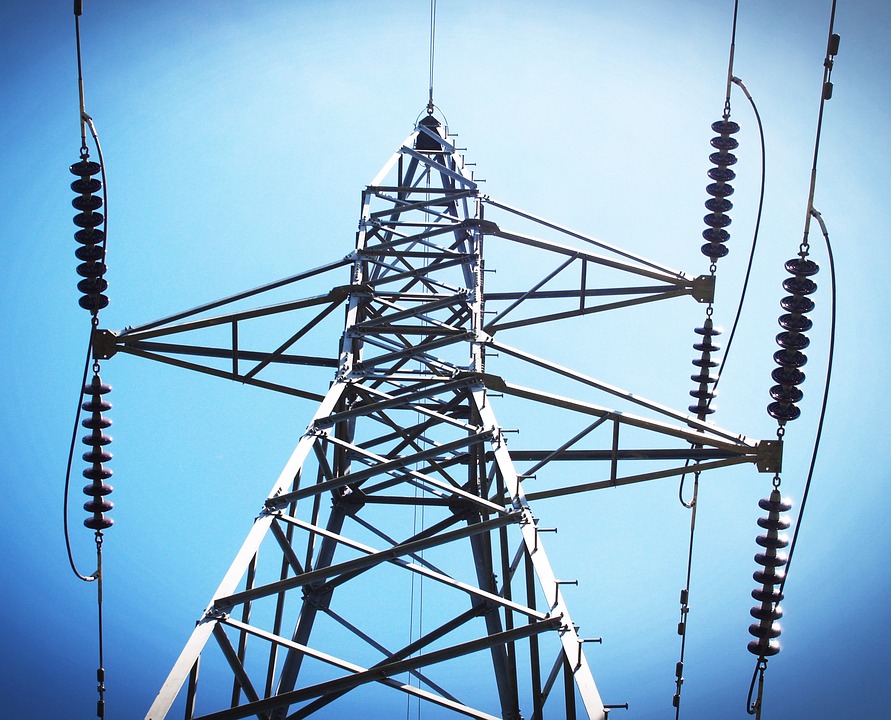
industry-611668_960_720There’s a great deal of interest in energy issues. Energy is in high demand across the globe. The task at hand is to predict just how the world’s total energy consumption will increase. One government report does that. GPO makes available the U.S. Department of Energy, Energy Information Agency (EIA)’s International Energy Outlook 2016. Not surprisingly, it shows rising levels of demand over the next three decades.

061-003-01167-5This report presents objective, sophisticated, and useful trend projections for world energy markets through 2040. IEO2016 focuses exclusively on marketed energy sources, divided according to Organization for Economic Cooperation and Development members (OECD) and nonmembers. Projections are “not statements of what will happen, but what might happen…dependent on the data, methodologies, model structures, and assumptions.”

By 2040, energy consumption will have increased by 1.4% per year; consumers are predicted to use roughly 815 quadrillion Btu. China and India will account for more than half of this usage. Renewable energy will be the fastest growing of all energy sources—wind and hydropower will each account for one-third of this increase. Despite the renewables uptick, fossil fuels will continue to be the prevailing energy provider, supplying 3/4 of the world’s energy needs.

Interesting to note is the growth in natural gas production from shale resources. Shale gas production amounted to more than half of U.S. natural gas production in 2015. By 2030, natural gas will surpass coal as the world’s second largest energy source. By 2040, natural gas, coal, and renewables will each generate close to 30% of all electricity.

power-1549118_960_720EIA Administrator Adam Sieminski states that “with existing policies and regulations, worldwide energy-related CO2 emissions will…increase by 1/3 out to the year 2040.” And much of this will depend upon the uncertain factors of economic growth in developing countries, oil production, technology improvements, and nuclear energy generation.

IEO2016 provides an actionable glimpse into both the current status and the future of global energy production and consumption. Because what happens today will influence tomorrow.

HOW DO I OBTAIN THIS PUBLICATION?

Shop Online Anytime: You can buy eBooks or print publications —with FREE Standard Shipping worldwide— from the U.S. Government Online Bookstore at http://bookstore.gpo.gov.

Shop our Retail Store: Buy a copy of any print editions from this collection at GPO’s retail bookstore at 710 North Capitol Street NW, Washington, DC 20401, open Monday–Friday, 9 a.m. to 4 p.m., except Federal holidays, Call (202) 512-0132 for information or to arrange in-store pick-up.

Order by Phone: Call our Customer Contact Center Monday through Friday, 8 am to 5:30 pm Eastern (except US Federal holidays). From US and Canada, call toll-free 1.866.512.1800. DC or International customers call +1.202.512.1800.

Visit a Federal depository library: Search for U.S. Government publications in a nearby Federal depository library. You can find the records for most titles in GPO’s Catalog of U.S. Government Publications.

About the author: Blogger contributor Chelsea Milko is a Public Relations Specialist in GPO’s Public Relations Office.


A New Guide for the American Diet

September 15, 2016

001-000-04771-0Americans, your dietary guidepost for the next four years is here! The U.S. Department of Health and Human Services (HHS) and Department of Agriculture’s (USDA) Dietary Guidelines for Americans is now available through GPO. It’s designed to help folks “improve their overall eating patterns — the complete combination of foods and drinks in their diet.” Plainly put, it’s a plan for eating better.

In this latest edition of HHS and USDA’s twice-a-decade nutrition publication, you’ll see terms like “nutrient-dense” and “food pattern” over and over again. That isn’t just trendy jargon to impress policymakers and health professionals. The words have real meaning, and they represent a shift in thinking about the way Americans should eat.  That is, “people do not eat food groups and nutrients in isolation but rather in combination”—people eat food in patterns.

eat-carrot-peaDietary Guidelines doesn’t just prescribe what to eat, it reminds us why to eat. Science tells us that healthy eating patterns “can help prevent chronic diseases like obesity, heart disease and Type 2 diabetes.” Improved nutrition staves off disease. And when Americans make healthy choices in their daily lives, the long-term benefits support a healthier next generation.

001-000-04771-0_dietary-guidelines-for-americans-2015-2020-003

Click on image to enlarge.

And now, snack on a few science-based recommendations:

  • There’s more than one way to pattern and adapt your eating. Dietary Guidelines provides examples of healthy eating patterns,
  • Nutrient-dense foods are only nutrient dense if they’re made with little or no added solid fats, sugars, refined starches, and sodium. So, cut down on those things,
  • Find new ways to sneak more veggies into dishes you already prepare,
  • Women, limit yourself to one drink per day. Men, your limit is two,
  • Lifelong healthy eating begins with small changes.

If you want a handy takeaway message, it’s this: make small dietary shifts and follow a healthy, lifetime eating pattern that combines a variety of nutrient-dense foods. Or simpler yet, eat for the long run, eat to live.

Update: The 2015-2020 Dietary Guidelines for Americans, is now available in a variety of convenient digital formats compatible with mobile phones, tablets, and e-readers.

See all the available formats for the Dietary Guidelines.

HOW DO I OBTAIN THIS PUBLICATION?

Shop Online Anytime: You can buy eBooks or print publications —with FREE Standard Shipping worldwide— from the U.S. Government Online Bookstore at http://bookstore.gpo.gov.

 Shop our Retail Store: Buy a copy of any print editions from this collection at GPO’s retail bookstore at 710 North Capitol Street NW, Washington, DC 20401, open Monday–Friday, 9 a.m. to 4 p.m., except Federal holidays, Call (202) 512-0132 for information or to arrange in-store pick-up.

Order by Phone: Call our Customer Contact Center Monday through Friday, 8 am to 5:30 pm Eastern (except US Federal holidays). From US and Canada, call toll-free 1.866.512.1800. DC or International customers call +1.202.512.1800.

Visit a Federal depository library: Search for U.S. Government publications in a nearby Federal depository library. You can find the records for most titles in GPO’s Catalog of U.S. Government Publications.

About the author: Blogger contributor Chelsea Milko is a Public Relations Specialist in GPO’s Public Relations Office.


How Naval Intelligence Shaped the Vietnam War

September 12, 2016

During the Vietnam War, U.S. naval intelligence was a very complex affair. Layers of political organization, military strategy, offensive tactics, and logistical operations shaded the struggle to win in South Vietnam. Much of that portion of the Cold War era is now declassified, illuminating the contributions of the naval intelligence establishment.

008-046-00298-3GPO makes available “Knowing the Enemy: Naval Intelligence in Southeast Asia,” part of the U.S. Department of the Navy series of commemorative studies on the Vietnam War.

The U.S. Navy intelligence effort in Vietnam played out in several pivotal events. Intelligence-gathering squadrons informed operations during 1964’s Tonkin Gulf Crisis and 1968’s Tet Offensive. Naval commands closely traced Soviet and Chinese military aid to North Vietnam and surveilled the use of the vital Cambodian port of Sihanoukville. And analysts processed raw data that informed the Linebacker bombing campaigns and pressed North Korea to eventually negotiate terms to end the war.

A SEAL scans the surroundings during his unit's intelligence-gathering mission in a Mekong Delta village.

A SEAL scans the surroundings during his unit’s intelligence-gathering mission in a Mekong Delta village.

Officers and enlisted personnel gathered and analyzed credible intel on the movement of Communist combat units, the location of Viet Cong encampments, and the flow of weapons and ammunition along the Mekong Delta. The communications, electronic, human, and imagery intelligence they collected was “key to the operational and tactical success of naval forces in the Vietnam War.”

Members of the naval intelligence community that routinely “engaged in intelligence collection often did their dangerous but vital work in direct contact with the enemy.” For example, photo reconnaissance pilots flew fast and furiously into oncoming antiaircraft fire for the best pictures—“since anything worth photographing was likely well-defended.” Hardly desk drones, intelligence staffs “fought face-to-face with the enemy” and suffered causalities for it.

Photo intelligence 3rd Class Charles R. Pearson uses his stereoscopic equipment to analyze an aerial image of an enemy site in Vietnam.

Photo intelligence 3rd Class Charles R. Pearson uses his stereoscopic equipment to analyze an aerial image of an enemy site in Vietnam.

U.S. naval intelligence units furnished operational forces “with information that, for the most part, improved their battle performance…and prospects for survival in combat.” More than anything, the cadre of intelligence professionals helped the American military understand the enemy.

HOW DO I OBTAIN THIS PUBLICATION?

Shop Online Anytime: You can buy eBooks or print publications —with FREE Standard Shipping worldwide— from the U.S. Government Online Bookstore at http://bookstore.gpo.gov.

 Shop our Retail Store: Buy a copy of any print editions from this collection at GPO’s retail bookstore at 710 North Capitol Street NW, Washington, DC 20401, open Monday–Friday, 9 a.m. to 4 p.m., except Federal holidays, Call (202) 512-0132 for information or to arrange in-store pick-up.

Order by Phone: Call our Customer Contact Center Monday through Friday, 8 am to 5:30 pm Eastern (except US Federal holidays). From US and Canada, call toll-free 1.866.512.1800. DC or International customers call +1.202.512.1800.

Visit a Federal depository library: Search for U.S. Government publications in a nearby Federal depository library. You can find the records for most titles in GPO’s Catalog of U.S. Government Publications.

About the author: Blogger contributor Chelsea Milko is a Public Relations Specialist in GPO’s Public Relations Office.


NASA Publications Hotter Than the Sun

September 7, 2016

It seems like there’s no end to the number of articles and books written about and by NASA. But then again, there’s no end to the research and technology that NASA puts forth. Of course, it’s not nearly enough to fill the cosmos that the agency so intrepidly explores. Yet, as always, NASA’s pioneering science and technology research endeavors to take humanity to the next achievable frontier.

If you’re ready to sponge up more of NASA’s scientific discoveries, or you’re just interested in all things space-related, check out these publications available through GPO. Countdown to liftoff…3…2…1…

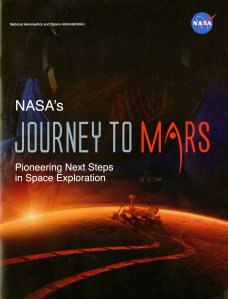
 NASA’s Journey to Mars: Pioneering Next Steps in Space Exploration

033-000-01376-1In this century, NASA may have the answer to the David Bowie song “Life on Mars?” The agency’s goal is to send humans to an asteroid by 2025 and then to Mars in the 2030s. This booklet serves as a mission framing document.

Four decades of robotic missions and spaceflight have developed and tested the technologies needed for exploration of deep space. Data gathered by surface scouts show that the Martian environment may be suitable—and sustainable—for a human presence. In response, NASA is leveraging core capabilities to “logically progress from current Earth Reliant operations…to Earth Independent pioneering.”

While much remains to be learned about extending human presence in space, “we are closer to sending humans to Mars than at any point in NASA’s history.” Just in case life is ever found on the Red Planet, or any planet for that matter, NASA has an Office of Planetary Protection. No kidding.

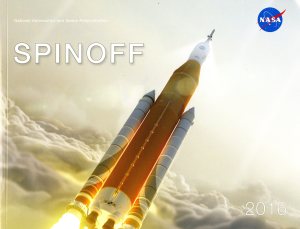
Spinoff, 2016

033-000-01375-2_spinoff-2016According to NASA’s 2016 budget, the Federal Government spends about 0.5% of its purse on the world’s biggest space agency. That means NASA receives $0.005 of every taxpayer dollar. It pours those cents into groundbreaking technologies, many of which have been successfully commercialized through the Technology Transfer Program.

Spinoff, 2016 profiles the novel inventions that have spun off into handy applications for transportation, health and medicine, information technology, and even consumer goods. Here are a few highlights:

  • An astronaut G-suit saves women from post-birth hemorrhaging.
  • A Mars methane detector can identify dangerous gas leaks.
  • A CO2 recovery system allows microbrewers to more efficiently carbonate beer.

As Administrator Charlie Bolden writes in his foreword to book, NASA’s work has resulted in “technology coming down to Earth…[these] spinoffs have made an impact on nearly every facet of American life.”

Reference Guide to the International Space Station

033-000-01373-6The International Space Station (ISS) is both the most complex scientific effort and the most expensive project ever undertaken. This reference guide details the unique research accommodations, support systems, and international partnerships that lend credibility to the ISS’ position as an extremely agile—and awe-inspiring—platform of discovery.

This orbiting laboratory of weightless, extreme conditions has a low-orbit path over 90 percent of the Earth’s population. Tricked-out features enable it to execute research that cannot be done anywhere else. Eighty-three countries that have been involved with its activities. And astronauts use it as a “proving ground” to solve difficult challenges associated with establishing viable human activity beyond Earth. The ISS is truly a symbol of the best of human knowledge and cooperation.

Fun fact: you can sign up to receive text messages from NASA whenever the International Space Station passes over your location!

HOW DO I OBTAIN THESE NASA PUBLICATIONS?

Shop Online Anytime: You can buy eBooks or print publications —with FREE Standard Shipping worldwide— from the U.S. Government Online Bookstore at http://bookstore.gpo.gov.

 Shop our Retail Store: Buy a copy of any print editions from this collection at GPO’s retail bookstore at 710 North Capitol Street NW, Washington, DC 20401, open Monday–Friday, 9 a.m. to 4 p.m., except Federal holidays, Call (202) 512-0132 for information or to arrange in-store pick-up.

Order by Phone: Call our Customer Contact Center Monday through Friday, 8 am to 5:30 pm Eastern (except US Federal holidays). From US and Canada, call toll-free 1.866.512.1800. DC or International customers call +1.202.512.1800.

Visit a Federal depository library: Search for U.S. Government publications in a nearby Federal depository library. You can find the records for most titles in GPO’s Catalog of U.S. Government Publications.

About the author: Blogger contributor Chelsea Milko is a Public Relations Specialist in GPO’s Public Relations Office.