“I hear lake water lapping with low sounds by the shore”

October 13, 2010

This past weekend, I sat on a bench at a botanic garden and contemplated a tiny wetlands lake. It was a restful interlude in an otherwise mundane, errand-filled day. Even a small lake can have that effect on us – think about Walden Pond, for instance, or Yeats’ lake isle of Innisfree. For others, lakes mean boating, fishing, and vacations. For all of us, they are, or should be, natural treasures.

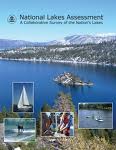
That brings me to the National Lakes Assessment: A Collaborative Survey of the Nation’s Lakes. According to the Environmental Protection Agency’s Office of Water,“This report summarizes the first-ever assessment of lakes across the continental United States using consistent protocols and a modern, scientifically-defensible statistical survey approach.” That sounds pretty significant to me. I’ve always assumed that EPA was studying various bodies of water, but to hear that this is a “first” made me want to learn more.

If you usually assume that the glass is half full, you’ll be pleased to learn that 56 percent of the nation’s lakes are in good condition. If you’re of the other persuasion, 44 percent are “fair” or “poor.” What are the problems? As a card-carrying worrier about the environment, that’s what I think of first. I would have guessed that high nitrogen and phosphorous levels are the biggest issues for our lakes – which is why I’m a blogger, not an environmental expert. The number one stressor of lakes is poor lakeshore habitat, with nitrogen and phosphorus number two. Other problems include algal toxins, and fish tissue contaminants (mainly mercury).

On the plus side, many of our lakes are healthy and holding their own. In one of a number of sidebars, the National Lakes Assessment cites Mousam Lake in Maine. In the late 1990s, soil erosion, polluted runoff from residential properties and camp roads, and sewage effluent meant that phosphorus levels were dangerously high. Happily, since 1997, state, county, and local governments have worked together in a variety of ways, and continue to do so today. The result: the lake was removed from the state’s list of “impaired waters’ in 1996.

The National Lakes Assessment doesn’t take either the full or empty glass position – it deals in the complex reality of where America’s lakes are today and how we can keep them clean for future contemplators. You can read it here or get your own copy here – and, if you’re interested, here’s a bit more about the little lake I visited last weekend.


Country Studies

October 8, 2010

I don’t know about anyone else but, for me, a new Country Studies volume is always a welcome sight. These handsome white hardbacks with the really striking black and red cover graphics are easy on the eyes and first-rate mental nourishment for fact seekers everywhere. The latest one, on Colombia, caught my eye and made me dig around a little for some background on the rest.

The Country Studies/Area Handbooks series, to give it a more official ring, has been funded over the years by the Department of the Army and, since FY 2004, the Joint Chiefs of Staff, Strategic Plans and Policy Directorate (J-5 to those in the know). Since 1988, the Federal Research Division of the Library of Congress has prepared these excellent books. I haven’t been able to run down how far back in time the series extends, but it’s been around for more than 30 years – first as Area Handbooks (when the volumes had green covers) and then Country Studies.

Country Studies present “a description and analysis of the historical setting and the social, economic, political, and national security systems and institutions of countries throughout the world.” They originally were intended to focus primarily on lesser-known areas of the world or regions in which U.S. forces might be deployed, so not every nation is included. For more about the series, go here.

Like all of these books, the Colombia volume presents a concise history of the country, followed by sections on geography, population, religions, education, and social movements. Economic structure, transportation and communications, financial regulations and markets, government and politics, the military and national security – you name it, and the subject is covered, and covered well. Of particular interest are a brief section on Illegal Drugs and a historical and political overview of social violence and the development of insurgencies in modern Colombia. I can’t think of a better serious introduction to the problems and prospects of this key Latin American country than this book.

Although most of the Country Studies series done in the past 25 years or so are available online only, printed copies of Colombia, North Korea, Iran, and Cuba are still available. You also can find these and other Country Studies in libraries (WorldCat is a good search tool) and via various bricks and mortar and online used book outlets.


Don’t Let Lead Take Over Your Home

October 6, 2010

Today’s guest post is by Ingrid Reyes-Arias of GPO’s Library Services and Content Management area.

Time and time again, public health educators have stressed the serious implications of lead- contaminated homes.  To educate the public about this problem, the U.S. Environmental Protection Agency has developed a publication to inform and educate you about the detrimental health risks due to the environmental threat of lead. 

Protect Your Family from Lead in Your Home provides important information on different forms of home protection to protect your family from lead.  For example, EPA suggests testing children for lead levels even though they may seem healthy, performing repeated and ongoing lead checks, and more.  In addition, the publication highlights many important facts.  Did you know that lead can go into your body just through breathing or swallowing lead dust? 

Not only does this publication provide facts, it also explains the effects of lead and its implications on your health, such as damage to kidneys and the nervous system, learning disabilities in children, and speech and language impediments.  After detailing the health implications and history of lead, EPA lists the steps to protect your home.  First, how do you check for lead?  There are many ways.  You can do a paint inspection, followed by a risk assessment, or hire a trained and certified testing professional.  All of these approaches will aid in protecting your family from lead. 

Lead inspection in your home is very important. Don’t let a seemingly small detail affect your home and family. These simple steps can change your life, so take a look at the important facts. Read Protect Your Family from Lead in Your Home here or get copies at the GPO online bookstore.


Balloon Bomb Attacks

October 4, 2010

A couple of weeks ago, I was reading a book about various attempts by Japan to attack the U.S. and Australia between 1942 and 1945. Among these ventures was the attack on Sydney Harbor by midget submarines, a submarine-based seaplane incendiary bombing of Mount Emily, near Brookings, Oregon, and the 1944-45 launching of 9,000 balloons that dropped explosive and incendiary bombs across the U.S. and Canada as far east as Michigan.

I don’t know about other readers of that book, but when I got to the bomb-bearing balloons, I thought, “Smithsonian Annals of Flight!” This publication series, which ran from 1964 to 1974, produced 10 booklets on various aspects of the history of aviation, all of which are worth reading. The one I remembered was Japan’s World War II Balloon Bomb Attacks on North America, an exhaustive study of the strategic concept (a Japanese desire for retaliation after the 1942 Doolittle raid on Tokyo and subsequent American bombing), the years of research and development of various prototypes, and  how the approximately 9,000 paper (!) balloons were constructed and launched.

The author makes the interesting point that the main reason these attacks failed to achieve the psychological victory anticipated by Japan was the total secrecy with which the American government and media greeted the aerial invaders. Since the Japanese military failed to learn anything about the fate of this extraordinary weapon and faced a growing shortage of resources by early 1945, it simply gave up. By then, though, the remnants of many balloons had been recovered on U.S. and Canadian soil, several had been shot down by fighter planes,  and, tragically, a woman and five children were killed when they triggered a balloon bomb they found in the Oregon woods during a church picnic.

Although the balloon bomb campaign failed, it did have the potential to cause extensive damage to the war effort by starting forest fires, as well as damaging civilian morale. Scary note: one bomb landed near the Hanford nuclear facility involved in the Manhattan Project but resulted only in an electrical outage – whew!

Japan’s World War II Balloon Bomb Attacks on North America tells a fascinating and little-known story of World War II that also describes the first intercontinental weapon of war – and unfortunately, not the last. You can read this publication here or drift over to a library to read it. It was later reprinted by Smithsonian Institution Press using a more colorful cover than the original, and either edition can be found via various used book Web sites.


Six Months of Government Book Talk

September 30, 2010

When I started writing for Government Book Talk six months ago today, I had no idea where it was going, or whether anyone would be interested in what I was interested in. With some relief, I can now say that quite a few people are. As of this morning, this blog has had 72,941 page views. Our guest bloggers and I have put up 53 posts and received 330 comments (truth in advertising: this total includes my replies to questions and comments, so subtract 10 or so), and 850 of you have subscribed.  Thanks for your interest in Federal Government publications – and I hope you’ve been enjoying this blog as much as we have!

What I appreciate most are the interesting and insightful comments we receive. As a result of those comments, we’ve instituted some improvements (RSS feeds, references to WorldCat so you can find a book in a local library), made a couple of corrections (Dr. Seuss was not a private, the Bismarck was not a pocket battleship), and generally enjoyed your feedback. A favorite: “Thank you so much for making this available online! It is so interesting and I want to add it to my collection. Without this blog, who knows what treasure I would miss?” We hope to keep on unearthing more of those treasures as we move forward.

In the coming months, we hope to continue talking about Government publications new and old, print and online, free and paid, popular and offbeat. As always, we welcome your suggestions and comments. Thanks for reading!


Terrorism as Organized Crime

September 28, 2010

“Terrorist Networks Are Organized + Terrorism Is a Crime = Terrorism Is Organized Crime”

That’s the formula that Blue Planet: Informal International Police Networks and National Intelligence presents to the reader, and author Michael D. Bayer makes a good case for it. Bayer, a former chief of the Department of State’s transnational criminal investigative office, takes the view that police around the world are better positioned to know what’s going on in their local areas, no matter how remote they seem from the wider world. Through informal contacts with colleagues in their own countries and abroad, they can gather and disseminate vital intelligence to detect and suppress “worldwide manifestations of destabilizing violence, often indiscriminately labeled ‘terrorism.’”

I found Blue Planet to be an intriguing read for a number of reasons. It presents a reasonable and clearly written case for greater involvement of the police in fighting terrorism, argues forcefully against the post-9/11 militarization of U.S. anti-terrorism effort, and cites a number of fascinating case studies of how informal international police networks, even including such relatively closed societies as Cuba and China, have worked effectively to apprehend criminals. (Some of these stories could be the basis for your next suspense novel!)

Blue Planet also makes the interesting point that both international criminal operations and terrorist networks often use the same illegal methods (smuggling, money laundering, drug trafficking), and who better to learn about those links than those already tracking organized crime?  According to a recent RAND report cited in the book, “For terrorist groups that cannot or will not abandon terrorism, policing is likely to be the most effective strategy to destroy terrorist groups. The logic is straightforward: Police generally have better training and intelligence to penetrate and disrupt terrorist organizations. They are the primary arm of the government focused on internal security matters.”

Blue Planet is not just another policy report. It’s an insightful and intellectually stimulating book that also includes some terrific true crime stories. You can read it here on the National Defense Intelligence College Web site or track down your own copy here.


What to Do Before the Pipeline Arrives

September 22, 2010

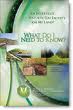
Not all Government publications are for everyone. For instance, if you haven’t been notified that someone is going to run a natural gas pipeline through your property, you probably don’t need An Interstate Natural Gas Facility on My Land? What Do I Need to Know? Ah, but if you do get a call from a private company contemplating an interstate project of that sort, your interest might be…intense.

The Federal Energy Regulatory Commission (FERC) created this little 24-page booklet so that property owners could learn about their rights, how FERC’s procedures work, what safety and environmental issues might be involved, and lots more. For example, it addresses such issues as the legal rights and responsibilities of all parties, archaeological sites, environmental and safety issues, pipeline installation procedures, how long a pipeline might stay in place and many other questions. Even from the viewpoint of someone like me, who likely never will be affected by such a circumstance, it seems to provide a lot of concrete information clearly and concisely – which many of the best Government publications do. I also learned quite a bit about the natural gas transmission business and terms of art – did you know that in the pipeline world, a pig is “any independent, self-contained device, tool, or vehicle that is inserted into and moves through the interior of a pipeline for inspecting, dimensioning, or cleaning,” or that it gets its name “because of the occasional squealing noises that can be heard as they travel through the pipe”? Now that’s worth knowing!

Okay, as I said at the beginning, Government publications like this one are pretty specialized, but very useful if you need them. You can read An Interstate Natural Gas Facility on My Land? What Do I Need to Know? here, buy a package of them here, or take a peek at it in a library. That’s it – direct from the Government Book Talk pipeline!


Ball’s Bluff: A Little Battle with Lasting Consequences

September 20, 2010

A few Veterans Days ago, my wife and I made a day trip to Ball’s Bluff Battlefield Regional Park  in Loudon County, Virginia. You’d never know it was there, tucked away as it is behind a suburban housing development. Once you step out of your car and into the park, you’re in another place altogether. For one thing, Ball’s Bluff is really two sites in one.  Just inside the park is a small National Cemetery, containing the remains of 54 soldiers in 25 graves, all killed during the Battle of Ball’s Bluff. We were there on a cold, cloudy day, the kind of day that really made us think somberly about that long-ago battle near the beginning of the Civil War. Given that it was a small engagement, we were able to walk most of the battlefield, up to the edge of the high bluff where the inexperienced Union soldiers made their last stand. 

This battle was relatively inconsequential militarily, but it had a larger impact politically. An overly ambitious reconnaissance in force that resulted in the death of Abraham Lincoln’s friend Colonel and Senator Edward D. Baker, it cost Union General Charles Stone his career and was the impetus for the establishment of the Congressional Joint Committee on the Conduct of the War, which became long-term Radical Republican thorn in the side of Lincoln’s Administration.

The U.S. Army’s Center of Military History has a neat little booklet on the battle that I wish we’d had that day. Battle of Ball’s Bluff was developed as a staff ride guide for Army personnel so they can “learn from the past by analyzing the battle through the eyes of the men who were there.” The best part of the booklet is the blow-by-blow account of the battle, accompanied by a number of detailed maps. As I said, the battlefield is relatively small, so you can really get a sense of what happened in just an hour or two.

What sticks in my mind is the fearful predicament of the Union troops, unfamiliar with the area and forced back to that steep bluff above the Potomac.  Many of them jumped to their deaths or died on the narrow little strip of land beneath under a rain of Confederate musket fire (left). I’m not that crazy about heights, so looking down from the top of that cliff really brought at least a bit of the grim reality of that day home to me.

You can read about this little battle with lasting consequences here, get your own copy here, or find a library that has a copy here.


A Comic Book History of Printing

September 13, 2010

 When I started doing this blog, I assumed that I’d be talking about the work of other people – that legion of writers and artists who have been cranking out Government publications since the dawn of the Republic. Now here I am, almost six months later, getting ready to write about a publication that I scripted myself – a comic book, no less!

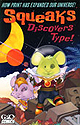
Squeaks Discovers Type: How Print Has Expanded Our Universe is the first comic book that GPO has ever created in toto, from the initial concept and design through its publication a couple of weeks ago. Why a comic book? Because we think that the story of printing, which is really the story of the profound impact of printing on the dissemination of information worldwide, needs to be better understood, especially in the context of a digital age. Although our comic book is aimed at kids, its message is for everybody.

When I was asked to develop a script for a comic book, my first thought was “Okay, I’ve never done this before – how do I come up with a concept?” Fortunately, I have two sons who always preferred playing video games to doing their homework – what an inspiration! An unwanted homework assignment, a new video game, a dream, and a journey through space and time – I had nailed down a concept, which for me was the toughest part of my job.

Once I sketched out the plot and wrote some initial dialogue, I turned the project over to my colleague Nick Crawford, GPO Creative Services Visual Information Specialist and amazingly talented artist. I explained the concept to Nick and suggested some kind of cute animal video game hero. He came up with Squeaks the Space Pirate and – let’s face it –  Squeaks is one cute mouse!

After lots of hard work on Nick’s part, I went through his layout and crafted additional dialogue around the gorgeous images he’d drawn, then conferred with him to iron out the glitches. For my part, it was an unprecedented collaboration with an artist, and one that went amazingly well – who said writers and artists can’t get along?! For more about how we developed the comic book, check out this video.

The result, Squeaks Discovers Type, is, I hope, a fun read that conveys some good information and sets printing in its proper place in history for kids of all ages. You can see more of the artwork here.


On the Greenland Patrol

September 10, 2010

A few posts back I blogged about a booklet that told the story of the U.S. Coast Guard beach patrol and corsair fleet during World War II. The Coast Guard and the Greenland Patrol, another booklet in the same series, recounts another forgotten episode that pitted the Coast Guard against the perils of the Arctic and marked the only U.S. capture of a German surface vessel during the war.

When the German Army occupied Denmark in 1940, the fate of Greenland, a Danish possession, loomed large in American strategy. Greenland was a major source of cryolite, a mineral used in the extraction of aluminum, its largely frozen land mass lay athwart a major air route used to ferry Lend-Lease aircraft to Great Britain, and was of great value in establishing weather stations. Two Coast Guard cutters equipped as icebreakers, the Northland and the Modoc, conducted a lengthy survey of Greenland’s coastal waters in early 1941, in the course of which the Modoc stumbled into a British air attack on the German battleship Bismarck!

Although the U.S. and Germany were not yet at war, tensions were high as America moved aggressively to defend the hemisphere. During June and July 1941, the Northland and the Modoc, joined by other Coast Guard and Navy vessels, were organized into the Greenland Patrol with the missions of supporting the Army in establishing bases in Greenland, defending Greenland from Germany, and preventing German operations in northeast Greenland.

The first mission involved escorting troop and supply ships, breaking the ice to get them to port, and, especially after the declaration of war against Germany, defending them against attacks by U-boats. The duty included “cold weather, ice, fog, snowstorms, and plenty of hard work…cooped up in that little tub month after month, in bad weather, wet to their skins…” It was tough and unglamorous, but vital in keeping the northern sea and air lanes open.

On several occasions, Coast Guard cutters captured German ground personnel and vessels intent on establishing clandestine radio stations in northeast Greenland. One German trawler scuttled itself after a lengthy pursuit, while another, the Externsteine (left), surrendered after the new Coast Guard icebreaker Eastwind fired three salvoes alongside its icebound hull – the only American capture of a German surface ship in the course of the war.

As you can tell, I’m totally taken with this fascinating story – Arctic gales, secret enemy weather stations, and “snow ice cream” (“Take two bowlfuls of snow, add sugar to taste, then throw in a dash of fruit juice or extract for flavor. The result isn’t bad.”). You can read all about it here or find it in a library here.


A Classic Updated: Glenn Brown’s History of the United States Capitol

September 7, 2010

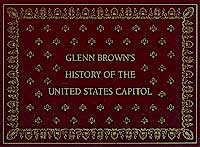
From 1900 to 1902, the Government Printing Office produced a two-volume architectural history of the U.S. Capitol by the architect and author Glenn Brown. As a condition of its authorization by the Senate Committee on the District of Columbia, Brown personally selected the type and paper and designed the cover, which was based on a Capitol fireplace frieze destroyed in a basement gas explosion in 1898.  Only 200 hardbound copies were produced, making it a much-sought publication for architectural historians, collectors of Washingtoniana, and anyone interested in the art and architecture of the Capitol.

Fast forward to the bicentennial of the Capitol, which stretched from 1993, the year in which the cornerstone was laid by President George Washington, to 2000, 200 years after Congress moved to Washington, DC. Thanks to the U.S. Capitol Preservation Commission, a new one-volume edition of Glenn Brown’s monumental work was designed and printed by GPO. It’s a really splendid achievement for a number of reasons.

First, it brings back into circulation a classic historical work. Second, under the meticulous editorship of William B. Bushong, it’s more than just a reprint. In addition to annotating Brown’s text “to correct errors, identify sources, describe controversial issues, or point readers to further modern published versions of cited documents on selected topics,” this new edition adds many black and white and color photographs of drawings, prints, and paintings while retaining the historically important original photos (reproduced in full when cropped for the original). He also provides an excellent profile of Glenn Brown, highlighting both his career achievements and disappointments.

For me, the enhanced illustrations are a highlight of this book, showing how the Capitol came to be, how it was in Brown’s day, and the changes that have occurred since then. Also, Brown is a lucid guide to the sometimes bewildering steps involved in first building and then remodeling the Capitol and provides little-known sidelights even on  its most well-known features. It certainly gave me pause to learn that when Thomas Crawford  forwarded photos of the model of Freedom, which surmounts the Capitol Dome, to Secretary of War Jefferson Davis, the latter objected to Freedom’s liberty cap, a contemporary emblem of liberty, on the grounds that it was “an emblem of emancipated slaves, while Americans were freeborn.” As a result, Freedom sports a helmet crested with feathers. Even the byways of history can reveal surprises.

This really remarkable book can be found here, you can add it to your personal libraryby buying it  here, or browse through it at a library near you.


The Key to a Healthy Life

September 3, 2010

This week’s guest blogger is Ingrid Reyes-Arias, a former GPO intern and new staffer with GPO’s Library Services and Content Management area.

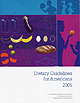
How often do we make plans to be “healthier”? Easier said than done, right? Luckily for us, there are plenty of Government publications that provide us with nutritional information.  A good example is Dietary Guidelines for Americans 2005

The goal is to live a long healthy life and minimize the risk of chronic diseases, and we can achieve this by undertaking the recommendations that this publication provides.  This is a user-friendly book that has information about adequate nutrients, weight management, physical activity, food groups, and food safety. The most difficult component of health is applying it to daily life.  Dietary Guidelines for Americans 2005 has been able to take highly important information and make it available and easy to understand for those learning to be healthy.  The first portion of the book provides information on adequate nutrients, plus a sample of the USDA Food Guide and estimated Calorie Requirements for each gender and age group, ranked by the levels of physical activity.  This leads to another important aspect of weight and health management, which is regular physical activity that makes a contribution to minimizing the risk of chronic diseases.  Not only is it an easy read, but the information is provided and endorsed by the U.S. Department of Health and Human Services, so why not take this useful advice?

This publication can serve as reference for future endeavors in becoming healthy and maintaining weight.  It is tailored for the average person with a desire to change his or her health habits. It also includes tables with the food sources for different vitamins and minerals.  The key recommendation tables allow you to focus on the importance of each section, which can lead to successful comprehension of the specific recommendations. 

Take the time to read and embrace the importance of leading a healthy life. Don’t hesitate to take a look on the US Government Bookstore for a copy! You can also find it in a library or read it here.