Get Outdoors this Summer with Help From GPO

July 19, 2017

July is National Parks & Recreation Month in the U.S., which delivers a reminder of the staggeringly beautiful images from the thousands of national parks around our great Nation. Perhaps this is the year that you finally pack up the family in the car or RV and spend a long weekend camping in the hills and enjoying the incredible wonder that is our naturally beautiful landscape.

The U.S. Government Publishing Office (GPO) is here to help you with the research and planning that can make any summer vacation into the one you tell stories about for years to come. The most important step of that epic road trip is first and foremost choosing where to go and where to stay. The U.S. Government Bookstore offers more than a few options on how to figure that out.

The National Parks Index offers a complete administrative listing of the National Park System and can help you figure out which parks are in your area and what they have to offer. Also, if you’re a more visual person, there is the National Park System Wall Map Poster which would allow you map out your trip visually, and you could even hang it on the wall in your house and use pushpins to track your progress in visiting all the parks our country has to offer.

While you’re on your trip, you may want to bring along a camera to capture some of the breath taking scenes you’re sure to see. The best photographers know that the key to beautiful pictures is the inspiration, and the book A Photographer’s Path: Images of National Parks Near the Nation’s Capital is full of incredible photos that are sure to light your creative fires and inspire you to take a couple of photos worthy of printing and hanging on your wall.

Another great thing our national parks offer is free or discounted fees to visit for active duty and retired military members due to the National Parks Freedom Pass Act which was passed by the House of Representatives in 2011.

To find other bills and laws that Congress has passed to protect and preserve our park system, visit govinfo.gov and search “national parks.”

You can also search the Catalog of U.S. Government Publications to find a list of titles that will allow you to learn more about the parks and monuments available near you, like:

Make GPO your first stop when planning your next national park trip, and visit our sites to learn more about the great history of our Government preserving the parks for our future generations. Happy camping!

HOW DO I OBTAIN THESE RESOURCES?

Click on the Links: For the free resources, click on the links above in the blog post.

Shop Online Anytime: You can buy eBooks or print publications —with FREE Standard Shipping worldwide— from the U.S. Government Online Bookstore at http://bookstore.gpo.gov.

Shop our Retail Store: Buy a copy of any print editions from this collection at GPO’s retail bookstore at 710 North Capitol Street NW, Washington, DC 20401, open Monday–Friday, 9 a.m. to 4 p.m., except Federal holidays, Call (202) 512-0132 for information or to arrange in-store pick-up.

Order by Phone: Call our Customer Contact Center Monday through Friday, 8 am to 5:30 pm Eastern (except US Federal holidays). From US and Canada, call toll-free 1.866.512.1800. DC or International customers call +1.202.512.1800.

Visit a Federal depository library: Search for U.S. Government publications in a nearby Federal depository library. You can find the records for most titles in GPO’s Catalog of U.S. Government Publications.

About the author: Blogger contributor Scott Pauley is a Writer and Editor in GPO’s Library Services and Content Management office.


New Grand Canyon Trip Planner from the National Park Service

April 17, 2017

Just in time for National Park Week, the National Park Service offers you and your family a hardy, “Grand Canyon” experience.

To take the first step to a grand family travel time, the Park Service has developed a helpful guide filled with general information starting with “Getting to the Grand Canyon”, what weather to expect when there, plus lots of details and photos about the South and North Rim services and facilities.

Want to know more about tours and trips? It’s there.

Hiking map? Just be sure you come in shape since some paths are far from a “walk in the proverbial park”! Take a good listen to their tips on hiking, full day hiking journeys, and more for those up to the rigors, sharing life memories and experiences that come when backpacking.

Tourists gather at the South Rim’s Mather Point for sunset.

Park Rangers know just about everything and anything to make your Grand Canyon visit all you could expect it to be. So they urge you to “get involved.”

Start now by obtaining the Grand Canyon “Trip Planner” at the bookstore.gpo.gov. “Awesome” is an understatement!

HOW DO I OBTAIN THIS RESOURCE?

Shop Online Anytime: You can buy eBooks or print publications —with FREE Standard Shipping worldwide— from the U.S. Government Online Bookstore at http://bookstore.gpo.gov.

Shop our Retail Store: Buy a copy of any print editions from this collection at GPO’s retail bookstore at 710 North Capitol Street NW, Washington, DC 20401, open Monday–Friday, 9 a.m. to 4 p.m., except Federal holidays, Call (202) 512-0132 for information or to arrange in-store pick-up.

Order by Phone: Call our Customer Contact Center Monday through Friday, 8 am to 5:30 pm Eastern (except US Federal holidays). From US and Canada, call toll-free 1.866.512.1800. DC or International customers call +1.202.512.1800.

Visit a Federal depository library: Search for U.S. Government publications in a nearby Federal depository library. You can find the records for most titles in GPO’s Catalog of U.S. Government Publications.

About the author: Blogger contributor Ed Kessler is a Promotions Specialist in GPO’s Publication and Information Sales program office.


Smartphones Make Traveling Easy and Fun!

March 15, 2017

Smartphones are becoming essential for people who travel. But how do you find the best travel app for you?

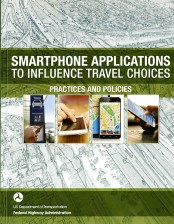
Whether you are a sophisticated or a new adapter of smartphones, the recently released publication Smartphone Applications to Influence Travel Choices published by the U.S. Department of Transportation’s Federal Highway Administration offers up the information foundation to let you maximize the value of this new technology.

Are you a user of business-to-consumer apps, a mobility tracker, bike sharing believer, or are you interested in public transit apps or real time apps? Who can’t use a ridesharing or taxi-hail app, a smart park or courier network service?

Get the picture? If you are a “mover or shaker” then smartphone applications are a must, and keeping apprised of the latest and greatest new technological features and applications is key to your daily survival.

And for the newly initiated as well, the booklet, Smartphone Applications to Influence Travel Choices is the easiest way to take an information leap forward.

HOW DO I OBTAIN THIS RESOURCE?

Shop Online Anytime: You can buy eBooks or print publications —with FREE Standard Shipping worldwide— from the U.S. Government Online Bookstore at http://bookstore.gpo.gov.

Shop our Retail Store: Buy a copy of any print editions from this collection at GPO’s retail bookstore at 710 North Capitol Street NW, Washington, DC 20401, open Monday–Friday, 9 a.m. to 4 p.m., except Federal holidays, Call (202) 512-0132 for information or to arrange in-store pick-up.

Order by Phone: Call our Customer Contact Center Monday through Friday, 8 am to 5:30 pm Eastern (except US Federal holidays). From US and Canada, call toll-free 1.866.512.1800. DC or International customers call +1.202.512.1800.

Visit a Federal depository library: Search for U.S. Government publications in a nearby Federal depository library. You can find the records for most titles in GPO’s Catalog of U.S. Government Publications.

About the author: Blogger contributor Ed Kessler is a Promotions Specialist in GPO’s Publication and Information Sales program office.


Stunning Images of National Parks Around DC

November 16, 2016

Washington, DC is populated with renowned stone edifices and towering monuments. Some even call our nation’s capital “American Rome.” Of course, national treasures are not limited to the metropolitan and man-made. Sublime natural beauty abounds in the parks of the Potomac River watershed.

Battlefields, wildlife preserves, canals, aquatic gardens, forests. The National Capitol Region has them all. And the National Park Service celebrates them in “A Photographer’s Path: Images of National Parks Near the Nation’s Capital,” available through GPO.

024-005-01275-3_a-photographers-path-images-of-national-parks-near-the-nations-capitalA Photographer’s Path: Images of National Parks Near the Nation’s Capital

National Park Service photographer Thomas Paradis spotlights the idyllic, artful, and even curious scenes within the region. It’s a “pictorial journey” that “reveals the subtlety and nuance of our natural landscapes.”

Now, I’ll let the images speak for themselves:

Swallowtail perched on branch. Manassas National Park

Swallowtail perched on branch. Manassas National Park


Looking toward Chimney Rock. Catoctin Mountain Park

Looking toward Chimney Rock. Catoctin Mountain Park


Heron over Great Falls. Great Falls Park, George Washington Memorial Parkway and Chesapeake & Ohio Canal National Park

Heron over Great Falls. Great Falls Park, George Washington Memorial Parkway and Chesapeake & Ohio Canal National Park


HOW DO I OBTAIN THIS PUBLICATION?

Shop Online Anytime: You can buy eBooks or print publications —with FREE Standard Shipping worldwide— from the U.S. Government Online Bookstore at http://bookstore.gpo.gov.

Shop our Retail Store: Buy a copy of any print editions from this collection at GPO’s retail bookstore at 710 North Capitol Street NW, Washington, DC 20401, open Monday–Friday, 9 a.m. to 4 p.m., except Federal holidays, Call (202) 512-0132 for information or to arrange in-store pick-up.

Order by Phone: Call our Customer Contact Center Monday through Friday, 8 am to 5:30 pm Eastern (except US Federal holidays). From US and Canada, call toll-free 1.866.512.1800. DC or International customers call +1.202.512.1800.

Visit a Federal depository library: Search for U.S. Government publications in a nearby Federal depository library. You can find the records for most titles in GPO’s Catalog of U.S. Government Publications.

About the author: Blogger contributor Chelsea Milko is a Public Relations Specialist in GPO’s Public Relations Office.


On America’s Trails

September 30, 2016

stelprdbLet’s talk briefly about two American legends celebrated on screen and page. One stretches 2,160 miles from Mount Katahdin, Maine to Springer Mountain, Georgia. The second covers 2,665 miles from America’s southern and northernmost borders along the mountain ranges of Washington, Oregon, and California.

They’re the Appalachian and Pacific Crest Trails, respectively—the first scenic trails designated by the Federal government nearly a half-century ago. On October 2, 1968, President Lyndon B. Johnson signed the National Trails System Act into law. It established a network of scenic, historic, and recreation trails. You can read the original act on GPO’s govinfo.

Until 1968, the Federal government simply built and maintained trails on Federal lands. The National Trails System Act expanded that role by providing funding and support for interstate coordination and volunteer partnerships. Today, the National Trails System includes 20 national scenic and historic trails traversing nearly 40,000 miles.

In addition to making the National Trails System Act available on govinfo, GPO makes available these trail-related resources:

024-005-01277-0National Trails System: Map and Guide

This National Park Service full-color map depicts eight national scenic trails and nine national historic trails. The National Park Service, U.S. Forest Service, and Bureau of Land Management work in concert to keep trails well-marked and well-monitored. Check out the NPS website for the complete list of scenic and historic trails.

The Iditarod National Historic Trail (Poster)

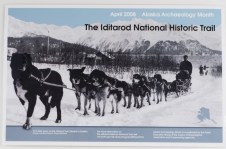
024-011-00198-1_01On one side of this U.S. Forest Service poster is a timeline and map.  On the other side is a photo of a 1913 dog sled mail team. Together, they commemorate a historic 1,500 miles stretch of winter travel tracks connected to form America’s last gold rush trail.

Upon throwing his support behind a national system of trails, President Johnson said, “The forgotten outdoorsmen of today are those who like to walk, hike, ride horseback, or bicycle. For them we must have trails as well as highways…In the back country we need to copy the great Appalachian Trail in all parts of our country…”

HOW DO I OBTAIN THESE RESOURCES?

Shop Online Anytime: You can buy eBooks or print publications —with FREE Standard Shipping worldwide— from the U.S. Government Online Bookstore at http://bookstore.gpo.gov.

Shop our Retail Store: Buy a copy of any print editions from this collection at GPO’s retail bookstore at 710 North Capitol Street NW, Washington, DC 20401, open Monday–Friday, 9 a.m. to 4 p.m., except Federal holidays, Call (202) 512-0132 for information or to arrange in-store pick-up.

Order by Phone: Call our Customer Contact Center Monday through Friday, 8 am to 5:30 pm Eastern (except US Federal holidays). From US and Canada, call toll-free 1.866.512.1800. DC or International customers call +1.202.512.1800.

Visit a Federal depository library: Search for U.S. Government publications in a nearby Federal depository library. You can find the records for most titles in GPO’s Catalog of U.S. Government Publications.

About the author: Blogger contributor Chelsea Milko is a Public Relations Specialist in GPO’s Public Relations Office.


Celebrating the National Park Service’s Centennial

August 24, 2016

grand-1434695_1280Since the creation of the National Park Service (NPS) on August 25, 1916, more than 275 million people visit the natural and cultural resources every year!

The seed for the national park idea was planted in 1864 with the passage of the Yosemite Grant. In 1872, President Ulysses S. Grant signed the bill creating Yellowstone National Park, the first national park in the history of the world. This trend continued with the signing of the Antiquities Act of 1906, by the great lover of nature, President Theodore Roosevelt, who sought to protect scientific items of cultural heritage. The Act further prohibited the removal of cultural items from Federal lands without a permit. At that time, permits were granted by the agency managing that particular monument, especially the Departments of the Interior and Agriculture. Hence, monuments were managed by various agencies.

In 1916, President Woodrow Wilson created the National Park Service, but it was President Franklin Delano Roosevelt, who in 1933 consolidated the stewardship of all national monuments and parks under the NPS. In 1935, through the Historic Sites Act, the US publically declared its goal to protect and preserve cultural heritage sites. Since then, Presidential administrations have classified more and more sites as cultural heritage. Thus far, we have close to 400 cultural heritage sites. The Obama administration alone is responsible for adding 18 of them.

9780160932090We invite you to browse the U.S. Government Bookstore’s National Parks collection. It includes everything from posters, maps, and park guides to coloring books for children. Of particular interest is the National Parks Index 2012 – 2016: 2016 National Park Service Centennial: Official Index of the National Park Service. This index is a complete administrative listing of the National Park System’s areas and related areas, including historical documentation to distinguish between the types of National Park Service sites. It has been revised to reflect congressional actions. The entries, grouped by state, include administrative addresses and phone numbers, dates of authorization and establishment, boundary change dates, acreages, website addresses, and brief statements explaining the areas’ national significance.

024-005-01271-1You can also experience a little of what the NPS has to offer in the Washington, D.C. area through the pamphlet, “National Park Service: Where History Happens,” on sale via the U.S. Government Bookstore. Learn more about the D.C. area’s most historic attractions: where Abraham Lincoln died or where Martin Luther King, Jr. made his famous “I Have a Dream…” speech. Visit Mount Vernon, the home of George Washington, seemingly completely frozen in time, as workers cultivate the farm using the same techniques and tools as in Washington’s  era.

America’s heritage includes monuments, parks, recreational sites, parkways, and many other things. Layer upon layer, time upon time, when we look at these structures we are not just looking at our past, we are learning from it so we can build a better tomorrow. History is always being made; the unheard of yesterday is being made possible today.

Below is a list of handpicked resources for those interested in learning more. Find these resources via govinfo, the Catalog of U.S. Government Publications, and the U.S. Government Online Bookstore.

govinfo – https://www.govinfo.gov/features/national-park-service-centennial

  1. History of H.R. 3556 – A bill to prepare the National Park Service for its Centennial in 2016 and for a second century of protecting our national parks’ natural, historic, and cultural resources for present and future generations, and for other purposes
  1. 160 Cong. Rec. H3254 – NATIONAL PARK SERVICE 100TH ANNIVERSARY COMMEMORATIVE COIN ACT
  1. REPT. 106-250 – ANTIQUITIES ACT OF 1906

Catalog of U.S. Government Publications – http://catalog.gpo.gov/

  1. National Park Service: Where History Happens
  1. National Registry of Natural Landmarks
  1. The Secretary of the Interior’s standards for the treatment of historic properties : with guidelines for preserving, rehabilitating, restoring & reconstructing historic buildings
  1. National historic landmarks listed by state or territory
  1. Presenting nature : the historic landscape design of the National Park Service, 1916 to 1942
  1. National Park Service administrative history : a guide

U.S. Government Online Bookstore – http://bookstore.gpo.gov

  1. National Park Service: Where History Happens
  1. Washington: The Nation’s Capital (2013 Map)
  1. Secretary of the Interior’s Standards for Rehabilitation and Illustrated Guidelines for Rehabilitating Historic Buildings (ePub eBook)
  1. National Trails System: Map and Guide, 2010 Edition
  1. National Park System (Wall Map Poster)
  1. Great American Landmarks Adventure
  1. The National Parks: Shaping the System
  1. Yellowstone: A Natural and Human History, Yellowstone National Park, Idaho, Montana, and Wyoming
  2. Underground Railroad: Official Map and Guide (Folder)

HOW DO I OBTAIN THESE RESOURCES?

You can click on the links above in the blog or through any of these methods:

 Shop Online Anytime: You can buy eBooks or print publications —with FREE Standard Shipping worldwide— from the U.S. Government Online Bookstore at http://bookstore.gpo.gov.

Shop our Retail Store: Buy a copy of any print editions from this collection at GPO’s retail bookstore at 710 North Capitol Street NW, Washington, DC 20401, open Monday–Friday, 9 a.m. to 4 p.m., except Federal holidays, Call (202) 512-0132 for information or to arrange in-store pick-up.

Order by Phone: Call our Customer Contact Center Monday through Friday, 8 am to 4:30 pm Eastern (except US Federal holidays). From US and Canada, call toll-free 1.866.512.1800. DC or International customers call +1.202.512.1800.

Visit a Federal depository library: Search for U.S. Government publications in a nearby Federal depository library. You can find the records for most titles in GPO’s Catalog of U.S. Government Publications.

About the author: Blogger contributor Mohammed Butt is a Technical Services Librarian in GPO’s Library Services & Content Management unit.


Travel to National Parks with These Charley Harper Posters

August 4, 2016

Thinking of traveling to a national park this summer? In addition to being prime time for outdoor exploration, August is American Artists Appreciation Month and the National Park Service’s (NPS) centennial month. Even if you can’t swing a national park trip, Charley Harper’s nature-oriented prints can take you there.

West Virginia-born, Cincinnati-based artist Charley Harper (1922-2007) is beloved for his highly stylized interpretive artwork. In the 1980s and early 1990s, NPS commissioned him to illustrate the wildlife of our parks. Based upon his cross-country travels and the stimuli of nature, Harper produced a 10-poster series in his trademark minimalist, geometric style. Four of those eye-catching renderings—Alpine Northwest, Atlantic Barrier Islands, Canyon Country, and The Rocky Mountains—are available through GPO.

024-005-01047-5Alpine Northwest—a bald eagle lords over his dominion, representing Olympic, Mount Rainier, and North Cascades National Parks.

Atlantic Barrier Islands024-005-00982-5—marine birds skirt along shifting bodies of sand and white-tipped tides that one could find on Fire Island, Assateague, Cape Hatteras, Cape Lookout, Cumberland Island, and Biscayne National Park.

024-005-01064-5Canyon Country (Large Version)—the American Southwest’s dizzyingly high pinnacles, buttes, and mesas are a signature of the Grand Canyon, Zion, Bryce Canyon, Arches, Canyonlands, and the like.

The Rocky Mountains (Large Version)—a beaver drinks at a pond that reflects the landscape of the great Continental Divide. 024-005-00967-1

It’s quite remarkable how Harper’s compositions use shapes to imaginatively depict an entire ecosystem. Bold colors and whimsical lines will brighten a schoolroom, playroom, breakroom, workroom, any room. Each one takes you to a corner of our country’s public lands. Celebrate American artistry and the past 100 years of national parks with Charley Harper’s tribute to wild, enchanted America.

HOW DO I OBTAIN THESE CHARLEY HARPER POSTERS?

Shop Online Anytime: You can buy eBooks or print publications —with FREE Standard Shipping worldwide— from the U.S. Government Online Bookstore at http://bookstore.gpo.gov.

 Shop our Retail Store: Buy a copy of any print editions from this collection at GPO’s retail bookstore at 710 North Capitol Street NW, Washington, DC 20401, open Monday–Friday, 9 a.m. to 4 p.m., except Federal holidays, Call (202) 512-0132 for information or to arrange in-store pick-up.

Order by Phone: Call our Customer Contact Center Monday through Friday, 8 am to 5:30 pm Eastern (except US Federal holidays). From US and Canada, call toll-free 1.866.512.1800. DC or International customers call +1.202.512.1800.

Visit a Federal depository library: Search for U.S. Government publications in a nearby Federal depository library. You can find the records for most titles in GPO’s Catalog of U.S. Government Publications.

About the author: Blogger contributor Chelsea Milko is a Public Relations Specialist in GPO’s Public Relations Office.


Explore the Nation’s Capital

July 6, 2016

Washington D.C. is the nation’s capital and is one of the most exciting and vibrant travel spots in America, especially in the good ole summertime. You can jump start your travel plans to the Nation’s Capital with the following publications, available from the U.S. Government Bookstore.

9780160929892A fun teaching tool, the White House Junior Ranger Activity Book Guide Book can teach your kids about the history of the White House in three easy steps. Buy it in advance of your trip to DC so the kids can equip themselves with cool facts about our President’s home.

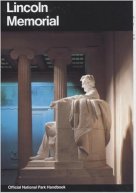
024-005-00974-4Lincoln Memorial: A Guide to the Lincoln Memorial, District of Columbia is your introduction to the majestic memorial set at the far west end of the Mall. Learn about an iconic President and the imposing memorial representing his legacy of freedom. Your visit will be richer for it.

052-070-07481-7There’s no more beautiful site in Washington than the Botanic Garden in full summer bloom. A Botanic Garden for the Nation: The United States Botanic Garden offers a tour of this natural treasure that explodes with color and biodiversity.

Don’t just take our advice. Visit washington.org to discover more about your nation’s capital.

HOW DO I OBTAIN THESE RESOURCES?

Shop Online Anytime: You can buy eBooks or print publications —with FREE Standard Shipping worldwide— from the U.S. Government Online Bookstore at http://bookstore.gpo.gov.

 Shop our Retail Store: Buy a copy of any print editions from this collection at GPO’s retail bookstore at 710 North Capitol Street NW, Washington, DC 20401, open Monday–Friday, 9 a.m. to 4 p.m., except Federal holidays, Call (202) 512-0132 for information or to arrange in-store pick-up.

Order by Phone: Call our Customer Contact Center Monday through Friday, 8 am to 5:30 pm Eastern (except US Federal holidays). From US and Canada, call toll-free 1.866.512.1800. DC or International customers call +1.202.512.1800.

Visit a Federal depository library: Search for U.S. Government publications in a nearby Federal depository library. You can find the records for most titles in GPO’s Catalog of U.S. Government Publications.

About the author: Blogger contributor Ed Kessler is a Promotions Specialist in GPO’s Publication and Information Sales program office.


This National Park Week, Be a Junior Ranger!

April 14, 2016

April 16-24 is National Park week and 2016 is the National Park Service’s (NPS) centennial year. National parks symbolize America’s spirit of discovery. Although protected today, parks need stewardship for tomorrow. The NPS activity-based Junior Ranger program aims to turn young visitors into lifelong enthusiasts. GPO makes available several park-specific booklets to help 5- to 12-year-olds explore “America’s best idea.”

The White House Junior Ranger Activity Guide

Home. Workplace. Museum. And National Park! The White House, home to every president and first family since 1800, is the only building in the world that fits all those categories. Since 1933, The White House has operated under the National Park System. That piece of presidential acreage sees millions of visitors each year. Now there’s a new fact-filled White House guide that appeals to both kids and adults.

9780160929892This booklet drops some great presidential trivia. Abigail Adams used the East Room to hang laundry. Dolly Madison saved a famous painting of George Washington from the War of 1812 fire. Edith Wilson was the first to showcase custom patterned china. All White House occupants leave a visible impression but first ladies drive the story of expansion, design, and entertainment. Beyond aesthetics, the booklet points out that first ladies were “champions for change.” President Harry Truman understood this well. He often introduced First Lady Elizabeth Truman as “the Boss.”

The booklet includes several pages of post-tour activities, including a President’s Park walking map, first family puzzle, and the ABC’s of architecture. Tip for parents: kids can present their booklet to a White House Visitor Center to be sworn in as a badged and certified Junior Ranger!

Redwood National and State Parks Junior Ranger Activity Booklet

Redwood Trees looking up Source: www.nps.gov

Redwood Trees looking up: http://www.nps.gov

Redwoods are the tallest trees on Earth. Living fossil records. But decades of commercial logging nearly decimated old-growth redwood forests of the North Coast region. In this booklet, Ranger Jim points out that “about 95% of the original coast redwood forest was cut down.” Although that statistic is dismaying, take heart. NPS is the capable caretaker of those special giants.

024-005-01316-4The booklet has dozens of activities families can complete while exploring redwood areas. Play tide pool bingo, be a tree detective, and fish for the right color. Write your observations in the ranger beach report. Solve the octopus tree mystery. Keep track of badge points. The fun and fascination are as endless as the redwoods are tall.

Next time you visit a national park, take a fact-filled activity booklet along!

HOW DO I OBTAIN THESE NATIONAL PARK SERVICE PUBLICATIONS?

Shop Online Anytime: You can buy eBooks or print publications —with FREE Standard Shipping worldwide— from the U.S. Government Online Bookstore at http://bookstore.gpo.gov.

 Shop our Retail Store: Buy a copy of any print editions from this collection at GPO’s retail bookstore at 710 North Capitol Street NW, Washington, DC 20401, open Monday–Friday, 9 a.m. to 4 p.m., except Federal holidays, Call (202) 512-0132 for information or to arrange in-store pick-up.

Order by Phone: Call our Customer Contact Center Monday through Friday, 8 am to 5:30 pm Eastern (except US Federal holidays). From US and Canada, call toll-free 1.866.512.1800. DC or International customers call +1.202.512.1800.

Visit a Federal depository library: Search for U.S. Government publications in a nearby Federal depository library. You can find the records for most titles in GPO’s Catalog of U.S. Government Publications.

About the author: Our guest blogger is Chelsea Milko, Public Relations Specialist in GPO’s Public Relations Office.


How to “SPOT” Trucks Carrying Hazardous Materials on Highways during Road Trips?

October 1, 2014
trucks

(Image compliments of dreamstime royalty free photos)

I travel to NJ by car frequently for long weekends. This past summer, I took a long road trip from Northern Virginia to New England.   This large span of highway took me close to ten hours in my personal vehicle without traffic delays or any traffic-related accidents.

On these trips I often encounter the now familiar visions of red brake/tail lights in front of me, and hear the screeching of brakes coming from somewhere around me and hope/pray that the other vehicle is not near me. Sometimes these massive slow-downs are a result of a car fire, a traffic accident with multiple vehicles, or bumper-to-bumper traffic due to people viewing a recent incident on the other side of the highway.

While I am sitting at a stand-still, I often wonder how the policeman that arrives while I am sitting in traffic know whom to call to clean the roadway to make it safe for others?   When we are allowed to move forward and get closer to the incident, we have all seen them – those responders, that are in their “special” suits and masks called in to deal with cleaning up this roadway mess, an image that may look similar to this one:

(Image compliments of US Department of Transportation, Federal Highway Administration website)

(Image compliments of US Department of Transportation, Federal Highway Administration website)

They often arrive after the incident has taken place. Aside from their sense of smell, how do they know what type of hazardous material is on the roadway? Are all chemical spills treated the same way?

According to the Department of Transportation (US DOT), Federal Highway Administration’s publication targeted at First Responders titled “Traffic Incident Management in Hazardous Materials: Spills in Incident Clearance”. The Federal Highway Administration’s mission is to “Keep America Moving”.

Traffic Incident Management (TIM) and spill management are two of the tools in the “resource toolbox” that focus on reducing congestion.

050-000-00596-8[1]The purpose of this document is to report practices regarding the clean-up of incidental spills and to explain the use of the United States Department of Transportation’s (U.S. DOT) Emergency Response Guidebook (ERG). This document also describes techniques and strategies that can be used to handle hazardous material spills at traffic incidents.

Volume of Hazardous Material Shipments

(Image compliments of dreamstime-copyright-free images)

(Image compliments of dreamstime-copyright-free images)

Current research indicates that hazardous materials traffic in the U.S. now exceeds 800,000 shipments per day.   When you think about how many trucks you see while driving on the highways and airplanes flying overhead daily, that is an abundance of hazardous materials being transported!

The largest tank volume is the saddle tank (normally 70 gallons) on a semi-truck. Depending on the number of tanks on the truck, the maximum capacity for fuel for a commercial vehicle can be as much as 350 to 420 gallons!

Types of Hazardous Materials

(Image compliments of U.S. Department of Transportation website)

(Image compliments of U.S. Department of Transportation website)

Under the DOT’s Hazardous Materials Regulations notations included in this guide, (HMR; 49 CFR Parts 171-180) hazardous materials are categorized by analysis and experience into hazard classes and packing groups. Each shipper is required to classify a material according to these hazard classes and packing groups and communicate the material’s hazards. The shipper repetitively communicates the hazard through the use of package labels, shipping papers, and placards on transport vehicles.

The DOT has broad jurisdiction to regulate hazardous materials that are in transport, including the discretion to decide which materials shall be classified as “hazardous.” These materials are placed in one of nine (9) hazard classes based on their chemical and physical properties. Therefore, it’s important for response personnel to understand the hazard classes, their divisions, and reclassified materials so they can assess the situation and respond, accordingly.

Here is an image of a sampling of the types of placards that you may be able to recognize on trucks traveling the US highways with you:

(Images compliments of Wikipedia)

(Images compliments of Wikipedia)

You can find this Transportation Incident050-001-00345-7[2] Management in Hazardous Materials Spills in Incident Clearance print book available at the US Government Printing Office Overstock Sale here.

While supplies last, you can check out all the titles in our 50% Off Overstock collection here.

GPOVERSTOCK-SALE-BannerOur Overstock Sale includes an assortment of print and eBook titles discounted by 50% from the list price ranging in topical categories from military history …. to transportation …. to health resources ….. to childcare …… check out this clearance sale today!

HOW DO I OBTAIN THESE PUBLICATIONS?

About the Author – This week’s blog contributor is Maureen Whelan, Senior Marketing Team Leader for GPO’s Publication & Information Sales division  in Washington, DC.  Maureen oversees print and digital content dissemination strategy and manages third party free and paid content distribution vendors such as Apple iBookstoreGoogle Play eBookstoreEBSCOhostOverdrive, and more.


Designing a Nation: Civic Art in the Nation’s Capital

April 17, 2014

The U.S. Capitol and National Mall are a beautiful representation of the dignity and public spirit of the United States of America. This area is steeped in history, and you can learn more about the past and continued efforts to design, build, and preserve the U.S. Capitol and National Mall through many government publications.

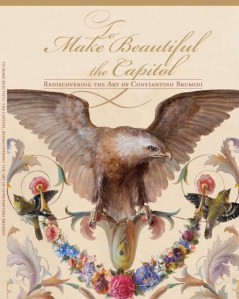
Brumidi-To-Make-Beautiful-the-CapitolWith its famous dome celebrating its 150th anniversary in December 2013, the United States Capitol is a treasure-trove of civic art. Just released, To Make Beautiful the Capitol: Rediscovering the Art of Constantino Brumidi gives a detailed history of renowned Italian-born artist Constantino Brumidi’s masterful work in “making beautiful” the walls and ceilings of the United States Capitol in a span of 25 years starting in 1854. Every page delights with gorgeous, full-color photographs and images of Brumidi’s art, from photographs of the frescoes and decoration, to sketches, paintings and images of the artist, particularly the Brumidi Corridors and his “monumental fresco” in the Capitol Rotunda, called The Apotheosis of Washington. Fascinating anecdotes are included throughout of the artist and the inspirations he received for various elements, his relationship with engineer Montgomery C. Meigs, and the conservation efforts to preserve his work accurately for posterity. Read more about this publication and others about art in the Capitol in our prior blog post, National Treasure: The art and architecture of the US Capitol.

The primary oversight board for projects in the National Mall area is the U.S. Commission of Fine Arts, which was established by an act of Congress on May 17, 1910 in Public Law 61-181. This commission was created as an independent review agency for the work of designing the national capitol and to guide the architectural development of Washington. The commission’s role was expanded with later passage of the Shipstead-Luce Act of 1930 (Public Law 71-231 and Public Law 76-248), and the Old Georgetown Act of 1950 (Public Law 81-808). The U.S. Commission of Fine Arts has a long history of guiding the development of the nation’s capital. Several resources are available in print and online to learn more about the commission’s history.

The National Park Service maintains a detailed guide linking to documents and reports that detail the area history. The Mall Cultural Landscape Inventory, part 2 contains several pages describing the history of the Senate Park Commission and its formation into the U.S. Commission of Fine Arts.

Designing-the-nations-capitalThe U.S. Commission of Fine Arts published a monograph in 2006; Designing the nation’s capital: the 1901 plan for Washington D.C. This 359 page monograph contains illustrations in color and black and white, as well as maps. The National Park Service provides full text access to this title online.

In addition to this title, several editions of this history of the U.S. Commission of Fine Arts from 1910 to date were published in 1964, 1977, 1981, 1985, 1991, and 1996.

Civic Art : a centennial history of the U.S. Commission of Fine ArtsThe most recent addition to the volumes available about the history of the commission is celebrates 100 years of the work of the commission. Civic Art : a centennial history of the U.S. Commission of Fine Arts is a beautiful, 626 page monograph with illustrations, maps and plans. It is a comprehensive history of the agency and includes original essays by prominent architects and landscape architects including Arleyn Levee, Carroll William Westfall, and Richard Guy Wilson.

A Botanic Garden for the Nation: The United States Botanic GardenAnother beautiful book that features some of the history of the national mall area is A Botanic Garden for the Nation: The United States Botanic Garden. You can read more about this publication in a previous post on Government Book Talk.

For more information about the U.S. Capital building, you can also check out the publications highlighted in the previous Government Book Talk post on the 150th anniversary of the completion of the Capital Dome.

America’s Castle: the evolution of the Smithsonian Building and its institution, 1840-1878To read more about the history of the Smithsonian, you could visit a depository library and check out the publication, America’s Castle: the evolution of the Smithsonian Building and its institution, 1840-1878.

If you are interested in the official records of the commission, you can locate them at the National Archives. The record collection includes administrative history, annual reports, and a selection of still photographs. The records are divided between College Park, MD and Washington DC. Many of the records pertaining to the building and continued development of the National Mall are available at the National Archives, such as the National Park Service Records for the National Capital Region, and the Records of the Office of Public Buildings and Public Parks of the National Capital.

How Can I get this book and other publications about history of the U.S. Commission of Fine Arts?

About the author: Our guest blogger is Cathy Wagner, a GPO Outreach Librarian for the U.S. Government Printing Office’s Library Services & Content Management (LSCM) Division. Additional content, images and editing provided by Trudy Hawkins, a writer and marketing specialist in GPO’s Publication & Information Sales Division supporting the U.S. Government Online Bookstore (http://bookstore.gpo.gov).


Spring forward into the garden

March 20, 2014
Baby chick hides among yellow daffodils

Image: Chick with daffodils (Source: Argonne National Laboratory, U.S. Department of Energy

Ah, spring: the season of rebirth, renewal, and growth. Breathe in the air full of the fresh blossoms of flowers, feel the first warm breezes, gaze at the profusion of color, and listen to the birds chirping and insects buzzing.

Most of the United States just went into daylight saving time on March 9 with instructions to “spring forward” with our clocks. On Thursday, March 20, 2014, we spring forward for real as it is the Spring or Vernal Equinox, fondly known as the official first day of spring. After a brutal winter and the first full month of spring and National Garden Month—April– just around the corner, many minds turn toward planting and gardening with their promise of getting back in touch with nature.

Play the Zone

Before you pull on the mud boots and pick up your gloves and tools, you’ll want to determine where you are in the USDA Plant Hardiness Zone Map for the United States. The climate where you garden affects the fruits and vegetables that you can grow successfully. Local nurseries and garden centers will typically stock plants that perform well in your climate, but it’s important to know your planting zone if you are ordering seeds, bulbs, or plants from non-local establishments.

USDA-Plant-Hardiness-Zones-Map across the U.S.

Image: USDA Plant Hardiness Zone Map (Source: USDA)

How does your garden grow?

If you pore over seed catalogs, browse gardening Web sites, stroll the store aisles of soil, pots, and plants, and read gardening books in the dark winter months, then you probably have the gardening bug. You can also learn to recognize the real insects that you have in your garden with The Bug Book: A Garden Field Guide from the EPA. Gardeners can toil away only to find that someone else is enticed by the new plants; that’s when some choose to control pests by using chemicals. Be extra safe and learn about the effects of pest control, especially if you have children. Greenscaping (see this EPA guide) is an alternative method of dealing with those tiny invaders in your garden.

Lady bugs clustered on an oak branch

Image: Lady bugs gathering on an oak branch (Source: NPS)

Practice safe gardening

EPA's Mission: Sunwise Activity Book for sun safety ISBN  9780160917097In any outdoor activity, you want to be safe and healthy in the garden. While you are digging away and pulling weeds, you can get quite a sunburn or get dehydrated. The EPA’s Mission: Sunwise Activity Book helps educate kids on how to be safe in the sun and to use sunscreen. Check out these health and safety tips so that you can continue to enjoy the time spent outdoors.

How to Prune Trees by the U.S. Forest Service ISBN: 9780160913761How-to-Recognize-Hazardous Defects-in-Trees ISBN: 9780160913778When it comes to tackling bigger projects, read up first to learn what to look for in your own backyard, starting with those stately trees. How to Prune Trees is a best-selling quick guide to smart practices on trimming branches for optimum tree health. How to Recognize Hazardous Defects in Trees is an overview of common issues with trees.

Removing a tree altogether is sometimes the only safe option; Why Would Anyone Cut a Tree Down? is a book for children that explains how taking away an unhealthy tree can benefit the overall environment of the garden.Why Would Anyone Cut a Tree Down? U.S. Forest Service ISBN: 9780160916267

As always, with any larger gardening issues, you’ll want to consult a professional arborist for concerns with your trees.

Mighty oaks from little acorns grow

Gardening is an ideal activity for children. Not only are they out in nature and physically active, but they also learn about where healthy food comes from while observing the weather, biology, zoology, and conservation. The First Lady of the United States, Michelle Obama, has been teaching the message of healthy living through nutritious, locally grown food in her White House Kitchen Garden. Plants grown right outside the White House in Washington, DC, end up on the dining table of the President’s family. Whether you are building a kitchen garden, a school garden, or a community garden, Let’s Move has more information for you, including a diagram of the White House Kitchen Garden if you want to recreate it in your own backyard.

The Little Acorn - USDA children's book ISBN: 9780160817014Schools are well aware of the educational benefits of gardening; it begins as early as pre-school. (Download the free “Grow It, Try It, Like It! Preschool Fun with Fruits and Vegetables” garden-themed nutrition education kit.) Teachers can find resources and lesson plans from the EPA to incorporate gardening into their school curriculum. And if April showers are in the forecast, little ones can still learn about nature by curling up with a delightful illustrated book about The Little Acorn, which tells of the cycle of growth and change in the garden that starts with just one seed.

Watch the video below as First Lady Michelle Obama and White House chef Sam Kass tell the story of the first garden on White House grounds since Eleanor Roosevelt’s Victory Garden during World War II.

First Lady and White House chef explain history of the first White House kitchen garden since WW2

Inside the White House: The Kitchen Garden” video of First Lady Michelle Obama and White House chef Sam Kass telling the story of the first garden on White House grounds since Eleanor Roosevelt’s Victory Garden during World War II. This new garden was planted in the Spring of 2009 with the help of local elementary school children and has yielded a constant supply fresh produce for the First Family and White House events. Published May 10, 2012. (Source: White House Let’s Move YouTube Channel)

You can find more White House garden videos and gardening ideas for kids on the Let’s Move Gardening Guide web page.

Look for inspiration in public spaces

A Botanic Garden for the Nation: The United States Botanic Garden (ePub eBook) ISBN: 9780160869129 for out-of-print ISBN: 9780160767722Some folks are lucky enough to own a big garden plot; others grow plants in containers on a balcony or place herb pots by a sunny window. No matter how you garden, you can always look for inspiration for your gardening pursuits. There are a number of places to visit in spring to see the variety of plants. It’s especially helpful to visit places where plants are labeled so that you know what to look for at a local nursery or plant sale.

Cymbidium ‘Hearts of Gold’ orchid in bloom at the U.S. Botanic Garden

Image: Cymbidium ‘Hearts of Gold’ orchid in bloom at the U.S. Botanic Garden

In the nation’s capital, Washington, DC you can go to the United States Botanic Garden and see what’s in bloom or learn how to attract butterflies to your garden.

You can also purchase A Botanic Garden for the Nation: the United States Botanic Garden (ePub eBook), a GPO Online Bookstore perennial favorite (pun intended).

Girl's face peeking out from pink azaleas at National Arboretum in Washington, DC

Peeking out from among the azaleas at the National Arboretum in Washington, DC.

While in the DC area, don’t miss the United States National Arboretum. You can see every single plant contained there, search for individual plants and see exactly where they are located on this interactive map.

Find out what’s in bloom during the month of your visit. (If visiting in April, don’t miss their world-famous display of azaleas / rhododendrons which bloom sometime in April. Check their Azalea page for current bloom conditions.)

The arboretum also has full color posters to help you identify crape myrtles, shrubs, and trees.

U.S. National Arboretum Crape Myrtles Guide

Image: Guide to Lagerstroemia, commonly known as crape myrtle or crepe myrtle, from the National Arboretum. (Source: U.S. National Arboretum)

Learn about gardening by joining others

Restorative Commons: Creating Health and Well-Being Through Urban Landscapes ISBN: 9780160864162You can learn so much about gardening by meeting other like-minded folks. If you don’t have your own garden, you might want to join a community garden or find a local gardening group or volunteer at a gardening club. Urban soils have their own unique characteristics and benefits; find out how to grow gardens in urban soil, then enjoy the benefits that come from gardening in urban landscapes in Restorative Commons: Creating Health and Well-Being Through Urban Landscapes, available from GPO’s U.S. Government Online Bookstore.

Urban gardeners at work planting new seedlings

Image: Urban gardeners at work planting new seedlings (Source: NIH)

It’s food for thought

Fruitful Legacy: A Historic Context of Orchards in the United States, with Technical Information for Registering Orchards in the National Register of Historic Places ISBN: 9780160821271The first presidents were known not only for their political endeavors, but also for their farms, gardens and orchards. If planted and maintained well, gardens and orchards can last for decades, even centuries.

Learn more about the legacy and preservation of historic orchards in the U.S. with these two publications available from GPO’s U.S. Government Online Bookstore:

Happy gardening!

Image: Uncle Sam promoting gardening during wartimeSource: National Archives

Image: World War II USDA poster promoting Victory gardens: “Uncle Sam says GARDEN to Cut Food Costs” (Source: National Archives)

How can I get these and other Federal Government publications on Gardening?

In addition to clicking on the links in the article above to find the publications, you may find gardening publications from the following:

About the author: Kristina Bobe is a Senior Planning and Development Specialist for the U.S. Government Printing Office’s Library Services & Content Management (LSCM) Division. Additional content, images and editing provided by Michele Bartram, Government Book Talk Editor and Promotions Manager for GPO’s Publication and Information Sales Division in Washington, DC.