College Prep from the U.S. Government

November 4, 2016
President Lyndon B. Johnson signs the Higher Education Act. Lady Bird Johnson, Congressman Jake Pickle, and others look on. LBJ Library photo by Frank Wolfe

President Lyndon B. Johnson signs the Higher Education Act. Lady Bird Johnson, Congressman Jake Pickle, and others look on. LBJ Library photo by Frank Wolfe.

On November 8th, 1965, President Lyndon Baines Johnson signed the Higher Education Act. A part of LBJ’s Great Society domestic agenda, the legislation authorizes the administration of Federal student aid programs. GPO employees printed the original legislation and now make it digitally available on govinfo.

In addition, GPO makes available a number of free Department of Education eBooks that place real answers in the hands of college and vocational school-bound students. A bit of good guidance can make those first steps toward college more surefooted.

My Future, My Way: First Steps Toward College

9780160930959The Department of Education’s Federal Student Aid folks have assembled this ePub to frame some big, scary college planning questions without oversimplifying them. It’s arranged in a series of prompts, mythbusters, and graphics. It features a nifty comparison of vocational, technical, and professional career choices as well.

This booklet tackles the “when should I begin thinking of college?” and “what can a college education do for me?” and “how will I pay for college?” FAQs. As is often the case when undertaking something new, school kids might not even know which questions to ask. Give them a tailor-made activity book like My Future, My Way and post-high school success will be a bit more achievable.

College Preparation Checklist

college-prep-checklist_page_01This checklist is really a to-do list. It breaks down the college planning timeline into elementary, middle, and high school subsections; each subsection details what to do, when to do it, and who can help. It’s full of sensible suggestions about more than just which classes to take. Comprehensive college prep is “also about developing the skills that will help you succeed in college and life.” Things like money planning, time management, test scores, and scholarships all have a place in the balance between studying and having fun.

The College Preparation Checklist is certainly not designed to replace traditional guidance counseling. The goal here is to get any student considering college to start asking questions now that will make career planning less intimidating.

Funding Your Education: The Guide to Federal Student Aid

funding-your-education_page_01If planning for college is a towering task, then paying for college can be an even bigger challenge. This concise electronic brochure highlights the types of federal student aid and steps to remember when applying for aid. With this resource, the Office of Federal Student Aid aims to “ensure that all eligible individuals can benefit from federally funded financial assistance for education or training beyond high school.”

Getting ready for the post-secondary world may seem daunting but with these Department of Education resources, students don’t have to do it alone.

HOW DO I OBTAIN THESE RESOURCES?

Shop Online Anytime: You can buy eBooks or print publications —with FREE Standard Shipping worldwide— from the U.S. Government Online Bookstore at http://bookstore.gpo.gov.

Shop our Retail Store: Buy a copy of any print editions from this collection at GPO’s retail bookstore at 710 North Capitol Street NW, Washington, DC 20401, open Monday–Friday, 9 a.m. to 4 p.m., except Federal holidays, Call (202) 512-0132 for information or to arrange in-store pick-up.

Order by Phone: Call our Customer Contact Center Monday through Friday, 8 am to 5:30 pm Eastern (except US Federal holidays). From US and Canada, call toll-free 1.866.512.1800. DC or International customers call +1.202.512.1800.

Visit a Federal depository library: Search for U.S. Government publications in a nearby Federal depository library. You can find the records for most titles in GPO’s Catalog of U.S. Government Publications.

About the author: Blogger contributor Chelsea Milko is a Public Relations Specialist in GPO’s Public Relations Office.


Great Lessons in Small Packages—Tree Books for Kids

August 30, 2016

Great things do come in small packages! In the case of this blog post, the small packages are children’s books that bring to life the themes of growth and nature. GPO makes available two colorfully-illustrated, nature-based publications from the United States Department of Agriculture (USDA) that are ideal for parents and educators, too!

The Little Acorn

001-001-00687-4We usually think of acorns as the staple snack of squirrels. And that they are. In the case of this delightful storybook from the USDA Natural Resources Conservation Service, an acorn can also represent the magic of growing up.

The Little Acorn is written from the perspective of a foraging squirrel who buries an acorn near a stream. As it occasionally checks back on the oak nut, the squirrel bears witness to the tree’s growth amid seasonal and ecological changes. Spring rains, summer heat, and autumn winds condition the baby oak. Its thirsty roots stretch out and it learns that all living things need water to grow.

What starts as a tiny seed encased in a tough shell eventually transforms into a “big, beautiful oak tree…dropping little acorns of its own.”

Why Would Anyone Cut a Tree Down?

001-000-04759-1Sometimes it is necessary to cut trees. Trees have lifecycles—they sprout, mature, grow old, die—and their seeds can be planted to grow new trees. For a renewable resource like trees to healthily propagate, diseased or hazardous trees must be cut down and removed. What sounds like severe measures is actually a good thing for the environment.

This U.S. Forest Service publication teaches kids that “people need to cut some trees down, but that is not the end of the story.” It explores various uses for wood from cut trees—such as materials for construction, nutrients for fresh soil, and stumps for new shoots. The book also includes a note to adults about the basics of tree care.

Cutting down a tree is a form of caring for that tree. It makes room for more life in the exchange of another. Eighteenth century botanist Carl Linnaeus said it best when he wrote “if a tree dies, plant another in its place.”

HOW DO I OBTAIN THESE PUBLICATIONS?

Shop Online Anytime: You can buy eBooks or print publications —with FREE Standard Shipping worldwide— from the U.S. Government Online Bookstore at http://bookstore.gpo.gov.

 Shop our Retail Store: Buy a copy of any print editions from this collection at GPO’s retail bookstore at 710 North Capitol Street NW, Washington, DC 20401, open Monday–Friday, 9 a.m. to 4 p.m., except Federal holidays, Call (202) 512-0132 for information or to arrange in-store pick-up.

Order by Phone: Call our Customer Contact Center Monday through Friday, 8 am to 5:30 pm Eastern (except US Federal holidays). From US and Canada, call toll-free 1.866.512.1800. DC or International customers call +1.202.512.1800.

Visit a Federal depository library: Search for U.S. Government publications in a nearby Federal depository library. You can find the records for most titles in GPO’s Catalog of U.S. Government Publications.

About the author: Blogger contributor Chelsea Milko is a Public Relations Specialist in GPO’s Public Relations Office.


Teaching our Children about Making Healthy Food Choices

August 15, 2016

Maintaining good health and nutrition has become a major issue for many families in the United States. Today, many Americans are lacking in physical activity and proper nutrition, either because of their sedentary lifestyles, or because they are “too busy.” As a result of this, the frequency of making healthy food choices has diminished.

Discover MyPlate: Emergent Readers - A MyPlate MealTherefore, it is important that children learn early on about the importance of nutrition, fitness and the well-being of their bodies. The United States Department of Agriculture (USDA) Food and Nutrition Service has created Discover MyPlate: A MyPlate Meal, an eBook that serves as a meal and fitness guide for children. It includes fun interactive games about nutrition, to help introduce the development of healthy food choices and physical activity lifestyles to young readers.  The child-friendly material and age appropriate games and activities will help children learn healthy habits effortlessly.

The USDA has also created a Teacher’s Kit curriculum to assist educators in the teaching of nutrition and fitness to their students. There are a number of books featured in the kit, including in the Discover MyPlate series, to teach children the importance of every food group and its relevance to one’s health. The USDA Food and Nutrition Service has done an exceptional job in their efforts of creating a child-friendly approach to nutrition and fitness.

Owning this eBook is easy, you can download it for free on the U.S. Government Bookstore website. Summer is here and the Discover MyPlate: A MyPlate Meal series are perfect reads for you and your children to become educated on the importance of nutrition and fitness.

HOW DO I OBTAIN THIS FREE RESOURCE?

Shop Online Anytime: You can buy eBooks or print publications —with FREE Standard Shipping worldwide— from the U.S. Government Online Bookstore at http://bookstore.gpo.gov.

 Shop our Retail Store: Buy a copy of any print editions from this collection at GPO’s retail bookstore at 710 North Capitol Street NW, Washington, DC 20401, open Monday–Friday, 9 a.m. to 4 p.m., except Federal holidays, Call (202) 512-0132 for information or to arrange in-store pick-up.

Order by Phone: Call our Customer Contact Center Monday through Friday, 8 am to 5:30 pm Eastern (except US Federal holidays). From US and Canada, call toll-free 1.866.512.1800. DC or International customers call +1.202.512.1800.

Visit a Federal depository library: Search for U.S. Government publications in a nearby Federal depository library. You can find the records for most titles in GPO’s Catalog of U.S. Government Publications.

About the author: Blogger contributor Alyssa Doughty is an intern in GPO’s Publication and Information Sales program office.


The Constitution of the United States and the Declaration of Independence

August 2, 2016

9780160514234295It’s an election year, there’s no better time for your family to read and discuss the Constitution of the United States and the Declaration of Independence.

These two documents represent the core principles of American democracy.

The U.S. Government Bookstore offers the pocket version of the Constitution of the United States and the Declaration of Independence for your convenience to carry wherever you go.

Pick-up your copy of the Constitution of the United States and the Declaration of Independence (Pocket Edition) now!

HOW DO I OBTAIN THIS RESOURCE?

Shop Online Anytime: You can buy eBooks or print publications —with FREE Standard Shipping worldwide— from the U.S. Government Online Bookstore at http://bookstore.gpo.gov.

 Shop our Retail Store: Buy a copy of any print editions from this collection at GPO’s retail bookstore at 710 North Capitol Street NW, Washington, DC 20401, open Monday–Friday, 9 a.m. to 4 p.m., except Federal holidays, Call (202) 512-0132 for information or to arrange in-store pick-up.

Order by Phone: Call our Customer Contact Center Monday through Friday, 8 am to 5:30 pm Eastern (except US Federal holidays). From US and Canada, call toll-free 1.866.512.1800. DC or International customers call +1.202.512.1800.

Visit a Federal depository library: Search for U.S. Government publications in a nearby Federal depository library. You can find the records for most titles in GPO’s Catalog of U.S. Government Publications.

About the author: Blogger contributor Trudy Hawkins is a Marketing and Promotions Specialist in GPO’s Publication and Information Sales program office.


This 100-Year-Old National Park is Still Going Strong

July 29, 2016

There’s a national park on the Hawaiian island of Maui where the warm sun bakes a volcanic basin and balmy breezes float through a bamboo forest. The place is called Haleakalā National Park. And on August 1, 2016, it marks its 100th birthday.

CraterHaleakalā is pronounced ha-leh-ah-kah-lah. It means “house of the sun” in Native Hawaiian. When American writer Mark Twain first came to Haleakalā in 1866, he described it as “the sublimest spectacle I ever witnessed, and I think the memory of it will remain with me always.” The National Park Service (NPS) wants kids to have a similar experience. Its Haleakala Junior Ranger Activity Booklet, available through GPO, is prefect way to celebrate the centennials of both Haleakalā and NPS.

024-005-01319-9Haleakala Junior Ranger Activity Booklet

The park has two separate sections—a 10,023 ft. shield volcano flanking the east side stands in stark contrast to the azure Kipahulu coast. A vast subalpine moonscape plummets into a subtropical rainforest that rings a craggy, palm-lined shore. Over 80% of the park is wilderness. A sacred place in the lore of Native Hawaiians, Haleakalā “protects the last or only home to plants and animals found nowhere else on earth.” In fact, it hosts more endangered species than any other national park in the U.S.

Haleakala Booklet pg 6

Click on image to enlarge.

Haleakalā’s “stories, sights, and traditions” are well captured in the activity booklet. There’s plenty to give your junior ranger (or yourself!) a hands-on experience with earth science, biodiversity, and Hawaiian culture. Entertaining games—on such topics as the volcano lifecycle, lava rocks, hiking trails, Nēnē geese, habitats, and the Hawaiian alphabet—are a great way for young explorers to learn about a piece of America’s natural heritage.

Snag your copy of the Haleakala Junior Ranger Activity Booklet and plan your family visit to the unique wilds of the “house of the sun.”

HOW DO I OBTAIN THIS PUBLICATION?

Shop Online Anytime: You can buy eBooks or print publications —with FREE Standard Shipping worldwide— from the U.S. Government Online Bookstore at http://bookstore.gpo.gov.

 Shop our Retail Store: Buy a copy of any print editions from this collection at GPO’s retail bookstore at 710 North Capitol Street NW, Washington, DC 20401, open Monday–Friday, 9 a.m. to 4 p.m., except Federal holidays, Call (202) 512-0132 for information or to arrange in-store pick-up.

Order by Phone: Call our Customer Contact Center Monday through Friday, 8 am to 5:30 pm Eastern (except US Federal holidays). From US and Canada, call toll-free 1.866.512.1800. DC or International customers call +1.202.512.1800.

Visit a Federal depository library: Search for U.S. Government publications in a nearby Federal depository library. You can find the records for most titles in GPO’s Catalog of U.S. Government Publications.

About the author: Blogger contributor Chelsea Milko is a Public Relations Specialist in GPO’s Public Relations Office.


A Way for Kids to Celebrate the National Park Centennial

June 6, 2016

In 1916, President Woodrow Wilson signed the act creating the National Park Service (NPS). The agency was entrusted with a mission to “conserve the scenery and the natural and historic objects and the wild life therein and to provide for the enjoyment of the same in such manner and by such means as will leave them unimpaired for the enjoyment of future generations.”

024-005-01321-1This year, the National Park Service launches a second century of environmental stewardship and historic preservation. As NPS looks to its next 100, it invites everyone, especially kids, to experience one of over 400 national parks and monuments.

Children can join the national parks birthday celebration with the Centennial Junior Ranger activity booklet. It’s an activity-filled, adventure-based guide to explore, learn, and have fun in natural places. I’ll let some of the pages from this colorful, informative guide do the talking…click on each image to enlarge.

024-005-01321-1_p6-7

024-005-01321-1_p10-11

024-005-01321-1_p14-15

This booklet comes with a bonus! Upon completing select activities, kids can bring the booklet to any national park visitor center to receive an official Junior Ranger badge.

As part of NPS’ Every Kid in a Park program, admission to all national parks is free for the entire year for fourth graders and their families. And with several fee-free days scheduled throughout 2016, it’s possible to get every kid and every family in a park. The more that people care about America’s special outdoor wonderlands, the more likely they will be around in 2116.

HOW DO I OBTAIN THIS PUBLICATION?

Shop Online Anytime: You can buy eBooks or print publications —with FREE Standard Shipping worldwide— from the U.S. Government Online Bookstore at http://bookstore.gpo.gov.

 Shop our Retail Store: Buy a copy of any print editions from this collection at GPO’s retail bookstore at 710 North Capitol Street NW, Washington, DC 20401, open Monday–Friday, 9 a.m. to 4 p.m., except Federal holidays, Call (202) 512-0132 for information or to arrange in-store pick-up.

Order by Phone: Call our Customer Contact Center Monday through Friday, 8 am to 5:30 pm Eastern (except US Federal holidays). From US and Canada, call toll-free 1.866.512.1800. DC or International customers call +1.202.512.1800.

Visit a Federal depository library: Search for U.S. Government publications in a nearby Federal depository library. You can find the records for most titles in GPO’s Catalog of U.S. Government Publications.

About the author: Blogger contributor Chelsea Milko is a Public Relations Specialist in GPO’s Public Relations Office.


60 Years of Tracking “Big Red One”

December 22, 2015

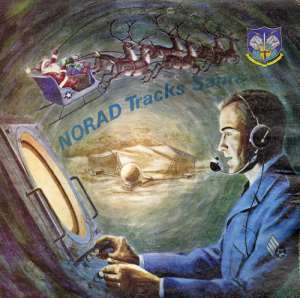
‘Twas Christmas eve 1955 when a misprinted Sears Roebuck & Co. newspaper ad directed kids to a top secret Soviet alert hotline instead of Santa’s direct dial. Wrong red phone! On the receiving end, an Air Force colonel played along and a team of Cold War-era serviceman became North Pole elves. And that’s how the North American Aerospace Defense Command (NORAD) eventually became the Santa tracking agency.

santatrackerimageNORAD is a bi-national U.S. and Canadian organization with the mission of aerospace warning and control in the defense of North America. But its most famous and favorite mission is watching the winter skies for the “big red one.” “Guarding What You Value Most: North American Aerospace Defense Command Celebrating 50 Years,” available thru GPO in hardcover and eBook editions, touches upon how NORAD triangulates Kris Kringle’s course. The publication proudly states that “using the same technology used to perform their day-to-day mission— satellites, high-powered radars and jet fighters— NORAD tracks Santa Claus as he makes his Yuletide journey around the world.”

That sleigh of different high-tech systems is used to read Rudolph’s infrared nose signature, capture high-speed video around the globe, and provide Santa and his reindeer with a NORAD fighter pilot escort. Fun fact to impress people at your holiday party: satellites and radar once clocked Santa’s flying delivery cart at 100 times faster than the Japanese bullet train.

santahotlinewebSanta positioning updates were originally delivered over the radio and through the Santa Tracking hotline. In 1997, the operation joined the worldwide interwebs. A few years ago, NORAD teamed up with tech companies to release a set of free apps. If you download the tracking app, that ding from your phone could be a radar ping showing the globetrotting sleigh’s whereabouts.

Want to track jolly St. Nick and his sleigh-pullers on Christmas Eve? Visit NORAD’s multilingual Santa site. It’s soundtracked with some pretty groovy holiday music, too. And while clicking around, do visit GPO’s bookstore. There’s a NORAD history publication there waiting for you. Unlike Santa, it requires no high-tech tracking.

How do I obtain Guarding What You Value Most: North American Aerospace Defense Command Celebrating 50 Years?

Shop Online Anytime: You can buy eBooks or print publications —with FREE Standard Shipping worldwide— from the U.S. Government Online Bookstore at http://bookstore.gpo.gov.

Shop our Retail Store: Buy a copy of any print editions from this collection at GPO’s retail bookstore at 710 North Capitol Street NW, Washington, DC 20401, open Monday–Friday, 9 a.m. to 4 p.m., except Federal holidays, Call (202) 512-0132 for information or to arrange in-store pick-up.

Order by Phone: Call our Customer Contact Center Monday through Friday, 8 am to 5:30 pm Eastern (except US Federal holidays). From US and Canada, call toll-free 1.866.512.1800. DC or International customers call +1.202.512.1800.

Visit a Federal depository library: Search for U.S. Government publications in a nearby Federal depository library. You can find the records for most titles in GPO’s Catalog of U.S. Government Publications.

About the author: Our guest blogger is Chelsea Milko, Public Relations Specialist in GPO’s Public Relations Office.


Ben’s Guide to the U.S. Government: Free, Educational Content from GPO for Children and Adults of all Ages

November 23, 2015

PrintIn 1999, the U.S. Government Publishing Office (GPO) launched its educational website, Ben’s Guide to U.S. Government for Kids. This year, GPO redesigned and revitalized the site with all new content and features, and it is now available to the public as “Ben’s Guide to the U.S. Government.”

The new site presents educational content on the workings of the U.S. Government and U.S. history, with a focus on civics. It features all new site content, a device-friendly infrastructure, and a modernized look and feel that has been optimized for an intuitive learning experience.

Ben’s Guide has three levels of Learning Adventures: Apprentice (ages 4-8), Journeyperson (ages 9-13), and Master (ages 14 and up). These represent the age ranges for the content but are also a historical reference to the longstanding apprentice program that is still in place at GPO today. The inspiration for the Ben character comes from Benjamin Franklin (1706-1790), who was an apprentice and printer in the early days of our country. Although best known for being one of our Founding Fathers, he drafted and distributed historical documents during the early years of our Nation. He’s an important figure at GPO, too, and his legacy of publishing information truly lives on in what we do today.

A new, interactive game, Branch-O-Mania, is available, which is not only fun, but educational, and tests knowledge of the three branches of the U.S. Government. Educators, parents, and students can also access free, printable activities that include Word Searches and Crossword Puzzles for various age ranges. Check out the game and printables here. Also included is a site glossary that includes over 80 terms and definitions related to the U.S. Government, as used on the website.

In 2013, GPO signed an official partnership with the American Association of School Librarians (AASL). Under the terms of the partnership, AASL volunteer school librarians agreed to review the educational content on Ben’s Guide to the U.S. Government for age-appropriateness. In addition, they utilized their expertise in curriculum development and educational initiatives to develop lesson plans to complement Ben’s Guide content.

Through ongoing communication and coordination with GPO, volunteers provided feedback on the educational content, called Learning Adventures, for the Apprentice, Journeyperson, and Master levels. They applied their knowledge of the presentation of information and instructional design to the specific age levels to improve and enhance comprehension of the material.

Select volunteers went the extra ‘knowledge’ mile and created lesson plans related to the content of Ben’s Guide. Educators can not only use the new Ben’s Guide to the U.S. Government in an educational setting, but can also consult ready-made lesson plans to integrate into their course curriculum. These lesson plans follow a structured rubric that sets forth the elements, standards, scenario, overview, assessment, and instructional plan. Lesson plans submitted by volunteers were reviewed and vetted by AASL before being officially accepted and published.

The lesson plans are archived and available on Ben’s Guide and at the Standards for the 21st-Century Learner Lesson Plan Database site. The AASL lesson plans are arranged into three groups: grades K-5, grades 6-8, and grades 9-12. All of the lesson plans are freely-available to the public and can be accessed and incorporated into the classroom setting.

Be sure to check out the new Ben’s Guide to the U.S. Government on your computer, tablet, or device of choice. Let us know what you think. We will continue to enhance the site by adding new content and design enhancements based on user feedback.

You can find other resources related to items featured in Ben’s Guide by clicking here or through any of these methods:

Shop Online Anytime: You can buy eBooks or print publications —with FREE Standard Shipping worldwide— from the U.S. Government Online Bookstore at http://bookstore.gpo.gov.

Shop our Retail Store: Buy a copy of any print editions from this collection at GPO’s retail bookstore at 710 North Capitol Street NW, Washington, DC 20401, open Monday–Friday, 9 a.m. to 4 p.m., except Federal holidays, Call (202) 512-0132 for information or to arrange in-store pick-up.

Order by Phone: Call our Customer Contact Center Monday through Friday, 8 am to 5:30 pm Eastern (except US Federal holidays). From US and Canada, call toll-free 1.866.512.1800. DC or International customers call +1.202.512.1800.

Visit a Federal depository library: Search for U.S. Government publications in a nearby Federal depository library. You can find the records for most titles in GPO’s Catalog of U.S. Government Publications.

About the authorKelly Seifert is the Strategic Communications Coordinator for GPO’s Library Services & Content Management division.


Our Native Flying ‘Cheetos’: Bee Basics from the USDA Forest Service

October 8, 2015

001-000-04765-5“The world as we know it would not exist if there were no bees to pollinate the earth’s 250,000 flowering plants.”

A sobering sentence straight out of Bee Basics: An Introduction to Our Native Bees, a joint publication from the U.S. Department of Agriculture (USDA) Forest Service and the Pollinator Partnership. Authors Beatriz Moisset, Ph.D. and Stephen Buchmann, Ph.D. provide a concise primer on the fundamentals and cyclical heritage of our ‘varied and valuable’ native bees.

You may know that bees are sociable, resourceful, and resilient. But did you know that some species are downright parasitically opportunistic? The cuckoo bee is a member of the exclusively parasitic Apidae family. Once it scouts out a potential host site, it furtively waits out of view until the nest is vacated. Then, in a one-two-punch move, the cuckoo bee takes up residence and its young eventually shovel down up any pollen, nectar, and larva in sight.

Buchmann’s highly detailed illustrations of these pixie pollinators show how each species’ morphology is engineered for precise pollination. Bees use wing vibration to shake off a pollen-packed anther like a polaroid picture. This “buzz pollination” is a popular dance in bee social circles. The southeastern blueberry bee uses the same technology to gorge itself on blueberry pollen. Another pollination prodigy is the megachilid bee. Gathering so much puffy yellow pollen on its abdomen, it resembles, as the authors amusingly write, “flying ‘Cheetos’ snacks coming in for a landing.”

beesorwasps

Can you identify a bee from a wasp? Excerpt from publication. Click image to enlarge.

The publication also details the homemaker behaviors of bees. The metallic-colored sweat bee is the consummate DIY designer. Nesting itself in the underside of freely-available detritus tree bark, it uses a saliva-pollen amalgam to lovingly tile the interior of its egg chambers. Some domesticating mother bees though the use of mass provisioning—storing up enough food in their brood cell nursery to sustain each larvae for the entirety of their development. New moms, take note!

Bee Basics is a great compliment to citizen science efforts to enrich and sustain a pollinator-friendly ecosystem. It concludes with a ecological call to action. The list of worrisome environmental realities are extensive: honey bee die-offs, shrinking native ranges, pesticide use, fungal infestations, and more. Protecting the ecosystem well-being of these minuscule pollinators requires a concerted conservation effort and a respect for the priceless services they provide. Bees have more than paid their dues to this planet. And for that, we are indebted.

How do I obtain this publication?

Shop Online Anytime: You can buy eBooks or print publications —with FREE Standard Shipping worldwide— from the U.S. Government Online Bookstore at http://bookstore.gpo.gov.

Shop our Retail Store: Buy a copy of any print editions from this collection at GPO’s retail bookstore at 710 North Capitol Street NW, Washington, DC 20401, open Monday–Friday, 9 a.m. to 4 p.m., except Federal holidays, Call (202) 512-0132 for information or to arrange in-store pick-up.

Order by Phone: Call our Customer Contact Center Monday through Friday, 8 am to 5:30 pm Eastern (except US Federal holidays). From US and Canada, call toll-free 1.866.512.1800. DC or International customers call +1.202.512.1800.

Visit a Federal depository library: Search for U.S. Government publications in a nearby Federal depository library. You can find the records for most titles in GPO’s Catalog of U.S. Government Publications.

About the author: Our guest blogger is Chelsea Milko, Public Relations Specialist in GPO’s Office of Public Affairs. 


“Out of Many, One”: Citizenship and the Constitution

September 17, 2014

September 17 is Constitution Day, thanks to the efforts of the late Senator Robert C. Byrd, who always carried a copy with him on and off the floor of the Senate. Last year, I blogged about the various editions of the Constitution available as Government publications. This time around, I’ve been thumbing through another publication that helps to put the Constitution, the Declaration of Independence, and a variety of other documents, speeches, and even songs and poetry, into the bigger picture of what it means to be – or become – an American citizen.

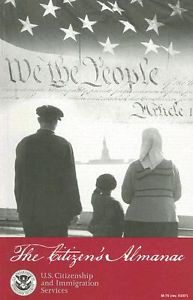
The Citizen’s Almanac: Fundamental Documents, Symbols, and Anthems of the United States, a handsome and very useful little book from the U.S. Citizenship and Immigration Services correctly states that “both native-born and naturalized citizens will find important information on the rights and responsibilities associated with United States citizenship.” It’s an extremely useful collection of songs (The Star Spangled Banner, America the Beautiful, God Bless America), poems (The Concord Hymn, I Hear America Singing, The New Colossus), symbols (the Great Seal of the United States, including an explanation of that impressive but somewhat mystifying “pyramid with an eye in it” device), complete texts or extracts from notable American speeches (the Gettysburg Address, John F. Kennedy’s Inaugural Address, Martin Luther King’s I Have A Dream, Ronald Reagan’s Remarks at the Brandenburg Gate), notable Supreme Court decisions (Marbury v Madison, Brown v Board of Education) and much more.

Although the complete text of the Mayflower Compact, the Declaration of Independence, the Constitution, and other documents are not included, the brief sections on each put them into context so readers can perceive the continuum of American democracy through time. For new and aspiring citizens, a series of brief biographies of famous Americans who were not born in the U.S. makes for interesting reading. In the entertainment world alone, how many of us think of Marlene Dietrich, Bob Hope, and Celia Cruz in their roles as citizens of the Republic?

The Citizen’s Almanac is a terrific, well-illustrated source for all kinds of information about American history and citizenship. It’s also an interesting read and a book that’s perfect for Constitution Day or any other day when you need information about this country of ours. You can browse through The Citizen’s Almanac here, buy a single copy or a package of 25 for schools and civic organizations, or locate it at a library.

HOW DO I OBTAIN THIS PUBLICATION?

In addition to clicking on the links in the article above to find the publication, you may find this publications from the following:

Shop Online Anytime: You can buy this and other print publications related to citizenship (with FREE Standard Shipping worldwide) from the U.S. Government Online Bookstore website at http://bookstore.gpo.gov:

Order by Phone: You may also order print editions by calling GPO’s  Customer Contact Center Monday through Friday, 8 am to 5:30 pm Eastern (except US Federal holidays). From US and Canada, call toll-free 1.866.512.1800. DC or International customers call +1.202.512.1800.

Shop our Retail Store: Buy a copy of any print editions at GPO’s retail bookstore at 710 North Capitol Street NW, Washington, DC 20401, open Monday–Friday, 9 a.m. to 4 p.m., except Federal holidays, Call (202) 512-0132 for information or to arrange in-store pick-up.

About the author: Adapted by Trudy Hawkins, Writer and Marketing Specialist in GPO’s Publication & Information Sales Division in Washington, DC, from an original post by James Cameron, former Government Book Talk Editor in support of the U.S. Government Online Bookstore (http://bookstore.gpo.gov).


A Star-Spangled Anniversary

September 12, 2014
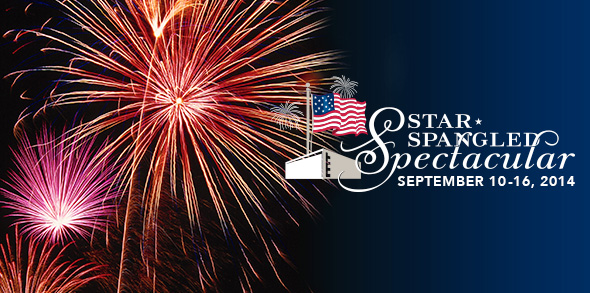
Image: Celebrating the 200th Anniversary of our National Anthem http://www.starspangled200.com/

Image: Celebrating the 200th Anniversary of our National Anthem (http://www.starspangled200.com/)

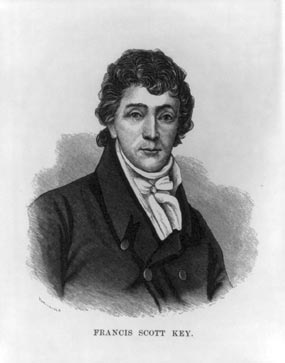
September 2014 marks the 200th anniversary of the United States National Anthem, “The Star-Spangled Banner.” In September 1814, after a 25-hour long battle with the British, U.S. soldiers at Baltimore’s Fort McHenry raised a 42-foot American flag in victory. A young Francis Scott Key, a Maryland-born attorney, was aboard a ship in Baltimore’s harbor to negotiate the release of an American prisoner and was so inspired by the patriotic sight that he wrote “The Star-Spangled Banner.”

Image source: nps.gov

Francis Scott Key (nps.gov)

If you’re lucky enough to be in Maryland during the month of September, the Star-Spangled Spectacular is a free festival that celebrates the 200th anniversary of our National Anthem. Tall ships, Navy ships, and the Blue Angels will come to Baltimore’s Inner Harbor. Landside festivals include living history demonstrations. Events crescendo on September 13, 2014 with two star-studded patriotic concerts and extraordinary fireworks display over Fort McHenry and the Baltimore harbor, which will broadcast live on PBS’ Great Performances. Learn more here.

You can check out the National Park Service’s Fort McHenry page for details about the park, its history, and the festivities.

The U.S. Government Printing Office offers publications and resources to help you learn more about this pivotal point in American history.

citizens almanacAvailable through the U.S. Government Bookstore, The Citizen’s Almanac: Fundamental Documents, Symbols, and Anthems of the United States, contains information on the history, people, and events of the United States. This resource is primarily targeted at immigrants hoping to become U.S. citizens. However, it can also serve as a patriotic resource for elementary school-age children through freshmen in high school. Teachers of social studies and civics programs may want to have a copy handy to use in classrooms. Some examples of things covered in the publication are: rights and responsibilities of citizens, the Star-Spangled Banner, the Pledge of Allegiance, the Gettysburg Address, the Constitution, landmark decisions of the Supreme Court, and much more. A related resource is the Civics and Citizenship Toolkit.

GPO’s Federal Digital System also has a variety of Government documents related to the Star-Spangled Banner:

Star Spangled Banner Flag on display at the Smithsonian's National Museum of History and Technology, around 1964

Star Spangled Banner Flag on display at the Smithsonian’s National Museum of History and Technology, around 1964

GPO’s Catalog of U.S. Government Publications provides access to a fascinating document from the Smithsonian, National Museum of American History: The Star-Spangled Banner: State-of-the-Flag Report, 2001. This document describes the history of THE flag that inspired our National Anthem, where it has traveled since 1814, the conservation project undertaken to preserve it for future generations, and more.

Also check out this information from the Smithsonian on the Star-Spangled Banner. You can also learn about the flag’s preservation project here. You can also learn more about Francis Scott-Key here.

You can also visit a Federal depository library near you to discover what other publications the Federal Government has to offer on this incredible moment in American history. Locations are nationwide. Find the Federal depository nearest you by visiting the Federal Depository Library Directory.

HOW DO I OBTAIN THESE PUBLICATIONS?

In addition to clicking on the links in the article above to find the publications, you may find these publications from the following:

Shop Online Anytime: You can buy these print publications (with FREE Standard Shipping worldwide) from the U.S. Government Online Bookstore website at http://bookstore.gpo.gov:

Order by Phone: You may also order print editions by calling GPO’s  Customer Contact Center Monday through Friday, 8 am to 5:30 pm Eastern (except US Federal holidays). From US and Canada, call toll-free 1.866.512.1800. DC or International customers call +1.202.512.1800.

Shop our Retail Store: Buy a copy of any print editions at GPO’s retail bookstore at 710 North Capitol Street NW, Washington, DC 20401, open Monday–Friday, 9 a.m. to 4 p.m., except Federal holidays, Call (202) 512-0132 for information or to arrange in-store pick-up.

About the author: Our guest blogger is Kelly Seifert, Lead Planning Specialist for GPO’s Library Services & Content Management Division that supports the Federal Depository Library Program.


Education Statistical Resources from the Federal Government

August 19, 2014

With the start of a new school year just around the corner, Government Book Talk takes a look at two recently released publications from the Department of Education that examine the latest trends and developments in American education.

The Condition of Education 2013 and the Digest of Education Statistics 2012,which are currently available from the GPO Bookstore, provide important statistical data on the progress of education in the United States.

065-000-01438-6_2The Condition of Education 2013 focuses on 42 indicators in the subject areas of population characteristics, participation in education, elementary and secondary education, and postsecondary education. Each indicator covers important developments and key indicators such as economic outcomes, preprimary education, school characteristics and climate, and finance and resources.

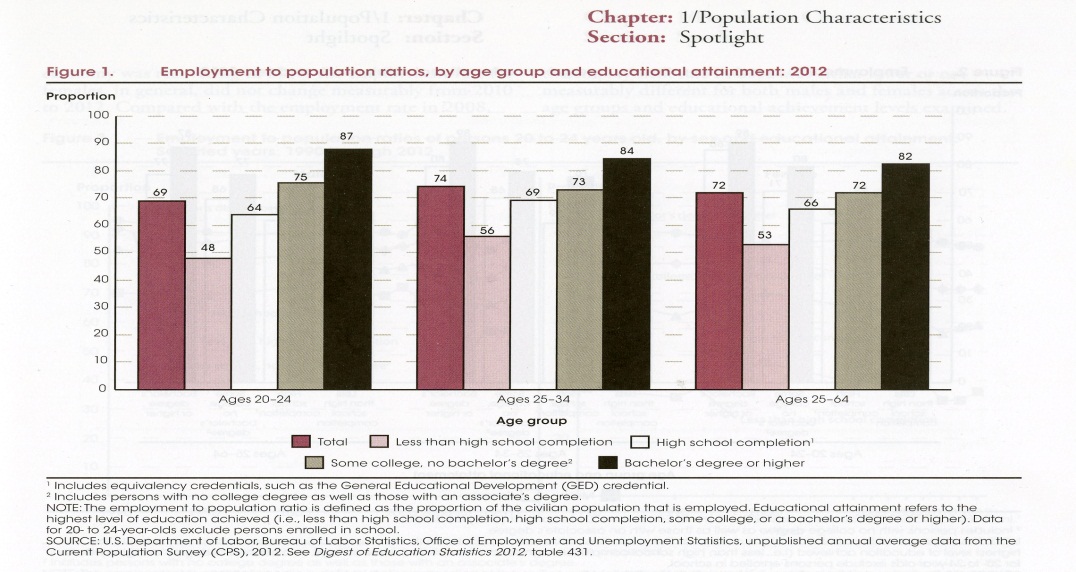
The report also features easy-to-read charts and graphs to illustrate the current trends within each indicator. For example, the chart below from the book illustrates trends in employment rates by age group and education attainment for 2012. According to the chart, in 2012, the employment rate for young adults was 87 percent for those with at least a bachelor’s degree, compared with 75 percent for those whose educational attainment was some college, 64 percent for high school graduates, and 48 percent for those who did not complete high school. Further analysis of the chart points out that older students that did not complete school—those aged 25-34 and 25-64 did slightly better in comparison to their younger counterparts, however, were still employed at a significantly lower rate than those with additional education. (CLICK ON IMAGE TO ENLARGE)

conditions employment chart 2012In addition to trends in employment rates by educational attainment, this year’s report focuses on kindergarten entry status, the status of rural education, and financing postsecondary education in the United States.

065-000-01439-4The Digest of Education Statistics 2012 provides a compilation of statistical information covering the broad field of American education from pre-kindergarten through graduate school. Like the Condition of Education, the data in this annual report was drawn from government and private sources, but especially from surveys and other activities led by NCES (National Center for Education Statistics) part of the Institute for Education Sciences (IES). The digest contains information on the number of schools, students, and teachers, as well as statistics on educational attainment, finances, libraries, technology, and international comparisons. Details on population trends, education attitudes, labor force characteristics, and federal aid supplies helpful background for evaluating the education data.

In addition to updating many of the statistics that have appeared in previous years, this edition contains new material, including:

  • Percentage distribution of 6- to 18-year olds, by parent’s highest level of educational attainment, household type (either two-parent or single-parent), and child’s race/ethnicity (table 12)
  • Enrollment and percentage distribution of enrollment in public elementary and secondary schools, by race/ethnicity and region (table 44)
  • Number and percentage of public school students participating in programs for English language learners, by state (table 47)
  • Children 3 to 21 years old served under Individuals with Disabilities Education Act, Part B, by age group and race/ethnicity (table 49)
  • Percentage of 3-, 4-, and 5-year-old children enrolled in preprimary programs, by attendance status, level of program, and selected child and family characteristics (table 57)
  • Number and enrollment of public elementary and secondary schools that have closed, by school level and type (table 109)
  • Number and percentage distribution of public school students eligible for free or reduced-price lunch, by school level, locale, and student race/ethnicity (table 112)

This statistical reference could be helpful to parents choosing schools for their children as well as for teachers, librarians, and public administrators as it tracks enrollment, population trends and key areas of studies with student progress.

How can I get these publications on education statistics?

Shop Online Anytime: You can buy these and other publications (with FREE Standard Shipping worldwide) from the U.S. Government Online Bookstore website at http://bookstore.gpo.gov:

Shop our Retail Store: Buy a copy of any print editions from this collection at GPO’s retail bookstore at 710 North Capitol Street NW, Washington, DC 20401, open Monday–Friday, 9 a.m. to 4 p.m., except Federal holidays, Call (202) 512-0132 for information or to arrange in-store pick-up.

Order by Phone: Call our Customer Contact Center Monday through Friday, 8 am to 5:30 pm Eastern (except US Federal holidays). From US and Canada, call toll-free 1.866.512.1800. DC or International customers call +1.202.512.1800.

Visit a Federal Depository Library: Search for these in a nearby Federal depository library. You can find the records for most titles in the Catalog of U.S. Government Publications or CGP.

About the author: Trudy Hawkins is a writer and marketing specialist in GPO’s Publication & Information Sales Division supporting the U.S. Government Online Bookstore (http://bookstore.gpo.gov).