A Civil War Battle of the Books and the Battle for Washington DC

March 18, 2011

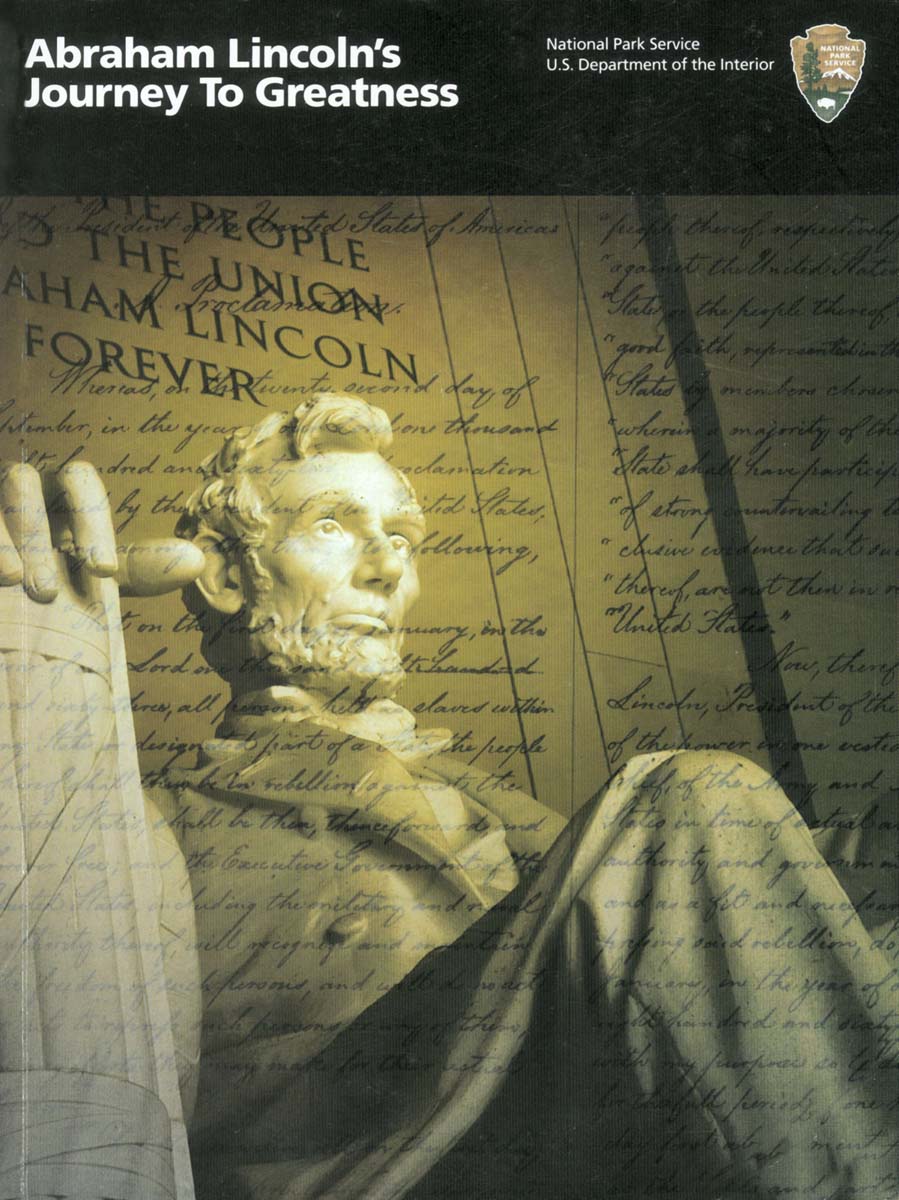
For the third year in a row, GPO is doing its own version of the NCAA basketball playoffs. This year’s theme, appropriately enough, given that GPO opened for business shortly before Confederate forces fired on Fort Sumter, is the Civil War. Since I’m a minor Civil War buff myself, I’ve blogged about several of the “competitors,” including Clara Barton: Clara Barton National Historic Site, Battle of Ball’s Bluff and, just a week or so ago, Abraham Lincoln’s Journey to Greatness.

A couple of the books in this year’s tournament are National Park Service Cultural Resources Studies, which are detailed assessments of a particular park’s history, cultural landscape, and historical materials. Monocacy National Battlefield: Cultural Resources Study is meaningful to me because I’ve visited that Maryland park a number of times over the years, beginning when it first opened to the public. As a GPO employee, references to Jubal Early’s 1864 raid, which actually penetrated as far as Fort Stevens in Northwest Washington, DC, remind me that GPO employees actually were mustered into service for a day or two to help defend the city. If Early’s force had arrived a day earlier, it could have been a disaster for the Union, but the hastily assembled force at Monocacy commanded by General Lew Wallace provided just enough delay to ensure the safety of the capital. Wallace, who was criticized, not altogether fairly, for his generalship at Shiloh in 1862, was credited by General Grant for blocking Early at Monocacy. Later, Wallace had the last laugh by writing what is arguably one of the bestselling novels of his century – Ben Hur. To add to his fame, during his post-war career as governor of the New Mexico Territory, Wallace met Billy the Kid, which ensured his regular appearance in movies and TV westerns – giving him a great deal more fame than many more successful Civil War generals.

Monocacy is also a beautiful park, with a walking trail near the Monocacy River and a neat little visitor’s center. Now that spring is on the way, I’m ready to walk those trails again. You can read more about the park itself here, browse the cultural resources study here, or get your own copy via GPO. The study is also available in libraries.

Above all, don’t forget to vote for your favorites at the Civil War Super 16 Tournament. After 150 years, it’s time for a rematch!


Lincoln on the Threshold of Greatness

March 9, 2011

As I mentioned in my last post, the Government Printing Office celebrated its 150th birthday last Friday. Around here, we like to say that there were really two inaugurations on March 4, 1861 – President Lincoln’s and ours. Lincoln is also, as far as we know, the only sitting President ever to have visited GPO. Coincidentally, given these connections, a new book from the National Park Service (NPS) just hit my desk: Abraham Lincoln’s Journey to Greatness. Our 16th President is also special to the NPS. According to the introductory copy, it manages five National Park sites solely dedicated to Lincoln, four more with strong Lincoln connections, like Mount Rushmore, and a total of 47 “that include Lincoln and the Civil war stories as primary interpretive themes.” If you add in sites that deal in some way with slavery and Civil Rights stories, the total jumps to 75 – almost a quarter of all NPS sites!

I must say, though, that I wasn’t sure what to expect when I opened this handsome little volume. After all, hasn’t every Lincoln angle been covered by now? I should have paid more attention to the title. After a brief account of the Lincoln-Douglas debates and the election of 1860, the bulk of the book is an account of President-elect Lincoln’s train trip from Springfield, Illinois to Washington, DC – a literal “journey to greatness.”

In addition to brief descriptions of his welcomes to various cities along the way, the book includes quotations, such as numerous comments on his determination to preserve the Union and cogent remarks on immigration to the German Industrial Association of Cincinnati, Ohio. It also features classic vignettes from his trip, including his salute to Grace Bedell of Westfield, New York who, in a letter to candidate Lincoln, had suggested he grow a beard (“The President left the car, and the crowd making way for him, he reached her, and gave her several hearty kisses, and amid the yells of delight from the excited crowd, he bade her good-bye.”) My favorite of these, because it’s a reminder of the slyly humorous man sometimes overshadowed by the solemn national icon, is his appearance at the Leaman Place, Pennsylvania: “Loud calls being made for Mrs. Lincoln, Mr. L. brought her out, and said he had concluded to give them ‘the long and short of it!’ This remark – with the disparity between the length of himself and wife – produced a loud burst of laughter, followed by enthusiastic cheers as the train moved off.” 

Abraham Lincoln’s Journey to Greatness is a great way to look at Lincoln the man and the statesman as he began what still remains the most trying period in the history of the Republic. When I finished it, I was ready to rally round the flag! You can find a copy of this new book here or find it in a library.


Russia, America, and the Lands of the Bering Strait

January 21, 2011

Sometimes a Government publication is a window into a program that you never dreamed existed. Before opening my copy of Early Art of the Northern Far East: the Stone Age, I had never heard of the National Park Service’s Shared Beringian Heritage Program. It’s not a new program, either: according to the program’s Web site, it was “created in 1991, [and] resulted from a commitment by Presidents George H.W. Bush and Mikhail Gorbachev to expand United States and Soviet cooperation in the field of environmental protection and the study of global change.”

Now perhaps some of you are thinking, “Hold on there, Government Book Talk, what the heck is Beringia?” Thanks to that same Web site, I can state with confidence that “Beringia is defined as the land and maritime area bounded on the west by the Lena River in Russia; on the east by the Mackenzie River in Canada’s British Columbia; on the north by 72 degrees north latitude in the Chukchi Sea; and on the south by the tip of the Kamchatka Peninsula.” This joint Russo-American geographic and cultural unit possesses unique natural resources and is the home of Native peoples with much in common. The program conducts research on the prehistoric Bering land bridge as well as the natural and human history of its animal and human inhabitants, informs the public about these discoveries, and translates Russian-language publications about the region.

Early Art of the Northern Far East is one of those translated works. I must admit that it’s really for specialists only – very much in the mode of such venerable series as Smithsonian Contributions to Anthropology – but it is intriguing to see the variety of animal and celestial images that were sculpted or incised by Beringia’s earliest peoples. If you have a serious interest in cultural anthropology or prehistoric art, this is a valuable contribution to the study of  both. You can browse through it here, get your own copy here, or find it in a library.


Striking Photos from the DC Area’s National Parks

November 24, 2010

For some reason, picture books keep on popping up here at Government Book Talk. Just the other day I blogged about a Marine Corps book of photos taken in Afghanistan. Today, it’s the National Park Service (NPS), with a splendid collection of photographs taken throughout the NPS National Capital Region. A Photographer’s Path: Images of National Parks Near the Nation’s Capital is a winning collection of images highlighting nature and history in the Greater Washington DC area.

The photos, all taken by Tom Paradis of NPS, highlight the beautiful (a royal red cardinal flower with ascending blooms of scarlet, shot in DC’s own Rock Creek Park), the bizarre (a leopard/tiger-patterned stalk of the grimly named American cancer-root, taken along the George Washington Memorial Parkway), and even the glitzy (neon lights illuminating the restored amusement park arcade façade at Maryland’s Glen Echo Park). As a longtime parks visitor and Old Dominion resident, I particularly enjoyed the photos of Dyke Marsh, a wetlands paradise within shouting distance of Alexandria, Virginia. There’s a really cool shot of a verdigrised cannon at Manassas National Battlefield Park, and this park also is represented among the nature photos.

Because the photographs are really the raison d’etre of this book, text is minimal, but Megan Nortrup of NPS has done a nice job of using a minimum of words to evoke the maximum mystique of each image. A Photographer’s Path is really an extraordinarily attractive publication and a testimony both to the talents of Government employees and the marvels of America’s National Parks, even in so urbanized an area as this one. You can get a copy of this brand new book here.


Summer Travels

July 7, 2010

Government publications are more than just books. Guest blogger Kelly Seifert reminds us that maps and guides can be just as engrossing, especially at this time of year.

If you’re planning on doing some travel around the country this summer, you can start your planning with the National Parks System Map and Guide. It features a map of the United States, including Guam, Puerto Rico, and the Virgin Islands, showing the locations of parks, historic sites, and other properties operated by the National Park Service. On the reverse side, an alphabetical list of each National Park System property describes its activities, services, and facilities. If you’re planning on exploring any of the 391 destinations of the National Parks Service this summer, this is an essential take along. You can also easily access this publication by visiting your local Federal depository library. Locate a library in your area here.

To make your trip complete, check out these other great publications as well: 1) the National Trails System: Map and Guide, which includes descriptions of national historic and scenic trails, and 2) the National Wildlife Refuge System: A Visitor’s Guide, which contains a map showing national wildlife refuges that provide recreational and educational opportunities. The Visitor’s Guide also provides tips for visiting national wildlife refuges and lists refuges in all 50 States, Puerto Rico and the Virgin Islands, along with the best wildlife viewing season and the features of each refuge.

Why leave the country for a little R&R when there are so many national treasures right on your doorstep? Happy Travels!


Notable Documents: Historic Orchards

July 1, 2010

Although Keats called autumn the season of mellow fruitfulness, these days you can find just about any fruit at any time, thanks to modern agriculture and international trade. It was not always so, though. Fruitful Legacy: A Historic Context of Orchards in the United States, a Library Journal 2009 Notable Government Document, reveals the surprisingly complex history of fruit trees in the United States. In colonial times, the trees tended to be tall and grown from seed. The resultant fruit was not particularly tasty because apples and other tree fruits were grown for cider and animal feed, not to be eaten raw by humans. So-called garden orchards, tended behind walls by the well-to-do, were the main sources for “eating fruit”, and if a particular variety was out of season, our forebearers were out of luck.

Grafting and other techniques eventually produced larger and more productive orchards. These days, trees are bred to be dwarfs, which explains why older engravings show kids tossing down apples or pears from high up in trees, while today’s apple pickers are about as tall as the trees they pick from.

Aside from lots of information on the continuing evolution of America’s orchards, this book from the National Park Service’s Olmsted Center for Landscape Preservation also addresses the surprisingly numerous heritage orchards and individual trees that are, or are eligible to become, entries in the National Register of Historic Places. Some of these are reserves for the germplasm of fruit varieties that otherwise would be lost to us, while others preserve the way orchards and fruit trees were planted and used throughout our history.

Fruitful Legacy provides a bonus: a selection of gorgeous botanical drawings of classic American fruits, as well as photos of fruit trees and fruit tree stands in national parks and monuments.

I found Fruitful Legacy to be a surprisingly interesting read, a generator of ideas for trips to parks (the Moses Cone Memorial Park, part of the Blue Ridge Parkway, sounds intriguing and not impossibly far from where I live), and a visual treat. You can browse it here, get a copy here, and find it in a library near you here. Now, should I have an apple or a pear with lunch?


Clara Barton: Clara Barton National Historic Site, Maryland

April 21, 2010

It’s National Parks Week, which made me think about the National Park Service’s long-running Handbook series. Although I enjoy any and all national parks, I tend to seek out those with archaeological or historical connections. Research reveals that the Park Service began publishing its Historical Handbook series in 1949. Although the original handbooks in the series are out of print (you can find a list and cover images here), the series continues today.

A favorite of mine is the Clara Barton Historical Site and its accompanying Handbook. For one thing, the site is in Glen Echo, Maryland, which for residents of the Washington, DC area means Glen Echo Park, another favorite Park Service place. For years it was an amusement park, and remnants of those days remain, as does a carousel and a ballroom for dancing.  It’s worth a visit all by itself.

The Barton house presents quite a contrast. Originally built from timber scavenged from the Johnstown flood for use as a storage depot for Red Cross supplies, in 1897 it became both the headquarters of the American Red Cross and the home of its founder, Clara Barton. (Visiting the site on a hot summer day always makes me wonder what life was like in this rather humid area before air conditioning). The size of this 38-room house, the rooms themselves, and the dark pine paneling all conjure up life in a unique turn-of-the century home/office/volunteer center dedicated to helping victims of disaster at home and abroad.

The Clara Barton Handbook presents the story of the house, the person, and the organization concisely and lucidly. Like all of the Park Service handbooks, it’s also a quality product in design. If you’re planning a visit, or just want to learn more about this remarkable place, I’d recommend it.

You can find a list of Handbooks, including quite a few that cover historical parks, here.


Charley Harper Posters

April 7, 2010

It’s easy to become blasé about the things you deal with on the job. For years, I’ve been seeing a variety of National Park Service posters whose design was along similar lines. They depicted stylized birds and animals, evoking, at least for me, a sort of Native American sensibility. I admit, though, that this is more thought than I actually put into them. If asked, I would have surmised vaguely that the stylistic resemblance was due to some kind of “look” the Park Service was trying to achieve, rather than because they were the work of a particular artist.

Recently, we reprinted a number of these posters and our content acquisition staff kept referring to them as “Charley Harper” posters. Then we got an inquiry from the depository library side of the house about “Charley Harper” posters. My first response: Who’s he? Well, Charley Harper (1922-2007) was a noted American artist, particularly esteemed for his wildlife posters, prints, and illustrations in a style he described as “minimal realism.” He’s also an eminently collectible artist, so once again Government publications suddenly appear in a new guise,  far removed from the tired old stereotype.

These posters are sold by stores in the various national parks and also are available from GPO. It’s easy to pick them out! To see all of the posters and handbooks produced by our Park Service colleagues in Harpers Ferry, West Virginia, go here, where you’ll also find a link to the various parks associations that sell Park Service products.


March Madness

March 30, 2010

College basketball playoffs are wildly popular and followed by millions of fans, including some in our office. Last year, we came up with the idea of doing a “Sweet 16” playoff of Government publications on GPO’s online bookstore. After working with our web support team, which is both creative and very patient, we launched our first playoff last year. We sent out a message to all of our customers who have requested information about our products and sat back to see if anything would happen. It did! By the time our “tournament” was over, we received more than 139,000 votes and a mention in the New York Times business blog.

I think this proves that Government publications have fans, and highly motivated fans at that. The winner? You can find it here.

Now it’s March again, and this year it’s a National Parks Playoff, featuring eight National Park Service handbooks and eight posters by the noted artist Charley Harper (who will be the subject of a future posting here). If you get a chance, stop by and vote!