History Was Made at the Women’s Rights National Historical Park

March 26, 2013

Guest blogger Jennifer K. Davis from GPO’s Library Services & Content Management Division that supports the Federal Depository Libraries Program (FDLP) writes about the Women’s Rights National Historical Park brochure in honor of National Women’s History Month. (Originally posted in the FDLP Community site on March 25, 2013.)

March is National Women’s History Month, and I am writing this posting on International Women’s Day. If I had the twelve hours–round trip– to hit the road, I’d head for the Women’s Rights National Historical Park in Seneca Falls, New York, and celebrate how far we have come as a nation.

Susan B. Anthony and Elizabeth Cady Stanton

It would definitely be a work-related trip. The U.S. Government Printing Office (GPO) printed Elizabeth Cady Stanton’s most famous– and in her estimation, her best– speech in 1915. She delivered her address, Solitude of Self, before the Committee on the Judiciary on January 18, 1892. She argued why the law needs to treat women as equal citizens under the law and she argued for women to get the vote via a law that would eventually became the Nineteenth Amendment to the Constitution.

Image: Susan B. Anthony (left) and Elizabeth Cady Stanton (right). Source: The Susan B. Anthony Center for Women’s Leadership.

Sadly, it took forty-two years after Stanton and fellow suffragist Susan B. Anthony first drafted the 19th amendment in 1872 and long after their deaths for the amendment to finally be ratified and made law in 1920. Since Stanton’s house is part of the park, it’s here that you can discover a very human portion of United States history and feel a renewed sense of the privilege that all United States citizens have to vote.

Not only can you learn about Stanton at the park, you can also get a wider view of the earliest stages of the women’s rights movement in the United States. Four historical properties and a visitor’s center make up the park. You can visit the Wesleyan Chapel in Seneca Falls where the leaders of the women’s rights movement held the First Women’s Rights Convention in August 1848. Stanton’s home is open from spring through fall. You can tour the house she referred to as “the Center of the Rebellion” where she raised her large family while networking with other women on women’s rights reforms.

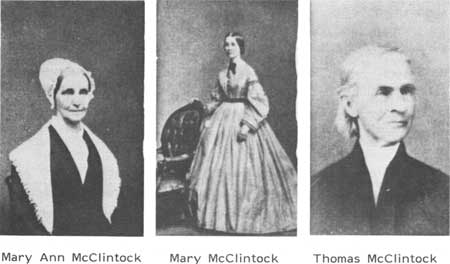
Another one of the four park properties, the M’Clintock House in nearby Waterloo, was the home of Mary Ann and Thomas M’Clintock.

MClintocksMrs. M’Clintock held the planning session for the First Women’s Rights Convention and drafted the Declaration of Sentiments at their home as well. (As an added bonus, the M’Clintocks were Quakers and their house was a stop on the Underground Railroad–so you can find out more about Quakers and belatedly celebrate African-American History Month while there.)

While in Waterloo, you can walk by the Hunt House, where Jane and Richard Hunt hosted Lucretia Mott and held an assembly for her where the attendees announced the plan for the First Women’s Right’s Convention. Although you can’t tour the Hunt House now as it is too fragile, the National Park Service (NPS) is making plans to restore it in the future. Visiting these locations brings home the exciting sense of purpose and activity of the American women’s rights movement of the late 1800s.

Information about all of these sites, as well as slideshows of the historical houses, the text of Stanton’s address, historical factoids, and photos of the major architects of the women’s rights movement and their supporters, are available at the Women’s Rights National Historical Park brochure online. Even if, like me, you can’t get to upstate New York to see these sites in person, you can (almost) feel like you’ve been there once you’ve given the park Web site a thorough visit.

It’s worth the time it takes to make the trip, whether actual or virtual. It’s amazing to see how far we’ve come as a nation in the advancement of personal rights, and how much all of society (men and women) have done to push our mothers, sisters, aunts and daughters forward. Having that perspective is one of the many advantages of learning about the park.

Continue your self-education by reading the park brochure at your local Federal depository library. You can find it either via the title’s PURL (Permanent URL) or through the Catalog of Government Publications (CGP) record that GPO cataloged for the Federal depository libraries in the March 2013 record load.

How can I access this publication, the Women’s Rights National Historical Park web brochure?

[Note from M. Bartram:] You can also purchase print publications and eBooks from GPO’s U.S. Government Online Bookstore related to the topics discussed in this article:


March Madness: New GPO Bookstore Website and Historic Anniversaries

March 22, 2013

March is traditionally a month of change and national excitement in the United States. Together with the change of seasons and college basketball frenzy, some important national milestones were reached this month that we should acknowledge, from new achievements to key anniversaries.

New U.S. Government Bookstore Website

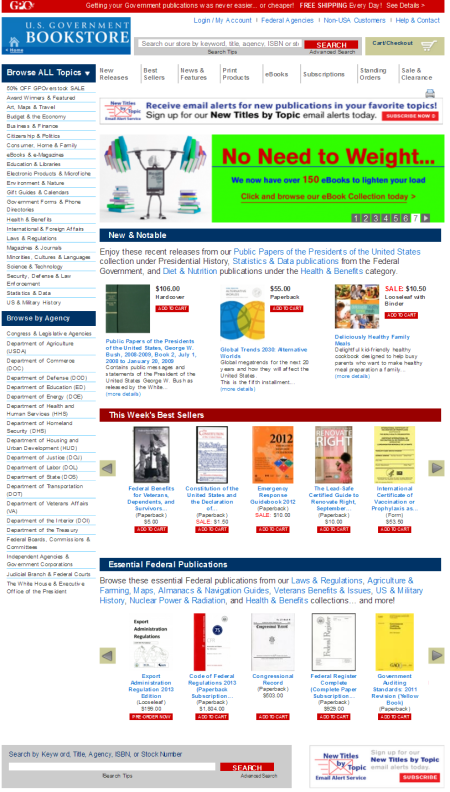
First, last week we launched our upgraded U.S. Government Bookstore ecommerce site, http://bookstore.gpo.gov/.  Our ecommerce website has gone through several iterations since its first version in 1999, each time adding functionality to keep up with the changing needs.  Today, GPO has over 4,000 Federal print publications and more than 150 eBooks available through our online bookstore.

New-US-Government-Online-Bookstore-website

Our new website includes the following user-friendly features:

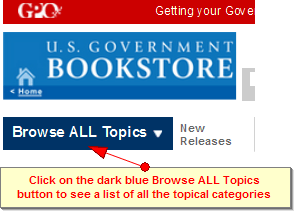
Browse-ALL-Topics-on-GPO-BookstoreClick on the dark blue Browse All Topics button on the site to see and browse by a list of all the topical categories.

These last two features—eBooks and new Categories—are particularly important in light of three other important milestones this month.

National Women’s History Month

March is National Women’s History Month in the United States, and we have a new main “Browse by Topic” category, Minorities, Cultures & Languages, where you can find books for and about African Americans, American Indians, Asian Americans & Pacific Islanders, Cultural Awareness, Disabled, Hispanics, LGBT, Minority Issues, Non-English Government Publications, Seniors & Elderly and Women, including dozens of books and eBooks about Women’s History.

Womens_History_Books_Slide

Harriet Tubman Centennial

One of the famous American heroines in the Women’s History collection is Harriet Tubman, who died 100 years ago this month making it her Centennial. Tubman escaped from slavery and returned to lead dozens of others to freedom in the mid-1800s. In addition to being the most well-known of Underground Railroad “conductors,” she was also a nurse, spy, suffragist, and more.

With all these roles, it is appropriate that we have created so many new “Browse by Topic” categories. One is Slavery & Underground Railroad (under US & Military History), where great books featuring Harriet Tubman and the Underground Railroad can be found.  Other new topics include Nursing under Health & Benefits and Intelligence & Espionage under Security, Defense & Law Enforcement.

Additional publications about National Parks can be found under the main category of Art, Maps & Travel, along with Posters & Prints and Maps, Almanacs & Navigation Guides.

BROWSE BY AGENCY: You can also find National Park Service (NPS) publications under Department of the Interior (DOI) in the Browse by Agency categories on the menu at the lower left side of the site, where publications are categorized by the Federal agency that published them. For example, our own Government Printing Office (GPO) publications are under Congress & Legislative Agencies.

Iraq War 10th Anniversary

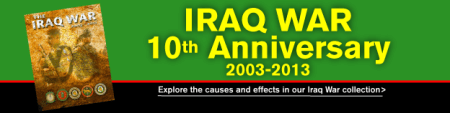
Finally, this week is the tenth anniversary of the start of the Iraq War, which began on March 19, 2003, as Operation Iraqi Liberation, later renamed Operation Iraqi Freedom.

Iraq-War-10th-Anniversary_Books_Slide

President Obama, in an address about the Iraq war 10th anniversary this week said:

“As we mark the 10th anniversary of the beginning of the Iraq war, Michelle and I join our fellow Americans in paying tribute to all who served and sacrificed in one of our nation’s longest wars. We salute the courage and resolve of more than 1.5 million service members and civilians who during multiple tours wrote one of the most extraordinary chapters in military service. We honor the memory of the nearly 4,500 Americans who made the ultimate sacrifice to give the Iraqi people an opportunity to forge their own future after many years of hardship.”

Since the beginning of the war, the Defense Department has published dozens of excellent publications about the war, the strategies, Saddam Hussein, Iraq, reconstruction and the achievements and sacrifices made by our Armed Forces. You can find these publications featured under Iraq & Persian Gulf Wars which can be found under US & Military History > Battles & Wars categories.

It’s a Launch, Not a Landing

So, our new site marks the completion of over a year of hard work by our team here at the Government Printing Office, all aimed to make sure “we the people” can discover more about our Nation through excellent publications by our Federal Government. But there’s a good reason we call it a website launch and not a landing. This is only the beginning, with more great content and features to come! Enjoy!

So, please visit GPO’s new online bookstore website at http://bookstore.gpo.gov/ and tell us what you think!

About the Author:  Michele Bartram is Promotions Manager for GPO’s Publication and Information Sales Division in Washington, DC, and is responsible for online and offline marketing of the US Government Online Bookstore (http://bookstore.gpo.gov) and promoting Federal government content to the public. She was also in charge of the online bookstore relaunch!


Librarians Pick Notable Federal Books- 2012 Edition

July 3, 2012

It’s that exciting time of year again if you’re a publisher of Federal publications. It’s the equivalent of the Academy Awards, the Emmy Awards or the Grammy Awards… Well, maybe that’s pushing it, but when the American Library Association’s (ALA) Government Documents Round Table or GODORT convenes the Notable Documents Panel of its Publications Committee to choose the top government-produced publications of the previous year, we can’t help but get caught up in the excitement.

Each year, this ALA GODORT Notable Documents Panel selects what it considers to be the most “Notable Government Documents” published during the previous year by Federal, state, and local governments and includes the list of winners in its prestigious Library Journal (LJ).

According to its website, Library Journal is “the most trusted and respected publication for the library community. LJ provides groundbreaking features and analytical news reports covering technology, management, policy and other professional concerns to public, academic and institutional libraries. Its hefty reviews sections evaluate 8000+ reviews annually of books, ebooks, audiobooks, videos/DVDs, databases, systems and websites.

This year, as usual, many of the Federal publications the panel selected are available through the Government Printing Office’s Federal Depository Library Program (FDLP) libraries and GPO’s Sales Program.

Out of all of the Federal Government documents LJ looked at in the past year, here are some of those it found most notable:

  Keeping America Informed: The United States Government Printing Office 150 Years of Service to the Nation

Publisher: Government Printing Office (GPO)

GPO’s own role in producing excellent Government publications in its 150 years of history gained it a place on the GODORT list for the past year:“Liberally illustrated with historical photographs and facsimiles of famous government documents, this volume will appeal to a wider audience than depository librarians. Historians and history buffs who have an interest in government and how it interacts with both the private sector and public employee unions will find a compelling story that focuses on the federal government’s obligation to keep citizens informed about its activities.” – LJ

  Statistical Abstract of the United States 2012 (Hardcover)

Statistical Abstract of the United States 2012 (Paperback)

Publisher: Commerce Department, U.S. Census Bureau

The Statistical Abstract of the United States, published since 1878, is the standard summary of statistics on the social, political, and economic organization of the United States. It is designed to serve as a convenient volume for statistical reference and as a guide to other statistical publications and sources. The latter function is served by the introductory text to each section, the source note appearing below each table, and Appendix I, which comprises the Guide to Sources of Statistics, the Guide to State Statistical Abstracts, and the Guide to Foreign Statistical Abstracts.

The Library Journal adds an important update about this: “In addition to being the quintessential statistical resource of all time, Statistical Abstract is a Notable Document for 2011 simply because this edition will be the last produced by the Census Bureau and distributed through FDLP. Future editions will be published commercially, so librarians will still have options for maintaining the continuity of their print collections. A classic reference tool.” – LJ

  Macondo: The Gulf Oil Disaster. Chief Counsel’s Report 2011

Publisher: National Commission on the BP Deepwater Horizon Oil Spill and Offshore Drilling

“The National Commission on the BP Deepwater Horizon Oil Spill was created by President Obama and charged with investigating the root causes of the largest accidental marine oil spill in the history of the petroleum industry. The committee concluded that the cause of the blowout was not mechanical. Instead, a number of poor management decisions, combined with an inadequate regulatory structure and an indifferent regulatory agency, overwhelmed the safeguards designed to prevent such disasters. Plenty of illustrations and photographs offer a glimpse into the technology of offshore oil rigs.” – LJ

  Then Came the Fire: Personal Accounts From the Pentagon, 11 September 2001

Publisher: Defense Dept., Army, Center of Military History

“In 2011, there were many publications designed to commemorate the tenth anniversary of the attacks of September 11, 2001. In addition to the 59 people aboard the flight that struck the Pentagon, 125 people in the Pentagon were killed. The editors of this memorial volume have collected the stories of eyewitnesses, including the military and civilian personnel who escaped the burning building and first responders and reporters at the scene. It also includes hundreds of photographs.”- LJ

  Freedom by the Sword: The U.S. Colored Troops, 1862-1867

Publisher: Defense Dept., Army, Center of Military History“

In what may be the definitive operational history of black troops in action during the Civil War, [author] Dobak describes the differences in how freedmen and runaway slaves were recruited, how they lived, and how they were trained. Most important, it considers how gallantly these men performed in combat at a time when many of their own leaders questioned whether they would be willing to fight for their own freedom and for that of their families. Much of the documentation comes from the ‘War of the Rebellion’ series.” – LJ

  Legacy of Excellence: The Armed Forces Institute of Pathology 1862-2011 

Publisher: Defense Dept., Army, US Army Medical Department Center and Schoo1, Armed Forces Institute of Pathology, Public Affairs Office, Borden Institute

“In 1862, shortly after the Battle of Antietam, army surgeon general Brigadier Gen. William Hammond ordered the establishment of the Army Medical Museum. Surgeons working on Civil War battlefields were encouraged to preserve anatomical specimens, such as severed limbs and diseased organs, and send them to the museum for further research. From the start, the museum made its displays of specimens and instruments, as well as its medical library, available to the general public. Under the leadership of later curators, such as John Billings and Walter Reed, the museum evolved into the Armed Forces Institute of Pathology. Readers interested in the history of science, especially medical science or in the devastating effects of Civil War weaponry on the human body, will be fascinated by the hundreds of graphic photographs.” – LJ

And a hearty congratulations to all the winning Federal agency publishers for an excellent job!

How can you get these publications from this year’s Federal Notable Government Documents collection?

  • Buy any of these publications online 24/7 by shopping the Notable Government Documents 2012 collection at GPO’s Online Bookstore.
  • Buy them at GPO’s retail bookstore at 710 North Capitol Street NW, Washington, DC 20401, open Monday-Friday, 9am to 4pm, except Federal holidays, (202) 512-0132.
  • Find these publications in a library near you.

About the Author:  Michele Bartram is Promotions Manager for GPO’s Publication and Information Sales Division and is responsible for online and offline marketing of the US Government Online Bookstore (http://bookstore.gpo.gov) and promoting Federal government content to the public.


1940 Census Goes Digital

April 11, 2012

Last week, on April 2, 2012, the 1940 United States census was released to the public in digital format by the National Archives in conjunction with the U.S Census Bureau at http://1940census.archives.gov

Image: 1940 Census Poster urging Americans to “Help the Ten-Year Roll Call”. Source:U.S.Census Bureau

Reports National Public Radio:

Veiled in secrecy for 72 years because of privacy protections, the 1940 U.S. census is the first historical federal decennial survey to be made available on the Internet initially rather than on microfilm.

In a great example of a private/public partnership, Archives.com’s parent company partnered with the National Archives to provide the public with free digital access to the 1940 Federal Population Census.

Miriam Kleiman, spokeswoman for the U.S. National Archives, told The Associated Press that the Archives’ 1940 census site registered more than 22 million hits in just four hours from almost 2 million users on its very first day of release. It is extremely popular already with librarians, researchers and genealogists researching their family tree.

Data from the Great Depression

Archivist Connie Potter, in an entertaining video about the Archives’ digitization project, explains that the reason this census is so amazing is because it describes “the country during the Great Depression.  It reflects all of the economic dislocation, how many people were immigrants, how many people had what level of education.

Last week’s release of digitized information covers detailed records on 132 million people living in the United States at the end of the Depression and a year before Pearl Harbor.

The census data was transferred to microfilm during World War II, and in 2009, National Archives personnel began digitizing those records, culminating in the release of the database last week.

Over 3.9 million images were digitized, providing a bonanza for researchers.

Some interesting facts about the 1940 Census

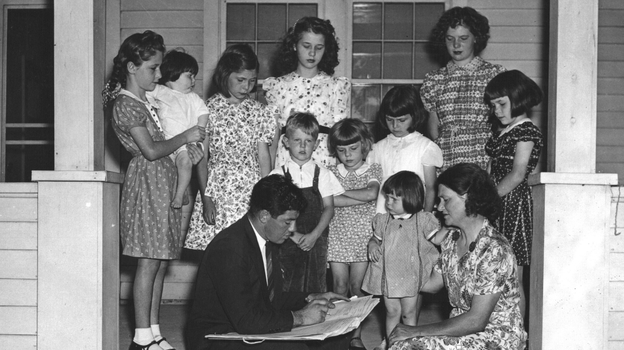
Image: An enumerator interviews a woman with her 10 children around her for the 1940 census. Source: National Archives at College Park

The Census Bureau began the 1940 census with extensive long-term planning, recruiting and training.  Back in 1940, about 120,000 census-takers, called enumerators, spread out across the U.S. and territories, going door-to-door to interview families.

Enumerators both then and now can face challenging situations when gathering the data to tabulate the census, from trudging through fields or mushing a dog sled across the snow.

Image: Rural visit by a U.S. Census taker in connection with the 16th decennial census of 1940  Source: Library of Congress image number LC-USZ62-91199

Image: The Alaska Territory saw the census enumerator arrive in his dog sled, 1940 – 1941 Source: National Archives Research Catalog

Questions from the 1940 Census

It’s interesting to note the questions that were asked on the 1940 census form.  One of the fifty questions the enumerators asked Americans in 1940 reflected the more formal societal structures of the time: “What was the Relationship of this person to the head of the household, as wife, daughter, father, mother-in-law, grandson, lodger, lodger’s wife, servant, hired hand, etc.?”  

Another question was very relevant for a Depression-era nation where children as young as 14 still worked, and millions of out-of-work Americans were given “public emergency” jobs around the country under Franklin Roosevelt’s New Deal programs. One was the Works Project Administration (originally the Works Progress Administration) or WPA, which was the “largest and most ambitious New Deal agency and employed millions of unskilled workers to carry out public works projects,including the construction of public buildings, roads and dams, as well as operating large arts, drama, media, and literacy projects.

Image: WPA Federal Arts poster. Source: Smithsonian Archives of American Art

Another New Deal program mentioned in the census was the Civilian Conservation Corps or CCC . It was designed to provide employment mostly for young men in relief families who had difficulty finding jobs during the Great Depression (there were separate programs for veterans and Native Americans), while at the same time implementing a general natural resource conservation program in every state and territory for the “conservation and development of natural resources in rural lands” owned by federal, state and local governments. Many trees were planted and national and state parks built and preserved by the CCC.

Image: Illinois CCC recruiting poster. Source: Archives.gov

Another youth-focused program referenced was the National Youth Administration or NYA that focused on providing work and education for young Americans between the ages of 16 and 25.

Thus, it makes sense that this 1940 census question asked Persons 14 Years Old and Over” to classify their employment status during the time of the census-taking (March 24-30, 1940) as follows:

  • Was this person AT WORK for pay or profit in private or non-emergency Government work during week of March 24-30? (Yes or No).
  • If not, was he at work on, or assigned to, public EMERGENCY WORK (WPA, NYA, CCC, etc.) during week of March 24-30? (Yes or No).

How to Use the 1940 Census

Even for those not steeped in genealogy research will find it thrilling, like I do, to see the excitement build over the release of these images.  It might be fun to look up my ancestors because I know my grandfather worked for the W.P.A.   I’m also interested in looking at the various trends and metrics available on housing to see if there is any correlation to the current economic situations.

Visit the National Archives pages to see the various resource location aids, enumerator training videos, and question templates that have been gathered for your use.  Based on the times, there were specific instructions for enumerators to get a count of temporary housing such as huts, tents, and cabins as of a point in time.   Here’s one bit of instruction to help clarify how to count the large transient population: “Persons in hotels, tourist or trailer camps, missions, and cheap one night lodging houses (flophouses) will all be enumerated as of the evening of April 8th”.

Help Tag the Images

The Census Bureau is appealing to the public for help indexing and meta tagging the images.  This is a genealogy crowdsourcing project to ensure the 3.8 million images are indexed and freely searchable online. You, too, can register to be a 1940 Census Blog Ambassador and get a nifty badge for your page!

You can follow the 1940 Census via Twitter at: #1940Census #Genealogy #history. 

How can you get other Census Bureau publications today?

The release of the historic images will be made at 1940census.archives.gov.

For those interested in more current information, take a look at the resources in GPO’s U.S. Government Bookstore.  The subscription series help keep you updated on the Census and Population statistics as they are released.

  • Buy them at GPO’s retail bookstore at 710 North Capitol Street NW,Washington, DC 20401. Open Monday-Friday, 9am to 4pm, except Federal holidays. Call 1.(202) 512-0132 for more information.
  • Find them in a Federal Depository Library.

Guest blogger: Nancy Faget, one of our federal librarians in GPO’s Library Services & Content Management Division who writes often about NASA “rocket scientists” and digital innovations in the library field.


Goodbye GPO Access, Hello FDsys

March 16, 2012

Guest blogger Kelly Seifert, Lead Planning Specialist for GPO’s Library Services & Content Management Division, writes about the final switchover from GPO Access to FDsys, GPO’s state-of-the-art digital database of Federal information.

Farewell, GPO Access! GPO’s Federal Digital System (FDsys) is here to stay and is better than ever.

Today, March 16, 2012, marks a momentous occasion for the Government Printing Office and its groundbreaking service, GPO Access. After 16 years of keeping America informed, the GPO Access website is shutting down and been replaced by its successor, GPO’s Federal Digital System (FDsys).

Image: Switchover notice from GPO Access to FDsys

All of the information the public had access to on GPO Access and more is available through FDsys (pronounced by “those in the know” as “F – D – sis”).

While not the traditional “Government book” discussed on this blog, we at GPO thought it only appropriate to blog about a service that provides free access to a vast number of Federal Government publications. FDsys provides the American public with free online access to about 50 different collections of U.S. Government information ranging from the Code of Federal Regulations to the U.S. Government Manual to the U.S. Budget.

Image: GPO’s Federal Digital System (FDsys) home page, www.FDsys.gov

GPO Access introduced electronic access to Government information

In 1993, Congress passed the U.S. Government Printing Office Electronic Information Access Enhancement Act (Public Law 103-40), which expanded GPO’s mission to provide access to Federal Government information not only in print, but also electronically. In June 1994, in response to that legislation, GPO launched GPO Access.

FDsys takes electronic access to new levels

Even the best of information systems have to evolve. Thus it was in January 2009 that GPO unveiled the next generation of Government information online with FDsys. The countdown to the shut-down of GPO Access began on December 20, 2010, when FDsys became GPO’s official system of record for free access to information and publications from all three branches of the Federal Government. In November 2011, GPO Access entered its “archive only” state and transitioned its status to historical reference archive. From that point forward, FDsys was GPO’s only resource for access to current, updated information, and now, GPO Access has shut down for good.

Image: FDSys Advanced Search results page

FDsys offers new, improved features to find Government publications

FDsys boasts key enhancements to GPO Access that allow users from librarians to scholars, researchers, lawyers and the public to:

  • Easily search across multiple Government publications;
  • Perform advanced searches against robust metadata about each publication;
  • Construct complex search queries;
  • Refine and narrow searches;
  • Retrieve individual Government documents and publications in seconds directly from each search result;
  • View more information about a publication and access multiple file formats for each search result;
  • Access metadata in standard XML formats;
  • Download content and metadata packaged together as a single ZIP file;
  • Browse FDsys alphabetically by collection, by Congressional committee, by date, and by Government author; and
  • Utilize extensive help tools and tutorials.

Image: List of collections of Federal Government publications available on FDSys

Links to printed versions of Government publications

In addition to providing free access to almost 50 different Government publications online, FDsys also directs you to GPO’s Online Bookstore, where you can buy those same publications, if you wish to have a bound and printed official copy.

As a GPO employee who has worked extensively with FDsys, I think you will really enjoy it and the new, enhanced features that are provided by FDsys for navigating Government information.

How do I find Federal Government publications?

  • Search GPO’s Federal Digital System (FDsys) at www.FDsys.gov.
  • Search GPO’s Catalog of Government Publications (CGP) at http://catalog.gpo.gov.
  • Shop GPO’s Online Bookstore at http://bookstore.gpo.gov/, 24 hours a day, 7 days a week, and 365 days a year.
  • Visit GPO’s Retail Bookstore at 710 North Capitol Street NW, Washington, DC 20401, open Monday through Friday, 9am to 4pm, except Federal holidays. Call (202) 512-0132 for more information.

Losing our Shared National Experience?

October 31, 2011

Our blog post last week talked about GPO’s 150-year history of keeping America informed. But what does this mean in today’s media-saturated world?

Has the proliferation of media eroded our shared national experience?

[Figure 1. U.S. History Collage. Image courtesy of Mrs. Rice’s American History II class, Lexington High School, Lexington, Ohio.

Two weeks ago in a social media seminar for Federal Government, David Kirkpatrick (technology writer for the Daily Beast and Fortune magazine and author of a new insider book on Facebook) gave some startling statistics: 50% of Facebook’s 800 million users worldwide visit Facebook daily and up to 500 million have accessed Facebook on a single day, with the average Facebook user having over 130 “friends.”

But even more surprising, he said that 50% of Americans today now get their news and analysis about important events— sometimes edited or changed as it is passed along— from friends and family, often via social networks, text or email rather than from traditional media sources.

Prior to the 21st century, when Americans had only a few national media choices and limited local media, we would all receive the same original message at the same time, thus creating a shared American experience.

Today, in the U.S. alone Americans can choose to receive information from any of an estimated 1,476 daily newspapers; 1,500 television stations; 10,322 radio stations; 71 million cable television subscribers with hundreds of TV channels each; and more than 12 billion web pages and social media.

Kirkpatrick and others say the combination of the “Facebook effect”, media proliferation, and message selectivity have contributed to the erosion of our common, shared national experience.

GPO’s role in preserving our common American experience

As we mentioned in our blog last week, GPO’s mission for over 150 years has been “Keeping America Informed” about the three branches of the Federal Government.  This mission drives us to ensure the original information produced by Federal Agencies on behalf of the American people can be found by all Americans now and in the future.

What’s involved in capturing and disseminating our common Governmental information? It starts with gathering the content from Federal Agencies and publishing it in a professional format, whether print or digital. It then continues with authenticating the information to ensure Americans are getting the “genuine” unaltered information; creating permanent records with our catalog teams for our own FDSys digital database and Catalog of Government Publications; distributing these records to libraries in our Federal Depository Library Program and to worldwide library databases like WorldCat; and sending physical copies and/or ebooks to libraries, bookstores and book etailers.

View this video for an inside look at how GPO assembles and prints the Congressional Record—the official record of the proceedings, debates, and activities of Congress.

To keep America informed digitally, we allow users to subscribe to email newsletters by topic and are also now on social media, including Facebook, Twitter, YouTube, Foursquare and Yelp.

GPO Publications about shared American experiences

Here are some of my favorite Federal publications GPO has published that document significant shared American experiences over the past century. Do you remember when and how you learned of these events?

What are some of the significant national experiences that you will never forget and how did you learn about them and share them with others?

We would love to hear from you!


About the Author:  Michele Bartram is Promotions Manager for GPO’s Publication and Information Sales Division and is responsible for marketing the US Government Online Bookstore (Bookstore.gpo.gov) and promoting Federal government content to the public.