On America’s Trails

September 30, 2016

stelprdbLet’s talk briefly about two American legends celebrated on screen and page. One stretches 2,160 miles from Mount Katahdin, Maine to Springer Mountain, Georgia. The second covers 2,665 miles from America’s southern and northernmost borders along the mountain ranges of Washington, Oregon, and California.

They’re the Appalachian and Pacific Crest Trails, respectively—the first scenic trails designated by the Federal government nearly a half-century ago. On October 2, 1968, President Lyndon B. Johnson signed the National Trails System Act into law. It established a network of scenic, historic, and recreation trails. You can read the original act on GPO’s govinfo.

Until 1968, the Federal government simply built and maintained trails on Federal lands. The National Trails System Act expanded that role by providing funding and support for interstate coordination and volunteer partnerships. Today, the National Trails System includes 20 national scenic and historic trails traversing nearly 40,000 miles.

In addition to making the National Trails System Act available on govinfo, GPO makes available these trail-related resources:

024-005-01277-0National Trails System: Map and Guide

This National Park Service full-color map depicts eight national scenic trails and nine national historic trails. The National Park Service, U.S. Forest Service, and Bureau of Land Management work in concert to keep trails well-marked and well-monitored. Check out the NPS website for the complete list of scenic and historic trails.

The Iditarod National Historic Trail (Poster)
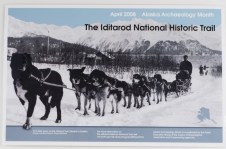
024-011-00198-1_01On one side of this U.S. Forest Service poster is a timeline and map.  On the other side is a photo of a 1913 dog sled mail team. Together, they commemorate a historic 1,500 miles stretch of winter travel tracks connected to form America’s last gold rush trail.

Upon throwing his support behind a national system of trails, President Johnson said, “The forgotten outdoorsmen of today are those who like to walk, hike, ride horseback, or bicycle. For them we must have trails as well as highways…In the back country we need to copy the great Appalachian Trail in all parts of our country…”

HOW DO I OBTAIN THESE RESOURCES?

Shop Online Anytime: You can buy eBooks or print publications —with FREE Standard Shipping worldwide— from the U.S. Government Online Bookstore at http://bookstore.gpo.gov.

Shop our Retail Store: Buy a copy of any print editions from this collection at GPO’s retail bookstore at 710 North Capitol Street NW, Washington, DC 20401, open Monday–Friday, 9 a.m. to 4 p.m., except Federal holidays, Call (202) 512-0132 for information or to arrange in-store pick-up.

Order by Phone: Call our Customer Contact Center Monday through Friday, 8 am to 5:30 pm Eastern (except US Federal holidays). From US and Canada, call toll-free 1.866.512.1800. DC or International customers call +1.202.512.1800.

Visit a Federal depository library: Search for U.S. Government publications in a nearby Federal depository library. You can find the records for most titles in GPO’s Catalog of U.S. Government Publications.

About the author: Blogger contributor Chelsea Milko is a Public Relations Specialist in GPO’s Public Relations Office.


Celebrating the National Park Service’s Centennial

August 24, 2016

grand-1434695_1280Since the creation of the National Park Service (NPS) on August 25, 1916, more than 275 million people visit the natural and cultural resources every year!

The seed for the national park idea was planted in 1864 with the passage of the Yosemite Grant. In 1872, President Ulysses S. Grant signed the bill creating Yellowstone National Park, the first national park in the history of the world. This trend continued with the signing of the Antiquities Act of 1906, by the great lover of nature, President Theodore Roosevelt, who sought to protect scientific items of cultural heritage. The Act further prohibited the removal of cultural items from Federal lands without a permit. At that time, permits were granted by the agency managing that particular monument, especially the Departments of the Interior and Agriculture. Hence, monuments were managed by various agencies.

In 1916, President Woodrow Wilson created the National Park Service, but it was President Franklin Delano Roosevelt, who in 1933 consolidated the stewardship of all national monuments and parks under the NPS. In 1935, through the Historic Sites Act, the US publically declared its goal to protect and preserve cultural heritage sites. Since then, Presidential administrations have classified more and more sites as cultural heritage. Thus far, we have close to 400 cultural heritage sites. The Obama administration alone is responsible for adding 18 of them.

9780160932090We invite you to browse the U.S. Government Bookstore’s National Parks collection. It includes everything from posters, maps, and park guides to coloring books for children. Of particular interest is the National Parks Index 2012 – 2016: 2016 National Park Service Centennial: Official Index of the National Park Service. This index is a complete administrative listing of the National Park System’s areas and related areas, including historical documentation to distinguish between the types of National Park Service sites. It has been revised to reflect congressional actions. The entries, grouped by state, include administrative addresses and phone numbers, dates of authorization and establishment, boundary change dates, acreages, website addresses, and brief statements explaining the areas’ national significance.

024-005-01271-1You can also experience a little of what the NPS has to offer in the Washington, D.C. area through the pamphlet, “National Park Service: Where History Happens,” on sale via the U.S. Government Bookstore. Learn more about the D.C. area’s most historic attractions: where Abraham Lincoln died or where Martin Luther King, Jr. made his famous “I Have a Dream…” speech. Visit Mount Vernon, the home of George Washington, seemingly completely frozen in time, as workers cultivate the farm using the same techniques and tools as in Washington’s  era.

America’s heritage includes monuments, parks, recreational sites, parkways, and many other things. Layer upon layer, time upon time, when we look at these structures we are not just looking at our past, we are learning from it so we can build a better tomorrow. History is always being made; the unheard of yesterday is being made possible today.

Below is a list of handpicked resources for those interested in learning more. Find these resources via govinfo, the Catalog of U.S. Government Publications, and the U.S. Government Online Bookstore.

govinfo – https://www.govinfo.gov/features/national-park-service-centennial

  1. History of H.R. 3556 – A bill to prepare the National Park Service for its Centennial in 2016 and for a second century of protecting our national parks’ natural, historic, and cultural resources for present and future generations, and for other purposes
  1. 160 Cong. Rec. H3254 – NATIONAL PARK SERVICE 100TH ANNIVERSARY COMMEMORATIVE COIN ACT
  1. REPT. 106-250 – ANTIQUITIES ACT OF 1906

Catalog of U.S. Government Publications – http://catalog.gpo.gov/

  1. National Park Service: Where History Happens
  1. National Registry of Natural Landmarks
  1. The Secretary of the Interior’s standards for the treatment of historic properties : with guidelines for preserving, rehabilitating, restoring & reconstructing historic buildings
  1. National historic landmarks listed by state or territory
  1. Presenting nature : the historic landscape design of the National Park Service, 1916 to 1942
  1. National Park Service administrative history : a guide

U.S. Government Online Bookstore – http://bookstore.gpo.gov

  1. National Park Service: Where History Happens
  1. Washington: The Nation’s Capital (2013 Map)
  1. Secretary of the Interior’s Standards for Rehabilitation and Illustrated Guidelines for Rehabilitating Historic Buildings (ePub eBook)
  1. National Trails System: Map and Guide, 2010 Edition
  1. National Park System (Wall Map Poster)
  1. Great American Landmarks Adventure
  1. The National Parks: Shaping the System
  1. Yellowstone: A Natural and Human History, Yellowstone National Park, Idaho, Montana, and Wyoming
  2. Underground Railroad: Official Map and Guide (Folder)

HOW DO I OBTAIN THESE RESOURCES?

You can click on the links above in the blog or through any of these methods:

 Shop Online Anytime: You can buy eBooks or print publications —with FREE Standard Shipping worldwide— from the U.S. Government Online Bookstore at http://bookstore.gpo.gov.

Shop our Retail Store: Buy a copy of any print editions from this collection at GPO’s retail bookstore at 710 North Capitol Street NW, Washington, DC 20401, open Monday–Friday, 9 a.m. to 4 p.m., except Federal holidays, Call (202) 512-0132 for information or to arrange in-store pick-up.

Order by Phone: Call our Customer Contact Center Monday through Friday, 8 am to 4:30 pm Eastern (except US Federal holidays). From US and Canada, call toll-free 1.866.512.1800. DC or International customers call +1.202.512.1800.

Visit a Federal depository library: Search for U.S. Government publications in a nearby Federal depository library. You can find the records for most titles in GPO’s Catalog of U.S. Government Publications.

About the author: Blogger contributor Mohammed Butt is a Technical Services Librarian in GPO’s Library Services & Content Management unit.


Travel to National Parks with These Charley Harper Posters

August 4, 2016

Thinking of traveling to a national park this summer? In addition to being prime time for outdoor exploration, August is American Artists Appreciation Month and the National Park Service’s (NPS) centennial month. Even if you can’t swing a national park trip, Charley Harper’s nature-oriented prints can take you there.

West Virginia-born, Cincinnati-based artist Charley Harper (1922-2007) is beloved for his highly stylized interpretive artwork. In the 1980s and early 1990s, NPS commissioned him to illustrate the wildlife of our parks. Based upon his cross-country travels and the stimuli of nature, Harper produced a 10-poster series in his trademark minimalist, geometric style. Four of those eye-catching renderings—Alpine Northwest, Atlantic Barrier Islands, Canyon Country, and The Rocky Mountains—are available through GPO.

024-005-01047-5Alpine Northwest—a bald eagle lords over his dominion, representing Olympic, Mount Rainier, and North Cascades National Parks.

Atlantic Barrier Islands024-005-00982-5—marine birds skirt along shifting bodies of sand and white-tipped tides that one could find on Fire Island, Assateague, Cape Hatteras, Cape Lookout, Cumberland Island, and Biscayne National Park.

024-005-01064-5Canyon Country (Large Version)—the American Southwest’s dizzyingly high pinnacles, buttes, and mesas are a signature of the Grand Canyon, Zion, Bryce Canyon, Arches, Canyonlands, and the like.

The Rocky Mountains (Large Version)—a beaver drinks at a pond that reflects the landscape of the great Continental Divide. 024-005-00967-1

It’s quite remarkable how Harper’s compositions use shapes to imaginatively depict an entire ecosystem. Bold colors and whimsical lines will brighten a schoolroom, playroom, breakroom, workroom, any room. Each one takes you to a corner of our country’s public lands. Celebrate American artistry and the past 100 years of national parks with Charley Harper’s tribute to wild, enchanted America.

HOW DO I OBTAIN THESE CHARLEY HARPER POSTERS?

Shop Online Anytime: You can buy eBooks or print publications —with FREE Standard Shipping worldwide— from the U.S. Government Online Bookstore at http://bookstore.gpo.gov.

 Shop our Retail Store: Buy a copy of any print editions from this collection at GPO’s retail bookstore at 710 North Capitol Street NW, Washington, DC 20401, open Monday–Friday, 9 a.m. to 4 p.m., except Federal holidays, Call (202) 512-0132 for information or to arrange in-store pick-up.

Order by Phone: Call our Customer Contact Center Monday through Friday, 8 am to 5:30 pm Eastern (except US Federal holidays). From US and Canada, call toll-free 1.866.512.1800. DC or International customers call +1.202.512.1800.

Visit a Federal depository library: Search for U.S. Government publications in a nearby Federal depository library. You can find the records for most titles in GPO’s Catalog of U.S. Government Publications.

About the author: Blogger contributor Chelsea Milko is a Public Relations Specialist in GPO’s Public Relations Office.


This 100-Year-Old National Park is Still Going Strong

July 29, 2016

There’s a national park on the Hawaiian island of Maui where the warm sun bakes a volcanic basin and balmy breezes float through a bamboo forest. The place is called Haleakalā National Park. And on August 1, 2016, it marks its 100th birthday.

CraterHaleakalā is pronounced ha-leh-ah-kah-lah. It means “house of the sun” in Native Hawaiian. When American writer Mark Twain first came to Haleakalā in 1866, he described it as “the sublimest spectacle I ever witnessed, and I think the memory of it will remain with me always.” The National Park Service (NPS) wants kids to have a similar experience. Its Haleakala Junior Ranger Activity Booklet, available through GPO, is prefect way to celebrate the centennials of both Haleakalā and NPS.

024-005-01319-9Haleakala Junior Ranger Activity Booklet

The park has two separate sections—a 10,023 ft. shield volcano flanking the east side stands in stark contrast to the azure Kipahulu coast. A vast subalpine moonscape plummets into a subtropical rainforest that rings a craggy, palm-lined shore. Over 80% of the park is wilderness. A sacred place in the lore of Native Hawaiians, Haleakalā “protects the last or only home to plants and animals found nowhere else on earth.” In fact, it hosts more endangered species than any other national park in the U.S.

Haleakala Booklet pg 6

Click on image to enlarge.

Haleakalā’s “stories, sights, and traditions” are well captured in the activity booklet. There’s plenty to give your junior ranger (or yourself!) a hands-on experience with earth science, biodiversity, and Hawaiian culture. Entertaining games—on such topics as the volcano lifecycle, lava rocks, hiking trails, Nēnē geese, habitats, and the Hawaiian alphabet—are a great way for young explorers to learn about a piece of America’s natural heritage.

Snag your copy of the Haleakala Junior Ranger Activity Booklet and plan your family visit to the unique wilds of the “house of the sun.”

HOW DO I OBTAIN THIS PUBLICATION?

Shop Online Anytime: You can buy eBooks or print publications —with FREE Standard Shipping worldwide— from the U.S. Government Online Bookstore at http://bookstore.gpo.gov.

 Shop our Retail Store: Buy a copy of any print editions from this collection at GPO’s retail bookstore at 710 North Capitol Street NW, Washington, DC 20401, open Monday–Friday, 9 a.m. to 4 p.m., except Federal holidays, Call (202) 512-0132 for information or to arrange in-store pick-up.

Order by Phone: Call our Customer Contact Center Monday through Friday, 8 am to 5:30 pm Eastern (except US Federal holidays). From US and Canada, call toll-free 1.866.512.1800. DC or International customers call +1.202.512.1800.

Visit a Federal depository library: Search for U.S. Government publications in a nearby Federal depository library. You can find the records for most titles in GPO’s Catalog of U.S. Government Publications.

About the author: Blogger contributor Chelsea Milko is a Public Relations Specialist in GPO’s Public Relations Office.


Yosemite: “Less a Place than an Experience”

June 29, 2016

June 30 is the anniversary of the Yosemite Grant, the birth of the national park idea. President Abraham Lincoln signed the Yosemite Grant Act in 1864. In October of the following year, 40,000 acres of sublime glacier-carved California wilderness debuted under the name Yosemite Valley—now the most visited portion of today’s larger Yosemite National Park.

1864 photo of Yosemite Valley by Charles Leander Weed

1864 photo of Yosemite Valley by Charles Leander Weed

Although the inaugural act did not make Yosemite the first national park, the grant did set the stage for the formation of national park system in later years. It was the first time the U.S. Government moved to protect wild lands.

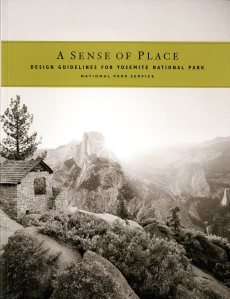
The National Park Service’s publication “A Sense of Place: Design Guidelines for Yosemite National Park” is available now through the U.S. Government Online Bookstore:

A Sense of Place: Design Guidelines for Yosemite National Park

024-005-01295-8This book conveys design knowledge from park service professionals who have devoted their careers to respecting the natural feel, rhythm, and patterns of what is, as former National Park Service Deputy Director John J. Reynolds writes in the opener, “less a place than an experience.” Their designs have been considerate of a wilderness of “immense rock forms, thundering waterfalls, pristine wilderness, serene meadows, and ancient groves of sequoias.”

Thus, these design guidelines operate as an ethic, a set principles to guide sustainable architectural and landscape work and maintain the distinctive character of Yosemite. It’s a reference book for anyone working to make the built environment compatible with the incomparable natural surroundings. And it’s an assurance that all structures and facilities will be aligned with the park’s values and spirit. Maps and historical images tell the tale of a natural splendor that has endured because of this very conscientiousness and reverence.

President Theodore Roosevelt called Yosemite a “great solemn cathedral, far vaster and more beautiful than any built by the hand of man.” A serene valley protected for public use and preservation in the midst of the Civil War became a piece of America’s natural heritage. Yosemite continues to draw visitors and conservationists from around the world. With the right design guidelines in place, it will continue to inspire generations of Americans to find peace in the masterpieces of nature.

HOW DO I OBTAIN THIS PUBLICATION?

Shop Online Anytime: You can buy eBooks or print publications —with FREE Standard Shipping worldwide— from the U.S. Government Online Bookstore at http://bookstore.gpo.gov.

 Shop our Retail Store: Buy a copy of any print editions from this collection at GPO’s retail bookstore at 710 North Capitol Street NW, Washington, DC 20401, open Monday–Friday, 9 a.m. to 4 p.m., except Federal holidays, Call (202) 512-0132 for information or to arrange in-store pick-up.

Order by Phone: Call our Customer Contact Center Monday through Friday, 8 am to 5:30 pm Eastern (except US Federal holidays). From US and Canada, call toll-free 1.866.512.1800. DC or International customers call +1.202.512.1800.

Visit a Federal depository library: Search for U.S. Government publications in a nearby Federal depository library. You can find the records for most titles in GPO’s Catalog of U.S. Government Publications.

About the author: Blogger contributor Chelsea Milko is a Public Relations Specialist in GPO’s Public Relations Office.


A Way for Kids to Celebrate the National Park Centennial

June 6, 2016

In 1916, President Woodrow Wilson signed the act creating the National Park Service (NPS). The agency was entrusted with a mission to “conserve the scenery and the natural and historic objects and the wild life therein and to provide for the enjoyment of the same in such manner and by such means as will leave them unimpaired for the enjoyment of future generations.”

024-005-01321-1This year, the National Park Service launches a second century of environmental stewardship and historic preservation. As NPS looks to its next 100, it invites everyone, especially kids, to experience one of over 400 national parks and monuments.

Children can join the national parks birthday celebration with the Centennial Junior Ranger activity booklet. It’s an activity-filled, adventure-based guide to explore, learn, and have fun in natural places. I’ll let some of the pages from this colorful, informative guide do the talking…click on each image to enlarge.

024-005-01321-1_p6-7

024-005-01321-1_p10-11

024-005-01321-1_p14-15

This booklet comes with a bonus! Upon completing select activities, kids can bring the booklet to any national park visitor center to receive an official Junior Ranger badge.

As part of NPS’ Every Kid in a Park program, admission to all national parks is free for the entire year for fourth graders and their families. And with several fee-free days scheduled throughout 2016, it’s possible to get every kid and every family in a park. The more that people care about America’s special outdoor wonderlands, the more likely they will be around in 2116.

HOW DO I OBTAIN THIS PUBLICATION?

Shop Online Anytime: You can buy eBooks or print publications —with FREE Standard Shipping worldwide— from the U.S. Government Online Bookstore at http://bookstore.gpo.gov.

 Shop our Retail Store: Buy a copy of any print editions from this collection at GPO’s retail bookstore at 710 North Capitol Street NW, Washington, DC 20401, open Monday–Friday, 9 a.m. to 4 p.m., except Federal holidays, Call (202) 512-0132 for information or to arrange in-store pick-up.

Order by Phone: Call our Customer Contact Center Monday through Friday, 8 am to 5:30 pm Eastern (except US Federal holidays). From US and Canada, call toll-free 1.866.512.1800. DC or International customers call +1.202.512.1800.

Visit a Federal depository library: Search for U.S. Government publications in a nearby Federal depository library. You can find the records for most titles in GPO’s Catalog of U.S. Government Publications.

About the author: Blogger contributor Chelsea Milko is a Public Relations Specialist in GPO’s Public Relations Office.


This National Park Week, Be a Junior Ranger!

April 14, 2016

April 16-24 is National Park week and 2016 is the National Park Service’s (NPS) centennial year. National parks symbolize America’s spirit of discovery. Although protected today, parks need stewardship for tomorrow. The NPS activity-based Junior Ranger program aims to turn young visitors into lifelong enthusiasts. GPO makes available several park-specific booklets to help 5- to 12-year-olds explore “America’s best idea.”

The White House Junior Ranger Activity Guide

Home. Workplace. Museum. And National Park! The White House, home to every president and first family since 1800, is the only building in the world that fits all those categories. Since 1933, The White House has operated under the National Park System. That piece of presidential acreage sees millions of visitors each year. Now there’s a new fact-filled White House guide that appeals to both kids and adults.

9780160929892This booklet drops some great presidential trivia. Abigail Adams used the East Room to hang laundry. Dolly Madison saved a famous painting of George Washington from the War of 1812 fire. Edith Wilson was the first to showcase custom patterned china. All White House occupants leave a visible impression but first ladies drive the story of expansion, design, and entertainment. Beyond aesthetics, the booklet points out that first ladies were “champions for change.” President Harry Truman understood this well. He often introduced First Lady Elizabeth Truman as “the Boss.”

The booklet includes several pages of post-tour activities, including a President’s Park walking map, first family puzzle, and the ABC’s of architecture. Tip for parents: kids can present their booklet to a White House Visitor Center to be sworn in as a badged and certified Junior Ranger!

Redwood National and State Parks Junior Ranger Activity Booklet

Redwood Trees looking up Source: www.nps.gov

Redwood Trees looking up: http://www.nps.gov

Redwoods are the tallest trees on Earth. Living fossil records. But decades of commercial logging nearly decimated old-growth redwood forests of the North Coast region. In this booklet, Ranger Jim points out that “about 95% of the original coast redwood forest was cut down.” Although that statistic is dismaying, take heart. NPS is the capable caretaker of those special giants.

024-005-01316-4The booklet has dozens of activities families can complete while exploring redwood areas. Play tide pool bingo, be a tree detective, and fish for the right color. Write your observations in the ranger beach report. Solve the octopus tree mystery. Keep track of badge points. The fun and fascination are as endless as the redwoods are tall.

Next time you visit a national park, take a fact-filled activity booklet along!

HOW DO I OBTAIN THESE NATIONAL PARK SERVICE PUBLICATIONS?

Shop Online Anytime: You can buy eBooks or print publications —with FREE Standard Shipping worldwide— from the U.S. Government Online Bookstore at http://bookstore.gpo.gov.

 Shop our Retail Store: Buy a copy of any print editions from this collection at GPO’s retail bookstore at 710 North Capitol Street NW, Washington, DC 20401, open Monday–Friday, 9 a.m. to 4 p.m., except Federal holidays, Call (202) 512-0132 for information or to arrange in-store pick-up.

Order by Phone: Call our Customer Contact Center Monday through Friday, 8 am to 5:30 pm Eastern (except US Federal holidays). From US and Canada, call toll-free 1.866.512.1800. DC or International customers call +1.202.512.1800.

Visit a Federal depository library: Search for U.S. Government publications in a nearby Federal depository library. You can find the records for most titles in GPO’s Catalog of U.S. Government Publications.

About the author: Our guest blogger is Chelsea Milko, Public Relations Specialist in GPO’s Public Relations Office.


Black History Month: The Underground Railroad

February 5, 2016

February is Black History Month. It calls upon all Americans to honor African-American expressions of sacrifice and heroism throughout history. The earliest endeavors in the national civil rights struggle have much to do with the outcry against human bondage.

Prior to the Civil War, organized abolitionists were aided by the loosely interconnected Underground Railroad. Neither underground nor railroad, the UGGR, as it was known to patrons, was a scattered, clandestine network of antislavery diehards and freed blacks. Secret routes and safe houses dotted the antebellum landscape spanning from Georgia to Canada. Between the peak years of 1830 and 1865, it helped as many as one hundred thousand fugitive slaves escape to freedom.

Harriet Tubman (Library of Congress)

Harriet Tubman (Library of Congress)

Harriet Tubman, a UGGR conductor, remarked upon on her eight years spent freeing slaves: “I can say what most conductors can’t say—I never run my train off the track and I never lost a passenger.” Tubman became a revered voice in the protest against the debasing injustices of slavery. In 2013, President Obama established the Harriet Tubman Underground Railroad National Monument. You can read the park pamphlet available through GPO’s Catalog of U.S. Government Publications.

Today, the Underground Railroad is an atypical national park. It wasn’t until the 1990s that it came under the jurisdiction the National Park Service (NPS). After conducting a study of UGGR operations and primary routes, NPS was entrusted with its preservation and interpretation. You can read the act establishing the National Underground Railroad Network to Freedom on GPO’s govinfo.gov.

024-005-01185-4In addition, the U.S. Government Bookstore makes available the following National Park Service publications:

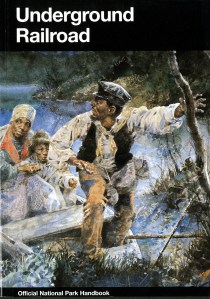
Underground Railroad: Official Map and Guide

Underground Railroad: Official National Park Handbook

Discovering the Underground Railroad: Junior Ranger Activity Book

The Underground Railroad connected sympathizers with freedom seekers, freed with enslaved. The untold numbers of underground success stories sprouted above ground into a vast nexus of advocates and defenders. Unquestionably, the UGGR ride to freedom helped lay the tracks for the civil rights movement of the 20th century. During this Black History Month, may we admire that extraordinary effort to liberate a people and the larger African-American journey to freedom in all its forms.

HOW DO I OBTAIN THESE RESOURCES?

Click on the Links: For the free resources, click on the links above in the blog post.

Shop Online Anytime: You can buy eBooks or print publications —with FREE Standard Shipping worldwide— from the U.S. Government Online Bookstore at http://bookstore.gpo.gov.

 Shop our Retail Store: Buy a copy of any print editions from this collection at GPO’s retail bookstore at 710 North Capitol Street NW, Washington, DC 20401, open Monday–Friday, 9 a.m. to 4 p.m., except Federal holidays, Call (202) 512-0132 for information or to arrange in-store pick-up.

Order by Phone: Call our Customer Contact Center Monday through Friday, 8 am to 5:30 pm Eastern (except US Federal holidays). From US and Canada, call toll-free 1.866.512.1800. DC or International customers call +1.202.512.1800.

Visit a Federal depository library: Search for U.S. Government publications in a nearby Federal depository library. You can find the records for most titles in GPO’s Catalog of U.S. Government Publications.

About the author: Our guest blogger is Chelsea Milko, Public Relations Specialist in GPO’s Public Relations Office.


On National Bird Day, Find Refuge in Wild America

January 4, 2016

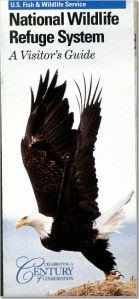
“Wake up with the birds. Arrive in the early morning (or late afternoon) when wildlife is most active.” So reads a line from the U.S. Fish and Wildlife Service’s National Wildlife Refuge System: A Visitor’s Guide. It’s a fitting piece of guidance since January 5th is 14th annual National Bird Day. This observance was established to raise awareness for the survival and contributions of native wild birds. Fortunately, the unspoiled terrain of America’s 560 national wildlife refuges provide a protected home to more than 700 bird species and so much more.

024-010-00724-9The concept of a “network of federal lands dedicated specifically to wildlife conservation” began with President Theodore Roosevelt in 1903. A king conservationist, he signed off on the first wildlife refuge at Florida’s Pelican Island. Today, the National Wildlife Refuge (NWR) System cooperatively manages 150 million acres of nationwide wild wealth. It’s also a sanctuary for 380 threatened or endangered species, including the rare bald eagle.

Every state has at least one wildlife refuge. And there’s at least one within an hour’s drive from every major American city. That means pretty much everyone has access to an outdoor preservation-recreation experience. In fact, the success of this system is dependent upon human activity. So much so that one side of the visitor’s guide highlights a good-sized list of recreational and educational opportunities. Wildlife viewing seasons and photography spots; historic sites and nature trails; and boating, fishing and hunting are vertically marked in the fold-out publication.

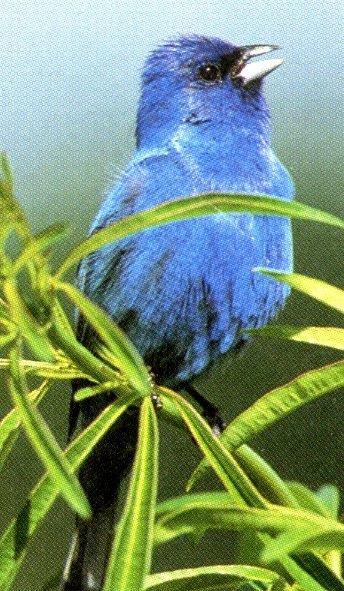
Indigo Bunting (excerpt from publication)

Indigo Bunting (excerpt from publication)

It’s hardly surprising that noncontiguous Alaska and Hawaii get their own breakout boxes on the NRW map. Alaska hosts 90 percent of Refuge System wilderness and Hawaii is, well, dazzling Hawaii. But why does the map call out North Dakota? It so happens that the Peace Garden State (best official state nickname ever) contains 63 National Wildlife Refuges, more than any other state. Way to go, ND!

From Aroostook in Maine to Ten Thousand Islands in Florida, Three Arch Rocks in Oregon to Big Boggy in Texas, national wildlife refuges are a celebration of America’s natural heritage. Clean grasslands, wetlands, forests, coastal backwaters form the anchoring landscapes. Animals such as whooping cranes, cutthroat trout, and brown bears are the occupants. But it’s the committed efforts of citizen-stewards who keep this all thriving. So get out there, people. Find refuge in wild America!

How do I obtain this publication?

Shop Online Anytime: You can buy eBooks or print publications —with FREE Standard Shipping worldwide— from the U.S. Government Online Bookstore at http://bookstore.gpo.gov.

Shop our Retail Store: Buy a copy of any print editions from this collection at GPO’s retail bookstore at 710 North Capitol Street NW, Washington, DC 20401, open Monday–Friday, 9 a.m. to 4 p.m., except Federal holidays, Call (202) 512-0132 for information or to arrange in-store pick-up.

Order by Phone: Call our Customer Contact Center Monday through Friday, 8 am to 5:30 pm Eastern (except US Federal holidays). From US and Canada, call toll-free 1.866.512.1800. DC or International customers call +1.202.512.1800.

Visit a Federal depository library: Search for U.S. Government publications in a nearby Federal depository library. You can find the records for most titles in GPO’s Catalog of U.S. Government Publications.

About the author: Our guest blogger is Chelsea Milko, Public Relations Specialist in GPO’s Public Relations Office.


The Wright Stuff: Skies & World Transformed

December 16, 2015

They called Dayton, Ohio home and used the wind-shaped dunes of Kitty Hawk, North Carolina as a lift off point. Both places were testing grounds, temporary assignments. For it was the unopened blue that beckoned them skyward and homeward. On December 17th, 1903, the Wilbur and Orville Wright stuck their first—and the world’s first—successful flight in a heavier-than-air, mechanically controlled machine. Twelve seconds in the air turned into over 100 years of aviation progress.

024-005-01212-5Those sibling inventors behind the defining technology of the last century are the subject of a National Park Service handbook entitled “First Flight, The Wright Brothers and the Invention of the Airplane.” In his forward, astronaut and former U.S. Senator John Glenn defers to the duo as the “first astronauts. Their initial short flight opened our quest to reach beyond the world we know. They were the first test pilots.”

In ‘First Flight’, noted Wright biographer Tom D. Crouch recounts their bicycle shop beginnings, hometown life, and aeronautical experimentations. Full page maps and fold-outs tell of the history, visionaries, and mechanics of flight. Pull-out quotes decorate the margins, lending a first person feel to Wilbur & Orville’s story.

Eye witnesses thought the pair were foolhardy—a few spokes short of a wheel. Kitty Hawk resident Millie Daniels said, “A lot of folks thought the Wrights were a little touched, you know…they would  imitate the way birds flew…turn their arms like wings and run through the dunes while watching the gulls.” The birdie brothers weathered the pitch-and-roll of small gains and minor setbacks. In search of strong headwinds to propel their glider, they eventually moved their production from Ohio to the sand flats of the Outer Banks.

The iconic first flight of the Wright brothers in their 1903 Wright Flyer (Credit: NPS Wright Brothers National Memorial)

The iconic first flight of the Wright brothers in their 1903 Wright Flyer (Credit: NPS Wright Brothers National Memorial)

Pitched in tents battered by bitter nor’easters, the Wrights set out to beta test the product of their scientific inquiries. Several seasons of experiments led to design changes that led to repairs that led to reattempts. Finally, on a cold morning of perfect conditions, sustained human flight was achieved. On his first glide into the air, Orville remarked, “It was only a flight of twelve seconds, and it was uncertain, wavy, creeping sort of flight at best; but it was a real flight at last…”

A foolhardy flying machine became a phenomena of human achievement. The Wright Brothers made their home above the world and consequently changed the world.

How do I obtain First Flight?

Shop Online Anytime: You can buy eBooks or print publications —with FREE Standard Shipping worldwide— from the U.S. Government Online Bookstore at http://bookstore.gpo.gov.

Shop our Retail Store: Buy a copy of any print editions from this collection at GPO’s retail bookstore at 710 North Capitol Street NW, Washington, DC 20401, open Monday–Friday, 9 a.m. to 4 p.m., except Federal holidays, Call (202) 512-0132 for information or to arrange in-store pick-up.

Order by Phone: Call our Customer Contact Center Monday through Friday, 8 am to 5:30 pm Eastern (except US Federal holidays). From US and Canada, call toll-free 1.866.512.1800. DC or International customers call +1.202.512.1800.

Visit a Federal depository library: Search for U.S. Government publications in a nearby Federal depository library. You can find the records for most titles in GPO’s Catalog of U.S. Government Publications.

About the author: Our guest blogger is Chelsea Milko, Public Relations Specialist in GPO’s Public Relations Office.


Wildlife Conservation Day: Read About a Refuge

December 4, 2015

Where Steens Mountain and Blitzen Valley meet in Southeast Oregon, a prolific natural legacy lives in the form of Malheur National Wildlife Refuge. Such places of preservation take on special meaning come December 4th. That day is Wildlife Conservation Day, celebrated annually since the U.S. Department of State declared it so in 2012. In time for the observance, this blog spotlights a government book about the ecological and archeological abundance of one Oregonian sagebrush-covered basin.

024-001-03629-1The paper bag-brown exterior of the U.S. Department of Interior Fish and Wildlife Service publication Malheur’s Legacy: Celebrating a Century of Conservation, 1908-2008 betrays nothing of the beauty within. Open it up and you’ll find part picture book, part human history. Like so much of America’s landscape, Malheur’s grassy marshland has a lush story to tell.

Well before the refuge was formally gazetted in 1908, prehistoric climatic changes blueprinted the ecosystem. Undulating water flows created a meadowland for migratory wildfowl. Early Native Americans hunted off the spring-watered land. Many revolutions of the sun later, wagon trains of settlers wheeled in. Ranching transformed the wetlands. Hunters sourcing high fashion hat plumes nearly snuffed out the native bird species.

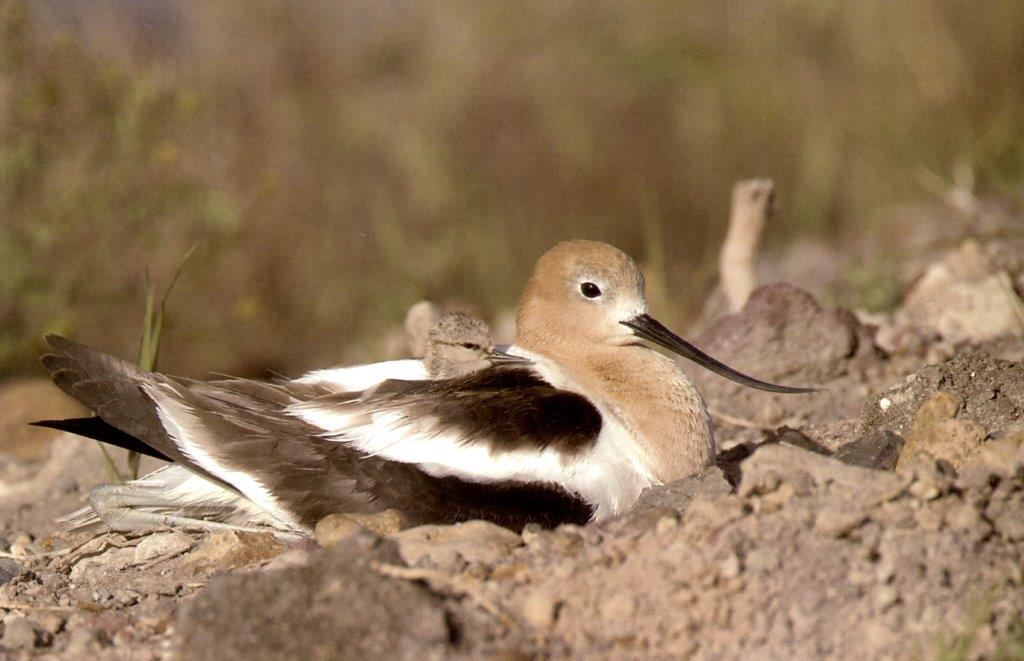
American avocet with chick (excerpt from publication).

American avocet with chick (excerpt from publication).

Conservationists cried fowl (terrible pun intended). Believing that “spread at our feet was a domain for wild fowl unsurpassed in the United States,” they passionately propositioned President Theodore Roosevelt to designate the hunted landscape a wildlife refuge. And now, over 100 years later, the Malheur National Wildlife Refuge is a protected home for over 320 bird species including the great egret, Northern pintail drake, and American avocet.

During the Great Depression, scores of young men of the Civilian Conservation Corps encamped in the area and completed numerous improvement projects. In the later half of the 20th century, refuge staff began digging into the long haul work of maintaining a premier wildlife habitat. Conservation management challenges were faced head on and bird homes were successfully safeguarded. Many of those protected waterfowl are pictured in the last 1/3 of the book.

Mahlheur’s Legacy is a story about nature, sure. But also nurture. It took a lot of manpower to set aside a land shaped by the past in order save it for the future. I hope you can set aside some time to read about it.

How do I obtain this publication?

Shop Online Anytime: You can buy eBooks or print publications —with FREE Standard Shipping worldwide— from the U.S. Government Online Bookstore at http://bookstore.gpo.gov.

Shop our Retail Store: Buy a copy of any print editions from this collection at GPO’s retail bookstore at 710 North Capitol Street NW, Washington, DC 20401, open Monday–Friday, 9 a.m. to 4 p.m., except Federal holidays, Call (202) 512-0132 for information or to arrange in-store pick-up.

Order by Phone: Call our Customer Contact Center Monday through Friday, 8 am to 5:30 pm Eastern (except US Federal holidays). From US and Canada, call toll-free 1.866.512.1800. DC or International customers call +1.202.512.1800.

Visit a Federal depository library: Search for U.S. Government publications in a nearby Federal depository library. You can find the records for most titles in GPO’s Catalog of U.S. Government Publications.

About the author: Our guest blogger is Chelsea Milko, Public Relations Specialist in GPO’s Public Relations Office.


National Public Lands Day: Orchards and Fruit Trees

September 23, 2014

The leaves on the trees are changing colors, pumpkins seem to be popping up everywhere, and it is getting darker earlier. Fall is in the air and coinciding with the beginning of fall is National Public Lands Day, a celebration that began in 1994 and takes place on the last Saturday of September where volunteers across the country work together to beautify public lands. Also coinciding with the season is the annual trip to the orchard to pick apples and drink cider. In the spirit of fall, apple picking, and National Public Lands Day, we are looking at two companion publications from the National Park Service about orchards and fruit trees.

024-005-01266-4Fruitful Legacy: A Historic Context of Orchards in the United States, with Technical Information for Registering Orchards in the National Register of Historical Places

This 2009 publication follows the history of fruit trees, their presence in national parks, and how to properly register the trees. The first half and more interesting half of the publication informs readers on how fruit trees came to the United States:

  • From 1600-1800, European settlers planted seeds in irregular patterns to grow fruit trees for the purpose of producing cider and animal feed, not to produce edible fruit.
  • During the 1800s, commercial orchards were established where trees were planted in a specific pattern with the purpose of eating raw fruit. This practice started on the east coast and migrated west along with the expansion of the country.
  • From the late-1880s to mid-1900s, the U.S. Department of Agriculture was established and a new generation of growers started using pesticides, mechanical irrigation systems, cold storage, and mechanized equipment.
  • From the mid-1900s to present, the practice transitioned from amateur, small-scale farm orchards to professional commercial orchards. It was determined that small, dwarf trees produced greater yield and were more profitable.

024-005-01304-1014Historic Orchard and Fruit Tree Stabilization Handbook

Published in 2012, this publication follows Fruitful Legacy and specifically focuses on preserving orchards and fruit trees in California. Orchards and fruit trees are growing across 15 percent of California State Parks. Established overtime by Native Americans, Spanish missionaries, and the settlers from the Gold Rush, orchards and fruit trees can live from 50-200 years depending on the type of tree. The publication goes in depth on how to grow, maintain, and protect orchards and fruit trees and is intended for professionals who work for the California State Park Systems. However, the information can be adapted by anyone who wants to know best practices for growing fruit trees whether it is an entire orchard or a single tree.

Embrace fall and celebrate National Public Lands Day with a trip to your local orchard!

HOW DO I OBTAIN THESE PUBLICATIONS?

About the Author: Our guest blogger is Emma Wojtowicz, Public Relations Specialist in GPO’s Office of Public Affairs.