GPO’s Gift Guide Series: Books for the Environmental Enthusiast

November 28, 2018

It’s time to make a list and check it twice … so many gifts to buy, so little time! ‘Tis the season for over-crowded malls, stressful shopping sprees, and loads of self-doubt about what to get your family and friends. Before you go all bah, humbug on us, GPO is here to help. Give the gift of reading, knowledge and doing something good for the world this holiday season. From now until the end of the holiday season, we’ll be your little elves, bringing you a holiday gift guide series on our blog with unique ideas for everyone in your life, from the environmental enthusiast to the health nut to the great outdoorsman. Today, we’ll start with ideas for your favorite friend of the planet.

Toys, books, and clothes all make for great gifts for children. But what if your gift could offer that little something extra special … like a way to help save the planet! Pair environmental publications from the GPO Bookstore with other green and eco-friendly toys, games, school supplies and clothes (there are tons of options out there) for a cute, cohesive present that will put a smile on their face and teach them a valuable lesson about caring for our one and only planet. Published by the Environmental Protection Agency (EPA), the EPA Activity Book is the perfect educational yet fun holiday gift for kids … the ones who made the nice list, that is. The booklet provides a visual depiction of how the EPA protects our entire environment, the land where we live, and our ecosystems. With crossword games and puzzles, children will be spending their holiday morning educating themselves about good environmental practices. Another publication great for kids that features a favorite Dr. Seuss character is the Join the Lorax to Help Save Energy, Water, and Protect the Planet activity book. This book teaches children how to save energy at home and at school, how to keep pollution out of the air and keep the earth cool! A graphic and simple-to-understand activity book, this publication engages school children in learning and caring about the environment.

Need a gift for someone who is passionate about climate change? NASA and the Environment: The Case of Ozone Depletion published by NASA represents a critical case study in the history of NASA and environmental sciences. And Impacts of Climate Change on Human Health in the United States from the Department of Commerce and the National Oceanic and Atmospheric Administration is a scientific assessment to enhance understanding and inform decisions about the growing threat of climate change to the health and well-being of residents of the United States. The assessment is part of the ongoing efforts of The U.S. Global Change Research Program (USGCRP)’s sustained National Climate Assessment process and was called for under the President’s Climate Action Plan. USGCRP agencies identified human health impacts as a high-priority topic for scientific assessment. This assessment was developed by a team of more than 100 experts from eight U.S. Federal agencies to inform people on the potential negative impact that climate change can have on human health.

Finding the perfect present can be tough. A gift that makes a difference beats even the silkiest pajamas, most pleasant perfumes, or smartest speakers, especially for someone who takes an interest in the health of our planet and its people. And hey, Mother Earth deserves a gift, too! Good luck with your holiday shopping, and stay tuned for more unique holiday gift ideas right here on the Government Book Talk blog. Happy hunting!

Click here to shop our Holiday Gift Guides for everyone on your list.

The GPO Online Bookstore – Easy Access to Federal Publications

HOW DO I OBTAIN THESE RESOURCES?

Shop Online Anytime: You can buy eBooks or print publications —with FREE Standard Shipping worldwide— from the U.S. Government Online Bookstore at https://bookstore.gpo.gov.

Shop our Retail Store: Buy a copy of any print editions from this collection at GPO’s retail bookstore at 710 North Capitol Street NW, Washington, DC 20401, open Monday–Friday, 9 a.m. to 4 p.m., except Federal holidays, Call (202) 512-0132 for information or to arrange in-store pick-up.

Order by Phone: Call our Customer Contact Center Monday through Friday, 8 am to 5:30 pm Eastern (except US Federal holidays). From US and Canada, call toll-free 1.866.512.1800. DC or International customers call +1.202.512.1800.

Visit a Federal depository library: Search for U.S. Government publications in a nearby Federal depository library. You can find the records for most titles in GPO’s Catalog of U.S. Government Publications.

Find more than a million official Federal Government publications from all three branches at www.govinfo.gov.

About the author: Blogger contributor Cat Goergen is the PR Specialist in GPO’s Public Relations office.


New eBooks from the National Cancer Institute

November 23, 2018

Caregiver Ribbon

Every day somewhere across America cancer strikes one of us, our families, friends, or neighbors. It’s a devastating disease in which abnormal cells divide uncontrollably and destroy body tissues. Cancer comes in many forms such as skin, lung, pancreatic, prostate, breast, brain, even our bones and blood (leukemia).

Receiving a cancer diagnosis can be traumatic. So it’s vitally important to become informed and to take steps to get in control of whatever circumstance it brings. There’s no telling who might be the target of cancer; a child, a parent, a sibling, maybe you. Not everyone is as vigilant as possible checking themselves, watching for clues how we feel, a sudden loss of energy, or weight. Once diagnosed, the result can show the cancer to be either at an early stage or an advanced stage.

The National Cancer Institute recently released several new ePubs you can download for FREE, that feature very specific information and help for those faced with cancer. These very informative publications are available from the U.S Government Online Bookstore.

Take a look at just a few of the titles, then go to https://bookstore.gpo.gov to learn about the entire series to find those that fit your personal circumstance.

When Someone You Love Is Being Treated for Cancer

When Someone You Love is Being Treated for Cancer is a booklet for friends or family members giving care to a person with cancer. This booklet covers understanding the changes that come in your life with caregiving, how to cope with your feelings and ask for help, tips on caring for both your physical and emotional self, how to talk with your kids about cancer, communicating with your loved one who has cancer, and dealing with other family members and friends.

Children with Cancer

If your child has cancer, this comprehensive guide can help you learn how childhood cancers are diagnosed and treated, as well as how to manage common health problems during treatment. It shares coping and support strategies for every member of your family. Developed by a multidisciplinary a team of experts from across the National Cancer Institute, and parents who have a child with cancer, this guide was designed as a companion for every family that has a child with cancer.

When Someone You Love Has Advanced Cancer

When Someone You Love Has Advanced Cancer is a booklet for friends and family members taking care of a person with advanced cancer. This booklet covers making new decisions about care, how to discuss issues and changes with the health care team, getting support and asking for help, life planning and advance directives, talking with family and friends, talking with children and teens about advanced cancer, communicating with your loved one who has cancer, and tips on caring for both your physical and emotional self.

Life after Cancer Treatment

Life After Cancer Treatment: Facing Forward is a booklet for people who have completed cancer treatment. This booklet covers your new normal, getting follow-up medical care and how to talk with your doctor, following a survivorship care plan, ways to manage physical changes, body changes and intimacy issues, coping with your feelings, and going back to work.

The GPO Online Bookstore – Easy Access to Federal Publications

HOW DO I OBTAIN THESE RESOURCES?

Shop Online Anytime: You can buy eBooks or print publications —with FREE Standard Shipping worldwide— from the U.S. Government Online Bookstore at https://bookstore.gpo.gov.

Shop our Retail Store: Buy a copy of any print editions from this collection at GPO’s retail bookstore at 710 North Capitol Street NW, Washington, DC 20401, open Monday–Friday, 9 a.m. to 4 p.m., except Federal holidays, Call (202) 512-0132 for information or to arrange in-store pick-up.

Order by Phone: Call our Customer Contact Center Monday through Friday, 8 am to 5:30 pm Eastern (except US Federal holidays). From US and Canada, call toll-free 1.866.512.1800. DC or International customers call +1.202.512.1800.

Visit a Federal depository library: Search for U.S. Government publications in a nearby Federal depository library. You can find the records for most titles in GPO’s Catalog of U.S. Government Publications.

Find more than a million official Federal Government publications from all three branches at www.govinfo.gov.

About the author: Blogger contributor Ed Kessler is a Promotions Specialist in GPO’s Publication and Information Sales program office.


Resources for Healthy Eating, Even During the Holidays

November 16, 2018

The holidays are right around the corner, and so are all the delicious … but not exactly nutritious … treats that come with them. A study from Cornell University showed that holiday weight gain is real and can take more than five months to lose! While it would be downright cruel for us to tell you to cut out all the eggnog, pumpkin pie, sugar cookies and candy canes the holidays have to offer (come on, we aren’t the Grinch!), GPO has some publications that can help you and your family stay healthy during the holidays and beyond.

Whether you’re spending money on the latest must-have gift or on tickets to see the Nutcracker or on a new pair of ice skates for the rink, the holidays are almost as tough on our wallets as they are on our waistlines. Healthy Eating Made Easy from the Department of Defense and Department of the Army offers tips and recipes to help you eat healthily and save money while doing it. The healthiest and most economical choices can also be the most fun and rewarding! With the help of this book, buy wholesome ingredients and cook your own meals at home.

Is it just us, or do you feel like you’re always in a rush during the holidays? There’s always another present to wrap or festivity to get ready for … and to our dismay, always another car honking in the mall parking lot. Meal prep is a must at this busy time of year. Instead of reaching for that all-too-accessible peppermint bark, go for a healthy meal made from your Deliciously Healthy Family Meals cookbook. This cookbook from the Department of Health and Human Services, National Institutes of Health, and National Heart and Lung Institute is designed to help busy parents who want to make healthy meal preparation a family affair. The cookbook showcases new dishes that were created especially for the National Heart, Lung, and Blood Institute (NHLBI) by a Culinary Institute of America-trained chef/instructor and father of two. And it’s kid-approved! All the recipes were taste-tested with parents and school-aged children, and feature easy-to-follow instructions in numbered steps and detailed health information, such as calories, fat, cholesterol, total fiber, carbohydrates, vitamins and more.

Give the kid in your life an early holiday gift they’ll love. “Through the Eyes of the Eagle” is the first book in the Eagle Book Series. It introduces the character of Mr. Eagle. Mr. Eagle befriends Rain That Dances, the child character in the book, to educate him about diabetes and how the lifestyles and health of the people have changed. Mr. Eagle has come to remind the children of the healthy ways of their ancestors so that they can be strong and healthy again. The book is written by Georgia Perez of the Native American Diabetes Project at the University of New Mexico. Ms. Perez found that when children heard the story of the eagle, they listened intently. Afterward, they were eager to take the diabetes-prevention information back to their parents and grandparents to share what they had learned. Vividly brought to life by the colorful illustrations of American Indian artists Patrick Rolo (Bad River Band, Ojibwe) and Lisa A. Fifield (Oneida Tribe of Wisconsin), these award-winning stories are available at the GPO Bookstore. Look for all four books in the series: “Through the Eyes of the Eagle,” “Knees Lifted High,” “Plate Full of Color,” and “Tricky Treats.”

Keep your little ones occupied during holiday travel. The Discover MyPlate Series, published by the United States Department of Agriculture and Food and Nutrition Service, is available for free download at the GPO Bookstore. Kids will learn about the five food groups, healthy eating, and reading! These colorful books introduce kindergarten-aged children to foods from all five food groups while building literacy skills through the use of sight words, optional audio narration and text highlighting, interactive games and activities, and more!

Decorating cookies and enjoying hot chocolate by the fire are part of what make the holidays merry and bright. No need to deprive yourself of your festive favorites. Just have lots of healthy options available too. Happy and healthy holidays to you. Enjoy the most wonderful time of the year!

The GPO Online Bookstore – Easy Access to Federal Publications

HOW DO I OBTAIN THESE RESOURCES?

Shop Online Anytime: You can buy eBooks or print publications —with FREE Standard Shipping worldwide— from the U.S. Government Online Bookstore at https://bookstore.gpo.gov.

Shop our Retail Store: Buy a copy of any print editions from this collection at GPO’s retail bookstore at 710 North Capitol Street NW, Washington, DC 20401, open Monday–Friday, 9 a.m. to 4 p.m., except Federal holidays, Call (202) 512-0132 for information or to arrange in-store pick-up.

Order by Phone: Call our Customer Contact Center Monday through Friday, 8 am to 5:30 pm Eastern (except US Federal holidays). From US and Canada, call toll-free 1.866.512.1800. DC or International customers call +1.202.512.1800.

Visit a Federal depository library: Search for U.S. Government publications in a nearby Federal depository library. You can find the records for most titles in GPO’s Catalog of U.S. Government Publications.

Find more than a million official Federal Government publications from all three branches at www.govinfo.gov.

About the author: Blogger contributor Cat Goergen is the PR Specialist in GPO’s Public Relations office.


National GIS Day

November 13, 2018

Wednesday, November 14 is National Geographic Information Systems (GIS) Day. The annual event celebrating technology and all of the benefits it has brought to the world of geography has been recognized since 1999.

GIS is a system designed to capture, store, manipulate, analyze, manage, and present spatial or geographic data. However, GIS can refer to a number of different technologies, processes, and methods.

This year’s theme is Discover the World through GIS, with a focus on demonstrating the real-world GIS applications that are making a difference in our society. GISday.com has several story maps available that allow users to experience the changes our world has undergone through the use of mapping. One in particular, 100 Years of the National Park Service, takes you on a chronological journey of the significant events in the establishment and growth of America’s unparalleled system of public parks.

The US Government Publishing Office (GPO) has a long history of working with Federal depository libraries to provide Government information, including maps and GIS data. On govinfo, GPO offers a snapshot of the Federal Register Volume 75, Issue 173, where the Environmental Protection Agency (EPA) announced the availability of a final GIS tool and its user guide titled, “ICLUS v1.3 User’s Manual: ArcGIS Tools and Datasets for Modeling U.S. Housing Density Growth.”

GPO also offers access to several items that can help you celebrate this unique day, as the Government Bookstore offers several titles about this topic. Some of those include:

  • Washington: The Nation’s Capital  This handy pamphlet provides a color map of Washington, DC with all the major landmarks, memorials, monuments, and tourist attractions clearly marked, and folds up to fit easily in a pocket or purse.  It also features a timeline of important events with information about key historical sites on the other side, including the newest attractions, such as the new Martin Luther King, Jr. Memorial.  Sold in packages of 100 copies only.
  • Rocky Mountain National Park (Map) Rocky Mountain National Park’s 415 square miles encompass and protect spectacular mountain environments. Enjoy Trail Ridge Road – which crests at over 12,000 feet including many overlooks to experience the subalpine and alpine worlds – along with over 300 miles of hiking trails, wildflowers, wildlife, starry nights, and fun times. The Rocky Mountain National Park map is a 1:50 000-scale topographic map.
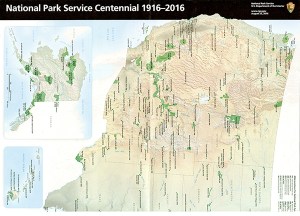
  • National Park Service Centennial 1916-2016 (Map and Guide) – The National Park Service celebrated 100 years on August 5, 2016. This map shows locations of historic parks in celebration of the centennial for tourists to use as a guide.

GPO’s commitment to Keeping America Informed will continue to strive to provide access to Government information on all issues that affect the public in all aspects of their life.

The GPO Online Bookstore – Easy Access to Federal Publications

HOW DO I OBTAIN THIS RESOURCE?

Shop Online Anytime: You can buy eBooks or print publications —with FREE Standard Shipping worldwide— from the U.S. Government Online Bookstore at https://bookstore.gpo.gov.

Shop our Retail Store: Buy a copy of any print editions from this collection at GPO’s retail bookstore at 710 North Capitol Street NW, Washington, DC 20401, open Monday–Friday, 9 a.m. to 4 p.m., except Federal holidays, Call (202) 512-0132 for information or to arrange in-store pick-up.

Order by Phone: Call our Customer Contact Center Monday through Friday, 8 am to 5:30 pm Eastern (except US Federal holidays). From US and Canada, call toll-free 1.866.512.1800. DC or International customers call +1.202.512.1800.

Visit a Federal depository library: Search for U.S. Government publications in a nearby Federal depository library. You can find the records for most titles in GPO’s Catalog of U.S. Government Publications.

Find more than a million official Federal Government publications from all three branches at www.govinfo.gov.

About the author: Blogger contributor Scott Pauley is a former Writer and Editor in GPO’s Library Services and Content Management office.


The Premier Handbook for Anyone Contributing to the Rehabilitation of America’s Wounded Warriors

November 7, 2018

Soldiers returning from the wars in Iraq and Afghanistan face enormous challenges to successfully re-enter society.

To achieve a life of self-sufficiency, former soldiers are challenged with overcoming difficult emotional, psychological and physical impairment issues. The path to recovery is often hindered by Posttraumatic Stress Disorder and brain injuries.

The Borden Institute, an organization within the Department of the Army dedicated to providing the military community with the medical information needed to address the many service-related medical issues faced by active duty and veterans, has released a new eBook.

Promoting Successful Integration

This Borden Institute handbook, offered in free eBook format, is intended to be a comprehensive source of information for the broad military community, including uniformed military personnel, family members, civilian personnel of federal agencies, veterans, and all people who contribute to the success of wounded, injured, and ill service members.

The information in the book addresses the reality that there is no one solution. It provides a multi-faceted approach for those impacted by service-related medical issues to consider in seeking out the pathways to success that best suit their individual situation.

This free downloadable eBook is available from the US Government Online Bookstore in an ePub, MOBI or PDF format. It’s also available in PDF format for free from EBSCOhost, and ProQuest. Additionally, it can be found within the Apple iBookstore/iTunes, Barnes and Noble Nook site, Google Play eBookstore, and Overdrive platforms by searching ePub ISBN: 9780160939839.

The GPO Online Bookstore – Easy Access to Federal Publications

HOW DO I OBTAIN THIS RESOURCE?

Shop Online Anytime: You can buy eBooks or print publications —with FREE Standard Shipping worldwide— from the U.S. Government Online Bookstore at https://bookstore.gpo.gov.

Shop our Retail Store: Buy a copy of any print editions from this collection at GPO’s retail bookstore at 710 North Capitol Street NW, Washington, DC 20401, open Monday–Friday, 9 a.m. to 4 p.m., except Federal holidays, Call (202) 512-0132 for information or to arrange in-store pick-up.

Order by Phone: Call our Customer Contact Center Monday through Friday, 8 am to 5:30 pm Eastern (except US Federal holidays). From US and Canada, call toll-free 1.866.512.1800. DC or International customers call +1.202.512.1800.

Visit a Federal depository library: Search for U.S. Government publications in a nearby Federal depository library. You can find the records for most titles in GPO’s Catalog of U.S. Government Publications.

Find more than a million official Federal Government publications from all three branches at www.govinfo.gov.

About the author: Blogger contributor Ed Kessler is a Promotions Specialist in GPO’s Publication and Information Sales program office.


Go Vote: Understanding and Participating In United States Elections

October 30, 2018

Whether you’re a frequent voter or you’re a newbie to the voting scene, we could all use a refresher on understanding and participating in United States elections … unless you teach U.S. Government, that is. For those of us who can hardly remember what we had for lunch yesterday, it’s probably time we try to retain at least a little bit of what we learned all those years ago.

To vote, you have to of course, first register … unless you live in North Dakota, the only state that does not require registration! You can register to vote by following the requirements for your particular state. While no two states run their elections the same, the steps to vote are the same in most states. Most states assign you a specific polling place, or voting location, that is close to the address you list on your voter registration. Every state has absentee voting, which means you can still cast your vote even if you can’t make it to your physical polling place on Election Day. In some states, you might need to provide a reason you can’t make it to the polling place. In others, you can vote absentee no matter what. Finally, if you’re busy on Election Day, in some states, you can vote early by casting your vote by mail or in person at the local election official’s office or at another location designated by the local election official. Come prepared on Election Day. Some states require voters to present identification at the polling location.

Members of the House of Representatives stand for re-election every two years. This year, 35 of the 100 Senate seats and all 435 in the House of Representative are up for grabs. Each state is divided into districts and each district votes for one representative. The number of districts depends on the population in each state. For example, California, which has a large population, has 53 representatives in the House. Alaska, on the other hand, has only three representatives since not many people live there! As for the Senate, each state is represented by two Senators, regardless of its population. Senators serve for six years, but elections for Senators are staggered. Every two years, one-third of the Senators run for re-election.

Interested in where congressional districts begin and end? Hang a map to help you remember congressional district boundaries in effect. The map, which is available at the U.S. Government Bookstore, includes county names and boundaries for each state, the District of Columbia, Puerto Rico, American Samoa, Guam, the Commonwealth of the Northern Mariana Islands, and the U.S. Virgin Islands.

In Presidential voting years, when you vote for the President on the first Tuesday in November every four years, you’re technically not casting your vote for President, but rather an “elector” who pledges to vote for either the Republican Presidential Nominee or the Democratic Presidential nominee in what is known as the Electoral College. Fifty states and the District of Columbia are each assigned a certain number of electors in a system that mirrors Congress: one elector for each of the 435 Representatives, one for each of the 100 Senators, and three electors for the District of Columbia. Each state receives a particular number of electors based on population size. Therefore, every ten years when the Census is conducted, some states might gain or lose electoral votes. In most states, the candidate who gets the majority of the popular vote takes all of its electors. Electors cast their state’s electoral votes in mid-December. A candidate must receive 270 of the 538 electoral votes to become President or Vice President.

Continue this refresher on the Electoral College. Nomination and Election of the President and Vice President of the United States from the GPO Bookstore describes the rules and process for nominating and electing the President and Vice President of the United States. It includes information on the Electoral College and the electoral voting system, as well as the delegate nominating process in the national party conventions.

So Election Day is over. But policymaking is only just getting started! Contact your representatives about issues that matter to you. And use the United States Senate Telephone Directory to do it. Each year the GPO produces this directory. It contains addresses and telephone numbers for United States Senators, Senate committee members, and their staff. Also, it presents information on caucuses, coalitions and bicameral organizations; the House of Representatives; the executive branch; and more.

Be the life of the political party by getting to know your Congressmen and women! The GPO Bookstore also offers a Congressional Pictorial Directory. This handy guide provides a color photograph of each Member of the House of Representatives and the Senate of the 115th Congress and details each Member’s length of service, political party affiliation, and congressional district.

You’re all prepared for the polls. Happy voting!

The GPO Online Bookstore – Easy Access to Federal Publications

HOW DO I OBTAIN THESE RESOURCES?

Shop Online Anytime: You can buy eBooks or print publications —with FREE Standard Shipping worldwide— from the U.S. Government Online Bookstore at https://bookstore.gpo.gov.

Shop our Retail Store: Buy a copy of any print editions from this collection at GPO’s retail bookstore at 710 North Capitol Street NW, Washington, DC 20401, open Monday–Friday, 9 a.m. to 4 p.m., except Federal holidays, Call (202) 512-0132 for information or to arrange in-store pick-up.

Order by Phone: Call our Customer Contact Center Monday through Friday, 8 am to 5:30 pm Eastern (except US Federal holidays). From US and Canada, call toll-free 1.866.512.1800. DC or International customers call +1.202.512.1800.

Visit a Federal depository library: Search for U.S. Government publications in a nearby Federal depository library. You can find the records for most titles in GPO’s Catalog of U.S. Government Publications.

Find more than a million official Federal Government publications from all three branches at www.govinfo.gov.

About the author: Blogger contributor Cat Goergen is the PR Specialist in GPO’s Public Relations office.


Resources for Safe Schools Week

October 25, 2018

Students might stress about a big math exam, or wonder if they will bump into their “crush” in the hall, or worry about hitting the right note in Chorus class. That we can handle. But what’s the one thing kids should never have to worry about at school? Their safety. Some kids walk to school. Others take the bus or another form of public transportation. Teenagers who are old enough to drive may carpool. But however they get there, students deserve not just to feel safe, but to actually be safe, when they walk into their school each and every day. As adults, it’s our responsibility to make sure of it. October 21–28 is Safe Schools Week this year. According to the National Schools Safety Center, “School safety includes keeping campuses free of crime and violence, improving discipline, and increasing student attendance. Schools that are safe and free of violence, weapons, and drugs are necessary to ensure the well-being of all children and the quality of their education.”

Keeping Youth Drug Free, a publication of the Department of Health and Human Services, Center for Substance Abuse Prevention, Substance Abuse and Mental Health Services Administration, features what to know and what to do to help parents understand and proactively serve the best interests of their children. According to the publication, studies have found associations between early initiation of alcohol or illicit drug use and an increased likelihood of developing substance use disorders. The Office of the Surgeon General’s call to action to prevent and reduce underage drinking warns that the majority of adolescents who start drinking do so when they are in the 7th or 8th grade and are about 13–14 years old. This book also emphasizes the fact that parents have a significant influence on young people’s decision about alcohol. That’s why it’s crucial that parents and caregivers talk to their children about drugs and alcohol before it’s too late.  Caregivers will learn how to establish and maintain good communication and even learn some of the science behind their child’s judgment. According to the book, the last region of the brain to develop is the pre-frontal cortex. That’s the cortex that governs judgment. Without the ability to predict outcomes and plan accordingly, teens can make choices such as using drugs and alcohol that could hurt them in the long run. Finally, this book takes readers through understanding the different types of drugs and alcohol and their various effects.

To ensure the safety of our nation’s students, it’s crucial that educators and administrators alike understand indicators of school crime and safety. Indicators of School Crime and Safety is a report that draws information from a variety of data sources, including national surveys of students, teachers, and principals. Sources include results from a study of violent deaths in schools. The report is produced jointly by National Center for Education Statistics (NCES), Institute of Education Sciences (IES), in the U.S. Department of Education, and the Bureau of Justice Statistics (BJS) in the U.S. Department of Justice.

Many public and private school buildings are old, in poor condition, and may contain environmental conditions that pose increased risks to the health of children and staff. Everyday things like chemicals used in science class, art supplies, and even drinking fountains can all pose threats to children’s safety. Sensible Steps to Healthier School Environments from the Environmental Protection Agency is a publication meant to address some of the most common areas of environmental health concerns found in schools, including chemical management, carbon monoxide, drinking water, lead, mold and much more. Steps to reduce hazards related to these areas are included in the booklet. A quick and easy assessment is included at the end of the booklet for schools to reduce and prevent exposures to common environmental health hazards. The EPA has also brought us a Sensible Guide for Healthier School Renovations which addresses the unique challenges and opportunities of school renovation that can help the school save money and support student performance.

Our little ones are the future! When they’re safe at school, performance improves, and the future is brighter for everyone. Whether you’re a parent, grandparent, teacher, school administrator, or a mentor for a child you know, you can help make positive changes for children. And there’s no better time to start than Safe Schools Week.

The GPO Online Bookstore – Easy Access to Federal Publications

HOW DO I OBTAIN THIS RESOURCE?

Shop Online Anytime: You can buy eBooks or print publications —with FREE Standard Shipping worldwide— from the U.S. Government Online Bookstore at https://bookstore.gpo.gov.

Shop our Retail Store: Buy a copy of any print editions from this collection at GPO’s retail bookstore at 710 North Capitol Street NW, Washington, DC 20401, open Monday–Friday, 9 a.m. to 4 p.m., except Federal holidays, Call (202) 512-0132 for information or to arrange in-store pick-up.

Order by Phone: Call our Customer Contact Center Monday through Friday, 8 am to 5:30 pm Eastern (except US Federal holidays). From US and Canada, call toll-free 1.866.512.1800. DC or International customers call +1.202.512.1800.

Visit a Federal depository library: Search for U.S. Government publications in a nearby Federal depository library. You can find the records for most titles in GPO’s Catalog of U.S. Government Publications.

Find more than a million official Federal Government publications from all three branches at www.govinfo.gov.

About the author: Blogger contributor Cat Goergen is the PR Specialist in GPO’s Public Relations office.


Educate Yourself about Radiation Protection Regulations with Historical Research from the US Nuclear Regulatory Commission

October 18, 2018

This week is Nuclear Science Week, which supports national and international interests relating to all aspects of nuclear science.

Radioactive waste storage courtesy of http://www.nrc.gov

In support of Nuclear Science Week, I thought it would be valuable to reflect on the history of nuclear power in the United States, including regulations into radiation protection for Americans. These types of regulations may assist in developing clean energy, avoiding future radioactive accidents, and helping insure proper radioactive waste material disposal.

The United States Nuclear Regulatory Commission recently released these print historical volumes that cover major milestones within the United States nuclear power resources and regulatory environment.

 Three Mile Island: A Nuclear Crisis in Historical Perspective

Inside this book, you will find a bit of history about nuclear power that began in 1954 when the Atomic Energy Act of 1954 (112th Congress, 2nd Session) became a law.  This scholarly text explores the political, business, construction, and environmental elements surrounding nuclear power plant safety and regulation within the United States.  It also covers many insights into the reactor faults that led to Three Mile Island’s accident, evacuation of employees and political aftermath.  Nuclear reactor engineers, operators, technicians, students as well as professionals and policy analysts pursuing research about Three Mile Island, clean energy, nuclear engineering and ionizing radiation may be interested in this work.

Permissable Dose: A History of Radiation Protection in the Twentieth Century

While reading this academic text, you will learn about the role of U.S. federal agencies in radiation safety, and about the evolution of radiation protection regulations.  It traces how the principles and practices of radiation protection have changed over time in response to political and scientific developments.  This book underscores  historical efforts to provide adequate protection against the hazards of radiation to workers exposed in their jobs and to the general public.   Environmental science, pre-med, medical students and professionals may be interested in the 20th century history of radiation protection to compare it with modern-day regulations.

Image courtesy of http://www.nrc.gov.

The Road to Yucca Mountain: The Development of Radioactive Waste Policy in the United States

The last resource within this trilogy by the same author, J.S. Walker, historian at the United States Regulatory Commission, traces the efforts of policy makers to find solutions to complex issues relating to waste management from commercial applications of nuclear energy that have become a source of scientific and public inquiry.  Within this book, Walker examines the early history of radioactive waste disposal at government installations that produced materials for nuclear weapons.

Find more resources relating to this topic in our Nuclear Power & Radiation collection.

More about Hazardous (HAZMAT & CBRNE) Materials

Discover more products from the U.S. Nuclear Regulatory Commission (USNRC).

The GPO Online Bookstore – Easy Access to Federal Publications

HOW DO I OBTAIN THESE RESOURCES?

Shop Online Anytime: You can buy eBooks or print publications —with FREE Standard Shipping worldwide— from the U.S. Government Online Bookstore at https://bookstore.gpo.gov.

Shop our Retail Store: Buy a copy of any print editions from this collection at GPO’s retail bookstore at 710 North Capitol Street NW, Washington, DC 20401, open Monday–Friday, 9 a.m. to 4 p.m., except Federal holidays, Call (202) 512-0132 for information or to arrange in-store pick-up.

Order by Phone: Call our Customer Contact Center Monday through Friday, 8 am to 5:30 pm Eastern (except US Federal holidays). From US and Canada, call toll-free 1.866.512.1800. DC or International customers call +1.202.512.1800.

Visit a Federal depository library: Search for U.S. Government publications in a nearby Federal depository library. You can find the records for most titles in GPO’s Catalog of U.S. Government Publications.

Find more than a million official Federal Government publications from all three branches at www.govinfo.gov.

About the author:  This week’s blog contributor is Maureen Whelan, Senior Marketing Team Leader for GPO’s Publications and Information Sales program office in Washington, DC. Maureen oversees print and digital content dissemination strategy and manages third party free and paid content distribution through platforms and vendors, such as Apple iBookstore, Barnesandnoble.com, Google Play eBookstore, Ebscohost databases, Overdrive, ProQuest, and more.


On the Anniversary of the British Surrender at Yorktown, Read This Book

October 16, 2018

October 17 is an important date in American history. Not sure why? The Government Publishing Office, as always, is here with a publication to enlighten you.

On October 17, 1781 (that’s 237 years ago), Lord Cornwallis of Britain surrendered his army at Yorktown. March to Victory: Washington, Rochambeau, and the Yorktown Campaign of 1781, a publication by Dr. Robert Selig, walks readers through the American troops’ march to victory in the Revolutionary War and the large role the French played in helping America gain its independence.

Throughout this booklet learn the endearing details of the relationship between General George Washington and French commander General Rochambeau. Despite having reservations, Rochambeau pledged to use all the resources at his disposal to support Washington’s plan. France promised both to fight and also to agree to no separate peace until Britain formally recognized American independence. To work together to defeat the British under the command of Lord Cornwallis, these French and American military commanders had to overcome formidable barriers of culture, language, tactical doctrine, and political agendas. They used translators to work out plans, including the plan to commence an operation against the British, with Washington focused on an attack in New York and Rochambeau preferring an operation against British forces in the South. In the end, Rochambeau promised his full cooperation in an attack on New York City at the wish of Washington.

Despite having been enemies just 15 years earlier in the French and Indian War, the respect among the French and American troops grew steadily the more they worked together. Jonathan Trumbull, Washington’s private secretary, wrote, “The Junction of the two armies [which] is formed at this Place, & has commenced with high seeming Cordiality & Affection, demonstrated by constant Acts of Conviviality & social Harmony.” Baron Closen of the French army wrote, “I admire the American troops tremendously! It is incredible that soldiers composed of men of every age, even of children of fifteen, of whites and blacks, almost naked, unpaid and rather poorly fed, can march so well and withstand fire so steadfastly.”

General George Washington soon realized, however, that without additional massive reinforcements and material, as well as the assistance of a powerful fleet, an assault on New York had little chance of success. He became convinced it was best to head south. He wrote in his diary that he “could scarce see a ground upon which to continue my preparations against New York, and therefore I turned my views more seriously (than I had done before) to an operation to the southward.”

In early August 1781, French military officer Marquis de Lafayette drafted a report to Washington letting him know that Cornwallis and his men were settling in on the banks of the York River. But to trap the British army, a naval force would be necessary. Again, the Americans turned to the French in their time of need. Rochambeau informed Francois Joseph Paul de Grasse, the commander of the French fleet, of the demand for ships, and de Grasse agreed to send a fleet to Chesapeake. De Grasse’s fleet of 36 ships outnumbered that of the British, who had only 18. However, de Grasse promised to keep his fleet there only until October 15. So, the two commanders in chief hastily adjusted their plans to march south knowing that time was of the essence.

To throw off the British, Washington had a few tricks up his sleeve. He ordered ships for Staten Island and had bake ovens built in New Jersey. Made-up stories about movements and plans were intentionally leaked to the troops, in the hopes that they would be overheard by spies and passed onto the British headquarters. And by dispersing the French and American armies on multiple different routes south, the allies continued their antics to try to confuse their enemy. It wasn’t until early September that the British realized Cornwallis and his troops were in danger. By then, the first units of the Continental Army had already reached the northernmost part of the Chesapeake Bay.

During the march south, several American soldiers quit due to the fact that Robert Morris, financier of the American Revolution, did not have the funds to pay them. Once again, the French stepped in. On September 7, Morris asked Rochambeau if he could lend the Americans money to compensate the troops. Rochambeau gave him almost half the amount left in his treasury. This was the first and only time many Continental soldiers received hard money during their years of service to their country, and to say they were thrilled would be an understatement.

In early September George Washington invited Rochambeau and his staff to stay at his Mount Vernon home. The two commanders continued their journey together and arrived at Williamsburg on September 15 to wait for the arrival of their troops. With a little teamwork, they met with de Grasse and convinced him to keep the French fleet in America until the end of October, buying them more time. After being supplied ships to help them finish out their journey to Virginia, members of the Continental Army were the first to arrive in Virginia. They docked at Archer’s Hope, marched into Williamsburg and camped behind the College of William and Mary. Yes – the college, which was founded in 1693, was already there at that time! The French met them about one week later. Once the French and American troops were all back together again (now in the South), the armies of Washington and Rochambeau finally set out for Yorktown.

Beginning on October 3, 1781, a series of attacks and counterattacks ensued among the British and the French and American forces. On October 16, the British managed to seize two French artillery positions, but the effort ultimately proved unsuccessful. So, they tried it another way and attempted to break the encirclement the French and Americans had created. But as troops were being ferried across the York River to conduct the attack, Mother Nature intervened. A storm disrupted the British operation. Cornwallis began to realize that the Americans and French held a decisive advantage. On October 17, a British officer waved a white handkerchief in surrender. The next day, two British officers met with an American and a French counterpart to negotiate surrender terms. The British government recognized the independence of the United States in the Treaty of Paris, which officially ended the Revolutionary War in 1783.

That’s just the tip of the iceberg. Read the full story of the March to Victory. Order this publication from the Center of Military History at the GPO Bookstore today.

The GPO Online Bookstore – Easy Access to Federal Publications

HOW DO I OBTAIN THIS RESOURCE?

Shop Online Anytime: You can buy eBooks or print publications —with FREE Standard Shipping worldwide— from the U.S. Government Online Bookstore at https://bookstore.gpo.gov.

Shop our Retail Store: Buy a copy of any print editions from this collection at GPO’s retail bookstore at 710 North Capitol Street NW, Washington, DC 20401, open Monday–Friday, 9 a.m. to 4 p.m., except Federal holidays, Call (202) 512-0132 for information or to arrange in-store pick-up.

Order by Phone: Call our Customer Contact Center Monday through Friday, 8 am to 5:30 pm Eastern (except US Federal holidays). From US and Canada, call toll-free 1.866.512.1800. DC or International customers call +1.202.512.1800.

Visit a Federal depository library: Search for U.S. Government publications in a nearby Federal depository library. You can find the records for most titles in GPO’s Catalog of U.S. Government Publications.

Find more than a million official Federal Government publications from all three branches at www.govinfo.gov.

About the author: Blogger contributor Cat Goergen is the PR Specialist in GPO’s Public Relations office.


Down to Earth Publications for Earth Science Week

October 12, 2018

How does our Earth inspire you? That’s the question being asked this Earth Science Week 2018, which has a theme of “Earth as Inspiration.” According to earthsciweek.org, Earth Science Week was started in 1998 “to help the public gain a better understanding and appreciation for the Earth sciences and to encourage the stewardship of the Earth.” And what better way to gain an understanding of Earth than through reading and hands-on educational activities?

Know a youngster who has a knack for science? NSI: Nature Science Investigator from the U.S. Forest Service is a self-guided activity book for children ages 8–14 that enables students to become the scientist. They’ll have the opportunity to try their hands in all sorts of roles, from an ecologist to a soil scientist to an atmospheric scientist to a biological scientist and more! With this booklet, students are introduced to outdoor, hands-on activities like looking for litter, finding the tallest tree, rubbing a sample of soil and inspecting insects. No matter where they like to explore – in the schoolyard, at home, in the park, or at the playground – young nature science investigators can spend their day as a real scientist with this booklet.

It’s no secret that it’s pretty darn hot on the sun, but how much do we really know about the climate of space or the sun? For those interested in the events and processes that connect the Sun to the Earth, The Sun, the Earth, and Near-Earth Space: A Guide to the Sun-Earth System from NASA is an obvious choice. This colorful book provides concise explanations and descriptions of what is now known about the Sun-Earth System and offers a particular emphasis on space weather and sun-climate.

Also from NASA comes Our Changing Atmosphere: Discoveries From EOS Aura. This booklet details discoveries from the Earth Observing System satellite Aura, which was launched in 2004. According to NASA, “Aura’s measurements will enable us to investigate questions about ozone trends, air quality changes and their linkage to climate change.” Aura is part of the Earth Science Projects Division of NASA, a program dedicated to monitoring the complex interactions that affect the globe using NASA satellites and data systems.

The GLOBE Earth System Poster Learning Activities book is designed to help scientists, teachers, students, and others understand variations in environmental parameters by examining connections among different phenomena measured on local, regional and global scales. It demonstrates the relationships between and among environmental data. Readers will learn about how the environment is the result of the interplay among many processes that take place on varying time and spatial scales. This book also explains that environmental processes are not bound by oceans, mountains, or country delineations, but are truly global in scope. Also available from the GPO Bookstore to go along with this publication is Satellite Images to Accompany the GLOBE Earth System Poster Learning Activities Guide.

We hope we’ve inspired you to immerse yourself in all that these Earth publications have to offer! There really is no place like Earth (well, that we know of at least!), so it’s vital that we take the time to learn about our planet and be thankful for all it has to offer. What are you waiting for? Head over to the GPO Bookstore and get down to Earth!

The GPO Online Bookstore – Easy Access to Federal Publications

HOW DO I OBTAIN THESE RESOURCES?

Shop Online Anytime: You can buy eBooks or print publications —with FREE Standard Shipping worldwide— from the U.S. Government Online Bookstore at https://bookstore.gpo.gov.

Shop our Retail Store: Buy a copy of any print editions from this collection at GPO’s retail bookstore at 710 North Capitol Street NW, Washington, DC 20401, open Monday–Friday, 9 a.m. to 4 p.m., except Federal holidays, Call (202) 512-0132 for information or to arrange in-store pick-up.

Order by Phone: Call our Customer Contact Center Monday through Friday, 8 am to 5:30 pm Eastern (except US Federal holidays). From US and Canada, call toll-free 1.866.512.1800. DC or International customers call +1.202.512.1800.

Visit a Federal depository library: Search for U.S. Government publications in a nearby Federal depository library. You can find the records for most titles in GPO’s Catalog of U.S. Government Publications.

Find more than a million official Federal Government publications from all three branches at www.govinfo.gov.

About the author: Blogger contributor Cat Goergen is the PR Specialist in GPO’s Public Relations office.


National Hispanic Heritage Month

October 11, 2018

National Hispanic Heritage Month is celebrated annually September 15 – October 15. During this important event, the U.S. Government Bookstore invites you to enjoy the many publications available online for and about Hispanic Americans.

There is a great variety of publications to select ranging from materials for the naturalization test to parenting guides such as child safety tips, fun booklets for kids to learn about America’s great national parks and outdoor life, improving on your family’s health, to a manual for managing a responsible business enterprise in emerging market economies and more.

Here are just a few titles in English and Spanish to consider:

Amazing Me: It’s Busy Being 3

In this story, an amazing kangaroo named Joey shows all of the amazing things he can do now that he is 3 years old. These amazing things are called developmental milestones. First steps, first words, and using the potty for the first time are all developmental milestones. Other developmental milestones, like the ones in this book, may not be as easy to see, but they are just as important for your child’s development. This book will show you what to look for as your child grows and develops. Click here for Spanish version.

Preparing for the Naturalization Test: A Pocket Study Guide

This pocket study guide will help you prepare for the naturalization test. If you were not born in the United States, naturalization is the way that you can voluntarily become a U.S. citizen. To become a naturalized U.S. citizen, you must pass the naturalization test. This Pocket Study Guide provides you with the civics test questions and answers, and the reading and writing vocabulary to help you study. Click here for Spanish version.

A Do-It-Yourself Guide to Sealing and Insulating With Energy Star: Sealing Air Leaks and Adding Attic Insulation

Sealing and Insulating your home is one of the most cost-effective ways to make a home more comfortable and energy efficient—and you can do it yourself.

Use This Guide To:

  •  Learn how to find and seal hidden attic and basement air leaks
  •  Determine if your attic insulation is adequate, and learn how to add more
  •  Make sure your improvements are done safely
  •  Reduce energy bills and help protect the environment

Glossary of terms is included in this illustrated do-it-yourself guide. Click here for Spanish version.

The GPO Online Bookstore – Easy Access to Federal Publications

HOW DO I OBTAIN THESE RESOURCES?

Shop Online Anytime: You can buy eBooks or print publications —with FREE Standard Shipping worldwide— from the U.S. Government Online Bookstore at https://bookstore.gpo.gov.

Shop our Retail Store: Buy a copy of any print editions from this collection at GPO’s retail bookstore at 710 North Capitol Street NW, Washington, DC 20401, open Monday–Friday, 9 a.m. to 4 p.m., except Federal holidays, Call (202) 512-0132 for information or to arrange in-store pick-up.

Order by Phone: Call our Customer Contact Center Monday through Friday, 8 am to 5:30 pm Eastern (except US Federal holidays). From US and Canada, call toll-free 1.866.512.1800. DC or International customers call +1.202.512.1800.

Visit a Federal depository library: Search for U.S. Government publications in a nearby Federal depository library. You can find the records for most titles in GPO’s Catalog of U.S. Government Publications.

Find more than a million official Federal Government publications from all three branches at www.govinfo.gov.

About the author: Blogger contributor Ed Kessler is a Promotions Specialist in GPO’s Publication and Information Sales program office.


Having Fun With Fire Safety

October 9, 2018

Fire Prevention Week 2018 has begun. The National Fire Protection Association (NFPA) has declared this year’s theme “Look. Listen. Learn. Be aware – fire can happen anywhere.”

Its website states:

“Through three simple calls-to-action, this year’s theme identifies basic but essential ways people can reduce their risk to fire and be prepared in the event of one:

Look for places fire can start

Listen for the sound of the smoke alarm

Learn two ways out of each room”

According to the NFPA, the majority of fire deaths (four out of five) occur at home each year. The association emphasizes advanced planning as being critical.

And according to Fire Rescue 1, most house fires start in the kitchen from unattended cooking or grease that has become overheated. Candles are also often a culprit of home fires and home fire deaths. Finally, the site also mentions that approximately two-thirds of all fire deaths happen in homes where there’s no working fire alarm. Your chance of dying in a home fire is cut in half if you have a working smoke alarm.

Knowing these facts about fire safety is incredibly important, as is being prepared.

For as far back as I can remember, my family would regularly practice fire drills in our home. My dad would give us specific instructions on what to do and where to go. We practiced getting to safety as quickly as possible, as though a real fire were enveloping our home. I recall being scared thinking about our house potentially catching fire as a child and running through what things from my room I would grab if it happened. But I learned what to do in the event a real fire occurred. And while my parents emphasized the seriousness of the issue, our entire family also had fun doing these drills. I recall laughter and will forever have that memory of something we all did together as a family.

There’s so much to learn about fire safety, and education and preparedness are essential. The Government Publishing Office has resources to help you and your entire family, from children to grandparents, prepare for a fire.

Let’s Have Fun With Fire Safety is a fun activity book that gives children valuable fire safety and prevention tips. My family fire drills are just one example that fire safety doesn’t have to be a drag. Make it fun with resources like this one, and children will be more likely to pay attention and participate.

Kids aren’t the only ones who need to prepare for a fire. Adults age 65 and older are more than twice as likely to die in fires than the Nation’s population as a whole. Individuals 85 and older are more than four times as likely to die in a fire than the general population. Also, older adults have a higher risk of injury from fires. If you are a caregiver to a senior, check out Fire Safety Checklist for Older Adults, designed to help seniors and their caregivers learn about fire safety.

Fire prevention is a serious topic. But practicing drills and getting educated can be a fun opportunity for family bonding. Check out these publications from the U.S. Government Publishing Office, and remember to look, listen and learn this Fire Prevention Week!

The GPO Online Bookstore – Easy Access to Federal Publications

HOW DO I OBTAIN THESE RESOURCES?

Shop Online Anytime: You can buy eBooks or print publications —with FREE Standard Shipping worldwide— from the U.S. Government Online Bookstore at https://bookstore.gpo.gov.

Shop our Retail Store: Buy a copy of any print editions from this collection at GPO’s retail bookstore at 710 North Capitol Street NW, Washington, DC 20401, open Monday–Friday, 9 a.m. to 4 p.m., except Federal holidays, Call (202) 512-0132 for information or to arrange in-store pick-up.

Order by Phone: Call our Customer Contact Center Monday through Friday, 8 am to 5:30 pm Eastern (except US Federal holidays). From US and Canada, call toll-free 1.866.512.1800. DC or International customers call +1.202.512.1800.

Visit a Federal depository library: Search for U.S. Government publications in a nearby Federal depository library. You can find the records for most titles in GPO’s Catalog of U.S. Government Publications.

Find more than a million official Federal Government publications from all three branches at www.govinfo.gov.

About the author: Blogger contributor Cat Goergen is the PR Specialist in GPO’s Public Relations office.