A Springtime Ritual: Keeping Your Trees Healthy

March 25, 2025

As nature awakens, so should your tree care routine. Spring pruning encourages vigorous growth and helps easily identify winter damage and defects. It’s essential to secure your trees’ health during this season. Pruning is crucial for maintaining tree health, safety, and aesthetic appeal. Here are two resources from the U.S. Department of Agriculture (USDA) to help keep trees healthy.

How to Prune Trees provides help for correctly pruning trees. The objective of pruning is to produce strong, healthy, attractive plants. This can be achieved by understanding how, when, and why to prune and following simple principles such as making correct cuts and avoiding damage to the tree. The publication contains information regarding when to prune different types of trees, safety measures, and more.

How To Recognize Hazardous Defects in Trees. This brochure was created to help homeowners and land managers recognize hazardous defects in trees and to suggest possible corrective actions to restore trees to good health. It presents guidelines for identifying and correcting hazardous defects such as dead wood, cracks, weak branch unions, decay, cankers, root problems, and poor tree form. The publication also emphasizes the importance of identifying trees that pose a risk to “targets,” such as buildings, vehicles, or areas where people gather.

The key benefit of pruning is promoting tree health. Removing dead, diseased, or damaged branches prevents the spread of infection and pests, and improving airflow and sunlight penetration within the canopy reduces the risk of disease.

The GPO Online Bookstore – Easy Access to Federal Publications

HOW DO I OBTAIN THESE RESOURCES?

Sign up to receive promotional bulletin emails from the US Government Online Bookstore.

Shop Online Anytime: You can buy a vast majority of eBooks or print publications —with FREE Standard Shipping worldwide— from the U.S. Government Online Bookstore at https://bookstore.gpo.gov.

Order by Phone or Email: Call our Customer Contact Center Monday through Friday, 8 am to 4:30 pm Eastern (except US Federal holidays). From US and Canada, call toll-free 1.866.512.1800. DC or International customers call +1.202.512.1800.

Visit a Federal depository library: Search for U.S. Government publications in a nearby Federal depository library. You can find the records for most titles in GPO’s Catalog of U.S. Government Publications.

Find more than a million official Federal Government publications from all three branches at www.govinfo.gov.

About the author: Blogger contributor Ed Kessler is a Promotions Specialist in GPO’s Publications and Information Sales Office.

Images and additional content provided by Government Book Talk Editor Trudy Hawkins. Trudy is the Senior Marketing & Promotions Specialist in GPO’s Publication & Information Sales Office supporting the U.S. Government Online Bookstore (https://bookstore.gpo.gov).


More Trees Please: Publications for Arbor Day

April 23, 2019

Do you remember planting a tree at school on Arbor Day when you were younger? We sure do! Here’s a little background on the holiday that recognizes some of our most underrated friends – trees!

In 1872, Nebraska newspaper editor and nature-lover J. Sterling Morton proposed a tree-planting holiday called “Arbor Day” at a meeting of the State Board of Agriculture. Morton believed that adding more trees would make the newly formed Nebraska Territory more attractive to settlers. On April 10, 1872, the first Arbor Day celebration took place, and more than one million trees were planted in Nebraska. In 1885, Arbor Day became a legal holiday in Nebraska, and it only felt right that the holiday would be observed on Morton’s birthday, April 22. During the 1870s, other states passed legislation to commemorate Arbor Day, and it became a tradition for school children to plant trees on the day. Today all 50 states celebrate Arbor Day. It is primarily observed on the last Friday in April, but the date varies from state to state depending on what time of year is best to plant trees. Morton went on to serve as the U.S. Secretary of Agriculture under President Grover Cleveland, and several U.S. presidents have proclaimed a national Arbor Day during their presidencies.

This Arbor Day, get to know the trees around you and how we can keep them healthy and protected. Read up on tree species, forest ecosystems, and the life cycle of trees with these books that will have you shouting “more trees please!”

Why Would Anyone Cut a Tree Down details the life cycle of trees and explains how trees work as a renewable source. This beautifully illustrated book will help teach kids from a young age to respect and appreciate trees and all they do for us.

The National Individual Tree Species Atlas covers each tree species in the United States and exactly where each species is likely to grow or not grow. This work complete with illustrations will benefit silviculturists, foresters, geneticists, researchers, botanists, wildlife habitat biologists, and landscape ecologists. In other words, this atlas is excellent for anyone involved in natural resources management or monitoring impacts of climate change … or someone who just loves visiting America’s forests and landscapes!

Does your home seem to have some trees that don’t look healthy? You’re not alone. How to Recognize Hazardous Defects in Trees from the Department of Agriculture and the U.S. Forest Service was created to help homeowners and land managers like you recognize hazardous defects in trees. The publication suggests possible corrective actions to restore trees to good health, so the trees on your property continue to live their best lives.

Imagine trying to quantify all the benefits of trees. Doesn’t sound easy, right? Southern forests provide a variety of critical ecosystem services, from the purification of water and air to recreational opportunities for millions of people. Trees at Work is a guide from the Department of Agriculture and U.S. Forest Service that proposes a sound approach to quantifying the services provided by these ecosystems.

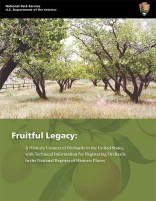
On a fruitful note, Fruitful Legacy from the Department of the Interior and National Park Service provides information about the development of the most common types of orchards and fruit trees in the United States.

Whether it’s a pretty pink Japanese Cherry Blossom, a venerable Weeping Willow, or a Giant Sequoia, trees are without a doubt one of the most magnificent parts of our world. Each tree has its own unique purpose on Earth. What’s your favorite type of tree and why? Let us know in the comments below and have a wonderful Arbor Day!

The GPO Online Bookstore – Easy Access to Federal Publications

HOW DO I OBTAIN THIS RESOURCE?

Sign up to receive promotional bulletin emails from the US Government Online Bookstore.

Shop Online Anytime: You can buy a vast majority of eBooks or print publications —with FREE Standard Shipping worldwide— from the U.S. Government Online Bookstore at https://bookstore.gpo.gov.

Visit our Retail Store: To buy or order a copy of any print editions from this collection at GPO’s retail bookstore at 710 North Capitol Street NW, Washington, DC 20401, open Monday–Friday, 8 a.m. to 4 p.m., except Federal holidays, Call (202) 512-0132 for information or to arrange in-store pick-up(s).

Order by Phone or Email: Call our Customer Contact Center Monday through Friday, 8 am to 4:30 pm Eastern (except US Federal holidays). From US and Canada, call toll-free 1.866.512.1800. DC or International customers call +1.202.512.1800.  Email orders to ContactCenter@gpo.gov

Visit a Federal depository library: Search for U.S. Government publications in a nearby Federal depository library. You can find the records for most titles in GPO’s Catalog of U.S. Government Publications.

Find more than a million official Federal Government publications from all three branches at www.govinfo.gov.

About the author: Blogger contributor Cat Goergen is the PR Specialist in GPO’s Public Relations office.