Losing our Shared National Experience?

October 31, 2011

Our blog post last week talked about GPO’s 150-year history of keeping America informed. But what does this mean in today’s media-saturated world?

Has the proliferation of media eroded our shared national experience?

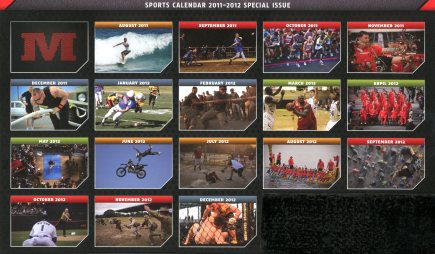
[Figure 1. U.S. History Collage. Image courtesy of Mrs. Rice’s American History II class, Lexington High School, Lexington, Ohio.

Two weeks ago in a social media seminar for Federal Government, David Kirkpatrick (technology writer for the Daily Beast and Fortune magazine and author of a new insider book on Facebook) gave some startling statistics: 50% of Facebook’s 800 million users worldwide visit Facebook daily and up to 500 million have accessed Facebook on a single day, with the average Facebook user having over 130 “friends.”

But even more surprising, he said that 50% of Americans today now get their news and analysis about important events— sometimes edited or changed as it is passed along— from friends and family, often via social networks, text or email rather than from traditional media sources.

Prior to the 21st century, when Americans had only a few national media choices and limited local media, we would all receive the same original message at the same time, thus creating a shared American experience.

Today, in the U.S. alone Americans can choose to receive information from any of an estimated 1,476 daily newspapers; 1,500 television stations; 10,322 radio stations; 71 million cable television subscribers with hundreds of TV channels each; and more than 12 billion web pages and social media.

Kirkpatrick and others say the combination of the “Facebook effect”, media proliferation, and message selectivity have contributed to the erosion of our common, shared national experience.

GPO’s role in preserving our common American experience

As we mentioned in our blog last week, GPO’s mission for over 150 years has been “Keeping America Informed” about the three branches of the Federal Government.  This mission drives us to ensure the original information produced by Federal Agencies on behalf of the American people can be found by all Americans now and in the future.

What’s involved in capturing and disseminating our common Governmental information? It starts with gathering the content from Federal Agencies and publishing it in a professional format, whether print or digital. It then continues with authenticating the information to ensure Americans are getting the “genuine” unaltered information; creating permanent records with our catalog teams for our own FDSys digital database and Catalog of Government Publications; distributing these records to libraries in our Federal Depository Library Program and to worldwide library databases like WorldCat; and sending physical copies and/or ebooks to libraries, bookstores and book etailers.

View this video for an inside look at how GPO assembles and prints the Congressional Record—the official record of the proceedings, debates, and activities of Congress.

To keep America informed digitally, we allow users to subscribe to email newsletters by topic and are also now on social media, including Facebook, Twitter, YouTube, Foursquare and Yelp.

GPO Publications about shared American experiences

Here are some of my favorite Federal publications GPO has published that document significant shared American experiences over the past century. Do you remember when and how you learned of these events?

What are some of the significant national experiences that you will never forget and how did you learn about them and share them with others?

We would love to hear from you!


About the Author:  Michele Bartram is Promotions Manager for GPO’s Publication and Information Sales Division and is responsible for marketing the US Government Online Bookstore (Bookstore.gpo.gov) and promoting Federal government content to the public.


This Day in History: Lincoln visits the GPO

October 24, 2011

Guest blogger Emma Wojtowicz talks about an important day in GPO history.

On October 24, 1863 – 148 years ago today – President Abraham Lincoln visited the Government Printing Office, the only sitting president to visit the agency. To celebrate the anniversary of his visit, Government Book Talk is taking another look at GPO’s own publication, Keeping America Informed: The U.S. Government Printing Office, 150 Years of Service to our Nation (the book was previously featured on this blog on June 15).

GPO opened for business on the same day that Abraham Lincoln was inaugurated as President of the United States – March 4, 1861. The following year in September 1862, GPO printed the preliminary version of the Emancipation Proclamation issued by Lincoln as a general order. Then in 1863, Lincoln visited GPO by invitation from Public Printer John Defrees.

President Abraham Lincoln reads a draft of the Emancipation Proclamation to his Cabinet

Figure 1. First reading of the draft of the Emancipation Proclamation by Abraham Lincoln to his Cabinet on July 22, 1862.

[Painted by F.B. Carpenter ; engraved by A.H. Ritchie. Image courtesy of: The Library of Congress]

These unknown facts about Lincoln are part of GPO’s history and foundation. For 150 years, GPO has worked quietly and diligently behind-the-scenes for Congress, the White House, Federal agencies, and the public. Keeping America Informed tells the story of the United States from the different and unknown perspective of GPO employees and their consistent contribution to the workings of the Government. The book is full of “did you know?” facts and tidbits of information, often accompanied by an illustration or picture. For example, did you know that GPO has produced the United States passport since the 1920s?

Well, even if you did, you can learn a brief history of the passport – an idea originally conceptualized and produced by Benjamin Franklin, which identified the bearer as a trusted individual who was able to enter the U.S. The State Department took over control of the passport in 1856 and the single engraved page was produced by the Bureau of Engraving and Printing. When in the 1920s the League of Nations created an international standard for a booklet-style passport, the State Department sought GPO’s services to print it, and has remained a loyal customer ever since.

Earliest booklet-style US passports printed by the Government Printing Office (GPO)

Figure 2. First generation of booklet-style US passports. Printed by GPO. Source: “Keeping America Informed”

These types of facts and added background are what make Keeping America Informed a worthwhile read. Similar information can be found on the United Nations Charter, the Warren Commission, President George H. W. Bush’s 1991 inauguration, and the list goes on. In between, you can see historical photographs from GPO’s vast collection.

The book was written, edited, designed, and printed by GPO employees, which is entirely fitting because the message of the book is centered on GPO employees and how they have played a major role in the history of the United States. Abraham Lincoln visited GPO when the agency was still in its infancy, yet working around the clock in support of the war effort.

As the book details, GPO is a much different place today than when Lincoln visited; however, the mission of GPO remains the same. Keeping America Informed: The U.S. Government Printing Office, 150 Years of Service to our Nation is available through GPO’s online bookstore, retail bookstore, on our FDSys federal document database or in a library.

You can see the original printer’s proof of the Emancipation Proclamation in person at GPO’s 150th anniversary history exhibit now through December 2011!

To view an original copy of the preliminary version of the Emancipation Proclamation that was issued by President Lincoln and printed by GPO, visit our 150th anniversary history exhibit located at 732 North Capitol Street NW in Washington, DC. The Emancipation Proclamation is on loan from the Library of Congress only through December…

Click here to watch a video of our 150th anniversary exhibit on GPO’s YouTube channel.

The GPO 150th anniversary exhibit is open 8 a.m. to 4 p.m. Monday through Friday, except on Federal holidays.

Read more about Abraham Lincoln and his rise to the Presidency in the National Park Service’s recent work commemorating the 150th anniversary of Lincoln’s inauguration: Abraham Lincoln’s Journey to Greatness.


Statistical Abstract and Print Mashups in a Digital Age

October 13, 2011


Since 1878, the Statistical Abstract of the United States has been printed by the Government Printing Office on behalf of the Census Bureau.

The “Stat Abstract” is considered “the authoritative and comprehensive summary of statistics on the social, political, and economic organization of the United States,” and compiles data from multiple sources, including: the Census Bureau, Bureau of Labor Statistics, Bureau of Economic Analysis, and many other Federal agencies and private organizations. Each year, new tables and analyses are added to keep up with the issues and interests of the day.

As Jim Cameron mentioned in his February post about the 2011 edition,

“Family debt, manufacturing, national security, international statistics – there doesn’t seem to be anything that the Statistical Abstract doesn’t cover. At more than 1,000 pages, it’s an America watcher’s dream.”

This important publication has fulfilled a unique niche for over a century for students, educators, researchers and librarians throughout the country as the definitive source of US statistics. As one librarian put it, “The print edition is THE most used reference book in my collection.”

Why is having all this information in a single, compiled, cited, and referenced edition important to its users? Michael Fry, Senior Map Librarian for the National Geographic Society Library and Archives says:

“[W]hile the Census Bureau may be correct that the data is “available elsewhere,” the beauty of the Stat Abstract is that it obviated users’ need to know where “elsewhere” was. And that, as librarians know, can be (at least) half the battle.”

After fifteen years in the Internet industry, I am highly aware of how important it is to your intended audience to be able to quickly and easily find the information they are looking for, and how difficult this search task is made for the users by most web sites.

This has led to an entire field of search engine optimization also called SEO. Unfortunately, all the SEO in the world can’t overcome the amount of time and effort necessary to find all the content and data you need if it is scattered across many web pages and web sites.

In a world where time is money and convenience is king, the time savings in both finding the necessary data and knowing immediately the official source that produced that data are key benefits of a book like the Statistical Abstract. In a sense, this book is the ultimate printed “mashup” that blends data from multiple sources into a cohesive whole that is greater than the sum of its parts.

Who would have thought that a 134 year-old publication tradition would have such relevance in a digital age?  Unfortunately, compiling all this data and obtaining publication rights is increasingly expensive,  as many experts and a lot of effort are needed to pull together a work of this complexity. Thus, this may be the last year in its compiled format, since in its Fiscal Year 2012 budget submission to Congress, the Census Bureau requested “a decrease to terminate the Statistical Abstract program.

So, you may want to get what may be the last print edition of the Statistical Abstract of the United States at the US Government Bookstore in paperback or hardcover or find it in a library. Or you can see the tables online here.

Some interesting facts from the 2012 edition:

  • Increase in US Population: Between April 1, 2000 and April 1, 2010 there was a 9.7 percent increase in the resident population of the United States. The state with the highest percentage increase in resident population during the same time period was Nevada (35.1), while the only state that experienced a decrease was Michigan (-0.6). (Table 14)
  • Retail profits up: For retail trade corporations with assets of 50 billion dollars or more, net profit increased from 54.0 billion in 2008 to 84.1 billion in 2009. Profits per dollar of sales before taxes also increased from 2.6 cents per dollar of sales in 2008 up to 4.1 cents per dollar of sales in 2009. (Table 1052)
  • 80% has Internet access: In 2010, approximately 20 percent of households did not use the Internet…[, and] 80 percent of households had an Internet connection anywhere (at home or mobile etc). (Table 1155)


About the Author:  Michele Bartram is Promotions Manager for GPO’s Publication and Information Sales Division and is responsible for marketing the US Government Online Bookstore (Bookstore.gpo.gov) and promoting Federal government content to the public.


Steve Jobs and our Innovation Nation

October 11, 2011

Last week we lost one of America’s great geniuses of innovation, Apple’s founder and CEO, Steve Jobs.

I can remember each time I first used one of Apple’s products. While working for IBM as a systems engineer right out of college and working with both mainframe systems and some not-always-so-friendly early PC operating systems (remember DOS?), I got to use a friend’s Macintosh and was blown away by how easy it was to use. Fast forward through the introduction of the iPod; iTunes online music and apps store; the iPhone—the first touchscreen smartphone; and now the iPad, first touchscreen tablet; and we now have a world that couldn’t conceive of life without Steve Jobs’ innovations.

One of Jobs’ secret to success was treating Apple as an idea and business incubator to continually research and fund what could possibly be the “next great thing” in the future, but was still only a germ of an idea from some engineer or scientist.

The Federal Government as an Incubator of Innovation

Like Apple, one of the key roles of the US Federal Government is to serve as an incubator of innovation.

Here at GPO, for example, we are embracing innovation by producing eBooks, digital downloads, information portals and databases in response to the changing needs of our increasingly digital society, which have been driven in part by Apple inventions introduced by Steve Jobs.

Most of the work products from the Federal Government can be and are used freely by private industry or other areas of Government to spur their own innovations. From statistics to research, processes to products, the Government has provided the seeds to innovation for American industry throughout the years.

Looking through our recent catalog on the US Government Bookstore website, I came across these publications which provide examples of innovation both within the Federal Government and in partnership with the private sector:

 
  • Spinoff Innovative Partnerships Program 2009, provides an in-depth look at how NASA’s initiatives in aeronautics and space exploration have resulted in beneficial commercial technologies in the fields of health and medicine, transportation, public safety, consumer goods, environmental protection, computer technology and industrial productivity.  Some innovation spinoffs over the years include:
    • lightweight breathing system adapted for firefighters;
    • Teflon-coated fiberglass fabric for astronaut spacesuits is now used as a permanent roofing material for buildings and stadiums;
    • remote-controlled robotic arms are now being used for robotic surgical operations; and
    • artificial heart pump based on the design of NASA’s space shuttle main engine fuel pumps.
    • You can get a print copy of this book now at the US Government Bookstore or find it in a library.


About the Author:  I am Michele Bartram, Promotions Manager for GPO’s Publication and Information Sales Division.  My duties include marketing for the US Government Online Bookstore (Bookstore.gpo.gov) and promoting Federal government content to the public. Due to the retirement of Jim Cameron, my duties now also include taking the helm as Blogger for Government Book Talk. I have been in the Internet marketing and ecommerce field for over 15 years.

We at GPO wish Jim all the best in his retirement, and will continue to do our best to spotlight the amazing variety of Government publications and their impact on ourselves and our world – and have fun while doing it.


Browsing the U.S. Government Manual

September 29, 2011

What with invisible ink, yetis, and earthquakes, the world of Government publications can be so diverse and intriguing that it’s easy to lose track of sober perennials like the U.S. Government Manual. I’ve used this great book throughout my career in the Federal Government to get contact information for the right part of a large Federal agency or verify that a smaller, more obscure one actually existed – and what it really did. Thanks to the diligent folks at the National Archives and Records Administration’s  Office of the Federal Register, you can ferret out phone numbers, mailing addresses and URLs that really work, or just read through each agency entry to better understand its particular missions and activities. It’s perhaps the premier annual reference book for all three branches of Government.

Of course, this wouldn’t be Government Book Talk if I didn’t come at my subject from a slightly skewed angle. My favorite section to browse isn’t the main listing of agencies, the quasi-official agencies, or even the international organizations – it’s the History of Organizational Changes. For scholars or other researchers, this section is valuable because it allows them to trace the institutional evolution of a Government function or track down the ultimate fate of a defunct bureau or commission. For me (although I’ve used it for these worthy purposes), it’s mainly a way to arouse bemused curiosity about how Federal entities were christened in years past. Did you know that we once had a Bureau of Efficiency (1916-1933)? Did it fade away because we got too efficient? Doubtful, I’m afraid. What about the Office of Facts and Figures (1941-1942)? I know we haven’t run out of them…

Some innocuous agency names conceal more interesting activities. There couldn’t be a blander, more bureaucratic sounding name than The Office of  the Coordinator of Information (1942). It quickly changed to the Office of Strategic Services (OSS) which, under the charismatic leader of William J. “Wild Bill” Donovan, conducted U.S.espionage and sabotage activities for the European Theater of Operations in World War II and was the progenitor of today’s Central Intelligence Agency (CIA). Then there was the Virgin Islands Company (1934-1966), a New Deal Government corporation established to grow and refine sugar cane and manufacture and sell rum in that beautiful U.S. possession. It marketed rum under the name “Government House.” The label (left) featured a sailing ship, a palm tree, and a harbor, and supposedly was designed by President Franklin D. Roosevelt himself. How else could I find out about this stuff if not through the pages of the U.S. Government Manual?

If you need a source of the latest information about any Government agency, or if you’re just curious about the innumerable nooks and crannies of the Federal establishment, the U.S. Government Manual is for you. You can browse it here, get a print copy of the 2011 edition here, or find it in a library.


Yetis and Extraterrestrials?

September 22, 2011

Alert Government Book Talk reader Deb Christmas tipped me off to this document which, although not the kind of thing I usually discuss here, has a couple of things going for it. First, what’s not to like about an American diplomatic memo outlining the special procedures required by the Nepalese government for those engaged in yeti-hunting expeditions?  The diplomat involved may have wondered exactly how he wound up drafting such a memo, but I hope he derived some amusement from it. I also wonder how many intrepid explorers received this excellent advice prior to launching themselves into the high Himalayas. The other aspect of this little “Foreign Service Despatch”  that stimulated what pass as my thought processes is the juxtaposition of an official, rather bureaucratic Government memo regarding a subject widely considered to be…well…paranormal. Since this blog already has discussed the possibly occult nature of the mysterious Voynich Manuscript, how could I pass up the opportunity to delve into such enigmatic realms again?

This brings me to the U.S. Air Force’s 1997 The Roswell Report: Case Closed. This study, written by Air Force Captain James McAndrew, “was to determine if the U.S. Air Force, or any otherU.S. government agency, possessed information on the alleged crash and recovery of an extraterrestrial vehicle and its alien occupants nearRoswell,N.M. in July 1947.” The conclusion? “…the predecessor to the U.S. Air Force, the U.S. Army Air Forces, recovered debris from an Army Air Forces balloon-borne research project code named MOGUL. Records located describing research carried out under the MOGUL project, most of which were never classified (and publicly available) were collected, provided to GAO, and published in one volume for ease of access for the general public.”

Jim McAndrew, whom I met in the course of GPO’s printing and selling The Roswell Report: Case Closed, was a sincere and enthusiastic disbeliever in the much-hyped Area 51 stories that circulated then and now, but I’m afraid that his conclusions haven’t had much influence on those with a will to believe in extraterrestrials, UFOs, etc. I try to keep an open mind about these things, feeling that “There are more things in heaven and earth, Horatio, than are dreamt of in your philosophy.” Based on this well-documented study, though, I think the official version holds up pretty well. (Those anthropomorphic test dummies are pretty creepy looking…)

You can read The Roswell Report: Case Closed here or find it in a library. The yeti memo? Look here.  As far as is known, no yetis were shot at,  testifying to its effectiveness.


A Botanic Garden for the Nation: “National benefits to be derived from exploration”

September 20, 2011

Guest blogger Nancy Faget sheds some light on a little-known Federal agency.

It’s always interesting to see what kinds of things I can learn from a Government publication. For example, I just found out that President George Washington asked the city commission to incorporate a botanical garden into the plan for Washington, DC.  He suggested the square next to the President’s House as a possible site. But it was President James Monroe who passed the bill to set aside five acres on the National Mall for a national botanic garden.  Thus, a living museum of plants was created as an oasis on Capitol Hill.

This National Garden is a living laboratory which includes the Rose Garden, the Butterfly Garden, the Lawn Terrace, the First Ladies’ Water Garden, the Regional Garden, and an outdoor amphitheater.

The founders of the country had an understanding of plants and gardens as a national benefit.  In the beautifully produced A Botanic Garden for the Nation, published by the U.S. Botanic Garden, I learned many interesting facts that I didn’t expect to find. For example, Thomas Jefferson emphasized that the Lewis and Clark expedition should look for plants and vegetables.  The U.S. Exploring Expedition of 1842 also was charged partly with gathering plants and seeds from around the world.  As the expedition traveled 87,000 nautical miles charting oceans and coastlines, the botanists and naturalist aboard the ships collected plant and seed specimens.Although the color photographs in the book are spectacular, it’s also a fascinating read.  Here are some other bits I discovered:

  • The Botanic Garden houses more rare plants all the time as gifts are received from foreign governments and (incredibly) as a result of law enforcement actions!   When rare or endangered species are confiscated, they often are sent to the Botanic Garden for its collection.  For example, The Vietnamese orchid in the Garden’s collection was seized by U.S. Fish and Wildlife Service (FWS).  It’s now working with FWS and a commercial grower to produce marketable quantities of this orchid for sale and distribution to other public gardens.
  • The Garden also was established as an important plant rescue center for orchids and succulents.  Through a program, present species may be prevented from going extinct.  It has a production facility that works to propagate plants for exchange with other institutions.
  • In the Garden’s Medical Collection, visitors find the saw palmetto, from which fruits are studied to treat prostate cancer.  Turmeric is included in the collection because of the anti-inflammatory benefit.   In cultures where turmeric is used regularly, rates of Alzheimer’s disease are significantly lower.

Best of all, the photos of Bartholdi Park and the National Garden look so inviting, they make me want to grab A Botanic Garden for the Nation, sit in the sun, and just ponder the seasons!

You can buy your own copy for garden reading on the U.S. Government Online Bookstore, or find it in a library.


Space Exploration and the Mind

September 13, 2011

Many years ago I read “Ideas Die Hard,” a memorable story (at least to me) by Isaac Asimov. In the story, a crew of astronauts is on a flight to the moon under very tense circumstances. They go too far and see the dark side of the moon. SPOILER AHEAD: When they view the dark side, it’s a gigantic wood-and-paper stage set, the sight of which causes the crew to have a collective mental breakdown. At the end of the story, it’s revealed that the flight was a simulation and the simulator went just a bit further than intended. I think the story has stayed with me because it addresses the psychological dimensions of space exploration – an aspect I haven’t really seen addressed in news accounts or books.

NASA has filled this gap quite nicely with Psychology of Space Exploration, an engrossing new collection of articles on this theme. After an initial focus on the psychological effects of space travel, for many years the American space program paid only minimal attention to them, perhaps because the military background of the astronauts militated against what they perceived as the possibly career-retarding discussions of such matters. Interestingly, theSoviet Union paid much more attention to the psychological health of its cosmonauts during the same period. These days, however, NASA is more cognizant of the importance of mood, morale, the psychological effects of weightlessness, and other mind-body issues.

As a history buff, I was intrigued to read about the comparison of voyages in space to the epic journeys of Arctic explorers in the late 19th and early 20th centuries. Even now, wintering over in Antarctica is a kind of model of the prolonged stays in close quarters that characterize the International Space Station.

In a section on the interplay of astronauts from different countries working together, I was amused to learn that Soviet cosmonauts were not totally enthralled the space cuisine enjoyed by a French counterpart: “one of them later expressed his relief at going back to black bread and borscht after a menu of canned French delicacies, including compote of pigeon with dates and dried raisins, duck with artichokes, boeuf bourguignon, and more.”

Another fascinating essay described a space flight simulation experience in which people who knew that they were not really in space still got great enjoyment from their “trip.” It sounded so interesting that I was ready to sign up myself. Also, the special effects sound much better than those in Isaac Asimov’s story!

I really enjoyed reading Psychology of Space Exploration – I had no idea of the range of psychological issues that can crop up in space travel and the ways in which NASA has tackled them. Space buffs and students of the human mind will find much to ponder in this book. You can read it here, get your own copy, or find it in a library.


Trickle, Trickle, Splash, Splash

September 9, 2011

 As I sit here writing this, it’s raining. It’s been raining for days, as a result of the remnants of Hurricane Lee. Before that, we got rain from Hurricane Irene, although thankfully not what Vermont and Upstate New York received. Before that, innumerable August thunderstorms had dumped inches of precipitation on us. The forecast for the next few days? More rain. Earlier this summer I read that our area was in a “moderate drought” state. Ha! I was just bemoaning our saturated state with a co-worker, in the course of which I said “I’ve been blogging about earthquakes and hurricanes, so I guess I’ll have to dig out a Government publication on floods.” Aha!

 This brings me to Floods: The Awesome Power, a National Atmospheric and Oceanic Administration (NOAA to the cognoscenti) booklet that covers all kinds of flooding scenarios, including the one I’m putting up with right now. “Floods are often produced by hurricanes, tropical storms, and tropical depressions. A tropical cyclone’s worst impact may be the inland flooding associated with torrential rains. When these storms move inland, they are typically accompanied by very heavy rain.” Happily, we’re not experiencing what Louisianans did a few days ago, but it wouldn’t be totally unprecedented, either. A few years ago a freak weather system dumped tons on rain around here, resulting in a mini-flash flood in our basement – two or three inches worth. All I’ll say is that pulling up waterlogged wall-to-wall carpeting underlain with ratty-looking linoleum squares isn’t my favorite thing to do. Last night, after work, I spent a couple of hours down there mopping up from the current seepage, and the stream down the block looked way high. It can happen anywhere.

Floods: The Awesome Power not only covers the types of weather systems that can cause flooding, it provides information on how to keep track of such events, how to prepare in advance (“Store drinking water in food-grade containers. Water service may be interrupted”) what to do when the deluge is upon you (“Rapidly rising water may engulf the vehicle and its occupants sweeping them away. Vehicles can be swept away by as little as 2 feet of water”), and what to do afterward (“If the power is out, use flashlights, not candles”). Guilty as changed on that last point – it sounds as if I need more batteries and less wax around the house. There’s also a detailed outline on how to develop a family disaster plan, which could be useful in any number of crisis situations.
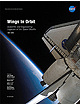
All in all, I don’t know of a better way to find out a lot about coping with flooding in a concise, easy-to-read format. You can read Floods: The Awesome Power here, buy it in packs here (great for neighborhood associations and other groups), or find it in a library. As for me, this old doo-wop classic says it all…



Getting Ready for the Next Quake

September 8, 2011

For us East Coasters, our recent experience with an earthquake was an unusual one. Of course, they’re comparatively rare here and not as strong as the ones that plague the West Coast, but it still makes you think about what would happen to your house (and you) if a really big one hit. What about my house? Even aside from how it would stand up structurally, I’ve got a lot of books and bookcases – maybe an avalanche waiting to happen. Then there are the china cabinets – it really wouldn’t do to have grandma’s best strewn across the room in shards, would it?

When I start thinking about stuff like this, my natural inclination is to find a book. For example, there’s Homebuilders’ Guide to Earthquake-Resistant Design and Construction, a Federal Emergency Management Agency (FEMA) publication that’s been around for years. It’s for homebuilders, but also for homeowners who want some good information about safe homes and how some things can be made safer. It’s based on the International Residential Code (IRC) and explains the basic principles of earthquake-resistant design and what it calls “above-code” measures that can further reduce the amount of damage from an earthquake. I like the idea of guidelines that not only meet but exceed the standards, especially when they can affect safety.

I must admit, though, that I’m not a Mr. Fix-it type. If I were to do an addition to my house, I couldn’t do what this book says needs to be done, but it at least tells me the things to ask a contractor about. Chapter 8, “Anchorage of Home Contents,” is different. It explains how to put locks on cabinets, anchor a PC, and other simple fixes that I can understand – and even do myself. There’s no question but that experiencing an earthquake concentrates the mind powerfully on such things!

Homebuilders’ Guide to Earthquake-Resistant Design and Construction is a useful and reliable guide to building and maintaining a house that can cope with earthquakes. You can look through it here, get a copy for home reference here, or find it in a library.


9/11 at the Pentagon – 10 Years Later

September 6, 2011

It’s hard to believe that the 10th anniversary of the 9/11 attacks is almost here. It was one of those events, like Pearl Harbor or the Kennedy assassination, which remains in the memory with startling clarity. From where I was working in the Government Printing Office (GPO), we could see the column of smoke from the strike on the Pentagon. Later, after Federal Government facilities in the DC area closed down, I walked from GPO to the Smithsonian’s National Museum of American History (I still remember a woman telling a Smithsonian guard that she had seen someone on the building’s roof – and who could tell what that meant in a world spinning out of control?) to meet my wife, who by some miracle got into the District and picked me up. On the way home, we drove past the Pentagon. It looked like the set of a disaster movie, the windows in the stricken area appearing as little orange rectangles of flame in a floodtide of black smoke. Several years later, after a reconstruction that left no sign of the horrific damage, I was in the Pentagon on business and our escort mentioned that we were walking in the corridor through which Flight 77 smashed – an awesome and saddening moment.

Several years ago, the Office of the Secretary of Defense published what must be considered the definitive story of September 11, 2001 at the Pentagon. Pentagon 9/11 is packed with eyewitness accounts of the strike, the fires, the deaths, and the heroism of rescuers in the face of almost unimaginable disaster. It’s chilling to read eyewitness descriptions of Flight 77 flying into the Pentagon (more than 1,300 interviews went into the development of this book), and uplifting to find out how some badly injured staffers and outside rescuers helped others to escape the resulting inferno. As the book notes, “There could not have been as many survivors of the attack on the Pentagon without the persistent and selfless acts of others – military and civilian – who were themselves caught in the maelstrom or came unhesitatingly from elsewhere in the building to respond to the desperate circumstances facing the many victims trapped in the wreckage.”

Another chapter describes the efforts of firefighters to extinguish those orange rectangles of flame I saw that day, fed by thousands of gallon of jet fuel. Other sections cover medical treatment of the victims, securing the building, helping the survivors and the families of the victims, and the gigantic effort that allowed the Pentagon to be declared “open for business” on September 12. It’s a dramatic story, and Pentagon 9/11 tells it both factually and with compassion.

You can access this excellent book in multiple ways. To browse though it, go here. GPO still has copies of the first edition and will soon have a 10th anniversary edition with a new Foreword by Secretary of Defense Leon Panetta. You can also find an eBook version here. Finally, it’s also available in many libraries. Whichever format you choose, you’ll be rewarded by an unforgettable reading experience.


“A Great Thing for the Cause”: Black Soldiers in the Civil War

September 1, 2011

Of the writing and publishing of books about the Civil War, there shall be no end – especially since this year marks the beginning of the sesquicentennial of that most violent and consequential conflict. I’m a bit of a Civil War buff myself and just finished reading Fields of Blood: The Prairie Grove Campaign, which was fought in Arkansas – one of the forgotten fronts of the war. In discussing the subsequent military career of Union General James G. Blunt, it mentioned his victory at Honey Springs in Indian Territory the following year. Now I’ve learned that Honey Springs “marked the first time in the war that black soldiers in regimental strength had carried out a successful offensive operation against Confederate troops.” I’ve also learned that the 54th Massachusetts, made famous by its gallant but unsuccessful attack on Confederate Fort Wagner, as depicted in the film Glory, later steadied Union forces at a crucial juncture of the battle of Olustee – the largest Civil War battle fought inFlorida.

How did I learn all of this? By reading a new book that I predict will become a classic – Freedom by the Sword: The U.S. Colored Troops, 1862-1867. I’ve been waiting for this book ever since I learned that the Army’s Center of Military History was working on it. Although the use of black troops by the Union has been studied from many angles, this is the most thorough operational history I’ve seen – in other words, this is a detailed account, by region, of the actual military activities in which these troops engaged. For every heroic charge, these soldiers, like any soldiers in war, spent lots of time patrolling, garrisoning, and guarding. As someone once noted, army life in wartime is made up of long stretches of boredom punctuated by short periods of extreme fear. In addition, poorly managed logistics and spotty (to say the least) medical services created their own special negatives, especially for troops that did not always receive adequate (or any) training. Reading about these gritty details is an excellent corrective to the romantic take on war so prevalent among Civil War soldiers before they “saw the elephant,” a colloquialism of the day for engaging in combat.

Freedom by the Sword also addresses problems unique to black soldiers – the possibility of re-enslavement or massacre if captured. After the notorious slaughter of black soldiers by Nathan Bedford Forrest’s Confederates at Fort Pillow, which soon was recognized by the South as “a propaganda weapon they had handed their opponents,” retaliatory actions and counteractions were succeeded by a mutual realization that such crimes cut both ways. In these cases, fighting for freedom had a steep price, but one that ex-slaves and free blacks alike were prepared to pay.

Freedom by the Sword is an important scholarly resource based on wide-ranging research, as well as a compelling account of men whose real accomplishment, beyond military victory, was “to assert their right to full citizenship and, by extension, that of all their kin.” Serious students of the Civil War will be using this book for many years to come. You can browse through Freedom by the Sword here, get your own copy in either paperback or hardcover, or page through it at a library.