Celebrating the 60th Anniversary of the Federal-Aid Highway Act of 1956

June 28, 2016
President Dwight D. Eisenhower signs the Federal-Aid Highway Act of 1956 (credit: Dwight Eisenhower Library)

President Dwight D. Eisenhower signs the Federal-Aid Highway Act of 1956 (credit: Dwight Eisenhower Library)

President Dwight Eisenhower’s signing of the Federal-Aid Highway Act of 1956 into law 60 years ago on June 29th had a profound change and impact on American life.  This act established the Dwight D. Eisenhower National System of Interstate and Defense Highways (aka the Interstate Highway System), one of largest public works programs in U.S. history and an integral part of U.S. economy and culture. The act created 41,000 miles of highways and is credited for improving the transportation of goods and services, and giving birth to the commuter. The new roads allowed Americans to live farther away from the cities and provided easy access to commute from the suburbs to work.

public_roads_1The Federal-aid highway program began with the Federal Aid Road Act of 1916, and many miles of highways and rural roads were built under this funding program through the 1930s. As the need for major interstate highways increased, a master plan for highway development was created in 1939 under President Franklin Roosevelt and was finally fulfilled with the passage of the 1956 Act, signed by President Eisenhower. The Act also created the Highway Trust Fund, which funds Federal-aid highway projects in partnership with state highway agencies.

The first construction project begun under the Act was for work on U.S. 40 (now the I-70 Mark Twain Expressway) in Missouri. Currently there are just under 47,000 miles of Interstate highways in the U.S., and new routes are developed by states to this day.

To celebrate this momentous day in transportation history, please enjoy the historical resources GPO provides:

  • The text of the 1956 bill, from the United States Statutes at Large, available via govinfo
  • 50th anniversary hearings before the House Committee of Transportation and Infrastructure,  June 27, 2006, available via govinfo
  • America’s Highways: 1776-1976, a book published by the Federal Highway Administration in 1976, documenting the history of the highway system, available via GPO’s Catalog of U.S. Government Publications
  • Highway History, a website managed by the Federal Highway Administration, with informative articles and other historical resources, including a 50th anniversary commemorative webpage
  • Dwight D. Eisenhower Presidential Library’s Interstate Highway System collection, containing digitized documents from the Eisenhower presidential papers relating to the passage of the Act
  • Highway hearings, a promotional video created by Dow Chemical in an attempt to increase popular support for the Act

750-005-00164-7The Federal Highway Administration publishes a bimonthly magazine titled, “Public Roads Magazine.” It contains many articles relating to highway research, engineering, safety on the highways, surfacing, and other subjects in this field. Reading Public Roads is the easiest way to keep up-to-date on developments in Federal highway policies, programs, and research and technology. Learn more and subscribe, or read online.

We hope you will enjoy these interesting resources that capture the essence of this historic and influential event in U.S. history.

HOW DO I OBTAIN THESE RESOURCES?

In addition to clicking on the links in the article above to find the publications, you may find these publications from the following:

Shop Online Anytime: You can buy eBooks or print publications —with FREE Standard Shipping worldwide— from the U.S. Government Online Bookstore at http://bookstore.gpo.gov.

 Shop our Retail Store: Buy a copy of any print editions from this collection at GPO’s retail bookstore at 710 North Capitol Street NW, Washington, DC 20401, open Monday–Friday, 9 a.m. to 4 p.m., except Federal holidays, Call (202) 512-0132 for information or to arrange in-store pick-up.

Order by Phone: Call our Customer Contact Center Monday through Friday, 8 am to 5:30 pm Eastern (except US Federal holidays). From US and Canada, call toll-free 1.866.512.1800. DC or International customers call +1.202.512.1800.

Visit a Federal depository library: Search for U.S. Government publications in a nearby Federal depository library. You can find the records for most titles in GPO’s Catalog of U.S. Government Publications.

About the author: Blogger contributor Jennifer Lindley is a Technical Services Librarian in GPO’s Library Services & Content Management office.


Celebrate America’s Independence

June 24, 2016

Start with the U.S. Constitution and Declaration of Independence

In celebration of our nation’s independence there’s no better time for you, your family, or school children to own and read these historic documents. It’s easy to forget how wise our forefathers were in creating the foundation of our freedoms. The documents they authored have endured; for example, the Declaration of Independence is 240 years old. Words so beautifully crafted in the late eighteenth century that still speak with power, eloquence, and relevance today.

In time for Fourth of July, GPO offers the pocket size booklet of the U.S. Constitution and Declaration of Independence, including complete text.

027-002-00540-6Owning this historic set of Americana has never been easier or more affordable – only $1.50/set! And, while the kids are out of school, consider giving these documents to your own kids and their friends to read. Celebrate our written foundation of freedom by sitting down with your children or class and reading both documents line-by-line.

Get to know America’s foundational documents so that you’ll have another reason to chant “USA-USA-USA.”

HOW DO I OBTAIN THIS RESOURCE?

Shop Online Anytime: You can buy eBooks or print publications —with FREE Standard Shipping worldwide— from the U.S. Government Online Bookstore at http://bookstore.gpo.gov.

 Shop our Retail Store: Buy a copy of any print editions from this collection at GPO’s retail bookstore at 710 North Capitol Street NW, Washington, DC 20401, open Monday–Friday, 9 a.m. to 4 p.m., except Federal holidays, Call (202) 512-0132 for information or to arrange in-store pick-up.

Order by Phone: Call our Customer Contact Center Monday through Friday, 8 am to 5:30 pm Eastern (except US Federal holidays). From US and Canada, call toll-free 1.866.512.1800. DC or International customers call +1.202.512.1800.

Visit a Federal depository library: Search for U.S. Government publications in a nearby Federal depository library. You can find the records for most titles in GPO’s Catalog of U.S. Government Publications.

About the author: Blogger contributor Ed Kessler is a Promotions Specialist in GPO’s Publication and Information Sales program office.


The Civil War’s Almost Forgotten Theater

June 22, 2016

Although the American Civil War took place over 150 years ago, there is STILL plenty to learn about the bloodiest war in U.S. history. One particularly under-discussed chapter involves the vast Trans-Mississippi West. Where exactly is that, you ask? The Trans-Mississippi West refers to all major military operations west of the Mississippi River but excluding the states and territories bordering the Pacific Ocean.

GPO makes available a U.S. Army Center of Military History short study, authored by Jeffery S. Prushankin, fittingly titled “The Civil War in the Trans-Mississippi Theater.”

008-029-00592-1The Civil War in the Trans-Mississippi Theater

The long and costly struggle between industrial North and agricultural South, “half slave and half free,” spilled into lands west of the Mississippi. The region witnessed approximately 130 battles stretching from New Mexico to New Orleans and Fort Brown to Fort Leavenworth. It saw small-scale military actions at Wilson’s Creek, Prairie Grove, and Galveston, among others. Although “often neglected in history books,” argues Prushankin, “the Trans-Mississippi Theater played an important role in the Civil War.”

The theater presented the Union with strategic terrain for projecting its military power. President Abraham Lincoln considered it a campaign to control arable (and gold-filled) land, pacify Western denizens, and eliminate a possible Confederate stronghold.  He knew such a primitive frontier would be hard-won. Over the course of the war, his War Department marshalled some 200,000 Union soldiers to the hardscrabble landscapes of New Mexico, Missouri, Arkansas, Louisiana, and Texas.

civil_war_map1

Trans-Mississippi Theater 1861-1865

The book devotes several pages to the Red River expedition, a.k.a. the struggle for Louisiana and Texas, which took place in the spring of 1864. The Federal campaign through the Red River Valley intended to open up a Union path for a Texas invasion. But commanding officer Maj. Gen. Nathaniel P. Banks bungled almost every maneuver and eventually retreated his 30,000 troops in humiliation. Although the initiative did cause a “disruption of Confederate designs,” it didn’t do much to sway the war’s outcome.

The Red River Expedition, Louisiana and Texas, 1864. (Library of Congress)

The Red River Expedition, Louisiana and Texas, 1864. (Library of Congress)

That Union debacle eventually gave way to Price’s Raid. Three gory, inconclusive years and Lincoln’s looming reelection sent Southern leaders into a panic. They believed that to save their cause, they would have to re-capture Missouri for the Confederacy. During the fall of 1864, Confederate cavalry raided Missouri and Kansas. Long story short, Union troops delivered a decisive blow. Price’s ineffectual raid effectively ended major combat operations in the Trans-Mississippi.

Much of Civil War history remains focused on events east of the Mississippi. Ultimately, the Trans-Mississippi closedown was not a “winner, winner, chicken dinner” pivot for the Union. Perhaps it will remain a forgettable theatre in an unforgettable war. But the Trans-Mississippi did allow the North to prove itself a better organized, better led army. And that certainly was a leading factor in the Union’s overall victory.

HOW DO I OBTAIN THIS PUBLICATION?

Shop Online Anytime: You can buy eBooks or print publications —with FREE Standard Shipping worldwide— from the U.S. Government Online Bookstore at http://bookstore.gpo.gov.

 Shop our Retail Store: Buy a copy of any print editions from this collection at GPO’s retail bookstore at 710 North Capitol Street NW, Washington, DC 20401, open Monday–Friday, 9 a.m. to 4 p.m., except Federal holidays, Call (202) 512-0132 for information or to arrange in-store pick-up.

Order by Phone: Call our Customer Contact Center Monday through Friday, 8 am to 5:30 pm Eastern (except US Federal holidays). From US and Canada, call toll-free 1.866.512.1800. DC or International customers call +1.202.512.1800.

Visit a Federal depository library: Search for U.S. Government publications in a nearby Federal depository library. You can find the records for most titles in GPO’s Catalog of U.S. Government Publications.

About the author: Blogger contributor Chelsea Milko is a Public Relations Specialist in GPO’s Public Relations Office.


New Report On Climate Change & Human Health

June 20, 2016

Climate change is a global threat to health, says a new U.S. Government report. About 100 climate-change science and public health experts from eight Federal agencies–including the Environmental Protection Agency (EPA), the Department of Health and Human Services (HHS), and the National Oceanic and Atmospheric Administration (NOAA)–got together and combed through a ton of peer-reviewed research. The result is a more robust scientific understanding of how climate change increases risk to human health. The conclusion of this recently released report is as the climate continues to change, it will intensify old threats and precipitate new ones, to include adverse human health effects.

GPO makes available the collaborative and foundational report, Impacts of Climate Change on Human Health in the United States: A Scientific Assessment, as a PDF eBook.

ClimateHealth2016_FullReportThis scientific assessment examines the profound impact of climate change on the health of American people. The U.S. Global Change Research Program, which spearheaded the assessment, says “Every person in the U.S. is vulnerable to the health impacts of climate change at some point in their lives, no matter where they live.”

At global, regional, and local levels, extreme rainfall, drought, heat, and flooding will challenge quality food, water, and air supplies. In turn, the risk of respiratory and cardiovascular disease, injuries, premature deaths, vector-borne illnesses, infectious diseases, and threats to mental health will grow. Page five of the report charts examples of how climate change can affect human health and disease.

Climate Impacts_p5

This diagram shows specific examples of how climate change can affect human health, now and in the future. Excerpt from Impacts of Climate Change on Human Health in the United States report. Click on image to enlarge.

Here are a few key discoveries from Impacts of Climate Change on Human Health in the United States: A Scientific Assessment:

  • Temperature-Related Death and Illness: rising concentrations of greenhouse gases —> more extreme temperature swings —> increase in deaths and illness from heat and cold;
  • Air Quality Impacts: higher levels of air pollutants and airborne allergens —> poor indoor and outdoor air quality —> negative affect on allergies and respiratory health;
  • Impacts of Extreme Events on Human Health: exposure to extreme events —> disruption of essential infrastructure —> health risks;
  • Vector-Borne Diseases: climate change is expected to alter vector-borne disease transmission and infection patterns and spur the emergence of new vector-borne pathogens;
  •  Climate Impacts on Water-Related Illness: affected fresh and marine water resources —> more water-related contaminants —> more water-related illnesses
  •  Food Safety, Nutrition, and Distribution: higher global temps and concentrations of CO2 —> increase foodborne illness, lower nutritional values, and make food less safe;
  • Mental Health and Well-Being: climate change disasters can have serious mental health consequences such as stress, anxiety, and depression.

These experts hope research like this will lead efforts to counter climactic disturbances and proactively manage the health risks of climate change.

HOW DO I OBTAIN THIS FREE RESOURCE?

Shop Online Anytime: You can buy eBooks or print publications —with FREE Standard Shipping worldwide— from the U.S. Government Online Bookstore at http://bookstore.gpo.gov.

 Shop our Retail Store: Buy a copy of any print editions from this collection at GPO’s retail bookstore at 710 North Capitol Street NW, Washington, DC 20401, open Monday–Friday, 9 a.m. to 4 p.m., except Federal holidays, Call (202) 512-0132 for information or to arrange in-store pick-up.

Order by Phone: Call our Customer Contact Center Monday through Friday, 8 am to 5:30 pm Eastern (except US Federal holidays). From US and Canada, call toll-free 1.866.512.1800. DC or International customers call +1.202.512.1800.

Visit a Federal depository library: Search for U.S. Government publications in a nearby Federal depository library. You can find the records for most titles in GPO’s Catalog of U.S. Government Publications.

About the author: Blogger contributor Chelsea Milko is a Public Relations Specialist in GPO’s Public Relations Office.


Healthy Fathers Make Delightful Dads

June 16, 2016

fathers_dayFather’s Day is upon us. And who knows better than Mom and the kids when Dad is in the mood for family fun? It’s a good bet that if he’s eating right, getting the exercise and the rest busy guys need (though most Americans don’t), then there’s a good chance the household is a great place to be.

The keystone to happiness is one’s health, not just for Dad but the entire family. Men’s health is finally getting the attention it deserves. For a long time, it seemed as if no one realized the mighty male is as vulnerable to disease, poor vital signs and stress as is the woman of the house and the kids. Things have changed. U.S.  Health and Human Services health oriented professionals have researched and authored some great publications to ensure the men in your life have the tools to combat “the couch and – oh my aching back – syndromes.”

This year, when you celebrate Father’s Day, think about how you can do Dad one better by giving him the methods and information to support his present health regime; or if he hasn’t been all that vigilant, can jump start his journey to health and wellness. Sometime it takes the encouragement of a loved one for a strong-willed man to change directions from unhealthy to healthy. Sound familiar?

A Few Moments Browsing the GPO Online Bookstore Can Bring a Lifetime of Better Health Choices

9780160930126At last count there are over 100 publications listed at bookstore.gpo.gov that can positively impact a man’s health and that of his family too.  “Work-Out to Go”, from the National Institute on Aging, for older men can help Dads get back into a work-out routine– often after a lengthy break. It explains how to overcome a sense of “too much work doesn’t allow me time for exercise.”  Don’t let anything get in your way or his from maintaining an exercise regimen.

017-300-00025-3_Page_001Exercise and Physical Activity is an e-book, and it’s free. This easy read shows how to get started, plus how to make an exercise plan, plus many more tips for getting healthy. The Veteran’s Administration also has many publications defining health benefits and care benefits for Vets. Check out Health Care Benefits Overview, GPO Stock # 051-000-00256-3, strictly to support Vets in securing their health care needs.

Whether YOUR DAD is Young, Old, A Vet, in great shape, or not so, Father’s Day can be the day to urge him to be the man he always has been inside, just a healthier one inside and outside too.

HOW DO I OBTAIN THESE RESOURCES?

Shop Online Anytime: You can buy eBooks or print publications —with FREE Standard Shipping worldwide— from the U.S. Government Online Bookstore at http://bookstore.gpo.gov.

 Shop our Retail Store: Buy a copy of any print editions from this collection at GPO’s retail bookstore at 710 North Capitol Street NW, Washington, DC 20401, open Monday–Friday, 9 a.m. to 4 p.m., except Federal holidays, Call (202) 512-0132 for information or to arrange in-store pick-up.

Order by Phone: Call our Customer Contact Center Monday through Friday, 8 am to 5:30 pm Eastern (except US Federal holidays). From US and Canada, call toll-free 1.866.512.1800. DC or International customers call +1.202.512.1800.

Visit a Federal depository library: Search for U.S. Government publications in a nearby Federal depository library. You can find the records for most titles in GPO’s Catalog of U.S. Government Publications.

About the author: Blogger contributor Ed Kessler is a Promotions Specialist in GPO’s Publication and Information Sales program office.


Fish, not trash, should swim!

June 8, 2016

June 8th is World Oceans Day, an annual celebration to honor and conserve a healthy world ocean. Oceans make the planet blue. Oceans interconnect with everything. Oceans belong to everyone. Yet, careless actions of individuals affect ocean life. Humans discard plastic bottles, electronics, metal cans, and food wrappers. When this trash makes its way into marine environments, it’s termed marine debris.

The National Oceanic and Atmospheric Administration (NOAA) asserts that “wildlife entanglement and ingestion, economic costs, and habitat damage are some impacts of marine debris.” To counter this worrying trend, NOAA’s Marine Debris Program developed Understanding Marine Debris: Games & Activities for Kids of All Ages, Marine Debris 101, a games and activities booklet, to help kids take action against marine debris.

003-017-00558-5Understanding Marine Debris: Games & Activities for Kids of All Ages

This “marine debris 101” booklet pulls together an assortment of 20 puzzles, brain-teasers, and coloring activities suitable to help children of all ages understand hazardous disposal in marine environments. Sample exercises include

  • Picture Crossword—Types of Marine Debris;
  • Marine Debris Matchup—How Long Will It Take? (decomposition times for items such as a plastic bottle, fishing line, Styrofoam cup, and banana peel);
  • Connect the Dots—A Sea Turtle’s Story;
  • A Silly Story—Cleaning Up the Beach;
  • Marine Debris Maze—Getting to the Trash Can.
Understanding Marine Debris P12

Click on image to enlarge

The most sobering page (but still fun—promise!) is the marine match-up memory game. It shows what happens to marine animals when they encounter litter. A dolphin can get tangled in fishing gear. A sea turtle can choke on a plastic bag. A sea lion can become entangled in discarded ropes and nets. It won’t be hard for kids to realize that cute animals and their underwater habitat are toxified by everyday garbage.

Understanding Marine Debris P10

Click on image to enlarge

Although this activity booklet targets kids, it delivers a ton of reminders for adults, too. Think twice before littering. Get involved in community-based clean-ups. If individual actions contribute to dangerous marine debris accumulation, then it will take individual actions to undo it. Because the world ocean is not a dumping ground.

HOW DO I OBTAIN THIS PUBLICATION?

Shop Online Anytime: You can buy eBooks or print publications —with FREE Standard Shipping worldwide— from the U.S. Government Online Bookstore at http://bookstore.gpo.gov.

 Shop our Retail Store: Buy a copy of any print editions from this collection at GPO’s retail bookstore at 710 North Capitol Street NW, Washington, DC 20401, open Monday–Friday, 9 a.m. to 4 p.m., except Federal holidays, Call (202) 512-0132 for information or to arrange in-store pick-up.

Order by Phone: Call our Customer Contact Center Monday through Friday, 8 am to 5:30 pm Eastern (except US Federal holidays). From US and Canada, call toll-free 1.866.512.1800. DC or International customers call +1.202.512.1800.

Visit a Federal depository library: Search for U.S. Government publications in a nearby Federal depository library. You can find the records for most titles in GPO’s Catalog of U.S. Government Publications.

About the author: Blogger contributor Chelsea Milko is a Public Relations Specialist in GPO’s Public Relations Office.


A Way for Kids to Celebrate the National Park Centennial

June 6, 2016

In 1916, President Woodrow Wilson signed the act creating the National Park Service (NPS). The agency was entrusted with a mission to “conserve the scenery and the natural and historic objects and the wild life therein and to provide for the enjoyment of the same in such manner and by such means as will leave them unimpaired for the enjoyment of future generations.”

024-005-01321-1This year, the National Park Service launches a second century of environmental stewardship and historic preservation. As NPS looks to its next 100, it invites everyone, especially kids, to experience one of over 400 national parks and monuments.

Children can join the national parks birthday celebration with the Centennial Junior Ranger activity booklet. It’s an activity-filled, adventure-based guide to explore, learn, and have fun in natural places. I’ll let some of the pages from this colorful, informative guide do the talking…click on each image to enlarge.

024-005-01321-1_p6-7

024-005-01321-1_p10-11

024-005-01321-1_p14-15

This booklet comes with a bonus! Upon completing select activities, kids can bring the booklet to any national park visitor center to receive an official Junior Ranger badge.

As part of NPS’ Every Kid in a Park program, admission to all national parks is free for the entire year for fourth graders and their families. And with several fee-free days scheduled throughout 2016, it’s possible to get every kid and every family in a park. The more that people care about America’s special outdoor wonderlands, the more likely they will be around in 2116.

HOW DO I OBTAIN THIS PUBLICATION?

Shop Online Anytime: You can buy eBooks or print publications —with FREE Standard Shipping worldwide— from the U.S. Government Online Bookstore at http://bookstore.gpo.gov.

 Shop our Retail Store: Buy a copy of any print editions from this collection at GPO’s retail bookstore at 710 North Capitol Street NW, Washington, DC 20401, open Monday–Friday, 9 a.m. to 4 p.m., except Federal holidays, Call (202) 512-0132 for information or to arrange in-store pick-up.

Order by Phone: Call our Customer Contact Center Monday through Friday, 8 am to 5:30 pm Eastern (except US Federal holidays). From US and Canada, call toll-free 1.866.512.1800. DC or International customers call +1.202.512.1800.

Visit a Federal depository library: Search for U.S. Government publications in a nearby Federal depository library. You can find the records for most titles in GPO’s Catalog of U.S. Government Publications.

About the author: Blogger contributor Chelsea Milko is a Public Relations Specialist in GPO’s Public Relations Office.


Prepare for the Start of Hurricane Season

June 1, 2016

stormBatten down the hatches! There’s a storm a brewin’ off the port bow. Don’t worry, despite the sailor-y weather warnings, there’s no looming squall to be alarmed about (at least as I write this blog). But there’s plenty to be prepared for as the 2016 Atlantic hurricane season is officially underway. The National Oceanic and Atmospheric Administration (NOAA) predicts that the June 1-November 30 season “will most likely be near-normal…[with a] 70 percent likelihood of 10 to 16 named storms [with] winds of 39 mph or higher.”

Prepare for hurricane season, and other types of severe weather, with two FEMA publications that provide actionable information about home building tornado- and hurricane-prone areas.

Home Builder’s Guide to Coastal Construction

This FEMA-produced series of 37 fact sheets presents technical guidance and recommendations for construction in disaster-prone coastal environments. To help you weatherproof your habitat from top to bottom, foundation to roof, this resource details construction need-to-knows. Divided into 10 different categories, the fact sheets represent various coastal building components and requirements that are distinct from those for inland.

064-000-00055-1Yes, the coast is pretty. It’s also a high-load, extreme-conditions environment. If living in a coastal home requires more upkeep, then building a coastal home certainly requires special consideration. Know thy flood zones! And follow the real estate credo of “location, location, location.” Homes in coastal areas must be situated, designed, and constructed to withstand the forces of coastal erosion, wind corrosion, and flooding from the ocean. To that end, “a building can be considered a success only if it is capable of resisting damage from coastal hazards and coastal processes over a period of decades.’

Exceeding minimum requirements of coastal building could mean a reduction in storm damage, building maintenance, and insurance premiums. Shoring up a coastal building against shore effects is an economic no-brainer.

Taking Shelter from the Storm: Building a Safe Room for Your Home or Small Business; Includes Construction Plans (CD)

064-000-00069-1When extreme winds from hurricanes and tornados threaten person and property, safe rooms can save lives. Building a safe room in your home and small business doesn’t require an advanced design degree or a bottomless bank account. With some sound information and planning, homeowners can work with a builder/contractor to stand up a safe room. As more and more people chose to live in the possible path of storms, a structure that provides “near-absolute protection, or a high probability of being protected from injury or death” is patently worth it.

tornadoThis digital collection constitutes an update to FEMA’s original and impressively helpful guidance. Since the first edition was issued in 1998, “more than 1 million copies of the publication have been distributed, and nearly 25,000 residential safe rooms have been constructed with FEMA funding assistance.” The revised CD contains PDFs of illustrated floor plans, risk assessment criteria, and even a few examples of how safe rooms have saved lives.

Almost every state in the Union “has been affected by extreme windstorms such as tornadoes and hurricanes.” The Department of Homeland Security (DHS) implores all citizens to “prepare, plan, and stay informed.” For more hurricane- and tornado-specific guidance, including how to make an emergency plan and supply kit, visit DHS’ https://www.ready.gov/.

HOW DO I OBTAIN THESE RESOURCES?

Shop Online Anytime: You can buy eBooks or print publications —with FREE Standard Shipping worldwide— from the U.S. Government Online Bookstore at http://bookstore.gpo.gov.

 Shop our Retail Store: Buy a copy of any print editions from this collection at GPO’s retail bookstore at 710 North Capitol Street NW, Washington, DC 20401, open Monday–Friday, 9 a.m. to 4 p.m., except Federal holidays, Call (202) 512-0132 for information or to arrange in-store pick-up.

Order by Phone: Call our Customer Contact Center Monday through Friday, 8 am to 5:30 pm Eastern (except US Federal holidays). From US and Canada, call toll-free 1.866.512.1800. DC or International customers call +1.202.512.1800.

Visit a Federal depository library: Search for U.S. Government publications in a nearby Federal depository library. You can find the records for most titles in GPO’s Catalog of U.S. Government Publications.

About the author: Blogger contributor Chelsea Milko is a Public Relations Specialist in GPO’s Public Relations Office.


The U.S. & India: Bilateral Buddies

May 23, 2016

India’s Prime Minister Narendra Modi visited with President Barack Obama for the first time in September 2014. The bilateral talks between the two heads of state reaffirmed the long-standing alliance between India and the United States. At the conclusion of that historic visit, Modi remarked:

“India and the United States are natural global partners based on our shared values, interests, and strengths in the digital age.  We already have the foundation of a strong partnership.  We now have to revive the momentum and ensure that we get the best out of it for our people and for the world.”

The U.S. Government partners with India to address cross-cutting development challenges and champion innovative, in-country development. One report from U.S. Army War College Strategic Studies Institute reflects upon the strategic cooperation behind this natural friendship.

The U.S.-India Relationship: Cross-Sector Collaboration to Promote Sustainable Development

U.S.-India economic and people-to-people ties are strong and more enmeshed than ever. This volume looks at how both powers are concerned with a broad range of engagement issues: energy, climate change, defense, trade, health, and social innovation. How do these policy priorities fit together for the sake of shared national interests? The answer is cross-sector collaboration—government, private, and civil sectors working transparently on public problems.

008-000-01121-4Over two dozen experienced scholars, businesspeople, and government officials weigh in on the structure, process, and subtleties of cross-sector collaboration with theoretical papers, opinion pieces, and case studies. One contributor, Chandrashekhar Dasgupta, argues, “cross-sector collaboration can be particularly fruitful in the interaction of the two great democracies like India and the United States.” But to “make a collaborative initiative successful,” writes Michael J. Frantantuono, the two countries must acknowledge the “necessity of investing time and effort in understanding the partner.”

Another big issue involves the primacy of sustainable development vs. human security. The two don’t vacillate on parallel, separate spectrums. Each concept plays into each other and cannot be detached. Nor should sustainable development and security be promoted at the expense of vulnerable populations. Cross-sector collaboration is presented as a means to reconcile this.

The text’s discourse shows how cross-sector collaboration can be a way forward for sustainable development and security.  And, of course, Obama-Modi diplomacy gives energy and purpose to this joint pursuit. Perhaps, in time, the U.S.-India bilateral relationship can be scaled outward as a model, one that shows how global interdependence confronts the most pressing challenges of our time.

HOW DO I OBTAIN THIS PUBLICATION?

Shop Online Anytime: You can buy eBooks or print publications —with FREE Standard Shipping worldwide— from the U.S. Government Online Bookstore at http://bookstore.gpo.gov.

 Shop our Retail Store: Buy a copy of any print editions from this collection at GPO’s retail bookstore at 710 North Capitol Street NW, Washington, DC 20401, open Monday–Friday, 9 a.m. to 4 p.m., except Federal holidays, Call (202) 512-0132 for information or to arrange in-store pick-up.

Order by Phone: Call our Customer Contact Center Monday through Friday, 8 am to 5:30 pm Eastern (except US Federal holidays). From US and Canada, call toll-free 1.866.512.1800. DC or International customers call +1.202.512.1800.

Visit a Federal depository library: Search for U.S. Government publications in a nearby Federal depository library. You can find the records for most titles in GPO’s Catalog of U.S. Government Publications.

About the author: Blogger contributor Chelsea Milko is a Public Relations Specialist in GPO’s Public Relations Office.


A NASA Facility “Making the Future” for 75 Years

May 18, 2016

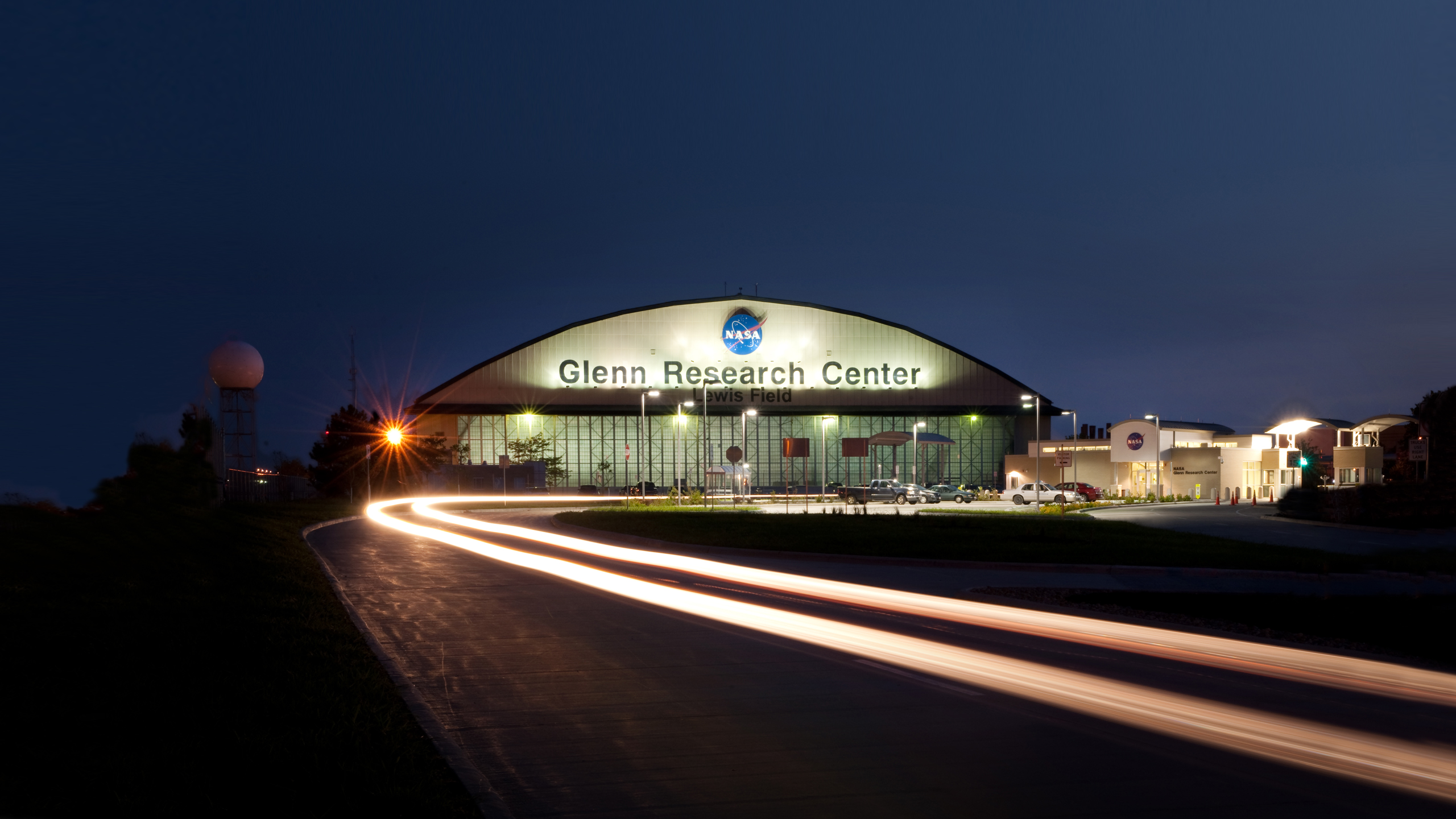
Adjacent to Cleveland Hopkins International Airport in Ohio, there’s a collection of buildings where early experiments in turbojet engines, liquid hydrogen fuel, and wind energy were conducted. A place whose technologies once helped the United States to win the moon race and today contribute to our journey to Mars. That facility, the NASA John H. Glenn Research Center, celebrates 75 years of advancing spaceflight technology in 2016. The center was renamed after John H. Glenn, the former astronaut and U.S. Senator, in 1999. He was the first American to orbit Earth in 1962 and became the oldest person to fly in space in 1998 aboard a mission on Space Shuttle Discovery.  The major aeronautics and space test ground spotlights its own decades-long history in a new publication made available through GPO.

grc_night

Bringing the Future Within Reach: Celebrating 75 Years of the NASA John H. Glenn Research Center, 1941-2016

Born of the Yankee ingenuity of World War II, the research center began operations in 1942 under the name of Aircraft Engine Research Laboratory (AERL) and the auspices of NASA’s predecessor, National Advisory Committee for Aeronautics (NACA). The center was first tasked with improving aircraft engines to compete with Nazi Germany. It quickly established itself as a foremost test facility for high-speed flight and jet engine technologies. In the early, post-war years of NASA, the center managed several large projects, most notably contributing to Project Mercury, the first manned mission. Since that time, “the three pillars of the center’s success have been its robust physical assets, its astute leadership, and the accomplished staff.”

BringingTheFutureWithinReach_033-000-01377-9The 1990s was a particularly prolific time for the center. It manufactured the Advanced Communications Technology Satellite (ACTS) deployed on the Space Shuttle Discovery in 1993. In 1994, it was assigned management of the power system for the U.S.-Russian Mir Cooperative Solar Array program. And before the successful Martian landing of the Pathfinder rover, NASA’s Jet Propulsion Laboratory (JPL) turned to the center to conduct three performance tests. Over the years, lessons learned from high-energy propellants experiments have propelled the aerospace industry into the future.

Today, the Glenn Research Center is an unparalleled aeropropulsion and alternative energy trendsetter. The center is credited with developing the ion engine used on the Deep Space 1 probe and the power system currently in use on the International Space Station. It is home to the Zero-Gravity facility, the largest drop tower of its kind. It also hosts the Propulsion System Lab, the nation’s premier altitude flight simulation facility. Another section tests how spacecraft will survive the unique and hostile conditions of deep space. And the Photovoltaic Lab studies how to power future spacecraft going to Jupiter and Saturn.

Credit: 1960s photo of Interior of the 20-foot-diameter vacuum tank in the Electric Propulsion Laboratory.

Credit: 1960s photo of Interior of the 20-foot-diameter vacuum tank in the Electric Propulsion Laboratory.

The center’s aeronautics expertise has considerably advanced NASA mission-critical technology and leadership inside and outside the lab. Remarking on the center’s anniversary, Sen. John Glenn said such work is “important in maintaining a leadership in this kind of research, this kind of emphasis on the new and the unknown” and to “maximize the research return right here on Earth.” Seventy-five years of “making the future” in aerospace R&D and solar system exploration is just the beginning for the Glenn Research Center.

HOW DO I OBTAIN THIS PUBLICATION?

Shop Online Anytime: You can buy eBooks or print publications —with FREE Standard Shipping worldwide— from the U.S. Government Online Bookstore at http://bookstore.gpo.gov.

 Shop our Retail Store: Buy a copy of any print editions from this collection at GPO’s retail bookstore at 710 North Capitol Street NW, Washington, DC 20401, open Monday–Friday, 9 a.m. to 4 p.m., except Federal holidays, Call (202) 512-0132 for information or to arrange in-store pick-up.

Order by Phone: Call our Customer Contact Center Monday through Friday, 8 am to 5:30 pm Eastern (except US Federal holidays). From US and Canada, call toll-free 1.866.512.1800. DC or International customers call +1.202.512.1800.

Visit a Federal depository library: Search for U.S. Government publications in a nearby Federal depository library. You can find the records for most titles in GPO’s Catalog of U.S. Government Publications.

About the author: Blogger contributor Chelsea Milko is a Public Relations Specialist in GPO’s Public Relations Office.


Military Transportation: “Nothing Happens Until Something Moves”

May 13, 2016

There’s a lot happening in terms of transportation this month. May 16-22 is National Transportation Week, an opportunity to celebrate the community of transportation professionals who keep our country moving. In addition, the third Friday of May is National Defense Transportation Day. And throughout 2016, the U.S. Department of Transportation celebrates its 50th anniversary.

Transportation infrastructure is quite literally the foundation of our country. Interstate highway trucks and freight trains get people and products where they need to go. Across bridges, along rail lines, and through tunnels, transport mobility is a part of life. And it’s also critical for modern Army readiness. In fact, there is a little known unit specializing in rapid troop and cargo delivery to distant theaters. It’s called the U.S. Army Transportation Corps.

008-029-00597-2Spearhead of Logistics: A History of the United States Army Transportation Corps

This U.S. Army Center of Military History text chronicles over 200 years of U.S. military transportation. The “need to organize, control, equip, and man transportation resources” became evident during the Revolutionary War. Borrowing from the organized transport network of the merchant class, the Continental Congress authorized a Quartermaster General to contribute logistical support—mostly in the form of horses and river boats—to Revolutionary forces. Since then, every war, expeditionary operation, and worldwide commitment has been supported by what eventually became the Transportation Corps of today.

Corps history is in step with the timeline of transportation growth. Steamboats in the Mexican War. Locomotives in the Civil War. Wagons in the Spanish-American War. Transport from this era “was the prototype of that required for a modern war in the Industrial Revolution.” Army transportation matured dramatically with wartime demands. Troop movement in both world wars required considerable coordination. Motor vehicles were first employed in World War I when “truck convoys [carried] supplies from the ports to the forward areas.” Horsepower was officially out and “animal power would never again be a major consideration for the U.S. Army.”

SPEARHEAD OF LOGICITICS (002)

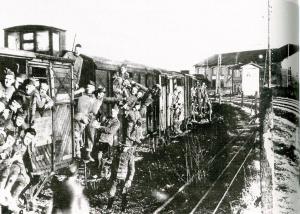
Forty men and eight horses. U.S. troops on their way to the trenches, 1918. Excerpt from publication.

When the world once again charged into a world war, the U.S. military expanded its transport mission. As it was “the first time U.S. troops were deployed throughout the world,” all ground and water transportation reorganized under one agency, the Transportation Corps. The newly formalized unit brought military might to bear in the beachhead landing on Normandy, campaign into the heart of Nazi Germany, MacArthur’s assaults in the Pacific theater, and the Berlin Airlift.

With continued speed and efficiency, the Transportation Corps sustained a massive combat force in Desert Storm. In a seven-month period, Corps officers participated in the “largest battlefield movement ever recorded for the time allotted.” Sea port and airlift operations and movement of “combat force[s] into attack positions…was one of the most significant achievements in the history of the Transportation Corps.”

us-armyThe Transportation Corps has embraced new technology and provided orderly service to the mission of defense. Without Army transport, personnel, equipment, and supplies would be immobilized. The book ends with an Albert Einstein quote that perfectly describes the Corps: “nothing happens until something moves.”

HOW DO I OBTAIN THIS MILITARY HISTORY PUBLICATION?

Shop Online Anytime: You can buy eBooks or print publications —with FREE Standard Shipping worldwide— from the U.S. Government Online Bookstore at http://bookstore.gpo.gov.

 Shop our Retail Store: Buy a copy of any print editions from this collection at GPO’s retail bookstore at 710 North Capitol Street NW, Washington, DC 20401, open Monday–Friday, 9 a.m. to 4 p.m., except Federal holidays, Call (202) 512-0132 for information or to arrange in-store pick-up.

Order by Phone: Call our Customer Contact Center Monday through Friday, 8 am to 5:30 pm Eastern (except US Federal holidays). From US and Canada, call toll-free 1.866.512.1800. DC or International customers call +1.202.512.1800.

Visit a Federal depository library: Search for U.S. Government publications in a nearby Federal depository library. You can find the records for most titles in GPO’s Catalog of U.S. Government Publications.

About the author: Blogger contributor Chelsea Milko is a Public Relations Specialist in GPO’s Public Relations Office.


History Squared! A History of Foreign Relations History

May 11, 2016
Department of State headquarters, Washington, DC

Department of State headquarters, Washington, DC

Since the early days of the Republic, Americans have sought an understanding of how their government conducts its diplomatic affairs. Walk into any bookstore and you’ll likely find at least one historical account of U.S. foreign relations. To be sure, there’s a great deal of public fascination with the Department of State–one of the oldest executive branch agencies. And with that sustained interest comes a vigorous debate about the “people’s right to know.”

GPO makes available printed volumes of the U.S. Department of State’s official documentary historical record of major declassified U.S. foreign policy decisions. It’s called the Foreign Relations of the United States (FRUS) series. Now there’s a history about that history. History squared!

Toward “Thorough, Accurate, and Reliable”: A History of the Foreign Relations of the United States Series

Public law mandates that the State Department document significant foreign policy decisions and actions. It calls for regular installments in a “historical series . . . which shall be a thorough, accurate, and reliable documentary record.” This record, the FRUS series, comprises more than 450 individual volumes. The Office of the Historian at the State Department is in charge of maintaining the series. Not long ago it tasked a team of world-class historians to pull together a history of the series.

044-000-02676-7The agency’s historian, Stephen P. Randolph, writes in the book’s forward that FRUS “stands as the global gold standard in official documentary history. It is the longest-running public diplomacy program in U.S. history, and the largest and most productive documentary history program in the world.”  FRUS is composed of sub-series for each presidential administration, with volumes representing different areas of the world or foreign policy issues. Although dedicated documentation didn’t begin until the Civil War, the series covers the foundations of foreign policy in the Jeffersonian era and follows the expansionist years, rise of global powers, Cold War containment, and the clash of modern superpowers.

More than just a historical summary, this book is illuminated with touches of drama and humanity. It traces the series’ conversation surrounding the concepts of accountability and security as they relate to statecraft. At the heart of the “struggles define the ‘soul’ ” of this series is the negotiation between secrecy and public-minded openness. This work talks about the controversies and “how American officials drew the boundaries of responsible transparency.” It demystifies the FRUS debates on the evolving relationship between state and society.

Toward “Thorough, Accurate, and Reliable” snapshots not only the content of U.S. government decision making but also the process of bringing potentially sensitive national security and intelligence information to light. To be truly valued and utilized, foreign policy, and its history, needs light. FRUS fulfills a public service. It represents the promise of open democracy and the expectation of citizens to know how their country handles itself beyond the shores.

HOW DO I OBTAIN THIS PUBLICATION?

Shop Online Anytime: You can buy eBooks or print publications —with FREE Standard Shipping worldwide— from the U.S. Government Online Bookstore at http://bookstore.gpo.gov.

 Shop our Retail Store: Buy a copy of any print editions from this collection at GPO’s retail bookstore at 710 North Capitol Street NW, Washington, DC 20401, open Monday–Friday, 9 a.m. to 4 p.m., except Federal holidays, Call (202) 512-0132 for information or to arrange in-store pick-up.

Order by Phone: Call our Customer Contact Center Monday through Friday, 8 am to 5:30 pm Eastern (except US Federal holidays). From US and Canada, call toll-free 1.866.512.1800. DC or International customers call +1.202.512.1800.

Visit a Federal depository library: Search for U.S. Government publications in a nearby Federal depository library. You can find the records for most titles in GPO’s Catalog of U.S. Government Publications.

About the author: Our guest blogger is Chelsea Milko, Public Relations Specialist in GPO’s Public Relations Office.