Feats of the U.S. Army Corps of Engineers

February 22, 2017

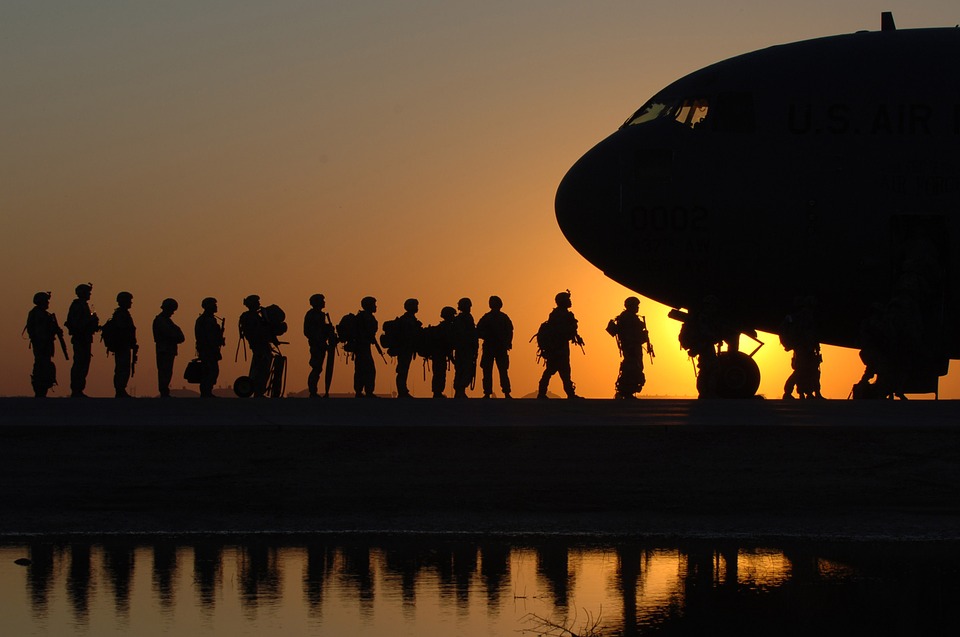
The U.S. Army Corps of Engineers have achieved some extraordinary engineering feats during their history.

Field engineers face trials and tribulation every day from unexpected storms, not having that special piece of equipment that allows you to literally “move mountains.”

As we mark Engineers Week, here’s an opportunity to honor the contributions of the Corps by reading a few great stories about military engineers at work in battle with Mother Nature’s uncertainties and whims of violent, life threatening often unpredictable happenings. The following publications are currently available for sale through the U.S. Government Bookstore.

008-022-00359-2A Mission in the Desert: The U.S. Army Corps of Engineers Albuquerque District 1985-2010, highlights the accomplishments of the Albuquerque District U.S. Army of Engineers and their contributions to the development of the southwest.

008-022-00360-6Transatlantic Afghanistan District, U.S. Army Corps of Engineers, A Year in Pictures June 2014-2015 a heavily illustrated book, with photos showcasing successes and friendship mementos of the USACE Transatlantic Afghanistan District teams during their tumultuous Afghan journey.

Harry E. Schwarz and the Development of Water Resources and Environmental Planning: Planning Methods in an Era of Challenge and Change. Harry E. Schwarz, was the first practitioner in a major Federal agency, and indeed in the international community, to adopt and implement many of the ideas about methods and practice of modern water resources planning and management in the Corps of Engineers.

HOW DO I OBTAIN THESE PUBLICATIONS?

Shop Online Anytime: You can buy eBooks or print publications —with FREE Standard Shipping worldwide— from the U.S. Government Online Bookstore at http://bookstore.gpo.gov.

Shop our Retail Store: Buy a copy of any print editions from this collection at GPO’s retail bookstore at 710 North Capitol Street NW, Washington, DC 20401, open Monday–Friday, 9 a.m. to 4 p.m., except Federal holidays, Call (202) 512-0132 for information or to arrange in-store pick-up.

Order by Phone: Call our Customer Contact Center Monday through Friday, 8 am to 5:30 pm Eastern (except US Federal holidays). From US and Canada, call toll-free 1.866.512.1800. DC or International customers call +1.202.512.1800.

Visit a Federal depository library: Search for U.S. Government publications in a nearby Federal depository library. You can find the records for most titles in GPO’s Catalog of U.S. Government Publications.

About the author: Blogger contributor Ed Kessler is a Promotions Specialist in GPO’s Publication and Information Sales program office.


The U.S. Government’s Santa-Tracking Mission

December 19, 2016

‘Twas Christmas eve 1955 when a misprinted Sears Roebuck & Co. newspaper ad directed kids to a Soviet alert hotline instead of Santa’s direct dial. The top secret hotline that was used only in national emergencies to alert the Continental Air Defense Command (CONAD) if the USSR attacked. Wrong red phone!

Old Norad Tracks Santa posterOn the receiving end, U.S. Air Force Col. Harry Shoup, CONAD’s director of operations, grabbed the red emergency phone and braced for an imminent attack. Instead, a little 6 year-old boy’s voice trembled over the phone, “Are you really Santa Claus?” Shoup, thinking it was a prank, barked, “Would you repeat that?” The little voice started to cry, then hesitantly asked, “Is this one of Santa’s elves, then?”

Soon the phone began ringing off the hook with kids wanting to gab with Santa. Col. Shoup played along. He even turned his team of Cold War-era radar operators into North Pole elves—they scanned monitors for indications of Santa on the move. And that’s how the U.S. Government got into the business of Santa tracking.

Today, the North American Aerospace Defense Command (NORAD, CONAD’s successor) is a bi-national U.S. and Canadian organization tasked with aerospace warning and control. As a frontline in homeland defense, its slogan is “Deter, Detect, Defend.” But its most famous and favorite mission is watching the winter skies for the “big red one,” much as it has done since Col. Shoup answered the phone over 60 years ago.

NORAD Celebrating 50 Years book“Guarding What You Value Most: North American Aerospace Defense Command Celebrating 50 Years,” available thru GPO, touches upon how NORAD triangulates Kris Kringle’s course. The publication proudly states that “using the same technology used to perform their day-to-day mission— satellites, high-powered radars and jet fighters— NORAD tracks Santa Claus as he makes his Yuletide journey around the world.”

NORAD’s sleigh of different high-tech systems is used to read Rudolph’s infrared nose signature, capture high-speed video around the globe, and provide Santa and his reindeer with a NORAD fighter pilot escort. Fun fact to impress people at your holiday party: satellites and radar once clocked Santa’s flying delivery cart at 100 times faster than the Japanese bullet train.

santa-sleighSanta positioning updates were originally delivered over the radio and through the Santa Tracking hotline. In 1997, the operation leapt onto the internet. A few years ago, NORAD teamed up with tech companies to release a set of free apps. If you download the tracking app, you can receive notifications of the Santa’s globetrotting whereabouts.

Want to track jolly St. Nick and his sleigh-pullers on Christmas Eve? Visit NORAD’s multilingual Santa site. It’s soundtracked with some pretty groovy holiday music, too. And while clicking around, do visit GPO’s Online Bookstore and check out that NORAD history publication there waiting for you. Unlike Santa, it requires no high-tech tracking.

HOW DO I OBTAIN THIS PUBLICATION?

Shop Online Anytime: You can buy eBooks or print publications —with FREE Standard Shipping worldwide— from the U.S. Government Online Bookstore at http://bookstore.gpo.gov.

Shop our Retail Store: Buy a copy of any print editions from this collection at GPO’s retail bookstore at 710 North Capitol Street NW, Washington, DC 20401, open Monday–Friday, 9 a.m. to 4 p.m., except Federal holidays, Call (202) 512-0132 for information or to arrange in-store pick-up.

Order by Phone: Call our Customer Contact Center Monday through Friday, 8 am to 5:30 pm Eastern (except US Federal holidays). From US and Canada, call toll-free 1.866.512.1800. DC or International customers call +1.202.512.1800.

Visit a Federal depository library: Search for U.S. Government publications in a nearby Federal depository library. You can find the records for most titles in GPO’s Catalog of U.S. Government Publications.

About the author: Blogger contributor Chelsea Milko is a Public Relations Specialist in GPO’s Public Relations Office.


Pearl Harbor at 75 & Three Pacific Battles That Shaped WWII

December 6, 2016
uss-arizona-burning1

Battleship USS Arizona on fire and sinking (Image source: archives.gov)

Moments before 8 a.m. on December 7, 1941, the United States was ‘suddenly and deliberately attacked.’ Hundreds of Japanese fighter planes and bombers launched a surprise assault on Pearl Harbor in Hawaii. The swift, devastating volley on the U.S. naval base killed 2,403 Americans. With President Franklin D. Roosevelt’s famous “a date which will live in infamy” proclamation, America had finally joined WWII.

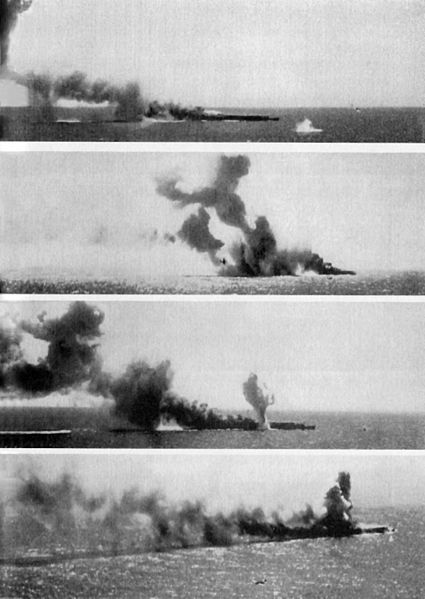
008-046-00301-7That momentous week of loss and defiance took place seventy-five years ago. After Pearl Harbor, the U.S. fought Imperial Japanese forces for a superior hold in Pacific waters. On the list of the 10 greatest battles of that front, you will find Midway, Coral Sea, and the Philippine Sea. GPO makes available a U.S. Naval War College study, Major-Fleet Versus-Fleet Operations in the Pacific War, 1941-1945, that takes a look at those three major naval operations.

Japanese planning in the Pacific War, according to author and naval historian Dr. Milan Vego, was unnecessarily complicated and focused too closely on offensive maneuvers. Nonetheless, Japan was hell-bent on defeating the U.S. Pacific fleet.

425px-sinking_of_carrier_shoho_during_battle_of_coral_sea_1942

Sinking of Japanese carrier Shoho during Battle of Coral Sea, 1942

American military intelligence, and eventually the entire fleet, prevailed. The book’s primary-source archival material points to the timely concentration of U.S. forces at the appropriate place and at the appropriate time. The U.S. dominated the resultant Coral Sea, Midway/Aleutians, and the Philippine Sea battles—victories that presented a big sea change in the Pacific theater.

The author provides a detailed, well-supported sketch of three major battle areas that decisively shaped WWII. Maps, strategic context, and action analysis provide an authoritative, insightful resource for naval professionals. Major-Fleet Versus-Fleet Operations in the Pacific War identifies universal, tactical lessons of interest for today’s U.S. Navy and, of course, military history buffs.

HOW DO I OBTAIN THIS RESOURCE?

Shop Online Anytime: You can buy eBooks or print publications —with FREE Standard Shipping worldwide— from the U.S. Government Online Bookstore at http://bookstore.gpo.gov.

Shop our Retail Store: Buy a copy of any print editions from this collection at GPO’s retail bookstore at 710 North Capitol Street NW, Washington, DC 20401, open Monday–Friday, 9 a.m. to 4 p.m., except Federal holidays, Call (202) 512-0132 for information or to arrange in-store pick-up.

Order by Phone: Call our Customer Contact Center Monday through Friday, 8 am to 5:30 pm Eastern (except US Federal holidays). From US and Canada, call toll-free 1.866.512.1800. DC or International customers call +1.202.512.1800.

Visit a Federal depository library: Search for U.S. Government publications in a nearby Federal depository library. You can find the records for most titles in GPO’s Catalog of U.S. Government Publications.

About the author: Blogger contributor Chelsea Milko is a Public Relations Specialist in GPO’s Public Relations Office.


Veterans Day: Serving Those Who Served

November 9, 2016

arlington-820751_960_720As we well know, November 11 is Veterans Day. But it wasn’t always called that. At the end of WWI, President Woodrow Wilson declared November 11 as the first Armistice Day with the following words: “To us in America, the reflections of Armistice Day will be filled with solemn pride in the heroism of those who died in the country’s service and with gratitude for the victory.” Not until June 1, 1954 did President Dwight D. Eisenhower sign the law that struck out the word “Armistice” and replaced it with “Veterans.” Thus, November 11 became a day to honor American veterans of all wars. GPO employees printed that original act and now make it digitally available on govinfo.

One important way the U.S. Government honors all military service veterans is by providing first-rate health benefits and services. The Department of Veteran’s Affairs serves more than 8 million Veterans each year. Coverage is immediate, travels with recipients, meets healthcare law standards, and surpasses quality and effectiveness measurements. It’s the care Veterans have earned.

GPO makes available these health and benefits resources from the VA and its Veterans Health Administration:

Health Care Benefits Overview 2016 Edition, Vols. 1 & 2

051-000-00256-3This comprehensive medical benefits publication includes the standard FAQs on basic eligibility requirements, enrollment, copays, Medicare Part D prescription drug coverage, and the like. It also highlights community living centers, medical foster homes, geriatric evaluation, home telehealth, and online tools that are part of the VA’s silver plate of world-class care.

Federal Benefits for Veterans, Dependents and Survivors 2016

051-000-00258-0This annual publication provides a complete summary of all Federal benefits available to qualified American veterans and their families. It’s must-have, up-to-date information on the benefits and rights owed to those who accepted the responsibility to defend America when duty called.

In the VA’s own words: “Our Servicemembers and Veterans have sacrificed to keep our country – and everything it represents – safe…Thank you for your service. Now let us serve you.”

HOW DO I OBTAIN THESE RESOURCES?

Shop Online Anytime: You can buy eBooks or print publications —with FREE Standard Shipping worldwide— from the U.S. Government Online Bookstore at http://bookstore.gpo.gov.

Shop our Retail Store: Buy a copy of any print editions from this collection at GPO’s retail bookstore at 710 North Capitol Street NW, Washington, DC 20401, open Monday–Friday, 9 a.m. to 4 p.m., except Federal holidays, Call (202) 512-0132 for information or to arrange in-store pick-up.

Order by Phone: Call our Customer Contact Center Monday through Friday, 8 am to 5:30 pm Eastern (except US Federal holidays). From US and Canada, call toll-free 1.866.512.1800. DC or International customers call +1.202.512.1800.

Visit a Federal depository library: Search for U.S. Government publications in a nearby Federal depository library. You can find the records for most titles in GPO’s Catalog of U.S. Government Publications.

About the author: Blogger contributor Chelsea Milko is a Public Relations Specialist in GPO’s Public Relations Office.


Strategic Studies from the U.S. Army War College

October 25, 2016

strategic-studies-institute-1

In Carlisle Barracks, PA, one of our nation’s oldest military installations prepares the next generation of senior leaders for a changing world. It’s called the U.S. Army War College—a place where a community of security and military minds convert issues into strategy.

The Strategic Studies Institute (SSI) is the “geostrategic and national security research and analysis” arm of the U.S. Army War College. They’re a little bit like the U.S. Army’s own think tank. SSI is filled with experienced research staff who develop strategic recommendations. Such independent analysis is often published in booklet form.

GPO makes available a wide range of SSI publications. Let’s take a quick look at two recent additions to the collection.

9781584877332The Pivot to Asia: Can It Serve as the Foundation for American Grand Strategy in the 21st Century?

In 2012, the Obama administration announced a “Pivot to East Asia” strategy designed to prioritize the deepening of bilateral relationships with emerging economies in the region. This SSI work places that policy in historical context and discusses “problems that the Obama team faced in its efforts to solicit the support of regional friends and allies.” It also provides analysis of how U.S. outreach efforts utilized a network of military partners as well as the role U.S.-China relations in the pivot campaign.

From Assistance to Partnership: Morocco and its Foreign Policy in West Africa

9781584877110Morocco lies at a geopolitical and cultural crossroads like no other country in Africa. Sustained economic growth and political stability are reshaping it into a bulwark of peace and counter-extremism in West Africa. This strategic study examines how Morocco is strengthening its position as a regional security provider in the region. It “aspires to…[be] a partner of choice for the United States and other organizations seeking to develop their interests in Sub-Saharan Africa. It’s learning how to savvily leverage “security cooperation, economic development, strengthening cultural ties, and capacity building” with partners inside and outside the region.

HOW DO I OBTAIN THESE MILITARY RESOURCES?

Shop Online Anytime: You can buy eBooks or print publications —with FREE Standard Shipping worldwide— from the U.S. Government Online Bookstore at http://bookstore.gpo.gov.

Shop our Retail Store: Buy a copy of any print editions from this collection at GPO’s retail bookstore at 710 North Capitol Street NW, Washington, DC 20401, open Monday–Friday, 9 a.m. to 4 p.m., except Federal holidays, Call (202) 512-0132 for information or to arrange in-store pick-up.

Order by Phone: Call our Customer Contact Center Monday through Friday, 8 am to 5:30 pm Eastern (except US Federal holidays). From US and Canada, call toll-free 1.866.512.1800. DC or International customers call +1.202.512.1800.

Visit a Federal depository library: Search for U.S. Government publications in a nearby Federal depository library. You can find the records for most titles in GPO’s Catalog of U.S. Government Publications.

About the author: Blogger contributor Chelsea Milko is a Public Relations Specialist in GPO’s Public Relations Office.


A ‘primer’ on U.S. military force structure

October 20, 2016

The U.S. Department of Defense (DoD) is the world’s largest organization. So, examining the defense budget has got to be pretty daunting. The enormity and complexity of the U.S. military makes it difficult to crunch the numbers needed to organize, train, and equip a ready military.

Article I, Section 8 of the U.S. Constitution confers Congress with broad powers over the armed forces. As a part of that authority, the Congressional Budget Office (CBO) is mandated to provide objective, impartial analysis of government-wide spending, including that of the DoD. To that end, the CBO’s The U.S. Military’s Force Structure: A Primer is now available through GPO.

052-070-07701-8Each year, Congress passes the National Defense Authorization Act (NDAA). This report looks at how the DoD allocates nearly $400 billion of that spending bill on day-to-day “operation and support” of military units—pretty much anything that “produces, sustains, and supports combat units.” In other words, the “force structure.”

This primer breaks down “the budgetary effects of altering the force structure.” Because of spending controls and budget cuts, policymakers tasked with trimming the force structure can get a better understanding the trade-offs associated with each choice.

military-force-002CBO factors in the costs and structure of Army brigade combat teams, Navy battle force ships, Marine air-ground task forces, Air Force fixed-wing aircraft squadrons, and defense-wide organizations that provide centralized assistance for each service. It even looks at how major combat units have been utilized in past conflicts.

Every fiscal year, lawmakers decide the appropriate size of the military—for example, what major combat units or weapon systems to add or eliminate. A well-designed defense budget directly affects military readiness. CBO’s The U.S. Military’s Force Structure: A Primer is a timely reference for making those important decisions.

HOW DO I OBTAIN THIS MILITARY RESOURCE?

Shop Online Anytime: You can buy eBooks or print publications —with FREE Standard Shipping worldwide— from the U.S. Government Online Bookstore at http://bookstore.gpo.gov.

Shop our Retail Store: Buy a copy of any print editions from this collection at GPO’s retail bookstore at 710 North Capitol Street NW, Washington, DC 20401, open Monday–Friday, 9 a.m. to 4 p.m., except Federal holidays, Call (202) 512-0132 for information or to arrange in-store pick-up.

Order by Phone: Call our Customer Contact Center Monday through Friday, 8 am to 5:30 pm Eastern (except US Federal holidays). From US and Canada, call toll-free 1.866.512.1800. DC or International customers call +1.202.512.1800.

Visit a Federal depository library: Search for U.S. Government publications in a nearby Federal depository library. You can find the records for most titles in GPO’s Catalog of U.S. Government Publications.

About the author: Blogger contributor Chelsea Milko is a Public Relations Specialist in GPO’s Public Relations Office.


U.S. Army Nurse Corps: “Courage to Care”

October 12, 2016

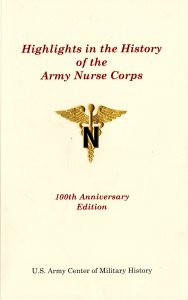
Military and women’s history intersect in many ways. For more than two centuries, thousands of qualified women have served America in the Army Nurse Corps in particular. Each military branch has their own nursing corps. GPO makes available U.S. Army Center of Military History’s “Highlights in the History of the Army Nurses Corps.”

Poster encouraging women to join the U.S. Army Nurse Corps during World War II. Interested citizens could apply at Red Cross recruiting stations.This booklet chronicles the contributions of women nurses throughout the development of the Army Nurse Corps. Their story begins during the American Revolution when General George Washington asked Congress for nurses “to attend the sick.” In the decades that followed, whenever the military establishment expanded or contracted, medical services followed suit.

The Spanish-American War was a turning point for military nurses. Although not commissioned as a regular part of the Army, more than 1,500 female civilian nurses volunteered to care for the wounded. Shortly thereafter, in 1901, the female Nurse Corps became permanent under the Army Reorganization Act.

Poster encouraging women to join the U.S. Army Nurse Corps during World War II. Interested citizens could apply at Red Cross recruiting stations.

Poster encouraging women to join the U.S. Army Nurse Corps during World War II. Interested citizens could apply at Red Cross recruiting stations.

If there ever was a time when the Army Nurse Corps was an indispensable part of the American military establishment, it was during WWII. Several pages of the book are devoted to this period. At one point the number of active duty nurses swelled to 57,000. Sixty-six were captured and imprisoned by the Japanese in the Philippines. Many landed in North Africa on the day of 1942 invasion. Others arrived just days after the 1944 Normandy beach landing. Tragically, by the war’s end, 215 Army nurses died while serving.

Be it on base battlefield hospitals in WWII France, in MASH units on the front lines of the Korean War, or among a 6,000 strong crew during Vietnam, Army nurses helped to save tens of thousands of lives. Numbers may have waned in peacetime but standards in training and care never did.

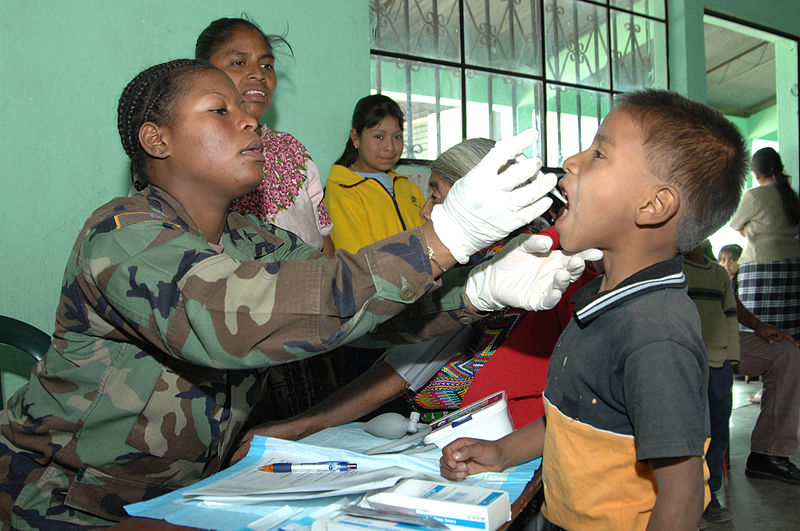
U.S. Army Nurse 1st Lt. Arnelle Lewis takes a Guatemalan boy's temperature during a medical readiness training exercise in Santa Cruz Balanya, Guatemala, on March 10, 2007. Lewis is a registered nurse attached to the U.S. Virgin Islands Army National Guard.

U.S. Army Nurse 1st Lt. Arnelle Lewis takes a Guatemalan boy’s temperature during a medical readiness training exercise in Santa Cruz Balanya, Guatemala, on March 10, 2007. Lewis is a registered nurse attached to the U.S. Virgin Islands Army National Guard.

Today, the Army Nurse Corps is made up entirely of registered nurses. Army nurses are deployed all over the world in support of humanitarian and anti-terrorism missions. According to the Corps’ official creed, members continue to have the “courage to care, courage to connect, and courage to change.”

HOW DO I OBTAIN THIS PUBLICATION?

Shop Online Anytime: You can buy eBooks or print publications —with FREE Standard Shipping worldwide— from the U.S. Government Online Bookstore at http://bookstore.gpo.gov.

Shop our Retail Store: Buy a copy of any print editions from this collection at GPO’s retail bookstore at 710 North Capitol Street NW, Washington, DC 20401, open Monday–Friday, 9 a.m. to 4 p.m., except Federal holidays, Call (202) 512-0132 for information or to arrange in-store pick-up.

Order by Phone: Call our Customer Contact Center Monday through Friday, 8 am to 5:30 pm Eastern (except US Federal holidays). From US and Canada, call toll-free 1.866.512.1800. DC or International customers call +1.202.512.1800.

Visit a Federal depository library: Search for U.S. Government publications in a nearby Federal depository library. You can find the records for most titles in GPO’s Catalog of U.S. Government Publications.

About the author: Blogger contributor Chelsea Milko is a Public Relations Specialist in GPO’s Public Relations Office.


How Naval Intelligence Shaped the Vietnam War

September 12, 2016

During the Vietnam War, U.S. naval intelligence was a very complex affair. Layers of political organization, military strategy, offensive tactics, and logistical operations shaded the struggle to win in South Vietnam. Much of that portion of the Cold War era is now declassified, illuminating the contributions of the naval intelligence establishment.

008-046-00298-3GPO makes available “Knowing the Enemy: Naval Intelligence in Southeast Asia,” part of the U.S. Department of the Navy series of commemorative studies on the Vietnam War.

The U.S. Navy intelligence effort in Vietnam played out in several pivotal events. Intelligence-gathering squadrons informed operations during 1964’s Tonkin Gulf Crisis and 1968’s Tet Offensive. Naval commands closely traced Soviet and Chinese military aid to North Vietnam and surveilled the use of the vital Cambodian port of Sihanoukville. And analysts processed raw data that informed the Linebacker bombing campaigns and pressed North Korea to eventually negotiate terms to end the war.

A SEAL scans the surroundings during his unit's intelligence-gathering mission in a Mekong Delta village.

A SEAL scans the surroundings during his unit’s intelligence-gathering mission in a Mekong Delta village.

Officers and enlisted personnel gathered and analyzed credible intel on the movement of Communist combat units, the location of Viet Cong encampments, and the flow of weapons and ammunition along the Mekong Delta. The communications, electronic, human, and imagery intelligence they collected was “key to the operational and tactical success of naval forces in the Vietnam War.”

Members of the naval intelligence community that routinely “engaged in intelligence collection often did their dangerous but vital work in direct contact with the enemy.” For example, photo reconnaissance pilots flew fast and furiously into oncoming antiaircraft fire for the best pictures—“since anything worth photographing was likely well-defended.” Hardly desk drones, intelligence staffs “fought face-to-face with the enemy” and suffered causalities for it.

Photo intelligence 3rd Class Charles R. Pearson uses his stereoscopic equipment to analyze an aerial image of an enemy site in Vietnam.

Photo intelligence 3rd Class Charles R. Pearson uses his stereoscopic equipment to analyze an aerial image of an enemy site in Vietnam.

U.S. naval intelligence units furnished operational forces “with information that, for the most part, improved their battle performance…and prospects for survival in combat.” More than anything, the cadre of intelligence professionals helped the American military understand the enemy.

HOW DO I OBTAIN THIS PUBLICATION?

Shop Online Anytime: You can buy eBooks or print publications —with FREE Standard Shipping worldwide— from the U.S. Government Online Bookstore at http://bookstore.gpo.gov.

 Shop our Retail Store: Buy a copy of any print editions from this collection at GPO’s retail bookstore at 710 North Capitol Street NW, Washington, DC 20401, open Monday–Friday, 9 a.m. to 4 p.m., except Federal holidays, Call (202) 512-0132 for information or to arrange in-store pick-up.

Order by Phone: Call our Customer Contact Center Monday through Friday, 8 am to 5:30 pm Eastern (except US Federal holidays). From US and Canada, call toll-free 1.866.512.1800. DC or International customers call +1.202.512.1800.

Visit a Federal depository library: Search for U.S. Government publications in a nearby Federal depository library. You can find the records for most titles in GPO’s Catalog of U.S. Government Publications.

About the author: Blogger contributor Chelsea Milko is a Public Relations Specialist in GPO’s Public Relations Office.


National Aviation Day

August 18, 2016

August 19th is National Aviation Day, a yearly observance to celebrate the history and development of aviation. Another fun fact: the day is also Orville Wright’s birthday!

GPO makes available a wide range of Federal Government publications about flight.

First Flight: The Wright Brothers and the Invention of the Airplane

024-005-01212-5Twelve seconds in the air turned into over 100 years of aviation progress. In December 1903, Wilbur and Orville Wright stuck their first—and the world’s first—successful flight in a heavier-than-air, mechanically controlled machine. The sibling inventors behind the defining technology of the last century are the subject of this National Park Service handbook. In his forward, astronaut and former U.S. Senator John Glenn defers to the duo as the “first astronauts. Their initial short flight opened our quest to reach beyond the world we know. They were the first test pilots.” A foolhardy flying machine became a phenomena of human achievement. The Wright Brothers made their home above the world and consequently changed the world.

Logbook of the Signal Corps No. 1: The United States Army’s First Airplane (eBook)

Indeed the Wright Bros. invention changed the world. And changed the U.S. Army. This book tells the story of a self-taught aviator and his Wright flyer responsible for the launch of military airpower. In 1909, the U.S. Army Signal Corps paid $30,000 to Orville and Wilbur for a custom-made aircraft designated “Signal Corps No. 1.” A plucky young lieutenant with no prior flying experience was elected its sole operator. “Take plenty of spare parts,” a commanding officer told 1st Lt. Benjamin D. Foulois, “and teach yourself to fly.” Through industrious trial and error and long-distance guidance from the Wright Brothers, Foulois learned to fly the Army’s very first airplane. Read this book and then go visit the Smithsonian Air & Space Museum in DC. There you will find the original Signal Corps No. 1, a beautifully restored piece of Army aviation history.

The Combat Edge

708-051-00313-5This quarterly publication of the Air Force’s Air Combat Command features articles and stories about flight safety. As aviation technology evolves to enhance combat capability, so must risk mitigation. Thus, ACC’s safety magazine looks to “foster a culture where Airmen strive for zero mishaps.” Developing this sort of discipline keeps safety standards high so that top guns can continue to “Aim High … Fly-Fight-Win.”

The Air Almanac for the Year 2016 (eBook)

008-054-00245-5For millennia, navigators have been using the stars to chart their course. Aircraft rely on similar celestial navigation. The Air Almanac contains astronomical data produced by The U.S. Naval Observatory in collaboration Her Majesty’s Nautical Almanac Office in the U.K. Published annually since 1941, this cosmic directory tabulates statistics at 10-minute intervals to a precision of 1 arcminute. Predictions include Greenwich hour angles; lunar rise and set times; sky diagrams for each month; charts for moon visibility and star positions; and sunrise, sunset, and twilight tables.

HOW DO I OBTAIN THESE RESOURCES?

Shop Online Anytime: You can buy eBooks or print publications —with FREE Standard Shipping worldwide— from the U.S. Government Online Bookstore at http://bookstore.gpo.gov.

 Shop our Retail Store: Buy a copy of any print editions from this collection at GPO’s retail bookstore at 710 North Capitol Street NW, Washington, DC 20401, open Monday–Friday, 9 a.m. to 4 p.m., except Federal holidays, Call (202) 512-0132 for information or to arrange in-store pick-up.

Order by Phone: Call our Customer Contact Center Monday through Friday, 8 am to 5:30 pm Eastern (except US Federal holidays). From US and Canada, call toll-free 1.866.512.1800. DC or International customers call +1.202.512.1800.

Visit a Federal depository library: Search for U.S. Government publications in a nearby Federal depository library. You can find the records for most titles in GPO’s Catalog of U.S. Government Publications.

About the author: Blogger contributor Chelsea Milko is a Public Relations Specialist in GPO’s Public Relations Office.


Explore Soldier Experiences through Army History: The Professional Bulletin Celebration of 100th issue release!

August 9, 2016

army_history_2016Army History: The Professional Bulletin releases its 100th issue in Summer 2016!

Army History chronicles the history and heritage of the United States Army, and explores the lives and times of those who served.

This issue opens with a synopsis; followed by a briefing about the U.S. Army’s Historical Program Enterprise, which addresses the need for a forward, collaborative approach to meet the soldier’s needs, while deepening the connection to the American public and the US Army.

NewsNotes section features new title releases from the Army, Center of Military History Combat Studies Institute. It also covers a new interactive exhibit with videos located at the U.S. Army Women’s Museum in Fort Lee, VA, which is the only museum dedicated to Army women in the world. The exhibit tells the story of the significant contributions of female soldiers’ engagement, cultural support, and provincial reconstruction teams in Iraq and Afghanistan.

army_history_2

The first article in this issue uncovers the rich history of the underground caves and cities where American soldiers from the 101st National Guard Infantry, 26th Division spent many days and nights with the French training for war.   Many of the soldiers from this platoon carved etchings in the limestone walls of the caves in order to share the soldier’s story. Many also included their signatures in these caves, marking their footprint on both the war and the cave.  In the article, modern-day military historians piece together the story and historical value of these artifacts that position World War I history from the American soldiers’ perspective.  This editorial piece brings a unique perspective to World War I history.

This second featured piece promotes Australian strategic military operations within World War II.  The intent and purpose of this article is to investigate the history of the Defense Central Camouflage Command (DCC) and its leaders, and to analyze their success or failures from the perspective of civil-military relations.  This commentary explores the teaching to soldiers of techniques to camouflage their installations, including water, gas, and oil facilities.

army_history_3In this issue, you will also find a Book Reviews section related to military history books published by other entities.  A majority of the books covered in this issue have been published by academic/scholarly publishers, external to the U.S. military.

The issue ends with a Footnote from Bryan J. Hockensmith, honoring this 100th issue and   thirty-three years of this published journal.  He reflects on Army History- Past, Present and Future and how this periodical continues primary source military history education to meet worldwide scholarly standards.

army_history_4Congratulations to the staff at CMH for the 100th published issue of Army History: The Professional Bulletin!  This print issue and subscription will meet the military history education needs of US Army soldiers, defense education programs, DODEA and public school history and global studies assignments, ROTC student programs, military academies, military science majors, historians and political scientists.  The team at CMH brings an interesting perspective to communicate understanding of America’s military history to their readers.

Grab a cup of coffee and begin reading today!

HOW DO I OBTAIN THIS PUBLICATION?

Shop Online Anytime: You can buy eBooks or print publications —with FREE Standard Shipping worldwide— from the U.S. Government Online Bookstore at http://bookstore.gpo.gov.

Order by Phone: You may also order print editions by calling our Customer Contact Center Monday through Friday, 8 am to 5:30 pm Eastern (except US Federal holidays). From US and Canada, call toll-free 1.866.512.1800. DC or International customers call +1.202.512.1800.

Shop our Retail Store: Buy a copy of any print editions from this collection at GPO’s retail bookstore at 710 North Capitol Street NW, Washington, DC 20401, open Monday–Friday, 9 a.m. to 4 p.m., except Federal holidays, Call (202) 512-0132 for information or to arrange in-store pick-up.

Visit a Federal depository library: Search for U.S. Government publications in a nearby Federal depository library. You can find the records for most titles in GPO’s Catalog of U.S. Government Publications.

About the author: This week’s blog contributor is Maureen Whelan, Senior Marketing Team Leader for GPO’s Publication and Information Sales program office in Washington, DC. Maureen oversees print and digital content dissemination strategy and manages third party free and paid content distribution through platforms and vendors, such as Apple iBookstore, Barnes and Noble.com, Google Play eBookstore, Ebscohost databases, Overdrive, and more.


Military Transportation: “Nothing Happens Until Something Moves”

May 13, 2016

There’s a lot happening in terms of transportation this month. May 16-22 is National Transportation Week, an opportunity to celebrate the community of transportation professionals who keep our country moving. In addition, the third Friday of May is National Defense Transportation Day. And throughout 2016, the U.S. Department of Transportation celebrates its 50th anniversary.

Transportation infrastructure is quite literally the foundation of our country. Interstate highway trucks and freight trains get people and products where they need to go. Across bridges, along rail lines, and through tunnels, transport mobility is a part of life. And it’s also critical for modern Army readiness. In fact, there is a little known unit specializing in rapid troop and cargo delivery to distant theaters. It’s called the U.S. Army Transportation Corps.

008-029-00597-2Spearhead of Logistics: A History of the United States Army Transportation Corps

This U.S. Army Center of Military History text chronicles over 200 years of U.S. military transportation. The “need to organize, control, equip, and man transportation resources” became evident during the Revolutionary War. Borrowing from the organized transport network of the merchant class, the Continental Congress authorized a Quartermaster General to contribute logistical support—mostly in the form of horses and river boats—to Revolutionary forces. Since then, every war, expeditionary operation, and worldwide commitment has been supported by what eventually became the Transportation Corps of today.

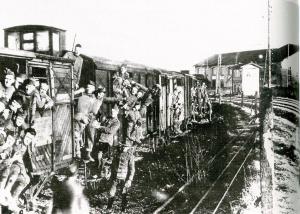
Corps history is in step with the timeline of transportation growth. Steamboats in the Mexican War. Locomotives in the Civil War. Wagons in the Spanish-American War. Transport from this era “was the prototype of that required for a modern war in the Industrial Revolution.” Army transportation matured dramatically with wartime demands. Troop movement in both world wars required considerable coordination. Motor vehicles were first employed in World War I when “truck convoys [carried] supplies from the ports to the forward areas.” Horsepower was officially out and “animal power would never again be a major consideration for the U.S. Army.”

SPEARHEAD OF LOGICITICS (002)

Forty men and eight horses. U.S. troops on their way to the trenches, 1918. Excerpt from publication.

When the world once again charged into a world war, the U.S. military expanded its transport mission. As it was “the first time U.S. troops were deployed throughout the world,” all ground and water transportation reorganized under one agency, the Transportation Corps. The newly formalized unit brought military might to bear in the beachhead landing on Normandy, campaign into the heart of Nazi Germany, MacArthur’s assaults in the Pacific theater, and the Berlin Airlift.

With continued speed and efficiency, the Transportation Corps sustained a massive combat force in Desert Storm. In a seven-month period, Corps officers participated in the “largest battlefield movement ever recorded for the time allotted.” Sea port and airlift operations and movement of “combat force[s] into attack positions…was one of the most significant achievements in the history of the Transportation Corps.”

us-armyThe Transportation Corps has embraced new technology and provided orderly service to the mission of defense. Without Army transport, personnel, equipment, and supplies would be immobilized. The book ends with an Albert Einstein quote that perfectly describes the Corps: “nothing happens until something moves.”

HOW DO I OBTAIN THIS MILITARY HISTORY PUBLICATION?

Shop Online Anytime: You can buy eBooks or print publications —with FREE Standard Shipping worldwide— from the U.S. Government Online Bookstore at http://bookstore.gpo.gov.

 Shop our Retail Store: Buy a copy of any print editions from this collection at GPO’s retail bookstore at 710 North Capitol Street NW, Washington, DC 20401, open Monday–Friday, 9 a.m. to 4 p.m., except Federal holidays, Call (202) 512-0132 for information or to arrange in-store pick-up.

Order by Phone: Call our Customer Contact Center Monday through Friday, 8 am to 5:30 pm Eastern (except US Federal holidays). From US and Canada, call toll-free 1.866.512.1800. DC or International customers call +1.202.512.1800.

Visit a Federal depository library: Search for U.S. Government publications in a nearby Federal depository library. You can find the records for most titles in GPO’s Catalog of U.S. Government Publications.

About the author: Blogger contributor Chelsea Milko is a Public Relations Specialist in GPO’s Public Relations Office.


Los Zetas: Mexico’s Most Feared Drug Cartel

April 11, 2016
Copyright free photo of El Chapo

Copyright free photo of El Chapo

El Chapo. A household name that sends a paralysis of fear through many who hear it. Joaquin “El Chapo” Guzman is the toppled drug kingpin who heads the Sinaloa Cartel in absentia. The notorious druglord’s capture, jailbreak, and recapture made headlines over the past year. Although the crime boss is behind bars, the dramatic and deadly exploits of Mexican drug cartels are far from over. Sinaloa’s archrival, Los Zetas, is a pillar of the narco-violence underworld. GPO makes available a U.S. Army War College, Strategic Studies Institution (SSI) publication on the evolution of the most vicious drug-trafficking organization in Mexico.

In “The Evolution of Los Zetas in Mexico and Central America: Sadism as an Instrument of Cartel Warfare,” SSI expert George G. Grayson charts Los Zetas ruthless rise to prominence. Once a counter-narcotics paramilitary outfit, core members deserted the Mexican Army in the late 1990s. They morphed into a new organization and soon built a savage reputation. Los Zetas “not only traffic in drugs, murder, kidnap, and raid PEMEX [Petróleos Mexicanos] but also involve themselves in extortion, human smuggling, torture, money laundering, prostitution, arson, prison breakouts, murder for hire, and other felonies.”

008-000-01085-4Zeta influence spans most of Central America. From its base in Nuevo Laredo, “the largest commercial portal joining Mexico to its northern neighbor,” the Zeta brand of cruelty is trending throughout Mexico and bleeding out elsewhere. Borderland bloodshed gives Los Zetas a launchpad for U.S. incursions. At this point, most criminal activity remains south of the border. Not a exactly a safe place to be an American. Grayson writes that narco-violence is tied to 684 U.S. citizen deaths in Mexico from 2002-2012—“40 percent of American violent deaths worldwide in this period.”

Other cartels are copycatting Zeta-style cutthroat tactics. Grayson calls it the “Zetanization” of Mexico’s explosive drug war. The use of retributive, gruesome practices—that include butcherings, beheadings, and stewing foes in boiling gasoline vats—advances the mafioso agenda and solidifies territorial claims. Los Zeta’s tight grip is secured with brutal leadership, publicity ploys, and fresh teenage recruits.

“The Evolution of Los Zetas” shows how the cartel has transformed itself from ragtag bandits into a cash-flush, heinous crime syndicate. The White House branded it “a unique and extraordinary threat to the stability of international economies and political systems.” Los Zetas is truly a menace. Drug enforcement agencies want to eliminate it. Adversarial cartels want to overtake it. Mexican citizens just want to stop being terrorized by it.

HOW DO I OBTAIN THIS PUBLICATION?

Shop Online Anytime: You can buy eBooks or print publications —with FREE Standard Shipping worldwide— from the U.S. Government Online Bookstore at http://bookstore.gpo.gov.

 Shop our Retail Store: Buy a copy of any print editions from this collection at GPO’s retail bookstore at 710 North Capitol Street NW, Washington, DC 20401, open Monday–Friday, 9 a.m. to 4 p.m., except Federal holidays, Call (202) 512-0132 for information or to arrange in-store pick-up.

Order by Phone: Call our Customer Contact Center Monday through Friday, 8 am to 5:30 pm Eastern (except US Federal holidays). From US and Canada, call toll-free 1.866.512.1800. DC or International customers call +1.202.512.1800.

Visit a Federal depository library: Search for U.S. Government publications in a nearby Federal depository library. You can find the records for most titles in GPO’s Catalog of U.S. Government Publications.

About the author: Our guest blogger is Chelsea Milko, Public Relations Specialist in GPO’s Public Relations Office.