On the Anniversary of the British Surrender at Yorktown, Read This Book

October 16, 2018

October 17 is an important date in American history. Not sure why? The Government Publishing Office, as always, is here with a publication to enlighten you.

On October 17, 1781 (that’s 237 years ago), Lord Cornwallis of Britain surrendered his army at Yorktown. March to Victory: Washington, Rochambeau, and the Yorktown Campaign of 1781, a publication by Dr. Robert Selig, walks readers through the American troops’ march to victory in the Revolutionary War and the large role the French played in helping America gain its independence.

Throughout this booklet learn the endearing details of the relationship between General George Washington and French commander General Rochambeau. Despite having reservations, Rochambeau pledged to use all the resources at his disposal to support Washington’s plan. France promised both to fight and also to agree to no separate peace until Britain formally recognized American independence. To work together to defeat the British under the command of Lord Cornwallis, these French and American military commanders had to overcome formidable barriers of culture, language, tactical doctrine, and political agendas. They used translators to work out plans, including the plan to commence an operation against the British, with Washington focused on an attack in New York and Rochambeau preferring an operation against British forces in the South. In the end, Rochambeau promised his full cooperation in an attack on New York City at the wish of Washington.

Despite having been enemies just 15 years earlier in the French and Indian War, the respect among the French and American troops grew steadily the more they worked together. Jonathan Trumbull, Washington’s private secretary, wrote, “The Junction of the two armies [which] is formed at this Place, & has commenced with high seeming Cordiality & Affection, demonstrated by constant Acts of Conviviality & social Harmony.” Baron Closen of the French army wrote, “I admire the American troops tremendously! It is incredible that soldiers composed of men of every age, even of children of fifteen, of whites and blacks, almost naked, unpaid and rather poorly fed, can march so well and withstand fire so steadfastly.”

General George Washington soon realized, however, that without additional massive reinforcements and material, as well as the assistance of a powerful fleet, an assault on New York had little chance of success. He became convinced it was best to head south. He wrote in his diary that he “could scarce see a ground upon which to continue my preparations against New York, and therefore I turned my views more seriously (than I had done before) to an operation to the southward.”

In early August 1781, French military officer Marquis de Lafayette drafted a report to Washington letting him know that Cornwallis and his men were settling in on the banks of the York River. But to trap the British army, a naval force would be necessary. Again, the Americans turned to the French in their time of need. Rochambeau informed Francois Joseph Paul de Grasse, the commander of the French fleet, of the demand for ships, and de Grasse agreed to send a fleet to Chesapeake. De Grasse’s fleet of 36 ships outnumbered that of the British, who had only 18. However, de Grasse promised to keep his fleet there only until October 15. So, the two commanders in chief hastily adjusted their plans to march south knowing that time was of the essence.

To throw off the British, Washington had a few tricks up his sleeve. He ordered ships for Staten Island and had bake ovens built in New Jersey. Made-up stories about movements and plans were intentionally leaked to the troops, in the hopes that they would be overheard by spies and passed onto the British headquarters. And by dispersing the French and American armies on multiple different routes south, the allies continued their antics to try to confuse their enemy. It wasn’t until early September that the British realized Cornwallis and his troops were in danger. By then, the first units of the Continental Army had already reached the northernmost part of the Chesapeake Bay.

During the march south, several American soldiers quit due to the fact that Robert Morris, financier of the American Revolution, did not have the funds to pay them. Once again, the French stepped in. On September 7, Morris asked Rochambeau if he could lend the Americans money to compensate the troops. Rochambeau gave him almost half the amount left in his treasury. This was the first and only time many Continental soldiers received hard money during their years of service to their country, and to say they were thrilled would be an understatement.

In early September George Washington invited Rochambeau and his staff to stay at his Mount Vernon home. The two commanders continued their journey together and arrived at Williamsburg on September 15 to wait for the arrival of their troops. With a little teamwork, they met with de Grasse and convinced him to keep the French fleet in America until the end of October, buying them more time. After being supplied ships to help them finish out their journey to Virginia, members of the Continental Army were the first to arrive in Virginia. They docked at Archer’s Hope, marched into Williamsburg and camped behind the College of William and Mary. Yes – the college, which was founded in 1693, was already there at that time! The French met them about one week later. Once the French and American troops were all back together again (now in the South), the armies of Washington and Rochambeau finally set out for Yorktown.

Beginning on October 3, 1781, a series of attacks and counterattacks ensued among the British and the French and American forces. On October 16, the British managed to seize two French artillery positions, but the effort ultimately proved unsuccessful. So, they tried it another way and attempted to break the encirclement the French and Americans had created. But as troops were being ferried across the York River to conduct the attack, Mother Nature intervened. A storm disrupted the British operation. Cornwallis began to realize that the Americans and French held a decisive advantage. On October 17, a British officer waved a white handkerchief in surrender. The next day, two British officers met with an American and a French counterpart to negotiate surrender terms. The British government recognized the independence of the United States in the Treaty of Paris, which officially ended the Revolutionary War in 1783.

That’s just the tip of the iceberg. Read the full story of the March to Victory. Order this publication from the Center of Military History at the GPO Bookstore today.

The GPO Online Bookstore – Easy Access to Federal Publications

HOW DO I OBTAIN THIS RESOURCE?

Shop Online Anytime: You can buy eBooks or print publications —with FREE Standard Shipping worldwide— from the U.S. Government Online Bookstore at https://bookstore.gpo.gov.

Shop our Retail Store: Buy a copy of any print editions from this collection at GPO’s retail bookstore at 710 North Capitol Street NW, Washington, DC 20401, open Monday–Friday, 9 a.m. to 4 p.m., except Federal holidays, Call (202) 512-0132 for information or to arrange in-store pick-up.

Order by Phone: Call our Customer Contact Center Monday through Friday, 8 am to 5:30 pm Eastern (except US Federal holidays). From US and Canada, call toll-free 1.866.512.1800. DC or International customers call +1.202.512.1800.

Visit a Federal depository library: Search for U.S. Government publications in a nearby Federal depository library. You can find the records for most titles in GPO’s Catalog of U.S. Government Publications.

Find more than a million official Federal Government publications from all three branches at www.govinfo.gov.

About the author: Blogger contributor Cat Goergen is the PR Specialist in GPO’s Public Relations office.


Remembering the Attack on the Aleutian Islands

May 31, 2018

While most people know something about the bombing of Pearl Harbor on December 7, 1941, few are aware of the Japanese attack and invasion of Alaska’s Aleutian Islands from June 3 to 7, 1942. Attu is the westernmost of the Aleutian Islands and one of the Near Islands. On Attu Island, the Japanese captured 42 residents of Attu, including the island’s school teacher. Forty people were transported to Otaru, Hokkaido Island, Japan. They were held as prisoners of war from September 1942 until 1945. Twenty-one people died during their internment, including four babies, born in Japan. In 2012, the National Park Service published Nick Golodoff’s Attu Boy. Golodoff was six when his family was captured and sent to Japan. This book combines transcriptions of the oral histories of Attu survivors with Golodoff’s memoir. Sadly, during the war, Golodoff’s village was destroyed, and the United States Government opted to annex the island for military purposes. The Aleuts were not allowed to return.

Today, Attu is part of the World War II Valor in the Pacific National Monument and the Alaska National Maritime Wildlife Refuge. Want to read more about the Aleutian Islands in World War II? See the Army Corps of Engineer’s View to the past which recounts the history of the Army on Amaknak Island and Unalaska Island. And to learn more about the experience of the native people, check out The National Park Service’s publications, Forced to leave the removal of the Unangax̂ of Unalaska, 22 July 1942 and Lost Villages of the Eastern Aleutians: Biorka, Kashega, Makushin.

In June 1942, the United States launched its first offensive in the Pacific, the Aleutian Campaign. From June 1942 to May 1943 Japan held the Island of Attu. The Battle of Attu took place May 11−30, 1943. With Canadian support, U.S. forces defeated Japanese forces in what was the second deadliest battle in the Pacific Theater. More than 3,000 Japanese and Americans died fighting on Attu. Attu: the Forgotten Battle, a new book by John Haile Cloe, explores that battle and its impact on the island. Aleutian Islands from The U.S. Army Center of Military History provides an overview of the Aleutian Islands Campaign.

Major Fleet-Versus-Fleet Operations in the Pacific War, 1941-1945, a publication of the Naval War College, explores three major naval operations of World War II initiated by imperial Japan that resulted in the battles of the Coral Sea, Midway/Aleutians, and the Philippine Sea.

The GPO Online Bookstore – Easy Access to Federal Publications

HOW DO I OBTAIN THESE RESOURCES?

Shop Online Anytime: You can buy eBooks or print publications —with FREE Standard Shipping worldwide— from the U.S. Government Online Bookstore at https://bookstore.gpo.gov.

Shop our Retail Store: Buy a copy of any print editions from this collection at GPO’s retail bookstore at 710 North Capitol Street NW, Washington, DC 20401, open Monday–Friday, 9 a.m. to 4 p.m., except Federal holidays, Call (202) 512-0132 for information or to arrange in-store pick-up.

Order by Phone: Call our Customer Contact Center Monday through Friday, 8 am to 5:30 pm Eastern (except US Federal holidays). From US and Canada, call toll-free 1.866.512.1800. DC or International customers call +1.202.512.1800.

Visit a Federal depository library: Search for U.S. Government publications in a nearby Federal depository library. You can find the records for most titles in GPO’s Catalog of U.S. Government Publications.

About the author: Cynthia Earman is a Cataloging & Metadata Librarian in the Library Services & Content Management division of the U.S. Government Publishing Office.


National Vietnam War Veterans Day – March 29

March 29, 2018

On March 29, 1973, President Richard Nixon welcomed home the last of the combat military members from the Vietnam War. In honor of that day, we now celebrate their return and the sacrifices our soldiers made to serve our nation proudly overseas. The U.S. Government Publishing Office (GPO) offers access to the Vietnam War Veterans Recognition Act of 2017, which designated March 29 as Vietnam War Veterans Recognition Day, through the Catalog of U.S. Government Publications (CGP).

GPO’s govinfo offers the original Presidential Proclamation for Vietnam Veterans Day in 1974. As well as several other items from Congressional Records during the period.

The Vietnam War era saw the American citizens sick of decades of foreign wars, and who blamed the soldiers who fought them upon their return. Because of this unfavorable environment, the Vietnam War Veterans waited decades for their sacrifices to be formally recognized.

More than 2.7 million Americans served in uniform in Vietnam, with more than 58,000 of those service members killed during the war. The Tet Offensive played an important role in weakening U.S. public support for the war in Vietnam.

In January of 1968, during the lunar new year (or “Tet”) holiday, North Vietnamese and communist Viet Cong forces launched a coordinated attack against a number of targets in South Vietnam.

The U.S. and South Vietnamese militaries sustained heavy losses before finally repelling the communist assault. This was widely considered the final straw in an already unpopular American war, and led to the withdrawal of all American forces a few years later.

GPO has printed several publications throughout the years that illustrate the intricacies of this contested war.

GPO’s Government Bookstore offers many publications that can help you pay homage to this unique history. Some of those include:

  • Combat Operations: Staying the Course, October 1967-December 1968 describes the twelve-month period when the Viet Cong and their North Vietnamese allies embarked on a new and more aggressive strategy that shook the foundations of South Vietnam and forced the United States to reevaluate its military calculations in Southeast Asia. Hanoi’s general offensive-general uprising brought the war to South Vietnam’s cities for the first time and disrupted the allied pacification program that was just beginning to take hold in some rural areas formerly controlled by the Communists. For the enemy, however, those achievements came at a staggering cost in manpower and material; more importantly, the Tet offensive failed to cripple the South Vietnamese government or convince the United States to abandon its ally. As the dust settled from the Viet Cong attacks, President Lyndon B. Johnson ordered his military commanders to press ahead with their current strategy unchanged apart from some short-term tactical adjustments and a modest increase in the U.S. troop deployment. His decision to stay the course seemed to bear fruit as the allies repaired their losses and then forged new gains throughout the summer and autumn of 1968. Even so, the allied situation at the end of this period appeared to be only marginally better than it had been in late 1967; the peace talks in Paris had stalled, and American public opinion had turned decisively against the war.
  • Melvin Laird and the Foundation of the Post-Vietnam Military, 1969-1973 . Melvin Laird became President Richard Nixon’s secretary of defense in January 1969. His challenging agenda included two goals: withdrawing the U.S. military from Vietnam and reshaping U.S. the armed forces for the future. He worked toward ending the inequitable draft system and replacing it with an all-volunteer force of regulars supported by National Guard and Reserve components. Laird’s tenure was also marked by battles with Congress and the administration over the defense budget and the antiballistic military system as well as efforts to strengthen alliances with NATO, East Asian allies, and Israel.
  • Advice and Support: The Final Years, 1965-1973 . In Advice and Support: The Final Years, 1965-1973, Jeffrey J. Clarke describes the U.S. Army advisory effort to the South Vietnamese armed forces during the period when the U.S. commitment in Southeast Asia was at its peak. The account encompasses a broad spectrum of activities at several levels, from the physically demanding work of the battalion advisers on the ground to the more sophisticated undertakings of senior military officers at the highest echelons of the American military assistance command in Saigon.
  • U.S. Army Campaigns of the Vietnam War: Taking the Offensive, October 1966-September 1967 . Taking the Offensive, October 1966–September 1967, by Glenn F. Williams, begins with a discussion of Operation ATTLEBORO in Tay Ninh Province. The largest allied operation to date in the war, ATTLEBORO forced the 9th PLAF Division to abandon its attack on Suoi Da Special Forces camp and cost over 1,000 enemy lives. Additional action in War Zone C, including Operations CEDAR FALLS, JUNCTION CITY, and JUNCTION CITY II, highlight the U.S. Army effort to disrupt the network of camps and supply stores of the North Vietnamese main force units through ground and air assault. Operations in Binh Dinh Province — THAYER I, THAYER II, PERSHING, and LEJUNE — continued to inflict heavy losses on the enemy. The efforts of the U.S. Army throughout Vietnam during this time allowed for growing political stability in South Vietnam leading up to the 3 September 1967 election. This pamphlet contains twelve maps and fifteen illustrations.

The GPO Online Bookstore – Easy Access to Federal Publications

HOW DO I OBTAIN THESE RESOURCES?

Shop Online Anytime: You can buy eBooks or print publications —with FREE Standard Shipping worldwide— from the U.S. Government Online Bookstore at https://bookstore.gpo.gov.

Shop our Retail Store: Buy a copy of any print editions from this collection at GPO’s retail bookstore at 710 North Capitol Street NW, Washington, DC 20401, open Monday–Friday, 9 a.m. to 4 p.m., except Federal holidays, Call (202) 512-0132 for information or to arrange in-store pick-up.

Order by Phone: Call our Customer Contact Center Monday through Friday, 8 am to 5:30 pm Eastern (except US Federal holidays). From US and Canada, call toll-free 1.866.512.1800. DC or International customers call +1.202.512.1800.

Visit a Federal depository library: Search for U.S. Government publications in a nearby Federal depository library. You can find the records for most titles in GPO’s Catalog of U.S. Government Publications.

About the author: Blogger contributor Scott Pauley is a Writer and Editor in GPO’s Library Services and Content Management offices.


Stories and Strategies of America’s Military in Action

June 28, 2017

Experience a Special Collection of U.S. Military stories and publications featuring topics ranging from Civil War battle engagements; to Vietnam and recent Middle East conflicts; plus, insightful articles analyzing and interpreting global political and socio-economic issues facing America’s leaders today.

Titles in the collection are written by knowledgeable military and strategic thinkers who offer readers their professional insights regarding the strategies and decision-making realities facing our military and elected officials.

Whether you’re a military leader, history buff, contractor, government official, or concerned American, these are titles you’ll want to own and read to gain deeper understanding of the thought processes behind American military strategies and actions.

Click here to download Stories and Strategies of America’s Military in Action

The GPO Online Bookstore – Easy Access to Federal Publications

Shop Online Anytime: You can buy eBooks or print publications —with FREE Standard Shipping worldwide— from the U.S. Government Online Bookstore at http://bookstore.gpo.gov.

Shop our Retail Store: Buy a copy of any print editions from this collection at GPO’s retail bookstore at 710 North Capitol Street NW, Washington, DC 20401, open Monday–Friday, 9 a.m. to 4 p.m., except Federal holidays, Call (202) 512-0132 for information or to arrange in-store pick-up.

Order by Phone: Call our Customer Contact Center Monday through Friday, 8 am to 5:30 pm Eastern (except US Federal holidays). From US and Canada, call toll-free 1.866.512.1800. DC or International customers call +1.202.512.1800.

Visit a Federal depository library: Search for U.S. Government publications in a nearby Federal depository library. You can find the records for most titles in GPO’s Catalog of U.S. Government Publications.

About the author: Blogger contributor Ed Kessler is a Promotions Specialist in GPO’s Publication and Information Sales program office.


D-Day Anniversary

June 5, 2017

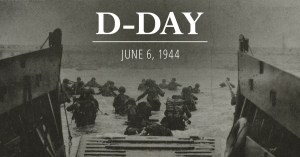
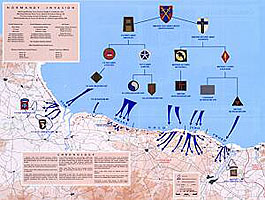
June 6 marks the anniversary of “D-Day.” A day when 6,603 American fighting men were killed, wounded, or missing along the shores of Normandy France. General Eisenhower was explicit about the mission and what was at stake. He said, “The eyes of the world are upon you. The hopes and prayers of liberty-loving people everywhere march with you.” They Marched. They Fought. They Won.

We the living of today owe so much to the valor and determination of this past generation. On this day to be remembered, take a few moments to recall people in your family, or a friend’s, who gave their lives so we could live free, in peace.

Here at the Government Publishing Office we distribute many introspective and interesting published works about America’s military from the Revolutionary War, Civil War, to World War II, Vietnam, and conflicts still being waged across the Middle East.

D-Day: The 6th of June (Map Poster) Part of an extensive collection, this  commemorative two-sided, full color historical map/poster with accompanying graphics (18″x24″) depicts the chronology of the World War II Normandy Invasion on the coast of France. To own this collector’s map for only $4.25 click here.

Also review our latest Military Collection, featuring titles ranging from the Civil War up to insightful studies and analysis of strategies our government is taking today to maintain peace across the globe.

In a world of uncertainty, knowledge helps us all better understand that democracy comes at a price; a price we all need to share to keep America strong and free.

The GPO Online Bookstore – Easy Access to Federal Publications

HOW DO I OBTAIN WWII RESOURCES?

Shop Online Anytime: You can buy eBooks or print publications —with FREE Standard Shipping worldwide— from the U.S. Government Online Bookstore at http://bookstore.gpo.gov.

Shop our Retail Store: Buy a copy of any print editions from this collection at GPO’s retail bookstore at 710 North Capitol Street NW, Washington, DC 20401, open Monday–Friday, 9 a.m. to 4 p.m., except Federal holidays, Call (202) 512-0132 for information or to arrange in-store pick-up.

Order by Phone: Call our Customer Contact Center Monday through Friday, 8 am to 5:30 pm Eastern (except US Federal holidays). From US and Canada, call toll-free 1.866.512.1800. DC or International customers call +1.202.512.1800.

Visit a Federal depository library: Search for U.S. Government publications in a nearby Federal depository library. You can find the records for most titles in GPO’s Catalog of U.S. Government Publications.

About the author: Blogger contributor Ed Kessler is a Promotions Specialist in GPO’s Publication and Information Sales program office.


Honoring Our Fallen Heroes

May 25, 2017

Just in time for Memorial Day, the U.S. Government Publishing Office (GPO), Bookstore, has produced a new online collection of military publications that feature the historic stories of military battles and important moments from the Civil War through Vietnam to today. Additionally there are valuable lessons to be learned about how America faces new global challenges in an era when cyber-warfare, counterinsurgency, urban terrorism and other new methods to conduct military excursions are in full force.

The collection includes articles by authors who have in-depth knowledge and the connection to global thinkers and military leaders that provides them with a perspective to offer concerned Americans the resources to learn about the global crisis that surrounds us; not to point to the negative reality of these issues, but rather to become more informed citizens and thus more capable of discerning fact from fiction.

Here’s a link to the collection that you can use to go directly to this unique and comprehensive new list of interesting and informative publications, whether you’re a history buff, perhaps a veteran of one of the wars herein, or concerned modern day observer.

HOW DO I OBTAIN THESE RESOURCES?

Shop Online Anytime: You can buy eBooks or print publications —with FREE Standard Shipping worldwide— from the U.S. Government Online Bookstore at http://bookstore.gpo.gov.

Shop our Retail Store: Buy a copy of any print editions from this collection at GPO’s retail bookstore at 710 North Capitol Street NW, Washington, DC 20401, open Monday–Friday, 9 a.m. to 4 p.m., except Federal holidays, Call (202) 512-0132 for information or to arrange in-store pick-up.

Order by Phone: Call our Customer Contact Center Monday through Friday, 8 am to 5:30 pm Eastern (except US Federal holidays). From US and Canada, call toll-free 1.866.512.1800. DC or International customers call +1.202.512.1800.

Visit a Federal depository library: Search for U.S. Government publications in a nearby Federal depository library. You can find the records for most titles in GPO’s Catalog of U.S. Government Publications.

About the author: Blogger contributor Ed Kessler is a Promotions Specialist in GPO’s Publication and Information Sales program office.


Honoring Our Nation’s Heroes on VE Day

May 8, 2017

May 8th is the 72nd anniversary of Victory in Europe (VE) Day, a day in which cities in Great Britain, the United States, and formerly occupied territories in Western Europe, put out flags and banners to rejoice in the victory of the allied forces.

On May 8, 1945, German troops throughout Europe finally laid down their arms, ending the European theater of World War II.

Pockets of German soldiers would continue the confrontation with the Soviets into the next day. On May 9, the Soviets would lose 600 more soldiers in Silesia before the Germans finally surrendered.

Because of that, VE Day was not celebrated until the ninth in Moscow, with a radio broadcast salute from Stalin himself: “The age-long struggle of the Slav nations…has ended in victory. Your courage has defeated the Nazis. The war is over.”

In 2006, the House of Representatives passed H. Res. 195 to commemorate the 60th anniversary of VE Day and the liberation of Western Bohemia. On govinfo.gov you can also find several announcements in the Congressional Record recognizing heroes and survivors of WWII:

The U.S. Government Publishing Office’s (GPO’s) Catalog of U.S. Government Publications offers access to a wide variety of related publications and resources from across the Federal Government about WWII and VE Day. Here is just a small sampling:

Inside GPO, we have a Veteran’s Memorial honoring all of those who worked at GPO and answered their Nation’s call to defend democracy and freedom during WWII, but sadly never returned.

If you’re interested in learning more about WWII and the sacrifices our soldiers made to protect freedom around the world, visit the GPO bookstore and pick up a copy of Command Post at War: First Army Headquarters in Europe, 1943-1945. It shows the army headquarters of WWII, the First Army headquarters, in the European theater from its activation in October 1943 to V-E Day in May 1945. It depicts the command as a complicated organization with functions ranging from the immediate supervision of tactical operations to long-range operational planning and the sustained support of frontline units during the war.

Also, the GPO bookstore has United States Army in World War II, Pictorial Record, War Against Germany: Europe and Adjacent Areas. The book is a collection of photographs and text written by Kenneth E. Hunter and edited by Mary Ann Bacon. It deals with the European Theater of Operations, covering the period from the buildup in Britain before the D Day invasion throughout the war to include V-E Day.

HOW DO I OBTAIN THESE RESOURCES?

Click on the Links: For the free resources, click on the links above in the blog post.

Shop Online Anytime: You can buy eBooks or print publications —with FREE Standard Shipping worldwide— from the U.S. Government Online Bookstore at http://bookstore.gpo.gov.

Shop our Retail Store: Buy a copy of any print editions from this collection at GPO’s retail bookstore at 710 North Capitol Street NW, Washington, DC 20401, open Monday–Friday, 9 a.m. to 4 p.m., except Federal holidays, Call (202) 512-0132 for information or to arrange in-store pick-up.

Order by Phone: Call our Customer Contact Center Monday through Friday, 8 am to 5:30 pm Eastern (except US Federal holidays). From US and Canada, call toll-free 1.866.512.1800. DC or International customers call +1.202.512.1800.

Visit a Federal depository library: Search for U.S. Government publications in a nearby Federal depository library. You can find the records for most titles in GPO’s Catalog of U.S. Government Publications.

About the author: Blogger contributor Scott Pauley is a Writer and Editor in GPO’s Library Services and Content Management office.


The 100th Anniversary of the United States’ Entry into World War I

April 5, 2017

On April 2, 1917 President Woodrow Wilson asked a joint session of Congress for a declaration of war against Germany. Congress responded with Public Resolution 65-1, 40 STAT 1. In honor of the one hundredth anniversary of the United States’ entry into World War I, we take a look at some U.S. Government publications available on the topic.

Shooting the Front: Allied Aerial Reconnaissance and Photographic Interpretation on the Western Front – World War I features numerous illustrations, many never before published, include images of aircraft, cameras, and people, authentic official aerial photos, and maps in varying scales, all designed to help the reader relive the exhilarating and dangerous experience of aerial observation during World War I.

United States Army in World War I (2001) (CD-ROM) includes United States Army in the World War, 1917-1919, volumes 1-17 of original documents compiled in 1919; Order of Battle of the United States Land Forces in the World War, V. 1-5; an extended guide to the battlefields of World War 1 first published in 1938;  and Army Art of World War 1.

The Army Medical Department, 1917-1941 and Answering the Call: The U.S. Army Nurse Corps, 1917-1919: A Commemorative Tribute to Military Nursing in World War I look at how the Army addressed medical concerns and how medical professionals answered the call to service.

Several interesting publications provide first person accounts of the war.

To help bolster the morale of troops during the war Stars and Stripes was created and while it was technically the official American Expeditionary Forces (AEF) newspaper, it was editorially independent. The Library of Congress has made the full run of The Stars and Stripes World War I edition available through its digital collections.

To staff and pay for the war, the Government launched campaigns to garner public support. The U.S. Center of Military History has made some of these available from their site.

Many of those who died while fighting in Europe were buried in temporary cemeteries established by the Army’s Graves Registration Service. In 1921, Congress authorized the creation of eight permanent World War I cemeteries on foreign soil. In January 2017, the Lafayette Escadrille Memorial Cemetery became the ninth World War I American cemetery. Each cemetery is accompanied by a memorial and maintained by the American Battle Monuments Commission. Find out more about each of the cemeteries:

We hope you will take a step back in history and explore the variety of U.S. Government publications available on World War I.

HOW DO I OBTAIN THESE RESOURCES?

Click on the Links: For the free resources, click on the links above.

Shop Online Anytime: You can buy eBooks or print publications —with FREE Standard Shipping worldwide— from the U.S. Government Online Bookstore at http://bookstore.gpo.gov.

Shop our Retail Store: Buy a copy of any print editions from this collection at GPO’s retail bookstore at 710 North Capitol Street NW, Washington, DC 20401, open Monday–Friday, 9 a.m. to 4 p.m., except Federal holidays, Call (202) 512-0132 for information or to arrange in-store pick-up.

Order by Phone: Call our Customer Contact Center Monday through Friday, 8 am to 5:30 pm Eastern (except US Federal holidays). From US and Canada, call toll-free 1.866.512.1800. DC or International customers call +1.202.512.1800.

Visit a Federal depository library: Search for U.S. Government publications in a nearby Federal depository library. You can find the records for most titles in GPO’s Catalog of U.S. Government Publications.

About the author: Cynthia Earman is a Cataloging & Metadata Librarian in the Library Services & Content Management division of the U.S. Government Publishing Office.


U.S. Army Nurse Corps: “Courage to Care”

October 12, 2016

Military and women’s history intersect in many ways. For more than two centuries, thousands of qualified women have served America in the Army Nurse Corps in particular. Each military branch has their own nursing corps. GPO makes available U.S. Army Center of Military History’s “Highlights in the History of the Army Nurses Corps.”

Poster encouraging women to join the U.S. Army Nurse Corps during World War II. Interested citizens could apply at Red Cross recruiting stations.This booklet chronicles the contributions of women nurses throughout the development of the Army Nurse Corps. Their story begins during the American Revolution when General George Washington asked Congress for nurses “to attend the sick.” In the decades that followed, whenever the military establishment expanded or contracted, medical services followed suit.

The Spanish-American War was a turning point for military nurses. Although not commissioned as a regular part of the Army, more than 1,500 female civilian nurses volunteered to care for the wounded. Shortly thereafter, in 1901, the female Nurse Corps became permanent under the Army Reorganization Act.

Poster encouraging women to join the U.S. Army Nurse Corps during World War II. Interested citizens could apply at Red Cross recruiting stations.

Poster encouraging women to join the U.S. Army Nurse Corps during World War II. Interested citizens could apply at Red Cross recruiting stations.

If there ever was a time when the Army Nurse Corps was an indispensable part of the American military establishment, it was during WWII. Several pages of the book are devoted to this period. At one point the number of active duty nurses swelled to 57,000. Sixty-six were captured and imprisoned by the Japanese in the Philippines. Many landed in North Africa on the day of 1942 invasion. Others arrived just days after the 1944 Normandy beach landing. Tragically, by the war’s end, 215 Army nurses died while serving.

Be it on base battlefield hospitals in WWII France, in MASH units on the front lines of the Korean War, or among a 6,000 strong crew during Vietnam, Army nurses helped to save tens of thousands of lives. Numbers may have waned in peacetime but standards in training and care never did.

U.S. Army Nurse 1st Lt. Arnelle Lewis takes a Guatemalan boy's temperature during a medical readiness training exercise in Santa Cruz Balanya, Guatemala, on March 10, 2007. Lewis is a registered nurse attached to the U.S. Virgin Islands Army National Guard.

U.S. Army Nurse 1st Lt. Arnelle Lewis takes a Guatemalan boy’s temperature during a medical readiness training exercise in Santa Cruz Balanya, Guatemala, on March 10, 2007. Lewis is a registered nurse attached to the U.S. Virgin Islands Army National Guard.

Today, the Army Nurse Corps is made up entirely of registered nurses. Army nurses are deployed all over the world in support of humanitarian and anti-terrorism missions. According to the Corps’ official creed, members continue to have the “courage to care, courage to connect, and courage to change.”

HOW DO I OBTAIN THIS PUBLICATION?

Shop Online Anytime: You can buy eBooks or print publications —with FREE Standard Shipping worldwide— from the U.S. Government Online Bookstore at http://bookstore.gpo.gov.

Shop our Retail Store: Buy a copy of any print editions from this collection at GPO’s retail bookstore at 710 North Capitol Street NW, Washington, DC 20401, open Monday–Friday, 9 a.m. to 4 p.m., except Federal holidays, Call (202) 512-0132 for information or to arrange in-store pick-up.

Order by Phone: Call our Customer Contact Center Monday through Friday, 8 am to 5:30 pm Eastern (except US Federal holidays). From US and Canada, call toll-free 1.866.512.1800. DC or International customers call +1.202.512.1800.

Visit a Federal depository library: Search for U.S. Government publications in a nearby Federal depository library. You can find the records for most titles in GPO’s Catalog of U.S. Government Publications.

About the author: Blogger contributor Chelsea Milko is a Public Relations Specialist in GPO’s Public Relations Office.


Explore Soldier Experiences through Army History: The Professional Bulletin Celebration of 100th issue release!

August 9, 2016

army_history_2016Army History: The Professional Bulletin releases its 100th issue in Summer 2016!

Army History chronicles the history and heritage of the United States Army, and explores the lives and times of those who served.

This issue opens with a synopsis; followed by a briefing about the U.S. Army’s Historical Program Enterprise, which addresses the need for a forward, collaborative approach to meet the soldier’s needs, while deepening the connection to the American public and the US Army.

NewsNotes section features new title releases from the Army, Center of Military History Combat Studies Institute. It also covers a new interactive exhibit with videos located at the U.S. Army Women’s Museum in Fort Lee, VA, which is the only museum dedicated to Army women in the world. The exhibit tells the story of the significant contributions of female soldiers’ engagement, cultural support, and provincial reconstruction teams in Iraq and Afghanistan.

army_history_2

The first article in this issue uncovers the rich history of the underground caves and cities where American soldiers from the 101st National Guard Infantry, 26th Division spent many days and nights with the French training for war.   Many of the soldiers from this platoon carved etchings in the limestone walls of the caves in order to share the soldier’s story. Many also included their signatures in these caves, marking their footprint on both the war and the cave.  In the article, modern-day military historians piece together the story and historical value of these artifacts that position World War I history from the American soldiers’ perspective.  This editorial piece brings a unique perspective to World War I history.

This second featured piece promotes Australian strategic military operations within World War II.  The intent and purpose of this article is to investigate the history of the Defense Central Camouflage Command (DCC) and its leaders, and to analyze their success or failures from the perspective of civil-military relations.  This commentary explores the teaching to soldiers of techniques to camouflage their installations, including water, gas, and oil facilities.

army_history_3In this issue, you will also find a Book Reviews section related to military history books published by other entities.  A majority of the books covered in this issue have been published by academic/scholarly publishers, external to the U.S. military.

The issue ends with a Footnote from Bryan J. Hockensmith, honoring this 100th issue and   thirty-three years of this published journal.  He reflects on Army History- Past, Present and Future and how this periodical continues primary source military history education to meet worldwide scholarly standards.

army_history_4Congratulations to the staff at CMH for the 100th published issue of Army History: The Professional Bulletin!  This print issue and subscription will meet the military history education needs of US Army soldiers, defense education programs, DODEA and public school history and global studies assignments, ROTC student programs, military academies, military science majors, historians and political scientists.  The team at CMH brings an interesting perspective to communicate understanding of America’s military history to their readers.

Grab a cup of coffee and begin reading today!

HOW DO I OBTAIN THIS PUBLICATION?

Shop Online Anytime: You can buy eBooks or print publications —with FREE Standard Shipping worldwide— from the U.S. Government Online Bookstore at http://bookstore.gpo.gov.

Order by Phone: You may also order print editions by calling our Customer Contact Center Monday through Friday, 8 am to 5:30 pm Eastern (except US Federal holidays). From US and Canada, call toll-free 1.866.512.1800. DC or International customers call +1.202.512.1800.

Shop our Retail Store: Buy a copy of any print editions from this collection at GPO’s retail bookstore at 710 North Capitol Street NW, Washington, DC 20401, open Monday–Friday, 9 a.m. to 4 p.m., except Federal holidays, Call (202) 512-0132 for information or to arrange in-store pick-up.

Visit a Federal depository library: Search for U.S. Government publications in a nearby Federal depository library. You can find the records for most titles in GPO’s Catalog of U.S. Government Publications.

About the author: This week’s blog contributor is Maureen Whelan, Senior Marketing Team Leader for GPO’s Publication and Information Sales program office in Washington, DC. Maureen oversees print and digital content dissemination strategy and manages third party free and paid content distribution through platforms and vendors, such as Apple iBookstore, Barnes and Noble.com, Google Play eBookstore, Ebscohost databases, Overdrive, and more.


The Expedition to Capture Pancho Villa

July 21, 2016

In March 1916, Mexican revolutionary Francisco “Pancho” Villa and his band of hundreds of Villistas mounted a cross-border raid on Columbus, New Mexico. A U.S. military squadron repelled the invasion of American territory. Further retaliatory steps were taken immediately. President Woodrow Wilson sent Gen. John J. “Black Jack” Pershing and about 10,000 men on the mission to capture Villa.

The U.S. campaign to apprehend Villa and defend the border is the subject of “The Mexican Expedition, 1916–1917,” a new publication from the U.S. Army’s Center of Military History.

008-029-00600-6The Mexican Expedition, 1916–1917

Author Julie Irene Prieto argues that while Villa’s raid on Columbus was a failure, “it constituted a startling political and strategic victory for the rebel leader.” He had begun to chip away at Mexican president Venustiano Carranza’s pro-U.S. regime. Meanwhile, Pershing’s forces moved into the Chihuahua region, dead set on dismantling the rebel general’s army. Over the course of several months, dozens of minor skirmishes played out across Northern Mexico.

Pancho Villa, military leader of rebel forces during the Mexican Revolution and considered a bandit by Americans in the wake of the raid on Columbus, New Mexico (Library of Congress)

Pancho Villa, military leader of rebel forces during the Mexican Revolution and considered a bandit by Americans in the wake of the raid on Columbus, New Mexico (Library of Congress)

There are several reasons why this operation is so notable. Northern Mexico’s punishing terrain and diplomatic hostility tested the mettle of Pershing and “proved his worth as a field commander.” As for the cavalrymen, Prieto writes that they “employed skills and strategies developed…on frontier campaigns…and in warfare against irregular, guerrilla forces.” The author continues, “This was to be one of the last operations to employ these methods of warfare and one of the first to rely extensively on trucks. It also provided a testing ground for another new technology—the airplane.” Furthermore, such valuable experience in new technologies provided battle-ready conditioning prior to U.S. entry into World War I the following year.

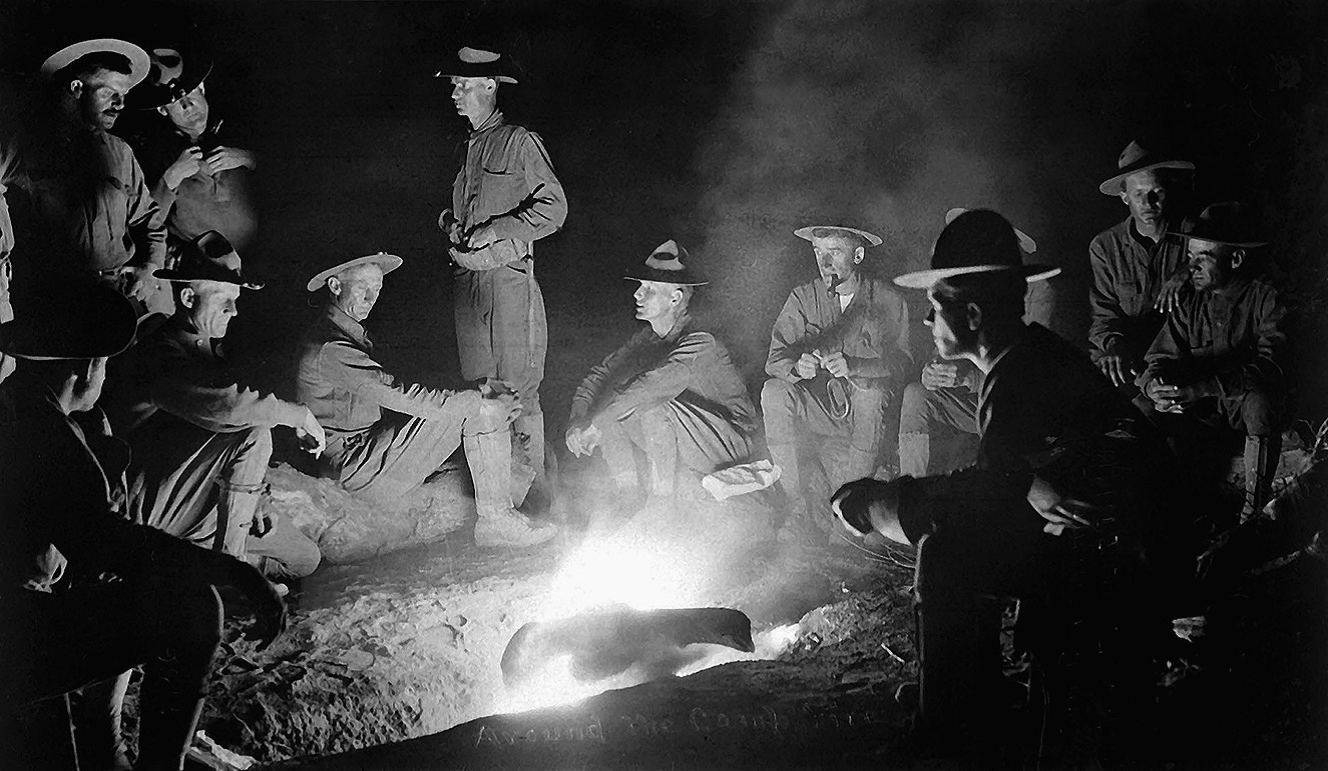
Soldiers of the 16th Infantry around a campfire at San Gerónimo, Mexico, May 1916 (Library of Congress)

Soldiers of the 16th Infantry around a campfire at San Gerónimo, Mexico, May 1916 (Library of Congress)

Carranza viewed the U.S. intervention as a violation of Mexican sovereignty. Official Mexican troops charged with beating back Villa’s guerrillas in Chihuahua eventually clashed with U.S. troops. This presented a very real threat of war between the U.S. and Mexico. President Wilson called a National Guard unit to the Mexican border. Their teeth-bearing exercise sent a stern warning to President Carranza, who ordered his men to back down. U.S.-Mexico diplomatic relations carried on despite the near-showdown but suffered over the long-term because of it.

Did Pershing’s so-called Punitive Expedition successfully capture or kill Pancho Villa? You’ll just have to read The Mexican Expedition, 1916–1917 to find out.

HOW DO I OBTAIN THIS PUBLICATION?

Shop Online Anytime: You can buy eBooks or print publications —with FREE Standard Shipping worldwide— from the U.S. Government Online Bookstore at http://bookstore.gpo.gov.

 Shop our Retail Store: Buy a copy of any print editions from this collection at GPO’s retail bookstore at 710 North Capitol Street NW, Washington, DC 20401, open Monday–Friday, 9 a.m. to 4 p.m., except Federal holidays, Call (202) 512-0132 for information or to arrange in-store pick-up.

Order by Phone: Call our Customer Contact Center Monday through Friday, 8 am to 5:30 pm Eastern (except US Federal holidays). From US and Canada, call toll-free 1.866.512.1800. DC or International customers call +1.202.512.1800.

Visit a Federal depository library: Search for U.S. Government publications in a nearby Federal depository library. You can find the records for most titles in GPO’s Catalog of U.S. Government Publications.

About the author: Blogger contributor Chelsea Milko is a Public Relations Specialist in GPO’s Public Relations Office.


The Civil War’s Almost Forgotten Theater

June 22, 2016

Although the American Civil War took place over 150 years ago, there is STILL plenty to learn about the bloodiest war in U.S. history. One particularly under-discussed chapter involves the vast Trans-Mississippi West. Where exactly is that, you ask? The Trans-Mississippi West refers to all major military operations west of the Mississippi River but excluding the states and territories bordering the Pacific Ocean.

GPO makes available a U.S. Army Center of Military History short study, authored by Jeffery S. Prushankin, fittingly titled “The Civil War in the Trans-Mississippi Theater.”

008-029-00592-1The Civil War in the Trans-Mississippi Theater

The long and costly struggle between industrial North and agricultural South, “half slave and half free,” spilled into lands west of the Mississippi. The region witnessed approximately 130 battles stretching from New Mexico to New Orleans and Fort Brown to Fort Leavenworth. It saw small-scale military actions at Wilson’s Creek, Prairie Grove, and Galveston, among others. Although “often neglected in history books,” argues Prushankin, “the Trans-Mississippi Theater played an important role in the Civil War.”

The theater presented the Union with strategic terrain for projecting its military power. President Abraham Lincoln considered it a campaign to control arable (and gold-filled) land, pacify Western denizens, and eliminate a possible Confederate stronghold.  He knew such a primitive frontier would be hard-won. Over the course of the war, his War Department marshalled some 200,000 Union soldiers to the hardscrabble landscapes of New Mexico, Missouri, Arkansas, Louisiana, and Texas.

civil_war_map1

Trans-Mississippi Theater 1861-1865

The book devotes several pages to the Red River expedition, a.k.a. the struggle for Louisiana and Texas, which took place in the spring of 1864. The Federal campaign through the Red River Valley intended to open up a Union path for a Texas invasion. But commanding officer Maj. Gen. Nathaniel P. Banks bungled almost every maneuver and eventually retreated his 30,000 troops in humiliation. Although the initiative did cause a “disruption of Confederate designs,” it didn’t do much to sway the war’s outcome.

The Red River Expedition, Louisiana and Texas, 1864. (Library of Congress)

The Red River Expedition, Louisiana and Texas, 1864. (Library of Congress)

That Union debacle eventually gave way to Price’s Raid. Three gory, inconclusive years and Lincoln’s looming reelection sent Southern leaders into a panic. They believed that to save their cause, they would have to re-capture Missouri for the Confederacy. During the fall of 1864, Confederate cavalry raided Missouri and Kansas. Long story short, Union troops delivered a decisive blow. Price’s ineffectual raid effectively ended major combat operations in the Trans-Mississippi.

Much of Civil War history remains focused on events east of the Mississippi. Ultimately, the Trans-Mississippi closedown was not a “winner, winner, chicken dinner” pivot for the Union. Perhaps it will remain a forgettable theatre in an unforgettable war. But the Trans-Mississippi did allow the North to prove itself a better organized, better led army. And that certainly was a leading factor in the Union’s overall victory.

HOW DO I OBTAIN THIS PUBLICATION?

Shop Online Anytime: You can buy eBooks or print publications —with FREE Standard Shipping worldwide— from the U.S. Government Online Bookstore at http://bookstore.gpo.gov.

 Shop our Retail Store: Buy a copy of any print editions from this collection at GPO’s retail bookstore at 710 North Capitol Street NW, Washington, DC 20401, open Monday–Friday, 9 a.m. to 4 p.m., except Federal holidays, Call (202) 512-0132 for information or to arrange in-store pick-up.

Order by Phone: Call our Customer Contact Center Monday through Friday, 8 am to 5:30 pm Eastern (except US Federal holidays). From US and Canada, call toll-free 1.866.512.1800. DC or International customers call +1.202.512.1800.

Visit a Federal depository library: Search for U.S. Government publications in a nearby Federal depository library. You can find the records for most titles in GPO’s Catalog of U.S. Government Publications.

About the author: Blogger contributor Chelsea Milko is a Public Relations Specialist in GPO’s Public Relations Office.