Shooting with a Camera above the Western Front

February 25, 2011

It’s been almost a century since the outbreak of World War I. Although it’s rightfully remembered for its frightful battlefield slaughter, the Great War also marked a huge leap forward in the use of modern technology in war. One of those technological developments was the use of aerial reconnaissance photography to map enemy terrain and extract intelligence information on troop movements, defenses, and strategy.

Shooting the Front: Allied Aerial Reconnaissance and Photographic Interpretation on the Western front – World War I, published by the National Defense Intelligence College, is not the kind of product normally associated with that estimable agency, which usually deals with more contemporary issues. That’s one of the things that intrigued me about this hefty, profusely illustrated volume. It’s got lots of photographs, of course – the image of Fort Douaumont after Verdun gives new meaning to the term “leveled to the ground” – but also lots of information about how aerial photography evolved in the course of the war. It’s analogous to the progression of aircraft armament from a pistol in the hand of a co-pilot in 1914 to synchronized machine guns in1918. Interestingly, it was the French who led the way in developing aerial recon photography into a real science, and their partnership with American personnel was much more significant than is usually assumed.

I also enjoyed the brief biographies of the pioneers of Allied aerial photography: Eugene Marie Edmond Pepin, the brilliant Sorbonne graduate; John Theodore Cuthbert (known as “J.T.C.” – my initials!) Moore-Brabzon, the quintessential English gentleman (“‘You will obey your superior officers,’ the No. 9 Squadron commander once remarked early on. Moore-Brabzon replied, ‘Superior officer? – senior, if you please, sir.’”); and Edward Jan Steichen, the great American photographic master, who once joked that anyone producing a fuzzy photograph would be court-martialed! Retiring as a Lieutenant Colonel in the reserves in 1924, Steichen received a commission as a Lieutenant Commander in the Navy reserves in 1941 at the age of 62, was on the carrier Lexington and in the Battle of Iwo Jima, and retired again as a Navy Captain in charge of all naval combat photography – talk about the engaged artist!

Shooting the Front is an excellent study of a neglected aspect of World War I and aviation history. At first I thought it might be too technical, but instead I found it absorbing to shift between the text and the photos, in a sense becoming a combat photograph interpreter myself. You can view the Table of Contents and Chapter I here, get a copy here, or find it in a library. For other Government publications touching on “the war to end all wars,” you can browse here.


Information about Getting a Federal Government Job

February 22, 2011

Guest blogger Jana Sabol wishes she’d had this publication before she got her job.

Wouldn’t you love getting assistance in applying for a Federal Government job? I say this from experience, as I began my own Government career just eight months ago.

One publication that I wish I had known about before initiating the process of beginning my career within the Federal Government is How to Get a Job in the Federal Government. I was fortunate enough to have the assistance of other Federal employees to assist me in the application process. For those less fortunate, I highly recommend this publication by the U.S. Department of Labor. It will guide you through occupational series, qualifications, the General Schedule (GS) for pay scales, and other highly valuable tools for acquiring a job within the Federal Government. How to Get a Job in the Federal Government also guides its readers through the use of USAJOBS, the Government’s employment website.

I recommend this publication to all first time Federal Government job seekers as a highly beneficial tool in beginning the search and application process for launching their Government careers. You can purchase a copy of this book from the GPO Bookstore or as an eBook through Google Books. You can also find it in a library.


Safe Playgrounds for Kids

February 16, 2011

Back in the day, I did a couple of stints as a parent at a cooperative preschool. It was a great experience but, as in most aspects of life, some of the jobs were tougher than others. Take the annual mulching of the playground, for instance. The recipe: Take one truckload of mulch dumped in the school driveway, a couple of wheelbarrows, several shovels, mix in what was invariably a hot, humid Saturday in late August, add whichever parents you’ve managed to corral for the job – and start spreading. We weren’t enriching our kids’ intellectual or social lives – just trying to prevent yet another trip to the emergency room.

In fact, according to the Public Playground Safety Handbook, in recent years children have made more than 200,000 trips annually to the emergency room due to injuries on public playgrounds, defined as those in apartments and condominiums, restaurants, parks, child care facilities, other areas of public use, and schools, like Valley Drive Cooperative Preschool, my (by parental extension) alma mater. I’m sure that a lot of those injuries are due to falls, so proper playground surfacing is important. When I was a kid, playgrounds were floored with sand or dirt, or at least that’s the way I remember it. According to the Handbook, produced by the Consumer Product Safety Commission, mulch is a good surfacing material, as is sand, but not dirt. This very useful book also deals with playground siting, shading (would I think about how the shade fell if I were planning a playground? probably not – I can’t even manage that at a cookout.), equipment selection and installation, hazards, and much more.

I liked reading this book because it’s detailed but clear, matter-of-fact about hazards, not preachy about regulations, and designed to help even very small entities, like preschools, design and maintain playgrounds to keep children safe. Are there any guarantees? Dream on! As a child, one of my sisters-in-law stuck her head through a porch railing and couldn’t get it out until assisted by the local mail carrier. This escapade so enthralled the neighborhood children that she felt compelled to show them how it happened – and got stuck again. The Handbook is up against the limitless ability of kids to get themselves in fixes but, given the nature of the challenge, I doubt if it could be met much better than by this book. You can read  the Handbook here, get your own copy here, or find it in a library. And keep your head away from that railing!


The Budget Blooms in Washington

February 14, 2011

Probably no one has ever compared the Budget of the United States Government to the crocus, but for inhabitants of Capitol Hill, and especially those of us who work at the Government Printing Office, both of them usually pop up around this time of year. In addition to printing the various components of the Budget, the Office of Management and Budget (OMB) does the annual distribution of Budget books to the press here at GPO and we sell additional copies to those representatives of the Fourth Estate who need more for their media organizations. Yes, even though the Budget becomes available on line at the same time as the printed version, the latter is still in demand for various reasons. Even the staff of Government Book Talk is pressed into action in our bookstore to expedite the flow of customers.

My own favorite component of the Budget is the Appendix, an imposing compendium of line items showing exactly what the President plans to fund – or not. The Historical Tables are good for comparing the U.S. Budget over time, and the Analytical Perspectives volume focuses on particular subject areas and issues. The main Budget book, of course, provides an overview of where the cuts and increases will or won’t be made. You can even get all of these books on a CD-ROM.

Do I actually read these books? Well, no, and very few do from cover to cover – but, like many of us in and out of Washington who are affected in some way by the Federal Government’s budget choices, I do look at those things I care about, and all of us in America have a stake in how our money is spent or not spent. You can browse through the new Budget on GPO’s Federal Digital System (FDsys) here or get your own copies of this harbinger of spring in Washington right here.


The Remarkable Story of Black Swan Records

February 7, 2011

Government publications go beyond books and pamphlets – there are some great magazines out there, like Humanities, published by the National Endowment for the Humanities. Every time I pick up an issue, I mentally kick myself for not doing so more often.

Take the November- December 2010 issue, for example. It’s just coincidence that I looked at this issue at the beginning of Black History Month, but I’m glad I did. The cover article, “Black Swan Rising,” tells the remarkable story of Black Swan Records, which from 1921 to 1924 was the first major black-owned record label, and one that recorded black classical music and spirituals as well as jazz and blues. It was conceived by Harry Pace, a protégé of W.E.B. Du Bois, who also sat on Black Swan’s board of directors. William Grant Still, later an important composer, was the label’s in-house arranger and the great Fletcher Henderson, who contributed so much to jazz in the 1920s and 1930s, was the recording manager.

Named after Elizabeth Taylor Greenfield, also known as “the Black Swan,” the 19th century’s most accomplished African American concert singer, Black Swan Records was established to display the broad scope of contemporary black music of all kinds while demonstrating the entrepreneurial skills of African American businessmen. In its brief history, the label issued recordings of spirituals, arias, Christmas carols, and the first recorded performance of “Lift Every Voice and Sing.” Black Swan also had hit blues records by Ethel Waters, Alberta Hunter, and Trixie Smith.

The growing popularity of radio – the “new media” threat of its day – an overly ambitious capital expansion, and competition from other record companies led Black Swan to sell out to Paramount Records in 1924. Even before then, the need for inexpensive material led the label to issue recordings by white jazz and pop artists under “black” pseudonyms – and apparently no one noticed.

“Black Swan Rising” is just one among many terrific articles in this issue. Other topics covered include the Buddhist caves of Xiangtangshan, Founding Father George Mason, the Fort Shaw Indian School girls’ basketball team, and much more. You can read “Black Swan Rising” here, get a subscription to Humanities here, or find it in a library.

I’ll be blogging about this great periodical again soon because it’s  really an amazing resource – and who could  resist an article that tells the story of Sir Isaac Newton’s lifelong infatuation with alchemy!


Steps Toward a Higher Education

February 4, 2011

Based on personal experience, guest blogger Ingrid Reyes-Arias has some good advice for college-bound students.

It’s unbelievable the amount of influence money has on an individual’s pursuit of success.  Before college I had many stressful days of thinking how I would pay for my education, and there were very tough moments when the problem was not the admissions step but the finance step.  I remember when I began applying to colleges, I had a wonderful counselor that gave me all the resources I needed and, most important, helped me organize my finances.  For those that do not have the privilege of a counselor available every moment of every day. this great checklist can help.

The College Preparation Checklist (revised 2009) is a free publication provided by ED Pubs (U.S. Department of Education Publications) that prepares students for the journey of pursuing higher education.  This checklist has been created to reach students of all ages who are contemplating further education, as well as parents of children in elementary and secondary school.  This “to do” list begins by addressing elementary age students regarding how to prepare academically for higher education and how to support this opportunity financially.  The checklist has been divided into portions for students and parents, each tailored to meet their respective needs.  In addition, it suggests different resources for more information.  The checklist is broken down into “to do lists” for elementary and junior high, as well as the different high school grades.

As you may know, the Federal government contributes to higher education through Federal Student Aid (FAFSA).  This program within the U.S. Department of Education assists eligible students in getting funds to pay off the cost of attending school.  Every year a student should fill out the FAFSA application to seek financial aid, such as work-study, student loans, scholarships, or grants.  The aid goes towards expenses such as tuition, room and board, books, and supplies. The application can be found at www.fafsa.ed.gov

Most important decisions require time to think about, which may lead to you starting the process later than others.  Even if you get a late start, the checklist includes a “must do” list.  The first thing listed is completing the FAFSA application, followed by contacting the school you plan to attend to find out about other payment plans or scholarships.  It is always good to keep in mind that this is a process, so at times you must rely on subject matter experts, like teachers and guidance counselors, for help.

If you are at the beginning stages of planning, this publication includes a FAFSA4caster, which estimates your expected family contribution.  It will then estimate the award amount and give you an idea of the loans or grants for which you may qualify.  This estimator can be found at www.fafsa4caster.edu.gov.  Additionally, the checklist encourages you to research and apply for scholarships.  It provides many resources on scholarships, including a Department of Education database: www.FederalStudentAid.ed.gov./scholarship.

Keep in mind that knowing which steps to take will make the process go smoothly and eliminate unnecessary stress.  The college application is already stressful enough, so don’t add more! The College Preparation Checklist offers a lot more help, so take a good long look.  You can find it at the Ed Pubs website http://www.edpubs.gov/ and order a copy or two at no cost.


A Snapshot of the Surge in Iraq

February 2, 2011

Government publications sometimes seemed ripped from the headlines, like the oil spill and financial crisis reports I’ve blogged about recently. Even history can be amazingly contemporary, though, especially if the historian is working alongside those who make the history. The U.S. military has a tradition of embedding historians in its fighting units so they can record history as it happens. It’s a long way from academe to Iraq, but the opportunity to write “a first draft of history even as it unfolds” must be an alluring one.

Dale Andrade, who’s currently with the Army’s Center of Military History (CMH), knows all about that, I’m sure. In Surging South of Baghdad: The 3rd Infantry Division and Task Force Marne in Iraq, 2007-2008, he recounts the experience of one unit participating in its third deployment to Iraq. As CMH Chief Historian Richard W. Stewart notes in the Foreword, at this point in the Iraq War, “For better or worse, the George W. Bush administration decided to gamble on a troop increase, sending thirty thousand troops to Iraq in order to stop the bloodshed and bring stability to Baghdad and the surrounding area. By June 2007, they were all in place, and the so-called surge began.”

Surging South of Baghdad brings home the utter complexity of the political and military situation in Iraq. The Army had to be aware of a multiplicity of opponents, many of them working at cross-purposes with one another. These factions were and are political “improvised explosive devices” motivated by internal rivalries and conflicting ideologies that had to be understood to be combated effectively. But the book also portrays the human side of war: grief over dead comrades, the desire for payback, the need to understand and even empathize with civilian Iraqis who may or may not be trusted – all described in tandem with the strategic and tactical progress of the Division as part of the surge.

This book is a detailed look at how the surge was implemented from a “boots on the ground” viewpoint, enriched by the perspective that a participant with analytical skills can bring to the description of historical events – a tradition in writing military history since Thucydides. You can read it via the CMH Web site, get your own copy here, or find it at a library.


The Financial Crisis: Why?

January 28, 2011

Today marks the 5th anniversary of the collapse of Lehman Brothers. Lehman’s was the largest bankruptcy in U.S. history, and its demise marked the  beginning of the global financial crisis and was a major catalyst of the  financial meltdown. President Obama is using the Lehman anniversary to put an emphasis on the economy, kicking  off a series of events with a Rose Garden speech Monday. His National Economic  Council is set to release a report detailing the economic advances.
Read more: http://www.nydailynews.com/news/politics/president-obama-defends-approach-financial-crisis-anniversary-lehman-brothers-collapse-article-1.1456570#ixzz2f48bm7eR

All of this creates a good opportunity to revisit blogger Jim Cameron’s review of the Financial Crisis Inquiry Report from January 28th, 2011 – JET

I recently read a book about Ivar Kreuger, the famed “Match King” of the 1920s. Kreuger attempted to monopolize the match manufacturing industry on an international scale by obtaining state monopolies from national governments in exchange for large loans. His amazing financial record got him on the cover of Time magazine in October 1929, just as the stock market crash was beginning. Less than three years later, his companies teetering on the edge of bankruptcy and his crude forgeries of Italian bonds coming to light, he shot himself. Yet the author concludes that, for most of his career, his companies produced real profits and excellent returns for investors – he wasn’t simply a world-class swindler who single-handedly brought on a world crisis. It brings home the fact that great financial crises and collapses are not usually tied to a single individual or industry – the blame tends to be more widespread. It takes much more than a Kreuger or Madoff to light the fuse.

All of this comes to mind when perusing the official edition of The Financial Crisis Inquiry Report, the final report of the National Commission on the Causes of the Financial and Economic Crisis in the United States. Note: This official edition is complete, including all 129 pages of dissenting views. I’m no economist, but it seems clear that a series of interlocking corporate and government practices and missteps, extending far beyond any one person, company or sector, caused the economy to tank.

It’s also interesting to see how quickly events recede in the mind. When was the last time you heard about the downfall of Lehman Brothers? Reading this report transports me back to those very scary weeks a little more than two years ago, when everything that had seemed so secure in the economy suddenly displayed all of the characteristics of a wooden skyscraper full of termites.

This book is no easy read, but its subject is compelling, faced as we are with the aftermath of the crisis. It’s a serious report for serious times, and the voluminous dissenting views show how uncertain root causes can be, accept them or not as you will. You can find The Financial Crisis Inquiry Report here, buy a copy of the official edition, including all of the text of the dissenting views, here: http://bookstore.gpo.gov/search/apachesolr_search/financial%20crisis, or get it at a library.


A Teen Survival Guide – for Parents, Too!

January 26, 2011

Guest blogger Ingrid Reyes-Arias remembers a Government publication that has good information for teenagers and parents alike.

Sometimes growing up can be a scary thing, and rearing a child can be scary, too.  As part of my undergraduate career, I devoted a lot of my research time to family and public health issues. With the plethora of information out there, it’s difficult to discern the age-appropriate and accurate health facts.  For my part, I relied heavily on many Department of Health and Human Services (HHS) publications because I knew they were trustworthy and up to date.    

During one of my research efforts, I came across an interesting document from the HHS Office of Women’s Health.  It’s called Teen Survival Guide: Health Tips for On-The-Go Girls.  I used the information in it to give a class on women’s health to several teenage girls.  This guide was extremely helpful when discussing such important topics as reproductive health.   

The first portion of the Survival Guide is “Taking care of your reproductive health,” which includes discussions about the body, sexually transmitted diseases, and advice on seeing your doctor.  The guide also provides recommendations on personal hygiene, exercise tips, tips on healthy eating habits, adverse effects of drug usage, self-esteem and relationship counseling, and advice on future planning – all of which are very important in the life of a teenager. 

This guide is very practical and includes interactive quizzes, real life questions and answers, resources related to the different topics at the end of the sections, and a glossary for many of the medical terms.  The ease of interactivity allows for successful teaching of facts to a class, or even to your own child.  As parents, this can be a tough topic with plenty of tough moments, so having a special guide will allow for a more neutral encounter with your child.

Take advantage of the Teen Survival Guide. You can also find it in a library. It will make those anxiety-provoking future discussions a lot easier!


Russia, America, and the Lands of the Bering Strait

January 21, 2011

Sometimes a Government publication is a window into a program that you never dreamed existed. Before opening my copy of Early Art of the Northern Far East: the Stone Age, I had never heard of the National Park Service’s Shared Beringian Heritage Program. It’s not a new program, either: according to the program’s Web site, it was “created in 1991, [and] resulted from a commitment by Presidents George H.W. Bush and Mikhail Gorbachev to expand United States and Soviet cooperation in the field of environmental protection and the study of global change.”

Now perhaps some of you are thinking, “Hold on there, Government Book Talk, what the heck is Beringia?” Thanks to that same Web site, I can state with confidence that “Beringia is defined as the land and maritime area bounded on the west by the Lena River in Russia; on the east by the Mackenzie River in Canada’s British Columbia; on the north by 72 degrees north latitude in the Chukchi Sea; and on the south by the tip of the Kamchatka Peninsula.” This joint Russo-American geographic and cultural unit possesses unique natural resources and is the home of Native peoples with much in common. The program conducts research on the prehistoric Bering land bridge as well as the natural and human history of its animal and human inhabitants, informs the public about these discoveries, and translates Russian-language publications about the region.

Early Art of the Northern Far East is one of those translated works. I must admit that it’s really for specialists only – very much in the mode of such venerable series as Smithsonian Contributions to Anthropology – but it is intriguing to see the variety of animal and celestial images that were sculpted or incised by Beringia’s earliest peoples. If you have a serious interest in cultural anthropology or prehistoric art, this is a valuable contribution to the study of  both. You can browse through it here, get your own copy here, or find it in a library.


Dams and Hydropower in the West

January 19, 2011

Although the words “Woody Guthrie” and “Federal employee” don’t usually come to mind together, in May 1941, the Government hired the great folk singer to write songs about some of its hydropower projects in the Pacific Northwest. The results included such classics as “Roll on Columbia,” “Pastures of Plenty,” and “Grand Coulee Dam.”

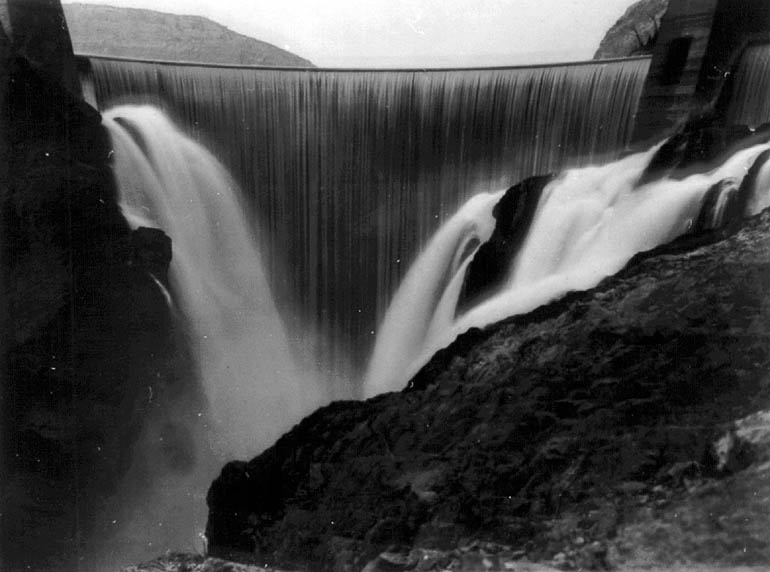
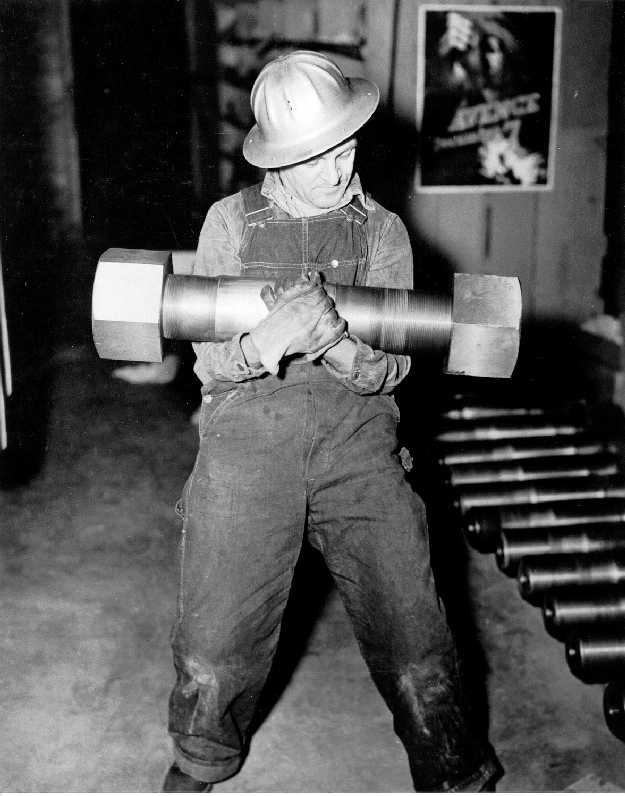
Woody and his songs came to mind as I started thumbing through Dams, Dynamos, and Development: The Bureau of Reclamation’s Power Program and Electrification of the West, a handsome, large-format book published for the centennial of the Bureau in 2002 and now back in print. It includes a broad array of wonderful black and white and color photos, as well as reproductions of art work (even a Norman Rockwell, left), all of which illustrate the history and activities of the Bureau in building dams and power plants to generate electricity. Many of the photos capture Woody’s “big Grand Coulee country in the land I love the best” and the other rivers and canyons of the West.

It’s not just a picture book; there’s also a lot of hard information on the history of the program, the changing views of the effects of dams and hydropower facilities on the environment – even an extensive listing and photo gallery of the 58 power plants that comprise the Bureau’s power network. It conjures up the heroic age of building America’s infrastructure while addressing such issues as alternative power sources and environmental protection.

You can get a copy of this excellent book here or find it in a library. If you want to view some of the art work, check out the Bureau’s American Artist and Water Reclamation Web page; for some of the photos, there’s the Bureau of Reclamation Photography and Engineering Drawings Collections page.


Remembering the Forgotten War

January 14, 2011

Last year marked the 60th anniversary of the outbreak of the Korean War, but whatever commemorations occurred were pretty low key, maintaining its reputation as “the forgotten war.” Given that many people at the time saw the war as possibly leading to World War III, it’s interesting that it’s receded so much from public consciousness.

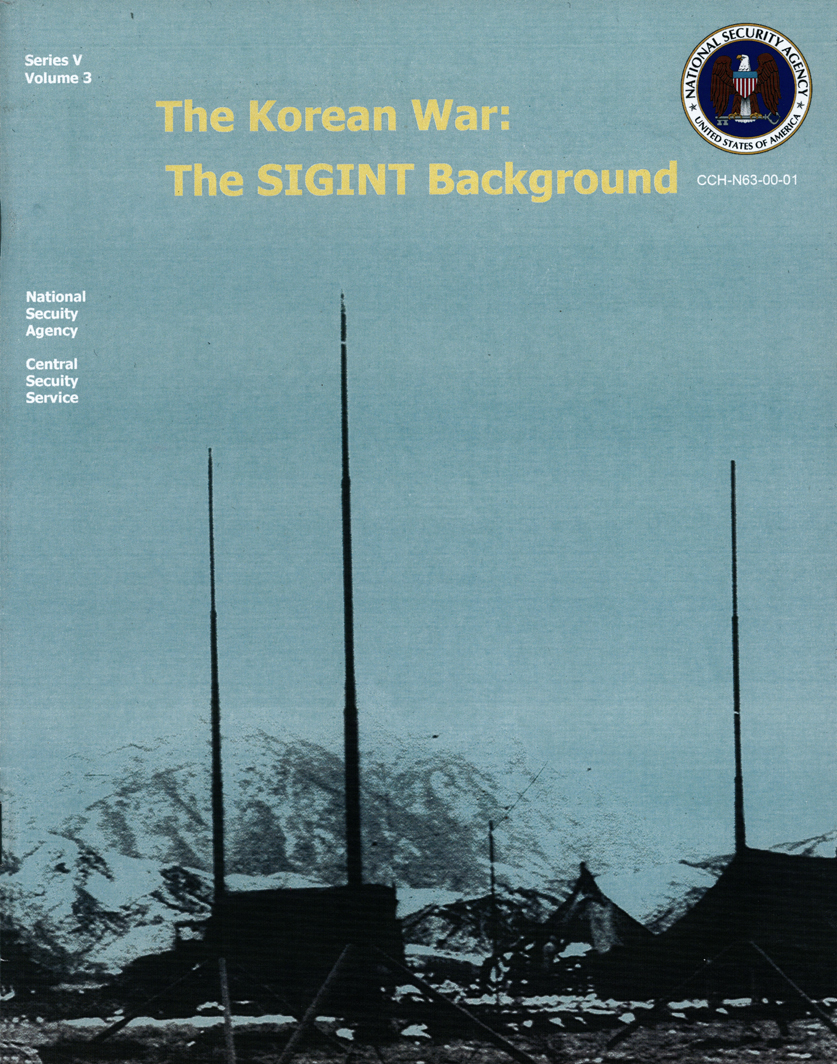
Sometimes it’s the byways of history that tell us the most about how things really were. Two pamphlets produced by the National Security Agency’s Center for Cryptologic History on signals intelligence (SIGINT) in the Korean War do just that. The Korean War: the SIGINT Background shows how woefully understaffed and under-skilled the Armed Forces Security Agency (AFSA) was in the run-up to war. With most of its efforts focused on the Soviet Union and the People’s Republic of China, AFSA had neither the motivation nor the Korean language capabilities to track North Korean communications. The betrayal of American penetration of Soviet cipher systems by an NKVD mole in AFSA resulted in even more distraction.

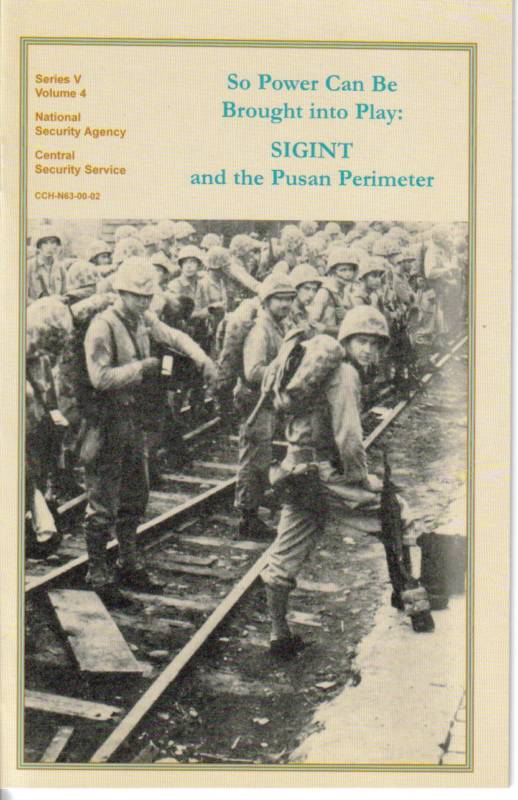
So Power Can be Brought into Play: SIGINT and the Pusan Perimeter takes the story into combat. While recapitulating the failings of AFSA prior to the outbreak of war, it describes how quickly its staff began providing high-quality intelligence to the U.S. forces trapped in the Pusan perimeter after the massive North Korean invasion that pushed them into that pocket southeast of Seoul. Although outnumbered and outgunned, American forces held out until the risky but totally successful amphibious invasion at Inchon. The Korean War: the SIGINT Background then outlines the Chinese phase of the war, the resultant stalemate, and the detailed advance intelligence that led to victories at Hill 395 and Pork Chop Hill prior to the 1953 armistice.

So there is the Korean War in microcosm: initial surprise and near-disaster, furious improvisation, and success followed by stalemate and an indecisive finish. Perhaps that’s why we don’t remember it – hard fighting but no parades. You can read these publications or order copies here or find them in a library.