Saving the Forests of the South

May 26, 2011

Guest blogger Nancy Faget looks back at the people who saved the South’s forests.

I picked up Faces from the Past: Profiles of Those Who Led Restoration of the South’s Forests because I’m fromLouisiana. Anything written about the South interests me and profiles of people working in the South are always fascinating.  What first struck me about the publication were the photographs. Many of the rugged individuals profiled seemed to have a tall, lean look, as if they spent a lot of time outdoors.  What kept me reading (and giggling) were the personal stories, which were a genuine delight!

Take the story of H.G. (Mac) Meginnis (left), who was recruited by the U.S. Forest Service’s Southern Station to work on the problems of soil erosion and flood control.  With the approval of the Service, for 75 cents Meginnis purchased a small abandoned chicken house and some insecticidal spray to get rid of the chicken lice. The insecticidal spray expenditure then was disallowed on his expense account on the grounds that getting rid of the lice was for the personal benefit of the employee, not for the benefit of the government!

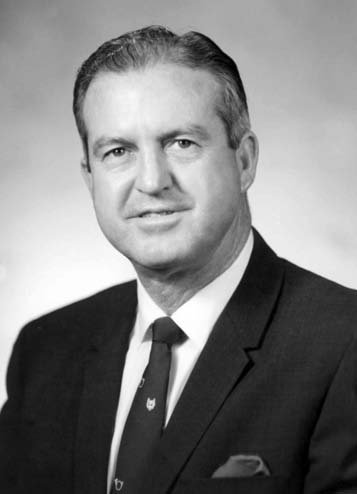
The author, James P. Barnett, provides an “up close and personal” view of these early foresters and pioneers in the South.  He notes historical events, but the most interesting parts are the stories about some very good people. Mind you, most of them were rule breakers and independent spirits, attention-getters who knew that the work of “selling” reforestation was very important.  Consider Charles H. (Charlie) Lewis, Jr. (left) who was considered a master of public relations.  He’s remembered for being able to “recite the returns on investment in reforestation and punctuate it by throwing seedlings into the audience. He had his own version of a striptease where he would remove all items that were not made from a forest product.”
It’s not too soon to reserve a forest cabin for the fall, and I’m looking forward to waking up to the sound of wind rustling the trees.  Future visits to the forests will be more meaningful now that I know of those who preserved the place for me and my family.  You can find more information about Faces of the Past and read it here or track it down at a library.


Studying the Politics of Militant Islam in Southeast Asia

May 23, 2011

Regular readers of this blog know that I’m interested in international politics and global strategic issues, among many, many other things (as a reader, I’m a total magpie – and proud of it!). Since the recent unlamented demise of Osama bin Laden, the issues of terrorism and Islamic militancy are back in the news, but sometimes only superficially. Whole areas of the world continue to be ignored by the media, or appear to be on their back burner.

That’s why a book like A Muslim Archipelago: Islam and Politics in Southeast Asia, from the National Defense Intelligence College, is so illuminating. It provides both historical perspectives and contemporary insights into the origins and political position of Islam in Indonesia and its various components, Malaysia, Thailand, and the Philippines. Islam in Indonesia, for example, has assimilated many characteristics of Hindu and animistic beliefs, making it vastly different than the austere Wahabism of Saudi Arabia or the fundamentalism of the Taliban. The book also points out that places like Acheh in Indonesia and the southern region of Thailand were independent Muslim polities until relatively recent times, resulting in a potent blend of religion and regionalism that sometimes explodes into insurrection. America’s own experience with the Moros of the Philippines in the aftermath of the Spanish-American War is only one example – and the Moros are still challenging the Filipino state today.

A Muslim Archipelago is also a lucidly written guide to the bewildering proliferation of militant groups. as in many extremist political movements, factions and splits are common. Jemaah Islamiyeh, Laskar Jundallah, and Laskar Jihad all appear within a few pages of each other in the section on Indonesia, but the book does a good job of differentiating their aims and actions. When (and I’m afraid it’s not “if”) the next flare-up of  insurgency or terrorism crops up in Southeast Asia, this book will provide the context within which to explicate the issues and personalities involved.

I hope policy makers and strategists, and political leaders around the world can benefit form the information in this excellent book – it’s in all of our best interests if they do. You can browse through it here or here (where you can also order it as an eBook!), get your own copy here, or find it in a library.


Through a Fish’s Eye

May 18, 2011

Guest blogger Tina Perantonakis whets our appetite for seafood and sustainability.

Every time I visit my local grocery store, I’m tempted by the fish and shellfish on display in the seafood case—wild-caught salmon from Alaska, grouper from Florida, catfish from North Carolina, and my favorite, local crabs from the Chesapeake Bay, are just a few examples.  As much as I enjoy most types of seafood, lately I’ve been purchasing fish and shellfish that originate from the safest and most sustainable habitats.

NOAA Fisheries and the National Fish Habitat Board recently published a book that undoubtedly will  help me learn more about aquatic habitats, the environment, and fisheries. The book, Through a Fish’s Eye: The Status of Fish Habitats in the United States 2010, provides an environmental assessment of estuaries and rivers in the United States.  The assessments are supplemented by beautiful color photographs and informative graphs and charts. The book also includes a helpful chapter, “How to Read and Understand This Report,” which describes the methodologies used for the assessment. 

Since I live in the Chesapeake Bay watershed, I first read the Fish Habitat assessment for theMid-Atlantic States.  Sadly, the report concludes the bay has “a very high risk of current habitat degradation…” and details the human activities that have an effect on fish habitats. The assessments for each region do end on a hopeful note by highlighting public and private conservation projects aimed at reversing damage already done.  Since reading the report, I’ve become more conscious of how my daily activities affect the Bay.  I was even inspired to tackle more Bay-friendly projects around my house, including installing an additional rain barrel to capture rain water and planting native trees in my yard.      

If you’d like to learn which varieties of U.S. seafood are the most sustainable, visit NOAA’s wonderful Fish Watch webpage here.  Through a Fish’s Eye: The Status of Fish Habitats in the United States 2010 can be purchased here or located  in a library here.


The Secret History of Invisible Ink, Part 2: Invisible Writing Made Visible

May 16, 2011

In my last post, I mentioned that the Government Printing Office (GPO) played an important role during World War II in preventing prisoners of war from using invisible inks to send intelligence back to the Axis powers. Here’s the story of that secret battle fought by the paper experts at GPO.

From late 1942 to mid-1946, the United States experienced an unprecedented influx of almost a half-million German, Italian, and Japanese prisoners of war. They were in a position to damage the war effort through attempts at escape and, based on prior experiences in World War I with German prisoners of war, the possibility of espionage.

Since the Geneva Convention mandated that prisoners of war could write home, significant information on prisoners’ locations and labor activities could be transmitted through the use of invisible or sympathetic inks made from such common substances as lemon juice, milk, washing soda, baking soda, starch solution, and even human urine. The Convention also severely limit­ed the use of heat and chemicals to detect secret messages on such letters.  The War Department turned to GPO’s  chemists (see photo above) for an answer.

After extensive tests, GPO’s experts devel­oped a paper base with a silicate or clay coating. The coating contained a powder or dyestuff that would react to moisture or any acid water solution by turning green. The paper was called Sensicoat. This paper’s heavy 56-pound weight, high cost, were negative factors, so GPO then developed a lighter, uncoated, and more economical paper, Analith. After this paper went into production, secret messages to the Axis were greatly reduced. It was a reduction noticed and acted upon by German intelligence.

American censors noticed something very interesting about packages of food and clothing addressed to German prisoners as 1944 passed the halfway mark. A small amount of putty-like material about size of a kitchen match head began to turn up in various places of concealment. Repeated tests showed that the putty-like material was a “dry ink.” After several conferences with the wartime Bureau of Censorship regarding this problem, GPO’s chemists began work on a new paper, bearing in mind that it also would have to retain its sensitivity to fluid invisible inks. The result was a coated sheet processed with a water-sensitive formula and with great sensitivity to the detection of all types of dry inks

By 1945, more than 29 million sheets of the new stationery had been ordered at $1.04 per thousand and GPO had blocked a potentially dangerous flow of in­formation toAmerica’s enemies. It was an achievement shrouded in wartime secrecy, but one gratefully acknowledged by those who knew about the technical difficulties involved.

For more GPO history, go here.


The Secret History of Invisible Ink, Part 1

May 12, 2011

When I was a kid, I could write in invisible ink – really! Take some lemon juice, apply to paper with a brush or stick, and then heat over the light bulb in one of our living room lamps. Voila! Brown lettering would appear on a blank white sheet of paper. A bit unsophisticated perhaps, but it worked. I didn’t really have any secrets to smuggle past the authorities – it was the mere fact of writing invisibly that made it so cool.

Now here I am, all of these years later, still fascinated. A recent news item from the Central Intelligence Agency caught my eye – “CIA Declassifies Oldest Documents in U.S. Government Collection.” The subject of these mysterious papers, which date back to 1917 and 1918: invisible inks! I had to check it out.

The CIA describes these timeworn items succinctly and well: “One document outlines the chemicals and techniques necessary for developing certain types of secret writing ink and a method for opening sealed letters without detection. Another memorandum dated June 14, 1918 – written in French – reveals the formula used for German secret ink.” My favorite is document number 6: Invisible Photography and Writing, Sympathetic Ink, Etc., a four-page pamphlet compiled by Theodore Kytka, identified as “Handwriting Expert, San Francisco, Cal.” and “printed by the San Francisco Division [of what, I wonder? It doesn’t say] for the information of Post Office Inspectors.”

According to the CIA, only recently have advances in technology made these various formulae obsolete, spy-wise. Among the secrets: “A German Formula. Take one ounce of alum and one ounce of white garlic juice. Write with a quill and on heating the paper the letters become very legible and cannot  be removed by salt water application.” Then there’s “Disappearing Ink. Take a weak solution of starch, tinged with a little tincture of iodine. The bluish writing will soon fade away.” Boy, is my mother lucky I didn’t latch onto this information – our kitchen would have been a disaster area!

Not only is this a really great story, it also ties into GPO’s 150th anniversary in a very interesting way. During World War II, our scientists helped to thwart the use of invisible inks, like those described above, by Axis prisoners of war. In my next post, I’ll tell that story. Stay tuned!


The Civil War: 150 Years Later

May 9, 2011

Guest blogger Kim Dutch remembers the bloodiest conflict in American history.

This year is the 150th anniversary, or the Sesquicentennial (which I’m still having trouble pronouncing!), of the Civil War.  In that spirit, there are very few topics which bind us more than wars that were fought that eventually made our nation greater.  I was fortunate enough to grow up with a war history buff in the family and was particularly fascinated by the Civil War.  It amazed me how brothers fought brothers, families were divided, and that each side had such fierce loyalties.  Men and women sacrificed with no further thought or gain than “This is my duty and my honor to serve” – and sacrifices were made by all sides. 

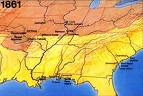
The Civil War at a Glance” tells the story in a poignant and entertaining series of break downs.  The brochure is organized yearly using maps and chronologies.  It begins with the Eastern Theater in 1861, when Northerners called it the War of the Rebellion and the Southerners deemed it the War Between the States.  Regardless, it resulted in “pitting two vast sections of a young and vigorous nation against each other.”  For the next four years, the Union forces would struggle to get to Richmond, the Confederate capital.  Most of that fight would take place between Washington and Richmond – there’s even a breakdown by State and number of battles thought to have been fought in each.  The author lays out the path the rest of the war took in the Western Theater, too, until the end in 1865. Along the way the battles and campaigns are summarized succinctly and are easy to follow so you can get a great sense of what occurred.   It concisely explains how some battles were pivotal, the paths and strategies used to win (or fail), and the men who led them.

The author quotes Mark Twain, who said the war had “uprooted institutions that were centuries old … transformed the social life of half the country, and wrought so profoundly upon the entire national character that the influence cannot be measured short of two or three generations.”  I’d like to think that those factors since have been transformed us into a greater nation with better rights and civil liberties for all.

You can find a plain text version at http://www.pueblo.gsa.gov/cic_text/misc/civilwar/civilwar.htm.  But what REALLY stood out was a colorful and user friendly online site, http://www.nationalatlas.gov/articles/history/a_civilwar.html, which has a wealth of information.  It has an interactive feature that allows you to create maps based on State boundaries and links throughout the site for more information about people, dates, and places. 

If you want your own personal copy, you can order it here.If you would like printed copies in packages, visit the GPO Online Bookstore. The folder makes for a handy and quick reference resource for individuals and schools and other groups.  Also, it’s easy to bring along if you’re actually visiting the areas and want to have the information and timelines on hand.

There’s no shortage of information on the Civil War out there, but it’s nice to have it summarized for those of us who may have forgotten some of our history lessons…not me, of course!

 For more celebrating and commemorating: The National Park Service has an Internet page dedicated to the Civil War’s 150th anniversary, http://www.nps.gov/civilwar150, where you can find further publications, activities, and parks – it even has a site where you can search for individual soldiers.  GPO has also put together a special sale of Civil War publications in its Special Collections section, http://bookstore.gpo.gov/collections/civilwar.jsp, to honor the occasion.  I think you can never have enough recommendations and amazing stories about this war!


Fun with the Census

May 4, 2011

Guest blogger Ingrid Reyes-Arias has some Census tips for kids of all ages.

As a child, I remember using interactive learning programs on the Internet, like “The Oregon Trail.” Nowadays information is even more readily available, allowing us to spend more time learning and less time researching. For me, the best way to learn is still interactively.  That’s why it delights me to see the many online initiatives taken by Federal Government agencies to teach valuable skills to children. These agencies have created fun and interactive teaching materials targeted to kids that can still be used by adults like me – or you!  It’s a great way to have some fun and learn about our complicated and fascinating world.

For example, the U.S. Census Bureau has created Census for Kids, an interactive Web site for children.  The introductory portion of this site focuses on explaining the various U.S. censuses.  It shows the different types of items the Bureau counts when collecting census data, such as children, adults, pets, and houses.  In addition, Census for Kids has an interactive United States map with data on population, geography, and business for each state – all of which can be useful when completing a project for school or learning fun facts to become a more informed citizen.  After studying the facts, children can take quizzes to test their knowledge.  Census for Kids also has memory games and word finds, which I always enjoyed in school myself!

Give it a try! The next time you find yourself figuring out how to entertain your child or student, start by visiting this Web site – and maybe you’ll learn something as well!


Navy and Marine POWs in Vietnam

May 2, 2011

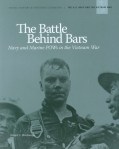
For some time now, the Naval History & Heritage Command has been producing concise studies of the Navy’s role during the Vietnam War. In previous posts, I’ve blogged about Navy Medicine in Vietnam and The Approaching Storm, the latter covering the decade-long run up to the introduction of combat troops in 1965. Today’s subject is The Battle Behind Bars: Navy and Marine POWs in the Vietnam War. The author, the late Stuart Rochester, was particularly well qualified to write on this subject, since he was the co-author of what must be considered the definitive account of POWs in Vietnam – Honor Bound: American Prisoners of War in Southeast Asia, 1961-1973 – published by the Army’sCenter ofMilitary History.

A personal note:This is the first time I’ve written about a book whose author I knew personally. Stuart and I worked together for years, on and off – he as deputy and then chief historian at the Pentagon’s Historical Office and me as a GPO marketing contact for his office’s books. We talked mainly by phone, although we did meet in person a couple of times. He was great to work with, a fine scholar, and I regret he wasn’t able to enjoy his position of chief historian longer before his untimely death from cancer in 2009.

The Battle Behind Bars, as the subtitle indicates, focuses on Navy and Marine POWs. Most of the Navy personnel captured during the war were pilots, so they formed a close-knit group of like-minded individuals. One exception was Seaman Apprentice Douglas B. Hegdahl, who was swept overboard from the missile cruiser Canberra and picked up by North Vietnamese fishermen. In a terrific sidebar, the book describes the incredulity of Hegdahl’s captors when he told them how he had come to be swimming in the Gulf ofTonkin – they understandably found his story so incredible that they assumed he was a spy! Once they accepted that he was a raw recruit, an enlisted man, and had trouble seeing due to the loss of his glasses in the water, he became a kind of camp mascot, perceived as not that bright. In realty, he was smart, alert, and able to serve as a secret mailman for other prisoners under the noses of the guards. He also had a retentive memory that let him memorize a huge amount of information about other POWs, which he revealed to the Navy after his early release by the Vietnamese.  

Another sidebar discusses the use of a “tap code” by Navy POWs to communicate via their cell walls. Initially a simple code, it was changed often to prevent detection, to the point where Defense Intelligence Agency personnel had difficulty in decoding some of the samples the prisoners brought back after their release.

It wasn’t all movie derring-do, however. The book details the poor conditions, attempted ideological indoctrination, and sometimes brutal treatment of prisoners in North Vietnam and the even worse situation of POWS in the South, where they shared the miserable living conditions of their Viet Cong captors. The author is fair-minded enough to point out instances, such as in the area of medical treatment, where the Vietnamese often did provide decent care, albeit under primitive conditions. Overall, though, captivity in Vietnam was a prolonged ordeal which, even as conditions eased after 1970, meant years of misery for American POWs.

This is a fine study of a controversial subject and a fitting capstone to the career of a talented scholar. You can get a copy of The Battle Behind Bars here or find it in a library here.


Partnering in Latin America’s Defense

April 27, 2011

Anyone reading the international news these days knows about the turmoil currently engulfing a number of nations in the Middle East. In fact, for the past decade, it’s hard to think of a time when the headlines weren’t about some hot spot or another in that volatile part of our world. This wouldn’t surprise the Latin Americanists among us; it sometimes seems that the Southern Hemisphere is terra incognita for the media.

That’s one reason why Partnership for the Americas: Western Hemisphere Strategy and U.S. Southern Command is so refreshing. This new book from the National Defense University, written by Admiral James G. Stavrides, formerly in charge of the Southern Command, focuses on the nations of Latin America and the Caribbean as if they are more than just “America’s backyard” – a phrase that the author dislikes intensely. He sees this area as “our shared home” – shared with nations that take enormous pride in their histories and cultures and sometimes view their large North American co-tenant with some misgivings. Partly this is due to another misconception: “all the countries down there are pretty much the same.” Partnership for the Americas is adamant that the diverse languages and cultures in the hemisphere all deserve greater study and respect.

In this post-Cold war era, concerns about subversion have been replaced by what the book sees as the real issues – gangs, drugs, and crime. After citing some appalling statistics about the international drug trade as it affects the Southern hemisphere, it points to developments in trafficking that require more than a local or even regional response. Take, for instance, the SPSS, or self-propelled semi-submersible (left). These drug-transporting vessels, about 60 to 80 feet long, transport tons of cocaine, are almost invisible from any distance, and  designed to be scuttled at their destination or if intercepted by any military or police vessels. It’s easy to see how the Navy might be helpful here!

Partnership for the Americas also focuses on the need to be aware of human rights issues, the role of Southern Command personnel in health care and humanitarian relief efforts, and innovation in the way the military interacts with other nations to accomplish mutually desirable aims. It’s a thoughtful book that policymakers, members of the military, and anyone interested in this part of the world could benefit from reading. You can browse through it here, get a copy here, or locate it in a library.


The History and Legacy of the Space Shuttle

April 25, 2011

Did you know that Rush and Judy Collins both wrote songs about the Space Shuttle? That excess Shuttle propellant is used in a small device that burns through and safely ignites the explosives within land mine casings? That Varicella-Zoster virus, the causative agent of chicken pox and shingles, appeared in the saliva of asymptomatic astronauts while in space, leading to development of a rapid, sensitive test that doctors could use to diagnose shingles and facilitate early antiviral therapy? These are just a few of the remarkable facts packed into a spectacular new book from NASA: Wings in Orbit: Scientific and Engineering Legacies of the Space Shuttle. Published to coincide with the ending of the Space Shuttle program, Wings in Orbit is a beautifully illustrated and information-filled collection of essays on just about every aspect of this long-lived and amazingly productive scientific and technical achievement.

After a through review of the history of the Shuttle program, including the Challenger and Columbia accidents and the role of the Shuttle in national security, Wings in Orbit goes on to cover its engineering aspects, scientific discoveries, social, cultural, and educational legacies, industries and spin-offs), and testimonies from the famous and not so famous about the Shuttle and its role in human spaceflight.

I’m not a real space buff, but I found this book totally absorbing. Also, it’s profusely illustrated with color photos and diagrams, although the photo that most intrigued me was totally monochromatic – a shot of Mt. St. Helens just after the colossal eruption of May 18, 1980. Absent the caption, I would have supposed it to be a photo of the moon or Mars – a striking tribute to the power of nature and the unblinking eye of the Space Shuttle.

You can get a taste of Wings in Orbit here, purchase a copy here (and I understand that at least one major book chain may be stocking it), and browse in a copy at a library.


West Side Story Project Toolkit: Crime Prevention on a New Stage

April 20, 2011

Guest blogger Jana Sabol looks at how police and kids can find common ground on the stage of a classic American musical

Many of us are familiar with the plot of West Side Story, the award-winning adaptation of Romeo and Juliet. Set inNew York City in the mid-1950s, the story revolves around the rivalry between the Jets, a white working-class gang, and the Sharks fromPuerto Rico. The rival gangs battle for territory and respect as a romance forms between a Jet and the sister of a Shark.

Working off the theme of West Side Story, the U.S. Department of Justice Office of Community Oriented Policing Services (the COPS Office) has created a toolkit to address youth violence and youth-police relations. Schools across the country perform their own adaptations of the class West Side Story every year, so it seems like a great next step to bring these tool kits into schools and communities to help address the issues of gang prevention, youth–police relations, and cultural conflict. For those unfamiliar with the musical, the toolkit not only provides the tools to reduce conflict, solve problems, and build relationships but also the opportunity to experience musical theatre.

The West Side Story Project Toolkit: Crime Prevention on a New Stage consists of a set of 5 booklets, a CD, and a DVD. Incidentally, GPO’s own Creative Services group designed and developed the toolkit brand/logo and created a kit folder for the training and guidance materials. It’s a great opportunity to get a community involved in collaboration with kids, police, and local arts groups to curb youth-violence and improve youth-police relations, while at the same time introducing live musical theater to those who previously were unacquainted with it. You can get your copy here or find it in a library.


All-American Ethnic Music: Reels, Polkas, Klezmer, Cajun, and More

April 18, 2011

Several years ago, I was standing in line to pay for some books at a used book sale. A man ahead of me had one of those two-wheeled folding shopping carts full of LPs. He was explaining to another person in the line that he was a musicologist and most of the records in the cart were for his colleagues. He then said that his own specialty was Jewish music of South America. It was a revelation to me that there was such a musical niche, although I don’t know why I was so surprised. After all, I’m ethnic myself – Scottish on my father’s side and Polish on my mother’s – and all of my grandparents were born overseas. I never heard much Scottish music growing up, except bagpipes, but my hometown and surrounding areas of northern New Jersey had enough Polish-American communities to support at least some Polish-language programming, including plenty of polka music, and not just “Who Stole the Kishka?”

Maybe my own ethnic roots explain my interest in Ethnic Recordings in America: A Neglected Heritage, a Library of Congress American Folklife Center gem from the Government Book Talk out-of- print horde. This pioneering effort in the field includes an introduction to recorded ethnic music beginning in the 1920s, both major labels (Victor,Columbia, and Edison) and independents (including Gaelic [Irish], Italianstyle [Italian], Panhellion [Greek], La Patrie [French-Canadian], and Macksoud [Arabic], and many more). It also traces ethnic recording history in the U.S. After the big bust of the Great Depression, ethnic records boomed again in the later 1930s through the mid-1940s before becoming marginalized by assimilation, changing tastes, and the hard economics of the recording business. Yet pockets of traditional music, whether Tex-Mex, Cajun, or Finnish, still persist, and musicians now produce CDs or mp3s instead of vinyl records. Ethnic music even attracts non-ethnic musicians, who ring new changes on Balkan, Hawaiian, and Latino melodies – maybe even more so now than was the case in 1982, when this book was published.

Ethnic Recordings in America also features essays on Irish records, the great Mexican-American singer Lydia Mendoza, and yes, “The Sajewski Story: Eighty Years of Polish Music in Chicago.” Each essay is illustrated by rare photos of record labels, sheet music, and musicians of many ethnicities. Checklists and discographies also provide reference resources for those interested in probing deeper into the music and record collections of the Library of Congress and other archives. I didn’t have any luck finding the text via the Internet, but you can find copies through various used book sites, or in a library. As for me, it’s time to get in touch with my roots – but which roots? – Alex Beaton or Frankie Yankovic? Only in America!