A Force Behind ‘Total Force’

December 11, 2015

December 13th is recognized as the birthday of the National Guard. A historic military organization that began in 1636 as a Massachusetts colonial regiment, it is now the oldest constituent of the U.S. Armed Forces. You could say that it’s the grandfather of citizen-soldier reserve components such as the Air National Guard and Air Force Reserve.

With that birth story in mind, let’s turn our heads to AATC, a U.S. Air Force aircraft test facility located in Tucson, Arizona. It’s the subject of a gov pub entitled “Relevance Through Innovation: The History of the Air National Guard-Air Force Reserve Command Test Center (AATC).” It is an innovation hub for airmen and civilians from Air National Guard, Air Force Reserve, and the Air Force to find “cost-effective but cutting edge technology to improve the ARC’s combat capability and add value to the Total Force.”

008-070-00866-1The book details the testing facility’s inception, workforce challenges, leadership changes, and milestones. Over the years, AATC has endeavored to use new and old tech approaches to produce combat capability improvements. The mettle of a modernized mission-ready fleet is tested at this highly functional proving ground.

Author David P. Anderson writes of AATC’s extensive history: “It illustrates the true spirit of innovation that helped it acquire and sustain operation relevance to the Air Force.” When you read the book, you begin to appreciate how the facility represents more than just testing and technology. Several chapters touch upon the many years it took for AATC to cultivate its strengths and overcome the limitations of bureaucracy.

The facility is a success story of military transformation. Through testing and evaluation, AATC equips a fighting force to protect and defend the United States. Talk about a considerable force behind ‘Total Force.’

How do I obtain this publication?

Shop Online Anytime: You can buy eBooks or print publications —with FREE Standard Shipping worldwide— from the U.S. Government Online Bookstore at http://bookstore.gpo.gov.

Shop our Retail Store: Buy a copy of any print editions from this collection at GPO’s retail bookstore at 710 North Capitol Street NW, Washington, DC 20401, open Monday–Friday, 9 a.m. to 4 p.m., except Federal holidays, Call (202) 512-0132 for information or to arrange in-store pick-up.

Order by Phone: Call our Customer Contact Center Monday through Friday, 8 am to 5:30 pm Eastern (except US Federal holidays). From US and Canada, call toll-free 1.866.512.1800. DC or International customers call +1.202.512.1800.

Visit a Federal depository library: Search for U.S. Government publications in a nearby Federal depository library. You can find the records for most titles in GPO’s Catalog of U.S. Government Publications.

About the author: Our guest blogger is Chelsea Milko, Public Relations Specialist in GPO’s Public Relations Office.


‘A Date Which Will Live in Infamy’: Remembering Pearl Harbor

December 7, 2015
Battleship USS Arizona on fire and sinking (Image sources: archives.gov)

Battleship USS Arizona on fire and sinking (Image source: archives.gov)

Moments before 8 a.m. on December 7, 1941, the United States was ‘suddenly and deliberately attacked.’ Hundreds of Japanese fighter planes and bombers launched a surprise assault on American soil at Pearl Harbor in Hawaii. The volley on the U.S. naval base was swift and devastating: 2,403 Americans were killed, and another 1,178 were wounded; American battleships sunk; other ships irreparably damaged; and almost 200 U.S. aircraft were destroyed.

President Roosevelt delivers his "Day of Infamy" speech to a joint session of Congress on December 8, 1941. (Image source: archives.gov)

President Roosevelt delivers his “Day of Infamy” speech to a joint session of Congress on December 8, 1941. (Image source: archives.gov)

The next day, President Franklin D. Roosevelt asked Congress to formally declare war against Imperial Japan. It was then that Roosevelt spoke those famous words, proclaiming December 7, 1941 “a date which will live in infamy.” America had finally joined WWII. That momentous week of loss and defiance took place seventy-four years ago this month. The GPO makes available a variety of gov docs that reference the historic Pearl Harbor attack.

GPO’s Federal Digital System provides free access to a number of Federal Government documents related to Pearl Harbor:

Visit GPO’s Catalog of U.S. Government Publications for documents about Pearl Harbor:

And finally, shop the GPO online bookstore World War II collection.

HOW DO I OBTAIN THESE RESOURCES?

Click on the Links: For the free resources, click on the links above in the blog post.

Shop Online Anytime: You can buy eBooks or print publications —with FREE Standard Shipping worldwide— from the U.S. Government Online Bookstore at http://bookstore.gpo.gov.

Shop our Retail Store: Buy a copy of any print editions from this collection at GPO’s retail bookstore at 710 North Capitol Street NW, Washington, DC 20401, open Monday–Friday, 9 a.m. to 4 p.m., except Federal holidays, Call (202) 512-0132 for information or to arrange in-store pick-up.

Order by Phone: Call our Customer Contact Center Monday through Friday, 8 am to 5:30 pm Eastern (except US Federal holidays). From US and Canada, call toll-free 1.866.512.1800. DC or International customers call +1.202.512.1800.

Visit a Federal depository library: Search for U.S. Government publications in a nearby Federal depository library. You can find the records for most titles in GPO’s Catalog of U.S. Government Publications.

About the author: Our guest blogger is Chelsea Milko, Public Relations Specialist in GPO’s Public Relations Office.


Wildlife Conservation Day: Read About a Refuge

December 4, 2015

Where Steens Mountain and Blitzen Valley meet in Southeast Oregon, a prolific natural legacy lives in the form of Malheur National Wildlife Refuge. Such places of preservation take on special meaning come December 4th. That day is Wildlife Conservation Day, celebrated annually since the U.S. Department of State declared it so in 2012. In time for the observance, this blog spotlights a government book about the ecological and archeological abundance of one Oregonian sagebrush-covered basin.

024-001-03629-1The paper bag-brown exterior of the U.S. Department of Interior Fish and Wildlife Service publication Malheur’s Legacy: Celebrating a Century of Conservation, 1908-2008 betrays nothing of the beauty within. Open it up and you’ll find part picture book, part human history. Like so much of America’s landscape, Malheur’s grassy marshland has a lush story to tell.

Well before the refuge was formally gazetted in 1908, prehistoric climatic changes blueprinted the ecosystem. Undulating water flows created a meadowland for migratory wildfowl. Early Native Americans hunted off the spring-watered land. Many revolutions of the sun later, wagon trains of settlers wheeled in. Ranching transformed the wetlands. Hunters sourcing high fashion hat plumes nearly snuffed out the native bird species.

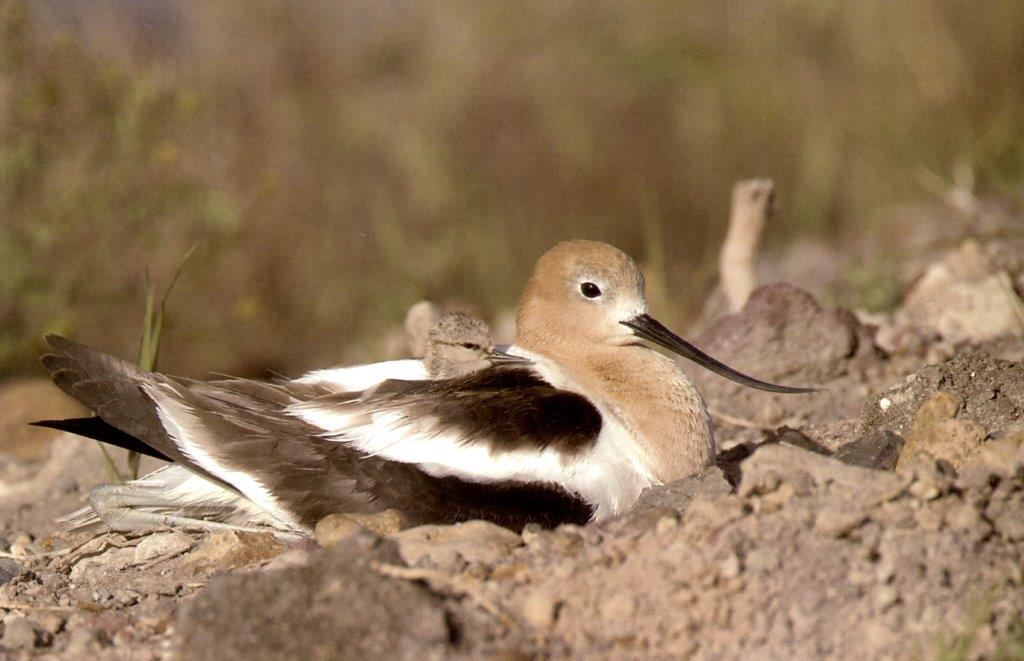
American avocet with chick (excerpt from publication).

American avocet with chick (excerpt from publication).

Conservationists cried fowl (terrible pun intended). Believing that “spread at our feet was a domain for wild fowl unsurpassed in the United States,” they passionately propositioned President Theodore Roosevelt to designate the hunted landscape a wildlife refuge. And now, over 100 years later, the Malheur National Wildlife Refuge is a protected home for over 320 bird species including the great egret, Northern pintail drake, and American avocet.

During the Great Depression, scores of young men of the Civilian Conservation Corps encamped in the area and completed numerous improvement projects. In the later half of the 20th century, refuge staff began digging into the long haul work of maintaining a premier wildlife habitat. Conservation management challenges were faced head on and bird homes were successfully safeguarded. Many of those protected waterfowl are pictured in the last 1/3 of the book.

Mahlheur’s Legacy is a story about nature, sure. But also nurture. It took a lot of manpower to set aside a land shaped by the past in order save it for the future. I hope you can set aside some time to read about it.

How do I obtain this publication?

Shop Online Anytime: You can buy eBooks or print publications —with FREE Standard Shipping worldwide— from the U.S. Government Online Bookstore at http://bookstore.gpo.gov.

Shop our Retail Store: Buy a copy of any print editions from this collection at GPO’s retail bookstore at 710 North Capitol Street NW, Washington, DC 20401, open Monday–Friday, 9 a.m. to 4 p.m., except Federal holidays, Call (202) 512-0132 for information or to arrange in-store pick-up.

Order by Phone: Call our Customer Contact Center Monday through Friday, 8 am to 5:30 pm Eastern (except US Federal holidays). From US and Canada, call toll-free 1.866.512.1800. DC or International customers call +1.202.512.1800.

Visit a Federal depository library: Search for U.S. Government publications in a nearby Federal depository library. You can find the records for most titles in GPO’s Catalog of U.S. Government Publications.

About the author: Our guest blogger is Chelsea Milko, Public Relations Specialist in GPO’s Public Relations Office.


Christmas Tree Manual, O Christmas Tree Manual, How Useful Is Your Guidance

December 1, 2015

That’s not the radio you just heard. It’s a fresh holiday beat from a Federal Government employee! Before you plug your ears or throw a cup full of egg nog at this blog post, please close your eyes and take a moment to think about the poor Christmas trees-in-training out there.

As they grow into canvases fit for a festoon of tinsel and popcorn garland, some Christmas trees are beset by damaging agents and mottled by disease. Insects, mites, fungi, and nematodes can lay waste to hearty spruce, pine, and fir. That all sounds so dire. Thankfully, it’s preventable and treatable. And there’s a government resource for that!  Ok, you can open your eyes now.

001-000-04764-7The United States Department of Agriculture (USDA) Forest Service’s Christmas Tree Pest Manual shows how to diagnose and control damaging Christmas tree pests. This tidy publication provides easy-to-use guidance to ensure that Christmas trees of the North Central and Northeastern regions of the United States are vigorously fit for their wintry spectacle.

A read thru of the varied afflictions listed in the manual will renew your appreciation for the health threats trees must overcome to arrive at your local home improvement store parking lot. Take the bagworm for example. While they might serve for a fitting ingredient in a wizardly potion, bagworm larvae thin foliage and render a Christmas tree unfit for sale.

In case you’re worried the topic of Christmas tree pest management is not in your wheelhouse, the manual includes some comforting language in the introduction. “You do not have to be a pest specialist to use this information. The manual was written in everyday language so that anyone with an interest in Christmas trees can read and understand it.” Whew! Now you can confidently pick up Christmas Tree Pest Manual and tell those loathsome yellow-bellied sapsuckers good riddance.

001-000-04767-1And if you’d like to take your pest manual reading to the next level, the USDA’s Major Forest Insect and Disease Conditions in the United States: 2013 is a concretely good deep-dive.

With early identification and control, injuries to stem, root, branch, and shoot don’t have to be the four horseman of the Christmas tree apocalypse. Because a winter wonderland without healthy Christmas trees is no winter wonderland at all.

How do I obtain these resources?

Shop Online Anytime: You can buy eBooks or print publications —with FREE Standard Shipping worldwide— from the U.S. Government Online Bookstore at http://bookstore.gpo.gov.

Shop our Retail Store: Buy a copy of any print editions from this collection at GPO’s retail bookstore at 710 North Capitol Street NW, Washington, DC 20401, open Monday–Friday, 9 a.m. to 4 p.m., except Federal holidays, Call (202) 512-0132 for information or to arrange in-store pick-up.

Order by Phone: Call our Customer Contact Center Monday through Friday, 8 am to 5:30 pm Eastern (except US Federal holidays). From US and Canada, call toll-free 1.866.512.1800. DC or International customers call +1.202.512.1800.

Visit a Federal depository library: Search for U.S. Government publications in a nearby Federal depository library. You can find the records for most titles in GPO’s Catalog of U.S. Government Publications.

About the author: Our guest blogger is Chelsea Milko, Public Relations Specialist in GPO’s Public Relations Office.


Ben’s Guide to the U.S. Government: Free, Educational Content from GPO for Children and Adults of all Ages

November 23, 2015

PrintIn 1999, the U.S. Government Publishing Office (GPO) launched its educational website, Ben’s Guide to U.S. Government for Kids. This year, GPO redesigned and revitalized the site with all new content and features, and it is now available to the public as “Ben’s Guide to the U.S. Government.”

The new site presents educational content on the workings of the U.S. Government and U.S. history, with a focus on civics. It features all new site content, a device-friendly infrastructure, and a modernized look and feel that has been optimized for an intuitive learning experience.

Ben’s Guide has three levels of Learning Adventures: Apprentice (ages 4-8), Journeyperson (ages 9-13), and Master (ages 14 and up). These represent the age ranges for the content but are also a historical reference to the longstanding apprentice program that is still in place at GPO today. The inspiration for the Ben character comes from Benjamin Franklin (1706-1790), who was an apprentice and printer in the early days of our country. Although best known for being one of our Founding Fathers, he drafted and distributed historical documents during the early years of our Nation. He’s an important figure at GPO, too, and his legacy of publishing information truly lives on in what we do today.

A new, interactive game, Branch-O-Mania, is available, which is not only fun, but educational, and tests knowledge of the three branches of the U.S. Government. Educators, parents, and students can also access free, printable activities that include Word Searches and Crossword Puzzles for various age ranges. Check out the game and printables here. Also included is a site glossary that includes over 80 terms and definitions related to the U.S. Government, as used on the website.

In 2013, GPO signed an official partnership with the American Association of School Librarians (AASL). Under the terms of the partnership, AASL volunteer school librarians agreed to review the educational content on Ben’s Guide to the U.S. Government for age-appropriateness. In addition, they utilized their expertise in curriculum development and educational initiatives to develop lesson plans to complement Ben’s Guide content.

Through ongoing communication and coordination with GPO, volunteers provided feedback on the educational content, called Learning Adventures, for the Apprentice, Journeyperson, and Master levels. They applied their knowledge of the presentation of information and instructional design to the specific age levels to improve and enhance comprehension of the material.

Select volunteers went the extra ‘knowledge’ mile and created lesson plans related to the content of Ben’s Guide. Educators can not only use the new Ben’s Guide to the U.S. Government in an educational setting, but can also consult ready-made lesson plans to integrate into their course curriculum. These lesson plans follow a structured rubric that sets forth the elements, standards, scenario, overview, assessment, and instructional plan. Lesson plans submitted by volunteers were reviewed and vetted by AASL before being officially accepted and published.

The lesson plans are archived and available on Ben’s Guide and at the Standards for the 21st-Century Learner Lesson Plan Database site. The AASL lesson plans are arranged into three groups: grades K-5, grades 6-8, and grades 9-12. All of the lesson plans are freely-available to the public and can be accessed and incorporated into the classroom setting.

Be sure to check out the new Ben’s Guide to the U.S. Government on your computer, tablet, or device of choice. Let us know what you think. We will continue to enhance the site by adding new content and design enhancements based on user feedback.

You can find other resources related to items featured in Ben’s Guide by clicking here or through any of these methods:

Shop Online Anytime: You can buy eBooks or print publications —with FREE Standard Shipping worldwide— from the U.S. Government Online Bookstore at http://bookstore.gpo.gov.

Shop our Retail Store: Buy a copy of any print editions from this collection at GPO’s retail bookstore at 710 North Capitol Street NW, Washington, DC 20401, open Monday–Friday, 9 a.m. to 4 p.m., except Federal holidays, Call (202) 512-0132 for information or to arrange in-store pick-up.

Order by Phone: Call our Customer Contact Center Monday through Friday, 8 am to 5:30 pm Eastern (except US Federal holidays). From US and Canada, call toll-free 1.866.512.1800. DC or International customers call +1.202.512.1800.

Visit a Federal depository library: Search for U.S. Government publications in a nearby Federal depository library. You can find the records for most titles in GPO’s Catalog of U.S. Government Publications.

About the authorKelly Seifert is the Strategic Communications Coordinator for GPO’s Library Services & Content Management division.


The Life & Death of JFK—A GPO Collection

November 19, 2015

“A man may die, nations may rise and fall, but an idea lives on.“ –President John F. Kennedy

35_john_f_kennedy[1]

John F. Kennedy was the 35th President of the United States (1961-1963), the youngest man elected to the office. (Image source: whitehouse.gov)

Just as JFK’s purposeful idealism moved and shaped our nation, his November 22nd, 1963 assassination was a defining moment in American history.

Amid the aftershock of that dreadful day, President Lyndon B. Johnson directed an independent commission to investigate Kennedy’s death. In 1964, GPO employees proofed, printed, and bound the official President’s Commission on the Assassination of President Kennedy, commonly known as the Warren Commission Report. Fascinating stories about the heavily secure production process and overwhelming public interest are presented in these two GPO videos:

https://www.youtube.com/watch?v=IoKPEVN7L1s

https://www.youtube.com/watch?v=jzyJyWBqd9E

JFK-Assassination_WARREN-COMMISSION-REPORTIn 2013, nearly 50 years after it was released to the public, GPO digitized the complete 889-page report and its 26 hearing volumes. The digitization effort was a very different task compared to the 235,000 report copies and nearly 5,600 sets of the hearings originally printed! The free digital edition of the Warren Commission Report is available online through GPO’s Federal Digital System.

In addition, GPO makes available a variety of Kennedy gov docs. Click over to the GPO Bookstore collection for Federal publications about the life of the slain 35th president and his momentous 1000 days in office. Works on the Cuban Missile Crisis, founding of the Peace Corps (proud RPCV here!), and NASA’s manned space program await you.

From 1960s print to modern day digital, GPO’s information products are a permanent tribute to a presidential legacy imprinted on the annals of U.S. history.

How do I obtain JFK publications?

You can find official John F. Kennedy publications by clicking here or through any of these methods:

Shop Online Anytime: You can buy eBooks or print publications —with FREE Standard Shipping worldwide— from the U.S. Government Online Bookstore at http://bookstore.gpo.gov.

Shop our Retail Store: Buy a copy of any print editions from this collection at GPO’s retail bookstore at 710 North Capitol Street NW, Washington, DC 20401, open Monday–Friday, 9 a.m. to 4 p.m., except Federal holidays, Call (202) 512-0132 for information or to arrange in-store pick-up.

Order by Phone: Call our Customer Contact Center Monday through Friday, 8 am to 5:30 pm Eastern (except US Federal holidays). From US and Canada, call toll-free 1.866.512.1800. DC or International customers call +1.202.512.1800.

Visit a Federal depository library: Search for U.S. Government publications in a nearby Federal depository library. You can find the records for most titles in GPO’s Catalog of U.S. Government Publications.

About the author: Our guest blogger is Chelsea Milko, Public Relations Specialist in GPO’s Public Relations Office.


Gettysburg—Battle, Speech & Gov Doc

November 18, 2015

024-005-00196-4On a chilled November morning, holding a hand-scrawled copy of a well-crafted oration, President Abraham Lincoln spoke those iconic words, “Four score and seven years ago…”

Before Lincoln even penned one line of his immortalized Gettysburg Address, delivered 152 years ago at the dedication of the cemetery for the fallen, so much had happened earlier that summer. National Park Service’s work Gettysburg National Military Park, authored by Frederick Tilberg, describes the events that spawned both battle and address.

The attack-counterattack stratagem of commanding generals Robert E. Lee of the Confederate Army and George Gordon Meade of the Union Forces resulted in three days of struggle, shelling, and shattered bodies. Both sides bore heavy losses. Columns of valorous cavalrymen became matted fields of fallen blue and gray. Pickett’s Charge, Little Round Top, and the High Water Mark of the Confederacy marked the gore and glory of the Gettysburg campaign.

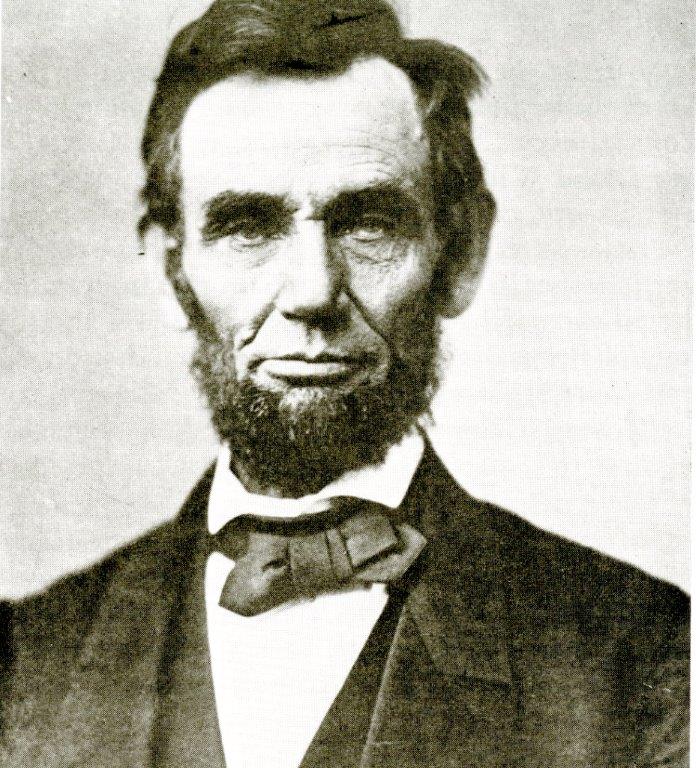
The Alexander Gardner portrait of Lincoln, taken 4 days before the Gettysburg Address.

The Alexander Gardner portrait of Lincoln, taken 4 days before the Gettysburg Address (excerpt from publication).

What makes this publication so distinct is that it draws a wider circle around the conflict. Beyond the battlefield maneuvers and artillery fire, those hellish days in the Pennsylvania farmland left a whirl of aftereffects. The work touches upon the burden of care shouldered by the war-weary townspeople and the establishment of the burial ground.

Included within the narrative are quite a few examples from the great gallery of artwork inspired by daring infantry assaults and cannonade. The gallantry is dazzling in the famous cyclorama painting “The Battle of Gettysburg” by French artist Paul Philippoteaux that forms the book’s cover.

In his famed speech, President Lincoln carefully expressed the crisis—and unfinished work—that confronted a divided nation. As the author writes, “Lincoln gave meaning to the sacrifice of the dead—he gave inspiration to the living.” The deeds of battle and the words of an American president resonate today as they did so long ago.

How do I obtain this publication?

Shop Online Anytime: You can buy eBooks or print publications —with FREE Standard Shipping worldwide— from the U.S. Government Online Bookstore at http://bookstore.gpo.gov.

Shop our Retail Store: Buy a copy of any print editions from this collection at GPO’s retail bookstore at 710 North Capitol Street NW, Washington, DC 20401, open Monday–Friday, 9 a.m. to 4 p.m., except Federal holidays, Call (202) 512-0132 for information or to arrange in-store pick-up.

Order by Phone: Call our Customer Contact Center Monday through Friday, 8 am to 5:30 pm Eastern (except US Federal holidays). From US and Canada, call toll-free 1.866.512.1800. DC or International customers call +1.202.512.1800.

Visit a Federal depository library: Search for U.S. Government publications in a nearby Federal depository library. You can find the records for most titles in GPO’s Catalog of U.S. Government Publications.

About the author: Our guest blogger is Chelsea Milko, Public Relations Specialist in GPO’s Public Relations Office.


The Benefits of Service for Our Nation’s Veterans

November 10, 2015

Service. Courage. Honor. Healthcare. You certainly won’t see that last word—healthcare—on a Veterans Day parade banner. But it belongs there nonetheless. For one important way the U.S. Government honors military service is by providing its Veterans first-rate health benefits and services. It’s the care they have earned.

051-000-00254-7 Guiding our nation’s Veterans and their families through the U.S. Department of Veterans Affairs’ (VA) health benefits and services network—America’s largest integrated health care system—is a job for Health Care Benefits Overview 2015 Edition, Vol. 2. The 50-page booklet states: “Enrollment in the VA health care system provides Veterans with the promise that comprehensive health care services will be available when and where they are needed.” Now that’s a guarantee worth reading about!

A few neat facts from the benefits overview: VA serves more than 8 million Veterans each year. Coverage is immediate, travels with recipients, meets healthcare law standards, and surpasses quality and effectiveness measurements. And VA offers a free transportation program for Veterans who face challenges traveling to and from health care facilities.

Our Mission Page 34 (003)

Click on image to enlarge

Of course, the publication includes the standard cut-and-dry FAQs on basic eligibility requirements, enrollment, copays, Medicare Part D prescription drug coverage, and the like. The comprehensive medical benefits package available to Veterans doesn’t stop there. Information on services such as community living centers, medical foster homes, geriatric evaluation, and home telehealth is part of the VA’s silver plate of world-class care.

In a way, this publication functions a bit like a magazine advertising modern, digital services: Veterans Crisis Line, My HealtheVet, eBenefits gateway, and the Veterans Canteen Service all have attention-grabbing ads. It’s a smart strategy. Meeting vets on the interwebs and connecting them to their VA medical benefits package is a necessary update to the care they have earned.

One particular statement, from a full-page dangling dog tag advert on page 34 (image above), provides the perfect ending to this post: “Thank you for your service. Now let us serve you.”

How do I obtain this publication?

Shop Online Anytime: You can buy eBooks or print publications —with FREE Standard Shipping worldwide— from the U.S. Government Online Bookstore at http://bookstore.gpo.gov.

Shop our Retail Store: Buy a copy of any print editions from this collection at GPO’s retail bookstore at 710 North Capitol Street NW, Washington, DC 20401, open Monday–Friday, 9 a.m. to 4 p.m., except Federal holidays, Call (202) 512-0132 for information or to arrange in-store pick-up.

Order by Phone: Call our Customer Contact Center Monday through Friday, 8 am to 5:30 pm Eastern (except US Federal holidays). From US and Canada, call toll-free 1.866.512.1800. DC or International customers call +1.202.512.1800.

Visit a Federal depository library: Search for U.S. Government publications in a nearby Federal depository library. You can find the records for most titles in GPO’s Catalog of U.S. Government Publications.

About the author: Our guest blogger is Chelsea Milko, Public Relations Specialist in GPO’s Public Relations Office.


Understanding Memory Loss with Two NIH eBooklets

November 3, 2015

A recent National Institutes of Health-funded study found that out-of-pocket health care costs for dementia are greater than for any other disease. Such a serious disease with a serious price tag calls for comprehensive, accurate information to answer specific questions.

The NIH National Institute on Aging Alzheimer Disease Education and Referral Center (ADEAR, an appropriately reassuring acronym) has got you covered. Given that November is Alzheimer’s Awareness Month, it’s a fitting time to peruse their two free eBooks—available in English and Spanish—on the topics of Alzheimer’s disease and memory loss.

9780160930157Understanding Alzheimer’s Disease

Forgetfulness happens to everyone. We all have those foggy moments when we misplace car keys or blank on a person’s name. When those occurrences worsen over time, a more serious problem may exist. This digital booklet plainly outlines AD causes, signs, treatment, research, and caregiver guidance. In addition, there’s a section on how to join clinical trials looking into prevention and treatment of AD and Mild Cognitive Impairment (MCI).

Understanding Memory Loss

For those dealing with age-related cognitive degeneration, medical terminology can cause a cloud of confusion. This booklet, and as well as the publication above, contains a simplified “words to know” glossary. It also addresses signs of serious memory problems, provides tips for coping with cognitive decline, and lays out the difference between forgetfulness and real memory impairment.9780160930133

Maybe you’re a health professional searching for current information on cognitive health and memory loss. Maybe you’re a caretaker looking to educate a loved one on what to do when they have trouble remembering. The knowledge journey for memory loss sufferers and their support network is not easy—minds are astir with questions and hearts weigh heavy with concern. But it’s really good to know that important dementia research conducted by the U.S. Government is just a few clicks away.

How do I obtain these FREE downloadable eBooks?

Shop Online Anytime: You can buy eBooks or print publications —with FREE Standard Shipping worldwide— from the U.S. Government Online Bookstore at http://bookstore.gpo.gov.

Shop our Retail Store: Buy a copy of any print editions from this collection at GPO’s retail bookstore at 710 North Capitol Street NW, Washington, DC 20401, open Monday–Friday, 9 a.m. to 4 p.m., except Federal holidays, Call (202) 512-0132 for information or to arrange in-store pick-up.

Order by Phone: Call our Customer Contact Center Monday through Friday, 8 am to 5:30 pm Eastern (except US Federal holidays). From US and Canada, call toll-free 1.866.512.1800. DC or International customers call +1.202.512.1800.

Visit a Federal depository library: Search for U.S. Government publications in a nearby Federal depository library. You can find the records for most titles in GPO’s Catalog of U.S. Government Publications.

About the author: Our guest blogger is Chelsea Milko, Public Relations Specialist in GPO’s Office of Public Affairs. 


Health in the United States—One Publication to Rule Them All

October 27, 2015

Health, United States, 2014, With Special Feature on Adults Ages 55 to 64; Health Statistics 2014 in BriefIn timely fashion for Health Literacy Month, the U.S. government has ONE HEALTH PUBLICATION TO RULE THEM ALL. Oh, sorry. Let me just turn off caps lock. Good…now where was I?

Health. Yes! Health, United States, 2014 from the Centers for Disease Control and Prevention (CDC) National Center for Health Statistics is the source code you need if you want to know the health status of a nation. This annual overview of trends in national health and well-being contains pages of eye-widening statistics on all manner of health conditions and behaviors. Sure, it’s an omnibus of charts and trend tables. But it’s also an education in the health determinants of Americans. No contrivance or filter here. Just plain ‘ol actionable data. A heap of it. So, I will pull out a few choice pieces.

Take the special feature that explores baby boomer health. This graying 55-64 age group is fast approaching the Medicare years and the assemblage of chronic diseases that come with it. The book states that the two leading causes of death for this group are cancer and heart disease. No surprise there. But what is rather interesting to note is that this pre-retirement age group is the most diverse of its kind ever. Of course, the CDC’s health statisticians are wise to consider those socioeconomic and demographic differences and how they relate to key health measures. That’s good data work, folks.

There’s one data set I’m sure we’re all interested in: life expectancy at birth. It’s a measure, according to

Life expectancy at birth

Click image to enlarge.

the publication, that is “often used to gauge the overall health of a population.” Americans are living longer—in 2013, the average age reached 78 for men and 81 for women.

There’s such a bounty of telling stats that a summary here can’t do justice. That’s why the CDC included a trusty In Brief companion to the encyclopedic volume. And if any data nerds out there want to comb through spreadsheets, each section includes links to reference materials.

There’s something refreshingly empowering about reading health information in raw form, to stare down the portrait of American health straight on. So go ahead. Take this set of health facts and figures—the one health publication to rule them all—and use it for good.

How do I obtain this publication?

Shop Online Anytime: You can buy eBooks or print publications —with FREE Standard Shipping worldwide— from the U.S. Government Online Bookstore at http://bookstore.gpo.gov.

Shop our Retail Store: Buy a copy of any print editions from this collection at GPO’s retail bookstore at 710 North Capitol Street NW, Washington, DC 20401, open Monday–Friday, 9 a.m. to 4 p.m., except Federal holidays, Call (202) 512-0132 for information or to arrange in-store pick-up.

Order by Phone: Call our Customer Contact Center Monday through Friday, 8 am to 5:30 pm Eastern (except US Federal holidays). From US and Canada, call toll-free 1.866.512.1800. DC or International customers call +1.202.512.1800.

Visit a Federal depository library: Search for U.S. Government publications in a nearby Federal depository library. You can find the records for most titles in GPO’s Catalog of U.S. Government Publications.

About the author: Our guest blogger is Chelsea Milko, Public Relations Specialist in GPO’s Office of Public Affairs. 


You Can See the Forest and the Trees: Wood Works from the USDA

October 22, 2015

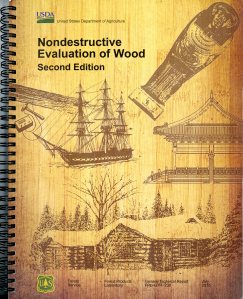
001-001-00704-8Wood you like to know more about tree and wood publications from the U.S. Department of Agriculture (USDA)? Then read on. And please forgive that starting pun.

In the USDA Forest Service Forest Products Laboratory’s 2nd edition of Nondestructive Evaluation of Wood, Robert J. Ross’ synthesizes a number of technical writings on several commercially available nondestructive evaluation (NDE) of wood technologies. NDE is the sensibly non-damaging science of assessing properties and applications of a material without mucking up its long-term usability.

Ross opens with an executive summary of the characteristics of this biologically and industrially rich material. It will leave you pretty much convinced that wood is the virtuoso of the plant world. The spiral-bound compilation continues on in several chapters, with each contributor highlighting the usefulness of their respective testing method. Spoiler alert: ultrasonic veneer grading is the coolest sounding evaluative technique ever.

Dense with authoritative knowledge from forest product technologist, engineers, and research scientists, this publication may have you thinking, “I never thought this knowledge existed but I’m sure glad it’s out there.” Case in point: chapter seven’s research titled Nondestructive Testing in the Urban Forest by Drs. Allision & Wang of the Unversity of Wisconsin, Madison. They attest to “body language” as a method to visually inspect the “presence of internal decay.” Don’t we all wish our own medical examinations were that easy!

Moving on…

001-001-00703-0If you like trees and you like maps, then you need to get your mittens on a copy of the USDA’s new and improved tree atlas The National Individual Tree Species Atlas, a.k.a. the Modeled Atlas, is the product of the Forest Service’s Forest Health Technology Enterprise Team. They used permanent plot data to represent the actual distribution of 264 species throughout the treed zones of the United States.

Each tree was statistically modeled to climate, terrain, soil, and imagery data sets. The result is an impressive collection of accurate, fine-resolution geospatial products. Thumb through the broad, matte pages and you’ll find beautifully mapped individuals from such august tree families as cypress, pine, maple, birch, walnut, elm, olive, and mulberry (can’t mention them all but tree names are awesome!).

Again, trees + maps = tree species atlas. Boom! Make room on your coffee table for it.

How do I obtain these publications?

Shop Online Anytime: You can buy eBooks or print publications —with FREE Standard Shipping worldwide— from the U.S. Government Online Bookstore at http://bookstore.gpo.gov.

Shop our Retail Store: Buy a copy of any print editions from this collection at GPO’s retail bookstore at 710 North Capitol Street NW, Washington, DC 20401, open Monday–Friday, 9 a.m. to 4 p.m., except Federal holidays, Call (202) 512-0132 for information or to arrange in-store pick-up.

Order by Phone: Call our Customer Contact Center Monday through Friday, 8 am to 5:30 pm Eastern (except US Federal holidays). From US and Canada, call toll-free 1.866.512.1800. DC or International customers call +1.202.512.1800.

Visit a Federal depository library: Search for U.S. Government publications in a nearby Federal depository library. You can find the records for most titles in GPO’s Catalog of U.S. Government Publications.

About the author: Our guest blogger is Chelsea Milko, Public Relations Specialist in GPO’s Office of Public Affairs. 


Our Native Flying ‘Cheetos’: Bee Basics from the USDA Forest Service

October 8, 2015

001-000-04765-5“The world as we know it would not exist if there were no bees to pollinate the earth’s 250,000 flowering plants.”

A sobering sentence straight out of Bee Basics: An Introduction to Our Native Bees, a joint publication from the U.S. Department of Agriculture (USDA) Forest Service and the Pollinator Partnership. Authors Beatriz Moisset, Ph.D. and Stephen Buchmann, Ph.D. provide a concise primer on the fundamentals and cyclical heritage of our ‘varied and valuable’ native bees.

You may know that bees are sociable, resourceful, and resilient. But did you know that some species are downright parasitically opportunistic? The cuckoo bee is a member of the exclusively parasitic Apidae family. Once it scouts out a potential host site, it furtively waits out of view until the nest is vacated. Then, in a one-two-punch move, the cuckoo bee takes up residence and its young eventually shovel down up any pollen, nectar, and larva in sight.

Buchmann’s highly detailed illustrations of these pixie pollinators show how each species’ morphology is engineered for precise pollination. Bees use wing vibration to shake off a pollen-packed anther like a polaroid picture. This “buzz pollination” is a popular dance in bee social circles. The southeastern blueberry bee uses the same technology to gorge itself on blueberry pollen. Another pollination prodigy is the megachilid bee. Gathering so much puffy yellow pollen on its abdomen, it resembles, as the authors amusingly write, “flying ‘Cheetos’ snacks coming in for a landing.”

beesorwasps

Can you identify a bee from a wasp? Excerpt from publication. Click image to enlarge.

The publication also details the homemaker behaviors of bees. The metallic-colored sweat bee is the consummate DIY designer. Nesting itself in the underside of freely-available detritus tree bark, it uses a saliva-pollen amalgam to lovingly tile the interior of its egg chambers. Some domesticating mother bees though the use of mass provisioning—storing up enough food in their brood cell nursery to sustain each larvae for the entirety of their development. New moms, take note!

Bee Basics is a great compliment to citizen science efforts to enrich and sustain a pollinator-friendly ecosystem. It concludes with a ecological call to action. The list of worrisome environmental realities are extensive: honey bee die-offs, shrinking native ranges, pesticide use, fungal infestations, and more. Protecting the ecosystem well-being of these minuscule pollinators requires a concerted conservation effort and a respect for the priceless services they provide. Bees have more than paid their dues to this planet. And for that, we are indebted.

How do I obtain this publication?

Shop Online Anytime: You can buy eBooks or print publications —with FREE Standard Shipping worldwide— from the U.S. Government Online Bookstore at http://bookstore.gpo.gov.

Shop our Retail Store: Buy a copy of any print editions from this collection at GPO’s retail bookstore at 710 North Capitol Street NW, Washington, DC 20401, open Monday–Friday, 9 a.m. to 4 p.m., except Federal holidays, Call (202) 512-0132 for information or to arrange in-store pick-up.

Order by Phone: Call our Customer Contact Center Monday through Friday, 8 am to 5:30 pm Eastern (except US Federal holidays). From US and Canada, call toll-free 1.866.512.1800. DC or International customers call +1.202.512.1800.

Visit a Federal depository library: Search for U.S. Government publications in a nearby Federal depository library. You can find the records for most titles in GPO’s Catalog of U.S. Government Publications.

About the author: Our guest blogger is Chelsea Milko, Public Relations Specialist in GPO’s Office of Public Affairs.