Over 1 Billion Served: GPO’s Pueblo Distribution Center Hits Historic Milestone Today

May 7, 2013

GPO_Pueblo_1_Billion-Shipped1 Billion.  One thousand million. Any way you count it, that’s a bundle! And at the US Government Printing Office Document Distribution Center in Pueblo, Colorado, we have reached that magic number. As of today, our Pueblo facility has shipped over 1 billion consumer publications, making it a bundle of bundles sent out to the American people!

GPO’s Western Expansion

Growing up, I always heard or read public service announcements from the Federal Government offering helpful advice on everything from how mortgages work to getting vaccinations. Each time, the commercial or ad would end with the same tag line: “To order this helpful free publication, contact us in Pueblo, Colorado” and an address and phone number (and today, a website address) would be given with ordering information.  I thought it amazing that all this great consumer information was available from one Colorado town.

Although unbeknownst to me at the time, it turns out this famous Pueblo location is actually one of two distribution facilities operated by the Government Printing Office’s Agency Distribution Services that stores and ships out Government publications on behalf of our Federal agency clients to the public –the other being in Laurel, Maryland.

In an effort led by House Appropriations Committee member Congressman Frank Evans, the GPO distribution facility was proposed and then approved on October 8, 1970, by the Joint Committee on Printing and the 15th Public Printer of the United States, Adolphus Nichol (Nick) Spence. The Pueblo Public Documents Distribution Center (PuDDC) was dedicated on October 8, 1971, and opened on October 11, 1971, to provide support for the expanding dissemination needs of Federal agencies, from books to posters to other products.

GPO_Pueblo_Congressman-Frank-Evans-Distribution-CenterLast year, President Barack Obama signed an act of the 111th Congress to rename the center the “Congressman Frank Evans US Government Printing Office Pueblo Document Distribution Center” after the former Congressman who passed away in June of 2010. It was re-dedicated on October 11, 2011, for the fortieth anniversary of the Pueblo facility.

Image: Renaming ceremony of the GPO Pueblo facility on October 11, 2011.

Today, GPO’s Pueblo Document Distribution Center provides distribution services to 10 federal agencies and other entities including: The Federal Citizen Information Center (FCIC), the Federal Trade Commission (FTC), Health and Human Service (HHS – Women’s Health), Office of Disability Employment Policy (ODEP), Federal Drug Administration (FDA), Federal Depository Library Program (FDLP), Consumer Financial Protection Bureau (CFPB) and three programs within the Department of Homeland Security  that produce items such as Transportation Security Administration (TSA) posters, bookmarks and baggage inserts.

Ruehlen-at-Pueblo-PuDDCImage: Jimmy Ruehlen has worked for Pueblo’s Government Printing Office Distribution Center since it began operations 40 years ago. Photo credit: The Pueblo Chieftain / Mike Sweeney (Photographer)

The Pueblo Distribution Center has processed over 105 million customer orders from the day it opened its doors through the end of April 2013, and as of today, May 2, 2013, the Center has distributed over 1 billion publications on behalf of its various Federal clients.

GPO Gets a “CIC” out of Distributing Consumer Publications

The Pueblo facility really got a kick-start when it signed an inter-agency agreement with the General Services Administration (GSA) in January of 1973 to take over the warehousing and distribution of the millions of printed consumer publications being provided through GSA’s then-new Consumer Information Center (or CIC), which itself has provided service to the GSA’s Federal Citizen Information Center (or FCIC), the U.S. Postal Service and the Department of Education.

Consumer-Info-Catalog-Winter-Spring-2013_coverThe gem in the FCIC’s crown is the Consumer Information Catalog, printed by GPO, which lists the latest and most popular of the many thousands of consumer publications available by topic and is updated several times a year.

Most of the print publications–the majority printed by GPO– in the Consumer Information Catalog are FREE for U.S. delivery if ordered online; the rest require only a nominal fee. Plus, a number of the publications are offered for FREE in electronic format for immediate download on the Publications.USA.gov website.

Some of the many categories of helpful consumer pamphlets and publications include: Education; Employment; Family including Pets; Federal Programs and Benefits, Food; Health including Drugs and Exercise & Diet (even information on braces, tattoos, and tanning!); Housing including Financing and Home Maintenance; the ever-popular Money category including Fraud, Credit Cards, Living Trusts, and Retirement Planning; even Small Business and Travel, and more.

Consumer-Info-Catalog-Winter-Spring-2013_Page_11

Image: Page from the Consumer Information Catalog Winter/ Spring 2013 Edition.

How can I get a copy of the Consumer Information Catalog and order publications?

Find the latest Consumer Information Catalog in PDF format online, or you can also order FREE print copies to be mailed to you at the same Publications.USA.gov website.

Consumer-Action-Handbook-2013The most popular document distributed by Pueblo remains the annual Consumer Action Handbook, a free trouble-shooting guide to help Americans solve all sorts of consumer problems. I’ve ordered five to share with family and friends!

In addition to ordering from GSA’s Publications.USA.gov website, you can find a number of these consumer publications on GPO’s US Government Online Bookstore.

Below are some of the more popular publications in the Consumer Information Catalog that are also available on GPO’s online bookstore:

You can also browse our Consumer, Home & Family category on our online bookstore.

With so many useful consumer publications available from the Federal Government, I’m sure it won’t be long until we distribute another billion items to help American consumers!

About the Author:

Government Book Talk Editor Michele Bartram is Promotions Manager for GPO’s Publication and Information Sales Division in Washington, DC, and is responsible for online and offline marketing of the US Government Online Bookstore (http://bookstore.gpo.gov) and promoting Federal government content to the public.


Immigration Issues and the Land of Opportunity 2.0

April 22, 2013

Americans are proud of their country being known as “the land of opportunity” and a wonderful place to live. Thus it is not surprising that so many want to move to the United States, making immigration a topic of extreme interest to citizens, lawmakers and immigrants alike.

United States map with faces of immigrants - the Land of Opportunity?

Image: U.S. map made up of immigrant faces. Image credit: Imerito blog

The introduction of a major border security and immigration reform bill in the Senate last week brings the topic to the forefront… and left many scrambling to research the issues affecting the “Land of Opportunity 2.0” in the twenty-first century.

The Government Printing Office has assembled a collection of both print and digital publications that run the gamut from proposed and existing border protection legislation to immigration reports and statistics, civics and English education for immigrants, and more to help all better comprehend the complex issues of immigration.

Here are a few notable publications from our U.S. Government Online Bookstore Immigration Collection:

  •  The Border Security, Economic Opportunity, and Immigration Modernization Act of 2013 (Print)

2013 Border Security and immigration reform bill Gang of Eight SenatorsImage: “Gang of Eight” U.S. Senators who worked on the immigration reform bill of 2013. Image Credit:  NPR blog.

The “Gang of Eight” senators who worked on this bipartisan bill includes four Democrats and four Republicans: Senators Chuck Schumer (D-N.Y.), Dick Durbin (D-Ill.), Bob Menendez (D-N.J.), Michael Bennet (D-Colo.), John McCain (R-Ariz.), Lindsey Graham (R-S.C.), Marco Rubio (R-Fla.) and Jeff Flake (R-Ariz.).

Immigration-Reform-Act-2013The goal of this bill is “to provide for comprehensive immigration reform and for other purposes” including bolstering border security, overhauling the legal immigration system, legalizing many of America’s 11 million undocumented immigrants and put them on a path to citizenship, and increasing enforcement and penalties against employers who hire unauthorized workers.

> Click here for information on how to order a printed copy of this bill

  • Yearbook of Immigration Statistics (Paperback)

2011-Yearbook-of-Immigration-StatisticsThe Yearbook of Immigration Statistics, 2011 is a compendium of tables that provides data on foreign nationals who, during a fiscal year, were granted lawful permanent residence (i.e., admitted as immigrants or became legal permanent residents), were admitted into the United States on a temporary basis (e.g., tourists, students, or workers), applied for asylum or refugee status, or were naturalized. The Yearbook also presents data on immigration enforcement actions, including alien apprehensions, removals, and returns.

> Click here for information on how to order this publication 

  • Customs and Border Protection Regulations of the United States (Print Subscription)

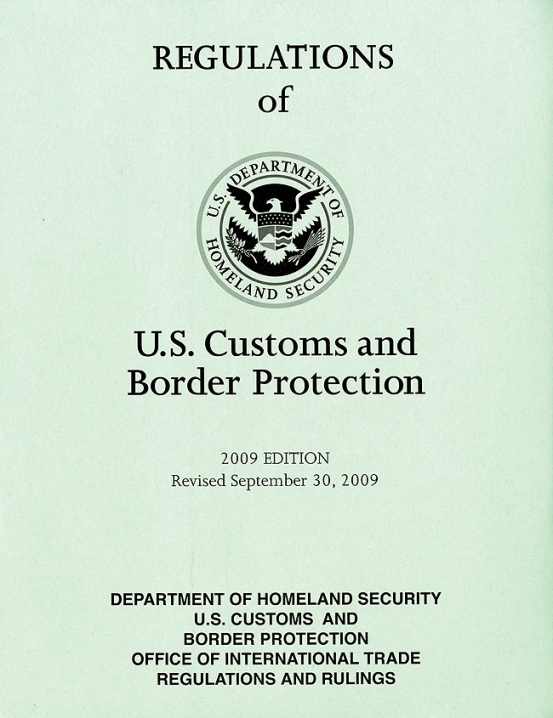
Customs-and-Border-Protection-Regulations-USPublished by the Department of Homeland Security’s Bureau of Customs and Border Protection (CBP), Office of International Trade Regulation and Rulings, the Customs and Border Protection Regulations of the United States, 2011 is a print subscription which contains regulations made and published for the purpose of carrying out customs and border protection laws administered by the Bureau of Customs and Border Protection. Former title: Regulations of United States Customs and Border Protection.

> Click here for information on how to order this print subscription

  • Expanding ESL, Civics, and Citizenship Education in Your Community: A Start-Up Guide (Paperback or ePub eBook)

Expanding-ESL-Civics-EducationFor groups and individuals whose goal it is to prepare the immigrant to assimilate into the Nation and to learn our language, this publication– both in print and ePub eBook format — from the Office of U.S. Citizenship and Immigration Services is very useful. It outlines a start-up process of gathering relevant information and resources to develop and sustain community ESL (English as a Second Language), civics, and citizenship education program, recruit and train volunteers, and recruit students. It also includes basic recommendations and sample forms and materials.

> Click here for information on how to order this print publication

> Click here for information on how to order this eBook

For more information on all the immigration publications from the Federal Government,

About the author:

Government Book Talk Editor Michele Bartram is Promotions Manager for GPO’s Publication and Information Sales Division in Washington, DC, and is responsible for online and offline marketing of the US Government Online Bookstore (http://bookstore.gpo.gov) and promoting Federal government content to the public.


Help is Just a Call, Click or Page Away: Federal Disaster Helplines & Emergency Medical Resources

April 19, 2013

Sadly, most adults in this country can remember some disaster or tragedy that’s happened to them or one of their loved ones in recent history. Most people in my office have their own exit strategy story from 9/11.  We all remember how we tried to cope, and we feel deep sympathy for fellow citizens in similar situations.

After the horrific events at the Boston Marathon and the Texas fertilizer factory explosion this past week, many Americans are again in the unfortunate position of needing assistance in the face of life-changing events. Your Federal government is here to help both the injured citizens and the local medical personnel who rush to their aid, both during and after the disaster occurs.Complementary Federal and local disaster response

Image credit: Vanderbilt University Medical Center Department of Emergency Preparedness  

I. Federal Disaster Resources for Civilians

The Disaster Distress Helpline (DDH) is, in the words of their own staff,

“…the first 24/7, year-round national crisis hotline exclusively dedicated to providing free, immediate and confidential crisis counseling and support to people in distress related to any natural or man-made disaster, such as the explosions in Boston. We offer this counseling 24/7/365 through phone (1-800-985-5990) and through SMS/text messaging (text ‘TalkWithUs’ to 66746) – and DDH is for those affected, family member and loved ones, as well as for responders.”

SAMHSA-Disaster-Distress-Helpline

Operated by the Department of Health and Human Services’ Substance Abuse and Mental Health Services Administration (SAMHSA), the Disaster Distress Helpline’s Web page www.disasterdistress.samhsa.gov also has a section devoted to incidents of mass violence.

If you are suffering from trauma related to the Boston Marathon attack, or similar events, reach out to the Disaster Distress Helpline. Get help, get some shelter. You’re going to wake up tomorrow, and the day after that. Make your day bearable; as Malcolm X said, “The future belongs to those who prepare for it today.”

Additional Federal disaster and emergency resources for civilians include:

GPO is helping in its own way; you can find the catalog record about the Disaster Distress Hotline in GPO’s Catalog of Government Publications or your local federal depository library.

II. Federal Disaster Resources for First Responders and Civilian Medical Personnel

With the tragic terrorist bombings in Boston,  fertilizer factory explosion in Texas, mass shootings in Sandy Hook, and other recent disasters, medical personnel, civilian first responders and mental health personnel have had to learn to deal with injuries both physical and mental that are usually only experienced on the battlefield.

With the experience gained in treating the wounded and traumatized in wars in Iraq and Afghanistan and mass violence and disasters in the US, the Departments of Defense, Health and Human Services, Homeland Security, Justice, and Transportation–

including FEMA, US Fire Administration, Pipeline and Hazardous Materials Safety Administration, Substance Abuse and Mental Health Services Administration, Center for Mental Health Services, US Special Operations Command, and particularly the Army’s Office of the Surgeon General, Walter Reed Army Medical Center, USAMRIID- US Army Medical Research Institute for Infectious Diseases, U.S. Army Medical Department Center and School, and the Borden Institute

— have produced a number of outstanding resources and publications which are of extreme value to emergency medical personnel, including EMTs and surgeons, mental health counselors, fire and rescue personnel, and first responders of all kinds.

[UPDATE 4/30/2013] One great resource for first responders is the Public Health Emergency website maintained by the US Department of Health and Human Services. This is meant to be a one-stop resource for all of the federal medical resources and information for emergency response. The military version, the Department of Defense Force Health Protection and Readiness National Disaster Medical System (NDMS) Page, is here.

[UPDATE 4/26/2013] One of the best resources we have seen was provided by one of our readers, a Regional Emergency Coordinator with the Department of Health and Human Services. It is a one-stop site for all emergency medical resources called the WMD, Emergency Management, and Medical Web Sites List. The author says it is updated every six months to keep it accurate, and it “is intended to provide an extremely “comprehensive list of internet sites of use for emergency planning and in particular Weapons of Mass Destruction (WMD) and medical emergency planning.

boston-marathon-emergency-medical-responseImage: First responders at the Boston Marathon bombings, including fire and rescue and emergency medical personnel. Image credit: EMSWorld

All of these Federal publications below can help civilian emergency response and medical personnel quickly learn from these Federal and military experts on how to respond to disasters and how to treat gunshot and blast wounds (such as from bombs and IEDs), amputations, and other combat-style injuries both in the field as well as the rehabilitation and psychological factors afterwards, including post-traumatic stress.

Some of the more pertinent disaster response and treatment publications that can be found on the U.S. Government Bookstore include:

About the Authors

Part I: Excerpted from a post on the FDLP Community Blog on April 18, 2013, by guest blogger Jennifer Davis from GPO’s Library Services & Content Management Division that supports the Federal Depository Libraries Program (FDLP) who wrote about the Disaster Distress Helpline.

Part II: Government Book Talk Editor Michele Bartram writes about the disaster and emergency response publications that can help civilian personnel respond to disasters with combat-style injuries. Ms. Bartram is Promotions Manager for GPO’s Publication and Information Sales Division in Washington, DC, and is responsible for online and offline marketing of the US Government Online Bookstore (http://bookstore.gpo.gov) and promoting Federal government content to the public.


Quiz: Are you smarter than an 8th grade Civics student?

September 20, 2012

Flash cards. They may bring back memories of studying for a big exam like the SAT or GRE, or they may remind you of elementary school when they were used as a great way to learn your numbers and letters.

But did you know that the US Government Printing Office produces flash cards for the U.S. Citizenship and Immigration Services’ Office of Citizenship under the Department of Homeland Security?

This week marked an important milestone for all U.S. citizens as the 225th anniversary of the signing of the Constitution of the United States of America.

September 17 is now commemorated annually as Constitution & Citizenship Day, a time to reflect on the rights, honors and privileges of being a U.S. citizen, so I thought it was a perfect time to introduce our readers to the Civics Flash Cards.

The Civics Flash Cards are one of the most popular products sold in the US Government Bookstore as a tried and true way for immigrants and to learn about U.S. history and government while preparing for the United States naturalization test.  These easy-to-use flash cards (available in English and now also in Spanish) contain each of the 100 civics questions and answers contained on the United States naturalization test, and are updated when there is a change of leadership in the White House or Congress.

The Civics Flash Cards also feature interesting historical photos and relevant captions, thus providing additional civic learning opportunities, making them ideal not only for use as an instructional tool for U.S. citizenship preparation, but also in standard American social studies classes or home schooling. For example, one card contains a picture of Jeannette Rankin, the first woman to be elected to the U.S. House of Representatives, while another shows Hiram Revels of Mississippi, the first African American U.S. Senator, elected in 1870.

A description of the Spanish version of the Civics Flash Cards:

Recién actualizadas para 2012, las Tarjetas Flash de Educación Cívica en Español ayudarán a a los inmigrantes a aprender sobre la historia de los EE.UU. y del gobierno mientras se preparan para el exámen de naturalización. Estas tarjetas de memoria fáciciles de utilizar contienen cada una de las 100 preguntas y respuestas cívicas (sobre la historia y el gobierno) del exámen de naturalización estadounidense, y conllevan fotos históricas y leyendas pertinentes a que proporcionen el aprendizaje cívico adicional.

Failing grade in civics for American kids… and maybe their parents?

In 2010, The Department of Education administered the National Assessment of Educational Progress or NAEP test, known as the nation’s report card, to 27,000 4th-, 8th- and 12th-grade students throughout the United States.

The New York Times reported that the civics examination results were dismal, as “fewer than half of American eighth graders knew the purpose of the Bill of Rights… and only one in 10 demonstrated acceptable knowledge of the checks and balances among the legislative, executive and judicial branches.

Of the high school students who took the NAEP, 75% “were unable to demonstrate skills like identifying the effect of United States foreign policy on other nations or naming a power granted to Congress by the Constitution.”

Reading through the flash cards, it makes me wonder how many native U.S. citizens— parents and children— could correctly pass the test given to immigrants aspiring to become citizens?

See how you compare to these 8th and 12th graders on these questions constructed from information on the Civics Flash Cards

(Hint: I provide the correct answers at the end of this post 😉 since they are trickier than one would think!)


Another question


And finally, some geography:

HOW CAN YOU OBTAIN a copy of the Civics Flash Cards for the Naturalization Test, either the English Version or the Spanish Version?

You may also be interested in our other Constitution and Citizenship products, such as the pocket edition of the Constitution and Declaration of Independence. Click here to shop our entire Citizenship Collection.

Correct Answers to the Flash Card Poll Questions:

1)      Which of these does NOT represent one of the powers of the Federal Government under our Constitution? To provide protection & safety such as police and fire services is a function of state and local governments.

2)      Which of these are responsibilities that are only for United States Citizens?  Only citizens may vote in a Federal election, serve on a jury, or run for Federal office such as U.S. Senate or House of Representatives and for most state and local offices. Unfortunately, everyone has to pay Federal taxes, citizen or not!

3)      Which of these states does NOT border Canada? Of all of these, only Wisconsin does not share a border with Canada. All the international border states with our northern neighbor are (east to west): Maine, New Hampshire, Vermont, New York, Pennsylvania (border on Lake Erie), Ohio (also border on Lake Erie), Michigan, Minnesota, North Dakota, Montana, Idaho, Washington and Alaska.

About the Author:  Michele Bartram is Promotions Manager for GPO’s Publication and Information Sales Division and is responsible for online and offline marketing of the US Government Online Bookstore (http://bookstore.gpo.gov) and promoting Federal government content to the public.