Terrorists as Armed Groups

November 1, 2010

I can’t think of too many Government publications that cover pirates, Vikings, the Teutonic Knights, the Italian Red Brigades, the Irish Republican Army, and the Taliban in one volume, but that’s what Armed Groups: Studies in National Security, Counterterrorism, and Counterinsurgency does. Published by the Naval War College, it’s a collection of essays by noted experts that expands our view of “terrorism” by using the term “armed groups,” which includes classic insurgents, terrorists, guerrillas, militias, police agencies, criminal organizations, mercenaries, pirates, drug cartels, apocalyptic religious extremists, orchestrated rioters and mobs, and tribal factions. Once you start reading, it’s hard to stop, although it’s certainly not light entertainment.

For me, the scariest essays were those dealing with domestic armed groups, like militias, white supremacist groups, and large organized street gangs. Although a lot of the examples mentioned were familiar to me, such as the post 9/11 anthrax scare and the arrest in subsequent years of several biological terrorist wannabes – seeing all of the examples assembled in one place convinced me of one author’s contention that domestic armed groups are no less menacing than the international organizations that get so much media exposure.

Armed Groups is a rich source for all kinds of background on the use of violence by the politically powerless and the broad array of organizations that practice it. It may not help you sleep better at night to know that such groups are so prevalent, but it’s indispensable information for anyone who wants to delve beneath the surface of an often-described but not always well-understood cultural, sociological, and political phenomenon. The book’s editor, Jeff Norwitz, has posted chapters on his own Web site. You also can browse Armed Groups here, get your own copy here, or find it in a library here.


An Award-Winning Blog?

October 27, 2010

That’s what we are, courtesy of the Metropolitan Washington, DC chapter of the International Association of Business Communicators (IABC) – the largest IABC chapter in the country.. Specifically, last night Government Book Talk received a Silver Inkwell Award of Merit in the Government and Military Communication category. We were one of 21 winners out of more than 300 nominations submitted.

I mention this, not because we’re pleased and proud to receive such an award – although we are – but because it tells us that we’re on the right track in creating a venue in which Government publications get some of the attention they deserve, not as stereotypical dull doorstops, but as vital, information-packed, and often entertaining books that simultaneously open up the multifaceted and invaluable work of the Federal Government to the public at large.

Well, we’re not here to win awards, but to get the word out about the best of Government publications, past and present. I’m heading back to the vast Government Book talk vaults for more reading matter and, as always, I’ll be sharing what I find with you. Thanks for following us!


A Bibliophile’s Delight

October 25, 2010

It’s about time I tackled some of the riches of the Library of Congress (LC) here. The question: where to begin? I was talking to someone about Thomas Jefferson last week, so why not start with the man who sold his library to the Federal Government after the British burned the congressional library during the War of 1812, thus supplying the foundation for today’s LC? The 1989 edition of Thomas Jefferson’s Library: A Catalog with the Entries in His Own Order restored to public view a unique copy of Jefferson’s personal shelflist, and one with an unusual history. Jefferson had sent along a copy of his personal library’s catalog with the books he sold to the Government, but it has been lost. Later, he asked Nicholas P. Trist, his secretary and future grandson-in-law, to recreate the catalog and its unique arrangement. (Trist later had a controversial career as a diplomat – if I ever find a Government publication concerning him, you’ll hear all about it.) After Jefferson’s death, Trist’s manuscript vanished until 1917, when it turned up in the library of Camp Wheeler in Georgia (talk about gold in your attic!) and was donated to LC, which published it for the first time in this edition.

The Introduction explains the provenance of the manuscript as well as its unusual structure, based on the system developed by Francis Bacon in his The Advancement of Learning. As the editors point out, “To twentieth-century eyes, parts of Jefferson’s classification, may seem puzzling. It is no surprise to find categories such as Modern British History under the broad division of history, but such unexpected subjects as Agriculture, Surgery, and natural History also appear there.” According to Jefferson’s world view, “history” meant all of the known facts about the physical universe, so these topic headings, seemingly so disparate to us, made perfect sense to the 18th century mind.

Although Jefferson’s methods of library cataloging are of great interest and carefully explained by the editors, my real interest was in Jefferson’s reading habits. Lots of books under Politics, of course – most of the great Enlightenment theorists and reformers are represented, including Cesare Beccaria, that great foe of judicial torture, whom I hold in particular esteem (trivia: his grandson was Alessandro Manzoni, author of I Promessi Sposi, the greatest Italian novel of the 19th century). Speaking of literature, Jefferson owned works by such robust authors as Tobias Smollett (Roderick Random), that most unorthodox clergyman, Laurence Sterne (Tristram Shandy and A Sentimental Journey), and even the somewhat shady Restif de la Bretonne. His poetry interests leaned towards the  Greeks and Romans, but he also had a place for Americans like Philip Freneau and Phyllis “Whateley.” As with the rest of his holdings, Jefferson’s collection of literature represents quintessential Enlightenment taste.

As you can tell, browsing through this remarkable catalog is great fun, even as it sheds light on the intellectual roots of our third President. It’s available online from LC and has been reprinted by a private publisher, although without the distinctive faux marbling covers (above). You can also find it in libraries.


Around the World with the Great White Fleet

October 15, 2010

I’ve always been more of a text person than an images person when it comes to reading history, but The World Cruise of the Great White Fleet has persuaded me to change my mind. This handsome volume, subtitled “Honoring 100 Years of Global Partnerships and Security” commemorates the centennial of the voyage of Teddy Roosevelt’s U.S. Great White Fleet around the world. I was a bit chagrined to learn, despite my having read a book about U.S. sea power a couple of years ago, that the ostensible cause of the cruise was a war scare with Japan that died down almost immediately – that had totally escaped my memory. In fact, Roosevelt’s desire to announce America’s emergence as a world naval power was the real motivation. Interestingly, when Senator Eugene Hale of Maine threatened to withhold money from the cruise, “the undeterred Roosevelt replied in his typically brusque and forthright manner that he already had sufficient funding to get the fleet to the Pacific, and if the Congress wanted the fleet to return to the Atlantic it would have to authorize the additional funding.” TR didn’t mince words, now did he?

Although the text concisely covers the ships, the mean, and the cruise of those dazzlingly white battleships and accompanying torpedo boat destroyers, the real pleasure is leafing through the illustrations. If you’re a ship fan, there are paintings and photos galore (left). I liked the photos of the crew at work, crossing the Equator, riding camels in Egypt, and just smiling into the camera all those years ago. In the narrative section, there are lots more photos and great reproductions of souvenir postcards, magazine covers, and banners from Hawaii, New Zealand, Australia (left), Japan (where instead of war, the fleet was greeted by overflowing hospitality) and China. It’s an outstanding collection, beautifully presented.

Produced by the U.S. Navy’s Naval  History & Heritage Command (and please check out its redesigned Web site, which features many images of the cruise), The World Cruise of the Great White Fleet has much to offer Navy buffs and anyone interested in history as word and image. You can get your own copy here or find it in a library here.


“I hear lake water lapping with low sounds by the shore”

October 13, 2010

This past weekend, I sat on a bench at a botanic garden and contemplated a tiny wetlands lake. It was a restful interlude in an otherwise mundane, errand-filled day. Even a small lake can have that effect on us – think about Walden Pond, for instance, or Yeats’ lake isle of Innisfree. For others, lakes mean boating, fishing, and vacations. For all of us, they are, or should be, natural treasures.

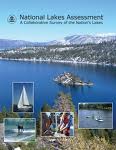
That brings me to the National Lakes Assessment: A Collaborative Survey of the Nation’s Lakes. According to the Environmental Protection Agency’s Office of Water,“This report summarizes the first-ever assessment of lakes across the continental United States using consistent protocols and a modern, scientifically-defensible statistical survey approach.” That sounds pretty significant to me. I’ve always assumed that EPA was studying various bodies of water, but to hear that this is a “first” made me want to learn more.

If you usually assume that the glass is half full, you’ll be pleased to learn that 56 percent of the nation’s lakes are in good condition. If you’re of the other persuasion, 44 percent are “fair” or “poor.” What are the problems? As a card-carrying worrier about the environment, that’s what I think of first. I would have guessed that high nitrogen and phosphorous levels are the biggest issues for our lakes – which is why I’m a blogger, not an environmental expert. The number one stressor of lakes is poor lakeshore habitat, with nitrogen and phosphorus number two. Other problems include algal toxins, and fish tissue contaminants (mainly mercury).

On the plus side, many of our lakes are healthy and holding their own. In one of a number of sidebars, the National Lakes Assessment cites Mousam Lake in Maine. In the late 1990s, soil erosion, polluted runoff from residential properties and camp roads, and sewage effluent meant that phosphorus levels were dangerously high. Happily, since 1997, state, county, and local governments have worked together in a variety of ways, and continue to do so today. The result: the lake was removed from the state’s list of “impaired waters’ in 1996.

The National Lakes Assessment doesn’t take either the full or empty glass position – it deals in the complex reality of where America’s lakes are today and how we can keep them clean for future contemplators. You can read it here or get your own copy here – and, if you’re interested, here’s a bit more about the little lake I visited last weekend.


Country Studies

October 8, 2010

I don’t know about anyone else but, for me, a new Country Studies volume is always a welcome sight. These handsome white hardbacks with the really striking black and red cover graphics are easy on the eyes and first-rate mental nourishment for fact seekers everywhere. The latest one, on Colombia, caught my eye and made me dig around a little for some background on the rest.

The Country Studies/Area Handbooks series, to give it a more official ring, has been funded over the years by the Department of the Army and, since FY 2004, the Joint Chiefs of Staff, Strategic Plans and Policy Directorate (J-5 to those in the know). Since 1988, the Federal Research Division of the Library of Congress has prepared these excellent books. I haven’t been able to run down how far back in time the series extends, but it’s been around for more than 30 years – first as Area Handbooks (when the volumes had green covers) and then Country Studies.

Country Studies present “a description and analysis of the historical setting and the social, economic, political, and national security systems and institutions of countries throughout the world.” They originally were intended to focus primarily on lesser-known areas of the world or regions in which U.S. forces might be deployed, so not every nation is included. For more about the series, go here.

Like all of these books, the Colombia volume presents a concise history of the country, followed by sections on geography, population, religions, education, and social movements. Economic structure, transportation and communications, financial regulations and markets, government and politics, the military and national security – you name it, and the subject is covered, and covered well. Of particular interest are a brief section on Illegal Drugs and a historical and political overview of social violence and the development of insurgencies in modern Colombia. I can’t think of a better serious introduction to the problems and prospects of this key Latin American country than this book.

Although most of the Country Studies series done in the past 25 years or so are available online only, printed copies of Colombia, North Korea, Iran, and Cuba are still available. You also can find these and other Country Studies in libraries (WorldCat is a good search tool) and via various bricks and mortar and online used book outlets.


Don’t Let Lead Take Over Your Home

October 6, 2010

Today’s guest post is by Ingrid Reyes-Arias of GPO’s Library Services and Content Management area.

Time and time again, public health educators have stressed the serious implications of lead- contaminated homes.  To educate the public about this problem, the U.S. Environmental Protection Agency has developed a publication to inform and educate you about the detrimental health risks due to the environmental threat of lead. 

Protect Your Family from Lead in Your Home provides important information on different forms of home protection to protect your family from lead.  For example, EPA suggests testing children for lead levels even though they may seem healthy, performing repeated and ongoing lead checks, and more.  In addition, the publication highlights many important facts.  Did you know that lead can go into your body just through breathing or swallowing lead dust? 

Not only does this publication provide facts, it also explains the effects of lead and its implications on your health, such as damage to kidneys and the nervous system, learning disabilities in children, and speech and language impediments.  After detailing the health implications and history of lead, EPA lists the steps to protect your home.  First, how do you check for lead?  There are many ways.  You can do a paint inspection, followed by a risk assessment, or hire a trained and certified testing professional.  All of these approaches will aid in protecting your family from lead. 

Lead inspection in your home is very important. Don’t let a seemingly small detail affect your home and family. These simple steps can change your life, so take a look at the important facts. Read Protect Your Family from Lead in Your Home here or get copies at the GPO online bookstore.


Balloon Bomb Attacks

October 4, 2010

A couple of weeks ago, I was reading a book about various attempts by Japan to attack the U.S. and Australia between 1942 and 1945. Among these ventures was the attack on Sydney Harbor by midget submarines, a submarine-based seaplane incendiary bombing of Mount Emily, near Brookings, Oregon, and the 1944-45 launching of 9,000 balloons that dropped explosive and incendiary bombs across the U.S. and Canada as far east as Michigan.

I don’t know about other readers of that book, but when I got to the bomb-bearing balloons, I thought, “Smithsonian Annals of Flight!” This publication series, which ran from 1964 to 1974, produced 10 booklets on various aspects of the history of aviation, all of which are worth reading. The one I remembered was Japan’s World War II Balloon Bomb Attacks on North America, an exhaustive study of the strategic concept (a Japanese desire for retaliation after the 1942 Doolittle raid on Tokyo and subsequent American bombing), the years of research and development of various prototypes, and  how the approximately 9,000 paper (!) balloons were constructed and launched.

The author makes the interesting point that the main reason these attacks failed to achieve the psychological victory anticipated by Japan was the total secrecy with which the American government and media greeted the aerial invaders. Since the Japanese military failed to learn anything about the fate of this extraordinary weapon and faced a growing shortage of resources by early 1945, it simply gave up. By then, though, the remnants of many balloons had been recovered on U.S. and Canadian soil, several had been shot down by fighter planes,  and, tragically, a woman and five children were killed when they triggered a balloon bomb they found in the Oregon woods during a church picnic.

Although the balloon bomb campaign failed, it did have the potential to cause extensive damage to the war effort by starting forest fires, as well as damaging civilian morale. Scary note: one bomb landed near the Hanford nuclear facility involved in the Manhattan Project but resulted only in an electrical outage – whew!

Japan’s World War II Balloon Bomb Attacks on North America tells a fascinating and little-known story of World War II that also describes the first intercontinental weapon of war – and unfortunately, not the last. You can read this publication here or drift over to a library to read it. It was later reprinted by Smithsonian Institution Press using a more colorful cover than the original, and either edition can be found via various used book Web sites.


Six Months of Government Book Talk

September 30, 2010

When I started writing for Government Book Talk six months ago today, I had no idea where it was going, or whether anyone would be interested in what I was interested in. With some relief, I can now say that quite a few people are. As of this morning, this blog has had 72,941 page views. Our guest bloggers and I have put up 53 posts and received 330 comments (truth in advertising: this total includes my replies to questions and comments, so subtract 10 or so), and 850 of you have subscribed.  Thanks for your interest in Federal Government publications – and I hope you’ve been enjoying this blog as much as we have!

What I appreciate most are the interesting and insightful comments we receive. As a result of those comments, we’ve instituted some improvements (RSS feeds, references to WorldCat so you can find a book in a local library), made a couple of corrections (Dr. Seuss was not a private, the Bismarck was not a pocket battleship), and generally enjoyed your feedback. A favorite: “Thank you so much for making this available online! It is so interesting and I want to add it to my collection. Without this blog, who knows what treasure I would miss?” We hope to keep on unearthing more of those treasures as we move forward.

In the coming months, we hope to continue talking about Government publications new and old, print and online, free and paid, popular and offbeat. As always, we welcome your suggestions and comments. Thanks for reading!


Terrorism as Organized Crime

September 28, 2010

“Terrorist Networks Are Organized + Terrorism Is a Crime = Terrorism Is Organized Crime”

That’s the formula that Blue Planet: Informal International Police Networks and National Intelligence presents to the reader, and author Michael D. Bayer makes a good case for it. Bayer, a former chief of the Department of State’s transnational criminal investigative office, takes the view that police around the world are better positioned to know what’s going on in their local areas, no matter how remote they seem from the wider world. Through informal contacts with colleagues in their own countries and abroad, they can gather and disseminate vital intelligence to detect and suppress “worldwide manifestations of destabilizing violence, often indiscriminately labeled ‘terrorism.’”

I found Blue Planet to be an intriguing read for a number of reasons. It presents a reasonable and clearly written case for greater involvement of the police in fighting terrorism, argues forcefully against the post-9/11 militarization of U.S. anti-terrorism effort, and cites a number of fascinating case studies of how informal international police networks, even including such relatively closed societies as Cuba and China, have worked effectively to apprehend criminals. (Some of these stories could be the basis for your next suspense novel!)

Blue Planet also makes the interesting point that both international criminal operations and terrorist networks often use the same illegal methods (smuggling, money laundering, drug trafficking), and who better to learn about those links than those already tracking organized crime?  According to a recent RAND report cited in the book, “For terrorist groups that cannot or will not abandon terrorism, policing is likely to be the most effective strategy to destroy terrorist groups. The logic is straightforward: Police generally have better training and intelligence to penetrate and disrupt terrorist organizations. They are the primary arm of the government focused on internal security matters.”

Blue Planet is not just another policy report. It’s an insightful and intellectually stimulating book that also includes some terrific true crime stories. You can read it here on the National Defense Intelligence College Web site or track down your own copy here.


What to Do Before the Pipeline Arrives

September 22, 2010

Not all Government publications are for everyone. For instance, if you haven’t been notified that someone is going to run a natural gas pipeline through your property, you probably don’t need An Interstate Natural Gas Facility on My Land? What Do I Need to Know? Ah, but if you do get a call from a private company contemplating an interstate project of that sort, your interest might be…intense.

The Federal Energy Regulatory Commission (FERC) created this little 24-page booklet so that property owners could learn about their rights, how FERC’s procedures work, what safety and environmental issues might be involved, and lots more. For example, it addresses such issues as the legal rights and responsibilities of all parties, archaeological sites, environmental and safety issues, pipeline installation procedures, how long a pipeline might stay in place and many other questions. Even from the viewpoint of someone like me, who likely never will be affected by such a circumstance, it seems to provide a lot of concrete information clearly and concisely – which many of the best Government publications do. I also learned quite a bit about the natural gas transmission business and terms of art – did you know that in the pipeline world, a pig is “any independent, self-contained device, tool, or vehicle that is inserted into and moves through the interior of a pipeline for inspecting, dimensioning, or cleaning,” or that it gets its name “because of the occasional squealing noises that can be heard as they travel through the pipe”? Now that’s worth knowing!

Okay, as I said at the beginning, Government publications like this one are pretty specialized, but very useful if you need them. You can read An Interstate Natural Gas Facility on My Land? What Do I Need to Know? here, buy a package of them here, or take a peek at it in a library. That’s it – direct from the Government Book Talk pipeline!


Ball’s Bluff: A Little Battle with Lasting Consequences

September 20, 2010

A few Veterans Days ago, my wife and I made a day trip to Ball’s Bluff Battlefield Regional Park  in Loudon County, Virginia. You’d never know it was there, tucked away as it is behind a suburban housing development. Once you step out of your car and into the park, you’re in another place altogether. For one thing, Ball’s Bluff is really two sites in one.  Just inside the park is a small National Cemetery, containing the remains of 54 soldiers in 25 graves, all killed during the Battle of Ball’s Bluff. We were there on a cold, cloudy day, the kind of day that really made us think somberly about that long-ago battle near the beginning of the Civil War. Given that it was a small engagement, we were able to walk most of the battlefield, up to the edge of the high bluff where the inexperienced Union soldiers made their last stand. 

This battle was relatively inconsequential militarily, but it had a larger impact politically. An overly ambitious reconnaissance in force that resulted in the death of Abraham Lincoln’s friend Colonel and Senator Edward D. Baker, it cost Union General Charles Stone his career and was the impetus for the establishment of the Congressional Joint Committee on the Conduct of the War, which became long-term Radical Republican thorn in the side of Lincoln’s Administration.

The U.S. Army’s Center of Military History has a neat little booklet on the battle that I wish we’d had that day. Battle of Ball’s Bluff was developed as a staff ride guide for Army personnel so they can “learn from the past by analyzing the battle through the eyes of the men who were there.” The best part of the booklet is the blow-by-blow account of the battle, accompanied by a number of detailed maps. As I said, the battlefield is relatively small, so you can really get a sense of what happened in just an hour or two.

What sticks in my mind is the fearful predicament of the Union troops, unfamiliar with the area and forced back to that steep bluff above the Potomac.  Many of them jumped to their deaths or died on the narrow little strip of land beneath under a rain of Confederate musket fire (left). I’m not that crazy about heights, so looking down from the top of that cliff really brought at least a bit of the grim reality of that day home to me.

You can read about this little battle with lasting consequences here, get your own copy here, or find a library that has a copy here.