A Grave Misfortune

October 31, 2019

A Grave Misfortune: The USS Indianapolis Tragedy tells the tragic story of the sinking of the cruiser U.S.S. Indianapolis (CA-35) in July 1945, shortly before the end of World War II. The ship had delivered components for the atomic bomb later used against Hiroshima to the U.S. airbase on Tinian and was underway to the Philippines. Indianapolis was lost after sustaining two torpedo hits from an undetected Japanese submarine.

The majority of the 1,180-man crew died and most of the survivors suffered burns and other injuries. Many of those who survived the explosions later perished in the Philippine Sea due to thirst, lack of food, and shark attacks.  About 300 survivors were rescued by Navy air patrols after four days adrift.  The commanding officer, Captain Charles P. McVay, was subsequently court-martialed and found guilty of hazarding his ship. This coming year, 2020, will mark the 75th anniversary of the sinking, the largest loss of life at sea, on one ship, in the U.S. Navy’s history. The incident launched years of acrimonious debate between the survivor’s association and the Navy, but also led to reassessment of many standard Navy operating procedures.

This authoritative volume offers many primary source documents related to the ship’s final voyage, its crew, the Navy board of inquiry following the sinking, and Captain McVay’s court-martial, along with trenchant analysis. Previously unknown Navy source materials that led to the discovery of the wreck of Indianapolis in September 2017 are also included.

In addition to historically significant documents, the book includes a foldout facsimile of the original Navy construction plan of Indianapolis, numerous period photos, diagrams, and a complete crew list. Photos of the ship’s wreck as it appeared when found round out this comprehensive work.

A Grave Misfortune: The USS Indianapolis Tragedy is also available for free download in a variety of digital formats, including ePub, MOBI, and PDF.

You may find other U.S. Navy documentary histories at the Naval History and Heritage Command.

The GPO Online Bookstore – Easy Access to Federal Publications

HOW DO I OBTAIN THIS RESOURCE?

Sign up to receive promotional bulletin emails from the US Government Online Bookstore.

Shop Online Anytime: You can buy a vast majority of eBooks or print publications —with FREE Standard Shipping worldwide— from the U.S. Government Online Bookstore at https://bookstore.gpo.gov.

Visit our Retail Store: To buy or order a copy of any print editions from this collection at GPO’s retail bookstore at 710 North Capitol Street NW, Washington, DC 20401, open Monday–Friday, 8 a.m. to 4 p.m., except Federal holidays, Call (202) 512-0132 for information or to arrange in-store pick-up(s).

Order by Phone or Email: Call our Customer Contact Center Monday through Friday, 8 am to 4:30 pm Eastern (except US Federal holidays). From US and Canada, call toll-free 1.866.512.1800. DC or International customers call +1.202.512.1800.  Email orders to ContactCenter@gpo.gov

Visit a Federal depository library: Search for U.S. Government publications in a nearby Federal depository library. You can find the records for most titles in GPO’s Catalog of U.S. Government Publications.

Find more than a million official Federal Government publications from all three branches at www.govinfo.gov.

About the author: This week’s blog contributor is Maureen Whelan, Senior Marketing Team Leader for GPO’s Publications and Information Sales program office in Washington, DC. Maureen oversees print and digital content dissemination strategy and manages third party free and paid content distribution through platforms and vendors, such as Apple iBookstore, Barnesandnoble.com, Google Play eBookstore, Ebscohost databases, Overdrive, ProQuest, and more.


Publications for National Bullying Prevention Month

October 16, 2019

According to the National Center for Educational Statistics, more than one out of every five students reports being bullied at school. And according to the Centers for Disease Control and Prevention (CDC), students who experience bullying are at an increased risk for poor school adjustments, sleep difficulties, anxiety, and depression. Even kids who do the bullying are at a higher risk for suicide than the rest of their peers. All around, it’s time to bring bullying to an end. October is National Bullying Prevention Month, which means now is the time that we can all do something about these statistics. The first step in preventing bullying is educating ourselves on why it happens, how to notice it, and what to do to help prevent it. Start with these publications from the GPO Online Bookstore.

Preventing Violent Extremism in Schools from the FBI covers the specific demographic and criteria factors that can draw at-risk students to violent extremism and aggressive forms of behavior, such as bullying, or engagement with gangs. It’s a great guide for school principals, teachers, guidance counselors, administrators, and educational policy makers to learn more about how youth might be susceptible to violent extremist ideologies or possible recruitment. For example, the report explains that violent extremism in mainstream culture can be aligned with technological advances. It notes that youth who feel alienated can be tempted easily via social media, online chatrooms, and even online gaming. Physical contact with extremist organizations has diminished over time. Now, the internet serves as a primary catalyst to sustain radicalized beliefs. The report also covers “leakage,” which refers to a common warning behavior of students advocating violence. According to the report, “leakage occurs when a student intentionally or unintentionally reveals clues to feelings, thoughts, fantasies, attitudes, or intentions that signal an impending act.” They might come in the form of threats, boasts, or ultimatums from a student. Read the entire guide to learn how you can help at-risk youth. You’ll also learn about who you should contact and at what point you should contact them in case you notice students exhibiting at-risk behaviors or communications.

A Comprehensive Technical Package for the Prevention of Youth Violence and Associated Risk Behaviors from the Department of Health and Human Services and the CDC is a helpful publication for parents, students, community youth centers, and first responders. This publication covers research on youth violence and strategies for preventing it. Some of these strategies include early childhood home visitation, parenting skill and family relationship programs, and mentoring programs such as Big Brothers Big Sisters of America. According to the report, mentored youth were 32% less likely to have engaged in a physical fight at an 18 month follow-up. Learn more about preventing youth violence with the important research outlined in this package.

Did you know that both victims and perpetrators of bullying are at higher risk of suicide than their peers? Preventing Suicide: A Toolkit for High Schools, which offers strategies to prevent suicide and promote behavioral health among students, is helpful for both schools and parents. The toolkit notes that suicide is the third leading cause of death amongst teenagers. According to the report, many activities designed to prevent violence, bullying, and the abuse of alcohol and other drugs may also reduce suicide risk among students. The toolkit includes a suicide and bullying information sheet, as well as, an information sheet about the relationship among culture and suicide. According to the toolkit,

“Culture plays a large role in determining who (if anyone) young people turn to for emotional support. Young people from some cultures may prefer to consult family members or religious leaders rather than mental health professionals or other ‘outsiders.’ Other cultures may value self-reliance and regard any help-seeking (even within the family) as a weakness.” Schools should also consult this toolkit for a checklist of suicide prevention activities, including developing a written protocol for helping students at risk, training staff on prevention efforts, and more. Does your school have these plans in place?

As these publications all bring to light, bullying can be prevented. Knowledge is power! Know who is at risk for bullying and being bullied. Know the signs for how to recognize bullying. And know what to do to stop it from happening. Each of us has a part to play in keeping our youth safe in school and our communities!

The GPO Online Bookstore – Easy Access to Federal Publications

HOW DO I OBTAIN THESE RESOURCES?

Sign up to receive promotional bulletin emails from the US Government Online Bookstore.

Shop Online Anytime: You can buy a vast majority of eBooks or print publications —with FREE Standard Shipping worldwide— from the U.S. Government Online Bookstore at https://bookstore.gpo.gov.

Visit our Retail Store: To buy or order a copy of any print editions from this collection at GPO’s retail bookstore at 710 North Capitol Street NW, Washington, DC 20401, open Monday–Friday, 8 a.m. to 4 p.m., except Federal holidays, Call (202) 512-0132 for information or to arrange in-store pick-up(s).

Order by Phone or Email: Call our Customer Contact Center Monday through Friday, 8 am to 4:30 pm Eastern (except US Federal holidays). From US and Canada, call toll-free 1.866.512.1800. DC or International customers call +1.202.512.1800.  Email orders to ContactCenter@gpo.gov

Visit a Federal depository library: Search for U.S. Government publications in a nearby Federal depository library. You can find the records for most titles in GPO’s Catalog of U.S. Government Publications.

Find more than a million official Federal Government publications from all three branches at www.govinfo.gov.

About the author: Blogger contributor Cat Goergen is the PR Specialist in GPO’s Public Relations office.


Government Resources About Electing Public Officials

October 11, 2019

America’s democratic government is founded on citizen rights to vote for elected officials. The Federal government has produced a few recent resources to help keep Americans educated about the regulatory responsibilities that come along with electing public officials.

The Code of Federal Regulations – Federal Elections  provides current regulations published by the Federal Election Commission to include candidate status and designations (also cited in 52 U.S.C. 30102(e), compliance procedures (also cited in 52 U.S.C. 30109, 30107 (a), Federal contractors, corporate and labor organization activity, and a lot more.

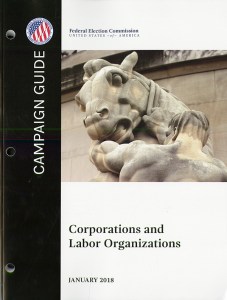
If you work or are involved with corporations or labor unions, you may want to check out Campaign Guide: Corporations and Labor Organizations, which was recently published by the Federal Boards and Commissions.

These guidelines apply to people working within trade associations, membership organizations, human capital, and labor organizations. It outlines how organizations can set up political action committees (PACs), Hybrid PACs, and separate segregated funds (SSFs) to make political contributions. This guide also covers contribution limits. It offers legal guidance about accepting contributions or donations from a foreign national within a federal election campaign. It covers other restricted classes and how fundraising can be legally handled for Federal election campaigns.

This text also covers the requirements for electronic filers. Anyone computer savvy who works within corporations and trade associations, owns their own small-to-mid-sized business, or is part of a lobbyist firms, could learn from this publication. It advises the reader on how to keep receipts and report donations that may impact the election process through campaign financing.

Here’s hoping this blog post will help educate you about resources available to assist you with legal ramifications with Federal elections and proper (allowable) methods to make campaign finance donations.

We appreciate your feedback below about this blog post. And, if there are any other topics that you would like our Government Book Talk blog posts to cover in the future please let us know.

If you are interested in more about Voting and Elections, click here.

Find more United States Code volumes here for legal reference.

In the next few months, we will be receiving the new 2018 U.S. Code editions, so check back again for these updated legal references to keep your collections up-to-date!

The GPO Online Bookstore – Easy Access to Federal Publications

HOW DO I OBTAIN THESE RESOURCES?

Sign up to receive promotional bulletin emails from the US Government Online Bookstore.

Shop Online Anytime: You can buy a vast majority of eBooks or print publications —with FREE Standard Shipping worldwide— from the U.S. Government Online Bookstore at https://bookstore.gpo.gov.

Visit our Retail Store: To buy or order a copy of any print editions from this collection at GPO’s retail bookstore at 710 North Capitol Street NW, Washington, DC 20401, open Monday–Friday, 8 a.m. to 4 p.m., except Federal holidays, Call (202) 512-0132 for information or to arrange in-store pick-up(s).

Order by Phone or Email: Call our Custoer Contact Center Monday through Friday, 8 am to 4:30 pm Eastern (except US Federal holidays). From US and Canada, call toll-free 1.866.512.1800. DC or International customers call +1.202.512.1800.  Email orders to ContactCenter@gpo.gov

Find more than a million official Federal Government publications from all three branches at www.govinfo.gov.

About the author: Blogger contributor Ed Kessler is a Promotions Specialist in GPO’s Publication and Information Sales program office.


Fire Prevention Week

October 3, 2019

Did you know you may only have one to two minutes to safely escape a home fire? It’s essential that you have a plan and know exactly what to do with that limited time to get yourself and loved ones out in case of an emergency.

President Calvin Coolidge proclaimed Fire Prevention Week a national observance in 1925. According to the National Fire Protection Association (NFPA), Fire Prevention Week is the longest-running public health observance in the United States. This year, Fire Prevention Week begins on Sunday, October 6 and ends on Saturday, October 12. The theme of this year’s campaign (titled “Not Every Hero Wears a Cape. Plan and Practice Your Escape!”) has a goal of educating everyone about the small actions they can take to keep themselves and those around them safe. There is no better time than now to get educated, make a home escape plan, and start practicing. Some initial steps recommended by the NFPA to take are below.

  1. Draw a basic map of your home including doors and windows
  2. Walk to every room and identify two ways out of each one
  3. Test smoke alarms and make sure the batteries are not yet expired
  4. Designate a safe meeting place outside, like your mailbox or a special tree
  5. Post your plan on your fridge or somewhere your family will be reminded of it often

In addition to these tips, the following publications from the GPO Bookstore can help you prepare.

Teach lifelong safety habits at a young age. The Sesame Street Fire Safety Program Family Guide incorporates essential fire safety messages and skills that make a big difference in an emergency. In this guide, you’ll find information and tools to help your family practice fire safety at home, catchy phrases you can use to help your child remember important fire safety messages, and activities and ideas to help you practice fire safety skills together as a family. Make a family night out of fire safety! Pop some popcorn, order some pizza, and watch the Sesame Street Fire Safety Program Multimedia CD available in English or Spanish.

Looking for educational entertainment for your kids while they’re in the car, on a plane, or just hanging at home? Let’s Have Fun With Fire Safety from the Department of Homeland Security, Federal Emergency Management Agency, and U.S. Fire Administration is an activity book that will entertain children while also providing valuable fire safety and prevention tips.

Fire safety and education is not just for young children. Adults ages 65 and older are more than twice as likely to die in fires as the Nation’s population as a whole. And those who are 85 or older are more than four times as likely to die in a fire as the general population. Fire Safety Checklist for Older Adults is designed to help seniors and their caregivers learn about fire safety.

Does your family have a fire safety plan? Where is your designated meeting spot? And what techniques do you use to engage your children in learning about fire safety? Let us know in the comments below!

The GPO Online Bookstore – Easy Access to Federal Publications

HOW DO I OBTAIN THESE RESOURCES?

Sign up to receive promotional bulletin emails from the US Government Online Bookstore.

Shop Online Anytime: You can buy a vast majority of eBooks or print publications —with FREE Standard Shipping worldwide— from the U.S. Government Online Bookstore at https://bookstore.gpo.gov.

Visit our Retail Store: To buy or order a copy of any print editions from this collection at GPO’s retail bookstore at 710 North Capitol Street NW, Washington, DC 20401, open Monday–Friday, 8 a.m. to 4 p.m., except Federal holidays, Call (202) 512-0132 for information or to arrange in-store pick-up(s).

Order by Phone or Email: Call our Customer Contact Center Monday through Friday, 8 am to 4:30 pm Eastern (except US Federal holidays). From US and Canada, call toll-free 1.866.512.1800. DC or International customers call +1.202.512.1800.  Email orders to ContactCenter@gpo.gov

Visit a Federal depository library: Search for U.S. Government publications in a nearby Federal depository library. You can find the records for most titles in GPO’s Catalog of U.S. Government Publications.

Find more than a million official Federal Government publications from all three branches at www.govinfo.gov.

About the author: Blogger contributor Cat Goergen is the PR Specialist in GPO’s Public Relations office.