Russia, America, and the Lands of the Bering Strait

January 21, 2011

Sometimes a Government publication is a window into a program that you never dreamed existed. Before opening my copy of Early Art of the Northern Far East: the Stone Age, I had never heard of the National Park Service’s Shared Beringian Heritage Program. It’s not a new program, either: according to the program’s Web site, it was “created in 1991, [and] resulted from a commitment by Presidents George H.W. Bush and Mikhail Gorbachev to expand United States and Soviet cooperation in the field of environmental protection and the study of global change.”

Now perhaps some of you are thinking, “Hold on there, Government Book Talk, what the heck is Beringia?” Thanks to that same Web site, I can state with confidence that “Beringia is defined as the land and maritime area bounded on the west by the Lena River in Russia; on the east by the Mackenzie River in Canada’s British Columbia; on the north by 72 degrees north latitude in the Chukchi Sea; and on the south by the tip of the Kamchatka Peninsula.” This joint Russo-American geographic and cultural unit possesses unique natural resources and is the home of Native peoples with much in common. The program conducts research on the prehistoric Bering land bridge as well as the natural and human history of its animal and human inhabitants, informs the public about these discoveries, and translates Russian-language publications about the region.

Early Art of the Northern Far East is one of those translated works. I must admit that it’s really for specialists only – very much in the mode of such venerable series as Smithsonian Contributions to Anthropology – but it is intriguing to see the variety of animal and celestial images that were sculpted or incised by Beringia’s earliest peoples. If you have a serious interest in cultural anthropology or prehistoric art, this is a valuable contribution to the study of  both. You can browse through it here, get your own copy here, or find it in a library.


Dams and Hydropower in the West

January 19, 2011

Although the words “Woody Guthrie” and “Federal employee” don’t usually come to mind together, in May 1941, the Government hired the great folk singer to write songs about some of its hydropower projects in the Pacific Northwest. The results included such classics as “Roll on Columbia,” “Pastures of Plenty,” and “Grand Coulee Dam.”

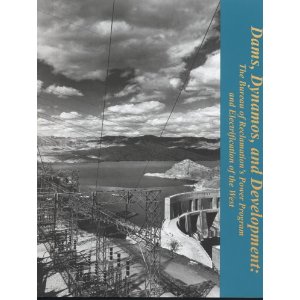
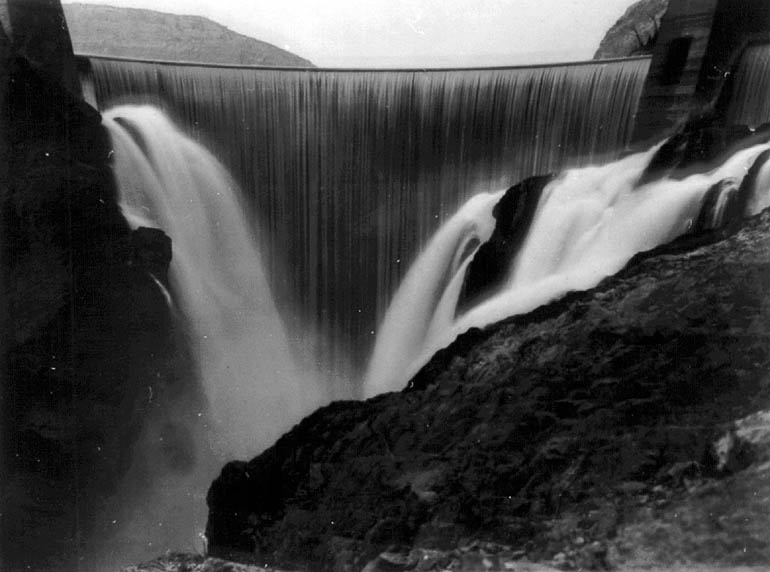
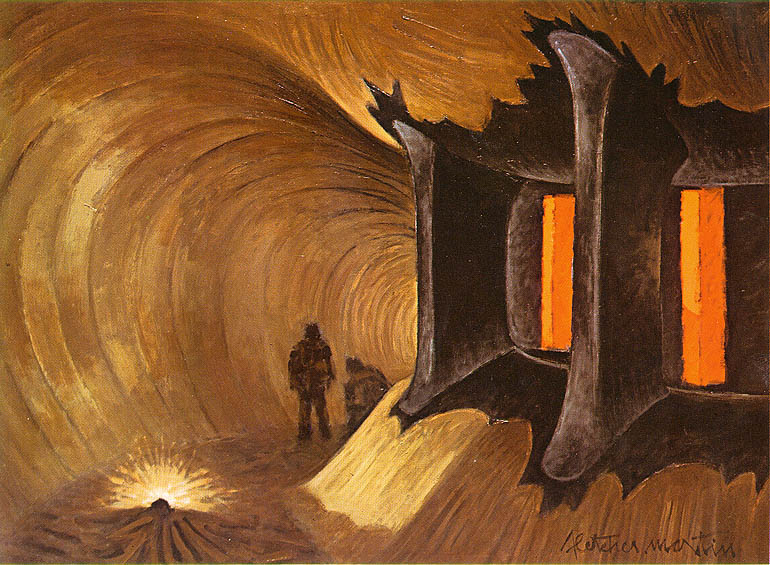
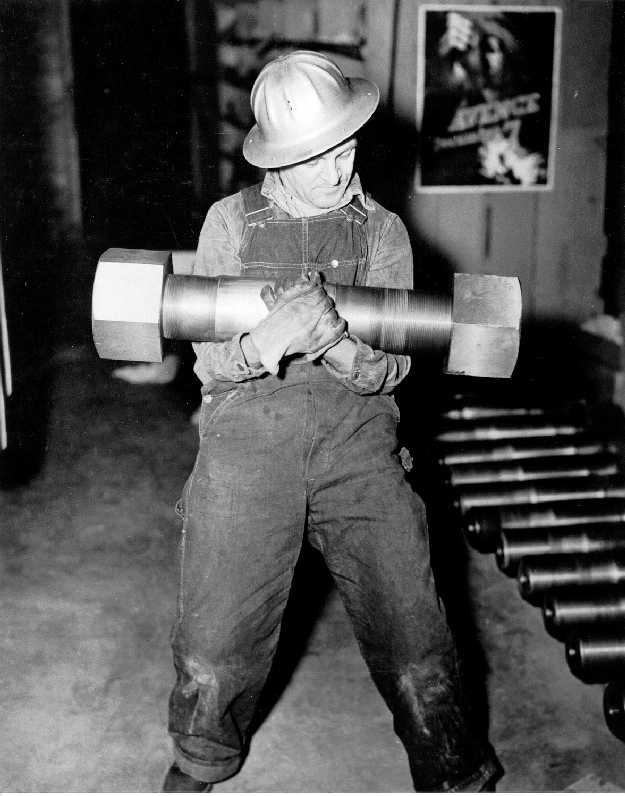
Woody and his songs came to mind as I started thumbing through Dams, Dynamos, and Development: The Bureau of Reclamation’s Power Program and Electrification of the West, a handsome, large-format book published for the centennial of the Bureau in 2002 and now back in print. It includes a broad array of wonderful black and white and color photos, as well as reproductions of art work (even a Norman Rockwell, left), all of which illustrate the history and activities of the Bureau in building dams and power plants to generate electricity. Many of the photos capture Woody’s “big Grand Coulee country in the land I love the best” and the other rivers and canyons of the West.

It’s not just a picture book; there’s also a lot of hard information on the history of the program, the changing views of the effects of dams and hydropower facilities on the environment – even an extensive listing and photo gallery of the 58 power plants that comprise the Bureau’s power network. It conjures up the heroic age of building America’s infrastructure while addressing such issues as alternative power sources and environmental protection.

You can get a copy of this excellent book here or find it in a library. If you want to view some of the art work, check out the Bureau’s American Artist and Water Reclamation Web page; for some of the photos, there’s the Bureau of Reclamation Photography and Engineering Drawings Collections page.


Remembering the Forgotten War

January 14, 2011

Last year marked the 60th anniversary of the outbreak of the Korean War, but whatever commemorations occurred were pretty low key, maintaining its reputation as “the forgotten war.” Given that many people at the time saw the war as possibly leading to World War III, it’s interesting that it’s receded so much from public consciousness.

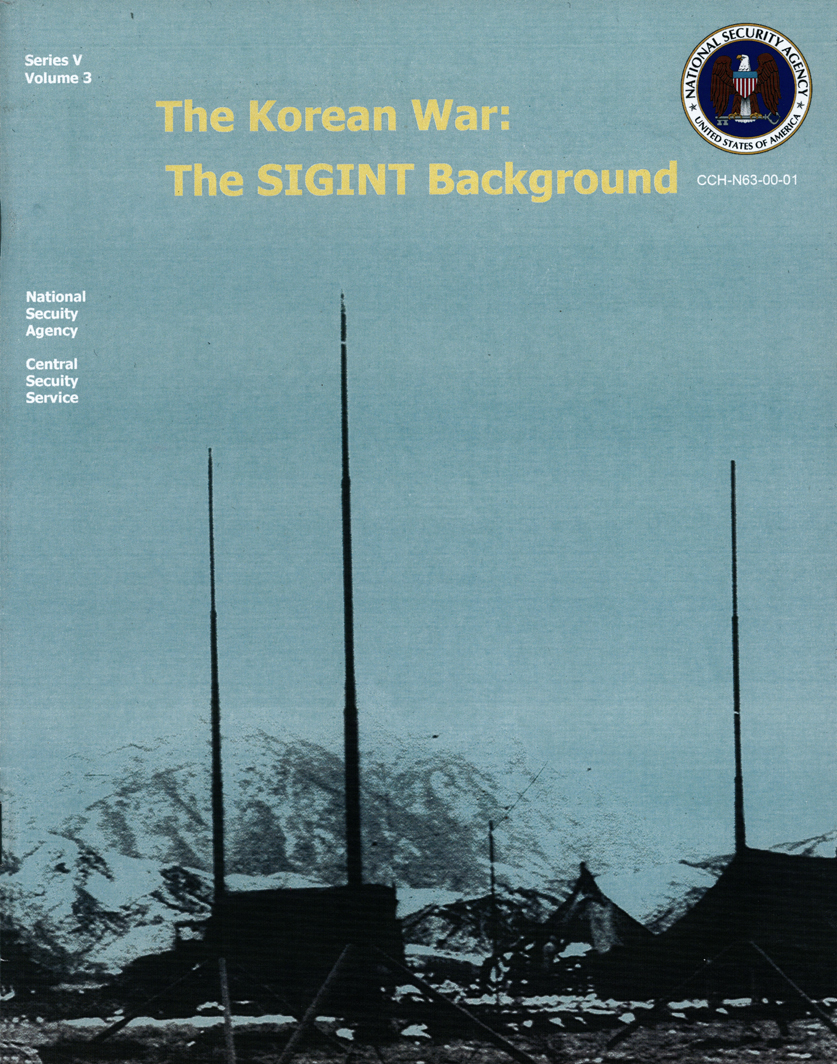
Sometimes it’s the byways of history that tell us the most about how things really were. Two pamphlets produced by the National Security Agency’s Center for Cryptologic History on signals intelligence (SIGINT) in the Korean War do just that. The Korean War: the SIGINT Background shows how woefully understaffed and under-skilled the Armed Forces Security Agency (AFSA) was in the run-up to war. With most of its efforts focused on the Soviet Union and the People’s Republic of China, AFSA had neither the motivation nor the Korean language capabilities to track North Korean communications. The betrayal of American penetration of Soviet cipher systems by an NKVD mole in AFSA resulted in even more distraction.

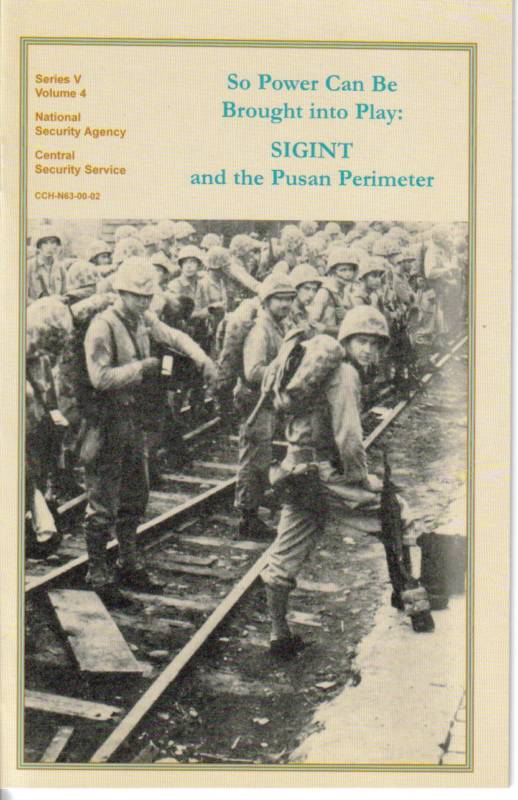
So Power Can be Brought into Play: SIGINT and the Pusan Perimeter takes the story into combat. While recapitulating the failings of AFSA prior to the outbreak of war, it describes how quickly its staff began providing high-quality intelligence to the U.S. forces trapped in the Pusan perimeter after the massive North Korean invasion that pushed them into that pocket southeast of Seoul. Although outnumbered and outgunned, American forces held out until the risky but totally successful amphibious invasion at Inchon. The Korean War: the SIGINT Background then outlines the Chinese phase of the war, the resultant stalemate, and the detailed advance intelligence that led to victories at Hill 395 and Pork Chop Hill prior to the 1953 armistice.

So there is the Korean War in microcosm: initial surprise and near-disaster, furious improvisation, and success followed by stalemate and an indecisive finish. Perhaps that’s why we don’t remember it – hard fighting but no parades. You can read these publications or order copies here or find them in a library.


Plunging into Deep Water

January 12, 2011

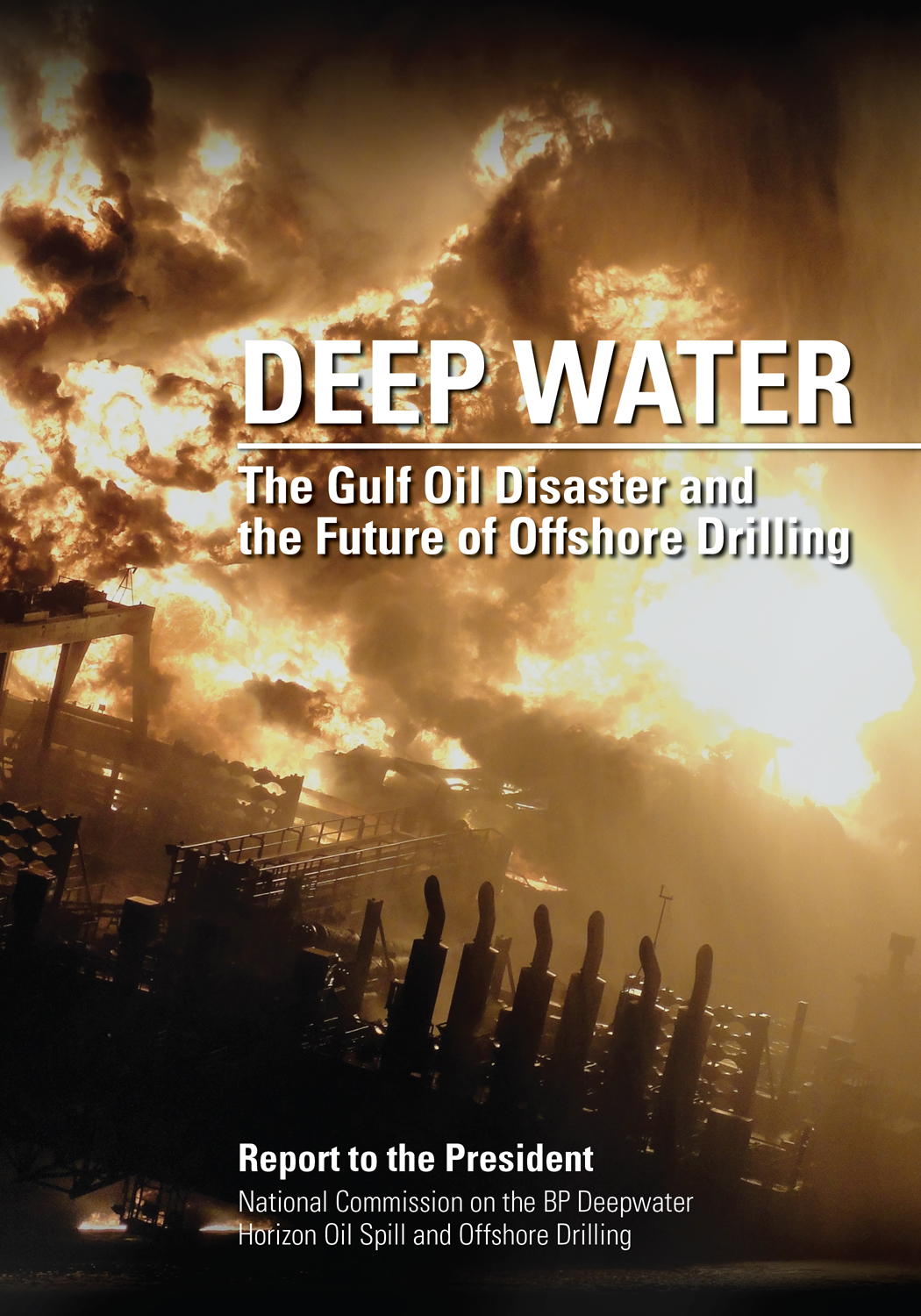
Although Government Book Talk tries to cover Government publications of all eras, we do like to jump on hot new titles, especially when they cover subjects of broad public interest. They don’t get any hotter than Deep Water: The Gulf Oil Disaster and the Future of Offshore Drilling. This report from the National Commission on the BP Deepwater Horizon Oil Spill and Offshore Drilling was printed in-house here at GPO and released to the public just yesterday.

Given the proverbially slow pace at which Government supposedly moves, I’d say that this Commission got its work done very expeditiously and thoroughly. it’s fair to say that one word sums up many of its key findings – complacency – on the part of the oil industry and government. According to the report, BP, for example, was quite conscious of the need for safe practices for individuals, but not for processes, despite a recent history of major accidents: Grangemouth in Scotland (2000), North Sea (2003), and the deadly Texas City refinery explosion (2005). The Commission also found fault with BP’s contractors, Halliburton and Transocean, and the Department of the Interior’s Minerals Management Service and other Government entities with responsibility for regulation and oversight. (In thumbing through this document, I also realized that, even though I consider myself relatively well informed about current events, I had quite forgotten the Texas City disaster, which cost more lives than the Deepwater Horizon accident.)

I also liked the Commission’s decision to add sidebars that allowed the victims of the oil spill – businesspeople, fishermen, and residents – to speak frankly and sometimes emotionally about the toll it took on their lives and livelihoods. In our culture of 24/7 news and quasi-news, it’s easy to lose track of yesterday’s victims. I think that’s why Deep Water is dedicated to the 11 men who died last April 20 on the Deepwater Horizon.

Deep Water is an exemplary Commission report – timely, clear, and comprehensive. It’s worthy of any citizen’s attention. You can view it here or get your own copy here.


Orientalism, Intelligence, and Empire

January 7, 2011

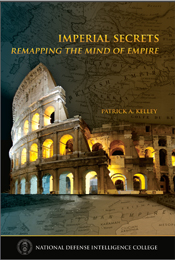
It took me awhile to get a handle on this one. Imperial Secrets: Remapping the Mind of Empire, published by the  National Defense Intelligence College, cites Edward Said, Francis Bacon, Jorge Luis Borges, Michel Foucault, Jeremy Bentham, T.E. Lawrence, and Joseph Conrad just in the Introduction, uses the intelligence experiences of the Roman, Ottoman, and British Empires as its core focus, and includes chapters  headed “Thuggee”, “Barzakh”, “Rhizomes”, and “Boukoloi.” This is a book that challenges its readers.

My take is that Edward Said is the real intellectual godfather of this book. His Orientalism was and remains a brilliant exposition of the West’s perceptions of the “mysterious East”. Although like all seminal works, Said’s work has been challenged, and in some ways refuted, it remains a starting point for anyone in the many fields it touches.

Although Imperial Secrets is too rich and complex a work to summarize here, it proposes that the United States, although not a classic empire, can be viewed as such, from the perspective of knowledge gathering, or intelligence, in the lands over which it exercises “imperial” influence. In the chapter on Thuggee in the British Raj, for example, an age-old Indian problem of robbery carried out via the strangulation of victims, was transmogrified by the British imagination into an organized cult of religious stranglers. Informers and punitive laws  then were employed to eliminate this phantom cult. Imperial Secrets uses this narrative to demonstrate the way empires, when faced with unfamiliar social and cultural environments, use an Orientalist discourse to fit those environments into their own frames of reference.

Another interesting theme is the value of informal networks of information, whether through the Sufi lodges of the Ottoman Empire or the transnational Freemasonic lodges of 19th Century Europe. Related to these networks are attempts by empires to use their own agents (T.E. Lawrence or the remarkable American Josiah Harlan, who had at least a shot at becoming an Afghan prince in the 1830s) and the emotional and psychological stresses that influence, or even distort, these agents’ perceptions however deeply they have steeped themselves in the cultures they infiltrate.

As I said earlier, Imperial Secrets is too intellectually challenging to review in a limited space. I haven’t even touched on its examination of Flavius Josephus as the kind of marginal informant that can to some extent transgress the boundary between and empire and its subjects, or the situationist travels of the 16th century Turkish traveler and official Evliya Celebi and their relevance as an example of  detecting information in the empty spaces between intelligence sources. (I’m starting to sound like the book, which may mean that I’m getting the point!)

Imperial Secrets is not a quick read, but it’s a stimulating one. Bear with it and you’re likely to  reap its rewards. You can read it here, get your own copy, or find it in a library.


Our year in blogging: 2010

January 5, 2011

Healthy blog!

The Blog-Health-o-Meter™ reads Wow!

Government Book Talk  just received some year-end data on how it’s been doing. Here’s a high- level summary of our overall blog health that we’d like to share with you:

The Louvre Museum has 8.5 million visitors per year. This blog was viewed about 110,000 times in 2010. If it were an exhibit at The Louvre Museum, it would take 5 days for that many people to see it.

The busiest day of the year was March 30th with 3,197 views. The most popular post that day was Welcome!.

Where did our readers come from?

The top referring sites in 2010 were links.govdelivery.com, voices.washingtonpost.com, federalnewsradio.com, gpo.gov, and google.com.

Some visitors came searching, mostly for gpo style manual 2010, government book talk, charley harper posters, and gpo style manual.

We now have 1,078 subscribers.

Attractions in 2010

These are the posts and pages that got the most views in 2010.

1

Welcome! March 2010
25 comments

2

A Comic Book History of Printing September 2010
11 comments

3

100 GPO Years Revisited June 2010
20 comments

4

Bookstore Grand Reopening August 2010
9 comments

5

An Award-Winning Blog? October 2010
14 comments

We’d like to thank all of you who read, commented, and mentioned Government Book Talk in 2010. In 2011, we promise to do our best to keep on highlighting the almost infinite variety of Federal Government publications past and present. Let’s keep reading!