A New Deal Legacy

August 30, 2010

One of my uncles logged in some time at a Civilian Conservation Corps (CCC) camp during the Depression of the 1930’s, so The Bureau of Reclamation’s Civilian Conservation Corps Legacy: 1933-1942 caught my eye while I was looking over a list of new books at GPO. When the Roosevelt Administration established the CCC in 1933, America’s youth had been hit extra hard by America’s drastic economic decline. In addition to putting thousands of young men like my uncle to work, the CCC’s legacy includes a myriad of buildings, picnic shelters, and other structures still in use today across the country.

This is a weighty tome, indeed. It was originally published in 2000 and revised to include updated research and more photos. In addition to an interesting essay on the history of the national CCC and another on the Bureau of Reclamation’s involvement, the bulk of the book is made up of brief forms describing the history and activities of each Reclamation camp. The real revelation to me was the involvement of the Bureau – I’ve always thought that the Forest Service and the National Park Service were the major Government players regarding the CCC. The book is nicely designed and includes many period photos of the CCC at work, and of the structures they built as they look today.

Note: Although a great resource for students of the CCC, this is mainly a reference work rather than a narrative history. As such, it would be a good addition to library collections.

You can look through it here, buy a copy here, or find it in a library.


War on the Beaches

August 23, 2010

Spending time at the Jersey shore, as I have since I was a kid, always conjures up my parents and the things they talked about back then. For example, they remembered walking on the beach during the early days of World War II and seeing Coast Guardsmen on patrol amidst the debris of torpedoed ships. I think of those men often when I walk the beach, especially at night, when it’s easier to imagine the cold, loneliness, and boredom they endured as part of their contribution to the war effort.

After Pearl Harbor, the U.S. Coast Guard continued its pre-war beach patrols – usually one man armed only with flares – to spot enemy submarines and watch for saboteurs who might be landing from those subs. All of that changed after June 13, 1942, when Seaman 2nd Class John C. Cullen was approached by a stranger on the beach near Amagansett, Long Island. The men and his companions were Nazi agents (an extremely incompetent group, fortunately) freshly landed from the German sub U-584. Their discovery and subsequent capture turned the Coast Guard beach patrol into an armed force that used men, dogs and horses (left) to patrol America’s shoreline for the balance of the war.

The Beach Patrol and Corsair Fleet, one of a number of booklets produced by the Coast Guard to commemorate the 50th anniversary of World War II, tells the little-known story of this aspect of the war. Although saboteurs never amounted to much of a problem, the patrol performed its most important service in its traditional role of lifesaving. A particularly dramatic rescue occurred off the coast of Washington State in 1943, when the Soviet freighter Lamut struck the rocky ground below a sheer cliff near Teahwhit Beach. Guardsmen hurled a makeshift heaving line from the cliff top to the freighter so the crewmen could ascend hand over hand, “Hanging between the black clouds above and the snarling, crashing breakers below…One slip on the wet line would have meant instant death.” Wow!

The Corsair Fleet, complete with a Donald Duck logo (left), was a motley conglomeration of yachts and smaller craft offered to the U.S. Navy by the Cruising Club of America for emergency U-Boat spotting off the East Coast in the immediate aftermath of Pearl Harbor. The Navy refused the offer until an avalanche of bad publicity forced its hand and it gave the Coast Guard permission to organize the Coastal Picket Patrol, more commonly known as the Corsair Fleet. During much of 1942, these ships and their amateur crews patrolled in all kinds of weather and spotted a few U-Boats before being eliminated as an economy measure in 1943. Shades of Ernest Hemingway’s private submarine patrols off Key West!

You can read this fascinating little booklet here or find it in a library here.


Benefits for Veterans

August 18, 2010

One of the great things about Government publications is that they’re the real deal: official, authoritative information on Federal programs – nothing fancy, just clearly presented facts, figures, and contact information. For instance, every year for I don’t know how many years (could anyone out there hazard a guess?), the Department of Veterans Affairs or its predecessor, the Veterans Administration, has issued a booklet  about the various services and programs available for veterans of the armed forces and their families.

Federal Benefits for Veterans, Dependents and Survivors 2010 covers pensions, insurance, home loans, survivor benefits, military medals and records, and a lot more. In Chapter 4, Education and Training, you’ll find the latest information on the post-9/11 GI Bill. For wounded warriors, Chapter 10, Transition Assistance, talks about a re-launched Web site, the National Resource Directory (www.nationalresourcedirectory.gov), that “provides access to thousands of services and resources at the national, state and local levels to support recovery, rehabilitation and community reintegration.”

In short, this publication has the power to give millions of people the information they need to get the benefits they deserve. You can view it here in either English or Spanish, buy your own copy in English or Spanish, or locate it in a library.


Bookstore Grand Reopening

August 16, 2010

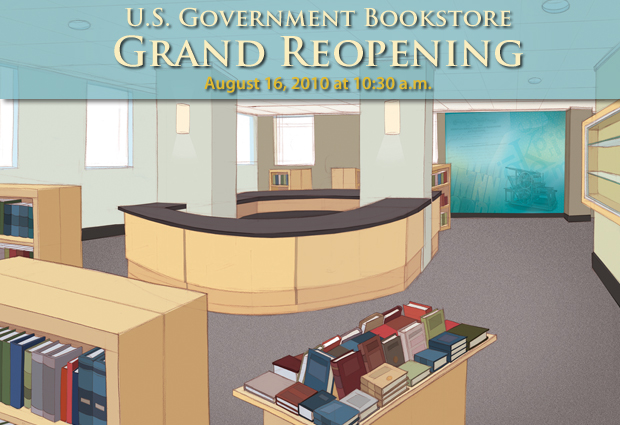
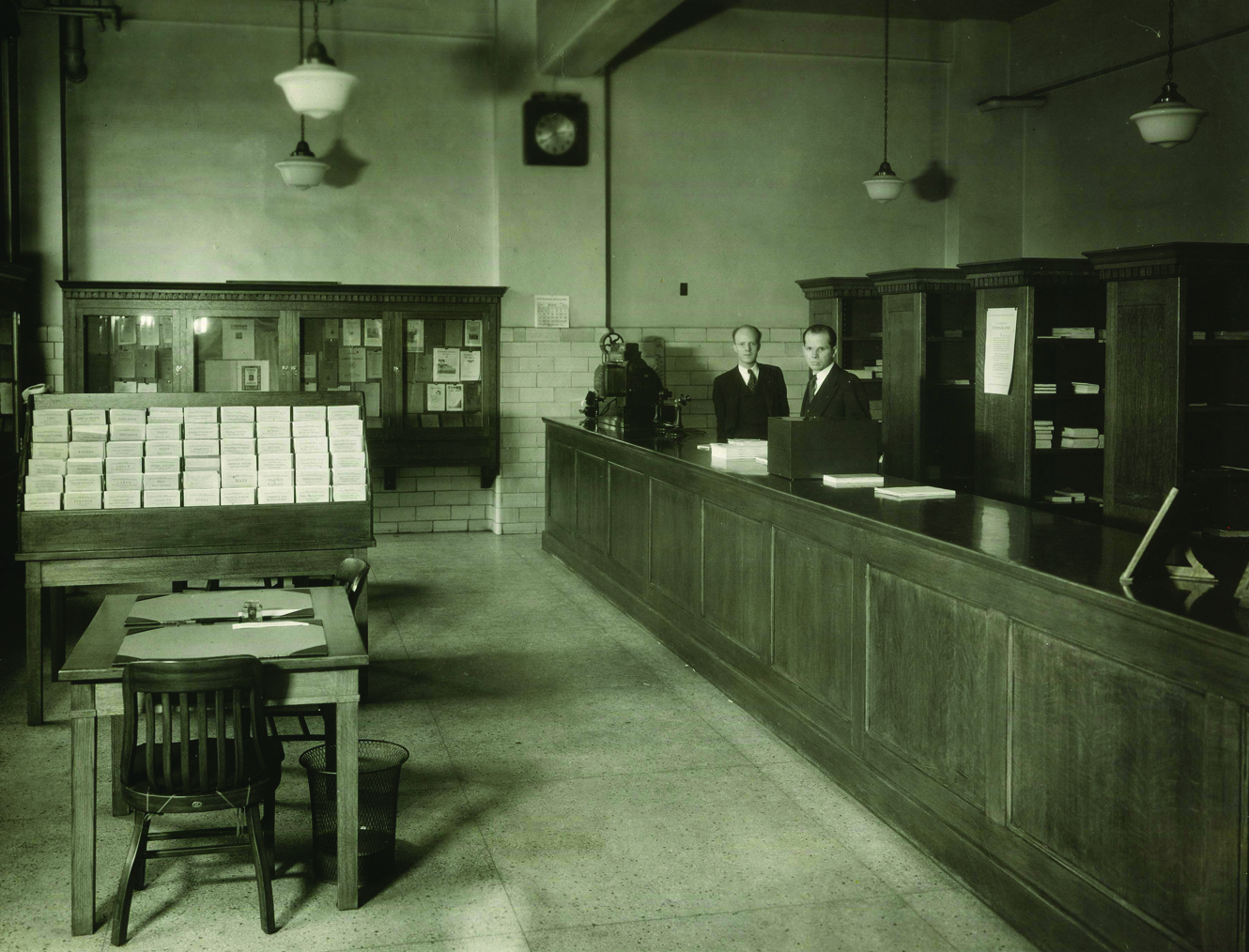
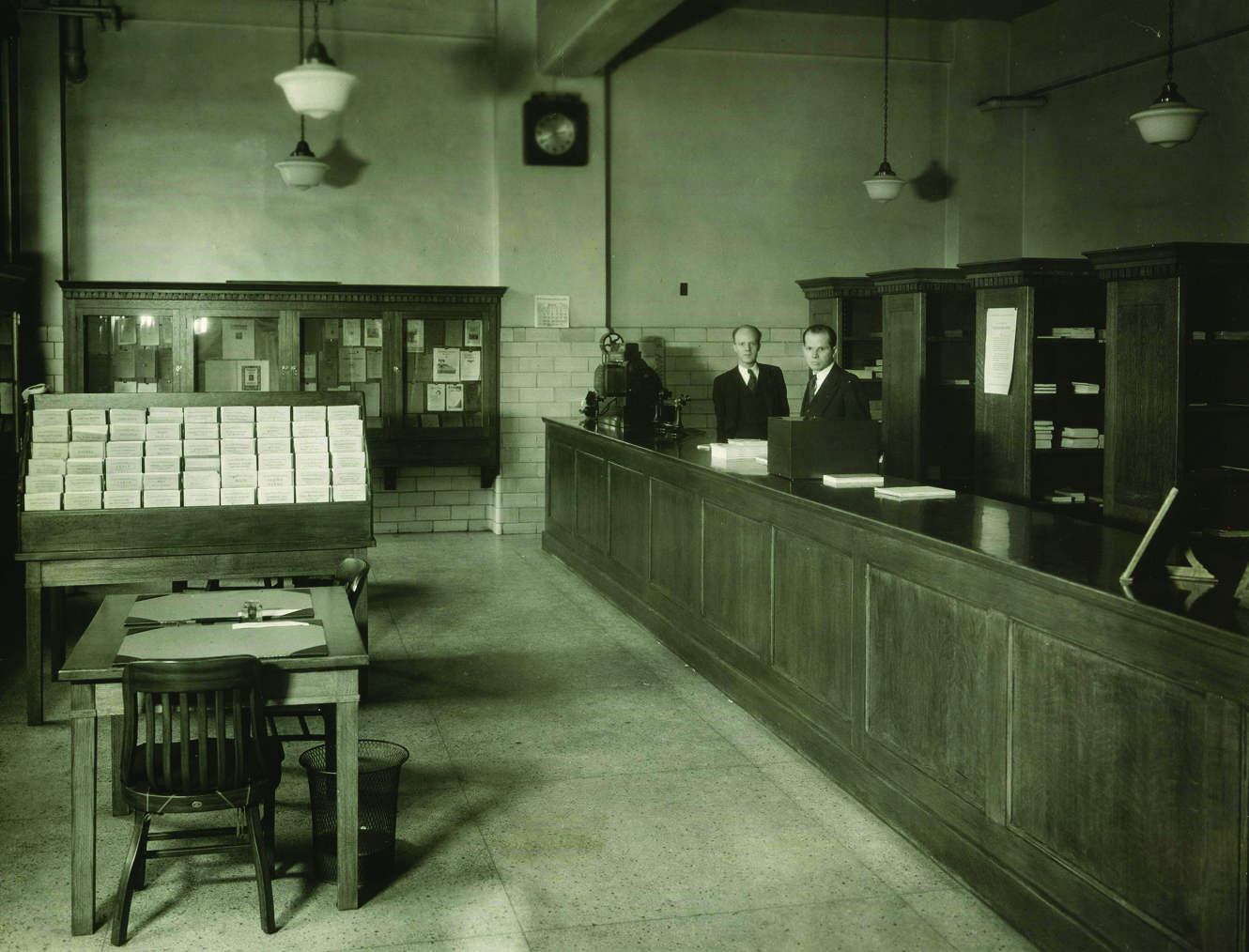
As readers of this blog know, I’m a real book person. Give me a bookstore to roam around in and I’m a goner for the day. That’s why it was especially rewarding this morning, when I got to witness the grand reopening of the Government Printing Office’s own bricks and mortar store, which has been closed for renovation for several months. Although the store has been in existence since 1921, this has got to be the most extensive makeover it’s ever had. The whole atmosphere is more like a small independent bookstore, with an open airy feel, comfortable chairs to read in, and even a children’s corner. Even better, part of the store is now an exhibit area for photos and objects that tell the story of printing at GPO – from handset to digital. All of the work – the design, the cabinetry, the décor – was done by GPO’s own in-house designers and craftsmen.

If you live in the greater Washington, DC area or just in town for a visit, please come on by. You can find all of the sales titles I’ve blogged about and many more of our newest and best books. Even I’m astonished at the vast range of subject matter. Come on book lovers, it’s time to head our way!

For more information, please click here. The address is 710 North Capitol St, NW, Washington, DC 20401.


Cold Outside?

August 13, 2010

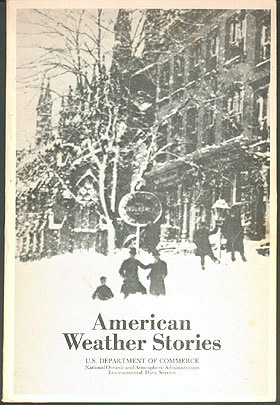
It’s been an exceedingly hot here for the past month or so. When we had our record-breaking snowfall in February, everyone was longing for the warmth of summer. Now it’s here with a vengeance, and a brisk breeze would be most welcome. Sometimes the best way to fight the heat is to experience cold weather vicariously, which is easy to do in a real Government classic: American Weather Stories.

Originally appearing mainly in various National Oceanic and Atmospheric Administration (NOAA to the cognoscenti) publications, the essays in this 1976 publication covers all kinds of weather, but I was drawn to “The Year Without a Summer.” The year 1816 witnessed extraordinarily frigid temperatures throughout the Northern Hemisphere. In the American Northeast, there were two snowstorms in June and frost in June, July, and August. Farmers suffered severe crop losses in each of those months. It may have been no coincidence that the first general migration from new England to the Middle West occurred the following year. Meteorologists generally agree that fine particles in the upper atmosphere generated from an unusual number of worldwide volcanic eruptions caused this bizarre weather phenomenon.

Another cold weather tale is “The Blizzard of ‘88”, still a catchphrase even today. In New York City, drifts up to the second story windows of office buildings were common, and people literally were blown off their feet by the blasting winds that fed blizzard conditions starting on March 10, 1888. In “The Weather on Inauguration Day,” you’ll find tales of  really rotten weather, including William Howard Taft’s big day, when the snow and wind was even worse than the notorious day in 1961 when President Kennedy took his oath of office. As Taft remarked to a reporter, “I always knew it would be a cold day when I got to be President.”

Of course, American Weather Stories includes drought, hurricanes, and historic weather patterns, too, but it’s to hot to think about those…

Although long out of print, a commercial publisher has issued a reprint. I had no luck finding the text online, but you can find the original at a library.

Addendum: Thanks to Emily Carr at the Library of Congress, I can now share this online text with you.


Responding to Terrorist Attacks

August 11, 2010

This week’s student intern guest blogger is Phil Marcus, a rising junior at James Madison University.

The title I’m blogging about, Emergency Response to Terrorism: Job Aid (ERT), was first printed in May of 2000.  While I don’t know how well it was selling at the time, I’m sure that sales greatly rose after 9-11. 

This little comb-bound booklet goes into great detail about the steps and procedures that should be taken to deal with a terrorist attack.  Whether toxic or explosive, this publication covers it all.  As we well know, acts of terrorism can occur at any time, and without much warning. 

A very important point is that Emergency Response to Terrorism: Job Aid, goes into detail about how to preserve evidence from an act of terrorism.  This surely is an asset, because without evidence no crimes can be traced back to the responsible party.  Almost anything can be considered evidence, especially items such as the ‘black box’ from the 9-11 attacks that is carried in every airplane.   If these boxes had not been found after 9-11, much of the information we have now on the attacks would have ever been known. The ERT deals with many similar issues.

I think  the ERT is a must read for anyone interested in obtaining knowledge about how to deal with acts of terrorism – specifically how to respond, as a citizen, to an act of terrorism. Copies can be purchased on our website, reviewed at the FEMA Web site, or in libraries.


Pruning Trees

August 6, 2010

Our summer intern guest blogger for this post is Alex Ronchetti, a rising sophomore at American University.

In high school I worked a summer job doing landscaping for houses around town.  Part of that job required me to prune trees so that they didn’t grow onto sidewalks or utility lines.  I picked up how to prune properly from watching others and by practicing, because I thought there was no instruction manual on how to do this.  Imagine my surprise when I was searching through the GPO’s Bookstore and saw a Forest Service guidebook called How to Prune Trees.

This is a short how-to manual developed by the Department of Agriculture and the Forest Service, but it’s chock full of good information.  It describes the three main reasons you should be pruning; safety, health of the tree, and aesthetic value.  It then talks about the proper ways to prune trees also showing diagrams that show where to cut on the branch.  The writing is easy to understand and the diagrams certainly help show examples of what the authors are talking about.  There is also a section on proper cleaning of cutting tools and treating wounds that gave me insights that I hadn’t had before.

 A short and sweet title that provides good information on the proper care of trees, you can purchase it from the GPO here, read it online here, or find it in a library near you here.


Notable Documents: Gardens and Urban Landscapes

August 4, 2010

“Touching” is not a word usually applied to Government publications, but it’s an appropriate one for “Memoryscape,” one of the case studies in Restorative Commons: Creating the Health and Well-Being through Urban Landscapes. This U.S. Forest Service publication, one of Library Journal’s 2009 Notable Government Documents, is an attractively packaged and well-illustrated collection of thought pieces, case studies, and interviews focused on the idea that biophilia – the basic human need for contact with nature – can and must be fostered in urban settings. As Oliver Sacks says in his Foreword, “I would even suggest that a sort of subtype of biophilia may be hortophilia, or a special desire for gardens….In many cases, gardens and nature are more powerful than any medication.” I know that whenever I pass an urban common garden, it always evokes positive feelings in me, even though I’m not a gardener myself. A walk or hike in a park definitely takes me out of myself and my problems, and it seems to work that way for most folks I know.

All the more pressing then, is the need to make nature and gardens available in such places as Rikers Island (a jail), Red Hook (a blighted urban neighborhood in New York City), Fresh Kills Park (a landfill), and Bosnia-Herzegovina (the site of horrific ethnic cleansing in the 1990’s).The essays and interviews in Restorative Commons describe the innovative garden/landscape projects in these places and others, along with the stories of the people who are running the programs and those benefiting from them vocationally and psychologically.

And then there’s “Memoryscape,” about the place in Westfield, Massachusetts known as “100 acres.” Brian Murphy, his brother Harold, and many of their friends used this area – an area of trees, dirt roads, and wildlife – as their “romping grounds.” Brian was killed at the World Trade Center, and Harold used his skills as a real estate developer with an interest in open space conservation to have 30 acres of this urban landscape permanently preserved. He takes his brother’s kids there to show them their dad’s “place” and, aside from a planned trail, it will stay as it is, rusted train trestle and all, so they and future generations can romp there, too. There are informal 9/11 memorials like this in the Boston and LA areas, where the planes took off, in the Greater New York area and adjoining suburbs, and in the DC area, too. (We could see the smoke from the Pentagon from our office windows that day).

 This is an inspiring and hope-filled book. You can get,view, or order your own copy here or find it in a library here.