Dr. Seuss’ The Lorax Inspires Kids to Hug a Tree

April 23, 2013

Two publications show us the way… to care for trees this Arbor Day!

Lorax-Forest-Service-LaunchWith Earth Day yesterday and Arbor Day this Friday, April 26, and all week as National Parks Week, this is the perfect time to do something to help a tree grow or plant something new to celebrate the miracle of spring. If there are little ones in your life—children, grandchildren, nieces, nephews or friends of kids that you love—it’s a good time to teach them to love trees, plants, and flowers, too.

Image: The head of the Forest Service with the Lorax for the launch of the U.S. Forest Service’s Discover the Forest program which aims to inspire tweens (aged 8-12) and their parents to re-connect with nature, experiencing it first-hand. The campaign brings to life the joy and excitement kids have when they discover the wonders of nature, helping create interest in their environment and a lifelong relationship with it. Photo credit: U.S. Forest Service

The best way to get kids to appreciate nature, according to Dr. Seuss’ The Lorax Curriculum Guide, is to take them outdoors—and “according to the Institute for Social Research at the University of Michigan, children in the U.S. spend 50% less time outdoors than they did 20 years ago.” To counter the initial cries of “I want TV”, however, it helps to give kids directed activities when they go outside.

The U.S. Forest Service and the Ad Council have developed a partnership with Project Learning Tree and Universal Pictures to create an educational curriculum plan based on “The Lorax” film and story. The curriculum supports the Forest Service’s “Discover the Forest” campaign (See image caption above).

Lorax-Classroom-Guide_Plant-a-Tree

Image: “Plant a Tree” page 21 from the Lorax Classroom Guide.

Teachers can download for FREE the complete classroom guide of Dr. Seuss’ The Lorax Curriculum Guide as a PDF, or can download the individual activities to use in class (as long as it is for educational, and not commercial, purposes). There’s an interactive map of places you can go in the United States that have campgrounds, national forests, state campgrounds, etc. There’s a page of games and activities such as how to use a compass, take a virtual hike, create a leaf rubbing or become a Jr. Forest Ranger on the Web site.

The printed teacher’s guide has tests, bibliographies for the students, labs (plant a tree with the Lorax), and student pages for various grade levels (I saw K-4 and 6-8). Families are encouraged to use these activities, too.


Why would Anyone Cut a Tree Down? continues the ecological and conservation-minded discussion you might want to pursue with your kids or students this week.

However, this volume approaches conservation from a silvicultural perspective, rather than the Lorax’ perspective of promoting a child’s approach of nature generally. The age range for the publication is 8 and up, and the material might be a bit young for older middle school children—so its material is more directed to a specific age range. The Forest Service published this document also, and the authors are a writer/ editor / educator with the Forest Service and an illustrator with previous experience illustrating tree guides.

The book shows children the life cycle of trees, the need to remove sick trees, the uses for wood from cut trees, and types of trees that are dangerous, all so beautifully illustrated by Juliette Watts that they make the lessons come alive.

Purchase a copy from the GPO U.S. Government Online Bookstore, and flop under a tree canopy to read the story and appreciate all the gifts that nature has to give us.

As Dr. Seuss wrote, “Now that you’re here, the word of the Lorax seems perfectly clear. UNLESS someone like you cares a whole awful lot, nothing is going to get better. It’s not.”  It’s up to us (and the Forest Service and its partners) to encourage children to care a whole awful lot about our trees and forests. Using these publications is good a way to make that happen!


How can I find these publications?

1) Dr. Seuss’ The Lorax Curriculum Guide

  • You can find it via our PURL (Permanent URL)
  • Locate it through GPO’s Catalog of Government Publications CGP catalog record. GPO has cataloged both the print and the electronic versions to make things “a whole awful lot better” for the Federal Depository libraries that got it in the April 2013 record load.
  • Find it in a federal depository library near you.

2) Why would Anyone Cut a Tree Down?

  • Purchase it on GPO’s U.S. Government Online Bookstore.
  • Buy it at GPO’s Main (retail) Bookstore at 710 North Capitol Street NW, Washington, DC 20401, open Monday-Friday, 8:30am to 4pm Eastern Time, except Federal holidays. Call (202) 512-0132 for information.
  • Find it in a Federal Depository library.

About the Author(s):

Adapted by Government Book Talk Editor and U.S. Government Online Bookstore Manager Michele Bartram from a post written for the FDLP Community Blog by guest blogger Jennifer Davis from GPO’s Library Services & Content Management Division that supports the Federal Depository Libraries Program (FDLP).


Immigration Issues and the Land of Opportunity 2.0

April 22, 2013

Americans are proud of their country being known as “the land of opportunity” and a wonderful place to live. Thus it is not surprising that so many want to move to the United States, making immigration a topic of extreme interest to citizens, lawmakers and immigrants alike.

United States map with faces of immigrants - the Land of Opportunity?

Image: U.S. map made up of immigrant faces. Image credit: Imerito blog

The introduction of a major border security and immigration reform bill in the Senate last week brings the topic to the forefront… and left many scrambling to research the issues affecting the “Land of Opportunity 2.0” in the twenty-first century.

The Government Printing Office has assembled a collection of both print and digital publications that run the gamut from proposed and existing border protection legislation to immigration reports and statistics, civics and English education for immigrants, and more to help all better comprehend the complex issues of immigration.

Here are a few notable publications from our U.S. Government Online Bookstore Immigration Collection:

  •  The Border Security, Economic Opportunity, and Immigration Modernization Act of 2013 (Print)

2013 Border Security and immigration reform bill Gang of Eight SenatorsImage: “Gang of Eight” U.S. Senators who worked on the immigration reform bill of 2013. Image Credit:  NPR blog.

The “Gang of Eight” senators who worked on this bipartisan bill includes four Democrats and four Republicans: Senators Chuck Schumer (D-N.Y.), Dick Durbin (D-Ill.), Bob Menendez (D-N.J.), Michael Bennet (D-Colo.), John McCain (R-Ariz.), Lindsey Graham (R-S.C.), Marco Rubio (R-Fla.) and Jeff Flake (R-Ariz.).

Immigration-Reform-Act-2013The goal of this bill is “to provide for comprehensive immigration reform and for other purposes” including bolstering border security, overhauling the legal immigration system, legalizing many of America’s 11 million undocumented immigrants and put them on a path to citizenship, and increasing enforcement and penalties against employers who hire unauthorized workers.

> Click here for information on how to order a printed copy of this bill

  • Yearbook of Immigration Statistics (Paperback)

2011-Yearbook-of-Immigration-StatisticsThe Yearbook of Immigration Statistics, 2011 is a compendium of tables that provides data on foreign nationals who, during a fiscal year, were granted lawful permanent residence (i.e., admitted as immigrants or became legal permanent residents), were admitted into the United States on a temporary basis (e.g., tourists, students, or workers), applied for asylum or refugee status, or were naturalized. The Yearbook also presents data on immigration enforcement actions, including alien apprehensions, removals, and returns.

> Click here for information on how to order this publication 

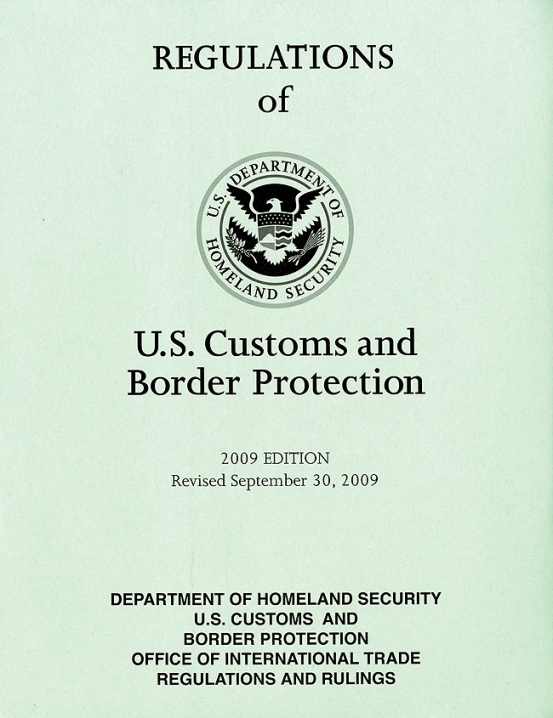
  • Customs and Border Protection Regulations of the United States (Print Subscription)

Customs-and-Border-Protection-Regulations-USPublished by the Department of Homeland Security’s Bureau of Customs and Border Protection (CBP), Office of International Trade Regulation and Rulings, the Customs and Border Protection Regulations of the United States, 2011 is a print subscription which contains regulations made and published for the purpose of carrying out customs and border protection laws administered by the Bureau of Customs and Border Protection. Former title: Regulations of United States Customs and Border Protection.

> Click here for information on how to order this print subscription

  • Expanding ESL, Civics, and Citizenship Education in Your Community: A Start-Up Guide (Paperback or ePub eBook)

Expanding-ESL-Civics-EducationFor groups and individuals whose goal it is to prepare the immigrant to assimilate into the Nation and to learn our language, this publication– both in print and ePub eBook format — from the Office of U.S. Citizenship and Immigration Services is very useful. It outlines a start-up process of gathering relevant information and resources to develop and sustain community ESL (English as a Second Language), civics, and citizenship education program, recruit and train volunteers, and recruit students. It also includes basic recommendations and sample forms and materials.

> Click here for information on how to order this print publication

> Click here for information on how to order this eBook

For more information on all the immigration publications from the Federal Government,

About the author:

Government Book Talk Editor Michele Bartram is Promotions Manager for GPO’s Publication and Information Sales Division in Washington, DC, and is responsible for online and offline marketing of the US Government Online Bookstore (http://bookstore.gpo.gov) and promoting Federal government content to the public.


Help is Just a Call, Click or Page Away: Federal Disaster Helplines & Emergency Medical Resources

April 19, 2013

Sadly, most adults in this country can remember some disaster or tragedy that’s happened to them or one of their loved ones in recent history. Most people in my office have their own exit strategy story from 9/11.  We all remember how we tried to cope, and we feel deep sympathy for fellow citizens in similar situations.

After the horrific events at the Boston Marathon and the Texas fertilizer factory explosion this past week, many Americans are again in the unfortunate position of needing assistance in the face of life-changing events. Your Federal government is here to help both the injured citizens and the local medical personnel who rush to their aid, both during and after the disaster occurs.Complementary Federal and local disaster response

Image credit: Vanderbilt University Medical Center Department of Emergency Preparedness  

I. Federal Disaster Resources for Civilians

The Disaster Distress Helpline (DDH) is, in the words of their own staff,

“…the first 24/7, year-round national crisis hotline exclusively dedicated to providing free, immediate and confidential crisis counseling and support to people in distress related to any natural or man-made disaster, such as the explosions in Boston. We offer this counseling 24/7/365 through phone (1-800-985-5990) and through SMS/text messaging (text ‘TalkWithUs’ to 66746) – and DDH is for those affected, family member and loved ones, as well as for responders.”

SAMHSA-Disaster-Distress-Helpline

Operated by the Department of Health and Human Services’ Substance Abuse and Mental Health Services Administration (SAMHSA), the Disaster Distress Helpline’s Web page www.disasterdistress.samhsa.gov also has a section devoted to incidents of mass violence.

If you are suffering from trauma related to the Boston Marathon attack, or similar events, reach out to the Disaster Distress Helpline. Get help, get some shelter. You’re going to wake up tomorrow, and the day after that. Make your day bearable; as Malcolm X said, “The future belongs to those who prepare for it today.”

Additional Federal disaster and emergency resources for civilians include:

GPO is helping in its own way; you can find the catalog record about the Disaster Distress Hotline in GPO’s Catalog of Government Publications or your local federal depository library.

II. Federal Disaster Resources for First Responders and Civilian Medical Personnel

With the tragic terrorist bombings in Boston,  fertilizer factory explosion in Texas, mass shootings in Sandy Hook, and other recent disasters, medical personnel, civilian first responders and mental health personnel have had to learn to deal with injuries both physical and mental that are usually only experienced on the battlefield.

With the experience gained in treating the wounded and traumatized in wars in Iraq and Afghanistan and mass violence and disasters in the US, the Departments of Defense, Health and Human Services, Homeland Security, Justice, and Transportation–

including FEMA, US Fire Administration, Pipeline and Hazardous Materials Safety Administration, Substance Abuse and Mental Health Services Administration, Center for Mental Health Services, US Special Operations Command, and particularly the Army’s Office of the Surgeon General, Walter Reed Army Medical Center, USAMRIID- US Army Medical Research Institute for Infectious Diseases, U.S. Army Medical Department Center and School, and the Borden Institute

— have produced a number of outstanding resources and publications which are of extreme value to emergency medical personnel, including EMTs and surgeons, mental health counselors, fire and rescue personnel, and first responders of all kinds.

[UPDATE 4/30/2013] One great resource for first responders is the Public Health Emergency website maintained by the US Department of Health and Human Services. This is meant to be a one-stop resource for all of the federal medical resources and information for emergency response. The military version, the Department of Defense Force Health Protection and Readiness National Disaster Medical System (NDMS) Page, is here.

[UPDATE 4/26/2013] One of the best resources we have seen was provided by one of our readers, a Regional Emergency Coordinator with the Department of Health and Human Services. It is a one-stop site for all emergency medical resources called the WMD, Emergency Management, and Medical Web Sites List. The author says it is updated every six months to keep it accurate, and it “is intended to provide an extremely “comprehensive list of internet sites of use for emergency planning and in particular Weapons of Mass Destruction (WMD) and medical emergency planning.

boston-marathon-emergency-medical-responseImage: First responders at the Boston Marathon bombings, including fire and rescue and emergency medical personnel. Image credit: EMSWorld

All of these Federal publications below can help civilian emergency response and medical personnel quickly learn from these Federal and military experts on how to respond to disasters and how to treat gunshot and blast wounds (such as from bombs and IEDs), amputations, and other combat-style injuries both in the field as well as the rehabilitation and psychological factors afterwards, including post-traumatic stress.

Some of the more pertinent disaster response and treatment publications that can be found on the U.S. Government Bookstore include:

About the Authors

Part I: Excerpted from a post on the FDLP Community Blog on April 18, 2013, by guest blogger Jennifer Davis from GPO’s Library Services & Content Management Division that supports the Federal Depository Libraries Program (FDLP) who wrote about the Disaster Distress Helpline.

Part II: Government Book Talk Editor Michele Bartram writes about the disaster and emergency response publications that can help civilian personnel respond to disasters with combat-style injuries. Ms. Bartram is Promotions Manager for GPO’s Publication and Information Sales Division in Washington, DC, and is responsible for online and offline marketing of the US Government Online Bookstore (http://bookstore.gpo.gov) and promoting Federal government content to the public.


Making Tax Time Less Taxing: Reproducible Tax Forms

April 11, 2013

Guest blogger Jennifer K. Davis from GPO’s Library Services & Content Management Division that supports the Federal Depository Libraries Program (FDLP) writes about reproducible tax forms from the Internal Revenue Service. (Originally posted in the FDLP Community site on April 9, 2013.)

It's Tax Time April 15 Federal IRS Tax Return Forms If you haven’t filed your tax return already, you’ve still got a little time left until April 15, the tax deadline day. Hopefully, you’ve got your tax forms from the Internal Revenue Service already.

One lucky thing about filing taxes in the U.S.? If you haven’t got those IRS tax forms, you can get copies of the forms almost anywhere. One sure bet is to drop in to your local Federal depository library for the reproducible copies. Most of them get the reproducible forms packet, which includes nearly all the basics. You can find the forms online, too, but if you don’t have a printer at home, the library’s your best bet.

People are usually checking out their library to do research, but shouldn’t miss out on the other resources that the libraries make available. Reproducible tax forms are one of the more obvious bonuses. Whether you need something really basic like a form 1040 to file your taxes, or an EIC (Earned Income Credit) to claim your qualifying child(ren), or a new W-4 to complete for work, your library’s got it.

Even if you’re searching for something less commonly used like a Schedule R (Credit for the Elderly or the Disabled), or a Form 8880 (Credit for Qualified Retirement Savings Contributions), you’ll find it all in the packet of reproducible tax forms. When you use a Federal Depository Library, you get to experience the benefits of your Federal taxes at work before you’ve even paid them.

648-004-00027-3[Note from Michele Bartram:] GPO also offers larger packages of pre-printed IRS tax forms for the convenience of tax preparation professionals on our Online Bookstore.  We also have DVDs and CD-ROMs of Federal tax forms. All purchasable tax publications as well as Federal audits and other accounting publications can be found on our U.S. Government Bookstore website under the Taxes, Audits & Accounting category found under our Business & Finance publications section.

For the annual tax forms, we have a special Tax Forms by Year category where you can find the IRS Tax Forms 2012 that includes the 2012 Tax Year IRS Tax Products DVD.

How can I access these individual Reproducible Tax Forms?

How can I purchase pre-printed tax forms and a tax publications DVD?


From Prairies to Peaks with Rockies and Roosevelts

April 3, 2013

Guest blogger GPO Public Relations Specialist Emma Wojtowicz reviews this new publication by the U.S. Forest Service that explores the history of the Forest Service’s Rocky Mountain region, including the involvement of two Roosevelts.

From-Prairies-to-Peaks-US-Forest-ServiceThose traveling west-bound for spring break and summer vacation should check out From Prairies to Peaks: A History of the Rocky Mountain Region of the U.S. Forest Service, 1905-2012. This publication focuses on the Rocky Mountain region, which encompasses Colorado, Kansas, Nebraska, South Dakota and Wyoming and is home to 17 national forests and seven national grasslands.  In From Prairies to Peaks, author Anthony Godfrey takes readers on a tour of the Rocky Mountains to learn about the topography, climate and wildlife as well as the history stretching from when Native Americans originally inhabited the region to the preservation efforts made in recent decades by the Forest Service.

Readers must be true aficionados of the West and Rocky Mountains to digest this nearly 400-page publication. The history is very detailed, but very fascinating.  During the development of the West in the 19th century, it was believed that the United States had an abundance of forest resources, and millions of acres of trees were cleared as a result.

After the Civil War, the threat of a timber famine alerted the government to the problem and brought greater attention to forest management. Passed under President Theodore Roosevelt, the Federal Forest Transfer Act of 1905 moved control of the 63 million acres of national forest reserves from the Department of the Interior to the Department of Agriculture’s Bureau of Forestry, which was renamed the Forest Service.

President-Theodore-Roosevelt-1908-Cartoon-as-Practical-Forester

Image: 1908 editorial cartoon of President Theodore Roosevelt as “A Practical Forester.”  Source: St. Paul Minnesota “Pioneer Press”.

One of the most interesting time periods for the region was the 1920s-1930s. Upkeep and development of the Rocky Mountain region created many jobs for men through New Deal programs during the Great Depression.  In national forests, workers were assigned to tree planting and thinning, insect and rodent control, road building and improvement, telephone line construction, and lookout tower and house construction to increase communication for fire control and timber conservation.

Then during the Dust Bowl, the region played an important role in President Franklin Roosevelt’s Great Plains Shelterbelt Project from 1934-1942, which involved planting a shelterbelt or windbreak of drought-resistant trees and shrubs and from Canada to northern Texas to protect against the winds and prevent erosion.

10-row-shelterbelt-cross-sectionImage: Cross-section of a shelterbelt of various sized evergreens, large and small deciduous trees, and shrubs using the Forest Service-recommended standard of 10 rows that serve as a windbreak and wildlife shelter. Image source: MyFarmlife.com.

The Forest Service assigned the Rocky Mountain region with supervising the planting of more than 217 million trees and shrubs on the windward side of more than 30,000 individual farms. This is just a snapshot of the in-depth history chronicled in this publication.

Planting-first-shelterbelt-tree-OKFrom Prairies to Peaks provides a historical account of one of the lesser known regions in the United States. The West conjures images of cowboys, mountains, hikers and skiers, but there is more to the Rocky Mountain region.

This publication is a great resource for those interested in learning more about the West and the Forest Service. And for those already familiar with the Rocky Mountains region, this book will help you brush up on your history.

Image: Planting the first tree in the Nation’s first shelterbelt on the H.E. Curtis farm near Mangum in Greer county, Oklahoma, on March 18, 1935. Image source: Oklahoma Farm Report.

HOW DO I OBTAIN THIS  PUBLICATION: From Prairies to Peaks: A History of the Rocky Mountain Region of the U.S. Forest Service, 1905-2012?

  • Buy it online 24/7 at GPO’s Online Bookstore.
  • Buy it at GPO’s retail bookstore at 710 North Capitol Street NW, Washington, DC 20401, open Monday-Friday, 9am to 4pm, except Federal holidays, (202) 512-0132.
  • Find it in a library.