Understanding the Harmonized Tariff Schedule of the United States

April 3, 2025

The Harmonized Tariff Schedule (HTS) is a key resource for understanding international trade, particularly for imports into the United States. As the United States International Trade Commission (USITC) website describes, the “Harmonized Tariff Schedule of the United States sets out the tariff rates and statistical categories for all merchandise imported into the U.S. The HTS is based on the international Harmonized System, the global system of nomenclature applied to most world trade in goods.”

The Harmonized Tariff Schedule of the U.S. 37th Edition 2025 is currently available from the U.S. Government Bookstore and is the primary source for exporters.
Key Functions of the HTS:

  • Classification:
    • The HTS assigns a unique 10-digit code to each product based on its characteristics.
    • This code determines the applicable duty rate and any special requirements for the import process.
  • Duty Rates:
    • The HTS specifies the tariff rate (tax) that must be paid on imported goods.
    • These rates vary depending on the product category, country of origin, and applicable trade agreements.
  • Statistics:
    • The HTS helps track import data by classifying goods into specific categories.
    • This information is crucial for analyzing trade patterns and economic trends.

Understanding the HTS is essential for businesses importing goods into the U.S. It helps them determine their products’ classification, calculate potential import duties, and ensure smooth passage through customs.

The GPO Online Bookstore – Easy Access to Federal Publications

HOW DO I OBTAIN THIS RESOURCE?

Sign up to receive promotional bulletin emails from the US Government Online Bookstore.

Shop Online Anytime: You can buy a vast majority of eBooks or print publications —with FREE Standard Shipping worldwide— from the U.S. Government Online Bookstore at https://bookstore.gpo.gov.

Order by Phone or Email: Call our Customer Contact Center Monday through Friday, 8 am to 4:30 pm Eastern (except US Federal holidays). From US and Canada, call toll-free 1.866.512.1800. DC or International customers call +1.202.512.1800.  Email orders to ContactCenter@gpo.gov

Visit a Federal depository library: Search for U.S. Government publications in a nearby Federal depository library. You can find the records for most titles in GPO’s Catalog of U.S. Government Publications.

Find more than a million official Federal Government publications from all three branches at www.govinfo.gov.

About the author: Blogger contributor Trudy Hawkins is the Senior Marketing & Promotions Specialist in GPO’s Publication & Information Sales Office supporting the U.S. Government Online Bookstore (https://bookstore.gpo.gov).


What are tariffs and why are they important to U.S. citizens?

September 28, 2018

Tariffs are key components of trade, especially international trade.  Most American consumers’ merchandise, especially fast-moving consumer goods (FMCG) may be purchased from other countries to use in our households and workplaces.    These consumer goods for American citizens must follow the Harmonized Tariff Schedule of the United States for imports from other countries to America.  These tariff schedules are monitored by the U.S. International Trade Commission.

Imports and exports often impact the economic balance to a country’s revenues, operating expenses, and fiscal policies.

Image courtesy of https://usitc.gov/.

The Harmonized Tariff Schedule of the United States (HTSUS) is the primary resource for determining applicable tariff rates and statistical categories for all merchandise imported into the United States. It can also be used in place of Schedule B for classifying goods exported from the United States to foreign countries.

The U.S. Harmonized Tariff Schedule (HTS) classifies a good based on its name, use, and/or the material used in its construction and assigns it a ten-digit number. There are over 17,000 unique ten-digit HTS classification code numbers.

The Harmonized Tariff Schedule is based on the International Harmonized Commodity Coding and Classification System established by the World Customs Organization (WCO). Virtually all countries base their tariff schedules on the WCO’s Harmonized System.

The Harmonized Tariff Schedules of the United States are available as a print subscription product or CD-ROM format.

Custom Brokers will need to be familiar with the nomenclature found within these tariff schedules for the custom brokers’ licensure exam.  Economists, political scientists, small, medium-sized, and large businesses’ senior management executives will want to be familiar with these schedules to identify growth markets and work with their trade compliance teams to ensure that their organization is properly classifying their merchandise.

The GPO Online Bookstore – Easy Access to Federal Publications

HOW DO I OBTAIN THIS RESOURCE?

Shop Online Anytime: You can buy eBooks or print publications —with FREE Standard Shipping worldwide— from the U.S. Government Online Bookstore at https://bookstore.gpo.gov.

Shop our Retail Store: Buy a copy of any print editions from this collection at GPO’s retail bookstore at 710 North Capitol Street NW, Washington, DC 20401, open Monday–Friday, 9 a.m. to 4 p.m., except Federal holidays, Call (202) 512-0132 for information or to arrange in-store pick-up.

Order by Phone: Call our Customer Contact Center Monday through Friday, 8 am to 5:30 pm Eastern (except US Federal holidays). From US and Canada, call toll-free 1.866.512.1800. DC or International customers call +1.202.512.1800.

Visit a Federal depository library: Search for U.S. Government publications in a nearby Federal depository library. You can find the records for most titles in GPO’s Catalog of U.S. Government Publications.

Find more than a million official Federal Government publications from all three branches at www.govinfo.gov.

About the author:  This week’s blog contributor is Maureen Whelan, Senior Marketing Team Leader for GPO’s Publications and Information Sales program office in Washington, DC. Maureen oversees print and digital content dissemination strategy and manages third party free and paid content distribution through platforms and vendors, such as Apple iBookstore, Barnesandnoble.com, Google Play eBookstore, Ebscohost databases, Overdrive, ProQuest, and more.


Exporting Made Simple

October 2, 2012

Guest blogger, GPO Public Relations Specialist Emma Wojtowicz, reviews the newly revised edition of the best-selling publication on exporting for U.S. businesses.

The U.S. Government Printing Office (GPO) entered the eBook market through an agreement with Google in December of 2010. Since that time, GPO has expanded its eBook distribution partnerships to include Apple, Google, Barnes & Noble, OverDrive, Ingram, Zinio digital magazines, and other online vendors to make Federal titles available in digital magazine or eBook format.

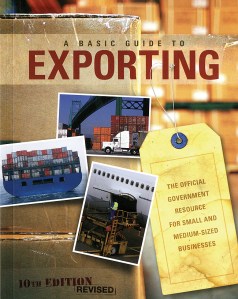
One popular title that is available in eBook format through many of our vendors as well as in print format is the 10th Edition Revised “A Basic Guide to Exporting”, a publication by the Department of Commerce. This publication supports President Obama’s National Export Initiative (NEI), which brings together the efforts of the public and private sector to increase U.S. exports. According to the U.S. Secretary of Commerce Gary Locke, 95 percent of the world’s consumers exist outside of the United States, and only 1 percent of the U.S.’s 30 million companies export their goods to these other markets.

A Basic Guide to Exporting is a how-to guide for small and medium-sized business to export their products. The publication is broken down into 17 chapters with each chapter focusing on one step of the exporting process from determining if exporting is right for your business to placing your products in foreign markets. The book defines export-related terminology so each topic is clear. Many questions are asked forcing the reader to assess each topic and thoroughly evaluate if exporting will work for them.

The book is also motivational; each chapter ends with a case study or profile of a successful company reflecting on their export experience identifying challenges, solutions, and lessons learned.

The book does not provide all of the answers, but serves as a central resource for how to export. There are many Government agencies, trade centers and associations, financial institutions, and seminars that exist and are available to give advice and guide companies. The publication lists each of these resources, explains their services and how they can be helpful, and provides website links and phone numbers for contacting each resource.

Forms are often a complicated part of any process – including exporting – and this publication is very helpful with forms. When referencing forms that may need to be filled out, the book includes a picture of the form and explains how to fill it out item by item. This book is the Government’s version of “Exporting Made Simple.”

A Basic Guide to Exporting is usable in eBook format because the information is broken down and well-organized making it easy to navigate on any mobile device or eReader. The eBook format is helpful because there are websites listed for outside resources and the reader can click on the websites and directly access the resource’s web page.

Regardless of what format is used to read this publication, A Basic Guide to Exporting is excellent guide for small and medium sized companies interested in learning how to export their products.

Other popular export-related Federal publications including a subscription to the latest regulations concerning import/ export can be found on our Essential Publications about Exporting collection.

HOW DO I OBTAIN “A Basic Guide to Exporting”?

  • Buy it at GPO’s retail bookstore at 710 North Capitol Street NW, Washington, DC 20401, open Monday-Friday, 9am to 4pm, except Federal holidays, (202) 512-0132.
  • Find it in a library.