A Pearl Harbor Conspiracy?

November 29, 2010

If you’re a history buff like me, a good historical mystery or controversy can make for excellent reading, even if you have doubts as to how mysterious or controversial the subject is. For example, did the American Government and President Franklin Delano Roosevelt have advance information about Japan’s attack on Pearl Harbor and was this fact later suppressed, either to conceal incompetence or because the President wanted an act of aggression to force American into war with the Axis Powers?

One of the most written-about pieces of this historical puzzle is the so-called “West Wind Execute” message, Japan’s code phrase to advise its diplomats abroad that an attack on America was imminent. In West Wind Clear: Cryptology and the Winds Message Controversy – a Documentary History, the National Security Agency’s Center for Cryptologic History has tackled the complex history of this message, when it was sent, and why its existence or non-existence has exercised the imaginations of academics, amateur historians, and conspiracy buffs since the 1940s. Crucially, it includes many key documents, some never before published, dealing with the voluminous Japanese signals traffic leading up to the Pearl Harbor attack and the timing of signals interception and decoding.

The thrust of West Wind Clear, which is backed up by meticulous and extensive research and documentation, is that the Winds messages did exist, but they were only one string among many Japanese communications instructing diplomats to burn their code books and take other 11th hour measures to prepare for war. In fact, the actual West Wind Execute message was broadcast after the attack began. The authors state that the main source of continuing debate over the “who knew and when” question resulted from a number of contradictory statements by a well-respected American cryptographer, Captain Laurence Safford, USN, whose reliability as a witness was undermined during the hearings of the 1946  Joint Congressional Committee investigation of the Pearl Harbor debacle. He was unable to produce any documentary evidence and was shown to have changed his story of a pre-December 7 West Wind Execute message numerous times.

Despite these findings from a committee whose members included some who gladly would have found neglect or malfeasance at the root of the Roosevelt Administration’s handling of the run-up to war, the West Wind controversy has persisted in popular accounts that lent credibility to the stories of Safford and Ralph Briggs, a radio operator who many years after the fact claimed to recollect a West Wind Execute message before the attack.

West Wind Clear makes a strong and well-documented case against a suppressed warning of war. For conspiracy theorists, who tend to operate within a closed intellectual system, no evidence is convincing enough, but to me, this story of bureaucratic confusion, stress, and misunderstanding seems much more authentic (and common) as an explanation for “the fog of war” surrounding the Winds messages. You can read this book here, order your own copy here, or find it in a library.


Striking Photos from the DC Area’s National Parks

November 24, 2010

For some reason, picture books keep on popping up here at Government Book Talk. Just the other day I blogged about a Marine Corps book of photos taken in Afghanistan. Today, it’s the National Park Service (NPS), with a splendid collection of photographs taken throughout the NPS National Capital Region. A Photographer’s Path: Images of National Parks Near the Nation’s Capital is a winning collection of images highlighting nature and history in the Greater Washington DC area.

The photos, all taken by Tom Paradis of NPS, highlight the beautiful (a royal red cardinal flower with ascending blooms of scarlet, shot in DC’s own Rock Creek Park), the bizarre (a leopard/tiger-patterned stalk of the grimly named American cancer-root, taken along the George Washington Memorial Parkway), and even the glitzy (neon lights illuminating the restored amusement park arcade façade at Maryland’s Glen Echo Park). As a longtime parks visitor and Old Dominion resident, I particularly enjoyed the photos of Dyke Marsh, a wetlands paradise within shouting distance of Alexandria, Virginia. There’s a really cool shot of a verdigrised cannon at Manassas National Battlefield Park, and this park also is represented among the nature photos.

Because the photographs are really the raison d’etre of this book, text is minimal, but Megan Nortrup of NPS has done a nice job of using a minimum of words to evoke the maximum mystique of each image. A Photographer’s Path is really an extraordinarily attractive publication and a testimony both to the talents of Government employees and the marvels of America’s National Parks, even in so urbanized an area as this one. You can get a copy of this brand new book here.


Afghanistan Up Close

November 22, 2010

Awhile back I blogged about the war in Afghanistan and international law. It’s a very big but useful leap to move from a thorough and scholarly study of the ins and outs of the rules of war or the legality of border crossings to Afghanistan: Alone & Unafraid. This beautiful coffee table book of photographs from the U.S. Marine Corps transports you from the scholar’s study directly to the landscape and people of that starkly beautiful and troubled country. The photographer, Lieutenant Colonel David A Benhoff, is a Marine Corps field historian who used his personal Camera to capture these striking images.

The first part of the book consists of photos shot in the countryside, using both color and black and white images to bring to life the mountains and plains, but above all the faces – faces of bearded men, women in head scarves, and smiling children – lots of children. Whether they smile or not, their direct and open gazes highlight the way in which these people view Colonel Benhoff, the American presence, and the world.

The second part of the book switches to the Afghan National Army, or ANA. Here, the images are more of men in the process of learning the arts of modern Western warfare than of green troops in basic training. As one marine sergeant comments, “These guys have been fighting forever….I’m not gonna teach him how to fight.”

I won’t go on an on about Afghanistan: Alone & Unafraid. The real impact of this finely produced book comes from the images, for which the front cover will have to suffice (see above). You don’t have to be an expert on Afghanistan or its troubles to be impressed by the photos, but their very vividness does bring home the continuing travails of an ancient land and its peoples, caught in the web of current international politics and crises. You can get a copy here  or find it in a library.


The World’s Most Enigmatic Manuscript

November 18, 2010

Have you ever read a Government publication that discussed such topics as the Hermetic tradition, astrology, demonic and angelic magic, alchemy, the Cabala, and the history of Hindu-Arabic numerals?

I thought not.

All of those esoteric subjects and more can be found in The Voynich Manuscript: An Elegant Enigma, published by the National Security Agency (NSA). The Voynich manuscript, often dubbed “the world’s most mysterious manuscript,” is a remarkable conglomeration, written in an unknown script and language and profusely illustrated with carefully rendered images of unidentified plants, enigmatic astronomical drawings, and puzzling human figures. Known to have existed since the late 16th century, when it was owned by the physician of that most enigmatic of rulers, the Emperor Rudolf II of Austria, it has been labeled variously as a magical manual, a herbarium, and a hoax. NSA’s interest stems from the widely held belief that the manuscript is enciphered. The noted American cryptologist William Friedman, as well as many other professionals and amateurs, have tried without success to crack the code – if code there is.

The Voynich Manuscript gives a brief history of this mystery, along with its possible connections to the topics I’ve listed above, and a discussion of the many unsuccessful attempts to crack the code or cipher, or at least discover whether it is written in a natural or artificial language. Although none has been successful, efforts are still underway, as even a brief perusal of the Internet reveals.

Is it a hoax? If so, the hoaxer must have labored for years to create it – surely too much effort for very little known return. Given the penchant of early modern scientists and philosophers to disguise their researches through the use of symbols and allegory, its obscurity is not unprecedented, although obviously extreme. One clue may reside in this book’s reference to the Art of Memory, a system of using physical or mental landmarks to enable the memorization of incredible amounts of information. Is the Voynich manuscript a colossal “memory palace”?

The Voynich Manuscript is more evidence that the world of Government publications is almost infinitely vast and surprising. It tells a great story and provides enough decipherment tables to delight the amateur and aficionado alike. You can read this very unusual publication here, order your own copy, find it in a library, or, to get a real feel for thee original (and maybe solve the mystery!), you can study the real thing, page by page. Note: Some readers have run into a problem in downloading the PDF of the Voynich Manuscript. Try clicking the link that says “PDF with text,” which downloads much quicker.


Tips for Travelers to Mexico

November 17, 2010

Guest blogger Ingrid Reyes-Arias sounds ready to pack her bags!

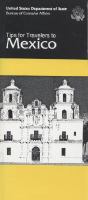
I’ve recently discovered how much I love to travel! It can be either extremely difficult or easy to plan for a trip.  My first few travel journeys were a disaster and I didn’t enjoy myself as much as I could have.  I do plan everything, but if you’re anything like me, you don’t always leave room for unexpected problems.  Now, wouldn’t it be great for someone else to plan your trip and give you useful tips? Well, if you’re a recent college graduate like me, that’s probably not the most money-saving option. So why not buy a booklet that has it all?

The U.S. Department of State Bureau of Consular Affairs has provided the American public with a guide, Tips for Travelers to Mexico, which is a great asset in any trip to Mexico. 

This guide begins with important information on “How to Have a Safe and Healthy Trip.”  There’s information on important things to know before you go, the U.S. Consular Information Program, health-related topics, safety tips, information on traveling using your car or a rental car, crime, and how to avoid legal problems. 

Not only does the guide provide this information, it also lists useful resources, such as the American Embassy, in case you lose your passport, contact information for U.S. Consulates General in different parts of Mexico, and U.S. Trade Centers. If, for some reason, you decide to purchase wildlife or wildlife products, this book provides a list of items that could be confiscated and possibly subject you to a fine because they are prohibited from international traffic.  

I would suggest getting this travel guide for your next trip to Mexico and taking it everywhere you go.  If you’re on a budget but need information, take the time to read over Tips for Travelers to Mexico and then pass it on to help others on their journeys.  You can browse through it here  or get your own copy via the GPO Bookstore. Note: Since this is an older publication, for the latest State Department information on travel to Mexico, go to this page.


From Segregation to Integration in the Armed Forces

November 10, 2010

This year’s Veterans Day program at the Government Printing Office features a speaker who served in the U.S. Army from 1947 to 1951, including 9 months on the front line in Korea. He’s a member of the Buffalo Soldiers organization, which preserves the memory of the six all African-American Army units formed after the Civil War for service in the American West. Their service, also commemorated at the Buffalo Soldiers National Museum, is a proud chapter in American history but also a reminder of the days when the armed forces were segregated by race.

Integration of the Armed Forces, 1940-1965 tells the story of how this not so creditable period in our history was brought to an end. This definitive administrative history provides a capsule history of African-Americans in the armed forces and how both the professed war aims of the U.S. and civil rights activists combined to bring this issue to the fore. Interestingly, the book also points out that the post-war attempt to maintain segregated military units through the use of quotas while expanding the pool of African-American servicemen by conscription caused even very traditional military men to reassess the need for integration for the sake of military efficiency, if nothing else. After President Truman’s 1948 Executive Order 9981, calling on the armed forces to provide equal treatment and opportunity for black servicemen, the barriers began to fall, although other issues, particularly housing, made the process of integration extend well into the 1960’s.

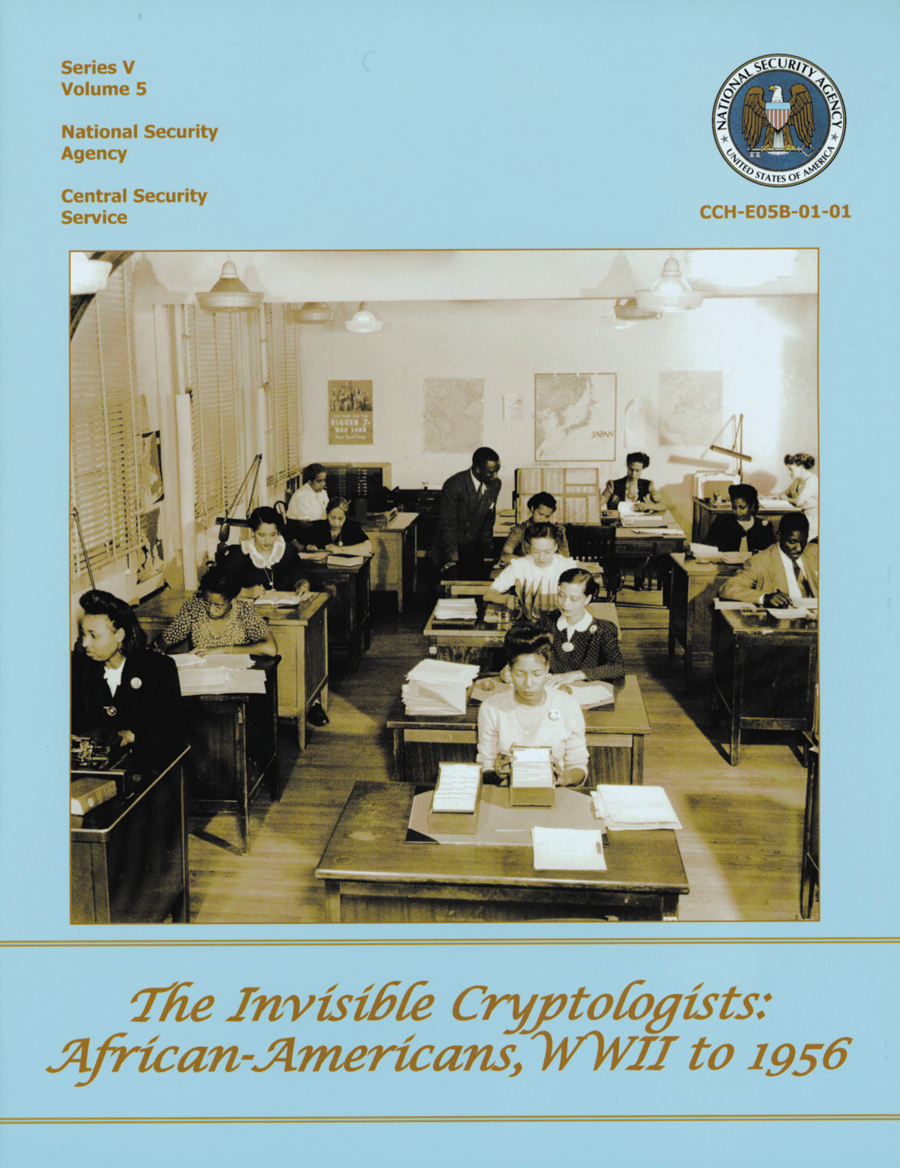
Even civilian employees in the defense establishment endured the pains of segregation and the slow evolutionary path of its demise. The Invisible Cryptologists: African-Americans, WW II to 1956 is a sort of microhistory of one small Government agency’s journey from racial injustice.  World War II saw what was then the Signals Intelligence Service (SIS) hire African-Americans, up until then employed mainly as messengers, to decipher commercial telegraph codes that might contain valuable information emanating from companies Tokyo, Berlin, and other international locations. After the war, the machine section (or “the plantation,” one of its numerous unflattering nicknames) used African Americans to transfer Russian intercepts from radio tapes to punch cards – a tedious job in hot and dirty conditions without any realistic possibility of promotion up and out.

Slowly, things began to change, as Executive Order 9981 and other developments ushered in an era when jobs as polygraph operators and, by the 1950’s, linguists and analysts, began to open up. The Invisible Cryptologists is at its best when it not only tells the story of segregation and integration, but lets some of the characters in that story speak for themselves. As one former employee said, “I was so involved in what the Agency stood for, and I wanted it to be better. I had a feeling things were going to get better. Everybody in there was not evil. I felt that one day African Americans would be able to break out of this box.”

Yes, it was a discreditable period, but these books show that our Government and our country, when confronted with injustice, were able to change. They’re both worth reading. You can find Integration of the Armed Forces here or buy a copy here. You can read The Invisible Cryptologists here or order a free copy here.


Tributes to Ted Kennedy

November 8, 2010

One of the most venerable traditions in the Federal Government is the publication of memorial addresses commemorating the careers of recently deceased Members of Congress. Even a cursory review via the Internet reveals that this practice extends back to the mid-19th century. That same review shows that, for the most part, despite the undoubtedly distinguished services of the individuals so honored, history has a way of eroding their fame, as it does for most of us.

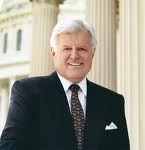
I suspect that this won’t be the case for Senator Edward M. Kennedy – at least not for a long time. His unique family background, with its achievements and tragedies, as well as his own long, eventful, and productive career in the Senate, should keep his fame alive for a generation or two, at least.

What strikes me about Edward M. Kennedy, Late a Senator from Massachusetts: Memorial Addresses and Other Tributes, though, is what it shows about the more human interactions among the late Senator and his colleagues. Regardless of party or ideological persuasion, it’s heartening to read about political opponents who still are able to find common ground on certain issues and act positively to address them. You’ll also find a fair amount of humor, as well as personal anecdotes that portray Senator Kennedy as a genuinely genial and thoughtful person and a man of his word both politically and personally. It’s not a bad way to be remembered, and makes me think that there may be more good will and understanding among our legislators than we’re usually led to think. It cheered me up to read this book.

 A typical quote, this one from Senator Lindsey Graham of South Carolina: “The only thing I can tell you about Senator Kennedy, without any hesitation, is if he told you he would do something, that is all you needed to hear. A handshake from him was better than a video deposition from most people.”

Edward M. Kennedy, Late a Senator from Massachusetts: Memorial Addresses and Other Tributes is available online at GPO. You can obtain either a paperback or handsome hardback edition here.


Secret Codes and the Founding Fathers

November 5, 2010

Never say “never.” I recently blogged about Thomas Jefferson’s Library, a reprint of our third President’s library catalogue as recreated by his secretary, Nicholas P. Trist. I’ve always been intrigued by Trist’s subsequent checkered diplomatic career, so I added, “Trist later had a controversial career as a diplomat – if I ever find a Government publication concerning him, you’ll hear all about it,” assuming that the chances of finding a book like that were practically nil. Meanwhile, I had requested copies of a number of publications from the Center for Cryptologic History at the National Security Agency to blog about. After they arrived, I began thumbing through Masked Dispatches: Cryptograms and Cryptology in American History, 1775-1900. Of course, the title of Chapter 15 is “Nicholas Trist Code.”  That’s why I decided to discuss this book first.

Masked Dispatches presents some of the Founding fathers as active participants in spycraft. America’s first espionage code was devised by Benjamin Tallmadge, General George Washington’s director of secret service, for use by a spy ring set up in New York in 1778. Another chapter discusses Washington’s supplying of invisible ink to Tallmadge. What would Parson Weems have thought?

Not surprisingly, Thomas Jefferson’s contribution to the world of codes and ciphers was a mechanical device – a wheel cylinder. Although not much came of this invention, which was developed some time before 1802, in 1922 the Army adopted a similar device, bearing out President John F. Kennedy’s White House remarks to a roomful of Nobel Prize winners: “I think this is the most extraordinary collection of talent, of human knowledge, that has ever been gathered together at the White House, with the possible exception of when Thomas Jefferson dined alone.”

Even less surprisingly, Aaron Burr, that brilliant and ever-controversial character, appears in Masked Dispatches, as does John Quincy Adams in his role as America’s representative at the Prussian court. While in Berlin, he developed a sliding strip cipher – apparently not the easiest device to use, but another tribute to early American ingenuity and aptitude for secrecy.

The book includes much more – a chapter on Civil War ciphers, the use of codes during the 1876 Tilden-Hayes Presidential election scandal, and several descriptions of State Department codes. Particularly intriguing are the many reproductions of the various codes and ciphers, so  puzzle lovers and would-be spies can spend hours encoding and decoding.

Masked Dispatches and other publications on the history of cryptology can be ordered from the Center for Cryptologic History area of the National Security Agency’s web site, or you can find it in a library. I’ll be blogging about some more of these excellent books in the near future.

Oh, wait, Nicholas Trist! According to Masked Dispatches, when he was Chief Clerk of the State Department, President James K. Polk sent him to Mexico as a secret agent in an effort to end the Mexican War. From Mexico, Trist wrote to Secretary of State James Buchanan and explained his design for a code. It was a book code, but the title of the particular book he used was a mystery until the 1980’s, when shrewd scholarly detective work revealed that it was an obscure book on the Spanish language (Verdaderos principios de la lengua castellana by Joseph Borras). Trist successfully negotiated the Treaty of Guadelupe Hidalgo, which ended the war, but only after ignoring his recall by Polk. The President accepted the treaty but fired his emissary – and Trist didn’t even get paid for his time in Mexico!


Terrorists as Armed Groups

November 1, 2010

I can’t think of too many Government publications that cover pirates, Vikings, the Teutonic Knights, the Italian Red Brigades, the Irish Republican Army, and the Taliban in one volume, but that’s what Armed Groups: Studies in National Security, Counterterrorism, and Counterinsurgency does. Published by the Naval War College, it’s a collection of essays by noted experts that expands our view of “terrorism” by using the term “armed groups,” which includes classic insurgents, terrorists, guerrillas, militias, police agencies, criminal organizations, mercenaries, pirates, drug cartels, apocalyptic religious extremists, orchestrated rioters and mobs, and tribal factions. Once you start reading, it’s hard to stop, although it’s certainly not light entertainment.

For me, the scariest essays were those dealing with domestic armed groups, like militias, white supremacist groups, and large organized street gangs. Although a lot of the examples mentioned were familiar to me, such as the post 9/11 anthrax scare and the arrest in subsequent years of several biological terrorist wannabes – seeing all of the examples assembled in one place convinced me of one author’s contention that domestic armed groups are no less menacing than the international organizations that get so much media exposure.

Armed Groups is a rich source for all kinds of background on the use of violence by the politically powerless and the broad array of organizations that practice it. It may not help you sleep better at night to know that such groups are so prevalent, but it’s indispensable information for anyone who wants to delve beneath the surface of an often-described but not always well-understood cultural, sociological, and political phenomenon. The book’s editor, Jeff Norwitz, has posted chapters on his own Web site. You also can browse Armed Groups here, get your own copy here, or find it in a library here.


An Award-Winning Blog?

October 27, 2010

That’s what we are, courtesy of the Metropolitan Washington, DC chapter of the International Association of Business Communicators (IABC) – the largest IABC chapter in the country.. Specifically, last night Government Book Talk received a Silver Inkwell Award of Merit in the Government and Military Communication category. We were one of 21 winners out of more than 300 nominations submitted.

I mention this, not because we’re pleased and proud to receive such an award – although we are – but because it tells us that we’re on the right track in creating a venue in which Government publications get some of the attention they deserve, not as stereotypical dull doorstops, but as vital, information-packed, and often entertaining books that simultaneously open up the multifaceted and invaluable work of the Federal Government to the public at large.

Well, we’re not here to win awards, but to get the word out about the best of Government publications, past and present. I’m heading back to the vast Government Book talk vaults for more reading matter and, as always, I’ll be sharing what I find with you. Thanks for following us!


A Bibliophile’s Delight

October 25, 2010

It’s about time I tackled some of the riches of the Library of Congress (LC) here. The question: where to begin? I was talking to someone about Thomas Jefferson last week, so why not start with the man who sold his library to the Federal Government after the British burned the congressional library during the War of 1812, thus supplying the foundation for today’s LC? The 1989 edition of Thomas Jefferson’s Library: A Catalog with the Entries in His Own Order restored to public view a unique copy of Jefferson’s personal shelflist, and one with an unusual history. Jefferson had sent along a copy of his personal library’s catalog with the books he sold to the Government, but it has been lost. Later, he asked Nicholas P. Trist, his secretary and future grandson-in-law, to recreate the catalog and its unique arrangement. (Trist later had a controversial career as a diplomat – if I ever find a Government publication concerning him, you’ll hear all about it.) After Jefferson’s death, Trist’s manuscript vanished until 1917, when it turned up in the library of Camp Wheeler in Georgia (talk about gold in your attic!) and was donated to LC, which published it for the first time in this edition.

The Introduction explains the provenance of the manuscript as well as its unusual structure, based on the system developed by Francis Bacon in his The Advancement of Learning. As the editors point out, “To twentieth-century eyes, parts of Jefferson’s classification, may seem puzzling. It is no surprise to find categories such as Modern British History under the broad division of history, but such unexpected subjects as Agriculture, Surgery, and natural History also appear there.” According to Jefferson’s world view, “history” meant all of the known facts about the physical universe, so these topic headings, seemingly so disparate to us, made perfect sense to the 18th century mind.

Although Jefferson’s methods of library cataloging are of great interest and carefully explained by the editors, my real interest was in Jefferson’s reading habits. Lots of books under Politics, of course – most of the great Enlightenment theorists and reformers are represented, including Cesare Beccaria, that great foe of judicial torture, whom I hold in particular esteem (trivia: his grandson was Alessandro Manzoni, author of I Promessi Sposi, the greatest Italian novel of the 19th century). Speaking of literature, Jefferson owned works by such robust authors as Tobias Smollett (Roderick Random), that most unorthodox clergyman, Laurence Sterne (Tristram Shandy and A Sentimental Journey), and even the somewhat shady Restif de la Bretonne. His poetry interests leaned towards the  Greeks and Romans, but he also had a place for Americans like Philip Freneau and Phyllis “Whateley.” As with the rest of his holdings, Jefferson’s collection of literature represents quintessential Enlightenment taste.

As you can tell, browsing through this remarkable catalog is great fun, even as it sheds light on the intellectual roots of our third President. It’s available online from LC and has been reprinted by a private publisher, although without the distinctive faux marbling covers (above). You can also find it in libraries.


Around the World with the Great White Fleet

October 15, 2010

I’ve always been more of a text person than an images person when it comes to reading history, but The World Cruise of the Great White Fleet has persuaded me to change my mind. This handsome volume, subtitled “Honoring 100 Years of Global Partnerships and Security” commemorates the centennial of the voyage of Teddy Roosevelt’s U.S. Great White Fleet around the world. I was a bit chagrined to learn, despite my having read a book about U.S. sea power a couple of years ago, that the ostensible cause of the cruise was a war scare with Japan that died down almost immediately – that had totally escaped my memory. In fact, Roosevelt’s desire to announce America’s emergence as a world naval power was the real motivation. Interestingly, when Senator Eugene Hale of Maine threatened to withhold money from the cruise, “the undeterred Roosevelt replied in his typically brusque and forthright manner that he already had sufficient funding to get the fleet to the Pacific, and if the Congress wanted the fleet to return to the Atlantic it would have to authorize the additional funding.” TR didn’t mince words, now did he?

Although the text concisely covers the ships, the mean, and the cruise of those dazzlingly white battleships and accompanying torpedo boat destroyers, the real pleasure is leafing through the illustrations. If you’re a ship fan, there are paintings and photos galore (left). I liked the photos of the crew at work, crossing the Equator, riding camels in Egypt, and just smiling into the camera all those years ago. In the narrative section, there are lots more photos and great reproductions of souvenir postcards, magazine covers, and banners from Hawaii, New Zealand, Australia (left), Japan (where instead of war, the fleet was greeted by overflowing hospitality) and China. It’s an outstanding collection, beautifully presented.

Produced by the U.S. Navy’s Naval  History & Heritage Command (and please check out its redesigned Web site, which features many images of the cruise), The World Cruise of the Great White Fleet has much to offer Navy buffs and anyone interested in history as word and image. You can get your own copy here or find it in a library here.