Getting Ready for the Next Quake

September 8, 2011

For us East Coasters, our recent experience with an earthquake was an unusual one. Of course, they’re comparatively rare here and not as strong as the ones that plague the West Coast, but it still makes you think about what would happen to your house (and you) if a really big one hit. What about my house? Even aside from how it would stand up structurally, I’ve got a lot of books and bookcases – maybe an avalanche waiting to happen. Then there are the china cabinets – it really wouldn’t do to have grandma’s best strewn across the room in shards, would it?

When I start thinking about stuff like this, my natural inclination is to find a book. For example, there’s Homebuilders’ Guide to Earthquake-Resistant Design and Construction, a Federal Emergency Management Agency (FEMA) publication that’s been around for years. It’s for homebuilders, but also for homeowners who want some good information about safe homes and how some things can be made safer. It’s based on the International Residential Code (IRC) and explains the basic principles of earthquake-resistant design and what it calls “above-code” measures that can further reduce the amount of damage from an earthquake. I like the idea of guidelines that not only meet but exceed the standards, especially when they can affect safety.

I must admit, though, that I’m not a Mr. Fix-it type. If I were to do an addition to my house, I couldn’t do what this book says needs to be done, but it at least tells me the things to ask a contractor about. Chapter 8, “Anchorage of Home Contents,” is different. It explains how to put locks on cabinets, anchor a PC, and other simple fixes that I can understand – and even do myself. There’s no question but that experiencing an earthquake concentrates the mind powerfully on such things!

Homebuilders’ Guide to Earthquake-Resistant Design and Construction is a useful and reliable guide to building and maintaining a house that can cope with earthquakes. You can look through it here, get a copy for home reference here, or find it in a library.


9/11 at the Pentagon – 10 Years Later

September 6, 2011

It’s hard to believe that the 10th anniversary of the 9/11 attacks is almost here. It was one of those events, like Pearl Harbor or the Kennedy assassination, which remains in the memory with startling clarity. From where I was working in the Government Printing Office (GPO), we could see the column of smoke from the strike on the Pentagon. Later, after Federal Government facilities in the DC area closed down, I walked from GPO to the Smithsonian’s National Museum of American History (I still remember a woman telling a Smithsonian guard that she had seen someone on the building’s roof – and who could tell what that meant in a world spinning out of control?) to meet my wife, who by some miracle got into the District and picked me up. On the way home, we drove past the Pentagon. It looked like the set of a disaster movie, the windows in the stricken area appearing as little orange rectangles of flame in a floodtide of black smoke. Several years later, after a reconstruction that left no sign of the horrific damage, I was in the Pentagon on business and our escort mentioned that we were walking in the corridor through which Flight 77 smashed – an awesome and saddening moment.

Several years ago, the Office of the Secretary of Defense published what must be considered the definitive story of September 11, 2001 at the Pentagon. Pentagon 9/11 is packed with eyewitness accounts of the strike, the fires, the deaths, and the heroism of rescuers in the face of almost unimaginable disaster. It’s chilling to read eyewitness descriptions of Flight 77 flying into the Pentagon (more than 1,300 interviews went into the development of this book), and uplifting to find out how some badly injured staffers and outside rescuers helped others to escape the resulting inferno. As the book notes, “There could not have been as many survivors of the attack on the Pentagon without the persistent and selfless acts of others – military and civilian – who were themselves caught in the maelstrom or came unhesitatingly from elsewhere in the building to respond to the desperate circumstances facing the many victims trapped in the wreckage.”

Another chapter describes the efforts of firefighters to extinguish those orange rectangles of flame I saw that day, fed by thousands of gallon of jet fuel. Other sections cover medical treatment of the victims, securing the building, helping the survivors and the families of the victims, and the gigantic effort that allowed the Pentagon to be declared “open for business” on September 12. It’s a dramatic story, and Pentagon 9/11 tells it both factually and with compassion.

You can access this excellent book in multiple ways. To browse though it, go here. GPO still has copies of the first edition and will soon have a 10th anniversary edition with a new Foreword by Secretary of Defense Leon Panetta. You can also find an eBook version here. Finally, it’s also available in many libraries. Whichever format you choose, you’ll be rewarded by an unforgettable reading experience.


“A Great Thing for the Cause”: Black Soldiers in the Civil War

September 1, 2011

Of the writing and publishing of books about the Civil War, there shall be no end – especially since this year marks the beginning of the sesquicentennial of that most violent and consequential conflict. I’m a bit of a Civil War buff myself and just finished reading Fields of Blood: The Prairie Grove Campaign, which was fought in Arkansas – one of the forgotten fronts of the war. In discussing the subsequent military career of Union General James G. Blunt, it mentioned his victory at Honey Springs in Indian Territory the following year. Now I’ve learned that Honey Springs “marked the first time in the war that black soldiers in regimental strength had carried out a successful offensive operation against Confederate troops.” I’ve also learned that the 54th Massachusetts, made famous by its gallant but unsuccessful attack on Confederate Fort Wagner, as depicted in the film Glory, later steadied Union forces at a crucial juncture of the battle of Olustee – the largest Civil War battle fought inFlorida.

How did I learn all of this? By reading a new book that I predict will become a classic – Freedom by the Sword: The U.S. Colored Troops, 1862-1867. I’ve been waiting for this book ever since I learned that the Army’s Center of Military History was working on it. Although the use of black troops by the Union has been studied from many angles, this is the most thorough operational history I’ve seen – in other words, this is a detailed account, by region, of the actual military activities in which these troops engaged. For every heroic charge, these soldiers, like any soldiers in war, spent lots of time patrolling, garrisoning, and guarding. As someone once noted, army life in wartime is made up of long stretches of boredom punctuated by short periods of extreme fear. In addition, poorly managed logistics and spotty (to say the least) medical services created their own special negatives, especially for troops that did not always receive adequate (or any) training. Reading about these gritty details is an excellent corrective to the romantic take on war so prevalent among Civil War soldiers before they “saw the elephant,” a colloquialism of the day for engaging in combat.

Freedom by the Sword also addresses problems unique to black soldiers – the possibility of re-enslavement or massacre if captured. After the notorious slaughter of black soldiers by Nathan Bedford Forrest’s Confederates at Fort Pillow, which soon was recognized by the South as “a propaganda weapon they had handed their opponents,” retaliatory actions and counteractions were succeeded by a mutual realization that such crimes cut both ways. In these cases, fighting for freedom had a steep price, but one that ex-slaves and free blacks alike were prepared to pay.

Freedom by the Sword is an important scholarly resource based on wide-ranging research, as well as a compelling account of men whose real accomplishment, beyond military victory, was “to assert their right to full citizenship and, by extension, that of all their kin.” Serious students of the Civil War will be using this book for many years to come. You can browse through Freedom by the Sword here, get your own copy in either paperback or hardcover, or page through it at a library.


Stormy Weather

August 29, 2011

It’s been a pretty eventful week. Last Tuesday, we experienced a rare and slightly unnerving earthquake, immediately followed by the biggest hurricane to hit this region since Isabel in 2003. I’m glad it’s too early for a blizzard, but the way things have been going, I may be over-optimistic.

I used multiple media sources to keep an eye on Irene. One of the best is the National Hurricane Center (NHC), which provided (and as of 5 a.m. this morning still was providing) the latest on the storm’s present and future movements. NHC is the source for much of the data re-disseminated by national, regional, and local weather outlets, so using its Web site really gets you right to the heart of forecasting when you really want the latest and most authoritative information on hurricanes, tropical storms (TS), and tropical depressions (TD). At first glance, I did feel a certain depression myself when I checked in with the NHC this morning – the first thing I saw was a map showing TS Jose and TD Twelve. Fortunately, Jose seems destined to zip off into the further reaches of the North Atlantic and dissolve, while poor TD Twelve, lacking even a cool name beginning with K, hasn’t shaped up into anything much – yet. Things could change, though, so I think I’ll keep on checking…

Although most of us around the DC area escaped any major damage, the reports of heavy going along the coast and flooding in Vermont should remind us to take hurricane warnings seriously. I read a news story quoting a former NHC head, who said his worst case scenario is a hurricane that does much less damage than advertised, followed by a really deadly one – because the public will refuse to take the warning seriously the second time around. We tend to forget quickly in these multimedia news-saturated days, but we should remember the colossal disaster that was Katrina. If you need a reminder, reports from the White House and Congress are still available online – and in print, here and here.

I, for one, plan to keep a wary eye on both the NHC and Earthquake Hazard Program Web sites.  That way, I’ve got earthquakes, hurricanes, tornados, blizzards, ice storms, and heat waves covered. After the events of the past week, I’m convinced that anythingcan happen!


Whole Lot of Shaking

August 26, 2011

We here at Government Book Talk like to keep up with current events. It was really easy to do so on Tuesday, because the event conveniently came to us. Since I work at the Government Printing Office, where the movement of heavy equipment is not all that uncommon, I first thought that the vibrations I was feeling derived from a web press or other behemoth being shifted around downstairs. When my office began to shake, however, I was willing to reconsider my hypothesis – seriously reconsider it.

Today, back at GPO (which, by the way, was built to last for the ages, as anyone who works here will testify), it occurred to me that a Government publication about earthquakes might be a timely subject for a blog post. I checked in with the U.S. Geological Survey’s Earthquake Hazards Program. Very cool! There are links for reporting an earthquake,  “shake maps” (left) for depicting shaking intensity (and now I know what that shaking feels like!), and best of all, a page about our very own 5.8 Virginia special, which occurred at 01:51:04 PM at epicenter (I admit it – I didn’t look at my watch).

My favorite page, though, is a tectonic summary of the quake with a link to earthquake information about the Old Dominion that includes lots of resources. After all, I live in Virginia and like to keep up with the happenings, especially when those happenings make things fall off my shelves. Also, if you have a plotter, you can print out a poster and hang it on a wall – as long as you’re confident that another “event” will let it stay there.

Well, time to start thinking about this weekend’s hurricane – National Hurricane Center, here I come!


Sometimes Friends Just Seem Hard to Come By!

August 19, 2011

Guest Blogger Matthew Brentzel looks at relations between the law enforcement and intelligence communities.

I think all of us can agree that sometimes inter-organizational communication can be difficult.  Working with others just doesn’t always seem to work out in the end.  Issues can arise―such as misinterpretation of information, withholding information, and biased opinions―which in turn can lead to difficulties between two organizations.

That’s why I chose to write a blog post on Can’t We All Just Get Along?: Improving the Law Enforcement-Intelligence Community Relationship, from the National Defense Intelligence College.  Not only does it involve my interest in intelligence analysis, but it also brings in aspects of the work I currently do.  Although I have seen how hard it can be to come to an agreement sometimes, it can be done.  This is the main message the authors of Can’t We All Just Get Along? try to get across. “When the relationship between these communities works, it works very well.”  The authors set out to prove this theory with a series of essays that show the nature of this relationship.  One article in particular really shows what happens when a successful relationship occurs.  It focuses on the likelihood of domestic terrorism possibly developing in the U.S. prison system.  It goes on to explain the relationship between the Federal Correctional Intelligence Initiative and the U.S. Bureau of Justice Administration.  This relationship has allowed the Bureau of Prisons to evolve successfully into a network that shares gang and terrorist intelligence data.

This book brought to my attention a topic that I had never really thought about before.  I look forward to some day entering into the field of intelligence analysis, but never really thought about how the intelligence community interacted with law enforcement agencies. If I ever thought about it at all, I probably imagined that these conflicting agencies would cooperate easily with each other and supply the information each needed.  This publication revealed real differences, such as their relative willingness to divulge intelligence and their ideas about what intelligence actually is.  Finally, it covers the history of these two communities and how this history impacts their relationship today.

I would highly recommend this publication for anyone in the law enforcement or intelligence field.  In addition, I would recommend it to anybody interested in collaboration between Government agencies.  Feel free to visit the GPO bookstore and take a look at this publication here, or check out the online version via PDF format here.


The Remarkable Stories of Women in Congress

August 11, 2011

When I was a kid, I would read from an old set of encyclopedias – just randomly, but with a predilection for famous and not-so-famous people. As a result, I still remember at least something about the lives of the Roman-era scholar-king Juba II of Mauretania, the Seneca chief and orator Red Jacket, the World War I field marshal August von Mackensen, and scads of other people.  It’s useless knowledge, I suppose, but it entertains me and is tolerated (mostly) by friends and family members.

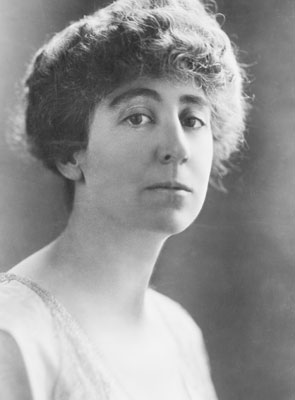
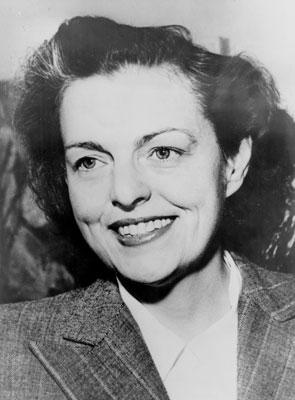
Given my fondness for small-scale biographies, a hefty reference work like Women in Congress, 1917-2006 could put me out of action for days. These meticulously researched biographies, including sources for further reading and a photograph of each Senate or House member discussed, are a treasure trove for fans of American politics and history and trivia buffs alike. Jeannette Rankin, the first woman elected to Congress and a life-long pacifist, voted against going to war withGermany in 1917, didn’t get elected again until 1940, and promptly voted her conscience again by opposing the declaration of war againstJapan after Pearl Harbor. Like the others in this book, Rankin was more than just a source for a Jeopardy question – in the 1960s, she was still marching for the causes she held dear.

Although many of those discussed in Women in Congress, especially prior to the 1960s, arrived via the “widow’s mandate” – succeeding their deceased husbands in office – many of them stayed to make significant careers on their own. Take Edith Nourse Rogers, for example. After being elected to her husband’s seat in the House of Representatives, this self-proclaimed “Republican by inheritance and by conviction” served 18 terms, noted for her advocacy on behalf of veterans, steadfast opposition to fascism in Nazi Germany andItaly, and dedicated anticommunism during the Cold War.

After World War II, Helen Gahagan Douglas, a former movie actress, was labeled “The Pink Lady” by an opponent targeting her liberal political views. She, in turn, enriched the language of American politics by dubbing her final opponent, Richard M. Nixon, “Tricky Dick.”

Millicent Fenwick, a fiscally conservative but independent Republican of the 1970s and 1980s, was the inspiration for the Lacey Davenport character in Garry Trudeau’s long-running Doonesbury comic strip)

Okay, I’d better stop or this post will never end. Every one of the entries in Women in Congress is worthy of mention, and I know a lot of you have your own favorites, but I just can’t do it all. Happily, you can browse as much as you want right here, get your own copy, or find it in a library.

Oh, and did you know that King Juba II of Mauretania married Cleopatra’s daughter?


Health Information the Easy Way

August 9, 2011

Guest blogger Nancy Faget lets us know about a great resource delaing with women’s health.

I’m a lazy reader.  Yes, I am primarily a scanner more than a reader.  (I hope this doesn’t put me in danger of losing my status as a librarian!) I appreciate a lot of white space and concise writing, which is exactly what the HHS Office of Women’s Health (OWH) has achieved in this new publication:  A Lifetime of Good Health:  Your Guide to Staying Healthy

This publication provides reminders, highlights, and checklists for any female at any stage of life (immunizations through Medicare services). The checklists beginning on page 6 are great tools to help you keep up with tests and immunizations.  Did you know, for example, that they recommend a TDP vaccine every 10 years? 

OWH has produced a slick new publication hitting all the high points.  It’s worth having  available in any family’s stash of medical reference material. You’ll find it to be a great handy reference  and an easy read – I promise!  To read (or scan!) A Lifetime of Good Health, or for more great information on any health issue, contact your local Federal depository library for assistance.


New Caledonia and the New Yorker?

August 4, 2011

From time to time I’ve talked about the little World War II-vintage booklets produced to familiarize Army and Navy personnel with various places around the world that the fight against the Axis might compel them to go. Some of those places are still hot spots, like Iraq. Others were obscure then and remain so today, unless you’re a specialist or someone with an inordinate curiosity about things in general (me).

For out of the way places, you can’t beat New Caledonia. This large island in the Southwest Pacific, a French territory only now looking towards a future referendum on independence, is populated by Melanesian Kanaks and French settlers and has an economy centered on nickel mining. During the war, however, it was the island’s strategic position that made it the subject of a Pocket Guide to New Caledonia. Not long after the fall of France in 1940, the French colonials on the island revolted against their pro-Vichy governor and declared for the Free French, so the island and the harbor at Noumea, the colony’s capital, became a huge naval repair, troop transit, and logistical nexus for America’s armed forces. TheU.S. presence had a huge and generally positive economic, political, and cultural impact on the Kanak population, but stimulated an almost paranoid reaction among Free French officials, who saw the American “occupation” as a threat to their colonial dominance. Clearly, our soldiers and sailors needed some guidance on how to handle these complicated crosscurrents!

Pocket Guide to New Caledonia does a very good job of outlining New Caledonia’s history and cultures, with an emphasis on tolerance and understanding of the customs and faiths of others, whether French or Kanak. It also manages a light touch when discussing some topics, to wit:

“People living in the tropics or subtropics are likely to be exposed to       hookworm and other intestinal parasites, and to be bothered by dysentery. To check this latter ailment, the natives eat a certain grass which is called ‘dysentery grass’ and is supposed to have a herbaceous effect. Our troops have made not a few noble experiments with this particular variety of hay, and up to date nobody has been hurt, though the record is confused as to whether anybody has been helped. So if you see a creature eating grass inNew Caledonia, don’t shoot! It may be the corporal.”

Like other wartime publications, this booklet also benefited from the work of a well-known artist. While Dr. Seuss handled malaria prevention, the great New Yorker cartoonist George Price drew theNew Caledonia short straw (see left) and provides a comic glimpse at GI life in the tropics.

I enjoyed browsing through Pocket Guide to New Caledonia. The Government did a good job of prepping folks for trips to places that most of them never imagined going, and now we can make the same visit thought these little time capsules. You can read it here or in a library.


Wings in Orbit: An Interview, Part II

July 28, 2011

On Tuesday, we posted the first of a two-part interview about Wings in Orbit: Scientific and Engineering Legacies of the Space Shuttle, 1971-2010, a new book published by NASA to mark the ending of the U.S. Space Shuttle Program. Here’s Part 2 of that interview with Robert Crippen, the pilot of the Space Shuttle Columbia’s first orbital flight into space, Dr. Helen Lane, Editor-in Chief of Wings in Orbit, Wayne Hale, Executive Editor, and Dr. Kamlesh Lulla, Co-Editor.

 GovBookTalk: Wings in Orbit is beautifully illustrated. Do you have a favorite photograph or other image?

 Bob Crippen: My favorite is the cover shot of the Orbiter in space.

 Helen Lane: Every person involved with this book has a favorite, so there are at least 300 favorites, depending on who you asked.  I was so involved with each graphic that it is impossible to decide.  One of the privileges of working for NASA is the wonderful images and our graphic artists.  We had two outstanding artists to provide these images.

However, I am partial to the first protein crystal, shown on page 433, and the flight of the 747 carrying the orbiter over the desert, page 109. The photos of preparing the Space Shuttle for flight at the Kennedy Space Center are fantastic, but because we had to reduce the size, we did not get the full benefit.  All the photos and many of the graphics are available online through the Johnson Space Center or Kennedy Space Center.

Kamlesh Lulla: In my view, the Space Shuttle provided the scientific community with stunning views of our own home planet. It captured both the natural beauty and human drama: the book contains examples of both. My favorite image in the book is oil fires inKuwait, imaged by the Shuttle crew during a 1991 flight.

Wayne Hale: I particularly like the one of the Shuttle silhouetted against the sunrise colors of the atmosphere.  But there are so many beautiful illustrations, it is hard to pick out just one.

GovBookTalk: From your perspective, how has the Shuttle program advanced space exploration and how will that be reflected in NASA’s future endeavors?

Bob Crippen: It has shown we can operate on a frequent basis of sending crews in space, but more important it has shown the broad range of tasks that humans can accomplish in space.  That knowledge will be invaluable in planning our next major goal in human space flight.

Helen Lane: The focus of the book was the legacy of the Space Shuttle – what would it be remembered for in 10 years.  So much as been made of its failures that we wanted to explore its accomplishments, unlike most of the popular writings.  It is a complex story.  However, I think there are several aspects that changed human space flight forever, and maybe international relationships.

The Orbiters can easily take six and sometimes more people into space.  The Shuttle began when theU.S.was opening up technical jobs to women and minorities.  The Space Shuttle provided the golden opportunity to expand the astronaut core to these folks, plus a wide variety of careers from physicist to astronomer to medical doctors.  No other nation has done that.  Now, it is totally accepted that anyone with the talents, health, and desire can go into space – see the commercial space programs.

The Space Shuttle era moved from the competition (Space Race) between countries to collaborations.  As astronaut Mike Foale (p. 144) said, “When we look back 50 years to this time, we won’t remember the experiments that were performed, we won’t remember the assembly that was done.  What we will know was the countries came together to do the first joint international project, and we will know that that was the seed that started us off to the moon and Mars.”  There were many countries, including our former enemies,Russia and Japan, along with the Europeans involved in the space shuttle.  We flew folks of many nationalities, religions, and cultures.

Many today say it is the Hubble.  The Space Shuttle enabled the Hubble Space Telescope to perform well, leading to major discoveries.  However, through our work with Hubble, we learned to do big construction and repair projects in space.  The Space Shuttle taught us that the human is extremely capable of completing complex tasks in space.  Now, it is accepted that we can do this, but 30 years ago most thought that it was only the dreams of the science fiction writers.

The human, plant, and animal research provides the bases for belief that humans can survive long space flights, probably leading to long-duration stays, including growing their own food.  However, the research provided a warning too – from changes in space craft components, e.g. atomic oxygen, along with orbital debris and radiation, much of which we learned from entering space 135 times.

Finally, 135 re-entries taught us a lot about high attitude hypersonic flight, a must to enable  complex vehicles to come back to earth, manned or unmanned. Prior to the Shuttle program, there were calculations that provided models.  Now, we have real data to use for future modeling of space craft re-entry back to Earth.

Kamlesh Lulla: I agree with Helen. In addition, it is important to remember that each Shuttle mission was a mission to planet Earth. It was both a scientific laboratory and an in-orbit classroom for researchers and educators around the globe.

Wayne Hale: The Shuttle was envisaged as merely one part of a space infrastructure that would eventually lead to missions to myriad places in the solar system.  Since the Nation decided not to invest in the infrastructure to go farther, we learned the most we could from the shuttle; how to operate in space with large teams of people; how to fly safely through planetary atmospheres on the way to and from space.  These are all valuable lessons which will allow future endeavors in space to be successful.

GovBookTalk:  Now that the book is done, what are your feelings about it – and about the Space Shuttle program as well?

Bob Crippen: I am very proud of the book and the Space Shuttle program.  Both are major accomplishments and everyone involved can be proud of the results.

Helen Lane: As with most of the folks that worked in the Space Shuttle program, it is a bittersweet ending – the ending of the longest human space program using these vehicles over and over again in the extremely dangerous environments of space. So I am both sad and proud of working for NASA.

Wayne Hale: It was a privilege to be a part of history; to be a team member trying to do something difficult – nearly impossible – and extraordinarily valuable in the largest sense of the word; historic.  I feel nothing but pride and a sense of gratitude for being part of it.

Kamlesh Lulla: I believe new opportunities will emerge as this era comes to an end. We will continue our journey!

To browse a copy of Wings in Orbit online, click here: http://books.google.com/books?id=aEZo8dHqJbIC&printsec=frontcover&dq=wings+in+orbit&hl=en&ei=kOYeTs3ABYrV0QHi4PDXAw&sa=X&oi=book_result&ct=result&resnum=1&ved=0CDAQ6AEwAA#v=onepage&q&f=false

To purchase a print copy, click here: http://bookstore.gpo.gov/collections/wings.jsp

To purchase Wings in Orbit as an eBook, click here: http://books.google.com/ebooks?id=aEZo8dHqJbIC&dq=wings%20in%20orbit&as_brr=5&source=webstore_bookcard

To find it in a library, click here: http://www.worldcat.org/search?qt=worldcat_org_all&q=wings+in+orbit


Wings in Orbit: An Interview, Part I

July 26, 2011

 A few weeks ago, I blogged about Wings in Orbit: Scientific and Engineering Legacies of the Space Shuttle, 1971-2010, a new book published by NASA to mark the ending of the U.S. Space Shuttle Program. Wings in Orbit authoritatively documents the many accomplishments of the Space Shuttle program from its origins to the present. Beginning with a Foreword by astronauts John Young and Robert Crippen, this compelling book provides clear, accurate, and authentic accounts from NASA’s best subject matter experts, including aerospace engineers who worked with the shuttle program, and leading experts from the science and academic communities. The book captures the passion of those who devoted their energies to the program’s success for more than three decades. It focuses on their science and engineering accomplishments, the rich history of the program, and the shuttle as an icon in U.S. history.

In a first for Government Book Talk, we’ve  interviewed some key players in the development of Wings in Orbit. It’s an honor to welcome Robert Crippen, the pilot of the Space Shuttle Columbia’s first orbital flight into space, Dr. Helen Lane, Editor-in Chief of Wings in Orbit, Wayne Hale, Executive Editor, and Dr. Kamlesh Lulla, Co-Editor, for the first of a two-part discussion about this outstsanding new NASA book.

GovBookTalk: Given the immensity of the Space Shuttle program, it must have been challenging to select the topics for Wings in Orbit, and the authors to write about them. How did you go about that?

Bob Crippen: The intent was to try and capture the legacy of the Shuttle program, the good and the bad.  That helped focus the type of subjects to include.   We wanted to provide data that would help designers of future space craft.  Also it was important to capture the educational aspects of the program because that is a fundamental objective of NASA to stimulate young people to become interested in science and math.

Helen Lane: It was very difficult to determine the material to include, and that took over a year.  We used the definition —  must be an accomplishment that is used in other space programs or on Earth.  Second, we wanted a book of less than 700 pages so we knew we could not cover it all.  With the help of an extraordinary editorial board and interviews from leaders in the Space Shuttle program, we worked with all the NASA centers to finalize the work to be discussed. 

Once we knew the topics, we went to the engineers and scientists that did the work including those that were retired or worked in academia or industry. The contributors were volunteers.  They worked on the book because of their dedication to the Space Shuttle and the desire to let the public understand this program within the context of the accomplishments.  Once we got started, as you can see from the number of authors, we got great participation.

Kamlesh Lulla: The focus of this book is scientific and engineering accomplishments from the Space Shuttle program. This clarity of focus helped us organize the contents.

Wayne Hale: Selecting topics was not hard; eliminating topics and holding writers to a specific page count, that was hard.  Once we outlined the book — about 1/3 on the Shuttle system and how it operates, about 1/3 on the scientific achievements of the shuttle and its payloads, and 1/3 on all the rest, history, society, etc., the community poured out with suggested topics and articles.  It was an overwhelming flood.  Our editors and their staff had to work day and night to reign in the various authors.  The engineers, scientists, and managers associated with the space shuttle over thirty years were yearning to tell the story from their perspective.  Unfortunately we were not writing a set of encyclopedia volumes and were limited to just one book.  So it was a constant tugging match over what got in and what was left out.  I wish somebody would publish the Encyclopedia of the Shuttle because there is enough material out there.  Unfortunately, the magnificent team that was in place during the years of development of the Wings in Orbit book have largely dispersed and getting the people back together to write that encyclopedia would be nearly impossible.

GovBookTalk: The Space Shuttle has a place in our culture as well as in science and technology. For example, I was surprised to find out that both Rush and Judy Collins have written songs about the Shuttle. Did you run across some things along those lines that surprised you?

Helen Lane: We at NASA are probably more aware of the cultural aspects as we have movie companies, TV companies, artists, and musicians that regularly visit along with most sports teams.  Our problem was what to include in this book.

Kamlesh Lulla: I was surprised at the depth of influence Space Shuttle has on our cultural landscape: schools have been named after shuttle astronauts, Girl/Boy Scout local logos have used shuttle; the list goes on and on.

Wayne Hale: The poets, songwriters, movie script writers, and other interpreters of the shuttle really did surprise us.  I am constantly amazed at the outpouring of creative artistic work that surrounds a technological achievement like the Shuttle.  As engineers, we are trained to be “tight-lipped and technical” or as a former administrator once said “I’ll have feelings when I’m dead”.  The impact to society has been anything but tight lipped.  Spaceflight inspires the romantics and the dreamers; always has and always will.

GovBookTalk: One of the most interesting aspects of the book is the number of scientific and technical discoveries made as spin offs from the Shuttle program. Could you tell us about some of those?

Bob Crippen: I believe the book captures a large number of spin offs, an important element of the program.  This provides the public some more concrete results of the program.

Helen Lane: There are hundreds of spin offs.  NASA defines spin offs as technologies that can be patented and then licensed to commercial companies.  There is a Web site that provides the some details: http://www.sti.nasa.gov/tto/shuttle.htm  We chose examples to cover the gamut from health care to industrial applications.  This web site also highlights some of the sciences, such as the discussion on pages 421-429 on the bioreactor. 

GovBookTalk: Were there questions as to how to handle the story of the Shuttle accidents?

Bob Crippen: The two terrible accidents were an important part of the program.  We wanted to tell the story accurately to minimize the probability of future accidents.

Helen Lane: Yes, there was a lot of discussion on how to handle the accidents.  The author, Randy Stone, was a flight director during both accidents.  He tells the story as honestly as he could, but at the same time tried to transmit the emotions of the workers at the agency.  It was felt very hard, and he tried to give the reader a feel for that.  We wanted to have enough technical details for the reader, but not overwhelm them.  The crews’ story was discussed with the goal of a very dignified accounting of their deaths.

Wayne Hale: From the outset we promised ourselves that we would tell the truth and examine the bad as well as the good.  Randy Stone did a magnificent job of covering those complex events in a chapter that I wish could have been much longer.  We always learn more from our mistakes and failures than from our successes.  The genius of American creativity is that failure does not stop us but spurs us on to achieve even greater things.

GovBookTalk: The authors obviously interviewed quite a few people. Did they have any particularly memorable conversations with former astronauts or other well-known figures in the space program?

Helen Lane: Yes, we had the opportunity to interview the original engineers and leaders that built the Space Shuttle, including Bill Lucas (former director of  from Marshall Space Flight Center, Bob Thompson (first program manager), Chris Kraft ( founder of Mission Control as well as major leader), Aaron Cohen (former director of Johnson Space Center and directly involved with the orbiter, esp. the thermal protection system), and R.J Thompson, major manager of building the Shuttle main engines.  I was thrilled to be able to talk with them and hear their insights. They provided much of the wisdom and direction for the topics to include in the book. Much of their experiences are recorded on the NASA oral history, available online.  

Kamlesh Lulla: These interviews enriched the contents of the book. Their insights were very valuable in compiling the contents.

Wayne Hale: There were so many and almost every one was memorable; it would be really hard to pick out the top.  I was particularly impressed by the scientists and their discussions of the achievements of the experiments carried by the Shuttle.  As a Flight Director, we were always working on the next flight and rarely had time to look back and read the papers from those experiments which were often published months later.  There was far more in those scientific results than I realized. [End of Part 1]

Look for Part 2 of the interview later this week!

To browse a copy of Wings in Orbit online, click here: http://books.google.com/books?id=aEZo8dHqJbIC&printsec=frontcover&dq=wings+in+orbit&hl=en&ei=kOYeTs3ABYrV0QHi4PDXAw&sa=X&oi=book_result&ct=result&resnum=1&ved=0CDAQ6AEwAA#v=onepage&q&f=false

To purchase a print copy, click here: http://bookstore.gpo.gov/collections/wings.jsp

To purchase Wings in Orbit as an eBook, click here: http://books.google.com/ebooks?id=aEZo8dHqJbIC&dq=wings%20in%20orbit&as_brr=5&source=webstore_bookcard

To find it in a library, click here: http://www.worldcat.org/search?qt=worldcat_org_all&q=wings+in+orbit


The Great Beyond…On Earth?

July 20, 2011

Guest blogger Camille Turner takes a look at where our universe has come from and where it is going.

I think like many members of my generation, my interest in space sparked with  Steven Speilberg’s E.T. – The Extra-Terrestrial, and then there was no looking back. Cosmos and Culture: Cultural Evolution in a Cosmic Context from the NASA History Series maintains a lot of those same wonderful aspects as a Spielberg flick; it’s enjoyable, it defines itself through the particulars of science and the unknown, and it creates a universal appeal by tapping into the bigger questions of how culture itself has evolved to what it is today.

One of the really amazing aspects to this book is that it isn’t just an exploration of space: experts from an array of fields including science, history and anthropology, all explore culture in the context of the cosmos. By investigating a set of recurring principles, particularly evolution, the authors of each section relate a principle to the expansion of the cosmos, in such a way that makes perfect sense.

For instance, when evolution was first established as a concept, it was considered blasphemous. Now, it is not only accepted in every arena of science; it is a symbol of cultural values, as can be seen by the fish on the back of cars containing the word “Darwin” and occasionally growing feet.

The authors of Cosmos and Culture take these widely accepted ideas and push them one step further: if we see evolution everywhere, even in the evolution of technology and physics, how could the cosmos not be evolving too?

Even better: the entire book is written in layman’s terms. By utilizing diagrams when needed and expanding on common metaphors to maintain the reader’s interest, this seemingly intimidating volume becomes a manageable and enjoyable read.

For scientists, space enthusiasts and history lovers alike, this volume transcends most lines between astronomical and sociological research to fuse into a compelling detailing of where our universe has come from and where we are going, both culturally and evolutionarily.

You can get a copy from our online bookstore or find it in a library.