Down to Earth Publications for Earth Science Week

October 12, 2018

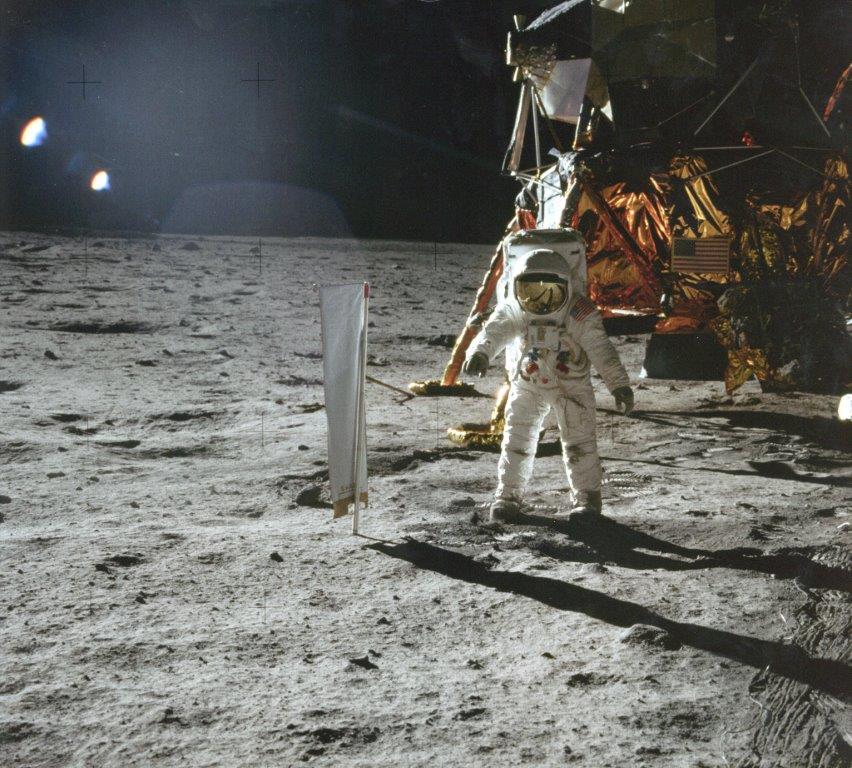
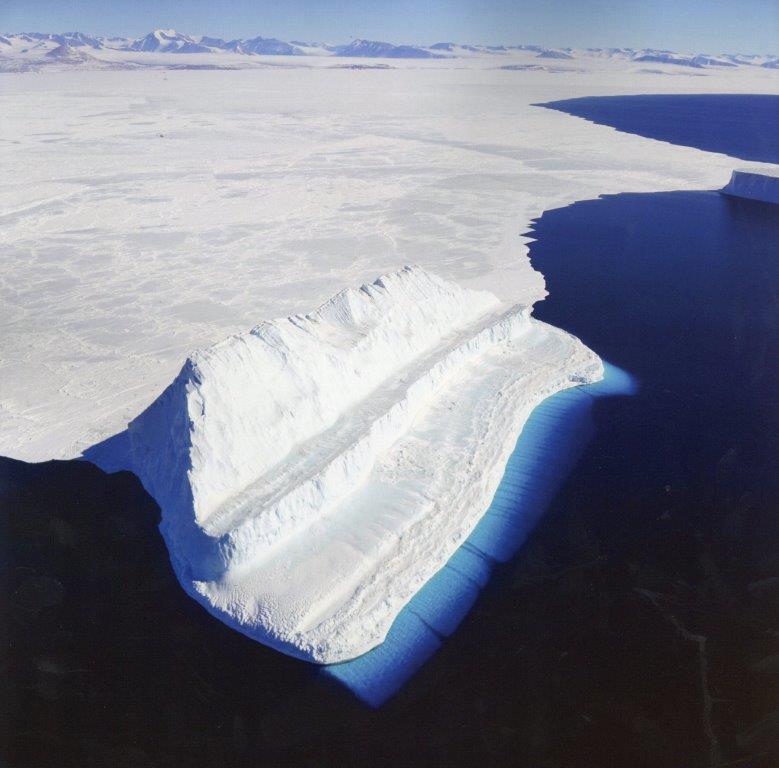
How does our Earth inspire you? That’s the question being asked this Earth Science Week 2018, which has a theme of “Earth as Inspiration.” According to earthsciweek.org, Earth Science Week was started in 1998 “to help the public gain a better understanding and appreciation for the Earth sciences and to encourage the stewardship of the Earth.” And what better way to gain an understanding of Earth than through reading and hands-on educational activities?

Know a youngster who has a knack for science? NSI: Nature Science Investigator from the U.S. Forest Service is a self-guided activity book for children ages 8–14 that enables students to become the scientist. They’ll have the opportunity to try their hands in all sorts of roles, from an ecologist to a soil scientist to an atmospheric scientist to a biological scientist and more! With this booklet, students are introduced to outdoor, hands-on activities like looking for litter, finding the tallest tree, rubbing a sample of soil and inspecting insects. No matter where they like to explore – in the schoolyard, at home, in the park, or at the playground – young nature science investigators can spend their day as a real scientist with this booklet.

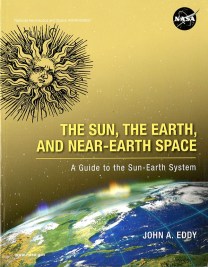
It’s no secret that it’s pretty darn hot on the sun, but how much do we really know about the climate of space or the sun? For those interested in the events and processes that connect the Sun to the Earth, The Sun, the Earth, and Near-Earth Space: A Guide to the Sun-Earth System from NASA is an obvious choice. This colorful book provides concise explanations and descriptions of what is now known about the Sun-Earth System and offers a particular emphasis on space weather and sun-climate.

Also from NASA comes Our Changing Atmosphere: Discoveries From EOS Aura. This booklet details discoveries from the Earth Observing System satellite Aura, which was launched in 2004. According to NASA, “Aura’s measurements will enable us to investigate questions about ozone trends, air quality changes and their linkage to climate change.” Aura is part of the Earth Science Projects Division of NASA, a program dedicated to monitoring the complex interactions that affect the globe using NASA satellites and data systems.

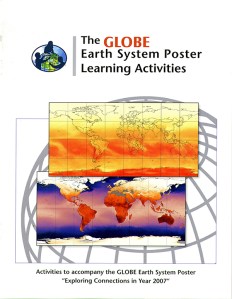
The GLOBE Earth System Poster Learning Activities book is designed to help scientists, teachers, students, and others understand variations in environmental parameters by examining connections among different phenomena measured on local, regional and global scales. It demonstrates the relationships between and among environmental data. Readers will learn about how the environment is the result of the interplay among many processes that take place on varying time and spatial scales. This book also explains that environmental processes are not bound by oceans, mountains, or country delineations, but are truly global in scope. Also available from the GPO Bookstore to go along with this publication is Satellite Images to Accompany the GLOBE Earth System Poster Learning Activities Guide.

We hope we’ve inspired you to immerse yourself in all that these Earth publications have to offer! There really is no place like Earth (well, that we know of at least!), so it’s vital that we take the time to learn about our planet and be thankful for all it has to offer. What are you waiting for? Head over to the GPO Bookstore and get down to Earth!

The GPO Online Bookstore – Easy Access to Federal Publications

HOW DO I OBTAIN THESE RESOURCES?

Shop Online Anytime: You can buy eBooks or print publications —with FREE Standard Shipping worldwide— from the U.S. Government Online Bookstore at https://bookstore.gpo.gov.

Shop our Retail Store: Buy a copy of any print editions from this collection at GPO’s retail bookstore at 710 North Capitol Street NW, Washington, DC 20401, open Monday–Friday, 9 a.m. to 4 p.m., except Federal holidays, Call (202) 512-0132 for information or to arrange in-store pick-up.

Order by Phone: Call our Customer Contact Center Monday through Friday, 8 am to 5:30 pm Eastern (except US Federal holidays). From US and Canada, call toll-free 1.866.512.1800. DC or International customers call +1.202.512.1800.

Visit a Federal depository library: Search for U.S. Government publications in a nearby Federal depository library. You can find the records for most titles in GPO’s Catalog of U.S. Government Publications.

Find more than a million official Federal Government publications from all three branches at www.govinfo.gov.

About the author: Blogger contributor Cat Goergen is the PR Specialist in GPO’s Public Relations office.


Far Out NASA Publications You Need for National Space Day 2018

May 3, 2018

“That’s one small step for man. One giant leap for mankind.” – Neil Armstrong

Faster than you can quote the great Neil Armstrong, National Space Day 2018 is here. National Space Day is celebrated annually on the first Friday of May. It was created by Lockheed Martin in 1997 as a day to promote the STEM (science, technology, engineering and mathematics) fields among young people and to encourage youth to learn more about space and space exploration. From calendars to books, the GPO bookstore has everything your favorite stargazer needs to celebrate the solar system.

We all know NASA. In layman’s terms, it’s where some of the most brilliant people build rocket ships and send men floating into space. Even a simple Google search for “What does NASA do?” will turn up the result that the agency “is responsible for science and technology related to air and space.” But don’t believe everything you read on the internet. GPO is here to tell you this: NASA technology is not just made for air and space. It’s all around us. Right here on planet earth.

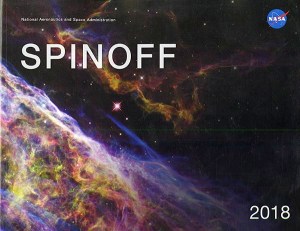
Spinoff 2018 is a newly-released book published by NASA that highlights this commercialized NASA technology, which can be found in lots of everyday items from phones to furniture to cars. We won’t give it all away, but in the book, NASA walks readers through initial uses for the technology and how these spinoffs have helped make advances in health and medicine, public safety, energy and the environment, information technology, and more. You’ve got to read it to believe it.

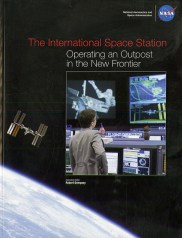
Need a little more space? Your wish upon a luminous point in the night sky is our command. The International Space Station: Operating an Outpost in the New Frontier is also available for purchase now. NASA’s flight director, who authored the book, takes readers through the operations of the International Space Station from the perspective of the Houston flight control team.

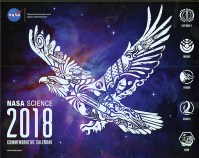
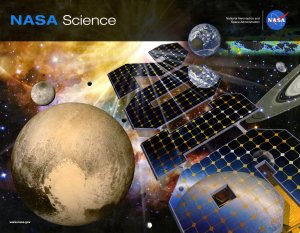
Know someone who’s a total space cadet? Keep them organized with the NASA Science 2018 Commemorative Calendar, still available for purchase. It’s full of mesmerizing photos of the stars, galaxy and everyone’s favorite planet … Earth, of course. Sorry, other planets. You’re great with all your rings and ice. Just not very inhabitable.

Go on, get lost in space. Check out these publications.  May the fourth be with you!

The GPO Online Bookstore – Easy Access to Federal Publications

HOW DO I OBTAIN THESE RESOURCES?

Shop Online Anytime: You can buy eBooks or print publications —with FREE Standard Shipping worldwide— from the U.S. Government Online Bookstore at https://bookstore.gpo.gov.

Shop our Retail Store: Buy a copy of any print editions from this collection at GPO’s retail bookstore at 710 North Capitol Street NW, Washington, DC 20401, open Monday–Friday, 9 a.m. to 4 p.m., except Federal holidays, Call (202) 512-0132 for information or to arrange in-store pick-up.

Order by Phone: Call our Customer Contact Center Monday through Friday, 8 am to 5:30 pm Eastern (except US Federal holidays). From US and Canada, call toll-free 1.866.512.1800. DC or International customers call +1.202.512.1800.

Visit a Federal depository library: Search for U.S. Government publications in a nearby Federal depository library. You can find the records for most titles in GPO’s Catalog of U.S. Government Publications.

About the author: Blogger contributor Cat Goergen is the PR Specialist in GPO’s Public Relations office.


GPO Has You Covered for the Great American Eclipse

August 16, 2017

On August 21, 2017, the entire United States will be looking to the skies for a phenomena that rarely happens. For the first time in almost 100 years, the total eclipse will occur primarily in the U.S. and could be one of the most important astronomical events of the century for our country.

The National Aeronautics and Space Administration (NASA) has released several printouts and downloadable content to use in the build up to this historic event. By visiting eclipse2017.nasa.gov, you can learn all about the importance of this particular eclipse, where to best view it, and when it should occur in your location.

GPO’s Federal Depository Library Program hosted a free webinar on the upcoming eclipse, “Government Information on the Great American Eclipse.” It was presented by Linda Zellmer, Government Information & Data Services Librarian / Liaison to Physical & Natural Sciences & Agriculture at Western Illinois University. Access the recording of the session and the accompanying slides. You can also visit nationwide Federal depository libraries to access more information on the eclipse from NASA.

Being able to unite the masses in the interest of science can be pretty rare, but as this is a particularly rare event, it has even drawn the honor of being formally recognized on the House floor as representative Mike Bost likened the event to the “astronomical Super Bowl.” The U.S. Government Publishing Office (GPO) is proud to offer the digital copies of these rare instances on govinfo.gov.

The Catalog of U.S. Government Publications (CGP) also has several items that pertain to the eclipse such as:

In the U.S. Government Bookstore, you can find several items from NASA that should be able to keep the magic of the Great American Eclipse going for the rest of the year. You could check out the Astronomical Phenomena for the Year 2017, which offers dates for solar equinoxes, solstices, and phases of the Moon along with other dates for various planetary phenomena and interesting astronomical information for the year.

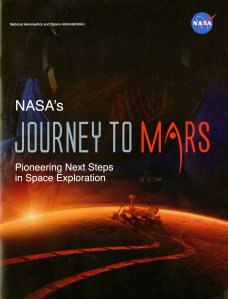
There’s also the popular title NASA’s Journey to Mars: Pioneering Next Steps in Space Exploration, which communicates NASA’s strategy and progress to learn about the Red Planet, to inform us more about our Earth’s past and future, and may help answer whether life exists beyond our home planet.

If you’re more of a visual learner, there is also the NASA Science 2017 wall calendar that covers fascinating images of the earth, heliophysics, astrophysics, Pluto’s “Heart” and other planetary images and more.

The collections never end, and with GPO’s help you can make learning about space and astronomy a fun journey for your entire family.

HOW DO I OBTAIN THESE RESOURCES?

Shop Online Anytime: You can buy eBooks or print publications —with FREE Standard Shipping worldwide— from the U.S. Government Online Bookstore at http://bookstore.gpo.gov.

Shop our Retail Store: Buy a copy of any print editions from this collection at GPO’s retail bookstore at 710 North Capitol Street NW, Washington, DC 20401, open Monday–Friday, 9 a.m. to 4 p.m., except Federal holidays, Call (202) 512-0132 for information or to arrange in-store pick-up.

Order by Phone: Call our Customer Contact Center Monday through Friday, 8 am to 5:30 pm Eastern (except US Federal holidays). From US and Canada, call toll-free 1.866.512.1800. DC or International customers call +1.202.512.1800.

Visit a Federal depository library: Search for U.S. Government publications in a nearby Federal depository library. You can find the records for most titles in GPO’s Catalog of U.S. Government Publications.

About the author: Blogger contributor Scott Pauley is a Writer and Editor in GPO’s Library Services and Content Management office.


May 5th is National Astronaut Day and National Space Day!

May 4, 2017

Over the years Americans have had many moments of shared pride over the accomplishments and dedication of astronauts who have risked their lives to study and explore outer space. What’s less known about these amazing space flights of John Glenn and so many other space adventurers is the technical and scientific wonders that have been developed in support of the American space program, but now live on as products we enjoy every day.

One place to learn about these “space wonders” is the publication Spinoff. Published by NASA’s Technology Transfer Program, the ongoing issues of Spinoff uncover specific products that have been born out of the works of scientists and new product developers in support of the space program. Later on, many of these products find new lives as everyday items that benefit all of us.

At bookstore.gpo.gov you can obtain copies of recent issues of Spinoff. Go to the front page search bar and simply type in Spinoff.

It’s important to recognize that NASA funding goes far beyond simply supporting space exploration.  As new technologies are developed, NASA often collaborates with American businesses. Every dollar spent on technology for space missions is a dollar spent here on Earth, benefiting the economy. And all of us.

Stop by bookstore.gpo.gov not only to get your copy of Spinoff but to look for other publications from NASA that celebrate the adventurers and incredible national dedication of men like John Glenn and women such as Sally Pride.

HOW DO I OBTAIN THIS IMPORTANT RESOURCE?

Shop Online Anytime: You can buy eBooks or print publications —with FREE Standard Shipping worldwide— from the U.S. Government Online Bookstore at http://bookstore.gpo.gov.

Shop our Retail Store: Buy a copy of any print editions from this collection at GPO’s retail bookstore at 710 North Capitol Street NW, Washington, DC 20401, open Monday–Friday, 9 a.m. to 4 p.m., except Federal holidays, Call (202) 512-0132 for information or to arrange in-store pick-up.

Order by Phone: Call our Customer Contact Center Monday through Friday, 8 am to 5:30 pm Eastern (except US Federal holidays). From US and Canada, call toll-free 1.866.512.1800. DC or International customers call +1.202.512.1800.

Visit a Federal depository library: Search for U.S. Government publications in a nearby Federal depository library. You can find the records for most titles in GPO’s Catalog of U.S. Government Publications.

About the author: Blogger contributor Ed Kessler is a Promotions Specialist in GPO’s Publication and Information Sales program office.


Two NASA Publications You Need to Discover

January 3, 2017

A lot of stuff goes on at NASA besides pioneering the next steps in space exploration and taking humanity to the next achievable frontier. There’s simply no end to the research and technology that world’s biggest space agency puts forth.

GPO makes available two publications that are great examples of such space-related science.

033-000-01378-7_tour-of-the-electromagnetic-spectrumTour of the Electromagnetic Spectrum

Radiation is everywhere, at all times. Radio waves, microwaves, infrared waves, gamma rays, x-rays, and ultraviolet rays are types of radiation. Physicists call them electromagnetic waves. Together, these electromagnetic waves constitute the electromagnetic spectrum. Each wave type carries a distinct level of photon energy.

This publication breaks down the anatomy, behaviors, and categories of waves. And it shows how scientists visualize wave using NASA science examples.

033-000-01328-1_the-sun-the-earth-and-near-earth-space-a-guide-to-the-sun-earth-750The Sun, the Earth, and the Near-Earth Space: A Guide to the Sun-Earth System

Our space environment is complex system of electric currents, magnetic fields, and radiation. All of those forces affect near-Earth and Sun-Earth energy relationships.

This publication uses tables, graphs, and illustrations to detail space-weather and sun climate phenomena. It’s a valuable reference for understanding that big, close star’s effect on our planet.

Author John A. Eddy writes in his introduction (making a great conclusion to this blog post), “In a world of warmth and light and living things we soon forget that we are surrounded by a vast universe that is cold and dark and deadly dangerous, just beyond our door.”

HOW DO I OBTAIN THESE PUBLICATIONS?

Shop Online Anytime: You can buy eBooks or print publications —with FREE Standard Shipping worldwide— from the U.S. Government Online Bookstore at http://bookstore.gpo.gov.

Shop our Retail Store: Buy a copy of any print editions from this collection at GPO’s retail bookstore at 710 North Capitol Street NW, Washington, DC 20401, open Monday–Friday, 9 a.m. to 4 p.m., except Federal holidays, Call (202) 512-0132 for information or to arrange in-store pick-up.

Order by Phone: Call our Customer Contact Center Monday through Friday, 8 am to 5:30 pm Eastern (except US Federal holidays). From US and Canada, call toll-free 1.866.512.1800. DC or International customers call +1.202.512.1800.

Visit a Federal depository library: Search for U.S. Government publications in a nearby Federal depository library. You can find the records for most titles in GPO’s Catalog of U.S. Government Publications.

About the author: Blogger contributor Chelsea Milko is a Public Relations Specialist in GPO’s Public Relations Office.


Celebrate the Life of a Global Space Pioneer and American Legend – John Glenn

December 9, 2016

BringingTheFutureWithinReach_033-000-01377-9Few Americans have made a greater personal contribution to America than the recently departed John Glenn. His life path defines what it is to place your country first and to do it with grace and style. He put his own life in harm’s way to move the nation to the forefront of space exploration at a time we needed it most.

He traveled to outer space and through the halls of the U.S. Senate as Senator of Ohio. He also was an activist for keeping America safer by introducing legislation to curb worldwide nuclear proliferation.

Now, you can bring home publications that honor Glenn’s contribution to our space effort. Bringing the Future Within Reach: Celebrating 75 Years of the NASA John H. Glenn Research Center, 1941-2016 provides in-depth descriptions of the many research specialties NASA embarked upon that helped the U.S. win the race to the moon; and that championed electric propulsion, considered key to future space flight.

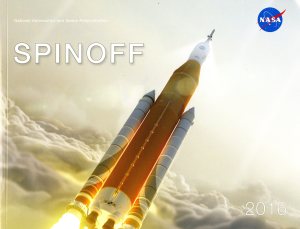
033-000-01375-2_spinoff-2016Another publication, Spinoff, 2016 features dozens of commercial products derived from NASA technology that are improving everything from medical care and software tools to agricultural production and vehicle efficiency.

To find other publications related to John Glenn, visit the Government Publishing Office’s online bookstore at http://bookstore.gpo.gov  and type “John Glenn” into the search box. You will be directed to publications that honor his life and the contributions he’s made to our space program and to exciting technologies that lie just ahead in the near future.

For that young girl or boy in your life, here’s a true role model depicting how one person can make such a significant difference by following his or her dream, and by living an exemplary life that shows anything is possible.

HOW DO I OBTAIN THESE PUBLICATIONS?

Shop Online Anytime: You can buy eBooks or print publications —with FREE Standard Shipping worldwide— from the U.S. Government Online Bookstore at http://bookstore.gpo.gov.

Shop our Retail Store: Buy a copy of any print editions from this collection at GPO’s retail bookstore at 710 North Capitol Street NW, Washington, DC 20401, open Monday–Friday, 9 a.m. to 4 p.m., except Federal holidays, Call (202) 512-0132 for information or to arrange in-store pick-up.

Order by Phone: Call our Customer Contact Center Monday through Friday, 8 am to 5:30 pm Eastern (except US Federal holidays). From US and Canada, call toll-free 1.866.512.1800. DC or International customers call +1.202.512.1800.

Visit a Federal depository library: Search for U.S. Government publications in a nearby Federal depository library. You can find the records for most titles in GPO’s Catalog of U.S. Government Publications.

About the author: Blogger contributor Ed Kessler is a Promotions Specialist in GPO’s Publication and Information Sales program office.


NASA Publications Hotter Than the Sun

September 7, 2016

It seems like there’s no end to the number of articles and books written about and by NASA. But then again, there’s no end to the research and technology that NASA puts forth. Of course, it’s not nearly enough to fill the cosmos that the agency so intrepidly explores. Yet, as always, NASA’s pioneering science and technology research endeavors to take humanity to the next achievable frontier.

If you’re ready to sponge up more of NASA’s scientific discoveries, or you’re just interested in all things space-related, check out these publications available through GPO. Countdown to liftoff…3…2…1…

 NASA’s Journey to Mars: Pioneering Next Steps in Space Exploration

033-000-01376-1In this century, NASA may have the answer to the David Bowie song “Life on Mars?” The agency’s goal is to send humans to an asteroid by 2025 and then to Mars in the 2030s. This booklet serves as a mission framing document.

Four decades of robotic missions and spaceflight have developed and tested the technologies needed for exploration of deep space. Data gathered by surface scouts show that the Martian environment may be suitable—and sustainable—for a human presence. In response, NASA is leveraging core capabilities to “logically progress from current Earth Reliant operations…to Earth Independent pioneering.”

While much remains to be learned about extending human presence in space, “we are closer to sending humans to Mars than at any point in NASA’s history.” Just in case life is ever found on the Red Planet, or any planet for that matter, NASA has an Office of Planetary Protection. No kidding.

Spinoff, 2016

033-000-01375-2_spinoff-2016According to NASA’s 2016 budget, the Federal Government spends about 0.5% of its purse on the world’s biggest space agency. That means NASA receives $0.005 of every taxpayer dollar. It pours those cents into groundbreaking technologies, many of which have been successfully commercialized through the Technology Transfer Program.

Spinoff, 2016 profiles the novel inventions that have spun off into handy applications for transportation, health and medicine, information technology, and even consumer goods. Here are a few highlights:

  • An astronaut G-suit saves women from post-birth hemorrhaging.
  • A Mars methane detector can identify dangerous gas leaks.
  • A CO2 recovery system allows microbrewers to more efficiently carbonate beer.

As Administrator Charlie Bolden writes in his foreword to book, NASA’s work has resulted in “technology coming down to Earth…[these] spinoffs have made an impact on nearly every facet of American life.”

Reference Guide to the International Space Station

033-000-01373-6The International Space Station (ISS) is both the most complex scientific effort and the most expensive project ever undertaken. This reference guide details the unique research accommodations, support systems, and international partnerships that lend credibility to the ISS’ position as an extremely agile—and awe-inspiring—platform of discovery.

This orbiting laboratory of weightless, extreme conditions has a low-orbit path over 90 percent of the Earth’s population. Tricked-out features enable it to execute research that cannot be done anywhere else. Eighty-three countries that have been involved with its activities. And astronauts use it as a “proving ground” to solve difficult challenges associated with establishing viable human activity beyond Earth. The ISS is truly a symbol of the best of human knowledge and cooperation.

Fun fact: you can sign up to receive text messages from NASA whenever the International Space Station passes over your location!

HOW DO I OBTAIN THESE NASA PUBLICATIONS?

Shop Online Anytime: You can buy eBooks or print publications —with FREE Standard Shipping worldwide— from the U.S. Government Online Bookstore at http://bookstore.gpo.gov.

 Shop our Retail Store: Buy a copy of any print editions from this collection at GPO’s retail bookstore at 710 North Capitol Street NW, Washington, DC 20401, open Monday–Friday, 9 a.m. to 4 p.m., except Federal holidays, Call (202) 512-0132 for information or to arrange in-store pick-up.

Order by Phone: Call our Customer Contact Center Monday through Friday, 8 am to 5:30 pm Eastern (except US Federal holidays). From US and Canada, call toll-free 1.866.512.1800. DC or International customers call +1.202.512.1800.

Visit a Federal depository library: Search for U.S. Government publications in a nearby Federal depository library. You can find the records for most titles in GPO’s Catalog of U.S. Government Publications.

About the author: Blogger contributor Chelsea Milko is a Public Relations Specialist in GPO’s Public Relations Office.


A NASA Facility “Making the Future” for 75 Years

May 18, 2016

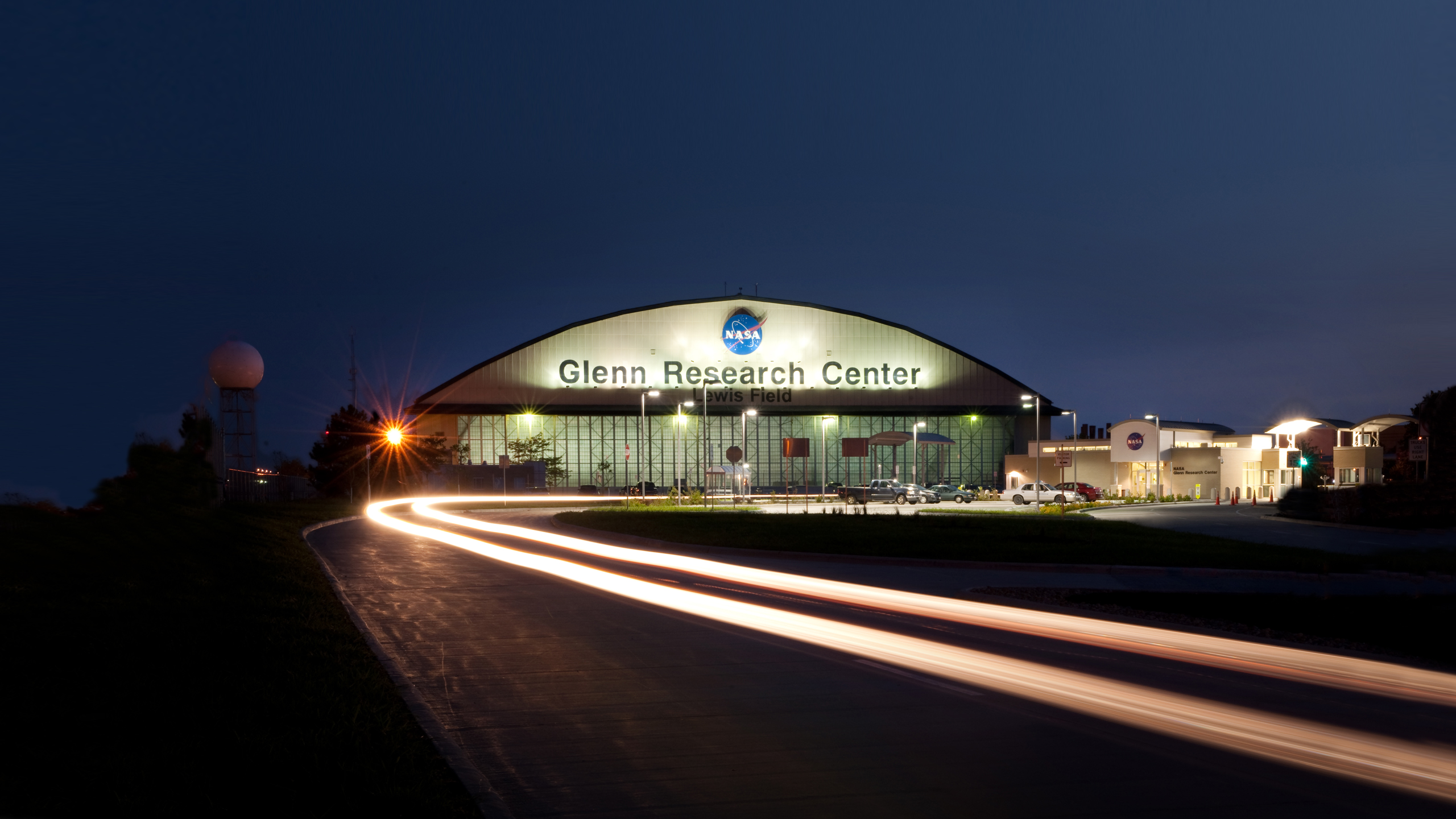
Adjacent to Cleveland Hopkins International Airport in Ohio, there’s a collection of buildings where early experiments in turbojet engines, liquid hydrogen fuel, and wind energy were conducted. A place whose technologies once helped the United States to win the moon race and today contribute to our journey to Mars. That facility, the NASA John H. Glenn Research Center, celebrates 75 years of advancing spaceflight technology in 2016. The center was renamed after John H. Glenn, the former astronaut and U.S. Senator, in 1999. He was the first American to orbit Earth in 1962 and became the oldest person to fly in space in 1998 aboard a mission on Space Shuttle Discovery.  The major aeronautics and space test ground spotlights its own decades-long history in a new publication made available through GPO.

grc_night

Bringing the Future Within Reach: Celebrating 75 Years of the NASA John H. Glenn Research Center, 1941-2016

Born of the Yankee ingenuity of World War II, the research center began operations in 1942 under the name of Aircraft Engine Research Laboratory (AERL) and the auspices of NASA’s predecessor, National Advisory Committee for Aeronautics (NACA). The center was first tasked with improving aircraft engines to compete with Nazi Germany. It quickly established itself as a foremost test facility for high-speed flight and jet engine technologies. In the early, post-war years of NASA, the center managed several large projects, most notably contributing to Project Mercury, the first manned mission. Since that time, “the three pillars of the center’s success have been its robust physical assets, its astute leadership, and the accomplished staff.”

BringingTheFutureWithinReach_033-000-01377-9The 1990s was a particularly prolific time for the center. It manufactured the Advanced Communications Technology Satellite (ACTS) deployed on the Space Shuttle Discovery in 1993. In 1994, it was assigned management of the power system for the U.S.-Russian Mir Cooperative Solar Array program. And before the successful Martian landing of the Pathfinder rover, NASA’s Jet Propulsion Laboratory (JPL) turned to the center to conduct three performance tests. Over the years, lessons learned from high-energy propellants experiments have propelled the aerospace industry into the future.

Today, the Glenn Research Center is an unparalleled aeropropulsion and alternative energy trendsetter. The center is credited with developing the ion engine used on the Deep Space 1 probe and the power system currently in use on the International Space Station. It is home to the Zero-Gravity facility, the largest drop tower of its kind. It also hosts the Propulsion System Lab, the nation’s premier altitude flight simulation facility. Another section tests how spacecraft will survive the unique and hostile conditions of deep space. And the Photovoltaic Lab studies how to power future spacecraft going to Jupiter and Saturn.

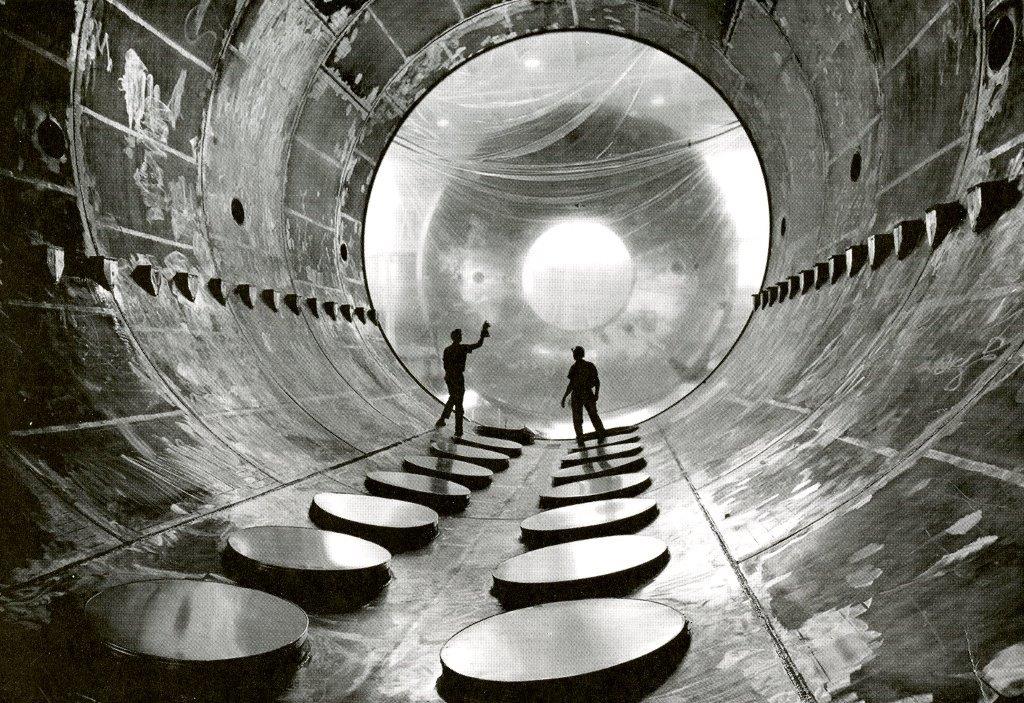
Credit: 1960s photo of Interior of the 20-foot-diameter vacuum tank in the Electric Propulsion Laboratory.

Credit: 1960s photo of Interior of the 20-foot-diameter vacuum tank in the Electric Propulsion Laboratory.

The center’s aeronautics expertise has considerably advanced NASA mission-critical technology and leadership inside and outside the lab. Remarking on the center’s anniversary, Sen. John Glenn said such work is “important in maintaining a leadership in this kind of research, this kind of emphasis on the new and the unknown” and to “maximize the research return right here on Earth.” Seventy-five years of “making the future” in aerospace R&D and solar system exploration is just the beginning for the Glenn Research Center.

HOW DO I OBTAIN THIS PUBLICATION?

Shop Online Anytime: You can buy eBooks or print publications —with FREE Standard Shipping worldwide— from the U.S. Government Online Bookstore at http://bookstore.gpo.gov.

 Shop our Retail Store: Buy a copy of any print editions from this collection at GPO’s retail bookstore at 710 North Capitol Street NW, Washington, DC 20401, open Monday–Friday, 9 a.m. to 4 p.m., except Federal holidays, Call (202) 512-0132 for information or to arrange in-store pick-up.

Order by Phone: Call our Customer Contact Center Monday through Friday, 8 am to 5:30 pm Eastern (except US Federal holidays). From US and Canada, call toll-free 1.866.512.1800. DC or International customers call +1.202.512.1800.

Visit a Federal depository library: Search for U.S. Government publications in a nearby Federal depository library. You can find the records for most titles in GPO’s Catalog of U.S. Government Publications.

About the author: Blogger contributor Chelsea Milko is a Public Relations Specialist in GPO’s Public Relations Office.


30 Years Since Challenger

January 27, 2016

January 28th marks 30 years since the Space Shuttle Challenger disaster. On that day in 1986, the NASA Space Shuttle orbiter broke apart a mere 73 seconds into flight. The vehicle disintegrated over the Atlantic Ocean. All seven crew members perished. Among them was Christa McAuliffe, who would have been the first teacher in space. Initial post-incident inquiries determined a catastrophic O-ring failure caused the explosion; an investigative commission cited a flawed decision-making process was also to blame. Such a tremendous loss put the program on hiatus and Congress on an earnest search for answers.

Challenger crew. Front row from left, Mike Smith, Dick Scobee, Ron McNair. Back row from left, Ellison Onizuka, Christa McAuliffe, Greg Jarvis, Judith Resnik. Image source: www.nasa.gov

Challenger crew: Front row from left, Mike Smith, Dick Scobee, Ron McNair. Back row from left, Ellison Onizuka, Christa McAuliffe, Greg Jarvis, Judith Resnik. Image source: www.nasa.gov

GPO’s Federal Digital System makes available the “Investigation of the Challenger Accident” report issued by the House Committee on Science and Technology. The result is 450 pages of findings and concerns. Page seven beautifully sums up the heavy task:

“Perhaps it is arrogant to dissect and interrogate relentlessly projects and programs that bring home repeated A’s for achievement and accomplishment. However, all of us— NASA, the Committee, the Congress and the Nation—have learned from the Challenger tragedy that it is wisdom to do so, and it is a reflection of respect for the human fallibility that we all possess.”

The Space Shuttle program resumed not long after the investigation closed. Its three decades of stratospheric history is the subject of NASA’s “Celebrating 30 years of the Space Shuttle Program.” Contained within the coffee table-worthy publication is dazzling color photography. Each page has quick facts on every orbiter mission and crew. Milepost moments, such Hubble Telescope deployment and the first American woman in space, Sally Ride, receive honorable mention. The book is a love letter to the program’s above-planet discoveries and home planet breakthroughs.

033-000-01355-8In the preamble, NASA Administrator Charles F. Bolden, Jr. writes of the Challenger disaster:

“We’ll never forget…Many of us counted them as our personal friends, and their achievements will live on in the spirit of perseverance and grit and hope in which they lived and worked. They were all true heroes who made the ultimate sacrifice to this country.”

That tribute is a reminder of how the story of human space flight—its bounds pushed by the Shuttle program—is one of unsurpassed achievement and tragedy. 30 years and 135 missions defined the agency and inspired a skilled, committed engineer and astronaut workforce. That’s why, year after year, NASA upholds its ranking as the best place to work in the Federal Government. The agency is stocked with grown-up kid scientists living their starry-eyed dream of space exploration. They’re the not-so-secret sauce keeping NASA on the frontline of research and results.

The Shuttle’s 2011 retirement was, as Administrator Bolden called it, bittersweet. After all, orbiters Challenger, Columbia, Discovery, Atlantis, and Endeavor helped build the largest human made structure in space, the International Space Station. Some of the bitter to that sweet, of course, is the Challenger disaster. It was a profoundly tragic pause in NASA’s determined mission to reach into the unknown. But it pressed on. Such boundless sight is what makes NASA the world leader in space and a spearhead of the human experience.

HOW DO I OBTAIN THESE RESOURCES?

Click on the Links: For the free resources, click on the links above in the blog post.

Shop Online Anytime: You can buy eBooks or print publications —with FREE Standard Shipping worldwide— from the U.S. Government Online Bookstore at http://bookstore.gpo.gov.

 Shop our Retail Store: Buy a copy of any print editions from this collection at GPO’s retail bookstore at 710 North Capitol Street NW, Washington, DC 20401, open Monday–Friday, 9 a.m. to 4 p.m., except Federal holidays, Call (202) 512-0132 for information or to arrange in-store pick-up.

Order by Phone: Call our Customer Contact Center Monday through Friday, 8 am to 5:30 pm Eastern (except US Federal holidays). From US and Canada, call toll-free 1.866.512.1800. DC or International customers call +1.202.512.1800.

Visit a Federal depository library: Search for U.S. Government publications in a nearby Federal depository library. You can find the records for most titles in GPO’s Catalog of U.S. Government Publications.

About the author: Our guest blogger is Chelsea Milko, Public Relations Specialist in GPO’s Public Relations Office.


Oh My Stars! The 2016 NASA Science Calendar Is Now Available

January 6, 2016

It’s that time of year again. As you’re working on your new year resolutions and setting your gaze to fresh beginnings, you might be in need of a new calendar to chart out all your awesome plans. The National Aeronautics Science Space Administration (NASA) Science Mission Directorate (SMD) released their own interstellar variety: The NASA Science 2016 wall calendar

033-000-01374-4Oh my stars! It’s a dreamscape for sure. Each heart-stopping photo shows the depth and scope of both the universe and NASA’s pioneering work. A flip through the months is like taking a tiny journey about the galaxies. This year’s calendar showcases extreme ultraviolet light from our sun, bright spots on the surface of dwarf planet Ceres, a glittering cluster of 3,000 stars, icy topography of Pluto, x-ray observations of neutron star…ok, you get it.

Instead of captioning this imagery, let’s give the pictures a chance to talk.

Miss January

Miss January


Miss April

Miss April


Miss November

Miss November

As you can see, these arresting images of our universe make for a great calendar. So, pull down last year’s calendar hanging in your kitchen that features puppies and kittens. And then head over to GPO’s bookstore for your very own NASA space odyssey in pictures.

How do I obtain NASA Science 2016 Wall Calendar?

Shop Online Anytime: You can buy eBooks or print publications —with FREE Standard Shipping worldwide— from the U.S. Government Online Bookstore at http://bookstore.gpo.gov.

Shop our Retail Store: Buy a copy of any print editions from this collection at GPO’s retail bookstore at 710 North Capitol Street NW, Washington, DC 20401, open Monday–Friday, 9 a.m. to 4 p.m., except Federal holidays, Call (202) 512-0132 for information or to arrange in-store pick-up.

Order by Phone: Call our Customer Contact Center Monday through Friday, 8 am to 5:30 pm Eastern (except US Federal holidays). From US and Canada, call toll-free 1.866.512.1800. DC or International customers call +1.202.512.1800.

Visit a Federal depository library: Search for U.S. Government publications in a nearby Federal depository library. You can find the records for most titles in GPO’s Catalog of U.S. Government Publications.

About the author: Our guest blogger is Chelsea Milko, Public Relations Specialist in GPO’s Public Relations Office.


It’s time for meteor watching!

July 16, 2015
Image source: nasa.gov

Image source: nasa.gov

Did you know there is a special a day set aside to watch meteors? Well, there is such a day, and although “Meteor Watch Day” (June 30th) has passed; it’s never too late to get out your blankets and hope for some clear skies! Technically, many meteorites enter the Earth’s atmosphere every single day and, to see them, all you need to do is find a dark sky away from city and suburban lights. There are quite a few dark sky parks in the United States for your meteor watching convenience, including Oracle State Park in Arizona and Death Valley National Park in California. Meteor Watch Day leads us into July and August, which are two of the greatest meteor watching months of the year. If you’d prefer to go outside only when you know for a fact that there will be meteors to see, there be will a Perseid meteor shower in August that will be the most viewable if you live in the Northern Hemisphere – this means if you live in the United States you’ll have an opportunity to view this spectacular light show!

Our vast knowledge of celestial events (like meteor showers) that occur in our universe is all thanks to space programs like NASA. Its most recent endeavor of space exploration was the unprecedented mission of the New Horizons spacecraft flyby of Pluto. The U.S. Government Bookstore offers many publications to give you more information on NASA, celestial events, and anything else you’d like to know about outer space.

008-054-00241-2Astronomical Phenomena for the Year 2017. This booklet, which is free in PDF format, is published by the U.S. Naval Observatory and Her Majesty’s Nautical Almanac. The informational booklet includes information such as: Dates for Solar equinoxes and solstices, phases of the Moon, dates for various planetary phenomena, visibility and magnitudes of the planets, the equation of time and declination of the Sun, sunrise/sunset times, and much more.

033-000-01367-1Commercial Orbital Transportation Services: A New Era in Spaceflight provides a history of the NASA Commercial Orbital Transportation Services (COTS) program executed by the Commercial Crew & Cargo Program Office from 2006 to 2013 at the Johnson Space Center, Houston, Texas. It discusses the elements and people that ultimately made the COTS model a success.

Project Apollo: The Tough DecisionsProject ApolloThe Tough Decisions_Page_001 details the history of the manned space program from September 1, 1960 to January 5, 1968. It touches on the events that led to the Apollo mission program, the mission that established the United States’ presence in space after it had been working so hard to catch up with the Soviet Union. The book includes the major individuals and decisions that contributed to the world’s first manned lunar landings.

033-000-01369-8A Researcher’s Guide to: International Space Station Earth Observations highlights the purpose of NASA’s Earth science program and explains why it’s important to develop a scientific understanding of Earth’s system. Readers will learn about NASA’s detailed research and long-term observations of Earth’s surface, biosphere, atmosphere, and oceans so that they can better predict climate, weather, and natural hazards.

Archaeology, Anthropology, and Interstellar Communication033-000-01368-0 Addressing a field that has been dominated by astronomers, physicists, engineers, and computer scientists, the contributors to this collection raise questions that may have been overlooked by physical scientists about the ease of establishing meaningful communication with an extraterrestrial intelligence. These scholars are grappling with some of the enormous challenges that will face humanity if an information-rich signal emanating from another world is detected. By drawing on issues at the core of contemporary archaeology and anthropology, we can be much better prepared for contact with an extraterrestrial civilization, should that day ever come.

GPO’s Federal Digital System also offers some interesting related resources:

Remember, on the next Meteor Day or any other summer night when the skies are clear, to take a few minutes for some star-gazing, and perhaps even make a wish!

HOW DO I OBTAIN THESE RESOURCES?

Shop Online Anytime: You can buy eBooks or print publications —with FREE Standard Shipping worldwide— from the U.S. Government Online Bookstore at http://bookstore.gpo.gov.

Shop our Retail Store: Buy a copy of any print editions from this collection at GPO’s retail bookstore at 710 North Capitol Street NW, Washington, DC 20401, open Monday–Friday, 9 a.m. to 4 p.m., except Federal holidays, Call (202) 512-0132 for information or to arrange in-store pick-up.

Order by Phone: Call our Customer Contact Center Monday through Friday, 8 am to 5:30 pm Eastern (except US Federal holidays). From US and Canada, call toll-free 1.866.512.1800. DC or International customers call +1.202.512.1800.

Visit a Federal depository library: Search for U.S. Government publications in a nearby Federal depository library. You can find the records for most titles in GPO’s Catalog of U.S. Government Publications.

About the author: Tiffane Tingle is a Student Intern in GPO’s Library Services & Content Management.


Not Just Space: Celebrating NASA’s Anniversary by Exploring the Aeronautics Program

July 29, 2014

nasa-logo.smallThis month marks NASA’s 56th anniversary. In those 56 years, NASA has made amazing contributions to modern American life. Yet, people often forget that many of NASA’s most meaningful contributions have nothing to do with space exploration. The fascinating book, NASA’s First A: Aeronautics from 1958 to 2008 by Robert G. Ferguson shines a light on NASA’s aeronautics program, an important but often underappreciated part of the agency.

033-000-01364-7The book explains that while the aeronautics program is often overshadowed by the more glamorous space program, aeronautics research has had a direct and undeniable impact on both commercial and military technology. The book illustrates the importance of the aeronautics program by offering up a chronological history of the aeronautics program including the major research areas and important technological contributions of the program.

The chronological history of the aeronautics program begins in the book’s second chapter, which covers NACA (the National Advisory Committee for Aeronautics), the predecessor of NASA. Chapter three focuses on the creation of NASA and how aeronautics fit into the new agency as well as the contributions the program made to the “space race.” Chapter four covers the 1970s, a time when NASA faced pressures to contribute solutions to increasing energy and environmental problems and aeronautics research shifted to help tackle some of these issues. The fifth chapter discusses the 1980s when the Cold War created a strong focus on aeronautical R&D. The chapter also covers more quotidian, but equally important, contributions of the aeronautics program, like troubleshooting for wind shear and icing. Chapter six is about the 1990s, and focuses on aeronautics after the Cold War as well as the creation and eventual demise of two major aeronautics programs, the High Speed Research Program and the Advanced Subsonic Technology Program. The seventh chapter is the end of the book’s chronological history and it covers the three major research areas of the early 2000s: blended wing body design research, intergraded scramjet research, and air traffic control research.

The book is a great read. It offers an interesting introductory history of NASA’s aeronautics program, and readers will certainly no longer make the mistake of thinking that NASA is only concerned with space.

HOW DO I OBTAIN THIS PUBLICATION?

Shop Online Anytime: You can buy this as well as the following new publications from NASA (with FREE Standard Shipping worldwide) from the U.S. Government Online Bookstore website at http://bookstore.gpo.gov:

Shop our Retail Store: Buy a copy of any print editions from this collection at GPO’s retail bookstore at 710 North Capitol Street NW, Washington, DC 20401, open Monday–Friday, 9 a.m. to 4 p.m., except Federal holidays, Call (202) 512-0132 for information or to arrange in-store pick-up.

Order by Phone: Call our Customer Contact Center Monday through Friday, 8 am to 5:30 pm Eastern (except US Federal holidays). From US and Canada, call toll-free 1.866.512.1800. DC or International customers call +1.202.512.1800.

Visit a Federal Depository Library: Search for these in a nearby Federal depository library. You can find the records for most titles in the Catalog of U.S. Government Publications or CGP.

About the author: Our guest blogger is Megan Martinsen, Graduate Intern in GPO’s Library Services & Content Management Division