Christmas Tree Manual, O Christmas Tree Manual, How Useful Is Your Guidance

December 1, 2015

That’s not the radio you just heard. It’s a fresh holiday beat from a Federal Government employee! Before you plug your ears or throw a cup full of egg nog at this blog post, please close your eyes and take a moment to think about the poor Christmas trees-in-training out there.

As they grow into canvases fit for a festoon of tinsel and popcorn garland, some Christmas trees are beset by damaging agents and mottled by disease. Insects, mites, fungi, and nematodes can lay waste to hearty spruce, pine, and fir. That all sounds so dire. Thankfully, it’s preventable and treatable. And there’s a government resource for that!  Ok, you can open your eyes now.

001-000-04764-7The United States Department of Agriculture (USDA) Forest Service’s Christmas Tree Pest Manual shows how to diagnose and control damaging Christmas tree pests. This tidy publication provides easy-to-use guidance to ensure that Christmas trees of the North Central and Northeastern regions of the United States are vigorously fit for their wintry spectacle.

A read thru of the varied afflictions listed in the manual will renew your appreciation for the health threats trees must overcome to arrive at your local home improvement store parking lot. Take the bagworm for example. While they might serve for a fitting ingredient in a wizardly potion, bagworm larvae thin foliage and render a Christmas tree unfit for sale.

In case you’re worried the topic of Christmas tree pest management is not in your wheelhouse, the manual includes some comforting language in the introduction. “You do not have to be a pest specialist to use this information. The manual was written in everyday language so that anyone with an interest in Christmas trees can read and understand it.” Whew! Now you can confidently pick up Christmas Tree Pest Manual and tell those loathsome yellow-bellied sapsuckers good riddance.

001-000-04767-1And if you’d like to take your pest manual reading to the next level, the USDA’s Major Forest Insect and Disease Conditions in the United States: 2013 is a concretely good deep-dive.

With early identification and control, injuries to stem, root, branch, and shoot don’t have to be the four horseman of the Christmas tree apocalypse. Because a winter wonderland without healthy Christmas trees is no winter wonderland at all.

How do I obtain these resources?

Shop Online Anytime: You can buy eBooks or print publications —with FREE Standard Shipping worldwide— from the U.S. Government Online Bookstore at http://bookstore.gpo.gov.

Shop our Retail Store: Buy a copy of any print editions from this collection at GPO’s retail bookstore at 710 North Capitol Street NW, Washington, DC 20401, open Monday–Friday, 9 a.m. to 4 p.m., except Federal holidays, Call (202) 512-0132 for information or to arrange in-store pick-up.

Order by Phone: Call our Customer Contact Center Monday through Friday, 8 am to 5:30 pm Eastern (except US Federal holidays). From US and Canada, call toll-free 1.866.512.1800. DC or International customers call +1.202.512.1800.

Visit a Federal depository library: Search for U.S. Government publications in a nearby Federal depository library. You can find the records for most titles in GPO’s Catalog of U.S. Government Publications.

About the author: Our guest blogger is Chelsea Milko, Public Relations Specialist in GPO’s Public Relations Office.


You Can See the Forest and the Trees: Wood Works from the USDA

October 22, 2015

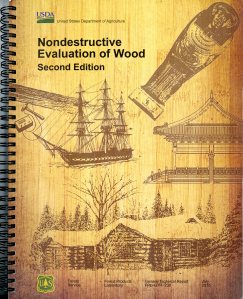
001-001-00704-8Wood you like to know more about tree and wood publications from the U.S. Department of Agriculture (USDA)? Then read on. And please forgive that starting pun.

In the USDA Forest Service Forest Products Laboratory’s 2nd edition of Nondestructive Evaluation of Wood, Robert J. Ross’ synthesizes a number of technical writings on several commercially available nondestructive evaluation (NDE) of wood technologies. NDE is the sensibly non-damaging science of assessing properties and applications of a material without mucking up its long-term usability.

Ross opens with an executive summary of the characteristics of this biologically and industrially rich material. It will leave you pretty much convinced that wood is the virtuoso of the plant world. The spiral-bound compilation continues on in several chapters, with each contributor highlighting the usefulness of their respective testing method. Spoiler alert: ultrasonic veneer grading is the coolest sounding evaluative technique ever.

Dense with authoritative knowledge from forest product technologist, engineers, and research scientists, this publication may have you thinking, “I never thought this knowledge existed but I’m sure glad it’s out there.” Case in point: chapter seven’s research titled Nondestructive Testing in the Urban Forest by Drs. Allision & Wang of the Unversity of Wisconsin, Madison. They attest to “body language” as a method to visually inspect the “presence of internal decay.” Don’t we all wish our own medical examinations were that easy!

Moving on…

001-001-00703-0If you like trees and you like maps, then you need to get your mittens on a copy of the USDA’s new and improved tree atlas The National Individual Tree Species Atlas, a.k.a. the Modeled Atlas, is the product of the Forest Service’s Forest Health Technology Enterprise Team. They used permanent plot data to represent the actual distribution of 264 species throughout the treed zones of the United States.

Each tree was statistically modeled to climate, terrain, soil, and imagery data sets. The result is an impressive collection of accurate, fine-resolution geospatial products. Thumb through the broad, matte pages and you’ll find beautifully mapped individuals from such august tree families as cypress, pine, maple, birch, walnut, elm, olive, and mulberry (can’t mention them all but tree names are awesome!).

Again, trees + maps = tree species atlas. Boom! Make room on your coffee table for it.

How do I obtain these publications?

Shop Online Anytime: You can buy eBooks or print publications —with FREE Standard Shipping worldwide— from the U.S. Government Online Bookstore at http://bookstore.gpo.gov.

Shop our Retail Store: Buy a copy of any print editions from this collection at GPO’s retail bookstore at 710 North Capitol Street NW, Washington, DC 20401, open Monday–Friday, 9 a.m. to 4 p.m., except Federal holidays, Call (202) 512-0132 for information or to arrange in-store pick-up.

Order by Phone: Call our Customer Contact Center Monday through Friday, 8 am to 5:30 pm Eastern (except US Federal holidays). From US and Canada, call toll-free 1.866.512.1800. DC or International customers call +1.202.512.1800.

Visit a Federal depository library: Search for U.S. Government publications in a nearby Federal depository library. You can find the records for most titles in GPO’s Catalog of U.S. Government Publications.

About the author: Our guest blogger is Chelsea Milko, Public Relations Specialist in GPO’s Office of Public Affairs. 


Our Native Flying ‘Cheetos’: Bee Basics from the USDA Forest Service

October 8, 2015

001-000-04765-5“The world as we know it would not exist if there were no bees to pollinate the earth’s 250,000 flowering plants.”

A sobering sentence straight out of Bee Basics: An Introduction to Our Native Bees, a joint publication from the U.S. Department of Agriculture (USDA) Forest Service and the Pollinator Partnership. Authors Beatriz Moisset, Ph.D. and Stephen Buchmann, Ph.D. provide a concise primer on the fundamentals and cyclical heritage of our ‘varied and valuable’ native bees.

You may know that bees are sociable, resourceful, and resilient. But did you know that some species are downright parasitically opportunistic? The cuckoo bee is a member of the exclusively parasitic Apidae family. Once it scouts out a potential host site, it furtively waits out of view until the nest is vacated. Then, in a one-two-punch move, the cuckoo bee takes up residence and its young eventually shovel down up any pollen, nectar, and larva in sight.

Buchmann’s highly detailed illustrations of these pixie pollinators show how each species’ morphology is engineered for precise pollination. Bees use wing vibration to shake off a pollen-packed anther like a polaroid picture. This “buzz pollination” is a popular dance in bee social circles. The southeastern blueberry bee uses the same technology to gorge itself on blueberry pollen. Another pollination prodigy is the megachilid bee. Gathering so much puffy yellow pollen on its abdomen, it resembles, as the authors amusingly write, “flying ‘Cheetos’ snacks coming in for a landing.”

beesorwasps

Can you identify a bee from a wasp? Excerpt from publication. Click image to enlarge.

The publication also details the homemaker behaviors of bees. The metallic-colored sweat bee is the consummate DIY designer. Nesting itself in the underside of freely-available detritus tree bark, it uses a saliva-pollen amalgam to lovingly tile the interior of its egg chambers. Some domesticating mother bees though the use of mass provisioning—storing up enough food in their brood cell nursery to sustain each larvae for the entirety of their development. New moms, take note!

Bee Basics is a great compliment to citizen science efforts to enrich and sustain a pollinator-friendly ecosystem. It concludes with a ecological call to action. The list of worrisome environmental realities are extensive: honey bee die-offs, shrinking native ranges, pesticide use, fungal infestations, and more. Protecting the ecosystem well-being of these minuscule pollinators requires a concerted conservation effort and a respect for the priceless services they provide. Bees have more than paid their dues to this planet. And for that, we are indebted.

How do I obtain this publication?

Shop Online Anytime: You can buy eBooks or print publications —with FREE Standard Shipping worldwide— from the U.S. Government Online Bookstore at http://bookstore.gpo.gov.

Shop our Retail Store: Buy a copy of any print editions from this collection at GPO’s retail bookstore at 710 North Capitol Street NW, Washington, DC 20401, open Monday–Friday, 9 a.m. to 4 p.m., except Federal holidays, Call (202) 512-0132 for information or to arrange in-store pick-up.

Order by Phone: Call our Customer Contact Center Monday through Friday, 8 am to 5:30 pm Eastern (except US Federal holidays). From US and Canada, call toll-free 1.866.512.1800. DC or International customers call +1.202.512.1800.

Visit a Federal depository library: Search for U.S. Government publications in a nearby Federal depository library. You can find the records for most titles in GPO’s Catalog of U.S. Government Publications.

About the author: Our guest blogger is Chelsea Milko, Public Relations Specialist in GPO’s Office of Public Affairs. 


Hurricane Katrina, 10 Years Later

August 26, 2015

Image compliments of noaa.gov click to enlarge.

August 29th will mark the tenth (10th) anniversary of Hurricane Katrina. It was one of the deadliest and the costliest natural disasters in U.S. history.

As you may recall, this hurricane touched down in Mobile, Alabama, and significantly damaged and left people stranded in New Orleans, Louisiana, and Biloxi, Mississippi during President George W. Bush administration’s second term as President of the United States of America.

A few key primary source references based on Hurricane Katrina that should be included in your historical U.S. Government publications, or weather-resources library include the following:

Public Papers of the Presidents of the United States, George W. Bush, 2005, Bk. 2, July-December by National Archives and Records Administration

This primary source reference work chronicles George W. Bush’s second term presidency from July through December 2005. This volume includes the President’s remarks on Hurricane Katrina on Sunday, August 28, 2005, plus additional remarks on September 1, 2, 5-8,12, and an Address to the Nation on Hurricane Katrina Recovery from New Orleans, LA on September 15, 2005, a Memorandum on the National Flood Insurance Program on October 12, and more.

040-000-00775-0Federal Response to Hurricane Katrina: Lessons Learned, February 2006 by the President of the United States and the Assistant to the President for the Department of Homeland Security and Counterterrorism

Hurricane Katrina’s historic 115-130mph winds coupled with a powerful storm surge that created a 27 foot long stretch of the Northern Gulf Coast that impacted nearly 93,000 square miles that was not isolated to one state or city. The book is a Lessons Learned view of what can be implemented to prevent natural disasters, such as Hurricane Katrina from happening in the future. The report’s focus is centered on disaster preparedness and emergency management responses. It contains an analytical, narrative chronology that provides a detailed account of Hurricane Katrina from the point of the storm’s development in the days “Pre-Landfall,” and the next chronicles both the “Week of Crisis” from August 29 through September 5, and concludes with the transition from response to recovery. This volume concludes with the most important chapter: “Transforming National Preparedness.”

052-071-01438-1A Failure of Initiative: Final Report of the Select Bipartisan Committee To Investigate the Preparation for and Response to Hurricane Katrina, February 15, 2006 by the U.S. House of Representatives, Select Bipartisan Committee to Investigate the Preparation for and Response to Hurricane Katrina

This report is a summary of the Committee’s work to investigate the preparation for leading up to the Hurricane Katrina storm and the two weeks following the storm. It does not cover the extensive rebuilding of the impacted areas after the storm made its landfall to the cities and states that were in its’ path.

Call Sign Dust Off: A History of U.S. Army Aeromedical Evacuation From Conception to Hurricane Katrina by the Department of the Army, Office of the Surgeon General, Borden Institute008-000-01040-4

This book, published in year 2011, covers the conceptualization of the initial attempts to use aircraft for evacuation, reviews its development and maturity through those conflicts, and focuses on the history of MEDEVAC post–Vietnam to the transformation of the MEDEVAC units from medical to aviation command in 2003 and the response to Hurricane Katrina in 2005. Much has been written about U.S. Army aeromedical evacuation—or MEDEVAC—and most works have focused on the war in Korea or Vietnam. This book focuses on the unique use of helicopters to accomplish this mission. Part I looks at the heritage of MEDEVAC from its beginnings in World War II through the bitter battles in Korea, the interwar years, and the long struggle in Vietnam. Part II covers the 1980s, a time of domestic duties and contingency operations. Part III reviews the turbulent 1990s with the end of the cold war, a hot war in the Persian Gulf, dramatic military force reductions, and a call to duty in the Balkans. Part IV stretches into the millennium, covering the events of 9/11, further conflict in Afghanistan and Iraq—the Aviation Transformation Initiative that moved MEDEVAC from medical to aviation control—and the national response to Hurricane Katrina. In general, after Part I, a thematic approach is used, and the chapters are organized with interweaving sections covering doctrine (service and joint), organization, and operations.

008-070-00804-1Operation Dragon Comeback: Air Education and Training Command’s Response to Hurricane Katrina by the U.S. Air Force, Air Training and Education Office of History and Research

This volume is the Air Education and Training Command’s (AETC) response to Hurricane Katrina as a pivotal event in the organization’s history. It showcases the men and women that rushed to the aid of their wingmen at the Kesslar Air Force base in Biloxi, Mississippi, and provided support for humanitarian efforts to the communities and the country in time of need. In addition to the coverage of Hurricane Katrina’s approach and landfall, this resource also attempts to cover the few months of recovery efforts that took place at Kesslar Air Force base during the aftermath of Hurricane Katrina.

Air National Guard at 60: A History (eBook) by Air National Guard999-000-44446-1

Within this commemorative 60 year anniversary of the National Guard, you will also find many accounts of the emergency response relief efforts during the historic Hurricane Katrina to include saving people stranded by the flood waters, supplying medicine food and clean water staples and more.

064-000-00058-6Are You Ready?: An In-Depth Guide to Citizen Preparedness by U.S. Department of Homeland Security, Federal Emergency Management Agency

Guide for citizens on how to protect themselves and their families against all types of natural and man-made disasters and hazards from tornadoes to terrorism, floods to fires, extreme cold to extreme heat. The “Are You Ready? An In-Depth Guide to Citizen Preparedness” from FEMA can be used as a reference source or as a step-by-step manual. The focus of the content is on how to develop, practice, and maintain emergency plans that reflect what must be done before, during, and after a disaster to protect people and their property.

How do I obtain these resources?

Shop Online Anytime: You can buy eBooks or print publications —with FREE Standard Shipping worldwide— from the U.S. Government Online Bookstore at http://bookstore.gpo.gov.

Shop our Retail Store: Buy a copy of any print editions from this collection at GPO’s retail bookstore at 710 North Capitol Street NW, Washington, DC 20401, open Monday–Friday, 9 a.m. to 4 p.m., except Federal holidays, Call (202) 512-0132 for information or to arrange in-store pick-up.

Order by Phone: Call our Customer Contact Center Monday through Friday, 8 am to 5:30 pm Eastern (except US Federal holidays). From US and Canada, call toll-free 1.866.512.1800. DC or International customers call +1.202.512.1800.

Visit a Federal depository library: Search for U.S. Government publications in a nearby Federal depository library. You can find the records for most titles in GPO’s Catalog of U.S. Government Publications.

About the author: This week’s blog contributor is Maureen Whelan, Senior Marketing Team Leader for GPO’s Publication and Information Sales program office in Washington, DC. Maureen oversees print and digital content dissemination strategy and manages third party free and paid content distribution through platforms and vendors, such as Apple iBookstore, Barnes and Noble.com, Google Play eBookstore, Ebscohost databases, Overdrive, and more.


Environmental resources from the Federal Government

June 4, 2015

environment 1It’s time, once again, for World Environment Day (WED), a globally-celebrated day for positive environmental action. Established by the UN General Assembly in 1972, WED is celebrated annually on June 5th and inspires worldwide environmental awareness, attention, and action.

2015’s theme is “resource efficiency and sustainable consumption and production in the context of the planet’s regenerative capacity, as captured in the slogan ‘Seven Billion Dreams. One Planet. Consume with Care’.”

There are countless resources from the Federal Government on the topics of environmental protection, conservation, sustainability, green initiatives, and footprint reduction, just to name a few.

The White House has pioneered many initiatives focused on energy, climate change, and our environment. You can read more about all these initiatives, get the latest news, and even sign up for energy and environment updates via email at https://www.whitehouse.gov/energy.

And let’s not forget the obvious authority on tackling these issues, the Environmental Protection Agency (EPA). From epa.gov, you can get important facts and information about a host of environmental issues, including: air, chemicals and toxics, climate change, emergencies, greener living, health and safety, land and cleanup, pesticides, waste, and water. Of course, you can also access laws and regulations that are in the works to support these issues. And with summer nearly here, you can also get sun safety tips and learn about insect repellents. You can even locate resources in your own community to address local environmental challenges by inputting an address, zip code, or location name.

USA.gov offers a browseable list of .gov resources on the topics of “environment, energy, and agriculture.” From there, you can also sign up to receive updates when there is new information available on these topics.

earth-from-spaceGPO’s Catalog of U.S. Government Publications offers access to a wide variety of related publications and resources from across the Federal Government. Here is just a small sampling:

GPO’s Federal Digital System also provides free access to countless pieces of legislation and Federal regulations on the topic. Here are just a few:

earth 2The U.S. Government Bookstore offers a wide variety of U.S. Government publications related to this important and timely topic.

Take a look at our 19 collections of publications related to the topic of Environment and Nature.

There are U.S. Government publications on topics ranging from Environmental Protection and Conservation collection to Biofuels and Renewable Energy to Earth Day and more!

Celebrate World Environment Day by taking in all of the environmental information resources provided by the U.S. Government, and share this information with others.

HOW DO I OBTAIN THESE RESOURCES?

Click on the Links: For the free resources, click on the links above in the blog post.

Shop Online Anytime: You can buy eBooks or print publications —with FREE Standard Shipping worldwide— from the U.S. Government Online Bookstore at http://bookstore.gpo.gov.

Shop our Retail Store: Buy a copy of any print editions from this collection at GPO’s retail bookstore at 710 North Capitol Street NW, Washington, DC 20401, open Monday–Friday, 9 a.m. to 4 p.m., except Federal holidays, Call (202) 512-0132 for information or to arrange in-store pick-up.

Order by Phone: Call our Customer Contact Center Monday through Friday, 8 am to 5:30 pm Eastern (except US Federal holidays). From US and Canada, call toll-free 1.866.512.1800. DC or International customers call +1.202.512.1800.

Visit a Federal depository library: Search for U.S. Government publications in a nearby Federal depository library. You can find the records for most titles in GPO’s Catalog of U.S. Government Publications.

About the author: Kelly Seifert is the Lead Planning Specialist in GPO’s Library Services & Content Management division.