 Secret prophesies from the Great Pyramid…a foreign revolutionary conspiracy against America…a shadowy organization led by a millionaire known as “Mr. Z”…
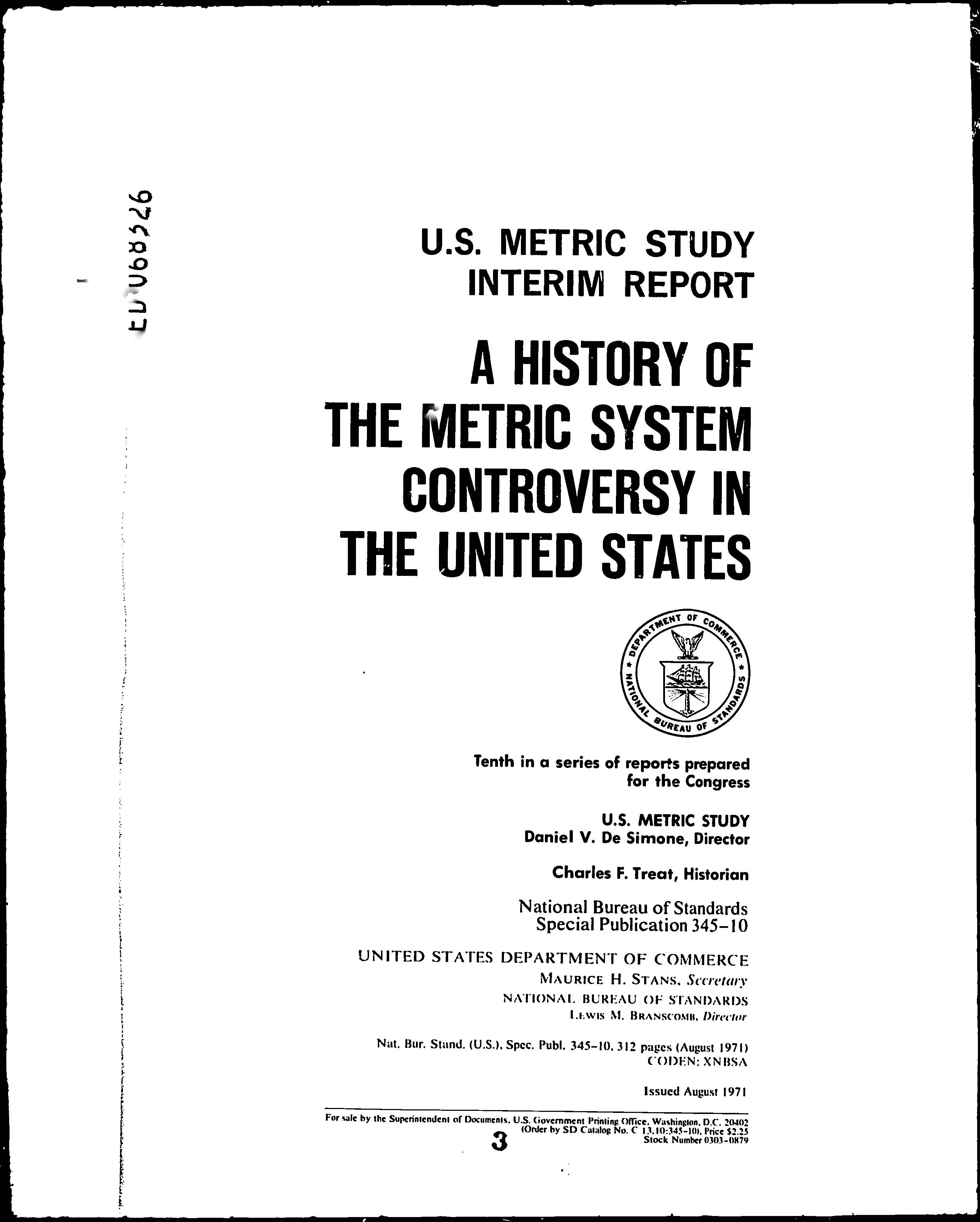
The latest Dan Brown novel? No, A History of the Metric System Controversy in the United States. This 1971 report, part of the U.S. Metric Study series and issued by the National Bureau of Standards (now NIST), is a serious account of a centuries-long battle to make the metric system America’s official standard of measurement. Lurking among the descriptions of John Quincy Adams’ Report on Weights and Measures and the advocacy of opposing positions by eminent scientists and educators, though, are some …unusual… episodes.
In the 1880’s, the International Institute for Preserving and Perfecting (Anglo-Saxon) Weights and Measures advocated both retention of the traditional measuring system and pyramidology – a belief that the Great Pyramid was a huge measuring device constructed by the Hebrews that also hid prophesies about the future. Despite this odd admixture of beliefs, the Institute proved to be an effective lobbying group in resisting the metric system. It also had a theme song: “A Pint’s a Pound the World Around.”
After World War I, Albert Herbert, a wealthy enthusiast, founded the World Trade Club, which despite its name was really a pro-metric lobbying organization. Herbert operated anonymously, so anti-metric forces quickly labeled him as the mysterious “Mr.Z.” The main opposition, the American Institute of Weights and Measures, also lobbied hard, with the aid of various manufacturing groups fearful of the expense of converting to metric. It inspired such articles as “What Real He-Men Think of the Compulsory Metric System.”
Also threaded through A History of the Metric System Controversy in the United States is the fear that the metric system is an alien one, inspired by the revolutionary French (post-World War I advocates of metric in turn claimed that the traditional system was a German invention). The author, Charles F. Treat, makes the interesting point that historically, enthusiasm for adopting the metric system tends to rise and fall with America’s international engagement or non-engagement.
This book, which takes the story though the late 1960’s, was published too soon to describe the failure of yet another attempt to adopt the metric system for America. Not for anyone without a really intense interest in the subject, it’s still extremely browseable and not without humor, especially when dealing with the topics I’ve been discussing. If you’d like to read it in PDF format, go here. If you’re interested in the movie rights, contact Government Book Talk!


 Posted by govbooktalk
 govbooktalk
 Trudy Hawkins
 Government Book Talk