 When people ask me how I choose the books I blog about (actually, no one has asked me that, but it always pays to be prepared), I cite multiple sources of information, including in-house resources at GPO, my past experience with Government publications, and my personal and eclectic reading. For example, I recently read a book about America’s Quasi-War with revolutionary France from 1798 to 1800. Precipitated by French privateering attacks against neutral shipping during its war with England and exacerbated by the French view that the Jay Treaty between Great Britain and America was a violation of its 1778 treaty with the U.S., the fledgling American navy was authorized by Congress to attack any French vessel, including warships that molested American merchant shipping.
So what’s the connection with this blog? Naval Documents related to the Quasi-War between the United States and France, edited by 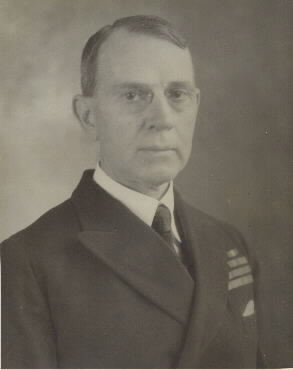 Captain Dudley W. Knox, USN (Ret.) (left). This 7-volume set of official documents, published in the 1930s, is the starting point and standard source for any research on the Quasi-War and was duly acknowledged as such by the author of the book I read. Knox, who for many years was the Navy’s Officer in Charge of the Office of Naval Records and Library, also presided over the editing of other documentary compilations and was a noted writer on naval topics.
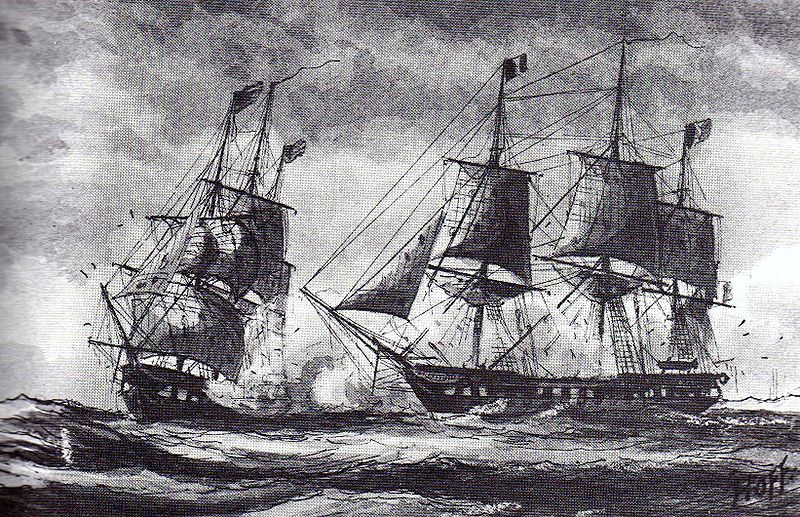
Perusing these ponderous volumes is challenging but rewarding. Included are accounts of the U.S. frigate Constellation’s battles with the French frigates L’Insurgente (top) and La Vengeance, the little-known landing of Marines on the Dutch island of Curacao, and much more. You can also find reports on the captains who led the fight (or sometimes failed) against the formidable forces of France and their often uneasy collaboration with France’s real enemy – the British.
It’s a tribute to the Navy that, at a time when such massive documentary series usually were not subsidized by universities or foundations, Knox and his staff were encouraged to research and preserve these early records of American military and diplomatic history. Today, it’s still a pleasure to plunge into another century and read about the Navy’s battles and the bureaucracy that kept them staffed and supplied at sea. Sets of Naval Documents related to the Quasi-War between the United States and France will set you back hundreds of dollars via the used and antiquarian book market, but they are available to browse here or in print at a library.


 Posted by govbooktalk
 govbooktalk
 Trudy Hawkins
 Government Book Talk